Tag Archives: Stinger

Intent or not?

This is a question that has been forming in my mind for some time now, and today the question rose again. The article that started it all is “Oil tanker off Saudi Arabian port hit by explosion caused by ‘external source’ (source: the Guardian). The setting is not new, we have seen it a few times in the last year. We all want to point fingers and blame people left right and center, but the truth of it is that the problem goes deeper and the west is largely in denial or refuses to acknowledge the events. Less than a decade ago, an attack on Saudi Arabia was for the most unthinkable. Even as we see the crying blame game, this is not a Houthi issue. You see, the Houthi’s are firing drones and missiles on Saudi Arabia, but everyone is in denial and refusing to look at Iran. There is no Yemeni infrastructure to create and optionally test drones and missiles, there is no quality control, there is no technology available in Yemen for any of this and that has been shown by different sources over the last 2 years. Even as the New York Times gives us an opinion piece that gives us “Saudi Arabia is not entitled to U.S. military or diplomatic support. It’s not a treaty ally like Japan. Its importance to U.S. security has dwindled as the United States seeks to reorient its foreign policy away from the Middle East. And if Crown Prince Mohammed bin Salman’s tutelage is any indication, the kingdom is proving to be a wildly destabilising force in the region”, Saudi Arabia, for the most has been the stability the Middle East (outside of Israel) needs, feel free to give it to Iran, but in this, the next time they elect another Ahmadinejad, all the linked nations will target Israel AND the United States AND Europe, is that what you want?

So whilst the New York Times is slamming Saudi Arabia, or seemingly so, it is actually proving the opposite. Saudi Arabia is entitled and worthy of support. It’s events into Yemen was done by the elected government of Yemen, and that is also ignored most of the time, just like the setting that Houthi forces are getting direct support from Iran, the Houthis are getting Iranian hardware, missiles and drones. They seemingly smuggle it by all naval intelligence operations. It is almost like the EU and the US are keeping the Middle East destabilised. That is at least what it looks like, you see, for the last two years someone is feeding the Houthi forces drones and missiles and that needs to stop. I would venture that the involved parties like the price of oil to go up, up by a lot. 

In this I will tell you right now that this is my speculative view, I cannot prove the latter part (other than the Iranian support which has been proven by several parties), yet the media is silent on that part, why is that?

My mind has been busy considering an anti drone option, but as I see it, the larger part of Saudi Arabia is an empty sandbox, so how to go about it (without creating ecological and environmental devastation), a setting that needs thought, because the cure cannot be worst than the disease. The Brookings institute (at https://www.brookings.edu/blog/techtank/2016/03/16/six-ways-to-disable-a-drone/) give us 6 methods, but to deploy them in any rural situation (which is the bulk of Saudi Arabia) is not a good thing, yet it did give me an optional idea, not a great one mind you, but one that might work. 
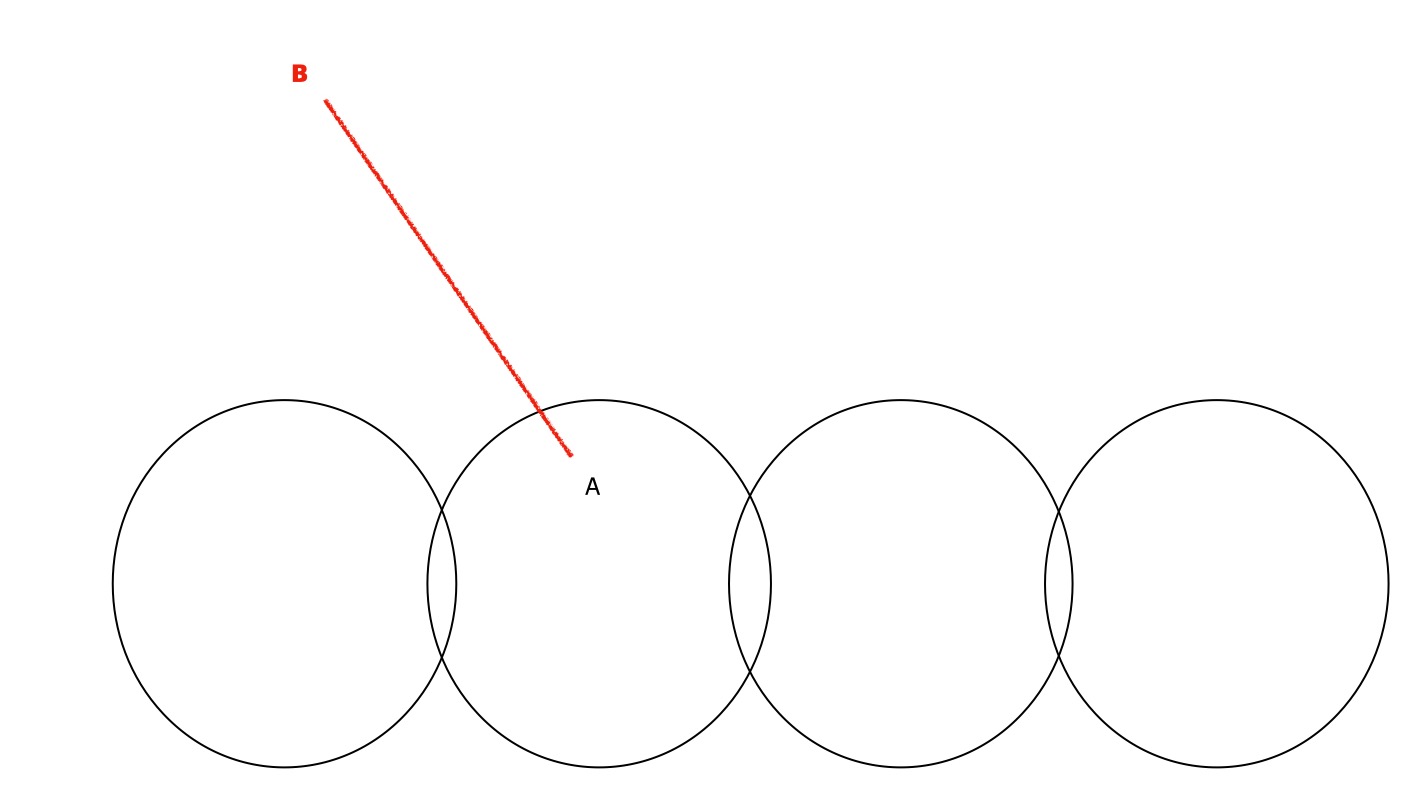
They had Radio waves (3) and Hacking (4), This gave me an optional idea. What if we create a wifi network, one that actively pushes. Consider 4 jeeps, each jeep is a network node, and as you can see, moving the second jeep to another location sets a larger and a different curtain. Now, consider that the latest Iranian drones can fly up to 250KM/H, now the Houthis will not get those (and they lack monumental amounts of skill to operate them), but the older ones are slower, as the jeeps get a lock on a danger, the remote operator uses the created network to disrupt drone operations. I reckon that a setting of 8 jeeps might be a good start, but how to deploy them? I see the need to create 3-5 clusters of up to 4-8 jeeps, it gives the remote operator a decent amount of time to crash the drones far away and safely, optionally (and harder) is to land them so that the evidence can be collected. A secondary option is to fry the electronics, so that the drones would return to the point of liftoff, giving Saudi Intelligence a place to work from. This is the drones, not sure yet how to stop (in a cheap way) Iranian missiles, but I reckon Raytheon has something they eagerly want to sell. I merely want it to cost Iran the farm, not Saudi Arabia, like in Charlie Wilson’s War, there Charlie Wilson provided the Afghans with stringers to stop the Russians, Stinger $38,000, Russian Hind (Mil Mi-24) $36,000,000, so almost 1000:1, those are numbers to work with and that stage needs to be found to top Iran as well. So as I was looking into the Shahab-1, Shahab-2, Shahab-3, can the same network be used to create a false image, or a setting to fool the missile?

GOT systems
It is one of two systems, and any Go-Onto-Target missile has three subsystems (or so I am told), they are :

Target tracker
We are told that the target tracker is also placed on the launching platform, yet is that so with the Iranian version? If that is true, then we need to find a way to infect both, or find a way to disrupt the link.

Missile tracker
This is where it is, I asked the missile, but it had no sound system installed, hence, I watched a USAF training tape and I learned “The missile guidance computer scenario works as follows. Because a variation has modified some of the information the missile has obtained, it is not sure just where it is. However, it is sure where it isn’t, within reason, and it knows where it was. It now subtracts where it should be from where it wasn’t, or vice-versa, and by differentiating this from the algebraic sum of where it shouldn’t be, and where it was, it is able to obtain the deviation and its variation, which is called error”, this seems effective and simple, I merely wonder what if we could find an automated way to mess with the error so it will assume wrongly where it was, and if this accumulative, it will crash ahead of schedule, optionally in a place where there is only sand.

Guidance computer
Guidance computers are in the missile and in the target tracker, it has the same setting as the Target Tracker, we cannot intervene in time, but what happens if we flood the missile with both disrupting and false information? (At the same time mind you)

This is where I found myself, my only reference to missile technology is pointing my own missile at a biological silo (me, as a once proud teenager), I just had to go there to make this story not too serious. Yet there was corroborating materials (not on the Silo though), it is seen in Northrop Grumman’s Patent US4589610A, the Guided missile subsystem. Here I see a little more, but it also gave me a thought. The patent gives us “The IMU driven Kalmanised radar track loop accommodates the use of a high performance radar, like a synthetic aperture radar, for example, which operates to measure radar data at a low rate on the order of 1 Hz, to generate estimates of relative target and missile kinematics to drive the control loop at rates compatible with high performance missile kinematics”, I believe that Iranian missiles are not that advanced, but the groundwork matters. The idea that we have “operates to measure radar data at a low rate”, so it reads signals to differentiate, what is we mess with that instance to create a different error in the Shabab missile? Radar is basically a radio signal, a specific one and specific signals are more easily messed with, yet can it be done efficiently and not expensive, or can we create a setting where on system can impact the next 200 missiles fired? 

The second system is a GOLIS systems (go-onto-location-in-space), it is autonomous and created for targets that do not move (for example the IRS building at 300 N. Los Angeles St.), I would presume a building almost everyone hates, especially in Hollywood. I will not go into all the details, but it had one option I recognised, it was the Hyperbolic navigation, DECCA. Maritime uses (or used) it. It requires 3 stations to operate and if that is so, that is something we can use. We can actually guid a missile when we alter the signal of any two out of three elements. The nice part, as it is obsolete, there is a decent chance the Iranians are till using it, the DECCA system was pretty decent as a concept and for maritime navigation (before we had satellite navigation) was the most precise way to find ourselves in the ocean, it was precise up to 7M2, when you are 2432 KM from shore, that is pretty awesome. So as we see “Hyperbolic navigation is a class of obsolete radio navigation systems in which a navigation receiver instrument on a ship or aircraft is used to determine location based on the difference in timing of radio waves received from fixed land-based radio navigation beacon transmitters”, that is one principle, there is every chance that if we can intercept and relay 2 of the signals, we can create a different error and as such the missile becomes a lot less reliable.

These are merely a few thoughts and they should be seriously considered (except targeting the IRS building, these people have lives too), if we can change the game for Iran we can support Saudi Arabia in creating more stability, less stability is to adhere to Iran, I wonder if the New York Times considered that part that they are voicing, whether it is opinion or not.

OK, I knew about DECCA from my days at the. Merchant Naval Academy, so that might not be completely fair, but this is me thinking out of the box (and out of bed), which implies that this was another day, another dollar, and all done in less than 2 hours. I wonder what more Iranian stuff I can screw up this week, we all need a hobby at times.

Leave a comment

Filed under Finance, Media, Military, Science

Looking for the rocket man

Yes, there is an issue in the Sinai, Sharm Al Sheik no less. It is not news, I have known about it for a while as has most people. It is in the news, it is in the pages, there is gossip and there is much speculation. In the end another plane went down, this time it is the Russians who get to deal with this. Now, I am not a man to hold a grudge, but has anyone barred their access? It is not like MH17, yet still to give the Russians direct access after they did all; they could to stop the Dutch from getting access to evidence and the victims is a bit of a no no, nothing personal Vladimir Vladimirovich Putin!

The news from the Guardian (at http://www.theguardian.com/world/2015/nov/07/new-era-airport-security-sinai-terror) gives us “Fears focus on screening of baggage handlers as aviation experts demand new global response“, you see that could also be seen as “Fears focus on screening of baggage handlers as aviation experts, demands for new global response“. What a difference a comma makes eh?

This calls a few issues into question. Let’s face it, after someone got rid of those two slightly less appealing buildings roughly 5163 days ago, we still need to see issues with quotes like: “A fundamental overhaul of global aviation security is required“, how bloody moronically stupid does a community get to be? From what I can tell, the overall ‘security’ at the slot machines in Vegas are a lot better than in well over 40% of the airfields, so what gives?

In addition, we now see: ‘British Sharm Al Sheikh flight in ‘missile’ incident‘ (at http://www.bbc.com/news/uk-34754577). The response there is “A spokesman said the incident had involved ground-to-ground firing at a military base a few miles from Sharm-el Sheikh airport, and that no plane had been in danger” what ground to ground firing and who was firing? By the way, a flare is not ground to ground and it is not a flare either.

I am not opposing the article or the response, yet overall the BBC article is decently less then clear whilst the Egyptian response might not be reliable as they have a few more ‘presentational issues’ to deal with. Yet if it was all about ‘routine military activity and was not a targeted attack‘, why did the flight deviate? There must have been a decent level of perceived danger for the pilot to do this. I will readily accept any pilot stating ‘better be safe than sorry‘, which means that he/she saw a possible danger. And even though this was in August, it gives clear evidence in connection to what is about to follow.

So is this a mere trivial event? Not that downing a Russian flight is trivial, but is this a possible escalation for Saudi Arabia? You see, the airport has resorts to the north and the south, so there should be no threat there (we hope), yet to the west of the Ring road what is there? There seems to be a military compound with blue rectangles (possibly water purification) but there is no way to tell for certain), from there it is a mere 8 Km to the airstrip, so was the pilot jumpy or are events downplayed? I am happy if it was a mere jumpy pilot, who I would instantly support for any choice he made to keep his passengers safe, but can we agree that if ground to ground fire is visible to the pilot that the explosions were really big, or that the events were a lot closer to the airport? My issue here is not that the event took place, but that it gets reiterated to hell at this point 7 weeks later. The mention “A missile that came within 300 metres of a plane carrying British tourists to Sharm el-Sheikh was “probably a flare”, found investigators“, should remain an issue, because why fire flares at a commercial plane? Also, those buggers are not that fast, or do not tend to go so high, which means that there is a little more to the story. In addition, we get “Another Thomson plane was also flying into [Sharm el-Sheikh] at the same time and saw the rocket” as well as the fact that flares tend to really light up in a way similar to ‘here comes the sun’, so what gives? In addition the final fact, if both planes saw the ‘light’ and both remain consistent about a ‘rocket’, in my view the issue remains. Yet the final quote here is “Thomson said there was “no cause for concern” for further flights“, which means that it could be a flare, but in all this better visibility and more open response, especially in ‘light’ of what blew up afterwards would have been better (at http://www.theguardian.com/uk-news/2015/nov/07/missile-thomson-airplane-flare).

You see, this is all speculation on my part (yet I try to be as cold and as logically as possible) something you will not likely find in the Daily Mail or some Murdoch publications. They will all be about fear and about emotional speculation. In equal measure of worry, the MFO South Camp should be no more than 35 Km to the South of the airport, so if there was ground to ground action was the MFO informed, were any activities spotted by them? More info that did not make the papers or the Tabloids. This is all nice and speculative, but in the end, this is all an escalation of what happened to Russian flight 9268, yet there is no overall evidence at this point. Some of the photos show that shrapnel holes are from the inside out, which gives weight to the UK claim that it was a bomb on board of the plane. That evidence comes with the support that the cone of firing a Stinger, or even a stinger alternative like the Igla-S seems unlikely. Only a more modern version like the Starstreak or an alternative would then be the consideration, but for ISIS to get something like that is even less likely, make that extremely unlikely. If it was a Stinger or alike it had to be fired either from the sea, or from the Sinai itself, but that requires the terrorist to be too close to the Sharm Al Sheik – Dahab ring road. This might give more weight to the ground to ground firing, but also gives weight to the UK pilot to take a very quick gander somewhere else. All this remains speculation!

If the bomb was on board, we get back to my initial issue ‘how bloody moronically stupid does a community get to be’, you see, Egypt requires tourism to go on, to go on successfully. So why is there not more stringent security? With roughly 10 million tourists bringing 6 billion in revenue, security should have been on the forefront of the minds of the Egyptian ministers of both tourism and Intelligence. Which impacts me as I laughingly read the headline ‘Egyptian foreign minister claims allies not sharing intelligence on possible Isis bomb plot’. Yet there is one other alternative. It is shown by the Independent (at http://www.independent.co.uk/news/world/africa/sinai-plane-crash-egyptian-foreign-minister-claims-allies-not-sharing-intelligence-on-possible-isis-a6725236.html). The alternative is that mechanical malfunction from the tail is still not impossible, however, in another article we see ‘Black box data ‘reveals Metrojet A321 was brought down over Egypt by explosion’’, which is also from the independent. The quote “tests carried out on the cockpit voice recorder show the tragedy could not have been caused by either a technical fault or an error by the crew” could be regarded as significant here.

So as I go back to my moment of hilarious laughter (I do sound like a Hyena at such moments), the first one is “Sameh Shoukry said no other countries had given the Egyptian government access to their information” My thoughts on that can be seen in a number of ways. Sameh Hassan Shoukry must and does realise that Egypt still has a corruption problem. One side is lighted by Georges Fahmi in the Carnegie Middle East Center. Here we find the quote from a statement from Mahmoud Hussein, the former secretary general of the Brotherhood that said: “The Brotherhood operates with its apparatuses and institutions in accordance with the regulations and with the members of the Guidance Bureau. It has supported its work with a number of assistants in accordance with these regulations and the decisions of its institutions; its deputy leader accordingly acts as a general guide [head of the organization] until the general guide is released [from prison] God willing, and the Guidance Bureau is the one that manages the work of the organization” (at: http://carnegie-mec.org/2015/07/14/struggle-for-leadership-of-egypt-s-muslim-brotherhood/idbr).

It is ‘with the members of the Guidance Bureau‘ that gives pause. I have no evidence in support, but I believe that they are either still partially part of the police apparatus, or they are getting support from sympathetic people in official offices giving them the heads up when to relocate. I think that in their desperation to survive a few of the Brotherhood sheep are actually ISIS wolves. If they are all over Sharm Al Sheik, than they could be some friendly tourist officials, is that such a stretch?

In support I give that tactically ISIS needs direct access to Sharm Al Sheik should they ever truly decide to attack Saudi Arabia in a more direct way! An airstrip with planes is too tempting a target to ignore and a place devoid of tourists might make a better target.

The previous picture I placed, partially in speculation for the part that now follows. In the first the intended insincere response by Sameh Hassan Shoukry, who as a diplomat should have known better (he probably did), yet the second group of persons are another matter. Sedki Sobhi Sayyid Ahmed, minister of Defence is actually the smallest target here. In all this, the seemingly failed security at Sharm Al Sheik airport poses questions for the positions for Mohamed Hossam Kamal, minister of Civil aviation, as the Airport at Sharm Al Sheik is the foundation of 6 billion in revenue, so more diligence would have been expected, in that same light questions should be asked from Ashraf Salman, minister of investment as these events are never ever good for continued investments. Yet by far the biggest issue might be with Egyptian Military Intelligence and Reconnaissance Administration (DMI), which at present should be Director Salah Al-Badri. Yes we get that Alexandria and Cairo are more juicy targets, but with ISIS in the Sinai, having a better presence in Sharm Al Sheik would have been essential and whomever was there seems to have blown their job away (one Russian plane at a time).

You see for Director Salah Al-Badri the issue is a lot more pressing, if ISIS is actually tactically active in Sharm Al Sheik, than in equal measure they could be active in El Tor, which means that they are within striking distance of both Ras Gharib and Ras Shokeir having any quality presence in Sharm Al Sheik was not that much of a stretch.

Beside the point of how the Egyptians perform maintenance on their house, a certain event 5163 days ago should have been adamant in overhauling security at their immediate airports and Sharm Al Sheik definitely qualifies here. Yet in here lies the speculation, if we accept a bomb, when was it added? If it was from a tourist it is one thing, if it got added to the load from another source we have a massive problem to consider, because if it happens there what other airports are considered dangerous? You see if this was a small flight to Eilat (which is currently not possible). What other options are there? You see the one event that does count is that any attack from ISIS in Sinai is also a direct danger towards Israel. Southern Israel has been under fire from ISIS last July, so the stretch that Sharm Al Sheik is a tactical point for attacks on Egypt, Israel and Saudi Arabia seems not that large. A place loaded with fuel, tourists (read propaganda lessons), possible planes (that could not get away) and moral visibility. So even if my speculation is really farfetched, is the needed for quality security and intelligence perhaps less of a stretch? That support can be found with CNN (at http://edition.cnn.com/2015/11/04/middleeast/russian-plane-crash-airport-security/index.html), the quote “In May, a mentally disturbed man slipped through a hole in a wall and tampered with a plane, the Cairo Post reported, citing Egyptian newspaper Youm7. The man approached a plane sitting on the runway and tried to open a door to the aircraft, the article said. He was arrested after moving a block in front of the plane’s wheel, the article said” should be self-evident.

As we get to the end we need to ask: should we look for the rocket man? If the airport security outside the airport is so lacks, we must worry on the first premise that flights are in danger when we consider that security stops 100 meters from the fence and a Stinger, a 28 year old technology has an 8000 meter range. What else can they throw at the tourists there and as such, perhaps the evading UK pilot was in the end, the brightest person of the lot. If it turns out to be a bomb, than there are even more issues because that means that ‘wolves’ were on the compound and none of the sheep woke up, at which a stinger would be the least of their problems.

Leave a comment

Filed under Finance, Media, Military, Politics