
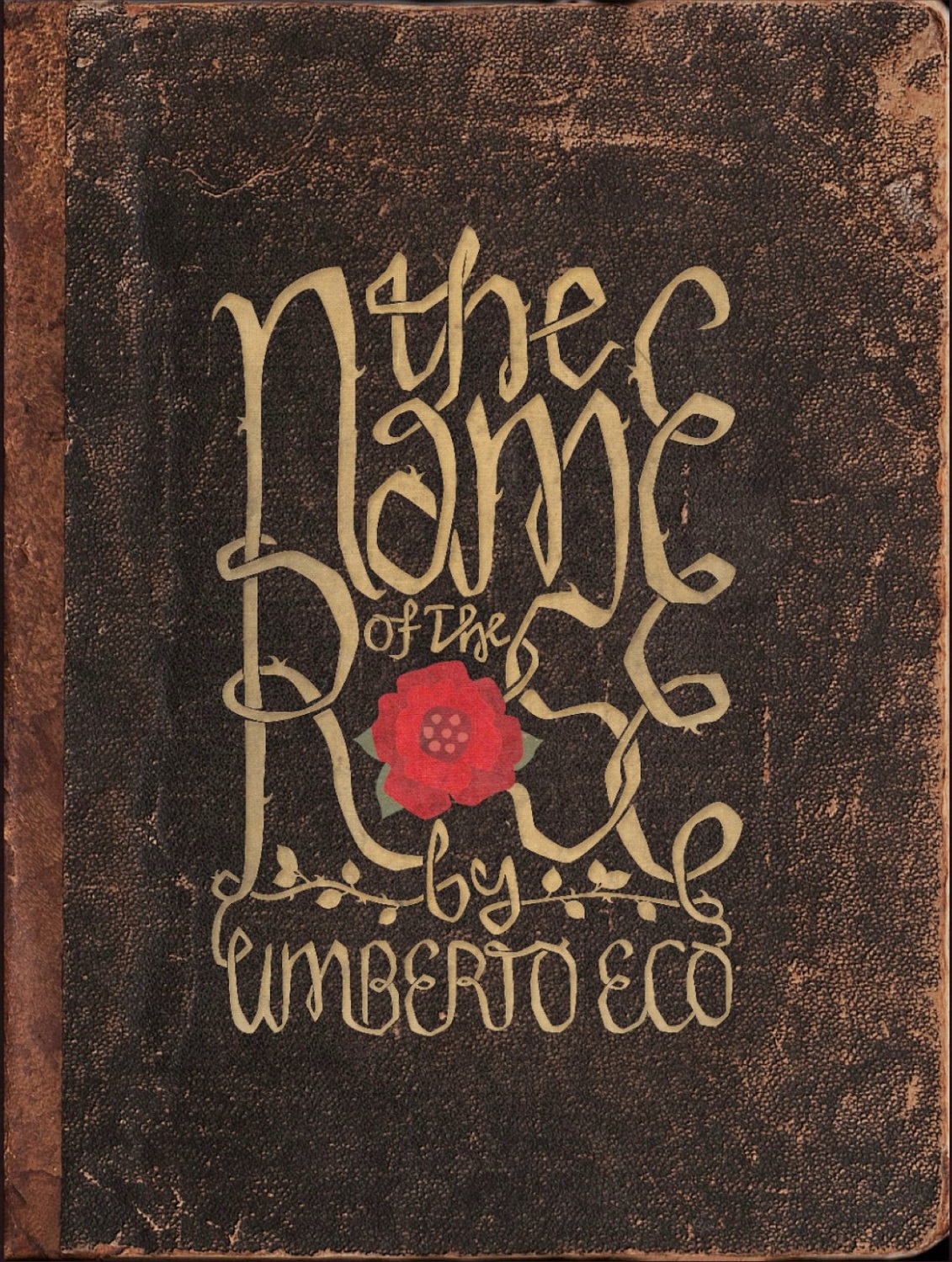
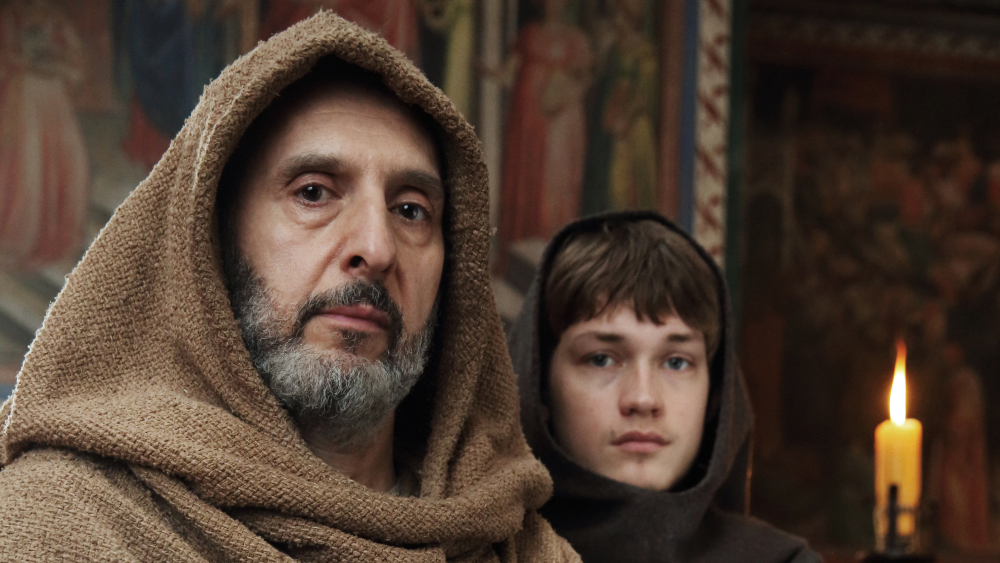
 It was 2 weeks ago when I was confronted with the ‘Monk Soup‘ by Lucy Mangan, a view of a book that was made into a film 33 years earlier and now remade into a seasonal view with John Torturo, Rupert Everett and Damian Hardung. With 5 episodes on SBS on demand it was time to see how much of a soup this choice ragout actually was. I have to admit that I am not even sure whether this series is a soup, or food for the wretched. It shows how Europe was in those days, it is about half of the first episode that we arrive in the Italian abbey where the story takes shape, we are treated to the interaction of monks, the way we imagined that William of Baskerville would be, yet in this dirty and flaming Europe, a simple monastery is showing people in wealth, not through the wearing of cloaks and heavy garment, not through the power of wealth, but through the absence of dirt, a cooperation of virtue in letters and in an absence of hunger.
The people in the abbey do live an exalted life that much was clear from the first half of the story. It is hard to be of swift justice here, yet I try, for me the movie was an excellent way of setting the stage, yet at the end of the first episode we see that the movie was a great way to tell a story, but this story is worthy of more and that is how it is from the very beginning, yet I wonder how many seasons will follow the first, and how many are required to make this story a complete story.
It is the beginning of the second episode and at this point I am almost completely convinced that Umberto Eco’s work would require no more than one season, yet I keep an open mind, the interactions with the girl are more abundant that those in the original movie. We also see the search in much more detail that we saw in the movie, but that is also my flaw, the digestion of the movie is a wrong step as the movie is merely the representation of the book as the director saw it, in this version we watch a much larger version of the book and it is a wondrous trip that you will take in this version of the Name of the Rose, it shows a much more interesting abbey, with its machines working, with its faith working in different directions, what faith allowed for in those days, that is perhaps the strangest part of the journey you will embark on. And it makes sense as it is part of the story, when you think of it the entirety of the story is based on what the church thought, what the church allowed for and what the speakers of the church wanted for, perhaps that is the larger part of the story that we are not ready for, or perhaps better stated, we were not ready for it in 1986, now we are. We are more critical of what was, when we see the unfolding of the story, the unfolding towards a work wrapped in cloth, we get a version that is not monk soup, it is a hearty stew, with the main story in the setting, with the churches and their priorities. It is at the end of the second episode that we get some level of apprehension on how large the library of the Abbey truly is.
The name of the Rose is truly an amazing piece of work, something that you will watch, and consider for a long time to come. No matter how this is seen, it should not be seen as ‘Monk Soup‘, but if we have to go by food, then this is nothing short of a Spezzatino di Vitello, made with Veal carpaccio, which unlike ‘Monk soup‘ has delicious ground and the soup we expected s much more descriptive and much more verbose than the description we saw in other depictions. I expected that but I was willing to expect a different view, we do not all have the critical eye to set to the task of each work, I know this and I do not wish to judge to previous judgments, yet I feel I have to as this work was sold short, even by me, I let the folly of the ‘Season‘ cloud my judgment, but it seems that there is so much more to the setting of the Rose, that we are not ready of the full story that John Torturo and Damian Hardung are bringing is opposition to Rupert Everett as well as the members of the abbey who are not welcoming to Bernardo Gui, as well as an populous who is caught in the middle of it all. To know more you will just have to watch yourself and it is well worth watching. It is perhaps more critical on the Roman church then any work I have ever seen before.
I can’t wait to get this first season on Blu-ray, to admire this on the big screen, absent of advertisement and something I can replay when I feel like it.
 Lawrence van Rijn - Law Lord to be