Tag Archives: CBRE

Sign of the Times

There are issues we see and at times issues we ignore. It is not because we want to be indifferent; it is because until it lands on our doorstep (quite literally) we remain ignorant of the actual size of the condition. The LA Times is giving us two parts in this. The second will come a little later as the page was not working correctly, yet the first part is given with ‘Seniors facing eviction fear homelessness and isolation as California’s housing crisis rolls on‘. It is not a local issue, it is a global issue and for the most, the inaction by governments imply that they remain in denial on just how big the issue is.

The premise “It also helped that even as the surrounding neighbourhood gentrified, rent control held his rent below $400. But three months ago, a real estate investor purchased the complex and soon told all tenants to leave. Suddenly, Canel faced the prospect of having to find a new home in a market where nearby studios rent for more than his monthly Social Security benefits — his sole means of support” is not a unique one. It is the direct result of ‘trying’ to attract large businesses. Just ask anyone renting in San Francisco on the Google pressures they face (similar from LinkedIn, Apple and a few others swimming in that pond).

And it seems that Los Angeles got a decent deal with: “Households with at least one person 62 or older made up 26% of no-fault evictions in Los Angeles city rent-controlled buildings between June 2014 and May 2019, according to the Los Angeles Housing and Community Investment Department“, In places like Sydney Australia or London United Kingdom the mess is a lot worse and it is not getting better any day soon. The article (at https://www.latimes.com/business/story/2019-08-28/senior-housing-crisis-impact) gives us a lot more. The feeling you get with: “the average price for a vacant apartment in L.A. County is nearly 40% higher than it was in 2012, at $2,329 a month, according to Zillow” implies that the shift to work until the day you die is no longer a fabrication; it is the direct impact of the cost of living. To give the Australian example, I looked into an apartment. The pictures might not give the whole story, but the impact is visible. The area has a safety score of 2 out of 10, yet the rest of the information is lacking and missing, which is odd to say the least. We see so many stats option, yet they are there merely mimicking distraction. It seems that the NSW government does not like to hand out too much negative information. As I arrived the police was dealing with (another) dead person. It seemed to be drug related, but there is no clarity or reliability on that.
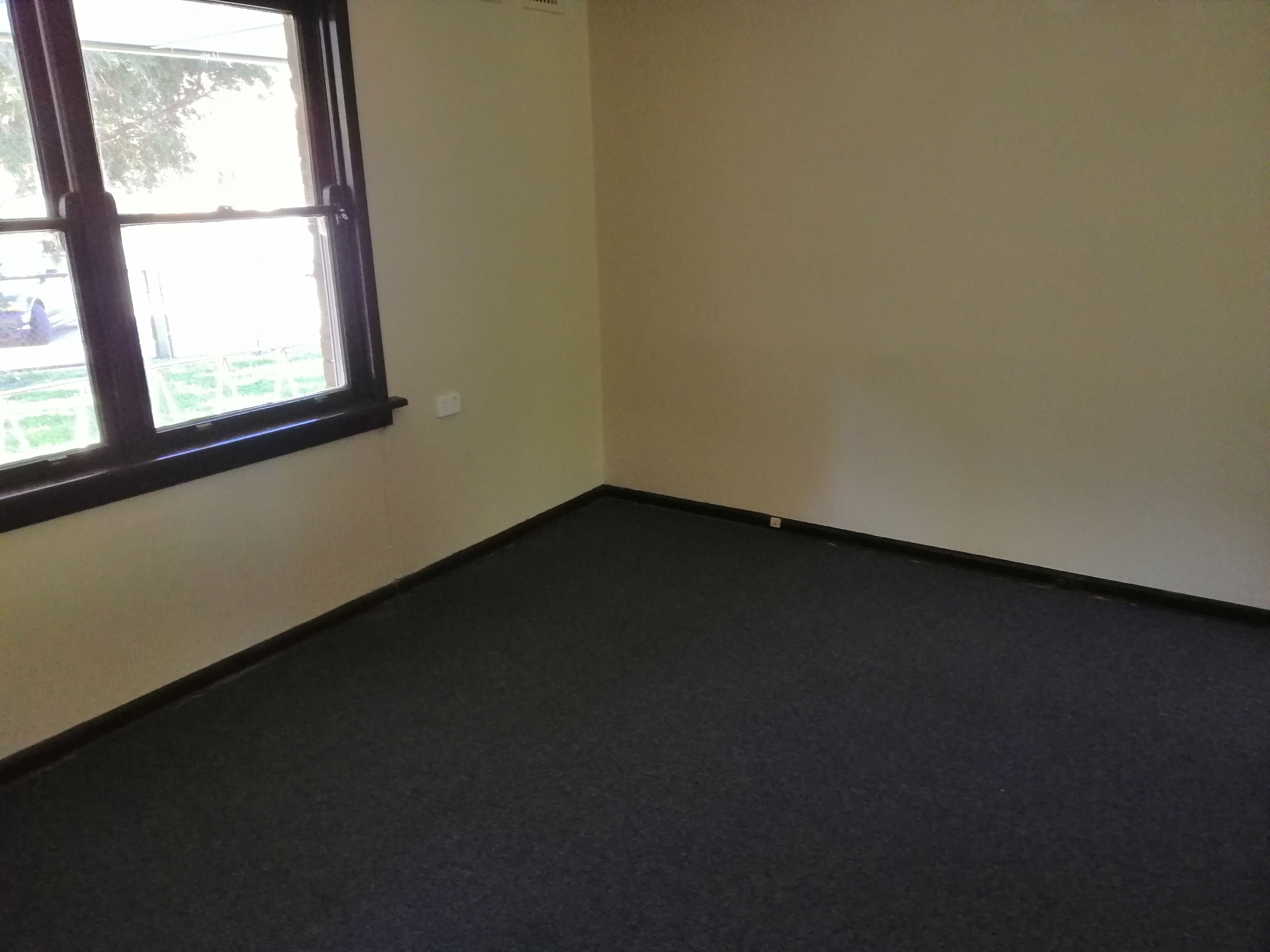
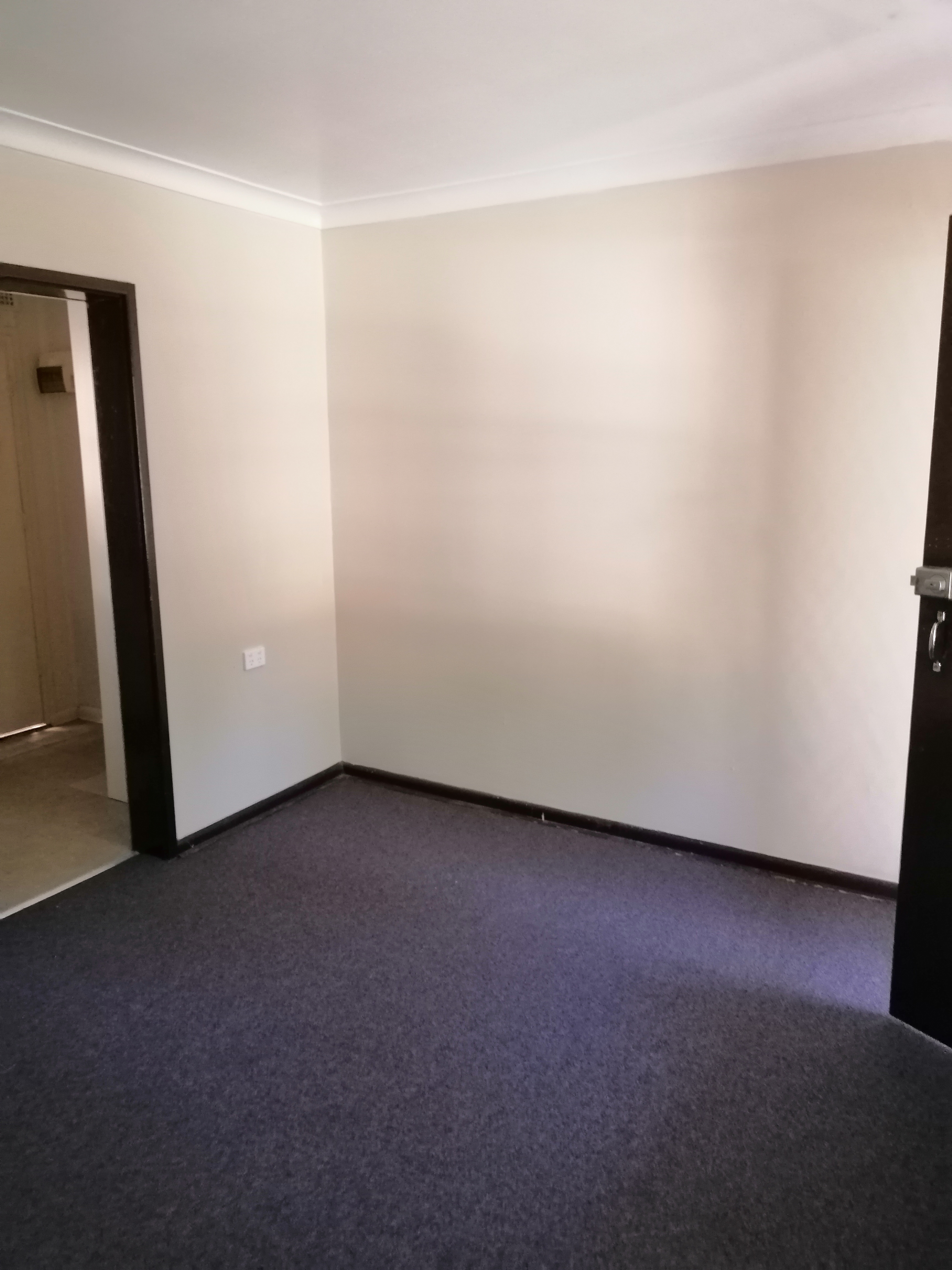
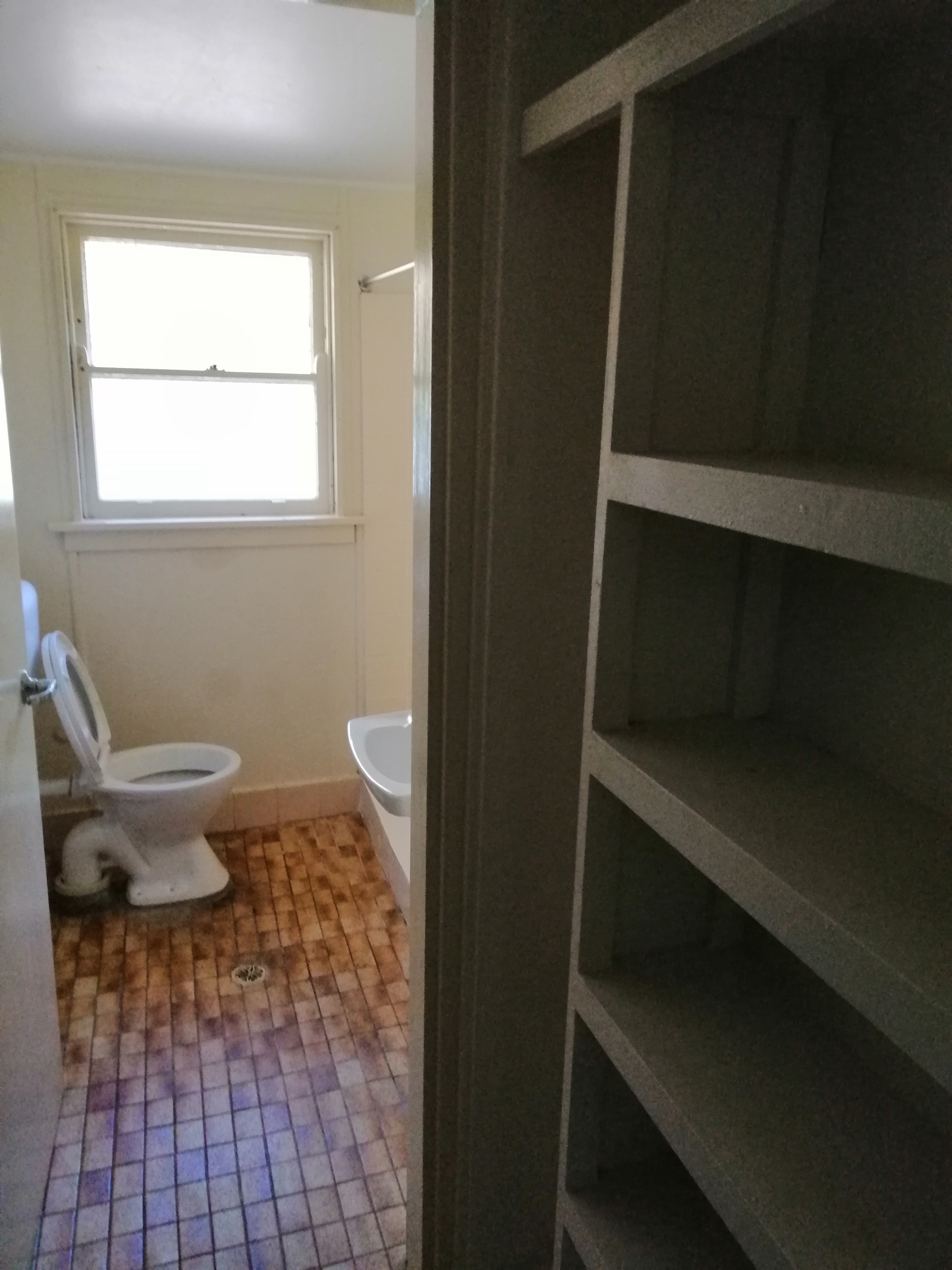
As the images imply it is a studio apartment with separate bathroom and separate kitchen (kitchen not added here). It is on the ground floor with merely one of three without protected bard on the windows, all the flats around that place have them, not that location. A serious kick would remove the door if they are unwilling to go via the window. I was standing in the two opposite corners implying that the living space is less than 4 meters long and almost 3 meters wide, so it is around 12 square meters; the inner doors were removed, so the kitchen and bathroom were all open. If the doors are added, usable space for the living room decreases by over 1 square meter twice over. More important, if you add a one person bed, a table and a chair, the available space is pretty much gone, even more important, it seems unlikely that a TV and a computer will fit; there will be no space for a sofa, entertaining guests is out of the question. Neither the bathroom nor the kitchen will fit a washing machine, so laundry will need to be done by hand. The kitchen was actually decent sized, yet there is a lack of storage there too and with one corner requiring the fridge (there was space for that) we will have to just eat in the living room, which is what most people do anyway. The door for the bathroom was missing and the frame implies it opens outwards, forcing the bed to be right in front of the window. The bathroom is luxurious in size compared to all other parts or this place, yet no space for a washing machine here either. The shelves on the right are the only shelf space I saw in this ‘apartment’, implying the need for a cupboard for clothes, but where to place it, there was no space left. Yet Housing NSW sees this as a very acceptable unit for one person. I think I have to disagree with that. Pricing was not an issue, the price was decently amazing for this dog shed, compared to what else I saw the price was right, but who is willing to live in a dog shed even if the price is right?

The place is away from most options and conveniences and that is not the big issue, not if the place was more secure and larger, the living unit needed to be 50%-100% larger and have space for a washing machine (in either kitchen or bathroom). I believe that only prisons are smaller and whoever comes out of prison might find it acceptable, which is until that person starts yearning for a washing machine to keep clothes clean when that happens all bets are off.

I know that there are perfectly decent places to get, but they are rare, really rare. Only last Monday did we see: ‘Homelessness in NSW reaches ‘crisis point’‘, the problem is that political Sydney has been catering (read: sucking up) to big corporations for too long, there has not been one clear action, not one clear activity to actually achieve anything regarding social housing or affordable housing in general. In this article (at https://probonoaustralia.com.au/news/2019/08/homelessness-in-nsw-reaches-crisis-point/)

We see: “To break the cycle of homelessness we need the [New South Wales] and federal governments to fund more social and affordable housing in the inner city“, as well as “A recent City of Sydney street count found while the number of people sleeping rough fell from 278 in August last year to 254, the use of temporary accommodation rose by 16.8 per cent“. Both are debatable on a few levels. In the first, the housing issue is far beyond the inner city, even when we take out a few high end suburbs (like Kiribilly and Bondi), the bulk of all suburbs have a large lack of affordable housing. the lack has been clearly seen in the inner city, inner west, eastern suburbs, northern suburbs, northern shores, Chatswood, St. Leonards, Woolloomooloo, Kings Cross, Edgecliff, and this list goes on for close to a dozen suburbs more, all lacking, all failing. The second larger failing is that it only seems that rough sleeping fell, the homeless support systems are now all in a stage where they are not allowed to offer sleeping places for more than a year, all that whilst everyone knows that the waiting list on NSW housing is 6 or more years. Even as we accept “The NSW government has invested around $1 billion in funding for homelessness services over the past four years” that number becomes highly debatable when we nit-pick through that list and see where all the money had gone to. In this when we look at the statement by NSW Communities Minister Gareth Ward “Since 2017, our assertive outreach teams have helped house more than 450 people previously sleeping rough on inner city streets” we need to add a little dimensionality, 450 people in two years comes down to less than 19 a month. Now, I am happy for those 19 people, yet if the house I showed is all they get, they are still in a bad place, missing doors, essential options and some level of security. This is not on Gareth Ward. This is on a much larger Australian parliament failing its residents and citizens. Yet that government has been catering to players like CBRE Residential Projects, with a dozen projects, according to their search engine options below $700K (not that affordable, yet there are no prices given, not anywhere. So when you look https://www.cbresi.com.au/, wonder what you can afford. Because as I stated, these places usually are not given a price and only after you give all YOUR details will someone optionally get in touch with you. so if buying a place is what you need consider that at a max of $500K, most real estate places will give ‘We couldn’t find anything that quite matches your search‘, when you seek rental in Sydney and you are able to afford $300 per week (which is way above senior budget, the most likely response from the system is ‘*****THIS IS FOR A CARSPACE ONLY******‘, so a dog shed is all you can hope for (at best).

Whilst rentals in a place only slightly bigger than the one I visited started at $345 a week, implying that the old given “Economists say you shouldn’t spend more than 30% of your earnings on rental costs” is a bloody joke, many are in a stage where they spend 50% or more on rental, some even is high as 75%-85%, that number shows just how delusional some housing economists are, the numbers they rely on have been outdated for well over a decade, even in my good days is was already on 40% of income for rental, and when it comes to food 10% is a massive difference on any budget.

Housing issues is a sign of the times, it is not a mystery, it is a given, what is also a given is that many governments needed to do a lot more well over a decade ago and it was all pushed forward in some empty scheme to let realtors pay for it all, something that was never ever going to happen. It is a large population. In the Netherlands the housing shortage is dangerously close to 1% of its population, In Sweden is was given that 80% of all municipalities faced a housing shortage (not just the big cities), what is interesting is that I saw the dream house in Sweden (in a smaller town) that was the size of a villa (with 4 bedrooms) and went at the price of €40,000, which is truly unbelievable. So sad I missed out, it actually was on a hill and looked out over Långsjön Lake, the fact that I missed out on that palace still makes me sad 15 years later.

The fact is not merely the entire housing issue, when you combine housing issues and age discrimination, the entire matter becomes a lot worse and more pressing, but not to worry, at least 5 governments remain in denial of age discrimination as well, so it is all a nice and compact package ruled by short sighted people (seemingly the trademark of many politicians).


Leave a comment

Filed under Finance, Media, Politics

In my house I decide

Do you have that situation where you are and you want a new sofa, so you decide to buy a new sofa? So far, so good. You go to the shop and you buy the sofa you want. Now this is the setting where the flavour changes. So now you are there and you almost have it, yet you need it in Cobalt blue and it has to be 35 cm wider. So you tell the furniture maker that you expect that model to be there as per next week.

This is where we are when we see ‘Trump Pressures Saudi Arabia to Increase Oil Production‘. With the quote “President Trump tweeted on Saturday that he had once again leaned on Saudi Arabia, the world’s largest oil exporter, to increase production by as much as 2 million barrels a day” the NY Times implies at (https://www.nytimes.com/2018/06/30/us/trump-oil-saudi-arabia.html) that the US is in charge of Saudi productions. So in light of the setting that Bloomberg gives through “President Donald Trump said he persuaded Saudi Arabia to effectively boost oil production to its maximum capacity to cool down prices“. In that directive, I think that we all deserve equality and that fair prices need to be set. So in that setting, it is my view to demand from the president that he call Bill Gates and demand that the pressure on the life of gamers need to be equalised and through that, he must demand that Microsoft on line stores prices should not be more than 20% of the physical copy of a Microsoft product, or a Microsoft Live, or a Microsoft game console product.

You get it Donald? It’s their house, their product, their choice. Your predecessors fucked up ‘your’ house by not properly taking care, now that the consequences are here, you have to pay, that is the deal in real life. 1300 children are killed each year through guns because the previous holders of the oval office refused to take proper care (an ATF reflection).

The people are in a state when we see that California has the 50th lowest quality of life for all states in the US, a consequence of not being able to set the proper stage against exploitation, yet that is not possible as we see through CNN (at https://edition.cnn.com/2018/01/13/opinions/sams-club-walmart-corporate-greed-tasini-opinion/index.html). We merely have to see: “as if by doling out money, Walmart should earn a medal. But, let’s look closely at the reality. If you worked 40 hours a week, 52 weeks a year at $11 per hour, with not a shred of time off, you would earn $22,880. The federal poverty rate for a family of four is $24,600 — and the formula for the official poverty rate understates the difficulty of surviving at that income level“, now consider getting by anywhere in California on $22K, that whilst the bills pile up and when we consider the dozens of Sam’s club stores closing in California, the people will need to see where they can ends meet soon thereafter. It means more mileage and that is where cheap oil is essential, without cheap oil the American cogs stop. So as the US has already pissed off the larger player (Iran), it is desperate to get Saudi to give 2 million barrels a day more so that the price can be kept low. Yet, why should they? Were we given fair dealings in the 90’s? When oil makers could make a killing in upsizing price on petrol, were we protected? No, we were not, yet now, all have to give in for the needs of America. So what’s in it for Saudi Arabia, two F-35 squadrons on the house perhaps? So now we get to US News (at https://www.usnews.com/news/business/articles/2018-06-30/trump-claims-saudi-arabia-will-boost-oil-production), where we see: “”During the call, the two leaders stressed the need to make efforts to maintain the stability of oil markets and the growth of the global economy,” the statement said. It added that there also was an understanding that oil-producing countries would need “to compensate for any potential shortage of supplies.” It did not elaborate. In a statement issued Saturday night, the White House did not specify that Saudi Arabia would increase production but that “King Salman affirmed that the Kingdom maintains a two million barrel per day spare capacity, which it will prudently use if and when necessary to ensure market balance and stability, and in coordination with its producer partners, to respond to any eventuality.”“, yet in that how must we see ‘necessary to ensure market balance and stability‘, and in line towards the needs of others? How is that seen? You see the US is not the only place with an issue, even as the signals are clearest in the US, seeing southern Europe in a state where ends can barely be met, the need is actually seen in different ways. That is partially set when we go to Oilprice dot com. There we see Gail Tverberg give us: “Newspapers in the United States seem to emphasize the positive aspects of the drop in prices. I have written Ten Reasons Why High Oil Prices are a Problem. If our only problem was high oil prices, then low oil prices would seem to be a solution. Unfortunately, the problem we are encountering now is extremely low prices. If prices continue at this low level, or go even lower, we are in deep trouble with respect to future oil extraction“. When we look back we see that the oil prices have been above what it is now from 2004 onwards, with a small dip in 2009. So the issue of prices should not have been an issue, because all prices go up, even if the production prices go down (like downloading online games), the full price (sometimes even more is demanded, also when the shoe is on the other foot, does the US have any right to complain? In this Europe is in a similar track. This is clearest seen in the Independent (at https://www.independent.co.uk/news/business/news/uk-petrol-pump-prices-latest-rise-crude-oil-diesel-cost-aa-a8382801.html), where we are treated to: “UK petrol prices near four-year high despite crude oil costs falling. Latest figures from AA show pump prices have not followed the slight decline in crude costs over recent weeks“, in addition we were given “Less than a month ago, the petrol retailers were falling over themselves to warn of pump prices at record levels. Now that the price of oil has fallen away and fuel costs have followed, in true form, they have kept quiet and carried on charging cash-strapped motorists the maximum for their fuel“, that was last month, and now there are indication that such a move might not be far behind in the US and for them the only remaining option is to artificially push prices down.

So who is in charge in the house of Saud? One would assume the King, yet the way the US is presenting the news, he is not and that is a really bad move to make. If there is a chance that barrels get back to $100 each, the setting from California becomes a nightmare, with summer and no air conditioning, the people are faced with air conditioning in their cars, so that they, oh no! They cannot afford the gas, because when a full working week still leaves you $2,000 below the poverty threshold, we will see that life in California will not be one for the better, but one for the lesser. So when we get back to the quality of life with Texas in 46th, Nevada 43rd, Alabama 35th, and Georgia 32nd, those living there and smothering to death because of the fuel prices might consider North Dakota in 1st, just be aware that they also get fuel prices, they get them in winter. Yet the list (at https://www.businessinsider.com.au/us-news-best-states-quality-of-life-ranked-2018-2), in the end, the quality of life i not merely the heating and electricity, the fact that I push it does not make it correct, it is merely a factor in that larger setting of a nation where equilibrium has faltered for too much and the unbalance is not merely there, it is also all over Europe. The entire ‘everyone on the equal size‘ was never going to work, but those worse off were willing to sign on for the EU fairy tale. Now that the dream ended and the owners of resources have a clear option to push forward their own agenda’s, the other players start being cranky because they continued the unrealistic dream.

It does not stop there, in their house (the USA) the issues are now equally exploding as Axios reported that “21,000 companies in the United States have filed for tariff exclusions claiming Trump’s trade war has caused layoffs and makes them at risk of folding completely“, yes that was always a danger and it is now hitting the US full on, so whilst there was the given notice of benefit, the drawback is growing almost exponentially. That whilst CBC (the Canadian edition) reported “On Friday, the federal government unveiled an updated list of U.S. products that are about to be slapped with tariffs while promising to spend up to $2 billion to protect jobs in the steel and aluminium sectors on this side of the border in the wake of a burgeoning trade war with the U.S.“, so not only is the US down $2 billion (and a lot more than that), the inflicted damage of businesses folding (as Axios stated it), is the double whammy of the worst kind on the US economy. So not only are they facing ‘retaliatory’ issues from Mexico, China and Canada. The setting is now that in addition to the backlash on one side, the other side is buckling too. This is given to us by Jeremy Grantham (co-founder and chief investment strategist of Grantham, Mayo, & van Otterloo, a Boston-based asset management firm) gave us “Once you start thinking in certainties, you have real trouble. When the facts move against me, I moved down from 50 per cent probable to 35, which is my official forecast. If we keep on fighting trade wars with Canada and the EU, and so on, it will go to 30, and then eventually 25 and fade away“, so these are merely probabilities of making even or better. So how many will invest their fortune when the chance of merely breaking even is on a half way chance or worse? It seems to me that the option of short selling US commodities never looked better. Don’t take his word for it, I surely wouldn’t do that. What can a 79 year old Brit tell you? The fact that he is on the list of the 50 most influential voices in the market would not count, would it?

We can agree that the house of Trump is in all kinds of settings and dangers, but it is his house (to merely coin a phase). In that same place the house of Saud is the sandbox of King Salman of Saudi Arabia (with oil and all). The mention that: ‘he had once again leaned on Saudi Arabia‘, is not only a wrong setting, it is a disrespectful one and the NY Times should have known better. You see, the NY Times implied a quote, yet the actual quote was: “Just spoke to King Salman of Saudi Arabia and explained to him that, because of the turmoil & disfunction in Iran and Venezuela, I am asking that Saudi Arabia increase oil production, maybe up to 2,000,000 barrels, to make up the difference…Prices to high! He has agreed!“, which is a very different setting. Now, we will never accuse President Trump that he has any correlation to a diplomatic mind, but the given issues ‘turmoil & disfunction in Iran‘ , as well as ‘am asking that Saudi Arabia increase oil production, maybe up to 2,000,000 barrels‘, the message is not the same and there the NY Times failed the readers in a disastrous way.

There we see that a dialogue is optionally created where lowering oil prices might get the US through the next summer and winter. In these two houses (US & Saudi Arabia), we see changes, we see technological progress in Saudi Arabia, yet in the US that is happening less and less because the house of US is as Americans say ‘not a house of us‘, it is the house of Wall Street and we are merely allowed to rent it for now. It is a dangerous setting and the changes that the Tariff war will push, as well as the exploitative nature of corporate America. You merely have to look at the track that it took for minimum wages to go up by $1 an hour and when you consider that the minimum wage was $7.50 in 2007, So when you consider the consumer price index and that it was 209.876 in 2007, and that it is now 261.696 implies a 24% shift, the income gives rise a 46% increase, one would state that this is good. Yet the one does not refer to the other and that is where the people are really hurt by people hiding behind consumer indexes. You see, the Consumer Price Index (CPI) is a measure that examines the weighted average of prices of a basket of consumer goods and services, such as transportation, food and medical care. It is calculated by taking price changes for each item in the predetermined basket of goods and averaging them. And that is where the issues start. Not merely the ‘average’, the fact of where they are offered and where the people are. Transportation has taken a much larger shift as has the price of medication, so the entire setting is out of balance. So when we see: “The cost of living in California is higher than the national average. State of California salaries average $62,964.00, indicating a pay rate that is higher than the U.S. average annual salary by $9,343.00. The consumer price index (CPI) of 270 in California is 10.20% higher than the U.S. city average CPI of 245. The sales tax is 7.25%“, all shifts that line up and now look back at the Wal-Mart person having to get by on $22K. Now, California is the most visible one, but by no feat the only one, or the largest one and similar issues are growing in Europe. That is the shift that matters. We need to make sure our houses are in order and we have rights to decide on how our house is set in order, the ones elected to be in charge decide, not the media or the players setting a stage of profiteering. The gap of rich and poor does not merely exist, the gap between the two is growing faster and faster on a daily basis. Did anyone ever signed up for that?

I have no issuer that the well-educated and the visionaries make more, because that is the game, yet the issues are growing where those who have neither are rigging the game in their favour and against everyone else. The mere indication that governments let them is also a larger issue and even as we see that it is the largest in Wall Street, that same issue is seen all over the world, even in Australia where parliament is all up in arms on issues that are not gifted with any evidence on stopping Huawei, whilst we see a larger push from places like CBRE and the Noble Investment Group on housing that no one seems to be able to afford. The leaflets look to good to be true, but when we see, it is all in Chinese, is that not peculiar in Sydney? Whilst we see in the Sydney Morning Herald (at https://www.smh.com.au/business/companies/investors-snap-up-90m-in-city-fringe-offices-20180610-p4zknj.html), ‘Investors snap up $90m in City fringe offices‘ with the quote “Investors have snapped up more than $95 million in sales of city fringe office assets to get a foothold in the booming sector“, with in addition “CBRE and JLL recently co-sold the 7 City View Road property in Pennant Hills, Sydney to EG Funds Management for $32 million. It is leased to the National Broadband Network, which is moving to Dexus Property’s 100 Mount Street when its completed, and Government Property NSW“, that whilst social housing is at an all-time low. Is it not interesting how governments give millions away with a marketing ploy down the road that it feeds the coffers? Yet when you give away 90 million, how much do you snap up? That in contrast from Android Headlines, who gives us: “In a prepared statement, Australian Prime Minister Malcolm Turnbull asserted the laws passed on Thursday aren’t meant to target any particular country but previously went on record to express concerns about China’s geopolitical ambitions in the region, having previously admitted the new legislation is bound to raise tensions between Canberra and Beijing. Previous reports suggested Australian lawmakers resolved to enact harsher punishments for foreign political interference attempts after the local intelligence community provided them with evidence suggesting China attempted to influence a broad range of its institutions, going to the very top of the administration“. So when we see ‘harsher punishments for foreign political interference‘ did the PM consider that they already opened the door to make housing unaffordable? So when you can no longer afford to live anywhere, does it matter what happens afterwards? It seems to me that the PM is playing a game of the parliamentary calling the landlord dubious, whilst giving a wide open field to those changing the settings towards Australian quality of life. It seems almost childish to look at the Huawei Mobile because it was not made in America.

So when we look at ‘In my house I decide’ was that merely the building, or does that include the commodities and the Feng Shui setting of what brand of mobile is allowed and who delivers the crude that pumps the ovens for the creation of electricity to recharge our mobiles?

How deep did the security services look into the fact of those (read: Chinese investors) who are the upcoming landlords of Sydney


Leave a comment

Filed under Finance, Media, Politics