Tag Archives: Islington

How to design a death trap

The Grenfell inquiry is still going on and the last testimony from Dr Barbara Lane is not just an eye opener, it shows two elemental parts. The first is that the ‘stay put’ scenario could never have worked, the second one is that the cladding itself had the additional issue of getting set against combustible materials. That does not make the person who decided on the cladding innocent, it merely proves that the people behind it all failed in spectacular ways. The first part given is “Styrofoam core panels were installed between the new windows and around kitchen vents; ethylene propylene diene terpolymer was used around the new window frames; and polyurethane expanding foam was used to fill joints in the insulation and in gaps between new windows and walls – all combustible materials. She also found combustible polymeric foam above some windows, even though there was no evidence of it being specified, and polyisocyanurate foam that was not in the design” This states that not only was there more combustible materials, there was additional combustible materials that were not even part of the design. So someone acted, someone approved those additional costs. Then we get the first killer. With “horizontal cavity barriers designed to stop fire spreading through the facade had wrongly been installed vertically. They feature an intumescent strip that is meant to expand and close the gap during a fire, but some of these barriers were installed facing into the existing concrete, rendering them useless. She said some of the required cavity barriers had simply not been installed around windows“, we see not merely a construction error, a direct flaw on parts that would stop fires, or at least largely decrease the speed was done wrong and now we see that the building had ‘vent columns‘ to allow the fire to reach maximum speed. At this point, we have issues with procurement, with the installation and construction inspection. Optionally, the architectural setting was wrong, which gives us a failing on nearly every level from the council to the person telling the man with the drill what to do and where to do it. I think that this is a first for me, to see failing to this degree. The stay put was basically a death sentence in 30 minutes. It is the additional “more than 100 fire doors inside Grenfell did not meet fire regulations” that gives the light that the corridors would have been as deadly as the apartment to stay put in, in close to 30 minutes. She gives a few more points, but at this stage, what she gives out is that the killing blow would have been close to a given when those remained inside beyond the first 15 minutes. The article ends with “The same compartmentalisation strategy was essential for firefighting internally, which relied on a working firefighting lift, protected lobbies, ways of getting water up the buildings, a protected space between the firefighting stair and the flats. All of these failed to one degree or another“, now we see that Grenfell was a death-trap for tenants and firefighters alike, the fact that no firefighter died that day is a small miracle to say the least.

So in all this, when we consider the Telegraph article a day earlier (a clear reason for a second Leveson), we see a different side. The article job is a hatchet job by Hayley Dixon, a person who should not be allowed in journalism (a personal belief on mine due to this one article). So when we get back to the title ‘Grenfell survivors question why it took 15 minutes for firefighters to tackle initial blaze‘, and as Hayley Dixon published this at 21:30 local time the previous day. Was this the result of writers block? Was this a mere emotional writing of 104 words to meet a deadline requirement? If so, how irresponsible is the editor? When we put the Telegraph article next to the Independent, the Guardian and the testimony of Dr Barbara Lane, we are confronted with the emotional push of some kind? You see, the setting we see now, the videos that are online and the pictures clearly show that there was nothing normal about the fire and that Grenfell was a constructed death-trap in the shape of a Roman candle. Additional views (from the Independent) gave us “One survivor reported that building’s dry risers – vertical pipes used by firefighters to distribute water to multiple levels of a building – were not working“, so in all this, how was the Telegraph article not merely a waste of space and existence?

This entire fish gets another flavour when we consider an earlier BBC article (at https://www.bbc.com/news/uk-40330789). In this we see “Four ministers – all from the Department for Communities and Local Government – received letters but did not strengthen the regulations. Ronnie King, a former chief fire officer who sits on the group, says the government has ignored repeated warnings about tower block safety. “We have spent four years saying ‘Listen, we have got the evidence, we’ve provided you with the evidence, there is clear public opinion towards this, you ought to move on this’,” said Mr King.”” we would expect that at least some move would be made and even as the cladding and other issues now showing would not have stopped anything, better regulations might have at least delayed enough for people to reconsider getting out. So who gets to be on the front page? Yes it is Liberal Democrat MP Stephen Williams – who was then a minister in the department – replied: “I have neither seen nor heard anything that would suggest that consideration of these specific potential changes is urgent and I am not willing to disrupt the work of this department by asking that these matters are brought forward“. This can be countered by the BBC (at https://www.bbc.com/news/uk-40422922, where we see “London Fire Brigade warned all 33 councils about the potential risks of external cladding on tower blocks in May this year, the BBC has learned. It followed tests on panels from a high rise that suffered a fire last August. The insulation panels were made up of polystyrene and plywood, and tests concluded they were the likely cause of the fire spreading up the outside“, so there was clear evidence from May 2017 (after his ‘reign’), yet the issues had been clear put forward in 2014 when he was there. He remains in our sights when we realise that this had been going on since 2009, as it was highlighted at the coroner’s inquest into a fire at Lakanal House in Camberwell in 2009, which led to the deaths of six people, including three children. So at that point, the words of Liberal Democrat MP Stephen Williams become a statement of falsehood the moment he spoke them in 2014. When we hear ‘I am not willing to disrupt the work of this department by asking that these matters are brought forward‘, whilst there is a clear coroner’s inquest regarding 6 people, including 3 children, when did ‘disrupt the work of this department‘ become an accepted answer?

I am not sure if we could blame the London Fire Brigade from walking away in the future and let 100% of London burn down, you know, they would not want to ‘disrupt any department‘ by caring, now would they?

The fact is just slightly too dark when we consider that there was ample evidence up to 9 years before the Grenfell blaze. If there is one positive, we might see a change where councils need the office of Dany Cotton, or the office of her previous post where she was the Director of Safety and Assurance at the London Fire Brigade, to sign off on any refurbishment before allowing it to happen. It would optionally stop every council from seeking a ‘short cut’ to adhere to the wishes of rich investors. I am mentioning this, because it will have to be said again and again that the refurbishment and cladding was added “a low-cost way of improving the front of the building – was chosen in part so that the tower would look better when seen from the conservation areas and luxury flats that surround North Kensington, according to planning documents, as well as to insulate it” (source: The Independent). So as luxury flat owners nearby thought Grenfell was too yucky, it ended up being upgraded from apartment building to Roman candle.

I believe that the testimony of Dr Barbara Lane is one of the most damaging to the council, the constructors and decision makers in the refurbishment of Grenfell we have ever seen, the question will turn soon enough into: ‘how many death-traps are there in London?’ It is merely my personal view that there is a level of complacency to set the economic values of London in a way that might be way too dangerous for the people living there. If we see these issues in North Kensington and Chelsea, what would we find if there was an actual serious look at a council like Islington? The fact that Islington is overcrowded, it is growing in the sparkling area for socialites and professionals, so the visibility is high. Even as the London Metropolitan Police is working hard to lower the rising crime number, the impact of a Grenfell like event in Islington will do more than merely burn a building and the people in there. now, let’s also realise that Islington is nowhere near the worst, Also, the high rise situation seems a lot better, yet the overcrowded part seems to give ‘rise’ to other considerations and whilst we all focus on high rises, there are other ways for fires to propagate. Another reason to raise Islington is that so far its housing strategy (2014-2019) looks nice (as all brochures are), we also see that house prices are close to 50% higher than the London average, so the damage is a lot bigger if things do go pear shaped. I also raised it as I know it decently well, yet the brochure on page 29, who gives us all the acts and strategies and legislation gives no voice to the fire dangers. The Housing Act 2004 does give two mentions, ‘Consultation with fire and rescue authorities in certain cases‘ as well as ‘miscellaneous repeals etc. in relation to fire hazards‘, yet there is more. You see even as the brochure might look less sexy by mentioning an issue like: “Depending on the type of property and how it is occupied some or all of the following will apply:

  • the Building Regulations 2010 Part B
  • Housing Health & Safety Rating System
  • The Smoke and Carbon Monoxide Alarm (England) Regulations 2015
  • The Regulatory Reform (Fire Safety) Order 2005

The issue we see with Grenfell is the lack of fire prevention focus, the Housing Strategy for Islington 2014-2019 shows that there is a mere reference to the Housing Act 2004, yet housing strategy is a lot larger towards tenancy and Asset management, and in a place as overcrowded as Islington it could become a problem. Now we understand that Grenfell is only a year old, yet there is additional evidence on several levels that this is an issue that had been going on since 2009, so even as we ‘brand’ Liberal Democrat MP Stephen Williams by his extremely poorly chosen words. He is not alone in not having a much larger fire safety focus. The question becomes if the councils were much stronger on fire prevention, would Grenfell have been prevented? My personal believe is that this would be an absolute certain. The failings that Dr Barbara Lane gave testimony on reflects the failing on nearly every level, so as more levels need to mandatory look at certain hazards, issues would have been brought to light (a personal belief), in this London (not just Kensington and Chelsea) have a much larger workload to content with and these changes would require a reflection on a multitude of levels in the coming year. Even as we accept that voices from Islington stated “Fire safety in Islington. We are the landlord/freeholder for over 35,000 households, and we take our responsibility for your safety very seriously“, we accept that this is a response to Grenfell, yet the housing strategy also shown that there was not enough focus in the past. One additional page in that brochure on certain (read: specific) hazards could have given light that the Islington council had that focus, we now merely see (read: expect) that this is not entirely the case.

London and a lot more metropolitan areas like London mind you will have to adjust their current course on actions and considerations when it comes to fire hazard, because we do not want the London population to wake up looking at the speculative sights shown below from a distance.
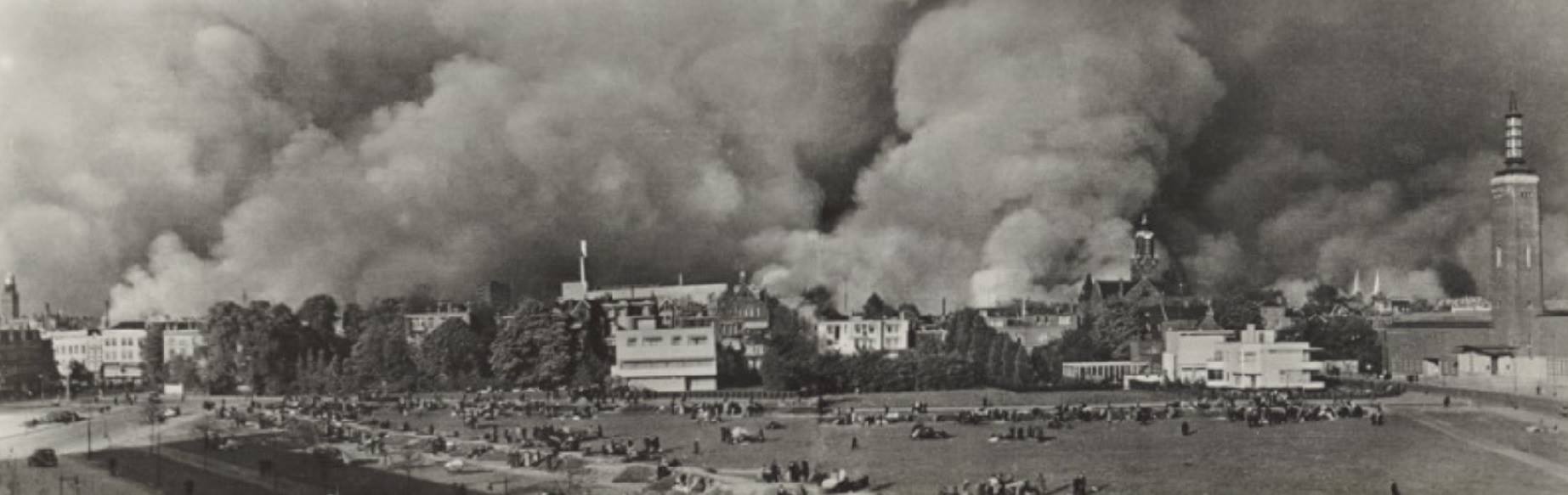
Rotterdam 1940


OR
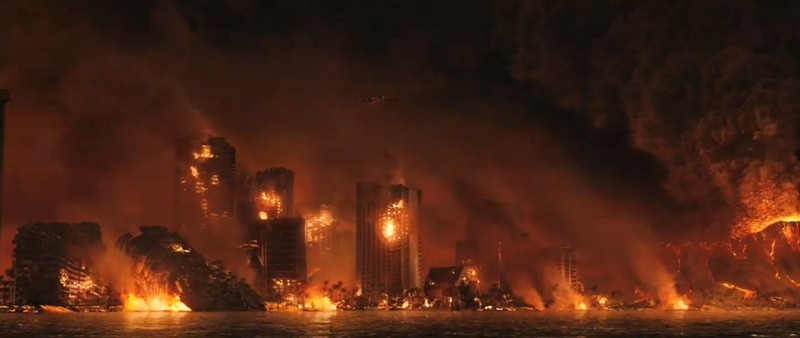
Hawaii 2012

Leave a comment

Filed under Law, Media, Politics

Sex Driven Developers

There are always ways to find weaknesses in government; there is a decent chance that we find them on a daily basis. Yet, how must we react when the foundation of those making the decisions are now in a runt of enabling? What happens when the government first decides on cyber rules for the safety of all whilst opening a bordello around the corner so that those in dire need of affordable housing are getting screwed over?

This is what is on the goose feather of Julia Kollewe as she dipped it into the ink jar and gave us ‘Battersea Power Station developer slashes number of affordable homes‘ (at https://www.theguardian.com/uk-news/2017/jun/21/battersea-power-station-affordable-homes-almost-halved-by-developer). She is trying to wake up pretty much everyone with this and it should wake us all up. You see, the next decade is about the dire need of affordable housing, London is in danger of alienating the very population that is the means for its survival. You see, in my mind, greed is not a ‘technical issue‘. Greed merely is and never goes away. A technical issue is when you get the cement batter wrong in one shipment, a technical issue is when you are looking at a square and you calculated for 5 corners. When you have a £9 billion project and you have to redesign 40%, you are in my humble opinion screwing people over for your need of greed and profit whilst ‘putain‘ the 250 people now left outside in the cold (pardon my French). So as we see that someone clever from these Malaysian investors, are now trying to maximise profit by slashing the affordable housing part as we read: “The affordable home proposals amounted to 15% of the total 4,239 homes planned, which included luxury pads ranging from £800,000 for a studio atop the former power station to £4m for a four-bedroom flat (the three penthouses have yet to be priced).” there is no other option but to fight back. In this there are two options left to the government. One is to get the list of investors and they are to be banned from any other real estate investment in the UK for 5 years. The second option would be that if the apartments are uninhabited for over 40% of the time, there must be a large service surcharge to the building services. Once that these investors have to report these surcharges in the upcoming sales bill, they might have to let slip some of their expected profits. In all this, the ‘compensation‘ of mentioned “build the 386 affordable homes three years earlier than previously envisaged, which means residents will receive their keys in 2020. They will be located in apartment blocks near the power station“, is only a small band aid, because it is not just about time, it is about space and location, the space of 250 apartments is now gone! We sometimes state that no man is an island, but the UK kind of is, so that means that once the space is gone, it is definitively gone. We also get the quote “an assessment of the profits the developer expects to make. Independent adviser BNP Paribas advised the council that it is “very unlikely” that the 250 homes will materialise“. So when we see this ‘independent’ party. Have they been on this project from the very beginning? You see, if that is true than we see a feigned level of incompetence. From my point of view, BNP Paribas is not just the largest bank in France; it is one of the largest banks in the world, so when they make an £9B ‘oopsie’, something else is going on. From my speculated view is that they had made for whatever plan they could offer so that they could get the project, whilst down the track they adjusted the view to get the results their investors needed and submitted the new plans so that they end up getting what they wanted in the first place. I cannot tell how deep BNP Paribas is into this as ‘Independent adviser‘ implies that they could have been called in down the track, not initially. In support of this view the article also gives us: “Keith Garner, a local architect who has campaigned against the Battersea project for years, said: “Underlying it, the financial model is all wrong. A developer-led project to conserve, repair and bring back in to use a famous London landmark is turning in to a predictable disaster“. This now gives us two parts. The first is that this is not just coming to view and even as the lord Mayor Sadiq Khan is only now coming into view, his administration as well as the previous one, will now need to show clearly that due diligence was maintained throughout the project including the view and calculations before approval was given. This puts Boris Johnson equally on the hot chair as his team comes under scrutiny. If we are to maintain the push for affordable housing, we cannot accept screw ups of this magnitude. Because once the cashable buildings are gone, it is over and no other option remains. It is the curse of sitting on an island. Keith Garner has been vocal in the past, going back even before January 2015, yet from this point onwards we see Keybridge House in Vauxhall where only 4.5% became affordable (19 out of 419), it seems to me that when we tally that part the failure is a lot larger than most realise. Even then there was a list for the PowerStation with a setting of ‘3,444 new homes at the power station 560, or 16%, will be affordable‘, so the list got slashed before and it got slashed again. Actually, the numbers changed as 3,444 became 4239, so there has been more ‘revamping’ it seems that a project this much in flux implies that certain elements were either never set or set in a questionable way. Now, we get that things change, there are always details that need ‘alteration‘ yet when you ‘suddenly‘ add 795 apartments (which under normal conditions seem to be 2-4 additional towers, we should agree that ‘questionable‘ is very much the better word to use (without getting to rude and rely on the ‘putain’ word).

Another issue is seen in “Officers appreciate the level of stresses a scheme of this size and complexity has and that the main priorities of the scheme have been the conservation and redevelopment of the listed power station building, the delivery of the Northern Line extension and new underground station and the jobs to be created as part of the new town centre“, you see, as investors are always happy to sue the pants of any official, the mention of ‘delivery of the Northern Line extension and new underground station‘ is not a problem to the Malaysian investors, so if the UK government had impeded the development of an agreed project, the government get the invoice. So there is now the implied issue that there was a mere trade off and 250 affordable homes were scrapped. Is that not a view you would envision? In addition ‘jobs to be created as part of the new town centre‘ sounds nice, but how is that part of the powerhouse building project? So as this all comes to heads in “A report by the Wandsworth council planning officer recommends that the proposals be approved, ahead of a meeting of the planning committee on Thursday evening“, there is the speculated issue that the Wandsworth council made a right mess of things and they are trying to appease the situation so that they keep their jobs and possibly avoid the wrath of parliament, there was just the need to scrap housing for 250 people who desperately needed them.

So, feel free to object and oppose my way of thinking, but that is how I see it. I understand that the UK needs economy, it needs houses and it needs jobs, but when a limited resource is wasted to this degree we need to ask questions loudly and there needs to be the revision of policies to make certain that affordable housing remains at the top of the list, and remains the top priority of the list of achievements. Yet in the last 2-3 years, there is additional evidence growing that what was a desperate need is ignored by those, because it does not really impact them.

Yet the 2015 article also gives some opposition. We see this in “Tony Travers, director of the Greater London group at the London School of Economics, says: “In fairness, the developer is being required to pay for a lot of other things. The land has to be used very intensely to produce enough yield to pay for the things that the government used to pay for.”“. OK, this is fair enough. My response would be: ‘I agree, but that is the assessment of an investment opportunity. The numbers are done and in the end it is either feasible or it is not!‘ So the investor could have walked away from it. If the government had found the £9B, it has the option to do it themselves, with a very different balance, and perhaps with only one penthouse, the other 2 could have become 3 3-bedrooms apartment each. In addition, as it is now less about profit, there could have been 900 affordable houses instead of the 636 initially envisioned. As I read the articles over time and the sources given, it seems to me that orchestration might have been at the centre of things from the beginning. That feeling is gotten from ‘The land has to be used very intensely to produce enough yield to pay for the things that the government used to pay for‘, you see, like some naval projects, where voting for adjustments is often much better than being the messenger on a failed project, because those investors would sue, and the eagerness of the Wandsworth council implies to some degree that there would be a case and a court settlement of £9B might not be the best way to go forward. And as we see in the past “Many flats were sold off-plan and, still unbuilt, are back on the market at higher prices. Just before Christmas one unbuilt studio flat in the power station, which had sold for close to £1m, was back on the market for £1.4m. Last week, estate agent Chestertons was reported to have other unbuilt flats on the market for £865,000 – £150,000 more than their original asking price” implies that investors are getting rich fast, so the entire drop of 250 affordable apartments is becoming more and more of a debatable issue.

Yet the final issue not seen in the latter article is most damning on both the houses of Sadiq Khan and Boris Johnson. The quote “the lack of a master plan for the area” is damning because it implies that the area could lose its identity, and I am willing to buy either a coffee with a cream cheese bagel with Salmon if they can clearly oppose the drop of value for the loss of identity validity. Those who truly move to London want to be in an area. They want to be part of Islington, Hammersmith or Chelsea. Some will prefer Southwark because of Hay’s galleria, yet in reality they might just do it because the hookers give much better value in that borough. Whatever reason we hear the identity of the place matters. And this requires a clear master plan. to some degree when it is in the hands of foreign investors, things go into flux, yet a clear master plan is essential the prevent London of becoming an anonymous place of chaos.

In this we remain at minus 250 apartments. You see, no matter how grand it all looks, the immediate need for infrastructure is simple. When the people have to travel too far to work, the job will no longer be a feasible solution. Even as some are pointing to an extension of the Northern Line, the simple truth is that it is an additional 15 minutes, meaning that some people will travel 90 minutes each way to get to (or from) a place where they can afford to live, on top of that travel costs are rising too. So the new place ends up being a ghost town without infrastructure. How is that an interesting investment when some could go in and out of this ghost town to burglar it into heaven as they get to do that unopposed? How many paintings and electronics need to be removed before the investors seek another place to go to?

All elements that seem to have been missed, all part of a master plan not in place and all linked to investment and economic plans that might have been dubious from the beginning. As I personally see it, a lack of long term oversight, checks and balances all cast aside for the quick profit and the marketable view of mentioning, to merely look good. And now Lord Mayor Sadiq Khan has the mess on his plate and he gets to see what might be salvaged, because when I see ‘A report by the Wandsworth council planning officer recommends that the proposals be approved‘, I wonder what has not hit the light of day yet and what else has to be sacrificed (or additional costs received) in the next upcoming year. Would you not wonder (read: worry) about that very same thing?


Leave a comment

Filed under Finance, Law, Media, Politics