
I got a little surprise when I saw the BBC article (at https://www.bbc.com/news/articles/cly23yknjy9o). The title ‘A fatal car crash in India sparks concerns over Google Maps’ Immediately two questions went through my brains. In the first there was How is Google involved? I like Google maps and I use it, but I do not rely on it. Too many dangers ahead of any trip and too many issues on how the data is made available. The second question came from the fact “three men died when their car veered off an unfinished bridge and fell on to a riverbed in the northern state of Uttar Pradesh.” The issue I see is”
- Were there no danger signs?
- Was the driver asleep (or driving way too fast)
- What assumptions were there to allow the thought “they believe that Google Maps led the group to take that route”.
As such we get to the first setting. An incomplete bridge sets the premise that there would be warnings all over the bridge and the road preceding the bridge. A little presumption from me, yet that setting has been a fact in many many countries. Signs like ‘incomplete bridge’, ‘hazard ahead’ and a few other signs like blinking lights.
Then we get to the driving. Was the driver paying attention. Were speed limits invoked. You can put all the signs you want, but if you go on an uncompleted bridge at 315KM/H there is the chance you might not find the breaks in time. The added setting of the driver paying attention to the road might also be a clear sign. Now to the Google Maps error. We presume it is an error, because if the road was assigned we would expect it to be completed. As such we get to the why it was in Google maps. This does not make Google responsible, but it would make sense that there people might have taken a wrongful turn. You can have any kind and level of tools aiding you, yet the setting becomes the driver and what he did. There is the thought the driver got Kristy Swanson’ed like Charlie Sheen did in the Chase (1994).

I would be a little distracted. Then there is the distracted driver everyone talks to while he is driving. All options that makes it not a Google issue. And there is the fact that Google was mentioned. Now, I cannot say which bridge it was (lack of clarity) but in Google maps I see
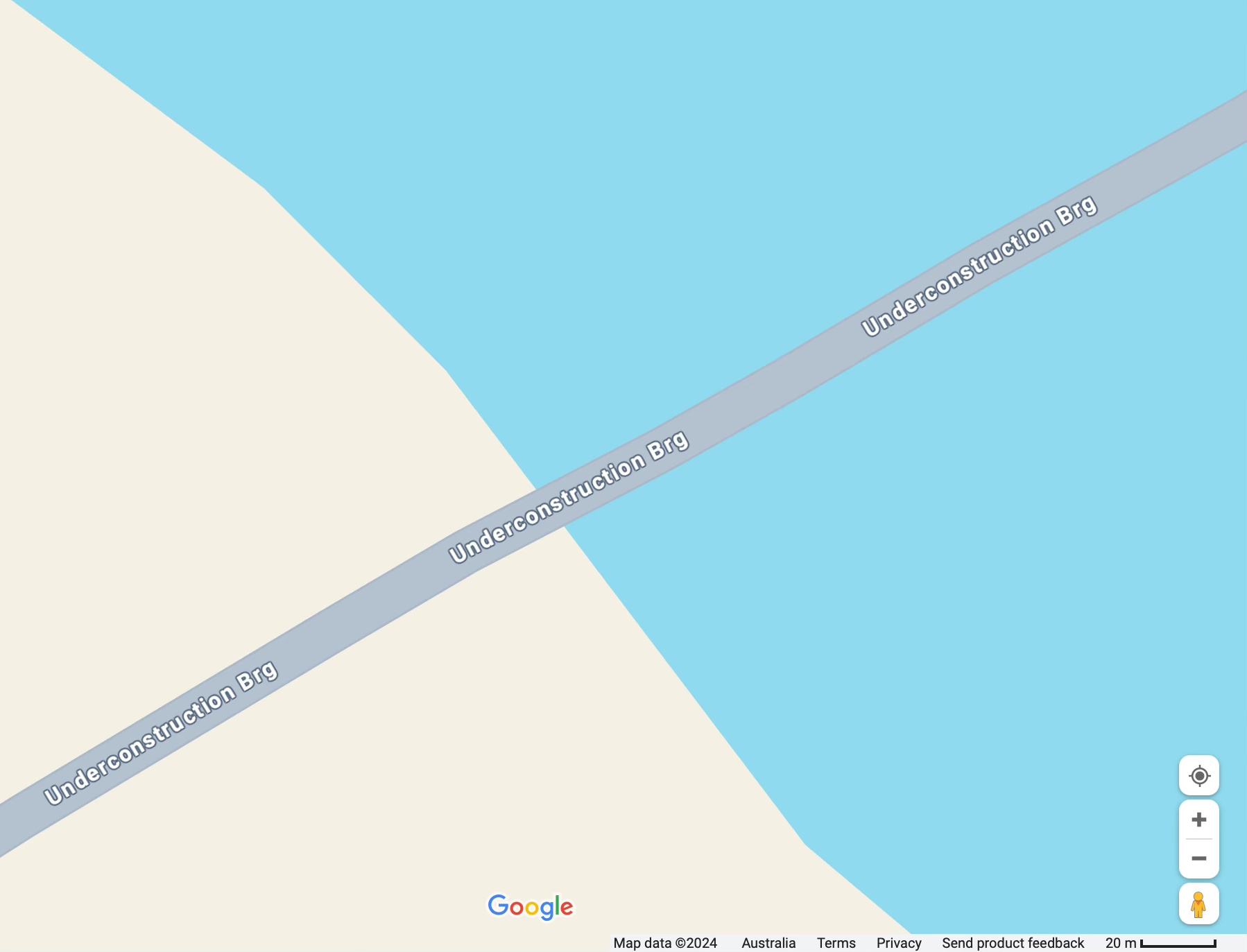
I cannot say whether it is this bridge, but the BBC didn’t bother with these details either, as such I can clearly see that THIS bridge is under construction. So did anyone get these details. And when we see the image the Hindustan Times gives us, I get back to the original presumption. Where were the danger signs? When you see the image of the bridge it would be the first I would think of, Google wouldn’t be in my mindset.
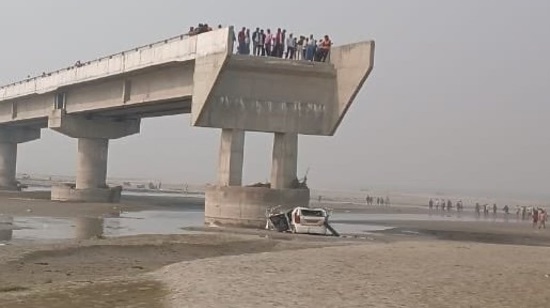
So as I see it Google has no blame here. It ties to give as best the information it is given and that is all it can do, the rest is with the Clowns thinking that they can blame Google at the drop of a hat, any hat.
So even as the Google people are cooperating, the first call should be the department responsible for the roadsigns, especially the fat whether the ‘Danger Warning’ was ever placed in the first place. And as we are given “Authorities have named four engineers from the state’s road department and an unnamed official from Google Maps in a police complaint on charges of culpable homicide.” I merely wonder if there was a mess up in India and the actual premise should have been “Authorities have named four engineers from the state’s road department in a police complaint on charges of culpable homicide.” Is this about the guilt, the responsibility or the setting that Google is asked to fork over 5.5 Rupee for the event.
I have my thought on the mess and none of them involve Google. Oh and another thing. How can we be certain that the driver wasn’t using Bing Maps? Not blaming Microsoft here, because as I see it they would be equally not guilty in this setting. But what data did the police have that Google was involved in the first place?
Have a great day and watch out for crossing sharks today.
 Lawrence van Rijn - Law Lord to be