Tag Archives: Bobby Axelrod

Hatred of wealth

We have seen it, we at times observed it, but for the BBC to actively support it is taking this to a new sight. This is the feeling I had when I saw the article ‘Climate change: Global ‘elite’ will need to slash high-carbon lifestyles’ an hour ago (at https://www.bbc.com/news/science-environment-55229725). We have seen the options, we have seen the banter, but this article by Matt McGrath is taking it into a new direction. You see, some have a lifestyle that is slightly higher in carbon, mine might be a lot lower, I have no jet or helicopter. Yet what gives Matt the setting he has? 
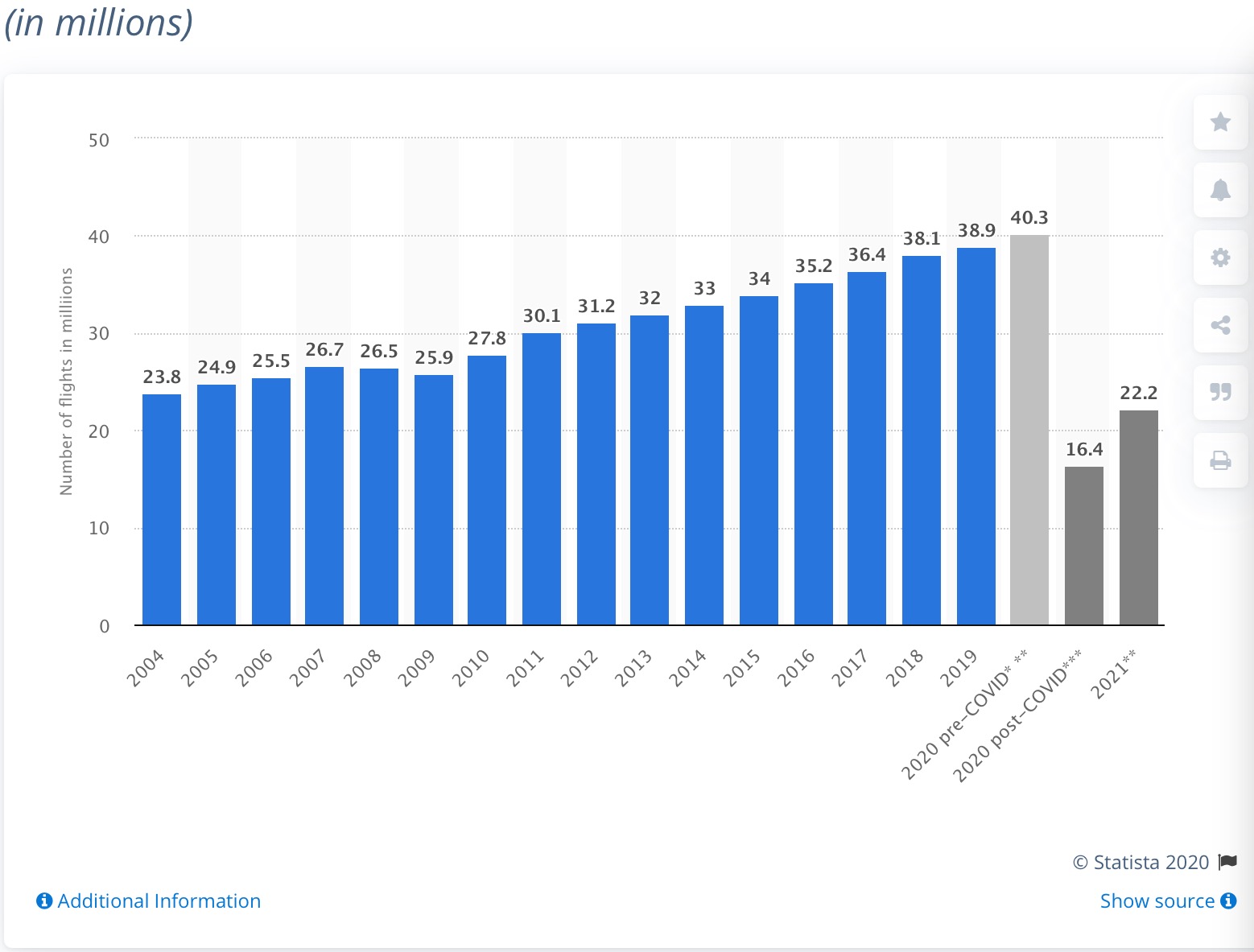
Let’s look at some numbers given to us by Statista. The graph shows us that in the last 15 years plane travel went up by well over 15,000,0000 planes, this implies almost a million lanes per year more. So Matt, how many jets and helicopters are there? Now, we might see their use of a jet as a spillage, and perhaps it is, consider however, that for them there are fuel requirements, staff requirements and here Forbes was very useful (at https://www.forbes.com/sites/douggollan/2019/08/22/private-jet-travel-is-greener-than-you-think). The quote “Two private jets would bring $170,000 in spending, 55% more than the full 737, with just over 25 tonnes of CO2 emitted, one-sixth of the commercial airliner”, and when we see the numbers of 38 million airliners, knowing that there are nowhere near as much jets in the world, I wonder just what the game of Matt is, perhaps it is merely kicking rich people. 

Now, we are all interested in doing something for the environment, so how about stopping 10% of ALL Air traffic? I do not think that Matt McGrath is doing that, he would upset powerful people and the BBC does not do war with powerful people. Or perhaps he might take notice of “It is estimated that approximately 706 million gallons of waste oil enter the ocean every year, with over half coming from land drainage and waste disposal; for example, from the improper disposal of used motor oil”, I did not vet that information, yet it seems that neither did he, and the setting of doing something about the stage of ‘706 million gallons of waste oil’ is as I see it more impactful than slamming some person with a fat wallet and a jet (or helicopter), oh and these helicopters tend to be taxi services, you want to take the car from a taxi driver? Seems a little vague to me. 

So for those in doubt, let me add an image of a jet, something you might silently dream of and never get (just like me). And whilst I am on a roll (yes I am), consider all these flights, now identify the salespeople who are going to some pricey seminar, lets take those as well as sales people on some binge in Vegas to ‘be inspired’, as such how much environment did they waste? 

And when we get to “The global top 10% of income earners use around 45% of all the energy consumed for land transport and around 75% of all the energy for aviation, compared with just 10% and 5% respectively for the poorest 50% of households, the report says” which is a new level of BS. The poorest 50% cannot afford any vacation, due to sliding hourly wages, I will admit that rich people are at the head of that, but not all wealthy people, and the stage of pre-covid 2020, we see 40 million flights, all whilst the number of private jets are set to 4,600, and this includes jets that are corporate jets. So I want to see that report so I can cut Matt McGrath more to size. With the additional ““The UNEP report shows that the over-consumption of a wealthy minority is fuelling the climate crisis, yet it is poor communities and young people who are paying the price,” said Tim Gore, head of climate policy at Oxfam”, I see another person I need to cut down to size. The fact that I saw holes in this article in less than 10 minutes and the fact that the BBC is enabling this is jut too weird. Well at least I have another windmill to fight and bring to attention of the readers. Oh and before you think I am biased, consider that the 4,600 will include the jets owned by royal families and dignitaries and governments, consider this, when you saw the first number, do you really want them to charter a Boeing? To be honest, I cannot tell how many planes are in that group, I did not find any numbers on that, but the larger stage is that instead of them looking into matter that matter, we see a stage of ‘over-consumption of a wealthy minority’, so what EXACTLY is over-consumption? And per jet, how many flights were made? So let’s say a person like Bobby Axelrod (a fictional character), how often was he in a jet in 4 seasons? I am using this example to avoid using real people, because the question stays the same and we can argue that some like the Waltons from Kmart might fly less often than some whatchamightcallit from Wall Street, as such, the article has a few issues all over the place, I am making it my mission to look at that UNEP report, lets see what we can find there and how time was wasted on that report.

From my point of view the UN has become the largest waster of funds and options in the last 10 years, so I am ready to roar at that mouse, you betcha!
Leave a comment

Filed under Finance, Media, Science

When the cure is part of the disease

Have you seen that issue in your life, the claim that the cure is worse than the disease, or perhaps that the cure is not worth the disease. There are medical situations where this applies and they are usually used in cases of huge risks, but it is always in a stage where it is about optionally curing the person who got that winning lottery ticket, and the cure will hit him or her full on. It happens, yet what is the stage where the cure is the disease? I am not talking about a vaccine where we are making the body stronger by fighting a weaker version of the disease, no this is a stage where we give the person Ebola or Hantavirus to let the body cure it. The problem becomes that once you have the virus you are actually sick and the complications start from that point onward.

This is the stage we are confronted with in ‘IMF accused of ‘reckless lending’ to debt-troubled states‘ (at https://www.theguardian.com/business/2019/oct/07/imf-accused-of-reckless-lending-to-debt-troubled-states). It is not merely “the Fund broke its own rules by not ensuring sustainable debt burden“, I personally believe it to be a much larger problem in all this. It is also not merely: “encouraging reckless lending by extending $93bn of loans to 18 financially troubled countries without a debt restructuring programme first“, I believe it to be a larger play to push revenue away from vulture funds to create a systemic problem for these nations to become part of the consumer feeding frenzy to banks for generations. when we see: “Debt sustainability has come into the spotlight over the past year after the IMF controversially lent a record $56bn to Argentina even though its annual debt repayments far exceeded the Fund’s own limit” the given excuse ‘The IMF said Argentina, the second biggest economy in South America, was a special case‘ the handed excuse should be casted aside and given no value at all. the supporting evidence is seen in “The crisis intensified when, on 5 December 2001, the IMF refused to release a US$1.3 billion tranche of its loan, citing the failure of the Argentine government to reach its budget deficit targets” (source: https://www.nytimes.com/2001/12/11/business/argentina-scrambles-for-imf-loans.html). When I asked about the situation about 5 years ago from these so called Australian ‘economic reporters’, none of them had any level of a clear answer for me. The case was clear 5 years ago when certain vulture funds issues got to the surface, and now 17 years later they are giving out $56 billion, whilst refusing a $1.3 billion option 17 years earlier. There is a much larger flaw in all this and there have been whispers (read: gossip) that the IMF is very much into facilitating towards the needs of Wall Street and the financial operators out there. The bottom dollar line of Wall Street needs to be met and no one cares how it is done.

the stage becomes a lot less acceptable when we consider the stage Afghanistan; Angola; Cameroon; Central African Republic; Chad; Ecuador; Egypt; Ghana; Jordan; Mauritania; Mongolia; Pakistan; São Tomé and Príncipe; Sierra Leone; Sri Lanka; Tunisia; and Ukraine, all whilst Egypt, Pakistan and Ecuador are regarded as high risk, I personally feel that the risk factors of Ukraine, Sri Lanka and Jordan are also way above normal with only Jordan being in a better long term position however, if Jordan does not address its water shortage issues, Jordan could drop into the ultra-high risk group a lot faster than anyone could state: ‘Would you like a glass of water?‘, and in all this we see a larger failing.

It becomes a more visible issue when we see the IMF spin doctors at work. We partially accept the statement: “More than half that amount is accounted for by one programme – Argentina, which has unique circumstances“, yet I am much less forgiving when I see: “We have clear guidelines about not lending into unsustainable debt situations and all programmes require approval by the IMF’s executive board“. It is my response that they publish clearly all their guidelines (and policies), but we will not ever get that. In addition, the Argentina matter after the Vultures were done with it is also a failing of the highest degree, the fact that over 17 years $1.3 billion has required $56 billion implies more than merely 4,300% more funds needed. It gives rise that over 17 years a debt increase of 23% year on year was accumulated one way or another. It is a direct optional sign of complete and utter governmental financial malfeasance. It is a failure on a scale never seen before and the fact that no one stepped in shows the larger failure by the IMF. You see, the overall lack of illumination also constitutes evidence that the players wanted this to be kept out of the lime lights.

In addition, when we look at the 17 nations, when we ignore the obvious three, we see a larger issue in Jordan. Jordan stepped up and towards the issue that there are well over 1.4 million refugees in Jordan and Jordan was not ready in any way shape or form to deal with that. In their current state the Jordan desalination plants will not be able to keep up (so far it cannot keep up) and the fact that the Jordan population grew by 14% in 2-3 years due to the refugees was never clearly illuminated and now Jordan has a larger issue, even if another desalination plant is added in the Gulf of Aqaba, the issue will not diminish and the loans towards Jordan would become unsustainable. In addition, when you consider Sri Lanka, the newspapers all gave the same quote a month ago: ‘Sri Lanka’s economy has shown a ‘fair bit of resilience’‘, they quoted that to the letter, yet who was feeding them that information? Only 14 hours ago we see: “Sri Lanka’s tourist arrivals in September were down 27.2% from a year earlier“, those factors did not really change did they? When we consider a month ago, we see an economy that is getting hit hard, especially when Reuters gives us: “a sixth consecutive monthly fall“. It seems to me that Sri Lanka are betting on the required roll of the dice, when we get the clear indication that the dice are loaded and it seems that they are loaded towards the needs of the IMF/Wall Street and not in favour of Sri Lanka.

When we add the Reuters information: “Arrivals in the five months from May to September were down 44.4% to 468,737 from 843,569 a year earlier” we get a level of clear indication that the quote: ‘Sri Lanka’s economy has shown a ‘fair bit of resilience’‘ should be seen as media BS. And there is more regarding Sri Lanka, the quote less than 24 hours ago is “Sri Lanka’s Finance Minister Mangala Samaraweera said all the money the current government has borrowed since 2016 was to repay the loans of the previous government of Mahinda Rajapaksa“, if that is true, then there are additional questions towards the IMF in regards to their spin doctors giving us: “Our decisions to lend to countries are not simply based on numerical thresholds, but on comprehensive debt sustainability analyses and policies needed to address economic imbalances and debt burdens“, which in the case of Sri Lanka shows a much larger issue, the fact that the quote on repaying from a previous government and that loan has been in place for 3 years shows a larger problem, so how much was given to them? In addition to this I wonder how much of the $56 billion is going to Elliott Advisors, so much is the IMF helping out Manhattan bad boy Paul Singer? In my view, the question becomes: ‘How much of the $56 billion goes to Hedge funds manager Paul Singer?‘ Under those conditions I reckon anyone could get their fingers on the penthouse in Sky Lofts building in Manhattan’s Tribeca neighbourhood. If it is good enough for Bobby Axelrod (Damian Lewis), it is good enough for the Lawlordtobe (Lawrence van Rijn), and I could do with a change of scenery, especially if Google buys my 5G IP portfolio.

So if my new address becomes 145 Hudson St New York, NY 10013, I promise that I will not consider the ’13’ in my zip code to be a bad omen and at least I will not have used the IMF to gain my fortune (although I will admit that I am perfectly willing to do that too #weallneedtoeat).

When we see these two issues and we see that I have not even looked at the 12 others (three were known issues) I wonder when any reporter will give us the entire down low on these so called analyses and policies that the IMF has in place, I feel with some level of certain ty that I will find a lot more issues under the waterline than the IMF spin doctors will be able to hide. Especially when we realise the quote in the Guardian: “concerns that a general election later this month will oust incumbent president, Mauricio Macri, in favour of the populist Alberto Fernández and his running mate, the former president Cristina de Kirchner, triggered a flight of investors, a run on the currency and sent the interest rate on the country’s publicly traded debts soaring“, more important, under that change the entire case which would have been part of the $56 billion ‘donation’ that we see through “Argentina agreed to reduce its fiscal deficit to 1.3% of GDP this year, down from 2.2% previously and a balanced budget next year“, especially when we see the required drop of 0.9% deficit, I cannot remember any elected official making that part of their campaign, it tends to leave them unelected at the polls, so in all this, not only does the JDC have a point, we see that Sarah-Jayne Clifton, director of Jubilee Debt Campaign should be considered to be a lot more serious and is in my personal view entitled to massive dose of limelight from the global media, so that she can ask the questions that the IMF would have to explain in a clear and transparent way, would you like to take a bet on the chance of that actually happening?

I believe that people like Paul Singer will set that bet to an estimated 250:1 chance (of it not happening), and as he personally was able to acquire $3.5 billion, I am not putting my hopes on high here. I merely wonder if the people in Argentina have any decent level of Christmas to look forward to this year and the many years that follow.


Leave a comment

Filed under Finance, Media, Politics