
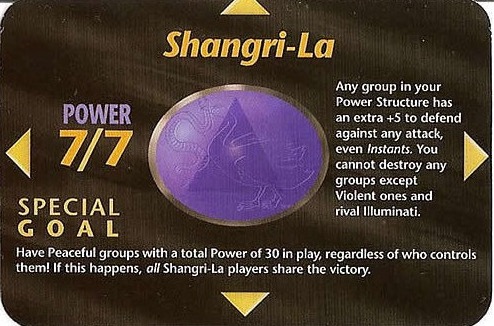
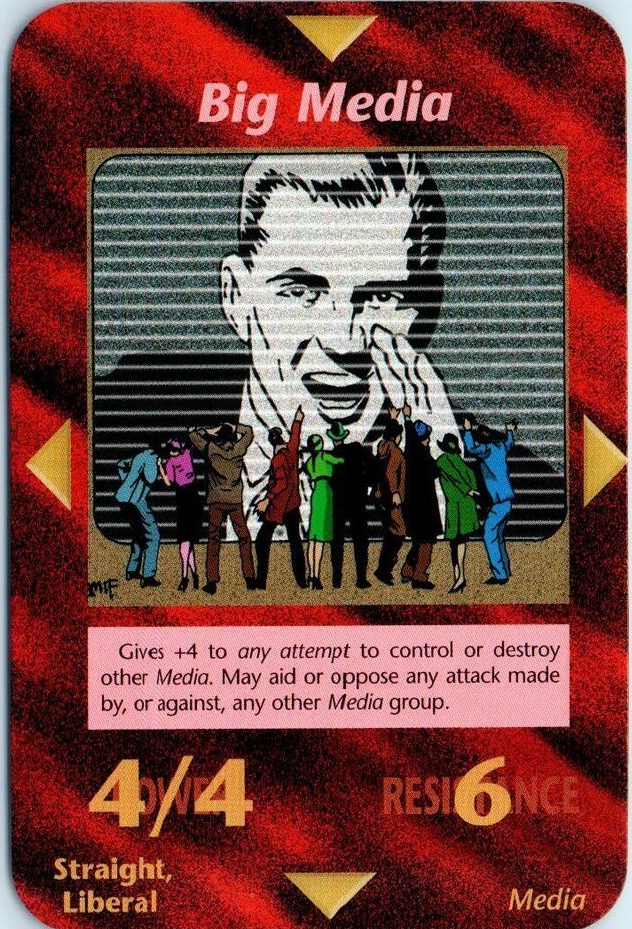
It started on Friday night. I had the weirdest dream. I was in some kind of information centre. It looked like a mix of an ATC centre, but with attached CCTV centres. None of it made sense to me and the weirdest part was that everyone was talking and no one was listening to any of it. It made no sense to me, but then I woke up and my mind was resetting things. Still up to this point I have no idea what started it, but a few hours ago my mind set aside a new kind of CCG for computers. The game was free and every 12 hours you get a free pack. You could buy packs as well, a pack was $0.99, but there was no need to buy any. The game had a starter pack, which was free when you installed the game. So let’s take a look. The game has elements of Illuminati (a game by Peter Jackson), parts of Android: Netrunner (the newer version from NetRunner WotC) and a few other games. The player has two decks, the offensive deck and the defensive deck. Both games have a header card and there will be several headercards, each having a strength.
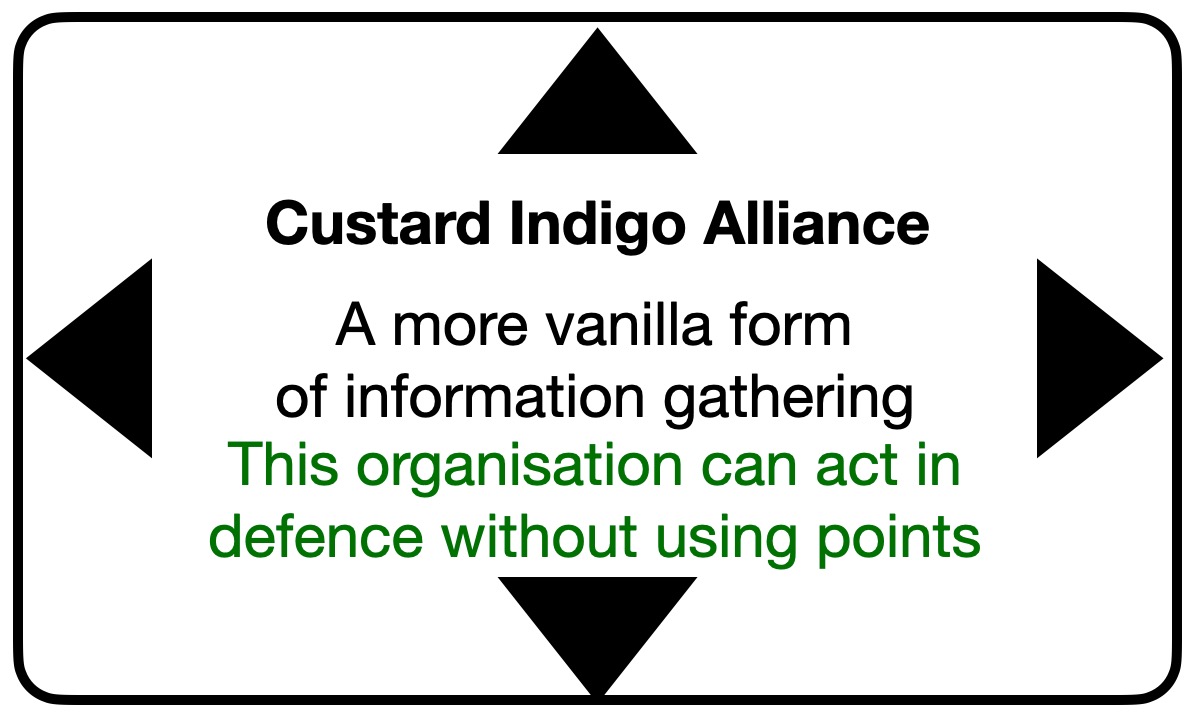
I decided on making fun of the current alphabet groups. In the example I created a ‘CIA’ card, but it could have been MI-6, DGSE or another team, all with a ‘new’ designation. So in this case the CIA header card will have the ability to defend an attack without using defense points. But there are other abilities. It connects on all 4 sides, all header cards do that. It is the combination that makes for a structure.
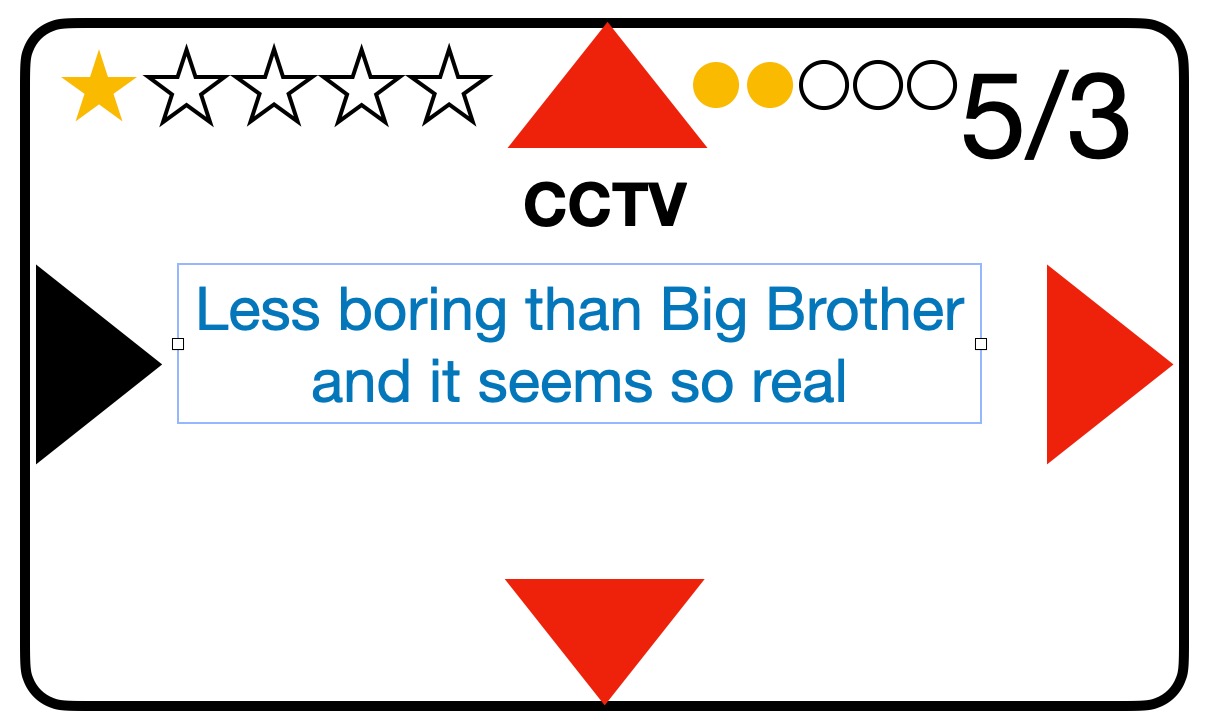
The connecting card has one input, and up to three outputs. So some cards will have no output, it will be an end card, some will have output points. They all have strengths, a local strength (in this example 5) and a total strength (3), that means if you have 3 of these cards, the entire structure would have 9 support points to ward off attacks. The stars and dots are the strength of the card, as you get more cards and more of the same you can merge them (or when you win games) the stronger card will get an additional local or total srength point and in some cases you get an additional output connector. So a one connector card. Could become a 2, or 3 connector card.
This is the attack deck, the defence deck is similar, but it now has versions of the FBI, NSA, AIVD (Dutch) and so on.
So how does this game play? There is the storyline and there is the free-line. In the free line you set your deck up against another player, but it is played blind. The player does not know who they played and you do not know against who you played, but the results are there. The outcome is Win (they never surpassed you), mate (they defeated you, but never got to the header card), or loss the header card was overruled. If you win, one of your cards (usually the card that stopped the attack) will get an extra point (the 5 balls on he top right), when all 5 are filled the card gets an additional star.
When you open packs you get new cards, when you have three the same you merge them into one stronger card. You can have the three cards separately, as you have 4 output ports on the header card and you could have more than one CCTV card, but that is up to you to decide. As the game progresses, you will have additional cards and you can rethink your organisation. The attacker has an agent, the agent can use any part of the organisation once only to get past an obstacle. So you get James Brand for MI-6, Reminder Stamp for the CIA, Hubby Bonsoir for the DGSE and so on. These agents also have abilities. JB has technology expertise (so he can avoid CCTV likeminded cards), RS has Charisma, so he could avoid or gets an edge when one of the connector cards is a person and so on.
The part that I haven’t figured out is how to set the automated stage. I was first thinking on some version of electronic dice, but that might make the game unplayable, I hate to rely on random events, it is a solution that is weak and not really capturing. A pack would have 8 cards, 4 attack, 4 defence and that is set to 2 commons and 2 uncommon cards, when you get a rare card, you get 1 uncommon card and every deck has one rare card (either defence or attack). The starter deck will have all the organisations and all the agents. So you always have those from the start. The setting can evolve and you can build more than one deck as such you get a larger stage. When you play the storyline you setup your deck and during the game you see the opponent cards and see how your deck holds up, so you face an agent, or you play your agent and that sets out the story. As you fail you redo the mission, or wait until you get a stronger deck, in that case you have the option to play your game against the opponents and see how they fare. In my setting your first opponent is the Miniseries of National Strawberries (Jamaica, a Dr No wink) it has no real power and no real opposition, but it shows the options of the game and it will be your first win, which is 2 packs, together with the 2 packs you got with the starter, you will now have 16 cards for defence and 16 cards for attacks, as such you should have a starting set to match up.
There is a lot more to this game, but I thought it was essential that the CCG games of the past would not be lost to the digital era. When you go back and you see the vast offer of CCG games, it is such a shame that it was never pushed into the digital era, only Wizards of the Coast with their Magic game made it to the digital frontier, but there was so much more. It seems a waste to see it all fall away, hopefully whomever gets this game running, will entice all the others to make it to the digital stage. Anyway, I remained creative and as such feel free to use this idea to set up your own solution for Streaming solutions or consoles.
Monday is about to start west of Australia.

 Lawrence van Rijn - Law Lord to be