
It was always going to happen, it was always going to get pushed. Yet the setting and the size of the levels of corruption is just beyond anything I could have imagined. How large corporations and politicians set hand in hand to enable corruption is just staggering and the media is assisting in this process. This is more than just Brexit. The article (at https://www.theguardian.com/politics/2018/sep/17/uk-needs-darkest-hour-in-brexit-talks-before-giving-ground), gives more than just the title ‘UK will shift Brexit stance in its ‘darkest hour’ claim EU officials‘.
Now some will throw ‘corruption’ left, right and centre, so let’s take a look at this. The dictionary gives us “dishonest or fraudulent conduct by those in power, typically involving bribery“, the problem is that most people just think it is about the money and most of the time they are correct. Yet the legal dictionary gives us: “The use of public office for private gain“, Dunhaime gives us in addition the Canadian setting with: ““Corruption is understood to be the exploitation of a position of trust, typically in the public sector, in order to receive a private gain, which may or may not be financial. “Corruption is not a simple issue of right and wrong, and conditions that encourage public officials to seek out or accept corruption include (a) the expected gains from undertaking a corrupt act exceed the expected costs and (b) little weight is placed on the costs that corruption imposes on others.” We got this part from Karen Katz in the Canadian Law Journal.
In this we must also include the American version, which was discussed in In Nixon v Shrink Missouri Gove, where Justice Souter of the United States Supreme Court used these words: “Corruption is a subversion of the political process. Elected officials are influenced to act contrary to their obligations of office by the prospect of financial gain to themselves or infusions of money into their campaigns“, it is the elected officials part that matters.
When we are confronted with: ““A lot of movement is needed by the UK side before we can actually reach agreement”, said one senior diplomat. “We need a substantial change in the UK red lines still.” A second EU diplomat added: “It seems that the UK needs to have a ‘darkest hour’ moment before they will shift position. But they will have to shift their position.”” In addition, we see the fear mongering by Christine Lagarde, managing the IMF, who so far has been wrong thrice over in the last four years alone. We are given “a no-deal Brexit would deliver “reduced growth, an increase in the [budget] deficit and a depreciation of the currency“. In this we see another claim that has to be proven wrong again, all in the need of fear. You see this fear is growing. It is in part growing because the Italians are also moving on an ItaLeave (or is that iExit) path.
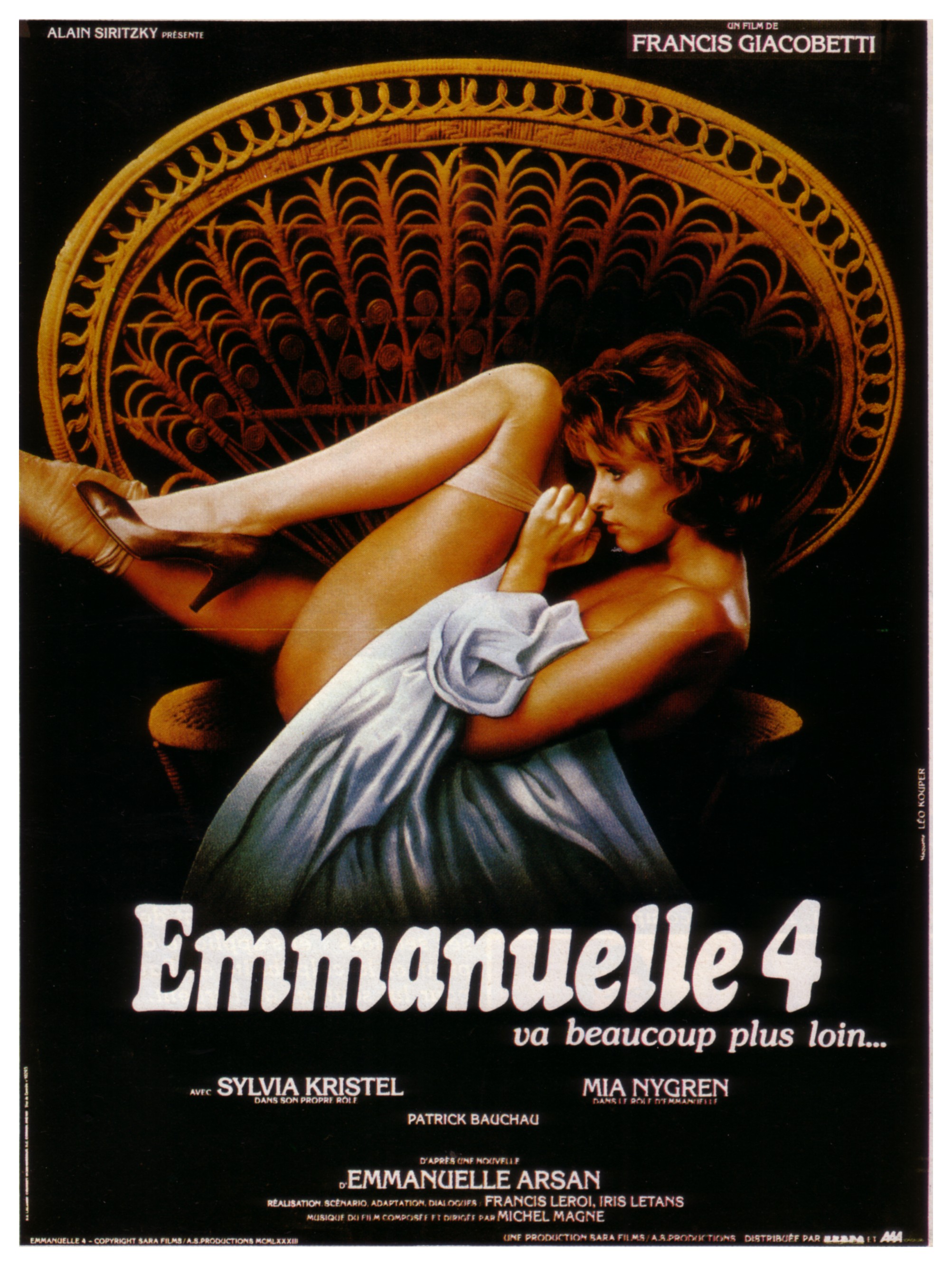 A path that even I did not see happening. I gave voice to the danger two years ago, but I also recognised that it was unlikely to happen, not as much as France and they pulled a rabbit named Emanuel Macron, not the Emmanuelle the European man were hoping for (see image). Yet in Italy it did go a lot further And now that Metteo Salvini is the elected group, the powers of Wall Street are getting scared, they are contemplating the end of their long reign of exploitation, so this wave is perhaps the last one, which makes the subversion of British Freedom even more essential. And in this British politicians are helping out, because London has been scared by all the fearmongering and Sadiq Khan is now worried for his town. He is shouting on the need for a second referendum. Yet, I want to set a few parts as well. The first is that the ECB gets disbanded, it is not transparent, it has taken liberties that are beyond acceptable and whenever the G30 bank elite comes to mention it had been avoided again and again. That is the setting towards what I regard to be of levels of corruption that are beyond acceptable. I personally want to add the right of targeted killing that means that any given links on politicians and the banks and large investors that is regarded to be unacceptable comes with an automated death sentence. I wonder how many politicians will get worried, they claim they will not be, but one knock on their door with the mention of the Battersea Power Station with the quote: “In an interview with the Guardian, Anwar, who was released from prison after the opposition won power for the first time in Malaysia, said the previous government had used the savings of ordinary people to cover up the multibillion-dollar embezzlement scandal at 1MDB, a state investment fund.“, and when we consider the news merely 5 days ago (source: the Guardian) with: “Peter Bingle used his longstanding relationship with Ravi Govindia, the leader of the London borough of Wandsworth, in attempts to circumvent council officials he believed were being obstructive to his clients, including over the size of payments due to public projects“, I think that my case has been decently made. In this we will hunt down and give the fear mongers the option to either show clear evidence or get executed. Is that not an easy way to get to the truth of the matter?
This reflects on Europe and the ECB, because their laughter dies down quite quickly at the point when the first ‘accidental’ fatalities hit the newsreels, after that them bitches be crying. As for the hard times. Yes, the UK would always get a few years of hardship after Brexit. Anyone stating that this is not true is lying to you. The issue becomes that after Brexit, the careless spending will no longer get pushed onto UK budgets, which also means that debts can be better dealt with quicker and also to a larger extent. That also means that as debts go down, as infrastructure issues are dealt with, it will have much better chance when the UK is not dragged down through 3 trillion stupid mistakes by Mario Draghi. OK, that was not quite true, the first Trillion we get, but when it failed he decided to add two trillion to that debt. That is the issue that the UK is confronted with and there is also the bigger crux. You see, the BBC reported last month (at https://www.bbc.co.uk/news/business-45247631) that a charity has called for tougher regulation of bailiffs, as it calculated that households have fallen behind on essential bills by £18.9bn. Staying in the EU does not fix that, the bills are still due, yet when the economy betters something can be done and that is what Europe does not want, they want that the lifestyle remains equal for all, looking at Sweden alone we see that this future is fictive and the EU is draining all funds with their gravy trains as well, making matters worse. If there was only someone who had been able to hold the ECB accountable on some of their actions, but alas, there was no option for that and there we see the one truth that Nigel Farage was correct in. If the Brits all unite for a better Britain it will work. And that is not merely those born there, anyone living in the UK, being a resident or citizen has the best interest that growing the UK is the only path that works.
The entire charity matter is also a path that matters, because it impacts life in the UK. We can agree that bills have to be paid for, but that is no longer an option as the pockets of big business are filled through exploitation and that cash is moved out of the UK through perfectly legal and creative bookkeeping. So when we see: “Citizens Advice said it was getting a call from someone needing help owing to bailiffs every three minutes. It is calling for a bailiffs regulator in England and Wales. It points to a case of an elderly couple who owed £700 in council tax who are now afraid to open their front door after bailiffs used aggressive tactics and threatened to call in the police.” We need a much better system that allows for the return to better values and pushing out exploitative business is a requirement, yet their exploitative options are protected by the EU and Strasbourg, who want the status quo and will remain in denial for another decade, whilst the required actions are already 5 years too late. Here to we see the need to go it alone for the UK and let’s not forget that Italy is already moving on that path, no matter what happens now, when Italy gets out before the UK, the options of the UK will diminish even more, and that is still on the table, even as we see the news with “‘We Want to Change Things from Within.’ Italy’s Matteo Salvini on His Goal to Reshape Europe“, we see carefully scripted answers in regards to the Italian exit, yet the EU budget fights are implying that this path remains open to Matteo Salvini. The Financial Times (at https://www.ft.com/content/cad84ef6-b10d-11e8-99ca-68cf89602132) gave us: “But others fear a spat with Rome that could spur support for Mr Salvini in European Parliament elections in May next year and re-energise his party’s calls for a eurozone exit.” That is the dilemma that all these Europeans now face, because when the UK is officially out, the Italian exit will collapse the Euro as well as the EU. A setting that was always going to happen (at some point), yet the order in how it happens will also set the stage on how it impacts the UK and my personal view is the quicker that they are out, the better their position will be and there we see the stage of all these fearmongering players, every month less is another year of pension gone and a more medial lifestyle for those people who want their golden parachute and their golden swimming pool. That whilst 99.99934%of the people in the UK (roughly) will never ever have either.
So even as he Financial Times gives us the Top Marginal personal income tax for employees , we see that Sweden heads it and the UK is a lot below that, whilst Italy is two places below that part and Italy ‘flat tax’ is dead last. Now if we could have seen another chart that includes the levels of tax avoidance (which is perfectly legal) we could clearly see that the UK will never get the amount professed in that chart. There are too many loopholes and many nations use them, the EU gave even more options there. This gets us to 2016, when we were introduced to: “On 28 January 2016 the Commission presented its proposal for an Anti-Tax Avoidance Directive as part of the Anti-Tax Avoidance Package. On 20 June 2016 the Council adopted the Directive (EU) 2016/1164 laying down rules against tax avoidance practices that directly affect the functioning of the internal market“, which sounds awesome, was it not that 8 months later, we were treated to: “Huge sums are being lost due to tax evasion and avoidance. Estimates go up to € 1 trillion“. The mere setting of dates that were not clearly added to the page and other matters missed, gives us the uselessness setting of the EU, moreover those 8 months, the people involved, what did they achieve and how much did they get paid? It is my personal opinion, yet ec.europe.eu is filled with blunders and misgivings of a nature that should have gotten a truckload of these people fired and now they all band together, because when the UK leaves their party ends and that scares them. It is not that they merely try, it is that they for the most fail again and again.
That whilst IBM gave us the opposite setting for Brexit only a month ago with: The problem, though, is that there are some signs that Brexit isn’t going to be as bad as once feared – and may, in fact, turn into a net positive for the UK, and tech giant IBM might play an outsized role in some of the developing factors. Here’s why:
- Foreign Investment is Growing
- Emerging Technology Solving Trade Issues
- Exports Climbing and
- US Uncertainty Taking a Toll
These are all matters that work for the UK over time and that is why these levels off fearmongering anger me so and I personally would want retaliation against those trying to prolong their futures through fearmongering.
All issues ignored by the media to a much larger degree and whilst they emphasize on people like Lord Adonis, we need to make certain that those doing so are given the spotlight to the larger degree after the proof is shown, we will not allow for a simple ‘sorry’ we will set the stage for draconian change to their non-journalistic path. In the first in setting these publications as no longer to be regarded as newspapers, especially publications like the Daily Mail. They can publish of course, we would never hold their right of expression, but no longer in a 0% setting, they will become vat accountable for the 20% that any magazine and glossy gossip mag is set to, the playing field should be equal, should it not? I wonder how long it takes for them to feel that 20% pinch (good for the UK coffers) and when they start passing that onto the consumers, do you think that they will continue choosing that medium, or will they consider reading an actual newspaper?
All elements of corruption. The setting of ‘exploitation of a position of trust‘ is seen with newspapers, title of status, positions of wealth and managing policies as well as the facilitation and nepotism on smoothing paths for buildings. There is too much going on and it is hurting the UK immensely. We can argue that the EU has allowed corruption levels that we had not seen since ancient Rome and when we consider who is heading the ECB, we see and optional coincidence of correlation.
The largest danger is not when the UK gets out, but when the fear mongers win and Matteo Salvini succeeds, because at that point the UK will face close to a decade of additional hardship. Are you ready for that? Are you in the UK willing to forgo heating in the winters of 2020, 2021, 2022, 2023? Consider that, because the debt of the people adding to £18.9bn implies that they have to forgo electricity or heating; what would you chose?
 Lawrence van Rijn - Law Lord to be