Tag Archives: Manilla

Lining

That is the setting. You see, you might not be aware. You might merely see one negative article and dismiss it. That is fair enough, for the most I would have dismissed it too. Yet when you start using Google Search on topics like (for example) “Neom” the negativity list starts adding up and they all have something negative to say. 

A long time ago
So lets take a small sidestep towards the young days of your grandfather. It’s 1886 and plans are made for the world fair 1889. An architect named Gustave Eiffel ends up constructing the Eiffel Tower. It was met with ridicule, criticism and a fair amount of hatred. It is now the most recognised building in the world drawing almost 6 million visitors last year, and they all have to pay. The prices vary, but it amounts to about $75 per person. Do that 6 million times over. I reckon that that so called ugly building has earned its investment back a few dozen times over. 

So back to today and this time I am not using the media. This time I am relying on Popular Mechanics (at https://www.popularmechanics.com/science/green-tech/a44966174/saudi-arabia-line-city/) where we are given ‘Saudi Arabia Is Building an Entire City in a Straight Line. It Makes Zero Sense.’ I wonder why it makes zero sense. You see the start gives us “mathematicians broke down the numbers and calculated what the typical commutes in such a city would look like, discovering that it’d be better the built the city in a circle rather than a straight line” and there I am wonder for whom it would make sense to have a circle?
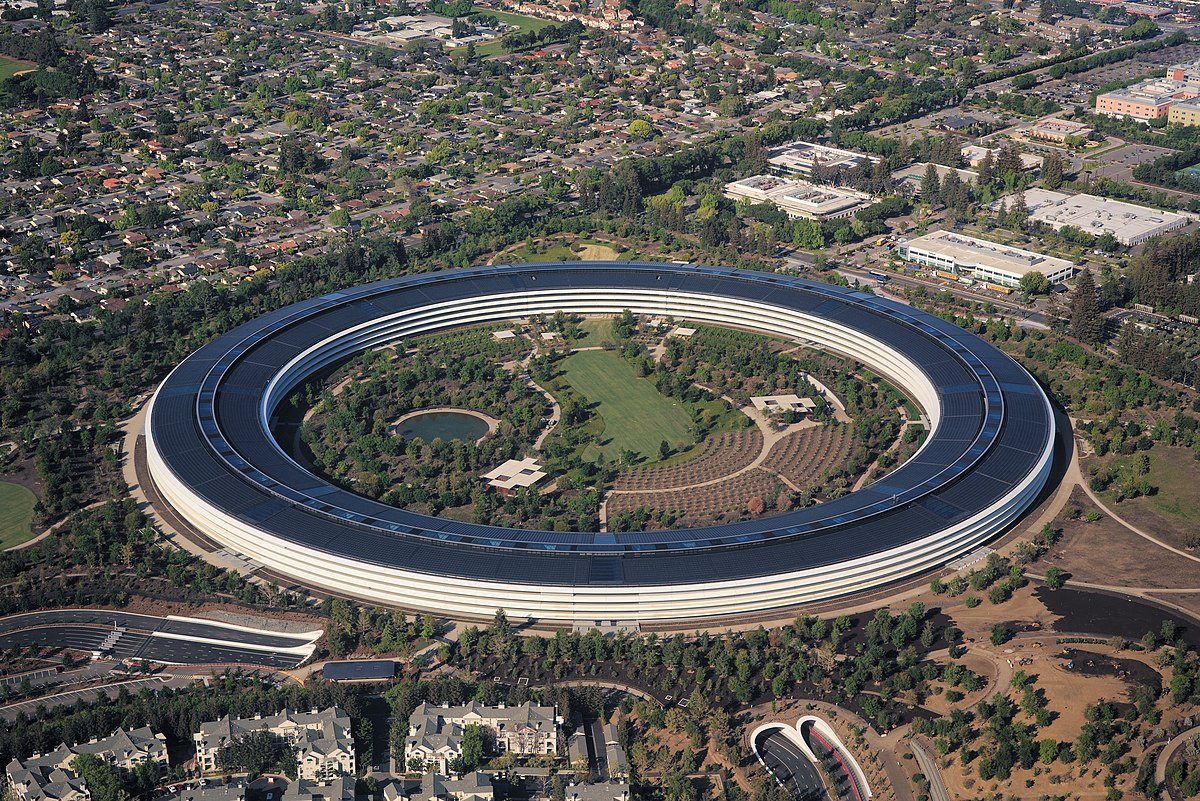
For the inhabitants of the Apple frisbee? For the Pentagon? Consider the life of most of us. We start at home (point A) and we go to work (point B) we travel from A to B to A and in between on that route we get our shopping done. A straight line makes perfect sense to some, not to all, but to some and the most important part in all of this. This has never been done before, just like the Eiffel Tower. I reckon that by 2050 any web satellite camera will have zoomed in on the line a thousand times a day, because as webcams and YouTube satisfies our needs now, a camera version of Starlink will most likely satisfy the curiosity of our grandchildren. 

The question
What I do not get is the massive amount of negativity around this. Neom and the line are two places that have never been done before and has never been contemplated in history. Neom might become the first megacity that writer John Wagner and artist Carlos Ezquerra erected in the comic book Dredd in 1977. A city 22 times the size of New York and Saudi Arabia (not America) is making it a reality. And they are doing it all whilst they have the fastest and most complete 5G network on the planet. As such I am giving them the benefit of the doubt. I have to because in my young days I studied ships engineering, not civil engineering (long before my IT and law degrees). In California a circle makes sense, a circle surrounding a park, but Saudi Arabia has a very different eco system and it is a fir bit longer too. 

Then we are given “The city—stretching from the Red City to the city of Tabuk 110 miles away—along with its estimated 9 million inhabitants would be entirely car-less, and instead be tied together by a high-speed rail system that could travel from one end of The Line to the other in just 20 minutes.” Another thing pops up. America and Europe have entire micro economies based on cars and transportation, they would not exist in the Line. Then the train system. A 20 minute ride from end to end. Consider that this line is 170Km long. In the Netherlands that covers Groningen to Utrecht and it takes that train 2 hours to get there. 600% longer and OK, they stop a few times, and it isn’t high speed, but that is what there is and you cannot make high speed trains work there under those conditions. 

The one part we are missing is that the line is 500 metres high. As such the building is significantly higher than Central Park Tower (longer and wider too). It raises even more questions, questions I can merely grasp at, but the others are merely coming with negativity. I wonder why. What I like about it is that no one has ever done this before and here Saudi Arabia is leading the way. If they pull this off (and I hope they do), the west needs to take a long hard look at itself. We might see all the experts talking the BS they do, but when this is done we get to see the excuses, the blame game, the lack of insight and the media would be regarded as culprit number one. 

Popular mechanics also had a few good idea’s as they tend to do. They give us “Although the paper mostly focuses on the mathematical shortcomings of The Line’s design, it also brings up some good practical problems. If the city’s main train line malfunctions for any reason, for example, it could effectively cut off residents from millions of people—an idea that’s unthinkable in today’s modern metropolises.” And that matters how? I have two best friends. I haven’t seen them in decades as they live on another continent. I have video chat, phone and email to keep in touch. Beyond that my connections over the last two decades have been work and social events around me. I never had the need to meet up with millions and the train is a realistic idea, but things break and things get fixed. Perhaps the train line will have a spare line? Just a thought. In todays world people have become self isolating, it is a result of all kinds of reasons, perhaps the line will offer an alternative?

If there is my need for realism, it becomes the setting of the 500 metres height. There might be all kinds of reasons why it is that high, but on what levels will people be? And then the idea that this one line will house 9,000,000 people. The largest three cities are Tokyo, Delhi an Shanghai, still a fair bit larger than this line, but what area do they cover, what pollution do they create and how much of the ecological side are getting destroyed in the process? This is the consequence of old day thinking. As such the line is starting to make more sense, but it is also a place with more questions. I reckon time will take care of most of them, just like in the days of Gustave Eiffel. Evolution will take care of itself and when one is done the next will come and then one more and for now Neom, the line and Mukaab (which will be 400 by 400 by 400 metres). All in Saudi Arabia and all dwarfing most other architectural achievements. Three places clearly visible from space. So why the negativity? Perhaps the EU and US are realising that they are done for, but who instigated that part? Was it their lack of evidence (small 5G reference), their inability to create because they are now too broke to get anything done? You tell me, I am not sure of any of it. But no matter how these three are completed, it seems to me that Saudi Arabia has its focal point towards the future, all whilst America in true Excel style merely looks at the next quarter, a time frame that does not allow for projects that we are currently seeing in Saudi Arabia. 

There was one final thought that hit me at the end of all this. The article gives us “If its 9 million inhabitants are homogeneously distributed in the city, each kilometre will have roughly 53,000 people” from that point of view it is denser than Manilla, the most dense city in the world with 43,064 people per kilometre. You see, it isn’t the fact that Manilla isn’t the densest city, it is that these metrics would no longer matter because based on the EIU’s Global Liveability Index for 2023, Manila placed 136th among 173 cities. Then we get that the current metro area population of Delhi in 2023 is 32,941,000 almost 400% higher than the Line. Certain metrics would become obsolete and I reckon that there is every chance that a place like the Line would grace the top 10 of the EIU’s Global Liveability Index from the very start. Did anyone consider those metrics?

Enjoy the upcoming last workday of the week.

Leave a comment

Filed under Media, Science

At these shores

We have been ignorant, we have been in denial, and now we get to pay for it. it comes in a currency that we have not considered ever before. ISIS has arrived at the shores of Australia and we are seeing it just across the waters of the Philippines. The Guardian gives us ‘How and why Islamic State-linked rebels took over part of a Philippine city‘ (at https://www.theguardian.com/world/2017/may/29/explainer-how-and-why-islamic-state-took-over-part-of-a-philippine-city), there is no reply from me on how right or how wrong, I myself have been ignorant of the dangers in regards to the Philippines and perhaps our ignorance whether it will affect Indonesia in a similar manner. I can sum up the elements, but you are better off to go to the Guardian link I provided and go over the facts there yourself. The article is an excellent source of information, yet there are other elements that require attention. One part is seen in “his year-long presidency characterised by bloodshed, with a “war on drugs” that has left thousands of alleged drug addicts and suspected dealers dead. He has been condemned internationally for supporting vigilantism“, we see ‘condemned‘ whilst those other governments have not ever found any form of solution to settle the war on drugs. We can debate the ‘alleged drug addicts‘ to some degree as there is an alleged elements, yet he decided on a course no government has ever been willing to do, to make dealing and addiction both a crime, one that can be solved through execution. Is there a truth that when someone sees all those dead people taking drugs might be less interesting? We have to consider the issues as the Philippines has had its economic turmoil and bad times does impact anyone’s quality of life and we do know that drugs gives any person an escape from that. In addition, he has according to the Guardian made an appeal to other organisations to take up arms against Maute, it is the mention by Sidney Jones, the Jakarta-based director of the Institute for Policy Analysis of Conflict that gives us the impeding optional dangers to Indonesia as well. The quote: “In an October report, Jones predicted the current tumult. Facing losses in Syria and Iraq, Isis have increasingly looked to the Philippines to establish a province or “wilayat” in the region, the report said“, the question becomes: ‘Just the Philippines?

I have no direct answer, because both countries have collections of islands where oversight would be hard to say the least. Both places have area and villages in turmoil and in disarray. When we consider “They have been convinced by Isis that the answer to Mindanao’s problems is Islamic law“, yet this is just Maute. Is there any intelligence on how the other groups react to that? There are additional concerns as Maoist-led rebel talks in the Netherlands have halted. The US has blundered here too (my personal view) as US restrictions on arms supply have forced the Philippines to seek these products from China and Russia (Source: Reuters UK). That also gives Russia additional options to offer the Philippines more lucrative commercial solutions on a long term basis. It seems hilarious that it is ISIS that will hunker down with some success on the list of allies that the US has. In all this, it seems that the Maoist-led rebels are getting new options and perhaps an optional Philippine future which is a bit of a new-age surprise in a time when we considered the rise communism and Marxism a thing of the past. The question remains, once the Maute have been dealt with, what happens after that. There is clear movement as the US bungled a few diplomatic steps in light of the ISIS rise in the Philippines. Yet we must understand that the diplomatic picture here is a lot more complex than the Maute incident is currently giving visibility to. The Diplomat (at http://thediplomat.com/2017/05/why-is-the-philippines-turning-away-foreign-aid/) gave us “The Philippines under President Rodrigo Duterte recently rejected a 250 million euro ($280 million) foreign aid package from the European Union (EU) on the grounds that the EU is trying to enforce human rights regulations in exchange for its aid“, which is fair enough from both sides. Yet with ISIS trying to get ground here, why has there not been a stronger response from London/Canberra? With Australia now on the doorstep of ISIS, another solution would have been required. It makes sense that there are questions from both sides, and to give a view to the severity of either side whilst knowing all the elements would just be folly from my side. Yet there is now a start of the acceptance of ISIS by Maute, which changes the game to some effect. For one, US drones are off the table, as are several other options. As long as Maute is one this path, several players could end up with their options not on the table. As some try to impose what they call ‘minimum guidelines‘, we now call a hindrance to deal with ISIS, which means that the war on terror as some tend to call it will be minimised in efficiency.

Yet there is another side that Manilla needs to realise and it is stated by Chithra Purushothaman: “To think that foreign aid from China would be entirely altruistic with no strings attached would not be wise. While human rights regulations might not come attached to Chinese aid, there is the chance of slipping into a debt trap that Manila would find hard to escape.” We should argue in equal matter that Russia would have a similar approach and for them a foothold on the Philippines could be the new nightmare scenario for the US Navy.

So how will this move forward? The open direct and non-compromising statements from President Rodrigo Duterte might sound awesome to some, yet after the Maute incident, the Philippines would need to get back to any sort of business plan, meaning that the need for conceding in some way on pressures from the person who gave them the goods and the money would form a second wave of changes. In which direction could not be stated, but geographically speaking, the Philippines are too interesting a place to just ignore for both Russia and China.

So as we see that ISIS is now an issue on the doorstep of Australia, we need to wonder how Canberra will react to the latest events and if they see it as a threat at all. With a Filipino population in Australia now approaching 200,000, both ASIS and ASIO would have their hands full on getting a hold of data that could enable them to figure out how large the risks would be for Australia. They might have had a good handle on the data in the past, yet the change in the Philippines to opt for vigilantism also includes an additional risk to ID Fraud and officially handed out incorrect passports, which does not help anyone, not even the Manilla government. Now, this last part is speculation from my side, yet when we see the messages as to the promises made by the president, if it is in the interest of President Rodrigo Duterte to hand out new identities to those who came to his ‘aid’, do you think that getting a new passport would be the hardest thing to get? The problem becomes what some extremists would do when they do get that new identity. That is the worry for those not in the Philippines. In the end, as the news is still escalating over the last week. We will not know what will happen next. Even when we realise that the ISIS claim for the suicide bomb in Indonesia is a real issue, the parts that remain an unknown for now is how large ISIS has grown in Jakarta and where they are growing towards. We get “President Joko Widodo said Indonesia needed to accelerate plans to strengthen anti-terrorism laws to prevent new attacks” from Asian Age, yet the reality is that the Indonesian president required more than a mere anti-terrorism law. They need an actual battle plan. If Mauta in Marawi is not actively stopped, ISIS would have a decent free go to anyone in the Sulawesi sea, which also implies that Brunei in play to some degree. We might be fooled by the Speech of President Trump to both Indonesian President Joko Widodo and Brunei Sultan Hassanal Bolkiah and other distinguished guests, the ISIS issue is in South-East Asia and there is little evidence that it will let up soon. As President Trump gives a very different message to the Muslim nations (compared to former President Obama), there are indications that his version is more readily accepted. There is more as we see CNN, where we see an attack by Phelim Kline of Human Rights watch, which is her version and I am not stating that it is an incorrect one, yet when we read “Any assertion by any world leader, including US President Donald Trump, that Duterte is doing ‘an unbelievable job’ by cheerleading a murderous campaign that has killed more than 7,000 Filipinos is not only a gross insult to those victims and their family members, but sends a signal to Duterte and his willing executioners that their lawless killing spree can continue with a vengeance without fear of international criticism and repercussions“, I am not stating her version to be incorrect or inaccurate. Yet in this age, when we see that nobody can hold a budget, that services are denied more and more, and the people on a global scale have to accept that drug users are poor people who alas have a habit and they then take away services for thousands of people. The war on drugs has been a humongous failure on a global scale that is the denial of many people and even more politicians. Politicians who hide behind ‘a level of acceptance and tolerance‘, which is their right, yet some people have decided that enough is enough and started another path. The path that these politicians considered to be a non-option is being walked by one nation at present. Their fear is not how far will it go, their actual fear is what happens when it makes an actual difference. It takes one success for adaption to propagate a plan that is not humane.

As CNN makes a quick reference to a photo event (at http://edition.cnn.com/interactive/2017/03/world/city-of-the-dead/), yet here we see part that the CNN people offered as evidence, yet did not talk about loudly in that opposition to the Philippine president: “Methamphetamine, or “shabu” as it’s known locally, is used by 860,000 — 49% — of the country’s 1.8 million drug users, according to the UN Office on Drugs and Crime“, 2% of the entire Philippine population is addicted to drugs! The CDC sets the Percentage of persons 12 years of age and over with any illicit drug use at 10.2%, which was a 2014 number, but it gives a rather large realisation, the US war on drugs has been lost on pretty much every field, the politicians are in denial because admittance is not just the only issue, the people would demand action and the US government has no options or funds for that. In addition, the stat is not entirely fair as the CDC goes for ‘illicit drug use‘ which is a much larger concept than the use of narcotics. So there is an unbalanced comparison. Yet when a nation has 2% of its population set to addicts, we need to accept that there is a much larger problem, it does not make the actions of President Rodrigo Duterte the right one, but I wonder if this at present is the only one remaining. When we consider the Netherlands with its population and its liberal approach of drugs, the numbers indicate that its narcotics addition is set to a mere 0.5%, I have no idea how reliable it is, yet the numbers come from the Dutch NRC, which is actually one of the much better national newspapers the Dutch have. So there the addiction numbers are a mere 25% of what the Philippines currently faces.

This all has an impact, because that would fuel the extremists agenda’s by a lot, in addition as we see that Islam prohibits all drugs that are not medically prescribed gives the drugs addicts even less options, so there is a growing concern to face.

This does not give acceptance of any party, and it will not give ISIS any additional options, the fact that Maute is ‘connected’ to them should fuel the fear of the other parties that are talking to ISIS at present. This gives light to the direction of President Rodrigo Duterte, we just do not know at present how this will play out. What is a given is that ISIS is stretching to the places a lot closer to home than we considered before, the question for us becomes: What are we willing to do to stop ISIS from actually landing here?

Leave a comment

Filed under Finance, Law, Military, Politics, Science