Tag Archives: Nick Clegg

From faith to fate

Yes, this is a story that comes after the fact. This is not about what has been proven or what has been established. I did not win because the Nay’s for now have it in Scotland and I was in the ‘stronger together’ park. I will only feel victorious if we make the referendum about the next stage. It is clear that the economy remains a Scottish issue, it is clear that the current deficit of 11% is not going anywhere, but the new dangers about less oil will be an issue, so it is up to all of us, not just Scotland, to find ways to make us all stronger as a whole. I truly believe that in light of current escalations, this is the one thing that ALL Commonwealth politicians need to take home. In response to the article in the Guardian (at http://www.theguardian.com/politics/2014/sep/19/david-cameron-devolution-revolution-uk-scotland-vote), I say “Shame on you Prime Minister!“, yes, we do not deny the issues on “We have heard the voice of Scotland and now the millions of voices of England must be heard“, the final count has not even been completed (as far as I know). The next general Elections are 8 months away. Would it truly hurt THAT much to take a few moments and recognise the need to build a stronger Scotland? In light that Scotland is still part of the UK; that issue should matter a great deal.

To Alex Salmond, first minister of Scotland I say “you may not have won now, but change is a certainty! How can the other members of the Commonwealth help in making the Scottish economy stronger?” Where is there shortage and where is their surplus? I have more messages, especially after the statement from the Spanish Prime Minister stating: “Mariano Rajoy has said an independent Scotland would have to apply from scratch for EU membership and the application process could take eight years“. Perhaps it is time to recognise the fact that the European deficit as it is set at half a trillion for 2013 has shown what an abysmal failure their budget keeping has been (I will accept the fact that 25% of that deficit is the UK), yet overall, we have seen an abundance of non-UK issues, which is why UKIP has grown the way it has. David Cameron will need to consider a clear tactical approach, not only towards the current economy, but especially on how to reduce the debt, which is a heavy chain for the Britons to carry, if they had been sins, then Jacob Marley could not have fathomed the weight, size and the number of shackles they represent.

It is only now that I hear that Alex Salmond has resigned. I believe it to be a mistake, but it is his choice to make. He was not a bad person, he did not let Scotland down, and he did however put a clear need of many changes on the table, in that he has left a strong legacy. As stated, I remained in the ‘better together’ camp, but Alex had on several occasions drawn on my doubts, which means he did not just talk to the hearts of man and woman, he talked to the rational of the people too. I feel certain that Alex Salmond will be missed; he was a politician and a gentleman, which is a rare combination to find in any person.

David Cameron has a few other issues to consider and UKIP is only one of the factors. There is a clear sign that too many actions have been about the status quo, whilst we know that these changes will not get us anywhere at present. We must acknowledge that the economic course taken two years ago has resulted in a better positioning of the UK, but more needs to be done. I believe that it is time to take another look at the Commonwealth Business Council and include the function to set a task of ‘preferred job exchange’ where it will be easier to get a quick track of working VISA’s for commonwealth nations. If social expenditure is so high, would a solution for exchange be so far-fetched? When social services pays for one unemployed person in Canada and one in the UK, if there is an option to find work for both in the other nation, to allow for that? Work permits for 6-12 months that can easily be prolonged if the work is there is not a stretch. In the 90’s, several corporations started to implement the ‘think global, act local‘ approach to the situation, in several cases it became too much about travelling all over the world and meeting virtually everywhere. I do not think that this is what the term defines, yet overall this approach will work in a workforce under these economic conditions. We all need to be a lot more fluidic in our approach of work, especially where we work. When we see the shortages of IT in Scotland (at http://www.bbc.com/news/uk-scotland-19529703), one must wonder why there are so many people in Sydney and London without a technology position. Important to note that this BBC article was from 2012, but the overall need for certain skills have been proven again and again. It is time to take a different look at these options and more important, find additional ways to solve them.

How does that relate back to Scotland? It does not specifically point to Scotland, yet if we pool all the resources, Scotland would be added to this, which has long term repercussions for all the linked nations, not just Scotland. What if we take the words of Work and pensions secretary Iain Duncan Smith, using his 6% and we could lower this by another percent? What if the shortage of medical personnel in Scotland could be filled by people from Australia and Canada? If we have forward momentum, it will always impact an economy in a positive way.

This approach shows two things, one, the fact that the status quo approach has not worked for a long time and the fact that ‘better together’ and ‘stronger together’ will actually work if we focus on the ‘together part’, I just think that ‘together’ is more than the UK and Scotland, I think it is linked to ALL Commonwealth nations.

It is now Sunday; I decided to let things simmer for a little as we have seen a few changes, it is important to see that this one article is not a static one, based upon the information of a moment. I have seen the disgrace under which some act (at http://www.theguardian.com/uk-news/2014/sep/19/violence-glasgow-scotland-loyalists-attack-independence-supporters), that what describes themselves as loyalists, are nothing of the sort. Violence whilst singing ‘Rule Britannia’ does not make you a loyalist, it makes you a goon with the ability to retain sentences. But the positive part of this article is that as an Australian (with British and a wee bit of Scottish blood) had never heard of the song ‘flower of Scotland’ (the sing-along version is found here https://www.youtube.com/watch?v=RPaJhlIIYjM).  The article showed another side, the quote “The city is divided by religion already and to be honest I think the union jacks and saltires are a bit of an excuse”, was from an engineer. Which is shown by the passage: “Sam Tonks, an engineer from Uddingston, said he had driven into the city with his wife and daughter because he wanted to celebrate the referendum victory with other no supporters, but had been greeted by something much uglier”. This is perhaps the part of the aftermath we all hope will go away soon, small issues are now huge chords of discord in a place that has been a proud heritage seeking an independent nationality. I feel that no one debates this, but at present, in this economy, that independence will be short lived, until we strengthen the bonds between all brethren of the Commonwealth.

Yet in all this, I also (as a conservative minded person) speak out against Gordon Brown (at http://www.theguardian.com/politics/2014/sep/20/gordon-brown-scotland-labour-party-strategy). Let’s face it, he made a good presence and he had an excellent show, but let’s not forget the fact that he is a politician. The promises he makes do sound nice, but what happens when he is back in power?  This is at the centre of the entire issue. The only massive reason why the ‘stronger together’ and the ‘better together’ got the majority that we all see the economic disaster heading our way and there would be no survival if Scotland faced it as an independent nation. You see, one part of the article is an issue: “It is, perhaps, of no surprise that the Scottish media now calls Brown the “fourth man” of British politics, alongside David Cameron, Nick Clegg and Ed Miliband. In the past week, events and the force of his personality have made this the case.” The intent sounds nice, but the article makes Gordon Brown a running mate with Ed Miliband, whilst they would both be contending for the same group. There is more and more evidence that Ed Miliband has made its share of mistakes which will lead to Gordon Brown returning to his old post. The actual fourth person is Nigel Farage. The press made the mistake at least TWICE already in underestimating Nigel Farage, yet the abundance of mistakes and choices which led to the current economic weakness is at the heart of the strength of Nigel Farage. That what stopped Scottish independence is also fuelling the UKIP machine. The press making light of that is exactly why too many people are voting for Farage. We have given up hope on the Murdoch machine ever becoming a respectable paper, but I am strongly advising Alan Rusbridger to not make that same mistake. Having Nigel Farage written off at present is the biggest mistake you can make at present. I saw the same mistake in the Netherlands in the 90’s. The man Hans Janmaat was ignored. He was discriminatory in his conviction against all immigrant matters and was called racist on several occasions, which in the end gives us: “Meindert Fennema, Emeritus Professor of Political Theory of Ethnic Relations at the University of Amsterdam, argued in 2006 that Janmaat was convicted for statements that are now commonplace due to changes in the political climate”. The Dutch newspaper article (at http://www.trouw.nl/tr/nl/4324/Nieuws/archief/article/detail/1784000/2003/05/21/Met-excuses-aan-Janmaat.dhtml) shows a shifting cultural issue, by ignoring these factors the British newspapers are making the same fatal (and as I consider it a ‘dumber then dumb’ approach) to an actual issue people are confronted with, the press and political silence towards Nigel Farage only contributes to his untimely success. Linked to this is the fact that Nigel Farage had been bringing forth actual issues, which had been ignored by both Labour and Tories alike and they need to be properly addressed within the next few months before the Nigel campaign truly takes off, after which, half-baked carefully phrased words of denial will only hurt whomever speaks them.

This reflects in several ways. If we are not careful in this environment, we are all in danger of segregation though polarisation. That what Scotland is currently dealing with is something they need to get past, true loyalists will need to accept that Scotland will remain Scotland, whilst realising that over time it will be their ‘new’ neighbour Scotland. How you aid them now will reflect on your future later. Shine light on the actual matters and we will all prosper through it all.

If we keep the faith in a stronger Commonwealth and if we actually act on doing so, then we will end up with the fate of the Commonwealth being a lot stronger then it currently is. We have several heavy seas ahead of us and if we are as strong as our weakest link, then we need to make all commonwealth nations a lot stronger then they currently are.
 

Leave a comment

Filed under Finance, Law, Media, Politics

The old reasons

There are a lot of high running tensions in play at present. There is the Gaza, which has been going on since I was there in 1982 and there is the downing of MH17, which is now becoming an increasingly political hot potato involving the Russians.

Yesterday, Nick Clegg called for stripping Russia from the world cup 2018 (at http://www.theguardian.com/politics/2014/jul/27/nick-clegg-russia-world-cup-2018-stripped-mh17-ukraine). I do not think I can presently agree with this. Yes, there are issues that need to be answered, yet, there is enough evidence to clearly state that Russian separatists, not the Russian army shot the plane down. The last group might not be innocent, yet for this we need actual evidence, which is currently (for now) not available.

David Cameron seems to be in agreement with me (at http://www.theguardian.com/politics/2014/jul/27/david-cameron-russia-2018-world-cup-ukraine).

In my case there is another reason. If we are to resolve any issues, then we need to make sure that diplomats get as many options as they can to smooth things over. In three years the issues of MH17 will have been passed, yet what lies around the corner? There is not a person in the world who can give us any answer in that regard, nor should they have to. If we want options, than we need to look no further than the Olympics, especially the ‘original’ ones (you know, the ones you might have seen in 776 BC).

In those days, there was an important side to these groups of people, who were always bickering with each other using swords and spears. It was stated “During the Olympic Games, a truce, or ekecheiria was observed. Three runners, known as spondophoroi were sent from Elis to the participant cities at each set of games to announce the beginning of the truce. During this period, armies were forbidden from entering Olympia, wars were suspended, and legal disputes and the use of the death penalty were forbidden“.

It was a stroke of genius! This was a time when certain officials could off the books meet and possibly broker solutions in a way where the ego and reputation of a person was not on the line. It was a time when some people could meet and possibly longer lasting truces could be held. Even today, when the emotions run high, we need to make certain that such an option remains.

This brings me to the second part in this, which is only casually linked. It was my blog of March 19th 2014 called ‘Any sport implies corruption!‘ where I looked at some of the issues regarding the accusation of corruption by Qatar in getting the World cup 2022. There were a few views that caused me to question whether there was actual corruption, or was this a push by big business to replace Qatar for revenue reasons? What is ‘more likely than not’ is the question in this case!

Last week the Guardian gave us additional information (at http://www.theguardian.com/football/2014/jul/21/ethics-investigation-private-fifa-michael-garcia), in the article, where it states: “Former attorney expected to deliver evidence by end of July“. It is now the end of July and we see the quote “Garcia’s report will go directly to FIFA’s ethics judge Hans-Joachim Eckhart, who is not expected to make any rulings until August or September“, so there will; be another delay in finding out the truth.
Moreover, I feel at present that after that another delay will come as certain people could be offered high income positions in other places before the news comes out. Will that happen? I do not know, what I do know is that the allegations have gone on for way too long and the additional delays, whilst we see more and more press on this should anger us all beyond belief. Big Business made a try and as such they hopefully failed. Of course we will not know until the rulings are made, but I remain adamant in my view! I demand the disclosure of names and participants in these events. In addition, the quote “Shortly before the World Cup in Brazil, Britain’s Sunday Times newspaper reported that some of the ‘millions of documents’ it had seen linked payments by former FIFA executive committee member Mohamed Bin Hammam to officials to win backing for Qatar’s World Cup bid” (at http://www.reuters.com/article/2014/07/25/us-soccer-fifa-qatar-idUSKBN0FU1M720140725), I could not get the Sunday times link as people need to pay for it and it cannot be fully shown, yet the quote is seen at CNN (at http://edition.cnn.com/2014/06/02/sport/football/football-qatar-world-cup-sunday-times/) which states: “We’ve seen millions of documents that prove without a shadow of doubt that corruption was involved. There is clear evidence linking payments to people who have influence over the decision of who hosted the World Cup“.
I think we should DEMAND the display of these documents. If there is corruption, we are entitled to see it, on the other hand, if we accept that it is more likely than not that an industry that misses out on millions of dollars are behind the accusations, then we are allowed to see that as well. In that regard, if the Royal commission would prefer not to be the laughing stock regarding the press, then in my view, it should have only one response to the quote from the Sunday Times, when it is proven wrong. The Sunday Times is to cease all operations for no less than 6 months, all staff to be paid during this time, no online activities and no revenue based activities. Subscribers get an automatic 6 months extension.

Is that too harsh?

The claims here, the claims in regards to MH-370 that were made by the Telegraph, none of it founded and no actual evidence ever presented.

Why is this such a big deal?

As the Olympics evolved, the base need for honest and open competition is what allows for differences to be settled. The concept of the Olympics was also continued in other events, like the World Cup Soccer and the Commonwealth Games. These events go beyond the events on the field. It allows for trade discussions, diplomacy and other conversations that have larger impact, in some cases none of them an option in an official capacity. This is why I disagree with Nick Clegg on this.

Even now, I have been adamant about the need for President Vladimir Putin to speak out harshly against these separatists since the first day it happened. It is likely that he relied on the wrong advisers (as I see it), but to cut off options of diplomacy is NEVER EVER a good idea. Even now, we see news (at http://news.nationalpost.com/2014/07/27/vladimir-putin-facing-multi-million-dollar-lawsuit-for-aiding-separatists-who-shot-down-mh17-lawyers-say/) where the headline “Vladimir Putin facing multi-million dollar lawsuit for aiding separatists who shot down MH17, lawyers say“.

How is this even realistic?

Is there ACTUAL evidence that Putin did directly support in the act that resulted in the downing of MH17? Yes, I agree there are issues with the hardware the separatists have and I mentioned that the first day, whilst the press were all about the ’emotional stories’ (which is not journalistic out of place). The facts are there and they need to be answered, but that lawsuit is a joke. Consider the fact that Osama Bin Laden was a product of the CIA, trained to some extend and funded to a larger extent. Was President George W. Bush, Senator Charles Wilson or many others ever sued for 9/11? Both premises are equally ridiculous. I see them all as meagre attempts from certain individuals to claim income and/or visibility from where ever they can.

So, why this switch?

If any of these issues are to ever be resolved we need to keep one open path, one path no one messes with to remain. We need sports to remain to be about sports, so that those attending (not those who participate), to divert the conversation to non-sport matters. If we can keep peace through an innocent informal conversation, then by all means let us do that. Preferably without a group of bloody Murdoch’s miscreants making claims without producing the actual evidence trying to divert games towards a better ‘big business’ marketable environment. My reasoning here is twofold. First the quote as “We’ve seen millions of documents that prove without a shadow of doubt that corruption was involved”. Were these people really that stupid? The one true rule here is that if it isn’t written down, it does not exist, would people state ‘in writing’ such events (people who should be a lot more intelligent than I am), or is it just a bluff? You see, evidence (or not) did the press not have clear, distinct and utter responsibility to produce and print this evidence? The people who have been hiding behind every sleaze report with pictures stating ‘the people have a right to know’, now suddenly they hide behind innuendo and silence? That is part of the picture I have a problem with.

The old reasons are now clearly in focus.

Sport should be about sport and sport alone. The people in the field are all about that what they excel in and as such, it might be the only true entertaining excitement left to us. This atmosphere will always allow for officials who are admiring their team. What was more endearing, more powerful and more sportive then seeing the Royal Dutch family amongst the Dutch, all in Orange, cheering for their team! What a massive adrenaline jolt it must have been for those players to hear their own royal family cheer for them! Is anything more amazing in sports? Is there a chance that his royal highness, King Willem Alexander of the Netherlands shook hands with an official from another nation, perhaps starting a conversation? The fact that Angela Merkel and Vladimir Putin were there for the match and had a conversation can only be a good thing for all kinds of reasons in the long run.
We seem to forget these old reasons. We get the sports, but foremost, we get the commercials and we get clobbered to death by sponsors with their trinkets, foods and drinks. That last part is the part too many are catering to. The bringers of news (especially in paper forms) are at least one third advertisements. Income is dwindling here and papers are more and more about keeping their (possible) advertisers happy. Even though these politicians can hold talks anywhere, allowing them to hold onto as many as informal places as possible is a given need. So, as such, for now, I feel that Moscow 2018 should continue.

If not, then Moscow should have never won the bid in the first place.


1 Comment

Filed under Law, Media, Military, Politics

Trade Pact Dangers

Yesterday I saw the first inkling that there is a problem with the EEC. When we recall the events in any place for a long time, where we see a stronger right take control, it always falls over because fortunately for us, those at the head of a far right table tend to be ‘loons’, which usually works out well for the people. In France we saw Jean-Marie Le Penn, who never got a large enough foothold, so people relaxed. Yesterday, if you watched the European debate, you would have seen a very strong and victorious Nigel Farage, he made perfect sense. In that same light, the local elections saw a massive French pull towards Front Nationale. Marine Le Penn is gaining control of 11 towns, which is a strong indication of the waves that will follow in a direction towards the Presidency and the Future of France. If the future feared by big wig exploiters comes to term, we will see a massive changing wave. It is one of the reasons why President Obama looks eager, some might say even desperate to get the TPP (Trans Pacific Partnership) finalised.

It is clear that Big Business is changing. It is more and more about where the partnership resides. Australia is currently finding this out the hard way. The TPP was always an issue to some extent, but now that not just the Car Industry, but the Petrochemical industry is leaving Australia for cheaper Asian shores, we see that Australia is deduced to nothing more than a consumer state. Mitsubishi, who had already left, is closely followed by Holden, Ford and Toyota, who are now executing their exit strategy. In the last few days we also saw the messages on how Philip Morris, BP and Boeing are moving away (at http://www.skynews.com.au/topstories/article.aspx?id=963890&vId=439434).

The quote “BP said the emergence of large low-cost oil refineries in Asia was the reason for its decision to close its Brisbane operations“, is only the first of many of those sentences. American companies are moving away, needing more leverage, especially as America is increasing its hunt for those hiding behind tax shelters (Ireland apparently has a lovely percentage option this time of the year). When it is all added up together, the prospective job losses will likely rise above an additional 50,000 within the next 3 years. This is a massive blow to the economy. This is all part of a larger wave. What is happening here is not due to what the Clown spokesperson of Labor has claimed it to be (he is sometimes addressed as Bill Shorten), this is also not due to the Liberal party as Bill Shorten (wow, I managed to avoid the word Clown there) claims it to be. “Tony Abbott’s only been in power for five months, and we’ve seen 5,000 manufacturing jobs announced as gone, that is a thousand jobs a month in manufacturing lost under the Abbott Government” (at http://www.abc.net.au/news/2014-02-19/bill-shorten-cherrypicking-manufacturing-job-loss-figures/5260996). These plans have been underway for a lot longer than that. Some of these issues were at the heart of the TPP, which places much of this in the time that Labor was in office. In addition, as the AC rightly states “ABS data clearly shows the number of people employed in manufacturing has been declining for decades“, which puts the ball very clearly in both courts.

We are all looking at these matters the wrong way, especially the non-youthful ones. What we are forgetting is that ‘fair‘ has not been part of any business approach for a long time. The TPP was not about ‘opening‘ borders for trade; it was about allowing business to find the best route to profit. It was never about saving the 3%-5% on margins as borders opened (as some state it); it was about the options to save 30%-50% on labour costs. the TPP goes further than that, when we consider the patents and services options as they are trying to get that through, but this article is not about that part for now (I illuminated that part in past blog articles).

We can see these Australian examples as a foundation of what is going on in Europe. Nigel Farage called the EEC “A political Union with an expansionist foreign policy“. That part has been seen in the Ukraine and it is now backfiring as Crimea rejoined Russia. The second danger is the one that Nick Clegg stated in a way he did not expect to do “that we can have all the good things in Europe, whist not being in Europe. It is a dangerous con“, he was kind enough there to make a case for Nigel Farage, because that is what is happening, whilst the UK is in the EEC. The expansionist part, driven by some players is all about tapping sources for low cost labour, what happens when investors ‘suddenly’ open plants in Lithuania, as people costs are 70%-80% less? This is exactly what is happening in Australia, and in Europe, they do not need to wait for a trade pact, the EEC is one, opening those doors for anyone joining them.

I have always been for trade agreements, but those who were there leaving others a decent margin of fairness. As we saw HMV, Virgin and other stores shutting down as the internet took over, we now see other markets where manufacturing moves away, which leaves the UK with a consumer market, but one that is not funded through jobs, which means that the downward spiral will hit them hard and fast. In Australia we see messages of 60,000-90,000 jobs lost. Several are basically shouting for panic reactions, but a massive amount of jobs are falling away, which means that the spending group is also leaving the Australian borders. This is exactly the fear that Nigel Farage is informing the people on, whilst the other parties are all about preserving the EEC link no matter what. It is the ‘no matter what‘ that is the issue. I am all for trade, the EEC and to some extent the TPP. Yet, this is no longer a good idea as these two concepts are paving the way for a ‘cheapest option possible‘, which is the real danger. It is also high time that American Business is getting taught that lessons right quick. I have nothing against Boeing walking away, but consider the consequence that will come as we saw Russian Aeronautical ‘giant’ Sukhoi getting the deals from China. What would happen when Sukhoi gets the option to enter the EEC and the Commonwealth market? That should give a right scare to the American market. As America is unable to stem in the levels of greed and exploitation, why not cut them? Consider that the Sukhoi S-100 is more than sufficient to reach the European destinations, should we really bother with a flawed Boeing 787 Dreamliner?

It is time for people to throw out the strategy guide that they have made their decisions with for the better part of their life. The greed driven are playing us all based on that guide. It is time for us to write a new one. I remain hesitant whether leaving the EEC is a good idea. However, Nigel Farage was able to shift me and I dare say many others from definite ‘no’, to a hesitant ‘maybe’. I’ll admit, that knowing the TPP to some degree (the Wikileaks edition) and seeing the Australian fall-out did influence it all, but there is the foundation of the fear we all face. When Ford or a company like that starts moving from the UK to Poland or even Latvia or Lithuania, the UK will only have themselves to blame. It will not be the fault of the Conservatives, Labour or even UKIP. It was the cost of doing business and workers are so much cheaper in other places, with no retirement issues to consider (small reference to the Visteon workers deal).

I remain hopeful that the European and Commonwealth nations will unite, whether within the EEC or not. As we get our trades up in a fair, square and profitable way, we will flourish, which is a lesson that has been forgotten in the US of A where greed rules eternal. In an age where the average unemployment rate is well over 11% (EEC average), we have options, we have willing people and we can get a profitable balance for all.

This is why Le Penn and Farage are gaining loads of grounds and the changes in the EEC are now slowly becoming a mere matter of time, a change that many did not realistically anticipate 12 months ago.


Leave a comment

Filed under Finance, Politics

The Age of ‘no retirement left’ is coming

Another day and another play for one of the last foundations of wealth. As the Dutch NOS news reported, the Dutch pension funds are willing to invest in its own country. The Netherlands is currently an investment location that is receiving a very small part of that fat fund. Yet, pension funds want a level of government guarantee for these risky investments at present. That guarantee will save them for a certain amount of losses should they occur. As such the government has a level of objections. As the news reported, this plan has been a year in the making. Basically the pensions will be doing all the tasks banks are supposed to do. There is a level of risk that the pensions are not willing to carry at present. And why should they?

The reporter Jeroen van Dommelen stated “the government does not have the funds to invest, it is poor“. This is part of all the mayhem and issues on play. When the government could have stepped on the plate, they refused to do so. They pushed the bills forward. They relied on certain numbers of bettering the economy. A game played since 2006. And every time the Dutch CBS, which has government stakes and are prone to certain levels of censoring presented them. Those numbers have been downgraded quarter after quarter and as such no issues were resolved. Now this government is pretty much at the edge of viable as they received invoices from past administrations, and now, the one cauldron of cash that remains, and needs to be kept safe is being tapped on. This is not a cauldron where money renews (you know that realistic 100 coin leprechaun model), no it is like a simple soup cauldron, what is taken out, is lost forever. Starting a grab from that last cauldron that keeps an entire generation fed is not acceptable. It is too dangerous. When there were options, we were not allowed to touch it. Now that there are no options they want to touch it against our wishes and diminish it?

This is why pensions what the government to accept levels of losses, and why the buck is not passed forward, but to another person. Why should these funds be used to renovate rental properties? The rental agencies have been making a killing, or at least bosses in these places were. As examples we have the Amsterdam Rochdale scandal (Source, Dutch Parool http://www.parool.nl/parool/nl/1284/Affaire-Rochdale/index.dhtml). The Rotterdam corporation PWS, where fraud was a massive tool to offset the rental market (source: http://www.volkskrant.nl/vk/nl/2680/Economie/article/detail/766332/2006/02/10/Baas-PWS-ontslagen-om-fraude.dhtml). The examples do not even end there. The issues of preferential treatment and other calamities have given these issues a bad taste. In this environment there are grounds for calling the risk of these investments too high, in addition, these expensive dwellings should be providing for its own invested renovations. None of that seemed to have been happening. If we would investigate the issues as the Dutch SHC is investigated in 2011, where fraud was a factor, then we see that these events led to fusions which ended several steps, including in my humble opinion the prosecution of several people. The fusion left Miss Hedy van de Berk in charge after 25 years of service to clean up a mess her predecessors left. She had to lean on ‘lessons learned’ and interesting that Councillor for the City of Rotterdam Hamit Karakus (US equivalent of Alderman), who was present at that meeting seems not to have been that vocal on certain issues. This is not an accusation towards either, yet the foundation of pushing forward seems to be a clear given, and as such investments with retirement funds should be classified as a definite risk. As such we should wonder why these funds have to chip in in the first place. When we look at the responses from Henk Knoop (VVD) as MP of economic affairs, we see that he makes a clear good case where politicians want to make it more interesting to invest in Dutch events. I personally have the view that risk factors currently remain too high and until certain guarantees are added until there is clear evidence that sound investments are proven to be sound investments, the current level of risk should be considered too high.

The fact remains that they want certain levels of guarantees from Finance minister Jeroen Dijsselbloem. His view is that returns are founding certain levels of risk. This is a fair and realistic view. The issue that many have in this regard is that the risks are unrealistically given. That view has weight if we accept the faltering views SNS Reaal brought forward as it needed to be nationalised. Those are levels of lost investments, especially in commercial enterprises that are too unacceptable. Until those issues are resolved and dealt with, it seems that retirement funds have no business in a field with so much risk.

In addition the message by Jeroen van Dommelen at the end stating “resolving these issues would give way that on the day of princes there will also be good news” is way too thin to base the risk of retirement funds on. For the non-Dutch, the day of princes is on the third Tuesday in September when the Dutch government through a royal speech announces the new annual budget.

These dangers are not just visible in the Netherlands, yet in a place where they have been one of the most secure in Europe, the fall-back might be larger than anywhere else. In the UK, there is the case that Simon Cox of BBC4 reported on in regards to the pension liberation scheme last March. (Source: http://www.bbc.co.uk/news/business-21844955)

The options for those before retirement could access some of this cash. The issue is not just whether people select this, it is about the dangers that the acts comprises. What people do not realise is that a person’s retirement is mostly built in the last 5 years of ones funds. At that time, the interest is so rewarding that those years are the days when a retirement almost doubles making it a good thing (read enough to survive on). To lower these amounts, means that people either work a few additional years, or fall short by a chunk of what they would need. So it is a danger one should not consider. My thoughts are not as full on extreme as those of Shaun Richards of “Mindful Money”. He is more into the question whether an economic war between the saving retirees and the youthful left with nothing (something according to those lines). I do not think it is that far, yet, the greedy and their prying eyes on those untapped resources are out there, so there are dangers. His story makes for a good read, so check it out at http://www.mindfulmoney.co.uk/wp/shaun-richards/is-there-a-danger-of-an-economic-war-between-pensioners-and-the-young-in-the-uk/

If there is one note of criticism from my side on this article then it is the focal view as he looked at the groups, yet outliers from those groups and whether they moved from one group to another is slightly ignored, so a possible factor of skewing from those evading the credit crunch and those who got pushed out into destitution all together seemed to have been ignored, that group might have remained too small (however, still unillustrated).

His views should not be discarded. It seems to me that his views are partially adopted by Peter Hain of the Guardian (alternative is that they came to similar conclusions). Peter was quite adamant on the loss of cohesion as he describes it. Where I disagree is the Nick Clegg view where the better off retirees should ‘abolish’ their tax benefits. Is that fair? Those who remained cautious are now better off, whilst those who ‘partied on’ need additional support. I see no reason for those who did give out those extra few bobs to benefit now should give that up again. The social structure is all good and fine, yet those who did not keep their responsible part are now, as should be suffering a little more. A model was long term agreed upon, as today’s irresponsible spending’s should not be charged to those who got charged and worked all their lives. This is where ‘the Clegg principle’ falls short in my view. Peter’s words strike goal at the end where he writes “Cutting or means-testing pensioners allowances risks turning young against old and rich against poor while making negligible savings for the Treasury“. That is a risk we should not allow. Not because of the unfairness of this, but for the risk that the young will allow the exploiting of funds that should not be touched. In the end it is not just a negligible saving for the treasury, there is every indication that this will propel certain additional costs forward. Especially considering that these costs could have been avoided all together.

These issues also raise a few questions when we look at the Swedish system. A system protected by government and is totally untouchable by people until they retire. This quote came from the Swedish national bank this year. The question on the safety of retirements as such what return on investment has been achieved. the statement was “The major Swedish banks’ liabilities in US dollar amounted to just over SEK 1,600 billion at the end of 2012. Approximately 20 per cent of these liabilities consist of deposits, above all from large non-financial and non-bank financial companies.” So at 1.6 trillion Kronor, the outsourced risk that adds up to almost to SEK 226,000 for every Swedish citizen, all those funds in one investment? That looks like a very dangerous investment indeed, as that makes it the bulk of all the retirement investments all in one fund. When I look at my Swedish retirement savings then I have seen it go up by less than 5% annually (because I have annual costs, but I no longer live in Sweden and therefor no longer add to it). So what dangers are there for retirement investments all over Europe? France is in a peril no less dangerous, especially as President Hollande is asking the retirees to fill the French Coffers. Perhaps he will add a “s’il vous plait” (‘please’ in French) to that request at the end, but the message is rather clear. (Source: http://www.huffingtonpost.com/2013/03/05/france-pension-reforms-hollande_n_2810024.html)

There is a European issue with retirement incomes, and it seems that the push it forward routine, as I started with in the beginning of this blog has been a blanket policy for many nations. Should they blame former president Nicolas Sarkozy? He tried to up the age of retirement by 2 years. I do not think it is fair (mainly because dangers were not reported in time). Not unlike the Dutch system as I mentioned in previous blogs. The push-it-forward routine has been employed for too long in several nations.

These retirees all worked hard until they retired. The fact that the younger generation holds those to account and not those who refused to act is unfair. We should add the question on issues that banks had like rogue trader Jérôme Kerviel. A person who decreased French bank values by almost 5 billion Euros. Even though he was convicted and he was supposed to pay this back. How much was actually paid back? Was all this money returned? It is so tearful to somehow this poor poor man has lost it all. Did he? He never owned 5 billion, so it was not his to lose. So if we see all these international trading shortfalls in France, UK, Netherlands, Italy and a few other nations (I reported on those issues in previous blogs). Those sums are more than the combined retirement funds that are about to get endangered. I think these governments should get those coins back before they go after the somewhat defenceless retirement funds.

Still today governments are setting out costs that they cannot foot the bill for. To now address retirement funds is an unacceptable step. Consider the initial Dutch version were in their own admission plans had been in the making for one year. Look at cutbacks that have not yet been met. These events show clearly that these events should have been stopped yesterday, whilst allowing them tomorrow has every realistic view that they could leave the entire upcoming retiring generation destitute.

Leave a comment

Filed under Finance, Politics

The Data Intelligence bill

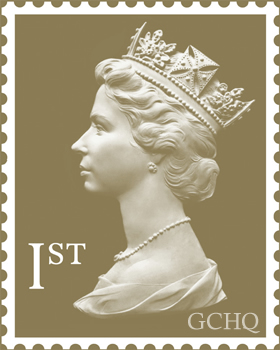
GCHQ_StampBThe events that occurred in Woolwich have sparked more than just one debate. The new debate is involving the additional powers that Home Secretary May wants to hand to the intelligence branch. It involves a data bill that was vetoed by the Deputy Prime Minister Nick Clegg. He stated that it was too much of an invasion of privacy.

Is he correct?

Initially I would side with that part. Yet, you cannot have it both ways. There is a plain and simple need to keep England’s citizens safe from radicalised attacks. The issue of Home grown terrorism had been an issue going back to Sir Jonathan Evans reign of MI-5. He was more than just a little concerned with outside influences on the British way of life. This now falls firmly on the shoulders of both Andrew Parker, who is well aware of the issues as well as the needed response and Sir Iain Robert Lobban of GCHQ. As this is Signal intelligence and as such it falls in his lap as the data would be needed for MI-5, MI-6 and some parts of local law enforcements.

I would think that part of this bill will start with Lord Carlile. His involvement in this goes back to the Terrorism Act of 2000. Current issues are ‘tainted’ by two reports and as such they both are important. First there is the National council of Civil Liberties that drafted a response to the definition of terrorism, which seems to have been the work of Gareth Crossman and Jago Russel. You should take a look at it (source: http://www.liberty-human-rights.org.uk/pdfs/policy06/response-to-carlile-review-of-terrorism-definition.pdf). It is an interesting work, and important to read is how they see this all. Part of the weakness is the approach on page 3 where they state: “It is vital that the definition of ‘terrorism’ is drawn as tightly as possible“. It is a decent stance to have, yet in the light of fear against home grown/lone wolf terrorism it is actually counterproductive. Terrorism is a shifty acre of quicksand and the strict approach is not only going to fail, it will get the people involved stopping this drowned. Not a good thing me thinks!

I feel uncertain to the point 6 they make on page 5. Yes, they do state that it is outside of the scope of the document, and as such they only raise the comments made that Terrorism should be dealt with under Criminal law. Here is where I might be the dissenting voice. The law should cover all, I do believe in that, however, what part of law? We are dealing with a group that does not seem to be categorised as such. These people are not transgressing in a way where we approach a normal person, or even the average person. Whilst we approach these transgressors in one way or another, even when if possible their defence starts going into the Mental Health act we will see a case where the court is drawn into years of litigation and dealing with a case that as such should be seen as a non-combatant involved in hostile military actions against civilians with no allegiance to any nation and as such it becomes a mess where each case locks down the justice system more and more. Consider the American situation (Foreign Intelligence Surveillance act). This comes from a special report by their Justice department stated in June 2005.

This allowed the use of FISA information in a criminal case provided that the ‘primary purpose’ of the FISA surveillance or search was to collect foreign intelligence information rather than to conduct a criminal investigation or prosecution. The seminal court decision applying this standard to information collected in intelligence cases was issued in 1980. See United States v. Truong Dinh Hung, 629 F.2d 908 (4th Cir. 1980). In this case, the Fourth Circuit Court of Appeals ruled the government did not have to obtain a criminal warrant when ‘the object of the search or the surveillance is a foreign power, its agents or collaborators,’ and ‘the surveillance is conducted primarily for foreign intelligence purposes.’ Id. at 915. However, the court ruled that the government’s primary purpose in conducting an intelligence investigation could be called into question when prosecutors had begun to assemble a prosecution and had led or taken on a central role in the investigation.

This shows that the narrowness of the scope would be the obstacle we should be trying to prevent. The issue is NOT our privacy at that point; it is all about them having access to go after the right people. This requires them to blanket us with collection of data. Even though the data is all collected, it will turn out that 99.9% might never be accessed. Having it is however essential for their success of stopping terrorist attacks. So when the Sky News UK reporter Stephen Douglas mentioned “are they playing politics with fear” then he is in my humble opinion incorrect. This data bill has been needed for a long time. It can even be safely speculated that MI-5 could have intervened with the Kenyan involved in the Woolwich murder at an earlier stage as more flags would have been raised. Their interview with him would have led to other questions, confirmations of danger. That seems to not have happened at this stage.

So from the civil liberty document we move to document cm7058 from June 2007 which holds “The Government Reply to the Report by Lord Carlile of Berriew Q.C. Independent Reviewer of Terrorism Legislation The Definition of Terrorism“. (Source: http://www.official-documents.gov.uk/document/cm70/7058/7058.pdf). My issue is with point 5 on page 5. Idiosyncratic terrorism imitators should generally be dealt with under non-terrorism criminal law. This is the point that shows the need of the data bill. Especially when we consider Lone wolf or Home grown terrorists there will be the issue whether the person was a mental health wannabe, or a more intelligent individual being allowed a second go at harming groups of people, after civil rights protected him the first time.

So even if we want to give strength to both Nick Clegg and the National council of Civil Liberties. They are there speaking out to protect your rights. Yet, in that process, they are giving strength and freedom to terrorist attacks like the one in Woolwich (not intentionally). This issue is like a seesaw. These two viewpoints are utterly opposing and as we give power to one, we remove it from the other. The interesting part is that the information we surrender will not harm us unless we support terrorism. Should that not convince you then please remember that you have already given away your privacy to most market research and financial institution data centres. They only want your money, or in a product driven way bank you. The intelligence community wants to keep you safe. In my mind, there is no debate. The data bill is likely to come and should be there, if only to prevent a second Woolwich.

Leave a comment

Filed under Law, Media, Politics

UKIP or U.K.I.P? (Ur Kiddin’ I Presume?)

First let me start by stating my ‘allegiance’. I for the most am a conservative in mind. I used to be Labour/Liberal Democrat in past, but like all people, over time my thoughts and ideas changed like they change with most people. And as most, we want to support the team that looks out for us, and is closest to our ideals. We often keep it in that order of importance.

The issues are not with the parties, they, for the most did nothing wrong to make me change my mind. They had priorities as any good party would have, and as they change I felt less with one and more with the other party.

So why, from Australia is this part on UKIP coming? Well, I grew up in Europe and I spend most of my life there. Perhaps at times I still miss being in London, but that would apply to anyone who has been to London. Only the dead do not miss London and even that might be debatable. So as I saw the news this morning on how UKIP made some staggering victories from the conservatives I started to ponder it all. So this is where I am at present.

What do most know about UKIP? We saw some people lash out against them as they lash out against most opponents they are worried about. Then there was (too) little from UKIP and of course the votes and those who flocked towards them in droves.

When you look online, there are heaps of reviews. The Australian wrote ‘Send in the UKIP Clowns’, ‘the anti-immigration UK independence party’ and a few other less than flattering headers.

So taking a look at their site at http://www.UKIP.org had several papers that could be read, downloaded and or printed. It seems that they have information that is ready for all. One of the quotes that was on page 2 of their manifesto was “On January 1st 2014, The UK will open its door to unlimited numbers of people from Romania and Bulgaria”.

In the current economic and financial climate that makes entire Europe suffer, this message would scare plenty of people in the UK. There is even a quote from Ed Miliband MP, leader of the labour party in there. Yes, there is a simple message. So, why am I interested?

From my view many Commonwealth nations are connected. Even if Australia has a strong mining community (a force our own PM seems to be happy to break into suffering little parts), we are connected with the UK. If your mother was in danger, would you NOT come to her rescue? I think that we will always come to the aid of England, even when they lack Cricket skills ;-).

The message from UKIP remains simple, yet life is not that simple, but it ought to be. This is why Mr Cameron is now in a situation where he has to pick up the pieces. I will go one step further, even if the press was not willing (or able) to make it. If the current standing is not rectified fast, the conservatives might find themselves in less than a minority position, they will end in a position that will take multiple government terms to rectify.

So let us take a look at these issues that gave strength to the UKIP.

Open immigration from Romania and Bulgaria. Open immigration is always an issue for any nation that is in a much better place than the nations where immigrants come from. Yet, these two are not in any good state, so if those people have a chance of a much better life they will come. Yet, in support, the Netherlands has been dealing with massive scaled rental allowance fraud from Bulgarian gangs. The Dutch information program ‘Brandpunt’ (= flashpoint) even showed how organised bus trips from Bulgaria exist, just to start this method of fraud. One website even mentioned “Bulgaarse televise zendt cursussen ‘Hoe misbruik te maken van het Nederlandse systeem'” (=Bulgarian television transmits courses on ‘how to abuse the Dutch system’).

In the current climate this is what the UK might have to look forward to in one way or another. So, when we see UKIP announcing that they want to get out of the EU in the current climate, many people listen.

Is UKIP correct? This is where my shoes become a little tight for comfort. Life and politics are not that simple. No matter how much we would like it to be, the UK is currently in a 1 trillion deficit issue. It needs an increased economy and it needs export to keep it all real, yet the prospect of losing a 0.3% economical increase (achieved by the conservatives) is not likely to survive after the open border policy starts next January. There is another reality that does not bode well for Mr Cameron either. Many Nations in Europe have no real grip on their budgets at present. Germany seems to be the only one on par for now. Even the UK has a problem, but that is an UK issue. As they remain in the EU, they also inherit the issues of Italy, Greece, Spain and Cyprus. Each of these 4 are now loudly protesting in a state of anti-Austerity and as such, should their governments be overturned, then the chance of them cleaning up their own mess is not likely to happen any day soon. UKIP wants to be away from the EU when that happens. The reality is that the brunt of those blows would push the Netherlands, Belgium and France on their financial knees as well. Then what?

So even though Mr Cameron is right that life is complex, the appeal that Nigel Farage wants to do an Alexander the Great and cut the Gordian knot is not that far-fetched and is starting to appeal to a much wider audience. There is even additional support as the Netherlands did not get their budget in order and now gets a one year extension. In addition, their own labour party is entering a state of possible disarray as its members oppose a plan earlier approved in a coalition deal with the VVD (Dutch Liberal party). In this situation to get certain deals, the Dutch Labour party had to accept the standing that the Dutch Liberals want a harsher expulsion policy for illegal and criminal immigrants. To make this coalition work Labour had to go along with this to get some of their own agenda points to work. Now the party members want to move away from the Liberal stance on immigration (as the Labour mindset was never on par with that) and MP Samson was unwilling to do this. He had a standing agreement and he wants to keep his word. He also warned that pushing this would come at a cost for labour. Labour would have to hand over something else and even in the short run this would be likely an expensive change for the Labour agenda. So even though this is currently being talked about, it is clear that a crises point could come. In addition, there is no indication that the Dutch economy is changing for the better. There was mention of 0.6% of shrinking of the Dutch economy. In case you were wondering why this issue matters, it does! (Read on to learn why)
You see, if the Dutch economy gets any worse it will soon go towards a situation France and Italy are in (with a lot less deficit). Consider these nations nearly all with an overall average unemployment rate of 12.1%. These people will seek solutions and are very willing to cross borders for a better option. So, the fear that UKIP propagates is a real one.

In addition, the Gordian knot will have several benefits in these regards, but what is the downfall? There is the reality that the response from the Eurozone might lean towards a preference choice in business partners and removing the UK from the top of that list as/if they move out of the EU. It comes with the ‘we take care of our own and ours first’ taking the UK out of that equation. That is a reality to face too.

Does one outweigh the other? I feel certain that UKIP made no real investigation into that part at present. The question becomes what is done after they get the votes, and when they grow large(r), will they be able to provide not just ‘answers’ but also come up with solutions? The latter might be an issue as Nigel Farage stated on Sky News on May 3rd that a reshuffle was needed as they grew more than anticipated. That statement is fair enough when we see that thus far they gained 139 seats. It is a massive victory indeed.

Yet if there is another side then it can be found in their manifesto on page 4.

  • Protecting the greenbelt – opposing wind farms and HS2.

If the UK is to move forward then a proper energy policy is needed. They could consider more nuclear power, yet in the end, alternative fuel will be the future. Considering that the UK gets more wind daily then an average flying jet turbine, wind farms need to remain an option. In addition, if the UK will opt out of the EU, things will get more expensive in the short run, perhaps in the long run too. A strong energy policy would be paramount to keep the cost for the average citizen down and moving away from wind farms as an option seems less like a good idea.

Next on the list are 4 of the points mentioned.

  • Tax should be as low as possible.
  • Cracking down on crime and anti-social behaviour.
  • More police on the streets.
  • Cutting council executives and managers, not front-line services.

These issues are nice to hear, just like the quote we see in a fortune cookie. The tax statement is nice, but will it change? As ‘low as possible’ is just like ‘as soon as possible’, if the second one could mean ‘never’ then the first one could remain ‘too high’. There is actually more to this. Cracking down on crime is something the police have always done. Could more be done? Sure! There is however the issue that a budget needs to be kept and the UK has its own Austerity measures to consider as the 1 trillion deficits is not going away any day soon. This is where the third statement comes. Sure more police on the street sounds nice, but there is an infrastructure. Adding to the police force is nice, but with what money? The police forces have been bled dry and cut to ‘too little’ and not only in the UK. So if they tamper with the infrastructure to keep the promise of more police in the street the result is likely to be counter-productive down the line, then what will UKIP do?

So you see, they talk to the public, and tell them what to hear, but will it solve anything? This part is the debatable one. Yet, down the line, we must admit to govern one must be in office, and they did get into the office and now they must prove it.

I will not join the queue where they are labelled as fruit cakes and such. Mr Cameron is right that they will become a party to be reckoned with. The interesting part is how this will play out. The old duo Clegg-Miliband is now a lot less likely to survive, that part Mr Nigel Farage did achieve. What will Labour do next is the question. They are still the biggest for now. If they are to survive then they must align. It is unlikely they will find themselves with the Tories, yet it is either that, or their new option UKIP.

And here is where we see exactly the issue that Dutch Labour and Liberals are having (PVDA/VVD). What items are given and what are taken and what happens when the MP’s strike deals their constituents will not agree with? A British political sciences student in the late 90’s once told me “Coalition cabinets are the most entertaining, volatile and corrupt forms of governments”. I thought that his point of view made a lot of sense. The UK is about to join those ranks as they need to form coalitions at both sides of the isles. Will it be about the people or the MP’s and their futures? Time will tell but there is clarity in no uncertain terms. Those who did not give clear explanations of the why (as it was too complex) are now in a state where they must redraw lines and re-educate the masses as they figure out what to do next to get their seats back.

So the title ‘You’re Kidding I presume?’ Is very correct, yet who is stating that line, and whom are they stating it to is left in the open as both sides could claim that title and both side should be able to answer it.


1 Comment

Filed under Media, Politics

More phones on the hack

So, apparently the phone hacking scandal is far from over. Not only are more claims placed against Murdoch, there is also additional talks of other papers being involved in these matters.

This happens just as a royal charter on press regulations could end up getting vetoed by Nick Clegg.

There are definitely sides the parties do not agree on. Also mentioned in the articles from the Guardian is the response by Lloyd Embley, editor in chief for the Mirror. In an article by Mark Sweney he states: “the protracted talks could turn into a ‘political football’.” (article: http://www.guardian.co.uk/media/2013/mar/13/leveson-discussions-castrate-press-lloyd-embley)

He has a good point, instead of a few pollies thinking they know what they do, it seems decent, to follow Lord Justice Leveson who actually knows what needs doing. Lloyd Embley also states in that article “If we don’t get it right it will end up castrating the press“. To be honest, with all the new phone hacking allegations, making those editors members of boys choir ‘Mare Castratum’ does not seem to be an overly bad idea at present.

I am all for freedom of speech, yet it seems that those members seem to value the news and revenue at the expense of everything and everyone. This has all been said before (by me), but the part that is still lacking visibility is that the investigations will now run into the deep end of 2015. So, the taxpayer will be paying groups of police officers and members of the CPS to get through this mess. So, as the press seems to be lacking in professional issues like ethics. The issue that arrests were made on Thursday 13th March, including FORMER Sunday Mirror editor Tina Weaver. The arrest does not yet mean that Weaver is guilty (others were arrested too). There is now however a phase of damage control which likely falls largely on the desk of Lloyd Embley. With all his efforts in growing the Mirror brand on-line, it seems to me that he needs all this like a hole in the head.

There is however another side to this all. The Tories might find themselves out of the political office sooner rather than later. Reason for this is twofold. First there seems to be a breach between Nick Clegg and David Cameron. They do not seem to be in full agreement here and Labour seems to partner with Liberal Democrats as they seem to be fully in agreement with Lord Justice Leveson on the implementation of regulations.

So next week the PM will have a fun day as he tries to get past attempts to make press regulations to be too toothless. This is in my view the effect if the industry gets to vote on who is in charge of the watchdog that watches them. So Labour definitely has a point there. There is however another side we must not forget. It seems that there is a sizeable group of Tories who are pro-Leveson. This gives Labour a staggering amount of power. So, considering these facts, why would the PM try to continue his approach? Is it because of ideology? Consider that the Guardian reported last November that 30 Tories supported the Leveson report. Whether the all still support that remains to be seen, yet the idea of both sides of the isle supporting such a charter is not that common. Still, it could be a close call. Should labour truly unite, considering the 30 additional votes and perhaps even most from the group of Clegg (aka Liberal Democrats), then the chances of the Leveson report getting implemented would be really strong. The fact that Nick Clegg seems to align with Labour on this only increases the pressure on David Cameron.

This must be one of Rupert Murdoch’s worst nightmares!

Not only is he going to face additional time in the ‘dock’ answering questions regarding the new cases, there is every chance that anything he tries to state with a style of…. what is that word again? Ah yes, diplomacy, will send even more Tories breathing fire as they defect to the side of labour in this case. There is of course the risk that some labour members will actually not support the Leveson report. I did not see any strong voices of this, but it is possible. It seems however that David Cameron would need slightly more than 5% of labour to walk to his side if he is to avoid a not so slightly uncomfortable defeat.

This option seems however less and less likely. Consider other Tories like Lord Fowler (served during Dame Margaret thatcher’s cabinet), who gave his direct support against PM David Cameron in the British Huffington post last January and in favour of the Leveson report. Considering these facts and also considering that Lord Fowler is not the only Tory thinking this, why would the PM continue on the path he currently is on?

In the end should this all come to pass in favour of the Leveson report then Lord Justice Leveson will move as the  with an epic achievement as he becomes the new Chancellor of LJMU (Liverpool John Moores University).

My remaining worry? Whomever takes over from the Lord Justice needs to have the strong backbone the Lord Justice has shown. In addition, those new reported cases, who will sit in judgement when the Lord Justice moves to his new position in May 2013?

I am more than happy to volunteer, as it is on my road to become a law lord. However, I reckon I should finish my Law Masters first and after that at least half a dozen other achievements until the position of Judge of Appeal could be realistically mine. (We should however never ignore our dreams).

Leave a comment

Filed under Law, Media

Press legislation, or not?

It was not too long ago, that we heard all manner of harsh words and political contemplations on those bad bad bad press folks. All those phone hackers!

And yes, it did not take too long for parties to react and a long investigation started. It resulted in a report by the Honourable Lord Justice Leveson spanning around 2000 pages, making it a bigger work then the Lord of the Rings; yet, I guarantee it, not as entertaining to read. Many seem to agree with me. The issue however, is not the entertainment, but it was a serious look at the visibly failing ethicality of the press and it’s ‘assistants’.

Yet, it seems that the views from that report will be largely ignored. We await the release of a Royal charter for PRESS regulations in the coming week. So, how do we feel about this? The Guardian reported on the possible compromise by Labour. No matter where you stand as Labour, Tory or Independent. It is clear that there is a high issue. The PM mentioned the dangers on infringing free speech. Whether we see this as a compromise towards the press, or the ideological view is OUR view, and the view of the PM. We all fear dangers and threats to free speech and history proved that this fear is rightly so.
The issue more than team Murdoch getting caught with their fingers in the bugging cookie jar. It is about the standard and ethics of the journo’s that is the question. The evidence seems clear and overwhelming that as their papers need revenue to keep value, some were eager for money (read income) and had not too many issues throwing ethics straight into the Thames and have a free for all.

The questions then becomes, is the PM correct and should the charter suffice, OR is his honour correct and the need for legislation becomes paramount. His deputy Nick Clegg has been outspoken on the side of the Leveson report, and as such it is that the top players do not see eye to eye on this matter.

The question is whether it is a clear eye to eye, or that the involved parties (read people of the press) have lost the credibility and trust to continue the way they currently are. The issue we should not forget is that the true core of the press is a lot larger that most of us realise and most of them work hard, they keep ethics high and get published. Some break our hearts, dent our faith and crush our strength with the facts they report. So the report gives us another view. Can we actually ignore it all? Is that not wrong to those who kept the banner of Journalism high? Legislation would ensure THEIR good handling.

The issue that the PM fairly raises is that legislation would be more complicated and create a vehicle for politicians in the future to impose regulation and obligations on the press. I would like to add to that, that this is only the tip of the iceberg. Even if I ignored the fear he voices on limiting freedom of the press down the road there is an actual impasse. We would all feel divided between the two sides. They are both fair sides.

What stopped me from hailing the move towards legislation is what i had been reading lately involving several economic issues. Could legislation be used as a shelter for economic manipulation? How long until these matters get intertwined and there is such lack of legal clarity that a hedge fund gets ‘misquoted’ and the blame is pushed unto the press with all the, messages of ‘oops’ and reference to an honest miscommunication.

This comes from the NY times 9th July 2012 “Bank Scandal Turns Spotlight to Regulators”

That belief, some regulators say, stemmed from a “miscommunication,” rather than instructions from Mr Tucker. The bank also never explicitly told regulators that it was reporting false interest rates that amounted to manipulation, according to regulatory documents.

So, if this was taken as truth, then we see here an example how media regulation would just complicate matter. What if ‘them’ is a financial reporter, or just anyone in the press picking up a nice piece of news? For that matter, if I got a $1 for every mention of miscommunication I heard over the last 20 years, and if that rule only applied to people who were senior manager of higher then I would buy an island like Guernsey (or the Falkland’s with an additional free Frigate).

From those sides, and views I would see that the PM (alas) has a point. On his side is also Adrian Jeakings, president of the UK Newspaper society. He too believes that the industry is capable of policing the press. That part I wish to oppose. You see, they will play nice, they will be quiet and humble and so on, but how long until the 1,000,000 pound fine will be diminished, because it will only hurt more then it will do good? How long until some of them will transgress to the point that they should be criminally charged? At that point a QC will come into the court mentioning ‘honest mistake’, ‘my client is truly sorry and remorseful’ and so on.
This prospect moves me straight back into Camp Leveson (to coin a phrase). There is no doubt. Some of us will go one way, some the other way. No matter how we feel, we are not indifferent.

Perhaps reading the Royal charter when released will help us to clear our heads and accept that charter, or push us into demanding legislation. I do know that we have not seen the end of this any day soon.

Leave a comment

Filed under Law