Tag Archives: Yachts

The Guardian just won’t learn

Yup, that is where it is at, but it starts with the BBC (at https://www.bbc.co.uk/news/science-environment-67679732) where they give us ‘UN climate talks in jeopardy in fossil fuel backlash’. Yup, we have an issue here, but it is one that is given to us with some debatable sides.  You see, we are given “A new amended version of the text is expected to be issued on Tuesday so that negotiations can continue. Humans burning fossil fuels is driving global warming, risking millions of lives, but governments have never agreed how or when to stop using them.” There are issues here. I do not completely disagree with the setting, but in that same side plenty of governments (US, UK, EU) never did what needed to be done for the longest time, as such we are all reliant and too much dependent on fossil fuels. In that light, the US is the BIGGEST exporter of fossil fuels, but we do not see too much about that, do we? And that is not the largest setting either, for this we need the Guardian.
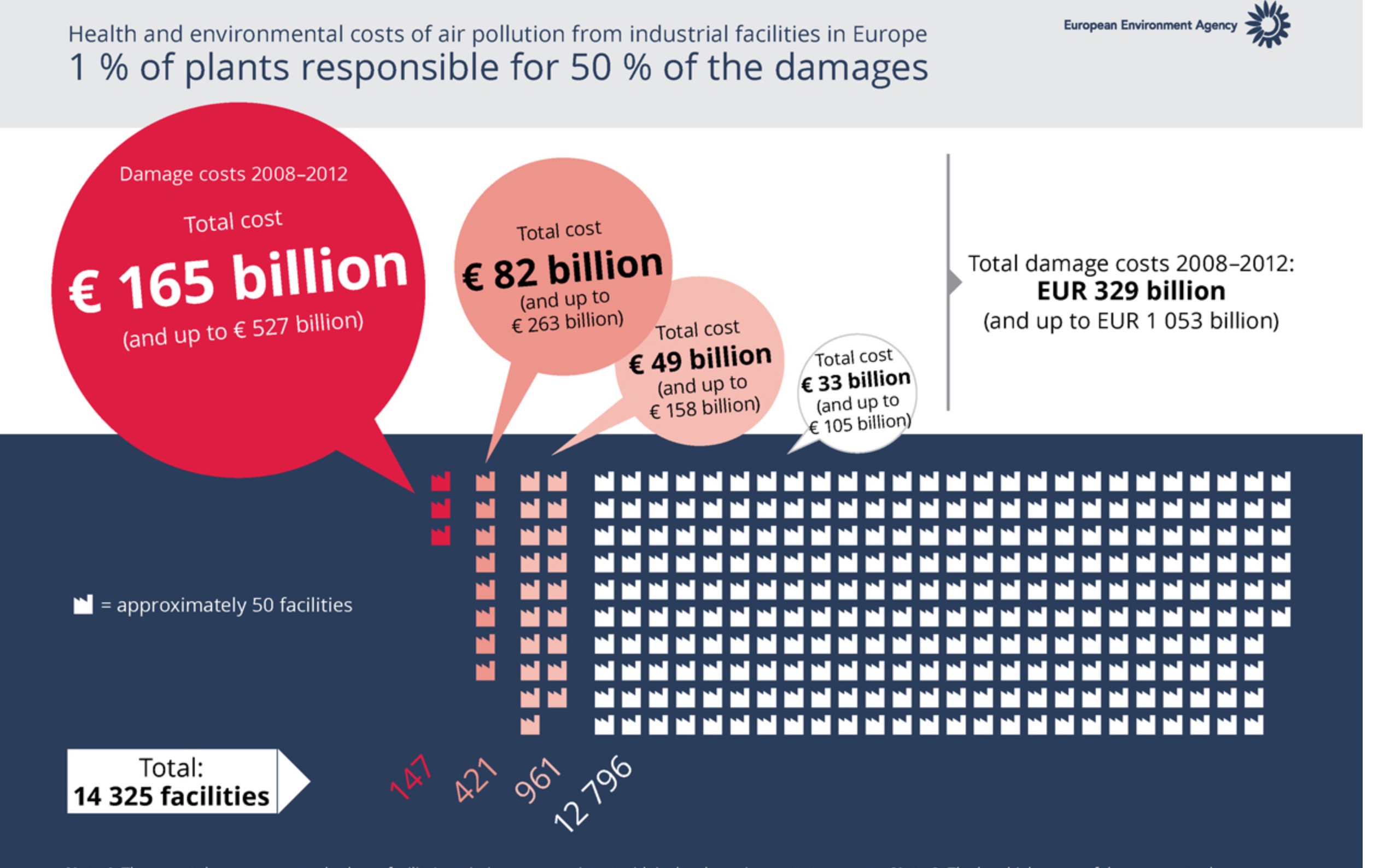
Remember this image. We saw this as the larger stage of misinformation by the media. The EEA (European Environmental Agency) gave us a clear setting that 50% of the damage we see comes from 147 facilities. Yes, you saw that right, 147 facilities cause 50% of the damage and for well over a year the Guardian ignored this, did not make mention this, made no effort to look into these 147 facilities. No, first we get some BS story about corporate jets and the EEA story goes back to December 10th 2020 (at https://lawlordtobe.com/2020/12/10/uniform-nameless-entitlement-perforation/) where we got the goods. No, this time around we get Chris Armstrong giving us ‘‘Megayachts’ are environmentally indefensible. The world must ban them’, I do disagree, but I find more issues with a yacht then a jet. So whilst we are given “Abramovich’s yachts emit more than 22,000 tonnes of carbon every year”, I believe it to be BS. You see, some sources give us 7,020 tonnes a year. This number is smaller, yet equally debatable. You see a yacht tends to be twin engine and each engine is about the size of a Rolls Royce Spectre. Some are even bigger, so there is pollution. But where Chris goes off the rails is that instead of giving us “This yacht has 4× MTU 20V 1163 TB93 diesel engines, triple screw propellers, giving us X amount of pollution” we get merely a number and nothing is based on amount of pollution per hour. You see these people aren’t on their yachts 24:7, as such it is less pollution, and some will debate is that not too much either? It is a fair question and I do not have a clear answer here. And in that light, why was there no mention of that new yacht from Jeff Bezos? Is this just a handle of handing a Russian name to make the ‘ban’ more palatable? In addition when we consider “whilst over the last 15 years over 41,000 flights a day were added” and how much pollution is that? We do not get the real deal, the numbers and the evidence. It might be a opinion piece, but the Guardian is screwed up, to the highest degree going with hatchet pieces like this and not giving us any real numbers. And when we are given “Bill Gates might gain some plaudits for merely renting, rather than buying, mega yachts” they seemingly didn’t know “The impressive Wayfinder, one of the yachts in Microsoft co-founder Bill Gates’ fleet, is currently moored at the mega yacht marina in the Port of Malaga. Measuring 69 metres long and 14 metres wide, the Wayfinder has the task of servicing the Aqua mega yacht, the technology magnate’s main luxury vessel.” So he has a fleet, I didn’t know and for the most I do not care, but it shows just how much the Guardian embraces BS.

With the Guardian ignoring the EEA report, ignoring the fact that over 15 years 41,000 flights a day have been added and we do not get to see how much pollution that brings. So whilst we might trivialise some parts, the larger part is ignored and both the BBC and the Guardian might merely report and bring us opinion pieces, but we aren’t being informed. I wonder why that is. 

We might want to blame some of the players in that fossil fuel setting, but no one is pointing at the USA and its Brent crude oil, so why is that? I don’t have the answers and the media isn’t giving any. How weird is that? 

Enjoy your day.

Leave a comment

Filed under Finance, Media, Politics, Science

Dinghy on the left

I got here by different means. It was last week that the Monaco Yacht Show was on and I watched a few video’s from people who were there. There was of course a lot to behold and plenty of yacht fanatics beheld what they could. I merely watched these overpriced water scooters for their elegant design and technology hubs that some of them are. It was then that I remembered something. I watched some marketing film from Palmer-Bugatti on a yacht called the Niniette 66. This is what I personally thought an overgrown speedboat that was 66ft (20 metres) in length. Don’t think I am dissing this boat, because I am not. It was one of the most beautiful yachts I ever beheld in my sight.  

So I went looking 1-2 days ago and I found something disturbing. The dozens of video on this vessel fall in the following categories. 80% are all the same and represent an edited version of released marketing materials, 10% is some clever video person implying that they were ON that vessel but they were not, it was a different vessel altogether and the last 10% is a mix of the first two categories. I watched at least two dozen videos, none of them taking me on a tour on that $4,000,000 vessel. Don’t get me wrong, I do not now, or ever expect to have that much money (until someone buys my IP). I am decently certain that (at present) I do not have enough to even buy the steering wheel of that vessel. I also looked at renowned yacht vloggers like eSysman SuperYachts, SuperYacht Times and a few others, none of them (as far as I can tell) have been on the Niniette 66. Youtube is absent of people who have been there. And I merely wonder why.

You see, the Bugatti is exclusive, we all get that. We all get that not every Tom, Dick and Sean will ever see it, but no one? That does not make sense to me. And the renowned Yacht vloggers haven’t seen this yacht either. In this age where social media is everywhere, this is an almost startling revelation. It seems to me that the Bugatti Niniette 66 is a better guarded secret than the Lockheed Martin F-35 Lightning II is. And that got me puzzled. I get that the F-35 is a guarded secret, it is military hardware. Yet it seems to me that when you get more cockpit video’s from the F-35 than a $4,000,000 yacht, something seemingly is off.

Now, this might be me and this might be the instance where the heart is fonder than the media is (which is also weird) and in this case I have seen more revealing pictures of Olivia Wilde and Laura Vandervoort than I have seen of the Bugatti Niniette 66. It does not add up and I get it, it might merely be me and that is fine. But no video’s at all from the inside of the yacht, a walkthrough, not even one made by Bugatti themselves is a little weird. I am not talking about the marketing materials. I am talking someone taking us on a tour on that yacht in Monaco or Dubai and showing off just how exclusive and amazing that yacht is. When you consider how much of a hard on a man like Andrew Tate gets from his cars (he owns several Bugatti’s), he would be the perfect choice to show of the Niniette 66 in Dubai as I see it. But we haven’t seen this and the next one starts on February 28th 2024 (146 days and 9 hours roughly). I will keep an eye out and I wonder if someone at that time will have covered the Bugatti Niniette 66.

Enjoy the day and if you are lucky enough to enjoy the sea breeze on a dinghy, please do that too.

Leave a comment

Filed under Media, Tourism

A problem from luxury

It is Saturday and again the news station NOS (www.nos.nl) brings an interesting piece. Going back to my youth, I would love to walk around the marinas. I would admire the boats and their shapes. Those owners, so proud, they had their ‘yacht’. Boating in the Netherlands had always been big, now almost 40 years later thousands of boats are there. Neglected and in poor condition. Those who bought metal boats can sell it as scrap and end up with a few coins; those who bought polyester now own boats that are in a state where they are floating environmental disasters. These boats will not degrade; they are there to remain a pox on the Dutch landscape and especially marina’s from where they have no place to go, the people are often gone, many in no financial position to fess up to their choices. So now we get the issue that a fund needs to be created to clean up the mess others made. Government funding that would be needed to clean up the mess of these owners who claimed (or once were) wealthy.

So what gives?

Well, the question becomes what to do next. This is not an area of expertise for me, to the next part could be a well-intended effort to find a solution that is just plain BS (for that my apologies).

I have done a little reading and see that in some cases plastic bottles are recycled into polyester the clothing industry uses. So, if that is the case and agreeing that this initially could cost the government something, is it not an idea to crunch a boat into smaller parts and then process it into something better? Even crunching it into flakes might make this marina based solution into a less useless obstruction.

If you think that this is not an issue, or a rich person’s issue, then think again. Even though due to the size of the Netherlands (a really small nation), this nation has well over 200 marina’s, making this more than just a small problem. But what is involved?

1. Disown these neglected boats. Not unlike a car when it is no longer road worthy, if a vessel is no longer water worthy in its current state, then the owner would need to receive a writ, stating that it is fixed within a certain time, or the owner will be disowned, yet not financially disowned, so whatever loans he has out there on the boat, they will remain. The owner will get a processing fee (it is not up to a government to foot the bill for environmental hazards) and what was formerly known as a boat will be removed.

2. How to process the boats? To be honest, that is the true issue. Burning is not an option because of the toxic fumes (which are also not that environmental friendly). A boat usually will be made of polyester (the bulk/hull), aluminium (mast), metal (wires) and wood (sometimes deck, mostly internal parts). The hull is actually the big thing. That needs to be crunched into little parts. Whether we can dump the entire boat into some giant nibbler, or first manually remove parts as much as possible and then nibble it to splinters is part of this consideration.

3. What to do with the polyester. To just assume that what works for plastic bottles, would work for boats is just crazy. There are numerous versions of polyesters, which will mean that they might not be that mixable.

So what are the solutions my little brain could come up with in 30 minutes?

Option 1.

Can the polymers be liquefied and then turned into some tile, which could be used as some kind of insulation? Can they be used to be reprocessed into some other usable plastic (like bags or other usable items), especially if these are items that could be revenue making to some degree to counter the costs of processing this.

Option 2.

Can they be processed in some form to become collectible s that even not bio degradable, they could be used as some kind of foundation that even though not bio-degradable, they could be ‘dumped’ into natural places as they would not hurt nature and only take up space.

Before you attack option 2, consider that a thousand non usable boats are a blight on nature as is, to be able to bury them in a minimum size (providing we can prove it will not harm nature) is not the worst idea. The worst idea is to not do anything about it, which is what happens now.

In an age of such bad economy, this might actually prove to be a point of light. This is a niche market that has potential and seems to be in non-existence for now. Even if this is the most visible in the Netherlands, due to a largely lack of size, yet they have a massively sized marina market. Beyond this there is France, Italy, Spain, Portugal, Greece and a few more places where this, even to a smaller extent might be an issue.

The Netherlands do have one advantage. They have Wageningen University, which is one of the most renowned universities when it comes to environmental studies. When it comes to Chemistry, there are the Dutch Universities of Leiden, Rotterdam, Delft and Amsterdam. So, if a solution would be possible, then the Netherlands will be able to solve the issue that is most visible to them and create a possible new European market in the process.

An environmental issue that could help start a ‘new’ economy, who would have thunk it?


Leave a comment

Filed under Finance