We are confronted with lies all the time, the CIA (who is truly gifted in the act) uses it to spread all kinds of discourse, but that is their operandus mondi, so we are not surprised. Yet now we are confronted that these tactics have been embraced by both the FBI and the Pentagon. And it is not my source; it is an American source that gives us this part.
To get to the heart of the matter, we will have to borrow a TARDIS and do some time-travel (a valid Dr Who reference). During this trip we will not be looking at apples and oranges, but we will be investigating fruit, and this has all the bearings on the case.
Trip one
Let’s travel back to November 24th, 2014. It is a sunny day at Sony Square New York, 21 degrees, nice and relaxing weather. It had all the marks of it being a lovely day, were it not that someone decided to hack Sony and they did it, not only did they do it, they left all the markers blaming North Korea. The FBI send their cyber experts and behold, they too agreed that it was North Korea. Even as we were extremely aware that they had no way of doing it, the FBI stood firm on their findings.
Trip two

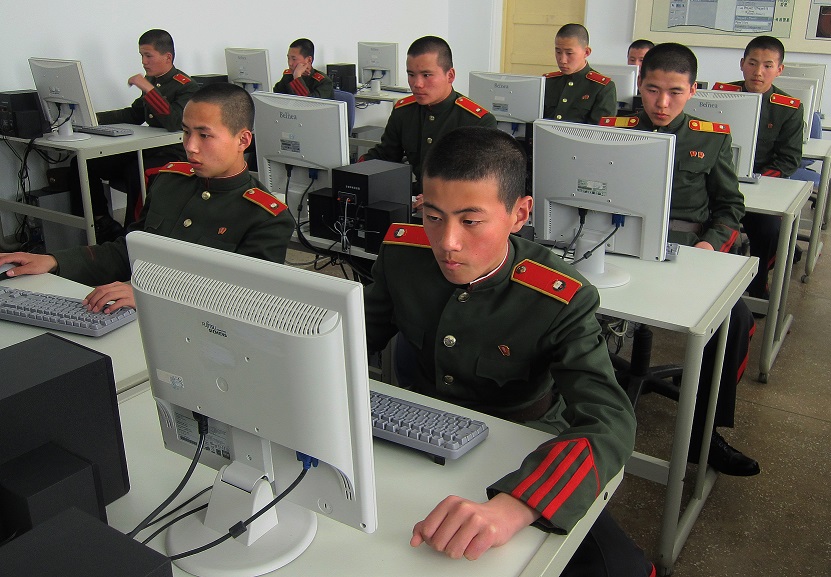
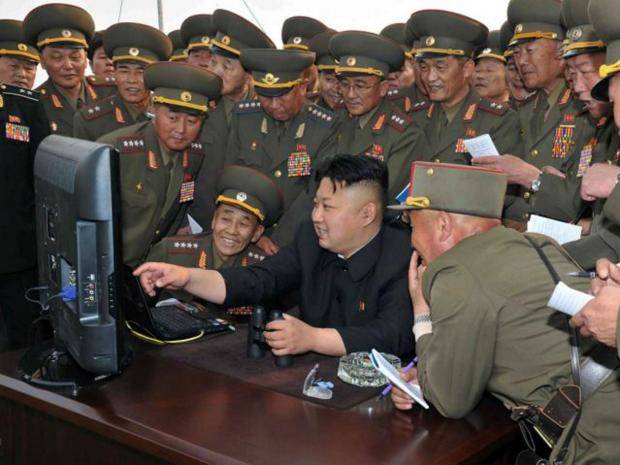
We are pushing the envelope and stopping at 2015, 2016, 2017 and 2018. We are given “North Korea’s offensive cyber capabilities” and we see Randall Schriver, a top Pentagon official and all the ‘so called’ expressionistic ideas on how North Korea is the big nasty, the large danger and the big hacker. In addition to this the Financial times gives us (at https://www.ft.com/content/cbb28ab8-8ce9-11e9-a24d-b42f641eca37) “Pyongyang controls an army of thousands of hackers who bring in hundreds of millions of dollars annually, according to experts’ estimates“, which was given to us in June 2019.
Into the Heart of Darkness
It was only hours ago that we were given the first light of truth by the Washington Post. To give you that we need to change the topic to fruit and not apples or oranges. You might realise that to get ahead, you need to be ahead. Unless you build a system yourself, you need access to a system of equal quality to hack into a place. Unless you have the passcodes (current password = Inc0rrect%) and inner workings, you cannot hack past the Pentagon Cray, it is close to impossible to do with even the most updated equipment and North Korea is well over a decade behind. It is defended by firewalls and other encrypted matters. Sony is not that advanced, yet still has a lovely set of firewalls and other means to limit access. Yet North Korea, with technology that was considered advanced in 1990, was nothing of the sort a decade before they hacked Sony. In addition, certain access methods or planting of other abilities would have required 4G mastery, a mastery that they do not have. The digital footprint does not match up and it is there that the Washington Post (at https://www.washingtonpost.com/world/national-security/leaked-documents-reveal-huaweis-secret-operations-to-build-north-koreas-wireless-network/2019/07/22/583430fe-8d12-11e9-adf3-f70f78c156e8_story.html) is giving us the goods.
 So as we are given: “Before 2008, North Korea struggled to find multinational companies willing to build a 3G network in such a risky business environment. That ended with the creation of the wireless provider Koryolink, which emerged from a discreet visit in 2006 by Kim’s father, Kim Jong Il, to Huawei’s headquarters in Shenzhen, China” this is the first piece of evidence, 6 years before the hack North Korea did not have access to 3G, it was not there, as such the knowhow of hacking would have been severely limited. In addition to this we need to consider “Alexandre Mansourov, an adjunct professor at Georgetown University’s School of Foreign Service, who in 2011 wrote about North Korea’s digital transformation. “They decided to work with Huawei from that time on.”” gives us that in 3 years that stage was not surpassed, or even achieved. The paper by Mansourov also gives: “less than 3 percent of the population currently use modern telecommunication services, it has adequately trained human capital, a rather developed industrial and technological base, and sufficient financial resources to pursue the digital revolution to the benefit of the majority“, which now implies that the fall back is actually a lot larger. If they truly had a ‘rather developed industrial and technological base‘, then they would be the oranges that need not rely on Huawei, yet they are technologically speaking merely apples, they are both fruit, but on a different shelf, a lower shelf and that is where we see the technology fail (especially in North Korea). In his paper we also see: “Because the cell phones connect to Chinese cell phone towers it is difficult for the North Korean government to eavesdrop on the calls, but it does mean use is restricted to the border area“, this implies that the limitations in North Korea are actually larger and as such knowledge is more limited. that last part came from ““How Chinese Cell Phones Help Information Flow,” Martyn Williams, 1 April 2010” which was 4 years before the hack, there is no way for any nation to evolve their technology level in that amount of time without having billions, as well as all the technology available for installation and implementation. Which was never the case, North Korea is hardly on the 3G path keeping them a decade behind everyone else.
Fruit, Apples and Oranges
So even if I am looking at fruit, looking at mobile technology versus hackers is like setting apples against oranges, yet the larger truth remains, a hacker cannot surpass certain levels of access if they lack access to the current generation of technology and that is where we see the flaw in all this. To have antiquated equipment access the Sony mainframe calls for all kind of issues as the access requires speed, and if you rely on old technology there is a limit to what you can get. For example getting a 4TB drive for a PlayStation 3 is bogus as it cannot address the complete drive, so when you look at it from that path, you lack the ability to store all that data and Sony was all about data. More important, if the skill to get behind a 4G system is not there, there was not even 3G, how can you get into the hack? Now we might rely on normal lines, but the flaw is already shown, you need a larger comprehension of technology and telecommunication to proceed and North Korea is stated that it could not get 3G without Huawei; at that point we should recognise that it could not get into Sony. If they actually had done that, then they would have been able to design and build their own 4G (which would still be half a decade too late), but that would be the premise. That absence gives us that the Washington Post, who also gives us: “According to a 2008 contract, Panda would transport Huawei equipment to Dandong, a town in northeastern China known for cross-border trade. From there, it would be taken by rail into Pyongyang“, as well as “In spring 2008, Orascom and Korea Post tasked Huawei with developing an encryption protocol for the network, noting that the government would create its own encryption algorithm, according to the documents” this much larger stage does not absolve Huawei (it is not about that), but the fact that encryption protocols were not in existence implies a delay of at least 2-3 years to get their 3G up and running, the entire matter would have given North Korea less than 2 years to get trained to the levels required to visit the Sony Server and become an actual cyber threat. There is no realistic chance that this would be the case and again, when we consider the press visit to North Korea (somewhere in 2012) where the Dutch press learned that their high ranking escorts had no idea of what a smartphone was, that alone gives a lot more insight in the technological limitations of North Korea and its army.
There is no doubt that North Korea would love to be an actual threat, but when it cannot comprehend 3G to the degree it needs and it has no 4G, how is North Korea an actual threat? I believe that Sony was hacked by someone else, there is also enough valid intelligence to see that those people would love to do business with North Korea, yet the entire matter connected to Huawei implies that North Korea is missing several links on the chain of telecom cleverness, the reigns of the horse of innovation and the armour of progress is all rusty, heavy and useless. In this stage the North Korean cavalry might be the most advanced they had but it still does not match up what other nations have had access to from the late 1800 onwards, when you realise the difference to that degree, do you still believe that North Korea could have been the hackers?
That is seen when we look at ‘The Hill’ in 2017. There we get North Korea and the quote: “Today, when warfare can include the operational use of nuclear weapons, the cumulative consequences of underestimating “friction” could be exponentially more serious. This conclusion is true by definition and thus, thoroughly incontestable” yet when we see in a 4G world that North Korea has not even mastered 3G to the degree it needs, we see a shift of needs, needs that are all about the consultants charging their overexposed ego’s by the hour, whilst we see a lack of evidence on the abilities towards the dangers that we are seemingly exposed to. In that regard the FBI and the pentagon has played into the hands towards consultants like Randall Schriver, yet the actual evidence (implied to be) as we now see in the Washington Post gives us another picture, one that bounces against earlier accusations and speculations. March 27th, 2019 C-Span gives us the premise that China and North Korea are set together as a threat, yet the overbearing accepted evidence shows that the division sets the stage where China is 99% the threat and North Korea a mere 1%, yet together is nice to bump the budget. So far no actual or factual evidence has been shown where North Korea is an actual cyber power. As I personally see it, even the NY Times is in on it.
When we are given: “Their track record is mixed, but North Korea’s army of more than 6,000 hackers is undeniably persistent, and undeniably improving, according to American and British security officials who have traced these attacks and others back to the North“, as well as “North Korean hackers tried to steal $1 billion from the New York Federal Reserve last year, only a spelling error stopped them“, and “only sheer luck enabled a 22-year-old British hacker to defuse the biggest North Korean cyber-attack to date“. when we are confronted with ‘spelling error‘ and ‘sheer luck‘ we are sold a bag of goods, the fact that North Korea is at the most about 3G, we see the lack of certain abilities. If these hackers were that good, than their abilities would have been to acquire all the technology that we have full access to and that has seemingly not happened. In any war we acquire the weapons to be an equal footing, or more advanced footing, von Clausewitz and Sun Tzu taught us that. You do not rely on the flintlock when the opposition is walking with a 7.62mm MAG. The accusation (also from the NY Times) “the country is suspected of having thousands of hackers capable of carrying out global cyber-attacks, like the recent ransomware attack in more than 150 countries” gives us that they are a large threat and this is only possible with a large established infrastructure. That is seemingly not the case so as we ponder ‘suspected‘ we see the speculated inflated danger that North Korea is, and until today, until the Washington Post gave us the article, that part was too eagerly accepted.
There is no doubt that there are hackers in North Korea, but as the technology shows, they are fighting with one hand on the back wearing a blindfold. It does not make them less dangerous, but it also implies that the events that have taken place were done by others and as such the cyber operatives trying to stop it are not merely failing, they are at present completely unaware who they are actually up against and that is the sad part of this story. after all the billions they got they are still clueless in the dark, a sad story that only came to light as the Washington Post gave us: ‘Leaked documents reveal Huawei’s secret operations to build North Korea’s wireless network‘, seemingly a 3G network no less. And even there we have no evidence at present. That part is given through: “Since then, any company to provide Panda with telecom items intended for North Korea and containing at least 10 percent U.S.-origin content without a license would be in violation of the export ban”, so not only is there a question on one side, the lack of evidence at present gives rise to a lot more issues and that makes for such a sad situation at present.


 Lawrence van Rijn - Law Lord to be
X to the power of sneaky
I was honestly a little surprised this morning when I saw the news pass by. The BBC (at https://www.bbc.co.uk/news/technology-67137773) gives us ‘Twitter glitch allows CIA informant channel to be hijacked’. To be honest, I have no idea why they would take this road, but part of me gets it. Perhaps in the stream of all those messages, a few messages might never be noticed. The best way to hide a needly is to drop it in a haystack. Yet the article gives us “But Kevin McSheehan was able to redirect potential CIA contacts to his own Telegram channel” giving us a very different setting to the next course of a meal they cannot afford. So when we are given “At some point after 27 September, the CIA had added to its X profile page a link – https://t.me/securelycontactingcia – to its Telegram channel containing information about contacting the organisation on the dark net and through other secretive means”, most of us will overlook the very setting that we see here and it took me hours to trip over myself and take a walk on the previous street to reconsider this. So when we are given “a flaw in how X displays some links meant the full web address had been truncated to https://t.me/securelycont – an unused Telegram username” the danger becomes a lot more visible. And my first thought was that a civilian named McSheehan saw this and the NSA did not? How come the NSA missed this? I think that checking its own intelligence systems is a number one is stopping foreign powers to succeed there and that was either not done, or the failing is a lot bigger then just Twitter. So even as the article ends with “The CIA did not reply to a BBC News request for comment – but within an hour of the request, the mistake had been corrected” we should see the beginning not the end of something. So, it was a set of bungles that starts with the CIA IT department, that goes straight into the NSA servers, Defence Cyber command and optionally the FBI cyber routines as well. You see, the origin I grasp at is “Installation of your defences against enemy retaliation” and it is not new, It goes back to Julius Caesar around 52BC (yes, more then two millennia ago). If I remember it correctly he wrote about it in Commentarii de Bello Gallico. Make sure your defences are secure before you lash out is a more up to date setting and here American intelligence seemingly failed.
Now, we get it mistakes will be made, that happens. But for the IT department of several intelligence departments to miss it and for a civilian in Maine to pick it up is a bit drastic an error and that needs to be said. This is not some Common Cyber Sense setting, this is a simple mistake, one that any joker could make, I get that. My issue is that the larger collection of intelligence departments missed it too and now we have a new clambake.
Yes, the CIA can spin this however they want, but the quote “within an hour of the request, the mistake had been corrected” implies that they had not seen this and optionally have made marked targets of whomever has linked their allegiance to the CIA. That is not a good thing and it is a setting where (according to Sun Tzu) dead spies are created. Yet they are now no longer in service of America, but they are optionally in service of the enemies of the USA and I cannot recall a setting where that ever was a good thing. You see, there was a stage that resembles this. In 942 the Germans instigated Englandspiel. A setting where “the Abwehr (German military intelligence) from 1942 to 1944 during World War II. German forces captured Allied resistance agents operating in the Netherlands and used the agents’ codes to dupe the United Kingdom’s clandestine organisation, the Special Operations Executive (SOE), into continuing to infiltrate agents, weapons, and supplies into the Netherlands. The Germans captured nearly all the agents and weapons sent by the United Kingdom” For two years the Germans had the upper hand, for two years the SOE got the short end of that stick and this might not be the same, but there is a setting where this could end up being the same and I cannot see that being a good thing for anyone (except the enemies of America). Now, I will not speculate on the possible damage and I cannot speculate on the danger optional new informants face or the value of their intelligence. Yet at this point I think that America needs to take a hard look at the setting that they played debutante too. I get it, it is not clear water, with any intelligence operation it never is. Yet having a long conversation with the other cyber units is not the worst idea to have. You see, there is a chance someone copied the CIA idea and did EXACTLY the same thing somewhere else. As such how much danger is the intelligence apparatus in? Come to think of it, if Palantir systems monitor certain server actions, how did they miss it too? This is not an accusation, it is not up to Palantir to patrol the CIA, but these systems are used to monitor social media and no one picked up on this?
Just a thought to have on the middle of this week.
Leave a comment
Filed under IT, Military
Tagged as Abwehr, BBC, CIA, Commentarii de Bello Gallico, Common Cyber Sense, DoD, Englandspiel, FBI, Julius Caesar, Kevin McSheehan, Maine, NSA, Palantir, SOE, Special Operations Executive, Sun Tzu, Twitter