Tag Archives: West Midlands

Tethered to the bottom of the ocean

Perhaps you remember a 1997 movie, about a ship that decided to take a fast trip to America, the HMS Titanic. We all have our moments and what you might not know is that there is a deleted scene that only a few limited editions had. The captain (played by Bernard Hill) was asked a question by one of the passengers: ‘Is land far away?‘ The response was: ‘No, it is only 3900 yards to the nearest land………straight down‘. OK, that did not really happen, but it does sound funny. You see, the image of a place can be anything we need it to be, dimensionality is everything and that is where we see the larger problem.

This is actually directly linked to the article I wrote on September 18th, the article ‘The Lie of AI‘ gets another chapter, one that I actually saw coming, the factors at least, but not to the degree the Guardian exposes. In the article (at https://lawlordtobe.com/2019/09/18/the-lie-of-ai/) I gave you: “more importantly it will be performing for the wrong reasons on wrong data making the learning process faulty and flawed to a larger degree“, now we see (at https://www.theguardian.com/society/2019/sep/19/thousands-of-reports-inaccurately-recorded-by-police) a mere 8 hours ago ‘Thousands of rape reports inaccurately recorded by police‘, so we are not talking about a few wrong reports, because that will always happen, no we are talking about THOUSANDS of reports that lack almost every level of accuracy. When we consider the hornets’ nest the Guardian gives us with: “Thousands of reports of rape allegations have been inaccurately recorded by the police over the past three years and in some cases never appeared in official figures” Sajid Javid is now facing more than a tough crowd, there is now the implied level of stupid regarding technology pushes whilst the foundations of what is required cannot be met and yes, I know that he is the Chancellor of the Exchequer. It is not that simple, the simplicity is not seen in the quote: “More than one in 10 audited rape reports were found to be incorrect“, the underlying data is therefore more than unreliable; it basically has become useless. this is a larger IT problem, it is not merely that the police cannot do its job, anything linked to this was wrongfully examined, optionally innocent people were investigated (which is not the worst part), the worst part is that the police force has a resource issue and there is now the consideration that the lack of resources have also been going in the wrong direction. The failing becomes a larger issue when we see: “The data also found that a number of forces failed to improve in subsequent inspections, with some getting worse“, the failing pushed on from operational to systemic. Now consider IT, the laughingly hilarious step of AI, even the upgrades to existing systems that cannot be met in any way because the data is flawed on several levels. It is a larger issue that out of the national police force in this regard only Cumbria, Sussex and Staffordshire past the bar, a mere 3 out of 36 forces did their job (above a certain level) and it gets worse when you consider that this is merely the investigations into the sexual assault section, the matter could actually be a lot worse. Consider the Guardian article in July ‘Police trials of facial recognition backed by home secretary‘ (at https://www.theguardian.com/uk-news/2019/jul/12/police-trials-facial-recognition-home-secretary-sajid-javid-technology-human-rights), as well as ‘UK police use of facial recognition technology a failure, says report‘ from May 2018 (at https://www.theguardian.com/uk-news/2018/may/15/uk-police-use-of-facial-recognition-technology-failure), you might not have made the link, but I certainly did. When you take the quote: “Police attempts to use cameras linked to databases to recognise people from their face are failing, with the wrong person picked out nine times out 10, a report claims“, now consider that a  victim reported the assault on her, a report is made and at some point the evidence is regarded and looked over, the information is linked to CCTV data and now we are off to the races, whilst 3 out of 36 forces did it right, there is now a stage where 91% is looking at the wrong information, inaccurate information and add to that the danger of 10% getting properly identified, even if the right person was picked out, there is still a well over 75% chance that the investigation is going in the wrong direction and optionally an innocent person gets investigated and screened, in the meantime the criminal is safe to do what he wanted all along.

Now we get the good stuff, in 2018 home secretary, Sajid Javid gave his approval and now as he is the Chancellor of the Exchequer, he approves the invoice and also sets the stage of handing out £30 million to a system that cannot function in a system that is based on cogs that were not accurate and are transposing the wrong data. Even then we see “the BBC reported that Javid supported the trials at the launch of computer technology aimed at helping police fight online child abuse“, a system this inaccurate, not merely because of its flawed technology is set in a stage where the offered data is not accurate either, this simply implies that until the systemic failure is fixed the new system can never function and it will take well over a year to fix the systemic failure. So tell me, what do you normally do to a person who is knowingly and willingly handing over £30 million to a plan that has no chance of success?

We need to stop politicians from wasting this level of resources and funds merely to look good in the eyes of big business. I also feel that it is appropriate that Sajid Javid will be held personally accountable for spending funds that would never be deployed correctly.

The reasoning here is seen in the quote “Recorded rape has more than doubled since 2013-14 to 58,657 cases in 2018-19. However, police are referring fewer cases for prosecution and the CPS is charging, prosecuting and winning fewer cases. The number of cases resulting in a conviction is lower than it was more than a decade ago“, the stage is twofold, we see a doubling over 5 years whilst convictions were down from more than a decade ago, it will in the end link to conviction rate on data, whilst the data numbers are not reliable. The quotes “the case was not recorded as a crime“, as well as “noting it as an incident“, in both cases rape registered as something else, and there is no conviction required on ‘incident‘, the underlying questions is whether this lack is optionally intentional to skew that statistics. You might not agree and it might not be true, but when we see a 91% failing from the police force there is something really wrong. The problem intensifies when we see the Guardian statement that “West Midlands was found to be ‘of concern’ and had ‘not improved’ rape recording upon re-inspection in 2018” this implies that the work of the Inspectorate of Constabulary and Fire and Rescue Services (HMICFRS) is either not taken seriously or is intentionally ignored, you tell me which of the two it is and connected to this is Sajid Javid ready to ‘upgrade’ to AI (that remains funny) and spend over £30 million on that system, as well as the funds wasted on the current CCTV facial recognition solution, which is not cheap either.
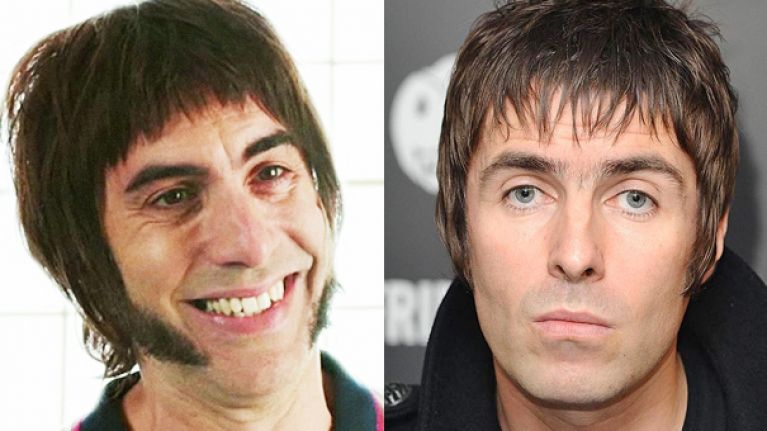
I wonder who the CCTV will point to arrest for the person allegedly having sex on the desk of the Terry Walker, Lord Mayor of North East Lincolnshire. Images show that the local police might be seeing Noel Gallagher as a person of interest at present.

I wonder how that data was acquired?

In opposition

There is however the other side and even a I did not give it the illumination, there was no intent to ignore it. The options to ‘AI to reduce the burden on child abuse Investigators‘ is not to be ignored, it must be the task that will burn out a person a lot faster than they would transporting bottles of nitro-glycerin by hand through a busy marketplace. I am not insensitive to this, yet the Police Professional gives us: “The development will cost £1.76 million from a total investment in the CAID from the Home Office of £8.2 million this year, which is different from the £30 million given, as I see it additional questions come to the foreground now. Yet there are other issues that are not part of this. There is the danger of misreading (and incorrectly acting on) seeded data. In SIGINT we see the part where data fields are used to misrepresent information (like Camera model, owner, serial number), when we start looking in the wrong direction, even if some of the data might be correct you are in a different -phase and the problem is that no AI can tell you that a camera serial number might be wrong, or right. There are larger data concerns, yet I do understand that some tasks can alleviate stress from the police, yet when we link this to the lack of accuracy on police data, the task remains equal to mopping the floor whilst the tap is running spilling water on the floor. None of these steps make sense until the operational procedures are cleared, tested and upgraded. A failing rate of 91% (33 out of 36) makes that an absolute given.

And for those who missed the Gallagher joke, please feel free to watch the movie the Grimsby brothers. There are actually two additional paths that are an issue, it is not about presentation, it is about the interpretation, as well as the insight of sliced data, they interact and as such a lot of metrics will go wrong and remain incorrect and inaccurate for some time to come. Data will get interpreted and optionally acted on, which becomes a non-option when accuracy is below a certain value. So feel free to be anchored to the ground in the approach to data surveillance employing AI (I am still laughing about that part), yet when you are tethered to the bottom of the ocean, how will you get a moment to catch your breath?

Precisely, you won’t!


Leave a comment

Filed under Finance, IT, Media, Politics, Science

How about them budgets?

Today it starts with the Wall Street Journal (at http://www.wsj.com/articles/italy-cuts-growth-forecast-for-2016-and-2017-1475014871), where we just got the news that Italy is downgrading the forecasts, from “1.2% for this year and 1.4% in 2017″ to “0.8% this year and 1% in 2017“, an offset of 0.4%. So, even as we consider how small this is, on a number 2.22 trillion, this still affects 8 billion dollar. Now, I would agree that the numbers are small, but when analysts are talking in millions, getting it wrong by 8000 million, the error is a little larger than should be allowed for. Italy is not the only one in this predicament, and the fact that this prediction is only reported approaching the final quarter of the initial reporting year, should give clear indication that something should have been known at least a quarter ago.

Italy is not the only one, France is reported on by Reuters that the deficit target will not be met. In this case, France has one part in favour of them, with the refugee issues going through their nations, certain places and departments have been unable to meet any budget, which under the unpredictability of that escalation makes perfect sense. We can overanalyse it, but without the proper raw data, it remains a speculation and not a very accurate one.

Germany has an entirely new issue to deal with, it is now dealing with a surplus and a growing one. Another prediction I got right, but not by the amount I thought it would. Germany exceeded expectations by growing the surplus past a quarter of a trillion dollars. So apart from the surveillance investments, Germany can look forward to (as doomsayers would state), to an interestingly larger EU donation voucher (read: invoice), one that is (according to Reuters) about 4.5 billion higher. The funny people did mention that post Brexit this was the consequence and as such, that response is funny, because it is only angering the German population, where a growing group is calling for a German referendum. Now, there is no official one planned, but that might not be for very long at present. With Alternative für Deutschland (AfD) on the rise, which according to Euro news is at an all-time high of 16%, this makes them a contender, with Chancellor Merkel now in a tough spot as the hard work Germany did achieve is now to some extent syphoned to the EU and Brexit will add to their worries. Now that Brexit is not showing to be the financial disaster so many experts claimed it to be, the threshold for leaving the EU is being lowered by a fair bit. AfD party leader, Frauke Petry stated: “And I think this is why many citizens don’t believe in the established parties and politicians anymore, because they simply don’t feel being taken seriously by the politicians firstly, and secondly because they feel basically betrayed by these politicians because they do not tell the truth”, which is an issue that many people have with the ‘status quo approach that those on the gravy train of EU incomes have been voicing‘, adding to the unrest in several nations. The issue now being pushed by France and Germany is an EU army solution, which seems odd in the light of NATO and it is detrimental on national policies all over Europe, giving another iteration of commissions and conceptual time wasting, as well as resources, especially financial ones.

Yet several news cycles are giving the implied worry (a worry from my side) that the Netherlands hasn’t learned its lesson yet and it is now playing a dangerous game. The initial consequences of Brexit are not realised and there are still worries that are undealt with. With a big smile Dutch Finance minister Jeroen Dijsselbloem stated last week in the national budget day which has forever been the 3rd Tuesday of September that the message is ‘focus on investing in opportunities‘, yet he also admitted that ‘many people have still not benefited from the economic recovery‘. I personally believe that ‘recovery’ is too optimistic. You see, for too long, the EU deficit had been too high, the debt is close to out of control and the Dutch have, due to serious budget restraints gotten the upper hand over the debt to some extent. What is interesting is the way we see it in the NL Times (at http://www.nltimes.nl/2016/09/26/netherlands-0-5-pct-budget-surplus-2nd-quarter-2016/). The quote at the very end “Statistics Netherlands expects that the budget deficit will mount to 1.1 percent this year and 0.7 percent next year“, gives us clearly that there is no budget surplus, the deficit is finally being turned over, meaning that the deficit is still 0.7% in a years’ time. That means that the debts are for now still going up! I am willing to make the hazardous statement “Mark my words, by April 2017 there will be a bad news cycle that the deficit will alas not make it, due to <insert meaningless reason here> and is expected to be 1.6% in 2016, whilst the forecast for 2017 predicts the deficit to decline sharper to 0.9%“. I’ll keep an eye on this, because I want to know how it all goes. One of the reasons here is that whilst certain scaremongers, set to undo Brexit are still playing their games and placing the pawns in the field. The reality is that unless the Netherlands sets out a much stronger partnership with the UK, the UK fishers who saw the benefit of quickly unloading in places like Stellendam and Breskens so that they can do one additional load, that list will drop to zero (the number was never really high). But that is only one part of several issues that we see. The Dutch Harbour of Rotterdam, could also feel the pinch to some degree. The degree cannot be predicted, but it will happen, meaning that the blind billion to expect will lower by an indecent amount of millions. It is important to realise that the impact will not be large, but two or three of these impacts, like containers via Belgium and a few more of these changes and the impact will change the numbers. So the Netherlands is not out of the woods and we see ‘investment’ statements. Not to mention the German need to make a few changes, which means that containers to a larger extent will not go through Rotterdam, but straight to the end location via Hamburg. This is not a given, not a certainty, but a risk! All these issues are not considered and there is still for well over a year a deficit to content with. The NRC (at https://www.nrc.nl/nieuws/2016/09/21/kabinet-geef-geen-cadeautjes-maar-investeer-4373438-a1522535) gave us last week “Daarnaast zondigt het kabinet door het totale uitgavenplafond te verhogen met 2,2 miljard euro; de Zalmnorm wordt rücksichtslos terzijde geschoven“, which paraphrased gives us “The sinful deed of this government, through the raising of the maximum budget by 2.2 billion, the budgeting norm is blindly pushed aside“, meaning that as elections come close, the government is trying to give a fake ‘all is well’ view that will be discarded soon thereafter when the numbers show that nothing was achieved and Dutch spending will again go beyond acceptable levels.

In all these factions, the reasoning of Brexit holds firm and this whilst Mario Draghi (at http://www.bbc.com/news/live/uk-politics-parliaments-37473075), starts his political ‘career’ in the trend, of ‘I am looking for a new position, preferably before the reality hits you all‘, by stating “the initial impact of the Brexit vote on the Eurozone has been “contained”“, which is utterly untrue. The impact is not contained, the results are not known because spin doctors are still trying to turn this around via any political means available. In addition “resilience after the vote was thanks in part to “adequate preparation” by both the ECB and the Bank of England“, which we know was not entirely true because someone decided to leak the required need for investigation by the Bank of England in the first place, which meant that the armour of EVERY party went up, so there was a large level of speculated bad news in there, the news clearly showed how disastrous it would be and it failed to happen. In addition, we see “Draghi ‘doesn’t have answer’ on future of Euro clearing in London“, which is interesting when we see “the issue of the UK’s departure from the EU and its implications for the executing – or “clearing” – of euro-denominated transactions in the City of London“. Why would that change? Why would people want to make those changes, because pre of post brexit, there was no impact for the US Dollar, so why is that suddenly an issue? The fact that the ECB took that path and that the result was that it was successfully challenged at the European Court of Justice by the UK government last year, makes me wonder why Neena Gill (Labour MEP for West Midlands) opened her mouth in the first place (regarding THAT questions that is). The fact that Jill Seymour of UKIP got a much larger support in her district gives me the idea that she has other problems to deal with, playing ‘ban-she’ (pun intended) to a question that the UK does not want to raise again for now, whilst staying silent over Draghi’s Trillion Plus Euro stimulus and now the rephrased additional overspending via the what is referred to as the ‘Juncker Expansion wallet’ is one that should have been on her lips. As I see it, she would have been better off staying at home (or in her office) and send someone else to actually grill Mario Draghi. In addition, when French Liberal MEP Sylvie Goulard asked the question, it seems clear to me, that she was setting up the essential discussion to try and move some of the City of London’s expertise towards Paris, which is a proud nationalistic tactic to have and as she is French, I would applaud her attempt with the response: ‘well played milady, but at present not the best idea!‘, as I see it, Neena Gill didn’t have to add to this! The question is not completely unsound, yet the path of Euro based Derivatives is a key market and London does not really want to move it for obvious reasons, yet the size of it has everyone on the edge. The issue has happened before, yet the considered impact will be beyond believe, the stakeholders could lose quick access to Trillions when the clusters get upset and the Euro Clearing moves to Paris (or even Germany). The plain issue is that the shift could very well happen when Frexit is in full gear, what happens after that? Another move? If you want to learn more, look at the Bloomberg interview (at http://www.bloomberg.com/news/articles/2016-09-21/global-banks-said-to-plan-for-loss-of-euro-clearing-after-brexit), which gives a decent picture, even if economy is not your field.

All issues linked to budgets and each of them having a larger impact on the EU as a whole. Now, I understand that Brexit makes France and Germany trying to take the Euro Clearing market, yet, as the growing voice of Frexit bolsters, moving the Euro seems to be a really bad move, even for stakeholders who hope to gain a short term advantage. Even if we see that the Netherlands is a lot less likely to follow this path at present, France is close to doing it and the number of people wanting this in France is still growing. I personally see that budgets have been at the core of this from the very beginning (starting with the Greek one that is),

For Greece this is not a nice time and it will stay as gloom as death for a long time to come. The new austerity measures will cut hard, especially with the retired population of Greece. There is something utterly unacceptable regarding the transfer of the assets, including major organizations such as the country’s power corporation and the water boards of Athens and Thessaloniki. My view goes back to ‘Cooking the books?‘ (at https://lawlordtobe.com/2014/01/22/cooking-the-books/) as well as ‘Feeding hungry wolves‘(at https://lawlordtobe.com/2015/07/28/feeding-hungry-wolves/). My issue is that Greece had to be held accountable, but a fire sale leaving Greece with nothing was never an option in my book. Partially, when team Tsipras-Varoufakis won the elections they had an idea and no other path but their pride, this was where they ended. The initial idea to open the bond markets again was even worse. Now we see a Greece that has Greeks, yet is no longer Greece, as I see it, for the first time in history, the bulk of a nation is owned by banks and creditors, a situation that has never happened before to this extent (as far as I can tell), even as there is an option, it will still remain ugly for Greece for a long time. However, if the change would be accepted Greece would have a first step in actually resolving things. Resolving up to a degree, because I do not expect that this can be solved within the next two generations (if that happens, it will be a miracle). In that regard the energy and utilities would remain completely Greek and a first step into an actual future would be made. Yet, this is not about Greece!

The issue seen that debts are mounting up and we get to see these academic speeches on how good it was. For me, I still remember the 2015 article in the economist (at http://www.economist.com/blogs/economist-explains/2015/03/economist-explains-5), where we saw “some worry that the flood of cash has encouraged reckless financial behaviour and directed a fire hose of money to emerging economies that cannot manage the cash. Others fear that when central banks sell the assets they have accumulated, interest rates will soar, choking off the recovery“, so no matter how you twist it, it is additional debt, the people get to pay in the end, and as the evidence has shown the last 10 years, proper budgeting is not the aim, the ability or the inclination of these EU governments, making the people anxiously running towards the nearest European Exit Compound.


Leave a comment

Filed under Finance, Media, Politics