Tag Archives: fitness

The what? Cry me a river.

Yup this happens. I am in the mindset to cry a river as Cookie Tim (apparently the CEO of Apple) screwed up the application design of Apple products to such a degree that several apps are now lagging and giving me less joy and appreciation of what Apple does at present. In Music, Keynote, And Photos and a few more items. These three hit me personally. So as such if I can give Cookie Tim a hard time I will. As such when the BBC gave us ‘Global smartwatch sales fall for first time’ I was interested in reading that ‘news’. News by Imran Rahman-Jones. So first we see “Global sales of smartwatches have fallen for the first time, new figures indicate, in large part due to a sharp decline in the popularity of market leader, Apple.” That is nothing short of weirdly imaginative and a lack of reasoning has applied. Then we get “Market research firm Counterpoint says 7% fewer of the devices were shipped in 2024 compared to the year before. Shipments of Apple Watches fell by 19% in that period, Counterpoint says.” And the first thing I wonder is where is the data? I am decently convinced (like 80%+ certain), I could drill holes in that, possibly the size of the grand canyon. So where is my view? Well, the general setting is that “Samsung introduced a rectangular smart watch, the Samsung Gear, in 2013, two years before the first rectangular Apple Watch.” And yes, Apple ruled that market in the beginning. As I personally see it I reckon that in a short time Apple had that market for about 70% and Samsung for 30% And when you consider that in 2025 Android has 71.75%, IOS has 27.78%, So there is a large abundance of non-Apple systems. So Apple did something extremely right in those days. The larger setting that the BBC seemingly overlooks is that the consumer gets a watch once and then some time later another one. You see, these bad boys cost a few shillings and as such plenty of people cannot afford one. So I bought my Smartwatch last year and I expect that this device will last until at least 2027 and it is not as expensive as the Apple variety (and I am an Android fan). As such, at present we have iTouch, Garmin, HardHat, GadPro, Nexus, Huawei, Withings, Amazfit, Xiaomi, Imoo, HiFuture (all iOS options) and some of these are being marketed as ‘the economical choice’ the iTouch is less than $50, whilst the Apple Watches come at well over 1000% ($500+). As people cannot afford a lot of stuff and some are still new in the Smartwatch category, Can you blame them for selecting the cheaper option at present? 

As the article is blatantly short on ‘data’ can you blame me for not believing a word that the BBC prints here? That is besides the lack of the words ‘pricing’, ‘price’ and ‘expensive’ in this article. Another reference is “Another large contributor to the global sales drop was India, which fell from 30% of the market to 23%.” It seems like an issue that is until you realise that in India “In 2023, Android held a share of 95.17 percent of the mobile operating system market in India. This was followed by Apple’s iOS, a distant second, with 3.98 percent market share.” (Source: Statista), so when you consider that a 7% drop over a market they only have for 4%, the drop is negligible. But the BBC wanted something to write about, how about we write about the lack of data in this setting? Oh, wait they are already screwing this up in regards to the Hamas setting. As such this lack is merely laughable. 

Another setting I dropped over (not in this article) was “So, it makes sense for users to buy an iPhone, especially if they already have a Mac, iPad or even the Apple Watch.” Now this isn’t a given, but I reckon that a smartwatch lacks vision if you do not have the proper smart phone. 
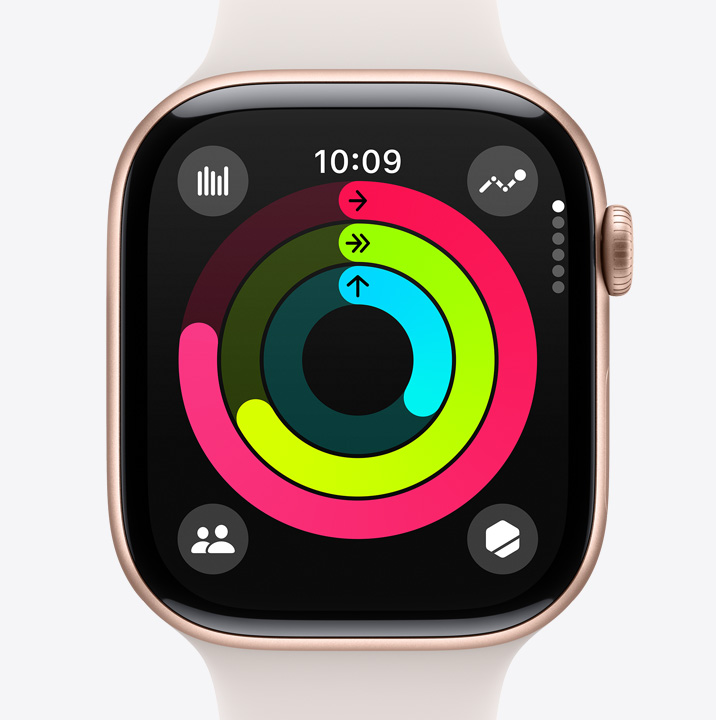
So is there a real setting?
Actually the article gives us that “the fact a rumoured high-end Ultra 3 model never materialised.” This could be a reason, but that implies that these customers from 2024 are merely waiting for a release in 2025, so they aren’t gone, there are merely set in a waiting pattern awaiting the go signal. I would be in the same setting with the MAC Studio (if I could afford one). Why select the M4Max over an M3Ultra, it would make more sense waiting until the M4Ultra comes (and perhaps at that time I could afford one). So we have two settings, the affordability (in this economy) and the technology when it comes available as well as the realistic option that there is a market saturation, or near that setting and with a dozen brands Apple will lose a few notches and that too is missing from the article. It gives us ‘how great’ Chinese brands are doing, but there is more than China. There is a flood of brands coming to the customers now and as Apple staff (in their shops) are ‘indoctrinated’ to do the Apple talk in a few ways, they are losing market share there too. I reckon that it is the price of depending on teenagers doing the job because they look fresh and appealing. I reckon that it is costing Apple more than they realise. It is a choice and I reckon it is no longer the better choice.

Still that doesn’t excuse the BBC article, it is as I personally see it shoddy all by itself. 

Have a great day this Monday.

Leave a comment

Filed under Finance, IT, Media, Science

A coincidence by any other name

That happens. We walk in small social circles, so there is a point that where we see repetition, likeminded people have likeminded thoughts. That was my first instinct. You see, I saw something in the Khaleej Times yesterday and I merely saw it as read. That was until several hours ago when I saw almost exactly the same in the SBS News. Now, that doesn’t mean that there is an issue. But wait, let me set the stage by adding the articles here.

This what I saw yesterday (at a glance)

And today we get:

Now there is a chance of coincidence as there is an upcoming setting that involves more than we currently see. But at first I was take by surprise.

Lets get back to the Khaleej Times. Where the reader is hit with ‘UAE obesity rates to hit 95% by 2050, highest globally: Report’, where we are met with “The number of people in the UAE suffering from obesity—both males and females—will see a significant increase over the next two-and-a-half decades, says a new study.”, as well as “Co-lead author Dr Jessica Kerr from Murdoch Children’s Research Institute in Australia said preventing obesity must be at the forefront of all government policies.” She is also in the other article. And this leads me to the following questions:

  1. What new Study?
  2. Where is that study?
  3. What were the parameters and how were they captured?
  4. How is this insight of “95% in 25 years” ascertained?
  5. What are the qualifications of Dr Jessica Kerr from Murdoch Children’s Research Institute?

As I see it simple questions that need to be addressed. The first question is partially addressed in “As per the Lancet study, overweight and obesity prevalence among adult males in the UAE aged 25-plus will increase from 84 per cent in 2021 to 94 per cent in 2050, the highest globally along with Kuwait and a few other countries.” So were the 2021 numbers matched? Was there correlation? Simple questions really and they are important as the writer Waheed Abbas paints across the article in acceptable ways, but this is related to science and we need more, especially as Dr Jessica Kerr and Murdoch Children’s Research Institute are mentioned only once. Like it was a ‘matter-of-fact’ that everyone knows. I am pretty sure that is not the case as the Murdoch Children’s Research Institute is in Australia and I never heard of them (I also have no kids). 

So off we go to the SBS article where we see:

A new forecast estimates half of Australian children will be obese or overweight by 2050. But experts say it’s much more complicated.” As well as “The study, coinciding with World Obesity Day, used an established forecast model and Body Mass Index (BMI) data from 204 countries and territories.” OK, this is definitely more, but how was it all collected? You see, in Australia the amount of women how are size 14 and 45 KG is almost staggering, so was there any scientific principle at play here (just asking). The SBS article gives us more, like “What this means is that even if you want to lead a healthy lifestyle, it’s really difficult to do when you’re surrounded by an environment that’s telling you to do the opposite and is promoting obesity.” OK, I can get behind that, but the markers of how 50% of Australian Children are likely to become obese is still in the air. And here we also see some of my questions in action. We are given “But advanced accredited practicing dietitian and lecturer at Queensland University of Technology, Dr Fiona Willer, questioned the study’s methodology and its emphasis on children’s body size. “We now know, without a shadow of a doubt, that body size does not equate to healthiness and nor does it reflect people’s dietary patterns,” she said.” OK, not my area of expertise, but what Dr. Fiona Willer gives us makes a lot of sense and I do have questions, but what about the data and what makes the UAE child more likely to be obese than Australian children, it is a mere 85% versus 50%, but the difference counts. 

And then the SBS article gives us additional questions raised by Georgia Bates when we are given  “Georgia Bates, dietitian and committee member of Size Inclusive Health Australia adds that the complexities of obesity go beyond health implications,” including:

– Weight stigma and chronic stress, which can impact cardiovascular health and metabolic function.

– Weight bias in healthcare, which can delay or complicate diagnoses and treatment.

– Healthcare discrimination, where “people of a higher weight are often dismissed or have their health concerns attributed solely to their weight,” leading to delays in care.

– Workplace bias, where weight discrimination can impact hiring decisions, pay rates, and promotions.

– Interpersonal stigma, leading to bullying, unsolicited advice, or judgment about eating and exercise.

– Mental health impacts, with chronic exposure to stigma and bias contributing to anxiety, depression, and disordered eating patterns.

Kerr says that part of the recommended changes is to reduce individual stigma.

Proper questions, I still have my side of the issue, but I am a data guy, that is how I roll.

But in the interim I designed a new solution, which is based on Dubai and Abu Dhabi. A walk way and bicycle way that is partially ‘roofed’, A setting where we have 2/3 roof where a side and the top is covered with solar panels, allowing people to walk and cycle under the shade (avoiding pesky sun issues) and doubles as power generation for the area. Consider the Dubai Mall, Mall of the Emirates, Nakheel Mall, Yass mall and so on (I don’t know them all). Having this walkway saves the people from the sun and let them walk off some of the calories they just ate. In addition the roof captures the sun’s energy and the sun sets the side of the panel, left/top, top or top/right. The panels align to the sun These walkways do not need to be long, no more than 2 miles around the malls, but that could increase activity among people and allow some people to cycle. To that I will offer additional options over time (still considering a few parts). But whilst others talk that something needs to be done, I created an option for the UAE to consider and when you consider the walk around Dubai mall or Yas Mall many will agree that getting out in the open might be a nice idea (when you are protected from the blistering sun). 

Have a great day.

Leave a comment

Filed under Media, Science