Tag Archives: climate change

The view over a distance

That is what I see, at a distance my old country (the Netherlands) is setting a new premise of pressure. In the BBC article (at https://www.bbc.com/news/articles/cn40y9yxkgvo) we are given ‘Netherlands’ renewables drive putting pressure on its power grid’ and that is fine. For me (my intake) is that the setting is that when there is no renewable energy, they will have to resort to the old setting (like gas or oil) and there is ample reason for this. Yet we are given “In a Dutch government TV campaign called “Flip the Switch” an actress warns viewers about their electricity usage. “When we all use electricity at the same time, our power grid gets overloaded,” she says. “This can cause malfunctions. So, use as little electricity as possible between four and nine.”” A setting we comprehend, the other option is that we are ‘handed’ the setting of “Renewable energy prices in the Netherlands are not a separate category but are included in the overall electricity price, which currently averages around €0.33 per kWh” so we could end the setting that renewable energy above a certain usage is delivered at €0.99 per kWh, the rest can either adhere to the additional prices or accept that oil is the other party in the mix (at €0.33 per kWh), a simple solution for the Dutch to increase what they have going in renewable settings. And there is no blame on the Dutch admittedly we are given “it leads the way in Europe for the number of solar panels per person. In fact, more than one third of Dutch homes have solar panels fitted.

The country is also aiming for offshore wind farms to be its biggest source of energy by 2030.” And that is a time pressured setting and the Dutch political systems know this. There is no averting your eyes from the needs and the Dutch know this too well. The other nations face a similar setting, the Dutch were however a lot more hands on into finding these options and they have 18 million people in that nation, it is almost as much as the Australian population (27 million) but the area differences is that the Netherlands is only 0.54% of Australia, setting the premise that the Netherlands has the population pressure of Sydney on a national foundation, they needed a renewable energy policy in place. No one denies that. But the needs are not matching the availability. As such my solution at a premium (which might achieve the same setting) or accept that oil isn’t a thing of the past yet and perhaps in 2030 when there are the actual additional kWh available it will be possible and at that point the Dutch are still the first by a mile over all other European nations to be the first to get to a positive carbon setting, even above zero carbon (meaning that no carbon emissions are being produced from a product or service) and that is quite the achievement to have. Oh, and I reckon that these kids squandering energy as they mine for bitcoins will foot that bill as they are eager to get wealthy and those who do not, get to explain to their mummies and daddies why they need a RTX 5090 32gb AMD Ryzen 9 9900x3d to play Frogger (or Minecraft). I wonder how many excuses they will employ and in the meantime it will reduce the pressures as well, I just wonder how much as there is no real number on the number of bitcoin miners, but they do have a top100 in the Netherlands, so anything is possible.

The other part of the explanation is given to us by Kees-Jan Rameau, chief executive of Dutch energy producer and supplier Eneco. ““Nowadays we’re switching to renewables, and that means there’s a lot of power being injected into the grid in the outskirts of the network where there are only relatively small power lines.” And these small power lines are struggling to cope with all the electricity coming in from wind turbines and solar panels scattered around the country.” OK, that is a fair assessment, but those cases could be renewed or reviewed and separate cables could be set to whatever the renewable setting is to a clear hub (my lack of technical knowledge is optionally at fault here) and that could have been seen in advance to the renewable farms being designed (as I personally see it). 

We get all the excuses and not the simple setting that even as the Netherlands is already at 70% renewable, there was no way that they would be ready before 2035 and that is likely a decade ahead of several other EU nations, the only exception might be Sweden as it constructed Vattenfall some time ago, so they get to have a head start, and they only have 11 hungry mouths to supply and that is as it is 1 times larger, but the bulk of that nation is in the southern third of that country. So they are in a comfortable league to stay even with Dutch ingenuity as I personally see it. 

So whilst the BBC is correct in its article, I fail to see the applaud that the Dutch are due as they are one of the few EU nations that achieved what was needed to achieve (with Sweden in second place) I am missing that part in the article, no matter the laurels that are due Kees-Jan Rameau of Eneco. It is a side we should have been given in this all. So where do Germany, France and the United Kingdom stand in this, how far are they? Just simple questions that come to mind. 

Have a great Sunday (I am having mine with chocolate sprinkles) and enjoy the pre Monday bash you will enjoy, except Canada, they started the weekend a day early due to the Toronto Blue Jays giving the Dodgers (LA) a thrashing with their 11-4 victory. Lucky bastards, a long weekend where none was given.
Leave a comment

Filed under Media, Politics, Science

About the setting of prayers

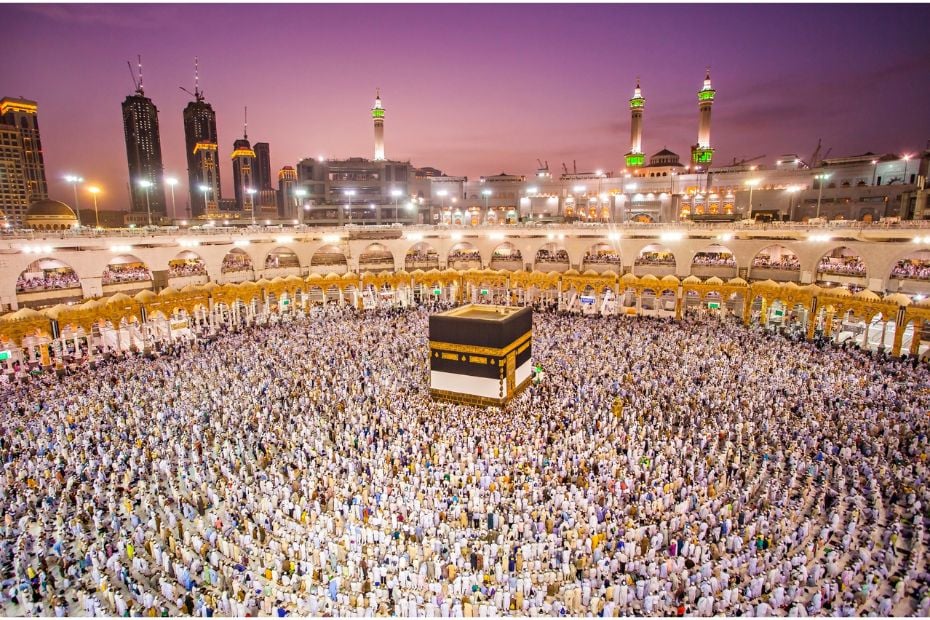
This is about the Hajj, it is not a negative piece as I refuse to put any religion negatively. Perhaps the Catholic side as I was raised a Catholic. So as we get the the Hajj, which starts in a little over 12 hours. We start with the Bangkok Post (at https://www.bangkokpost.com/world/3038397/no-permit-no-hajj-says-saudi-arabia) where we see ‘No permit, no hajj, says Saudi Arabia’. I get that and as we see “Last year, 1,301 pilgrims, most of them unregistered and lacking access to air-conditioned tents and buses, died as temperatures soared to 51.8 degrees Celsius (125.2 degrees Fahrenheit)”, as well as ““Since the end of last season, we realised the biggest challenge is preventing unauthorised pilgrims from undermining the success of the hajj season,” said one official helping organise the hajj, requesting anonymity” I get that, I pointed this out in my lest years writings, even as many did not, they were all about blaming the Saudi governments of that failure. In addition, these settings of media never dug into the tour operators fleecing profits and living these tourists to their doom. But the media ignored that side of the equation as they reported their blame settings. Even with these unregistered Hajj seekers, the casualty list remains below 0.1% of the visitors, and when we filter this out we get a setting that the casualties in a setting of 51 degrees heat celsius remains a mere 0.018%, which is nothing short of absolutely astounding. I reckon that any western nation has yet to reveal a setting with over 600,000 people (half of what the Hajj got) and that little casualties. Consider that the Saudi government does nearly everything to keep people safe. A remarkable setting to say the least. 

Then we get to the second item, which is given to us by News Central Africa (at https://newscentral.africa/saudi-arabia-tightens-crackdown-on-unregistered-hajj-pilgrims-after-deadly-heatwave/) where we see ‘Saudi Arabia Tightens Crackdown on Unregistered Hajj Pilgrims After Deadly Heatwave’ and here we get “Saudi Arabia is intensifying its efforts to prevent unauthorised participation in the annual hajj pilgrimage, a year after extreme heat led to the deaths of over a thousand pilgrims, most of whom were unregistered.” With the additional “One organiser, who wished to remain anonymous, said that since the end of last year’s pilgrimage, preventing unauthorised worshippers has been a top priority. The hajj is one of Islam’s five pillars, and Muslims who are physically and financially able must perform it at least once in their lifetime. However, due to a quota system, permits are limited and distributed via a lottery, making the costly official route unaffordable for many. As a result, some pilgrims opt for cheaper, unofficial alternatives” I personally see why this person wants to stay anonymous. As I personally see it, their ‘sales staff’ seemingly saw a way around the permit setting and sold them using alternative settings. It is a speculatively view, but the setting makes sense when you consider the 1100 casualties without a permit and the 14 countries that has the ban are India, Pakistan, Bangladesh, Egypt, Indonesia, Iraq, Nigeria, Jordan, Algeria, Sudan, Ethiopia, Tunisia, Yemen, and Morocco (according to a source). It makes a lot more sense when you consider the facts that ‘Nearly 270,000 pilgrims without permits stopped from entering Mecca’ (source: Euro News) where we see “Saudi Arabia has stopped nearly 269,678 pilgrims without authorisation from entering Mecca during the annual Hajj pilgrimage. The government blames overcrowding at the Hajj on participants without permits. It also says they made up large numbers of the 1,300 people who died in last year’s searing summer heat.” So, so you think the pool of an additional 15% all came to the thought by themselves, or were tour operators involved? The Guardian gave us last year that tour operators made promises that caused the deaths of several, and as I see it (at least through western media) this was never investigated. This does not mean that the Kingdom of Saudi Arabia didn’t investigate this, it merely means that I don’t know what happened in that specific scenario. My view that I had last year is also seemingly proven correctly as Euro News also gave me “Officials have also imposed penalties on more than 23,000 Saudi residents for violating Hajj regulations and revoked the licenses of 400 Hajj companies.” I get that over the cuties there are a lot of companies involved, but the setting of 400 Hajj companies clearly astounds me. 

And with this I salute the Hajj 2025 participants and wish them a blessed and meaningful Hajj, and I hope for Allah’s acceptance of their pilgrimage, or in shorter terms Hajj Mubarak. Let their journey be a safe one and their pilgrimage a fulfilling one. Have a great day you all.

Leave a comment

Filed under Religion, Tourism

The reality of decimation

This is not an academic piece, I would personally state that to some extent this is not even a sane piece, but is it an incorrect piece? That is indeed the question we must ask ourselves. Consider the events as they have plagued us for a little over 20 years.

This piece partially started with the UN report on the environment, but some of the elements have been on my mind for some time now. This is not about the War in Iraq or Afghanistan; this is about something a lot more basic.

Let us start with the UN report on Climate Change 2014 (at http://www.theguardian.com/environment/2014/mar/31/climate-change-threat-food-security-humankind)

It is also good to take a look at the policy maker’s summary titled Climate Change 2014: Impacts, Adaptation, and Vulnerability (at http://ipcc-wg2.gov/AR5/images/uploads/IPCC_WG2AR5_SPM_Approved.pdf )

We should consider the quotes that the Guardian article gives us.

First there is “The summary mentioned the word ‘risk’ more than 230 times, compared to just over 40 mentions seven years ago, according to a count by the Red Cross“.

My first counter is that this is not an event that has grown for only 7 years, these events and risks have been in place for well over two decades, the people in governmental power and the power players of big business are no longer aligned. Money only gets you ‘alignment’ to a certain degree. If you doubt this, then consider the power Big Tobacco had from the 70’s until the early 90’s. In the Northwestern Journal of International Law & Business (at http://scholarlycommons.law.northwestern.edu/cgi/viewcontent.cgi?article=1606&context=njilb) we see the quote “tobacco companies argued that plaintiffs assumed the risks of smoking. They also capitalized on the fact that they could afford the best lawyers to defend against generally under-funded plaintiffs“.

This is only the first quote where government has been holding its hands over the heads of big business for far too long. It is nothing short of treason against your own population (a slight exaggeration, I admit). It is not just their best lawyers against the plaintiffs, there has been a host of events where political powers had been ‘softly motivated’ to take a stance for the economic growth of a nation, whilst selling its people straight down the drain.

The second quote to consider from the Guardian is “Other food sources are also under threat. Fish catches in some areas of the tropics are projected to fall by between 40% and 60%, according to the report” (the part I saw did not specify the size of the area, or the exact locations).

Consider the amount of nations depending on their livelihood on fishing for themselves and their families, not to mention for whatever income from selling it to others in villages and cities. The claim ‘some areas’ is a loosely placed term I reckon. Consider the massive requirements for Japan alone. There is no evidence what so ever that this will lighten up any day soon. The events of fish shortage will grow above the mere population. A change to that effect will have a massive yield on the oceanic biosphere and as such mass extinction events on our fauna are almost a given certainty. So as we see the events there, we will see that the impact will soon thereafter hit waterbirds which will affect another chain of feeders. The third quote is “Almost everywhere you see the warming effects have a negative effect on wheat and there is a similar story for corn as well“.

Even though, to some part there is a claim that longer warm timeframe might yield some positive benefits, the overall consequence is that the events will be negative. Hunger will soon be an issue that stretches far beyond the third world nations, did anyone consider this?

The report is massive, so digging into this will take some time (after I get it downloaded, which is never easy from the UN document server), in the meantime, follow the next link to take a look at a document now released from the US State Department (at http://www.state.gov/documents/organization/219038.pdf)

Now let us go into the deep end. We have seen how being nice, how ‘finding’ a compromise will not get us anywhere. If you doubt this, then consider the fact that several nations are now, after giving us some ‘good news management’ additional grief will soon be gotten by the Dutch (at https://www.nvm.nl/nl-nl/actual/maart_2014/asscher_in_zomer_kijken_naar_lastenverlaging.aspx). They will be looking at lowering the costs for the Dutch population. Consider that the Dutch debt is currently in excess of 25,000 euro’s per citizen. Again, politicians will be trying to spend money they do not have. Even more hilarious, is the fact that they will not have that money for at least half a decade. If we consider this in regards to the UN FCCC report, where we see that climate is not just hitting us, many nations will have to pour billion upon billions into places to prevent flooding’s and other climate calamities. In this light, we will not have any lightening of economic pressures before 2018. The Dutch are not alone in this. The UK, France, Spain, Italy and to some effect even Germany will have to spend large amounts of money. If there is truth to the downward spiral of the climate, what will happen to France when their wine economy takes a 20%-30% tumble? (This is not a found number, that percentage is a mere estimation from other numbers in the UN FCCC report). Such a tumble will devastate the France GDP, which means that their debt will almost literally drown them.

So what is a solution?

Well, to safe our planet we might have to become drastic. The fact that politicians will not act and at the first sign of good news (managed or not), they will try to keep the status quo so that they look good (and leave it to the next person in office). This has been going on for some time and it has been happening in nearly every nation. So, we could rig the game and get rid of 4.7 billion people. It is not a happy act and if it happens I will unlikely to remain (or be allowed) in the ‘surviving’ group.

You see, healthcare, retirement shortages and lesser productivity (in the eyes of big business), would mean that we are to be removed from life. There is additional evidence for that. When we consider the words of the BBC (at http://www.bbc.com/news/health-26818377), where it is quoted “Risk of death by any cause over the course of the study was reduced by 42% for seven or more (up to around 10 portions a day)“.

Are they for real? When I was growing up, I had three meals a day. My lunch could include a sandwich with sliced cucumber and tomato and there were greens at dinner. That makes for two helpings. My grandfather lived to a ripe old age on those meals. So, who is paying these people to state 7-10 portions a day? Let us not forget that the UN FCCC report will have something to say about that. The IPCC report stated (at https://www.ipcc.ch/publications_and_data/ar4/syr/en/spms3.html) “Productivity of some important crops is projected to decrease and livestock productivity to decline“. This is not a global thing, but overall the population is still rising and food would be getting scarcer.

So, that option of decimation, which would be unfortunately for me, is starting to make sense. So how will we go about it? Will certain groups get targeted? When we see the HealthCare and retirement options as they dwindle then getting rid of anyone over 45 makes statistical sense (not morally). Alas, we are not that fortunate. If we consider the population numbers, as shown by the UN, Dept. of Economic and Social Affairs, Population Division (2011), we would also have to shed a little over 75% of the population that is between 15 and 44. How to go about that? If we take the people over 30, our population will face the reality that we saw in the movie ‘Logan’s Run‘. We could of course use the classic ‘Soylent Green‘ as an example, which also solves the food issue for all non-displaced citizens. Perhaps the list will be diminished in the way it was sung by Gilbert and Sullivan in ‘the Mikado‘ through the song ‘As some day it may happen’, “none of them would be missed”, I do however request and require that Nigel Farage will not be allowed to make that list (#JustSaying).

So, if you are currently extremely nervous about what will happen next then do worry, I definitely do! No matter how we will be dealt with (through hunger, war or just permanent removal). The consequence will be a global one. If we can rely on statistics is that within 40 years, if untouched through war, two civilisations remain, the Indian and the Chinese one. It is a simple consequence of the numbers as these two represent 36% of the planet, which means that no matter how much we get ‘culled’, either natural or unnatural, they would then be the only two remaining governments with the size that would places them in power.

All this reads like a joke, but it is far from it. As we have seen governments go into the acts of managed good news, whilst slowly giving us the bad news little by little (as the economic meltdown has shown), we will soon see similar acts by ‘spokespeople’ on how soon crops are grown with almost no water, how we see the use of Genetically Modified crops. The Economists had an article, which is not that relevant, but the quote in there “genetically modified (GM) crops pose health risks” is. The truth is that this is not true as I see it. Actually, we just do not know what the true dangers are. I feel that there is a risk, but there is no actual evidence (at present) that there is a danger. There is in my view indeed a risk, but no long term evidence exists. We are then in the same place as people were with Big Tobacco in the 70’s onwards. Big Tobacco had too much ‘protection’ and as such governments remained idle for far too long. Genetically Modified foods are likely to go into a similar field, but this time governments cannot stand idly by. The cost will be too great when it goes wrong. So am I against GM foods? I feel uncertain, until the long term dangers are known we should not proceed, yet if the shortages in food, space and water are truly coming, what can we do then? Consider that the global population grows by the size of the population of Germany every year, which is the 16th largest nation. Also consider that children 0-6 have the highest need for good food and clean water to survive, now see these items diminish as there is less, there are more mouths to feed and the climate change is soon making it harder on all of us.

The next two generations will likely be the hardest ones in the history of our planet. Never before was mankind hit by so many elements all at once. They will inherit a polluted planet, they will inherit debts unlike anything we ever faced and if the Status Quo does not change really fast, they will walk this world in an environment that could be near extinction on land, in the sea and in the air.


Leave a comment

Filed under Politics, Science