My mother always told me (when I was young) that I was allowed to swear, as long as I did it grammatically correct. Little did I know that mommy made me paint myself into a corner! Ah well, the innocence of youth!
So when the board of directors of the Royal Bank of Scotland learned their usage of adjectives, comparatives and superlative was only correct in theory. First the bank was doing fine, then its position was much finer, only to get fined in the end. Did they realise that the year 10 student in the corner, the one who did not get it, was the one person making an accurate prediction? I’ll bet you tuppence that they never realised that Mr Dunsel was an actual fortune teller.
So, why am I going in this direction?
Well, consider the article ‘RBS share sale explainer: why has Osborne started selling taxpayer’s stake at a loss?‘ (at http://www.independent.co.uk/news/business/news/rbs-share-sale-explainer-why-has-osborne-started-selling-the-taxpayers-stake-at-a-loss-10437095.html), whilst we heard that the taxpayer lost another billion, due to, I reckon you know what comes after this uncomfortable break: “RBS shares are still trading 33 per cent lower than the Labour government paid for them, which means selling them has incurred a loss for the government of around £1 billion on the first sale of 600m shares“.
As the Guardian reported last week that ‘RBS expects further fines with no let-up from regulators‘ (at http://www.theguardian.com/business/2015/jul/30/royal-bank-of-scotland-expects-further-fines-dividend-delay), we see that not only is the selling of shares costing the taxpayers a billion, the £1.3bn of charges to cover fines and compensation payouts seem to sting a little more than we bargained for. A few of the reasons why the buyback of shares will not happen until 2017, with a decent chance that more hardship will be burdened upon them payers of taxation. So when I see a quote from Sir Philip Hampton stating “The industry as a whole has got a poor track record in predicting these [provisions]. We’ve consistently under-called them”. Can anyone explain to me why the people at RBS are allowed to nag? Consider the quote “the long list of mistakes from the past continued to catch up with the bank” and compare it to the BBC article (at http://news.bbc.co.uk/2/hi/business/8392147.stm), which was from 2009 which gave us ‘RBS board could quit if government limits staff bonuses‘ with the quote “they say they have to remain competitive in the market in recruiting senior executives“, which is nice when it deals with the bonuses that go into the millions, but when we see that it is linked to years of inadequacy, mistakes, fines and prosecutions, we need to tailor a solution where some of these bankers need to be barred for life from entering the financial sector. So when we learned in February 2014 that ‘RBS pays out £588m in bonuses despite suffering £8.24bn loss‘, we need to ask a few really serious questions, now that the shares are sold at a massive loss and the total sale could result in total loss of £15bn. I feel certain that I could do a better job, whilst not having any economic degree.
So as a large portion of the UK is in a state of hardship, the failing RBS constituency still makes over half a billion in bonuses. The aftertaste is far beyond bitter, so why get back to all these matters, which in some case is a repetition of events that had passed?
In the first, as I see it, these board members failed, the value of the company is down and as such, in sight of “We’ve consistently under-called them“, they are not due any bonuses until December 2016 and only if the value of the bank is back on par with the share value at which the government bought them. In addition, the news ‘Hedge funds make quick buck after getting wind of RBS stake sale’ from the Financial Times only adds to the bitterness of the taste of shares with pepper and salt. In my view another reason why the bonus of board members and RBS bankers should be set to £0. In addition, as Sir Philip has been around since 2009, whilst getting a not too uncomfortable £750,000. The need for not letting up on allowing the bankers any extras should be considered. So if they would like to retry their bluff of December 2009, where they stated “threatening to resign“, let them. Why does the RBS have any need for employees “consistently under-called them“, whilst at the same time fines for ‘rigging’ are banging the corporate coffers of the RBS, leading to damages that total into billions.
So when did you have a job where the company needs 45 billion from the taxpayer, they have not returned into a state of grace and they still get a 7 figure Christmas present? I never had a job like that. To change my luck, could Sir Philip kindly give me one? I need £8m over the next 3 years (for reasons of retirement). I am willing to do anything legal, including working my bud off to return the RBS to profit. From my point of view, I offer something more than the RBS board ever delivered (well, since 2009), so we can agree that my value is better than their value, ain’t it?
But this is not about me, this is also to a lesser extent not about the board members. This is about the engine behind it and the changes they are about to face. You see the sounds have been there, the rumours have almost forever been there and on the sidelines the links have been there, but what is this linking?
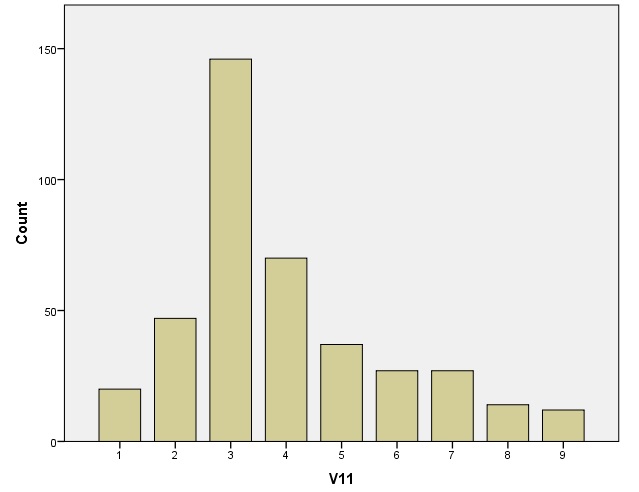
I am referring to the following events ‘Auditors go high-tech to win new business‘ (at http://www.ft.com/intl/cms/s/0/183cb13c-2557-11e5-bd83-71cb60e8f08c.html), where we see “Auditors have a newfound zest. Rapid developments in digital technology and new rules requiring large companies to invite bids for auditing work at least once a decade have forced accounting firms to refocus on winning new business” and ‘Accountants warn on audit market reforms‘ from last November where we see “Within the “big four” accountancy firms, market share has been shifting. EY has overtaken Deloitte as the third biggest auditor to FTSE 100 clients, behind PwC and KPMG in first and second place, respectively. This month Royal Bank of Scotland announced it had appointed EY as its auditor from 2016, ending a 14-year contract with Deloitte” (at http://www.ft.com/intl/cms/s/0/f22383ca-6410-11e4-bac8-00144feabdc0.html). This is actually more than just the shaking of the trees and the stirring of the gravy bowl. You see this is a shifting picture where the big four are now pushing for data analytics, the Wall Street Journal have been slowly filling the spaces in that regard. The headline ‘Accountants Increasingly Use Data Analysis to Catch Fraud‘ states it, but what do they state? At http://www.wsj.com/articles/accountants-increasingly-use-data-analysis-to-catch-fraud-1417804886, we see “When a team of forensic accountants began sifting through refunds issued by a national call center, something didn’t add up: There were too many fours in the data. And it was up to the accountants to figure out why“. Yes on the night of St. Nicholas the presents are handed out to all and especially the bankers, because analytics are here, the secret sauce of the needy to quench those who want to solve and hide those in the shadows. You see Benford’s Law is here and everything will be OK now! Is that so? Let’s take a look at ‘The Irrelevance of Benford’s Law for Detecting Fraud in Elections‘ (at http://www.vote.caltech.edu/sites/default/files/benford_pdf_4b97cc5b5b.pdf), where we see: “Detecting and measuring fraud is much like any criminal investigation and requires a careful gathering of all available data and evidence in conjunction with a “theory of the crime” that takes into account substantive knowledge of the election being considered, including the socio-economic and geographic correlates of voting“. This is about voting, so how does this apply? Consider the quote on page 23 “The operant clause here, though, is “in otherwise homogeneous data” since this indicator is intended to detect the heterogeneity introduced by a specific form of fraud“, now we get to those two parts, when we see “In statistics, homogeneity and its opposite, heterogeneity, arise in describing the properties of a dataset, or several datasets. They relate to the validity of the often convenient assumption that the statistical properties of any one part of an overall dataset are the same as any other part” (quick Wiki reference). So as we contemplate “the statistical properties of any one part of an overall dataset are the same as any other part“, ehhh, when has that ever been the case in keeping financial books? It is a balancing act, which means half on one side, means half on the other side (does that not prove the point?) No, because they are two sides of the same coin, double elements so to speak, so what to include, what not, the formula becomes unbalanced even further. Consider that banking is all about specifics, I will stay away from that element for a while, because the element of specifics is the issue, consider the graphs below.
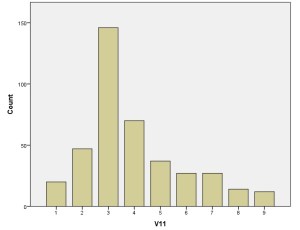
I can tell you now that I violated loads of rules. It comes from a list of 400 movies, their revenue. So, it spans several year, 400 numbers and those are the most visible reasons why Benford does not apply. The books of Tesco have similar issues. Dozens of accounts, interactions, loads of numbers spanning a time zone, but at times those numbers are also of a small count. Could this work with a ‘grocery’ store? Consider the amount of articles at 99c and £1.99. The amount of special offers going on, day to day (Tesco example), from that, if we use EVERY transaction, we will see skewing, giving us the problem, banks have similar issues, but now more often with seriously large numbers. If we ‘Benford’ the hell out of all the commissions, will they stand the ‘fraud’ test? If not, will the bank see that cash returned, or will we suddenly see a ‘rationalisation’ of non-valid application?
This is at the heart “in otherwise homogeneous data“, which gave the Call-centre a ‘ding-dong’, yet I feel that overall numbers could have shown the issue as well. Too many issues do not hold water here, yet the end of the article gives us what matters “Benford’s Law isn’t a magic bullet. It’s only one approach. It isn’t appropriate for all data sets. And when it is a good tool for the job, it simply identifies anomalies in data, which must be explained with further investigation“, ah the common sense. That did not take long did it?
So as there are serious options for investigating Fraud, the watchers of Tesco are still not in the limelight of the press, they have been given the ‘shade’ by the press at large. In one moment we see Tesco getting replaced by DeLoitte and recently we see Santander bank replacing DeLoitte for PwC and the SFO is nowhere to be seen. So are the Elves of Statistics and the Serious ‘eff’ Ogres in a state of non-war? Perhaps the SFO is too busy and whilst those auditors give new presentations on those yummy statistics, but as I personally see it, it is basically another presentation to lull groups of people to sleep. There is a mess in front of the people and those who should look and act, seem to be too busy and many can slightly fall asleep again.
Just 6 weeks ago, the UK got the message ‘RBS, once the world’s largest bank, is using analytics technology to go back to the era of personal customer service‘, with a promise to invest £100m in data analytics technology. I personally believe in analytics, it is a great tool, but in light of many factors, unless you get the people who have been consistently under-called them a job with a competitor bank, the institution will be paying a lot by those currently not doing their job right.
That final statement can be easily proven.
In the first, if data analytics was key, those involved should have known this for well over 3 years, some in charge have been there long enough, which means that no action was taken and they should not be in a position where they remain idle.
In the second, if data analytics is not key in solving some of the matters, why are they buying it? It could be for very valid other reasons, but that does not solve the ‘under-calling’ issue, it does not solve several other issues, even though it solves some, so at best, data analytics will diminish losses, which is good, but should we not get rid of the dead weight (read significant reasons for large losses).
All this comes to blows soon enough, because if the RBS does not get its results, new articles will appear all over the place regarding ‘miscommunication’, times of deployment and infrastructure issues, in the meantime ‘managed bad news’ prevails and more waves of issues will be swept under the covers of a dark carpet. As accounts are handed over between the 4 big auditors, the sum in the end gives us that overall none of them will make any serious losses. Slightly beyond the short term it evens out for the big four, which might be the largest miscarriage of justice of all.


 Lawrence van Rijn - Law Lord to be