Tag Archives: Financial Times

Fine, Finer, Fined

My mother always told me (when I was young) that I was allowed to swear, as long as I did it grammatically correct. Little did I know that mommy made me paint myself into a corner! Ah well, the innocence of youth!

So when the board of directors of the Royal Bank of Scotland learned their usage of adjectives, comparatives and superlative was only correct in theory. First the bank was doing fine, then its position was much finer, only to get fined in the end. Did they realise that the year 10 student in the corner, the one who did not get it, was the one person making an accurate prediction? I’ll bet you tuppence that they never realised that Mr Dunsel was an actual fortune teller.

So, why am I going in this direction?

Well, consider the article ‘RBS share sale explainer: why has Osborne started selling taxpayer’s stake at a loss?‘ (at http://www.independent.co.uk/news/business/news/rbs-share-sale-explainer-why-has-osborne-started-selling-the-taxpayers-stake-at-a-loss-10437095.html), whilst we heard that the taxpayer lost another billion, due to, I reckon you know what comes after this uncomfortable break: “RBS shares are still trading 33 per cent lower than the Labour government paid for them, which means selling them has incurred a loss for the government of around £1 billion on the first sale of 600m shares“.

As the Guardian reported last week that ‘RBS expects further fines with no let-up from regulators‘ (at http://www.theguardian.com/business/2015/jul/30/royal-bank-of-scotland-expects-further-fines-dividend-delay), we see that not only is the selling of shares costing the taxpayers a billion, the £1.3bn of charges to cover fines and compensation payouts seem to sting a little more than we bargained for. A few of the reasons why the buyback of shares will not happen until 2017, with a decent chance that more hardship will be burdened upon them payers of taxation. So when I see a quote from Sir Philip Hampton stating “The industry as a whole has got a poor track record in predicting these [provisions]. We’ve consistently under-called them”. Can anyone explain to me why the people at RBS are allowed to nag? Consider the quote “the long list of mistakes from the past continued to catch up with the bank” and compare it to the BBC article (at http://news.bbc.co.uk/2/hi/business/8392147.stm), which was from 2009 which gave us ‘RBS board could quit if government limits staff bonuses‘ with the quote “they say they have to remain competitive in the market in recruiting senior executives“, which is nice when it deals with the bonuses that go into the millions, but when we see that it is linked to years of inadequacy, mistakes, fines and prosecutions, we need to tailor a solution where some of these bankers need to be barred for life from entering the financial sector. So when we learned in February 2014 that ‘RBS pays out £588m in bonuses despite suffering £8.24bn loss‘, we need to ask a few really serious questions, now that the shares are sold at a massive loss and the total sale could result in total loss of  £15bn. I feel certain that I could do a better job, whilst not having any economic degree.

So as a large portion of the UK is in a state of hardship, the failing RBS constituency still makes over half a billion in bonuses. The aftertaste is far beyond bitter, so why get back to all these matters, which in some case is a repetition of events that had passed?

In the first, as I see it, these board members failed, the value of the company is down and as such, in sight of “We’ve consistently under-called them“, they are not due any bonuses until December 2016 and only if the value of the bank is back on par with the share value at which the government bought them. In addition, the news ‘Hedge funds make quick buck after getting wind of RBS stake sale’ from the Financial Times only adds to the bitterness of the taste of shares with pepper and salt. In my view another reason why the bonus of board members and RBS bankers should be set to £0. In addition, as Sir Philip has been around since 2009, whilst getting a not too uncomfortable £750,000. The need for not letting up on allowing the bankers any extras should be considered. So if they would like to retry their bluff of December 2009, where they stated “threatening to resign“, let them. Why does the RBS have any need for employees “consistently under-called them“, whilst at the same time fines for ‘rigging’ are banging the corporate coffers of the RBS, leading to damages that total into billions.

So when did you have a job where the company needs 45 billion from the taxpayer, they have not returned into a state of grace and they still get a 7 figure Christmas present? I never had a job like that. To change my luck, could Sir Philip kindly give me one? I need £8m over the next 3 years (for reasons of retirement). I am willing to do anything legal, including working my bud off to return the RBS to profit. From my point of view, I offer something more than the RBS board ever delivered (well, since 2009), so we can agree that my value is better than their value, ain’t it?

But this is not about me, this is also to a lesser extent not about the board members. This is about the engine behind it and the changes they are about to face. You see the sounds have been there, the rumours have almost forever been there and on the sidelines the links have been there, but what is this linking?

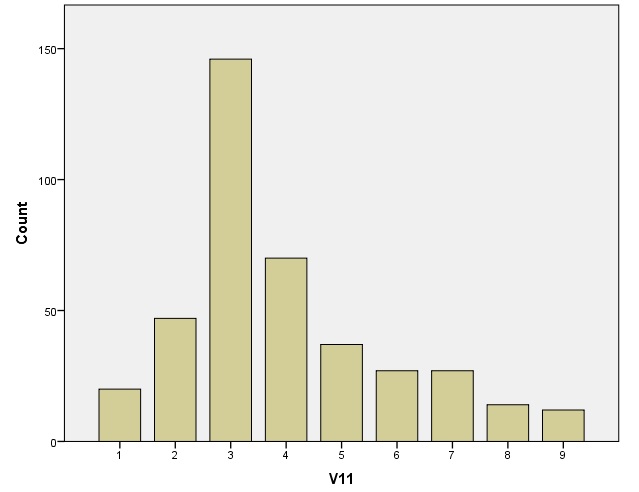
I am referring to the following events ‘Auditors go high-tech to win new business‘ (at http://www.ft.com/intl/cms/s/0/183cb13c-2557-11e5-bd83-71cb60e8f08c.html), where we see “Auditors have a newfound zest. Rapid developments in digital technology and new rules requiring large companies to invite bids for auditing work at least once a decade have forced accounting firms to refocus on winning new business” and ‘Accountants warn on audit market reforms‘ from last November where we see “Within the “big four” accountancy firms, market share has been shifting. EY has overtaken Deloitte as the third biggest auditor to FTSE 100 clients, behind PwC and KPMG in first and second place, respectively. This month Royal Bank of Scotland announced it had appointed EY as its auditor from 2016, ending a 14-year contract with Deloitte” (at http://www.ft.com/intl/cms/s/0/f22383ca-6410-11e4-bac8-00144feabdc0.html). This is actually more than just the shaking of the trees and the stirring of the gravy bowl. You see this is a shifting picture where the big four are now pushing for data analytics, the Wall Street Journal have been slowly filling the spaces in that regard. The headline ‘Accountants Increasingly Use Data Analysis to Catch Fraud‘ states it, but what do they state? At http://www.wsj.com/articles/accountants-increasingly-use-data-analysis-to-catch-fraud-1417804886, we see “When a team of forensic accountants began sifting through refunds issued by a national call center, something didn’t add up: There were too many fours in the data. And it was up to the accountants to figure out why“. Yes on the night of St. Nicholas the presents are handed out to all and especially the bankers, because analytics are here, the secret sauce of the needy to quench those who want to solve and hide those in the shadows. You see Benford’s Law is here and everything will be OK now! Is that so? Let’s take a look at ‘The Irrelevance of Benford’s Law for Detecting Fraud in Elections‘ (at http://www.vote.caltech.edu/sites/default/files/benford_pdf_4b97cc5b5b.pdf), where we see: “Detecting and measuring fraud is much like any criminal investigation and requires a careful gathering of all available data and evidence in conjunction with a “theory of the crime” that takes into account substantive knowledge of the election being considered, including the socio-economic and geographic correlates of voting“. This is about voting, so how does this apply? Consider the quote on page 23 “The operant clause here, though, is “in otherwise homogeneous data” since this indicator is intended to detect the heterogeneity introduced by a specific form of fraud“, now we get to those two parts, when we see “In statistics, homogeneity and its opposite, heterogeneity, arise in describing the properties of a dataset, or several datasets. They relate to the validity of the often convenient assumption that the statistical properties of any one part of an overall dataset are the same as any other part” (quick Wiki reference). So as we contemplate “the statistical properties of any one part of an overall dataset are the same as any other part“, ehhh, when has that ever been the case in keeping financial books? It is a balancing act, which means half on one side, means half on the other side (does that not prove the point?) No, because they are two sides of the same coin, double elements so to speak, so what to include, what not, the formula becomes unbalanced even further. Consider that banking is all about specifics, I will stay away from that element for a while, because the element of specifics is the issue, consider the graphs below.

Benford


I can tell you now that I violated loads of rules. It comes from a list of 400 movies, their revenue. So, it spans several year, 400 numbers and those are the most visible reasons why Benford does not apply. The books of Tesco have similar issues. Dozens of accounts, interactions, loads of numbers spanning a time zone, but at times those numbers are also of a small count. Could this work with a ‘grocery’ store? Consider the amount of articles at 99c and £1.99. The amount of special offers going on, day to day (Tesco example), from that, if we use EVERY transaction, we will see skewing, giving us the problem, banks have similar issues, but now more often with seriously large numbers. If we ‘Benford’ the hell out of all the commissions, will they stand the ‘fraud’ test? If not, will the bank see that cash returned, or will we suddenly see a ‘rationalisation’ of non-valid application?


This is at the heart “in otherwise homogeneous data“, which gave the Call-centre a ‘ding-dong’, yet I feel that overall numbers could have shown the issue as well. Too many issues do not hold water here, yet the end of the article gives us what matters “Benford’s Law isn’t a magic bullet. It’s only one approach. It isn’t appropriate for all data sets. And when it is a good tool for the job, it simply identifies anomalies in data, which must be explained with further investigation“, ah the common sense. That did not take long did it?

So as there are serious options for investigating Fraud, the watchers of Tesco are still not in the limelight of the press, they have been given the ‘shade’ by the press at large. In one moment we see Tesco getting replaced by DeLoitte and recently we see Santander bank replacing DeLoitte for PwC and the SFO is nowhere to be seen. So are the Elves of Statistics and the Serious ‘eff’ Ogres in a state of non-war? Perhaps the SFO is too busy and whilst those auditors give new presentations on those yummy statistics, but as I personally see it, it is basically another presentation to lull groups of people to sleep. There is a mess in front of the people and those who should look and act, seem to be too busy and many can slightly fall asleep again.

Just 6 weeks ago, the UK got the message ‘RBS, once the world’s largest bank, is using analytics technology to go back to the era of personal customer service‘, with a promise to invest £100m in data analytics technology. I personally believe in analytics, it is a great tool, but in light of many factors, unless you get the people who have been consistently under-called them a job with a competitor bank, the institution will be paying a lot by those currently not doing their job right.

That final statement can be easily proven.

In the first, if data analytics was key, those involved should have known this for well over 3 years, some in charge have been there long enough, which means that no action was taken and they should not be in a position where they remain idle.

In the second, if data analytics is not key in solving some of the matters, why are they buying it? It could be for very valid other reasons, but that does not solve the ‘under-calling’ issue, it does not solve several other issues, even though it solves some, so at best, data analytics will diminish losses, which is good, but should we not get rid of the dead weight (read significant reasons for large losses).

All this comes to blows soon enough, because if the RBS does not get its results, new articles will appear all over the place regarding ‘miscommunication’, times of deployment and infrastructure issues, in the meantime ‘managed bad news’ prevails and more waves of issues will be swept under the covers of a dark carpet. As accounts are handed over between the 4 big auditors, the sum in the end gives us that overall none of them will make any serious losses. Slightly beyond the short term it evens out for the big four, which might be the largest miscarriage of justice of all.


Leave a comment

Filed under Finance, IT, Law, Media, Politics, Uncategorized

If at first you don’t succeed!

That was the first thought I had when I saw the article ‘Academics attack George Osborne budget surplus proposal‘ (at http://www.theguardian.com/business/2015/jun/12/academics-attack-george-osborne-budget-surplus-proposal) and the title reflects on them as well as on me. You see, as stated more than once before, I have no economics degree, but I have insight in data, I am not a bookkeeper, but I know how to keep my own register (I’ll let you boil down that conundrum by yourself).

So as I have a go at 77 of the best known academic economists, I present the first quote, which is: “George Osborne’s plan to enshrine permanent budget surpluses in law is a political gimmick that ignores “basic economics”, a group of academic economists has warned“, here we see the first failing of these economists. You see, the first rule of a basic economy is plain and simple:

Do not spend more than you earn!

That has been a massive need for over 20 years! Some ‘academics’ convincing that the budget could be X (whatever the amount is, now they tell us that X = Y (part of our costs) + Z (the interest and minimal payback on a massive loan that allows us to do more). At some point, one politician was stupid enough (or forced) to do this, but then the next one did it too and so on. Now we have a game, because of a group of flagellationists, we are all whipped into a place we never wanted to be, which is deep in debt!

Were those economists wrong?

They were not IF (a very loud if) the politicians would have diminished the debt, which is now 1.5 trillion pounds. You remember the first formula (X=Y+Z), now let’s take a look. You see, the numbers have been shifted again and again. Some now state that the interest is £42.9 billion per annum (2013 numbers), So now we get X = Y + (42.9 + 30), which is the annual interest and the paying down the debt at 2%, let’s not forget that at this pace it will still take 50 years, that is, if we get a budget that is actually set!

There are other complications that will make ‘Z’ higher, or ‘X’ a lot lower, when we consider maturing bonds and all other methods of ‘borrowing’ funds. You will see that the only winner is the bank. Whomever gets paid 42.9 billion is getting that as a guarantee without ever working for it. You the readers in the UK are doing all the work for that bank. The economists are not trying to tell you that. They come with ‘it is a very complex situation’ or my favourite ‘it would take too long to explain it all’. Yet, in their own words, ‘basic economics’ is actually really simple.

Do not spend money you do not have!

Now we get the quote “the chancellor was turning a blind eye to the complexities of a 21st-century economy that demanded governments remain flexible and responsive to changing global events“, which I see as a half-truth! You see, economics are quite complex, but they are only complex because economists and their friends in the financial sector MADE it complex! They get all this money for free from governments all over the world. They do not want to change that ever!

For the sake of the United Kingdom, the Commonwealth and our sanity, George Osborne is making that change. If previous Labour (especially Gordon Brown MP) had not spend the massive amounts they had, the UK would be in a much better position, but that is not the case. The economic view of ‘flexible and responsive’ is a valid point, but previous events turned ‘flexible and responsive’ into non-accountable overspending of funds that were not available. It will take a generation to clean up. The issues in Greece got so hairy that the President of the United States put his foot down, 2 days later the IMF walks away. An economy so deep in debt, an economy only representing 2% of the economy of the EEC could be able to topple it all. That is what many do not want to address!

This gets us to a linked quote in the article ‘Greece running out of time to avoid default, leaders concede‘ (at http://www.theguardian.com/business/2015/jun/12/greece-running-out-of-time-to-avoid-default-leaders-concede), where we see: “Greece has less than a week to strike a deal with its Eurozone creditors to avoid defaulting on its massive debts and perhaps being kicked out of the single currency area, with German leaders and top European Union officials now conceding that default is the likeliest outcome“, so as you might recall that Greece claimed that a solution was ‘almost’ there, I will show you the ‘flexible and responsive’ side to the word ‘almost’.

You see, “I have had sex with Laura Vandervoort almost every night!” Monday almost, Tuesday almost, Wednesday almost. You get the idea, ‘almost’ here is like ‘as soon as possible’, at times it means ‘Never!’ (it would be so much fun to get a mail from Laura stating that she will be here ‘as soon as possible’, I am not beyond irony and it will make me chuckle for weeks!

Why this example? Well, I have been telling the readers for months that Greece has been screwing us around, you see how the words just fall into place? The economy does not! This is the clear evidence that the law must change. While all the players getting nice incomes were saying ‘tomorrow’ ad infinitum, George Osborne is saying ‘Now!’

The fact that this is essential is also seen through the acts of President Obama. Tax evasion was high on the G-meetings (G-7, G-20, take your pick), yet, when Australia introduced the Google Tax, we see the us Treasury making waves to stop it ‘US Treasury pressures Tony Abbott to drop ‘Google tax’ ‘ (at http://www.afr.com/news/policy/tax/us-treasury-pressures-tony-abbott-to-drop-google-tax-20150428-1mu2sg). They stated it as: “Mr Stack said it was critical that Group of 20 countries like Australia that were participating in global tax negotiations did not pass laws on their own that would contradict international agreements“. In my words, my response would be: “Mr Stack, you and your administration are a joke! You have not acted for over three administrations in reigning in corporate greed, your American corporations were cause of a financial meltdown 11 years ago, a meltdown we are all still feeling. In addition, you have not set ANY solid ground in countering tax evasion, other than the windy speeches we have expected to see, all speech, no action! It is time for the American administration to put their actions where their mouths have been for too long!” Not too diplomatic, but the message is coming across I reckon. The commonwealth can no longer adhere to the irresponsible acts of a nation that is 18 trillion in debt!

So as I see it the quote “they argued Osborne was guilty of adopting a gimmick designed to outmanoeuvre his opponents“. You see, this is not a gimmick, this is a direct need where the banks are no longer in control, the Commonwealth is a monarchy, that is there to give a future to the people and to keep them in a place where they have a future. For now Greece basically no longer has a future. It has spent it all, unless the US treasury comes up with 50 billion (quoting Jean-Claude Juncker), it only has time to find a solution that will not end the existence of Greece.

This is the massive difference that the people keep on forgetting. The UK is a monarchy, with a sovereign ruler who has accepted (or: was given) the responsibility to keep the nation thriving and its people moving towards a happy place that has a future, America is a republic, where the elected official is depending on large contributions, especially from the wealthy. It has given in to big business again and again for the last 20 years. As we see the USA, a nation more and more drowning in civil unrest, we should consider how they got there. The got there by lacking in laws that held big business and government to account of spending. Here we now see “George Osborne’s plan to enshrine permanent budget surpluses in law“, this is an essential first step to get us all back on a decent track where we are not in debt!

Getting back to the formula. The last step we were at was: X = Y + (42.9 + 30), you see, the people all over the place have been ‘deceived’ to some extent. Deceived is hard to use, because the word ‘misrepresented’ is a much better word. X is what the UK receives. With large corporations ducking their fiscal responsibility, the value of X goes down, with unemployment issues and zero hour issues, the people get less money and as such they pay less taxation, so X goes down even further. Now we get the set costs. (Y), more and more elderly, means more costs and they do not pay taxation. So the elderly drive down X a small bit and drive up Y a large portion. I do not hold that against them! They worked, they made Britain (and Australia) great! They did their share, so they get to sit down to enjoy the tea and biscuits (an additional fine venison steak would be good too). These are all elements that the economy is confronted with and as these economists have been to enabling to big business, we see that we must put a stop to what is happening. We have no other choice, or better stated we have less and less options. These economists are all polarised into one direction, one direction that has not worked for over a decade. We get misrepresented by ‘managed bad news’ and other forms of information we can no longer rely on.

Consider that I have been on top of the Greek case for some time now, so when we see (at http://ec.europa.eu/economy_finance/eu/countries/greece_en.htm) the fact that the forecast of Greece is 0.5% in 2015 and 2.9% in 2016, I wonder how they got to it all and if such misrepresentation should not be a cause for liability? Is it based upon raw data that we can trust? You see as these economists all rely on the ‘formula’ and all concede that it is a good model and a real predictor, my gut has been a lot more accurate and these economists had to adjust their numbers downwards time and time again. The last part for Greece is seen in the Financial Times, it reflects on what I stated earlier (at http://www.ft.com/fastft/343532/eurozone-financial-fragmentation-hits-5-year-low)!

Initiatives such as the European Stability Mechanism, a permanent rescue fund designed to limit financial chaos that might arise from an event such as a Grexit, as well as the €1.1tn quantitative easing programme, have helped insulate the rest of the Eurozone from Greece“, to ‘limit financial chaos’, is that not weird? Many players downplayed the impact of Grexit (especially France). So this ‘rescue fund’, how much is in it? You see, that will become a debt too and where does it go? France, Italy? They are in deep financial waters. So how much more will be needed to stop France and Italy to go over the edge?

Simple economics is to lower debt, now to throw money from other sources at the interest of debt, which solves nothing! George Osborne was right before, he is right now. The fact that the Economy players, the IMF and America do not like it when others are out of debt, that does not mean that we should adhere. I showed how USA adheres to big business (including banks), it is time to be self-reliant! So as rating agencies set the outlook bar to negative, we should start to wonder, who do they serve? You see, if the ratings are about the ‘now’, so the outlook is moved from Negative from Stable for an event that is not happening until 2017. Guess what, the UK was always stable, and when these ratings are shown to be ‘flawed’, then what?

To be honest, S&P has an interesting paper on this (at http://www.standardandpoors.com/aboutcreditratings/RatingsManual_PrintGuide.html). Here we see the quote “Credit ratings are opinions about credit risk published by a rating agency” and “Standard & Poor’s ratings opinions are based on analysis by experienced professionals who evaluate and interpret information received from issuers and other available sources“. Now we get the final part. The first quote is clear. It makes it known that this is a matter of opinion. The second quote is how they get it. Now tell me, how many of these ‘77 economists’, who were thumping George Osborne on all this, are involved in setting economic predictions? Are they linked to people who do set the ratings? I am not certain of the first premise, but I am decently certain of the second premise!

So are these economists, who claim that it is about ‘governments remain flexible and responsive’, is that it, or is the game getting rigged because the few are willing to sell the larger proportion of a population down the drain for the interest of self?

Consider the information given and work for a place of common sense. You will soon realise that the path of George Osborne is the right one, moreover, when in your life, has debt ever been a good thing and how is the debt working for Greece?


1 Comment

Filed under Finance, Law, Media, Politics

I told you so!

OK, not the best title, but it is time to throw a little hardship onto the fire. Now, the next part will be one you might not agree with, especially if you’re an economist, yet, so far, my prediction have been spot on and there is a lot more to come.

First there is the answer to those who either revoiced or proclaimed that Greece still had plenty of time, in addition, we now see the how the inactions of Tsipras is now showing to be the death of his fellow Greeks. The message that is only hours old “It’s official, Greek cash reserves are running dry” The quote gives us “In a move that puts Greece’s credit crunch into perspective, prime minister Alexis Tsipras’ government has revealed that it has just over €600m euro in cash reserves. A presidential degree allowing the state to sequester the funds of public bodies has seen €64.5m being transferred from local authorities to the Central Bank of Greece, said a government statement released this morning“, in addition we get “The statement’s timing – hours after Greek finance minister Yanis Varoufakis’ alarming warning that the country could go bust “in a couple of weeks” – is clearly aimed at focusing minds as EU finance ministers meet in Brussels” and last there is “described by the leading economist Mohammed El Erian today as potentially “devastating for Greece’s long-suffering population.””. That part I stated weeks ago, but several people disagreed. It would never get that far. Now we see it! It has come that far! In addition the 600 million part implies (implies not fact) that the loans can no longer be honoured. Now we see the first clear consequence of the Status Quo push I opposed all along.

Now we get to the utter incompetent politicians, better known as Alexis Tsipras and Yanis Varoufakis. The quote “Media and analysts in Greece this morning believe it is almost inevitable that a deal will now be put to public vote” means that these two are going to hide behind a referendum, In my mind, the actual response should be ‘If Syriza actually loves its nation, it will abdicate today and returns power to New Democracy and the seat of power returns to Antonis Samaras’. I believe that such a change, with additional austerity would give Greece a chance to remain in existence. This had also been my view all along and is now voiced by Costas Karagounis (at http://greece.greekreporter.com/2015/05/11/new-democracy-the-greek-government-has-put-the-party-above-national-interests/). This will not be an easy sell.

The only way that this works is to do two steps that the Greek rich will not like.

  1. All tax settlements from December 2014 are to be declared null and void in Greek Parliament.
  2. All tax evaders to be prosecuted with late fines set at 20%.

2b. the accounts of any listed tax evaders are to be frozen through the Palace of Justice in The Hague and to be monitored as payment is properly made to the Greek treasury.

Now for the other parts, this is the one that will cost the IMF, however, they can now consider an option where the payments will become an option.

  1. All loans are to be reset with the total amount set at 1% interest and all bonds are to be matured immediately and added to the debt, also at 1%.
  2. Greece is prohibited from entering the bonds market until 2040, in addition, they are not allowed any more bond actions until 75% of the debt has been repaid (whichever date comes last).


Now we get to the future of Greece, for that to work a harsh change will be needed if Greece is not to become extinct (again).

  1. Every municipality is now under austerity for balanced budgets, which means that services would cease unless there is money coming into the city. Debts are no longer allowed to be passed on, in every municipality the mayor and the local treasurer are liable for prosecution and mandatory prison terms if they fail. It seems to me that wasting funds should be stopped at the source.

You see, some will see my steps as ‘too extreme’, but when we get the quote: ““there is almost no-one who believes that negotiations over a [long-term] deal will end in June. Everyone is saying journalists should be prepared to work right the way through the summer and ensure they are around in June, July, early August.”” This implies that Tsipras is still playing the ‘let’s delay it all game‘. This is given added weight, but the following statement from Wolfgang Schäuble: “12-May-2015 11:21:47 – GERMAN FINANCE MINISTER SCHAEUBLE SAYS IMPROVEMENT IN GREEK TALKS CLIMATE NOT MATCHED BY SUBSTANCE“. Which was a clear reported issue in February 2015, so in one quarter the Greek team had not learned anything at all. This was not a ‘pissing’ content, this is a situation where two politicians are playing with the very existence and livelihood of millions of Greeks. You see, when it all stops the Greek retirees are literally left with nothing.

So as the EU finance clambake ended with no progress for Greece, we see a small message at the end. The message is: “They also hope to reach agreement on a new scheme, the European fund for strategic investments (EFSI), by June – so it can begin investing in private projects this summer“. Can anyone tell me where that money is coming from? Another trillion euro’s? I have no idea how much is involved, yet with the EU at large out of cash, who will fund those investments?

Yet, the trouble for Greece is not even close to over, it only deepens, that part was shown less than two hours ago, when we got the following from Twitter source: @enikos_en

The Social Security Foundation (IKA), Greece’s largest pension fund, has decided to take short term loans worth €360 million in order to pay June’s pensions to its members, financial site enikonomia.gr reports. The decision was made Monday by IKA’s governing board. The loan is comprised of €150 million in repos from a private bank, using Greek Treasury bonds that IKA owns as collateral, and the rest from cash reserves of three other funds, including €100 million from the Public Power Corporation (PPC) employees’ insurance fund” (source: the Guardian).

Now we get to the issue I had less than two weeks ago, I predicted this to some extent, get loans to pay for loans. This situation is so much more dangerous when you analyse the information, which should get you the following:

  1. IKA takes a loan to pay members.
  2. It is using Greek Treasury bonds it holds in collateral (Which the Greek government cannot pay as it seems).
  3. Consider the previous statement, if payments are not met those bonds will get value $0.00, in addition, we saw that Greece has 600 million left and this Friday 1.4 billion in Greek bonds mature. So, how is this going anywhere else but to a really bad place?
  4. The loan drained the PPC insurance fund.

So these facts imply that IKA will have no more payment options in a month, whilst the loans could claim chunks of whatever IKA had as a foundation, which could now give added dangers to the PPC getting hit. Can anyone else see the dangers here? You see, if IKA had so many reserves left, the Greek government would not be out on a limb claiming it only had 600 million left. It seems that when we see a full list of everyone’s money in the Greek bonds, we will see a few names that had been quiet, then what?

So as we see no results from Ecofin, we should wonder what will happen this Friday. One set of 1.4 billion in Greek bonds matured on May 8th, the press has remained awfully silent there. I cannot find any actual news on what happened, there are mentions that the debts will be rolled over with new bonds, but that is also a clear misrepresentation. Many of the old bonds were at 6%, now the rollover, will mean that the new set will represent 1.6 billion, more important, if bonds are usually set to a 1% commission, who did all this and where EXACTLY did that 16 million go? That is quick money, but for whom? A fan/friend of the Varoufakis rock band? I actually have no idea, so perhaps someone else knows.

Any finally we see that ‘rock star’ (Varoufakis) back on the microphone stating “From the perspective [of timing], we are talking about the next couple of weeks” regarding the liquidity. Well, that is not the case, because the bills due before Friday, in addition another 1.4 billion bond, that 600 million will have melted like snow in the sun. As payments are now an issue on several levels form a multitude of places, this weekend could start the end of Greece in a very real way, which is only hitting harder as the ECB has raised the Greek ceiling again, now by an additional 1.1 billion. Giving the Greeks now a total minus cap of 80 billion, put that on top of the 300 plus debt they already have and we see the makings of a new level of approaching disaster.

Are you, the reader still thinking that my approach was extreme?

Now consider the 750 million due today. Greek repaid it, but it did so by using money which was already at the IMF, so basically, they extended their death line by one month. Yet in the Guardian it was stated as: “Greece moved to banish fears it was on the brink of insolvency and default on Monday, ordering the repayment of €750m (£535m) in IMF loans hours before they were due“, that news came on May 11th. However, the Financial Times gave us “Greece took the unusual step of raiding its holdings of the International Monetary Fund’s de facto currency to make a €750m payment to the fund on Tuesday, in another sign of the country’s increasingly desperate cash crunch” (at

http://www.ft.com/cms/s/0/ddb97ae8-f899-11e4-be00-00144feab7de.html#axzz3ZzefGf2r), so the consequence here is that any bond action will be a lot more expensive and under these conditions, the Greek debt goes up by something approaching another billion.

There is now another question, are the releasers of information guilty of manipulating the markets? The markets released pressure because of the initial news and panicked when the ‘true’ facts came out. Moreover, this gives us more clarity that Greece is still all about misrepresentation, an issue the creditors might find alarming on several levels. We cannot truly condone the way Greece went about paying the amount, but this game of extensions, deferment and delays has been made for too long, whilst we see from various sources that the reformation essential to the survival of Greece is being made, in addition, staff that had been fired earlier is now rehired, which means that the governments costs are going up again, no real income is reaching Greece. Add all this up and Greece seems to be working itself into a deeper hole with every passing minute.

The Greek people deserved better!


Leave a comment

Filed under Finance, Media, Politics

Just before the joke


That is how I feel at this time, after a week of hospital, the first thing I did (actually the first thing I did was to get a bacon and egg roll, which I missed beyond life), was to take a look whether that Greek (Tsipras) had gotten a clue and a few vowels. So as I look at the Guardian (at http://www.theguardian.com/business/live/2015/mar/31/euro-falls-greek-progress-unemployment-inflation-live-updates), one of the initial views I get is: “Samaras says Tsipras imagined he’d get money without terms but ended up getting terms without money“, which is very apt. It was a statement by @MacroPolis_gr (Twitter id). It is interesting that I made similar views 10 days ago, just slightly less poetic. Just above that we get: “He pledged to end the ‘pillaging’ of the middle classes, and revealed that a new clampdown on unpaid taxes had already delivered €100m. But his speech lacked clear details about the reform plan that Greece is putting together in negotiations with its creditors over the last few days“, moreover, 100 Million is just a joke in the sight of what is required and it seems clear that many parties are not willing to give a single Drachma to help Greece out at present. Theatrics and fake images are no longer enough, in addition, the 10 days of absence shows that not only is there a lack of progress, the words of Jeremy Cook take us one step further: “On every agenda item of what the austerity and bailout program needs, Greece disagrees. The program calls for a VAT increase on the tourism sector, the Greek government has said no. Pension reform has been shot down and public sector wages will remain protected“, so there is no decrease in spending, no increase in taxation and the cost remain untouched. There is a clear need that something has to give, and Tsipras as the spokesperson seems to be steering towards the Euro collapse, whilst he could be suddenly play ‘possum’ in the last 5 minutes of the deal stating: ‘what would you like?‘, at that part, is he relying on the initial ‘too big to fail‘ part as I had predicted it, or is he willing to be the first one to collapse it all? At that point, when 85% of the 8 million retirement funds dwindle down below 70% of value, who will be blamed? The Germans (as they seem to do), the troika group, or are the Greeks willing to consider that electing Tsipras was a massive mistake in a long line of huge mistakes? So as we see more razzle dazzle misrepresentation from Tsipras as he claims to remain within 1.5% shortage of GDP, the question becomes…. how?

That answer is not given in any way shape or form.

When we see the quote from Mark Mobius “Templeton’s #MarkMobius tells the Greek press ‘Greece will stay in the euro zone. The stock market is cheap and we are buyers.’“, in my view this means ‘As long as I am making profit in other markets seeing Greece leave the Eurozone will be detrimental to my bottom line, which is profit‘. Is my view wrong? Am I not seeing right, or are we facing iterations of cadaver devouring? You see, the bond of a place that will not pay back is a worthless bond, so why give such a place billions. You see, in my view if these ‘moguls’ are so iteratively happy on Greece remaining in the Eurozone, let them pay Greece from their profits. They only need 5 billion for now, but guess what, it seems that those ‘investors’ are just like all other investors, unwilling to pay for the bag of potatoes, which is no longer worth the potatoes. That gives us the issue, Greece willing to play, but not pay, investors very willing to pay, but not play. You see investors (they call themselves grown-ups) have no sense of humour, especially when their profit is in danger. So here we are looking into the mouth of the claimants, Tsipras and Mobius, all just playing the tune to their needs and the Greeks are just about to get marginalised in the scheme of things.

Now, you might want to conclude that I am just imagining things and that would as always be fair (never just accept the word of anyone), yet in my view as stated before things do not add up, in the last light as Greece is under so much pressure, we see a Prime Minister showing close to zero effort in obtaining that what is essential for the current continuation of Greece, yet he does not seem to take any clear effort to truly fight for his nation (as I see it). Yet, consider the other information when we look at the data as I presented it roughly 10 days ago, we saw the Australian Financial review reporting: “The country’s cash shortfall is projected to hit 3.5 billion euros in March, according to Bloomberg calculations based on 2015 budget figures“. If that is true the the shortfall is already a fact and the news on the BBC (at http://www.bbc.com/news/business-32113699), quoting: “The reforms are needed to unlock a new tranche of bailout cash for Greece, which could run out of money in weeks“, is that so? In addition, when we look at Reuters (at http://www.reuters.com/article/2015/03/24/us-eurozone-greece-cash-exclusive-idUSKBN0MK1PT20150324), which is a week old, states in the title ‘Greece to run out of cash by April 20 without fresh aid – source‘, the quote “Greece will run out of money by April 20 unless it receives fresh aid from creditors, a source familiar with the familiar with the matter told Reuters on Tuesday” is fair enough and the article is a week old, yet it seems that one states shortfall as per today, out of cash within 3 weeks. It seems to me that several parties are already dragging their feet and dragging the point of no return as far forward as possible, yet the ones needing to get things done are dragging their heels too, so how is any of it a good idea?

This dragging thing is all the rage amongst economic players. The BBC gives us “Mr Varoufakis said that tensions between the two countries ‘must stop’, adding: ‘Only then can Greece, with support of its partners, focus on implementing effective reforms and growth-orientated policy strategies’“, no no no! The tension does not need to stop, Greece only needs to stop blaming Germany and get on with it. There was no debilitating ‘tension’ there is only a group of debilitated Greek officials who are not doing what they are supposed to do. The additional quote: “However, the reforms as initially proposed do not appear to have been specific enough to win the approval of the lenders, formerly known as the ‘troika’“, shows that Greece has been dragging its heels, as specific plans were clearly required, so what game are the players Tsipras and Varoufakis playing?

Is that such a weird question to have?

When we see ‘To Vima’ (at http://www.tovima.gr/en/article/?aid=690574), we see the following: “Mr. Tsipras called for the opposition parties to support the government’s efforts in the current negotiations with the country’s creditors and partners. The Prime Minister outlined his government’s “red lines” and argued that he would not accept any further pension and wage cut, or the implementation of any recessionary measures. Mr. Tsipras further stated that he would not accept the deregulation of collective dismissals, any increase of the VAT in food or medicine, nor would he agree to the further “selling off” of public assets“. I personally agree with selling off public assets, that makes sense, if Greece is to move forward at any stage, selling of its assets will only mean that thy will make money for the new owners. The no recessionary measures is a boast that cannot be continued, either they do it now, to a strong extent, or the Drachma will force it onto the entire population beyond its debilitating extent.

Yet what could be done?

That is the question when we see the Financial Times from two days ago (at http://www.ft.com/cms/s/0/a45d78e2-d627-11e4-b3e7-00144feab7de.html), here we see: “Without fresh funding, Athens risks running out of cash before meeting a €450m loan payment due to the International Monetary Fund next week. The credit rating agency Fitch downgraded Greece late on Friday to a “substantial credit risk”, citing “uncertain prospects of timely disbursement from official institutions”“, now we have ourselves a ball game.

So, this gives the clear insight that Greece is already short by half a billion long before the 20th April deadline. The article shows a few more gems and you should definitely read it. I especially like the Greek officials and their ‘hope’ for a partial disbursement off the $7.2 Billion which could tide Athens over until they would be able to reach what they call ‘a full deal’. Is it not nice on how they make no steps in any direction and still they want cash?

So as we look at the Greek expressions we see the old time favourite “I’ve lost my eggs and baskets”, meaning in this case, I have no money and I cannot fathom why not. You see, the situation turned into “a whore’s fencepost“, which implies that things only get out of hand when it is more than a brothel’s walk away.

But we must not forget that there are other players on the horizon too. That part seems to be a lot clearer when we see the response from Mark Mobius. When we look at some other quotes like from CNBC, we see “Amid the turmoil, hedge fund managers are again eyeing Greece for bargain shopping, but the political uncertainty has kept them from aggressively investing there“, so hedge funds are all about the stability, yet these ‘stable funds’ require clarity of profit, that much can be ascertained from Paulson and Co. So as we see the quote “Paulson, which manages $17.8 billion overall, still holds longstanding equity positions in two major Greek banks, Piraeus Bank and Alpha, according to recent investor materials“, we can only guess on how large the ACTUAL amounts are. All that at what percentage? 6%, 7% or even more percent? That interest needs to come from somewhere, so as the Greeks think that they move forward by 2019, the truth seems to be that they are taking care of interest and principle of whatever is out there right now. So as we question the claim by Mark Mobius, my questioning his statement comes in part from this “Alden’s main fund fell 9.6 percent in January thanks in part to losing Greek positions, according to the person“, so if shares are so cheap, why did Alden still lost close to what amounts to well over 150 million? 9.6% of 1.7 billion is a lot more then I will ever make in my life, so why was Mark Mobius so blasé? What is he fishing for and what are the current Greek officials not telling the people that voted them in?


Leave a comment

Filed under Finance, Media, Politics

ISIS is coming to town!

Many have seen the news. Iraq is facing another brawl between the Sunni and Shiite. I do not proclaim any side, or even to know and comprehend the difference between the two beyond a limited and basic level. Is it required? There is an interesting article on it all in the Huffington Post (at http://www.huffingtonpost.com/howard-barbanel/the-current-incarnation-isis_b_5509461.html), whether this is something you can connect to is up to you. It is the last paragraph that gives me pause and even some worry.

Unfortunately, what’s needed is for the West to man-up and send in a multi-national force (Americans, Brits, French, Germans, etc.) and squash ISIS (which has ambitions of spreading their Islamic revolution to London and New York). It won’t take many planes or drones. ISIS has no air force. It won’t even take many troops to confront the several thousand ISIS fighters. What it will take is will power and if there’s absence of that we will be left only with the words of the 18th Century Irish philosopher Edmund Burke: ‘All that is necessary for the triumph of evil is that good men do nothing.

First of all, the US has no intent of getting involved (at present), more important should they? Remember the old issue when between the 2nd and the 4th of August 1990, Iraq took over Kuwait? It was condemned and after a while the US instigated Desert Storm and it was in that time between 17th January and 28th February 1991 that Sadam Hussein was removed from Kuwait. It was after this when at some point Bill O’Reilly made mention that at this stage, the hold of Sadam Hussein was weak and the Iraqi people could have overthrown their government if they truly wanted freedom. He was correct in a sense, but was he correct overall? I did not consider that part until this week. You see, the issues around Operation Iraqi Freedom (a dubious choice of name to some extent), was that this situation was never completely and correctly resolved (I admit that my use of correct is debatable). So as the US established democratic elections and formation of new Shia led government, we should wonder, even though the Shiite is in a massive majority, how the Sunni’s would react. Last week we saw the escalation of that sentiment in all its brutality. Giving a lot more weight to the consideration Bill O’Reilly left me with when he made the initial statement.

I needed to get another view, so I looked and I found this statistic Shia Muslims constitute 10-20% of the world’s Muslim population and 38% of the Middle East’s entire population, So that is a sizeable chunk, another gave me: “Most Muslims are of two denominations: Sunni (75 – 90%) or Shia (10 – 20%)“, which makes me wonder at first, yet the view from Professor Sue Hullett gave me: “Let me review, while Shia Islam makes up only 10%-20% of the world’s Muslim population, Iraq has a Shia majority (between 60%-65%), but had a Sunni controlled government under Saddam Hussein“, As she is the Distinguished Professor and Chair of Political Science at Knox College, her numbers should be regarded as reliable and they are in line with other numbers I found.

This leaves me with a much clearer picture that we are facing a change where Iraq goes back into the shape it had under Sadam Hussein. More important, the Shiite majority seems to be unwilling to fight the Sunni’s in this matter. Linked to this is a second quote from the Huffington Post “Tens of thousands of Iraqi troops just ran away, abandoned their equipment and abdicated their duty. Had even a fraction of them stood and fought, ISIS probably could have been thwarted.

This is exactly in the light Bill O’Reilly stated several years ago. So is this a case of ‘Barbarians’ attacking ‘Pacifists’? More important, is it the job of the USA to just intervene every time? The issue of ‘deserting’ Shiite’s, for whatever reason, gives clear indication that not only was the exit strategy poorly chosen, an exit strategy should not have been considered. In other light, if the Iraqi’s are not willing to fight for their country and resources, what rights are they enabling themselves with?

Is there a solution?

I am not sure if there is. I have my doubts whether 300 advisors will help when troops run away leaving plenty of resources behind for ISIS, the fact that ISIS was active in Syria and is now armed to the teeth and entering Iraq should also give way to additional questions. The strategic position of ISIS at the borders of Iraq, Syria AND Jordan should also be seen as a dangerous escalation. The destabilisation of Jordan (if made threats are accurate), will push millions of refugees in all kinds of direction; none of them could be seen as a positive one. This is at the heart of the strategy of ISIS, which with my apology for a lack of better phrasing is actually brilliant. They have area control to move large amounts of goods and the US is not clear on what to do and where to do it. If they openly start an opposition war, whether from Iraq or not, they will derail whatever achievements the US state department had made with Iran, this will open up more options for Syrian escalation and the one almost ‘stable’ part there (Jordan), will now be in direct threat as well as its Royal family. Unless King Abdullah II of Jordan finds an acceptable alliance and added support, it runs the risk of destabilising really fast. Now we have ourselves a true Clambake as ISIS ends up with resources at the bulk of the Israeli borders. There is then a direct threat to Eilat (via Jordan) as well as the option to enter the Sinai with from there a path to Hamas. Israel could find themselves in a direct war on two fronts whilst having only limited options to reflect the invader ISIS without direct consent of Jordan, which ties the hands of Israel, with likely direct threats to the cities of Eilat, Ashkelon and Beer Sheva, which puts Israel in clear and present danger of having to instigate a massive offensive. This changes the Sinai into a powder keg and whilst there is no outspoken hostility against ISIS by Egypt, even if it was, Egypt will not allow an increased presence of Israel in the Sinai, making this “no man’s land” a good haven for ISIS, would they proceed in this direction.

ISIS is there for a massive danger for overall stability. That part is called to order even stronger when we consider the headline of the Financial Times ‘Diverse funding and strong accounting give Isis unparalleled wealth‘, by Sam Jones, Defence and Security Editor yesterday afternoon. This gives way to several issues. Not only are they a threat, they are a well-funded threat, which means that they could support Hamas with materials allowing for even more attacks on Israel, giving us an easy escalating situation. I reckon my initial advice for Israel to take back the Sinai in 2012 would have been the best course of action. Not in any anti-Egyptian way, but considering the pressures President Sisi is dealing with at present, having to deal with ISIS in his back yard might have been the one part he preferred not to deal with.

It would also have limited several explorations by ISIS, yet that did not happen, which means that unless a direct solution for Iraq can be found, we will see escalations all over the Middle East. If ISIS does get a hold of Iraq, the US will be forced into a financial and military corner, requiring a solution in a multinational way and very likely in several nations. Will that ever be an acceptable option?

In my mind, the most direct meed would not be Iraq, but Jordan. It is dealing with millions of refugee’s and a dwindling amount of resources. You should by now realise that until Iraqi’s pick up arms (instead of fleeing), that theatre could be lost. If we accept the roman principle of war (the installation of defences against enemy retaliation), then adding strength to the Kingdom of Jordan, as well as a massive increase of Humanitarian aid will be a first priority. It makes Israel less of a target and it limits the movement of ISIS in regards to Syria and Iraq. Yet in the end, until an offensive is launched, ISIS cannot be dealt with and that is something that needs to be done, the question remains: ‘how to do it?’


1 Comment

Filed under Military, Politics