Tag Archives: GOLIS

Intent or not?

This is a question that has been forming in my mind for some time now, and today the question rose again. The article that started it all is “Oil tanker off Saudi Arabian port hit by explosion caused by ‘external source’ (source: the Guardian). The setting is not new, we have seen it a few times in the last year. We all want to point fingers and blame people left right and center, but the truth of it is that the problem goes deeper and the west is largely in denial or refuses to acknowledge the events. Less than a decade ago, an attack on Saudi Arabia was for the most unthinkable. Even as we see the crying blame game, this is not a Houthi issue. You see, the Houthi’s are firing drones and missiles on Saudi Arabia, but everyone is in denial and refusing to look at Iran. There is no Yemeni infrastructure to create and optionally test drones and missiles, there is no quality control, there is no technology available in Yemen for any of this and that has been shown by different sources over the last 2 years. Even as the New York Times gives us an opinion piece that gives us “Saudi Arabia is not entitled to U.S. military or diplomatic support. It’s not a treaty ally like Japan. Its importance to U.S. security has dwindled as the United States seeks to reorient its foreign policy away from the Middle East. And if Crown Prince Mohammed bin Salman’s tutelage is any indication, the kingdom is proving to be a wildly destabilising force in the region”, Saudi Arabia, for the most has been the stability the Middle East (outside of Israel) needs, feel free to give it to Iran, but in this, the next time they elect another Ahmadinejad, all the linked nations will target Israel AND the United States AND Europe, is that what you want?

So whilst the New York Times is slamming Saudi Arabia, or seemingly so, it is actually proving the opposite. Saudi Arabia is entitled and worthy of support. It’s events into Yemen was done by the elected government of Yemen, and that is also ignored most of the time, just like the setting that Houthi forces are getting direct support from Iran, the Houthis are getting Iranian hardware, missiles and drones. They seemingly smuggle it by all naval intelligence operations. It is almost like the EU and the US are keeping the Middle East destabilised. That is at least what it looks like, you see, for the last two years someone is feeding the Houthi forces drones and missiles and that needs to stop. I would venture that the involved parties like the price of oil to go up, up by a lot. 

In this I will tell you right now that this is my speculative view, I cannot prove the latter part (other than the Iranian support which has been proven by several parties), yet the media is silent on that part, why is that?

My mind has been busy considering an anti drone option, but as I see it, the larger part of Saudi Arabia is an empty sandbox, so how to go about it (without creating ecological and environmental devastation), a setting that needs thought, because the cure cannot be worst than the disease. The Brookings institute (at https://www.brookings.edu/blog/techtank/2016/03/16/six-ways-to-disable-a-drone/) give us 6 methods, but to deploy them in any rural situation (which is the bulk of Saudi Arabia) is not a good thing, yet it did give me an optional idea, not a great one mind you, but one that might work. 
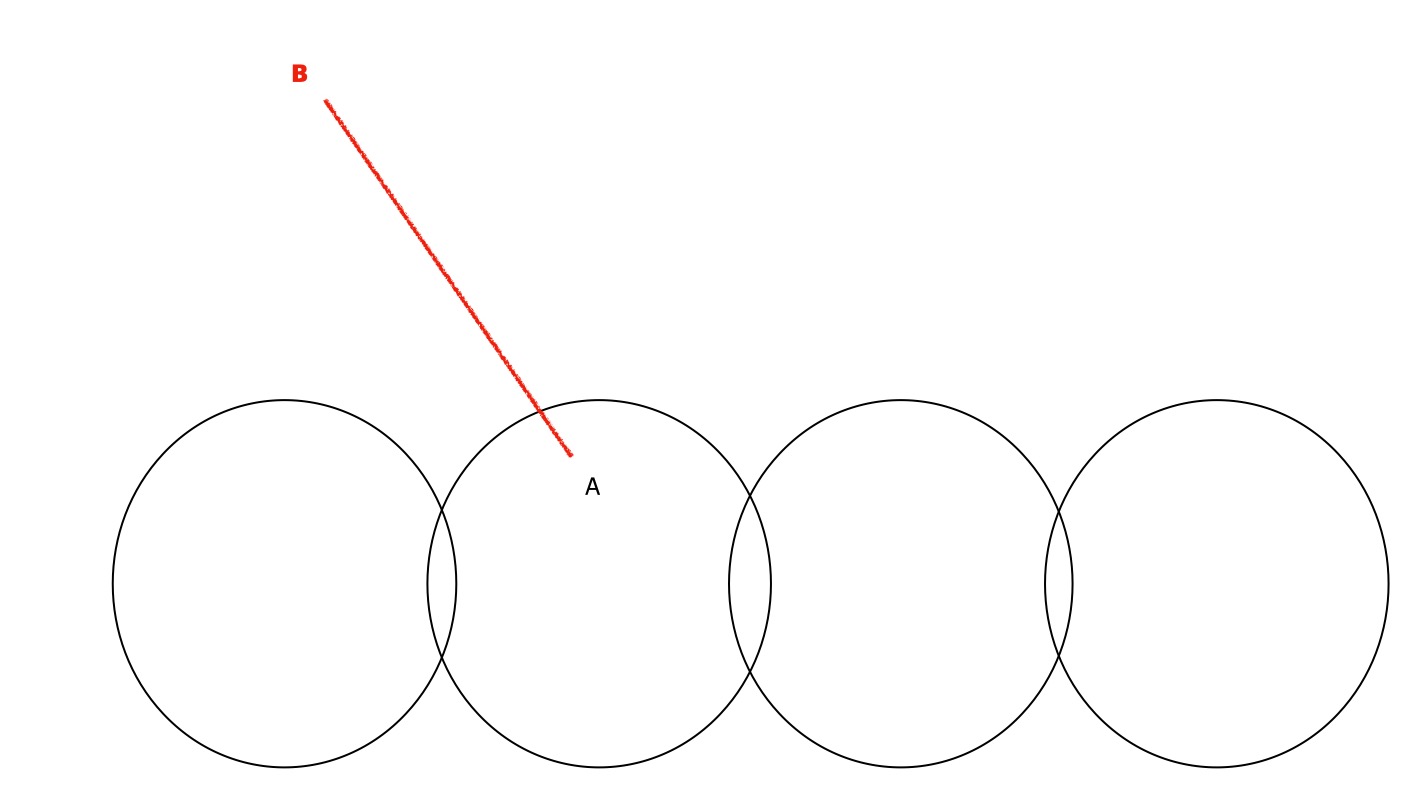
They had Radio waves (3) and Hacking (4), This gave me an optional idea. What if we create a wifi network, one that actively pushes. Consider 4 jeeps, each jeep is a network node, and as you can see, moving the second jeep to another location sets a larger and a different curtain. Now, consider that the latest Iranian drones can fly up to 250KM/H, now the Houthis will not get those (and they lack monumental amounts of skill to operate them), but the older ones are slower, as the jeeps get a lock on a danger, the remote operator uses the created network to disrupt drone operations. I reckon that a setting of 8 jeeps might be a good start, but how to deploy them? I see the need to create 3-5 clusters of up to 4-8 jeeps, it gives the remote operator a decent amount of time to crash the drones far away and safely, optionally (and harder) is to land them so that the evidence can be collected. A secondary option is to fry the electronics, so that the drones would return to the point of liftoff, giving Saudi Intelligence a place to work from. This is the drones, not sure yet how to stop (in a cheap way) Iranian missiles, but I reckon Raytheon has something they eagerly want to sell. I merely want it to cost Iran the farm, not Saudi Arabia, like in Charlie Wilson’s War, there Charlie Wilson provided the Afghans with stringers to stop the Russians, Stinger $38,000, Russian Hind (Mil Mi-24) $36,000,000, so almost 1000:1, those are numbers to work with and that stage needs to be found to top Iran as well. So as I was looking into the Shahab-1, Shahab-2, Shahab-3, can the same network be used to create a false image, or a setting to fool the missile?

GOT systems
It is one of two systems, and any Go-Onto-Target missile has three subsystems (or so I am told), they are :

Target tracker
We are told that the target tracker is also placed on the launching platform, yet is that so with the Iranian version? If that is true, then we need to find a way to infect both, or find a way to disrupt the link.

Missile tracker
This is where it is, I asked the missile, but it had no sound system installed, hence, I watched a USAF training tape and I learned “The missile guidance computer scenario works as follows. Because a variation has modified some of the information the missile has obtained, it is not sure just where it is. However, it is sure where it isn’t, within reason, and it knows where it was. It now subtracts where it should be from where it wasn’t, or vice-versa, and by differentiating this from the algebraic sum of where it shouldn’t be, and where it was, it is able to obtain the deviation and its variation, which is called error”, this seems effective and simple, I merely wonder what if we could find an automated way to mess with the error so it will assume wrongly where it was, and if this accumulative, it will crash ahead of schedule, optionally in a place where there is only sand.

Guidance computer
Guidance computers are in the missile and in the target tracker, it has the same setting as the Target Tracker, we cannot intervene in time, but what happens if we flood the missile with both disrupting and false information? (At the same time mind you)

This is where I found myself, my only reference to missile technology is pointing my own missile at a biological silo (me, as a once proud teenager), I just had to go there to make this story not too serious. Yet there was corroborating materials (not on the Silo though), it is seen in Northrop Grumman’s Patent US4589610A, the Guided missile subsystem. Here I see a little more, but it also gave me a thought. The patent gives us “The IMU driven Kalmanised radar track loop accommodates the use of a high performance radar, like a synthetic aperture radar, for example, which operates to measure radar data at a low rate on the order of 1 Hz, to generate estimates of relative target and missile kinematics to drive the control loop at rates compatible with high performance missile kinematics”, I believe that Iranian missiles are not that advanced, but the groundwork matters. The idea that we have “operates to measure radar data at a low rate”, so it reads signals to differentiate, what is we mess with that instance to create a different error in the Shabab missile? Radar is basically a radio signal, a specific one and specific signals are more easily messed with, yet can it be done efficiently and not expensive, or can we create a setting where on system can impact the next 200 missiles fired? 

The second system is a GOLIS systems (go-onto-location-in-space), it is autonomous and created for targets that do not move (for example the IRS building at 300 N. Los Angeles St.), I would presume a building almost everyone hates, especially in Hollywood. I will not go into all the details, but it had one option I recognised, it was the Hyperbolic navigation, DECCA. Maritime uses (or used) it. It requires 3 stations to operate and if that is so, that is something we can use. We can actually guid a missile when we alter the signal of any two out of three elements. The nice part, as it is obsolete, there is a decent chance the Iranians are till using it, the DECCA system was pretty decent as a concept and for maritime navigation (before we had satellite navigation) was the most precise way to find ourselves in the ocean, it was precise up to 7M2, when you are 2432 KM from shore, that is pretty awesome. So as we see “Hyperbolic navigation is a class of obsolete radio navigation systems in which a navigation receiver instrument on a ship or aircraft is used to determine location based on the difference in timing of radio waves received from fixed land-based radio navigation beacon transmitters”, that is one principle, there is every chance that if we can intercept and relay 2 of the signals, we can create a different error and as such the missile becomes a lot less reliable.

These are merely a few thoughts and they should be seriously considered (except targeting the IRS building, these people have lives too), if we can change the game for Iran we can support Saudi Arabia in creating more stability, less stability is to adhere to Iran, I wonder if the New York Times considered that part that they are voicing, whether it is opinion or not.

OK, I knew about DECCA from my days at the. Merchant Naval Academy, so that might not be completely fair, but this is me thinking out of the box (and out of bed), which implies that this was another day, another dollar, and all done in less than 2 hours. I wonder what more Iranian stuff I can screw up this week, we all need a hobby at times.

Leave a comment

Filed under Finance, Media, Military, Science

Are there versions of truth?

It is a question that has haunted plenty of people, you see there is just one truth, although, is that ‘there is your side, my side and the truth’; it comes from Robert Evans ‘The kid stays in the picture‘, a 2002 documentary. We have seen the quote is several works including the famous Sci-fi series Babylon 5. The fun part of this is that the three parts are all based on honesty, yet it is more than just a matter of perspective. I have always known that, although the interaction of perception and observations is something that needs to be in a book, not on a blog. So when I was confronted with the site ‘Seeking Alpha‘, which was described by the Wall Street journal in 2014 as “SeekingAlpha.com predicted stock returns, as well as earnings surprises, above and beyond what was evident from Wall Street analyst reports and financial news articles” is from the article more than just that. The article (at https://seekingalpha.com/article/4168001-investors-face-moral-dilemmas-investments-saudi-arabia) gives us ‘Investors Face Moral Dilemmas with Investments in Saudi Arabia‘, can be countered with ‘every investment has a moral dilemma’, so that is not much to go by. Yet the setting of a 500 billion market where we see the foundation with “A component of the Saudis’ Vision 2030 is to create an indigenous defense industry one that will promote volatility, not stability, in a region on perpetual warfooting“, gives me not the shivers, but the contemplation of what game is played. You see there is no doubt that Saudi Arabia wants to create an indigenous defence industry; every nation wants that, especially when it has been under threat for many years. I would have told Crown Prince Mohammed bin Salman if he would respectfully consider buying Remington as it is bankrupt and going cheap. The excellence of its weaponry, weaponry that have made it to the most elite parts of the global national defence forces is not just a matter for defence, hunters and others revere the weapon for its standard of excellence and it is not a bad place to start. You see, that is merely one path, in all this the setting of ‘one that will promote volatility‘, is not only not a given, I wonder where Seeking Alpha got the data in the first place to make that assumption. When we accept that there is an optional truth, there should be a look at the antagonising party, namely Iran as well, in that regard we see (at https://seekingalpha.com/instablog/776842-investorideas-com/5152941-cryptocorner-iran-developing-cryptocurrency-japan-s-sbi-launch-exchange-australia-cracks-icos), “Iran is progressing with its own crypto currency project despite having banned crypto trading in local banks according to a report at Reuters. Information and Communications Technology Minister Javad Azari-Jahromi said the ban from Iran’s state bank would not apply to development of a domestic crypto currency“, as well as “Equally, if not more importantly, investments by Russia’s oil and gas companies in the development of oil fields in Iran may exceed $50 billion, presidential aide Yuri Ushakov told reporters in early April” (at https://seekingalpha.com/article/4167229-effect-unilateral-u-s-sanctions-irans-crude-oil-production?page=3) and in finality we see “On Sunday, pro-Iranian Shiite rebels in Yemen launched a missile attack on Saudi Arabia targeting four cities. The Saudi air defense intercepted the missiles, however, one person died and two others were hurt by shrapnel. Saudi Colonel Turki al-Malki made it clear who Saudi Arabia thought was to blame: “This aggressive and random act by the Iran-backed Houthi group proves that the Iranian regime continues to support the armed Houthi group with qualitative capabilities…”“, which we get from the article (at https://seekingalpha.com/article/4159016-7-missiles-closer-iran-war-100-oil) called ‘7 Missiles Closer To Iran War And $100 Oil‘. So now we see two parts, we see Saudi Arabia accused of volatility and ion all this the aggressor Iran is not painted in any way in any of these mentioned articles merely defined as ‘Pro-Iranian rebels‘, the fact that those rebels cannot afford any missiles and for the most they lack the ballistic skills as well as deployment and knowledge of GOLIS firing solution systems, issues like deployment, missile calibration and beyond that there is setting the precision of the missile by making sure that the electronic settings are correctly tweaked and calibrated to interact with the information that the targeting hardware offers. All that requires skills, skills that the Yemeni do not have, but Seeking Alpha is all over that and, oh, actually they are not!

So in the $500 billion setting of growing the Saudi industry, one valid component is now the stuff of moral discussions and the setting of unproven volatility, can anyone explain why Seeking Alpha has released 7 articles in the last 24 hours on Iran, where one shows opposition between the Iranian judiciary and the President on ‘disrupt national unity‘ in the setting of ‘Rouhani opposing banning social media networks, as he attempts to open up the country to the outside world‘, there is not a moral dilemma here? Or perhaps it is not a setting for volatility whilst the growing of Iranian civil unrest is currently seen as a given. So how do we not see in more articles that for the speculative person investing into Iran is facing all kinds of risks from Iranian civil unrest?

Yet it is that setting that we can all easily check on how certain paths are played. We can see this in another way as well, when we see the French visit; we see “Macron had come to Washington in a bid to convince Trump to remain in the deal. He proposed “pillars” for adding to the existing deal, including extending it for the long term, limiting Iran’s ballistic missiles, and dealing with Iran’s involvement throughout the region“, whilst in the article regarding Crown Prince Mohammed bin Salman we see “Regardless of his charm, offensive MBS will continue his extreme ruthlessness, admittedly a de rigueur requirement in a tough country and even tougher neighborhood especially because his radical changes have created many internal enemies“, we also saw “Saudi crown prince Mohammad bin Salman (MBS) wrapped up his well-orchestrated and unprecedented “meet & greet”, “press the flesh” two-week April tour of the US with the icons and titans of three primary industries in his effort to diversify the Saudi economy as part of the ambitious Vision 2030 plan“, yet nowhere do we read an optional: “Success can only come from a vision, brought by a visionary. We are a nation with resources, with options and opportunities. We are more than the oil that is acquired from our soil, we can and will harness resources as well as investment opportunities to stimulate our economy and diversify our revenues. Our nation sitting central between Africa, Asia and Europe should have been more about growing that advantage and now we will, we have the foundation to grown in technology, in minerals and in services to be a global player, we must take that opportunity before it is lost to us forever. It’s not a fast path, and to do this properly we must grow over the next 12 years to be able to become that global powerhouse“. Well, there is one place where something like that can be read, it is the introduction (at http://vision2030.gov.sa/en/foreword), where we also see a lot more on the Islamic part on Saudi Arabia, which is perfectly valid. So when we go to http://vision2030.gov.sa/en/node/125 we see a massive amount of programs all set to push Vision 2030 forward and the interesting part in that is that there is not one mention of the words ‘defence’, ‘Army’, ‘Navy’ or ‘Air force’. Even as I am convinced that growing national defence is part of that, my wonder is that with all these options and opportunities, Seeking Alpha resorted to the Moral part of a defence structure that is nowhere near a central part of the Vision 2030 brief. We know that Saudi Arabia has the option to go full G5 from day one and the investment options there are massive opportunities not to pick up millions, but billions. Yet the issue becomes larger when we see that the writer Albert Goldson has plenty of experience and should be well aware of commodities (read: he is a bit of an expert according to sources), so when we set this against the view of Bengt Nordström, CEO of consultancy Northstream who gave us last year “growth in the industry has disguised not only the fact the telco industry is largely a commodity, but also that it has not been hugely innovative for a number of years“, that in light of the upcoming 5G, where ‘first in, soaring profits’ could surely be a given, none of that is shown, merely the fact that Saudi Arabia is allegedly about ‘volatility‘, so whose buttering the bread and who is that sandwich being made for?

Another part not shown was ‘Advancing pharmaceuticals and patient safety in Saudi Arabia: A 2030 vision initiative‘ (at https://www.sciencedirect.com/science/article/pii/S1319016417301780). Here we see “A recent conference in Riyadh, sponsored by King Saud University, sought to discuss these issues and develop specific policy recommendations for the Saudi 2030 Vision plan. This and other efforts will require more and more creative educational programs for physicians, pharmacists, hospitals, and patients, and, most importantly evolving regulations on quality standards and oversight by Saudi health authorities“, let’s not forget that we are in the beginning of all this, there is 12 years, which will go quickly I’ll grant you that, yet in all this the opportunity to grow Patent Law, Law firms, and set proper markers in place would be an essential step before such a level of patent bearing change comes. The option for Pharmaceutical investment was not shown in the article, or the mention of the issues shown at https://ncusar.org/programs/17-transcripts/2017-06-20-burton.pdf (attached). So, I am not opposing that there is optionally a need to grow the national defence industry, but is that set in the right light? In the light he gives the investors (which is his right to do), we see “However, for the moral implications mentioned with respect to the development of an indigenous defense industry, check your moral compass. From my perspective, it’s a financially profitable but morally bankrupt undertaking“, yet what morally bankrupt idea is there on growing the pharmaceutical and mobile network industry? they are highly profitable if it is achieved and there is moral question, my moral compass is setting on the field asking Albert Goldson, a member of the Association of Former Intelligence Officers (AFIO) and an Associate Member of the Foreign Policy Association (FPA) why he missed on those options. Also in the view of two dozen projects that are openly stated, why would he focus on a part that represents merely 10% and focus on those two dozen programs, where the investors would find the gems that the investors would want to find in a $500 billion layered cake called ‘Vision 2030‘. Oh, as for that military part, the attached Burton presentation ‘Opportunities in Saudi Arabia – Vision 2030 and Beyond‘ spends two slides on it and the most important part shown is “Vision 2030 calls for 50 percent of military equipment purchases from domestic suppliers instead of imports“, whilst also mentioning that the Kingdom of Saudi Arabia (KSA) “spent a total of over $63 billion on defense and security in 2016, including off-budget spending“, so when we see that, we see that for the smart investor there is an optional $30 billion a year available for those who might not have a moral issue working on a government set national defence program. That in light of Iran delivering missiles hardware and support to non-combatants, which are rebels at best, yet terrorists might be more apt when we consider “Nasrallah’s letter is proven evidence of Iran’s involvement in the Yemeni civil war, since it shows that Hezbollah, which is financed by Iran, is taking part in the fighting in Yemen” (source: Jerusalem Post). So where exactly does Seeking Alpha stand? Let’s be fair, they can be in any place they like as they are merely advisors towards their investors in all this, yet even with my high moral (or is that outspokenly oral) I would not turn away from a $32 billion market, especially if I had that level of cash. Oh, and whilst you consider on where morality needs to be, Boeing, Lockheed and Raytheon have already signed up, so the delay you took made that cake a hell of a lot smaller, but even if there is still $2 billion up for grabs, would you walk away? Let’s not forget that next month’s rent is due!

So in all this, I never stated or implied that Albert Goldson lied to anyone. Yet when we consider there is your side, my side and the truth, what did we see? You see, I get back to perception versus observation. Through perception he is focussed on the defence part, but why? The shifted setting towards Saudi Arabia will impact something else, but what else is impacted? That is the question, is it the Iranian setting (when considering the other articles), is it something else entirely, or is Albert Goldson focussed on something beyond all this? It is a speculation from my side, yet the absence of the Pharmaceutical and Mobile Industry absence implies just that, yet in equal measure I will state that this would merely be my perception, based on all my observations. That is part of the setting. In the realm of ‘there is your side, my side and the truth’, it becomes more and more about observation versus perception. In a case like this, when there is $500 billion on the table, is the perception the amount on the table, or the observation of whom else is at that table that matters. Is that merely an observation or does the perception become: where is MY opportunity? Because in the end that is what the investor cares about, and moreover, where and what size their slice of the cake becomes.

In addition, my observation will be that the changes mean that there are new players and some of the old players have been so well fed for such a long time, in this ‘parting might be such sweet sorrow’ (Romeo and Juliet Act 2, Scene 2), yet for the previous players it will be over their dead bodies, that tends to be the gist of it. The change needs to be observed because it shown also where the pressures of the players will be and that pressure can be seen as cost and risk. It is the wiser player that makes it through and gets the slice of the $500 billion layered cake; it is merely the question on the size of the slice and the perception of the profit it allegedly holds.


2 Comments

Filed under Finance, IT, Law, Media, Military, Politics, Science