Tag Archives: NAM

A fence is for fencing

Yup, that did not make sense did it, although, it is not that far from the truth. It is pretty much on the level of ‘if a vegetarian eats vegetables, what does a humanitarian eat?’ I know, it sounds lame, but the setting is a bit lame and it is open to debate who is right, I for one am clearly in the mindset that I could be wrong, I freely admit that off the bat.

You see, the UK (aka United Kingdom) has a problem, it is coming up short to a much larger degree with energy and that will go on 3-5 years at the very least. Shale Gas is too dangerous in the UK. You merely have to look at the Netherlands for that example as well as the papers of the Dutch NAM to see that there is a larger problem and the Dutch North is in a terrible state because of it. The Netherlands is however on European main land, the UK is not, as such the dangers to groundwater could be a lot more hazardous. The second option is to add 1-2 nuclear reactors, but that is 5 years away and the UK is a bit empty on the coffer side of things, but it is an option for long term consideration. And then there is the reliable coal, a substance fought over since the Onedin line was a fashionable time (circa 1860). So when I see ‘Government defends Cumbria coal mine green light’ I get the response by BBC writer Roger Harrabin (at https://www.bbc.com/news/science-environment-55668507), and he is optionally correct, but the UK is dealt a set of cards that do not look prosperous and in the short term consider the power switched off in every house for 2 hours a day for the next three years. The issue is that pressing, so when I see “Environmentalists have reacted with astonishment and disbelief, saying the carbon from burning coal is clearly a global concern. They warned the decision will diminish the UK’s credibility.” I am not entirely sure if the environmentalists understand the situation as it is, yes we can be overly protective in the 11th hour, but that also means that for the next three years all houses will lose power 2 hours a day. No electricity of any kind, that is the setting the UK faces. Elon Musk is sitting on a solution to solve it, but that is also 1-2 years away and that will bring cost to EVERY house in the UK, it is up to you all, but we need to see that governments on a global scale were sitting on their hands whilst the energy shortage was clearly visible, the UK has only 2 direct options and one is 5 years away (it takes time to build a nuclear energy reactor). Now if Paul Miner gets his way (I a not saying he is wrong) and we see the setting “All coal mines should be refused planning permission, according to current government policy. So, it beggars belief why ministers have not stepped in and refused the planning application for this coal mine in Cumbria”, he must also deal with all the complaints when  well over 40 million people will have to find a solution living on power 22 out of 24 hours a day, when that shortage is felt by the people in the UK, they need to visit Paul Miner and hand over their complaints to him.

Now, I am not in favour of coal mines and coal based energy systems, but the UK is now in a stage where they might not have a choice, the inactions over 1990-2010 will now be showing. When we get the numbers “Between 1990 and 2018, net imports of electricity increased by 60 percent” (source: Statista), we need to realise that it will get worse, in addition we are given “In 2017 UK Net imports made up 36% of UK energy needs (paraphrased)”, as such 2021 could spell that energy imports could hit the 50% marker. 

So why might I be wrong?
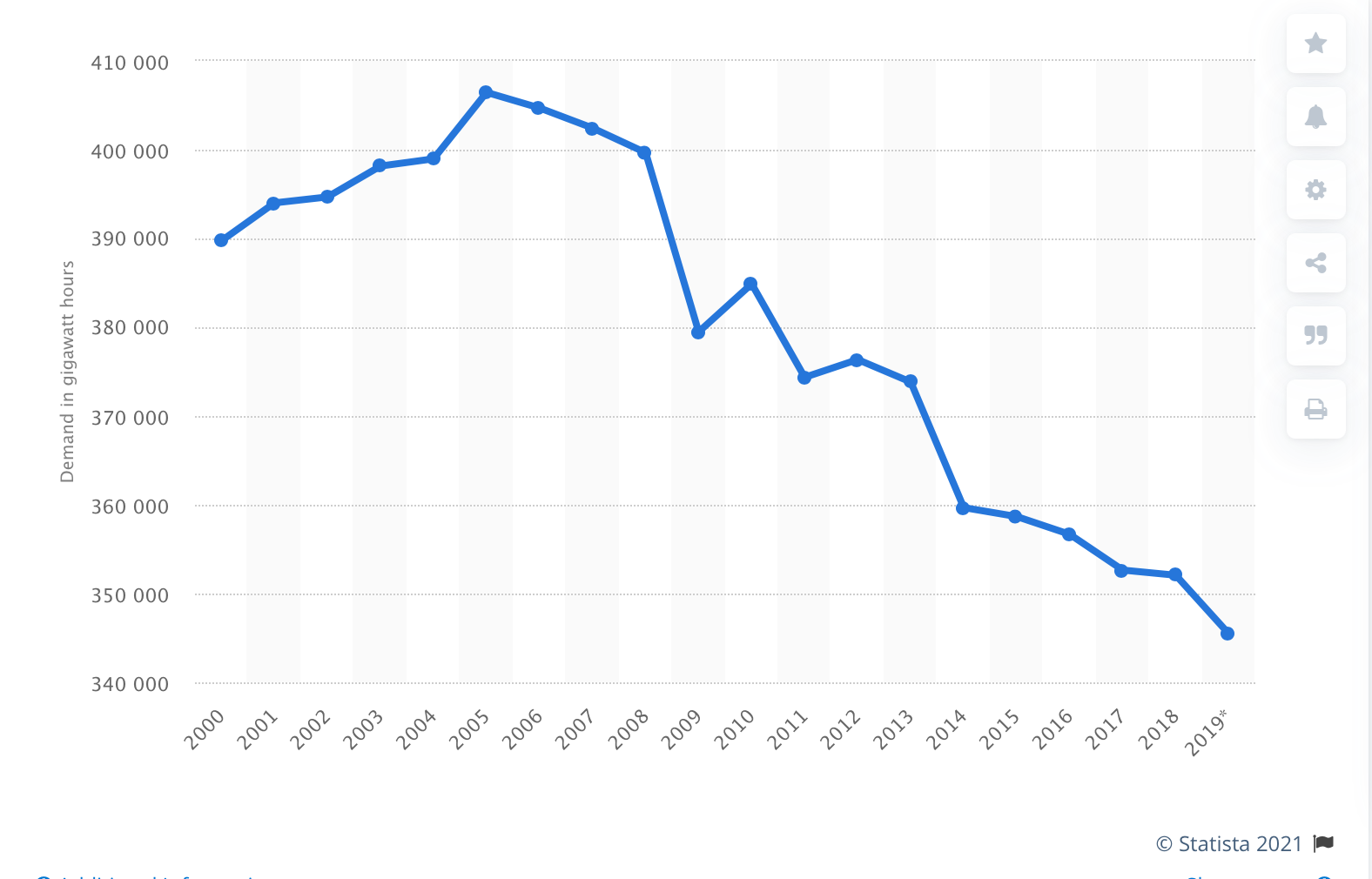
I accept I might be wrong, The stage Statista shows is one that causes questions, first off, Statista has always been a reliable source of information, as such I could be wrong, yet I have issues with the setting that power needs between 2009-2019 has gone down from 400 GWh to 345 GWh. That is a decrease of a little over 13%, and when we see how electronics have been either on par and in some cases higher, 15% is large, and I believe it is not entirely accurate, I personally believe that over the next 3 years, power needs will increase well over 10%, The net import of electricity rise of 60% is partial evidence, our changing habits on the internet, streaming and all the devices relying on IoT are a secondary level of evidence and there is more to come, all whilst the UK is coming up short again and again and at some point France and Norway will not be able to provide the energy required. But the Statista curve is also optional evidence that my way of thinking is incorrect and that too needs to be out there. 
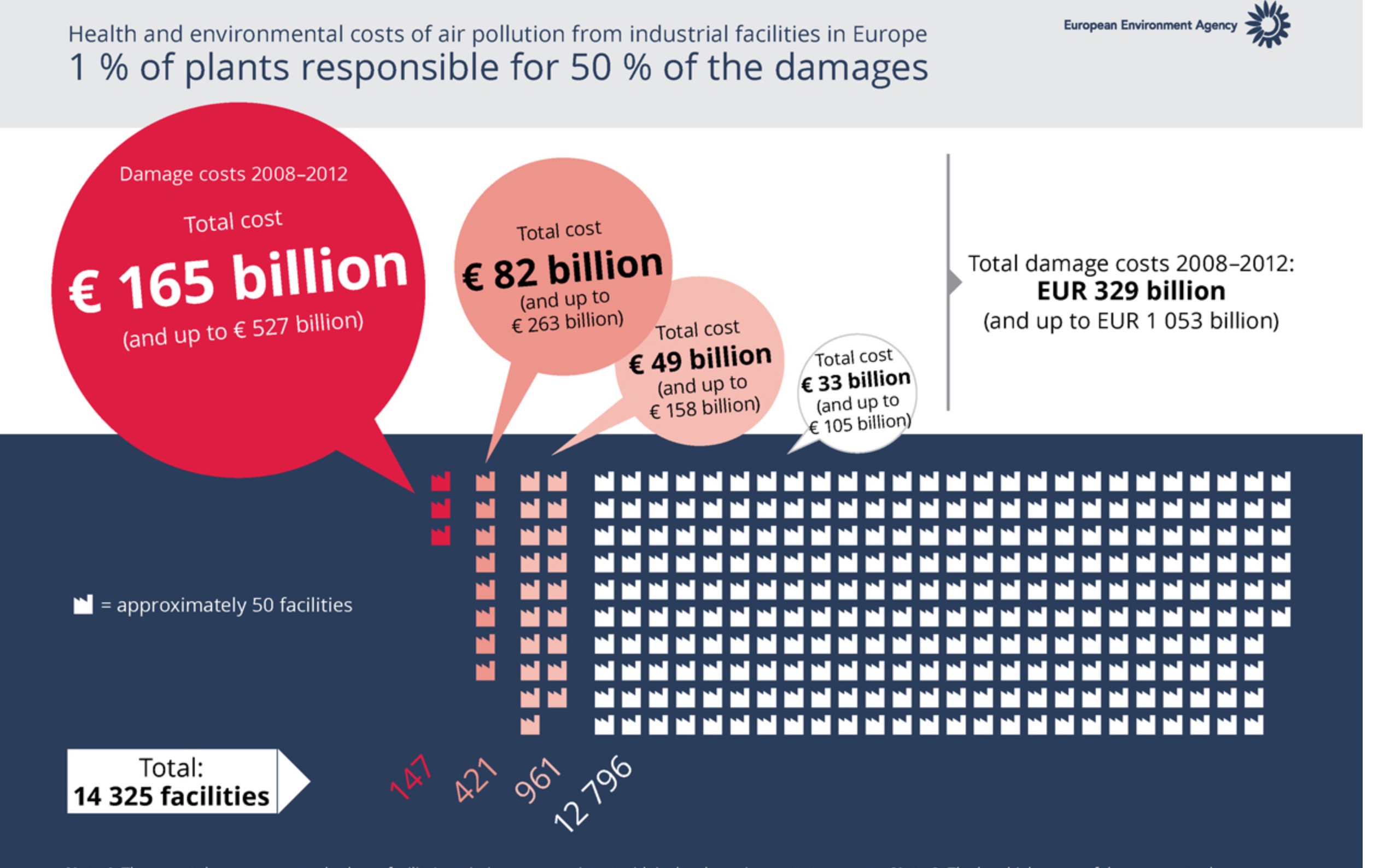
So we might be on the fence, we might fence with the numbers we see, but it is clear that there is a larger stage and I am willing to bet that some numbers are behind a curtain so that we remain lulled to sleep, until it is too late, and by my personal reckoning it is already too late, because if there was still time there would not be any coal mine in the planning stage, whether it is local or not, whether that stage is global, all whilst I showed on December 10th 2020 (at https://lawlordtobe.com/2020/12/10/uniform-nameless-entitlement-perforation/) in my blog ‘Uniform Nameless Entitlement Perforation’ that 1% of the industries account for 50% of the damages. The chart was clear and as I now see “it further fuels climate and ecological breakdown”, all whilst the actions against the 1% industrials who create the massive pollution damage are nowhere in sight, hypocrisy anyone?
So yes, I am not in favour of this coal mine, but I wonder if the UK has too many options left and when the UK faces brown-outs like California does and it happens in winter, I wonder how many snivelling people will cry for energy relief and that is if the people in the UK can still afford energy bills in 2022, because that too is a question that might not be as easy to answer as we think, especially if all that energy is to be imported. Yet none of that is seen in the article (which is fair), yet ignoring the larger stage is folly, especially in these times. 

1 Comment

Filed under Finance, Media, Politics, Science

What the Frack?

I have stated in several occasions that I am at heart a Conservative, I believe in the conservative plan and for the most, the damage Labour has achieved, on a near global base gives me the certainty that I will nearly never see eye to eye with labour. Yet, it is that nearly part that is today the issue. You see, the one part I do agree with is their opposition to Fracking.

I myself grew up in the Netherlands. My grandfather is British and served in WWI , my mother was British, so I am unofficial (for now) British too. I have seen the damage that Fracking has done in the Netherlands. The historic buildings that are now damaged, some beyond repair is just unacceptable. The North of the Netherlands (Groningen) has a unique historical architecture, which is now partially diminished and that is not a good thing. Consider the people who are losing their houses so that a little more gas can be obtained, and the expense that it had to go through to get it. In addition, the Dutch gas company NAM that was the instigator of this approach lost its case last year, which had as a consequence that loss of property value has to be repaired, with over 2000 claims in 2012 alone, the NAM is currently looking at claims totalling into the billions of Euro’s. The good part in this for British Barry Gardiner is that Common Law torts is actually stronger in protecting the home owners’ rights than Dutch law was, so the moment anything goes wrong (it will), the parties that will start fracking will end up paying a lot, possible even a lot more than the value of the gas obtained, so that story could go south fast and a lot faster than any administration would like it to be.

In addition, the UK has one additional issue the Dutch do not have. Fracking in the UK, because of the rocky foundation requires a higher pressure than the Dutch required, giving the UK a slightly larger issue with earthquakes and in addition to that, if the chemicals enter the groundwater in any way (a very likely issue), the damage to people’s health because of water pollution could have the realistic danger to hit water sources that people and farms rely on (being an island surrounded by salt water adds to that danger). That last is not a given, but if it happens, the UK would be in a perilous situation. You see, the Dutch have a collection of waterways and water sources that outdo the UK by a lot, considering they have larger (drink) water provision, with the Dutch at 17% of the size and only 25% of the population, if anything had gone seriously wrong (water wise), the Dutch have alternatives, the same is not clear and should be considered as doubtful for the UK.

In the Netherlands there is an issue, however, we need to clearly look at both sides. The anti-Fracking sites are giving the readers the ‘burning water‘ example, whilst the pro fracking people claimed that this was swamp gas that had found its way into the ground waters. There are issues here, but it was not a given that fracking caused this instance. Still, the county of Groningen has access to 45 billion litres of water, and that is one of the least populated areas of the Netherlands. The Technical University of Delft had this paper that was done for the Drinkwater cooperation in the Netherlands (at http://www.vewin.nl/SiteCollectionDocuments/Dossier_schaliegas/Schaliegas_gevolgen_voor_ons_grondwater.pdf), their site vewin.nl has an English version of the site.

An important conclusion is: “De overkoepelende conclusie van voorliggend rapport is, dat schaliegaswinning in principe veilig zal zijn voor het drinkwater, onder de voorwaarde dat maatregelen worden genomen die de zorgpunten van de sector adequaat wegnemen. Dat vergt in elk geval openheid over de gebruikte chemicaliën en monitoring die start voorafgaand aan het boren en wordt voortgezet tot en met de nazorgperiode (30 jaar na het voorgoed sluiten de putten)“.

The paraphrased translation “The conclusion of this report is that Fracking is in principle not hazardous for drinking water, with the clear condition that safeguards are set in place, with openness of disclosure of all chemicals used and monitoring starting before fracking commences with continued measuring of the chemicals for a period of 30 years after fracking stops“. There is a little paraphrasing here. Yet the foundation that monitoring for 30+ years will have a massive impact on the profitability, with the added situation that the Dutch, due to the soil, required an expected lower pressure. Also, the risk was still there, yet lower due to what I regard of vast water supplies. Elements the UK does not have to the extent the Dutch have, meaning that the risk here will be higher. This is one of the principle reasons I am on the side of Barry Gardiner. The interesting thing is that he is a lot more fearful than the Scottish are, which is also weird because should any water get a case of fracking chemical pollution, one of the main ingredients for making whiskey is gone, ending that market for a very long time. So, buying a 100 cases of Scotch, the day fracking is approved in Scotland, might be a very worthwhile investment indeed.

You see, my aversion to all this is that it requires openly revealing all chemicals used and monitoring. I have never ever seen any profit driven company adhere to these terms. Like the Dutch report shows the Halliburton side of it all and how spiffy their technology is. It is in the end an academic presentation to a set of requirements most large companies will ‘accidently’ ignore and when it goes to court a ‘fine’ will be advocated for that allows them still a degree of profits, whilst the elements in nearly all reports require a level of responsibility and adherence to issues that make profit a near non-issue as there will be no profit. This beckons me to think why any consideration to allow fracking is even considered to begin with. By the way, should any drilling organisation decide to go bankrupt, the aftercare of 30 years would not be possible, meaning that suddenly the government would be required to monitor all this, an expense no one is waiting for.

For the most, there are issues that cannot be guaranteed how deep it will impact the UK, yet the dangers, the risks and the long term consequences, whilst the profit is not even close to a guarantee makes me wonder why the UK Government on both sides of the isle have abstained to unite in banning Fracking on the grounds of risks and uncontrollable costs after the fact. That alone, whilst a trillion in debt should be enough to keep people away from Fracking. Only today, the Dutch NOS now reports that the Dutch NAM is going to appeal last year’s decision regarding the loss of value of houses. A Statement of Appeal, in Dutch named ‘memorie van grieven‘ has been submitted, at 16.5 Kilograms, or in a slightly more metrical definition: 3400 pages. The quote “The Company calls the verdict outdated and vague, saying it creates a huge administrative burden for the NAM“, which I find hilarious. There has been too much damage and clearly proven damage because of fracking, now that the NAM is finding the loss of profit too large, it drowns the court with a document that will take months to read. So as this case will now see another legal iteration that will not start until 2017, the people at NAM will get out fast with as much cash as possible and leave others to clean up the mess (speculation on my side). This is in my view another reason to support the view Barry Gardiner has. If not for the mere logic, then for the common legal sense that any mishap will bring with it.

The last side is the US, when we look at sourcewatch.org, we see the claim that go a lot further. There have been cases where the monitoring labs falsified data and ended up paying $150K fine with 5 years of probation, which was in East Syracuse New York. The EPA (Environmental Protection Agency) has shown and found water safety issues with residential drinking water wells in Texas, West Virginia and Wyoming. Cases of elevated levels of Arsenic and Selenium (not the healthiest in even minute traces), places where there were elevated amounts of Ammonium and Iodide, which would be devastating to environment and wildlife and in Wyoming they found Benzene at 50 times higher than safe levels advice. What was even more upsetting is that a June 2015 report (at http://www.bloomberg.com/news/articles/2015-06-04/u-s-epa-study-finds-only-limited-water-pollution-from-fracking) is reported by the news as ‘EPA Study of Fracking Finds ‘No Widespread, Systemic’ Pollution‘, there is no way to tell who to believe, but the reports stated in the past as well as some of the actions give way to the notion that big business has a hold over the EPA, not the other way around. What is also interesting in the Bloomberg article is ““Now the Obama administration, Congress, and state governments must act on that information to protect our drinking water, and stop perpetuating the oil and gas industry’s myth that fracking is safe,” said Lauren Pagel, Earthwork’s policy director, in an e-mail“, I myself would have gone a step further and make the children of the people behind the EPA report drink the water from these wells and watch how scared those parents would suddenly become. I wonder if we see any proclamations that their children are allergic to water. The crisis in Flint Michigan is another piece of evidence. Important that this is NOT about fracking, but about the mishandling of evidence regarding the quality of water. Water with heavy metals (lead) tends to be really unhealthy and the fact that one member of the EPA was involved only shows that big business finds a way to take the lead, or is that lead to profit.

As I personally see it. Fracking is nothing more than fake money. Some call it printing your own cash, which is one side, but consider that you are printing £100 that note would cost you £30 in paper and £85 in ink? How profitable is printing money then? Especially as the increased price of ink is one that both government ignore and corporations forget to mention. And the image of Balmoral Castle? Well, to cover the losses, that ‘piece de resistance’ could actually got on the market to cover the losses and that is not too far-fetched I reckon. So far there is not one place that can clearly show the benefit without the out of control risks, making this solution a non-option before it even starts.

Fracking? Get the Frack out of here!


Leave a comment

Filed under Finance, Law, Media, Politics, Science

Get the Frack out of here!

For the UK it is a small place, it can be found to the right of the North Sea and it is called the Netherlands. Today, a judge has decided that the Dutch Gas Corporation (NAM) has been found responsible for the massive damage houses in the state of Groningen had been subject to. The initial 900 claimants can rejoice to a chunk of 5 billion Euro. This is only the beginning for the NAM as the judge also decided that all houses within the earthquake region will have the right to file a claim against the NAM.

You might state that this is not such an issue, but is that the case?

On the 19th of July 2013, in the article ‘The Setting of strategies‘ (at https://lawlordtobe.com/2013/07/19/the-setting-of-strategies/), I wrote: “we should not forget the issues that the Dutch county ‘Groningen’ is going through as it has seen a rise in small earthquakes giving home owners massive costs to repair and additional losses in house values. These issues are to some extent denied/ignored as the investigation is going on, yet the damages that the people see in the news on a regular bases tells another story. At present corporations are now claiming for millions in damages from both the Dutch gas company (NAM) and the government“, now the invoice is due, which gives view that fracking has been an experiment that came at a massive cost, costings that are ignored by those who ignore bad news. I ended the article with “We, the Commonwealth nations must stick together to stay afloat and survive, fight together to become the nations of true prosperity again. None of these strategies are ready for that essential need!“, as I see it, I have been proven right.

On the 27th of November (at https://lawlordtobe.com/2013/11/27/two-deadly-sins/), in the article ‘Two deadly sins‘ I wrote “The question becomes whether George Osborne has been properly instructed involving the risks he would place Wales in? If he is briefed by stockholders, the UK should take another look at these proceedings. I understand that heating is hard and very expensive, but can people continue when they are faced with long term, perhaps even unrepairable damage to England itself? Can that be acceptable? I am not a geologist, so there are elements I have no knowledge of, yet it might be realistic that many Walesians did not sign up for Shale Gas experiments when it could cost them both Cardiff and Swansea, both containing the largest population in Wales. Is Britain ready to pay for 350,000 damaged homes?

Now with the NAM losing their case, these issues are now adamant for the UK too. Did Minister of State for Energy and Climate Change Andrea Leadsom consider these dangers when she made her speech yesterday? The Lancashire Evening Post (at http://www.lep.co.uk/news/community/fracking-is-great-opportunity-1-7438282) states: “Shale gas is a fantastic opportunity for the UK. The industry could be worth billions of pounds to our economy, provide more than 60,000 jobs, creating financial security for more hard-working people and their families while also increasing our energy security“, with the NAM now losing billions, how secure is that future? More important, apart from the earthquakes the Netherlands had, how secure are the catchments of the toxic chemicals that are used in the fracking process?

There is a bigger issue too. I agree with her statement “There is no question that the UK needs natural gas. It meets a third of our energy demand, and we will need it for many years to come. If we carry on the way we are, we’ll be importing 75 per cent of the gas we need by 2030“. The UK should not be dependent on all this, in all this a solution must be found and as it stands, fracking is not the solution, it never ever was. For all this we need to take a look at the article (at http://www.bbc.com/news/science-environment-20595228) called ‘Fracking: Untangling fact from fiction‘, an excellent BBC article that does state “Their report indicated that future earthquakes as a result of fracking could not be ruled out – but the risk from these tremors was low and structural damage extremely unlikely“, which amounts to the information the NAM gave in first instance, now a massive multi-billion euro bill is due, which begs the question: “Is the juice worth the squeeze?” I cannot state this for certain, but there are question, even as we see the statement “the UK has more than 50 years of drilling experience and we have the best record in the world for economic development while protecting our environment and people“, the answer the BBC published puts all this on loose screws, it makes for a debate on the amount of danger houses and drinking water is handed as fracking is still the operational solution that remains the number one consideration. My worry is the quote “Operators will pay communities £100,000 for each exploration well site plus 1 per cent of production revenue, worth £5m-£10m, to be used as the community sees fit“. If that comes with a blanket non-liability clause than the NAM issue shows the dangers of considering all this. When the government shells out millions and gets a billion pound claim in return, we should consider the longer term effects that shale gas has.

In the end fracking was never the money making swine the Dutch hoped it would be, in addition, the case as it was lost by the NAM (on all counts no less) shows that the long term consequences are also a partial unknown. The NAM will get additional bills in losses and damages, whilst the revenue now falls away and most of that will fall towards the person with the damaged home. The coffers (those that George Osborne controls) gives additional worries when the invoices do come in. it would make the faintest of notion that a few coins were to be made falls away towards the deadliest of costs, namely that of a claimant holding the government responsible for the loss of value on their house. Groningen in the Netherlands is the least populated area of the Netherlands and the damage there is expected to be soon in excess of 5 billion Euro. The conservative party cannot afford damages to that extent, fracking is just too risky an endeavour!


Leave a comment

Filed under Finance, Politics, Science

Frack off?

Fracking, it has been a large issue in the Netherlands, now it is starting to get grounds on several levels in the UK. Some of the shown issues can be found at http://news.sky.com/story/1194087/fracking-cameron-offers-councils-drill-money. The first paragraph gives us two of several issues connected to this, as is stated “David Cameron has announced £1.7m for councils which agree to drill for shale gas sparking angry protests from campaigners who say it amounts to little more than bribery.

The issue is whether the environmental issues are dealt with. The incentive is a powerful one, and the complication is that this is now business against the future, not the consequences set against the present.

Why am I stating this?

One part of that evidence is coming from the Netherlands. The NOS stated “De gaswinning in Groningen leidde dit jaar tot een recordaantal aardbevingen.Gemiddeld twee keer per week: in totaal 127 keer. ” [Translated: the gathering of shale gas through fracking has led to a record amount of earthquakes. At present they are hit with two earthquakes a week, a total of 127 quakes]. The fracking as it is happening under direction of the Dutch NAM is having serious consequences. The quakes have been as high as a 3.7 on the Richter scale. The political field is still all open on finding some way to make this all continue in the Netherlands, which amounts to a strong devaluation of a unique architectural form in the Netherlands. In addition, on November 1st 2013 the following was also quoted by the NOS. “de Nederlandse aardoliemaatschappij NAM zo’n 900 miljoen euro voor compensatie moeten uittrekken.” [Translated: the NAM would have to pay 900 million euro in compensations, dealing with these damages].

[Addition] One reader had issues with the translation as mentioned earlier. In the literal sense, the commenter was correct, yet the information the commenter had not been aware of was (at http://www.nam.nl/nl/technology-and-innovation/optimization-natural-gas/fracking.html). There is however another issue I add to this (25th January 2014). The quoteDe techniek wordt al sinds de jaren ’50 regelmatig en succesvol toegepast in Nederland.” [Translated: The technique has been used regularly and succesfully since the 50’s.] The latter part is important for two reasons. First is that fracking had been used a lot longer and in addition, when I grew up there were no earthquakes in the Netherlands (at least none that I was aware of). So what other factors are part of the escalations in the Netherlands? Just more drilling?

Has David Cameron (and his advisers) taken these costs into account? Let’s not forget that Groningen is one of the lesser populated counties in the Netherlands. We are talking about a county with just over 510,000 people, compared to the national population of almost 17 million. Consider these numbers when fracking will commence all over Britain, especially in the southern parts the UK.

Now, the UK does not have the soft ground that is found in the Netherlands, yet the dangers will not be any less. When we look at the quote that Sky News gave us in the earlier mentioned article “The Government estimates the industry could attract £3.7bn a year in investment and support 74,000 jobs.” ‘Could’ is not a given, neither is the damage that the Netherlands are currently facing. I do however wonder about the short sighted look on 3.7 billion, when the UK is dealing with a 1 trillion debt. Now, as I mention this, you will think that this is all a good thing to have something that lowers the total debt and I would agree. However, consider the next quote, also from Sky News “A Local Government Association spokesman said: ‘Given the significant tax breaks being proposed to drive forward the development of shale gas and the impact drilling will have on local communities, these areas should not be short-changed by fracking schemes.’

So, these companies get even more tax breaks? Remember the old days? A company was visionary and had a good idea. There was no tax break and the tax paying people did not have to pay for their short-sightedness, once it reared its ugly head. Now, the topic of ‘tax break’ seems to be the introduction to any investment conversation. It is better than gambling as it is legally permitted. If it goes wrong they have no worry as no taxes are due, if they win they avoid massive taxation, a slightly rigged game, so to speak.

There are additional issues. Some of the environmentalists talk about the contamination of ground water as well as depletion of fresh water. It is hard to comment on those two claims as I am no expert on it. In one part, groundwater contamination could be avoided if it is properly investigated, yet the 1.7 million pound handout as mentioned in the very beginning could be cause to less vigorous investigation. If so, when the cost of living goes up for those drinking bottled water from 70 pence to lets say 125 pence per 1,5 liter, the issue will then become a colossal one, at which time it will be too late to do anything about it.

In the end, we must acknowledge that these risks have not been proven and as such the calamities the Netherlands are currently facing in Groningen should be investigated in regards to the risks that could exist for the UK. The latest statement by David Cameron “David Cameron said the Government was ‘going all out for shale’” does not qualify as evidence in either direction, but the economic state as it is faced by both Cameron and Osborne implies that they do not seem to be moving in a cautious direction.

The next quote to look at is “Mr Cameron’s announcement comes as the French energy giant Total has announced it will invest millions with a 40% interest in two shale gas exploration licences in the UK.” It is interesting how much France would like to get into this field in the UK, yet they suspended three gas exploration permits in France (exploration is just looking, not active drilling on a production level). There is something to be said for the expression not soiling one’s own bed. Other reports states that fracking would be at the centre of all kinds of water pollution issues. I reckon that being on an island, hazarding once water supply is just not advisable.

If we look at the BBC news (at http://www.bbc.co.uk/news/uk-politics-25705550) we see the final quote. “Councils that back fracking will get to keep more money in tax revenue“. Sky News mentioned the same thing, yet when we look at the tax breaks offered and the possible damages that someone has to pay for, in the end, how much of all that diminished cash will end up in the coffers of the British Empire?

There are loads of considerations and I have strong feelings that only the spread sheet boys have looked at this picture. I wonder how much positivity remains once the fixers, engineers and water boys have taken a deep look at the consequences of this entire endeavour.

Fracking is bad and sees to have dangerous very long term consequences. There is no doubt that there are a few places in the UK where this could be done without harmful consequence. Yet, the French view (pre French super debt date) has been cautious as they have a lot to lose. That cautious approach should have been taken for the Netherlands and the UK should follow along that same path. The realist in me also knows that under these heavy economic pressured the environment will most likely lose, it remains doubtful whether the population will ever get to see a clear and complete picture in regards to the cost of doing business in this regard and fracking could become the most expensive form of business we ever knew.

Leave a comment

Filed under Finance, Politics

Two deadly sins

This is the second attempt to this story. I was still on the Sony horse when writing the first attempt. Yes, it will hurt us and it will have long standing consequences for many to come, but I realised that it was not really the story (even though the press remaining silent on it is).

Of the seven deadly sins (Gluttony, Greed, Lust, Envy, Wrath, Pride and Sloth) I only truly hate Greed! It is also represented in Dante Alighieri’s 14th-century epic poem ‘the Divine Comedy’, which actually introduces something I would like to call the 8th deadly sin, which is depicted in his 9th level of hell. It is Treason! These two sins are the most debilitating sins to consider. These sins are not against one, or against one’s self. These two sins are acts by one against many and we see the consequences every day. These are not just acts by people against people. They are also seen as acts by governments against people or even against their own nation. We must arms against these two, we must do so fast, because the liberties we lose as we allow this to go on will hurt billions and many care for one thing, they care for number one, they care for themselves!

Do not take the last sentence as an assault, I am not talking about selfishness perse, but we are in a life cycle where we are almost forced to survive. Greed and Treason pushed us there. The Dutch NOS showed us several parts in one newscast. It was the news of the 26th of November 2013. The first piece came from the news on the scale gas winning in the Netherlands. I had written about part of it in July 2013. The blog was called ‘The Setting of strategies‘ where we see that the Dutch are trying to get billions in gas using a technique called ‘fracking’. There were major concerns, but should you watch the issues, you will see that parties involved were trivialising it all to some extent. Now questions are called for a large investigation. The most interesting part is the quote they stated in the news [translated] “the NAM will not drill for any less gas as this is not a mandate handed by the stockholders“. In addition reported e-mails by the Dutch Gas drilling firm (NAM), which from their side, remarks and ‘interpretations’ seem to be taking a negative term. The mail showed that they knew that earthquakes in excess of 3.9 (on the Richter scale) were to be expected. This means that not only is this, the possible start of a class action in damages against the NAM, the NAM could be seen as a major contributor into damaging a unique Dutch landscape. Not just the land, but also the cultural heritage that the Dutch area of Groningen has. Many buildings, most of them predating WW2 are structurally damaged. It is an area that had been culturally unique for over two centuries, even by Dutch standards. Are you fracking kidding me? Stockholders are allowed to ruin the state of Groningen? So the government oversight knew this going back to 2012? So what were these investigations in 2013? Party favours? This is greed gone wild as I see it. The most important part is that the UK and the conservatives are facing similar issues at present. The conservatives are very willing to go this route. It was reported in the Guardian (at http://www.theguardian.com/environment/2012/nov/03/uk-dash-gas). The question becomes whether George Osborne has been properly instructed involving the risks he would place Wales in? If he is briefed by stockholders, the UK should take another look at these proceedings. I understand that heating is hard and very expensive, but can people continue when they are faced with long term, perhaps even unrepairable damage to England itself? Can that be acceptable? I am not a geologist, so there are elements I have no knowledge of, yet it might be realistic that many Walesians did not sign up for Shale Gas experiments when it could cost them both Cardiff and Swansea, both containing the largest population in Wales. Is Britain ready to pay for 350,000 damaged homes? I agree, that is an exaggeration, yet the true damage will not be known for some time. Perhaps there will be ZERO damage. I am fine with that, but the Dutch evidence shows that greed trumped safety and health easily. Can the UK afford such a mistake?

The second link to greed, are the changes that Finance Minister Dijsselbloem is trying to push within the Netherlands. He is aiming for commissions not exceeding 20% of a banker’s income. I think that this is a good idea. I also believe that he is on the right track. Greed is debilitating to say the least. The Dutch Union of Bankers stated that this law is not needed; there are enough rules in place. The interview with Chris Buijink, who is the chairman of that union, is not in agreement. He is mentioning that with specialist jobs, temperate commissions are to be expected. You see! We all agree, so make it no more than 20%, which is temperate enough (in my humble opinion). I, personally think that a group of Dutch banks, after the SNS Reaal and other banking issues, including the RABO LIBOR fixing issue, need to expect much stronger measures. Greed must be stopped!

This is not what he called ‘a black page’ (as Chris Buijink stated), the banking issues from 2008 onwards show that there is a structural issue with the banking industry. The fact that the Yanks are too cowardly to act (see the non-passed tax evasion act and the Dodd-Frank act for my reasoning in this), does not mean we should sit still. That part gains even more weight as we read more and more about the ADDITIONAL issues the RBS is now facing (at http://www.theguardian.com/business/2013/nov/26/mark-carney-rbs-deeply-troubling-serious). So on one side Conservatives are trying to get the economy going and the banks on the other hand… (You get the idea).

There was a video linked to this, which states “Bank of England’s Mark Carney ‘offended’ by Labour MP’s questioning“. Is Mr Carney for real? As Labour MP John Mann asked questions in regards to the ‘distance’ between the governor of the bank and the political wings. I do not fail to see that it is about quick economic restoration, the issue that it is now likely that small business got sold down the drain into non-viability to get this done is indeed an issue for concern. Why is there no stronger oversight on this? I think that it is time for governments to intervene in stronger measures. What they are? Not sure, but it should be somewhere between nationalising a bank and barring the transgressors from the Financial industry for life!

This issue goes on in another direction too. If we accept what was written by the independent (at http://www.independent.co.uk/news/media/press/royal-charter-on-press-regulation-may-be-redundant-says-culture-secretary-maria-miller-8919775.html), we see that in the end the Press might not ever be held accountable for the acts they did. Not only are they advocated in their need for greed (as in circulation and advertisements), we see that they are in a connected center of treason against both their readers and the audience at large, again as I personally see this.

How?

Well that is a fair question. As the big papers have steered clear from the Sony issues as they became visible just over a week ago, they seem to remain extremely taken with their advertisement needs and less with protecting the audience. “£3bn: the total price-tag for Christmas gadgets” is a nice tag to have and even though we see news on Microsoft and Sony all the time, those messages are small and do not hit the bottom dollar. The small technology hit “Cody Wilson created a gun that can be download and built with a 3D printer – is he too dangerous for Britain?” is a small article and iterates something I wrote many months ago. He is now linked to advocating bit-coin, which is another matter. I have not taken a stance on it. I think it promotes white washing and I personally do not think that virtual currency has a foundation, once it goes bust in whatever way it does; these people just lose whatever cash they had in it. I reckon that these ‘victims’ when they come will have no turn back and the first case against any government should be thrown out immediately. The story how Sony (and Microsoft too) will hurt an entire industry and how they are setting up the events that could stop local commerce is completely ignored. How quaint!

I see it as a form of treason, because this is no longer ‘the people have a right to know’, but ‘the people have a right to know when we see fit’. That same application can be made for the banks. If we take the RBS case, then the people involved could be seen as committing treason against their customers. Is that not EXACTLY the issue we saw in the US where we see banks setting up mortgages and then betting on them failing? Why is this not under control?

The Dutch examples are their own version of treason. A company that seems to be betraying the people living there by submitting them to intentional dangers is no small matter. This is not the end by a long shot. Treason can go further, from governments towards allies. I am not talking about Snowden, that loon is a simple traitor for personal gains (in my view). The damage he caused will take a long time to fix. No, I am talking about the TPP, the Trans Pacific Partnership. I mentioned it in previous blogs linked to the Sony/Microsoft issues, but that is small fry. The big price is the pharmaceutical industry. You see, America wants it passed soon, because of the powers this partnership gives. I will not bore you with the patent law details; the issue I see is that America is afraid of India. Apart from being really decent in Cricket (a game America does not comprehend), the Indian industry had made great strides in generic medication. With a population of vastly over 1 billion, they simply had to. The changes are mentioned by IP experts like Michael Geist as Draconian. The Guardian covered part of the TPP (at http://www.theguardian.com/commentisfree/2013/nov/13/trans-pacific-paternership-intellectual-property), the changes could impact this market into a damaging result which will go into the trillions. My issue is that Australia sides with America. Why?

America had been asleep at the wheel. Instead of opening a market, forcing affordability towards a population, we see segregation for industry against people. How bad is that? Canada kept its consumer driven approach, which is why Americans love Canadian medication. As America does not keep its house in order and they got passed by! Do not take my word regarding these parts; you should however take a look at what Doctors without Borders think. I reckon we can agree that they have always been about healing people. I consider them a noble breed. A group of physicians, who spend a fortune on an education, making less than the personal assistant for a middle manager in a small bank, which is not much to live on! At http://www.doctorswithoutborders.org/press/release.cfm?id=7161 they state “Five countries—Canada, Chile, New Zealand, Malaysia, and Singapore—have put forth a counter-proposal that tries to better balance public health needs with the commercial interests of pharmaceutical firms” As an Australian I state that Australia need to take the high-road with Canada and New Zealand, not follow the cesspool America is trying to force down our throats. In the end, I suspect that this is about more than just plain greed.

Consider that the Dow index is based on 30 major companies. Now consider that 10% comes from pharmaceutical giants like Johnson & Johnson, Merck and Pfizer. After the issues we had seen in the last 3 years, I started to doubt the correctness of the Dow (and I reported on that in past blogs). It goes up and up, but with JP Morgan Chase, Goldman Sachs, VISA, American Express putting pressures on those numbers, the three big boys (drugs) could rock the boat in a massive way, which scares Wall Street to no extent. India had made great strides in affordable medication; the TPP is now a danger to affordable medication for people on a global scale.

Greed and Treason, it is all connected and it hits us all critically hard sooner rather than later!


2 Comments

Filed under Finance, Law, Media, Politics

The Setting of strategies

The danger of any person trying to look through the mud that we know as political strategies related to ‘what is real’ and ‘what is unlikely’. There is no ‘non-reality’!
We know that certain steps have been staged (as a good politician would). This staging is not unlike the game ‘GO’ where we place the pebbles in such a way that entices to other to place their pebbles, completing our strategies.

This I discussed in last week’s blog involving the fading pension plans. Yes, and as suspected, whilst Dutch politicians are in vacation mode, the Dutch pension funds are now filling the Dutch with dread of a possible 10%-20% loss of retirement. That is some fear in their world of quick rising prices. (www.nos.nl)

Today is not about that, even though there are possible links! Today it is about renewed issues on telephone taps and how the powerful Murdoch gets another painted target. Yet are his words so wrong? We had the phone tap probe, we have seen the Leveson report, and instead of actually acting on the Leveson report as much as possible. Parties involved seem to be having another go at Rupert ‘the Piñata’ Murdoch. A lot or the press is getting a little sour as words are hashed and rehashed into statements of whatever they could be called.

You see, is this an ACTUAL criminal investigation, you know the one with barristers, judges and both parties taking notice of the evidence act?

Or is this another inquiry that has gone on for two years, giving more visibility to Chairman Keith Vaz and a few other political head honcho’s? Do not think that I am on Mr Murdoch’s side. I will instantly stand by the views of Hugh Grant and Lord Justice Leveson in the attack on the events that surrounded phone hacking, and not just the Sun/News of the world.

There is however the valid thought that cooperation is required and should be given. However the following quote “The committee has heard from the Metropolitan Police’s assistant commissioner Cressida Dick that since May ‘voluntary co-operation (with News UK) has been significantly reduced’ and that police have had to obtain court orders regards ‘requests for new material’“.

Is that the issue? This has gone on for 2 years now. Is thus the statement by Mr Murdoch “totally incompetent” when it comes to describing the acts by the Metropolitan Police entirely wrong? If this has gone on now for 2 years, then yes, I think it is time to look at the questions being asked, and asking additional relevant questions to the investigating offices.

Not doing so could turn this entire phone hacking scandal into a fair label of ‘Witch hunt’ and as such, I would see this as the premise to attack the Leveson report. This is because the two are linked. I remain in favour of implementing the entire Leveson report. Not because I am so much in the know of things, but because I have utter faith in the wisdom of Lord Justice Leveson. Those who claim to know and judge the report as invalid, whilst not in possession of a Law doctorate are required to remain very silent on the matter, unless they show actual valid documentation! I admit that this is slightly strong wording, yet having listened to a few people blatantly attacking the Leveson report in favour of unmonitored freedom of the press, after which I asked in regards to the reports footnote 417 in regards to the accuracy of information, their….. ‘emotional repartee’ in my direction gave me what I needed to know. (They had no clue, or better stated, having never read the Leveson report).

By the way, that footnote is “Clause 1(i) of the PCC Code requires the press to take care not to publish inaccurate, misleading or distorted information, including pictures” (page 673, Leveson report).

If we could only apply this requirement to advertisements at times! (Big Smiles).

So we must prevent that these events to ‘evolve’ into a witch hunt. I am NOT stating that this is happening, but after 2 years that image is starting to linger and that is wrong too. My issue is with the statement that was in that same Sky news article (at http://news.sky.com/story/1117618/murdoch-phone-hacking-probe-excessive)

In his letter he set out how the company disclosed 500,000 documents after 185,000 man hours at a cost of more than £65m.” When the coffers are at minus 1 trillion and student costs are growing and growing, these costs are only excessive if the government is not able to make Mr Murdoch pay for these costs.

I personally have always been to mind that once we need to focus and stretch the actual letter of speech, we lose facts of what is the goal. Basically, in these words I am wondering whether the committee has lost the view of the Big picture. (My apologies if I am incorrect).

So where is the issue of strategy? Well, if we read the “The Leveson Report: implementation” (at http://www.parliament.uk/briefing-papers/SN06535), then at 6.5 (in the full PDF version) we see some additional delays in implementing the Royal charter. I quote: “Lord Wallace of Saltaire: My Lords, my briefing says that it is not appropriate for the Privy Council to consider more than one royal charter at a time on the same issue. The noble Lord may consider that the Press Standards Board of Finance has therefore been extremely clever in what it has done and may draw his conclusions from that – and that accounts for some of the delay.

So we have more delays. Granted that they are procedural, but I wonder how many papers have reported on that delay? I reckon not many! Out of sight, out of mind is a valid strategy that has been in long standing with politicians and corporate spokes people all over the world.

So is this a strategy by Mr Murdoch to keep the focus away, or is this an investigation that is getting stretched in a very expensive way to stop your privacy from getting chartered protection? Not non-privacy by government (aka GCHQ), but by those who are making money out of side stepping commercial reasoning for ignoring privacy for the simple reasons of greed?

The issues of strategies are actually wider set then most will think. Against the Dutch pension issues, there is the view of George Osborne, the British Chancellor of the Exchequer. This is viewed in the subtitle “A majority of directors at the Washington-based International Monetary Fund disagrees with its own advice on UK fiscal policy.” which is part of the article at http://news.sky.com/story/1117069/imf-board-disagrees-over-uk-fiscal-policy.

Even though this sounds good for the Exchequer, the issues of no tax rises in the upcoming years (or after 2015 as he states it) is not just short of wrong (at http://www.guardian.co.uk/politics/2013/jul/11/george-osborne-deficit-tax-rises) , I feel that this could only be kept if a play is made to the pension funds (like the Dutch are trying now), as well as the shale gas approach which is seen as ‘frackalicious’, yet, we should not forget the issues that the Dutch county ‘Groningen’ is going through as it has seen a rise in small earthquakes giving home owners massive costs to repair and additional losses in house values. These issues are to some extent denied/ignored as the investigation is going on, yet the damages that the people see in the news on a regular bases tells another story. At present corporations are now claiming for millions in damages from both the Dutch gas company (NAM) and the government. (at http://www.dvhn.nl/nieuws/groningen/article9972913.ece/Corporaties-claimen-miljoenen-bij-Nam) there is also the claim for compensation to be awarded for the loss of housing value, which adds up to over 10,000 houses for up to 25000 Euro. (Yet one house in the newscast has a value decrease of almost 150,000 Euro). Let us not forget that these were only test drilling, the actual drilling has not even commenced. If the exchequer is depending on these numbers then he might be in for a rough ride. In addition, even though Isla Britannia is decently larger then the Netherlands, there is enough evidence that these issues will have a serious impact on housings and the environment.

If this is all about strategy, then playing the cards close to the chest seems a debatable wisdom. Because when this all goes south, it is not about the Isle politicians are sitting on, but the issue whether there will be a nation left to serve.

Should you doubt that statement (which is fair enough), then consider on how ‘well‘ the US claims their economy is getting. The fact that Detroit is now bankrupt should be enough concern that the American way is not a solution.
We, the Commonwealth nations must stick together to stay afloat and survive, fight together to become the nations of true prosperity again.

None of these strategies are ready for that essential need!

1 Comment

Filed under Finance, Law, Media, Politics