There is a side I contemplated in the last week. The thoughts started almost 38 years ago. I didn’t think of it to any degree at that time. In the early years (when I actually was young and innocent) I started my career in technical support I got spoiled. I didn’t know it at the time but that application was close to perfect and designed by technical support people for technical support people. I had the option to enter a phone number, the number of the person I was talking to and digit by digit the list got smaller. And 9 out of 10 times it ended with the person. Consider a system where you have to look up Rosan Perkasa Roeslani? How many typo’s does it take for people to see that when you are a number, service goes up, because you are often instantly found.
The others (Scopus, Siebel), and whatever other sales system there was (and pretended to include technical support). They were for the most a sales concept of a system to drive more sales, at most times merely lacking service and support. Yet recently I got to be on the other side, I needed a larger station of pre-sales support, perhaps it should be called pre-sales determination. They too need a decent tool and it is lacking to a a setting that is almost too much to do the job right. Of course it is MY view on the matter. You see if one tries to represent a company, one must set the larger station to THEIR representation and a little less to the need of their sales department. The object does need to be determination of sales and to propagate the company as best as possible. In this we might need to call everyone, but we should be clever about it, don’t we?
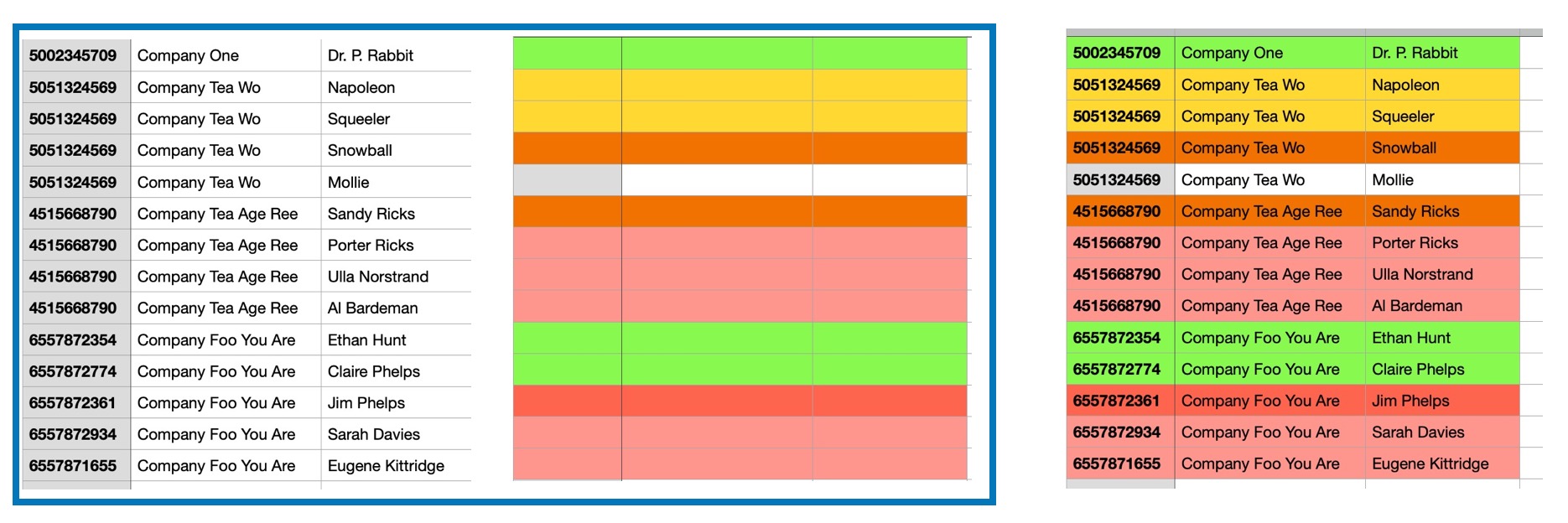
Lets take a look at the setting of ‘the list’. In this we have two parts. The list we need to call and how we can go about it. I have a method. As we see the list, we can call Peter Rabbit, yet the people of the Animal Farm we need to call one at a time until we connect. You see, the Switchboard operator is ignored, but its role evolved from a mere connector to a high value yielding gatekeeper. So when we get one connection, we need to leave the rest alone until the next day (two days later is better). And the next company who holds the cast of Flipper has the same approach. It is the IMF team that is the most interesting one. We can call them all, they all have their own numbers. It is when we get a list where generic and direct numbers intertwine, that is when we need to become clever about how we call. You see people talk too and when we call them all in one burst we get the label of ‘sales pusher’ and that is one of the most dangerous labels to get, when we have that label we will get stopped too often and we cannot do our job. So as you see the images, these callers need some kind of overlay filter, one that overlays the call list and can set fill colours like a spreadsheet. Yet these programs are not ready for such a leap, the ‘sales people’ behind it are at present not educated enough to see this need, so any third solution will do. Consider that spreadsheet fill on any solution Scopus, Oracle, Hubspot, SAP, Siebel and clever enough when a row is added or removed to that all list and one that has a multitude of colour selections that can be personalised by any person using it, so that the person will have the personal use and strengths working FOR THEM.
In all these years no one considered the specific needs that some people have, they are merely pushed to some solution that their sales director seem to fathom. And consider that in over 35 years none of them got clever enough to figure this out? (As far as I can tell) Boggles the mind, does it not?
I got in that stage again this morning, and for the silliest reasons. It started last week (I think) when Apple upgraded to a new system. My MacBook and iPad were both affected. Now, there is (mostly) nothing wrong with an upgrade, in the Windows era most became hateful of updates, with apple for the most a lot less so. And my home has been around since the Macintosh Performa 630CD (Mac 7.5), and I gave support to Mac users way before then. I have had hardship and joy with Apple and I was hurt more than once, but it is part of the show. So when my systems needed update, I went ahead and for the most there was no issue there was even something new for the iPad, Widgets (or perhaps I only started to use them now). You see, I tend to be pragmatic. I use it when I need it and even as weather is something I use on my android, I had no issues having it on my iPad, the same for the world clock. And herein lies the problem. The Android gives digital times, iOS does not. Yes you can buy it, but why? There was even one provider that (according to the review) charges for EACH clock added and one had a monthly fee, all because Apple decided to be ‘cool’ and not think things through? So I can delete the widgets and rely on my Android solution (which is better) or perhaps after years of shortsightedness Apple starts thinking things through and OFFER their CONSUMERS value.
And it is that way of thinking why I went the path of Google’s Android. It started on day one when Steve Jobs made the massive mistake. You see Jobs gave us what the iPhone could do and it could be a phone too. Google gave us a phone that could also do……. The difference is not semantics, it is wider. Apple was selling a processor, Google was selling a phone and I needed a phone. It is that simple.
Now do not think I am anti-Apple (well I do prefer tangerines), I have had an iPad since version one (64GB) which I ended using until it was replaced with my new iPad Air 256GB. It has been my sidekick for most of the days and I still play the game Blockheads today. Sometimes the old ways are good and iBooks is amazing. So is the Apple Office version nowadays. Apple has good sides, but lacks in plenty of ways as well. When it goes out looking cool, it tends to forger to be pragmatic and functional at times. The Clock widget is not the only side, but it is one of the mot visible sides. Especially people who dealt with international customer service. Having a widget that does not require to have the mind convert rimes, but to see a clear simple digital clocks (in my case 4 of them) is a great way to keep track of international times. Especially early in the morning and late afternoon I used to check Toronto time to see what the Toronto, San Francisco (morning only) and Chicago office needed. Late in the evening there was the Amsterdam office and for now, the Android clocks are the only way to go and I do not get it why pragmatism and functionality was cast aside to merely have a cool analogue clock?
And it is not merely me, in the new ages, in the upcoming changes to international offices, to international support and data centres having a clear time setting in front of us is too often important. There is more, but it is finicky stuff. I am not here to convert you, not here to say Android is better, there are plenty of cases where Apple rocks (iBook being an obvious one, for all those nasty RTFM moments). There is also the larger stage that one does not fit all, some people rely on iOS, some on Android and I get it, but in the functionality stage, would it have hurt to think things through at Apple (beside relying on third party solutions?
You see, there is a larger case, there is a functional case to make the iPad the tool to go for anyone in technical support, and they are almost there (iAnnotate, PDF save and email it all), we need to be more flexible, need to be more mobile and be in more places and a laptop is not getting us there, our iPad will and Apple has a massive advantage here, if they only thought things a little deeper through.
Consider that the PC has had Access for the longest of times. And Access (with its limitations) is actually a decently good Database system, there are others, yet the Mac is largely depending on Filemaker Pro, over all this time Mac never offered a house product to sit next to Pages, Numbers and Keynote. Why not? There are too many bases when I cannot rely on the cloud, I need something local and Mac is handing us the ‘Out for business’ sign. Even the Commodore Amiga had at some point Superbase 64 (1984) as an optional solution, so why is Apple in 2021 still behind? Do you think that anyone in support can do anything decent without direct access to a knowledge base?
And when we have no cloud connection, or a really bad one? There are dozens of nations relying on support in rural areas and sometimes we (alas) have to go there. That includes 60% of Canada, 35% of USA, well over half of France, Germany, Greece, India, Italy, parts of Scandinavia and so we go on, it amounts to close to well over a billion people that cannot rely on the cloud and that is before you consider the cloud transgressions we all face now because someone was asleep at the helm.
Google has options all over the place and they are not without flaws, but they have something and that matters. Consider the work from home setting and the considerations that are in place if there WAS a database option, perhaps with widgets implications?
I reckon that if the home office stays active for close to another year Apple could have made a killing in that department, if only some things were thought through a little more. But it is easy to rely on something that that worked for 20 years (Log4J pun), you see as everyone does that, so will organised crime, as you all have the same flaw, that was clear was it not? A stage that all have to improve on (Google too), a stage that is set to a much larger desk, the desk of a person that is not merely in their office, but it is stacked with the virtual version that is in a similar room in San Francisco, Chicago, Toronto, New York, London, Amsterdam, Munich, Tel Aviv, Singapore, Sydney, Tokyo and Beijing, and all in THEIR office sees all the other ones in virtual mode too (actually, this is giving me an idea). And in international support we need 24 hour covering (since 1994) and most solved their setting in a partial way, but the iPad offers more and more mobile, so what gives?
You can see some support managers hiding behind their DISC assessment (Dominance, Influence, Steadiness, and Conscientiousness), then we are given that the software does not comply with the settings of SWOT (Strength, Weakness, Opportunity and Threat), and they all move on with the small niche they have. Yet SWOT allowed me to see the option to create a market for 50,000,000 consoles (Amazon Luna or Google Stadia), and that now also translates (in another way to global support with an iPad and iOS setting. All fields ignored by Microsoft (with them singing blue, an Azure pun in the making). Yet what happens when we translate DISC to support and services needs by naming them Demands, Integrity, Sophistication and Clarity? When I was younger and less corrupted I saw a person design an entire services system in Paradox and it functioned better than solutions like SCOPUS and Siebel that was a decade more advanced, all because the Paradox solution was true Services and support minded (well more than the others) and the SCOPUS and Siebel solutions were for sales people and grudgingly adjusted for technical support, a setting that was not the same and massively lacking in clarity and all inferior to a system that Info Computer Systems has in 1988 which was purely designed for technical support (written in Clipper) as well as Helpdesk needs. A setting I learned early in life, which tended to be, not the same.


 Lawrence van Rijn - Law Lord to be