
Forbes gave us news in several ways. It merely flared my nostrils for 0.337 seconds (roughly) and after that I saw opportunity knock. In all this Microsoft has been short-sighted for the longest of times and initially that case could be made in this instance too. Yet, I acknowledge that there is a business case to be made. The news on Forbes with the title ‘Why Microsoft ‘Confirmed’ Windows 7 New Monthly Charges‘ (at https://www.forbes.com/sites/gordonkelly/2018/09/15/microsoft-windows-7-monthly-charge-windows-10-free-upgrade-cost-2) gives us a few parts. First there is “Using Windows 7 was meant to be free, but shortly after announcing new monthly charges for Windows 10, Microsoft confirmed it would also be introducing monthly fees for Windows 7 and “the price will increase each year”. Understandably, there has been a lot of anger“. There is also “News of the monthly fees was quietly announced near the bottom of a September 6th Microsoft blog post called “Helping customers shift to a modern desktop”“, so it is done in the hush hush style, quietly, like thieves in the night so to say. In addition there is “Jared Spataro, Corporate Vice President for Office and Windows Marketing, explained: “Today we are announcing that we will offer paid Windows 7 Extended Security Updates (ESU) through January 2023. The Windows 7 ESU will be sold on a per-device basis and the price will increase each year.” No pricing details were revealed“. This is not meant for the home users, it is the professional versions and enterprise editions, that is meant for volumes and large businesses. So they now get a new setting. Leaving pricing in the middle, in the air and unspoken will only add stress to all kinds of places, but not to fret.
It is a good thing (perhaps not for Microsoft). You see, just like the ‘always online’ folly that Microsoft pushed for with the Xbox, we now see that in the home sphere a push for change will be made and that is a good thing. We all still have laptops and we all still have our Windows editions, but we forgot that we had been lulled to sleep for many years and it is time to wake up. This is a time for praise, glory, joy and all kinds of positive parts. You see, Google had the solution well over 5 years ago, and as we are pushed for change, we get to have a new place for it all.
Introducing Google Chromebook
You might have seen it, you might have ignored it, but in the cast of it all. Why did you not consider it? Now, off the bat, it is clear if you have a specific program need, you might not have that option. In my case, I have no need for a lot of it on my laptop, yes to the desktop, but that is a different setting altogether.
So with a Chromebook, I get to directly work with Docs (Word), Sheets (Excel) and Slides (PowerPoint) and they read and export to the Microsoft formats (as well as PDF). There is Photos, Gmail, Contacts and Calendar, taking care of the Outlook part, even Keep (Notes), Video Calling and a host of other parts that Microsoft does not offer within the foundation of their Office range. More important, there is more than just the Google option. Asus has one with a card reader allowing you to keep your files on a SD card, and a battery that offers 7-10 hours, which in light of the Surface Go that in one test merely gave 5 hours a lot better and the Chromebook is there for $399, a lot cheaper as well. In this it was EndGadet that labelled it: ‘It’s not perfect, but it’s very close.‘
Asus has several models, so a little more expensive, but comes with added features. In the bare minimum version it does over 90% of whatever a student needs to do under normal conditions. It is a market that Microsoft could lose and in that setting lose a lot more than merely some users. These will be users looking for alternatives in the workplace, the optional setting for loss that Microsoft was unable to cope with; it will now be on the forefront of their settings. In my view the direct consequence of iterative thinking.
And in this it is not merely Asus in the race, HP has a competitive Chromebook, almost the same price, they do have a slightly larger option 14″ (instead of 11.9″) for a mere $100 more, which also comes with a stronger battery, and there is also Acer. So the market is there. I get it, for many people those with stronger database needs, those with accounting software needs, for them it is not an option and we need to recognise that too. Yet the fact that in a mobile environment I have had no need for anything Microsoft Specific and that there Surface Go is twice the price of a Chromebook, yet not offering anything I would need makes me rethink my entire Microsoft needs. In addition, I can get a much better performance out of my old laptop by switching to Linux, who has a whole range of software options. So whilst it has been my view that Microsoft merely pushed a technological armistice race for the longest time, I merely ignored them as my windows 7 did what it needed to do and did it well, getting bullied into another path was never my thing, hence I am vacating to another user realm, a book with a heart of Chrome. So whilst we look at one vendor, we also see the added ‘Microsoft Office 365 Home 1 Year Subscription‘ at $128, so what happens after that year? Another $128, that whilst Google offers it for free? You do remember that Students have really tight budgets, do you not? And after that, students, unless business related changes happen, prefer a free solution as well. So whilst Microsoft is changing its premise, it seems to have found the setting of ‘free software’ offensive. You see, I get it when we never paid for it, but I bought almost every office version since Office 95. For the longest times issues were not resolved and the amount of security patches still indicates that Windows NT version 4 was the best they ever got to. I get that security patches are needed, yet the fact that some users have gone through thousands of patches only to get charge extra now feels more like treason then customer care and that is where they will lose the war and lose a lot.
So when you see subscription, you also need to consider the dark side of Microsoft. You partially see that with: “If you choose to let your subscription expire, the Office software applications enter read-only mode, which means that you can view or print documents, but you can’t create new documents or edit existing documents.” Now we agree that they clearly stated ‘subscription’, yet they cannot give any assurances that it will still be $128 next year, it could be $199, or even $249. I do not know and they shall not tell, just like in Forbes, where we saw ‘News of the monthly fees was quietly announced‘.
When we dig deeper and see: ‘Predicting the success of premium Chromebooks‘, LapTopMag treats us to: “The million-dollar question is whether these new, more expensive Chrome OS laptops can find a foothold in a market dominated by Windows 10 and Mac OS devices. Analysts are bullish about Chromebook’s potential to make a dent in the laptop market share“, which was given to us yesterday. Yet in this, the missing element is that Windows will now come with subscriptions to some and to more down the track, or lose the security of windows, now that picture takes a larger leap and the more expensive Google Pixelbooks (much higher specs then the others mentioned) will suddenly become a very interesting option. One review stated on the Pixelbook: “the Pixelbook is an insanely overpowered machine. And, lest we forget, overpriced“, which might be true, yet the little lower Atlas Chromebook was $439. So yes, the big one might not be for all and let’s face it. A 4K screen is for some overkill. That’s like needing to watch homemade porn in an IMAX theatre. The true need for 4K is gaming and high end photography/film editing, two elements that was never really for the Chromebook. At that point a powerful MacBook or MacBook pro will be essential setting you back $2900-$11400. So, loads of options and variations, at a price mind you. As I see it, the Microsoft market is now close to officially dissolving. There is a whole host of people that cannot live without it, and that is fine. I am officially still happy with my Windows 7, always have been. Yet when I see the future and my non-gaming life, Linux will be a great replacement and when being mobile a Chromebook will allow me to do what I need to do. It is only in spreadsheets that I will miss out a little at time, I acknowledge that too, but in all this there is no comparison with the subscription form and as it comes from my own pocket is see no issues with the full on and complete switch to Google and its apps in the immediate future. I feel close to certain that my loss will minimal at the most. A path that not all will have, I see that too, but when thinking the hundreds of thousands of students that are about to start University, they for the most can make that switch with equal ease and there we see the first crux. It was the setting that Microsoft in a position of strength had for the longest time, enabling students so that they are ready for the workplace changes. They will now grow up with the Chromebooks being able to do what they need and they will transfer that to the workplace too. Giving us that the workplace will be scattered with Chromebooks and with all kinds of SaaS solutions that can connect to the Chromebook too. The Chromebook now becomes some terminal to server apps enabling more and more users towards a cloud server software solution. As these solutions are deployed, more and more niche markets will move in nibbling on the Market share that Microsoft had, diminishing that once great company to a history, to being pushed beyond that towards being forgotten and at some point being a myth, one that is no longer in the game. It is also the first step that IBM now has to bank in on that setting and push for the old mainframe settings, yet they will not call it a mainframe, they will call it the Watson cloud, performing, processing and storing, available data on any Chromebook at the mere completion of a login. It is not all there yet, but SPSS created their Client server edition a decade ago, so as the client becomes slimmer, the Chromebook could easily deal with it and become even more powerful, that is beside the optional dashboard evolutions in the SaaS market, the same could be stated for IBM Cloud and databases. That is the one part that should be embraced by third party designers. As SaaS grows the need to look in Chromebook, Android and IOS solutions will grow exponentially. All this, with the most beautiful of starting signals ever given: ‘Windows 7 New Monthly Charges‘, the one step that Microsoft did not consider in any other direction and with G5 growing in 2021-2023 that push will only increase. If only they had not stuffed up their mobile market to the degree they had (my personal view). I see the Windows Mobile as a security risk, plain and simple. I could be wrong here, but there is too much chaff on Windows and as I cannot see what the wheat is (or if there is any at all), and as Microsoft has been often enough in the ‘quietly announcing‘ stage and that is not a good thing either.
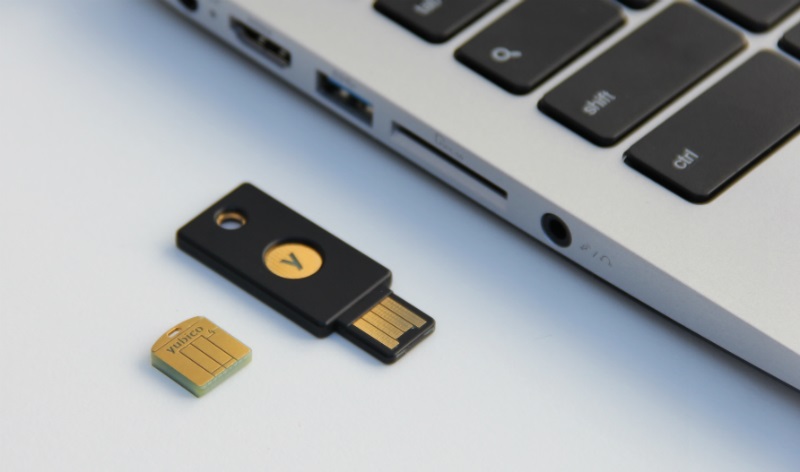 Should you doubt my vision (always a valid consideration), consider that Veolia Environnement S.A. is already on this path. Announced less than two weeks ago we see “So we propose a global migration program to Chromebooks and we propose to give [our employees] a collaborative workplace. “We want to enable new, modern ways of working”“, linked to the article: ‘Veolia to be ‘data centre-less’ within two years‘ (at https://www.itnews.com.au/news/veolia-to-be-data-centre-less-within-two-years-499453), merely one of the first of many to follow. As the SaaS for Chromebooks increases, they will end up with a powerful workforce, more secure data and a better management of resources. Add to this the Google ID-Key solution and the range of secure connections will go up by a lot, diminishing a whole host of security issues (or security patches for that matter). All options available now and have been for a few years now. So when we see the Chromebook market push forward, we should thank Microsoft for enabling exponential growth; it is my personal believe that the absence of a monthly fee would have slowed that process considerably in a whole range of markets.
So thanks Microsoft! You alienated gamers for years, and now we see that you are repeating that same silly path with both starting students and businesses that are trying to grow.
I’ll ask Sundar Pichai to send you a fruit basket, it’s the least I can do (OK, the least I can do is nothing, but that seems so mean).


 Lawrence van Rijn - Law Lord to be