Tag Archives: Medical

The brain jostles

That happens, in my mind there is an eternal struggle for dominance (not in a bad way) but the back of the mind saw something and it is trying to work it out, whilst me, myself and I are also in need of that grey matter. The back of the mind saw a DARPA challenge of ‘Triage Challenge (DTC)’ with the subtext “Transforming how medical responders triage in mass casualty incidents by advancing scalable, timely, and accurate tools.” But the brain (mr Grey) saw that the bottlenecks is not a setting of operation, it is one of adherence. It doesn’t make sense. But consider that a nation has 15 million people and they all trusted Microsoft (there’s a thought) , but as they trusted AI (for whatever reason) and now we have 15 million unresponsive people. So, Mr Grey decided that the setting is not that you need to get to people, you need a solution that can be deployed at any place in that nation and from there the settings come calling. So Mr. Grey decided to employ a call centre and treat every person like it is part of a call centre. Confused? I thought you were, I was too. But consider that you have two stacks one with medical personnel and one not. The call centre setting makes every doctor important and that is the call. So whilst you have a doze doctors making calls and only a higher doctor can overrule a lower doctor, but then you get a new call centre where the pool comes from Nurses-Doctors-specialists and you refrain from bottlenecks you get a new kind of triage. So stop getting a dozen beds because you only have a dozen doctors, you get 60 beds because all the medical staff can determine casualties and disregard initial low calls, these low calls are not dismissed, but the pressure to get the important casualties are not restricted to these 12 beds. What does happen is that this call centre approach needs to work differently and that takes a logistical side, A new medical call centre approach so whilst we are given that there is a new consideration. So out of hand, consider that a hospital has a dozen forms, but instead of dispersing these forms, each doctor has all the forms, they are collecting an storing information and they print out a QCode, which has all the information and is attached to the person (like a Pandora chain on the wrist) and when there is more than one QCode charm, higher people look at this what might be required. And as this is all read on the spot, all whilst the tablets read and collect everything now, the equation changes. This allows for mass collection and triage abilities to move forward. It requires a great deal of discipline, but those in triage tend to have an abundance of those, but as I see it, triage tends to rot; l with the punch and the overlay of suddenly thousands of people needing access to triage makes for a weird situation, as such my brain works out in seconds that this requires a different approach, so whilst some need more nurses, we get the setting that 50 nurses record what needs to be and every doctor has its own nurse making judgement calls on people part of this was seen in Pearl Harbor (the movie) and they worked with what they had, but now we have and can deploy QCodes in seconds, so the track of the bottle neck changes and as these QCodes are deployed, people can be moved to a better site for treatment rather quickly. From there we get. New setting that power is less of an urgency and if these tablets have replaceable batteries, the downtime becomes very low and these batteries can be charged in a hospital and one box could contain 50 batteries, resetting the bulk of all tablets in seconds and DML allows for a much faster deployment of forms and most technology is already there to scan these forms and make them digital. No we merely need to traverse this setting to a QCode answer and the triage setting is near complete. You might have to add forms as one setting (like Pearl harbour) is not the same as another (Esso Chemical Rotterdam), they all have there own settings, but burn forms, respiratory forms and blood form have a near global setting, Doctors tend to have the same global talk and their writings all lead to a free ticket to a museum (small joke). So that was what Mr. Grey figured out in less then a minute. 

I was still in play mode and whilst I am not surprised that Sony tends to overwhelm any person who enjoys gaming, I still was blown away with what Sony produced in its state of play. You see I like racing of a kind and perhaps I was a little attached to the settings that Sony gave us with Grand Turismo (1-4) and Need for Speed underground (GameCube) or Project Gotham Racing (Xbox360), but today Sony blow the cover out of all of them with Stuntman Hollywood. A racing challenge with a difference. It looks good, but will it play awesome? Time will tell, but I didn’t see that one coming, so I got my wow factor. And as icing on the cake there was God of War Laufey, new character, new gameplay and new graphics. Everything a growing player needs for his or her diet. Still as I got the joules from my grey cells, mr Grey decided to consider a few more options in the situation he obviously is seeing as resolved. The QCodes go on a chain and the chain is also a data carrier and goes around the neck of the patient. The qcodes are added to that chain, but as I see it, the chain copies all the qcodes that are added and that chain might also collect physical setting, like an elongated smart ring. And it can all connect to the tablet of the doctor who is then getting additional knowledge and give the chain a code that gives it a colour. All setting a new conditional setting to triage and when triage is given in a remote location it merely enhances the information the doctor has access to. Where the qcode was added, where the person has been and from there we get a new kind of triage, because triage comes from the 1700s by Baron Dominique-Jean Larrey, the chief surgeon for Napoleon’s army. He started to sort the wounded, but we now have sort abilities that do not need a doctor, a nurse might do and even then there are some parts that need no medical staff, it merely needs to be recorded (hence the smart chain) and as the QCodes are added, the picture becomes more and more complete. Some need to get more tests, but if you consider that the goal is to reduce the severity of the wounded, we could walk a different path, a new path, not disregarding what we have, but what we can do. And battlefield triage is a lot dependent on what there is. So if we can find the category 1 people and reduce these to level 2, we are already winning. So consider we have:

And from there we get to save them all (just like a Pokemon game), so the smart chain and the QCodes could enable that path, all whilst the doctors look at treating the level 2’s whilst looking for the level 1’s, a setting that comes through new logistics and automation (I refuse to call it AI), because DML will help here, will it be enough? That is for a doctor to decide. 

My ego is happy that I met another challenge by DARPA and one that is good for the medical sector, my ego is doing just fine. I wonder what my brain will mostly for tomorrow, time to get some steps in. Have a great day all.
Leave a comment

Filed under IT, Military, Science

The next dose

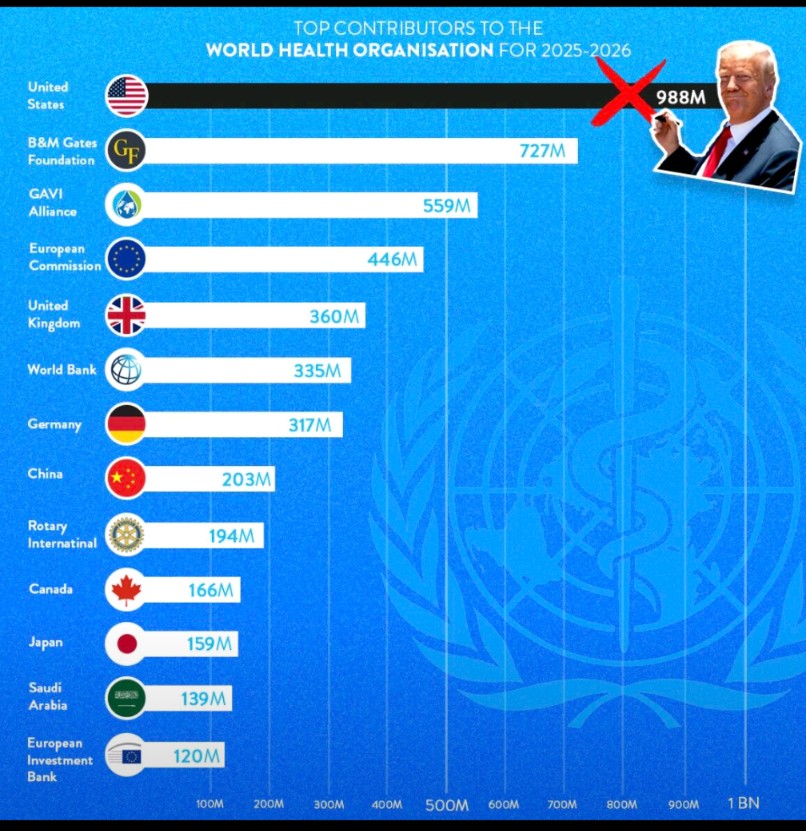
I was rudely awakened by something that suddenly hit me. You see, nothing in life is free, it is almost a given certainty, even the rising of the sun now comes at a price as we see it. So my brain woke up by the image I show you below

So, here we see that President Trump nullified its America contribution of 988 million dollars, but that money doesn’t come for free. I get that and I believe that the ‘hidden’ revenue is out in the open now. Consider that the World Health Organisation is ‘heralding’ the following “The World Health Organization (WHO) promotes comprehensive national medicines policies to ensure safe, quality, and affordable medication use. The “Medication Without Harm” initiative aims to reduce severe, avoidable medication-related harm by 50% globally, focusing on high-risk situations, polypharmacy, and transitions of care.” I am willing to bet the house that American pharmacies is pushing some rules to keep in business, as such it would be prudent that all these contracts are now null and void. President Trump opened that door. I am willing to be that Indian pharmacies are roaring to fill that place as such they would be starting a tremendous 2026. 

Now lets be clear, this is pure speculation and I reckon that the White House will be shouting that these ‘donations’ were just that ‘donations’, but the world is a lot more complex and the thread unravelled will open up all ready seeking partners is revenue and America seemingly closed that door yesterday. Now we need to know and to find out what the 988 million dollars enable America to rely on and close that off, the media is no use here as they are mostly under control by American stakeholders. And they are suddenly worried that they have to reside in other corners now. The pharmacies who were ‘enjoying’ this speculative advantage is losing that advantage. They relied on the status quo and president Trump obliterated that. And as I see it, The World Health Organization (WHO) Model List of Essential Medicines (EML) contains over 350+ safe, effective, and cost-effective medicines for priority health conditions, the question is who is pushing these 350+ names, so what is involved? Those who create that list will have some order of importance as to the ‘origin’ of that medication, it is updated every two years to guide national health systems. The list, including the EMLc for children, covers essential drugs like antibiotics, painkillers, and vaccines, with the 2025 update focusing on diabetes and cancer care. But what makes that list? I am asking as I do not know and how many generic Indian pharmacies are involved? It is the largest nightmare for American pharmacies. So as some are ‘hammering’ the ‘policies to ensure safe, quality, and affordable medication use’ but President Trump just blew away that setting, as such the Indian pharmacies now get a way in. What a lovely setting the White House allowed for. As such I foresee that Johnson & Johnson, Eli Lilly, AbbVie, Pfizer,  Merck & Co, Amgen, Gilead Sciences, and Bristol Myers Squibb are facing (a few) grey days now, perhaps not all of them, but some of them will and it is hard on the settings they now face as they are short in donations, about $988,000,000 short. And who exactly decides on “Medication Without Harm”? What are the foundational markers that make it medication without harm?
So this is pure speculation, but the easiest option is the greed track, it tends to go in foretelling ways and the foretelling way of greed is the easiest to read and to predict. But it also comes with the setting that I might easily be wrong. It is all set that America over the years have made demands for the $988,000,000 they are currently paying. If my premise is wrong, so is the viewpoint that I am creating here. So take care with accepting this point of view, because it is speculative and might be easily disproven, the question is, will it and is my point of view wrong? And if (a big if) I am right what will the American Pharmacies in 2026, 2027 and 2028 face? And if that is set, what more revenue will America be forced out of?

Have a great day today, time to see where the diner is coming from (answer: Rice and beads, with Salmon and hot sauce from my kitchen).

Leave a comment

Filed under Finance, Politics, Science

Just Asking

Today I started to ask questions within me. I have been an outspoken critic on the fact of AI and knowing it doesn’t exist questions came to mind. Question that, as I see it the BBC isn’t asking either. So lets get to this game and let you work out what is real.

Phase One
In phase one we look at AI and the data, you see any deeper machine learning solution (whether you call it AI or not) will depend on data. Now we get that no matter what you call this solution it will require data. Now that Deeper Machine Learning and LLM solutions require data (as well as the fact that the BBC is throwing article after article at us) who verifies the data?

Consider that these solutions have access to all that data, how can any solution (AI or not) distinguish the relevant data? We get the BBC in January give us this quote “That includes both smaller, specialist AI-driven biotech companies, which have sprung up over the past decade, and larger pharmaceutical firms who are either doing the research themselves, or in partnership with smaller firms.” My personal issue is that they all want to taste from the AI pie and there are many big and small companies vying for the same slice. So who verifies the data collected? If any entry in that data sphere requires verification, what stops errors from seeping through? This could be completely unintentional, but it will happen. And any Deeper Machine Learning system cannot inspect itself. It remains a human process. We will be given a whole range of euphemistic settings to dance around that subject, but in short. When that question is asked, the medical presenter is unlikely to have the answer and the IT person might dance around the subject. Only once did I get a clear answer from a Chinese data expert “We made an assumption on the premise of the base line according to the numbers we have had in the past”, which was a decent answer and I didn’t expect that answer making it twice as valuable. There is the trend that people will not know the setting and in the now there is as I see it, a lack of verification. 

Phase Two
Data Entry is a second setting. As the first is the verification of data that is handled, the second question is how was this data entered? It is that setting and not the other way round. You must have verifiable data to get to the data entry part. If you select a million parameters, how can you tell if a parameter is where it needs to be? And then there is a difference between intrinsic and extrinsic data. What is observed and what is measured. Then we get to the stage that (as the most simple setting) that are the Celsius and Fahrenheit numbers correct (is there a C when if should be an F) you might think that it is obvious, but there are settings when that is a definite question mark. Again, nothing intentional, but the question remains. So when we consider that and Deeper Machine Learning comes with a guidance and all this comes from human interactions. There will be questions and weirdly enough I have never seen them or seen anyone ask this (looking way beyond the BBC scope).

Phase Three
This is a highly speculative part. You see environment comes into play here and you might have seen it on a vacation. Whilst the locals enjoy market food, you get a case of the runs. This is due to all kinds of reasons. Some are about water and some about spices. As such the locals are used to the water and spices but you cannot handle either. This is an environmental setting. As such the data needs to be seen with personal medical records and that is a part we often do not see (which makes sense), but in that setting how can any solution make a ‘predicted’ setting when part of that data is missing?

So, merely looking at these three settings. I have questions and before you think I am anti-AI. I am not, it merely doesn’t exist yet and whilst the new Bazooka Joe’s are hiding behind the cloak of AI, consider that all this require human intervention. From Data Entry, to verification and the stage of environmental factors. So do you really think that an Indian system will have the same data triggers as a Swedish one? And consider that I am merely asking questions, questions the BBC and many others aren’t seemingly asking.

So take a moment to let that shift in and consider how many years we are away from verified data and now consider all the claims you see in the news. And this is only the medical field. What other fields have optionally debatable data issues?

Have a great day and when Mr. Robot say all is well, make sure you get a second opinion from a living GP. 

Leave a comment

Filed under Finance, IT, Media, Science

Brain in overdrive

That happens and It just happened to me, the reason being this tweet. Now, that does not me the given facts are true, but I am willing to go on faith here and the setting becomes a weirdly unsettling one.

So here we see the setting that 4 out of 5 women had a miscarriage. That’s 80% and that number should scare anyone. Is it true? We want to reject it, just like we want to reject “What was in the water” but in all honesty we cannot dismiss either, unless you can prove that the 80% statement is wrong. One untested source gives me “For women who know they’re pregnant, about 10 to 20 in 100 pregnancies (10 to 20 percent) end in miscarriage. Most miscarriages – 8 out of 10 (80 percent) – happen in the first trimester before the 12th week of pregnancy”, this is for the USA. Not sure what other nations are and there is no telling how bad it gets, but the statement is there. To take a little trip in my memory lane, I have known hundreds of women and I am aware of only 3 cases. This does not mean that there were only three, I reckon that most women will not talk about things like that other than to another woman and I get that. But from less than 2% to 80% is a jump and that gives validity to “What was in the water?” You see when these numbers add up to 80% something is driving this and the water is an option. We only need to look back to the Erin Brockovich story to see that things end up in the water and that was BEFORE Shale gas drilling became a fact. Now? I have no way of telling, but in the US big business tends to make policy, not the actual policy makers. 

The second statistic comes into play now. I cannot tell if that number is normal, but it wasn’t and now we see “Most miscarriages – 8 out of 10 (80 percent) – happen in the first trimester before the 12th week of pregnancy” this does not seem natural, something drives this and water makes sense, but the environment is a lot bigger than water and as I understand it pregnancy is a setting of checks and balances and the balances is where it is at. So what is causing that level of imbalance? I do not know but the data puzzler in me is going into overdrive. In this age of overpopulation I shouldn’t be, but consider that the next two generations are lost to us, what will we be left with? If 35% is entering the ‘old fart’ stage, and we lost the bulk of 2 generations. This implies that our population will dwindle down to a little over 5 billion before 2070, not a bad setting as the planet could use a breather, but what we neglect is that any environmental impact on us could remain for the next 5 generations, and in this who remains? That is a much larger question and a much larger issue to deal with. So is this over-hyped? Perhaps, but can we afford to ignore this setting? I don’t think so. This planet needs relief and I am not willing to set it up a species that has destroyed its own balance to procreate. I do not have any answers and any answer I uncover only needs to more questions. For one, the ‘official’ number is debatable, but there is nothing countering it. One answer was “Most pregnancy losses are due to factors that the person cannot control”, I understand the answer, I merely refuse to accept it. The environment (and the water) is something we do not control, but someone is allowing it to contain toxins. I also see that several ‘official’ sources have EXACTLY the same text, so there is a common source there. Yet In Australia I saw “One study that tracked women’s hormone levels daily to detect very early pregnancy determined a miscarriage rate of 31 per cent.” 31% is a long way of 80% and that should have led to a lot more questions, but I do not see them, do you?

Leave a comment

Filed under Science