Category Archives: Uncategorized

Fine, Finer, Fined

My mother always told me (when I was young) that I was allowed to swear, as long as I did it grammatically correct. Little did I know that mommy made me paint myself into a corner! Ah well, the innocence of youth!

So when the board of directors of the Royal Bank of Scotland learned their usage of adjectives, comparatives and superlative was only correct in theory. First the bank was doing fine, then its position was much finer, only to get fined in the end. Did they realise that the year 10 student in the corner, the one who did not get it, was the one person making an accurate prediction? I’ll bet you tuppence that they never realised that Mr Dunsel was an actual fortune teller.

So, why am I going in this direction?

Well, consider the article ‘RBS share sale explainer: why has Osborne started selling taxpayer’s stake at a loss?‘ (at http://www.independent.co.uk/news/business/news/rbs-share-sale-explainer-why-has-osborne-started-selling-the-taxpayers-stake-at-a-loss-10437095.html), whilst we heard that the taxpayer lost another billion, due to, I reckon you know what comes after this uncomfortable break: “RBS shares are still trading 33 per cent lower than the Labour government paid for them, which means selling them has incurred a loss for the government of around £1 billion on the first sale of 600m shares“.

As the Guardian reported last week that ‘RBS expects further fines with no let-up from regulators‘ (at http://www.theguardian.com/business/2015/jul/30/royal-bank-of-scotland-expects-further-fines-dividend-delay), we see that not only is the selling of shares costing the taxpayers a billion, the £1.3bn of charges to cover fines and compensation payouts seem to sting a little more than we bargained for. A few of the reasons why the buyback of shares will not happen until 2017, with a decent chance that more hardship will be burdened upon them payers of taxation. So when I see a quote from Sir Philip Hampton stating “The industry as a whole has got a poor track record in predicting these [provisions]. We’ve consistently under-called them”. Can anyone explain to me why the people at RBS are allowed to nag? Consider the quote “the long list of mistakes from the past continued to catch up with the bank” and compare it to the BBC article (at http://news.bbc.co.uk/2/hi/business/8392147.stm), which was from 2009 which gave us ‘RBS board could quit if government limits staff bonuses‘ with the quote “they say they have to remain competitive in the market in recruiting senior executives“, which is nice when it deals with the bonuses that go into the millions, but when we see that it is linked to years of inadequacy, mistakes, fines and prosecutions, we need to tailor a solution where some of these bankers need to be barred for life from entering the financial sector. So when we learned in February 2014 that ‘RBS pays out £588m in bonuses despite suffering £8.24bn loss‘, we need to ask a few really serious questions, now that the shares are sold at a massive loss and the total sale could result in total loss of  £15bn. I feel certain that I could do a better job, whilst not having any economic degree.

So as a large portion of the UK is in a state of hardship, the failing RBS constituency still makes over half a billion in bonuses. The aftertaste is far beyond bitter, so why get back to all these matters, which in some case is a repetition of events that had passed?

In the first, as I see it, these board members failed, the value of the company is down and as such, in sight of “We’ve consistently under-called them“, they are not due any bonuses until December 2016 and only if the value of the bank is back on par with the share value at which the government bought them. In addition, the news ‘Hedge funds make quick buck after getting wind of RBS stake sale’ from the Financial Times only adds to the bitterness of the taste of shares with pepper and salt. In my view another reason why the bonus of board members and RBS bankers should be set to £0. In addition, as Sir Philip has been around since 2009, whilst getting a not too uncomfortable £750,000. The need for not letting up on allowing the bankers any extras should be considered. So if they would like to retry their bluff of December 2009, where they stated “threatening to resign“, let them. Why does the RBS have any need for employees “consistently under-called them“, whilst at the same time fines for ‘rigging’ are banging the corporate coffers of the RBS, leading to damages that total into billions.

So when did you have a job where the company needs 45 billion from the taxpayer, they have not returned into a state of grace and they still get a 7 figure Christmas present? I never had a job like that. To change my luck, could Sir Philip kindly give me one? I need £8m over the next 3 years (for reasons of retirement). I am willing to do anything legal, including working my bud off to return the RBS to profit. From my point of view, I offer something more than the RBS board ever delivered (well, since 2009), so we can agree that my value is better than their value, ain’t it?

But this is not about me, this is also to a lesser extent not about the board members. This is about the engine behind it and the changes they are about to face. You see the sounds have been there, the rumours have almost forever been there and on the sidelines the links have been there, but what is this linking?

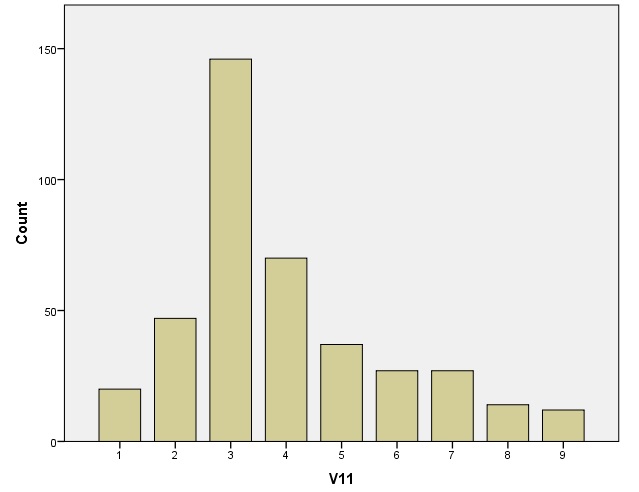
I am referring to the following events ‘Auditors go high-tech to win new business‘ (at http://www.ft.com/intl/cms/s/0/183cb13c-2557-11e5-bd83-71cb60e8f08c.html), where we see “Auditors have a newfound zest. Rapid developments in digital technology and new rules requiring large companies to invite bids for auditing work at least once a decade have forced accounting firms to refocus on winning new business” and ‘Accountants warn on audit market reforms‘ from last November where we see “Within the “big four” accountancy firms, market share has been shifting. EY has overtaken Deloitte as the third biggest auditor to FTSE 100 clients, behind PwC and KPMG in first and second place, respectively. This month Royal Bank of Scotland announced it had appointed EY as its auditor from 2016, ending a 14-year contract with Deloitte” (at http://www.ft.com/intl/cms/s/0/f22383ca-6410-11e4-bac8-00144feabdc0.html). This is actually more than just the shaking of the trees and the stirring of the gravy bowl. You see this is a shifting picture where the big four are now pushing for data analytics, the Wall Street Journal have been slowly filling the spaces in that regard. The headline ‘Accountants Increasingly Use Data Analysis to Catch Fraud‘ states it, but what do they state? At http://www.wsj.com/articles/accountants-increasingly-use-data-analysis-to-catch-fraud-1417804886, we see “When a team of forensic accountants began sifting through refunds issued by a national call center, something didn’t add up: There were too many fours in the data. And it was up to the accountants to figure out why“. Yes on the night of St. Nicholas the presents are handed out to all and especially the bankers, because analytics are here, the secret sauce of the needy to quench those who want to solve and hide those in the shadows. You see Benford’s Law is here and everything will be OK now! Is that so? Let’s take a look at ‘The Irrelevance of Benford’s Law for Detecting Fraud in Elections‘ (at http://www.vote.caltech.edu/sites/default/files/benford_pdf_4b97cc5b5b.pdf), where we see: “Detecting and measuring fraud is much like any criminal investigation and requires a careful gathering of all available data and evidence in conjunction with a “theory of the crime” that takes into account substantive knowledge of the election being considered, including the socio-economic and geographic correlates of voting“. This is about voting, so how does this apply? Consider the quote on page 23 “The operant clause here, though, is “in otherwise homogeneous data” since this indicator is intended to detect the heterogeneity introduced by a specific form of fraud“, now we get to those two parts, when we see “In statistics, homogeneity and its opposite, heterogeneity, arise in describing the properties of a dataset, or several datasets. They relate to the validity of the often convenient assumption that the statistical properties of any one part of an overall dataset are the same as any other part” (quick Wiki reference). So as we contemplate “the statistical properties of any one part of an overall dataset are the same as any other part“, ehhh, when has that ever been the case in keeping financial books? It is a balancing act, which means half on one side, means half on the other side (does that not prove the point?) No, because they are two sides of the same coin, double elements so to speak, so what to include, what not, the formula becomes unbalanced even further. Consider that banking is all about specifics, I will stay away from that element for a while, because the element of specifics is the issue, consider the graphs below.

Benford


I can tell you now that I violated loads of rules. It comes from a list of 400 movies, their revenue. So, it spans several year, 400 numbers and those are the most visible reasons why Benford does not apply. The books of Tesco have similar issues. Dozens of accounts, interactions, loads of numbers spanning a time zone, but at times those numbers are also of a small count. Could this work with a ‘grocery’ store? Consider the amount of articles at 99c and £1.99. The amount of special offers going on, day to day (Tesco example), from that, if we use EVERY transaction, we will see skewing, giving us the problem, banks have similar issues, but now more often with seriously large numbers. If we ‘Benford’ the hell out of all the commissions, will they stand the ‘fraud’ test? If not, will the bank see that cash returned, or will we suddenly see a ‘rationalisation’ of non-valid application?


This is at the heart “in otherwise homogeneous data“, which gave the Call-centre a ‘ding-dong’, yet I feel that overall numbers could have shown the issue as well. Too many issues do not hold water here, yet the end of the article gives us what matters “Benford’s Law isn’t a magic bullet. It’s only one approach. It isn’t appropriate for all data sets. And when it is a good tool for the job, it simply identifies anomalies in data, which must be explained with further investigation“, ah the common sense. That did not take long did it?

So as there are serious options for investigating Fraud, the watchers of Tesco are still not in the limelight of the press, they have been given the ‘shade’ by the press at large. In one moment we see Tesco getting replaced by DeLoitte and recently we see Santander bank replacing DeLoitte for PwC and the SFO is nowhere to be seen. So are the Elves of Statistics and the Serious ‘eff’ Ogres in a state of non-war? Perhaps the SFO is too busy and whilst those auditors give new presentations on those yummy statistics, but as I personally see it, it is basically another presentation to lull groups of people to sleep. There is a mess in front of the people and those who should look and act, seem to be too busy and many can slightly fall asleep again.

Just 6 weeks ago, the UK got the message ‘RBS, once the world’s largest bank, is using analytics technology to go back to the era of personal customer service‘, with a promise to invest £100m in data analytics technology. I personally believe in analytics, it is a great tool, but in light of many factors, unless you get the people who have been consistently under-called them a job with a competitor bank, the institution will be paying a lot by those currently not doing their job right.

That final statement can be easily proven.

In the first, if data analytics was key, those involved should have known this for well over 3 years, some in charge have been there long enough, which means that no action was taken and they should not be in a position where they remain idle.

In the second, if data analytics is not key in solving some of the matters, why are they buying it? It could be for very valid other reasons, but that does not solve the ‘under-calling’ issue, it does not solve several other issues, even though it solves some, so at best, data analytics will diminish losses, which is good, but should we not get rid of the dead weight (read significant reasons for large losses).

All this comes to blows soon enough, because if the RBS does not get its results, new articles will appear all over the place regarding ‘miscommunication’, times of deployment and infrastructure issues, in the meantime ‘managed bad news’ prevails and more waves of issues will be swept under the covers of a dark carpet. As accounts are handed over between the 4 big auditors, the sum in the end gives us that overall none of them will make any serious losses. Slightly beyond the short term it evens out for the big four, which might be the largest miscarriage of justice of all.


Leave a comment

Filed under Finance, IT, Law, Media, Politics, Uncategorized

In the lull of news

As people brace themselves for the outcome of another Greek deadline, the US army will find itself cut by 40,000 troops and there seems to be ongoing talks between Iran and interested parties. The last one is the one that feels like it is largely ignored. There is nothing sexy on nuclear talks and unless you are Israel, most people do not care. Yet, is that the clear truth?

This is what the BBC gives us (at http://www.bbc.com/news/world-middle-east-33424502), “The so-called P5+1 – the US, UK, France, China and Russia plus Germany – want Iran to scale back its sensitive nuclear activities to ensure that it cannot build a nuclear weapon“, which sounds of course really nice on paper (and in theory). Yet, when we look at the quote “The sticking points are said to include the duration of limits on Iranian nuclear research and development, guidelines for international inspections and how sanctions will be lifted. Tehran is also demanding that the UN ban on the import and export of conventional arms and ballistic missiles be lifted as part of any deal

We have to wonder for how long this ‘agreement’ will last and why we see ‘export of conventional arms and ballistic missiles‘, why is that? Perhaps certain Middle Eastern parties have been waiting on a Misagh-2 delivery? It might just be another model, so as we might understand that Iran would want to open options for import, the reasons for export are a little fuzzier as well as who would buy them? Russia? They have excellent missiles themselves and they supply them to nations all over the world too. So the question becomes, why allow for export? Especially when a captured stockpile of IS showed “26 of the recovered shells were made in Iran, an ally of Assad’s, and 18 were made in Syria itself, the report states” (at http://foreignpolicy.com/2014/10/06/where-does-the-islamic-state-get-its-weapons/). So certain parties are already getting arms somehow under an embargo, when the floodgate opens, the balance of power will shift in the Middle East, especially as certain parties are getting funded somehow (reference to Hamas). So even as we might not like, but could not openly object to Iran improving its defences (from Russian Stockpiles) there should remain a strong vigilant approach to not letting them export weapons of any kind.

In the Jerusalem Post we see the headline ‘Iranian official: US will remain our enemy despite emerging nuclear deal’, which is fair enough, and the quote “”Our enmity with them is over the principles and is rooted because we are after the truth and nations’ freedom, but they seek exploiting nations and putting them in chains” he explained further” is fair enough, we can’t all be friends, yet the problem is that its military commander stated ““This is the duty of the Muslim world to obey the order of the Supreme Leader of the Islamic Revolution (Khamenei) and arm the Palestinian people so that a powerful response will be given to the Zionist regime,” said Brig. Gen. Ahmad Reza Pourdastan, commander of the Army Ground Force” not too long ago (august 2014), which beckons the dangers of letting Iran export weapons. Consider that a mere lieutenant or a master sergeant can lose certain items in his depot at times, so how much can get ‘lost’ in a depot when a General is calling the shots?

Is that so far-fetched?

This is at the core if the issue, the heart of the matter is quite a different thing here.

You see, the core is about the enrichment. LiveScience had an interesting quote “Separating that type of uranium from the more common variety requires a great deal of engineering skill, despite the fact that the technology needed to do it is decades old. The challenge lies not in figuring out how to separate uranium, but in constructing and running the equipment needed for the task“, so if we accept “The key to their separation is that atoms of uranium-235 weigh slightly less than atoms of uranium-238” so if the approach of a centrifuge gives us “Each centrifuge pulls out a little bit of uranium-238, and then passes the slightly refined gas mixture onto the next tube, and so on, until many hundreds of thousands of spins later, the gas remaining in the tube is almost entirely composed of uranium-235” a clear explanation by Jeff Binder, the isotope production program manager at Oak Ridge National Laboratory.

Yet is that the only way? Stanford University has a course called Physics 241, where we see Uranium Enrichment by Misam Jaffer, who also gives us “Laser separation: The use of laser separation for uranium enrichment is based on the principle of differential photoexicitation of isotopes of uranium by the use of monochromatic radiation. One such process is the Atomic Vapor Laser Isotope Separation (AVLIS) in which the laser light used photo ionizes a particular isotope while not affecting the others and changes its physical or chemical properties which are then utilized to separate the desired isotope, which in uranium enrichment is U-235. In doing so, the U-235 ions are positively charged and hence are attracted to a negatively charged plate and collected“, we will get all kinds of ‘experts’ telling us how this is not as efficient, or other words added into telling us on how this is not good enough. Yet, with Brig. Gen. Ahmad Reza Pourdastan in charge in Iran, ‘good enough’ is not the issue, the issue becomes, is it good enough to make a dirty bomb?

That is the fear Israel has been dealing with, because when missiles start flying from around Rafah, they will not need a hit, it just needs to get close enough to Beer Shiva, Ashkelon and Tel Aviv to make the issue evolve into something truly terrifying for the middle east, because at that point the US has absolutely no chance of getting a hold of the situation. the fact that some of the negotiating players have no clue (or do not care) regarding that danger is seen in the quote “Foreign ministers of the other powers started to return to Vienna on Sunday to help push for a swift deal“, please give me one example where a nuclear ‘swift deal‘ was ever a good idea, and in light of the glow in the dark consequences, should the word ‘swift’ be allowed to be used?

You see, the end quote “US Secretary of State John Kerry said on Sunday that reaching an agreement is possible this week if Iran makes the ‘hard choices’ necessary, but if not, the United States stands ready to walk away from the negotiations” sounds nice, yet the reality is, is that the US has not had any clear defining diplomatic victories for a long time, in that light, the word ‘swift’ is not that reassuring and I feel 99.53324% certain (roughly) that it leaves Israel with not such a good feeling either, especially that any lifting of the embargo means that their Iron Domes might have to work overtime soon thereafter.

The last part is not just an assumption, with many newsreels on missile attacks on Israel in 2015 alone.

So how did we get from Iran to Israel? Simple, Iran is an open supporter of Hamas. In addition, the top leaders of the Iranian military are eager to carve their names in history in anti-Israel acts and Hamas is eager to oblige. The fact that ISIS is all over Gaza and the Sinai only makes matters worse. So as some might strip away parts of any embargo on Iran, they should also keep a keen eye on what they give away, because it seems that the issue is not just ‘what could aid Iran’, but these people are also contemplating (on a daily basis) ‘what could hurt the US and its ally Israel’, there is not too much on that side of the equation, which makes any ‘swift deal’ a worry for several players (read victims) involved.


1 Comment

Filed under Uncategorized

Dress rehearsal (part 1)

That is the question in my mind, are we in the final preparations of a new theatre play that will change everything? In the Green Room we have the people in preparation of the new mess they are about to bestow on the people of the EEC. A game that changes everything, yet the people behind all of this have a short term solution, because soon they will move out of the seats of power with a golden parachute, a golden umbrella, a golden handshake and a gold watch. They will get the most luxurious life imaginable, only by prolonging the power players. That is the very first thoughts going through my mind when I was looking at the article ‘Greek debt crisis: day of decision for Alexis Tsipras‘ (at http://www.theguardian.com/business/live/2015/jun/30/greek-debt-crisis-day-of-decision-for-tsipras)

When we look at this production in the limelight, we get a few parts, the introduction is all about comedy with the quick comedy play ‘It’s Greece’s problem, says Kremlin‘, yes, as Russia distances himself from that lefty organisation called Syriza that has elements of Marxist–Leninist, Trotskyist and Euro-communist. Must feel really nice for Alexis Tsipras to be the debutante at a Kremlin ball, only to realise he gave away his cherry for naught and got left out in the cold afterwards. Which means that one option he thought he had just left the exit on the left.

The intro act comes from Mariano Rajoy, our Spanish player. The quote ““What would happen if Greece came out of the euro? There would be a negative message that euro membership is reversible,” Rajoy said in a radio interview. “People may think that if one country can leave the euro, others could do so in the future. I think that is the most serious problem that could arise (from a Greek exit).”“, reflects not on Greece, but emphasizes on the danger France is about to pose. The players are comprehending the dangers, the news on Greece is coming from a few direction, but right from the bat, the others are now starting to manage the news any way they can. My reasoning?

Reuters reports: “Greece has not yet made any movement in response to a last-minute bid by creditors to broker a deal to end a deadlock over the Greek debt crisis, the European Commission said on Tuesday. Greek Prime Minister Alexis Tsipras called European Commission President Jean-Claude Juncker on Monday night and Juncker, after speaking to the chair of euro zone finance ministers Jeroen Dijsselbloem, explained what a last-minute deal could look like, Commission spokesman Margaritis Schinas told reporters. “This would require a move from the Greek government which President Juncker asked (for) before midnight last night. As we speak, this move has not yet been received, registered, and time is now narrowing,” Schinas said“.

In addition we see from Reuters:

30-Jun-2015 11:19:20 – EUROPEAN COMMISSION SAYS DOOR OPEN FOR GREEK DEAL, BUT TIME RUNNING OUT QUICKLY
30-Jun-2015 11:20:27 – EUROPEAN COMMISSION SAYS NO MOVE HAS BEEN RECEIVED FROM GREECE
30-Jun-2015 11:21:05 – EUROPEAN COMMISSION SAYS GREEK GOVERMENT WOULD NEED TO ACCEPT PUBLISHED PROPOSAL

In addition we see in the Guardian: “Danuta Huebner, chair of the committee on constitutional affairs at the European Parliament, has tweeted about the legality of Grexit“, she gives the following Tweets “A member state’s exit from #EMU without a parallel withdrawal from the EU, would be legally inconceivable #Greece

The link refers to a PDF (at the end of the article), where we see in the abstract “that a Member State’s exit from EMU, without a parallel withdrawal from the EU, would be legally inconceivable; and that, while perhaps feasible through indirect means, a Member State’s expulsion from the EU or EMU, would be legally next to impossible. This paper concludes with a reminder that while, institutionally, a Member State’s membership of the euro area would not survive the discontinuation of its membership of the EU, the same need not be true of the former Member State’s use of the euro

So, if the abstract holds any level of water, have we, the audience been played? Are we the people now being misdirected by missing legislation because politicians could not do their job properly? That is the question, because one EU paper, does not policy make. The introduction gives us “Until recently, to talk of ‘secession’ from the European Union (EU) would have been next to absurd“, really? Did you policy makers remember a man named Adolf Hitler in one corner and Arthur Neville Chamberlain with the Munich agreement in the other corner?

A paper linked to all this by Karolina Boronska-Hryniewiecka called ‘The Risky Game of EMU Withdrawal‘, which is implied to come from the Polish institute of international affairs gives us: “The EC’s statement about the legal “impossibility” of EMU withdrawal stems from the fact that no European treaty has included a provision for how a Member State could leave the single currency area. While Art. 50 of the Lisbon Treaty provides that any Member State may withdraw from the EU on the basis of a negotiated agreement with the EU institutions, it does not mention anything about the possibility of exiting EMU itself. At the same time, Art. 140 Treaty on the Functioning of the European Union (TFEU) provides that the rate at which the former national currencies are substituted by the “euro” for EMU members has been “irrevocably” fixed. What also follows from the EU treaties is that while membership is voluntary, participation in the EMU, apart from certain exceptions, is a legal, if eventual obligation of every EU Member State.

The links come from Danuta Hübner, Chair of the Committee on Constitutional Affairs, European Parliament. So why did no one properly look into this, or even report on this? I personally expected that the European members of constitutional affairs had their affairs in order, which means that if one local yokel (Alexis Tsipras) cannot get his act in order, there are decent steps that can be taken to either get that person in line, or expel his nation. Now we seem to get introduced that expulsion is not really an option. So in all the theatre plays we watched, it seems that the part, ‘expulsion is impossible‘ was never ever mentioned, was it?

And in addition we get “Reports are mounting that the Greek prime minister has not only accepted a deal but will travel to Brussels, possibly as early as this evening, to discuss it with senior EU officials. The deal, based on reforms proposed by EU commission president Jean-Claude Juncker late last night, is believed to have been rubber stamped at a meeting of senior government official held at the prime minister’s office, the Megaron Maximou, this morning. The German daily, Bild, is also backing up the reports, saying Tsipras has had contact with high ranking EU officials whom he will meet imminently. “The prime minister’s plane is at the ready,” the paper said.

This all comes from Helena Smith from the Guardian reporting. So, I feel comfortable trusting the source here. So now we have ourselves a fifth act. You see, in my view this is all about opening 7.2 billion if the 1.6 billion get paid. It must be really comfortable for any banker to underwrite a 7 days loan, with a nice percentage knowing that this payment is the first payment out of 7.2 billion. At 1% that banker ends up with a 16 million euro bonus, that is, if it is only one percent.

Yet, is it not me? Am I trivialising things, perhaps even over-dramatizing it?

Consider the next news “Here’s Bloomberg on Schaeuble’s comments: German Finance Minister Wolfgang Schaeuble told lawmakers in Berlin that Greece would stay in the euro for the time being if Greek voters reject austerity in a referendum scheduled this week, according to three people present. Schaeuble also said the European Central Bank would do what’s needed to protect the euro if Greeks voted against the bailout terms in the July 5 referendum, according to the people, all of whom participated in the closed-door meeting on Tuesday. They asked not to be identified, citing the private nature of the discussion. The German Finance Ministry declined to comment.

Now we have a ballgame. There is also an issue, why do they need to be ‘not identified’? It seems to me that the European Central Bank would need to do what’s needed to protect the euro. Yet, in light of what made the news from Danuta Huebner, chair of the committee on constitutional affairs at the European Parliament, we now need to consider what options are there?

These are important questions to keep in mind. Consider all the news I have brought in the last 6 months through my blog. This is now ‘set’ in the limelight with the Guardian article ‘Alexis Tsipras: Mr Reasonable seizes the initiative from Project Fear’ (at http://www.theguardian.com/business/2015/jun/30/alexis-tsipras-greece-deal-vote-referendum), how misguided is that title? The quote “Faced with Project Fear, Tsipras wants to be seen as Mr Reasonable“, is as misguided as it can. They have not just changed the game, they have left, what should be regarded as criminal activities open to reactivation. (I will get to that part in part 2).

First two quotes “It little mattered that the new blueprint from Athens had a shelf life of only a couple of hours before Angela Merkel said there could be no fresh negotiations until after Greece’s referendum on Sunday” and “Somehow or other, Greece’s debt burden will be reduced. It can happen through a deal in which Athens gets debt relief for economic reform. Or it can came through a default that would swiftly follow Greek exit from the single currency. Everybody knows this, and it is bizarre that an explicit proposal for debt relief was not formally made to Tsipras in last week’s talks

You see, the game is changing, yet some elements have been ignored and some were never given clarity. So as Greece wants another extension 2 minutes before midnight, as they want another bailout of 30 billion with better terms, the game is now taking another term, one that the people behind the screens cannot contain, in the end, they are cutting their own veins even deeper than Greece ever did, but let me back that up with some facts, because without facts, this all becomes a rant (which anyone can get whilst reading the Telegraph, or an equally disastrous form of news coverage).

The quote “Juncker earlier told Tsipras that a last-minute deal was still possible if Athens agreed to sign up to the creditors’ proposals presented last Friday. He also dangled the prospects of debt relief for Greece and a €35bn “new start for jobs and growth” programme” from the Guardian (at http://www.theguardian.com/world/2015/jun/30/greece-brink-financial-collapse-imf-deadline-hours-away) gives us the salutation I made on May 6th (at https://lawlordtobe.com/2015/05/06/whats-the-matter), where I stated “when the voters learn that Greece is about to desire up to 30 billion before the end of the year, so that it can pay the outstanding bills“, so not only was I right all along, it is possible that the Greeks delayed because of the fear what it would do to the UKIP numbers and subsequently a first serious move away from the EU. Now, not only is Juncker offering 5 billion in addition, it comes with very little extra hardship for the Greeks, especially the previous Greek politicians.

Yet, now, as I mentioned, the game changes. With the migrant issues in Calais, Marine Le Pen is about to take control of another piece of France, which will soon prove to be really bad news for President Hollande. In addition, the quote “In January she asked French President Francois Hollande to suspend the visa-free Schengen Area in Europe and strip dual nationals of their French citizenship if they carry out “barbaric crimes”“, give us an additional change. It is not a given that the changes to Schengen will happen, but if it does, it is clearly in addition a preparation to move France away from the EU. Her statement a week ago clearly indicates the change she wants to impose.

In all this, Greece now stands alone, because the drive on the shores of Brexit and Frexit are now clearly stated in the news, stated by these politicians, which in case of Marine Le Pen is not a good thing for Europe, because unless her demands are met, she will call for an exit from the EEC, not just the Euro, which changes the game by a massive margin. So when I see the quote “but what Tsipras has done is seize the initiative“, it must be stated that it is an incomplete view, because the response from both the UK and France is about to give the world of finance a massive headache, one that will continue for the next 20 months, especially as Marine Le Pen ends up as the next possible leader of France, for which she is currently in the lead, ahead of Sarkozy and Hollande. The laughing whisper two years ago, is now a realistic threat, interesting how so many journalists missed this escalation.

There are more signals, all indicative of one more act on the floors of the theatre.

And the act starts with a gloomy theatre, men and women in black, handing a folder, from person to person, they all look at it for a few seconds and give it to the next person. This goes on and on. Yes, we get to the article ‘IMF: austerity measures would still leave Greece with unsustainable debt‘ (at http://www.theguardian.com/business/2015/jun/30/greek-debt-troika-analysis-says-significant-concessions-still-needed). The story already starts with questionable statements “Greece would face an unsustainable level of debt by 2030 even if it signs up to the full package of tax and spending reforms demanded of it, according to unpublished documents compiled by its three main creditors“, the reason that I call it questionable, is because Greece is what I call a 3G nation, which means it will take three generations for this debt to become close to manageable. So, with that I imply that the debt is still a massive form of pressure in 2061, there is no escaping it. Even with reforms Greece is no longer able to meet the interest payments and the payments after the payment reduction, unless it makes MASSIVE changes to its laws and its social system. This includes holding politicians accountable for overspending, making them prosecutable for criminal negligence if they cannot meet the budget. It is close to the only change that will start stopping the madness. In addition, tax laws need a massive overhaul, one that should be part of the IMF demand before Greece gets one additional eurocent.

By the way, Greece is not alone, Spain, France and Italy are all 3G nations at present. The UK is not that deep yet, but it will take a generation of hardship to get the debt under control.

That (secret) document also states “that under the baseline scenario “significant concessions” are necessary to improve Greece’s chances of ridding itself permanently of its debt financing woes”, is that even a surprise? I figured that out over a year ago, doing the math of my fingers, an Abacus was not required, this is exactly why I opposed Greece to be allowed back on the market selling another 5 billion in bonds. But the power players wanted their commission and as I see it a 100 million euro bonus is just too good to pass up.

So here in short is part one of this story. Certain elements are in play and have been in play for some time. Greece has done next to nothing to clean up its act, its laws and its massive shortcomings. As we see again the voices of many shouting against Austerity, we have to wonder whether people even realise what they are shouting against. You see, austerity is merely keeping a budget, for close to two decades governments have overspend every year, this is how Greece got into this mess, it had spent money that it never had. It is not alone in this pretty much every EEC nation is guilty of this and whilst some are still afloat, Greece is the first one who cannot even commit to the due interest bill, that is at the foundation of this debacle. So austerity is not a punishment, it is not a right, it is a mere responsibility and it has been forfeited by nearly every EEC nation for much too long.

I will give more answers in part 2 of this article, hopefully the day after tomorrow.

Withdrawal and expulsion from the EU and EMU

4 Comments

Filed under Uncategorized

In continuation

Perhaps you noticed it, perhaps not. The last article was left a little unfinished. I had to do this because we are faced with two separate parts and I needed to isolate a few things, leaving you with the idea that this was it, alas (or fortunately) it is not!

In the past we saw that software required to pass “a manner of manufacture”, the linked issue of physicality, which is one I do believe in. It is for that reason I still consider the article by Ben McIniery ‘Physicality in Australian Patent Law‘ (at Deakin law review) to be the article that everyone in IP should read. It is an absolute must in the field. The article opened my eyes to a few parts of IP. On page 465 He goes into National Research Development Corporation v Commissioner of Patents (1959) 102 CLR 252, where we see “the High Court explained that the patentable subject matter inquiry is a broad test that recognises all new and useful innovation as patent eligible, irrespective of whether it involves a physical embodiment or a transformation of physical matter“.

This is where we are now. The gaming industry is only one side of it, the mobile data and mobile device market is the big one. No matter how much you see how mobile markets are worth hundred, two, three or even four hundred billion. As I see it, the mobile device market has now passed the 1 trillion dollar mark. As the people involved are looking at ‘their’ corners, the overall interaction market, including apps, data and hardware has exceeded a trillion dollars. So why does this now matter?

This is at the core of it all. The new games are only one side, the other side connected to all this is the value of data. There was a reason that Microsoft paid 2.2 billion for a videogame. The massive connection here is not just the data, it is the collection technology that you can link to it that matters.

Software was taken to satisfy the requirement for patentable subject matter; that is, it was “a manner of manufacture”. As articulated in the watershed NRDC decision, it is a mistake to ask if an invention (in the present context, software) is a kind of manufacture because it tends to limit one’s thinking by reference to the idea of making tangible goods by hand or by machine. Rather, the correct emphasis is that the application of a manner of manufacture results in an artificially created state of affairs, and that a manner of manufacture has an industrial, commercial or trading character in that it belongs to a useful art, as distinct from a fine art, and consequently its value to the country is in a field of economic endeavour. Software would appear to satisfy that requirement. Apple found that out the hard way, when it ‘learned’ that Smartflash owned the patent (at http://www.reuters.com/article/2015/02/25/us-ip-apple-verdict-idUSKBN0LT0E720150225), the bandage for that pain has been set at half a billion dollars. Here we see the link to both gaming and mobile devices.

The hottest ticket in the gaming industry is not just the game, it is the one who gets the race horse right on cross platform workings. So, a person on an Xbox One meets a person on a PlayStation 4 and they both fight it out ‘Doom’ style, who is the baddest, deadliest and most determined player on his console? That is currently not an option to the extent it should be. If you think it is easy, than think again, Bethesda with its Elder Scrolls online has not been able to bring that baby to life (Neither has Diablo 3 for that matter, who has a lot more experience in this field).

The jackpot value goes up even more when we consider the Android and IOS devices. Cross platform is the one ticket (read: patent) that once solved will hold the trump card to instant super wealth. Leave it to greed to properly motivate innovation, but that is usually the case.

So as we see the E3 to the largest extent about gaming. I am looking at it from the additional view of Intellectual property. If you have read yesterday’s article called ‘As the heart thumps‘ (at https://lawlordtobe.com/2015/06/15/as-the-heart-thumps/), you might wonder if there is a reason behind my focus on the navigational view of Elite: Dangerous. Now consider the design patents that Microsoft holds and consider the Elite HUD in a car window as a heads up display. It is the next step. You see, several players (read: car manufacturers) have been looking at implementing something like this, but the costs were scary. Now consider Corning’s Gorilla Glass technology solutions, not just to be a stronger screen, but a screen ‘film’ solution on the inside of the glass linked to a device that feeds the screen, whoever holds the quality design patent here will make a killing. The ‘technology’ that we saw in games for HUD, is technically already possible, now it only needs one clear implementation with the right patent and that person is sitting on the platinum patent. That same train is linked to interactive data transfer and consolidation cross platforms. Not what you think already exists (like feeds to every device), no, I am talking about true bi-directional interaction of the mobile world. We are getting closer, but we are not there yet.

In gaming terms, we are talking interactive intelligence versus scripted moments. The bulk of all games still rely on scripted moments. When you walk into a door, a new house, or meeting that ‘special’ character in the game. Games are full of that, no it is the intelligent design, regardless of moment, character or location that decides the interaction. That will be the upcoming frontier. Yes, you might think that this is about gaming, which is partially true. Yet that part is one step away from intuitive marketing; to reach any person regardless of device, location or state of travel, the holy grails of Direct Marketing and the Business Intelligence field is pursuing. You see, when we travel we tend to be decently idle. That is the moment marketing could hit us square in the face, possible resulting in us pressing the ‘buy’ button. That is as I say the platinum patent that allows for almost instant wealth beyond measure. Most of the technologies exist in generic form, whoever delivers the focus narrow enough to get set into patent will be holding onto the Chalice of Avarice.

In all this, the IP market remains in development, in addition, these events with added complication of what the TPP will offer large corporations is centre as to why I had an issue with the TPP. It gives unbalanced strength to large corporations, whilst diminishing the efforts of small innovators and it is the latter part that is most likely to come up with the golden idea, which was always my issue against the TPP.

So, when you take another look at what the E3 offers in gaming, consider how much bigger the net is that could catch options in other parts and other business segments.


Leave a comment

Filed under Uncategorized

Working Nine to Swine


Today’s blog comes due to an article on Yahoo. It is not the likeliest place, but with the FIFA & Greece (I wonder how the FIFA in Greece is doing), and a few other misalignment of human nature, the one in Yahoo caught my eye for a few reasons.

The article ‘Working 9-to-5 becoming a less popular way to make a living‘ (at http://finance.yahoo.com/news/working-9-5-becoming-less-125244387.html) should be regarded as a flawed article. It merely looks at the positive elements, like being your own boss and the implied thought of more money and I do state implied!

There is another article (at https://www.legalzoom.com/articles/top-5-advantages-and-disadvantages-of-being-a-freelancer) which is titled ‘Top 5 Advantages and Disadvantages of Being a Freelancer‘. They listed them in a nice order, I had seen them and even personally experienced them, so let’s take a look.

  1. You have to make more than your previous salary.

Even though you think you have more deductions, you also have a lot more costs. Health insurances will have to be added issues, because you need to get your own enhanced insurance to counter paid sick leave and also the insurance for when there is no work and no income at all. When you are the ‘wage slave’ those elements are all the risk your boss takes and when you are in a workers pool of 5-20 that engine keeps on running, but when you are by yourself, you are 100% risk and that risk translates into premiums that go up sharply.

Some nations have a much better arrangements for paid vacation leave through work, that must now all fall in your own pocket and costings, so you need to get at least 5%-10% more to remain even with paid vacations, in addition, the other insurances, retirement plans, and a few other insurances will add up to a lot. Did you consider that in your mental costing?

  1. You have to be a lot more versatile!

This is not just about you designing, or you doing the consultancy. You need to master acquisition (the next job around the corner) and that is just the obvious part, you become the office manager, the scheduler, the accountant’s abuser and bookkeeper and the legal ‘go between’ when billing goes southwards, this list goes on a lot further and each moment of versatility comes with its own mindset, you will need to have them all!

  1. You have to deal with inconsistent cash flow
  2. You are responsible for finding your own work

I already mentioned them, but issues 2, 3 and 4 are intertwined. The versatility of being the salesperson, the bookkeeper and the consultancy person are three jobs all rolled into one, when you miss out, cash flow becomes irregular, which is also dependent on you scoring new jobs. The proactive forecasted ‘sales pipeline’ is all you and you alone, there is no one to blame but you when it goes wrong! This is the first moment when you are confronted with the power of teamwork and a team of 1 is as old as the Romans (I).

  1. The coin stops with you!

Yes the blame game is no more (if you ever did it), you can blame the CFO, the scheduler, the consultant and distribution, but they are all at one and the same phone extension, which is you and you alone!

This list was done by Belle Wong in November 2014. She did a fine job. I skipped over the positive parts for a reason, which will be clear soon enough. You see, Freelance is not for everyone, many of those who do it are usually thrust in that position outside of their own volition. There are scores who do it, I cannot deny that, but many of them tend to be in a niche market where it is really fine dining as there is no equal competition. That part is seen in places where incomes spike, which is usually a good deal, but the downside is that if you are not an established person like Sir Kenneth Robinson you better remain top dog or your income will dwindle rather fast.

You see, this is why I have an issue with the Yahoo article. When we see quotes like “Henry W. Brown ditched his fledging advertising career 11 years ago, sick of spending 15 hours a day at work and having ‘no life’. Now he works 30 hours a week, juggling about four projects a year and earns a salary in the six figures designing websites and apps“. This quote is very surreal and I even doubt the correctness of it. 4 projects a year also implies 4 deadlines and 4 final deliveries. What happens when they overlap, what happens when in three months that next job does not come through, or complications with that current job? This might be a top dog, but in mobile apps, the new (read next) top dogs are usually one development update away.

The other two quotes are “Affordable health insurance plans, which kept many workers shackled to traditional jobs, are more accessible because of the Affordable Care Act” and “companies are increasingly open to hiring freelancers and independent contractors. Many say independent workers bring fresh ideas without the long-term commitment“. In the US there is an affordable care act, but that is the only thing. That care act does not get you an income when you became a hit and run victim, or if you slip on icy pavement and you are recuperating. Even though some insurances can be made, these insurances are very expensive. They are usually not that expensive for a boss who insures all his staff, that means that the slack from you gets taken on by co-worker 1, 2 or 3. Which means the company goes on. In your freelance space it is ONLY YOU. Which means 100% drop out, at which moment premiums go up faster than you can blink your eyes at.

The second one is the part I have the greatest issue with. You see, we all work hard for a firm, we put in the hours and we get it done. So in the case of a decent boss, when there is a lull, you get to relax half a day. As you deliver, he/she will not object. But when you relax in your own firm, the equation changes as relax equals non-paid moment. When you have a busy schedule this is nice, when one job did not get through, any lull will become aggravating, because the next bills are always less than a month away. So for corporations to rely on freelancers is nice, but when too many freelancers remain, the price gets pushed down, now, when you have a family it will upset the life balance, which means that this boss gets a sweet deal, it is sweet because the social and fiscal responsibility is no longer there as they are freelancers. In that world no work means no pay at all.

There are a few other issues that neither article looked upon. You see, when I was a Freelancer, I worked at home, if you are a rich person with a separate work room, there is a small degree of separation, when it is not, your work and home life become indistinguishable. This means that the expression ‘home is where the office is’ becomes a serious reason for depression. Freelancers, when they are not working a pure sales job are at additional risk of becoming socially isolated. The danger here is not just the isolation, it is that freelancer will usually be in denial of it, making matters worse.

In the end, being a freelance is not all bad, but it is usually in the beginning of your career. My Freelance days were for the most decent, because in 1990 there was a lack of Clipper programmers, there were loads of jobs and I was able to do it on the side. There was an additional benefit that my rent in those days was then set at $195 a month for a 1-bedroom apartment. Now, the average rent is above $400 a week, that makes for really bad overhead and that is when there is no family to worry about, when junior gets sick and mommy is of working too, healthcare comes directly out of your income and your deadline flies off to never never land. I never had those complication, but in today’s world, many freelancers are 30+ and if the partner does not have a full time job, whether he/she freelances or not the pressure of missed deadlines/complications usually translates into no rent/mortgage.

These are realities you face in the world of Freelance!

So when you see these options of $2500 a day, you better believe that this is for people who are beyond flexible. I am not just talking about the decades of experience. They better have a setup that exceeds the usual corporate standards, or they will lose more time than they are comfortable with! In all this, who considered the cost of hardware and software for that matter, because the job had it for you and it is tax deductable, but you better have the goods beforehand and software can be extremely pricey!

So when you consider the article by Joseph Pisani you better keep a realistic eye on the negative and the unmentioned parts of being a Freelancer, for many bosses it is great as monthly costs are gone. The freelancer gets those costs added, and the end result is a lot less fun that the article implied it to be.


Leave a comment

Filed under Uncategorized

The shrinking EEC

It has been in the papers and the paperwork for some time now. It is getting close to a certainty that the EEC is now in jeopardy of losing the UK as an EEC member.

And my reasoning is?

Well there is more than one reason, but the number one spot at present would be Ukip. As the EEC courts are adding legalisations into the mix of the UK stemming the influx of illegal wannabe residents, they are only fuelling the Ukip engine that will denounce membership to the EEC, it should be clear that this is getting to be an increasing view of consequence. I wonder how large the panic will be when the EEC GDP gets downgraded by 15%, which must be the stuff of legendary nightmares for Wall Street and several other zip codes that are managed by an abundance of financial institutions. Where their ‘survival’ depends on posting a +0.015%, -14.5% is ample reasoning for speculators of all shapes and sizes to leave the building via the exit in their windows (opposed to taking the stairs or elevator). Well, that at least might open up affordable housing for some, so there will be winners there too. That downgrade would potentially buckle two currencies and around half a dozen nations in one step.

So as we see these ‘humanitarians’ fight for the rights of those misusing their rights at the earliest convenience, be aware that once your savings are gone, feel free to thank those human rights courts as well. Now, let me be frank, I am all for human rights, I think that Human rights are essential, but what we now consider to be a Human Rights ‘issue’ should be regarded as debatable too. It is almost like faced with a group that will settle for any small ‘victory’ whilst ignoring the massive issues that should be on their actual radar. One could even speculate that these people and those judges will do ANYTHING to avoid making the changes that actually matter in a Human Rights environment.

The first issue linked in all this is the article we see titled ‘Migrant overstayer figures swell to more than 300,000, watchdog reveals‘ (at http://www.theguardian.com/uk-news/2014/dec/17/migrant-overstayer-figures-swell-watchdog-reveals). We see the quotes “John Vine, the chief inspector of borders and immigration, revealed the existence of a further 223,600 records of foreign nationals who have overstayed their visas, all dated before December 2008, in a report published on Wednesday”, as well as “fewer than 1% had left the country as a result of their intervention“, so we have a quarter of a million people, using a system where possible, where the system is not equipped to deal with such additional numbers. We can go all huffy and puffy on the quote “even killers had been given British passports because of lax Home Office character checks“, where were these crimes committed? And if the home office checks are lax, should we blame immigration, the system or the pressure of papers? I am asking as I am not certain where and if there is blame to dish out at that point. What is clear is that this system is broken and people have had enough. We do however need to take into mind the last quote there which is ““New powers in the Immigration Act are restricting access to work, housing, benefits, healthcare, bank accounts and driving licences of illegal migrants, making it far tougher for those with no right to be in the country to stay here.”“, which of course will further drive up crime and disease issues. I know I am just stating the obvious, but at large I have seen people ignore the obvious for a decent long time, so there!

The second article ‘Non-EU family members do not need visa to enter UK, says European court‘ (at http://www.theguardian.com/uk-news/2014/dec/18/non-eu-family-members-visa-uk-european-court) is what is driving issues on several parts. If they do not require a visa, that means that they can enter whenever, which also means that they get limited access to services already stretched to the point of collapse as it is now. Ukip gets a lot of support when they translate the Dutch writings of R.H.J.M. Staring called ‘Reizen onder regie: het migratieproces van illegale Turken in Nederland‘, the migration of illegal Turks into the Netherlands. If we believe Geert Wilders from the Dutch party PVV, we see a cost in the Netherlands close to 13 billion for 2010 (when the article was written) against a total 200 billion for the 4 decades as mentioned. there is no real defining number, giving us no real inside whether these numbers are true or not, yet the fact that the Dutch government has abstained to truly investigate this, gives rise to the fact that the costs are a lot higher, and the consequence of those numbers becoming a factual dimension is what scares the current government, the numbers might be high enough for people to seriously regard the PVV as a party, as such that same fear would hit the UK as those shown costs would give further rise to the increasing growth of Ukip, one thing all three parties are truly scared of. So as we see the national population spread to a solution that lowers their costs, gives better care and reduce the abuse of a social system, the illegal immigrant is soon to become the new pariah in nearly any nation. As such, this European court finding is not just a nuisance, it is the tinderbox to a powder keg too many ignored for too long.

So as we see judgement on one case that might have been ignored, as an issue, where we see the quote “Colombian wife of Sean McCarthy, a dual British and Irish national living in Spain, did not need a UK visa or family permit to visit Britain“, we are confronted with the realistic fear of non-manageable influx. So the fear of what legal and valid immigrants like: 730,000 from India, 465,000 from Pakistan, 640,000 Polish, 180,000 Nigerians and 100,000 Romanians will bring the UK, if one in ten brings over a relative, the UK will be confronted with an additional quarter of a million, whilst this is only 5 from the top 20, that number could end up being a lot higher, well past the Home Offices ability to clean up a system, which might have been regarded as out-dated less than a decade ago, and the UK is not the only nation where this issue plays.

So overall this verdict could be the coffin nail, financial institutions has tried to avoid, hoping that they could leverage a ‘survivable’ solution for themselves, when this goes pear shaped, the courts will have an entirely different scope of horrors to contemplate. If we consider the consequences of the events in Martin Place in Sydney, where we see the unacceptable abuse of Muslims whilst in prayer (at http://www.bbc.com/news/world-asia-29781967), we see a change to actual Human Rights that are not looked at to the extent they should be. It is a worry. When one crazy individual with a gun can get this started in Australia, what happens when the social system in the UK gets pushed beyond breaking? We have seen plenty of shouted claims against these 5 groups in the past, when the illegal immigration goes beyond a certain point, how safe will the legal and valid immigrants be? That is the worry some part that is overlooked at present. It is a part that Ukip cannot (and might not) ignore, but the fallout and the timeline of that fallout will push a lot of people and families in danger. As the European courts considered and possible did the legally right thing, they might end up not having done the correct thing.

In the end the EEC is an economic thing, the European Union is at its foundation a set of economic rules, the imposing of changed laws for nations, whilst it core is adhering to an economy is faulty at best (even more faulty when that economy collapses to the extent it has). By removing areas of self-governing the EEC is setting a different precedence, one must then wonder whether the identity of any nationality will allowed for the EEC to continue, once that is answered in the negative, those members might not want an EEC future, a danger that is not just contained within the United Kingdom, there is a growing wave of concern that France is getting to that consideration point a lot faster than most economies can correct for, France might not wait until 2017, the main reason is not just Marine Le Penn, it is French pride, which is not in light with the foundation of the EEC and we can add the lack of catering to French Pride by President Hollande, it only gives additional worry to all involved. We can admit that the economic slump was not due to Hollande, but not resolving it will be blamed on him. This beckons additional fears for the economy, once that critical point is surpassed all bets will be off and those with invested life savings might not have any savings left soon thereafter. So buy that house, that vineyard and that business, because owning what you have without debts will soon be a better position than having the status quo with your investments junked, the one fear Wall Street pushed forward too often with less and less options of keeping that value intact.

When people are in fear of losing the simple parts of life, parts that were always there, when that continuation is endangered, they will act in unexpected directions; Nigel Farage and Marine Le Penn are pretty much counting on that and so far they have yet to be proven wrong.

Leave a comment

Filed under Uncategorized

Losing the house!

It is CNN that brought something to my attention. This is all about a decent landlord (yes, we all have them). An option was devised through Airbnb and as such a landlord is making a little bit of cash, as any landlord should be able to do. Yet, all this comes to pass in the extreme negative when laws are changed and we find out that the law is now more clearly protecting criminals and criminal endeavours. Was the law ever meant to do this?
It seems that California has a lot to learn when it comes to protecting its own financial future!
The story and the video (at http://edition.cnn.com/2014/07/23/travel/airbnb-squatters/index.html), which shows that people using the site Airbnb to rent out locations. In this case a tenant, who paid the rent upfront, has become a squatter and the man, known as Maksym Pashanin is sitting pretty at seemingly at the expense of others. There is more to the story that is linked to Maksym Pashanin, but for now, let us focus on the landlord tenant issues for another moment for now.

The CNN story states “He and his brother moved in, but after 30 days they refused to pay out the balance of their account”, how are these people still tenants? Does NOT paying rent mean that a person was voided his rights as a tenant?

I was amazed at the massive amounts of information on the internet, more interestingly, the fact that there are ‘game plans’ for squatters and how to maximise on all of this. One of them has a “Wikihow” and a starting quote “Squatting, the practice of living in abandoned or unoccupied spaces that a squatter does not legally own, is a great way to avoid paying rent, if you’re willing to take the risk
The interesting note in regards to the CNN article is “Abandoned or unused“. The other part is that the person calling himself Maksym Pashanin is that they call themselves tenants and not squatters. “In California, renters who occupy a property for more than 30 consecutive days are considered full-time tenants on a month-to-month lease with rights to occupancy protected under the state’s tenant law”
Would this not include the need to pay rent? If the initial part is not paid, they become trespassers (or at least they should be seen as such), they are not tenants as such and as this place was never abandoned or unused it is not a squatters place at all. I know that legally speaking (especially as I am unfamiliar with Californian law) my goose is slightly cooked, so to speak. Consider however that in all this, the actual intent and drive for this Pashanin person to pay rent, if he had done so, there might not have been an issue.
Yet, I think that Ms Tschogl’s goose might get a nice ending.

When looking into Maksym Pashanin, I found that he was ‘Kickstarting’ a video game (two actually). Now, this is a market I truly know! Looking at the Kickstarter’s project and comparing it to the CNN story I found the following: CNN stated the tenant details were from Austin, Texas (where he started he second Kickstarter project before the first one had come to fruition). The Kickstarter details states he is from Navarre Florida. Now, this person might have moved, which is fair enough. The issue that the Kickstarter project and through this his backers (for a total of $39,739) was not updated is, especially as it involves state lines, makes it not just a federal case, but particularly the fraud squad should take a deeper look into this. Consider that he does a Kickstarter project, moves to another state and does it again. So, is the FBI looking into this? I also noticed that the Kickstarter project had the release and beta set for July 2014, is that not really bad engineering as well as a bad business sense? Kickstarter has every reason to keep its own reliability high by investigating this.
The next part is less clear, the quote “The guest texted back saying he was legally occupying the condo and that loss of electricity would threaten the work he does at home that brings in $1,000 to $7,000 a day” gives us two things. It could be a bluff or a lie. Perhaps even criminal activities as this all should be taxed. Is it? We have a possible crime that goes over state lines, which means the FBI could help Cory Tschogl by quickly investigating this. If it is all true then the person claiming to be Maksym Pashanin could pay the rent and there would be no issue. In addition, if they have such an income, then why have a game through Kickstarter? A game that looks like a low resolution game and views substandard to many games produced 10 years ago.

In regards to the tenant issues, it is clear that this system can be played. The law should alter to clearly encompass that a tenant is only a tenant if the rent is paid, with no less than 7 days delay (in case people still rely on ‘the check is in the mail‘ option). When tenant laws were made, the lawmakers clearly ignored the need to protect land lords like Cory Tschogl, whilst giving a massive amount of freedom for scam artists to continue on their path. I read all the issues on how lawyers can fix this, yet above all else, state laws has a defining need to be clear, not be deafeningly clear for the need of lawyers.

If the American dream is about enterprise and the dream of one’s own home, California State Law seems to have come up short twice on the basic protection of a dream, not a good achievement!

Leave a comment

Filed under Law, Politics, Uncategorized

What’s in a list?

I was confronted with a phrase the other day. It was about the Freebie top 5. As I never got married (my mother in law does not have any children), I never considered a list like that. Perhaps it is the benefit of remaining single. Yet, the idea was fun. So I made a top 5. Are these women the ones I want to have sex with the most, or are they the most beautiful women? I wonder if we sometimes can tell the difference honestly within ourselves. That what we desire is tempting in many ways. Can we label a woman as the most beautiful without desiring her carnally?

But then I thought, why stop at those freebies (call me crazy for thinking beyond sex)? It was at this point I started to consider other kinds of Freebies. In my situation, as I consider the reasons of health, there is a magnetic power at play when you consider the past. So I started the food freebie top 5 for London. It is one of places a person never stops missing.

Here is the list:

  1. Shakespeare’s Head, Great Marlborough Street
  2. Wagamama, Streatham street
  3. Sarastro, Drury lane
  4. Royal India, Stoke Newington
  5. The Waterway, Formosa Street

I am not even sure if they all still exist. They weren’t chosen for prices or whatever reason you want to eat free at these places. I have memories at all of them and they are all better because the food was really good. You can try to create some gastronomic memory by eating at some award winning place and as such you can deceive yourself. In my mind, some foods are better because they were shared, some foods were better because of the day, the hunger you have and just the luck of getting a really good plate of food.

Shakespeares Head was on a Saturday. I was in London for a while and after walking around Regent Street, Oxford Street and a few other streets, me was getting mighty thirsty! I remember seeing the Gap on Regent Street and a sign. I followed the sign into the alley and decided to take one more gander on my shoes, I took a look at the shops and noticed the entrance to the ‘temple of goodness’ (some refer to such places as ‘bars’). I headed in and yes, my holy thoughts came to bare. They had Old Peculiar. I had two pints and felt so much better. Two of them buggers on an empty stomach and you know the noise of hunger will set in and soon thereafter I learned that they had a restaurant upstairs. I sat down and my eyes saw the option of a piece of Bambi (more commonly known as Venison). It was the beginning of a beautiful evening. My wallet was decently lighter (it was not too expensive) and in all it was a great day. Not sure if sex with the number one on my Freebie top 5 would have made it better in any way, but we can all dream can’t we?

Wagamama is another matter. It is not the case on how we eat, what we need to eat, or what we would like to eat. When you go to any of the Wagamama places you get live around two words ‘Simply Delicious’. The places are so Spartan, barren and the benches are devoid of comfort. It is you, in a well lit room with your choice, which was the best experience! Simplicity in food, delicious and glorious food. My choice, even today remains a seafood ramen with sometimes a few side dishes and a bottle of cold Asahi. The hardship of work washes away from you, the delight of good food takes over. I am even willing to bet that this food alone in silence remains better than shared with blabbering and chatting others. After my first exposure around 1998 I had no idea I could get so addicted to a good bowl of Ramen, I am just happy that they have one in Sydney as well!

Most other places were found in similar ways. I was just in the neighbourhood. That is the magical side of London; a good diner is always just around the corner. Letting good food to be the base of a created memory is one of the most perfect ones. It is about you and the choice you made. If I had not seen the ‘Drury Lane’ sign and I didn’t remember the song, I would not have turned right, hoping to see some Muffin shop and I never would have stopped at Sarastro’s (which is not a Muffin shop). The mind is a curious thing at time! Make no mistake, I have entered the wrong place more than once, even in London, but the fact that after half a century, I still consider a London personal food top 5 is not a coincidence. London is the place to be, for more than one reason. Perhaps at some point I get to see it one more time!


Leave a comment

Filed under Uncategorized

Buying cheap intelligence goods

Well, another week, another story about the world’s favourite traitor Mr Edward Snowden. The latest information as shown by Sky news is that he offers Brazil to defeat US spying, but it starts with a permanent political asylum. So, Brazil would end up spending way too much on a person who is likely not fluent in any way in the Portuguese ways.

So, after he ‘walks away’ from China and as Russia seems to be a non-option, Brazil now gets a shot at buying that diamond in the rough for only $2.99. Is no one picking up on this?

My advice to the Brazil government is that if you want to secure your systems in a proper way, get someone with a decent University degree with additional papers and knowledge of Cisco systems. Both will allow for the implementation of Common Cyber Sense. Now, this might not stop US spying, but it will make it a lot harder for them. In the end, if a Brazilian official opens a mail with a ‘personalised’ letter from some sexy ‘Miss X’, hoping for a dinner date, then the worm that opens their security would already be installed again. So, your system might not remain that secure for long. Still, getting the proper professionals will help.

I just do not get it, a person that is regarded as ‘non-valuable’ in both China and Russia, is now hoping for some future in Brazil? I reckon that Brazil might not want these complications in any way or form. Do you think that IF Snowden was such an asset that there was not some ‘loophole’ in place where he would have been able to spend a permanent comfortable time in either Russia or China? America had been playing that game for decades (even for non-intelligence and zero economic value holding trained ballerinas). I see it in a more simple way. Snowden walked away with a treasure chest, there are plenty of issues on the validity of the bulk of what he had, but now that he is on the outside, that one chest will have to last him a life time. The strongest issue that seems to be ignored by EVERYONE in the press is on how the NSA failed to the extent that he was able to walk away with this amount of data, more important, who is he selling it to?

I am not talking about governments and their intelligence groups, but the commercial branch of many corporations who might want to take a deep look at all this data.

So here we are reading another iteration of the Snowden joke and at present the press seems to ignore many of the most common sides that we should worry about. Some might have read the statement that General Alexander gave. Funny enough, the issues he stated and the acts he described were close to identical to the issues that I mentioned no less than 5 months ago. Many of them were the paces that any IT professional would have seen. No, it is just so much sexier to just take over the issues the Guardian took to heart. I am not stating that what they wrote were not based upon ‘facts’, but the source is already proving to be extremely unreliable and even less bothered by the integrity he proclaimed to have. Also, when people compare him to Julian Assange, then consider that I still have my doubts about Assange, but at least he always remained on his horse of idealism, not one I truly support, but I get to some extent the windmill he believes that he had been fighting. It makes the two worlds apart and in case of Snowden in a very negative way.

So back to Snowden, what to do about him?

Although I am all for the ‘drastical’ solution we reserve for certain types, it is important to get him into the US (alive) and into the interrogation room. You see, he got a boatload of data out of a building that should not have allowed the opportunity for this to happen. Even though the American alphabet groups have their own issues as they used private contractors like Booz Allen Hamilton, certain security matters are now at the forefront of whatever they will try to do next. This is not an accusation against BAH, I am convinced that the bulk of these people are devoted nationalists and American patriots. I reckon 99.1% would never consider doing what Snowden did, this makes for a case that there are a few still walking around contemplating what Snowden did. We need to learn what weaknesses the NSA had. Not because we truly care that much (Americans definitely might), but if it happens there where they have an overwhelming budget of many billions, what issues can we expect to find when a light is brought on both the DSD and GCHQ? Let’s not forget that they get a combined budget less than 1% of what the NSA has at its disposal. I feel that direct treason is not likely to happen, but overall, there is the danger of intrusions and even the danger of data heists to some degree. It is that degree that will bear scrutiny. So the open question ‘How easy is it to get data out of the agency?’ is a question that needs to be addressed by several governmental parties.

So back to this Snowden fellow, when we see the LA Times (at http://www.latimes.com/opinion/commentary/la-oe-mcmanus-column-metadata-snowden-20131218,0,4977259.column#axzz2nqe1wbKe) we see other parts of this discussion. There are two quotes in this piece “Congress is debating several proposals to rein in the program, including a bill that would effectively end it.” This is of course a valid option, for one, the US is still a nation governed by laws, and Congress can put in place a policy to change it. Let us not forget now that the bad guys know (thanks to the Guardian amongst others) what is being done; only the stupid terrorists will get caught and they would have gotten caught anyway. The second one is a little harder to discuss “I cannot imagine a more indiscriminate and arbitrary invasion of citizens’ rights”, District Judge Richard J. Leon wrote in a blistering opinion. “The author of our Constitution, James Madison would be aghast.” I feel uncertain to agree with his honour Justice Leon. In the end citizens’ rights were never in danger, we could state that only terrorists were in danger, all were collected to see whether they were a terrorist or not. It could have been stated that if Senator McCarthy had access to these systems, would innocent people ever have been targeted? That is at the centre of this. There people SUSPECTED of communism were destroyed, here they are trying to find the real terrorists. In the end the McCarthy issue went a lot deeper, but at the core we have this notion, is it un-American to object to these methods (if you are an American)? There was never a case for innocent people. There is even the notion that criminals, drug dealers and others could never be gotten at through this way, it is a method to find the hidden dangers of terrorism. In addition, his honour should not forget that it was the legal branch that enacted the Patriot Act the way it was. It was for the most, the legal branch that ‘wallowed’ in ambiguity, which allowed for most of these far fetching ‘freedoms’.

It gets a lot more fun if we consider the article the Guardian published a month ago (at http://www.theguardian.com/world/2013/nov/01/nsa-keith-alexander-blames-diplomats-surveillance-foreign-leaders)

So as General Alexander answered: “the NSA collected information when it was asked by policy officials to discover the ‘leadership intentions’ of foreign countries. If you want to know leadership intentions, these are the issues,” the NSA director said. So basically, the NSA responded to questions by the policy makers. (perhaps the same policymakers who are now proposing a bill to end all this?)

So, who exactly is this pot which is calling the kettle monitored?

It is the Australian that gives us the final part (at http://www.theaustralian.com.au/news/world/us-nsa-spy-agency-is-split-on-snowden-leaks-deal/story-e6frg6so-1226783316594), which discussed a few parts last Monday. The issue of making any kind of a deal with Snowden should not be considered. “General Alexander said an amnesty deal would set a dangerous precedent for any future leakers.” The other quote, which came from Rick Ledgett who stated “Mr Snowden would have to provide firm assurances that the remaining documents would be secured“. This is an assurance that has no holding whatsoever. After the Chinese and the Russians were done with him as well as the Guardian, any ‘security’ to these documents is nothing more than a hollow promise. I personally find it disgusting that treason to this degree could end up being non-prosecuted in any way, shape or form. It is more than a dangerous precedent. It is an almost assured way for fake ideologists to take a roll at the casino for a few million and an optional new passport. It is a dangerous game that will hold long term consequences for all involved.

Leave a comment

Filed under Uncategorized

Debt and …?

This is a story I find hard to write. Is it a story? That will always depend on your point of view. You see, there is a danger to blindly sight with one person, one group or one vision. We all have it. We think of a certain path being the only one and as such treading of that beaten path is always a dangerous one because we as people do not walk off the path. Some know the horrors that this beaten path protects us from.

This is the story of Israel and an ally, who due to impending bankruptcy had to make a leap of faith. This is how I see the Iran issue. Let me be clear. I have nothing against Iranians. I remain in the belief that Ahmadinejad was an utter idiot and as such no trust could go to Iran. The image of its current President Hassan Rouhani is entirely different, yet, I still have an issue with the dangers to Israel. No matter how good Rouhani is. He will be up for re-election and after two terms, what will Iran get? Will it get another Ahmadinejad? Until the Muslim nations all acknowledges the existence of the state of Israel, giving them nuclear abilities is just too dangerous in many cases. In my mind Ahmadinejad wanted immortality, to be remembered in prayer for all eternity. To get that, he only needed to destroy Israel, something that could be achieved with only one successful nuclear missile strikes. Would Ahmadinejad do this, if he had nuclear abilities during his reign? In a heartbeat! Now, I am fully aware that most Muslims are not like this. But it only takes one elected one to take that step. This is a very real danger! So, I personally do not expect that Hassan Rouhani is like that at all (it is just the image I have of that man). But if we consider that to be elected in Iran, that three of several elements are: administrative capacity and resourcefulness, a good past record, trustworthiness and piety. If Ahmadinejad passed these, then who else will be able to pass these checkpoints?

So what is this about debt?

Well, the US has too much of it and it needs billions each day to stay afloat because the US cannot get a grip on its spending. With an oil filled Iran, the US will be willing to do business and it desperately needs money! If you doubt that reasoning, then consider the Cuban issue. Why after decades is there still so much pressure, both economically and technologically? Consider this pdf from the US military: “Policy Options for a Cuban Spring” (at http://usacac.army.mil/CAC2/MilitaryReview/Archives/English/MilitaryReview_20120630_art014.pdf)

I wonder if this stand-off approach would be there if there were large oil fields under Cuba. A Cuban response, even though I find it slightly too ‘propagandistic’ (is that a real word?) is at http://www.cuba.cu/gobierno/alarcon-tvi.html, where it states as they quoted US senator Warner “The current policy treats Cuba more cruelly than Iraq and North Korea, where US embargoes are less restrictive.” I cannot vouch whether that was said, whether that person quoted it, but there seems to be a ring of truth in the sentence. It seems that Iran still supports Hamas, a known terrorist organisation, but as this endangers Israel and not the United States, the US will deal with Iran. So, is this an act of betrayal against its long term ally Israel? That depends on several matters, but that is how many would see it. That view is endorsed even more if we consider that Cuba is still under the heaviest of sanctions.

So is the US being sanctimonious? Considering the pressures that remain it does look that way. Whatever you think of the Cuban regime that is in place. It has been there for 50 years. So, the approach of half a century that did not work has to change. There are additional questions. This quote gives one view “Human rights advocacy groups have criticized Castro’s administration for committing human rights abuses. Human Rights Watch stated that his government constructed a ‘repressive machinery’ which deprived Cubans of their ‘basic rights’ “. Another view could be that the US had strangled Cuban Economy for half a century and as such certain developments could never take place. It is possible that my view is the wrong one, yet as we see how the pressure on Iran is now faltering, where they endured economic sanctions less than half the time Cuba had, additional questions must be asked. Israel has been placed in a dangerous situation and I wonder what promises John Kerry will make on his visit when serious questions will be asked of him. I wonder if the Cuban situation will enter the discussion at some point.

As for my added label of ‘sanctimonious’?

Consider that the US Tax evasion law (FATCA) which was initially supposed to start in January 2013, has now been delayed until July 2014. There is an interesting read (at http://www.deloitte.com/assets/dcom-unitedstates/local%20assets/documents/tax/us_tax_fatca_faqs_061711.pdf). So as Reuters reported another delay (at http://www.reuters.com/article/2013/10/29/usa-tax-fatca-idUSL1N0IJ1N020131029) the question becomes, who does the US government serve? More and more evidence comes to light that it is not all US citizens, but mostly the Rich and corporate ones. So when things get out of hand, consider the reason why things got out of hand and not just the ‘who’ dropped the bomb (if that happens). Those who allowed for the dangers will have plenty of blood on their hands and history must record and openly name and shame those involved too.

It could be the only true historical manifest to stop greed (nothing else seems to work).

There is a third side to this, if America would be willing to allow for indirect terrorist support (Iran supporting Hamas) through economic windfall, then are we not obliged to pronounce the US bankrupt? If freedom is only gotten through ledgers and by approval of the banks and the wealthy, then how free are US citizen really?


Leave a comment

Filed under Uncategorized