Tag Archives: Baron Munchausen

What was that word?

There is a word that is usually ‘connected’ to shortcomings. Or perhaps more ‘clinical’ is the explanation “the amount by which something is less than what is required, expected, or earned” and it can take many forms. In humor (the kind that Jimmy Carr uses), “I aided my partner in assisted suicide. I threw her in a wood chipper, she was too scared to do that herself”, and depending on that nations laws, assisted suicide is accepted. Then we get less than was expected “That pinky thingy is nothing like the  nine inches you promised me”, which can have all kinds of reasons and there is less then earned which we get from Money.CA (at https://money.ca/news/economy/us-tourism-deficit-canada-travel-bill) where we see ‘First U.S. tourism deficit since 1999 hits nearly US$14B — and Trump’s trade representative now backs a bill to entice Canadians back’,  US bill to entice Canadians back? This I have to see. Even the Baron Munchausen couldn’t weave a story that enticing and that man has experience weaving stories. So as we are given “The U.S. travel sector ran a trade deficit of nearly US$14 billion last year as millions of Canadian travelers took their vacations elsewhere. It was the sector’s first deficit since data collection began in 1999, according to a report from Democrats on Congress’s Joint Economic Committee cited by Nevada Sen. Catherine Cortez Masto.” You see over a year ago in ‘Honey and ladders’ (https://lawlordtobe.com/2025/07/05/honey-and-ladders/) I gave the world (the world that reads why blog) ““Amid the president’s immigration crackdown, travel bans and sweeping global tariffs, the U.S. is expected to be the only one out of 184 countries to see foreign visitor spending fall in 2025, according to the World Travel and Tourism Council.” With the addition of “The study suggests that the U.S. economy is on track to lose $12.5 billion in international spending this year alone – but the actual shortfall might be much greater.”” So I gave that over a year ago and now we see that the first tourism deficit hits nearly $14B, I think I called that rather neat over a year ago and I reckon that until deep into 2035 that is not change, the deficits will come and come and come. So now we get “Now, Washington D.C. is trying to lure those travelers back. Last July, U.S. Trade Rep. Jamieson Greer told a Senate committee he’d fully support a bipartisan bill aimed at boosting travel with Canada and Mexico. He agreed the decline in tourism is problematic and would support the proposal “100%,” according to the Las Vegas Sun.” Apart from the fact that I personally see Jamieson Greer to be part of the problem and not of any solution, but that might be my shortsighted part in this. So whilst we get that “A travel trade deficit means Americans spent more on trips abroad than international visitors spent in the U.S. The U.S. ran a travel surplus in 2024, but in 2025 it flipped to a multibillion-dollar deficit. Canadians were a major part of that decline. In 2025, Canadian-resident return trips from the U.S. fell 25.4%, according to Statistics Canada (StatCan). That capped an 11-month streak of year-over-year declines the agency calls the deepest and most sustained on record outside the pandemic. Leisure visits to the U.S. dropped 21.5%, or 3.2 million visits, and Canadians’ spending on U.S. trips fell by CA$3.3 billion to CA$18.8 billion.” I think that the main reasons comes much closer to home. That person labelled the Clown of the United States (no idea who they are talking about) comes with 51st state mentions, calling Canadian exploiters, all whilst the trouble is south of the Canadian borders and Mexicans agree, in summer, Canada is a friendly place (in winter too, but they find solid water weird and hinkey. To each their own I say and I get that Mexico do not appreciate clothing they can only wear on vacation. Luckily for me I never have to because even as a hockey fan our water tends to be fluidic at best (more a Summer Mcintosh than a Brooke Mcintosh element) but that is the limitation we work with and to be honest even as a non-swimmer I could (hopefully) best Brooke Mcintosh in water with her skates on. And lastly we see “There are practical hurdles too: Canadians who stay in the U.S. longer than 30 days must now register with the U.S. government.” I wonder if it is just Canadians or all visitors, because in the age of data centers the bulk of the people in the Commonwealth, EU and for that matter Asian and the gulf states as well, are not to fond of handing their data to the United States, especially if they are merely on vacation. Then there is the Bond issue Consular officers determine the required bond amount—$10,000, $15,000, or $20,000—at the time of the visa interview and we can do so much with that money, like buy a complete Mac Pro in the UAE (as it is a zero tax country) for that matter and their visas are around $75 for 30 days. And as tourism is becoming a killer aspect, any trip to the United States should score ultra low on anyones agenda, especially as the quality of fun of a trip to Abu Dhabi and Dubai could outdo whatever the United States hands you. In the entire article, I merely have one setting that I do not agree with “Canadians continue to have a strong appetite for travel, but they’re being thoughtful about where they go and how they spend their money,” she said. “The United States remains an important destination for winter getaways, cruises and visits with family and friends.” The element visit family and friends remain, the rest is doubtful. Europe has plenty of winter getaways and some say (I have never been on any winter vacation) that the French Alps are to be experienced to be believed. Which is fine, but two years ago, most of those fields were a little absent of snow. There are those who think that Canada is the exquisite experience but there I must be cautious, because he queues around mount Whistler (somewhere north of Vancouver) are a little bit of a downer and then there is China who has its snow fields, it has several and I merely mention one of them “Chongli (Hebei Province), The co-host zone for the winter games near Beijing, featuring major infrastructure at resorts like Wanlong Ski Resort, Genting, and Thaiwoo” (source: skiresort.info) as said, I have never been on a winter vacation although I have been sort of Skiing in Switzerland and Sweden (but I keep to ‘sort of’) because my knowledge on these contraptions could be measured with a thimble.
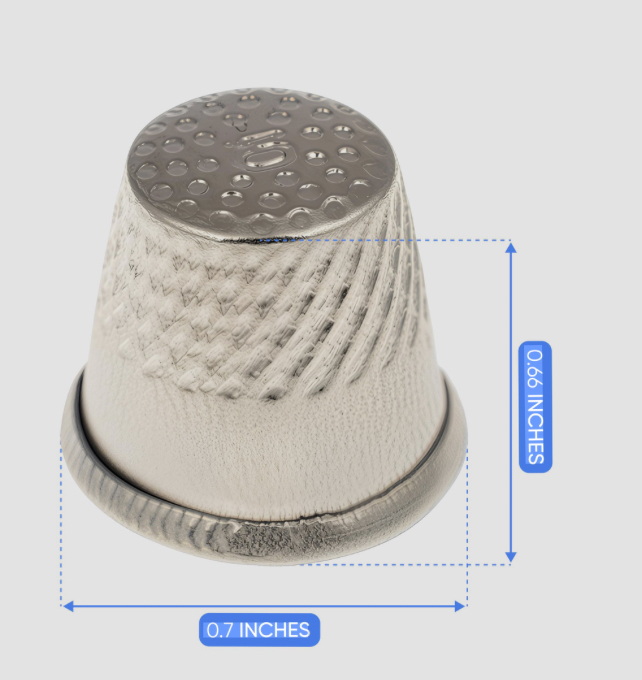
Here is one in case you are unaware what that is.

Well, so whilst we see (some with humour) that the United States is going in deficit more and more, as such it will teach them to call my Canadian brethren part of the 51st state and a few less appealing things. And as a premium effort, let me introduce Canadians to the options of the UAE, in particular Abu Dhabi and Dubai, which could both be seen as they are a mere hour away from one another. I would advice to stay in Abu Dhabi with all its parks and entertainment and take the train 2-3 times because Dubai is a place to see for yourself. Feel free to doubt me, but there are loads of videos on both places on YouTube, so see for yourself. Never believe any source without looking at the evidence and a vacation wherever you go is still capturing your fee time, as such you should see what you are in for. And for Canadians there is a bonus. It is Visa-Free Entry for Canadians. You receive a 90-day visa on arrival free of charge, which can be used within a 180-day period (either continuously or across multiple visits), that beats US travels on an expensive bond any day of the week and that is how the United States priced themselves out of a tourism race. Its like watching a Chevrolet Chevette Diesel going up against that dinkey toy that Lewis Hamilton drives (I think it is a Ferrari Rocher) but I think my point comes across nicely. I thought the American version was too Crass (entering a gunfight with a blackjack) So you have a great day all and in good taste like all Commonwealthians say “Lets add to the deficit of the United States” they earned it.

Have a great day today, as it is Halloween.

Leave a comment

Filed under Finance, Media, Politics, Tourism

Behind the smiling numbers

An interesting story got to see the internet light by Nicholas Watt (at http://www.theguardian.com/society/2016/feb/16/income-tax-must-rise-3p-to-stop-nhs-staggering-from-year-to-year). The title ‘Income tax must rise 3p to stop NHS ‘staggering from year to year’‘, which implies initially that the NHS needs £1.95m, which might be OK. Yet the truth is far from that, the text gives us that Lord Kerslake stated “Income tax will have to increase by at least 3p in the pound…. “, which is another story entirely (and first evidence that members of the House of Lords are gifted with a decent sense of humour).

His lordship is quite correct when he states: “big questions needed to be asked to ensure that spending kept up with medical advances, an ageing population and the need to invest in hospitals“, yet these are mere facts that should have been asked almost a decade ago, there was a clear and near immediate danger to the health of the NHS. The logic we see after that becomes an issue (read: worry, concern, and both are debatable) “Health spending needs to rise at least in line with GDP. Arguably, we may need to go faster if we want to match European funding. You might argue there is a discount there because we have a more efficient system. But it’s got to be at least GDP-linked otherwise I don’t think we’ll get there“. So let’s take a look. First the Dutch version (at http://www.rijksbegroting.nl/2015/voorbereiding/begroting,kst199401_25.html) gives us two issues should we be willing to ignore language barrier. The BZK gets €71.3b, which is divided in €7.5b called budget financed expenditure and €63.8b from premium financed expenditures. So for argument sake, let’s take the total and divide that on a population of 17 million, this now implies that there is almost €4200 per person (remember that this is a terribly rough estimate).

Now for Belgium we get the VBO with €23.85b. Now we all know that Belgium is a much smaller nation (not that much smaller than the Netherlands in size) and with 11.5 million calling the Belgium nation their homestead we now see that they end up with €2075 per person (Rounded upwards). Perhaps his Lordship could give a slightly more detailed explanation for the remark “Health spending needs to rise at least in line with GDP. Arguably, we may need to go faster if we want to match European funding“. Considering that the Netherlands and Belgium are next to one another and their budgets per person are apart by a mere 49.404%.

This gets me to the core of the proclaimed matter, can anyone explain why we are linking healthcare to GDP? Perhaps, and this is merely a lose speculation, some people in the House of Lords had the time to read a paper by Santiago Lago Peñas (added at the end) called ‘On the relationship between GDP and Health Care expenditure; A new perspective‘, now that might be a good thing, there is nothing wrong with Spain taking the lead in matters (especially if it is a good idea). Santiago Lago Peñas as well as David Cantarero Prieto and Carla Blázquez Fernández have written an interesting paper.

First let’s take a look at part of the abstract, which states “Econometric results show that the long-run multiplier is close to unity, that health expenditure is more sensitive to per capita income cyclical movements than to trend movements, and that those countries with a higher share of private health expenditure fit faster and following a different pattern“. Now, I am not going to take a deep dive into this one (it is after all an abstract), but it gave me a few ideas on where to dig.

Next are a few quotes: “Attention is paid to several usually neglected dimensions of this link. With this aim, four different specifications are presented, with the logarithm of per capital total health care expenditure as the dependent variable in all cases” this doesn’t seem to be more than just a quote, but it will have impact down the track.

It is part 2 called previous evidence that is a first issue. When we accept the initial statement “the debate on this link has moved on whether the income elasticity of health expenditure is greater or less than 1 (Bac and Le Pen, 2002). An income elasticity less than 1 classified health expenditure and income inelastic, therefore, as a “necessary” good. On the other hand, if the elasticity is higher than 1, health will be classified as a “luxury” good“, which will do for now. You see, my issue is when we see the part that follows:

  • The seminal paper by Newhouse (1977)
  • An earlier study by Kleiman (1974) for a different set of countries
  • Leu (1986) using cross-sectional data for 19 OECD countries in 1974
  • Parkin et al. (1987) using similar methods and data from 1980
  • Brown (1987) using a sample of 20 OECD countries

Here we have the first issue. You see, this is not regarding the methodology, it is about the data, methods of data collection, usage of weights (if done), these numbers regarded in contrast towards those temporary populations in reflection to the whole. Health expenditure is one part, but based against which healthy part. Now consider the initial reflection I had on the Netherlands and Belgium. They have very different norms in respect to mental health care. Now consider the statements ‘19 OECD countries in 1974‘ and ‘20 OECD countries in 1987‘ I will again make a clear speculative declaration that the mental health norms are not equal, especially when considering economic differences, which gives my first thought, how useful is the paper on a whole (I am not attacking it) and how applicable this would be (read: could be) in reflection towards the whole.

You only need to scan for ‘psychology, psychiatry and mental health’ to see that the paper does not take this into consideration. As we know that the EEC nations have had their own approach to mental health in the past, is not a statement that they did anything wrong, but if this is the first element that does not align, what else will not align (there are a few). One that shines directly behind the ‘previous evidence‘. You see in my head the question comes to mind when I see “The econometric analysis relies on annual data for 31 OECD countries from 1970 to 2009 gathered from the OECD Health Data Set 2011“, so is this aggregated data or raw data. if it is aggregated data the foundation might not align giving an unbalanced and invalid view (in my personal opinion), if it is raw data, what ground line data (the full population) is added so that the individual record compares towards the national whole, if that is missing how can any calculation be truly reflective of what was, especially taking into account the data is reflective over different time zones with very different social pressures. In that case I wonder if I can get a similar result by calculating Z-scores and run a Crosstabs in IBM Statistics #JustSaying!

Now we get back to the article which comes with the image of a smiling Lord Kerslake. Does this paper validate or invalidate the idea? No it does not, but it leads to questions, serious ones.

The quote “John Appleby, the chief economist at the King’s Fund, has estimated that NHS spending is due to fall from 7.3% of GDP to 6.6% in 2020-21. If health spending were to keep pace with economic growth, Appleby estimates an extra £16bn would have to be found every year by 2020-21 to take the NHS budget to £158bn. This works out at 3p on all rates of income tax, according to the IFS” is next!

The term ‘NHS spending is due to fall‘ reads like an event Baron Munchausen could have come up with (the character from Raspe’s book in 1785, not the syndrome). Of course the prediction is 5 years away, which makes it speculative. Now we know that John Appleby is more than the Chief economist for The King’s fund. He is also a Visiting Professor at the Department of Economics at City University and he has a whole range of publications to his name, so why am I opposed?

Well, part of this starts with his own article ‘Social care: a future we don’t yet know‘ (at http://www.kingsfund.org.uk/blog/2015/11/social-care-future), the two quotes that get the foreground are “In our submission to the Spending Review we called for social care to be protected from further cuts and for the money previously agreed for the postponed Care Act funding reforms to be retained and invested in social care. But non-protected departments have been asked by HM Treasury to model cuts of 25 and 40 per cent – so further cuts seem inevitable“, as well as “What would happen if the spending cuts applied to social care over the past five years continue over the next five? Spending on social care for people of all ages as a share of GDP has already begun to fall. It was roughly 1.2 per cent in 2009 but if cuts continue at the same rate it will have halved by the end of this parliament to barely more than a half of one per cent of GDP“. Now there is nothing wrong with any of the texts, John Appleby is not where he is because he is silly, he is very (read: extremely) clued in. I am stating that the environment has changed, it has changed drastically from 2011 onwards and in addition; the changes the UK faces over the next three years will take some of these prediction to town in not so nice a manner.

You will now ask why, which is the question you should ask!

We get part of this from the London School of Economics and Political science (at http://cep.lse.ac.uk/pubs/download/special/cepsp26.pdf), the initial answer is given on page 13. Where we see “To summarise, treatments for the “common mental disorders” of depression and anxiety can be self-financing within the NHS. By spending more, we save even more. This is different from much of NHS expenditure. At the same time we relieve one of the main sources of suffering in our community“, in addition page 15 gives us “According to the 2007 survey, which covered a random sample of households, only 24% of people with depression and anxiety disorders were in any form of treatment“. This now gives us the first part in all this. The overall costs are not in league of the budgets because there is a missing foundations of equality on what falls ‘within’ the NHS. There is no option for the NHS other than to evolve into something ‘more’ complete. The UK is about to get 20,000 refugees from war torn Syria (over several years), the initial approved £1b seems to be nothing more than a drop of water on a hot plate, the ‘why’ will be clear shortly.

The UK has seen a massive rise in mental health issues in the last year alone. Depression and anxiety mainly due to economic events (cost of living) is now a serious concern, especially as the pressures of the economy are likely to continue a few more years. Consider my article two days ago (at https://lawlordtobe.com/2016/02/15/is-there-a-doctor-on-this-budget/) called ‘Is there a doctor on this budget?‘ where we saw the link to ‘Health Care for Undocumented Migrants: European Approaches‘. The graph shown on page 3 is the charm. If we consider the cube, we see that on the X-axis we see subcategories of undocumented migrants, yet the same expenditure would apply to refugees (or the population for that matter). Now consider the Y-axis which is about the type of services and the Z-axis are the funding arrangements. Now this can be treated like a glass with liquid. If we increase the base (X or Y) the funding arrangements go down, it is the simplest of physics, a bigger glass requires more fluid to fill, so we have a population with more health care needs, mental health care in this case and the types of services is not just against depression or anxiety, it will require the coverage of war trauma and shell shock. This will impact refugees of all ages. So the glass gets bigger and bigger and more and more funding will be required to keep funding arrangements on an equal level, this is merely the application of logic.

This is why I opposed John Appleby’s approach, it shows little application of a changing population, merely a greying one (which is a form of change), but it does not hold water against the massive change the UK has faced since 2013 and will face until 2019. This is why I am not in agreement with the statements of John Appleby. Now we get back to Lord Kerslake. You see, the paper I mentioned is an example. It might not even be the foundation of Lord Kerslake’s approach. Yet a multitude of papers clearly show that there seems to be no real no equality in the setting of healthcare (read: cost of health care). It seems to be wearing a different hat in nearly every European nation, it would already be a great leap forward if they all had the same colour, which does not seem to be the case either.

Now we get the quote that wakes us all up “Appleby estimates that NHS spending would have to increase by 30% or £43bn a year to take NHS total spending to the EU-15 average by 2020-21. The IFS estimates that this would involve an 8p increase on all rates of income tax“, which is one side of the option. How about the other side? When we see that AstraZeneca has been able to avoid corporation tax on a massive scale, which dwarves when we compare it to the mergers Pfizer and Allergan have achieved. Is it perhaps possible that his lordship looks at another solution like closing that tax abyss? Might I suggest an idea where any corporation involved in tax avoidance gets its medication ‘grey’ listed? Which means that any drug that could be begotten in a generic form from a place like India will be selected as a first solution? It could even result in India starting businesses in the UK (with the economic benefits that those places will give). It would also send a clear signal that if corporations would like to avoid taxation, which in legal correct way is just fine, but at that point other distributors of pharmaceuticals will be found. I reckon that between that announcement and the offer of reduced medications (read: less costs for the NHS) from pharmaceutical firms would be forthcoming within 24 hours of making the announcement.

Yet, this was not about the costing, it was about the increase and setting against the GDP. The fact that health spending and economic spending are on par reads more like an option for deferred payments to big pharma and medical supplier than anything else. In case of doctors it would mean that their incomes would go through the roof (which might be a deserved reality), but it is one that the coffers under the care of George Osborne cannot afford.

There is wisdom in his lordship stating that “a royal commission should be established to build a national consensus on NHS funding“, which sounds a lot more ‘reliable’ (read: acceptable) than the Labour party giving way by letting a banker (Sir Derek Wanless) set the NHS spending levels. It is of course desirable to go with the people and keep the directly funded NHS free at the point of use, yet that comes with a price tag that is no longer realistic in this day and age of deficit, in addition harder times are coming for a while longer, making the price tag we already have a non-linear shifting one. Yet I feel adamant to speak that mental health must be fully accepted as part of the NHS (for all people, anywhere in the UK), which slides the scales of budget by a lot. A reality many papers (as I expect it to be) did not take into account. Raising income taxation as implied could equally be an issue as that could potentially drive depression and suicide statistics overnight (the latter would lower rents but that seems just too harsh a solution).

What is a given is that Lord Kerslake is the catalyst that is making us ask several serious questions.

I am however not entirely convinced that his lordship took the best path in getting these issues out into the open.

On the relationship between GDP and Health Care expenditure; A new perspective


2 Comments

Filed under Finance, Media, Politics