Tag Archives: Huawei P20

The politics of 5G technology

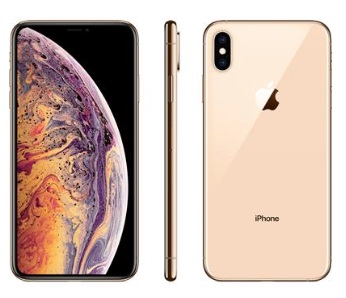
I was watching the news and all the announcements of the new iPhone series and it dawned on me that even as they are not just the most expensive phone, they are close to 400% the price of the top Huawei P20. So why is this now a massive price jump? It is not merely that it is a 512 GB Phone, or that is has 4GB RAM, or that it is IP68 dust and water resistance (maximum depth of 2 metres for up to 30 minutes). I think that Apple is changing the game. It is realising something different, It is also why I designed the ‘dumb’ smart devices for 5G.

You see, for better or for worse, I ask you the question: ‘What is this?’ You swill respond with it is a phone (or variant of it), it is a connection to everything, it is your personal assistant. No, it is none of those. It is important that you realise that this is now becoming your personal data server. When 5G enters your life it will be the foundation of you. You must realise it now, or lose your personal value very very fast; even as we are shown the political ‘BS’ on Telstra regarding Huawei, US telecom companies and other players. This is the vault all the players want. This is the setting of the next generation. Apple is cashing in on mere then just the price of a product. They are setting a stage that Huawei is already walking (slower in some regards, faster in others). This is the future and the Apple version of that future arrives within the next 7 days.

Google is on that path too. Its mint flavoured (or is that coloured?) is arriving in 4 weeks, they too are on the path of the future. That path is you and your personal data server. You better get used to that very quickly, you better realise that you, you yourself enabled all this. So even as we will not know the specifics of the new Pixel 3 XL, we all know that this too will be the personal data server, just like the Huawei P20 series, the Apple Xs series, the Samsung Galaxy and the Google Pixel 3. No longer merely phones, no longer merely the Spotify point. You see, the steps we have had with 4G are closing down, and the marketing changes. It is no longer ‘Fastest Mobile Broadband Network‘, it is no longer ‘Live More Internet‘ (which might be Ogilvy’s worst slogan), and it was never ‘Rethink Possible‘. It will be ‘Whatever you need, anywhere you need it‘. That is the foundation of 5G, anywhere you need it is going to be your cornerstone. It is in that part, when you have transplanted yourself in that new dimension you will get exposed to the change and the need to protect your personal data server wherever you are, because your personal data server (the next mobile phone) will become to some extent: “Your Identity”. Now you will need to consider getting it properly protected, because your data value is you and you need to realise that your mobile phone will have more processing and collection power than any server that was out 10 years ago, facilitating for you and 49 other employees. This personal data server will work for you, on your behalf and to your needs. This was why I came up with the protection layer of ‘dumb’ smart devices. No matter whether you go for IOS or Android, you will be your own cornerstone to social life, to entertainment, to business ventures and to your financial pathway. Consider what you are doing now on your phone. Your banking needs, your radio, your TV, your games, your appointments, your insurances and your investment and retirement portfolio. You do it all from your mobile phone and soon with block chain added to the data stream we are now moving towards a point of non-repudiation. In non-repudiation it means that you and only you could have done this. It is the one step above authentication; it is your future of accountability. At that point you cannot go to the judge stating you lost everything, because your phone got stolen. The easy path is getting removed; that is the future of whatever you want, anywhere you need it. Because only you could have wanted it and the new phones are about setting the stage enabling you and protecting you and foremost keeping your data safe, as long as you realise what you are doing.

So that got me thinking of the old Re-Flex hit: ‘The Politics of Dancing

We got the message, I heard it on the airwaves
the politicians are now DJ’s
the broadcast was spreading, Station to station
like an infection, across the nation

We see and hear it all as these settings evolve; politicians are becoming evangelists for places like Telstra, Vodafone and T-Mobile (to coin an example). The speed and radius of influence increased with every technology jump, three times in the last 10 years alone. Forever growing, ignoring borders and natural obstacles.

When we look at the refrain we see:

The politics of dancing, the politics of ooh feeling good
the politics of moving, aha, If this message’s understood

The setting of movement, dance and self-gratification, the fastest way to move the population in the direction they needed you to go in. You better realise this now and not too late.

You see, In Australia Telstra is the best example to look at. In 2016 they themselves set the stage with: “The Connected Government Program is Telstra’s premier thought leadership program for the public sector“. You did not think this was some philanthropic society, did you? This was the initial culling of those good for the in-crowd and those who are not. And I will also include “Dramatic economic, political, cultural and technology changes are creating opportunities and risks for growth, inclusion and sustainability that are making new demands on government and the public sector which require the ability to lead for innovation in conditions of volatile change, ambiguity and fragile trust“. This is all about growing the status quo for Telstra against whatever threatens it (Huawei is a nice example). Whatever they consider to be ‘innovative‘, I personally view it to be, ‘innovative at whatever speed Telstra can manage in an optimised setting of ROI and profit from whatever was deployed before‘. That is not the same is it?

So here we see the setting of 5G, you all want it and your personal data server will be the first choice that either enables of limits you. This is why Apple has upped the ante by a lot and until the answer of Google is ready, I am unwilling to make any choice other than Huawei, especially as it is at merely 25% the price of the new iPhone. 5G is optionally 2 years away for consumers at the facilitated speed of the new apps and protections; we see that this system needs to be at full force when the City Gates of Neom opens, because that will be the first fully fledged setting of a 5G environment giving you whatever you need anywhere you need it. Interactive information posts, shops that inform you 24:7, giving you the data you needed and showing you the products and offer sales and interactivity even when the shop keeper is asleep. All setting the stage for the explosive data growth you will be faced with and your personal data server is your link to all that. In this Google has the advantage as they solved three elemental parts in that essential need, added to that the marketing agents who specialised and focused on actual engagement. That is where you see the benefit of the next generation of data and visibility at the speed it needed to be at. This is not marketing through the eyes of their clients, this is marketing through the eyes of the respondents and how they envisioned it to be. A flexible setting set to the owner of the owner of the personal data server, not the approach towards that server as players like Telstra thought it needed to be, based on their metrics and their perception. Two distinct different ways and many marketeers and self-professed evangelists never understood that part, or learned it too late.

So yes, Re-flex was partially correct when they stated: ‘The politicians are now DJ’s‘, yet they did not forgot it, it was merely in a time when that option did not yet exist. Now there is no lack of choice and the owner of that personal data server can switch channels in the blink of an eye, an engagement opportunity lost as the focus of the evangelist (read: marketeer) was set to the wrong party. The owner who gets whatever they want, whenever they want it also gains the power to decide on what they want, any time they need or desire something, so making sure that there is engagement also gives the strength of retaining that person for a much longer time and in this game in 5G time is close to absolutely everything. It is the one where we start to realise that time is the essential unit of measure. It was there in the old days. CPU time set the stage of costing; it was there in the old phones, where the duration of a call was the unit of costing. Down the road it was trivialised in most places and set to zero, but it was never zero. Now we get to the next stage, yet now it is in the hands of the consumer, because the time of engagement is the sales funnel, so engagement becomes the stage for success. It is close to the end of mass marketing. It will be the stage of smart marketing. In that setting phishing becomes the new skeleton key and there is the first clear need to protect your personal data server and to protect the data it holds. A setting of consideration in 3G and 4G becomes a setting that is essential for anyone that wants to remain in the game in the next generation with a setting of continued value.

#40800SecondsTillMondayMorning


Leave a comment

Filed under Finance, IT, Media, Politics, Science

Business will be booming

There are all kinds of settings in the tech industry, some we like and some we like a lot less. It is the most visible in the mobile industry, the clear discriminatory setting there is almost unheard of. No matter what the reason is, a person for the most is iOS (Apple) minded, or they tend to go the way of the Android (Google, Huawei et al). There is for the most no in-between there. The reasons are as wide as the drops of water in a lake on a rainy day and for some these reasons make sense, or they do not. Yet we all tend to have them. I have been and remain an Android follower. I have nothing against apple. The initial setting was done by their marketing departments. Where Apple gave us: ‘You can do all these things and it is a phone too‘ and Android gave us: ‘This phone can do all kinds of things, some you will not have believed was even possible‘. I went the way of Android. You see, they are stating the same thing, yet Android focussed on a phone that can do other things. Apple went towards the things they could do, including being a phone. So from my point of view, I needed a phone, so I went the non-iOS way.

I know that in the end the difference is negligible, but it did matter. So it is a little over three years when I got myself (because it was a bargain) the Huawei P7. The difference from the previous phone (Motorola) was so distinct I became a Huawei fan overnight. Now that it is time to put that phone to bed and switch it off for the last time, I find myself clinging onto the idea that I need a new Huawei. Let me be clear, apart from my distinct non liking Samsung (a past issue I had with them), I do think that the other brands are decent too. Yet, when you have the option for a Google Pixel 2 XL, or a Huawei P20 close to $500 cheaper, what will you choose? Let’s also consider that the difference is almost nil, well it is not nil but the real differences do not stand out too much, not worth $500 as I see it. For me, if I get that phone, it will be a 300% improvement of what I have now and I am not dissatisfied with what I have, it merely has been acting up and after 3 years of working 24:7, that makes perfect sense. The little workhorse has earned its retirement. So when I started to look around, and I took a new look at the P20 and P20 pro, which is a $300 difference, I wondered why I would want the P20 pro for the usage I have. I have been able to do everything I needed with 2 GB RAM, so the 4 GB and  6GB RAM issue is not one I need to worry about. Both come with 128 GB storage, which is 800% more than I have now and even as I ran out of storage merely once, it did not worry me to any degree. The camera options are not the same, yet the PRO has an additional 40 MP camera option, which is slightly over the top need for someone who uses an EOS 1 Camera. The only issue is the battery, it is 3400 mAh versus 4000 mAh and I am not sure that this constitutes the value of $300 difference, not on my budget. More important, the P20 holds its own against the $1500 phones out there and when you consider the fact that it is 30% cheaper, what would you choose? This constitutes a difference that is well over a week’s rent for some people, so there is that to consider as well.

Yet, it is not about that part, it is that Huawei has seen the light of opportunity in both Saudi Arabia and Egypt, so when we see (at https://www.albawaba.com/business/pr/huawei-announces-%E2%80%98vip%E2%80%99-service-p20-pro-saudi-arabia-1135384), the fact that branding is getting momentum in the Middle East with their Huawei Consumer Business Group and their “a ‘VIP’ service for its customers in Saudi Arabia through its authorized service centres for any customer buys Huawei P20 Pro with Huawei KSA warranty”. Some call it marketing, which in all fairness it actually is, yet with 95 million people in Egypt and 33 million in the KSA, the market could be booming for Huawei, even as an Apple store is coming in 2019, the Apple SA store is pointing towards “Apple-designed outlets located within selected Apple resellers and other retail shops. Many are staffed with Apple-trained experts who can help you to find the right solution for you“, which is a perfectly valid and acceptable text. Yet, when you can consider an ‘outlet’ versus “Huawei has announced “Huawei Flex” which is a free drop off service in which customer can drop his device for service in more than 300 locations across kingdom for Huawei device under Saudi Arabia warranty to be send for Huawei Authorized service centre for warranty repair and return“, we see that Huawei is on the ball (I am not saying that Apple is not), but the service minded sales pitch is clearly there and as we see: “Pablo Ning, President of Huawei Consumer Business Group Saudi Arabia said: “The Kingdom is a strategic market for us, and this announcement reflects our commitment to doing business in the region. It is our effort to always cater to the specific needs of the markets we operate in. Recognising the needs of our loyal customers in the Kingdom, we are very pleased to announce these services and we are looking forward to announcing many more unique offers for them in the future”“, we see that even as we realise that too is a marketing setting, it also states that Huawei means business. With a chunk of a 125 million customer base, these two alone could drive sales even further in the Middle Eastern nations; in addition, the Huawei centre is rumoured to be coming to Neom, which could drive the brand even further. Even Forbes was recognising the growth Huawei had in 2017, even though we do take notice of the fact that anti-Chinese sentiments in the US barred the phone from the US markets, we need to realise that the planet is a lot bigger than the 325 million in the US. Also consider the fact that Huawei does a lot more than merely smartphones and the opening of the market that is a third of the US population matters, in addition the 740 million Europeans are now more than ever looking for a good deal. So the group of people who have the cash to go all out and get a phone $500 more expensive is shrinking fast. Yet Huawei is not out of the woods there either. It is up against Samsung and Samsung is doing a good job of gaining ground. In there we see that Apple is losing their footing, losing sales share in the UK, France and Spain. So even as some had growth, iOS was merely growing at 0.1%, against Android 2.8%, that is a massive difference, and Huawei is tinkering very effectively on these two markets. Although, I have to admit (speculatively) that the largest growth was due to the release of the Google Pixel family. Still Huawei remains in the fight of growth and its setting in the Middle East is as assertive as it gets. I reckon that if Pablo Ning pulls it off, he might be looking forward to his new apartment overlooking Chaoyang Park in Beijing. It is that extreme because the market share that Huawei has to grow is pretty astounding. You see, not everyone is looking towards the coolest marketed phone that most cannot normally afford, in the Middle East revenue is often set towards pragmatism and that is a setting that Marketing on a global basis tends to be unfocussed on. It is in this setting that mobile phones will gain traction in sales. So when we consider the progress that Huawei is making towards growth by going via the support and customer care path, or as Pablo Ning phrases it “the needs of our loyal customers in the Kingdom“, we see not some message on selling a phone like ‘iPhone X, Say hello to the future‘ with after that ‘Sales, Apple Authorized Resellers‘ or ‘Sales, Apple Authorized Resellers‘ but with ““Huawei Flex” which is a free drop off service in which customer can drop his device for service in more than 300 locations across kingdom for Huawei device under Saudi Arabia warranty to be send for Huawei Authorized service centre for warranty repair and return“, we see that Huawei means business. It is not about the initial sale, it is putting to bed any worry the consumer has afterwards and the Huawei version sells much stronger than the other messages and that is how commercial traction leaps forward making it market share gain. The lower sales threshold only speeds it up. In that we see that “aiming of strengthening its business base, its operations and customer service in the Kingdom“, is not just vital for growth of Huawei, the commitment of 5G in Saudi Arabia as it is at present, will only fuel the need for the Huawei smartphone (and smart phones in general); with its upcoming Huawei Mate 30 (Q3 2019) Huawei could give a further boost, as those buying today would be ready for a new phone just as the Mate 30 will be released and it will drive it a lot faster if it is both 4G and 5G enabled (which is not officially confirmed), so as Apple and others are looking to open a shop at that point, we will see that if (consider that it is an ‘if) Huawei kept its services and exceeded the expectations of the consumer, they will have a much larger advantage and as such Google might profit with their own Android phones on the coattails of Huawei. This is shown in another way too. Statista (at https://www.statista.com/statistics/271774/share-of-android-platforms-on-mobile-devices-with-android-os/) gives a view that takes some mulling. When we consider the Android market share, we see that the largest part is owned by Marshmallow (v6) and Nougat (v7), so that means that those who update now to Oreo (v8) will be most likely to update the moment 5G is out, those who delay more than 6 months are not likely, or better stated less likely to update more than once, so either they miss out on 5G or are in a much smaller segment (not serious smartphone users). So they use it as a phone and that is it, which is fair enough, because a phone is a phone and for that 5G is not essential. Yet when we consider that this group is almost 37%, there is an option for smartphone sales everywhere to evolve those users towards a more smartphone driven use of apps and data, yet what are these consumers made of? There is no data that I had at my disposal, yet finding out is actually a lot more important here. If we know what the consumer needs, we can see if there is a better solution in new hardware, not merely because of the security risk that older phones hold, the fact that smartphone functionality is optionally missed out on is basically a sales opportunity missed and when it affects an optional 37% slice of smartphones it starts to matter as that involves a serious amount of cash. Now we need to accept that it is not merely the phone, for the larger places like the island of Australia mobile data was until last year pretty expensive, so why upgrade when the data used will monthly kill your budget? to go from 15GB a month for $65 in 2016 to 200Gb for $70 in 2018 is actually a massive leap and not all places have made such changes, so not everyone is on board yet, but with 5G that will change by a lot, not only will they drive down the 4G data prices, but the mobile setting in places like Egypt and Saudi Arabia (outside of Cairo and Riyadh) will drive the need of people much larger. The fact that Egyptian TV outside of the large cities is not fabulous, for these people to suddenly get a clear reception of matches of Al Ahly SC or Zamalek SC could drive sales, so the larger the part of that 37% slice is actually found in the Middle East, the easier the upgrade sales will get; when we consider the joke (that is how I personally see the Vodafone Egypt site), as well as the clarity of http://www.egyptsim.com/, we see that there is still space to improve it all and Huawei is in an interesting place to make that happen. In addition, the Egyptsim site shows a setting that was almost the 2016 setting in Australia, so they are not that far behind, so when we see the evolution where the prices reflect 500% if what they offer now (which is what we can get in places like Australia nowadays), we see a more competitive setting where upgrading any smartphone will become the essential need of anyone wanting to use such amounts of bandwidth. Even a mere 50 GB at €15 could change the game, it will drive app use, phone use and more important, the need for phone upgrades and competitive phones will become more and more desired. This is shown in direct opposition to the anti-Huawei feelings that we see from America (at https://www.politico.eu/article/huawei-china-ghost-in-europe-telecom-machine/), a story from last January. So in all this when we see “The Chinese tech giant is banned from bidding for government contracts in the U.S. over concerns that its telecommunication equipment could be used for spying by Beijing“, that whilst it refers right next to it a story regarding ‘Mark Zuckerberg hearing: As it happened‘, in all this Huawei is a concern? As the US has not even got clear legislation on data and as we see the Facebook events, I can state that some people have their mindset in the wrong place. In addition, if we can believe the Daily Mail who gave us “Google caught using $580 million worth of Australians’ phone data to spy on them by monitoring their movements“, so in that, is Google getting government contracts? And if the second is true, why is there no outcry in that setting? Is it about the company, or where the revenue is going to? It is a multiple facetted setting of greed, technology and whose ego is the largest to present. How does that help the consumer who wants a good affordable phone, if the Google Pixel and Huawei phones offer the same thing, yet Huawei can do it 30% cheaper, why would we want the more expensive one, our privacy? Facebook gave that away and there is no actual act in place to thwart that, in addition, the US senate hearing gave more and more reluctance as we seem to get the impression that these senators do not even comprehend technology in its basic foundation. We merely have to look back at the moment with Senator Orrin Hatch (R-UT), who asks on: ‘how do you sustain a business model where users don’t pay for your services‘, the answer by Mark Zuckerberg was priceless: ‘Senator, we run ads!“. When we are confronted with such a level of what I regard to be ignorance towards business reality, that is the not party we should rely on when they state to us: “its telecommunication equipment could be used for spying by Beijing“, yet in that foundation, not one piece of evidence has been presented that this is actually the case. The “potential for secret ‘backdoors’” is astounding. Not one piece of evidence, not one setting that gives any level of reliability on ‘potential‘. I wonder how many of these gentlemen have been receiving calls from Cisco, Apple, IBM and other parties on their fear of China getting a slice of American business, or perhaps it is even more simple. With American firms the government of the USA can make tax deals, because the inability of paying invoices can always get bartered on a national level, not international. And there is where Huawei has its opportunity. As it grows its segments in both Europe and the Middle East it can potentially grow the services they offer as the reach of those services and in that light and the next level of growth towards 5G, we see that Huawei has a growing distinction against all competitors. It can offer a new price range, one that consumers have not had for the longest of times and it can place a setting where customer loyalty can grow towards Huawei as it offers something affordable, now when the providers think it is time, but when the consumers need them, which is always a war that works in favour of the consumer. It is a war of settings between optionally, actually, and eventually. The first one offering it has the benefit. Yet is Huawei ready to make that commitment? I do not know, yet should Huawei grace the settings and be announced as a participant of the new high tech city Neom, at that point you can be decently certain that Huawei will become a much larger player in the Middle East and from that, growth in Europe will be a near certainty. Business for Huawei will be booming and it all started by making high end mobiles an affordable item for those not in high paying jobs, or forced to get themselves chained to a two year contract with a telecom provider.


Leave a comment

Filed under Finance, IT, Media, Politics, Science