Tag Archives: The Atlantic

It is time

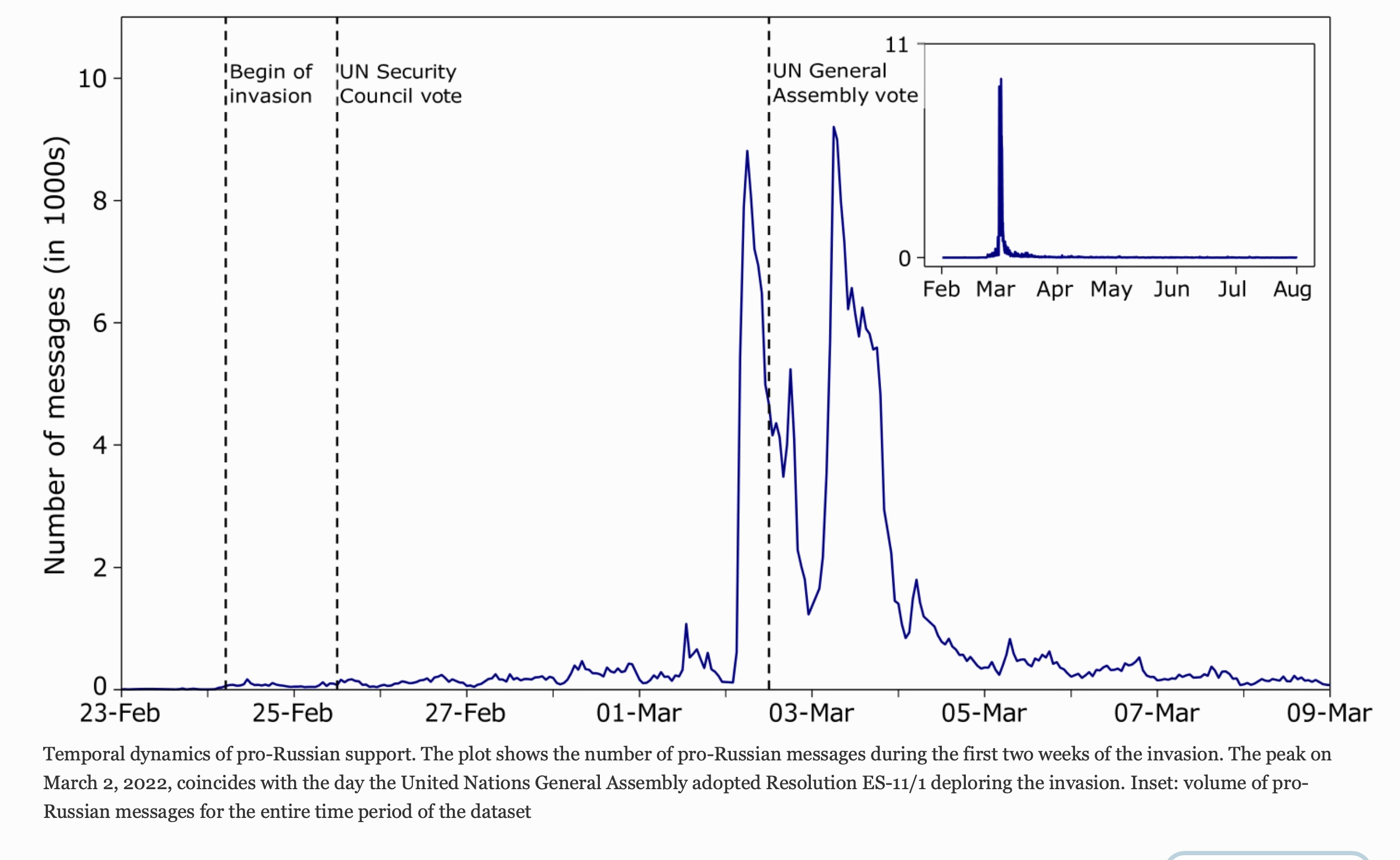
That is something we often hear, yet I haven’t said these words for almost ever. You see, news media is now realising that the Russians are closer to losing the war that ever. For this I think it is time that we go back to (the beginning) February 24th 2022. This set it all in motion and we were given “The Russian invasion of Ukraine in February 2022 was accompanied by practices of information warfare, yet existing evidence is largely anecdotal while large-scale empirical evidence is lacking. Here, we analyze the spread of pro-Russian support on social media. For this, we collected messages from Twitter with pro-Russian support. Our findings suggest that pro-Russian messages received 251,000 retweets and thereby reached around 14.4 million users” these are the opening words of Dominique Geissler, Dominik Bär, Nicolas Pröllochs & Stefan Feuerriegel. We are then given “A widespread concern is that practices of modern warfare in form of large-scale Russian propaganda campaigns are used to shape the narrative around the war, yet corresponding research is still nascent. On the one hand, the Russian government enforced new legislation exerting power over traditional media outlets to persuade citizens to support the war. As a result, domestic media outlets are forced to adopt the official narrative. On the other hand, Russian propaganda has been suspected to influence other countries outside Russia, in particular, by using social media to promote hostility against the West

The funny part is that as far as I have seen, the western media largely ignored this setting and the consequences of that setting. This paper was published in 2023 (at https://epjdatascience.springeropen.com/articles/10.1140/epjds/s13688-023-00414-5) and was readily available. But the western media at large, always happy to cater to clicks and being the bitch of the digital dollar left it standing as it was. They also give us the settings that they used (particularly the numbers involving ‘#1standwithruss1a’ (I changed two digits as not to ‘support’ Russia) and that gives us that The Atlantic (at https://www.theatlantic.com/ideas/archive/2022/04/russian-propaganda-zelensky-information-war/629475/) gives us the story by Carl Miller. There was a much larger setting to the Putin war and as I see it, the media left left it alone. I reckon the revenue that the digital dollars gave them was preferred against informing the people in what dangers they were. These four also looked into the Botometer and several other methods, relying on verifications by Prolific. The results are pretty horrific “We applied further filtering rules to select only messages where the content was pro-Russian (see Methods). Overall, this yielded messages. The messages further generated nearly 1 million likes. To measure the global exposure to pro-Russian messages, we estimated the overall readership based on the number of unique users that followed authors of pro-Russian messages in our dataset, amounting to 14.4 million users.” As I see it, Twitter is big business and they (of course) partially relied on these ‘bots’ to spice up advertisements. 

As such Russia had taken out all stops to present their ‘winning’ war. The Guardian reported on February 27th 2022 ‘‘Don’t call it a war’ – propaganda filters the truth about Ukraine on Russian media’ (at https://www.theguardian.com/world/2022/feb/26/propaganda-filters-truth-ukraine-war-russian-media) there we see “Kremlin clamps down on Facebook and threatens to muzzle outspoken independent news outlets” with the supporting text “the Russian government has taken extraordinary steps by throttling Facebook and threatening to shut independent media outlets such as TV Rain and the newspaper Novaya Gazeta, which published an edition in Russian and Ukrainian this week with the banner headline “Russia is bombing Ukraine”” and that is merely the tip of the iceberg. The larger setting becomes that people like Weird Duk (a Dutch Telegraph reporter) was, as I personally see it ‘filtering’ the anti-Russian news away. The setting we were given by Ukrainian writer and analyst Mykola Riabchuk was ‘Wierd Duk’s silence on Ukraine is deafening’ with the implicated “What is strikingly missing in Duk’s deliberations is Ukraine, and the silence is deafening. Omissions can be as important in rhetorical strategies as words. In his article any reference to the war, to its victims and culprits, would immediately put in question his central argument: that the West shares equal responsibility for the crisis with Russia” That is the larger setting. I am happy that at this point I don’t work for the AIVD, because in a few months they will have their hands full. You see, the Dutch will be experiencing a setting (not unlike) that dwarves the Dutch hunt of NSB agents (and operatives). And in Dutch media land there will be a culling of these people. I reckon that this will happen in Belgium, Germany, France the UK and Canada too. And all these people will cry like little bitches on the freedom of expression, the freedom of speech and the freedom to expose the ‘facts’ as they saw it. But one-sided reporting makes that harder and a lot more finicky for them to keep up. Partially I am curious what will happen to Thierry Baudet, massively pro-Russian. He is the founder and leader of the far-right Forum for Democracy (FvD). Baudet is opposed to the European Union–Ukraine Association Agreement. Together with GeenStijl and the Burgercomité EU association, Forum for Democracy was one of the behind the campaign to collect the signatures required for the 2016 Dutch Ukraine–European Union Association Agreement referendum. Why this is important is that during the campaign, Baudet at multiple occasions spread fake news, including false reports of purported crimes by the Ukrainian military, and associated himself with pro-Russian activist Vladimir Kornilov. A setting that seemingly connects to the entire social media warfare by Russia.

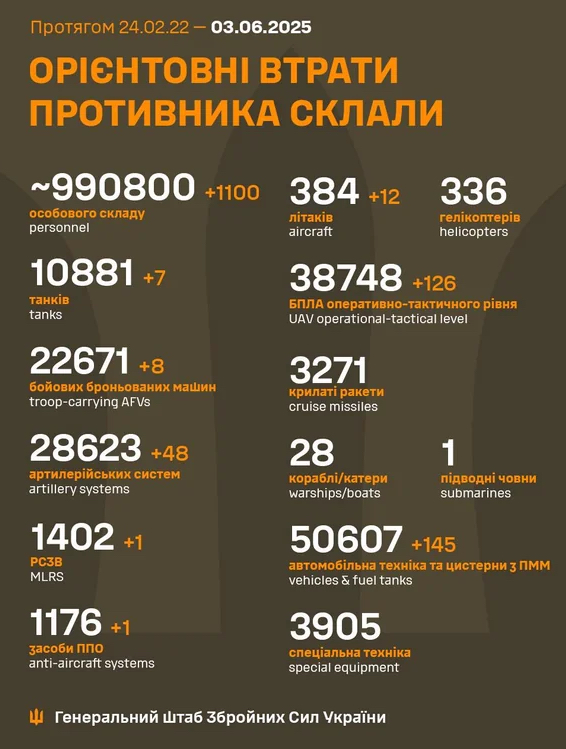
So as we take tally:

We see that after three years the Russians are down almost one million soldiers and they still are nowhere near a victory. I would like to start an autograph collections on confiscating the entire Hermitage collection to hand over to the Ukraine for reparations that was done by over 7,400 missiles and 3,900 Shahed drone strikes against Ukraine. And when President Putin has to hand over that collection, he will start feeling the sting of starting a war he had no business of starting. 

And when some people say that this is merely speculation, consider that the media collected this evidence for publication, even the pro-Russian media did that and now as the pebbles are in boiling water, these weak minded people (traitor is seemingly too harsh a word) will need to set their tally to a new horizon, because Russia is no longer clearly winning and the moment President Putin sees that the game is up, he will cut loose all connections he had to social media and pro-Russian reporters, and as such the lives of people like Wierd Duk and Thierry Baudet will become massively complicated and they will hand over any name they can to get clear of the blast zones, where they are the target. The Dutch might remember that setting during the manhunts they had in 1945-1947.

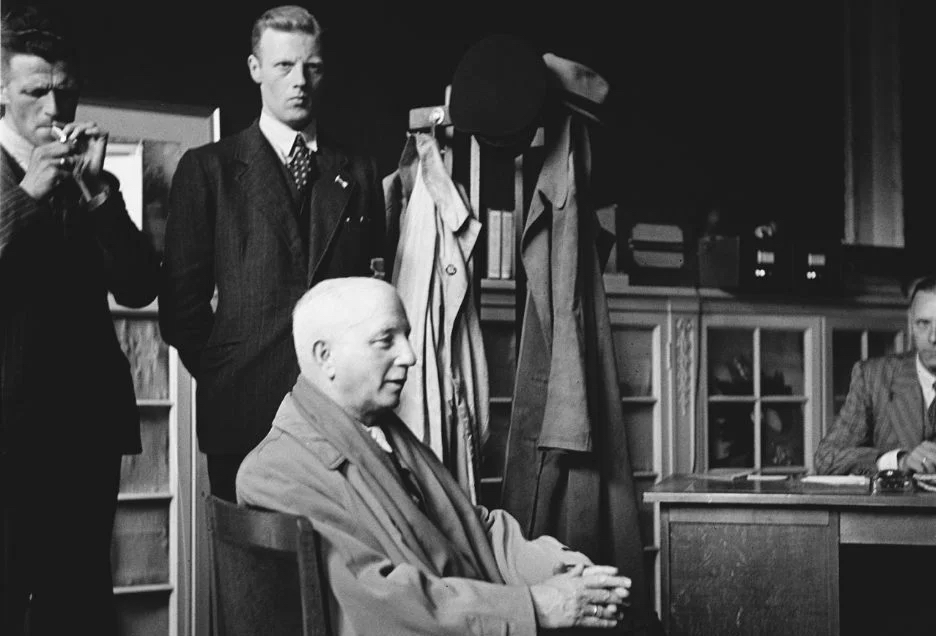
A nice sidestep is the interrogation of Max Blokzijl the radio reporter of the NSB, yet the freedom of the press didn’t stop him being put in front of a firing squad in September 1945, as such I wonder how people like Wierd Duk think they will do. They might get some support form the 60,163 members that the FvD has, but the Netherlands has roughly 18,000,000 people, not really a majority seeing that he would hope for. And lynching in 1945 was not unheard of. So here are two people that might apply for a high life insurance, but only with the death by natural causes  clause in place.

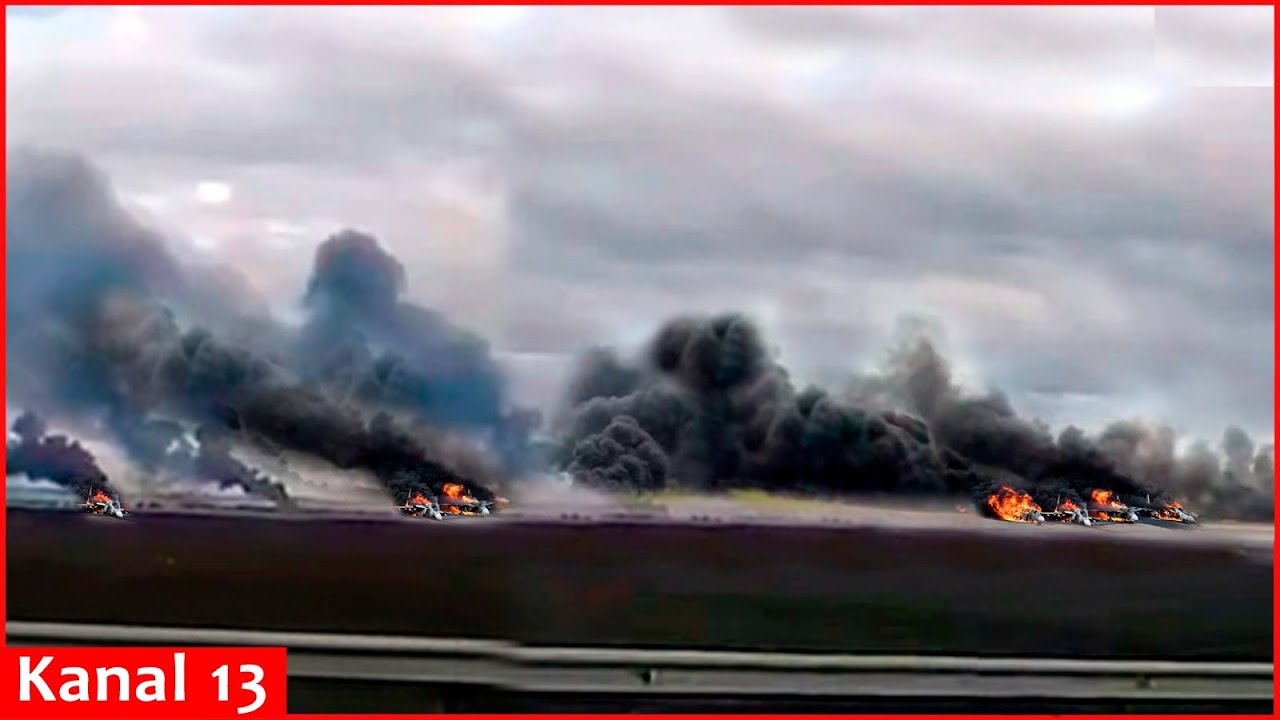
And the Netherlands is not the only place that will face this. I reckon that the bombings of Olenegorsk air base in Murmansk and the Belaya air base in Irkutsk might have something to do with that. 

So have a great day and consider what you think is the right move, who should you support and I am not saying that you need to be an outspoken supporter in whatever direction you take. Because sometimes, certain choices are harder than you think. But the media gets no sympathy, they were paid to do a certain thing and they decided on other actions and that will scar them for life as they have been part of the ‘Digital Solution’ for years.

Leave a comment

Filed under Media, Military, Politics

The Zuckergate Censorberg Act

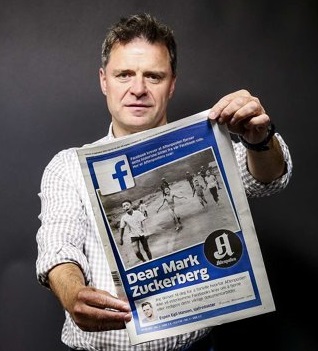
Yesterday an interesting issue got to the FrontPage of the Norwegian Aftenposten (at http://www.aftenposten.no/kultur/Aftenposten-redaktor-om-snuoperasjonen–En-fornuftig-avgjorelse-av-Facebook-604237b.html) and for those who are slightly Norwegian linguistically challenged, there is an English version at https://www.theguardian.com/technology/2016/sep/08/facebook-mark-zuckerberg-napalm-girl-photo-vietnam-war.

aftenposten
It is something we have seen before. Although from a technical point of view, the editing (read: initial flag) is likely to have been done electronically, the added blame we see when we get to the quote “Egeland was subsequently suspended from Facebook. When Aftenposten reported on the suspension – using the same photograph in its article, which was then shared on the publication’s Facebook page – the newspaper received a message from Facebook asking it to “either remove or pixelize” the photograph” shows that this is an entirely different matter. This is now a censoring engine that is out of control. The specification ‘either remove or pixelize’ does not cut it, especially when it concerns a historical photo that was given a Pulitzer.

I am actually considering that there is more in play, you see, the Atlantic (at http://www.theatlantic.com/technology/archive/2016/05/facebook-isnt-fair/482610/) said it in May when it published “Facebook Doesn’t Have to Be Fair. The company has no legal obligation to be balanced—and lawmakers know it“, which is the title and subtitle and as such, the story is told and politicians like John Thune experienced how a social network can drown out whatever it wants (within reason). So when you see something is trending on Facebook, you must comprehend that it is not an algorithm, but contracted people guide its creation and as quotes in the Atlantic “routinely suppressed conservative news“. Yet this goes further than just censorship and news. As the Editor of Aftenposten raises (and others with him), Mark Zuckerberg has now become the most powerful editor in the world. He now has nothing less than a sworn duty to uphold the freedom of speech to a certain degree, especially when relying on algorithms that are unlikely to cut the mustard on its current track. It now also opposes the part the Atlantic gave us with the subtitle “The company has no legal obligation to be balanced—and lawmakers know it” showing Sheryl Sandberg in a ‘who gives a fuck‘ pose. You see, at present Facebook has over 1.7 billion active users. What is interesting is that the acts that he has been found guilty of acts that negatively impacts well over 50% of his active user base. Norway might be small, but he is learning that it packs a punch, and when we add India to the mix, the percentage of alienated people by the censoring act of Facebook goes up by a lot. So even as there is the use of blanket rules, the application is now showing to be more and more offensive to too many users and as such this level of censorship could hurt the bottom dollar that every social media site has, which are the number of users. So as Mark Zuckerberg is trying to get appeal in Asia, he needs to realise that catering to one more nation could have drastic consequences to those he think he has. Now we understand that there needs to be some level of censorship, yet the correct application of it seems to go the wrong way. Of course this could still all go south and we would have get used to log in to 顔のブック, or 脸书. Even चेहरे की किताब is not out of the question. So is that what Zuckerberg needs? I know the US is scared shitless in many ways when that happens, so perhaps overseeing a massive change into the world of censoring is now an important issue. Espen Egil Hansen said it nearly all when he stated “a troubling inability to “distinguish between child pornography and famous war photographs”, as well as an unwillingness to “allow space for good judgement”” is at the heart of the matter. In that regard, the issue of “routinely suppressing conservative news” remains the issue. When you censor 50% of your second largest user base, it is no longer just a case of free speech or freedom of expression. It becomes an optional case of discrimination, which could have even further extending consequences. Even as we sit now, there are lawsuits in play, the one from Pamela Geller, a person that only seems to be taken serious by Breitbart News is perhaps the most striking of all. Pamela (At http://www.breitbart.com/tech/2016/07/13/pamela-geller-suing-facebook/) with the quote “My page “Islamic Jew-Hatred: It’s In the Quran” was taken down from Facebook because it was “hate speech.” Hate speech? Really? The page ran the actual Quranic texts and teachings that called for hatred and incitement of violence against the Jews.” is a dangerous one. It is dangerous because it is in the same place as the Vietnam photo. The fact that this is a published religious book makes it important and the fact that the book is quoted makes it accurate. The blaze (at http://www.theblaze.com/stories/2016/01/05/an-israeli-group-created-fake-anti-israel-and-anti-palestinian-facebook-pages-guess-which-one-got-taken-down/) goes one step further and conducted an experiment. The resulting quote is “The day the complaint was filed, the page inciting against Arabs was shut down. The group received a Hebrew language message from Facebook that read, according to a translation via Shurat HaDin, “We reviewed the page you reported for containing credible threat of violence and found it violates our community standards”, the page inciting against Jews was left active.” This indicates that Facebook has a series of issues. One cannot help but wonder whether this issue is merely bias or the economic print the Muslim world has when measured against a group of 8 million Israeli’s or perhaps just the population of 16 million Jews globally. With the Aftenposten event, Facebook seems to have painted itself into a corner, and if correct several lawsuits that could soon force Facebook to have a rigorous evaluation and reorganisation of several of its internal and external departments.

Because if Content is the cornerstone of Social media, the need to keep a clear view of freedom of expression and freedom of speech becomes even more important. In a product that seeks the need for growth that should have been obviously clear.

There is however a side that is not addressed by any. You might get the idea when you see the Guardian quote “News organizations are uncomfortably reliant on Facebook to reach an online audience. According to a 2016 study by Pew Research Center, 44% of US adults get their news on Facebook. Facebook’s popularity means that its algorithms can exert enormous power over public opinion“, the fact that Facebook might soon be hiding behind the ‘algorithms‘ as we see Facebook go forward on a defence relying on their version of the DEFAMATION ACT. In this example I will use the DEFAMATION ACT 2005 (Australian Law), where we see in Article 32

32 Defence of innocent dissemination
(1) It is a defence to the publication of defamatory matter if the defendant proves that:
(a) the defendant published the matter merely in the capacity, or as an employee or agent, of a subordinate distributor, and
(b) the defendant neither knew, nor ought reasonably to have known, that the matter was defamatory, and
(c) the defendant’s lack of knowledge was not due to any negligence on the part of the defendant.

(2) For the purposes of subsection (1), a person is a “subordinate distributor” of defamatory matter if the person:

(a) was not the first or primary distributor of the matter, and
(b) was not the author or originator of the matter, and
(c) did not have any capacity to exercise editorial control over the content of the matter (or over the publication of the matter) before it was first published.

By relying on Algorithms, Facebook could now possible skate the issue, yet this can only happen if certain elements fall away, in addition, the algorithm will now become part of the case and debate muddying the waters further still.

Hanson does hit the nail on the head when it comes to the issues he raises like “geographically differentiated guidelines and rules for publication”, “distinguish[ing] between editors and other Facebook users,” and a “comprehensive review of the way you operate”. He is not wrong, yet I have to raise the following

In the first, when you decide to rely on “geographically differentiated guidelines and rules for publication”, you also include the rules of who you publish to. This is the first danger for Facebook, their granularity could fall away to some extent and Facebook advertising is all about global granularity. It is a path he would be very unwilling to skate. Open and global are his ticket to some of the largest companies. When this comes into play, smaller players like Coca Cola and Mars could soon find the beauty of moving some of their advertisements funds away from Facebook and towards Google AdWords. I am decently certain that Google will not be opposing that view any day soon.

In the second “distinguish[ing] between editors and other Facebook users” is only part of the path, you see when we start classifying the user, Facebook could start having to classify a little too much, making any distinguishing of such kind additional worries in regards to discrimination. Twitter faced that mess recently when a certain picture from one Newspaper was allowed and another one was not. That and the fact that a woman named Molly Wood (her actual name) was not allowed to use her name as her Facebook name, which is a matter for another day.

In the third the issue “comprehensive review of the way you operate” which is very much in play. The cases that Facebook has faced regarding content and privacy are merely the tip of the iceberg. We can all agree that when it is about sex crimes people tend to notice it, I am speculating for the most because of the word ‘sex’. So when I saw that there is a June reference (at http://www.mrctv.org/blog/facebook-censuring-international-stories-about-rapes-muslim-refugees), when Facebook removed a video from Ingrid Carlqvist for the Gatestone Institute, where she reports that there has been a 1,500% increase in rapes in Sweden, I was wondering why this had not found the front page of EVERY newspaper in every nations where there is free speech. The Gatestone Institute is a not-for-profit international policy think tank run by former UN Ambassador John Bolton, so not some kind of radicalised front.

In that regard is any kind of censoring even acceptable?

This case is more apt than you think when you consider the quote we see, even as I cannot give weight to the publishing site. We see “Facebook may have been incited to censor this story by a new European Union push in cooperation with Facebook, Twitter, and Google to report incidents of racism or xenophobia to the authorities for criminal prosecution” with the by-line “In order to prevent the spread of illegal hate speech, it is essential to ensure that relevant national laws transposing the Council Framework Decision on combating racism and xenophobia are fully enforced by Member States in the online as well as the in the offline environment. While the effective application of provisions criminalising hate speech is dependent on a robust system of enforcement of criminal law sanctions against the individual perpetrators of hate speech, this work must be complemented with actions geared at ensuring that illegal hate speech online is expeditiously reviewed by online intermediaries and social media platforms, upon receipt of a valid notification, in an appropriate time-frame. To be considered valid in this respect, a notification should not be insufficiently precise or inadequately substantiated“, which was followed by “No matter why Facebook decided to remove Ingrid Carlqvist’s personal page, it doesn’t lessen the fact that this is another example of their political censorship, and their desire to place political correctness over freedom of the press and freedom of expression

Now this part has value and weight for the following reason: When we consider the earlier move by Facebook to relay on algorithms, the European Commission (at http://europa.eu/rapid/press-release_IP-16-1937_en.htm) gives us: ‘is expeditiously reviewed by online intermediaries and social media platforms, upon receipt of a valid notification, in an appropriate time-frame‘, which could imply that an algorithm will not be regarded as one of the online intermediaries, which means that the human element remains and that Facebook cannot rely on the innocent dissemination part of the Defamation Act, meaning that they could end up being in hot water in several countries soon enough.

As parting words, let Facebook take heed of the words of Steven Spielberg: “There is a fine line between censorship and good taste and moral responsibility“.

Leave a comment

Filed under IT, Law, Media, Politics, Religion

That joke called the First Amendment

Well, the quick way is to wait on a bridge, but the reality of that approach is likely to be less successful! This all starts with an article in the LA Times today (at http://www.latimes.com/local/lanow/la-me-ln-james-woods-twitter-lawsuit-20150730-htmlstory.html). The object of trolling is James Wood, the actor. He has had many successes and in most of those moves he plays the badass opponent you don’t want to cross, not even when you have the Rock at your side. I had to take a little look at what I first saw that included him. Raid on Entebbe was the first movie, yet I did not realise it at that moment as it was a ‘Charles Bronson movie’ (the mind of a teenager tends to be super focussed). So James as the Captain with the glasses was not the focus of the viewer (me). I started to watch movies because James Woods was in them around the time ‘Best Seller’ was released. He had already drawn attention through Videodrome, Against all odds and Cat’s Eye. All this matters, because the way we perceive an actor (especially outside of America) is when we watch his work, not the gossip page, not some glossy magazine where dubious statements drenched in non-liability grammar. It is possible that the generation after me will form an opinion of him from his starring role as Hades in Hercules (you get the concept). So did he have issues? I am pretty sure that he has issues, which does not mean he dove into the narcotics, which several actors from the 80’s did. The fact that glossy magazines got away accusing people of murder ‘due to unnamed sources’ adds to the stress here. But what is the case? Actor James Woods filed a $10-million lawsuit this week against an anonymous Twitter user, alleging defamation and invasion of privacy. In my view there are two options, either that person is an American, or not. If not it basically becomes an FBI case (I will get back to this). Leila Knox, an attorney with the San Rafael-based First Amendment Coalition gives us some of the goods. As she states “You have to go straight after the individual”. Which is all fine and good, yet since its official adoption of December 15th 1791, the text: “Congress shall make no law respecting an establishment of religion, or prohibiting the free exercise thereof; or abridging the freedom of speech, or of the press; or the right of the people peaceably to assemble, and to petition the Government for a redress of grievances“, has become a bit of a joke. There is no doubt in my mind that the originators had the best intentions in mind, yet for no less than 30 years the 1st amendment can be regarded as an international joke. (I will get back to this too). The next part in the article is “The next step is to subpoena the ISP, which must alert the user that he or she is being sued and that there is a request for the user’s identity to be revealed“, not just that, but the ISP can actually start a case of defence for the troll and file for quashing the subpoena. Mark Lemley, director of Stanford Law School gives us in addition the following: ““The hardest part is proving that the statements were made with bad intent” and were not accidental, said Lemley, who spoke in general and not in reference to the Woods case. “It also depends on how careful the poster has been to cover their tracks.”” in this we see the first issue and as to answering this, I will also get back on the two previous points. You see, I am all for ‘freedom of speech’, yet in that light, this freedom also needs to show a form of accountability. When we see that there is a need ‘to cover their tracks’, whilst there is supposedly freedom of speech, you know that something is wrong. So the fact becomes, should the ISP be allowed to act in the way it can? I agree that to some extent it should be protective, but when a person is hiding behind anonymity so that this person can lash out, I have to see the situation that the victim of this lashing has a right to face his/her accuser. Is that not a direct right too? In the second, when we consider the 1st amendment in another way we get the following: “Congress shall make no law respecting an establishment of religion, or prohibiting the free exercise thereof; or abridging the freedom of speech, or of the press; or the right of the people peaceably to assemble, and to petition the Government for a redress of grievances“, let’s take this one step at a time. ‘Or abridging the freedom of speech, or of the press‘ I believe in the spirit of this, but are we not allowed to know the speaker? You see in those days, freedom of speech was done in writing or in words. In words meant that the person did this in view of others. That means that this person was a known person, even if that person was a stranger and was viewed for speaking his/her mind. The aggrieved person could face the speaker and defend the presentation. When in writing it was harder but overall we would know who spoke, because the true speaker would sign their view, if this person did not, than it was either a question the writer would ask people to answer for themselves or it could be rejected all together. The press has become an even more debatable joke. The Daily Mail for example with “source close to the family” (MH370 disaster), this is not the only case, what is also important is that we saw an issue in 2014 the Press Complaints Commission (PCC) decided to investigate a case whilst using only 1 of 83 plaintiffs. These are UK cases, and they are aligned to this issue. You see, when we look at The Atlantic, we see an issue in the article ‘Why Newspapers Often Don’t Call Out Politicians for Lying’, it states that it is a complicated controversy, which on the surface it is not. You see a statement is either true or false. Now, we must allow for a view that is regarded as ‘the eye of the beholder’, which is fair enough. A Republican will see matters differently from a Democrat and if that person explains his/her view that should not matter and the truth is still told. So the issue now becomes is it the truth or is it flaccid? That issue comes to mind when we consider the quote “diminish their perceived objectivity, especially among unsophisticated news consumers“, from there we get ‘there is no truth, there is just a flaccid context because the reader could be regarded as stupid’, that would make you feel loads better wouldn’t it? So we now have a little bit of an issue, in one part the press needs to get a lot more leeway, so that it can bearing a point of view across, which is still informing the public, yet, we cannot allow for the press to continue to the extent it had for too long a time. In all this the 1st amendment is as I regard it a joke in today’s society, yet altering it is equally dangerous, because I believe in an accounted freedom of speech. In that view, the anonymous person is not a person perse, this person is a mere fabrication of nothing. Now, this is a dangerous statement from my side and I realise that. There is a clear need for anonymity, especially as there is a need to truly protect a person from prosecution, but such a person does not go out and states “James Woods is a cocaine addict”, which more than malicious. You see, as we regard a person with issues on alcohol and narcotics, the view of him is altered. In his case it will affect his ability to gain jobs. In a world where he relies on public opinion (even more than a politician), there is the need to make sure that people cannot make claims against others unless they can back this up. As far as I have been able to tell, James Woods has never been in court for any criminal transgression, and he seems to keep a decently healthy lifestyle, the fact that he has been in two relationships with women 40 years younger than him seems to vouch for that part. In all this I still have a partial issue with the quote by Leila Knox. She speaks the truth, but is she correct? The quote “One has the right to go out and speak and not be identified”, is truthful, but was it speaking? Basically James Woods fell under psychic assault, moreover, the assault can be regarded as intentional malicious assault. It is malicious as there is no evidence and no publications that James Woods has been addicted to drugs. the fact that this could be the statement of a person who does not know James Woods, making the claim malicious, an intentional act to do harm, at which point the victim (James Woods) has every right to face his accuser (Abe List), so now we get to the point how to solve this. Now for the case, there is little chance of James Woods to get a decent chance of confronting his attacker. The law seems too flaccid to do anything and in defence of the FBI, if they have to track down every defamation case they will never get to do the things they need to actually get done. You see, I am over some of these trolls, as we see how they just attack for the mere fun of it. Wouldn’t it be great if there was some anonymous hackers group that could give aid to these victims, a group that would retweet the accusation, but now with the added identity and address of that person, would that not be great? An approach that is enlightening and dangerous at the same time, because at times there are people who must be able to rely on anonymity, those people who do not attack, but speak out for their own hardship, they need protection, I do not deny it, making the first amendment a dangerous thing, because the more it protects the oppressors, the less it regards the victims, which was never the intent of the first amendment. So has the first amendment truly become a joke? The fact that people hide behind it whilst the location of the transgressor (read troll) is not a given is one side to this statement, the fact that the press can insinuate with impunity for mere profit is another part. Twitter seems to do whatever it can, to remain the ‘innocent disseminator’. When we look at this we legally get “The defence of innocent dissemination is intended to protect people such as newsagents, booksellers, librarians and internet service providers (ISP) who unwittingly publish defamatory matter without negligence on their part“, which is Australian Law, but the US has something very similar. And in all this, Twitter for the most has left interactions to almost zero, which gives strength to their ‘innocent dissemination’ even though the Troll has been removed, it is relatively easy to create a new profile, so that the troll can strike again. I think that on a case to case basis Twitter needs to re-evaluate its choices. It is not impossible that Twitter becomes another reddit through the bashing by trolls, which means that Twitter people will seek another venue at some point. For now Twitter is highly accepted in the business community. If that changes and trolls take over, the loss of accounts could spell long term hardship for Twitter, taking into account how quickly social media evolves, hanging onto the community as they have, Twitter did a fine choice in remaining the innocent disseminator. Yet the future is slightly altered. I personally believe that losing thousands of accounts due to a few trolls is a bad choice, not intensely protecting them would also send a stronger message to the people at large. So when in the speculated scenario where the people in a street learn that someone’s 15 year old kid has been trolling the hell out of some could be a revelation, especially for the troll. If a troll is nothing more than a cyber-bully, why do we give them protection? Aren’t we supposed to be united against bullies?

1 Comment

Filed under IT, Law, Media, Politics

You keep what you kill

The business section of the Guardian had an interesting article yesterday. It comes from David Pegg and it is about targeting customers. In the article we see a prominent picture of Robert Redford (at http://www.theguardian.com/business/2015/jul/15/sky-broadband-customers-targeted-allegedly-pirating-robert-redford-film). So what is at play here?

Here we see ‘US firm TCYK, apparently named after film The Company You Keep, made Sky hand over details of customers accused of downloading movie‘, which comes with the opening quote “Dozens of UK broadband customers have received letters from a US firm accusing them of pirating a little-known Robert Redford film and inviting them to pay a financial settlement on pain of further legal action“. You see TCYK got a court order against Sky Broadband, which must now hand over customer details of those TCYK accuses of using torrent sites to download and distribute the films.

These people now get the offer of paying a hefty fine or end up in a legal battle.

So, how does that work in Australia? Well, here we depend on the Copyright Act 1968, where we see in section 36(1) “Subject to this Act, the copyright in a literary, dramatic, musical or artistic work is infringed by a person who, not being the owner of the copyright, and without the licence of the owner of the copyright, does in Australia, or authorizes the doing in Australia of, any act comprised in the copyright“, which means you made the movie, you are licensed to handle the movie, or you own the copyright, if you are none of these three, you become the infringer.

Now we get to the nitty gritty of the act (sections 43A and 43B) when we consider ‘temporary reproductions‘, which starts of nicely in section 43A(1) with “The copyright in a work, or an adaptation of a work, is not infringed by making a temporary reproduction of the work or adaptation as part of the technical process of making or receiving a communication“, with the crown part ‘temporary reproduction of the work or adaptation as part of the technical process’, which takes Sky Broadband out of the loop in all this, because Sky just sends packages from point A to Point B and as such, they do not keep any parts of that they communicate, they only keep the logs of what is communicated.

In subsection 2 of section 43A we see “Subsection (1) does not apply in relation to the making of a temporary reproduction of a work, or an adaptation of a work, as part of the technical process of making a communication if the making of the communication is an infringement of copyright“, which might put Sky in the hotspot, yet Sky is at this point an innocent disseminator of information (you know that anti-censoring part people all love), so Sky must prove that by handing over the records. This now counters the (what I would regard as fake indignation) from Michael Coyle, a solicitor advocate at Lawdit Solicitors, who stated regarding the act of Sky Broadband “They should be fighting tooth and nail not to have this information released”, to which I would state “Yes, because we should always protect the people engaging in illegal acts!” more important is the part that comes next “TCYK says that it hired a “forensic computer analyst” to identify IP addresses of computers that were making the film available online” so it seems that those watching the movie are not high on the list, it is about the distributors, those who made the movie available online. So there are two parts. The first part ‘temporary reproductions’, is a part we are still looking at, yet ‘distribution’, which we will also look at.

As Sky is protecting itself by showing themselves to be innocent disseminators, we need to see the logs, part of that is to give evidence that you (or they) are working on a temporary reproduction.

Temporary what?

OK, let’s take YouTube, when you watch a movie, a trailer, a TV Show, you are looking at a temporary reproduction. The movie is streamed into the memory of your computer and once the link is severed at ANY GIVEN MOMENT, the movie cannot be watched and it cannot be re-watched’ it must be pushed into the memory of your computer again. This is different from Torrent systems where a file, temporary or not is actually saved to your computer. This is the confusing part, whether it is a temporary file (what the people refer to as temporary) is actually ‘just a file’ that file remains on your computer, just like many other ‘temporary’ files.

I know, it is still confusing! Let me elaborate, when windows or a windows application needs to handle data, it created a file that changes all the time, we refer to them as temporary files. The UNIX reference is much better, they are called ‘scratch files’. So if you download a PDF, it will create a file, and that file will capture all the packages and add them together. That is done until the file is complete, when the download is completed the file gets written becoming the permanent file. This is the normal way for operating systems to work. The issue is that something is written (read: saved) onto your local destination, when this is done, it is by sheer definition no longer a temporary file. this is the part that is taken care of in Section 43A, now as long as there is no way to make the ‘temporary file’ work via an application of any kind, you can also rely on section 43B of the act where we see in subsection 1 “Subject to subsection (2), the copyright in a work is not infringed by the making of a temporary reproduction of the work if the reproduction is incidentally made as a necessary part of a technical process of using a copy of the work“. This now shows my explanation of temporary reproduction, where we refer to ‘incidentally made as a necessary part of a technical process‘, which could make that part a no go area, was it not for the first part where we saw ‘Subject to subsection (2)’, which is now the issue as this does not apply as per section 43B (2)(a) relying on both (i) which states “if the reproduction is made from an infringing copy of the work“, and the irritating use of the ‘or’ statement for (ii) “a copy of the work where the copy is made in another country and would be an infringing copy of the work if the person who made the copy had done so in Australia“, which takes care of any ‘border’ issues.

So, here we are with an infringed work, so what about the words of Michael Coyle?

Well, for this we need to look at Part V remedies and offenses, specifically ‘Division 2AA Limitation on remedies available against carriage service providers‘, which now puts poor poor old Sky Broadband in the limelight! It is a bit of a puzzle, but in short it amounts to “A carriage service provider must satisfy the relevant conditions set out in Subdivision D before the limitations on remedies apply” (a bit paraphrased), this is set in section 116AH, where we see that the carriage service must provide the following two elements for ALL category transgressions

  1. The carriage service provider must adopt and reasonably implement a policy that provides for termination, in appropriate circumstances, of the accounts of repeat infringers
  2. If there is a relevant industry code in force—the carriage service provider must comply with the relevant provisions of that code relating to accommodating and not interfering with standard technical measures used to protect and identify copyright material

This is only the first of several elements that address the part that the Guardian stated “TCYK says that it hired a “forensic computer analyst” to identify IP addresses of computers that were making the film available online“, that part is also needed for Sky Broadband to prove that limitations ‘a’ and ‘b’ were adhered to. For this we need to take a look to a case (mentioned below) where we see at [697] “The question whether a person has supplied the means with which copyright has been infringed raises its own difficult issues. The primary judge concluded that the BitTorrent system was the means by which the appellants’ copyright was infringed. But I cannot see why the means with which the primary infringers committed acts of infringement must be so narrowly defined. The primary infringers used computers which were no less essential to their infringing activities than was the BitTorrent system. The same is true of the internet connections with which they made the appellants’ films available online

More important, at [505] we see “It follows that customers, by entry into the CRA, consented to iiNet disclosing and using information, including personal information as defined, for the purpose of iiNet administering and managing the services provided pursuant to the CRA. Part of that administration and management includes compliance with the CRA. In circumstances where iiNet has received evidence of breaches of its CRA (for example, cl 4.2(a) and (e)) the customer has necessarily consented to iiNet using information it possesses, including personal information, to determine whether to take action under cl 14.2 of the CRA“, which all comes from the case Roadshow Films Pty Limited v iiNet Limited [2011] FCAFC 23, which means that Sky Broadband is going through the motions iiNet in Australia went through 4 years ago. This is important, because the customer relationship agreement is a legal scope that the customer agrees to, which allows for disclosure and more important, now looking at the ‘limitation on remedy’ or bluntly put ‘the massive amount of money TCYK will demand of Sky Broadband if they cannot satisfy conditions’ is where we see actions from Sky Broadband to disclose information.

In addition we need to see the satisfied part “Any transmission of copyright material in carrying out this activity must be initiated by or at the direction of a person other than the carriage service provider“, that part is given by the logs as the viewer did the ‘click here to watch full movie‘, basically that means that the user initiated the act. In addition, there is “The carriage service provider must not make substantive modifications to copyright material transmitted. This does not apply to modifications made as part of a technical process“, showing that whatever solution was used, Sky broadband passed through the information as part of what it is supposed to do as an ISP.

In the end, this will be a messy battle and there is one part that holds less water. It is the statement “Nicolas Chartier, the president of Voltage Pictures, told the Hollywood Reporter this year that he had issued 20,000 lawsuits against individuals accused of pirating the Hurt Locker in order to “make a statement”. “The day after we announced 20,000 lawsuits, the internet downloads of Hurt Locker went down about 40%”“, I am not sure if that will be the end this time, Hollywood has been clasping down in several ways. We see the 10 movies that make a billion, but the hundreds of others that aren’t slicing the cake are not in there, as such Hollywood is now lashing out all over Terra ‘non US’ and we see that it will hit Australia too, even more direct when the TPP becomes fact, at that point having a computer with logs pointing to it with irrefutable evidence might literally cost you your house. There is one side in the TPP that remains undiscussed, especially, as I personally see it behind the closed doors of the TPP negotiations. In all this America relies on fair use, in all this they are eager to criminalise that what is not criminal within the US, it makes for another case.

If we accept the following “Some historians prefer ‘slave’ because the term is familiar and shorter and it accurately reflects the inhumanity of slavery, with ‘person’ implying a degree of autonomy that slavery did not allow for“.

Now we convert that sentence into “Some politicians prefer ‘user’ because the term is familiar and shorter and it accurately reflects the chargeability of usage, with ‘US consumer’ implying a degree of freedom that users are not allowed to have” This is as I see it exactly the core and the broken foundation of the TPP, there is no fair use and there is no accountability on the other side, by all means the TPP ignores the constitutions of more than one nation. This was raised by Alan Morrison in The Atlantic on June 23rd 2015 (at http://www.theatlantic.com/politics/archive/2015/06/tpp-isds-constitution/396389/). The quote in question is “It is January 2017. The mayor of San Francisco signs a bill that will raise the minimum wage of all workers from $8 to $16 an hour effective July 1st. His lawyers assure him that neither federal nor California minimum wage laws forbid that and that it is fine under the U.S. Constitution. Then, a month later, a Vietnamese company that owns 15 restaurants in San Francisco files a lawsuit saying that the pay increase violates the “investor protection” provisions of the Trans-Pacific Partnership (TPP) agreement recently approved by Congress“, this is a situation that could be a reality.

You see, this relates to the case at hand in more than one way. In my view, TCYK has every right to protect its side, the movie it made and the revenue coming from that, so I am not against prosecuting copyright infringement at all. Yet, in all this the shift that TPP will allow for is a situation where ‘investor protection’ will bring a case which will be heard by three private arbitrators; the United States government is the sole defendant in that given scenario. More important, it will be a case brought by “investor-based expectations”, I think we can clearly see the link when we consider “Village Roadshow’s revenue and profits are below expectations, which was down 1.9% to $469.5 million for the six months to December. Net profit was lower by 26.2% to $13.34 million“, so in this case Village Roadshow blamed the weather, yet Village roadshow has blamed piracy on many occasions, so the moment we see a court case based on ‘investor-based expectations’, we should all become weary of this becoming an option the regain revenue from a mismanaged product (which is far-fetched but not out of the question).

So why these jumps?

  1. It might be a movie piracy case in the UK, but the result will hit Australia sooner rather than later and vice versa.
  2. Infringement is a growing ‘market’ and as such, especially in dire times, the industry at large wants to recoup parts of their losses due to infringement, yet will it truly hunt down the real perpetrators?
  3. Too many people rely on their ignorance and ‘they did not know’. This defence is now slowly but surely coming to an end, it is more and more an accepted rule that if you did not buy the article, or pay for it, how come you watched it?
  4. The TPP will change EVERYTHING! This closed door agreement is all about ‘indulging’ big business whilst big business is not playing the game fairly to begin with. In its core it can be seen as a discriminatory violation of ‘fair use’ and ‘constitutional values’.

In all this I jumped at Village Roadshow more than once. Personally I think that Graham Burke has been playing a lose rant game too often, whilst trying not to step on the toes of Telstra and Optus, but that might just be me! In addition, I have additional issues with Federal Attorney-General George Brandis regarding past events. This all links to an article last April in the Sydney Morning Herald (at http://www.smh.com.au/business/village-roadshow-wants-to-work-with-isps-instead-of-suing-movie-pirates-20150416-1mj8cd.html), where we see the quotes “The document centres on a “three strikes” system. An illegal downloader will get three warning notices before a Telco will help copyright holders identify them for potential legal action“, which sounds fine, yet in that part, if at any time the IP address was hijacked, there will not be any evidence absolving the accused person, so the one in court could be the victim in all this. In my view, this is a warped solution to the court case Village Roadshow lost against iiNet, meaning that other avenues need to be taken, which now reflects back to the UK case of Sky Broadband, which could hit Australian legislation. The next quote is “Federal Attorney-General George Brandis and Communications Minister Malcolm Turnbull set a 120-day deadline last December for internet service providers and entertainment companies to create a binding code“, which is indeed central but not in the way reported on. You see, Telstra and Optus are all about bandwidth, the more you use, the better the invoice from their point of view. This is part of the move we see all over the internet in the last article I wrote regarding the short-sightedness of Graham Burke, in the article ‘The real issue is here!‘ (at https://lawlordtobe.com/2014/06/17/the-real-issue-here/), which also reflected on the article ‘FACT on Piracy?‘ (at https://lawlordtobe.com/2014/01/03/fact-on-piracy/) from January 3rd 2014. These articles connect through ISP’s like Telstra and Optus who have been rescaling their bandwidth plans. The consequence of losing out on 4 billion a year. Now Telstra offers 50GB for $75 a month, smaller plans no longer exist, they have been pushing for new broadband boundaries so that their revenue is less impacted, so the impact of $40 and $80 a month is now decreased to an optional loss of $20 and $40 a month. It was (as I personally saw it) always about time and retrenching. It has been forever about big business! By the way, it is not just Telstra, others like iiNet have done the same thing, offering a new margin, reset to the width that has never been offered before. It is about rescaling the broadband plans, which results in resetting expectations and preparing for new data usage adherence.

You keep what you kill fits perfectly, it comes from the Riddick movies, which is basically the credo of a survivor, in this day and I agree, in this economy it is about lasting the longest and as such, they keep what they kill, which are the copyright infringers and their technologies. I do not oppose it, as I feel that owners of copyright are entitled to protect their assets. Yet, when we read Graham Burke we see “He said Australian film producers were trying to educate the public rather than sue them“, which might seem true enough, but behind that, I suspect, is the fear that if the Australian Copyright Act 1968 adds the ‘Fair Use’ principle, his education boat will sink on the spot, moreover, whatever US pressure we get from the TPP, gets drowned by Fair Use, because if it is good enough for Americans, it should be good enough for non-Americans too.

Last in all this is Matthew Deaner, executive director of Screen Producers Australia, who made a fair statement in the SMH article “They’re trying to say, ‘this is the right way to go about this stuff, this has a consequence to us’,” Mr Deaner said“, which we can get behind, yet the colourful rants by both Graham Burke and Sony executives on the utter non-realistic loss of billions is a consequence as well. By not properly and realistically setting the view, whilst, as I personally saw it, Sony executives were hiding behind excuses regarding missed targets that were never realistic to begin, which soured the milk of reality and reasonability.

Will this affect Australia?

Roadshow Films Pty Ltd v iiNet Ltd [2012] HCA 16 was settled in the High Court of Australia, yet the essential changes to copyright, the impact of the Trans Pacific Partnership (once signed) will also impact the future. The lack of a ‘fair use’ clause is as I see it an essential first step to protect those not engaged in active copyright infringement as well as allowing for innocuous acts not to be struck down in favour of big business in a draconian way. In all this, US corporations have relied on unfair advantages, whilst overcharging people all over the non-US in a massive way is just beyond belief.

Even now, example, ‘Ex Machina’ is in the US $17, in the UK $20 (both Amazon), which is already a 20% offset, a title which cannot be bought in Australia. The US has segmented commerce to maximise profits, whilst not giving fair options to consumers. The fact that they still enforce multiple region codes to limit fair consumer rights is also not addressed. This is in part what drives piracy. If Mr Burke is so about educating, how about Mr Burke educating the other side of the equation? With video games where price difference can go up to 100% in difference between the US and Australia, a consumer grievance that Federal Attorney-General George Brandis never bothered to properly address. When we consider the issue of price fixing we see “Price fixing occurs when competitors agree on pricing rather than competing against each other. In relation to price fixing, the Competition and Consumer Act refers to the ‘fixing, controlling or maintaining’ of prices“, in this we see a loaded gun of different proportions. You see, Agreements between related companies are also exempt from price fixing, yet, when this difference is set at 100%, whilst the firms place technological restrictions (region codes) on products, as well as denying fair competition, largely pushed by American corporations, where is the fairness in any trade agreement?

If a trade agreement is about removing trade barrier, in that regard, the region codes should be regarded as detrimental to trade, but the TPP is not about equality, it is about giving the power to big business and limiting the rights of consumers, which is why partially because of created limitations movies and videogames are not equally and honestly made available. So as we look at what some can buy more expensive and others cannot buy at all, Mr Burke should in part refrain from stating that ‘one leg is education’ the other is regarding ‘products being available at the same time as other countries’, it would make him instantly paraplegic. Unfairness is what drives infringement. This was shown in the 80’s in Europe in a very direct way as games, movies and music were so unbalanced that a $450 ferry ride to London (from Rotterdam) could pay itself back during one VHS shopping spree (not to mention the price difference in games).

That same principle applies here, so if this is truly about stopping infringement than the first step would have been consumer equality. Yet this is about the US maximising its profits, counteracting whatever ‘free’ trade is supposed to do, so copyright infringement is not going away any day soon, it will soon create new situations, all because those involved seem to be about abolishing what constitutes a fair user, which is why the TPP should never come into effect.

You keep what you kill

The question is, who gets killed in the end, because as more true illumination is given, the bigger the question mark we see on what propels infringement. If there is one real upside to all this, it will be evolution, it will not take long for someone to change the premise of the game and design a new peer to peer cloud solution that resets the legal playing field.

Strife has always been the number one innovator in both war and technology, that part has not and will not change.

 

Leave a comment

Filed under Gaming, IT, Law, Media, Politics