Tag Archives: UNSW

Rollback

That is the word of the day, I have always had that word in my vocabulary. The setting that any solution o programmed in Clipper had the setting for a rollback. This is how I grew up (growing up in the Clipper age was a little weird). You see, I had two settings. The first was the data didn’t change and as I was a ‘little’ verbose with my data creation there was the option of registering a data version, so that was the setting. We needed a rollback in several situations and that is where the setting ends. You see, today I got to see a few news lines. 

First there was Reuters (at https://www.reuters.com/business/aerospace-defense/boeing-jet-returns-us-china-victim-trumps-tariff-war-2025-04-20/) giving us ‘Boeing jet returns to US from China, a victim of Trump’s tariff war’, now that is a scrumptious hotdog to say the least. At almost $100 million, according to one source, that is a delicious snack to say the least and as we are told. China send it back. The tariff could cripple Xiamen Airlines as the tariff is 125%, and even as Reuters give us that the plane is a mere $55 million, we can say that the price difference is a little too much to be acceptable, the larger setting is that several players are trying to dam in the losses that are projected to become American losses. 

Most of us will have seen the trade agreements that China made with Mexico, so there is that. Then there is the setting we see at where Business Insider gives us the setting that ‘Some Canadian Stores Are Labeling US Imports With a T for ‘Tariffs’’ (business insider put it behind a paywall, so that’s all you get. And only three days ago I saw the headline ‘China’s Strategic Pivot from US to Canadian Oil Imports’ (at https://discoveryalert.com.au/news/chinas-pivot-canadian-oil-imports-2025/) I cannot vouch for this source, yet in that setting we are given “Data reveals Chinese refiners have slashed US crude purchases by approximately 90% between 2023 and 2025, redirecting roughly 1.2 million barrels per day (bpd) toward alternative suppliers, with Canada capturing a substantial portion of this market share.” So the first step to a change has been given and I foresaw these changes even as I never knew about the oil. So as I see it, these changes show billions upon billions in losses for America whilst we see damage to their export, their revenue making defense industry, their tourism and we can go on a little longer. Wouldn’t it have been great if America had a rollback setting for their elections? 

So as Goldman Sachs gives us “The decline in the world’s reserve asset during an episode of elevated volatility comes as investors are increasingly focused on the US’s growing debt burden and other countries are also increasing their borrowing. “Markets are dealing with a lot of competing factors right now — fairly significant drivers where it’s hard to trade all of them at once,” says William Marshall, head of US rates strategy in Goldman Sachs Research.” Really? Only now do we see “investors are increasingly focused on the US’s growing debt burden”, that’s about 4 years too late, but whatever. I saw (and reported on this danger for a few years at least). If the EU, Japan and China dump their bonds (that will be an expensive exercise) the value of the Dollar doesn’t just drop, it ends up having getting a CCC− grade (to give a mere view on the matter). At that point the imminent suicide risk will spike all over Wall Street (a clear but reliable speculation).

I reckon that the one dropping them first gets the best value for it, but after that it will be a quick fall to the luxury value of zero. But it is not just America, the bonds of the EU and Japan will face a similar risk, America is merely the highest as someone thought it was a great idea to introduce the tariff game to their economy. Global News told their Canadians ‘Avoid U.S. travel if possible, Canadian academics are being urged’ with others following in similar settings. The Detroit News gives us ‘Avoid U.S. or take burner phones, Canada executives tell staff’ and there are more sources that give us that, with the added “Arrivals of noncitizens to the United States by plane declined by nearly 900,000 people, almost 10%, in March from a year earlier, according to data from the U.S. International Trade Administration. Travelers are reacting to President Donald Trump’s trade war and to stories of harsh detentions at U.S. airports. Border figures show 4,970,360 came to the U.S. from Canada in March 2024. That number dropped to 4,105,516 travelers a year later. More visitors reportedly traveled from Canada to the U.S. in March 2022 under pandemic-related travel restrictions than they did last month.” I think that Canada is the most likely of number drops, but I reckon that it is not the only one. So as I see it, the danger is not only to Tourism, but business travel too and in that case, hotels in all the major cities in the United States will report on losses of 10% or more, so what does that mean for the value of Marriott International, who operates 9,361 hotels worldwide as of 2024. In addition there is Hilton who operates over 8,400 hotels worldwide. I have no idea how many they operate in the USA, but these are merely the two larger players, especially in the business travel setting. So how many businesses are under the hammer because of this situation? And now as Canada is growing closer to the Commonwealth and they will protect their bigger brother (Canada is 9.985 million km² and the UK a mere 243,610 km²) OK, Australia is 7.688 million km², away highly smaller brother than the United Kingdom. But that setting now gives us that these business meetings are likely to be held in the United Kingdom or Australia. Hilton and the Marriott will still get their coins, but the underlying issues will hurt America to a much larger degree. And as this escalates over the next month or so, the damage to America will increase. Additional damage as China and India rolls in as expecting ‘saviors’ to Saudi Arabia and the UAE will change global politics and global economics to a much larger degree. India will get new options to get additional Pharmaceutical products sold to Saudi Arabia and that is another slice of a billion dollars. Then we get the UK, Australia and Japan hammering on improving their slice of Optical, photo, technical, medical apparatus, as such the American slice of $1.39B will decrees a lot more. All this started with tariffs and basically this setting was staged by President Trump. I merely wonder what got into him to drive America to the edge of insanity (and bankruptcy). What a miss that politics don’t have rollbacks and I reckon that the lawmakers in America will push for a larger change of settings, because I am certain that the Republicans are desperate to see this damage undone and it is me personal believe that they will accept any other politician, even a democrat to undo the damage they are seeing right now.

A mere 21 hours ago we got (at https://jakartaglobe.id/business/indonesia-seeks-stronger-trade-ties-with-eu-australia-to-offset-potential-us-export-losses) that Indonesia Globe gives us ‘Indonesia Seeks Stronger Trade Ties with EU, Australia to Offset Potential US Export Losses’, which is fine by me as I love the Indonesian version of Bami Goreng with Saté Ajam with peanut sauce. The best dish I ever had, even now after a decade, the scent penetrates my nose, even as I haven’t had it in over a decade. So I am looking forward to stronger ties with Indonesia and I kinda miss the spices we had in Batavia (my weird sense of humor). But the stage is drawn as more countries seek replacement for America, their tariff becomes their setting for isolation and Australia will be happy to have ties with a country that has 281.2 million potential consumers. I already gave the premise to Saudi Arabia as they have access to something Indonesia desires. As such there are more players to take over the places that America is about to lose and lose more of them. Next in line are the international students who will seek safer places to be. In this Canada, the United Kingdom and Australia have good chances as they all have great places Oxford, and Cambridge might be the first you think of, but not everyone can afford these places. There is till the University College London, University of Melbourne, University of Sydney, University of New South Wales, University of Toronto, University of Manchester, University of Technology Sydney, University of Southampton. These are merely a Commonwealth grasp of those who are in the top 100 and I reckon that the losses for America start to add up now. And that was merely the Ivy League, America has more good universities and now that the international students will seek education elsewhere, the economic picture of America will deteriorate more and more. 

Wouldn’t it have been great to have some kind of political rollback in place? 
Have a great day and consider where you need to set your focus to next. 
Leave a comment

Filed under Finance, IT, Law, Media, Politics, Tourism

Welcome to the OC bitch!

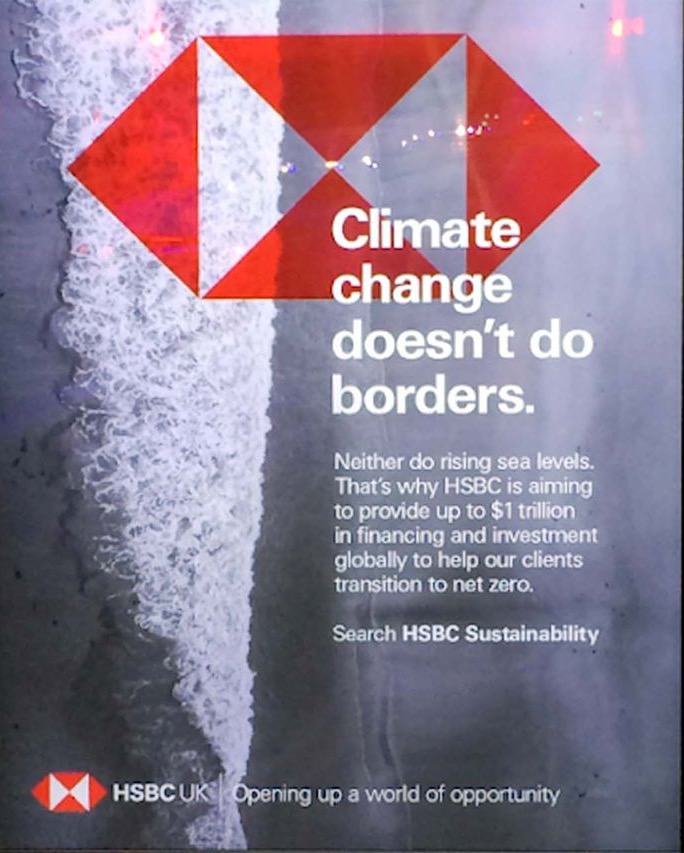
Yes, this sounds strong and it was part of a script. The series threw that phrase out for weeks as the OC was gaining traction. It drove Misha Barton to success and that is pretty much all I know about the series. We take some facts to the bank, we count on it, we depend on it. But then I got to thinking. OC also stands for Organised Crime and at present can you tell the difference whether  it is Organised Crime or a bank? That is not a joke, it is a serious question. Al Jazeera gives us (at https://www.aljazeera.com/news/2023/3/29/french-prosecutors-raid-five-banks-in-massive-tax-fraud-case) ‘French prosecutors raid five banks in massive tax fraud case’. There we are given “banks, including Societe Generale, BNP Paribas and HSBC, faced a compensation request of more than $1bn” we also get “an earlier report in Le Monde newspaper, said Tuesday’s searches had also targeted Exane, which is part of BNP Paribas, and Natixis, the investment bank arm of French banking group BPCE” in the late 80’s someone told me “To be a thief, you need to be good and agile, if you lack these skills you could always become a banker” well we have been seeing that a lot since 2008 onwards. And now we see “it was impossible to put an exact figure on the scale of the fraud but said the banks together faced an overall compensation request of more than $1bn, including fines and late interest payments” this had been going on (as far as they could tell) since 2014. So what is the difference between Organised Crime and bankers? Is it a mere case of legislation? So after we are given the sleep creating news (by the media) regarding United States of Silicon Valley Bank, Signature Bank, and Credit Suisse. We see more cases regarding Fraud? So when will someone wake up and realise that banks are either properly regulated or they are allowed to collapse and the shareholders lose their funds. So when we see advertisement from HSBC how climate change ignores borders, can the next advertisement please state “Climate change, not unlike our alleged involvement in fraud is happily ignoring all border issues” 

Perhaps it is more on point than the so called ‘awareness’ vibes they are spreading now. And when I look at half a dozen advertisements from HSBC I can apply the same strokes to the text and the advertisement becomes a lot different, it becomes a clear path of opportunity seeking. Now, I cannot tell how involved HSBC is, but the raids seem to imply issues. You see the banking system has been skating on the edge of legality for so long (for the need of profit) and when we think back to the billboard days when we got all the anti-Brexit announcements, I saw that there was no mention of Bank fraud, as such, is this hypocrisy or is it like adultery. Everyone expects you to lie about that? Think about that for a second. It is the ‘expects you to lie’ part. In 2018 UNSW gave us ‘Heavy penalties are on the table for banks caught lying and taking fees for no service’, I would add to that that anyone lying is barred from banking services forever. There needs to come a time when these issues need to be dealt with. And the fact that a raid on five banks was done, implies (not proven) that there is a massively large problem out there. So why do we allow these bankers to continue? 

It is a serious question. Uber is short on people, there is seemingly a shortage in supermarkets, let the disgraced bankers fill those holes. Just a thought.

Meanwhile German Deutsche Welle gave us (at https://www.dw.com/en/paris-banks-raided-in-100-billion-tax-fraud-probe/a-65151312) ‘Paris banks raided in €100 billion tax fraud probe’. This seems to be the larger stage (and several media had nothing on this). So when we consider “the investigations are linked to legally dubious “cum cum” practices in which banks create overly complex legal structures as a way to allow wealthy clients to skip out on tax liabilities for dividends. Authorities say Societe Generale, BNP Paribas, BNP Paribas subsidiary Exane, Natixis and the British banking behemoth HSBC are suspected of aggravated tax fraud laundering. Moreover, BNP and Exane are suspected of aggravated tax fraud” can you honestly answer whether there is a difference between Organised Crime and Bankers. We could argue that most bankers have some form of Filofax and are therefor Very Organised Crime. Yet that is seemingly the largest difference at present. Yet this text also gives us another side and that is important. It is seen with “complex legal structures as a way to allow wealthy clients to skip out on tax liabilities for dividends”. That raises the question whether the law was ACTUALLY broken. The Al Jazeera article and two others did not clearly give me this, so there are issues which reflect back on the old premise I made 25 years ago “The tax systems are in dire need of a complete overhaul” This view was mainly on the US and EU, but the setting still applies. And when we see terms like tax fraud and tax fraud laundering and the stage is ‘suspected’ the question becomes “Were laws broken?” You see if that is not the case, these bankers were merely clever sneaky bastards (aka: administrators) and there is no law stopping them (just like there is no laws on Karen’s and idiots). They are all allowed to stay, visit our surroundings and do their business and they are allowed to be as creative they can be within the law and the law is the issue. We might think they are hiding behind the setting of ‘overly complex legal structures’, but that isn’t illegal and we need to recognise that. We need to recognise that the laws and specifically tax laws have been blatantly ignored by all who should have ben overhauling them. That is the heart of the matter and that is under debate as I personally see it. Yet for over 3 decades politicians avoided that subject and now that governments are all running out of funds they are desperate to keep the nose away from their necks and that time is runing out faster and faster. That is merely how I see it.

Leave a comment

Filed under Finance, Law, Media

Apples, Pears or Fruit?

I got mesmerised not by the news, but by an article (at https://www.inc.com/heather-r-huhman/how-to-recruit-top-talent-3-trends-youll-need-to-know-for-2018.html) giving me ‘Big Changes Are Coming to Talent Acquisition in 2018. Here’s What You Need to Know‘, you see, there is nothing wrong with the article, it is sound and it makes a lot of sense. Two things jumped out. The first was actually the second issue “Know your ABCs: AI, blockchain, and chatbots“. It took me back to the 80’s where aspiring new IT Turks had their little vocabulary of things you need to know and mention. So that ABC would be a decent testing soon enough. It is a decent approach, yet soon after the thought was given we will be finding the highly desired ‘almanac of answers‘ soon enough and without technical representation at such an interview, the HR director could end up feeling slightly too lonely for that interview.

It was the first issue that was a larger concern. Perhaps concern is the wrong word. The need to contemplate the mention ‘Focus on adaptability‘, you see that train requires more thought and depending on your point of view, you feel right, wrong or decently confused. I always focussed on flexibility, they are NOT the same. Here the dictionary was of some assistance. As an example it gave me “rats are highly adaptable to change“, so do you want a firm full of rats? They tend to jump ship when things get dicey or too challenging. It was not the example I wanted to use, but I will happily adapt my flexibility accordingly. There is a second part; the option ‘capable of bending easily without breaking‘ is much better, but here I do not completely agree with the adaptation of ‘easily‘. I believe that a flexible workforce gives strength, at times adaptable applies in the same way, but there are differences. When you are flexible you can always resort to your earlier ‘shape’, and flexibility is presumed to be immediate. When you adapt to the new environment you change your shape, so we can argue that you become a new person, instead of merely a more versatile one. This is an equally wrong view as there is no given that an adaptable person cannot adapt back to his earlier self, in the application of flexible versus adaptable it is merely implied.

Another source gave me: “Adaptability and Flexibility, “Indecision is the key to flexibility!” The world of work is changing at an ever increasing pace so employers actively seek out graduates who can adapt to changing circumstances and environments, and embrace new ideas, who are enterprising, resourceful and adaptable“, here I disagree. You see, the flexible workforce has its own set of decisions to make, but they tend to have an everlasting changing atmosphere in where to score their Key Performance Indicators. This has been nearly forever the situation in customer service and customer care positions. That is from a software point of view. I will agree that such changes would be much less likely in the banking sector and that conservative placement is actually changing rapidly nowadays. From my point of view in these places would fare better with a flexible person than an adaptable one. If only from the presumption that adaption takes time and flexibility does not.

In all this there it is not same academic debate and in many cases it is basically the same from any point of view. Yet another voice gave the example that one person is talking about oranges, the other one about pears and they all agree that the fruit is peachy. It sounds nice but once we see that certain steps are linked to KPI values, the discussion could impact someone’s career to a larger degree and that is definitely a larger problem for all involved.

In another example we see: “that focuses on a child’s ability to adapt to new situations, improvise, and shift strategies to meet different types of challenges“, it is a view I very much agree with, yet here too there is caution, because flexibility is also set to parameters. It is more clearly shown when we add: “Video games can help improve Flexibility by allowing kids to practice their Flexibility skills while in the midst of a fun and immersive game“. Yes this is true, yet there is a hidden catch here. The hidden catch is that a game has software and hardware. In some cases a game could be played in more than one way, so set this child on a game like Minecraft on a console (PS4 or Xbox One), let the child play for two hours each day for let’s say 4 days, then on the fifth day give that child the same game on a PC or Tablet. Now you get to see the interaction of flexibility and adaptability, the flexibility to comprehend and adjust to another format seems easy enough, but the person adapting from a controller to a mouse/keyboard or a touch panel of a tablet is another matter. We need both and now the two parameters are shown more widely apart.

Yet this is not the only example and even as we can clearly see the interactions, the needs and the optional issues with flexibility and adaptability, the true test is not in a video game, it’s within ourselves, just like with any other new technology, the flexibility to allow adaptation and the adaptability we have to grow as we engage with new and evolved systems, as well as our environment as it changes as well. Blockchain technology is probably the best and clearest example for all involved parties. Parties on several levels are seeing its usefulness and as Mobile G5 is starting to arrive the list of benefits will increase, faster and larger. Moreover, as companies push in a more global way through clouds, Blockchain technology might be the only one that is least likely to hamper growth, even allow for Wild West growth. Yet this push has two opponents. The first is the marketing hype, as the ‘solution’ is oversold, more and more optional implementers will have ‘additional‘ questions and as no clear answers are given, opposition to the new technology will rise. In addition those evangelising ‘be first or become obsolete‘ players are not helping matters because this is a sales pitch that can never be proven, in fact we have seen how some who did not initially race towards the e-commerce side have not ended up dead (or last), in fact they benefitted from the mistakes and costs the early adopters had and avoided loads of hidden traps. In opposition there are those shunning Blockchain. Some seem valid (for now), much more of them are seemingly doing this in fear of loss of control. The latter is more likely to be seen in data and data management as the tools to manage, edit and audit these sources are vast and far away from today’s reality and today’s usage. Yet it does work (as far as it can be observed) and the part that stops some people is to view, depart and give the new format the go is the fear of being left behind with inconsistent data down the track (in case things fall over). Even as the sources can see how powerful this data could be, especially as data is collected for market Research, the fear shown so far seems to be overwhelming. Especially when we look at established brands and their lack of pace and space to upgrade what is into what could be. The people in Market Research merely need to look into the missed options by letting SurveyCraft be vultured, without clear evolution and system continuance, to see how a market was lost to a much larger degree than the players are willing to admit to.

And here we see part of the issue pointed out. We see this also (at https://globaljournals.org/GJMBR_Volume11/2-Impact-of-Employee-Adaptability-to-Change.pdf), in a paper called ‘Impact of Employee Adaptability to Change towards Organizational Competitive Advantage’.

On page 2 we see: “Organizations are now well equipped to switch according to the circumstances that will be sustained the operations in the long run”. When we see this in light of: “Studies by Bishop (1994) and Bartel and Lichtenburg (1987), proved that highly skilled workforce payback to organization in the shape of higher outputs and enhancing adaptability towards change”. Yet in this light ‘enhancing adaptability’ is not the same we see nowadays. Then it was in light of certain values and certain requirements that the masters of their workforce required. When the bottom line is set in light of a mere quarterly growth the short term requirements tend to have a very different impact. It was discussed in 2009 by Daniel A. Mazmanian and Michael E. Kraft in ‘Toward Sustainable Communities’. With: “Applying sustainability criteria to everyday matters of public policy, business management, and personal consumption is fraught with conceptual and moral hazards”. It requires a rare combination of long-range foresight and short- term adaptability, yet that proper usage is as I personally see it no longer ‘adaptability’ it is ‘flexibility’ through our contemplation of proper acts. Proper acts that tend to be absent of morality that the powers to be employ. Their limited care is towards their stake holders, their shareholders and their own bonus within the legal option available to them. The example of PwC in BT Italy and Tesco are merely two of several. The fact that we heard: “PwC has escaped official censure over the Tesco accounting scandal, after the UK’s accountancy watchdog closed its investigation into the auditor’s approval of the grocer’s flawed financial statements”. It is not because there is no evidence, but because it shows that under the most grey of versions of events that PwC cannot be pointed to as a culprit, the fact that no law can be proven to have been broken is central in this. We can argue whether their setting was ‘did we uphold the law’ or ‘will any of this stick to us’, are two very different statements. The flexible person will contemplate ‘did we uphold the law’ and do whatever he/she can without breaking it, which is a valid position to have. Yet the adaptable individual who will be set behind ‘will any of this stick to us’ is more questionable, yet is it wrong?

That is in my view the difference. I do admit that adaptable and flexible might be interchanged here, unless you accept that ‘Flexibility is the Thinking Skill’, when we do that the setting is no longer interchangeable. This is where I find myself now. Are we talking apples, pears or is it all fruit? I am no longer certain because the needs of Business Intelligence have changed. It is not about translating the results into ‘a story’ and presenting that. Not transferring the numbers and what they mean, but what it could be ‘seen as’, which is not the same thing. In this the bosses need adaptability.

Yet what are you adaptable or flexible?

And when you learn you were not one, you were the other, will you listen to your inner voice?

So what gives?

You see, I believe that our lives are in transit and to a larger extent our working lives are changing. There has been a push for a new kind of leadership in corporate circles. This has happened for a longer amount of time, but now we see more and more advertisements looking for people with an adaptable nature. The next example is not uncommon; it is appearing in more and more job offers. For example: “First and foremost, you will be a high calibre Business Systems Accountant with a positive, pro-active and adaptable demeanour”. What is central in all this is that the articles around us and there is an increasing focus on ‘adaptable’. This is not a fab or a hype. As I personally see it, it is the sign of the times. Every company is looking deeper and deeper into what is possible. As accountants, General management and members of boards are trying to hold onto their 20% growth they are more and more thrust into the world of Black Letter Law. UNSW had an interesting opinion piece (at https://newsroom.unsw.edu.au/news/business-law/bias-and-%E2%80%98black-letter%E2%80%99-judge-who-dyson-heydon). You might stare at the fact that it is 2 years old, but the issue is that the change has taken 2 years for people to be more and more thrust into the reality of that cold light. With “The Howard government appointed Heydon to the High Court in 2003 following a speech that was billed as his “job application” for the upcoming vacancy. In it, he set out his vision for the ideal judge. The judge should interpret the law “according to the books” and do so “incorruptibly”.” In addition we see: “Heydon called out the antithesis of the black-letter judge: the “activist” judge. The activist judge decides cases not by reference to established legal principles, but to further “some political, moral or social programme”. The activist judge uses cases to right social wrongs in accordance with the individual judge’s worldview.

I believe it is not entirely so the case, even though the phrase is not incorrect. You see, some look at the letter of the low, some look at the spirit of the law. What was that law meant to achieve? As our vocabulary has changed certain standards, the standards have shifted on, but the law did not. An example could be seen in ‘decimate’, which now means “to destroy a large portion”, yet in the old days, when it was originally used (by them Romans), it literally meant “to kill one-in-ten”, which came from the Latin word decimates, we still use this in the form of decimal, and another example in this case is ‘divest’, which originally meant “undressing as well as depriving others of their rights or possessions”, yet not until quite recently when it became “selling off investments”. I see this as a dangerous change, you see when the laws were made there was a different meaning in some cases, and consider that Australia still has the Crimes Act 1900, such changes could be a little more perilous then others. The importance of the spirit of the law becomes more and more evident when we consider certain implications. Even as we cannot fault the direction of those who embrace the black letter law, the impact is slightly too large for comfort. Laird Kirkpatrick gave us more dangerous examples in his book ‘Black Letter Outline on Evidence’, here we see: “in 2003, the UK changed the statutory definition of hearsay, and in Regina v Chrysostomou (mark), 2010. L. 942 (Ct. App. Crim. Div. 2010), the court of appeal concluded that drug enquiries found on the defendant’s cell phone were not hearsay, apparently rejecting the earlier view.”, that is the application of black letter law. So how often will these changes benefit the proper setting of the spirit of that law as it was initially set into law? So now take this headline: ‘The UK accounting watchdog today dropped a misconduct probe into Tesco’s auditors PwC, saying there was “not a realistic prospect” wrongdoing could be proven’, why was the investigation halted? Why was proving certain matters not realistic?

I would love to speculate here. You see, I think that in the black letter of the law PwC did not break any laws and did nothing wrong. In this Tesco inflated itself for well over £250m, and got fined £129m because of it. Even as some PwC members are still looked at, I believe that to sizzle away. I believe that PwC decided to go Black Letter Law and did EXACTLY what the law told them to do, even as the spirit of the law is nowhere near those actions. This is the age of Adaptable management and the question is will this be a repeat at BT Italy? It is too early to tell, but if we believe the Financial Times, who gave us: “The fraud involved various methods of hiding and minimising operating costs at BT Italia. Some were complex, but others were as basic as moving expenses into the “capital expenditure” column normally reserved for building and acquiring assets. None of it was picked up by PwC, BT’s senior management or its audit committee, which has regularly reviewed the global services unit, which included Italy, since an earlier accounting debacle in 2008-09.” (at https://www.ft.com/content/c633d452-5c99-11e7-b553-e2df1b0c3220).  I reckon that there will be additional questions at some point. Yet the one thing that was never brought to light in case of Tesco was how matters were missed. If you pay £13M that year (including £3M for consultancy), how was there anything left that was not looked at?

If we know from TV that you never say something specific to your attorney, so you say ‘I bought a new carving knife as a present for my mother in law, is that OK?’, instead of ‘my mother in law is rather clumsy, so I got her a super sharp carving knife and I have been lacing her drinks with aspirin so she could potentially bleed to death next Sunday, am I liable if something happens?

I reckon that in the application of accountants similar issues apply. So you would say: ‘We made changes in division X to look better, can you focus there to make sure we are all up to scrap’ instead of ‘for the love of god, do not look at division Y where we inflated the whole bloody lot’. So as the accountant was not ‘aware’, they missed it. It is just a thought, but how far off am I? Consider that the meaning of Nice changed from ‘foolish’ or ‘silly’ to ‘pleasant‘, it does not matter which version I am, I feel perfectly safe with either.

Yet in the spirit of the views that I have, I am slightly damning to the black letter adaptable workload of management, they could undo a lot more than we saw and felt in 2008.


Leave a comment

Filed under Finance, Law, Media, Politics

Advice from the press?

So, as we look at the Guardian, we see someone stating that we need an independent monitor. So, what is going on? To be quite honest, at first I thought I was reading a cartoon. The fact that the spokespersons name is Julian Disney did not help matters (and I so love my Disney movies).

Yet, this is not me having a go at a respectable person. I do not know Prof Julian Disney AO; he is a professor of Law at UNSW. Even though those from UTS will always happily have a go at their academic brethren (Australian graduates regard the rivalry between Oxford vs. Cambridge and Harvard vs. Yale to be mere child’s play), we do keep all professors in high regard!

Yet, that does not mean that we will not oppose them when needed and this is as I see it such a moment!

I have been very vocal in the past in regards to the press, their actions and their flaws, their massive flaws. It seems that the press all about ‘self-regulating’ and beyond that it is all about public advocates (so that they will have access to materials. Yet, the intelligence field does not operate in this way. I had a few concerns, which I addressed as “I would have preferred that a clear location would be there to alert someone, even if it was a special appointed judge“, which allows for whistle blowers to the smallest extent, but not one that is open to all. I want to be certain that the information is properly vetted for ‘misuse’ (read: whinge to promote one’s self agenda and career).

So yes, I have issues with the article (at http://www.theguardian.com/australia-news/2014/oct/02/australian-press-council-spy-powers-independent-monitor). My first issue is “The Greens senator Scott Ludlam announced on Wednesday the Greens would not be supporting the next tranche of legislation, which will force telecommunications companies to keep the personal details of Australians for two years“. We have two options here, either the DSD (Australian version of GCHQ) gets all the data, or they get access to the data when properly needed. They opted for option two, which means that telecoms need to hold on to data. Listen up people, this means that your data is safe until there is a direct known threat, which will allow for a ‘data warrant’. So if you did nothing, you will never show up in their lists. To be clear, in America, the NSA opted for solution one, which gives them all your actions and as such you were ‘mined’ for flags. This means that in 99.999657% likelihood (roughly), they never saw you, they mined you with processes, but no person ever saw your actions.

The second quote is “He added that it was critical for the inspector general of intelligence and security, journalists and the community to continue to monitor how the new laws were implemented“, I agree with most of this view, but let’s change ‘, journalists and the community‘ into ‘a special appointed and security cleared judge‘. I have nothing against the proper person monitoring what happens and as I am still in favour of a legal approach, it should be a special appointed judge and let’s keep the journo’s out of that part, for several reasons. Let’s not forget that the Sunday Mirror entrapment sting is less than a week old and we have seen our share of issues, especially when there was some free for all against Julia Gillard, with the questions aimed at Tim Mathieson to be the ‘Ruddy’ cake, the icing and the candles. There are several more issues. I admit we are not as bad as that island on the other side of the planet, but when it comes to trusting the press, we should all have issues, especially as the Sony issue was ignored by ALL!

So, as it stands, at present I will oppose the Australian Press Council on this.

There is however something in the quote “This will affect every man, woman and child and every device in the country. Now the government has rammed the Asio laws through the Parliament today it is now turning its sights on every internet user in the country“, this statement is not incorrect, yet the people (read the press and politicians) are both dancing around one issue, whilst another issue is the real threat. It is not that the Intelligence community has access. They are merely there to stop the dangers of terrorism. My issue from the very beginning has been ‘who else gets to have access‘. Here we see the real danger, which the press seems to be unwilling to voice. Why? Is a company like Telstra too able to ‘uproot’ your careers? That fear was voiced by me in the blog ‘For our spies only!‘ which I wrote on the 26th of September, the issue is not what should get access, but what will end up having access too that is to a larger degree a concern. I am still convinced that if data retention becomes a larger issue, the intelligence community will be lacking in hardware, knowledge and staff to deal with these massive amounts of data, which leaves us open to other issues, yet this is just my view!

Now consider the impact!

What impact could there have been? Well, to understand that, we have to take a look at yesterday’s news (at http://www.heraldsun.com.au/news/law-order/jihadist-sponsor-accused-may-have-made-one-fatal-error-that-led-to-his-arrest/story-fni0fee2-1227075746698). The issue here is not how they got him, but how they almost did not get him. The issue was luck, if the FBI did not have a record on all 12 Americans in Syria, we would not know. Hassan El Sabsabi was allegedly funding people to join Islamic State. He would still be in business, and your money on pizza would have gone to support Islamic State. What a lovely meal you would be having then. Was it perhaps the peperoni supreme?

If ASIO had the data and the scripts would have been running, it is likely that he would have been known earlier, more important, who else is doing this? If they funded a non-American they could still be in business and perhaps they still are. There is no evidence that there was only one person doing this, there is evidence that he is unlikely to be the only one. Did you sign up for your Pizza, your Salad or your Sushi to be the foundation for another terrorist? No! So let ASIO do their job! In this case the press will only advice on the things that further their OWN cause, which tends to be circulation and advertisement. That part has been in the foreground in such a blatant way, that I feel no other option then to oppose the view Professor Disney is offering. Possible we will see more information on what happens next and perhaps the Professor will sway my view. I do not think so, but ignoring voices of wisdom tends to be silly and polarising, which serves no one, not even me, myself and I.

What other issues are there?

Well for me that is pretty much it. I believe that access needs to be monitored and no one beside the Intelligence community should have access and that will, at present not be a given. However, I am very much in favour of the press not getting access at all. Yet, the article by Paul Farrell seems to be written with the ‘intent’ to instil fear. A fear we should not get into, for the very reason that it is fear that they are trying to remove and is achieved by people not looking over their shoulder, especially a group of journalists who seem to give into appeasing advertisers, the one group we do not want to see anywhere near these amounts of data.


Leave a comment

Filed under Law, Media, Politics