Tag Archives: business

Is it merely political?

That was the thought I had. It came from Politico, as such I would believe that it was political. Yet the larger premise is on the setting of circumstance. This sounds weirdly spooky, but it is the best I can offer. The story (at https://www.politico.eu/article/vladimir-putin-war-economy-pain-saudi-arabia-sink-global-oil-prices-energy-russia-opec/) starts with ‘Putin’s war economy faces pain if Saudis sink global oil prices’ which is a partial truth, but it goes further then that. We are given “A Saudi move to grab market share will squeeze the Kremlin’s finances, experts argue” which is only a partial truth. The entire part is followed by “Riyadh is increasingly frustrated with other petrostates’ failure to coordinate on cutting supply to raise oil prices to about $100 per barrel — up from the current $70. Oil traders say Saudi Arabia is now set to respond by flexing its muscles and turning the tables on smaller producers, exporting more oil itself to grab market share and profits, even as prices fall.” We are also given “The Financial Times reported last week that Saudi Arabia could abandon its long-held ambitions to limit the crude supply to push prices to around $100 a barrel. Oil market experts have little doubt that Saudi Arabia has the enormous production and export capacity to change tactics and gun for market domination through volume instead.” In this view I need to align a few positions. What is missing is that America (the United Kingdom also) are depending in keeping oil cheap. So that is missing. Hanging it on the Russian needs is a bit dorky. Yes, they both matter, but the US an EU need for cheap oil missing as a pre-made need, is just dorky (I can’t find a better word for this). You see when there is a lack of a commodity prices go up and now this fails? The world requires (at present) that 2.4 million barrels per day pumped more than now and that is not done. I actually speculated this a year ago when I stated that we can pump 4 barrels at $3, or 3 barrels at $4. The amount gained is still the same but at 25% less oil. It is a simple equation (and an incorrect version) but the the premise remains. I went through to the next stage that Saudi Arabia could pump 2 barrels as the price goes up to $6, still the same revenue but now at half the oil delivered. This is how commerce works on commodities. I still doubt the statement that the $100 per barrel cannot be reached, I merely believe that certain stakeholders want the premise to keep their pockets lined. How? I cannot tell, I am not an oil person, I merely use it through various means. So what gives? 

When we get to ““The global economy is fairly sluggish and oil demand is not as high as the Saudis would want,” said Ajay Parmar, director of oil markets analytics at commodities intelligence firm ICIS.” I have issues here. You see, this means that the Russia delivers all oil. There is not a lack of demand, some people are playing a high end game to keep their pockets lined. If I had it my way (pretend that I am the new CEO of Aramco, a very fake one) I would stop 5.5 million barrels a day from reaching the US, EU and UK, in the combination 3,2 and .5 it would take less than 90 days for it all to implode. As Tesla is more and more lacking is quality, the other nations will need 2-3 years to overcome their downfall and in that time China is the new superpower with America stumbling over the edge of the abyss. That is clear in my (optionally wrong) point of view. The setting that Politico gives is too partial and slightly too flawed. 

Yes Russia has a problem and they are welcome to the problems they get to harvest now. A second problem is “Russia’s fossil fuel profits have also risen by 41 percent in the first half of this year alone, according to Moscow’s finance ministry, despite Western sanctions imposed over the war in Ukraine.” I don’t doubt these numbers, but who paid for that oil? I doubt is was merely China, North Korea and India. Although these countries were involved. I saw last year that India was buying some of the oil, China is a definite and I guess that North Korea had to pay for their weapons and it seems like a logical choice for them to accept oil as payment. So who more? 

Politico should have stated “Russia’s fossil fuel profits have also risen by 41 percent (from 1M barrels to 1.41M barrels)” but they didn’t if Russia only sold 50,000 barrels it will not be an issue, but that is not the case, is it?

Now if you doubt my reasoning. That is fine. But we have seen plenty of issues where prices go up the moment that commodities has a higher demand. Yet the article does not give us that does it? And who is Ajay Parmar? This article leaves me with plenty of questions and no answers. So in all this, Is Russia in actual trouble? To some degree, but I see this as an alternative way for Saudi Arabia to give in to the west requiring cheap oil. I personally believe that Politico missed their mark and as such loses credibility as such. The one part that I do see is “A loophole allows middlemen in countries like Turkey, China and India to refine Russian oil in petrol and diesel before selling it elsewhere — exempt from sanctions. According to a report first seen by POLITICO, Western countries spent $2 billion on this rebranded fuel in the first half of 2024” As such that should be the story and the story is that more and more nations are fuelling Russian revenue through refining Russian oil and filling their pockets. As such there is a momentum being built, one that is not addressed and one that is trivialised as such I expect that plenty of newspapers will fuel their revenue by posting this story. The 41% is now shown to be big business, especially when we see Turkey and India and how they are short on cash pretty much all of the time.

So we are seeing a larger stage. In the first on where is Russian oil going to and in the second what countries are fuelling their demands for cheap oil? A nice spreadsheet would have been nice, but that was a part that Politico oversaw (I guess).

Still as we see one part, we also see the part that some want us to see, appointed awareness. A combination of social awareness and the influence of appointing. A formal arrangement to create a designed social awareness. The ability to understand a situation as the offical parties would like others to see them. But as I see it, this will be at the expense of the Kingdom of Saudi Arabia. Is that fair all whilst Russia is handed loophole after loophole, as long as the west gets its oil cheap. How is this not exploitation? 

Consider what is being done and at what expense? The question is simple enough. 

Enjoy the Sunday you have left to you.

4 Comments

Filed under Finance, Law, Media, Politics

How I fall short

That is the stage, that is the setting. I do not know everything (too boring anyways) and even as I see how things develop and are optionally staged. The fact that I do not know everything gets in the way of some things. Now, I know very little about oil. It is a commodity everyone needs, it is a commodity only some countries have and the two biggest players in that field are Aramco and ADNOC, oil is black and it is needed for the production of petroleum. That’s about all I know. The current price is about $68 dollars per barrel. So when I saw ‘Oil price drops, and BP and Shell shares slide, as Saudi Arabia ‘prepares to abandon $100 crude target’’ I didn’t think too much of it. The story comes from the Guardian (at https://www.theguardian.com/business/live/2024/sep/26/european-reconstruction-bank-cuts-growth-forecasts-energy-ukraine-elon-musk-uk-investment-summit), there were more sources, but I am handing you this one. We get “Saudi Arabia is reportedly ready to abandon its unofficial price target of $100 a barrel for crude as it prepares to increase output” yet Oil&Gas journal gives us “Saudi Arabia is preparing to abandon its informal target of $100/bbl for crude oil as it plans to increase production, signalling the kingdom’s acceptance of a period of lower prices and intentions to take back market share, according to sources cited by the Financial Times”, now in my book the shortage of one commodity means prices go up. I do understand that any player will protect market share, as such I get the increase of product to protect your market share. That makes sense. And as such we see Saudi Arabia deciding an increase for about 1 million barrels per day as per December 2024. There are a few players on this field and I like the idea that the increase will make sure that Russia has less customers to get it from Russia is not happy. And as several media are giving us the goods, there is no other way for me than to agree with the setting. In overall there is still a larger concern I have. Oil is a commodity with a finite supply, so how much supply is there? I believe that the middle east has the bulk of it, but the finite session gives us the dangerous setting that at some point, the three countries with supply will be Russia, Iran and Venezuela. That is not a setting I want to wake up to, although at present it is highly unlikely that I will be around the morning we get that piece of news. In the meantime there is a larger issue at stake. How will Aramco increase its creation of oil with an additional 159,000,000 litres of that black fluid. You see everyone is looking at the end result and no one is looking at the how. What is required to that level of increase? I feel certain that it will require a lot more than one pump. It is the increase of 10% (near to that) and comes from 300 rigs. The simpleton in me sees this as an additional 30 rigs. It takes 18 months to five years to commission a rig, the construction timeline for an oil rig can vary significantly depending on several factors and that is if the oil comes from rigs. Saudi Arabia has one hundred oil and gas fields, so if it comes from there, other means are needed. The largest oil field is the Ghawar field. So how can you increase the production there? And is that the only place? We are so desperate for oil that the basic security is overlooked and there is at present Iran, Houthi forces and a few others who are very willing to hurt Saudi Arabia. So what more is needed, because when by November that increase is realised, some will take offence to this and that problem will possibly create all kinds of new problems. And we do not see enough information on that side of the equation.

And advice from me? Nope, I know next to nothing on that topic. I can merely see hurdles and optionally a personal belief that I see options, but that is not what the actual expert on the topic has. And the media? Solutions do not make their digital wallet fat, flames do that and in that view it is not a good idea to put flames close to oil, a mere personal view on the matter.

Have a great weekend.

Leave a comment

Filed under Finance, Politics

By what evidence?

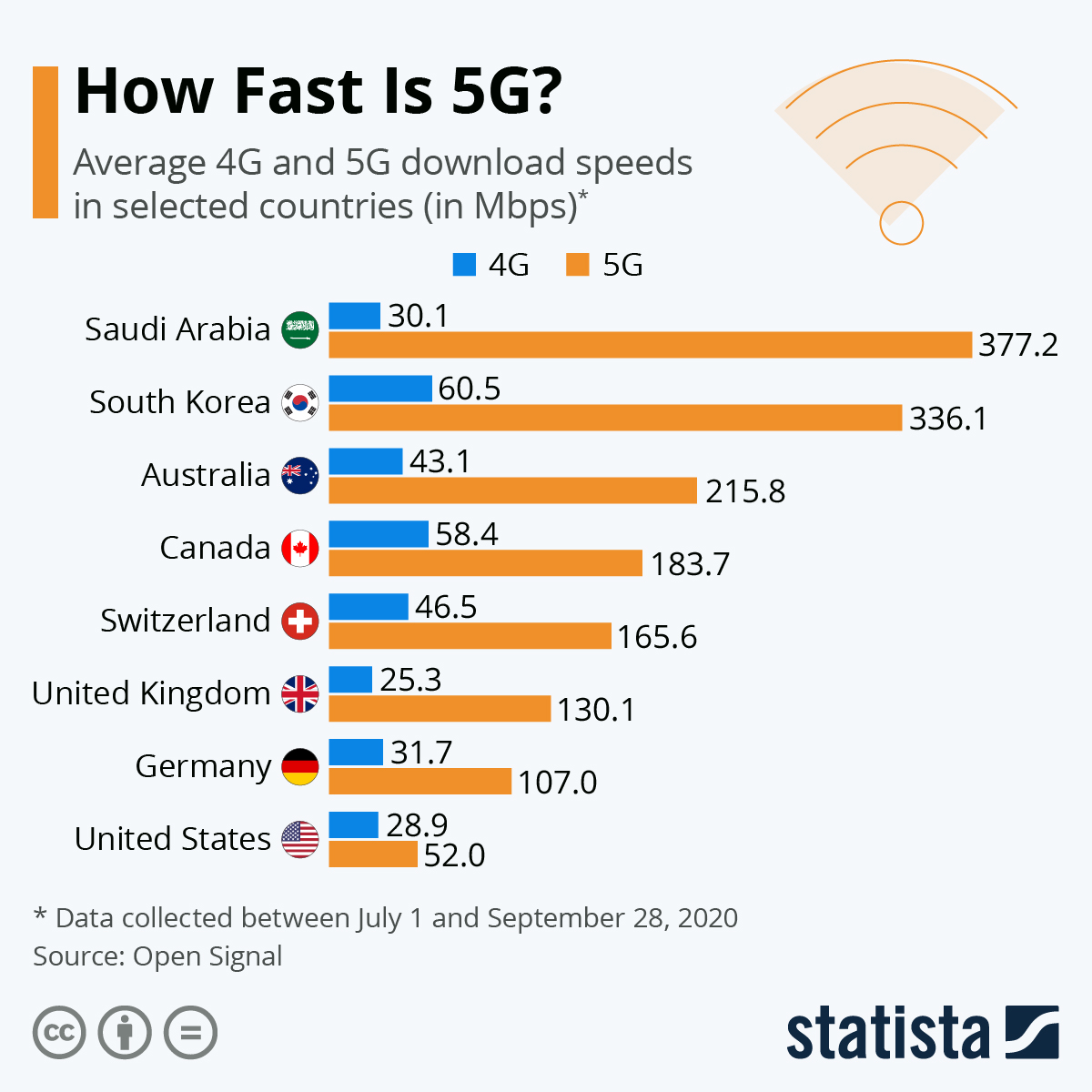
I had to stop and read an article on Business Insider (at https://www.businessinsider.com/saudi-crown-princes-china-deals-hint-city-darker-neom-mbs-2023-3) the headline ends with the ominous ‘His deals with China reveal a darker vision.’ I wonder where they get that from. You see the text “But analysts believe that Chinese tech could be used to place residents under total surveillance.” You see, the text sounds nice, but what evidence is there? Are these the same analysts that claimed that there were Weapons of Mass Destruction in Iraq? Are these the same analysts that dropped the ball again and again in the era 2017-2022? So when we are given “The crown prince has been strengthening his ties with China’s leader, Xi Jinping, who has agreed to provide powerful surveillance technology.” I wonder what evidence there is. China courted Saudi Arabia for a long time as there was billions in defence structures to be build and to be sold. Solutions that the US and UK sneered at, like the yapping chihuahua they deserted Saudi Arabia and now that America is almost done for, they are poisoning the well any way they can. We see the name Jili Bulelani and we see the word Harvard, but we see no real evidence. So when we are given “China has already provided surveillance technology for the creation of so-called “safe cities”, run on user data, in Egypt and Serbia, report by the Washington Institute think tank found.” The simple question becomes, what evidence do you have to show? It is nice that we see think tanks, but their revenue revolves around worst case scenarios and I see no evidence, none at all. Then we are given “Last December, MBS welcomed Xi to Saudi Arabia for a lavish summit, where the leaders announced cooperation across a broad range of issues, including surveillance tech.” That is actually correct, but the Chinese goals were loftier, they had the option to push America out of the defence business and the defence business involves surveillance and reconnaissance s well, so it is merely half a point and not in the right direction. Then we are given ““We’re not yet seeing quite the same degree of sort of physical surveillance [in Saudi Arabia] as we’ve been seeing in China, for example, but China is working with the Saudis and other Gulf countries to start to implement that,” Annelle Sheline, a researcher with the Quincy Institute in Washington, DC, told Insider.” In this what exactly is ‘not yet seeing quite the same degree’ that implies some degree, so where is THAT evidence? We see all these institutes vomiting statements like a cat eating citrus leaves and it goes nowhere. Then we get “Another potential concern is cloud technology, specifically the companies that store huge amounts of computer data. Chinese telecoms giant Huawei has already signed contracts with Saudi Arabia, including in NEOM, and James said there were huge questions about how much privacy protection the firm would provide users in the city.” Yes, Huawei was invited to roll out a complete 5G circus, especially after the US was stupid enough to make boasts, all whilst the Huawei was over 700% faster and stronger. I will include that chart below. It is a few year old, but that was the setting in 2020.

As such Huawei has proven themselves and at present the US and EU have never shown EVIDENCE that Huawei was spying on its consumers with their phones. Stronger, they don’t need to, the Pentagon will happily put TS information online to appease their own ego’s and that is nothing compared the the documents some leak to the press. China could merely slam an American ego and the information would come pouring out (no honeytrap required). 

As such we have an issue, it becomes worse when the Business Insider gives us “While casting himself as a reformer, Crown Prince Mohammed has dealt brutally with critics and opponents of the Saudi government, including the 2018 murder and dismemberment of Saudi dissident Jamal Khashoggi.” It is worse because there is no evidence that the Crown Prince was involved, more important there is no body as such no actual evidence of what happened to that columnist no one gives an eff… about. As one source gave someone I knew, he had a secret mistress age 19 and they are spending their lives on Bora Bora. That too is unconfirmed and therefor not reliable, just like that essay that the UN essay writer Eggy Calamari gave us. I punched several holes in that on February 27th 2021 in the article ‘That was easy!’ (At https://lawlordtobe.com/2021/02/27/that-was-easy/) as such the article in the Business Insider gets to get hurt as well, there were a few issues and perhaps their readers enjoy part of an incorrect story, but the short and sweet is that the US administration was willing to soil its ally Saudi Arabia, a powerful nation with lots of oil and trillions in real estate investments and now that China is eager to get that large slice of revenue, the US is looking at what is left, but there isn’t much left, there is just the 30 trillion in debt and little or no revenue and now that the Ukraine-Russian clambake is starting to bite, that revenue was imperative, but China is there now. Is it possible that the story is true? Well one part definitely is not, the rest requires EVIDENCE, evidence that we aren’t given and that remains an issue. I am a firm believer of evidence, so as I reject one side, I also reject the other side (Bora Bora) because the evidence is not there. 

As such Business Insider needs to reevaluate what they print and by what standards, and as I have stated before, the standards of the media is slipping by a lot and that is merely the last 3 years. I reckon that as the US grows desperate for more and more revenue that standard slips most likely even more, but that is a personal view I hold.

Have a great day, that day after the weekend. Happy Monday!

Leave a comment

Filed under Finance, Media, Military, Politics

Some hypocrisy

I saw the news earlier this week and I kinda shrugged it off. In the end it was about “Djokovic’s father was photographed with the Putin supporters after his son’s quarter-final win over Russia’s Andrey Rublev.” I cannot judge this part as I did not see how it all happened. This is important for a few reasons. And the idea that his father has to watch it on TV is a bit of an issue for me.

You see to get that part of the equation, you need to learn something. Yesterday I was given ‘Why are so many Western companies still doing business in Russia?’ by the Strategist. The Australian Strategic Policy Institute (at https://www.aspistrategist.org.au/why-are-so-many-western-companies-still-doing-business-in-russia/) here we see “The study identified 1,404 companies headquartered in EU and G7 countries with a total of 2,405 subsidiaries in Russia before its February 2022 invasion of Ukraine. Only 120 of these companies, or 8.5% of the total, had ‘exited’ at least one of their subsidiaries by the end of November.” So where is your outrage now? Why is the media not hounding these players? Actually, why is the media not hounding these players? You have a go at some father whilst we see that the bulk is selling their wares in Russia, what a bunch of cowards you are. So 90% is still filling their pockets and I actually do not care what they are selling, they are supporting the Russians and their war efforts, so here is my message for Ukraine’s Australian ambassador Vasyl Myroshnychenko who stated that “Tennis Australia should ban Srdjan Djokovic for “such a disgrace’’”. I have nothing against Vasyl and he has genuine beef with the Russians, so I get it. But I am PERSONALLY holding him responsible for investigating the media and why they are not all over these thousands of businesses who are still selling to Russia. I get that we are given “The researchers acknowledge that there are many sound reasons why companies might fail to withdraw. ‘A Western firm operating in a sector excluded from official sanctions may decide that it is inappropriate to abandon its Russian customers, who may have played no part in the decision to invade Ukraine or in the prosecution of the armed conflict,’ they wrote.” But is that enough? What do you think Vasyl Myroshnychenko? Is it enough? In this US Treasury Secretary Janet Yellen has repeatedly called on the US business sector to strengthen the resilience of its supply chains by ‘friend-shoring’, or redirecting investment to allies. In the context of the risk of conflict in the Taiwan Strait, she urged US businesses to pay greater heed to geopolitical realities. Which is also massively fair. Yet in light of the outburst that Vasyl Myroshnychenko gave us, I reckon he is now equally responsible to hand out outrage of these businesses still doing businesses with Russia and he needs to expose them all, because when over 1,000 businesses are still selling to the Russians, they are sure to miss out on the pressures that would force the Russian army to fall back. What do you say? Do you think I have a case here? I believe I do, but I am but one voice (so is Janet Yellen) should more be done? I will let you decide on that and decide what you should do to make is harder on Russia, even if it is for the simple reason to give Paddington bear time to eat his marmalade sandwich.

Leave a comment

Filed under Media, Politics

Exploitation fears for tax-payers

The Dutch NOS reported another go with banks in the view of business. Bernhard Wientjes has been voicing the opinion that some of the banks (ABN/AMRO and SNS Reaal) should be sold. It was brought in the air of ‘when you have no more money you start selling the silver cutlery’ would be the next step. As the Dutch government needs to cut 6 billion, the cutting spree could be a lot less. Well, in this matter I personally stand with Finance minister Jeroen Dijsselbloem who is not that eager to do that. There is logic for not doing this, as this relief would be for one year only and after that the cuttings would still need to be found next year. I am worried that certain business men are now in a state to strong hand certain political decisions. I leave it up to the reader whether those decisions are purely for the need of greed.

If business is linked to greed (often called ‘enterprising solutions’) then that would clearly fit in the views of Bernhard Wientjes. As chairman of the VNO-NCW it would be an enterprising solution that is right up his alley. The VNO-NCW is a fusion of the VNO (League of Dutch Commercial Enterprises) and the NCW (Dutch Christian Business Society). Their mission is to support and further the needs of Dutch corporations both on a National and international level. In this he is doing exactly what he is expected to do.

Yet, in this light, at a point where two banks would be sold far below value and at the expense of the tax-payers, one should clearly ask and look at the possible windfall for Bernhard Wientjes and his friends should this work out in that way.

There is a clear valid question whether the Dutch Silver cutlery is currently in a safe position. The reality of 6 billion of cutbacks will start to show a strangling result, yet, this was the danger all along when previous political alliances (2006-2010) were clearly pushing the outstanding invoice forward. Now that there are no more options, the consequences are likely to be dire, and as such in his position Bernhard Wientjes is clearly trying to look forward for Dutch corporations. I see this specific step as a dangerous one and until Dutch banks are clearly on a minimum set standard nothing should change. In addition, I am all in favour at present to keep these institutions nationalised to prevent their boards to just seek additional high risk gains at anyone’s expense to meet personal commission goals, whilst ignoring local needs (mortgages and such).

Even seeing these banks as possible training steps for younger jobseekers on the dole, to give them short term jobs whilst staying on the dole, would give them additional food for job experience. The answers that some view that this is not how it is supposed to be, I would counter, with ‘what solutions do you have?’. We need to change the way we think and operate. Instead of trying to balance which pocket the money is coming from, we should accept that the money is coming from the suit the government wears and see how far we can walk with this suit. Instead of staying on principle of keeping tabs what pocket it comes from, use the principle of it comes from us anyway and focus on instilling knowledge and experience. That will strengthen the young to get a good shot in getting something better with a decent chance. If you have any doubt, then consider that the Netherlands is only one of 3 countries where youth unemployment rates are below 10%. Many of the Southern European countries are way over 40%. If the future of youth employment is about experience, then make sure that the youth are getting a running start now is going to be important down the line. If their future could be a decent job in Germany, then giving them an edge as they compete with desperate youthful jobseekers from Spain, Italy or Greece is essential. Do not think that those kids are any less. Those who graduated from Universidad Complutense de Madrid are more than top Notch. 7 of their graduates ended up with a Nobel price and graduates from there ended up with 2 dozen of other internationally acclaimed awards. So, if we are looking at future events, getting the youth ready NOW will be an essential step.

Yet, this week has even more issues involving banks. A report that is due to be released tomorrow on advised banking changes. The ‘advice’ is to change the mortgage market. In the Netherlands it is currently possible to get a 105% mortgage so that the house and the notary costs and change of owner registration can all be covered. The commission chaired by Herman Wijfels is now advocating that the mortgage cannot be any higher than 80%. This is to prevent that the debt of selling a house at loss would end up hitting the banks. It seems that the banks are all over their need for ‘securing’ for the little man (read the average consumer). Taking into account that the average house in the Netherlands is around $350,000 the question, especially in this era of lack of funds is where on earth will a person get $70,000 in savings when the Dutch taxation system makes it almost impossible to get that kind of money saved up. They also mentioned that this should not be done until the housing market is stronger and prices are on the rise. Like that will help people to get the money. It is interesting that there is no mention of the much more reliable and fair Swedish system. Perhaps the report due out tomorrow will mention it, but I have not been privy to the full report. In the Swedish system a house often has a two tiered mortgage. You have the bottom part which envisions the gross off it (let’s say 80% for argument sake) at a low base percentage. The rest goes into the top part. Now that part (in my case) was almost 2.5% interest higher, but the mortgage was 105% covered. So instead of the unaffordable savings needs, we have a slightly higher mortgage. So, even if we have to accept a slightly cheaper house, we at least can get a house and not be looking at houses, never being able to afford any of it. The question becomes on what it was about. The fact that a report leaks is no news, but that the report leaks just around the same time Bernhard Wientjes is making a play to sell banks is a rather convenient coincidence.

These events are important to consider. This is because the same issues are playing in the UK. Consider that Lloyds is in need of an extension as they are selling 631 branches. This and the issues around the Royal Bank of Scotland do have links, as the UK government needs to cut cost by a lot more than 6 billion (having a Trillion in deficit makes that an awkward necessity). So will we see the same play as some are now seeing if they can sell banking interests at no more than tuppence on the pound? There is absolutely no known plans at present (in case you got scared or overly enthusiastic), but the issues remain, and the solution as such would be there in equal measure. To allow the young unemployed to become part of the bank on internships and training places, so that we can offer a solution where those seeking jobs will have actual work experience in their CV. These measures might seem small, yet the confidence boost that the younger jobseekers gain, could be the winning factor. In addition, extra hands, helping to boost the value of these banks would mean that when sold, they will go for a much better and more realistic value then they are currently set at. All this in a combined effort to strengthen commonwealth economy and their assets, for the simple reason that the European Economic outlook remains grim at best and relying on overly confident reports of economic prospects, that get downgraded quarter after quarter is not doing anyone any good.


Leave a comment

Filed under Finance, Politics

You might soon be sold by the banks!

I have heard often, in many situations the ‘that is not how it works’ was stated. How it was all in my mind. No, this morning issues were not just confirmed, I reckon that things are even worse than you think they are.

You see, for the most I do not trust ‘Financial Institutions’. They came in a time when there was an abundance of all, when people, as they were turned away from banks, they were willing to take a ‘chance’. For one part, this is Capitalism at its best! (Or at least that is how it was in the beginning.) Now they have grown, more margins more abilities and as we saw them grow in many fields they gained perspectives the banks in their conservatives states did not.

So, whenever I can, I stay away from financial institution. The main reason, they do not have the muzzle to keep them in place when needed. You think this is strange? Well, read on and prepare for the rudest awakening in a long time.

In the Netherlands there is a company called Equens. Today they temporary abstained from a plan to sell on their financial information. Equens is a payment provider. It processes pass (credit cards, bank cards and so on) transactions. They do so all over Europe and they are not the smallest. With 15 BILLION transactions they own well over 10% of the market. The plan is indeed decently brilliant, but dangerous as hell. They almost pulled in the banks to take their transaction data to market. It would have been quite the revenue, but it is the most dangerous one you will ever personally experience, and the issue with ‘temporary’ means it remains a danger. The initial report on this matter drew too much criticism, even though RABO and SNS Nationalised were interested, they crawled back when certain legal issues rose. It had been raised by the Dutch consumer society and the Dutch political party Democrats 66. I feel certain that this delay is a temporary one, as the issues involving legalities might be resolved over time. This is exactly the issue with financial institutions. Banks have power, but as such they were limited in freedom of movement (as it should be). Their commercial corporate brother named ‘Financial institution’ does not have these strict limits, which gives many of us the dangers currently at play.

Even so, Equens did make the promise that the sold information could not be tracked to any individual. This is where they are (intentionally) wrong in my mind.

You see, this goes beyond their system (and that is how they ‘focussed’ their view. Let me show you how. You buy an item at your usual store. That store processes your payment. You remain anonymous. Yet, your usual store has given you a discount/loyalty pass. NOW there is a connection between the bank card and your personality. So, as Equens data is sold on and on and on, more information can be added as the shop cash register (and therefor their data) has your bank pass and your personal details in the form of a loyalty card. Two numbers that could be connected with the greatest of ease and these cash registers have been collecting numbers for years and years. Now the link of two numbers separates their claim of anonymity and total financial and personal classification.

So look at those facts, now check your wallet and look at those cards you have. Are any of them for the Cinema? A book store? A game store? A fashion store? Do you get mail to your home from any of them? You’ll likely have at least one, and with every addition, you will get classified more and quicker. Soon you are nothing more than a product number. This is the ultimate marketing move! Availability of products, per person, per location. This is not such a future event; this is about to happen to us all.

I reckon that whatever happens will happen fast, and not just in the EU. If Equens is so willing to make this leap with only +10% market share, then who are the bigger players? This is a mega million market and if the Netherlands with 19 million people are so desired, then what about the UK with 68 million? Consider the meeting Equens had and a document they presented in June 2011 (source: http://www.paymentscouncil.org.uk/files/payments_council/npp2011_-_consultation_docs/22.06.11_equens_se.pdf).

The statements like: “However, the single largest criticism of the NPP is that it lacks an overarching business vision on which to drive a coherent strategy that delivers the various elements of the Plan.

So, the National Payment Plan was even more in need of a business vision? To consider those consequences we would need to look at Q42 of that document on page 14. Single Euro Payments Area (SEPA) is under scrutiny where it was stated that ”The adoption of SEPA standards and formats should be introduced as quickly as possible. Whilst this will impose a cost on Corporate UK, the benefits of these new standards will take some time to reach fruition if standards migration is done on a phased basis.” So what adoptions exactly, and as such, which ones are less documented but not prohibited? From an IT point of view ‘formats’ reads as changes to interact data on more levels more easily. Why? Costs on Corporate UK! When have they EVER been willing to accept costs without tenfold falling back into their laps? It is simple basic capitalism. I have nothing against it, yet the part where most others get sold is not in those papers, yet it is not prohibited either. Welcome to the open world of financial institutions where we are about to become their product. Even though Equens is now visible, I wonder where a big boy like Schlumberger (Axalto) is at this point, who has a sizeable share.

The NOS reported on their website (www.nos.nl) today that these moves are for now of the table. Quoted was “Aanleiding voor dit besluit is de maatschappelijke onrust die is ontstaan.” (translation: ‘reason for this decision is the social unease that rose‘). I think that they have business concerns which will not allow them to endanger their 10% market at present. Yet, if they thought of it, then so did the other players and as such the next step is only a matter of time, and I reckon that we do not have that much time left before we are part of a sold system.

From there our world of what we need will be transformed into our world as THEY see we need. A small change will become a world of difference for us all.

Leave a comment

Filed under Finance, IT, Law, Media, Politics