
Today we see another message, another prediction and another approach to make people nervous. This time it is a combined effort from the fields of Oxford University and Deloitte, they find that ‘77% probability of ‘repetitive and predictable’ roles being automated‘ (at https://www.theguardian.com/society/2016/oct/25/850000-public-sector-jobs-automated-2030-oxford-university-deloitte-study).
So how true is this?
Actually, there is a lot of truth in it. The truth is not just a given, it is an essential need. Yet the headline ‘Study says 850,000 UK public sector jobs could be automated by 2030‘ is a problem, not one of disaster, but one of opportunity possibly missed. The article gives us a few things, including links to the full report (indirect), which is a good thing and let’s be honest, Deloitte is no PwC; they stand miles above that group of Excel users. My first issue is with page 2. Not because it is incorrect, but the difference from my view is as I see it more than semantics. You see, they state “eliminating the budget deficit – into an era of parallel challenges as it moves towards Brexit“. I believe that Brexit will enable over time a speedier recovery of the deficit, it will be no picnic, but it will happen. Which is why I in earlier writing opposed the view the independent had. They wrote “Britain’s largest banks are planning to move business overseas due to uncertainty over the Brexit process, the head of the British Bankers’ Association has warned“, where my response in a decently diplomatic tone was “So, let them fuck off! The moment they feel the initial 2018 collapse of the Euro and the US Dollar, which will be voiced as ‘our currency will face a temporary contraction of value’, then they will see the cost they face and the revenue they are now missing out of. So, feel free to consider to return after learning that mistake under conditions of massive administrative fees for consideration of inclusion into the UK economy“. This is not an empty view, when the UK returns to strength, those moved away will see contracting economies in Germany, where the Deutsche Bank will be desperate to retain business out of fear of the damage of ‘written off’ collapsing corporations. France will be in a similar state, but there Crédit Agricole and Natixis are the Powerbrokers and neither will consider some ‘grocery bank’ that is relocating to ‘new shores’, so these moving banks will not be too welcome there. And several other nations are in a similar setting. So what is left? Italy? Greece? Good luck with that idea!
So as the UK is facing new issues and new challenges, Deloitte is showing that it is not all roses. The report shows on page 12 “The OECD and IMF views are backed up by OBR analysis that suggests spending on investment, public services and benefits are the interventions most likely to provide rapid economic boosts while providing a platform for medium and longer term growth“, this illuminates an earlier issue that has been mentioned by yours truly (aka: me) more than once. It isn’t just the £11.2 NHS IT failure the UK Labour party gave its citizens. The bigger issue is that governments at large have had a failing grade in managing such projects. Over micro-managing made these projects too massive and in the end no longer feasible or realistic. If this is the path, than it needs to precede an altered adjustment in procedures on how to manage and set these projects. The issue we see that still is required for the NHS, also clearly shows that the political interference tends to be a hindrance rarely a solution. However, the political part cannot be removed, but the entire setup can be altered in another way. A clear definition of what is required, that would after this point be scrutinised by proper IT specialists working for the government (to keep that part of the costing down), only then when that part has been dealt with, can the project move into a new field. If this was the Law and Mental Health, it might be best phrased that the government needs an IT version of a Diagnostic and Statistical Manual of Mental Disorders (DSM-5). Such a manual would need a data requirement part, and application part, a data networking part and a security part. Until such an approach is made, the need that we see, will end up being a massive expenditure towards the Exchequers chest, with the risk of no result and no alternative. These paths make sense in two ways. In the first there will be a lot more clarity on what is requested, required and delivered. There will be less contractual mud and as such whomever took the project will be responsible for the delivered bad boy and it would show a clear path of adjustment and repairs (where needed).
There is even a new side in this, it will shape the required need of technical universities. Because as they become involved, delivering the hours and manpower towards these projects, the costing will be reduced, the Universities will also gain an income and their students would end up with a partial career and years of work and subsequent income. You see, the need to move away from these ‘conceptual consultants’ and selling concepts not products is an essential need to make it all work. There is even an additional benefit that larger IT corporations will lose their grip on governmental budgets and it will serve a wider audience, a change that has been overdue for at least 10 years.
The report gives on page 20 the public’s attitude. My issue is number 2. “More people expect public services to get worse because of Brexit“, I am not sure if that is complete. It is not incorrect, but the point of focus would reset really quickly when we consider the Guardian where we read “Deloitte’s previous work has shown that all sectors will be affected by automation in the next two decades, with 74% of jobs in transportation and storage, 59% in wholesale and retail trades and 56% in manufacturing having a high chance of being automated“, any automation where we see the change from personal towards an automated androgynous system, tends to cause waves of rejection and stress. Even today, we still have an automated irritation when we hear ‘press 1 for sales‘. Until we can upgrade these systems into a much better evolved system, automation will fluctuate into people seeking other avenues in acquiring that what they need. In addition, there is still an aversion to automated sales in some areas as distribution misses the quality marks the recipient demands in some cases. Now, we can all agree that there is plenty of evolution in this field and the evolution is growing in many directions and in long before 2030 we will have systems that are vastly superior to the systems we have today, that is the way the beast tends to work. There is also a given that we cannot yet predict how that will be in 5 years, yet all this requires a solid foundation between sales, services and facilitation/distribution and that part is currently still missing.
Now we get to the part that is a little bit of an issue with the report. We see that the top issue is ‘Better public transport‘, but better how? We see it on page 21 of the full report, so when we see ‘What things would you say would most improve public services in your area?’ Here, I miss a part where we see what the audience now feels is missing or failing. Is it prices, the amounts of times the public transport comes in, how busy it is (no sitting options), you see, they all come with extra costs. More busses means more costs. The solution that seemingly addresses all three mentioned, but is that the failure, the flaw or is it something else? I think that this issue remains subserving to the public’s personal issues ‘Poverty, inequality and low pay‘ as well as ‘Housing‘, which is all about the quality of life for most people. How to address that part is also an issue and automation does not address these policies in any way. Which is respectively 20% and 18% of an asked population of 1099 adults, which in my view is a population way too small to set this ‘State of the State‘ to. For a decent level of reliability, especially as the UK is a mere 65 million people, having a response quota 5,000-10,000 on a national level would have been an essential first. If the results were weighted towards the UK demographics, than it is likely that this report will have additional ‘flaws’, making me wonder who signed off on the requested paper?
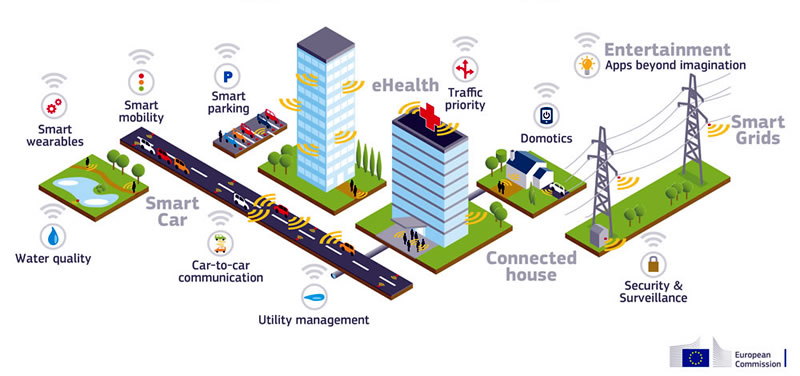
There is another side the Guardian gives “However, in contrast to the doomsayers who predict mass unemployment, the firm has argued that over the last 140 years automation has created more work than it destroyed“, I am on the side of Deloitte here. In addition to creating more work, from the issues I raised earlier when considering that 10%-20% is moving towards retirement, the new jobs that are brought will be largely long term jobs and as the setting from tertiary IT education focusses on the governmental automation needs it already has as well as those we will likely see over the next 5 years, the overall quality of the workers in this field could rise almost exponentially when set this against the prepared workforce in the last 10 years. The result of better and more focussed workers will also increase the curve of automation as well as the quality of it. Part of the new data world is discussed on page 34 of that report. the quote “A police and crime commissioner compared data security challenges in the public sector to those in banking, concluding that banks “have secure information and have got away with it”” reads a little weird, yet the foundation of it is a requirement factor that will grow immensely. That field will grow in two ways. The first is the growing field of non-repudiation, a clear register that a certain person accessed certain data and only that person could have done it. This field especially if a cause for concern because there is a gap in technology here and especially in the case of NHS data, that gap needs to be filled (as well as several other fields). Should you doubt that, or prefer to trivialise this, then look towards Ashley Madison, the Office of Personnel Management, Anthem, Hacking Team and Premera. In effect totalling the endangered personal details of up to 150 million people. And this is only the hacks of 2015. When we see the upcoming move towards domotics, the overall danger of personal data getting out has the option of growing the number of people exposed by 1000%, basically a lot more than the complete UK population, at that stage even the sheep, sheepdogs and pony’s on Shetland could find their personal details online. This industry will grow, with a large club of international career opportunities in IT and the growing niche of Data Security.
In the end, we can agree with the numbers, or we can disagree. No matter how the meat is sliced, the recommendation on page 49 are in the end what matters. That part reads a little too diplomatic, but in all fairness they are points that count. Yet, as I personally see this, especially when set against page 2, I am missing something. You see, in my view, there is an item 6. I would state “This state will need to grow into a different dynamic (Government, Non-Profit and Commercial), it requires to grow its government policies by actively engaging and hiring the final year students into its governmental workplace and make them part of the IT evolution“.
It is my view that corporate needs will always exist, yet by preparing these students, graduating them and for them to adhere to corporate policies as they sell their innovations to government is all good for those corporations and I am not against that, because they will get a massive dose of that throughout their careers. There is nothing wrong by having these places of education create part of the engines of solution for the UK government. It falls directly in line with the thoughts in recommendations 2, 3 and 4.
The paper is a lot more than just about IT, even though IT takes the forefront here. When we look at the Guardian quotes “Interactive roles, which require “a high degree of personal interaction, including jobs such as teachers, social workers and police officers”, face a 23% chance of automation“, “senior staff in “cognitive roles that mostly require strategic thinking and complex reasoning, including finance directors and chief executives”, 14% have a chance of being automated” as well as “but the number of health service staff in this “interactive” job is expected to fall to 266,000 by 2030“. This grows another side in the IT business. Over the next 10 years we will see evolution and change as we see CRM systems and the interpretation of ‘What is a CRM system?’
The interpretation of ‘manage and analyse customer interactions and data throughout the customer lifecycle‘ has gone through massive change due to places like Google and systems like Facebook. This is an ongoing path and the inclusion of 5G and domotics over the next 5 years will create even more waves. It is starting to be almost essential that governments at large (not just the UK) are grabbing these changes by the proverbial balls before we see another iteration of lagging adapted technology. It is not the requirement to be ahead, but to be ‘inclusively ready’ will turn the tables on many issues. To be ready to include within the current technological iteration would give an additional decade of data and opportunities, whilst not adhering to these large changes could become increasingly costly over time. In an age where we move towards automation the need to be ahead is not the most essential one, it is staying behind where the danger lies. In that regard, you end up having to adhere towards whatever the commercial technologist brings, instead of shaping technology in ways where it is most useful for you.
A lesson most have learned the expensive way in this generation.
If there is one part I have to disagree with, than it is “Our wider research on automation also shows that while jobs are displaced by automation, new, higher-skilled and better paying jobs are created as a result“, the issue is not the need for these people, but as governments are no longer able to afford certain pricing plans (as those commercial managers hope they could price them at), it becomes a market where the cheapest provider is willing to offer it on, meaning that junior staff gets to be under higher scrutiny for less money, in a place where unemployment is relatively high, these hiring managers will get away with it. I reckon that the market will positively adjust by 2021, but that is still 5 years away. Unless you are a niche specialist, it will be your fate, but overall the quality of life would start to go up by 2019 (due to rising cost of living, aka rent), that is if you have the right degrees.
A slightly gloomy picture that is absent of doom and still a lot better than the issues the EU population overall is facing over the next 3 years.
 Lawrence van Rijn - Law Lord to be