Tag Archives: Lidl

Who to blame?

That is the setting when we get the setting that three girls in Southport are killed. Sir Keir Starmer has vowed to end “shockingly easy” access to knives online. And that  is it? Well we do know that the 18 year old Axel Rudakubana is jailed for 52 years, so ho might smell the fresh air of freedom on his 71st birthday. We are given “Axel Rudakubana, who has admitted murdering three young girls last July, bought a knife from Amazon when he was just 17, despite existing laws which prohibit the sale of most knives to under-18s.” As such some would blame Amazon, but that would be wrong. There is merely one person to blame Axel Rudakubana he and him alone is to blame. The BBC article (at https://www.bbc.com/news/articles/c5y6x45w6ejo) gives us a little more, but nothing substantial. Just another politician looking in the wrong direction.

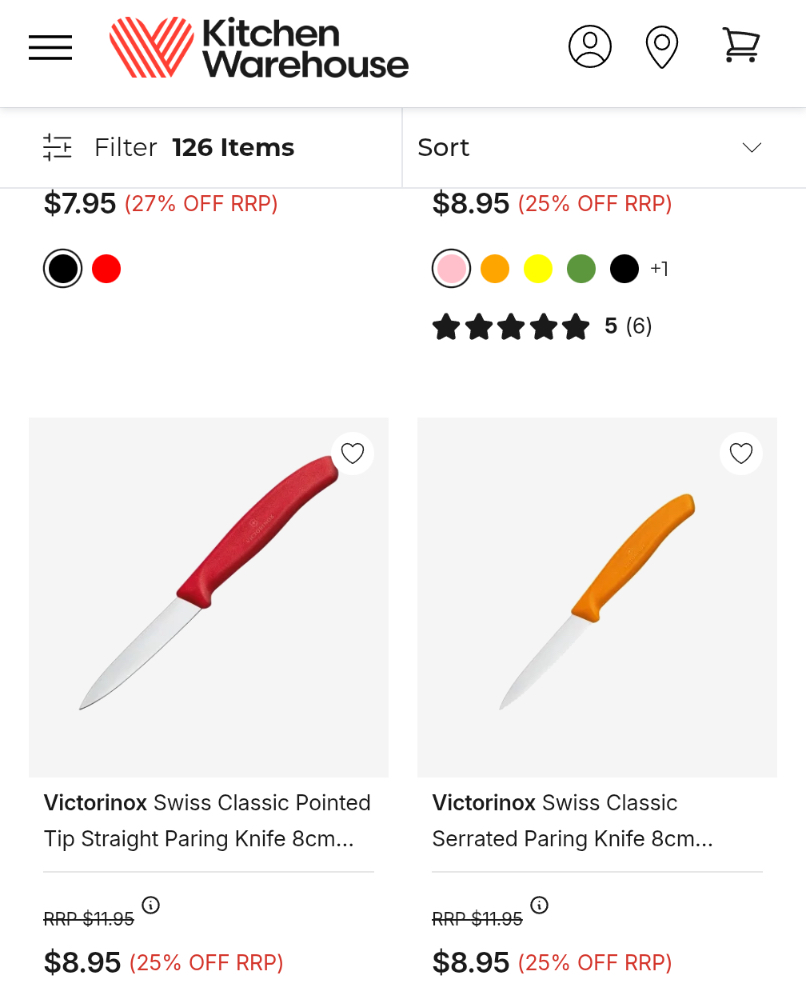
So as we realize that Amazon was not the problem, we should be weary for something more. You see, below we see a simple online setting

And we see a simple online shop selling knives (among other stuff). So this place Kitchen Warehouse, sells the knives that allows the slicing of a throat, piecing the heart and more rudimentary actions. The setting it that this is a simple $9 utensil knife (in lovely colors). So how useless are the thoughts of Keir Starmer Prime Minister? And the principality of the matter in this case is that he forgot about simple supermarkets. Aldi, Asda, Co-op Food, Lidl, Marks and Spencers, Morrisons, Oseyo, Sainsbury, Tesco, Waitrose and Partners and a few others. As far as I can tell, they all sell utensil knives. So what will he do then? A useless gesture from the moment he opened his mouth. And as we are given “Amazon has said it takes its “responsibility around the sale of all age-restricted items – including bladed products – extremely seriously” and has launched an investigation.”  I get that this is the response of Amazon, but what evidence is there that Amazon sold him the knife? Because he said so? Optionally his mummy bought it and he ‘lend’ the hardware. And the Telegraph pretty much confirmed my thoughts on this 12 hours ago. And at that point when the parent saw the knife delivered in his/her hands there were no questions? I think that there were a few screw ups and none of them are in the hands of Amazon. 

So let’s just consider option 2

A cool knife, The Matato, a cool looking knife that will immediately make a killer look much cooler. Most likely a lot more expensive, but watch it is 70% off now. So this knife is likely found in kitchen supply stores. So what if the 18 year old bought it under the story that it was a present for his mummy, would he have gotten away with it? Oh, and for the mention. I have seen knives being sold in supermarket and no identity papers were due, or were they? In that case the supermarkets have lists, right?

Is the puzzle coming in view? Keir had a lousy moment and he vented through ‘ending things’, but the only thing he vents is the end of his career. Do you think that the hundreds of online store like this path? A path that is a bad ending to an even worse beginning. 

So good luck Keir, and just to be clear, the setting of this was clear in minutes, I never had to come up with a party to blame. The one to blame is now serving 52 years. And then the setting of Amazon, so what evidence has been upturned? Well, I reckon enough as the court case is done, yet as Keir was giving us the line, there are a few issues and I haven’t seen any documentations. I am not saying they aren’t there. I merely wonder what is. Even with the setting that we can get knives from supermarkets, the line “vowed to end “shockingly easy” access to knives online” comes a little short, especially in sight of what needs to be done.

So have a nice day and try to relax.

Leave a comment

Filed under IT, Law

Jack’s Place

Sometimes we wonder, what the long term effect would be if a baby is dropped on its head. At least, we should wonder about that! When we see that politicians are bending over backward to get their own way after elections, we have to wonder what we should do with politicians who have been dropped on their heads. In this case, when we see Tony Blair have a go in French (amazing quality French I tell you) on how ‘We have the right to change our minds on Brexit’ (at http://www.theguardian.com/politics/video/2016/sep/01/tony-blair-we-have-the-right-to-change-our-minds-on-brexit-eu-referendum-video). He is going on ‘on how people may change their minds’. How the people decided to move house whilst they had no idea on where they were going to. In my view, the house they are in now had rot, the house had termites and the landlord was an idiot skimming its tenants. How is whatever we move to not a better place? Labour is still at it, still trying to undo the change the people in Britain moved to as political parties were flaccid, the politicians of the EC in general were incapable and bending over for the desperate need of the USA and Wall street, the people at large have lost 60%-75% of their quality of living. All because nobody showed any backbone against the greed of Wall Street.

So as the former British politician of some renown is chatting up the French in French about the dangers of Frexit (in very good French I must admit), he seems to have forgotten historic events. It comes in the form of a little cumulative tale. As such I will go to the last verse of it all as not to iterate it all in this article. A song based on the principle of Chad Gadya, published in 1590, I move to a 17th century edition which came with the approval of Nurse Truelove.

This is the horse and the hound and the horn
That belonged to the farmer sowing his corn

This is about farmer who is sowing his fields, the farmer in the UK is being presented as the one now suffering ‘UK farmers wonder who’ll get the harvest in’ (at http://www.politico.eu/article/uk-farmers-wonder-wholl-get-the-harvest-in-agriculture-migration-brexit-labor/). The letter is not in question, there is no opposition that certain changes will have certain issues that need to be dealt with. “Richard Hirst, who farms 790 acres close to Norfolk’s blustery east coast. “They provide a fantastic service and potentially that’s all going to stop.”” the quote is fair enough, yet in that one player decided to remain quiet. I will get to that person later. What is also shown and raises questions is “Hirst relies on around 200 seasonal workers, most from Romania and Bulgaria, to plant and harvest the salad crop. Polish construction workers repair farm buildings. Polish truck drivers cart produce to market. That pattern is repeated across rural England“, how come that UK people aren’t coming to the sound of the horn of labour? Is it beneath them or is it not possible to get it done for normal UK wages? I am not stating that Richard Hirst is exploiting cheap labour, I am asking how come no one in the UK is willing to do it. We know that the farmers are hurting. When large corporations with governmental pressure options is milking the milk industry. Consider the average 2 litre milk bottle at £1.90. Whilst we see at http://dairy.ahdb.org.uk/market-information/milk-prices-contracts/farmgate-prices/uk,-gb-and-ni-farmgate-prices#.V8jC4vl96Uk that farmer gets 18.14 pence per litre, down from 20.77, which means that the dairy marketing engine gets 80%. There is something not right here! We know that there are costs, yet when the main ingredient is only 20% of the price, something is not right. I suggest that we increase milk minimum to £2.20 per 2 litre, meaning that a 1 litre bottle can only cost £1.10 and the increase is shipped 100% to the farmers. How long until the dairy industry tries to get their fingers on part of that increase? I am willing to bet that they make their first attempt before the ink dries on this agreement if it ever becomes a reality. Will it hurt some? A little, I cannot deny that some are in worst places than me, yet I am willing to pay that little extra to defend a milk legacy. Milk is essential, it is for some people essential to learn that the imbalance we see here is a massive imbalance that the EU brought. Here we see (at http://ec.europa.eu/agriculture/milk/policy-instruments/index_en.htm), here we see that Regulation (EU) No 1308/2013 of the European Parliament and of the Council of 17 December 2013 establishing a common organisation of the markets in agricultural products and repealing Council Regulations, is pretty much the initial death stroke to the farmers. Now, there is partially soundness and reasoning here. Consider that we see “establishing a common organisation of the markets in agricultural products) where the main market tools are set into 3 parts

  1. Market intervention
  2. Rules concerning marketing and production
  3. Trade with third countries

It is rules concerning marketing and production that is at hand. It was the introduction of quota’s that was some figment of someone’s imagination approach to fair trade. In actuality, it was truly an attempt to give an equal push for the small farmers and fishermen, but it ‘evolved’ into something quite differently. The larger supermarkets Tesco, Sainsbury’s, Asda, Morrisons, The Co-Op, Aldi, Waitrose and Lidl had no limits on quotas as they did not produce the dairy. You see, even as the fishermen were ‘obeying’ fish quotas, Japan, China and Russia went on a fishing spree (read: are still) so that people get their cheap fish, yet in milk there is another iteration. We see this in the Guardian of July 2012 (at https://www.theguardian.com/money/2012/jul/27/dairy-farmers-milk) the following “Tesco, Sainsbury, Waitrose and Marks & Spencer are all paying 30p a litre or more to dairy farmers, says the RABDF, which it says is the minimum survival threshold for farmers: ‘They are not so much the good guys, but they are at least paying 30p’“, which now gives us the issue that this year the price went down to 18.14 pence per litre. So if that is the average, how come the average price is currently 38% below the minimum survival threshold? How is that possible? If we accept that pricing is done on fairness and survivability, how come that this Economic Union is allowing for a supermarket situation where they squeeze the farmers out of a livelihood, all set to the allowance for a market, which they set is claiming to be for the fairness of all. Yet when we saw the Tesco debacle, not the PwC side, but the Tesco Executive side requires scrutiny too. Consider The Tesco Remuneration report (at https://www.tescoplc.com/media/1926/tescoar15_gov_remunerationreport.pdf). Consider that the CEO and CFO get CEO – £1,250,000, and the CFO gets £750,000. Also consider that the bonuses are CEO – maximum opportunity of 250% of base salary and for the local bookkeeper we see CFO – maximum opportunity of 225% of base salary. Consider that only 50% is set to sales and 30% is set to profit, how much money does Tesco need to make for these two people to have a really merry Christmas with family (or booze and hookers)? Now, even as the Guardian is stating that Tesco is not evil, yet they are matching the survival rate “all paying 30p a litre or more to dairy farmers“, so who is kidding who here?

That kept the rooster that crowed in the morn
That woke the priest all shaven and shorn
That married the man all tattered and torn
That kissed the maiden all forlorn

We get to the upcoming Bill of Rights. The Human Rights Act (HRA) will be dumped (read: scrapped enthusiastically). The Week published the following quote: “Scrapping the act will break the formal link between British courts and the European Court of Human Rights and stop the act being “misinterpreted”, say the Conservatives. They argue foreign nationals who have committed serious crimes are able to use the freedoms guaranteed under the Human Rights Act to justify remaining in the UK“, the right to self-govern is here in jeopardy. We seem to be all over Strasbourg to guarantee the rights of criminals, yet there is too little for their victims. Whilst the quote from the Tories is “aim is to “restore common sense and tackle the misuse of the rights contained in the Convention”“, this actually makes sense. There have been one too many stories on how a Rapist was given leave to stay in the UK, now he is imprisoned for life Rapist Dahir Ibrahim decided to retry his penetrating event. His defending lawyer stated “No long term physical injury was sustained by the victims“, so why not send his daughters to Pakistan? There is every chance that the culprits will be acquitted. Even more so, the Lawyers daughter could become famous as in one case the transgressor filmed 280 events. So his daughter could become a Bollywood star. Wouldn’t that be great?

There is the danger that events get uplifted because of emotional factors. That is not a good thing, which is why I voiced it in this way, we need to try to keep as much emotion out of legal issues, yet this does not mean to be soft on hardened criminals. It is the right of the UK to allow people in, yet in equal measure, if these visitors resort to serious crimes, should the victims not be allowed to voice for them to be evicted (through a court of law of course)? Even more so, why should any government allow for those deciding to go for ‘serious criminal solutions’ to be allowed within their nation? It is my view that Strasbourg has been too academic, too focused on finding a ‘compromise’ that this path seems to highly favour the path of the criminal and less so on the victim. It is my personal believe that the Bill of Rights might be a solution, especially if the 15 freedoms are kept.

So before we go into the last part. We looked at the economy (well, sort of), we see that Laws in general have failed the people of the nation, we see that large corporations are given too much leeway and too much options, whilst the press reflects this as ‘but they pay more than average’, which holds no water when the fee paid is 38% below the survivability threshold. By trying to please a few hundred at the expense of millions of non-receiving victims of society. Consider the next part. If I, for the most a dedicated Conservative see this, when I noticed the victims that the EC has been creating, how come Tony Blair and Jeremy Corbyn cannot see this? They should be squarely on the side of the Dairy farmer and the milkman, a side they both neglected (read: ignored). There is a constitutional failing in play and the fact that the hardships of some are mere plays for politics is just sad.

That milked the cow with the crumpled horn
That tossed the dog that worried the cat
That killed the rat that ate the malt
That lay in the house that Jack built.

Well, we just dealt with the milk. Yet, what has been ignored is the play of Rat and Cat and Dog. The cat chases the rat, but who is rat and who is cat? It can be argued that the EC and the USA are either, the issue with an exploitative symbioses is that it becomes increasingly hard to differ between the parasite and the body he feeds of, the better the parasite, the harder it becomes to find the parasite in the body. The dog becomes the UK, on one side it howls against the moon waking us all up (read: for naught). At times it chases the wrong party (read: mailman), yet the dog has its shiny moments. It howls, barks and bites the burglar in your house, it alerts to the dangers coming to the door and it can scare off dangers. Any dog has good and bad moments. The fact that some laws have still not been updated is a concern and the Bill of Rights wasn’t the first one that needed to come. However, for the benefit of the European segregation it does make sense. My biggest issue is that the EU decided on too little and far too late that makes Brexit a fact not to ignore, the fact that people like Tony Blair are now making speeches in France, winking to the UK that people can change their minds is a larger issue. Especially as the events leading towards Brexit has never been dealt with.

Yet we are not done, you see, Mario Draghi is still having a go at it, his latest quote states: “The figures won’t come as a shock to ECB President Mario Draghi, who warned in July that inflation rates were likely to remain “very low” over coming months, before picking up toward the end of the year” (source: Wall Street Journal), you see, there is a truth there, especially as he is relying on the Christmas shopping spree to save him. Yet, in this, is that number corrected (for end of year uplift)? If not than the European economy is in an even less inspiring state than most are willing to admit to. This in light of conflicting numbers coming from America when we see positivity one day, negativity the next. We know on a global scale economies are in a slump and because there was a dire need to keep the Status Quo and move it from virtual to fictional. We can no longer afford that game, which is why Brexit made sense.

We can use the quote by CNBC we saw on September 2nd (at http://www.cnbc.com/2016/09/02/jobs-report-proves-janet-yellen-is-wrong-about-the-economy-commentary.html) where we see “The reported August job gains were also considerably below the gains in June and July. The unemployment rate was forecast to fall to 4.8 percent, but held steady at 4.9 percent. Both numbers are disappointing and make a September rate hike less likely“. We could agree that it means that the US is in a slow upwards momentum, which would be really good for the US government. Yet it is only half the picture. The other side we see quoted in the Business insider (at http://www.businessinsider.com.au/albert-edwards-consumer-crutch-holding-up-us-economy-kicked-away-2016-9). Here Edward claims what I have stated in other ways several times before. The quote “Albert Edwards doesn’t think that the consumer can keep the US economy afloat for very long” was only the start, but it boils down to the fact that the US consumer is stopping its spending’s on many levels. The US has a massive issue at that point, because it has relied on consumer spending for far too long (instead of corporate taxation). Even if spending goes up the smallest amount in the weeks leading up to Thanksgiving, the elections are on November 8th, 2016 which means that the successor might enjoy those results, but the Democratic Party will only be able to rely on half-baked speculations at that point. Even if they would dare to go that distance, there is enough ‘evidence’ to see that their predictions would end up being overly optimistic. What is the issue is that the US now desperately requires a solution, which those in power, who require the status quo to continue will not allow for. In that light we see the remarks by Tony Blair. Trying to sway the people that they can change their minds and more important on downgrading the new house at any cost. You see, when the UK sees that the move was harsh, but slowly people are starting to see their new living room, different, likely a little smaller, but soon it will feel comfortable and it will come with the feel of comfort the people in the UK have not known for decades. It will not come in the wake of laziness as many will need to work really hard, but that money will now benefit the UK, which is why we need to pull together as a Commonwealth, we need to pull together a lot more than most of our politicians are comfortable with. Soon thereafter it will no longer be Jack’s place, it will be your home. One that is interconnected in many ways, some good, some bad and someone is always chasing you, just as you are always chasing something or someone. A lesson in coexistence that does not require the parasite approach, something they still don’t get on Wall Street. You see as we see in the Australian Financial Review quotes like “Richard Fontaine, a leading US foreign policy expert” on how Australia is so vulnerable on Chinese demands, he seems to forget that his government did whatever they could to ram the Trans Pacific Partnership (TPP) down our throats. And now that the US is realising that with Brexit the game is truly ending, in addition we see that President Hollande feels the coffin nail that the TTIP carries as well as the vision on how it seems to only propel the need for big business, whilst Google’s option to drive commerce is not yet ready, it could be the true new innovation for small corporations, where the corporations keep the power on a global scale. Three elements that show that not only will the US face an economic slump (read: I find the statement ‘recession’ too speculative). Yet, the playing parties in the final moments on a lame duck president on the way to the morgue is not a moment to put political weight to final acts of despair whilst the new president is not set and that agenda could unwind everything, so the players have too much to lose as the dealer is about to change, possible with new decks of cards.

In that regard the economic players are currently realising that until January: ‘The safest way to double your money is to fold it over once and put it in your pocket‘.

Not good news for President Barack Obama, Tony Blair or Strasbourg for that matter. Perhaps Mario Draghi will get it at some point, but I am not holding my breath on that achievement to happen any day soon.


Leave a comment

Filed under Finance, Law, Media, Politics

Is the truth out there?

That is the question that sprung to mind, when the article ‘Brexit could cost £100bn and nearly 1m jobs, CBI warns‘ (at http://www.theguardian.com/politics/2016/mar/21/brexit-could-cost-100bn-and-nearly-1m-jobs-cbi-warns) crossed my screen an hour ago. Of course it then continues with the subtitle ‘Report conducted by PricewaterhouseCoopers for the CBI‘, perhaps you remember that firm named PwC? The people behind the books kept for Tesco. The firm the press avoids like the plague (especially when digging into Tesco issues). A report for the CBI no less. When we look at wiki we get ‘Confederation of British Industry is a UK business organisation, which in total speaks for 190,000 businesses’, so basically, because businesses are afraid to export their articles, we get this level of scaremongering. And let’s be honest, when Lehman Brothers is not available, PwC is all that remains. The Wiki reference will be explained shortly.

The first paragraph states “Leaving the European Union would cause a serious shock to the UK economy that could lead to 950,000 job losses and leave the average household £3,700 worse off by 2020, a report commissioned by the CBI business lobby group has warned“, I personally consider this to be a blatant lie!

There is NO WAY that there is any clear data on this event. The reason is simple. This situation has never happened before so there are questions, that is a given, yet what they predict is that 2 times 100% of exports that the UK ships to the USA becomes lost revenue. This is just ludicrous. Leave it to the place that embellished 110 million in revenue for Tesco will be able to lose 1000 times that amount in goods and services for the CBI. I am merely speculating here. I wish I could give you more, but the press is very engaged into not confronting PricewaterhouseCoopers on their actions.

The second paragraph “an analysis conducted by accountancy firm PricewaterhouseCoopers for the CBI said that Brexit could cost the UK economy £100bn – the equivalent of 5% of GDP – by 2020 and would cause long-lasting economic damage from which it would never recover“, let take a look at the parts PwC (as I see it) hides behind ‘could cost‘ meaning that it might, it is not a given. the second part ‘would cause‘, means that if they lose 100 billion then it would impact the economy, which we can all agree with, but that level of loss is NOT a given. Lastly there is ‘long-lasting economic damage from which it would never recover’, ‘would never’ is also not a given, consider that thanks to British Labour, who caused a massive part of the fourteen hundred billion in debt, on that part 100 billion will have an impact, the economy will recover, yet in all fairness, at what speed? We all agree that this massive extra level of debt is not a good thing, but it all began with ‘could cost‘ so it is not a given! The CBI, like frightened little sissies are trying to sway voters through fear. You see, if these businesses have an actual product to share, people will buy it.

They then continue to push more fear that people would lose between £175 and £300 a month. I would be shocked, we all would be shocked. Yet again there is ‘could be lower‘, meaning it is not a given. When I read “Carolyn Fairbairn, the CBI’s director general, said: “This analysis shows very clearly why leaving the European Union would be a real blow for living standards, jobs and growth“, my response would be ‘Carolyn Fairbairn, we know you are high and mighty with previous position at the  Competition and Markets Authority, Lloyds Banking Group and the UK Statistics Authority, so if you truly stand behind these analyses you will give us all (in open data) the raw data, the analyses and the conclusions with data connections‘.

I feel certain that we will see all kinds of weighting, forecasting and predictive modelling. As I see them, they will be utterly useless, for the mere reason I gave at the start of my blog “This situation has never happened before“, there will be turmoil, there will be a time of flux, but this forecast of utter blackness on non-given facts and shady forecasts is just completely out of bounds.

You see, I went to Wiki for a reason, when we go to their website we get a few issues (and initially their website was unreachable for about 15 minutes). The first one is from 15th of March (at http://news.cbi.org.uk/news/cbi-to-make-economic-case-to-remain-in-eu-after-reaffirming-strong-member-mandate/), here we get the quote “80% of CBI members think being in EU is best for their business – ComRes survey“, now, consider the following two elements, first is the ‘given’ fact on their site “CBI’s relationship with 190,000 businesses of all sizes across the UK“, now consider that survey where 80% wants to stay within had the following quote: “The survey had 773 responses among small, medium and large firms across the whole of the UK. It reveals 80% of CBI members, when weighted to reflect its membership – including 71% of small and mid-sized business members – believe that the UK remaining a member of the EU would be best for their business. Overall, 5% say it is in their firms’ best interests for the UK to leave the EU, with 15% unsure“, So out of 773 responses, 116 were not sure, so only 658 were certain one way or another, so the 80% comes from that group?

In addition, the fact that I, in 24 years have never seen ANY survey been answered for 100%, so how many answered it, how were the numbers given and how can any of the numbers have ANY level of reliability? That is even before we start looking into the questionnaires some people tend to make, which is often enough not that neutral to begin with.

All these thoughts took 45 seconds to form, after which I needed 30 minutes to look into some of the known givens whilst Graham Norton was playing in the background. The biggest fun I had was considering the part where the CBI is basically stating between the lines that “UK products are so shaite, that it can only be sold under EU membership“, is that not so Mrs Fairbairn? I believe that UK produce is high, high enough that there will always be a demand and high enough that people will go out of their way to get it. The gaming column last week that had a go at Brexit earlier was eager to ignore the fact that some of the better games developers are British, there is British Beef, British Lamb, the UK foundation in vegetables and fruits. The United Kingdom has always had a good stock and a proud tradition. I think that these traditional times can return the UK to better times.

That is also a speculation on my side. You see, this is the one time that the Telegraph has a fair point (yes, this rare occurrence happened on February 23rd 2016), There is the quote “The only appalling part is that we import so much poor quality foreign food at the expense of our own farmers“, I believe that there is a deeper truth. Obesity comes from junk food and from bad quality food. Yes, produce might rise a little in price, yet when you get the same quality ingredients from eating only 50% of the amount of junk goods you used to eat because it was cheaper, I believe that the overall health of the British population would also go up (read: lowering obesity). Mrs Fairbairn could have given that information too, you see the CBI site claimed to be connected to 190,000 businesses, so how many of them are farms?

This is no longer the age of Tesco (thanks to PwC to some extent), in addition, it stops being the place for Aldi and Lidl, it will slowly return to being the place of the neighbourhood grocery and butcher. I have nothing against Aldi and Lidl, yet their models do not run on the small local farms, their margins (low margins mind you) comes from bulk retail from big portion purchasers to deliver to all stores. It is a fair model, yet after Brexit there will be a change, their margins will fall, that is a reality, but if this opts for small business owners to rise from the ashes, the Brits in general will all win, we would see a need for jobs, not a loss of jobs. Again, this is speculative on my side, yet I do not go about scaring you readers like the CBI is doing through PricewaterhouseCoopers.

So, how about my own statement: “I personally consider this to be a blatant lie“?

As I see it, this report has issues, possibly a whole lot of them and if that is not the case, Carolyn Fairbairn would (read: should) have all the data ready for us all. When we see this level of incomplete information, giving rise to the possibility of misinformation the reference to ‘blatant lie’ is a fair given one, as I see it of course.

Now, mind you, the CBI page has the full report ready (at http://news.cbi.org.uk/news/leaving-eu-would-cause-a-serious-shock-to-uk-economy-new-pwc-analysis/leaving-the-eu-implications-for-the-uk-economy/), a 79 page document, so what does that give us and why was that not in the Guardian (as far as I could tell)?

We see the following under the key findings:

  • We have assessed the potential economic impacts of a UK exit from the EU under two possible scenarios
  • We estimate that total UK GDP in 2020 could be between around 3% and 5.5% lower under the FTA and WTO scenarios respectively than if the UK remains in the EU (interesting is how ‘we estimate that’ was not in bold)
  • The negative impact represents a reduction of around £55-100 billion in UK GDP, at 2015 values

And the final bullet point was “As with any economic modelling exercise, our estimates are subject to many uncertainties“, which is actually the core of it all, too many uncertainties, which gives additional weight to my statement.

Yet how were these numbers derived?

You see, when we see ‘Table 2.1: Exit scenario results – percentage difference in real UK GDP from levels in counterfactual scenario‘, we think we have something here, but on what core business is this founded? Is this on raw data sets? On aggregated data? You see, PwC have done all kinds of reports where they were overly optimistic, is the idea that they are intensely overly conservative on any of these numbers (by request of the CBI) and that the negative numbers are actually quite too negative? The fact that they are making predictions until 2030, whilst so far many firms resorting to analyses have been unable to make any decent prediction 3 years into the future, they ended to be overly optimistic again and again by more than one percent (try remembering Greece and Cyprus). Then there is: “A vote to leave the EU would create economic and political uncertainty that could last for several years while the UK Government negotiates the terms of its exit from the EU as well as new trade arrangements with non-EU countries“. Here is the kicker: the report did not once, I say again not once properly discuss the option of growing economies by promoting a growth interaction between Commonwealth nations. The UK stands not alone! Her siblings Australia, Canada, New Zealand, India et al, still need goods too. Whilst we see the ‘BS’ (Belonius Substance) from America regarding how the UK must stay within the EU, the UK can decide to collaborate with India on Generic medication. Now suddenly we get some individual in a white condo going on how friends should remain friends (that individual tends to be addressed as President of the United States), so here is one side of commerce that would ‘suddenly’ open doors for all kinds of trade.

The bibliography has a fair amount of theory references, and even though their existence, or their academic value is not in question, what is in question is the PDF we are looking at, especially when we see ‘Figure D.5: Working age population projections under the WTO and FTA scenarios and counterfactual‘, we see these numbers and graphs, but from what dataset? Where do we see any reference to the data population used, especially when we see a collection of graphs from various sources but with no clear reference to the numbers that these predictions are based on? In one example starting on page 47, we see ‘C.1 Economic context and key issues‘, with a reference to three graphs from two different suppliers. This gives me a few additional question marks (and it should leave you with even more questions). You see, if 80% wants to stay in Europe as stated by the CBI, whilst they had less than 800 responses, how does that hold any weight to the fact that they, on their own site state “the CBI’s relationship with 190,000 businesses of all sizes across the UK gives us a unique insight into what the result will mean for UK prosperity“, which means that 80% of the 0.4% of the businesses that decided to answer the call of the survey. I think I have raised enough questions for you the reader to be a lot less worried in this case!

Now, I am not stating that there will not be any issues, because the UK will face issues, but in equal measure the UK will stop making massive donations to a system that does not hold some of its members properly to account. It is like carrying buckets of water to the sea, an empty gesture that is a clear waste of time and money.

By the way, that report has a very interesting by-line which is shown at the very end (page 79): “This publication has been prepared for general guidance on matters of interest only, and does not constitute professional advice“, so if that is the moment of non-accountability than my final words are towards the writer of the article Julia Kollewe and especially her boss (or the boss of her boss, Katharine Viner): ‘How could you have been so stupid to go with this article. From my point of view, as a blogger tends to be a subjective one, it is a hack job, nothing more than mere anti Brexit material‘. As a newspaper you should have known a lot better! The fact that Julia writes “By taking a clear stance on Brexit, the CBI differs from the smaller business lobby group the British Chambers of Commerce, which is trying to be impartial. It recently suspended its director general, John Longworth, from his post after he suggested that Britain would be better off outside the EU“, yes, they might have done this, and they did it in what I regard a shady and shoddy way!

The article in the Guardian and the report leaves us with a few questions regarding Carolyn Fairbairn, the CBI as well as a few questions regarding the editorial of the Guardian. I hope that at the very least that part has been brought to the surface by me writing this article.

To all a lovely evening and whether you believe in Brexit or Bremain, make sure that you go towards the referendum properly informed!

 

2 Comments

Filed under Finance, Law, Media, Politics

What’s the matter?

That is the question I asked myself. Greece is in worsening shape, we see certain news as it happens and I noticed how certain ‘facts’ are now missing in the news articles I have been reading. In other news we have the UK election as it is going towards the final day before the people in the UK will decide on who they trust to give them a better life and now we get news that Isis decided to mess with Texas. So here on the day when the Dutch celebrate that the Germans were defeated and the Netherlands became a free nations once again, we see these issues come to blow more and more.

Miss Representation

Yes, she has image, she is the vision we desire and we all stare at her cleavage, complete with two boobies, one named ‘slush fund milk’, the other one we name ‘the party’s choice’, both giving ‘as implied’ the consumer the honey of equality. Now we get the real deal, if we bring the breast to our mouth, will we taste honey? Or will we perhaps the taste be more of the same, more of what is bland, non-nourishing and will never satisfy.

The first issue is Greece and the representation it is receiving. The first part we see in the article ‘Greece vows to pay debts as it awaits handout from international creditors‘ (at http://www.theguardian.com/business/2015/may/04/eurozone-enjoys-production-boost-but-greece-and-france-dip). In here we see the following quote: “Greece has vowed to honour heavy debt repayments over the coming weeks but says it is counting on international creditors to release billions of euros in rescue funds before the end of the month“. Now, let’s be frank, no lie is told here, but the direct fact is not that payment is due, but that the first payment was due May 1st and is due to the fact that it was a public day, payment was rescheduled to be due May 6th, the first payment of 200 million will be due in 24 hours. So why is that not clearly voiced? Before the end of the month another 760 million will be due, making the total slightly south of 1 billion. The second article ‘Greek debts: what does it owe? When will the money run out?‘ (at http://www.theguardian.com/business/2015/apr/24/greek-debts-what-does-it-owe-when-will-the-money-run-out), states almost the same. Yet this one shows a little more, even more than I bargained for.

You see, there we see May 1st an IMF interest loan payment (now due May 6th) and May 12th we see the part that 760 million is due. The part that was unknown to me is also the part that is not loudly voiced to EEC nations, because this knowledge will influence the voters (as I personally see it). You see, the missing part that is not voiced in many sources is the small fact that two T-bill batches mature, the first one on May 8th and the second one on May 15th, each worth 1.4 billion.

Now we get the part I voiced over and over in the past, that the consequences of bonds are high and the Greek people are about to learn this the hard way. You see, when a T-bill matures, it becomes a nice piece of paper, one that has value. You see, at the beginning, you are offered a paper that offers a percentage, so you buy it for $918.10 and when the bond matures a year later (if you got one for 1 year), you get $1000. A nice 10%. So, before the end of May, Greece will have to make two payments, one for 960 million, and one for 2.8 billion. Greece is out of options, out of money and the quick 5 billion they sold in 2014 to get a quick cash option is now starting to come back. Billions are needed and the Greek treasuries are about to learn that not only could it never afford to play the Syriza game via Alexis Tsipras, the assurances we see in the papers left right and centre is now showing to be hollow and not realistic. Greece is about to seek another deal and one more and then likely some more. Greece is awaiting 7.6 billion in aid, yet where will it go? Before the end of May Greece needs 4.7 billion and in addition before the end of June, Greece needs to come up with an additional 6.8 billion, the 7.6 billion will not even cover the bills. Greece is about to make a call that will hit the financial district and small investors alike, the Greeks are facing a hel we do not wish on anyone and for the most, as I see it, the only people who are allowed any consideration are the wealthy power players that depend on continuation of the status quo. How can this ever go to a better place?

Here you see why I whacked Syriza again and again. The rock star game we saw by Yanis Varoufakis is the killer here. Alexis Tsipras did not act when he should have done this and the non-austerity approach was a non-solution from day one. Why do I feel that I am the only one seeing this, or at least the only one clearly voicing this, because the UK elections, when the voters learn that Greece is about to desire up to 30 billion before the end of the year, so that it can pay the outstanding bills. It is status quo, but in the end, there is the direct risk that almost none of these funds will help, aid or support the Greek people, who I genuinely feel for, does Syriza? My issue still remains what it was from day one, the Greek had the freedom to choose, but I believe that they chose poorly. Now you have no reason to take my word on this, but Antonis Samaras has a degree in economics and an additional MBA from Harvard, which gives him a financial view that I lack, even though my numbers gave a clear view as an analyst regarding the dangers Greece had, I saw this in 2013, it was already clear that the dangerous waters for Greece were icy cold and deadly deep.

My article ‘Are we getting played?‘ from May 18th 2014 shows my view that allowing the Greek bonds back on the market was a really bad idea, now we see that this view was a decent reality. Here we are, looking at a game that is being played with Greece and the Greek people in the middle, austerity is not the great idea, but it is the only solution. It should be clear that there is no short term solution, austerity will remain around for close to two generations, the debt will take no less than 4 generations to become manageable, but only with a restructured Greece, it is not a nice picture to watch, it will be an entirely different Greece, there should be no doubt here.

This now links to the UK and its elections too. You see, the news as is, is that the voters need to realise that it needs to support an EEC nation that will need another 30 billion, with no guarantee that this is the end of that. The economy is in a slump and too many nations are feeling the slowness of the economy that is unlikely to return to the ‘old’ days.

The news is given in the article ‘Ignore the Tories: the figures show the recovery is veering off course‘ (at http://www.theguardian.com/business/2015/may/03/ignore-the-tories-figures-show-recovery-veering-off-course) but in a way that gives me pause. The quote “Economists are divided about the causes of this so-called “productivity puzzle”. It’s unclear whether it’s caused by a lack of investment, poor education and training, or the fact that our labour market is so flexible that it’s cheaper for firms to ramp up output by hiring short-term, low-skilled staff than to buy in new technologies and equipment” is at the heart of all of this. You see, these economists are not just setting a bad example, they seem to leave out several elements, they know to also be at the heart of all of this and the picture that follows is incomplete.

You the reader will know some of the elements, you live these elements and some economists getting the fat checks have not been at the heart of it all. Consider the following, when did you buy anything else than food lately? Anything else than the weekly needs? When did you buy a TV, when did you buy a car or any luxury items that are produced in the UK? The UK is better off than most other European nations, I see where the people in the Netherlands and Belgium have a little cash, but most people are lowering their debt, all over Europe people do the same thing, they are not buying to the extent they were, they replace only the essentials and they buy cheap. This is why Aldi and Lidl are so successful. The evidence is all over the place, yet we see “Confidence is certainly higher than it was five years ago, but aside from notable successes such as the car industry, there is little sign of a radical shift in the shape of the economy. Manufacturing output has been growing, but remains below its pre-crisis peak“, which makes perfect sense. The view of these economists is: “But deficit reduction is not the only purpose of economic policy: they also set themselves the aim of building a more sustainable model for growth. Here too, they have largely failed“, is that so?

You see, to grow an economy, people must buy, they are not buying and they carefully consider each purchase. This is the ignored part, in addition other nations ‘might’ seem to push forward, but consider one final part, when you buy your equine burgers, is that what it states on the packaging? Perhaps you were hoping for cow?

This is at the heart of those making sales in places. Quality is at the heart and the quality of life has been under attack for some time now, an issue many economists ignore too. Should you wonder about that then take a gander towards Texas! The only hilarious part there is that ISIS attacked the one state where the population is better armed then the police, the defence department and the military reserves. How does this reflect on the other elements? Believe it or not but there are real economic consequences to terrorism, especially when it is done on US grounds. As the US economy is already slumping, this could add negatively to it all. Yet it must be stated here the one line that has direct bearing “No evidence Islamic State had actual hand in attack in which two men opened fired outside centre exhibiting Muhammad cartoons“. So, I am not doubting the statement. It is not that far-fetched that those acting out for personal reasons are very willing to get linked to a larger group, for both defence and to propagate their own ego. This all matters, if you do not believe it to be true, you should decide to watch Kung Fu Hustle. A movie well worth watching (it is hilarious). So is it a good idea to relate ISIS to a comedy? Well, when you start acting out in Texas, that call is not the wildest one to make. You see, there is a dark side here. When we consider the words from Tim Clemente, who stated “Former FBI agent Tim Clemente said the gunmen may have plotted the attack without direction from ISIS“, the danger becomes, if that is true, who else has gone the loopy tunes? Is it not weird that a place, dedicated to freedom of speech, is giving a way to the freedom of speech to people who are dedicated to remove freedom of speech? This is not at the heart of it all, what is the heart of the matter is that if this is happening in the United States, is the danger of lone wolf (sympathiser) actions in the United Kingdom so far out of realm of possibilities? Now consider the statement by British Labour “A Labour government will control immigration with fair rules“, now consider that Italy received over 200,000 refugees with no way to get it all processed. How many will arrive into the UK?

Be cautious here, I am NOT stating that these people are terrorists, yet the danger that a terrorist would try to enter Europe this way is not that far a stretch. Statistically speaking, if only 0.1% came in, than we will see that Italy, after that, the EEC and the UK will have to deal with 200 extremists, 200 people inflating actions. Now the truth is that there is no evidence that 0.1% is extremist, but today’s life of dangers and consequence is a numbers game and the numbers are against us all. Even though I could advise Andrew Parke (the man that the people at MI-5 call ‘Big Boss’) on how to clean his ship, I must also add that Andrew is very up to date on how to do that, he does not need me. Yet the political elements ignoring the intelligence issues are all positioned to blow it all on spending’s towards an economy, they ignored the elements that could drive an economy even further down.

Three elements all linked towards a change that impacts the UK economy and the British way of life, yet none of them were linked to the UK on their own. Here is what’s at play! Too many events are too intertwined and too misrepresented to ignore, yet those who trivialise the elements are not the ones paying the bills when their ‘prognoses’ goes pear shaped, it is a game we can no longer afford to be played.


2 Comments

Filed under Finance, Media, Politics

An exceptional pound of flesh

Two articles hit my eyes as I took a small break from my midterm exam. When you dig into the: who, what, when, where how and why of Patent Systems, your sanity prevails if you take a small break every 2-3 hours. It is just the only sane and safe way to avoid getting stuck on the same page.

The two articles were ‘Cuba seeks foreign investment as it shores up increased diplomatic ties‘ (at http://www.theguardian.com/world/2015/apr/10/cuba-seeks-foreign-investment-as-it-shores-up-increased-diplomatic-ties) and ‘Pound volatile amid general election uncertainty‘ (at http://www.theguardian.com/business/2015/apr/10/pound-volatile-amid-general-election-uncertainty), there is no real relationship in these matters, or is there?

First, let’s take the last part first as to get it all out of the way. The end gives us: “Investors were also positive on Greece’s payment of a €450m (£325m) debt to the International Monetary Fund on Thursday“. Why? Let’s not forget, this payment is nothing more than 1/3rd of a billion against outstanding HUNDREDS OF BILLIONS, so why are investors relieved? Greece has not presented any decent acceptable plan and the visit from Tsipras to Moscow to rattle some cages will count against him sooner rather than later. In addition I would like to call attention to the ‘altered’ view from Christine Lagarde as she mentioned “developed and emerging economies still suffering the after-effects of the 2008 crash must collaborate better to avoid an era of low growth”, which reads like a detour, an extra train stop on the track where the distance between recession of true growth seems to be increasing, not decreasing or remain stable. Apart from the fact that Greece only has 5 days left to present their plan (at http://www.bbc.com/news/business-32229793), the one part everyone simply ignores is that after they get the money, then what? If these newly elected officials will not push through and re-debate the issue again, the Eurozone is down another seven billion euro plus, then what? Will Greece become a vulture funds target? Will we see newly created carefully phrased denials on what will never be? That one part can be found in the quote “Without new money it will struggle to renew €2.4bn in treasury bonds due to mature in the middle of April, or pay back another €0.8B to the IMF on 12 May“, so consider that Greece might be unable to pay back 770 Million Euro on May 12th (decently likely scenario), what else can they no longer pay? Let’s not forget that the 12th of May payment makes up for 0.25% of the debt, the interest would be is a lot more than that, so how will any ‘investor’ choice pay out? Are you people awake now? So, I dealt with Greece! Now to the linked other parts!

You see, the link to England will become apparent soon enough, when we consider the quote “Analysts have warned that the pound could have further to fall as financial markets react to uncertainty created by the closest general election for more than 20 years” l, we have to wonder how reserved these analysts truly are, a stable growing economy is scaring them? I agree that the plans from Ed Miliband are decently ludicrous, bus in the end, if elected, he must do what is best for the nation (which means that he would have to vote for David Cameron, hawk! Hawk! Hawk!). In all seriousness though, a close call or not, there is something wrong with the statement Michael Hewson makes: “The pound has started to come under some pressure in recent days as the prospect of political gridlock“, whilst the market is positive as Greece pays back less than a percent of its debt, this whilst it is clear that Greece has no funds left. How is that dimensionality rational in any way, shape or form? That is, unless you take into account the part that the Guardian is not mentioning. If the market is truly worried on what happens when Nigel Farage comes out on top, or ends up with too much of a gain, then the united front that Farage and Le Penn would show, would truly be a concern to investors, because those two have had enough of the entire Eurozone issue on several levels and Greece only worsened their resolve (meaning that both are more eager to pursue the end of their EEC membership. a nightmare scenario for markets on a near global base.

Now, the markets also made the following ‘claim’: “Currency traders have also been unsettled by signs of weakness in Britain’s manufacturing sector. Production figures are due out on Friday morning“, this is fair enough, you see, manufacturing is an issue and it is not that strong in the UK or in many other places for that matter. Yet, two hours ago, the following was reported: “UK industrial output is weaker than expected: it edged up 0.1% in February, vs expectations of a 0.4% gain, while manufacturing met City forecasts with a 0.4% rise. Industrial production is the wider measure, which comprises manufacturing, mining and utilities“, so manufacturing met the expectations, so why the hesitation? I am not making any assumptions here, but I am wondering on how much certain markets assume that met expectations were supposed to be exceeded. Especially in a European mess that is still all over the place. It is almost like the markets will not tolerate any bad news, is this linked to some views on US bubbles (housing for one) that could burst before June 30th? This is a question, not an assumption or an implied issue. but the question should be asked in a very clear way and certain parties should answer it in very clear ways too, because at present, when you see some journalists report on economy, they quickly move all over the field, pretending to draw a picture, whilst the sketch we end up seeing is that of something we did not ask and it leaves many with too many questions. Did I oversimplify the matter again?

So now we get to the true path in all this, the link between the Pound and Cuba. Some might know them, some do not, but I remember the Cuban Fleet Freight Services (Cuflet). I reckon that looking into options with Cuba via Cuflet could spell good times for several players, if manufacturing options are found in emerging markets, why not see what offers could be made and found there. The Dutch could gain a headway by looking into the Bicycle market, engineering projects, the issue is clarity. When we consider the article ‘Navigating Complexity in foresight: Lessons from the UK future of Manufacturing Project‘ (at https://ec.europa.eu/jrc/sites/default/files/fta2014-t1practice_52.pdf), I personally am willing to get a few giggles from the futility that figure one shows (2008, Popper’s foresight Diamond). I do not disagree with the image of with the elements of creativity, interaction, evidence and expertise brings, but in the end Manufacturing is about what one has and the other one needs. So elements like Viability, opportunity, economy and shipping brings us the need for what can be manufactured, what could be sold and what is to be delivered. So when I read the conclusion on page 11, where we see “The high level of complexity of manufacturing systems and the diversity of forces acting on them make anticipating future configurations , challenges and opportunities particularly difficult. Manufacturing foresight needs to deal with multiple units of analyses, assimilate a variety of evidence at different levels of disaggregation from a variety of sources and integrate diverse stakeholder’s perspectives“. A view from academics from Cambridge as well the government office for science.

So let’s break that down in something we all can understand.

  1. Good business is where you find it. (Robocop, 1987), which gives us opportunity
  2. Any intelligent fool can make things bigger, more complex, and more violent. It takes a touch of genius — and a lot of courage to move in the opposite direction (Ernst F. Schumacher), which gives us a handle on complexity in regards to manufacturing systems (the reason to avoid complexity whenever possible).
  3. We have to choose between a global market driven only by calculations of short-term profit, and one which has a human face (Kofi Annan), which gets us to the economic side.

We have been so blinded looking at those who only seek short term maximised personal gain, that we forget the satisfaction that can be gotten from a long term goal where both sides make gains and interact with their economy in a profitable way, without denying the other party their goals. Here we see the option for both the UK and Cuba. It is not a given, it is not a guarantee, but an option, an opportunity to consider. It is the one side of Warren Buffett I do (partially) admire, he thinks long term (in case of Tesco, not long term enough), but overall the long term side will always pay off, which is the path we should walk, which is of course not the path that the bulk of hedge funds operators want us to consider and as too many listen to those people, we end up having a problem. So as we look at the pound of flesh that could give us a sterling reward, we tend to ignore that part for the fake glory of short term boosts. Yet, if we see Lidl and Aldi where we clearly see exactly that this longer term approach will keep them afloat, unlike their competitors, which is the issue at hand!

Because in the end, the conclusion quote from the academic article gives us the massive anchor that they did not properly dimensionalise ‘assimilate a variety of evidence at different levels of disaggregation from a variety of sources and integrate diverse stakeholders perspectives‘, too often the data presented from the view of the stakeholder cannot be trusted. Whether it is the weight applied to the source, the way the question was formulated and set into the data collective, or the methodology of analytics that was pursued afterwards. It was a painted view from a person with a goal and a presented image, that ‘presented’ image tends to colour all connected evidence, which gives us a view of many games as they are played, but in all this, we all make the same mistake, we compare presented results and statistical results, whilst the individual sources are often too unknown, which is truly a bad an unexceptional path to walk.


Leave a comment

Filed under Finance, Media, Politics, Science