Tag Archives: Pyongyang

The one does not imply the other

We have seen the news on tariffs, we have seen the news on DeepSeek and it has exploded the views on LinkedIn as every influencer wants to cash in on the news on DeepSeek, in one way or another.

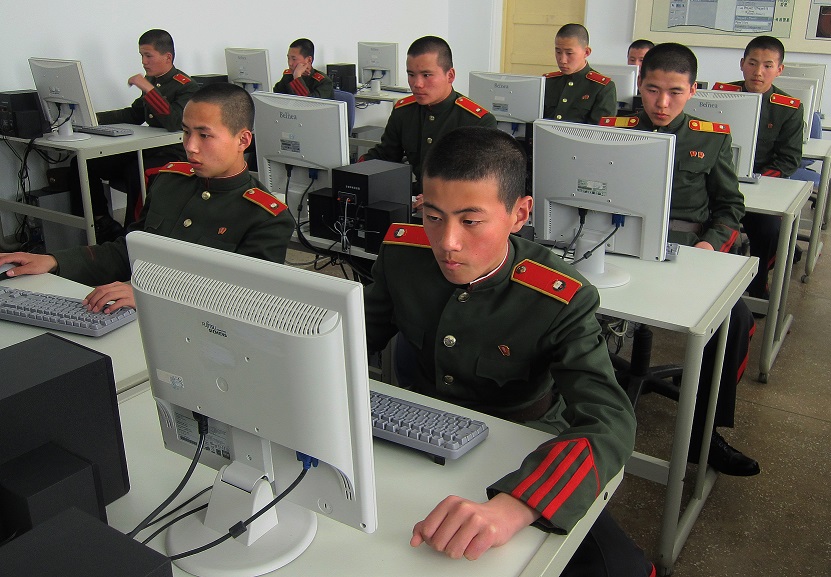
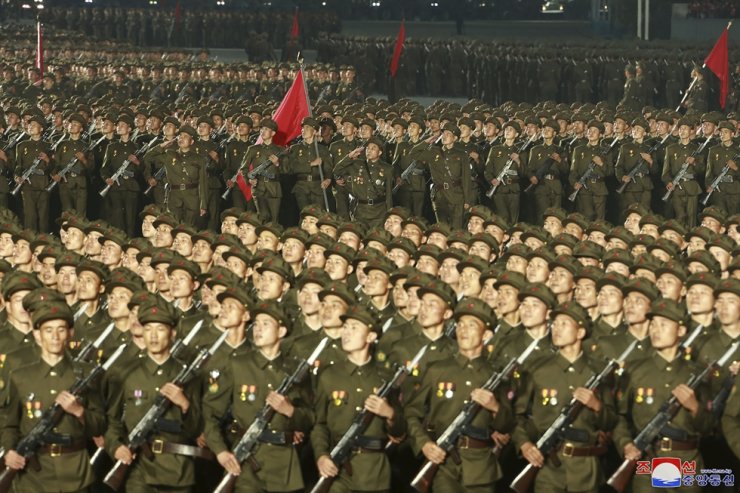
However, we forgot about one part. We forgot that we still have a nation called Ukraine that is at war with Russia. Some time ago we saw that Russia is unable to fight this war alone, so they called in the help of North Korea. We all saw them being proud as peacocks marching in unison and it looks impressive to almost any soldier and their generals. Yet the reality is different. We are given (at https://www.bbc.com/news/articles/cjder8zgk48o) ‘Ukraine says North Koreans may have pulled out of front line’, my first thought was “Is it merely a regrouping tactic?” That happens. We can on the offense, we can select defense or we can evade. Evasion makes sense after the losses reported, but evasion towards what? Regrouping, or pulling out. Regrouping makes more sense to me. 

The BBC reports “Western officials told the BBC that, out of some 11,000 troops sent from North Korea to fight for Russia, 1,000 had been killed in just three months.” A setting that boils down to decimation of ones troops. This is not surprising, as war is a lot different from parades. But decimation is a serious setting. It amounts to the knowledge that most opponents could do serious damage to the North Korean army. So whilst it might bolster 1.3 million active troops. A decent skirmish could cost that army 130,000 troops and that is merely in the first three months. The larger setting is that Russia mistook parade strength in actual battle strength and that is just not the case. The Ukrainians know that and also realize that the fight is not yet over, more important the smudge they delivered will also soil Kim Jong Un and he does not take kindly to get soiled. I reckon that the regroup comes with the message that they better be successful or not come back at all. This is the setting of desperation and desperate soldiers are a lot more dangerous. I am inclined to believe the quote “The newspaper quoted US officials as saying the withdrawal may not be a permanent one, and the soldiers could return after receiving additional training or after the Russians come up with new ways of deploying them to avoid such heavy casualties.” The BBC gave us. There is every chance that they will get reinforcements from Pyongyang and the clear message to succeed or do not come back alive.

That last part is speculation bordering on presumption, yet with the facade we have seen with President Putin and Supreme leader Kim Jong Un my view seems to be a decently accurate one. My biggest worry is how much damage will Ukraine get in the coming year, because this is not over, not even close and unless Russia is given a truckload of damage, this will not end. Hence my two inventions that could have woken up DARPA with the intent that they test the ‘contraptions’ before handing it to Ukraine. As such I created something to block ports (a sneaky stealth system) and smelting to meltdown nuclear reactors. If the ones in South Russia stop working that army loses a lot of power (and heating) setting the Russian army to a stand still, should places like the Port of Olya gets stopped to utilize troops and materials for the front the reinforcement setting fall short. I saw that the solution is less effective in Odessa as it is a much more spread but part of the harbor could be blocked, the Nuclear reactor solution has a few question marks and both inventions were designed to aid Saudi Arabia and take Iran out of the equation. But they work on Russian principles as such it should work for both. 

Yet, this is not about me, it never was. People don’t consider the larger window. When a near defeated President Putin runs to North Korea for help, what more will he do? Consider that he mobilizes all his troops and North Korea does theirs. Do you think South Korea will be overlooked? The larger setting is that should (being the operative word) be successful, the pressure on Japan grows immensely. Do you think that any dictator (sorry I meant supreme leader) will simply stop at one win? Do you think Ukraine is enough for President Putin? It is this the shallowness how some people think?

The reality is quite different. They see that losses are a mere hinder block to more and they both want more, they both are on the verge of seeing the loss of basic necessities in their countries and they realize that they are now on borrowed time, they both are. They need a decent win to ‘depart’ the scene with the honor of victory and that is where we currently stand. Russia and North Korea never counted on the tenacity of Zelensky and his troops. So where will this go? That depends on the support the Ukrainian troops receive in the near future and that is where we come in, preferably as soon as possible. 

Have a great day in supposedly peaceful resolution.

Leave a comment

Filed under Finance, IT, Media, Military, Politics

Exposing lies?

We are confronted with lies all the time, the CIA (who is truly gifted in the act) uses it to spread all kinds of discourse, but that is their operandus mondi, so we are not surprised. Yet now we are confronted that these tactics have been embraced by both the FBI and the Pentagon. And it is not my source; it is an American source that gives us this part.

To get to the heart of the matter, we will have to borrow a TARDIS and do some time-travel (a valid Dr Who reference). During this trip we will not be looking at apples and oranges, but we will be investigating fruit, and this has all the bearings on the case.

Trip one

Let’s travel back to November 24th, 2014. It is a sunny day at Sony Square New York, 21 degrees, nice and relaxing weather. It had all the marks of it being a lovely day, were it not that someone decided to hack Sony and they did it, not only did they do it, they left all the markers blaming North Korea. The FBI send their cyber experts and behold, they too agreed that it was North Korea. Even as we were extremely aware that they had no way of doing it, the FBI stood firm on their findings.

Trip two

We are pushing the envelope and stopping at 2015, 2016, 2017 and 2018. We are given “North Korea’s offensive cyber capabilities” and we see Randall Schriver, a top Pentagon official and all the ‘so called’ expressionistic ideas on how North Korea is the big nasty, the large danger and the big hacker. In addition to this the Financial times gives us (at https://www.ft.com/content/cbb28ab8-8ce9-11e9-a24d-b42f641eca37) “Pyongyang controls an army of thousands of hackers who bring in hundreds of millions of dollars annually, according to experts’ estimates“, which was given to us in June 2019.

Into the Heart of Darkness

It was only hours ago that we were given the first light of truth by the Washington Post. To give you that we need to change the topic to fruit and not apples or oranges. You might realise that to get ahead, you need to be ahead. Unless you build a system yourself, you need access to a system of equal quality to hack into a place. Unless you have the passcodes (current password = Inc0rrect%) and inner workings, you cannot hack past the Pentagon Cray, it is close to impossible to do with even the most updated equipment and North Korea is well over a decade behind. It is defended by firewalls and other encrypted matters. Sony is not that advanced, yet still has a lovely set of firewalls and other means to limit access. Yet North Korea, with technology that was considered advanced in 1990, was nothing of the sort a decade before they hacked Sony. In addition, certain access methods or planting of other abilities would have required 4G mastery, a mastery that they do not have. The digital footprint does not match up and it is there that the Washington Post (at https://www.washingtonpost.com/world/national-security/leaked-documents-reveal-huaweis-secret-operations-to-build-north-koreas-wireless-network/2019/07/22/583430fe-8d12-11e9-adf3-f70f78c156e8_story.html) is giving us the goods.
So as we are given: “Before 2008, North Korea struggled to find multinational companies willing to build a 3G network in such a risky business environment. That ended with the creation of the wireless provider Koryolink, which emerged from a discreet visit in 2006 by Kim’s father, Kim Jong Il, to Huawei’s headquarters in Shenzhen, China” this is the first piece of evidence, 6 years before the hack North Korea did not have access to 3G, it was not there, as such the knowhow of hacking would have been severely limited. In addition to this we need to consider “Alexandre Mansourov, an adjunct professor at Georgetown University’s School of Foreign Service, who in 2011 wrote about North Korea’s digital transformation. “They decided to work with Huawei from that time on.”” gives us that in 3 years that stage was not surpassed, or even achieved. The paper by Mansourov also gives: “less than 3 percent of the population currently use modern telecommunication services, it has adequately trained human capital, a rather developed industrial and technological base, and sufficient financial resources to pursue the digital revolution to the benefit of the majority“, which now implies that the fall back is actually a lot larger. If they truly had a ‘rather developed industrial and technological base‘, then they would be the oranges that need not rely on Huawei, yet they are technologically speaking merely apples, they are both fruit, but on a different shelf, a lower shelf and that is where we see the technology fail (especially in North Korea). In his paper we also see: “Because the cell phones connect to Chinese cell phone towers it is difficult for the North Korean government to eavesdrop on the calls, but it does mean use is restricted to the border area“, this implies that the limitations in North Korea are actually larger and as such knowledge is more limited. that last part came from ““How Chinese Cell Phones Help Information Flow,” Martyn Williams, 1 April 2010” which was 4 years before the hack, there is no way for any nation to evolve their technology level in that amount of time without having billions, as well as all the technology available for installation and implementation. Which was never the case, North Korea is hardly on the 3G path keeping them a decade behind everyone else.

Fruit, Apples and Oranges

So even if I am looking at fruit, looking at mobile technology versus hackers is like setting apples against oranges, yet the larger truth remains, a hacker cannot surpass certain levels of access if they lack access to the current generation of technology and that is where we see the flaw in all this. To have antiquated equipment access the Sony mainframe calls for all kind of issues as the access requires speed, and if you rely on old technology there is a limit to what you can get. For example getting a 4TB drive for a PlayStation 3 is bogus as it cannot address the complete drive, so when you look at it from that path, you lack the ability to store all that data and Sony was all about data. More important, if the skill to get behind a 4G system is not there, there was not even 3G, how can you get into the hack? Now we might rely on normal lines, but the flaw is already shown, you need a larger comprehension of technology and telecommunication to proceed and North Korea is stated that it could not get 3G without Huawei; at that point we should recognise that it could not get into Sony. If they actually had done that, then they would have been able to design and build their own 4G (which would still be half a decade too late), but that would be the premise. That absence gives us that the Washington Post, who also gives us: “According to a 2008 contract, Panda would transport Huawei equipment to Dandong, a town in northeastern China known for cross-border trade. From there, it would be taken by rail into Pyongyang“, as well as “In spring 2008, Orascom and Korea Post tasked Huawei with developing an encryption protocol for the network, noting that the government would create its own encryption algorithm, according to the documents” this much larger stage does not absolve Huawei (it is not about that), but the fact that encryption protocols were not in existence implies a delay of at least 2-3 years to get their 3G up and running, the entire matter would have given North Korea less than 2 years to get trained to the levels required to visit the Sony Server and become an actual cyber threat. There is no realistic chance that this would be the case and again, when we consider the press visit to North Korea (somewhere in 2012) where the Dutch press learned that their high ranking escorts had no idea of what a smartphone was, that alone gives a lot more insight in the technological limitations of North Korea and its army.

There is no doubt that North Korea would love to be an actual threat, but when it cannot comprehend 3G to the degree it needs and it has no 4G, how is North Korea an actual threat? I believe that Sony was hacked by someone else, there is also enough valid intelligence to see that those people would love to do business with North Korea, yet the entire matter connected to Huawei implies that North Korea is missing several links on the chain of telecom cleverness, the reigns of the horse of innovation and the armour of progress is all rusty, heavy and useless. In this stage the North Korean cavalry might be the most advanced they had but it still does not match up what other nations have had access to from the late 1800 onwards, when you realise the difference to that degree, do you still believe that North Korea could have been the hackers?

That is seen when we look at ‘The Hill’ in 2017. There we get North Korea and the quote: “Today, when warfare can include the operational use of nuclear weapons, the cumulative consequences of underestimating “friction” could be exponentially more serious. This conclusion is true by definition and thus, thoroughly incontestable” yet when we see in a 4G world that North Korea has not even mastered 3G to the degree it needs, we see a shift of needs, needs that are all about the consultants charging their overexposed ego’s by the hour, whilst we see a lack of evidence on the abilities towards the dangers that we are seemingly exposed to. In that regard the FBI and the pentagon has played into the hands towards consultants like Randall Schriver, yet the actual evidence (implied to be) as we now see in the Washington Post gives us another picture, one that bounces against earlier accusations and speculations. March 27th, 2019 C-Span gives us the premise that China and North Korea are set together as a threat, yet the overbearing accepted evidence shows that the division sets the stage where China is 99% the threat and North Korea a mere 1%, yet together is nice to bump the budget. So far no actual or factual evidence has been shown where North Korea is an actual cyber power. As I personally see it, even the NY Times is in on it.

When we are given: Their track record is mixed, but North Korea’s army of more than 6,000 hackers is undeniably persistent, and undeniably improving, according to American and British security officials who have traced these attacks and others back to the North“, as well as “North Korean hackers tried to steal $1 billion from the New York Federal Reserve last year, only a spelling error stopped them“, and “only sheer luck enabled a 22-year-old British hacker to defuse the biggest North Korean cyber-attack to date“. when we are confronted with ‘spelling error‘ and ‘sheer luck‘ we are sold a bag of goods, the fact that North Korea is at the most about 3G, we see the lack of certain abilities. If these hackers were that good, than their abilities would have been to acquire all the technology that we have full access to and that has seemingly not happened. In any war we acquire the weapons to be an equal footing, or more advanced footing, von Clausewitz and Sun Tzu taught us that. You do not rely on the flintlock when the opposition is walking with a 7.62mm MAG. The accusation (also from the NY Times) “the country is suspected of having thousands of hackers capable of carrying out global cyber-attacks, like the recent ransomware attack in more than 150 countries” gives us that they are a large threat and this is only possible with a large established infrastructure. That is seemingly not the case so as we ponder ‘suspected‘ we see the speculated inflated danger that North Korea is, and until today, until the Washington Post gave us the article, that part was too eagerly accepted.

There is no doubt that there are hackers in North Korea, but as the technology shows, they are fighting with one hand on the back wearing a blindfold. It does not make them less dangerous, but it also implies that the events that have taken place were done by others and as such the cyber operatives trying to stop it are not merely failing, they are at present completely unaware who they are actually up against and that is the sad part of this story. after all the billions they got they are still clueless in the dark, a sad story that only came to light as the Washington Post gave us: ‘Leaked documents reveal Huawei’s secret operations to build North Korea’s wireless network‘, seemingly a 3G network no less. And even there we have no evidence at present. That part is given through: “Since then, any company to provide Panda with telecom items intended for North Korea and containing at least 10 percent U.S.-origin content without a license would be in violation of the export ban”, so not only is there a question on one side, the lack of evidence at present gives rise to a lot more issues and that makes for such a sad situation at present.

 

Leave a comment

Filed under Uncategorized

Where to focus?

This is an issue on the best of days, we are overwhelmed with information, real news, fake news and of course the Direct marketing waves that hit our internet eyes nearly 24:7. The internet is no longer some child, it is a grown adult and adults tend to lack a certain sense of humour, well the adult eyes of the beholder that is. Yet, what matters to us? When we move beyond the job that feeds you, the partner that … you and the family that gives you (usually) strength. When these things are dealt with, what matters next?

The fearful will look at North Korea, on how they are a threat and when we look at the Washington Post, a very respectable paper we see (at https://www.washingtonpost.com/opinions/the-north-korean-nuclear-threat-is-very-real-time-to-start-treating-it-that-way/2017/05/18/d60cbeec-39a4-11e7-8854-21f359183e8c_story.html) on how the threat is real. Even as we saw two failed launches, and in addition, we have yet to see anything from North Korea to get any missile that far (reaching the US), that an opinion piece states: “Stephen Rademaker, a principal with the Podesta Group, was an assistant secretary of state responsible for arms control and nonproliferation from 2002 to 2006“, so here we see the message, yet the core truth is: “The Podesta Group is a lobbying and public affairs firm based in Washington, D.C.. It was founded in 1988 by brothers John Podesta and Tony Podesta, it can be found at 1001 G Street, NW Suite 1000 W Washington, DC 20001“. Basically it is a marketing firm working a very niche market. Don’t get me wrong. I am not ‘attacking’ them, I would accept a position in such a firm any day of the week. Whether we call them marketeers, government strategy councillors or even diplomatic assistants, they are professionals and I do love working with professionals, especially in an environment I am not fully comprehensive of. You see, when you are out of your waters, most people tend to get to be a little apprehensive. Not me, it invigorates me, whether it is working as a document carrier for Faisal bin Abdullah, or Salman bin Abdulaziz Al Saud, doing work for google (which has been one of the most mentally intoxicating and invigorating environments ever) or merely finding new data solutions, working through data and solving the puzzle I see. So is North Korea a real threat or a perceived one? The safe bet is too see them as a real threat as they have access to Uraninite. You see, the world tends to be a little more complex than that. Having the stuff is not enough, getting the delivery method working correctly is an entirely different matter. It can be by having people from Pyongyang masked as South Koreans attending international universities in science and engineering would be a first, which is not that far a stretch. I literally (by accident) I told this Korean student “Does your family still have that bar in Pyongyang?“, he turned pale and said ‘How did you know that?‘, which was not the response I was going for, but OK, such is life, full of surprises. So as you ponder this, wonder on how China has little or no worry. If North Korea ever actually launches a missile towards America, do you think that the President of the USA would not instantly retaliate (especially the current one), what happens to places like Shenyang (in China), also consider whatever hits the water will make fishing no longer an option for decades, Japan learned that the hard way, so there you have it. In addition, we have seen the North Korea military look at systems like they were magical and those were computers the current European generation laughs at. That can be corroborated by the press as they were on a North Korean press tour a little over a year ago. The ‘minders‘ of those groups had NEVER seen a smart phone. I think that North Korea talks a lot, but for now has no real byte. Now the last part of that the Podesta group is a professional organisation. So was it merely an opinion piece or was the article their business, business they charge for? I will leave you with that thought.

The older American would look at the danger of pensions, which we also see in the Washington Post (athttps://www.washingtonpost.com/news/powerpost/wp/2017/05/18/trumps-budget-calls-for-hits-on-federal-employee-retirement-programs), the article ‘Trump’s budget calls for hits on federal employee retirement programs‘ describes on how it impacts. The article is a really good read and gives me the feeling that US retirement plans are an awful mess, with the additional danger that they seem to be running dry slightly too soon, which is what you get with a 20 trillion-dollar debt I reckon. The quote “A preliminary budget document released in March called for a domestic discretionary budget decrease of $54 billion, with an equal increase for defense, homeland security and veterans. Nineteen 19 small agencies would be eliminated, along with their workforces“, the additional “Increasing the FERS employee contribution would result in the average federal employee losing nearly $5,000 per year in take home pay, that’s per year after the phase-in is finished, he estimated. “Phasing this outrageous pension cut in over several years does not make it any more palatable. If this change is made, federal employees will no longer have a secure retirement. Period.”” is even more food for thought. The one equaliser in American business has for the longest time been that those people had a secure retirement, when this is off the table the one part of quiet governmental officials was that there was a long term benefit, with that off the table the environment in government positions will change. Now, we might think that this is not a bad thing, but it will result in chaos, and when we have seen and known that the American infrastructure has no real way to deal with chaos in its ranks, we will see different whirly waves of discontent, a few will leave marks on everyone. So when we read “The budget proposal President Trump plans to unveil Tuesday would give to federal employees with one hand, while taking away with five others” is an interesting one and I reckon that when the full paper is released this coming Tuesday, the US national papers will give it high visibility, because the United States federal civil service has a total of around 3 million people, which is 1% of the US population, making it decently important to cater to them. Perhaps those trying to sell the change might have been better off talking to the Podesta group first?

For me, the news was not in a newspaper. It was found in Digital health article. It re-iterated the issue of ‘urgent change‘ I voiced in my blog yesterday. In there I showed the NHS digital part regarding the endgadget quote “NHS digital had notified staff on patches” which would have diminished the Cyber attack gives us two sides. One, would there have been diminished damage, because that would suffice as evidence. Yet in Digital health we see: “a small team of developers is recommending the health service reduce its reliance on Microsoft“, which is overall not a bad idea, yet the NHS is too big to just make a shift in policy like that. I would be in favour of a shift towards something a lot safer like Linux, but that requires expertise. Another option is to rely on an android option where the NHS is all about apps, equally optional, but it will require massive amounts of resources on programmers, testers, upgraders and cyber monitoring. All these options require a drastic shift in IT operations. When we accept that in too many places there is no minding the NHS IT store (by not patching) the dangers will increase. As I quoted: “It is also my personal belief that in many cases the person claiming ‘urgent action is needed’ is also the person who wants the ‘victim’ to jump the shark so that they can coin in as large a way as possible“, which is what we see right here in the article. Now consider the quote: “To demonstrate that there is a licence-free alternative, GP Marcus Baw and technologist Rob Dyke have adapted the open source Linux-based Ubuntu operating system specifically for the NHS. They call it NHSbuntu“. So why not just use the foundation called Ubuntu? I cannot judge the intent (noble or not), but consider that technologist Rob Dyke has to pay for rent and so much, where is his interest? Do not get me wrong, we should not just dismiss any idea that might work, yet will it? You see any IT environment needs oversight and maintenance. The NHS is in no position to make such drastic changes as it is short on basic needs (nurses and doctors), I do agree that the IT needs to be addressed, yet two Labour governments wasted the IT budget of close to 10 years, lets leave it alone until we can actually address solutions. In this, one additional quote from Beta News. they give us “The report reveals that 12.8 percent of non-Microsoft programs were un-patched in the first quarter of this year“. If patching is so important, and it is, why give voice to 12.8% of additional risk? As stated, I am no Microsoft fan, but it does work in the current NHS environment and if we believe NHS Digital and the trusts do actually patch their stuff, the danger would have been a lot lower. As the evidence is at present, this issue would have been addressed by mere policy and replacing those not adhering to it might be the cheapest and best solution. In all this IT News gives us one more part, the fact that Microsoft is actually releasing a patch for operating systems that are no longer supported is also evidence. I do not see it as merely “to protect the company’s customer ecosystem“, which is a decent answer if you believe that. You see they could have merely told the customers to freely upgrade to Windows 10. I believe that, as they state it “to protect users against NSA-derived ransomware“. I believe that someone has evidence on a Microsoft-NSA cooperation in the beginning of the data snooping age and somehow the makers of the Ransomware (less and less likely to be North Korean) got access to the information needed. I reckon that anyone upgrading will be removing the digital evidence on their computers of that event. If you doubt me, consider the quote in that same article “Current versions of WannaCrypt use two exploits leaked by the ShadowBrokers hackers, who gained access to systems at The Equation Group, which is linked to the United States NSA, last year“, if that is true, how did North Korea get this? If they are good enough to be allegedly part of the NSA (source: Kaspersky), how come that the bulk of the cyber intelligence world has no knowledge of North Korea being such a threat against a player like that? It does not matter how it got out. Whether it was a disgruntled ex-employee. Some hacker that got sucked and suckered by a honey trap, there are enough options nowadays. The reality is that somehow the intel got out. It is being addressed and fixed. It does not make the issue go away, it merely tells us that remaining up to date and properly patched was the way to go. Urgently addressing does apply to systems being reasonable up to date, which does mean that there are costs, pushing yourself away from Microsoft (not the worst idea) comes with a cost, one that the NHS cannot afford, no matter how ambitious it seems and they got plenty of that, especially with non working systems. So, lets not make that error twice!

So when you wonder where you need to focus, I am merely suggesting that when your private house is in order, consider playing a video game or watch a nice blu-ray. It seems to me that a balanced life is the most important thing you can arrange for yourself, let the circus play its game and decide not to watch every show they offer, in the end it could just be merely Direct Marketing.

Get what you actually need, not what others state you need!


Leave a comment

Filed under Finance, IT, Media, Military, Politics, Science

Targeting the FBI

Do not worry, the FBI is not under attack from any hostile force, in this particular case it is me who will be on the offensive regarding statements made in 2014. Let me explain why. To get to the start of this event, we need to take a step back, to be a little more precise we need to turn to the moment 645 days ago when we read that Sony got hacked, it got hacked by none other than North Korea. It took me around an hour to stop laughing, the stomach cramps from laughter are still on my mind when I think back to that day. By the way, apart from me having degrees in this field. People a lot more trustworthy in this field, like Kim Zetter for Wired Magazine and Kurt Stammberger from cyber security firm Norse. The list of sceptics as well as prominent names from the actual hacking world, they all had issues with the statements.

We had quotes from FBI Director James Comey on how tightly internet access is controlled there (which is actually true), and (at https://www.fbi.gov/news/pressrel/press-releases/update-on-sony-investigation) we see “the FBI now has enough information to conclude that the North Korean government is responsible for these actions“. I am pretty sure that the FBI did not expect that this would bite them down the track. This all whilst they rejected the alternate hack theory that Cyber Intelligence firm Norse gave (at http://www.politico.com/story/2014/12/fbi-rejects-alternate-sony-hack-theory-113893). Weirdly enough, the alternative option was no less than ten times more possible then the claim that some made. Another claim to have a giggle at came from Homeland Security, the quote was “The cyber-attack against Sony Pictures Entertainment was not just an attack against a company and its employees. It was also an attack on our freedom of expression and way of life“, which is a political statement that actually does not say much. The person making it at the time was Jeh Johnson.

You see, this is all coming to light now for the weirdest of reasons. The Guardian (at https://www.theguardian.com/world/2016/sep/21/north-korea-only-28-websites-leak-official-data). The subtitle gives us “Apparent error by a regime tech worker gave the world a rare glimpse into the few online sources of information available“, so one of these high profile worldly infamous hackers got a setting wrong and we get “But its own contribution to the world wide web is tiny, according to a leak that revealed the country has just 28 registered domains. The revelation came after one of North Korea’s top-level name servers was incorrectly configured to reveal a list of all the domain names under the domain .kp“, you see, here we see part of the fun that will now escalate.

In this I invite NSA director Admiral Michael Rogers and FBI Director James Comey to read this, take note, because it is a free lesson in IT (to some extent). It is also a note for these two to investigate what talents their agencies actually have and to get rid of those who are kissing your sitting area for political reasons (which is always good policy). When  the accused nation has 28 websites, it is, I agree not an indication of other internet elements, but let me add to this.

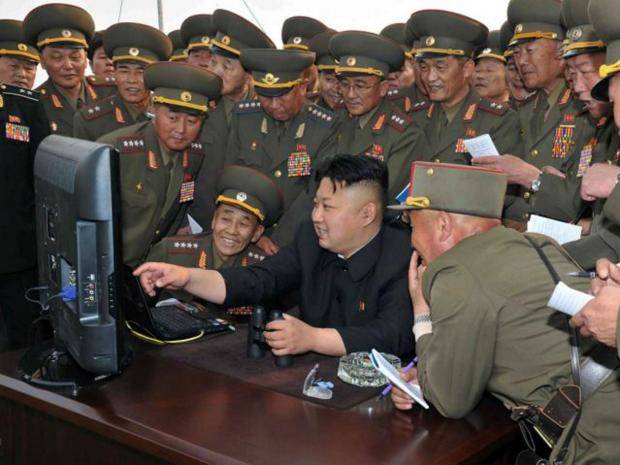
The need to prototype and test any kind of malware and the infrastructure that could actually be used against the likes of Sony might be routed via North-Korea, but could never originate there. The fact that your boffins can’t tell the difference is a clear given that the cyber branch of your organisations are not up to scrap. In that case it is now imperative that you both contact Major General Christopher P. Weggeman, who is the Commander, 24th Air Force and Commander, Air Forces Cyber (AFCYBER). He should most likely be at Lackland Air Force Base, and the phone number of the base is (210) 671-1110. I reckon setting up a lunch meeting and learn a thing or two is not entirely unneeded. This is not me being sarcastic, this is me telling you two that the case was mishandled, got botched and now that due to North Korean ‘expertise’, plenty of people will be asking questions. The time requirement to get the data that got taken was not something that happened overnight. For the simple reason that that much data would have lit up an internet backbone and ever log alarm would have been ringing. The statement that the FBI made “it was unlikely that a third party had hijacked these addresses without allowance from the North Korean government” was laughable because of those pictures where we saw the Korean high-command behind a desktop system with a North Korean President sitting behind what is a mere desktop that has the computation equivalent of a Cuisena Egg Beater ($19.95 at Kitchen Warehouse).

Now, in opposition, I sit myself against me. You see, this might just be a rant, especially without clarification. All those North Korean images could just be misdirection. You see, to pull of the Sony caper you need stimulation, like a student would get at places like MIT, Stanford, or UTS. Peers challenging his solutions and blocking success, making that person come up with smarter solutions. Plenty of nations have hardware and challenging people and equipment that could offer it, but North Korea does not have any of that. The entire visibility as you would see from those 28 domains would have required to be of much higher sophistication. You see, for a hacker, there needs to be a level of sophistication that is begotten from challenge and experience. North Korea has none of that. Evidence of that was seen a few years ago when in 2012 in Pyongyang I believe, a press bus took a wrong turn. When some reporters mentioned on how a North Korean (military I believe) had no clue on smartphones. I remember seeing it on the Dutch NOS News program. The level of interaction and ignorance within a military structure could not be maintained as such the military would have had a clue to a better extent. The ignorance shown was not feigned or played, meaning that a technological level was missing, the fact that a domain setting was missed also means that certain monitoring solutions were not in place, alerting those who needed to on the wrongful domain settings, which is essential in regards to the entire hacking side. The fact that Reddit and several others have screenshots to the degree they have is another question mark in all this last but not least to those who prototype hacking solutions, as they need serious bandwidth to test how invisible they are (especially regarding streaming of Terabytes of Sony data), all these issues are surfacing from this mere article that the Guardian might have placed for entertainment value to news, but it shows that December 2014 is a very different story. Not only does it have the ability to exonerate the

We see a final quote from Martyn Williams, who runs the North Korea Tech blog ““It’s important to note this isn’t the domain name system for the internal intranet,” Williams wrote. “That isn’t accessible from the internet in any way.”” which is true to some extent. In that case take a look to the PDF (at https://www.blackhat.com/presentations/bh-usa-07/Grossman/Whitepaper/bh-usa-07-grossman-WP.pdf) from WhiteHat security. On page 4 we get “By simply selecting common net-block, scans of an entire Class-C range can be completed in less than 60 seconds“, yes, I agree you do not get that much info from that, but it gives us to some extent usage, you see, if something as simple as a domain setting is wrong, there is a massive chance that more obscure essential settings on intranet level have been missed, giving the ‘visitor’ options to a lot more information than most would expect. Another matter that the press missed (a few times), no matter how Time stated that the world was watching (at http://time.com/3660757/nsa-michael-rogers-sony-hack/), data needs to get from point to point, usually via a router, so the routers before it gets to North Korea, what were those addresses, how much data got ported through?

You see, the overreaction from the FBI, Homeland Security, NSA et al was overly visible. The political statements were so out in the open, so strong, that I always wondered: what else? You see, as I see it, Sony was either not the only one who got hacked, or Sony lost something else. The fact that in January 2015 Sony gave the following statement “Sony Entertainment is unable to confirm that hackers have been eradicated from its computer systems more than a month after the film studio was hit by a debilitating cyber-attack, a report says“, I mentioned it in my article ‘Slander versus Speculation‘ (at https://lawlordtobe.com/2015/01/03/slander-versus-speculation/). I thought it was the weirdest of statements. Basically, they had almost 3 weeks to set up a new server, to monitor all data traffic, giving indication that not only a weird way was used to get to the data (I speculated on an option that required it to be an inside job), yet more important, the fact that access had not been identified, meaning it was secured gave way to the issue that the hackers could have had access to more than just what was published. That requires a little bit more explanation. You see, as I personally see it, to know a transgressor we need to look at an oversimplified equation: ‘access = valid people + valid systems + threats‘ if threats cannot be identified, the issue could be that more than one element is missing, so either you know all the access, you know all the people and you know the identity of valid systems. Now at a place like Sony it is not that simple, but the elements remain the same. Only when more than one element cannot be measured do you get the threats to be a true unknown. That is at play then and it is still now. So if servers were compromised, Sony would need a better monitoring system. It’s my personal belief (and highly speculative) that Sony, like many other large companies have been cutting corners so certain checks and balances are not there, which makes a little sense in case of Sony with all those new expansions corners were possibly cut and at that point it had an IT department missing a roadmap, meaning the issue is really more complex (especially for Sony) because systems are not aligned. Perhaps that is the issue Sony had (again this is me speculating on it)?

What is now an issue is that North Korea is showing exactly as incapable as I thought it was and there is a score of Cyber specialists, many of them a lot bigger then I will ever become stating the same. I am not convinced it was that simple to begin with, for one, the amount of questions the press and others should have been asking regarding cloud security is one that I missed reading about and certain governmental parts in the US and other nations have been pushing for this cheaper solution, the issue being that it was not as secure as it needed to be, yet the expert levels were not on par so plenty of data would have been in danger of breaching. The question I had then and have now a lot louder is: “Perhaps Sony showed that cloud server data is even less secure than imagined and the level required to get to it is not as high as important stakeholders would need it to be“. That is now truly a question that matters! Because if there is any truth to that speculation, than the question becomes how secure is your personal data an how unaware are the system controllers of those cloud servers? The question not asked and it might have been resolved over the last 645 days, yet if data was in danger, who has had access and should the people have been allowed to remain unaware, especially if it is not the government who gained access?

Questions all worthy of answers, but in light of ‘statements made’ who can be trusted to get the people properly informed? Over the next days as we see how one element (the 28 sites) give more and more credible views on how North Korea was never the culprit, the question then becomes: who was? I reckon that if the likely candidates (China, Russia, UK and France) are considered there might not be an issue at all, apart from the fact that Sony needs to up their Cyber game, but if organised crime got access, what else have they gotten access to?

It is a speculative question and a valid one, for the mere reason that there is at present no valid indication that the FBI cyber unit had a decent idea, especially in light of the official response towards cyber security firm Norse what was going on.

Could I be wrong?

That remains a valid question. Even when we accept that the number of websites are no indication of Intranet or cybersecurity skills, they are indicative, when a nation has less websites than some third world villages, or their schools have. It is time to ask a few very serious questions, because skills only remain so through training and the infrastructure to test and to train incursions on a WAN of a Fortune 500 company is not an option, even if that person has his or her own Cray system to crunch codes. It didn’t make sense then and with yesterday’s revelation, it makes even less sense.

Finally one more speculation for the giggle within us all. This entire exercise could have been done to prevent ‘the Interview’ to become a complete flop. You know that movie that ran in the US in 581 theatres and made globally $11,305,175 (source: Box Office Mojo), basically about 10% of what Wolf of Wall Street made domestically.

What do you think?


Leave a comment

Filed under IT, Media, Military, Politics, Science