Category Archives: movies

When death is taxable

Yup, we get to part three, it is not merely about the tory, which in personal view is pretty nice. It important to set a dynamic into place. We looked at the mortal one, we saw a little from the divine point of view, yet there is a third view, The opponents view. There is one side that is the strongest and it is ready to oppose both sides, but to do it well we need three parties.

To show this lets take a look at two images. In the first image we see three circles. The interactions are the points where the circles connect, the environments are the thee areas where the interactions take place.  Now this is not always a given, but for the breakthrough moments, when you do this, you are in an easy state to set the stage to seven locations and six points where the main characters interact. This setting is not a given, but it is a start, the better situation is with 4 circles, where we see 4 main parties, we get 10 interactions and 14 locations, yet that is for the masters, not for mere wannabe’s like you and me. So when we have set the stage of interactions we get set an initial stage towards a script. When this is done we can start considering the creation of a playbook. 

So what gives?
Well, when we create a setting where we need to chose whether to take the side of the divine or the mortals, the seek into self is powerful, the desire to be divine equally so, as such we need a third party, the opposing gods are one way to go, it also leaves us being the toil to the gods, just like any good greek tragedy is, and as Herodotus teaches us, Egyptian plays are no less. It gives us the power of the power players Hades and Anubis, yet in that light we get the questions that surrounds Baron Samedi and to a small degree his consort Maman Brigitte as well. This gets us to the opposition.

If we consider that Hel, Ereshkigal and Mot. We need to consider the history we do know, the history we suspect (through known literature) and there is a decent part of speculation, which is left to us because thousands of scrolls in the Library of Alexandria never made it past the fire. Yes, that does not prove anything, but the words of the old writers goes further than what we know and even now their insight astounds us, so we have a place to start. Nordic myths and stories gives us a lot about Hel, but it does not give us all and there is a second consideration. This comes to the surface when we consider Codex Wormianu (1400, Denmark) and Codex Trajectinus (1600, Netherlands). There is every. Chance that these papers had been overly Christianised, and that is a problem, but it is also a handle of resetting what is Hel and where it is, she becomes a much larger side to the story, the same could be said for Mot, yet there is a lot less on that front, giving us points to work with, but also a lot of freedom, so we need to see where the interactions in the old writings of these gods were. You see, no matter how we slice it, in the old writings we learn of written yet unspoken desires. When we consider that, the writings of some, that the gods were petty and power driven does not add up, but it becomes a different matter when the souls of the people become the currency, when devotion is the foundation of their power, it makes sense and then we see that the deities of death have an advantage, because when we die, secular or not, most suddenly become faithful, but faith through fear does not work, it never does. As such the consolidation of souls become a different view and that puts Baron Samedi in the middle of a lot and from his point of view, from a Haitian power base to global foundation is one hell of a leap and that shows us the three and the need for Hel and Mot to oppose it. In this Ereshkigal is a mere vessel, but a powerful one, almost forgotten, the perfect messenger between several parties and one with the overall strategic view, all players in a game where 7.8 billion souls is a powerful battery to bring back the gods, but not all will make it back, that is where the battle of opposing forces lay for the longer station. 

So whilst we consider the parts of these three groups, we need to consider what we would do if we introduce a fourth group, or more precisely, how we can shift balance over the three parties when a fourth party (optionally part of one of the two) pushes the balance in all kinds of directions. The viewer needs to be mesmerised, yes it is appealing to be the person on the axe of the seesaw, but that is too controlled, so like the image, the purple circle, a combination of red and blue now gives us two points to push the mortal coil and also push the other two parties, yet what is the real push and what is the feigned push, that becomes the question if the viewer has that approach, if not (which would be fair), is a much larger stage in creating a rollercoaster ride and that is where the story goes off (optionally the deep end). So when we look at these elements we see the third party deflating one and inflating the other to create a stage the viewer is wondering about and that entices them to watch more. So whilst we consider where the opposing group goes next, it will enable us to see the ‘altered’ view of both, so when the two players are exposed we wonder do we see what we want to see, or what we are allowed to see? And that is quite the ballgame. And this approach is not merely for specified projects, this setting works well on storylines for RPG games as well. Consider some of the RPG games you played, do you recognise the approach to some degree? It does not matter if you do not, but it still gives rise to the one part I always proclaimed ‘The story is everything’.

Have a great Monday!
1 Comment

Filed under Gaming, movies

When death and Chicken taste alike

Yesterday I wrote ‘Death as a resource’, my mind kept on racing and now it is time for part two, you see when the story is everything, you need to set a stage for the eyes to watch and to watch from the eyes of a god is not possible, not for many at least, so we need to paint the stage. No matter how we get leaked the information because the media wants its click stream, we need to entice the audience in other ways. In this I always grasp back to the slogan of FX, ‘the story is everything’. It is the most true and the most basic slogan that any writer can ever embrace. So here goes.

In the human corner we get two sisters, the younger one is a special agent of the ATF, the older one is an independent food critic, working and writing freelance. The stage starts with the older one seeing weird numbers. The stage of food poisoning up by 10%, yet the inspections by the department of health Louisiana had increased and showing clear lower transgressions all over the board, as such the numbers do not make sense. Even as the cases of food poisoning are not clearly shown or proven, the number of people showing symptoms are increasing. It was a small article and it was rejected by most, her sister took notice and found out that a similar trend was going on around Disney World Florida and Boston, even as it was rejected by almost all, the 10% raises calls towards visibility and this happens in more than one way. The ATF is not the real player, but the sister knows people and becomes the glue that links Boston (Faneuil Hall with its 15 million a year tourists), Disney World Florida and New Orleans. Her sister the food critic sees the overall quality of the food and attacks the 10% numbers, but also sees that the numbers are panning out. During the investigation she walks home one evening and sees the shadow of a large walking doglike creature as well as Baron Samedi, and then she faints. She sees one as a tourist trick, the other one she cannot explain and even as she is told that she was delirious from some kind of food poisoning, and that a rougarou is often part of Voodoo practice, so it is most likely a large man wearing a costume. (All this in episode one)

The vision makes the Tanya look deeper and as she investigates the restaurant she visited, with help from the Health inspection, she signs off on the quality and cleanliness of the kitchen, the proprietor knows that she has power and cooperates, she promises him a glowing recommendation and no mention of her food poisoning, yet she knows that there is something. She has a cup of soup during the day (the Meng Po element is now visible) and reinvigorated she continues the investigation. In the mean time she gets the location of three suspected food poisoning and as she visits them all, she sees that they look drained, like they had something bad to eat, but also talks to the doctor that there are no lasting complications expected. They merely need to keep to bed for a full day and let it all flush out of their systems. 

As she returns in the early evening she talks to two of the people in the lodgings and hands them some magazines to read, as she walks to her car, she sees a man in the distance, robed, holding a bident (Hades), she ignores the view and drives off. The next morning the three people are a lot worse and they show signs of Severe electrolyte imbalances and are treated accordingly, they recuperate as we hear at the end of the episode. Yet Tanya seeks out the man looking like Baron Samedi, she finds a few in New Orleans, but none look like the one she saw and she draws a picture of him and mails it to her sister. (Episode two starts here). In that episode it will be much more about the gods and part of the explanation of the why they are doing it. Consider that the initial locations shows us 35 million visitors a year, giving them the energy of up to 3.5 million people and it is only the beginning. We see how Christianity overtook the gods of Egypt and Greece, giving us their decay, but the gods were more than people and they survived in silence and in hiding. As time passed we see that Hades and Anubis lived off the land, but in their travels they landed in France where Baron Samedi was visiting (around 1800) and this starts their idea and the path we now see evolve. It is before 1900 when we see Meng Po in France too, they all meet and the plans are drawn and to give them a larger stake in all this, they decide to start the trip in the US so that they will have a much larger increase in power than Zeus and Ra, who have no connection to the American people, giving Hades and Anubis a much larger headway and more energy, but they agree that o ver time their brethren will be fed too, as this will reset the universe to their advantage.

In this in this episode I think that it is also important to introduce Ereshkigal and Mot into the story,  they are in a similar position, but they are much stronger and their universe still feeds them to a small degree. They get wind of the plans and start making their own (we get no idea on how they will go about them until the end), but the introduction is important. When we see a story we need to see levels of balance, the good, the bad and the indecisive. Yet in all this we also get to play with who is good, who is evil and who is indecisive. Good and bad are merely points of view, it is important not merely to use that but to explain to the audience what is what. It is like the customer and the bank, we tend to see the bank as evil, they are not, we see the customer as mere victims, they are not and to shift these vies towards some balance makes the larger whole grow in several ways. So as I am making an inventory, I reckon that the mini series should be done in 5-6 episodes, each around an hour. 

2 Comments

Filed under movies

Death as a resource

It seems flaky (and that is how I roll most often), but there is a logic to it all. This all came to mind as I was trying to complete the achievements in AC Origins, it was already in the back of my head, but the crossover NCIS episode regarding some playbook (featuring an evil Abby Sciuto) made the larger stage and started to connect the dots. The foundation of a mini series (or movie) came to mind. Consider the stage and consider history. We have always been ‘smitten’ by divinity, we have always considered that there is a larger stage, but when you think of it, the closer we get to death, the more we wonder and consider the need for mercy, understanding and we need that for out own peace of mind, but in that moment we give power of existence to these gods, so at that point Hades, Anubis, Mictlantecuhtli, Meng Po, Baron Samedi and Chepi meet in New Orleans (location of story), they hatch a plan to get there powers back to a much greater degree and with a population of billions, it becomes an option. The plan as it evolves sees Baron Samedi setup the voodoo powers to entice the people, Meng Po hands out the potion in the soup she gives as a freebee to the tourists. And as more people get enticed they forfeit their souls to the old gods. 

Now consider that New Orleans has over 18 million tourists a year, if the game is to entice thousands a month, that would be a larger stage that feeds these gods and that is merely the start. And as the old deities return, so do the old hatreds. So as the gods of death (with a buffet of 7,800,000,000 people) set out to regain power, we see the option where the other gods are in doubt of these wisdoms, yet their powers are diminished, yet Hel (Nordic), Mot (Canaanite), Yama (India) and Ereshkigal (Mesopotamia) are not on board either for other reasons. Hel does not share power, Ereshigal shares her fate with Nergal and there is a larger stage here and when we get to Mot, I am a little in the dark, but as we see the interactions with Judean words as well as other interactions, we can attest to Mot in being another source of direction and optionally inserted himself to become a discord to the attempt of the gods of death.

The stage my mind is developing is set around the core four (Hades, Anubis, Baron Samedi and Meng Po) that have a clear directive, but it seems to simple. Even as it is on the up and up, Anubis and Hades will use their power to revitalise their brethren but now under them as the central god, deposing Zeus and Ra. A setting that all still needs work and it could even push towards a much larger video game, and as my mind is even pushing for new sides all whilst typing this, it might be more than a movie (a mini series might make much more sense), and in all this I feel that the stage needs to be about balance and the distortion of balance. Consider that 20 million people a year visit Disney-world (Chepi), The Taj Mahal (Yabu) gets 4 million, Acropolis (Hades) 4 million, as well as the Pyramids (Anubis) gives him 14 million options. It is all connected through Samedi and Meng Po (the soup) and that starts a new ball game. Once infected the targets can be drained whenever needed, not killed but drained (like a bad flu), feeding these gods of death and feeding their kin to a much smaller degree. 

Now I start thinking of the balance equation and how to insert Mot as one of the oldest gods in all this. And it cannot be some over drenched fantasy story. I want it to look like something that makes people be scared of the common things they see every day, it is easy to disregard the Bident of Hades, or the flail of Anubis, yet who feels comfortable with the soup of Meng Po? A soup like any soup kitchen would serve? And just for the spices, how about some Samedi paprika powder to spice the soup?

Well, enjoy your soup today, I will have a bowl of Chili (in roughly 47.2 minutes).

2 Comments

Filed under Gaming, movies

Operation Hazen Ames

It is night, Michael Weatherly is being casual, he is making small talk with another person. He explains that there is no need for the one exit to be watched. He closes the reinforced door that had the room with the information he needed. He then trips the alarm, turns around to the mirrored wall and pulls away the table, there is one screw. He unscrews it and pulls out the screw connected to an umbrella plug, the wall comes down. He clicks the other side open and points to the partner to get through. They go through and as he closes the initial mirror wall, the magnets in the table and wall push the table back in place. The umbrella plug is glued to the screw, it now operates as a screwdriver, Michael attaches something to the screw, he then click pushes the second wall back into place, the magnets hold it firm. They moved through an unmonitored small corridor and enter a supply room at the end is a rack with goods, he clicks on a button and the rack moves up a few millimetres, the wheels are now down, he moves the rack and signs the partner to quickly goes through. The moves through and there is a small food elevator there. He closes the wall and pulls two wires to set the rack back where it was, he had 10 seconds left, he can hear people running towards the place they had just left. They enter the food elevator and quietly opens the back panel, he goes through, the partner follows, he closes the elevator door and the back panel, then presses a button. The food elevator moves quietly down. 

For me it is easy to explain why the person is Michael Weatherly. I have been re-watching 12 seasons of NCIS during the lockdown the last two weeks. The issue is that this is part of a spy story, but not one you would expect. You see, this situation happened, it was a CIA operation, one of many and the story is not the common parts of the TV series, this series is not NCIS or Bull (I never saw Bull). The setting is that the TV series and episodes are a tell tale to the foreign governments to show them how they were transgressed upon and the TV episodes have fake names (as any series does) with a reference to an anagram to the operation. Someone decided to turncoat the CIA and uses the methods to make money on the side, from the studios as well as the extra checks from the governments he is supplying the evidence to, a nice little operation.

Yet the setting on TV series, as we see the use of ‘clever’ terrorists, there is a second fear, not that the opposition is more clever than the terrorists. It is that greed driven elements see their option clear AFTER the operation, not merely endangering what comes next, but giving away the past endangering more as well. It was the setting for an episode of any crime and spy driven series, yet I have no idea why the idea sparked into my mind. Whether it is about double agents, self turned greed driven agents or another kind, we are (through the Art of War) confronted with 5 types of spies. 

Local spies
Inward spies
Converted spies
Doomed spies
Surviving spies


The Art of war teaches us that if all five types are used it is impossible to discover the secret system, but as said the old days did not consider the greed driven logistics that we see today. You can read the Art of War to see and learn about the 5 types, yet the setting is altered in todays espionage. We have minders, archivists and now as one turns the colour of his shield, there is a larger danger that it turns Local spies into Doomed spies, a game changer many are not able to deal with. In any operation the local spy is the anchor, a barge without an anchor can move from the shadows into the floodlights of the other player. Am I right? Am I imagining (or fantasising) this? It is but a dream, yet in this we also find the larger stage of what matters. Even though von Clausewitz gives us that mot intelligence is false, there is a consideration that he considered himself a gentleman and as such espionage was beneath him and it was never considered a valid form of warfare. Sun Tsu is much more relevant, he saw espionage as a valid tool and his approach to any tool n hist setting to war is how to use tools the most efficiently. The concern he had for spies is like all other tools, if it protects the homeland, that is how we use it and in that era the general and his administrator were dedicated to the land they protect. In todays situation the logistics of war is on a sliding scope of what comes next and as such the undervalued and the discarded are drawn to whatever pays for a little better lifestyle than they are set to have, and they will use what is at their disposal, as such it is the archivist and the administrator that become the weakest link in a spy system. A situation that no movie or TV series has looked at. With all the thousands of episodes and hundreds of movies, I casually found a vulnerable unexplored link, yay me!

Leave a comment

Filed under Military, movies

Renaissance of cinema

When did you have that feeling, if you ever had it at all? I think it is part of the ageing process, you have to be over 50 to get it. You see, we see Netflix and we often see Bluray’s (or DVD’s) of the old master, but in both cases, at present I still cannot get the real masters. Claude Lelouch’s ‘Les uns et let autres’, the bluray of Sleepy Hollow (Tim Burton), or even ‘My little Buddha’ with Keanu Reeves. They are all masters, all in their own right they brought an amazing story to the screen. I was there at the premiere in the Hague when Les uns et les autres made everyone jump to their feet at the end giving a wide applause, it as the first time I saw that happen, it was the first time I experienced it. Not merely the music by Francis Lai and Michel Legrand. The cast which included James Caan, Geraldine Chaplin, Robert Hossein, Jean-Claud Brialy and so many others, a story for the ages. Tim Burton gave new live and a much stronger life to Sleepy Hollow, yes Johny Depp played the big role, but he was surrounded by others and when you see Christopher Lee play the small part of the judge, a small role by a giant, you should figure out that you are hading to something amazing. I have more reasons for this, apart from seeing it 3-4 times on the big screen when it came. It also introduced me to the teaser trailer to the first Harry Potter film, a name I had not heard before that day, but the crowd went insane that night. Sleepy Hollow, with amazing music brought to life Washington Irving and his Legend of Sleepy Hollow. These to giants are not alone. In all the need to reinvent the wheel the streamers are all forgetting the originals, or perhaps the originals as I remember them, Keanu Reeves as Siddhartha, a story of Buddhism, a religion I knew then, and optionally still now know very little about. Yet the movie showed more, it opened a door (for me) and that part is important, to all. When a movie, or a story makes for an open door in your mind, you get to peak at what is out there. Me? I am a pranking person. So I would like to go into the office of Jean-François Mirigay of Monaco and introduce myself as police commissioner Ludovic Cruchot of the St. Tropez police department to inspect the troops no less (fake papers required, and fluent French knowledge too). Why? Because Louis de Funes was that funny, we forgot about him did we not? The old masters are almost forgotten, but I will not let that happen whilst I still live. It is also the need to see Belmondo in Flic ou voyou (or Le guignolo) again. Yet there are no discs, there is no Netflix version. One would hope it will be remastered, perhaps a new version of those movies, but these movies are about the not so PC 70’s, 60’s and in some cases 80’s. 30 years of cinema almost forgotten, mainly because Hollywood does not care about what passed, it cares about the next quarter. Yes, it does and in the Covid age, I get that, I do not oppose it, but is that enough of a reason to forget the greats? When we see ‘French’ and movies, some will revert to Emmanuelle and Silvia Kristel, but French movies had so much more. There was Catherine Deneuve with Indochine (1993) about the age before Vietnam became a reality. Cinema has so much to offer, but I fear that too many have forgotten how we got there and that is such a shame, because I have not even scratched the surface of what was. Even in my native Netherlands, I was (until I moved to Australia) unaware of Rutger Hauer’s Bride Flight. That made sense as it is a 2008 movie, but the movie told me a lot that was not taught in the schools. I knew about the 1953 London to Christchurch air race, all Dutch kids hear the story of the race, but the race was merely the beginning and we get to see more, also how the Dutch moved and took their values with them, some never embracing the local values and cultures. And I am not asking you or telling you to embrace it all, I merely offer the idea that you consider the old master, old masters of cinema. A group of people that are too soon to be forgotten as we see another batch of Netflix and Disney plus releases. So when we see names like Timothy Spall, we tend to grasp straight to the Harry Potter series, yet we forget that he stood out in Vacuuming Completely Nude in Paradise (aptly renamed by me as death of a vacuum cleaner salesman), it is actually there that I saw in him an optional Lucius Malfoy (I had just read the third book), a stage that is not set against Jason Isaacs (who did a brilliant job), it is merely the thoughts that we entertain when reading a book is much wider than the cinema offers, the cinema offers the view of the director (optionally filtered by the producers), the book let the mind work it all out and the filtered views of the past still matters, especially when experts in their own field like Louis de Funes, Derek Jacobi or Jean Paul Belmondo give their view for us to see. I feel that players like Netflix and Disney are forgetting that, when we merely focus on the spreadsheet and what needs to be achieved, the past is lost and that is never a good thing. The funny part is that this impacts games and movies to a similar degree, which is an odd revelation, but there you have it. So whilst we are all debating how precise Ridley Scott’s Kingdom of Heaven really was, we forget that, or perhaps never knew that Balian of Ibelin (c. 1143 – 1193), also known as Barisan the Younger was a real person who surrendered Jerusalem to Saladin on October 2, 1187. Until the movie was made, I wonder how many knew what the setting of Jerusalem in those days were. Books are not merely the foundation of movies, movies are a source to investigate what was and in this Les uns et les autres stands out, it is pure fiction, but the story touches on real musical icons. People like Édith Piaf, Josephine Baker, Herbert von Karajan, Glenn Miller, Rudolf Nureyev and a few more are given life in this story in the most eloquent way, the old masters have so much to teach us, lets make sure that we do not lose these lessons before it is too late, a spoonful of Alain Delon anyone?

Leave a comment

Filed under movies

Sapphire or Tourmaline

This all started some time ago, but it resurfaced as I started to replay AC Origin. In lockdown land any change of gaming is a well desired one and AC Origin is actually quite good. But that is merely the start, as I was playing (and as some missions are identical to the first time around) my mind wandered to a delusional IT manager in the early 90’s (1991 I believe). He stated “a resource shared is revenue doubled”, it is that idiotic level of fortune cookie wisdom that as actually rewarded, I never got that part. Yet there was a small gemstone of truth there, but not where he thought it was. As we make a jump to another place it is time for a question. How many real simulators are there? As far as I can tell there is one, only one. Nearly all others are games. The only one true simulator is made by Microsoft and it is the Flight Simulator, currently known as FS2020. Isn’t that surprising? A whole range of games but no one truly dug into the real of simulators. It tends to be really really hard, too hard for a lot of them. 

Yet here we get to see the light, Ubisoft has options (well it always had them, but more often they were ignored), yet with AC Origin they opened a door and now we have a ballgame. What if AC origin is merely the start of a dynasty game, a true simulator about life in Egypt? They have nearly all the graphics ready, the maps need adjustment and the spacing needs to change (like 1:9), so that every area is at least 900% in size but consider a true simulator where you are the beer merchant, the farmer, the fisherman, the embalmer, the priest and above all other arts, the overwhelming pressure of the gods and a monarchy that shows little to no mercy, a true first comprehension of what life was about then. And you cannot do it all, a stage where you get assigned a map where you were born and a role you were given, you have some choices as did the people then, but their options were very small, they had little choice. A true historic simulator and guess what? There are none. It has never been done before and I reckon that no one ever considered it to this degree, the technology stopped them, but with Google Stadia and Amazon Luna (and 1-2 alternatives) it is now possible. Even as I still believe that “a resource shared is revenue doubled” is utter nonsense, there is a gem of truth there. Some resources can be used again and that does not mean that revenue is doubled, but the second stage becomes easier and with hardship out of the way there is no reason not to contemplate a path none dared to walk and there is also the second ego reason, being first somewhere counts, being the first who gets it right to this degree is massively rewarding, others will have to fight to equal what you pulled off and it will vex them to no end. Will it happen? I do not know, as I said, this has never been done before and that is also the most rewarding part, especially for Ubisoft if they go there. The educational value is enormous. We are smitten by movies like the Mummy (Brendan Fraser edition), the 10 commandments, Rome, Spartacus, Cleopatra and it fills the mind with what could be, but people like Julian Fellows (Downton Abbey, Belgravia) has opened to some degree our eyes, just like the Vatican game I had in mind. This simulator could wake up an entire generation. Just like Steven Spielberg did with Jurassic Park. Who did not want to see the Triceratops? We have a similar fascination with the Roman and Egyptian era, yet books and movies is all we have and now we could for the first time get a true simulator. Yes, I will agree that it is not for everyone, but there is another upside to cloud gaming. We are willing to try a lot of games when it is included in some package, and there lies the gemstone. Apart from those who want to see Egypt is the past, there is another group of people who want to try everything. It is merely the sense of us as we explore and especially explore when it costs nothing extra, we are nearly all like that.

Will it happen? Time will tell, it usually does.

Leave a comment

Filed under Gaming, movies, Science

Franchise to the left

And legend to the right, we all have been in that setting; we all have had grander then life dreams and imaginations. For me it started when some British bloke brought a new level of fear to the cinema (Alien), it could be the American that made us afraid to go swimming (Jaws), yet for the most we all have had that moment. For some reason that feeling got awake again with the setting of Kristen Stewart and Vincent Cassel, directed by William Eubank. I am talking about the movie Underwater. I am trying to make sure that I am not giving away the plot, because the movie is well worth watching. We all have made fun of Kristen Steward, not because of the girl, but because of the franchise. I have nothing against the franchise and even as I have never read the works of the writer, I get the feeling that she is well worth reading, I got that sense when I saw the movie the Host. Anyway, I got the limited Twilight edition of Charlie’s Angels (one additional romantic scene, ha ha ha) and that was that. But she shines like a well cut diamond in Underwater, the cast is awesome and the movie is a lot better then anyone realises, because in my case Underwater took me back to the original feeling of unease that Jaws and Alien instilled, I actually missed that feeling and it got me thinking. We all look at the Middle East, we all saw Aladdin, but there is a lot more than the proverbial Argo. What if we dispense with the musical dreaded scene of the room in the dark, what if the dark becomes a much larger stage, a stage where you will not sleep, never ever again with the lights off?

That was the setting I contemplated, but it never gave me the idea, the idea was already there, yet in this case the idea altered a little. I am talking about the concept of the Ifrit. Then today (yesterday as well) when I was replaying AC Origins, I stumbled upon the idea again, it was when (in the game) I entered the city of Letopolis (and the story behind it) and it gave me the idea in more degrees. Yet I was contemplating the city of Per-Amun and the Battle of Pelusium (525 BC). A stage where we see the confrontation of Egypt and the Achaemenid Empire. Now consider that an Ifrit was held captive in Per-Anum, it was taken and moved to the western province of their domain in the city of Gerrha, in a secret tomb under houses the prison of the Ifrit was kept and lost when the caretakers fell ill and it was forgotten, that prison is found after 2500 years by a western teacher exploring his connection to Islam and he is filled with the rage of a demon held captive for 3000 years. We now have a stage where Islamic doctrine might hold a solution, but the wielder is in doubt of his faith and in the mean time the rage of the Ifrit takes on a turn of another nature. When we consider that the larger stage of the Achaemenid Empire is now Iran, Gerrha is (now) in Saudi Arabia and we are confronted with a demon, not merely in thirst of blood, but also a stage of intrigue setting up a war of Saudi Arabia against Iran we get a new stage, one never seen (as far as I know). We look at horror, but what if horror is set (drenched) in political settings, as well as religious ones? Especially when we consider “In the latter account, the “ifrit among the jinn” threatens Muhammad with a fiery presence, whereupon the archangel Gabriel taught Muhammad a Du’a (Islamic prayer) to defeat it.” A stage which we get from ‘Heavenly Journeys, Earthly Concerns: The Legacy of the Mi’raj in the Formation of Islam Routledge, 2004’ by Brooke Olson Vuckovic. We have all the markings of what could be an awesome franchise, yet as far as I can tell, no one looked in that directions, I wonder why. 

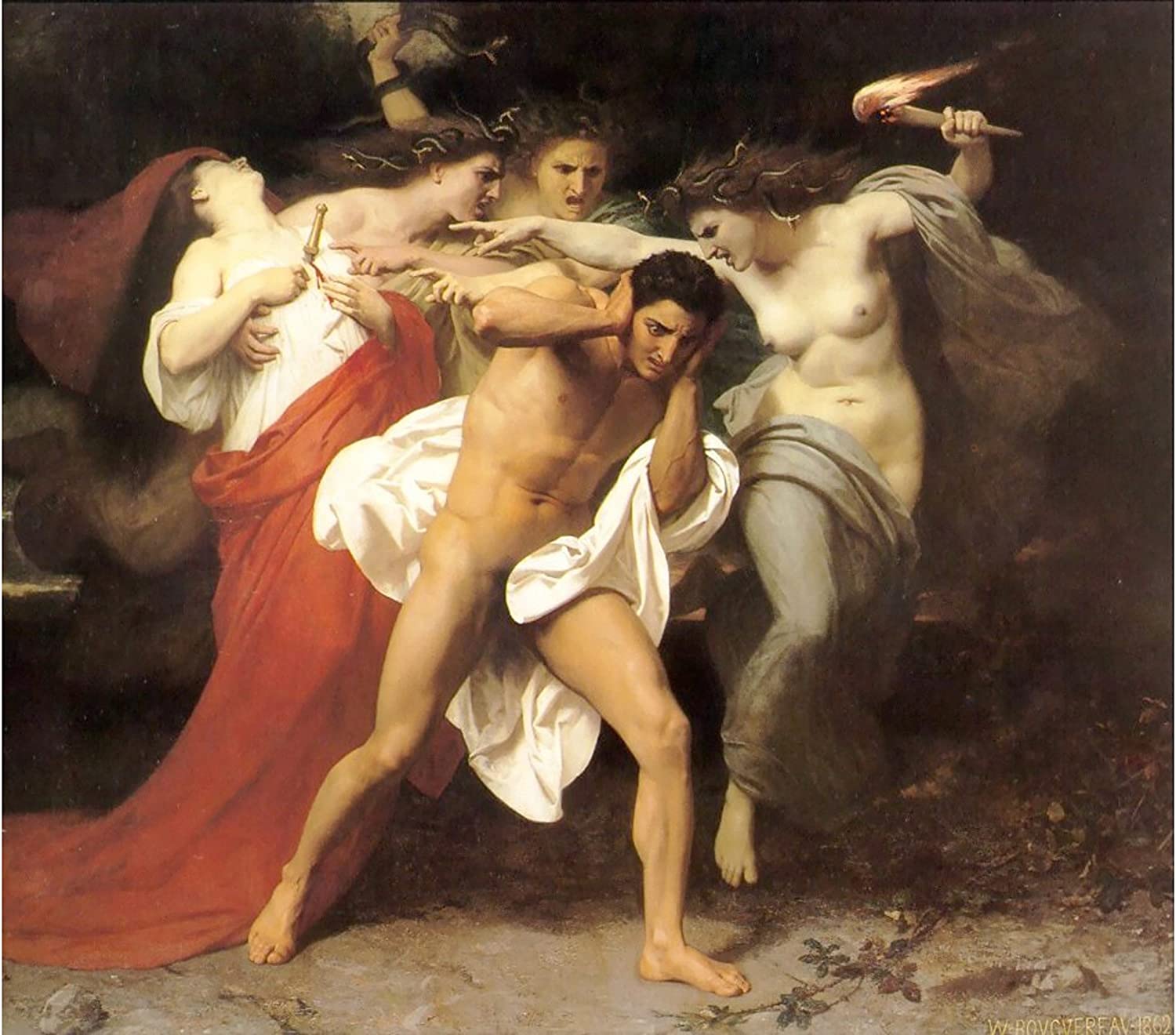
5 large streaming houses, a dozen large studio’s and no one looked or contemplated this direction of ideas? I merely watch movies, I am not (and never really had the notion of becoming) a movie director, I am for the most a storyteller and an analyst. Yet the idea of creating something totally new (not the first time) is both appealing and overwhelming. So as I (and others too) consider looking to the left hoping we have created a new franchise, we also look towards the right hoping to see the shimmer of the ‘legendary label’ in this all storytellers are the same, we love the idea of any new story we create, but to create one that becomes legendary as other great storyteller did before us is always in the back of all our minds, we all want to become the next Rowling, Tolkien, Hubbart, Sheckley or Clarke. We always want to measure how close we got to our idols, as far as I can tell, there is no exception to that rule and every storyteller has his or her own idol, the achieved person that drives us. All that and the thought of knowing the person who overhauled the Necropolis of the Via Triumphalis and whatever they found under there is always the wink towards the unknown. Some merely see the “outstanding example of an ancient Roman burial ground”, yet what if this happened before and what if we ignore the old saying to keep buried what was buried? What happens when you open the door to someone who can traverse the seven stages of the Jahannam? And what happens when someone figures out that there is more to The Remorse of Orestes?

The Remorse of Orestes

We see overlaps and connections in Islamic stories that connects to Christianity (Gabriel) and Greek (Furies), what if this is not a casual link? You see most film makers never seemingly looked deeper into that side of things, why not? If they are more becoming about streaming and franchises, I think the Middle East has a whole range of stories that open up more and optionally also a larger audience. 

#JustSaying

Leave a comment

Filed under movies

Changing perspectives

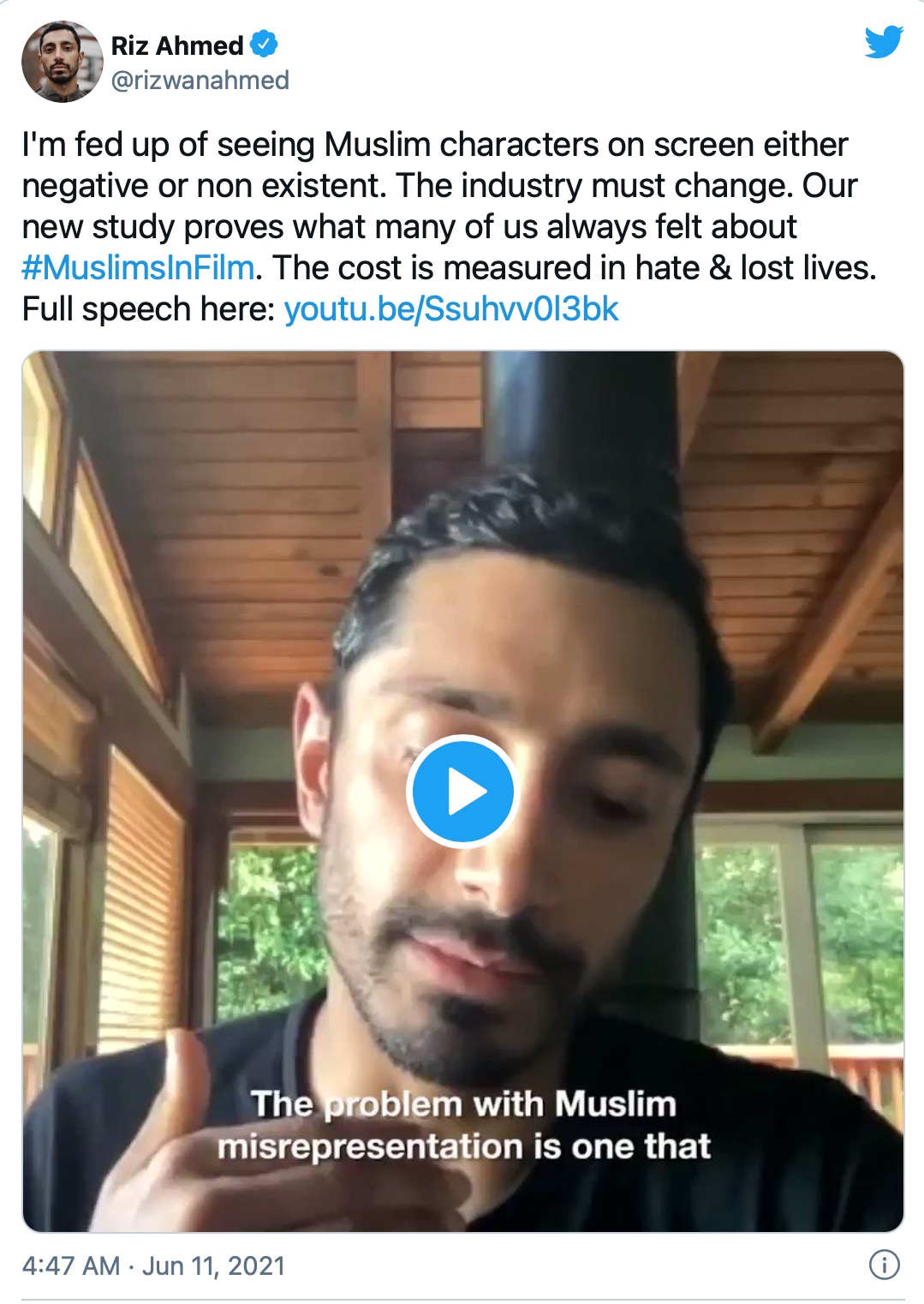
As I was about to lose sleep again, the BBC helped me out with an article in a very different direction. The headline ‘Actor Riz Ahmed wants to stop Hollywood’s ‘toxic portrayals’ of Muslims’. And he is right, for the most there has been too much toxic portrayals. When I try to find an alternative direction, my mind comes up with a title like Traitor, an amazing piece of work by Don Cheadle, I do not believe that to be a toxic movie, it stands out as a Muslim finds a way to stop bloodshed in a very innovative way, the end is to be seen again and again. I came up with ‘How to assassinate a politician’ which might be toxic, but I saw it as a response to ultra right discrimination and unacceptable levels of anti Muslim actions. Yet it is about Riz Ahmed, and when we see “The progress that’s being made by a few of us doesn’t paint an overall picture of progress if most of the portrayals of Muslims on screen are still either non-existent or entrenched in those stereotypical toxic two-dimensional portrayals” (at https://www.bbc.com/news/entertainment-arts-57438750), he is right, there is another side given to us by Ali-Baab Khan “Muslims live all over the world, but film audiences only see a narrow portrait of this community, rather than viewing Muslims as they are: business owners, friends and neighbours whose presence is part of modern life”, there I see nothing new.

I have friends who are business owners, friends who were neighbours and still friends who live far away, they are Muslim and there is nothing wrong with that. Yet it is not merely about the narrow portrait, you see I have always considered myself well educated (three University degrees) and a whole range of experience all over the field, yet until a little after the Charlie Hedbo event I learned that the image if Mohammed was never to be displayed, it was a massive no-no in Islam, I never knew that, my schools never told me that. Now the era was out there that until I went to high school, I had never met a Muslim and even then I did not notice him for the fact that he was by himself a lot and I was in high school. Yet the knowledge behind Charlie Hedbo gave light to my version of ‘How to assassinate a politician. Yet the stage was that I did not meet any Muslims until 1982 when I entered the Middle East, and in all that the teachings of the Catholic Church that was given to us in nearly all schools was about the evil saracens and us the good christians saving Jerusalem. So was it when Ridley Scott made Kingdom of Heaven (2005) that we woke up? Some woke up a little early, but a lot of us still haven’t woken up and those who rely on Lawrence of Arabia (1962) to give us the real news we will be up for a rude awakening. So as some give us “The film is widely regarded as one of the greatest and most influential films ever made. In 1991, it was deemed “culturally, historically, or aesthetically significant” by the United States Library of Congress and selected for preservation in the National Film Registry” we need to recognise that it comes with the added “Most of the film’s characters are based on actual people to varying degrees. Some scenes were heavily fictionalised, such as the attack on Aqaba, and those dealing with the Arab Council were inaccurate since the council remained more or less in power in Syria until France deposed Faisal in 1920”, and as we take notice that there is no real actual and factual representation and this was until way deep past 1991, we see that not only does Riz Ahmed have a case, it is a much larger case than anyone can fathom, even if he is that one Muslim downing the Empire (a Rogue One joke). For me the massive filtering by the media gave me the clue that things are not right for almost a decade, but that means that for the longest time I was not aware of the party that was playing and that bothers me a lot. Does that not bother you? If you are in a small village like Hilversum (Netherlands) and you lived there all your life and you never looked around you might miss it too and you would be forgiven, I take it harder because I am supposed to be intelligent enough to see things, but there too is the crux, the media is a much larger problem in all this and they are banking on people staying asleep for as long as possible, and that gives light to the movie Syriana, a movie with 5 stages and the more you know the more brilliant that movie comes across. Does this help Riz? No, I do not think it does, but it does show that his claim is a lot more solid than we would have given it credit, and that matters too.

Leave a comment

Filed under Media, movies, Politics

God, the sequel

Yup, it all started two days ago. I left you all with some impressions, yet the stage was larger. We cannot set omnipotence without foundation , well we can because I am here, but I am that one exception to the rule (nyuk, nyuk, nyuk). The others (Hades, Poseidon and Zeus) they grew their powers. We tend to make fun and call some settings ‘fabrications’, there we see “Zeus got the sky and air, Poseidon the waters, and Hades the world of the dead (the underworld)” The gods got a decent role in Homer’s illiad, and more wrote about them in all kinds of ways, yet when you dig down and dig to the past several people, people who had never had contact had similar writings. It is trivialised by people who have internet and mobile phones, yet in the old days they had no contact, in no way were groups of people with no levels of contact ever stating the same believes and adhering to the same rules. Perhaps there is something to be said in “he was appalled by human sacrifice and other signs of human decadence. He decided to wipe out mankind and flooded the world with the help of his brother Poseidon. After the flood, only Deucalion and Pyrrha remained” and it is not the only time, even the first time that floods were a larger stage of cleansing. So why? Consider that power grows and power is gotten from somewhere. If Aristaeus got his powers from bees, what happens if people abuse bees? A stage we might not consider, but in a stage where power was important, the abuse of sky (Zeus) and waters (Poseidon) would inflict the wrath of these two. That is the stage we seek!

If we can create a god (ourselves) it needs a power foundation, the smaller the creature, the more simplistic their needs, the easier their power is milked. Hence the 6 animals I gave two days ago. So when we get to “both nectar and ambrosia were kinds of honey, in which case their power of conferring immortality would be due to the supposed healing and cleansing powers of honey, and because fermented honey (mead) preceded wine as an entheogen in the Aegean world; on some Minoan seals, goddesses were represented with bee faces”, with this I personally reckon that the German Wilhelm Heinrich Roscher (1845) was a lot closer to the truth with his view on it and it is important that any game has some handle on the past. Anchors in how power is distributed, how it is gained. If not, then Zeus, Poseidon and Hades could never have defeated Cronos, their father. 

Now consider the paths that Ezio Auditore and Bayek of Siwa undertook (two actual masterpieces), how they grew their powers and abilities. Would it be any different for deities? No matter how the had the ability to do so, they still needed to grow their powers, we all do and now we have a handle on us and on the character we play. Yet if we want something that is larger than life as such some sandbox trip is needed, choices are to be offered. Whether a person has the bee, the wasp or the termite. It starts with a foundation and that foundation grows towards a power base and a weakness, we all tend to look towards Athens for inspiration, but those who do tend to forget to look towards Poseidonia, a ‘village’ on Siros. When we see the elements shown we need to wonder how it was possible and there we have a setting towards the power base of a deity. If Ambrosia is food for the gods, or is it the food that creates gods? One might fuel the other. These thoughts are below the creation of a game, as we set the stage to a larger stage, we need to consider what gives foundation to that stage. A brilliant example is Horizon Zero Dawn, and soon its sequel. We chase in the first game what created the game, we see that there was a machine that creates larger than life events, but there is always a shoe in the cog (Hades). Any stage needs checks and balances or it becomes a fuelled stage of disbelief, even whilst you play it. That was the brilliance that led to Ezio Auditore, a stage we understood (historically speaking). As such, when you figure out that the events in Ancient Greece and ancient Iran (Mesopotamia) are not unrelated, how long until the cogs connect? 

As such we see can see out minds evolve the new god game, but is it a god game or forging a deity? There is a difference and even as the Atari ST, Playstation one, two and three needed us to make mental jumps, the Playstation 5 is now advanced enough to make us see the difference and play accordingly, the specifics are now in our grasp making for a much larger stage of handling evolution. And I reckon that over time cloud gaming will take it to the next level. And in all this Ubisoft was not alone, consider the path that the God of War took, and even he was not alone. It was a path and we forgot about that part in god gaming. We merely have the maker of the games (Peter Molyneux) and his examples Populous and Black and White as examples, but what if growth is a stage that encompasses both? Setting a different sandbox environment might be the way to go and we finally have hardware that can take us there. 

How it done? That is up to the game makers, you can’t expect me to do everything. You need to get creative and make the next stage of excellent gaming, because if we leave it up to Ubisoft it will be anyones guess what excellent gaming looks like and it will end up being below par and we have seen enough games like that. 

So get to work, get to the drawing board and consider the stage we play (entire Greece), what we can do short of everything and start considering what makes power grow. If you are done with that hold it against the deities of Egypt, Aztec and Inca deities and see how you hold up. You see checks and balances is where it is at. That is what makes people choose and it will make them come back for a second and third time. A game played three times over, that is the stage of a legendary game in the making.

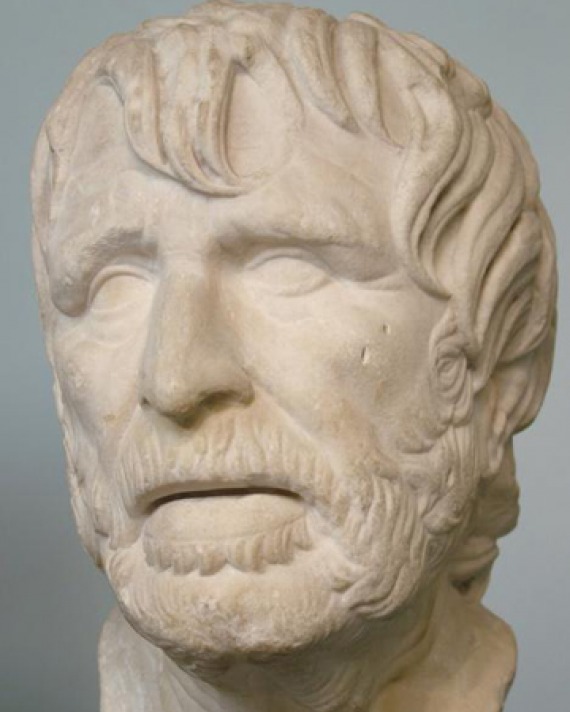
Hesiod

As such in this story I left two clues. They were Deucalion and Pyrrha. Why were only those two spared? If you look at the historic writings (Homer, Hesiod, Ovid, Apollodorus) some things add up and some do not. Now, we can allow for creative views and that would be OK, yet Homer (Ionia, 900 BC), Hesiod (Cyme, 725 BC), Ovid (Sulmona, 43 BC) and Apollodorus (Athens, 180 BC). People that can never have been connected in time, also consider that with our options of preservation, we do not have books that last 300 years and that is whilst we have all kinds of machines that allow for mass replication, that did not exist before the 14th century. A whole range of places most of them more than a life time of travelling away, yet the similarities are almost astounding. When you consider those elements, consider what more there I and what is making these sotries survive, now consider what you need to make a game of THAT magnitude survive the onslaught of players and their increased need of perfection, have a great day.

Leave a comment

Filed under Gaming, movies, Science

A different setting to stage

This is a weird day, well for me it is. For over a week I have been having the weirdest nightmares and until last night I had no idea why. We all have stress, we all feel down, yet this was not it, or at least not as far as I know. I tried to target my dreams, but that did not help, not one bit. So, I decided to give in and in that process I got an idea. It is set to a number of stages and it is not something that can easily be made into a game, but a movie? Perhaps.

Introduction
The introduction is not into the story, it is into a few thoughts that are linked. In the first stage we have a pyramid, each tooth has a letter, there are the letters A, D and E. It is the foundation of war that goes back to Julius Caesar. A soldier has three options and each option can move into the other option. There is Attack, which can move into defence, or evade. Defence, which can evolve towards attack or change to Evade and there is Evade which can evolve into Attack or move to defend. This has been a given for 2,000 years, longer even. Yet there is another side to battle. Its premise can be Subterfuge, Tension and Suppression. The final triangle is the line of assassination, we can call what there is and how, but the proper assassination has three stages. The first is segregation, there is a boatload of options and the method can be direct or indirect. The second stage is separation, when segregated the person can more easily be separated, separated means no support anymore and that leads to assassination. Yes, we have all seen the clever movies, the larger stage of split second actions, but real life does not offer that, there is always a problem and the closer the calls the larger the problems become. There has not now, not ever been an exception to that.

Political
In the political field the first to are eagerly used, in one stage can can dance from one to the other, yet as the media became an option, most efforts were set to both stages, So there was an attack, a defence and an evade, each using an element of Subterfuge, Tension and Suppression. The benefit was that the target would need to rely on others, the second benefit was that if a person is a one man show the media would show that person like a raving loon, mission accomplished.

The OC
The OC is not a play on California, it is Organised Crime and that is where my nightmare took me. It links to the first direct questions ‘When is a sting not a sting?’, the answer is simple, when it is a stage towards something else (extermination). So what happens when we set an open target, someone who is able to take a massive amount of damage. As the OC head realises that they are looking at the wrong player and that the player is not a player at all, we see the stage follow, you cannot defend against an enemy that does not exist. If means that actions were in a stage of subterfuge and suppression at the same time. So as the players are trying to figure it out, the OC head is baited to send out teams, as they are not aware who they are looking for they become vulnerable. And that is when the game changes. These teams were segregated and separated, and the third stage you know.

So as 1-3 teams are dispensed, the focus goes back to the OC head, who feels safe in his or her house. And now the stage of tension is added. What we do not immediately see, the bodies were disassembled (with a blade), legs and arms in three pieces, the chest with a hole initially created with a large spike to suck out the blood, and the head. The pieces are placed in one of the rooms (the living room is best) especially a room with a marble floor. The pieces are placed all over the floor and then 4-12 times 4.5 litres is poured on the floor making a one inch bath of blood. The moment you see that in the house and as the blood sinks into the marble, it will not go out, the OC head will feel a massive amount of tension and the house will no longer offer safety and security. The stage of initial segregation is complete. 

And as we look into the mind of the nightmare, I got to see a stage I was not happy about. A stage of people pushing and what happens when that one person is pushed over the edge. An entirely new approach to the devil made me do it, the insane person who was able to hide their insanity and now we see that this person is in the passenger seat, someone else is driving. The OC group woke up the wrong person and this was only the beginning. 

We forget about that part, the part where everyone fit the same pattern, but with population pressures, unforeseen issues (COVID), job issues, age discrimination, and several other segregating factors, it is not that it will happen some day, I am decently amazed that it hasn’t happened already. And that is the stage I faced and wondered how it is moving, that is a stage that is never ever in a stable or in one location. And the players who bank on sheep forget that these demons look just like any other sheep and that is the risk they take, but what happens when the risk taker has no comprehension on what is released? What happens when the stage includes political friends and industrialists? 

It is merely the start of something new, optionally a movie or a mini series, but hopefully after writing this down I get some decent sleep. Being creative is tiring to say the least. 

Leave a comment

Filed under movies