Tag Archives: Huawei P9

Non iudicium tuum

This telling is a little overdue. You see, when you are looking at one aspect, when the aspect is blended into the frame, it tends to be a larger puzzle to decipher where the colours have ended up. You see, when you start the painting, you work with blue, yellow and perhaps a little red. So before you know it, you have in addition purple, Green, Orange and at times brown appears. Yet, how much of yellow is in each of the blends? Do not think it is a black and white path, it is tainted in contrast and the one trying to decipher it all is in the largest of dangers by letting his or her ego speak in the extent that the amount of yellow that made green is used. It isn’t always science, it is at times art. This is the path of intelligence analyses and whomever is pointing its finger at a mere correlation table of SIGINT (or Business Intelligence) will for the most never have a clue what got themselves into that number and they end up painting themselves into a corner, the deadliest of actions in any given analytical equation.

So when I initially got to the fact that the foundation of the Huawei revenue was down 4.25%, I was looking at the base of it. You see, like the blending of colours, Huawei is also getting blended. Samsung would be the strongest indicator why their profits are up by a fair share. In addition as Apple disappointed to the smallest equation is an equal measure of the impact, yet Google is about to hit the revenue ball out of the park with the Pixel and Pixel XL, where it now seems that filling the initial US and UK orders is no longer feasible, the demand for this communication jewel is crushing all expectations raising the bar by a sizeable amount, something we have not seen since the early days of the Apple iPhone.

You see, in July the Financial Times reported on operating margins shrinking, even though revenue surged 40% (for Huawei), the quotes aren’t too ‘informative’, you see the answer isn’t always easy when a brand is global. Yet this quote will help “But while revenue surged, picking up from 30 per cent growth in the same period last year, Huawei’s operating margin shrank from 18 per cent to 12 per cent, the privately owned company said on Monday“, yes the revenue went up by a lot, mainly because over the previous year Huawei was very aggressive offering the P7 at such discounts that in its league it was almost the only choice to make. Other models were sold at very sharp prices, giving shoppers clear reasons to select something that seemed too good to be true. The rest at the Financial Times is pretty spot on, but incomplete. (at https://www.ft.com/content/12a427e2-5232-11e6-befd-2fc0c26b3c60).

It is the next quote I have an issue with “Sabrina Meng, Huawei’s chief financial officer, predicted the strong sales would continue through the year: “We are confident that Huawei will maintain its current momentum, and round out the full year in a positive financial position backed by sound ongoing operations”“, as stated before, people are getting more and more clued in on what is required in a smartphone, as they went the way of Samsung and others in limiting what was available the market is slowing down for them, it will slow down faster and faster as they ignored to comprehend their mobile customers. The lesson Apple knew and Google comprehends at presale is the reason that the Huawei and other markets will slow down even further. Don’t get me wrong, they will still make a profit, but their mobile share will take a hit (when we exclude the Samsung shift). By listening to the wrong analysts and not realising that their production path could have been optimised by not giving in to fragments, the margin was kept low. This is a choice you can make, and it comes with consequences.

Huawei is following Microsoft, Motorola, Sony and a few others in this. And as we see the news in the corner on how others are following the P9 dual lens, they are all ignoring the main element in all this, it is storage plain and simple! That is, for the consumer users, in addition, when we see Ericsson dive deep down into a 94% drop, we need to consider the quote that IT News gave (at http://www.itnews.com.au/news/ericsson-profits-plunge-94-percent-439317) “Acting CEO Jan Frykhammar was confident Ericsson could fight back, noting it had faced a similar situation in 2007-2009 when it was waiting for demand for 4G technology to kick in“, you see, ‘waiting’ is the issue, you either take the lead and jump or let the revenue slide by, that was the consequence. They gave up the mobile smartphone a long time ago, as there was no way to compete with the market. In addition, Ericsson has been dropping the ball on a few telecom fronts.

I think it is relatively safe to state that there is a lull in the Telecommunication market (in general). The final quote “Our result is significantly lower than (what) we expected, with a particularly weak end of the quarter, and deviates from what we previously have communicated regarding market development,” said acting Ericsson CEO Jan Frykhammar” this sounds like an answer, yet it is not.

Is he showing that he had no way to forecast what the market was doing?
Is there no correct focus on ‘market development’?

The Ericsson case is showing us that there is more than one issue. In the same state we have to see that Huawei is a lot more than just mobile phones, as it is with Ericsson, yet as I personally believe it to be, some places aren’t thinking through, at l;east not to the extent that they should be thinking it through. They are trying to get back to the ’98 time when they were getting rich by selling concepts. I see it as backward thinking. Ericsson states on their website “Opportunities in 5G! We asked 650 executives from 8 industries how they use communications technology today, which use cases are likely to dominate their industry, and what business reasons are driving them to move to 5G“, which is not untrue, but as we see the PR machine waking up 4 years early on the biggest opportunities that are eligibly coming, whilst there are still 4 general meetings and as I see it no less than 8 shareholders meetings, so focussing on the now is extremely essential (don’t you agree?), this is why Ericsson got to drop 94%, the ‘now’ is not covered and we only have yesterday’s technology to compare it to. If you wonder about 5G, look here:

https://5g.co.uk/guides/what-is-5g/
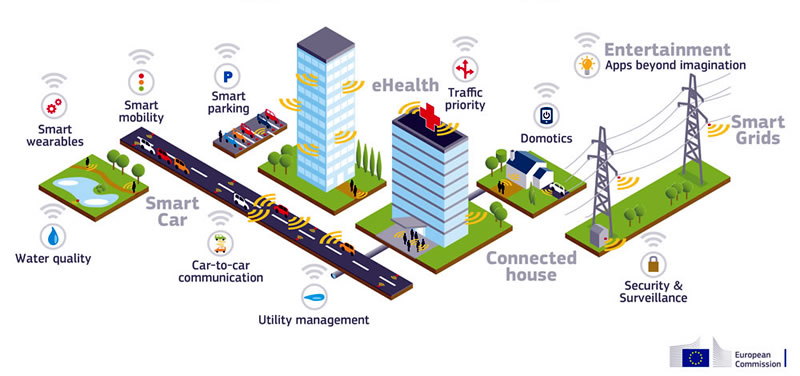
what-is-5g-euroWhat is important is “Huawei is planning to launch the first 5G pilot network with its partners in 2018. Interoperability testing is to be completed in 2019 ahead of a commercial launch in 2020. Ericsson is planning to demonstrate 5G at the Winter Olympics in South Korea (as is Samsung) and at the World Cup in Russia, both in 2018“, this sounds nice, and it actually is, but consider that the devices that need to be there are not created yet, so they are dealing with old tech that is soon no longer interesting, whilst todays needs that shows clear forward momentum thinking is not shown by either and relying on 32GB mobile devices is definitely not it. So the consumer at present is looking at buying at least 2 more mobiles in the next 5 years, so having one now that last 3 years is a massive requirement as I see it. In addition, lowering the upcoming threshold is an initial requirement. The image on that page, shown here, is the first step. The image shows two elements. In the first we see ‘smart mobility‘ and ‘smart wearables‘ in the second we see ‘domotics‘ and ‘Entertainment, apps beyond imagination‘. This gets us now back to ‘Viewpoint to a point of view‘ (at https://lawlordtobe.wordpress.com/2016/10/05/viewpoint-to-a-point-of-view). Google wasn’t just ‘on the ball‘ they are now leading the game and are the new game deciders in the field where everyone wants to play. In that presentation on Google Home they showed to be active in all four elements, and they are now leading in at least two of them. That is the part Huawei ignored. And as so called 2018 G5 partners they had the option to lead the field, they just decided not to do so. By using the initial Apple approach, the Pixel and Pixel XL offer the 128 GB solution for $150 more. Meaning that your phone could last you until 2020 and only when the 5G requirement is actually needed, the current Google solution will give you some of what 5G is supposed to offer, so you will only be upgrading the centre of the hub of your domotics, namely your mobile phone. The rest will most likely already be there, so that is why we see the shift.

So is my view tainted?
It is!

I look at a lot more elements than the consumer will, yet in all this, the consumer is already getting exposure to these elements and as such we see a level of contrasting within the consumers choice that we haven’t seen before, that elements needs to be taken into account as well. Whasun Jho who has published works regarding building Telecom markets. As he sees it and I agree we see a contrasting in the Telecom markets where we see the growth of facility based competition versus service based competition, I believe that the second is only a field of combat if your hardware isn’t up to specs to deal with the wave that will follow over the next 5 years, so in that Huawei, as I stated in the past had the option to grow the market to rule as they went with sharp competition in 2015, they now gave it away by seeking margins instead of overpowered ruling through superior options. In my view as we see where limitations were the only options, it was about competition between providers of the same or similar services (in Australia Telstra versus Optus) and by giving in, they are now losing market share that I stated is a base drop of 4.25% and could rise to 11% before Christmas, almost literally depending on the power of Google’s devices as accepted by the global consumers. In this situation, it is not a given that Google would switch to a Software As A Service path, but by offering the path on corporate whilst leaving the consumers with open and negligible costs, the image as shown implies that ‘smart’ elements and ‘domotics’ will give us Google at number one, with a massive advantage for the longest of times, that is, unless the players change their ways and right fast. Because when proven to work, customer loyalty will soon be the most important metric in this telecom shift. Samsung gambled and got hit hard, yet they are not out. One burning battery does not stop a company the size of Samsung and a lot of burning batteries makes for a fun roasting of Marshmellows (pun intended).

So here we see the use of colours. Which colour is what is not a given and does not matter, what matters is what the consumers and what the corporations need, in the next 3-4 years it will all be about what will last longer, not some hardware as a service that requires annual replacement. Ericsson shows us what happens when you are not proactive on the ball and there will be the licking of wounds for some time there, in addition, as we see the mobile iteration (Experia Z to Z5), actions that I call to be an iterative market that has no chance to survive. sweetening deals like a couple of movies has no place here as I see it, it seems like a quick fix and it is, yet in that Sony has made that mistake a few times too often and Huawei should have learned from those failures. They were all options that could have been avoided and it will hurt Huawei, yet in all this they too are not down or out. Just a little bruised as I see it. So we will see a market that will shift over the next 4-6 weeks. Yet in the end there is no certainty on how matters are impacted. What is clear is that the Telecom market will shift in a massive way, those who do not shift with that market are most likely the players that will not make it to 2019, an extreme prediction, yet will I be wrong?

Consider what the market is trying to imbue to us between 2017 and 2021/2022. As per 2018 you should only consider a device that will last that initial transition (software without the 5G speed), and the one after that will have the speed if you want to play on that level. So buying with clear common sense could save you $1000-$1800, that is for most people serious money, for those relying on a new plan with a new phone, you better remember that soon such a solution might not be that easy to get, or that cheap. The Telecom providers will remain facility based competition, yet the market we swim in is more and more becoming service based, so we need the right device that can deal with this and for telecom companies to keep on playing a ‘this will do for a year‘ isn’t thinking forward, or at least just limited short term. A game we cannot go along with and there are enough people to realise this danger, which is what is pressuring the Huawei market as I personally saw it.

There is more to all this, but a market that revolves on ‘We decide your choice‘ is not a choice, it is a limitation, something that Google is building awareness on by showing us what is possible and then offering the overkill device for a mere $150 extra, like Apple did, but Apple didn’t come with the shown benefits of actually showing us that part. As you realise that you already knew most of these elements as you YouTubed your way through the internet universe, consider the options your phone don’t allow for at present. There is no reason to suddenly update the phone at present, but you should realise that these limitations will hinder you in the future and realising what you need in three years is more and more important in today’s mobile market. It is something you only need to be aware of at present, when the shift comes you will be ready with the right phone and with the options to do it all (without getting pushed into spending $1000+ overnight), as well as the option to keep your movies, your photos, your Pokémon’s, as well as whatever the domotics apps universe brings to your mobile.


1 Comment

Filed under Finance, IT, Media, Science

The smokescreen of a Smartphone War

Yesterday’s news gives us ‘The secret smartphone war over the struggle for control of the user’ (at https://www.theguardian.com/technology/2016/sep/29/smartphone-war-operators-user-phone-service) held my initial interest for about 7.0 seconds. You see, it is an interesting story, but it is not the real battle that is being fought. As I personally see it, the secondary war is about the agreements that the Android phone makers seem to have with one another. That war we are kept in the dark about. In the end, the Telecom companies want you to be dependent on them, their products and their solutions. They give you some BS reasoning of ‘we weren’t offered that option‘, whilst their head office is all about containment. They only hold they have is by pushing you in a position where you need a new phone EVERY year. That is the service path we are all getting pushed into. Which is one reason why outright buy seems to be so overpriced in many cases. For the next bit we need to see GSMArena.com. There we find the following parts:

32/64 GB, 4 GB RAM
32/64 GB, 4 GB RAM
32 GB, 3 GB RAM (EVA-L19/EVA-L09)
64 GB, 4 GB RAM (EVA-L29)

You would think it is all the same, right? The last two are the same brand. I will get back to the list, but for now, what you would like to do is to check where you can get a 64GB edition, and for some that list is zero, you see, in Australian (not the only place) they are making sure that you cannot get the 64GB edition, in an age of consumerism, is that not weird? In that regard, Apple is the only one offering this, because of different reasons.

In all this, I have used my phone with a philosophy. It is a simple one and in my life of budgets an essential one. In the past, I learned the hard way early in life that chasing technology is a race that costs money and never leaves you with a true advantage, the gaming industry in the 90’s on PC were all about that. The mobile industry, like the PC industry learned this from the arms industry and they were really good students. So no matter what competitiveness they have, if they agree on a few ground rules, there will be enough space for exploitation for all of them. Now, in 2015, Huawei decided to rock the boat and as such they got a larger share than ever before, now that they are on par, they seem to go with the average lot of them. My hopes are that LG tries a same approach, which will cost Huawei et al dearly this year.

When you have been around your mobile for a little while, you will see that storage is (nearly) everything on a mobile and with marshmallow, a 32GB system will end up having about 22GB space left. There is the Android system and the mandatory apps, the amount leaves you with 10GB less. This is not a big deal you think, but over the year we will see an exponential growth of apps and they cost space too. Some people already learned this lesson with Pokémon Go and all the pics that were taken. They were realising how much space was lost. Now, we know that you can add a SD card and store pictures there, but apps must be run from the main storage and those apps are growing too. So over 2 years you would have run out of space. Meaning that you either clean up your system, or buy a mobile with more space. This you might have learned if you had an iPad or iPod. Storage was running low for some a lot faster than they bargained for.

So in this age, when the difference between 32GB and 64GB is one component which is in total a mere $32.87 more expensive, why would we even consider a 32GB system? Because at this point, the mobile warranty of 24 months could be served completely and we would not need another phone one year later! In addition, after 2 years we would have the freedom to choose a better and cheaper provider, so as I see it, neither Optus nor Telstra wants a 64GB phone in their arsenal and the only reason is that the iPhone is that size is because Apple has in general a global approach to their hardware.

Now let’s look again:

32/64 GB, 4 GB RAM – Samsung
32/64 GB, 4 GB RAM – LG
32 GB, 3 GB RAM (EVA-L19/EVA-L09) – Huawei P9
64 GB, 4 GB RAM (EVA-L29) – Huawei P9

Unless LG takes advantage of the option they have now, none of them offers the 64GB version in Australia! Is that not weird? Amazon UK offers both, and at times the 64GB is definitely more expensive, yet consider that at $100 more (for some a little more), you have peace of mind that this phone can last you 2 years without storage issues. That seems a pretty big deal to me. In addition, unless Android past Nougat (V7) grows a massive part, the user will have plenty of space to update their system, if the update would be offered. In addition, with all the other stuff we carry (photo’s music and so on), twice the size is pretty much the only way to go.

So why the mobile providers refuse their product to be on sale is just beyond me and the fact that none of them are offering a product in a place seems to be massively out of bounds. With Huawei the fact that there is a single slot and duo slot 32GB option makes even less sense to me. In my mind, this is all about control of the users, and controlling where the users go, which is a limitation on freedom devices have never offered before, so in my mind it was not with the consumers consent. The fact that Samuel Gibbs did not mention that part in their article is not as quoted “Fewer purchases mean the big smartphone players are now under pressure to extract more revenue from their existing user base, which is easier for Apple and its App Store than others reliant on Google’s Play Store, and to try to convince users that life is greener on their side of the smartphone divide“, it is to make sure that continuity prevails, to some extent for the smartphone makers, to the larger extent to mobile providers to keep them in their not seeking another providers place!

In addition the quote “At the same time, the mobile phone operators are in a similar competition. Switching between the major phone networks has always been an issue, whether it’s over price, customer service or the latest handset“, more important it is over bandwidth and facilitation, the more limits the hardware has, the less issues of competition the provider needs to deal with. So is Samuel Gibbs informing you on some ‘secret war’ or is he trying to keep your sight away from the options that matter? The fact that phone limitations is not part of his view (which could be because the UK offers both models) is equally disturbing that he did not look at this from a global point of view, when you are not made aware of what is by me expected and therefore implied is the limitation of hardware offered is as I see it, part of a secret war that they require you not to be aware of. If that is done intentionally, what do you think is in play?

So as the Samsung Note 7 is now an ISIS tool (when you install the 10 second countdown app) and only LG remains to go public with their new model, they now have an option to capture a much larger share of the audience as several of the participating parties refused to consider the consumers’ needs and seems to cater to the telecom request of limitation. LG has an option to grow much stronger in this market than ever before. Apple as IOS has a different situation and as seen on many fronts they have created their own walls of disturbance, so LG could even go after that lot, but we must respect that there is a huge offset between IOS and Android and as such, people are at times less willing to switch there. For now the latest rumours are that the V20 will start the pre-orders this Sunday in the US and European markets will be getting them, yet there is at present no confirmation for both the UK and Australia. So we will have to see about that part too.

The article had more. So consider my words and now see this quote: “Bibby says: “Imitation is the sincerest form of flattery. Flexibility like this is just the next stage of innovation so we’re not surprised to see others adopting it. Manufacturers are trying to ensure that more of their own handsets are sold in the market. They’re trying to clearly compete with each other.”” I disagree with Nina Bibby, marketing and consumer director for O2. The quote is not untrue, but incorrect. It is the presentation of what they want the issue to be, because is sets our mind at rest. I believe that the more correct quote is “They’re trying to clearly compete with each other within the agreed limits of the presented options“, which is not entirely the same! In that same view, the limitations due to the telecom agreements are equally in question. The fact that none offered the complete spectrum is just as much of a worry. Because it is like a corporation trying to make sure that its employees can never truly become independent, because that would be too dangerous for their own continuation. The second part in all this is the entire upgrade service program. It creates brand dependency, which is not essentially a bad thing, but guess what! I reckon that soon thereafter the 64GB option will come and there will be a churn for 12 and 24 months. At that point, the telecom providers would want a phone to last as long as possible. It could be in different ways. For example after 12 months 65% off and a $1 upgrade after 24 months. This is just speculation, so this is not a given, yet overall not that far-fetched.

The most interesting quote is at the end “For now, the battle for control of the phone in your hand is happening behind closed doors. Soon we’ll begin to see the phone-as-a-service idea pushed by one of the big manufacturers, but only once the operators are no longer crucial to sales“. The first part is that not all of the closed doors is about the phone, bandwidth has been a forever war between iiNet, Optus and Telstra in Australia, and the phone-as-a-service is not all in the hands of the manufacturers, that will come soon enough (in one case it already is) in hands of the Telecom companies, because that is a direct factor for customer loyalty, who does not see the $45 a month phone as the margin, it is the $90 a month subscription where their margin is and that part can be set to non-taxation a lot faster too. The phone is merely a hardware write-off, increasing their ROI.

So when you consider your new phone do not be fooled by the SD slot, wonder why the full version is out nearly everywhere else, except Australia? For Australians, consider one nice issue, the Kiwi’s do get the 64GB edition several stores have it available to order. So, do you feel special now, of just used by both the handset sales people and your telecom provider? More important, what other issues did that secret war of smart phones not inform you about? Perhaps you haven’t seen the implications of not having a choice in certain cases. People have been so busy bashing iPhone’s Apple that they forget that Android phones have their own collection of imposed limitations for the consumer.


1 Comment

Filed under Finance, IT, Media

Bitches of Technology

There are multiple issues in play, first there is the continuation of the previous part, which I will address here. The second is the article the Guardian published (at http://www.theguardian.com/world/2016/jan/25/uk-should-be-punished-if-it-leaves-european-union-to-deter-other-exits) titled ‘UK should be punished if it leaves EU to deter other exits, say former ministers‘.

My first response in regards to this would be “are you bitches out of your mind?” which sounds highly emotional and it is. You see, Brexit (and the possible upcoming Frexit) is a direct result of the people in charge of REFUSING to take action when they could, in addition, they decided to hide behind ‘Status Quo’ when they should have acted. In final addition, several acts of change have been pushed forward again for the good of big business, which makes me question their intent.

To illustrate this with evidence (which is always important), in my article ‘Dress rehearsal (part 1)‘ (at https://lawlordtobe.com/2015/07/01/dress-rehearsal-part-1/), which I published on July 1st 2015, I included the PDF at the end of the blog too ‘Withdrawal and expulsion from the EU and EMU some reflections‘. On page 33 we get “it is likely that some Member States would object to the introduction of a right of expulsion in the treaties, coupled with an amendment of Article 48 TEU to make that possible, since this would expose them to the risk of being forced out at some future date. Moreover, apart from it being politically almost inconceivable, forcing a Member State out of the EU or EMU would inevitably give rise to tremendous legal complexities. This, perhaps, explains why expulsion has not been, and may never be, provided for in the treaties“, as the members in charge of that piece of paper were already too deep in the mess on non-accountability, they actually set themselves up for a long fall, one the Greece instigated and even now, reflecting back on all the warnings I gave from 2013 onwards, none would have been considered. Now again in this paper we get on page 11 the text “The silence of Community primary law on the existence or otherwise of a legal right of withdrawal was, in any event, inconclusive, lending itself to two fundamentally opposed interpretations. One is that a right of unilateral withdrawal existed even in the absence of any explicit reference to it in the treaties, since sovereign States were, in any case, free to exercise their sovereign right to withdraw from their international commitments“, the text refers to P. Doehring and P. Hill where there seemed to be the case of favouring the theory that it reflects the hope of the drafters of dissuading Member States from withdrawing. That was nice in those days, but the interested parties of today have had enough of the utter irresponsible acts of other so called world leaders. In addition there is the expression ‘Sovereign power’, coming from ‘Sovereign States’ which has been defined as ‘power not subject to limitation by higher or coordinate power held over some territory’ this comes from N. MacCormick’s ‘Questioning Sovereignty‘.

So even after we saw the useless and toothless statements from some in the past regarding “throwing Greece out of the Euro and the EEC“, we see an even more toothless statement from several former ministers at this junction regarding the punishment for those leaving the Euro/EEC. It is given additional voice in the quote “We should not encourage other populist forces campaigning on exit such as National Front in France or Podemos in Spain. This is a very important consideration. This is in the interests of Europe that we do not encourage other EU countries to leave. The common interest of remaining members is to deter other exits. This should have an impact on the terms Britain gets”, words spoken by the former Polish deputy prime minister Leszek Balcerowicz. He is probably realising that his goose is cooked soon after Brexit and Frexit. Even though he looks ‘good’ on paper, 53% debt of GDP still comes to 236 billion dollars, in a nation with 38 million people. They are all panicking now, because the British referendum is not going good (read: the way they want it to go). If only someone had the balls to strongly intervene with Greece, and in better terms clean up legislation a long time ago, this mess would have been speculative at best. Now we see the texts that the writers want us to focus on, but in all this, in that same air, we see the ignored facts. Facts, that (as I see them), Patrick Wintour Diplomatic editor is not eager to inform his readers on.

The little part in all this is something that was mentioned twice, including the photo caption. You see, this is an exercise to debunk issues by the Open Europe Think-tank. You might notice some ‘fluffy’ facts, yet the truth is, is that these people are speaking whilst at their backs (read: they are the political shield) for players like Jardine Matheson Holdings (61 billion plus) and British Petroleum (358 billion plus), with a lot more then these two, we see that Open Europe is a shield for the bigger players, all behind a fluffy website (at http://openeurope.org.uk/). These groups are very dependent on keeping the EEC as is, the Status Quo to be, but the people all over Europe have had enough of this non-accountability from both politicians and large corporations. That is exactly why Le Pen and Farage are a worry to them. Even now we see (at http://www.theguardian.com/politics/2016/jan/25/northern-ireland-irish-republic-eu-referendum-enda-kenny) the first mentions that a referendum is not needed until the end of 2017. That stalling is exactly what Farage is hoping for, showing more vigour in this fight! We see that Reuters is giving us “To loud applause, Nigel Farage, the leader of the UK Independence Party, told a Grassroots Out campaign event that Europe’s policy of taking in migrants with few checks had endangered the lives of those living in the 28-member bloc“, with an additional “Farage was joined on the stage by Britain’s former defence secretary Liam Fox from Cameron’s ruling Conservative party who is also campaigning for an exit“, which is now a growing issue.

Now I need to get back to the previous article, even though this time it is not about the man or the victim, this is about data and data systems. you see, certain amendments were to be made in Serious Crime Bill (at the http://www.wired.co.uk/news/archive/2014-06/06/cybercrime-bill-life-sentence), Wired informed us regarding “there is no existing offence of owning manuals that offer advice on how to groom or abuse children sexually“, which might not help Breck Bednar and family any regarding the circumstances. In addition, the Serious Crime Act would in this case apply AFTER the damage is done, so no matter how many improvements, Breck Bednar ends up remaining terminally dead no matter what.

When we look at the Serious Crime Act of 2015, we see at section 3 we see ‘Unauthorised acts causing, or creating risk of, serious damage‘, but this is AFTER the fact and even then, many of the facilitating acts will remain unanswered. In my previous blog I got some comments on ‘the Nigerian prince‘ issue. They were fair enough, but in some of these parts we have two issues. We can go with the part that Breck Bednar got himself killed by not listening to his mother. Which to some extent makes sense, yet in the same light, we see that levels of facilitation remain unanswered in many ways.

Consider the following

  1. The administrator of a server service gets to intentionally misrepresent himself or herself. We have two issues, one, is that we already have issues of misrepresentation. The issue given is “He claimed to be a 17-year-old computer engineer running a multimillion pound company“, the fact that this misrepresentation comes with “he was invited into an online gaming group – a ‘virtual clubhouse’“, in the foundation there is no initial cause of imminent danger, but the danger could have been avoided in a few ways.
  2. What if such servers need to be openly registered and linked to a registered corporation or firm, which now gives us the issue that Lewis Daynes would have been better known, moreover, the police would have seen more red flags possibly intervening before Breck Bednar entered a state of being permanently dead. I will go one step further, what if, not unlike ‘Raising the bar’ in IP law (2013), we see, contemplate and try to adjust the validity and the accountability of the facilitator. Now we get that change!

You see, Lewis Daynes would have to answer several questions, logs would have been available for the police to investigate. That is the one step too many sides do not want to consider, because accountability in too many cases seem to deflate maximised profits, yet in all this, is that a valid train of thought for any government to consider?

  1. Consider that on February 17, 2014 Breck Bednar ended up dead, those facts had been in court for a while (he was convicted in January 2015), yet knowing that this issue was already playing we see (at https://www.nspcc.org.uk/fighting-for-childhood/news-opinion/flaw-law-online-grooming-legislation/). The headline ‘PM announces new online grooming offence‘ sounds nice, and there is forward movement, yet there is a massive gap in the prevention of grooming, which is not even correct in this case, when we consider the law. Most laws would have been able to use the path of facilitator, most social media will still be able to hold onto the defence of ‘innocent disseminator‘, yet, the action of Lewis Daynes do not allow for that. His continued interactions stop him from that path giving us an option to grant an additional level of protection to future victims, whilst not hindering business and profit as a whole, because the bulk of all social media is founded on interactions by users and facilitation by the system. Even in the most precise case of scripting, it is not towards ONE individual, it would be towards a spearheaded group of thousands. Breck Bednar would have been in an automated introduction amongst thousands and in this case there is safety in numbers, because the actions of Lewis Daynes would have raised many more flags, enough from barring him from a system he did not control and in his own system he is not the facilitator. It is the lack of many organisations (governments, corporations and legal parties) to dig into the option of setting safety parameters regarding ‘facilitation’.

As seen, there needs to be an additional circle of protection, which addresses the dangers of the ability for grooming. This is a hard issue to address and in light of any Brexit it could become a lot harder, if any law has to be addressed, than in light of all the changes the next 10 years will bring, a massive change to digital devices, for example, the new Huawei P9 will come (read: is rumoured to come) with 4GB RAM, 64GB ROM, 8MP front camera and 16MP back camera, and installed Android 6.0. It comes with a 64-bit processor that outperforms plenty of laptops.

Now we get back to part one, because the two are linked in cyberspace.

You see, the chance of Brexit which was 39% in November 2015 is now surpassing 48%, this means that there are a few issues coming forward, apart from the growing danger that UKIP seems to be. You see, this is not just a Nigel Farage thing. There is a rather massive jurisprudential lag in prosecuting economic crimes, especially economic cyber-crimes.

Some of the information can be found (at http://www.actionfraud.police.uk/news/british-crime-survey-reveals-extent-of-fraud-and-cyber-crime-in-sngland-and-wales-oct15). The article ‘British Crime Survey reveals extent of fraud and cyber crime in England and Wales‘ gives us “the cost of fraud to the UK economy estimated at £30 billion more needs to be done and more resources are needed to assist law enforcement to help victims of crime and prevent further victimisation“, which sounds nice in theory, but the foundation needed is stronger legislation.  Yet in all this, there is an issue with the article. The quote “This is new crime in our society and it brings new challenges for policing in prosecuting offenders and protecting victims. Notwithstanding the cuts to police budgets we must find ways of responding to the needs of victims of fraud. Alongside this policing response the UK needs to begin a prevention revolution to educate the public on how to stop hackers and fraudsters from taking our money“, which focusses on the money, just on the money, in all this there are other venues where there is an issue (perhaps the name Breck Bednar sounds familiar).

The issue is to deal with the facilitators without strangling true entrepreneurial options, which is what has been lacking both within the Commonwealth and outside of it. You see, the danger to the many sides of life through technology, including the children is growing on a near exponential level. First of all, the main issue is IPv6, it was essential to conceive this new technology for the mere reason that its predecessor has actually run out of options. With a mobile growth that seems to double on an annual base, the new phones won’t just have IPv6 (as the mobile industry started to adopt it since around 2009), the growth of IPv6 has doubled in the last 12 months. At http://betanews.com/2016/01/05/ipv6-adoption-nearly-doubles-in-a-year/ we see that usage went from just below 6% to well over 10%, falling just short of 84%, here I mean that over 10% of all traffic to websites is now IPv6. For the most, this cannot be clearly monitored, which means that with the next mobile iteration, we will see a growth unlike we have seen before. You see, Statista (at http://www.statista.com/statistics/263441/global-smartphone-shipments-forecast/) forecasts a sale of 1.4 billion phones in 2016. This would include the upcoming Huawei P9, the Apple iPhone 7, Google Nexus 6, HTC One M10, the Samsung Galaxy S7 and a few more. These phones will ship with up to 4GB RAM (in two cases 6GB is rumoured), several of them with 64GB internal storage.

This is a nightmare to the intelligence community, as well as the CPS and the DPP, yet I feel that for parents the worry should be bigger, a lot bigger. As social media gets more and more derived solutions, niche groups will be a consequence, which means that children like Breck Bednar could end up being an even larger target, because there is too much evidence at present that monitoring those groups will become technologically near impossible. IPv6 Now (at http://www.ipv6now.com.au/primers/IPv6SecurityIssues.php) shows us a few issues. The first quote is “With 18 billion billion addresses in a /64 subnet, sequential scanning is pointless. It would take 500,000 years to scan a single /64 at a million probes per second“, I will immediately admit that I left a little part out of it, so there are options, yet let’s see my reasoning.

That part is seen in the quote “In IPv4, multiple addresses are always possible, but rare. But in IPv6 they are very common, arising from SLAAC, temporary DHCPv6, link-local addresses, multiple prefixes, overlapping lifetimes, as well as IPv4 addresses. Admins must be aware of all possible interface addresses and the capacity of network devices to create their own addresses“, this implies that the admin is all on the up and up, but when we consider those with other agenda’s like Lewis Daynes and we see apps appearing that allow for a peer-2-peer approach, a system that piggybacks messages. At some point someone will miss out on checking, especially when they are distributed in other ways. Financial opportunists, organised crimes, schoolkids and monsters in the making a system that cannot be monitored in any way because governments ended up being too lax in a world where those in power requiring ‘space’ and not realising who else they were enabling, or perhaps they did know but did not care.

Now we are beyond running out of time, because of the Statista is even close to correct, the world could have an IPv6 based mobile server park (as well as a data cloud) that ends up being unmonitored. Now, I am not evangelising not allowing for these iterations, yet the need to adjust legislation that additional options exist to hold certain groups to account becomes an increasing essential need.

There is one final side that IPv6 Now gives us. The quote is part of auto configuration (which is too often way more dodgy than I care for) gives us “DHCPv6 (Dynamic Host Configuration Protocol) allows a server to supply addresses to hosts. DHCP in IPv4 needed external support, but in IPv6 it requires nothing but a working router for the connected host to be immediately reachable“, if we consider that any mobile phone is a router, how reachable will this modern host be and more important, what data could be gotten access to, especially in an unmonitored way?

At this point, we seem to become nothing less than the bitches of technology. I could state that there is a group that will try to align certain paths, but it is already too late for that. People, their lives and whatever they own is streamed on a near 24:7 foundation and in all this there remains a technological lack in the places that cannot afford not to have it. When we see the news on the ‘evolving’ systems fighting fraud and other creative (and sometimes graphical) activities, we see that the gap of our safety and our allowance for accepted acts is widening to the extent that everyone is an evolving target without any clear means of staying safe. There is support for that statement. It comes from the Czech Ministry of Education (at http://services.geant.net/cbp/Knowledge_Base/Network_Monitoring/Documents/gn3-na3-t4-cbpd132.pdf), now we will accept that this is a 2011 document, yet, this does not diminish the quote “IPv6 configured hosts on an IPv4 network can bypass defined security policy or hide their identity using temporary IPv6 addresses“, consider that in conjunction that many users (young and old) tend to use free Wi-Fi locations whenever possible, making monitoring an even lesser option. Now consider those places and the traffic that they could (unintentionally) offer through ‘temporary IPv6 addresses‘, so what safety is there?

Clearly we have become the bitch of technology and the law is falling behind more and more. The EEC has done too little and Brexit could go either way in protecting the people, but the danger here must be acknowledged, if ‘protection’ becomes too draconian it would not become protective and only drive away commerce, a mere lose-lose situation for everyone involved.


Leave a comment

Filed under Finance, IT, Law, Media, Politics