Tag Archives: internet of things

Google is fine, not fined

Yup, that’s me in denial. I know that there will be an appeal and it is time for the EU to actually get a grip on certain elements. In this matter I do speak with some expert authority as I have been part of the Google AdWords teams (not employed by Google though). The article ‘Google fined record €2.4bn by EU over search engine results‘ (at https://www.theguardian.com/business/2017/jun/27/google-braces-for-record-breaking-1bn-fine-from-eu) is a clear article. Daniel Boffey gives us the facts of the case, which is what we were supposed to read and get. Yet there is another side to it all and I think the people forgot just how terribly bad the others are. So when I read: “By artificially and illegally promoting its own price comparison service in searches, Google denied both its consumers real choice and rival firms the ability to compete on a level playing field, European regulators said“, so let’s start with this one and compare it to the mother of all ….. (read: Bing). First of all, there is no ‘Shopping’ tab. So there is that! If I go into the accursed browser of them (read: Internet Explorer), I get loads of unwanted results. In light of the last few days I had to enter ‘Grenfell .co.uk‘ a few times and guess what, I get “Visit Grenfell, Heart of Weddin Shire” in my top results, a .org.au site. The place is in NSW. Did I ask for that? Google gives a perfectly fine result. Now, I am not including the top ads as the advertisers can bid for whatever solution they want to capture. So let’s have a look at Bing ads. First I can choose to be visible in Aussie or Kiwi land, I can be visible globally or I can look at specific locations. So how do you appeal to the Australian and Scandinavian markets? Oh, and when you see the Bing system, it is flawed, yet it uses all the Google AdWords terms and phrases, callout extensions, snippets. They didn’t even bother to give them ‘original’ Bing names. And I still can’t see a way to target nations. So when we see a copy to this extent, we see the first evidence that Google made a system that a small time grocery shop like Microsoft cannot replicate at present. We can argue that the user interface is a little friendlier for some, but it is lacking in several ways and soon, when they are forced to overhaul, you get a new system to learn. So when the racer (Micro$oft) is coming in an Edsel and is up against a Jaguar XJ220, is it dominance by manipulating the race, or should the crying contender considered coming in an actual car?

Next, when I read ‘rival firms the ability to compete on a level playing field’, should the EU regulator consider that the other player does not have a shopping tab, the other players has a lacking advertisement management system that require massive overbidding to get there? Then we get the change history. I cannot see specifics like ‘pausing a campaign‘, this seems like a really important item to show, for the most ALL changes are important and the user is not shown several of them.

In the end, each provider will have its own system; it is just massively unsettling on how this system ‘mimics’ Google AdWords. Yet this is only the beginning.

The quote “The commission’s decision, following a seven-year probe into Google’s dominance in searches and smartphones, suggests the company may need to fundamentally rethink the way it operates. It is also now liable to face civil actions for damages by any person or business affected by its anti-competitive behaviour” really got me started. So, if we go back to 2010, we see the BBC (at http://news.bbc.co.uk/2/hi/business/8174763.stm) give us “Microsoft’s Bing search engine will power the Yahoo website and Yahoo will in turn become the advertising sales team for Microsoft’s online offering. Yahoo has been struggling to make profits in recent years. But last year it rebuffed several takeover bids from Microsoft in an attempt to go it alone” in addition there is “Microsoft boss Steve Ballmer said the 10-year deal would provide Microsoft’s Bing search engine with the necessary scale to compete“. Now he might well be the 22nd richest person on the planet, yet I wonder how he got there. We have known that the Yahoo system has been flawed for a long time, I was for a long time a Yahoo fan, I kept my account for the longest of times and even when Google was winning the race, I remained a loyal Yahoo fan. It got me what I needed. Yet over time (2006-2009) Yahoo kept on lagging more and more and the Tim Weber, the Business editor of the BBC News website stated it the clearest: “Yahoo is bowing to the inevitable. It simply had neither the resources nor the focus to win the technological arms race for search supremacy“. There is no shame here, Yahoo was not number one. So as we now realise that the Bing Search engine is running on a flawed chassis, how will that impact the consumer? Having a generic chassis is fine, yet you lose against the chassis of a Bentley Continental. Why? Because the designer was more specific with the Bentley, it was specific! As Bentley states: “By bringing the Speed models 10mm closer to the ground, Bentley’s chassis engineering team laid the foundation for an even sportier driving experience. To do so they changed the springs, dampers, anti-roll bars and suspension bushes. The result is improved body control under hard cornering, together with greater agility“, one element influences the other, and the same applies to online shopping, which gets us back to Steve Ballmer. His quote to the BBC “Through this agreement with Yahoo, we will create more innovation in search, better value for advertisers, and real consumer choice in a market currently dominated by a single company“, is that so? You see, in 2009 we already knew that non-Google algorithms were flawed. It wasn’t bad, there was the clear indication that the Google algorithms were much better, these algorithms were studies at universities around the world (also at the one I attended), the PageRank as Stanford University developed it was almost a generation ahead of the rest and when the others realised that presentations and boasts didn’t get the consumer anywhere (I attended a few of those too), they lost the race. The other players were all about the corporations and getting them online, getting the ‘path build’ so that the people will buy. Yet Google did exactly the opposite they wondered what the consumer needed and tended to that part, which won them the race and it got transferred into the Advertisement dimension as such. Here too we see the failing and the BBC published it in 2009. So the second quote “Microsoft and Yahoo know there’s so much more that search could be. This agreement gives us the scale and resources to create the future of search“, well that sounds nice and all marketed, yet, the shown truth was that at this point, their formula was flawed, Yahoo was losing traction and market share on a daily basis and what future? The Bing system currently looks like a ripped of copy (a not so great one) of the Google AdWords system, so how is there any consideration of ‘the ability to compete on a level playing field‘? In my view the three large players all had their own system and the numbers two and three were not able to keep up. So is this the case (as the EU regulator calls it) of “by promoting its own comparison shopping service in its search results, and demoting those of competitors“, or is there a clear growing case that the EU regulator does not comprehend that the algorithm is everything and the others never quite comprehended the extend of the superiority of the Google ranks? Is Google demoting others, or are the others negating elements that impact the conclusion? In car terms, if the Google car is the only one using Nitro, whilst the use of Nitro is perfectly legal (in this case). In addition, we see in 2015 ‘Microsoft loses exclusivity in shaken up Yahoo search deal‘ as well as “Microsoft will continue to provide search results for Yahoo, but in a reduced capacity. The two have renegotiated the 2009 agreement that saw Redmond become the exclusive provider of search results for a company that was once known for its own search services. This came amid speculation that Yahoo would try to end the agreement entirely“, so not only are they on a flawed system, they cannot agree on how to proceed as friends. So why would anyone continue on a limited system that does not go everywhere? In addition in April 2015 we learn “The other major change is that Microsoft will now become the exclusive salesforce for ads delivered by Microsoft’s Bing Ads platform, while Yahoo will do the same for its Gemini ads platform“, So Yahoo is cutting its sales team whilst Microsoft has to grow a new one, meaning that the customers have to deal with two systems now. In addition, they are now dealing with companies having to cope with a brain drain. Still, how related are these factors?

I personally see them as linked. One will influence the other, whilst changing the car chassis to something much faster will impact suspension and wheels, we see a generalised article (at no fault to the Guardian or the writer), yet I want to see the evidence the EU regulator has, I have been searching for the case notes and so far no luck. Yet in my mind, as I see the issues that those involves on the EU regulator side d not really comprehend the technology. This can be gotten from “According to an analysis of around 1.7bn search queries, Google’s search algorithm systematically was consistently giving prominent placement to its own comparison shopping service to the detriment of rival services“, where is that evidence? Analyses are the results of the applied algorithm (when it is done correct) and in this the advertiser is still the element not begotten. I have seen clients willing to bid through the roof for one keyword, whilst today, I notice that some of the elements of the Bing Ads do not support certain parts, so that means that my results will be impacted for no less than 10%-20% on the same bidding, so is it ‘demoting results of competitors‘, or is the competitor system flawed and it requires bids that are 20% higher just to remain competitive? And if I can already state that there are dodgy findings based on the information shown, how valid is the EU regulation findings and more important, where else did they lack ‘wisdom’?

There are references to AdSense and more important the issue they have, yet when we consider that the EU is all about corporations, these places want facilitation and as they ignored AdSense, that solutions started to get traction via bloggers and information providers. So when we see: “In a second investigation into AdSense, a Google service that allows websites to run targeted ads, the commission is concerned that Google has reduced choice by preventing sites from sourcing search ads from competitors“. Is that so? The larger publishing houses like VNU (well over 50 magazines and their related sites), so in 2005, Google got new clients and as such grew a business. And that was just in the Netherlands. Now those just yanking in a corner, trying to present systems they did not have 4 years later, and they are now crying foul?

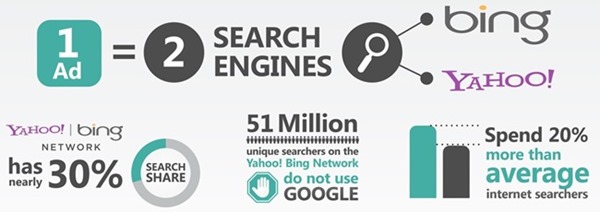
There are leagues of comparison sites. One quote I really liked was “Google is like the person that has it all together but is too conservative sometimes, and Bing is like the party friend who is open to anything but is a hot mess”. Another quote is from 2016: “With Bing Ads though, you can only show your ads on the Content Network if you’re targeting the entire US”. So an issue of targeting shown in 2016, an issue that Google AdWords did not have a year earlier. This is important because if you cannot target the right people, the right population, you cannot be competitive. This relates to the system and the EU-regulators, because a seven year ‘investigation’ shows that a year ago, the other players were still lagging against Google, in addition, when we read in the Guardian article: “the EU regulator is further investigating how else the company may have abused its position, specifically in its provision of maps, images and information on local services”, we need to realise that when we relate to cars, the other players are confined to technology of 1989 whilst Google has the Williams F1 FW40 – 2017. The difference is big and getting bigger. It is more than technology, whilst Microsoft is giving the people some PowerPoint driven speech on retention of staff, something that IBM might have given the year before, Google is boosting mental powers and pushing the envelope of technology. Whilst Bing maps exist, they merely show why we needed to look at the map in Google. This is the game, Microsoft is merely showing most people why we prefer to watch them on Google and it goes beyond maps, beyond shopping. As I personally see it, Microsoft is pushing whatever they can to boost Azure cloud. IBM is pushing in every direction to get traction on Watson. Google is pushing every solution on its own merit; that basic difference is why the others cannot keep up (that’s just a personal speculative view). I noticed a final piece of ‘evidence’ in a marketing style picture, which I am adding below. So consider the quote ’51 million unique searchers on the Yahoo! Bing Network do not use GOOGLE’, so consider the fact of those trying to address those 51 million, whilst they could be addressing 3.5 billion searchers.
The business sector wants results, not proclaimed concepts of things to come. Microsoft is still showing that flaw with their new Consoles and the upcoming Scorpio system (Xbox One X), users want storage, not streaming issues. They lost a gaming market that was almost on equal term with Sony (Xbox 360-PlayStation 3), to a situation where it now has a mere 16% market of the Sony market and that is about to drop further still as Nintendo is close to surpassing Microsoft too.

There is always a niche market (many people), who want to kick the biggest player in town, I get that. Yet at present the issues shown and as far as I get the technology, I feel that the EU regulators are failing in a bad way. I might be wrong here and If I get the entire commission papers and if issues are found, I will update this article as I am all about informing people as good and as correct as possible. Yet the one element that is most funny, is that when I open up Internet Explorer and I type in ‘Buy a Washing Machine‘ Bing gives me 8 options, 7 from David Jones and 1 from Snowys outdoors, which is a portable one and looks like a cement mixer. So when was the last time you went to David Jones to watch a washing machine? In Google Chrome I get 6 models on the right side, with 3 from Harvey Norman, 2 from the Good Guys and one from Betta, and that is before I press the shopping tab, so can we initially conclude that Micro$oft has a few issues running at present? Oh and the Google edition gives me models from $345 to $629, Bing prices were $70 for the portable one and the rest were $499-$1499.

This is not on how good one or the other is, this is how valid the EU regulator findings were and so far, I have several questions in that regard. Now, I will be the last one keeping governments from getting large corporations to pay taxation, yet that part is set in the tax laws, not in EU-antitrust. As mentioned the searchers before, I wonder whether the EU regulators are facilitating for players who seem more and more clueless in a field of technology that is passing them by on the left and the right side of the highway called, the ‘Internet Of Things’.

From my point of view Google is doing just fine!

The EU regulator? Well we have several questions for that EU department.

1 Comment

Filed under IT, Media, Science

Prognosticated WaterhouseCoopers

I forgot what fun it is to go up against PwC, I missed slapping them around and the article ‘Netflix and Amazon ‘will overtake UK cinema box office spending by 2020’‘ was a mighty fine reason. The article (at https://www.theguardian.com/media/2017/jun/14/netflix-amazon-uk-cinema-box-office-film-dvd-blu-ray-pwc) gives us a few things. The title is fine, I have no issue with that and there is every reason to believe that this is true. I always prefer and love to watch the big screen, but I know that I am a majority here. It is the subtitle that got me. With “Film industry will remain ‘pretty healthy’ but DVD and Blu-ray sales will go into ‘terminal collapse’, says PwC” they gave me a reason to have a go at them. As I search deeper and deeper, we are confronted with a wave of titles that have been released on Blu-Ray and DVD, yet there is no Netflix date, they do not seem to have any titles released to disc from 2017. So that is the first group. I reckon the Marvel fans would race to the shop to pick up Logan as soon as Wolverinely possible. The second thing I found is that a decent list of TV series is absent. This is a lot harder to predict, yet Grimm, Lucifer, Sleepy Hollow, Battlestar Galactica and a list of others do not even show on Netflix. This makes the need of Blu-ray consistently there. There is no doubt that those with really good bandwidth will prefer Netflix, so there will be an impact, yet the size of that impact is not a given for now. You see, as Net neutrality becomes more and more endangered, we will see shifts. We saw President Trump put Jessica Rosenworcel in the FCC seat and she apparently champions net neutrality, yet there is a rustling in some bushes, especially the adult entertainment bush. What people ignore, or like me do not care about is that certain ‘settings’ is seen in International Business Times (at http://www.ibtimes.com/july-12-net-neutrality-day-action-will-slow-down-your-pornhub-videos-2552375). It is a place like ‘Pornhub’ that brings the news. The quote “Pai’s proposal would remove the FCC’s authority to enforce net neutrality and other consumer protections while simultaneously allowing companies including Verizon, Comcast and AT&T to create “slow lanes” that force consumers to pay more for certain sites or as a competitive move among corporate telecom rivals“, is one thing, the second quote from a related article gives us “The Washington Examiner reported Trump deliberately withdrew her nomination when he took office. That move temporarily gave Republicans a majority in the FCC. Since then, the FCC has voted to revoke net neutrality regulations. If Trump’s renewed nomination leads to her confirmation, as is expected, then this idealist could return to take on the telecom industry head on.“, these quotes give only an indication of what will happen next, it is seen a little better when we consider the Law Times (at http://www.lawtimesnews.com/201706126217/focus-on/focus-u-s-and-canada-diverge-on-net-neutrality), which is 3 days old. Here we see: “With the possibility of broadband rate regulation looming on the horizon, companies investing in next-generation networks hesitated to build or expand networks, unsure of whether the government would let them compete in the free market,” he wrote, advocating for a return to a “light-touch” approach to Internet regulation“. This is now the indication, as the FCC rolled back a few things, they leave it with the providers and a ‘free market’ to offer ISP packages, which of course comes at different prices. So, as net neutrality comes back, it comes with the option that is linked to a Service Level Agreement and they tend to come with $$$ labels attached. In addition we see “The CRTC’s decision and policy position on “differential pricing” arose out of Videotron’s 2015 launch of Unlimited Music, a premium service that allowed customers to stream as much music as they liked on services such as Spotify without having the data use count against their monthly allowance“, so as we get premium ISP options, how do you think that this will impact the Netflix use? Are you sure that this billion user service will not come with nails attached? You see, the issue is no longer mere net neutrality in speed; it is now ‘the elimination of data caps for home and mobile Internet use for Canadians?‘ This implies not just Canada; it is merely a stepping stone for America as they use Canada as a show case, what will happen when the gamers are added? This is a simple math part. Assassins Creed Unity sold over 2 million copies (exact number unknown), now in December 2014, the owners had to download a patch that was 34GB in size. So consider 2 million downloads of that patch, how congested will the internet get? As the number was global, there is no way to tell how the patch impacted on areas, yet as caps are removed, we will see more and more shabby developers getting new patches out ‘as soon as possible’ making us download patches more and more. So as there are globally well over 105 million Consoles (next Generation only), the millions of Gaming PC’s, now consider the amount of patches and the impact on the internetworking’s, as well as the Internet of Things, because bandwidth hits all options. Now consider 3 massive games released per month, game download and patches and now consider how Netflix is impacted, because it will. I am putting those two groups together because they get their ‘net mobility’ from the very same fuel tank. Now add Spotify and a few other players in this domain. There was never any question that there was a need for net neutrality, yet in all this it goes via an ISP and that player is greedy, so if the cap cannot be pushed in place, or when it is removed, why do you think will happen next? There will be an impact on speed.

This is set in an easy equation (not an accurate one, but it shows certain factors). Fuel = data_amount * speed * users, so if data_amount is infinite, how will that impact speed? The same we see when the user base become massively larger, speed is again impacted. yet there is another consideration, to keep speed high, the number of user and data_amount needs to remain in a state of balance and set at a nominal place, when we realise that this is not an option from day one, speed will always be impacted and that is where the ISP’s are now, creating in a conjoint setting the Service Level Agreements (SLA’s) and the option to price it all. The FCC can claim it is out of their hands and as the FCC is about avoiding ‘anything that negatively affects competition and innovation in the sector‘, the FCC rules are altered and whatever comes back might seem nice, but will come with the ability to let the ISP call the shots. As such Netflix, unless it sets ironclad contracts with ISP’s, these users will see a shift of options and usage, at a price that is.

How does this make sense?

You see, even as the numbers are global based, the US has a lot more congestion than the UK at present, yet the current growth as seen, which is before the upcoming 5G data need, the ISP’s have been milking their system and these providers have not been addressing the ‘fuel tank’ they had. Now, this issue is in the UK and Western Europe is nowhere near the mess that the US is in, but as the UK rural growth is now growing at an accelerated rate, the congestion is still becoming a factor, Cisco tells us: “Services like YouTube, iPlayer, Netflix, NOW TV and Amazon Prime Video continue to be a huge draw, which has in turn helped to fuel demand for superfast broadband connections”, in addition, we get “Cisco forecasts that the average Internet user is expected to generate 140GB (Gigabytes) of Internet traffic per month in 2021”, which is average and I expect that to be a conservative low estimate. Now consider that a Netflix movie can take up to 7.5GB, now consider 3 million people in London alone will watch a Saturday movie, and now consider that in the UK another 15 million will do the same, do the numbers start adding up? Even if these 18 million do not start it on the same time, there will be a sizeable overlap, there is enough indication that congestion will be an issue, which either ups the price of the internet, or there will be an increased agitation for Netflix. This is why there is enough questions on ‘terminal decline’, there is in addition consideration that when 5G hits, the curve will steepen by a lot. It is too soon to predict a near exponential growth for data need, but it is not unrealistic, especially when we consider the push from 3G to 4G and data usage curve when most moved to 4G.

Now I go back to these gamers, even as the Statistics state the gamers group to be a steady penetration of around 42%, their data need has grown more than exponential. The Next generation consoles, as well as the growth of being online whilst gaming has grown. So this is not just about downloads and patches, merely the online presence which fuels uploads, Even as some statistics state that they are on average 5 hours per week online, there is enough data to question that. Polygon gave us the title ‘PS4 owners spend about 50,000 years a week gaming’, again a global number, but that already gets us an average of 7 hours a week, which is 40% higher and these are 2016-2017 numbers. As it all comes from the same ‘fuel tank’, I hope that we can clearly see that it impacts the ability to service Netflix. I believe that congestion will be its worst enemy and as we see a shift in costing, the prediction is unlikely to become reality (yet, I am willing to accept that I could be wrong)

So back to the Guardian article! The quote “PwC predicts a “terminal decline” for DVD and Blu-ray sales from £1.22bn in 2016 to just £533m by 2021. The report predicts that internet video will overtake DVD sales this year, but some analysts claim this has already happened“, I believe that the market will adjust in a different way. I believe that the initial shift will be in price. The price of $40 for a new movie cannot be maintained with monthly services and as the margin is large, we much consider that shift. It has been stated a few times that “high-definition mastering costs for Blu-ray will run close to US$40,000 per title with a pressing cost of US$2.00 per Blu-ray disc”, so at 100,000 discs sold, the making comes to about $2.50, so selling at $20 would still leave a large margin, There is a given that mastering goes down in price, yet at this pace, the impact becomes negligible. So when we consider that owning a movie we like at $20 is still a good idea, even if we have Netflix, my view is that there is an impact, yet not to the degree PwC claims.

Could PwC be right?

Yes, that is indeed the case, especially if the economy does not pick up. If the economy stays in the bad shape it currently is in now, Netflix might be the only option for some people, yet the options will still depends on whatever internet options that household has. In that, we see the impact on both sales down as the economy faltered whilst buying movies is equally a non-option.

There is one element that has been ignored by me and it is time to address that now. The mention ‘some analyst’s claim this has already happened‘ is one that needs a look at. It comes from the January article ‘Film and TV ​streaming and downloads overtake DVD sales for first time‘ (at https://www.theguardian.com/media/2017/jan/05/film-and-tv-streaming-and-downloads-overtake-dvd-sales-for-first-time-netflix-amazon-uk). one element is ‘Netflix has rapidly grown to 6 million UK subscribers since launching in 2012‘, which is fine and the issue that physical retail is in decline cannot be countered either. The fact that the UK cost of living has been through the roof; so as we see the price of a Blu-ray being equal to 2 months of Netflix, people adjusted their budget. Yet in all this, the internet bandwidth remained an issue. As long as it could be pushed through Wi-Fi and more importantly the Free Wi-Fi places, people were fine, yet just like some of the more advanced filters, when those places start actively blocking Netflix, the user game changes too. You see, Spotify demands cellular data and does not stream via Wi-Fi. So remember the earlier formula? Spotify has 50 million users. Now consider that the other elements were speed and data amount. As these services grow congestion will be a logical consequence, meaning that the ISP’s have reasons to push through the SLA solution, solving all their issues and none of yours.

Netflix is here to stay, nobody opposes that, there will be an impact on DVD/Blu-ray sales and nobody opposes that either. It is the part of ‘terminal collapse‘ that I oppose and I am certain that at some point it will happen, yet not in the time period PwC says it will be. I could be wrong of course, but I don’t think so.

If they were wrong, then nothing is lost, for that PwC analyst there could be a golden future in show business for them as a the new member in Orange is the new Black Season 7 named ‘Wall Street Bitches‘ (speculated conjecture).

In the end?

In the end, the Guardian article does have one larger benefit; it is bringing congestion issues to the surface, as such the article had a good side, In the UK most people know it as ‘Internet Rush Hour’, yet what happens when the infrastructure will no longer provide for that side? The BBC gave us in 2011 “UK broadband speeds drop by an average of 35% from their off-peak highs when most people are online in the evening, according to a report”, yet the growth that we have seen then was at the beginning of 4G, even as the ISP’s upgraded their equipment, the user base In the last year alone, went up by 1.5% for the entire population. In addition, over the last 5 years, the amount of inactive internet users decreased by 13.3%, which is a lot, also consider that the UK Netflix user base is expected to double between 2015 and 2020; these numbers show a dangerous part. The largest one is that the numbers seem to have been incorrectly speculated. I get there as the growth of subscriptions grew by 1.8 million during 2015-2016, which was almost a third of the 100% expected growth. You might think that the Guardian article is therefore a lot more accurate, I still disagree, merely for the fact that congestion is a larger risk, which now gets us back to the Net Neutrality issue. Because as this grows, ISP’s will have additional ammunition to start thinking and pushing for Service Level Agreements on consumer markets, it is what the FCC sees as ‘anything that negatively affects competition and innovation in the sector‘, yet what the ISP sees as commercial opportunity. Here I truly hope to be wrong, yet some sources (read: ISPreview) are already revealing prices to rise close to 10%, in addition, the prices will rise even more next year due to the 2017 Digital Economy Act. This is where we get back to the ‘Pornhub’ part. You see, I give not a toss about them, but they illustrated a part that other sites are now getting into. When we look at Endgadget, we get: “There’s one slight issue with age gates in that we’re still no clearer on how they are to be implemented. Proving age using credit card details, the electoral roll and pay-monthly mobile phone contracts have all been suggested, but the government has admitted that forcing you to expose your identity might be a step too far. And so, it’ll likely be some time before this new law can be enforced as the government and newly appointed regulator decide on the best and least intrusive way for porn sites to verify age.” You see, it is not about the fact that it is about adult content, it is about the option to classify, so consider that via politicians (never a good start) to settle on what defines the boundary and needs more than mere access. It is the first time that there would be commercial option to slice services, not cutting them, but restraining the maximum bandwidth. When we see the quote ‘the new data-sharing regime effectively being lawful already’, we might think ‘government’ but that is the least of our concern, it is “Any business that handles large volumes of personal data is required to employ a data-protection officer under the new rules, and any breach must be disclosed within 72 hours”, you might think that this covers it, but what about back-ups, what about social media with multiple ownership over a larger amount of nations? It is the commercial value that is being played with and the EU does not have a great track record when it comes to commercial versus private interest. So as these elements come into play, there are now already three upcoming levels that would cater to ‘Service Level Agreement’, which is defined to charges a person has. It gives one more level that Net Neutrality is already a thing of the past. This is seen in “Reed Hastings seemed to walk away from fighting for net neutrality but his company has done a big 180”, so in the two days that I worked on this, Netflix did a massive corporate ‘about face’, the direct implication of ISP’s and the limit of bandwidth is showing now, almost a year before it actually hits us. News Network (at http://www.news.com.au/technology/online/after-ceo-downplayed-the-importance-of-net-neutrality-netflix-changes-tact-and-rejoins-the-fight/news-story/654c63348e3dbd4f7d697fe322eeb350) also gives us “major Telco company AT & T is in bed with media conglomerate Time Warner. Because of this high level of “vertical integration” there’s a lot more scepticism in the US that companies will be compelled to engage in anti competitive and “non mutual” practices”, which I already knew. Yet the clarity as given in my earlier setting in ‘anything that negatively affects competition and innovation in the sector‘, is now showing its fruition and that is before the dozens of new 5G services come to our mobiles and TV settings. As this collides, and it will! People will happily return to a worry free Blu-ray ad DVD, if the makers adjust pricing and remove the 5 iteration contribution application, the discs will be here to stay for at least a decade or (hopefully) two more.


Leave a comment

Filed under Finance, IT, Law, Media, Politics, Science

The spotlight on ‘exploiters’

The Mobile World Congress finished on March 2nd. These places are always a little weird. It is often about concepts and about desires, but for the most we see some new stuff and some that was released in the last few months. It is loaded with exhibitors, the list is 72 pages, so you better believe that there is close to no way to see it all. If you are in apps, smart cards, tags or smartphones, you are either there or you do not count. Now, that is not really a true given, if you are really small, or truly enormous you might want to give it a pass. Apple can because they have nothing to add (at present), but at that point they give ground to Google (Google Pixel) and Huawei (Mate9). It is a choice and as being in the place is plenty super expensive, so whatever you bring, better be an important game changer, because the large players can drown you out.

So as the Guardian (at https://www.theguardian.com/technology/2017/mar/11/is-5g-the-future-robots-delivering-pizza-house-viewing-vr) gave us ‘Robots delivering pizza and house viewing by VR: is 5G really the future?‘ last Saturday, the question became, what is this really about?

However, 5G, which is set to be rolled out in the UK next decade, also has its critics. They argue consumers don’t need the superfast speeds the upgrade from current 4G technology promises, and many in the industry believe that logistical issues mean that 5G may not be properly rolled out in the UK for decades“, this is an interesting statement, because I heard a similar thing when 3G was to be replaced by 4G. Some claimed it was not needed, mainly those having the 3G equipment and not the funds to go to 4G. So I saw this as a repetition of that. An opinion piece in the Computer World 2 years ago gave us ‘Tony Milbourn, vice president of strategy at u-blox‘ who questioned it, as did the Cambridge Wireless Network. We can question party one (as well as party two), yet we must admit that Cambridge Wireless is at least a techno savvy industry group. So dismissing them out of hand is not the wisest of choices.

To me, the 5G jump is essential. It is not just about speed. I see that 5G can be the cornerstone to fix some of the NHS UK issues. From there it can be an optional solution to a host of International Health Systems. 5G brings a lot more than just speed, it brings optional innovations that some are unwilling to consider (Larry Page can buy the solution for 15 million pounds up front price is post taxation).

As many sources in short minded ways hide behind “When the 5G wireless standard hits the mainstream, our home internet speeds have the potential to be so fast that we’ll be downloading 4K movies, games, software, and any other large form of content at a fraction of the time we’re used to“, the truth goes a hell of a lot further. 5G can be the cornerstone of non-repudiation, which has been a mobile flaw for the longest of times. In addition, the new connecting devices can change in many ways facilitate interlocked solutions as well as managing a host of non-considered options for systems already rolled out.

In addition, 5G could initially allow for a much better solution towards scaling the performance of short TCP connections on multicore systems. Which will also evolve the smartphone in several new directions. In addition, the Tablet would grow into a new level interactive system, I reckon that Google would need to evolve Android into something like Cyborg, which basically is Android plus, the plus is for the libraries and functionality that would slow down the average phone by way too much, but under 5G, the upgraded system would allow for authentication and new ways of privacy driven encryption that 4G cannot allow for, mainly because it is just too impractical.

The Guardian article also correctly identifies: “The mass connectivity it allows will also help expand the so-called internet of things (IoT), in which everyday appliances and devices wirelessly connect to the internet and each other. “IoT technology is being used in everything from smart homes to wearables,” says Ofcom. “5G should help the evolution of IoT“, which clearly shows that those against ‘advancing’ are either not in this field, or merely unaware of what they are missing (that is some of the critics, not all of them). The one prediction I do not completely agree with is “Analysts Gartner estimate that by 2020 there will be 20 billion IoT-connected devices“, if the 5G preparation goes correctly, there are opportunities to get that to 25 million devices easily, I reckon that 30 million is possible, but only if all elements work favourably to all and that is just not entirely realistic. The next part is one of caution, because blindly going for something is just not cricket. “The report by Lord Adonis, who heads the National Infrastructure Commission, found that the UK’s 4G network ranked only 54th in terms of coverage, behind countries such as Albania, Panama and Peru“, now we can argue that two of the places are merely two villages, a cafe and a cemetery is not entirely accurate. Yet, the idea comes across. Panama has over 50% of its population in the capital, so that is not a fair comparison, yet there are plenty of players (read: Scandinavian nations), who are doing plenty better, we know that it is a small population 3 times the size of panama, but stretched over a massive amount of miles, so things are not entirely great for the UK. Improvements are essential and perhaps considering 5G as the main drive to get to a much higher coverage rating might not be the worst idea.

In light of some responses we also need to look at “Professor William Webb, an academic and former Ofcom director, has been outspoken in warning that 5G could be a case of the “emperor and his supposed new clothes”. Webb is not convinced that the industry obsession with faster speeds is matched by consumer demand“. In this that the professor might talk a decent pitch, but the issue as stated before is not just about speed. 5G will allow for avenues that are currently under 4G not practical, which is partially about speed, but also partially about the options to connectivity currently not possible. Yet in the next part we see the exploitation part “mobile operators may be in danger of investing billions in 5G networks that they may struggle to recoup their costs from. Telecoms companies forked out £2.3bn in Ofcom’s auction of 4G spectrum just a few years ago in 2013“. So as we see the £2.3bn auction, we see that Orange (at https://www.orange.com/en/Press-Room/press-releases-2017/press-releases-2016/2015-full-year-results) gives us “Restated EBITDA was 12.426 billion euros in 2015, ahead of the 2015 target“, so basically in one year they got 12 billion Euros (approx. £10.778 billion in 2015). So I reckon that the 2.3 billion on all players was not that much of an issue to begin with and this is just ONE player and not even the biggest one, so as such (even as we understand that there are always more cost), Professor William Webb should reconsider his position before we put a massive spreadsheet showing just how much the mobile providers are driving you for. You will not be happy or impressed to realise what better a deal you could have gotten whilst they would still end up with a massive profit.

Now there is a lot more going on and this path will not be a smooth sailing one, yet when we realise that 5G will offer support and solutions in directions that some seem to be craving, the news (at https://www.digitalhealth.net/2017/03/nhs-england-working-with-us-internet-giants-to-promote-digital-tools/), give us more shallow parts. It seems that everyone wants to drive some digital solution, that is tool based and has heavy dangers when it comes to cyber security. That was clearly shown by the Financial Times on February 3rd (at https://www.ft.com/content/b9abf11e-e945-11e6-967b-c88452263daf). So as there is too much fidgeting and some giving in to these criminals instead of hunting them down and injecting their children with Ebola (just to give clear indication that health care data is essential and should not be messed with, EVER). The fact is shown that cybercrimes is still too open a field, with many criminals not ending up getting prosecuted and/or incarcerated gives view to the essential need to change thinking and not like a collection of Emu’s run to what seems to be the next (easy) solution in postponing the essential changes the NHS and healthcare in general needs. The Financial Times has actually one additional gem. The quote “According to data from Intel Security, ransomware is growing at an alarming rate across all industries: total ransomware incidents grew by 128 per cent in the 12 months to September 2016“, gives a much needed light on the dangers that “NHS England is working with Google and Bing to increase the visibility of NHS content online and the forthcoming NHS app store” is bringing the people and the next release of ransomware. There is currently too much dangers and the 5G gives a first optional approach to non-repudiation as well as the option to block several similar dangers to health care data. I feel rather confident that Juliet Bauer, director of digital experience at NHS England could end up having to send out all kinds of statements on unauthorised accessed data. I hope to be wrong, yet the statements in the Financial Times, gives us that Jason Allaway, vice-president of UK & Ireland from cyber security firm RES. In that light, Juliet Bauer has every reason to become massively cautious. Any MP that is pushing for some Mobile app solution could find themselves into the limelight explaining how they could have pushed for such a change endangering the lives of many. It could also immediately spark a by election replacing that person pushing for cyber changes whilst the NHS and many health care trusts and providers are nowhere near ready at present. To give but the shortest of lists, you need to consider Healthcare.GOV, Pathology servers (blood tests), Radiological Patient data and images, Ultrasounds imaging systems, Magnetic resonance imaging data, images and reports and the list goes on (each category with a long list of providers). In all this there is still the GP, the specialist and the NHS staff to consider, so in the end, the digital paths some are taking are limited, inferior and no release of pressures to the NHS, so where is the benefit? I went over all that before I made certain designs. There needs to be a massive shift and the first time around the politicians had this utterly disgustingly dangerous idea that it was a great idea to put it in one place. I reckon that there is enough data to not ever consider that. The solution is on the other side of the spectrum, yet there needs to be a shift on the other side of the players too. There needs to be Common Cyber Sense and there needs to be accountability which non repudiation is a first step in, because there will be no more, my ‘device’ was on the fritz. Now there will be a clear digital path, which in health care is essential before considering the digital path in the more serious sides of healthcare.


1 Comment

Filed under Finance, IT, Politics, Science