Monthly Archives: August 2015

And so it begins!

Even though Marine Le Pen still has to deal with her daddy, the one person who seems intent to drown the part his daughter was able to make a reality. His extreme approach was never going to work, now that she has shown this, his intention of making that future a non-possibility. Of course her opponents are happy as can be that Jean-Marie seems to go on tantrums making National Front seem too extreme, but the National Front members know better and soon Europe will know this too. What I predicted well over a year ago is still on course, and now, finally the press seems to take a little bit of notice. The quote in the French RFI is “French far-right leader Marine Le Pen has called for an end to all immigration to France, legal and illegal. In a speech aimed at rallying her Front National (FN) ahead of regional elections, she failed to mention her father’s expulsion from the party but did lay into immigrants, Islamists and President François Hollande” and “They don’t tell you this but the immigration situation in France is totally out of control,” Le Pen said at a meeting to mark the start of France’s new political season. “My aim is clear: to stop immigration both legal and illegal. The FN’s programme officially calls for immigration to be limited to 10,000 people per year but Le Pen went further, declaring, “We need national borders for France”“. Of course there is an issue getting this to move as Hollande is still president, but the clarity is a fact. National Front is now on the move, the data as given shows that the anger after the 21 August failed attack on a high-speed train from Belgium to France, France itself is becoming more and more extremely unaccepting regarding Islam extremists and foreign Islamists. Marine Le Pen called for “all foreigners on file for links with radical Islamist movements to be deported“, adding that ““radical mosques” should be closed and their imams be thrown out of the country if they are foreigners“. The French are realising that they got lucky, according to CNN “The three men — a member of the Air Force, an inactive National Guard member and a civilian” stopped what could have been a massacre. The French have had enough and so they should. This view, partially due to what seems to be President Hollande’s inaction. Whatever actions he undertakes now will only fuel the Le Pen campaign.

Now we have a problem, one that hits many others. If France remains on this course, England have no other option but to invoke Brexit. It needs to do so before Frexit becomes a reality. My reasoning is that whomever goes first will have the best options, not the worst options, after that the curve goes down fast. It is for that reason that I oppose the view from François Heisbourg in the Financial Times (at http://www.ft.com/intl/cms/s/0/20eb52bc-4cb1-11e5-9b5d-89a026fda5c9.html) the quote “It has a xenophobic and illiberal force all too keen to take advantage of popular fears about the impact of migration in the shape of the National Front (FN), Europe’s largest extreme right wing party, with a base representing some 25 per cent of the electorate. But, until now, Paris has not indicated that it has any clue how to cope“. You see, some might call it ‘xenophobic‘, yet this is the second attack within France and this one was almost successful. We should regard the circumstances a miracle, most will downplay the events into ‘the public can protect us‘ but in all, the governments failed and an open Europe is a dangerous situation, not all nations have the benefit of a tunnel and 5 ferries. Many other places are leaky as a sieve. France has entry points from many overly liberal nations, Belgium, Germany, Switzerland, Luxembourg and Italy. Belgium also gives access for the Netherlands and the boats are pouring into Italy. France no longer feels secure and yes, it is clear that National Front is pressing that issue as the Financial Times states, but is that fear incorrect or inaccurate? In addition the quote “Europe’s leaders need to live up to our responsibilities as humans and as neighbours, assume part of the burden, and talk straight to the electorate. Continued European and French fecklessness will only improve the far-right’s prospects of success, and will deepen what is already an unprecedented crisis“. This sounds very logical and ‘civil’, but Mr Heisbourg forgets that as the Chairman of the IISS and of the Geneva Centre for Security Policy he lives a nice sheltered life in the areas of far higher income then most others have. I will immediately agree that the bulk (let’s say 99%) are true refugees hoping for a better life, it is the 1% that is a problem, moreover, if we should learn anything it is the fact that most European nations do not have any level of infrastructure to take care of these refugees. That is the part many are ignoring. It is a direct consequence of bad budgeting. France and Italy are direct examples of evidence here. The UK and Greece are also in a place where funds are lacking. Together we are looking at close to 7 trillion in debt, in all that those governments are seeing an influx of thousands of refugees trying to find a future whilst support is no longer a financial option. Interesting how so many players ignore that part in all this. Yet the people of the UK, France, Italy and Greece see the immigrants for what they perceive them to be: “a direct threat to liveable income” any refugee who is sincere in his travel is also sincere in finding a job, a way to support their family. One in 10 in Europe does not have a job, any job given to them will be another job not going to their own citizens. This is a warped number as these people are often not equipped to do most of the jobs but the low schooled ones, bring a wave of fear to those in lowly paid jobs, fuelling places like UKIP and FN, which is why the French issue is escalating. What is not clearly shown is the effect that 270,000 refugees in Greece and Italy alone have on the EEC. I understand that people like François Heisbourg have an idealistic view. For the most people like him truly believe in that vision, but as governments cannot maintain their budgets, as large corporations are paying less and less taxation and as they fuel their own board of directors, governments at large no longer have any proper means to support such an influx. Whatever these people tell you, whatever fairy-tale you get told, realise that 270,000 people will cost us between 270 and 500 million each month. So this takes up to 6 billion a year and that is just from the present group, now add the 2014 group and in addition the people that will come in until December. Now explain to me how these nations who are already missing out on billions a year will add that to their invoice?

In all this, the people all over Europe see their cost of living rise, their past income is not coming back and the financial troubles for Europe are only just beginning. The Chinese market is a mess and it will influence the American market too. To what extent? I cannot tell, I actually do not know, but what I do know is that any change in the EEC will have a massive influence on the American bubble and the American way of life. Most of these facts have been ignored by many players of the media, there was always a whiff of ‘prosperous foresight‘, followed soon thereafter by ‘managed bad news’. Now as more and more people feel the pinch of non-sustainable cost of living, their Samaritan tolerance went straight out of the window.

With the Chinese market in turmoil, Germany, France, the US and the UK are now feeling the dangers that a collapsed Chinese market brings. The 0.7% growth in the UK could soon become a negative number, fuelling fears for the people who are not even close to move out of the valley of debt. With that fear in the UK, the fear in France will grow even faster and Germany will soon fill the ranks. We are so willing to be Samaritan when our lives are decently secure, but that is no longer the case and François Heisbourg should know this. Yes, they are correct that some places like Calais are incidental, but overall 270,000 people are not incidental and that number is only a small part of the entire collection.

These ignored facts and half-truths all moved under some rug is part of all the events that allow for groups like National Front to grow the way it does. This all falls into nothingness when we realise the millions, yes millions of refugees in Jordan and Lebanon. If you think the price from Europe is high, then what is the price that falls in those two nations? Even if we do not completely ridicule the statement in the Sydney Morning Herald, where we see “Alarmists overstate risk of deluge in West from refugee ‘flood’“, we see a flood of ’emotional’ statements like “Australia could relieve some of the pressure on Europe by taking in several thousand genuine refugees to resettle here” and “Everyone has the right to seek asylum, the hysteria over the tiny minority around the world who do so by sea is bewildering when we consider people have been sailing around the world for centuries” (at http://www.smh.com.au/comment/smh-letters/alarmists-overstate-risk-of-deluge-in-west-from-refugee-flood-20150828-gj9urp.html), all nicely ignoring the fact that this planet is not at 5.7 billion as it was in 1995. No, 20 years later when it is 7.3 billion. Nearly all the nations are deep in debt and their infrastructures can for the most not even contain its own population. If the people truly, really truly wants to be humanitarian, then get a majority to agree to a 10% rise in taxation. No, that will not do either, that money will have to come from the rich. 4,000-10,000 will have to pay for billions they do not have. A social structure that failed from the get go, because those so into support of that, have been unable to cull business by properly taxing them. Labour giving billions in subsidies, draining the treasury coffers. They did this in Australia, the UK, the Labour way and now as there is no money they all cry foul. Is that not weird?

The initial issue of budget, no one seems to be able to do it and now, as there is no money left, they all wonder where our humanity remains. Well, that went to the car factories so that they got to make a car $1900 cheaper and now they moved to Asia. The UK has the Flagship £1bn youth unemployment scheme, as well as the issue that Prime Minister David Cameron has failed to curb welfare spending. That is not an attack or a bad thing. It is a mere consequence of the economy in the UK that only appears to be growing but it is nowhere near where it was and the people in the UK are for the most down in their finances and will remain to be so for at least a decade. As such, the infrastructure suffers as loads of money basically go down a drain. In all this we hear about the need for humanitarian aid, but none of the treasuries has the funds to allow for this. It is the most basic of failings, perpetrated by governments on both sides of the isle for the better part of 2 decades. It is not about blame, it is about the reality that the bulk of people are ignoring. In the end most lives depend on what a spreadsheet allows and none of them have allowed for any substantial space for ‘the budgeting of refugees’ a massive failing. I wonder if the power players hoping for an Arabian spring had any idea the massive backlash their actions would have. Now well over 200,000 killed and millions displaced, with no end in sight. When the millions of refugees start dying of starvation, or disease, where will the humanity of our soul be budgeted?
 

Leave a comment

Filed under Finance, Media, Politics, Uncategorized

Medici decided to do Shakespear

All the world’s a stage, and all the men and women merely players; they have their exits and their entrances. This is what went through my mind when I saw ‘Phone hacking: CPS may bring corporate charges against Murdoch publisher‘ (at http://www.theguardian.com/uk-news/2015/aug/28/phone-hacking-cps-may-bring-corporate-charges-rupert-murdoch-publisher) this morning. You see, the phone hacking scandal is not new, this started in 2011, and now, 4 years later the CPS decides to get a clue (or was that gives a toss?).  It matters not where they are at, the news as given seems to be the aftermath to the party someone seemed to have missed. The question becomes, who is the mad hatter? Is it the one giving the party? Perhaps that label is attached to a notion, a gimmick or even an organisation. It does not seem to be an individual. Let’s take a look at the story, you see, this is the fact of writing on the mad hatter “The Hatter explains to Alice that he and the March Hare are trapped in a never-ending tea party because, when he tried to sing for the Queen of Hearts at a celebration, she sentenced him to death for ‘murdering the time’. He escaped this fate, but Time, out of anger at his attempted to ‘murder’, has halted himself for the Hatter, keeping him and the March Hare at 6:00 pm forever“. If we paraphrase ‘murdering time’, we could get ‘wasting time’. But whose time was wasted? Is one of the players really a mad hatter? We no longer use Mercury in the fabrication of hats, but the issue remains, this article reads like it is something else entirely. I could go on with the March hare, but I think I am already getting through to you. The question becomes, who is Alice and why is she at this party?

There are two quotes, one following the other that gives way to my thoughts “The Metropolitan police handed over a file of evidence on News International – now renamed News UK – to the CPS for consideration after an investigation stretching back to 2011, when the News of the World was closed at the height of the scandal“, which gives us, why is the CPS only now taking a ‘better’ look? 4 years later, is that not odd? Then we get “We have received a full file of evidence for consideration of corporate liability charges relating to the Operation Weeting phone-hacking investigation”, which implies that the CPS and other players never looked at corporate liability charges the way it should have been looked at. This now gives us loads of questions and it should leave you with the question ‘What exactly was behind the looking glass?’ Who was looking, or better stated, who was NOT looking.

The quote “The CPS decision comes six months after the US department of justice told Murdoch’s company it would not face charges in the US” leaves the impression that the actions of the CPS have been in very bad taste, the rights of the people had been violated with impunity and only after the press at large felt the impending dangers that their time of abuse was over (due to the Levison report) did they dress up like debutantes, eager to take whatever was ‘thrusted’ into them to avoid losing ‘their’ power base. All the efforts in how they claimed that they would be worthy of self-administration, worthy to remain ‘unaccountable’. The ink had not even dried on the verdict when we got to read about the ‘suicide mission’ of Malaysia Airlines Flight 370.

Only now do we see that Murdoch’s company ‘could’ be prosecuted (that does not mean it will be successful) regarding corporate liability. I am not buying it. When we consider the subtitle ‘The Serious Fraud Office (SFO) is set to interview former Tesco chief executive Philip Clarke as part of its criminal investigation into the supermarket chain‘ (at http://economia.icaew.com/news/august-2015/sfo-questions-former-tesco-ceo), whilst the news remains massively silence regarding linked party Pricewaterhouse Coopers, we have to start asking a few very serious questions. Yet, the article also tells us: “the Financial Reporting Council launched a probe into the roles of PwC and various members of the accountancy profession involved in the preparation, approval and audit of its accounts“, we should worry if any of this will go anywhere. The entire Tesco matter was a six billion plus pound drop on the economy. Not the smallest of events, yet no serious investigations, or if there is, the press is steering clear of all this, which is another oddity entirely.

Yet 10 days ago, we see “The FCA has dropped its probe into Quindell after the Serious Fraud Office launched a criminal investigation into the business and accounting practices at the insurance technology firm” with the added “In May Quindell announced that PricewaterhouseCoopers had completed an independent review of a number of its accounting policies”, as well as “PwC also identified that some policies were not appropriate. Quindell’s own review confirmed PwC’s findings“. Are the involved players playing footsie (the use of involved is intentional, this game had more than two players), or are we seeing the start of a new dance, one where in the end, no one goes to jail and no one loses anything, other than a few slapping of the wrists.

So how does this all links? Well, it doesn’t link, they are separate entities, but the given is that we are watching several plays where pretty much all the actors will get away with murder and as the cadavers on stage are real, the people go home reflecting on how realistic it all looked, not realising that we watched games with actual casualties.

Are we facing the beginning of a new Machiavellian play here?

The quote “A source familiar with the original investigation said there could be an element of politics in the transfer of the file. “My best guess is because nobody in the police has the bottle to draw the line under this, they have just passed the buck on the CPS” gives us something to ponder. The CPS website gives us this: “The statutory role of the Crown Prosecution Service is to advise the police in certain circumstances, and to conduct criminal prosecutions. The police provide evidence and information to enable the CPS to carry out these statutory functions“, which gives us the thought ‘if it is statutory, why was this not done sooner?‘ So why did this happen after such a long time, why was the CPS not chomping at the bits on day one that there was a clear issue with the news of the world? In my view, we need to consider that there are more elements in play. Political elements. It is merely a speculation from my side. I would think that cases like Rolf Harris and Jimmy Savile prosecution elements would have learned their lesson, but that does not seem to be the case and face it, this is about money, nothing sexual sexy about it, so the press does not seem to care.

The only question becomes is this truly about going after Murdoch, or is this about tying down resources so that they do not have to go after PricewaterhouseCoopers? My side on this is purely speculative, but consider the fact that the CPS has 8000 man and the fact that the SFO would be (read should be) looking at PwC, the fact that the press steers clear of it is weird to say the least. The Tesco mess will take a long time to unravel, the fact that it is kept away from everywhere is a matter of concern to all.

That is where we are at. So there was no typo at the start, we are watching certain people wield a spear, it is thrust at certain players who will most likely survive and it seems to be for the benefit of theatrics and ‘non-convictions’. Even now, as we see PwC named in linking to Quindell, the press steers clear form PwC regarding Tesco. So in all this, what is wrong with the picture we see, moreover, why is there ‘suddenly’ (implied it is sudden, it is not a given) an investigation 4 years later, one that seems to have been activated as the Americans pull away, which beckons the question why the CPS waited for the American parts in the first place.


Leave a comment

Filed under Finance, Law, Media, Politics

The comeback that should not be

That is the consideration I was contemplating this morning. This is all about former Defence Minister Ehud Barak and his outspoken views. The issue all over the papers are that Israel had not proceeded three times to attack the Iranian nuclear facilities.

So is this freedom of speech, is this treason or is this something else? You see, as a former Defence Minister he has certain duties. One of them is defending and keep safe the state of Israel. So was this a ‘military men and cowardly politician’ scenario as some people report? Without all the facts it would be poor judgement on my side to continue some view. Yet, my view, like that of some others who matter. I have been there, I saw Israel in July 1982. I saw Israel on other occasions and I saw on TV, like many others how Sbarro became the place of slaughter. The Israeli army has been ever vigilant in keeping Israel safe. So, why was Iran not attacked?

It could be a simple as the tactical setback that an attack would bring, it would be a direct problem for any Israeli to get anything done in the UN building and at that time, there was not enough evidence that the enrichment of Uranium was a clear and present danger at that particular moment in time.

These are all issues that matter, as former Defence Minister, Ehud Barak knows this. If he does not, he should never have been elected into that position. But that is a mess Mossad can take a look at. You see I remember them from 1984. Nahum Admoni was someone to bring the deadly chill of fear into your heart. I do not know anything about Tamir Pardo, but I feel decently certain that he has a more relaxed job and he is watching both the Syrian and Iranian areas with due diligence on an hourly basis. So is this just about another comeback of Ehud Barak? That is what I suspect. Of course Ehud Barak making these claims just after the rocket attacks from Syria is only one side to it. If attacks are now coming from there, there is every chance that more attacks will also come from Gaza. I cannot state for certain that one means the other, but there is every chance that Israel could face attacks form Sinai, which would make Eilat vulnerable, whilst attacks happen to the north at equal pace. This is what I feared all along. I illustrated this in ‘ISIS is coming to town!‘ (at https://lawlordtobe.com/2014/06/23/isis-is-coming-to-town/). Yes, the article is a year old, but in my defence there was no clear reliable information on how strong ISIS was, what they had planned and what time line they used. So is there still a danger? Yes, there is and there always was. The issue is that pre-emptive actions will not make any difference, if anything, it could fuel extremist support. It could be for this very reason that the military held off. The main reason will remain that Israel is not committed to war, it is committed to peace and the defence of the state of Israel. Do you not think that Rafael Advanced Defence Systems could have come up with something a lot more offensive if war was on Israel’s mind? It has been the cornerstone of every issue playing. Israel only wants to stay safe, as such it has always been the Hamas covenant to eradicate the Jews that have been the foundation of the Gaza issues. After Adolf Hitler had his European tour 1939-1945, did you think that the Jewish people would ever accept such attack on their existence ever again? Think again, I say!

SO in that light, should Ehud Barak be regarded as a very dangerous man? A man who is willing to play fast and loose with the state of Israel, just to get one more comeback?

That is the part I am uncertain about without a lot more information, but consider the following quotes “For years, both he and Netanyahu issued veiled threats to attack if the world did not take action. Those threats, while often dismissed by commentators as bluster, were widely seen as a key factor in rallying international sanctions against Iran“. I was always in favour of an attack, should there be actual evidence that weapons grade Uranium was produced, but I was also adamant that Israel should not be the one doing the attack. In my view that would be the tinderbox that was not allowed to light the fuse. America yes (preferable no) and the EEC (or NATO) absolutely yes. The friends of Iran would have to see that the amount of nations willing to step in would make them reconsider alliances. The second quote is “Barak told his interviewer that both he and Netanyahu favoured an attack in 2010, but the military chief of staff at the time, Gabi Ashkenazi, said Israel did not have the operational capability“, which is very likely. You see in 2010, the Gaza area remained a growing concern, only an idiot starts a war on more than one front, so the assessment of Gabi Ashkenazi seems to have been the prudent one. Considering the growing attacks of missiles in 2010, 2011 and 2012 only gives additional evidence that not attacking seems to have been the wisest course of action. That view has not changed. As the dangers for Israel diversify, Israel needs to make changes to the policies they make, as such, any attack on Iran would have destroyed these options. Whatever aide might come from the NATO members after the missile launches from Syria, none of those would be an option if Israel had made any act of aggression against Iran. So in these views alone, I show the vision and deliberation Ehud Barak seems to lack even before he makes any headway towards a comeback, an issue I need not consider as I was never an Israeli elected official.

So if a non-Israeli can see this, even one who supports the total defence of Israel, what else is Ehud Barak not seeing and is that not the greater cause for concern?

It is the final quote in one article (Yahoo News) that gives us the heart of what should not matter “Barak ‘wants to remind people where he was, what he did, how important he was, how rational he was,’ said Reuven Hazan, a political scientist at Hebrew University in Jerusalem. ‘When Ashkenazi starts doing the political lecture circuit, Barak wants to be able to create and raise as many obstacles as possible.’” You see, as defence minister he was not that important, if push comes to shove, as a short term Prime Minister either Benjamin Netanyahu or Ariel Sharon would have surpassed him, as a defence minister he was passable, but in that light, both Meir Dagan and Tamir Pardo could have done his job too. Although in that light, Meir Dagan should have (if I noticed it correctly) gone slightly lighter on the pastries, he is likely to become his own worst enemy. I am willing to accept that this is the consequence of having a quick meeting at Gal’s bakery in Haifa every now and then.

In all this, the centre remains, Ehud Barak has been in a fortunate position, he was not unimportant for Israel. He was a civil servant, surpassed by many in their dedication to the defence of the state of Israel, in all this former Defence Minister Ehud Barak forgot that his biggest enemy was his own ego, a mistake that the media will take advantage of in the happiest method possible. The people of Israel and of other nations need to consider that Iran is, was and shall remain a danger to Israel. Knowing this is the most important detail here. What the press ignored is that possible aggressive actions would have been considered. Any nation, with any level of defence will ALWAYS consider an aggressive option, it is the quality of both its military and politicians at large to decide when such actions can no longer be avoided. As we see in the past, Israel never had to result to an all-out attack on Iran, which does not mean that this will not happen, it only means that when it does happen, no other alternative remained available. This is exactly why NATO must consider its actions in Northern Israel, for the mere reason to keep any offensive alternative at bay.

What a shame former Defence Minister Ehud Barak never realised this.

Leave a comment

Filed under Military, Politics

Optus Yes = Optus WTF

You know, I have been in this field for quite some time and for the most I tend to give people (and organisations) the benefit of the doubt. Yet what should we think of an organisation that does not have its act together, seems to be clueless what it is doing, or should be regarded as massively incompetent?

I’ll let you decide on the following facts.

Fact one. The bulk of the Optus Shops, as well as nearly every other shop that deals in Optus mobile internet is out of stock.

This literally amounts to the notion that at Optus, at least two boss levels above the store keeper, people are either incompetent or asleep (which amounts to the same thing). The Huawei E5377 WIFI Modem is registered to be out of stock. How can a mobile provider like Optus continue without sellable product? To be this unable to service your customers, without any alternative is just beyond stupid. In addition, the fact that Optus stores are still in ‘Yes’ advertisement mode could be construed as misleading conduct. When we consider Australian Consumer Law, we see in section 18 Misleading or deceptive conduct “A person must not, in trade or commerce, engage in conduct that is misleading or deceptive or is likely to mislead or deceive“. Stating ‘yes’ and then not have it in stock, seems to be just that.

This is however not enough. You see, one product does not make for issues, this should be regarded as just a case of bad luck, which we all have that at times.

When people pay for services that cannot be upheld, we have an entirely different matter.

That part seems to be an additional issue that hit me like a steel mace across the chops. You see, I had a case of bad luck, I had to get a new phone, in my case the Huawei P7, which was on special. Less than three months later the battery buckles. I now only get 10 hours standby from a battery. This is massively unacceptable! So, I go to Optus and fair enough, they take it into repair under warranty. I cannot ask for more, which is fair enough, so now I am stuck with my old phone, which is a major concern on several levels. I got lucky, because I got to borrow a Huawei E5251 with 8 GB. The first file goes swimmingly, which means 700 Mb all done. Now the problem starts! Even though powered, it takes three attempts to get a 4.8 GB file, 1.7 GB, 3.8 GB, and after that at a little over 1.3 GB the system stops, failed attempts with corrupt data. No way to save it, this now implies that Optus can no longer maintain a functional 3G wireless connection. This now has large repercussions for the consumers, because the consumer pays for 8 GB of data, whilst it was never functional. The lobotomised excuse from ‘customer care’ is ‘you used your data’, whilst we now have an issue with the reliability of the Optus network. The half-baked excuse they gave that ‘this can happen’ holds little water when the consumer gets to pay for functionality that cannot be met.

The question in my mind now becomes, is this isolated or is this a symptom of a much larger issue? This now takes us to the Australian Financial Review of May 18th 2015, where we see “Singtel-Optus chief executive Allen Lew will focus on keeping costs down by providing more customer services via the internet and run a “hard-nosed” review of its 160 retail stores” (at http://www.afr.com/business/telecommunications/optus-in-hardnosed-retail-review-to-keep-costs-down-20150517-gh3h5q). Yet, when we consider the hard-nosed part. Is that the case or has the upper staff ignored infrastructure issues? When I cannot rely on 3G networks in Sydney city to download data (speed was not an issue), we must consider that the objective of ‘keeping cost down’ is now at the expense of its consumers, a part that was not that clear in the Financial Review. This makes the quote “yes, we will grow but we will make sure that the growth is profitable growth” debatable at best, and concerning at the very least. Another quote is “an Optus spokeswoman later told Fairfax Media that cutting costs would not lead to any decrease in service quality or an overall fall in jobs“, well the service levels are not met, whether the job situation remains good, is something for the future to be decided.

So, is there a pure stock issue, or is there more? The latter remains the more likely than not scenario as my personal point of view, for all shops to be without 4G wireless routers implies that that the stocktake part does not work or the shortage is nothing more than a signal that the Optus network is starting to get really congested. That last part is of course a speculation on my side, but doesn’t it make sense? Virgin and Telstra are selling their 4G modem plans, yet in the case of Virgin, they too ‘suddenly’ ran out of the Huawei E5377 WIFI Modem. Which would seem to give strength to the thought that this is a mere ‘stock’ issue. Yet, if that is so, how incompetent was the executive to let it go this far? In addition, the issue of the unstable 3G is not addressed.

For this I have to make a jump back to 2010, when this was posted “Optus is known to put a lot of its web data through a proxy which reduces the packet size and makes it seem like your connection is faster. This comes at the cost of reduced quality in the form of images and the like“, important to know here is that the source is not reliable, but it is one of many voices. In 2011 the Sydney Morning Herald gave us (at http://www.smh.com.au/digital-life/mobiles/optus-makes-customers-pay-to-fix-its-blackspots-20110411-1da6b.html), with the quote “But analysts believe the real reason behind launching the product is that the Optus mobile network is struggling and Optus would prefer to make consumers fork out money to ensure their mobile phones work at home, as opposed to the Telco investing in more mobile towers“, which now gives us a clearer view, a view that is more reliable at least, in addition we get “Foad Fadaghi, a telecommunications analyst at Telsyte, said femtocells had typically been used in the US by poor quality carriers that had not invested enough in the capacity of their networks” which is an additional tone to the previous quote. The Optus response was “Optus said in response to the criticisms that the new technology was designed to ensure customers received “the best value and experience from their mobile devices”. It said it had invested over $2 billion in its mobile network over the past five years and built over 600 mobile sites in 2010, with a similar number of mobile sites planned to be built this year“, yet consider the issue when we read “Telco’s needed to be upfront from the start about coverage and the capacity of their networks and the onus should be on them, not the customer“, an issue I basically faced as no uncorrupted data house arrived at my station. The mention of ‘capacity of their networks‘ is now in play. For a 4G tower to scale back to 3G is one thing, yet do they process basic 3G in the same way? 600 towers is a massive amount, and that article is a few years old, but the final part in all this was at http://www.pocket-lint.com/news/133245-4g-vs-3g-it-s-not-just-download-speed-you-know, as well as the Telstra site (which I will ignore for now). A 4G network should be able to offer data at 15.1Mbps, which is only barely above normal broadband. 3G gives data at 6.1Mbps, which is considerable slower, yet if time was not an issue, 3G should work, but in my case it did not. I reckon that we are starting to see congestion where 3G is sacrificed to maintain the 4G standards. This is pure speculation on my side, but is that such a stretch? There were clear indications for half a decade that Optus was a failing network, now they thought they were back, but the deals offered through Optus Yes were so ‘fashionable’ that millions switched, now we see that adding a thousand towers whilst the data need of millions went up by 250% could be a clear indication of massive congestion dangers, which will now lead to dropped data packages and in some cases corrupt packages, which gave me my aggravating position. 8 GB to download 5 GB and none of it survived the trip. Now this month (actually this week) we see “Optus launches tri-band carrier aggregation“, which shows increased speeds. The quote “It is a more efficient use of our spectrum bands and will provide a more consistent and better experience for our customers“, it is the ‘more efficient use of our spectrum bands’ that flagged it for me. Is this truly about ‘speed’ for the customer or to deal with congestion? If congestion is a problem in Sydney, than we have new worries, more important, we will soon have a lot less stability. In all this I will state again, that some of these views are speculative and of course they are tainted due to issues I faced, but are they less of an issue because of that? Now let’s see if the same problem persists with Telstra, I know a guy with an extra wireless router, let’s see what happens tonight!

I try to stay on the fence and fair (even though I am very much pissed off), I just wonder who else has been faced with corrupted downloads whilst having to pay for the download. I reckon Optus has a problem and they still have to find a way to address it.


Leave a comment

Filed under IT, Science

Hunting for a fee

It has been a mere week since we saw the message from some ‘experts’ on the daughter of David Beckham. What I would call a beyond acceptable choice on the media and its non-stop pursuit of what we consider to be values. It does so whilst doing whatever it can to get ratings, to grow circulation. A tsunami of what we call ‘the Glossy invasion‘.

Yesterday we saw (at http://edition.cnn.com/2015/08/14/opinions/arbiter-royal-photos/index.html), with the title ‘Can UK royals win battle against paparazzi?‘ In my view there will be no battle, as we see the quote “While aides were quick to praise the British media for not printing illicit photos, they issued their strongest warning yet to those who choose to forgo decent editorial practices” as well as “Many would argue that all children, not just those who are royal, should be allowed to play free from the prying eye of a photographer intent on financial gain, sequestered in the boot of his car and equipped with a long lens“. It comes with the final mention “how do you mandate a global press“. Which in my view is very easy, you wage war, plain and simple!

For the larger extent the media has shown themselves to be little more than the mere equivalent of a prostitute with the moral compass that is significantly worse than that of a crack dealer.

But is this the extent of it? Are we overreacting? Let’s face it, pictures are taken every day, we photograph celebrities every day (when we can), but to what extent will we ignore a person’s right to privacy? Many like me, we will bump into the odd celebrity at times, hoping to get a picture or a selfie, many will oblige, take the time and effort.  Yet not all are in that mindset, especially when they feel unready to face the scrutiny of the lens. Some will try this at red carpet events when the stars are all ready to be photographed. So those moments are often easy moments to get the star we would like to snap for that Kodak moment. The Paparazzi is another matter entirely. They have always been in the news and when it comes to Royal families, these people tend to go completely overboard. I still personally feel that Lady Diana Spencer was murdered by the paparazzi. Now we see that her grandchildren are increasingly in danger by perhaps even those very same paparazzi.

So is this real danger or alleged danger?

This is a question that is more than just a mere legality, history has shown that extremists will take any chance to propel their own agenda at the expense of anyone else. Which means that for these extremists, the children of the Duke and Duchess of Cambridge would be regarded as legitimate targets and as such the paparazzi could be intended or not aiding said extremists. In my personal view the quote “London’s Metropolitan Police soon after released a statement saying protection officers had to make split-second decisions, and photographers using covert tactics ran the risk of being mistaken for someone intent on doing harm” (source ABC at http://www.abc.net.au/news/2015-08-15/royals-increasingly-dangerous-tactics-photograph-prince-george/6699632) is something to ponder. In my view (again a personal one) shooting one of these paparazzi’s ‘accidently’ might not be the worst idea, it seems that when these individuals realise that whatever they do comes at a cost of life, their moral compass tends to reset towards what keeps them alive.

Yet this is only the introduction to an article that graced the Independent on Saturday (at http://www.independent.co.uk/voices/prince-george-and-the-paparazzi-deferring-to-the-long-arm-of-buckingham-palace-10457349.html). Here we see the quote in the subtitle: ‘the former boss of Hacked Off, a critic of press intrusion, says this time the royals are expecting too much protection‘. Is that so?

Consider this quote: “along with the carefully posed images of George holding his baby sister, Princess Charlotte. The “bad” photos, to be clear, might look cute but they’re not, since they were taken by unauthorised photographers. These pictures are so bad, in fact, that the police have warned anyone taking them that they risk being shot. Has everyone taken leave of their senses?

I am not sure whether they have!

You see, I personally have the skill to take someone’s head of at three times the distance of what my large lens can do (the 200mm I could afford), so when a paparazzi holding a shoulder mount for their camera, could at 300-600 meters easily be mistaken for a rifle, the Leupold VX-3L 6.5-20x56mm is the size of a Canon lens, so I feel quite outspoken that the police has not taken leave of their senses!

Yet my view in all this is not even that side, it is not the ‘morality’ of the paparazzi, even though they rank up there with ice pushers on a schoolyard. This is not about them trying to get the shots of an adult, this is about children, royalty or not! That part does not matter. Just as another article that saw us in defense of David Beckham’s little princess, is setting us off in equal measure here.

This is not merely about a child with a dummy. This is about what was behind that. Let me re-iterate that. Several sources state “The comfort from sucking on a pacifier provide security and comfort can reduce the amount of stress a baby experiences“. I am not stating that I know why the Beckham’s were in that article, the entire dummy (read pacifier) could be about his little girl not feeling well, yet I feel certain that the paparazzi are leaving their own mark of stress with these children. We all have a direct need to keep children safe, those who cause a child to be in distress can find themselves suddenly surrounded by people wanting to do those transgressors harm and on our scale in general, a paparazzi does not really score that high and after what happened to the grandmother of Prince George and Princess Charlotte we see even less reasons to go soft on those paparazzi.

In my view, the courts seem to have gone overboard to protect the media in the past. When we look at Von Hannover v Germany [2004], we saw that even though an injunction was granted, we see that ‘allowances’ are made for public figures. We tend to get the following “a public figure does not necessarily enjoy the same respect for their private life as others, as matters of public concern might justify the publication of information about that person that might otherwise interfere with the right to privacy“, yet in this light, clear consideration must be given to children, especially those under 17 to be regarded out of bounds. If we can accept that Harper Seven Beckham is showing possible signs of stress, stress that could very well be brought through unbalanced and unwanted exposure to the media and strangers, the law will require additional tightening, especially in regards to the right of privacy and additional optional prosecution to those invading that privacy.

In the case of the very long lens that case is much harder to make as the perpetrator is nowhere near the victim, yet in that same case, in the case of Prince George and Princess Charlotte, the possible interpreted danger to their lives by the people assigned to protect these royal members, to them the option arrives that any threat to the royal family must be met with deadly determination if need be.

As such, responding to the allegations in the independent, no one took leave of their senses. Some took leave of common sense for money and that tends to come with a consequence. Yet the article in the Independent is quite good, it asks valid questions. When we see “People are allowed to take pictures in a public place as long as their behaviour doesn’t amount to stalking, in which case it could have been dealt with under the Protection from Harassment Act“, this is a valid point. But in this case there are two additional elements. The paparazzi could easily be mistaken for a Predatory stalkers, an individual spying on a victim in order to prepare and plan an attack, which led me to the extremist link. A side that the writer of the article should have mentioned more prominently. In addition, this is not against adults, this is against children, a group that deserve additional layers of protection, no matter how public a figure their parent is, or both of them are. A situation that applies to both the Duke and duchess of Cambridge as well as the Beckham’s. The Independent does raise parts again when they state “The couple may fear a terrorist attack, but that’s a reason for reviewing overall security, including the wisdom of allowing George to play in a public park“, which again is a fair enough statement. Yet in equal measure is that until that fear is reasonable, having children to be a child everywhere is a given right to the child and as such we, not the child will have to make allowances, including an extended right to privacy and security. A side Niraj Tanna seemed to ignore for what is likely to be founded on income, not any greater good.

So does Joan Smith, former executive director of ‘Hacked Off’ have a case here? She brings it well enough, but in my view, elements are missing. No matter whose children they are, children are entitled to extensive layers of protection, especially against paparazzi and outside (read non family based pressures). Even if these hunters take their respectable distance, the pictures will haunt them forever, they will become the object of extreme obsession to some, which tends to go wrong at some point.

In light of consenting to photography, the ‘non-consenting child’ seems to be the factor that many seem to ignore. Media law is due a massive update on a global scale, we have catered to what people regard as ‘freedom of the press’ for far too long, a press that seems to take a wide berth around PriceWaterhouse Coopers and Tesco issues (the PwC side of it), or the SFO matters connected to all this. Now, we can understand that that issue is not something that is of interest for the Glossy magazines, but the media is for the most not some little magazine. They are conglomerates. Companies like Bauer Media and VNU can invoke pressures that can paralyse governments. They control dozens of magazines that can change public opinion in a heartbeat. They only way to deal with this is to adapt laws that give added protection to media exploitation of children, whether they come from public figures or not. In addition it is interesting to raise the case of Paparazzo Richard Fedyck from April this year. The quote “The Vancouver celebrity photographer faces charges of assault with a weapon, dangerous operation of a motor vehicle and criminal harassment. He made his first court appearance after arriving hours in advance in a bid to avoid cameras and media” gives us the clear view that the paparazzi tends to be camera shy. It is equally hilarious that we get “his defence lawyer Jonathan Waddington immediately asked for a ban on publication of the court proceedings”. Irony is such a lovely dish at times (at http://www.cbc.ca/news/canada/british-columbia/paparazzo-in-ryan-reynolds-hit-and-run-case-makes-court-appearance-1.3053082). So it seems that privacy is treasured by paparazzi when they are the focal point of issues.

It is high time that some legal media matters change as soon as possible, especially where it concerns children.


2 Comments

Filed under Law, Media, Politics

About the child

This all started innocently enough. Here I was, reading on the facts for an exam next week and suddenly, during my break the news on David Beckham passes by. Now, personally I do not care about him (no offense intended). He is a soccer player, and I am not much of a soccer fan, so I was about to click next when the title hit me ‘‘No right to criticise’: David Beckham hits back at Daily Mail coverage’, which is funny on two parts, the first that someone gives any consideration to the Daily Mail is funny enough, especially when ‘Still in the honeymoon phase! Michelle Keegan flaunts her long legs in stripy mini-dress as she goes hand-in-hand with husband Mark Wright in LA‘ is considered headline news. The second reason is that this is about a child (yes, a small non-grown up individual) using a dummy.

And the by-line is ‘Experts warn David and Victoria Beckham’s little girl….‘, giving plenty of hilarious consideration as the ‘expert’ either knows all the facts (as a consultant of the parent) and as such he/she has broken all kinds of ethical standards, or the person (in the article named as Clare Byam-Cook) is not entirely aware of the massive lack of data she should have before speaking. Consider the Facts (at http://www.contentedbaby.com/team-Clare-Byam-Cook.htm), she is 49, she is a qualified nurse and ‘retired’ from being a midwife in 1985, which is 30 (yes THIRTY) years ago, so 49-30 is? She retired from being a midwife at the age of 19! Can anyone explain her ‘expertise’ to me? If she retired in 2015, there would be expertise, but that is not the case according to the facts. In addition, it seems to me that she could not have all the facts, so why the warning?

I know life in the NHS is hard, but if you can afford to retire at 19, she must have done something (not sure what).

So what is going on?

Well, for that we need to take a look at the Instagram of David Beckham. Here he states: “Why do people feel they have the right to criticize a parent about their own children without having any facts?? Everybody who has children knows that when they aren’t feeling well or have a fever you do what comforts them best and most of the time it’s a pacifier so those who criticize think twice about what you say about other people’s children because actually you have no right to criticize me as a parent“.

Well, I do not have kids, so I would not know, but I was a kid once and when we feel truly bad we tend to become nightmares and as I see it, the little princess got something from daddy that made her feel a little better, so what is the issue? And it seems to me that an instance is not a pattern, an event is not an overwhelming ‘danger’ to the speech of anyone. Yet the Daily Mail needs to get another page with David Beckham on it and as they tend to be clueless on the best of days, this would constitute some level of Journalism. So let’s take another look.

After about three months, most babies should not need a comforter” is a quote here. Really? If I remember correctly babies start teething at 6 months and I believe that parents will really lose sleep without the pacifier (not Vin Diesel, but that sucking toy). I took a sidestep towards ‘Parenting and Children’s health‘ (at http://www.cyh.com/HealthTopics/HealthTopicDetails.aspx?p=114&np=122&id=1736#8), where I found “Children need the comforter most between about 1 and 3 years of age, before they have learned to feel safe when their parent is not there“. There is a lot more interesting stuff there, but this one applies really nicely, because it applies to Jonathan Harmsworth, 4th Viscount Rothermere and key owner of the Daily Mail! You see, this child is under constant barrage of paparazzi’s and Journo’s (or people calling themselves that) and as such children feel distress, so lacing your paper with recriminations on ‘what a child needs‘ whilst your own media engine could be instrumental in causing distress is like ‘the hack calling the advice of the quack’ (there was a reference to pot, kettle and colour, but I forgot the specifics, all semantics anyway).

So, instead of digging into anything truly newsworthy, we get more invasion of the Beckham’s. Can’t they get a relaxed day with their little one?

Which gets me to me! Why am I picking this up? Well apart from the Guardian siding ever so slightly with David B. We see this quote “Beckham’s Instagram post had been liked more than 404,000 times by Monday evening and attracted more than 12,000 comments, including a large degree of support for his stance” giving us the goods on support, but no one looked at the ‘retired’ midwife herself. She remains casually quoted. I have a partial issue with that, especially after finding more than one ‘health’ source opposing her view.

I do keep a cautious stance regarding some of the health sites, mainly because I have no medical training and I am also not a parent (I am on the other hand one hell of a Medici).

Yet, if I can find these elements so easily, why can’t the Daily Mail do any actual reporting? You see, when we consider “News reports are found in newspapers and their purpose is to inform readers of what is happening in the world around them” we can contemplate that a page was ‘wasted’ on the use of a dummy (read pacifier). Whilst the article is opposed by the health site as it states “As the child gets older and she is able to feel more secure inside herself, she will need the comforter less and it will gradually fall into disuse. It is important for the child to have control over this“, countering more than one statement in the article. In addition there is “If a child still clings to the comforter by school age, it is important to ask what it is that is making the child worried, rather than to take the comforter away“, countering more statements the article makes. Finally there is “It is best for children if they can give up their comforter when they are ready, not when other people think they should“, which takes the cake against statements like “The NHS Choices website recommends parents ‘should avoid using dummies after 12 months of age’ to prevent speech development problems“, I cannot judge this, but several sources have no issues with a dummy being used until she is three, debunking the bulk of all claims. In addition, children do not get permanent teeth until they are 6, until that time they have baby teeth (or milk teeth).

So, as a non-parent, I was able to debunk most of the article, which now just reads like a bad piece of a paper having a go at the Beckham’s. Yet, there is a light in all this, you see, all the information I saw from several sources leave the clear indication “Children use comforters most when they are worried, or afraid, or tired“, if we can prove stress, than it is in view of the court to make it clear that paparazzi and press are a danger to the mental health of a child, which means that no less than 100 meters distance from the child should be kept (which is for a judge to decide). Wouldn’t it be nice that the kids of Beckham will enter an age of privacy only because the Daily Mail ignored basic Journalism?

It’s almost Wednesday! What a lovely day it could be!


Leave a comment

Filed under Law, Media

As the mood changes

There is always a mood change, sometimes it is for good, on other occasions less so. Like a metrometer from one side to the other, in some illusion that we remain neutral, a foundation of somewhere in between. Our daily mood a mere form of aggregation as we decide how we feel. This all relates to politics. It has been tradition in many houses to keep two elements off-topic. The first is religion, the second is politics. It is the second one that is now escalating in Europe. There is no way that people can keep it off the table, because there is a realistic risk that the EEC will not continue. There is a real risk that the EEC will come to an end. We are now at a stage that the EEC will face true hardship in 21 months.

The first element is France. French politics is a mess on the best of days, yet at present they are about to have a European impact. The big player here is Marine Le Pen. National Front is very much on the right side of right as such they have been all about national pride (which is fair enough) and the current mess as France finds itself in, is one that the people are not happy with. Debt is at an all-time high, jobs are low, immigration issues as well as low expectations for the immediate future. Actually, make that an issue for the next 3 years, which means that current President Hollande does not really have too great a chance of getting re-elected. EU Inside (at http://www.euinside.eu/en/analyses/francois-hollandes-battle-for-a-second-term) gives us the following four points that Hollande needs to agree to (they call them conditions).

  • Improvement in economic performance and most of all a drop in unemployment
  • Lack of serious competition in the left
  • Nicolas Sarkozy as a candidate of the right
  • A second round against Marine Le Pen

The first one is a dud as I see it. The only way to pull that off is to massively cut into the budget on nearly every level. French’s debt being 50% larger than that of the UK is not one to sneer at. Cutting in the UK is already hard beyond believe, so I do not envy President Hollande on that. In addition, whoever voted for him, when they feel the cutting pinch, they will not vote for him as I see it. The second one is a little different, it is not that Hollande is leading, he remains for the most unopposed in this, which is not the same. His current opposition has cushy jobs and going against Hollande for a second term is wasting massive amounts of energy that will not add up to enough. Martine Aubry is mentioned as an option, but the Asbestos debacle and the fact that she is not the favoured choice of the unions will stop this from happening. Lille has a decent economy, is high on the political list as a region, but still without strong Union support, Martine Aubry will not go anywhere. She gets additional visibility through the achievements of the University of Lille in Science and Technology. They are globally renowned, which helps getting an influx of international students through the Erasmus program, an element that does additional good to commerce in that region.

The other choice is Manual Valls, who is considered to be a social liberal, with a whiff of Scandinavian-style social democracy and Blairism, making him a little of everything. This is nice to be accepted on the larger field, but the left (as does the right) has all levels of niches to which he might end up being less of an appeal. Yet the news in the Sydney Morning Herald in January 2015 gives us “Mr Valls was starting a speech to about 700 people in support of his Socialist party’s candidate for a by-election on Tuesday night when the lights went out and his microphone turned silent. The electricity stayed off for about an hour, not just at the venue, but in the whole neighbourhood in Audincourt, eastern France. Mr Valls resumed his speech once the power had come back on” (at http://www.smh.com.au/world/unions-turn-lights-off-on-french-prime-minister-manuel-valls-20150128-130jjl.html), which is not a biggie, but it does imply that unions and Valls are not on the best of turns, all elements taken into account gives us that Manuel Valls could be a replacement, but only if current President Hollande messes things up with the unions, one step he is not likely to make at present.

The third issue is fine with me, we can argue on the qualities of Nicolas Sarkozy, or the desire some voters have to see a lot more of his wife Carla Bruni-Sarkozy, former model and songwriter. He remains a highly experienced politician, so there should not be any issues. Whomever wants to dig up the affair again, better realise fast that France remains the only European nation where Crime Passional gives the slaughterer of an adulterer an acquittal, justice does find a way!

Now we get to the good stuff, the rest was not mere foreplay, but if we do not set the stage, we will not get the right view we need to have. The fourth issue was ‘A second round against Marine Le Pen‘. This is the mother lode, because Marine Le Pen has been growing her influence. National Front has been growing its army all over France and if Marine Le Pen becomes president of the Calais region, it will start changes, more important she will grow influence in Belgium too. Any economic victory she can score in her first year will count twice, it will give her one credit, whilst also removing a credit from Hollande, so two for the price of one. In addition, any moves by Hollande against Calais will not hurt Marine Le Pen, but will count against Hollande. Again, adding hardship and reducing his changes. Yet, these are not the only two players. The Republicans, the Union of Democrats and Independents as well as the Greens. Yet none of them have been loudly fighting for a stronger France (read less dependent), President Hollande has not done enough, or better stated, whatever he did, for the most failed. There is over two point six trillion euro in evidence there. Marine Le Pen should be regarded as a serious contender here.

So how does the mood change?

Whatever France does, is on the turf of France, but there is no secret that Marine Le Pen is all for Frexit if certain essential changes are not made almost immediately. Her move to secede from Shengen and her request for a hearing in these matters. She had gained traction during the Charlie Hedbo events, but now as issues escalate in Calais, her chances increase and this will change the game a little. It is only a little, but it starts the change in moods. You see, there is Frexit and Brexit. We had Grexit, but the people forget (and remain uninformed by the press) that this was never a possibility. I raised them in ‘The mere legality‘ (at https://lawlordtobe.com/2015/07/06/the-mere-legality/). How many newspapers and news blogs were there to properly inform you on how expulsion is a near legal impossibility? They all danced around the matter of Grexit, something I personally regard as a big ‘No No’. Now things are different, you see both Brexit and Frexit are voluntary, this means that a massive can of worms will open, as the British referendum will be held in 2016, before the French elections and that will impact the French elections too. Hollande and others have been in favour of staying in the EEC and in the Euro. Yet both Marine Le Pen and Nigel Farage have given their views. Now that the Greek crises (which was never much of a crises) is ‘presented’ to be over, we must acknowledge that Greece still hasn’t made all the preparations. We see terms like “in the final stretch” and “a complex, three-year deal“. When we look at Reuters, we get language like “Athens is racing to wrap up the bailout agreement of as much as 86 billion euros ($94.35 billion) by as early as Tuesday in a bid to get the first disbursement of aid by Aug. 20“, yet what reforms has Greece delivered? It seems that 86 billion is a sexy topic to have, but on the other side of the fence we now have France and the UK. If Tsipras makes any kind of a gesture towards ‘re-negotiation’ that price will be a very high one. Many nations have had enough of Greek antics and the concessions made are not the kind that the European nations will allow for, because the people are in a clear state of mind, it is coming out of their payment one way or another. This gives strength to both Brexit and Frexit issues. That view was clearly shown last week by Nigel Farage (at http://www.bbc.com/news/uk-politics-33715160). The language remains simple, read: “Nigel Farage has told No campaigners to “stop moaning, stop bitching” or risk losing the EU referendum“, he is clearly ready for war, because whatever victory he gets now, will largely contribute to the 2020 elections. They are still far off, but the Liberal Democrats are basically no more and British Labour isn’t getting its act together. All votes that UKIP could pick up and Nigel seems to be very driven to do just that. In addition, he has France to deal with now too. If the referendum fails and France does move out, the UK will be in a bad spot for at least a year after that, giving the people that fear is what Nigel will be all about and it would be a valid strategy.

Even though some prefer the ‘wait and see’ option, it must be stated that not all is well on this front either. Many of the ‘wait and see’ group are looking nervously at France, the power of Marine Le Pen remains underreported, as well as Grexit was (the legal impossibility of it). Yet the dangers here is that if UK follows France, it will wield a high cost, so the UK must make up its mind on the dangers it faces and it needs to be a proper realistic view, which seems to be less possible as some have been managing bad news, scoring the news that the dangers are less severe. I do not believe that to be the case. More and more do we get to see articles like ‘Greece needs wide debt relief to avoid permanent depression, think-tank warns‘, basically telling us that Greeks debts need to be forgiven (for at least 50%), yet they will not arrest, prosecute or demonise the people behind this folly. They stood overly proud that this is not their fault. Blaming whomever they could. I think that until that moment comes the Greeks will just have to learn the hard way. In addition, who will deal with the losses of these hundreds of billions? Someone is not getting his/her money, how will that reflect on others having to pay? These elements will also fuel both Brexit and Frexit.

This upcoming mood swing is all about financial players trying to prolong the game, all trying to relief debt whilst giving out 86 billion more. Their own selfishness will be the foundation of Brexit and Frexit coming into reality. What excuses will these people give then? Or are they spiking the juice so that they can get their life’s ambition within the next 18 months?

I’ll let you decide on that.


Leave a comment

Filed under Finance, Law, Media, Politics

Fine, Finer, Fined

My mother always told me (when I was young) that I was allowed to swear, as long as I did it grammatically correct. Little did I know that mommy made me paint myself into a corner! Ah well, the innocence of youth!

So when the board of directors of the Royal Bank of Scotland learned their usage of adjectives, comparatives and superlative was only correct in theory. First the bank was doing fine, then its position was much finer, only to get fined in the end. Did they realise that the year 10 student in the corner, the one who did not get it, was the one person making an accurate prediction? I’ll bet you tuppence that they never realised that Mr Dunsel was an actual fortune teller.

So, why am I going in this direction?

Well, consider the article ‘RBS share sale explainer: why has Osborne started selling taxpayer’s stake at a loss?‘ (at http://www.independent.co.uk/news/business/news/rbs-share-sale-explainer-why-has-osborne-started-selling-the-taxpayers-stake-at-a-loss-10437095.html), whilst we heard that the taxpayer lost another billion, due to, I reckon you know what comes after this uncomfortable break: “RBS shares are still trading 33 per cent lower than the Labour government paid for them, which means selling them has incurred a loss for the government of around £1 billion on the first sale of 600m shares“.

As the Guardian reported last week that ‘RBS expects further fines with no let-up from regulators‘ (at http://www.theguardian.com/business/2015/jul/30/royal-bank-of-scotland-expects-further-fines-dividend-delay), we see that not only is the selling of shares costing the taxpayers a billion, the £1.3bn of charges to cover fines and compensation payouts seem to sting a little more than we bargained for. A few of the reasons why the buyback of shares will not happen until 2017, with a decent chance that more hardship will be burdened upon them payers of taxation. So when I see a quote from Sir Philip Hampton stating “The industry as a whole has got a poor track record in predicting these [provisions]. We’ve consistently under-called them”. Can anyone explain to me why the people at RBS are allowed to nag? Consider the quote “the long list of mistakes from the past continued to catch up with the bank” and compare it to the BBC article (at http://news.bbc.co.uk/2/hi/business/8392147.stm), which was from 2009 which gave us ‘RBS board could quit if government limits staff bonuses‘ with the quote “they say they have to remain competitive in the market in recruiting senior executives“, which is nice when it deals with the bonuses that go into the millions, but when we see that it is linked to years of inadequacy, mistakes, fines and prosecutions, we need to tailor a solution where some of these bankers need to be barred for life from entering the financial sector. So when we learned in February 2014 that ‘RBS pays out £588m in bonuses despite suffering £8.24bn loss‘, we need to ask a few really serious questions, now that the shares are sold at a massive loss and the total sale could result in total loss of  £15bn. I feel certain that I could do a better job, whilst not having any economic degree.

So as a large portion of the UK is in a state of hardship, the failing RBS constituency still makes over half a billion in bonuses. The aftertaste is far beyond bitter, so why get back to all these matters, which in some case is a repetition of events that had passed?

In the first, as I see it, these board members failed, the value of the company is down and as such, in sight of “We’ve consistently under-called them“, they are not due any bonuses until December 2016 and only if the value of the bank is back on par with the share value at which the government bought them. In addition, the news ‘Hedge funds make quick buck after getting wind of RBS stake sale’ from the Financial Times only adds to the bitterness of the taste of shares with pepper and salt. In my view another reason why the bonus of board members and RBS bankers should be set to £0. In addition, as Sir Philip has been around since 2009, whilst getting a not too uncomfortable £750,000. The need for not letting up on allowing the bankers any extras should be considered. So if they would like to retry their bluff of December 2009, where they stated “threatening to resign“, let them. Why does the RBS have any need for employees “consistently under-called them“, whilst at the same time fines for ‘rigging’ are banging the corporate coffers of the RBS, leading to damages that total into billions.

So when did you have a job where the company needs 45 billion from the taxpayer, they have not returned into a state of grace and they still get a 7 figure Christmas present? I never had a job like that. To change my luck, could Sir Philip kindly give me one? I need £8m over the next 3 years (for reasons of retirement). I am willing to do anything legal, including working my bud off to return the RBS to profit. From my point of view, I offer something more than the RBS board ever delivered (well, since 2009), so we can agree that my value is better than their value, ain’t it?

But this is not about me, this is also to a lesser extent not about the board members. This is about the engine behind it and the changes they are about to face. You see the sounds have been there, the rumours have almost forever been there and on the sidelines the links have been there, but what is this linking?

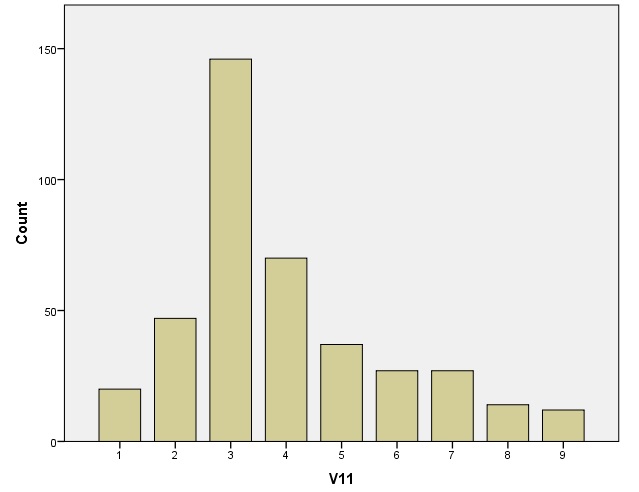
I am referring to the following events ‘Auditors go high-tech to win new business‘ (at http://www.ft.com/intl/cms/s/0/183cb13c-2557-11e5-bd83-71cb60e8f08c.html), where we see “Auditors have a newfound zest. Rapid developments in digital technology and new rules requiring large companies to invite bids for auditing work at least once a decade have forced accounting firms to refocus on winning new business” and ‘Accountants warn on audit market reforms‘ from last November where we see “Within the “big four” accountancy firms, market share has been shifting. EY has overtaken Deloitte as the third biggest auditor to FTSE 100 clients, behind PwC and KPMG in first and second place, respectively. This month Royal Bank of Scotland announced it had appointed EY as its auditor from 2016, ending a 14-year contract with Deloitte” (at http://www.ft.com/intl/cms/s/0/f22383ca-6410-11e4-bac8-00144feabdc0.html). This is actually more than just the shaking of the trees and the stirring of the gravy bowl. You see this is a shifting picture where the big four are now pushing for data analytics, the Wall Street Journal have been slowly filling the spaces in that regard. The headline ‘Accountants Increasingly Use Data Analysis to Catch Fraud‘ states it, but what do they state? At http://www.wsj.com/articles/accountants-increasingly-use-data-analysis-to-catch-fraud-1417804886, we see “When a team of forensic accountants began sifting through refunds issued by a national call center, something didn’t add up: There were too many fours in the data. And it was up to the accountants to figure out why“. Yes on the night of St. Nicholas the presents are handed out to all and especially the bankers, because analytics are here, the secret sauce of the needy to quench those who want to solve and hide those in the shadows. You see Benford’s Law is here and everything will be OK now! Is that so? Let’s take a look at ‘The Irrelevance of Benford’s Law for Detecting Fraud in Elections‘ (at http://www.vote.caltech.edu/sites/default/files/benford_pdf_4b97cc5b5b.pdf), where we see: “Detecting and measuring fraud is much like any criminal investigation and requires a careful gathering of all available data and evidence in conjunction with a “theory of the crime” that takes into account substantive knowledge of the election being considered, including the socio-economic and geographic correlates of voting“. This is about voting, so how does this apply? Consider the quote on page 23 “The operant clause here, though, is “in otherwise homogeneous data” since this indicator is intended to detect the heterogeneity introduced by a specific form of fraud“, now we get to those two parts, when we see “In statistics, homogeneity and its opposite, heterogeneity, arise in describing the properties of a dataset, or several datasets. They relate to the validity of the often convenient assumption that the statistical properties of any one part of an overall dataset are the same as any other part” (quick Wiki reference). So as we contemplate “the statistical properties of any one part of an overall dataset are the same as any other part“, ehhh, when has that ever been the case in keeping financial books? It is a balancing act, which means half on one side, means half on the other side (does that not prove the point?) No, because they are two sides of the same coin, double elements so to speak, so what to include, what not, the formula becomes unbalanced even further. Consider that banking is all about specifics, I will stay away from that element for a while, because the element of specifics is the issue, consider the graphs below.

Benford


I can tell you now that I violated loads of rules. It comes from a list of 400 movies, their revenue. So, it spans several year, 400 numbers and those are the most visible reasons why Benford does not apply. The books of Tesco have similar issues. Dozens of accounts, interactions, loads of numbers spanning a time zone, but at times those numbers are also of a small count. Could this work with a ‘grocery’ store? Consider the amount of articles at 99c and £1.99. The amount of special offers going on, day to day (Tesco example), from that, if we use EVERY transaction, we will see skewing, giving us the problem, banks have similar issues, but now more often with seriously large numbers. If we ‘Benford’ the hell out of all the commissions, will they stand the ‘fraud’ test? If not, will the bank see that cash returned, or will we suddenly see a ‘rationalisation’ of non-valid application?


This is at the heart “in otherwise homogeneous data“, which gave the Call-centre a ‘ding-dong’, yet I feel that overall numbers could have shown the issue as well. Too many issues do not hold water here, yet the end of the article gives us what matters “Benford’s Law isn’t a magic bullet. It’s only one approach. It isn’t appropriate for all data sets. And when it is a good tool for the job, it simply identifies anomalies in data, which must be explained with further investigation“, ah the common sense. That did not take long did it?

So as there are serious options for investigating Fraud, the watchers of Tesco are still not in the limelight of the press, they have been given the ‘shade’ by the press at large. In one moment we see Tesco getting replaced by DeLoitte and recently we see Santander bank replacing DeLoitte for PwC and the SFO is nowhere to be seen. So are the Elves of Statistics and the Serious ‘eff’ Ogres in a state of non-war? Perhaps the SFO is too busy and whilst those auditors give new presentations on those yummy statistics, but as I personally see it, it is basically another presentation to lull groups of people to sleep. There is a mess in front of the people and those who should look and act, seem to be too busy and many can slightly fall asleep again.

Just 6 weeks ago, the UK got the message ‘RBS, once the world’s largest bank, is using analytics technology to go back to the era of personal customer service‘, with a promise to invest £100m in data analytics technology. I personally believe in analytics, it is a great tool, but in light of many factors, unless you get the people who have been consistently under-called them a job with a competitor bank, the institution will be paying a lot by those currently not doing their job right.

That final statement can be easily proven.

In the first, if data analytics was key, those involved should have known this for well over 3 years, some in charge have been there long enough, which means that no action was taken and they should not be in a position where they remain idle.

In the second, if data analytics is not key in solving some of the matters, why are they buying it? It could be for very valid other reasons, but that does not solve the ‘under-calling’ issue, it does not solve several other issues, even though it solves some, so at best, data analytics will diminish losses, which is good, but should we not get rid of the dead weight (read significant reasons for large losses).

All this comes to blows soon enough, because if the RBS does not get its results, new articles will appear all over the place regarding ‘miscommunication’, times of deployment and infrastructure issues, in the meantime ‘managed bad news’ prevails and more waves of issues will be swept under the covers of a dark carpet. As accounts are handed over between the 4 big auditors, the sum in the end gives us that overall none of them will make any serious losses. Slightly beyond the short term it evens out for the big four, which might be the largest miscarriage of justice of all.


Leave a comment

Filed under Finance, IT, Law, Media, Politics, Uncategorized

A digital deception?

There is an interesting weekend going on. First we see people waking up to the Microsoft premise that free is apparently never free, in addition, we now see more and more noises regarding Net Neutrality. We will get back to Microsoft soon enough, because there is more to Net Neutrality than meets the eye. First let’s take a look at the definition of Net Neutrality. Wiki tells us “Net neutrality (also network neutrality, Internet neutrality, or net equality) is the principle that Internet service providers and governments should treat all data on the Internet equally, not discriminating or charging differentially by user, content, site, platform, application, type of attached equipment, or mode of communication”, now this sounds interesting, but the reality is not that easy as I see it. For example, consider Oracle Forms, who needs the reserved bandwidth, if we cannot deliver, that solution would become an issue to implement. Oracle Forms is not the only one, many other situations exist where priority is essential. Video conferences is one of several. The idea came from Tim Wu, he is the Isidor and Seville Sulzbacher Professor of Law at Columbia Law School. His paper Network Neutrality, Broadband Discrimination. The paper can be downloaded at http://papers.ssrn.com/sol3/papers.cfm?abstract_id=388863.

As any academic work, it is quality stuff, yet, do I agree? I have an issue with the following parts:

On page 1 “Critics, meanwhile, have taken open-access regulation as unnecessary and likely to slow the pace of broadband deployment“, America is about to encounter the point where ALL the TCP/IP addresses have been taken, no more addresses, which means that IPv6 will soon be the only option remaining. You see IPv4 provides roughly 4.3 billion addresses. Companies, people, devices all requiring an IP address (mucho plural), well at some point the end is reached and that point is now, but that is not the entire point of my objections, because “likely to slow the pace of broadband deployment” is about need. I do not see how broadband deployment is hindered by the current system (other than running out of addresses). We have seen an almost exponential growth in getting online. Ever since the broadband has been an option, we have seen spectacular growth. First through normal internet connections, then via cable providers, now in addition we have mobiles with 4G and WiMax providers.

The second quote is “That deviation is favouritism of data applications, as a class, over latency-sensitive applications involving voice or video“. Which might be fair, but for the most, this has apart from specific application NEVER been a true issue. YouTube caches, so I personally have never truly seen an issue, not in over 15 years. Voice is a different situation, is this about VOIP? On one side, in an academic paper we need to keep an open mind, which makes it a good statement, but when we regard government pushed policy “open access alone can be an insufficient remedy for many of the likely instances of network discrimination“, the use of the word ‘likely’ seems a little unacceptable.

The next issue is found on page 158 of the paper “Have broadband operators tended to favour certain uses of the Internet?” To what extent? The goal of this section is to answer these questions, to the extent possible, for broadband networks during the year 2002, so we get answers based on a situation that is 13 years old, so this is BEFORE true smartphones, before quality 3G and whilst 100Mb broadband was rare. 1000Mb is now in some places regarded as slow, we get internet information faster on our mobiles now, than on broadband in those days, overall the growth of speed has been near unparalleled since the beginning of the internet and I am just looking at the last 5 years. The more I read of this 39 page paper, the less this makes sense in the current environment. Not the thoughts by themselves, the thoughts made perfect sense (to a certain degree) in those days. Yet, the ISP’s and Cable providers evolved almost exponential in their offerings. For the same price I now get a little over 10 times the amount I had before. I now end up with 500% download space of what I need (and I have one of the cheapest offers), so far I have not seen any limitation on what I require, so is this a pure American issue? That could be the case, but those pushing Net Neutrality better realise that moving business from US to Canada is not that far-fetched an option, I personally see these events as the FCC seems shooting itself in the foot.

Yet are my thoughts correct? (Always a good question to ask)

Let’s take a look at the Washington Post (at https://www.washingtonpost.com/news/the-switch/wp/2015/07/24/republicans-are-trying-to-defund-net-neutrality-will-it-work/), ‘Republicans are trying to defund net neutrality. Will it work?‘ The quote “This week, the Senate Appropriations Committee approved a bill that contains an amendment singling out the FCC and net neutrality. Notably, the rider would prohibit the FCC from using its most powerful regulatory tool to police Internet providers — Title II of the Communications Act” is at the centre. Yet, what the Washington Post shows is nothing more than a political side.

It’s CNN that gives us part of the goods (at http://money.cnn.com/2015/06/12/technology/net-neutrality/), they ask a few questions and give us answers. That is what matters. So let’s take a look.

Isn’t that what exists today? For the most part. In reality, the world won’t look much different on Friday. Netflix won’t suddenly stream any faster for you. AT&T (T, Tech30) and Comcast (CMCSA) won’t abruptly stop laying down high-speed fiber cables and investing in their networks as retaliation“, after which CNN brings a quote that is surprising “And Comcast can’t slow down file-sharing websites, like it did to BitTorrent a few years ago“, which is more than interesting. Because, for the commerce of the USA file sharing is not a good thing, even though downloading movies is copyright infringement, pursuing these events is a near impossible task, especially when those servers are outside of the USA.

Who supports net neutrality? Now this is the number one question. “AOL (AOL, Tech30), Facebook (FB, Tech30), Netflix (NFLX, Tech30), Twitter (TWTR, Tech30), Vimeo and every other major Internet company are in favour of the FCC’s new rules. They create the content you read and watch online, and they don’t want to face discrimination by network owners who can threaten to charge higher fees or slow them down“. This statement is pretty far out there when you are not an American. In America, when you see places like Comcast, you pay for 75Mbs, 150Mbs and prices go up fast. So from this point is there reasoning for Net Neutrality? I still do not agree, but before going into this we need to look at Sprint, they offer unlimited high speeds with a sharable 10Gb for $100. This is less than 40% of the bandwidth I had 6 years ago at half this price. San Francisco gave me decent prices that are in alignment with what we see in Europe. Again, will Net Neutrality solve this?

Now let’s take a look at those supporters, Facebook and Twitter are data collectors, Twitter is the smaller and Facebook in the larger extent. Netflix customers require download power a lot more than Net Neutrality. The same can be said for Vimeo, AOL and Google+ for that matter. They all are vying for a customer base and when a person gets 10 GB at $100, whilst Europe and Australia enjoy prices like $70 for 200 GB you can see the issue at play. I am wondering whether this is about Net Neutrality or is there an issue with cartelisation in the US? We are so used to see that things are cheaper in the US, the fact that the US is leaps behind when it comes to the internet. That does not address the Net Neutrality. In my view it leaves us with more questions. The fact that prices are so high makes me wonder why a place like the US is not more competitive in that regard. But this article is not about that. It seems that Netflix needs download power to survive, and that is lacking in the US. In addition, it seems that the providers are extremely ‘protective’ on pricing, when investigating prices, TWC gave me “You are visiting our website from an area we don’t currently service“, which I got whilst entering a Chicago Address. So in all this, there is a multitude of issues, which have less to do with Net Neutrality and more about the stranglehold on pricing some seem to keep in the US.

Now am I upset? Well that is not really the question is it? I am like many others a capitalist (to some degree), yet that part has always been drenched in reason. As the information is reaching me, reason is not really a part that the internet providers seem to employ in the US. Especially as they offer internet at 33% of the speed and at 20 times the price. So it seems to me that Net Neutrality, even though in this light might have some effect to some of the solutions depending on the internet, yet the overwhelming thought from me is that as the FCC pushes Net Neutrality, we will also see a shift of the business world seeking an alternative.

When we see an argument that “Comcast could slow down BitTorrent traffic (it did)“, yet when we consider an article by Jacqui Cheng from the 24th July 2010, we see ‘Only 0.3% of files on BitTorrent confirmed to be legal‘, this was from a study that involved 1000 downloads, so 997 were infringing in one way or another, so why is it an issue to slow down BitTorrent?

A final issue should be given to Wired Magazine, who (at http://www.wired.com/2014/01/three-dangers-net-neutrality-nobodys-really-talking/) gives us several views in the article ‘Three Dangers of Losing Net Neutrality That Nobody’s Talking About

The first comes from American Library Association head Barbara Stripling “we’re in danger of prioritizing high-quality internet access for entertainment over education“, is this about the costs of a broadband plan? I have seen how this is not cheap, even as the article is only a year old. She also states “Ultimately, “pay to play” only benefits the privileged“, which I can agree with, it will be about usage and bandwidth, Net Neutrality will not up the game for them, it is about pricing and in some cases the prices are overwhelmingly ridiculous.

The second issue is ‘we continue to give more control over the internet to the government‘, which seems to be the case, but why is it done? Draining additional resources, forcing costs that should not be with the government. The quote here is “What’s worse is that we won’t see it coming, because the FCC’s power will creep in incrementally, on a case-by-case basis — a death by a thousand cuts“. Why is the FCC even bothering with this? Regarding the extent of what I saw as it applies to the US, this is becoming an increasing case of ‘Unjust Enrichment‘. Yet, the legal scope is not entirely ready to deal with this from an internet point of view. The North Dakota Supreme Court ruled in Schroeder v. Buchholz, 2001 ND 36, 622 N.W.2d 202 that five elements must be established to prove unjust enrichment.

They were:

  • An enrichment (Telco’s making excessive profits)
  • An impoverishment (Consumers are charged above their affordable income).
  • A connection between enrichment and the impoverishment
  • Absence of a justification for the enrichment and impoverishment
  • An absence of a remedy provided by the law (clearly in absentia)

It will be hard to prove this part, you see, it is not just about enrichment and impoverishment. The internet world is moving population classes into the haves and the have not, which is a different standard, yet the foundation might apply in finding the remedy for internet pricing, especially when we realise that one in 10 that would end up spending a little over 10% of income to allow for internet (based on the Chicago example), is this an excessive cost? That would be for a court to decide and that decision would not be the same state by state. Yet as that becomes a solution, the Net Neutrality need would diminish.

In the end, I am not convinced that the issues are about ‘neutrality‘, but it is about current technology and about fairness and affordability of the internet, especially when we consider that every child today needs to learn to proper use the internet from a young age, only to keep even with the other players, once the US falls deeper into the pay to play trench, we will see the growth of additional classes of segregation, those who are technically viable users and those who are not. That last one must be avoided at all costs, an issue Net Neutrality as I personally see it will not answer.


Leave a comment

Filed under Gaming, IT, Law, Politics, Science