Tag Archives: Net Neutrality

The gaming concerns

We all giggle at the ‘forecast’ of some gaming bosses. I am the same, so when I saw (at https://www.bbc.com/news/articles/c9803j74091o) ‘Amazon gaming boss predicts future where players no longer need consoles’ we can anticipate “Yes, but that is not now, it will be in the not so near future” and the setting of “Amazon’s head of gaming Jeff Gattis has told the BBC he believes the rising cost of tech means people will turn to streaming games online rather than buying new consoles. He said the tech has developed a lot in recent years, making it more viable than it used to be – but accepted some people will still buy their own hardware.” The truth of the matter that streaming is the future, but the setting towards a thick client (to a console) will make the most sense close to a decade. 

You see, some might remember the Microsoft failure Crackdown 3 where we see “Crackdown 3 uses a cloud-based compute system for its multiplayer mode (Wrecking Zone) to offload physics and environment destruction calculations to Microsoft Azure servers, multiplying local hardware power by up to twenty times. It is also fully playable via video streaming through Xbox Cloud Gaming with supported subscriptions.” But the results were “However, this data-streaming system frequently triggers micro-stutters, texture pop-in, and occasional fast-travel freezes on PC and base consoles.” And be clear, I am not having a go at Microsoft here. I actually applaud that they took this leap in 2019. It could have been better to some extent, but it was clear that the hardware was nowhere near ready even for strong servers using distributed technology. And we haven’t gotten much better at it in gaming at this time. Yes, distributed streaming is the wave of the future and I whole support this, but we are not ready, none of the gaming systems are at present to exclude a console. So when we see “While cloud gaming has long been billed as the future of video games, previous efforts have failed to gain widespread adoption – leading to the high-profile closure of Google Stadia in 2023.” I saw a future which could have gotten Google $6 billion in annual revenue, but they had closed the Stadia a week earlier. As such I offered that solution to Amazon (Andy Jessy) but he never got back to me, as I see it, his loss. Now I am still awaiting Tencent with their solution to nibble on that setting and there is no doubt that my prediction of $6 billion is real and I wrote about it in my blog (go look for it) I am not the person to hand out solutions to any wannabe that asks. And it was a real setting with gaming options to over 50 million gamers in the first phase. I predicted (as clumsily as I could what would happen after) but I have nothing real to offer after that revenue hits $12 billion – $15 billion annual. And I based it on a three pronged solution, because as I see it, a console is there for more than one reason and it would be a shame merely to offer one side. Google made the most sense as they had developed two of the solutions, but these could be remade and I wholly believe in streaming technology.

So when we see “Gattis argued there was still a huge untapped audience beyond traditional console owners which Amazon was trying to reach. “There are somewhere between two-and-a-half and three billion people who play games around the world, but only a fraction of those own dedicated gaming hardware,” Gattis said.” I find these numbers a little debatable, because as I see it, those relying on their mobile are not really gamers, that requires a large screen (or TV) and a decent console or home computer but that might be merely my view and in all this there is a future for distributed gaming, but it requires what is referred to as a thick client (console/home computer) because these millions of people will flood the internet when they are merely use a think client and I merely have to point out the issues Sony had a mere two days ago, to see the setting of “Thin clients require a stable internet and thin clients are network-dependent” that is the setting and before 2040, there is no non console setting to be had, even then you will be catering to metro people and the rural gamers are left behind. A setting I find completely disgusting and unsavory. Gaming is for everyone and even if (at times) we see that there is a lot to be had from these ‘metro’ gamers. It is completely unacceptable to stop catering to rural gamers. If only to consider France, Germany, Sweden, Denmark, Norway, Finland, Italy, Greece and that is merely Europe. Actually Sweden has the bet internet nationwide, but if we consider nations like Saudi Arabia, USA, Canada, Australia, and a few other places. How many rural gamers will be thrown into gaming darkness because of this? I boggles the mind I say. The BBC gives us more (read th article) and a lot makes sense in all this, but the setting of ““Gamers are willing to trade a little fidelity for convenience, but not to pay premium prices for something they don’t own which stutters when the Wi-Fi dips,” he said.” Is also something that needs addressing and it is done through the subscription model, as I see it, when you are a member, you get to won a game for all time, but it requires a thick client, so games at the end of their cycle need to be downloaded to the console, with an optional SD Card, to unclog the console. That might be a first setting that will gain the favour of gamers and the idea that they have at times a month to get a simple SDCard, is not to taxing on their wallet.

A simple card that supports the total of a Blu-ray can be gotten for a mere $33, as such storage becomes near obsolete as well. As such there are options but I see it for the far future, no matter what I believe that my solution holds, it will require a thick client, as the internet at present is a little to unsafe and insecure to count on. And that is before the upcoming rematch of net neutrality, a setting so intense and massively hedged against gamers, that a thin client is too dicey a choice to make at present.

Well, that is it for now. So tune in later today for a story that will make pyromaniacs water their mouths. Have a great day all and to all have a great day gaming.

Leave a comment

Filed under Gaming, IT, Media, Science

Food for thinking

That is what I saw last night. The source (Tom’s Hardware) an excellent source of information gives us (at https://www.tomshardware.com/video-games/playstation/sony-officially-kills-the-playstation-disc-ending-physical-game-production-in-2028-shutting-down-the-playstation-store-on-the-playstation-3-and-ps-vita-systems) ‘Sony officially kills the PlayStation disc, ending physical game production in 2028 — shutting down the PlayStation Store on the PlayStation 3 and PS Vita systems’ and there are two parts in there. The second part the PS3 and Vita store shutdown is less of an issue. The be clear I am still amazed they survived them, the PS3 ended its ‘life’ in 2012 when the PS4 came out and as I see it it was quite a run and for it to be supported for this long only gives credit to Sony. The first part is where my mind wen into overdrive. The end of physical media in 2028. Not a good thing as I see it. I for one love my physical media. And for it to end is not a good thing. Consider the congestion the internet faces in 2028/2029. So at present we have God of War Laufey and GTA6 giving us 150GB-250GB each, now consider that there are 93.7 million PS5 systems in the world, so we are given (conservatively given) 50,000,000 times 200GB that is 10,000,000 TB on day one and this is merely two games on day one. As I see it, the global internet is not ready for that much traffic in a week and this is not the whole enchilada, this is merely a day one setting for two games. We aren’t ready for that and taking into account a whole range of other software, the alarm chimes of congestion will resound all over the internet as such I am thinking that this stage should not even be entertained until at least 2035. I reckon that the global internet has been over 80% upgraded by then (a speculative thought), as such we aren’t even sure when this is ready because even as I love the materials of Tom (and his hardware). There is a thought that this was a mere spark of consideration and I reckon that Sony would ill survive the onslaught of that consequence. 

So how serious is this thought? 
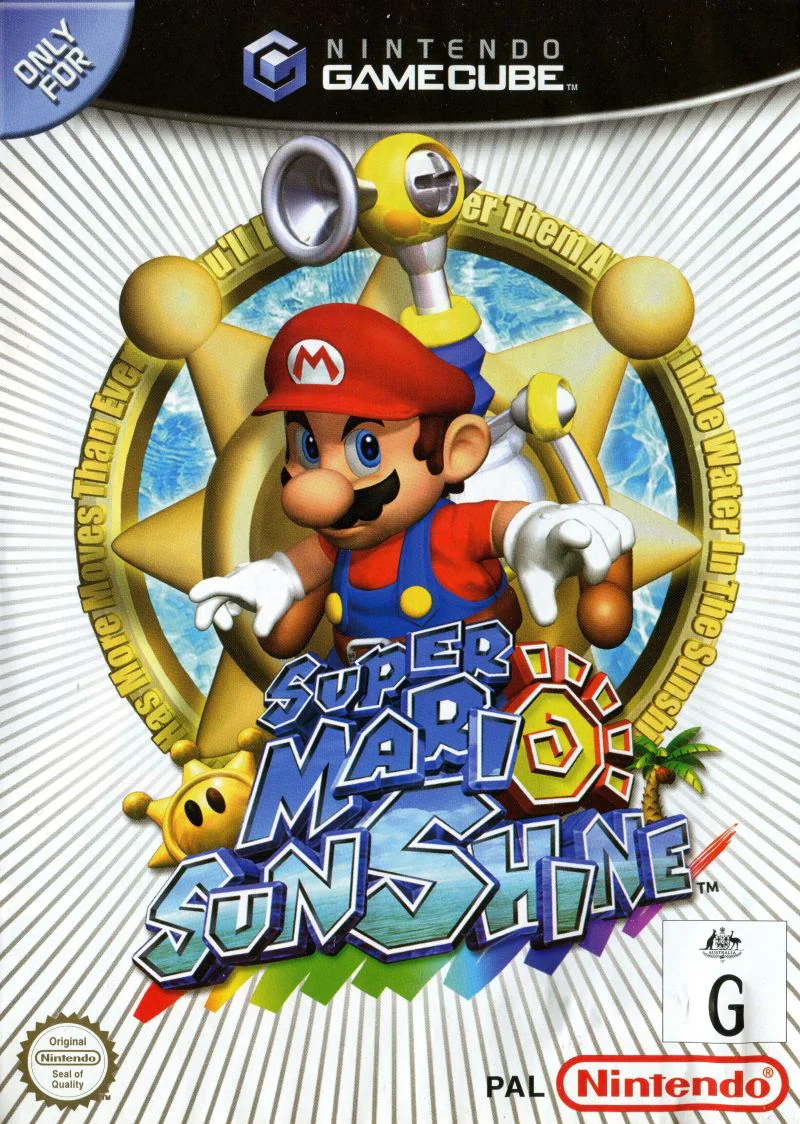
As we are given “I say “anyone could have guessed” because you’d have to have your head in the sand to ignore all the factors pointing this way. The biggest of such factors is arguably the reality that Blu-ray drive production has sharply wound down outside of game consoles. But there’s also the fact that the vast majority of games purchased today are already purchased digitally; in Q4 2025, 85% of PlayStation games were purchased digitally, and if you zoom out to look at the entire US video game market, the PC and mobile markets are already effectively 100% digital.” There are a few wishful thinking parts (like “anyone could have guessed”), but there is a larger setting, even if we consider “85% of PlayStation games were purchased digitally” the setting is nice and I have bought a few games digitally (like classics) but the stage where millions of ‘lovers’ of the god of War and GTA6 trample over the internet to get their copy and optionally more titles. Congest would be a lovely setting and as net neutrality is given its stage of hardship, we need to acknowledge that some voices (like allegedly Microsoft giving some people “we can easily with that traffic”) there is a setting that they want Sony to fail, so that they can revive their failed console, because at that point as a ‘treat’ for their gamers they have revived their top 10 physical copy onslaught and ‘just for the fans’ they are making them steel-box novelties. Or that is how I see their marketing throwing these sides about. This last part is purely speculative, but that is how I would play it and as Microsoft is a lot more sneaky than I am, they must have considered this. Nintendo does not have this setting as their largest game (from sources) set that tone at a file size is FC25 (EA Sports FC 25), taking up 45.8 GB, not really large by any standard and a few other titles are a mere 18GB, so they could play this all in a digital store. But the fans (like me) are still handed that feeling when we pick up our physical copy in a story. The unwrapping of our game, the game card in our console. I still remember the day in October 2002 when I picked up my Super Mario Sunshine. That day was magical in part because that game was a step above whatever was out there.

It does not compare to ‘I clicked the download button’ and that is merely on me and a lot of gamers who think like that. But the setting that the internet on a near global setting cannot accommodate people in rural Europe (France, Germany, Italy, Greece, Sweden, Norway, Denmark,) and a few other places is a real setting. And that also counts in America. Why do you think that the power of Amazon came from? That neglect gave Jeff Bezos billions and now as we see that some are giving strength to gaming in that way is not a negotiable thing. So, I am not sticking my head in the sand. It will go this way, but not until the internet has had a massive upgrade and that is not liable to be in place before 2035. 

So think of this what you will and I regard Tom’s Hardware one of the finest sources. But this caper is bound to be a cut to the revenue of Sony. So, anyone that disagrees, I say fine. But consider the numbers of merely two titles and consider that 30 to 50 true AAA games released globally each year and they tend to take over 75GB each, now consider that my numbers are actually a lot more conservative than expected and it is merely one system, so now consider Steam deck, Sony, 12 Xbox systems (OK, that was mean) and now rerun these numbers and consider that players like Ubisoft tend to put out patches that can range from 10 GB to 70+ GB depending on compression and their titles are out on many systems. Now rerun those numbers again and see how wrong I might be and not in a good way.

So have a nice day and consider the food for though I left you.

1 Comment

Filed under Gaming, IT

Outage, is that an outtake?

That is the setting that Microsoft introduces to its ‘flock’. First we see that Copilot has its second outage this month (which amounts to once a week) and now we are given that ‘Xbox Network outage leaves players unable to sign in and launch games – latest’ (source: GamesHub) we are given “Reports of an Xbox outage began circulating on Friday, 12 June, with users saying their consoles were connected to the internet but unable to properly access Microsoft’s online gaming services. Some players have reported temporary network error messages, while others have said games will not launch or connect online.” Is there anyone still in doubt that physical copies are the answer? In addition we are given “The outage is likely to be especially frustrating for Game Pass subscribers and digital Xbox users, as Microsoft’s ecosystem depends heavily on Xbox Network for account sign-in, game ownership checks, cloud saves, multiplayer, and access to online features. Even players not actively trying to play multiplayer games may run into problems if Xbox services are unavailable.” And my reasoning was simply that there are three paths before we get to a Microsoft server, namely the telecom company, the internet provider and the hardline to Microsoft. The first two tend to be one and the same, but that wasn’t always the case. And I reckon that in rural places this matters a great deal more. Now, I get that this affects Game Pass and that is rough, but the setting is likely to increase when the internet gets to be swamped by people trying to play a game and it is hindered by others having business settings. It is why I always supported Net Neutrality, which implies the principle that Internet Service Providers (ISPs) must treat all data on the internet equally, without discriminating, blocking, throttling, or giving preferential “fast lanes” to certain content or platforms. But the United States has seemingly different ideas, or at least that is where they are seemingly heading under the current administration. 

As such I have been a lifelong fan of physical media and some people say that this also comes with issues (like updates), but that is a risk I will happily take. That being said, the HALO patch in 2014 was the largest ever seen (45GB), as far as I see, the damage has been limited for the largest time. And according to CNet, Microsoft has its own moments of generated laughter “The massive Microsoft Windows outage in July 2024 sparked some of the best corporate and tech-support humor the internet has ever seen. Sparked by a bad software update from cybersecurity firm CrowdStrike rather than Microsoft itself, it stranded travelers, grounded flights, and gave millions an unexpected “international blue screen day”

We can laugh all we want and these are optionally bad moments for Microsoft, but the reality is that Microsoft over the products and versions (and systems) have done decently. We can argue (whatever we want) but the downtimes of Microsoft seems to be (by my account) rather low, so they are doing OK in that setting. Yes, I am writing about it, but consider the moon of people using Microsoft and we have three outages this month alone and I am cautiously considering that the Xbox and Copilot outage are possibly related (so our numbers are double dipping). 

As such there is a ‘Microsoft’ issue, but it should optionally be disregarded like a typo on a keyboard. And when was the last time you had a typo on your keyboard? I have them with some irritating regularity, which amounts to at least once daily. In my case my mind works a lot faster than my fingers can correct for. Microsoft might have a similar setting, but that is not for me to say. And whilst some will ‘hide’ behind ‘Microsoft Copilot Goes Down for Thousands, Downdetector Shows’ revealing an article that is less then 300 words, but it took time to reveal that you can advertise with them. Not the way I would embrace, but I don’t advertise as such. So, whilst we wait for the news that the Iranian issues are resolved, some hear President Trump say that a peace deal could come this weekend (source: ABC) whilst the BBC reports ‘Tehran says ‘nothing’ finalised after Trump claims deal to end Iran war near’, it’s been a while since politicians were less reliable than Microsoft ever was. All whilst Politico reports ‘Trump says Iran war has ended. Tehran isn’t so sure.’ So what really is happening in anyones guess. But there is always the chance that all these reporters are fixating on typo’s. Wouldn’t that be the outtake of a lifetime? Have a great day this day.

Leave a comment

Filed under Gaming, IT, Media, Politics, Science

A digital deception?

There is an interesting weekend going on. First we see people waking up to the Microsoft premise that free is apparently never free, in addition, we now see more and more noises regarding Net Neutrality. We will get back to Microsoft soon enough, because there is more to Net Neutrality than meets the eye. First let’s take a look at the definition of Net Neutrality. Wiki tells us “Net neutrality (also network neutrality, Internet neutrality, or net equality) is the principle that Internet service providers and governments should treat all data on the Internet equally, not discriminating or charging differentially by user, content, site, platform, application, type of attached equipment, or mode of communication”, now this sounds interesting, but the reality is not that easy as I see it. For example, consider Oracle Forms, who needs the reserved bandwidth, if we cannot deliver, that solution would become an issue to implement. Oracle Forms is not the only one, many other situations exist where priority is essential. Video conferences is one of several. The idea came from Tim Wu, he is the Isidor and Seville Sulzbacher Professor of Law at Columbia Law School. His paper Network Neutrality, Broadband Discrimination. The paper can be downloaded at http://papers.ssrn.com/sol3/papers.cfm?abstract_id=388863.

As any academic work, it is quality stuff, yet, do I agree? I have an issue with the following parts:

On page 1 “Critics, meanwhile, have taken open-access regulation as unnecessary and likely to slow the pace of broadband deployment“, America is about to encounter the point where ALL the TCP/IP addresses have been taken, no more addresses, which means that IPv6 will soon be the only option remaining. You see IPv4 provides roughly 4.3 billion addresses. Companies, people, devices all requiring an IP address (mucho plural), well at some point the end is reached and that point is now, but that is not the entire point of my objections, because “likely to slow the pace of broadband deployment” is about need. I do not see how broadband deployment is hindered by the current system (other than running out of addresses). We have seen an almost exponential growth in getting online. Ever since the broadband has been an option, we have seen spectacular growth. First through normal internet connections, then via cable providers, now in addition we have mobiles with 4G and WiMax providers.

The second quote is “That deviation is favouritism of data applications, as a class, over latency-sensitive applications involving voice or video“. Which might be fair, but for the most, this has apart from specific application NEVER been a true issue. YouTube caches, so I personally have never truly seen an issue, not in over 15 years. Voice is a different situation, is this about VOIP? On one side, in an academic paper we need to keep an open mind, which makes it a good statement, but when we regard government pushed policy “open access alone can be an insufficient remedy for many of the likely instances of network discrimination“, the use of the word ‘likely’ seems a little unacceptable.

The next issue is found on page 158 of the paper “Have broadband operators tended to favour certain uses of the Internet?” To what extent? The goal of this section is to answer these questions, to the extent possible, for broadband networks during the year 2002, so we get answers based on a situation that is 13 years old, so this is BEFORE true smartphones, before quality 3G and whilst 100Mb broadband was rare. 1000Mb is now in some places regarded as slow, we get internet information faster on our mobiles now, than on broadband in those days, overall the growth of speed has been near unparalleled since the beginning of the internet and I am just looking at the last 5 years. The more I read of this 39 page paper, the less this makes sense in the current environment. Not the thoughts by themselves, the thoughts made perfect sense (to a certain degree) in those days. Yet, the ISP’s and Cable providers evolved almost exponential in their offerings. For the same price I now get a little over 10 times the amount I had before. I now end up with 500% download space of what I need (and I have one of the cheapest offers), so far I have not seen any limitation on what I require, so is this a pure American issue? That could be the case, but those pushing Net Neutrality better realise that moving business from US to Canada is not that far-fetched an option, I personally see these events as the FCC seems shooting itself in the foot.

Yet are my thoughts correct? (Always a good question to ask)

Let’s take a look at the Washington Post (at https://www.washingtonpost.com/news/the-switch/wp/2015/07/24/republicans-are-trying-to-defund-net-neutrality-will-it-work/), ‘Republicans are trying to defund net neutrality. Will it work?‘ The quote “This week, the Senate Appropriations Committee approved a bill that contains an amendment singling out the FCC and net neutrality. Notably, the rider would prohibit the FCC from using its most powerful regulatory tool to police Internet providers — Title II of the Communications Act” is at the centre. Yet, what the Washington Post shows is nothing more than a political side.

It’s CNN that gives us part of the goods (at http://money.cnn.com/2015/06/12/technology/net-neutrality/), they ask a few questions and give us answers. That is what matters. So let’s take a look.

Isn’t that what exists today? For the most part. In reality, the world won’t look much different on Friday. Netflix won’t suddenly stream any faster for you. AT&T (T, Tech30) and Comcast (CMCSA) won’t abruptly stop laying down high-speed fiber cables and investing in their networks as retaliation“, after which CNN brings a quote that is surprising “And Comcast can’t slow down file-sharing websites, like it did to BitTorrent a few years ago“, which is more than interesting. Because, for the commerce of the USA file sharing is not a good thing, even though downloading movies is copyright infringement, pursuing these events is a near impossible task, especially when those servers are outside of the USA.

Who supports net neutrality? Now this is the number one question. “AOL (AOL, Tech30), Facebook (FB, Tech30), Netflix (NFLX, Tech30), Twitter (TWTR, Tech30), Vimeo and every other major Internet company are in favour of the FCC’s new rules. They create the content you read and watch online, and they don’t want to face discrimination by network owners who can threaten to charge higher fees or slow them down“. This statement is pretty far out there when you are not an American. In America, when you see places like Comcast, you pay for 75Mbs, 150Mbs and prices go up fast. So from this point is there reasoning for Net Neutrality? I still do not agree, but before going into this we need to look at Sprint, they offer unlimited high speeds with a sharable 10Gb for $100. This is less than 40% of the bandwidth I had 6 years ago at half this price. San Francisco gave me decent prices that are in alignment with what we see in Europe. Again, will Net Neutrality solve this?

Now let’s take a look at those supporters, Facebook and Twitter are data collectors, Twitter is the smaller and Facebook in the larger extent. Netflix customers require download power a lot more than Net Neutrality. The same can be said for Vimeo, AOL and Google+ for that matter. They all are vying for a customer base and when a person gets 10 GB at $100, whilst Europe and Australia enjoy prices like $70 for 200 GB you can see the issue at play. I am wondering whether this is about Net Neutrality or is there an issue with cartelisation in the US? We are so used to see that things are cheaper in the US, the fact that the US is leaps behind when it comes to the internet. That does not address the Net Neutrality. In my view it leaves us with more questions. The fact that prices are so high makes me wonder why a place like the US is not more competitive in that regard. But this article is not about that. It seems that Netflix needs download power to survive, and that is lacking in the US. In addition, it seems that the providers are extremely ‘protective’ on pricing, when investigating prices, TWC gave me “You are visiting our website from an area we don’t currently service“, which I got whilst entering a Chicago Address. So in all this, there is a multitude of issues, which have less to do with Net Neutrality and more about the stranglehold on pricing some seem to keep in the US.

Now am I upset? Well that is not really the question is it? I am like many others a capitalist (to some degree), yet that part has always been drenched in reason. As the information is reaching me, reason is not really a part that the internet providers seem to employ in the US. Especially as they offer internet at 33% of the speed and at 20 times the price. So it seems to me that Net Neutrality, even though in this light might have some effect to some of the solutions depending on the internet, yet the overwhelming thought from me is that as the FCC pushes Net Neutrality, we will also see a shift of the business world seeking an alternative.

When we see an argument that “Comcast could slow down BitTorrent traffic (it did)“, yet when we consider an article by Jacqui Cheng from the 24th July 2010, we see ‘Only 0.3% of files on BitTorrent confirmed to be legal‘, this was from a study that involved 1000 downloads, so 997 were infringing in one way or another, so why is it an issue to slow down BitTorrent?

A final issue should be given to Wired Magazine, who (at http://www.wired.com/2014/01/three-dangers-net-neutrality-nobodys-really-talking/) gives us several views in the article ‘Three Dangers of Losing Net Neutrality That Nobody’s Talking About

The first comes from American Library Association head Barbara Stripling “we’re in danger of prioritizing high-quality internet access for entertainment over education“, is this about the costs of a broadband plan? I have seen how this is not cheap, even as the article is only a year old. She also states “Ultimately, “pay to play” only benefits the privileged“, which I can agree with, it will be about usage and bandwidth, Net Neutrality will not up the game for them, it is about pricing and in some cases the prices are overwhelmingly ridiculous.

The second issue is ‘we continue to give more control over the internet to the government‘, which seems to be the case, but why is it done? Draining additional resources, forcing costs that should not be with the government. The quote here is “What’s worse is that we won’t see it coming, because the FCC’s power will creep in incrementally, on a case-by-case basis — a death by a thousand cuts“. Why is the FCC even bothering with this? Regarding the extent of what I saw as it applies to the US, this is becoming an increasing case of ‘Unjust Enrichment‘. Yet, the legal scope is not entirely ready to deal with this from an internet point of view. The North Dakota Supreme Court ruled in Schroeder v. Buchholz, 2001 ND 36, 622 N.W.2d 202 that five elements must be established to prove unjust enrichment.

They were:

  • An enrichment (Telco’s making excessive profits)
  • An impoverishment (Consumers are charged above their affordable income).
  • A connection between enrichment and the impoverishment
  • Absence of a justification for the enrichment and impoverishment
  • An absence of a remedy provided by the law (clearly in absentia)

It will be hard to prove this part, you see, it is not just about enrichment and impoverishment. The internet world is moving population classes into the haves and the have not, which is a different standard, yet the foundation might apply in finding the remedy for internet pricing, especially when we realise that one in 10 that would end up spending a little over 10% of income to allow for internet (based on the Chicago example), is this an excessive cost? That would be for a court to decide and that decision would not be the same state by state. Yet as that becomes a solution, the Net Neutrality need would diminish.

In the end, I am not convinced that the issues are about ‘neutrality‘, but it is about current technology and about fairness and affordability of the internet, especially when we consider that every child today needs to learn to proper use the internet from a young age, only to keep even with the other players, once the US falls deeper into the pay to play trench, we will see the growth of additional classes of segregation, those who are technically viable users and those who are not. That last one must be avoided at all costs, an issue Net Neutrality as I personally see it will not answer.


 

Leave a comment

Filed under Gaming, IT, Law, Politics, Science

The not so neutral net

This time, it was the Epic Times (at http://www.epictimes.com/2015/02/how-do-you-feel-about-net-neutrality/), who gave me the goods). To be honest, I have stayed away from Net Neutrality for several reasons. The first one is, because for now I remain on the fence. Reasoning here is that we are not really ready for Net Neutrality.

On one side, the US starting this works out nice for the Commonwealth (mainly Canada), there is a decent chance that some companies will move to speedier shores. But, let me get ahead of it all, because that might help the entire issue. So here is the initial response I gave:

There is an overwhelming need to be against it. Judgement was not correctly passed here. I do not essentially oppose net neutrality, however, that can only occur if the internet is correctly addressed, which it is not.

You see, people think that they are now better off, but they will be contending for the same bandwidth with a few thousand spammers, who use an equal bandwidth to a few million users. By forcing all in equal opportunity, spammers, and marketeers. We see that in this ‘ruling’ “Broadband providers cannot block or speed up connections for a fee”, so your fee to block is now no longer an option, which might mean that you get to drown in spam. In equal measure, you cannot pay extra to speed up, which is not unfair, but when corporations are no longer given the speed, they will move to other shores, so if places like Equinix (to name but one of many) will move to Canadian shores, feel free to thank those for net neutrality for giving a few thousand jobs to your northern neighbours. A data centre is about revenue, and net neutrality is not evil, but it has setbacks, revenue being one of them.

the next part is in “Internet providers cannot strike deals with content firms, known as paid prioritisation, for smoother delivery of traffic to consumers”, so this will inflict massive damage, which means that high pressure connections like Oracle forms will not get a whole new issue, working from home could be impacted in new not so nice ways.

Yet the one part “The FCC won’t apply some sections of the new rules, including price controls”, which than implies that all people will end up paying for bandwidth, there we see the connection to rule one and rule two, if fees cannot be used for speeding up, and prioritization, we could speculate that there is one price, a business price for all, I feel certain that the Facebook family and Google Plus family will just love the new pricing for staying in the loop on a social media level, for if there is no priority control and no speed control, the only price control is one price, and it will be a charged one.

And this is only one side of it, net neutrality will never work when the people cannot be correctly protected from cyberbullies, cybercriminals and cyber hackers, for the mere reason that under these conditions, monitoring will become a lot harder, you see those special accounts also meant that they needed less monitoring, because the origin is known, which is why I personally opposed the view of the White house. They stated “Our pursuit of cybersecurity will not — I repeat, will not include — monitoring private sector networks or Internet traffic”, how? Consider yourself in the street, walking, the police is looking for a wanted criminal, now consider where you walk and EVERYONE is wearing exactly the same outfit, do you really think the police will have an easier time finding the culprit? Of course not, now they need to scan every person they pass, not just the person they were looking for in a Green Armani suit wearing purple loafers’ size 12. Good luck finding the right person.

There is a positive issue to net neutrality, there is no denying that, but until they have a way to find the extreme abusers of the net, the neutrality step will make it a lot harder, not easier.

So, you might disagree with me, which is always fair enough, so let’s get the ball rolling on a few parts, because, I have support, I am not the only one here.

They are the first example to use. The BBC (which does not stand for ‘British But Conservative’, at http://www.bbc.com/news/technology-31638528), had the following part: “”The internet is built on infrastructure. Even to keep at a steady state providers are going to have to invest in infrastructure but they need certainty that they can get a return on their investments,” said Mr Belcher” which is fair enough, however, if business is no longer investing as they do not get a premium speed, what do you think they will do, stay in the US, or move to Mejico where they revere speed, Ariba Ariba Andale Andale! And when business moves off-shore, where will your cheap provider remain? It will not, it will be pushed out of business fast, or people will have to pay an actual amount.

The next one we get from the Wall Street Journal (at http://www.wsj.com/articles/broadband-investors-should-wake-up-to-net-neutrality-heard-on-the-street-1424975993), here we see “The long-term bull case for cable relies on two main factors: The ability to grow market share of residential broadband and the ability to raise prices. The latter rests on the idea that broadband providers’ pricing power will increase over time, an assumption that could be called into question if the reclassification stands“, my issue, which I do no applaud is the premise on ‘the ability to raise prices’, it seems like a small thing, but do you think that 50.000.000 Americans will like the increase due to the loss of business as they find safer shores? Business relies on visibility, which means speed and priority, when those fall away, that loss must be paid for. There is no way to tell how much more, but it seems to me that an additional $5-$10 per week is not outside the realm of reality, did these net neutrality people figure on that part? I have called big business exploitative on more than one occasion, the other side is that their power was the speed at which they could move, take that away and you get the same need for exploitation, but from a place where they feel safe, they do not feel that in any neutral version of the net.

It is tech liberation that gives us another view on the dangers, issues that I did not completely consider. Not because I disagree, or because it is incorrect, but there is a hint of conspiracy theory here and I am not sure if that ride is one you should focus on, but I will not withhold it (at http://techliberation.com/2014/09/26/net-neutrality-and-the-dangers-of-title-ii/). It is not a new piece, it was written in September 2014, which gives us “As I’ve noted before, prioritized data can provide consumer benefits and stringent net neutrality rules would harm the development of new services on the horizon. Title II–in making the Internet more “neutral”–is anti-progress and is akin to putting the toothpaste back in the tube. The Internet has never been neutral, as computer scientist David Clark and others point out, and it’s getting less neutral all the time. VoIP phone service is already prioritized for millions of households. VoLTE will do the same for wireless phone customers“, you see, streaming services, bandwidth requiring services like Oracle Forms (one of many) are all about the proper priority. When that falls away, we get black-outs in data, which makes a system fall over, yet here we see another side, which seems to agree with the FCC. Most companies have VOIP, not an issue there. But VoLTE is another matter, Voice over LTE must be a monitoring nightmare to some. I am not talking about the intelligence branch (it worries them too), but about the Telco’s. Once we get free Wi-Fi AND free VoLTE, what will telecom companies be left with? When all your calls go across a simple Wi-Fi the game changes, I would think that roaming over free Wi-Fi using VoLTE is the best thing and traveling sales executive will ever face, now consider the Telecom companies with no more Roaming revenue, can you see the pain they would feel? So even if it is a valid view, is it a correct one? You see, I do not know, but I have seen Telco’s sweat blood because of the fear of denied ‘easy peasy revenue’, so there is my view in those matters.

The one missing part is where I wrote in regard to the cyber-illegality actions. In my view, Cyber-crime is hard to solve, most often it does not get solved, because the seekers were too late. Now consider that group and consider the additional delay because the hunters did not have to look in certain places, now that this part is gone, they will have to look everywhere, how will that help solve crimes? I now get back to a quote Fox News had: “No one disagrees that the Internet should be free and open. The president’s plan just does not accomplish that goal“. I agree with this, I will take it one step further, we all had free internet because business drive reachability and innovation (for reasons of greed mind you), when that drive is removed, it becomes a service for all (which is fine), but one that ALL have to pay for, so how did that oblige towards the goal of ‘free internet’? This will drive the need for stronger regulations in regards to ‘fairness’, which will than remove the term ‘open internet’ as well.

I am not against Net Neutrality, but until it is a global thing, which is actually globally ‘enforced’ (read accepted), Net Neutrality will only achieve in driving business to a place called elsewhere.

Leave a comment

Filed under IT, Law, Media, Politics