Tag Archives: Brexit

Smite the analysts

It is time to change the game. It is time to do a lot more than merely claiming to do something about fake news. I never claimed to bring the news, I have merely been in the process of nitpicking it as much as possible and the Guardian got my feathers plenty ruffled this morning, so it is time for me to be a little speculative of the matter.

We love our idiot products at time; it is something to laugh at or something to make a joke about; for the most harmless fun. Yet today something snapped. It might have been the abuse that Theresa May has been receiving, it might have been watching some poor sod holding a ‘We’re poorer without EU‘ sign, whilst like me that person is unlikely to have any economic degrees.

So when I see: ‘Theresa May’s Brexit deal could cost UK £100bn over a decade‘ by Richard Partington (at https://www.theguardian.com/politics/2018/nov/26/theresa-mays-brexit-deal-could-cost-uk-100bn-over-a-decade).

I hereby make my first demand (do not worry, no one will listen anyway).

In regards to: ‘People’s Vote-commissioned study says loss is equivalent to annual output of Wales‘, I DEMAND a full disclosure of the names of the people involved as well as a clear documentation of all sources used. this includes the names of those in the ‘People’s vote’ those who commissioned the study, the price paid for the study, as well as the names of those who made that report (not just the three who wrote it), the data sources used as well as how the report was set to the data and its results. I expect to find a dozen flaws in the very least. In this case any arbitrary choice (which at times is perfectly valid), should be seen as a flaw, unless clearly stated as such.

It is time to hold these people up to the limelight exposing what the Guardian (and many other newspapers) are giving voice to as being ‘the facts’. I would like to go as far as prosecuting (to some extent) the makers of these loaded and dubious reports by banning those names from any governmental research for life! When that happens, we will get all kinds of excuses and well phrased words or denial. Yet, I feel that we have come to a point where these activities can no longer be tolerated. Not by any government and not by any organisation with political aspirations, or connections.

The reality here is that the UK will lose income, lost funds and lose options for the short term. This has always been known. We always knew that things would get a little worse. Yet NOONE is making any call on the waste of three trillion euro’s by the ECB on their Quantative Easing and the waste of now close to three trillion that the taxpayer has to pay back, whilst people like Mario Draghi walk away with a ton of money, a member of an elite banking group of 20 and no accountability to anyone. The media refused to hammer on the ECB on any of it and the lack of clarity and transparency that the ECB has. This happened in full view whilst they all had 50+ articles on the death of a journalist no one really cared about (aka Jamal Khashoggi).

My larger concern is seen in: “Garry Young, the director of macroeconomic modelling and forecasting at NIESR, said: “Leaving the EU will make it more costly for the UK to trade with a large market on our doorstep and inevitably will have economic costs.” The NIESR report found May’s deal would not be as damaging for the economy as Britain leaving the EU without an agreement, which would cost the economy about £140bn over the next 10 years.” From my personal point of view, these people are in it for themselves, most of them are. Even as I will immediately admit that this report looks actually valid and good, issues come forward to a degree that might not have been seen at the beginning of it all, yet the scrutiny after the report is also lacking making the issue larger. What some call ‘lucrative European contracts’, we see a lack of investigation on both sides of the isle in all this, because as a Brexiteer, I will never deny a Bremainer to voice their opinion, or their opposition to it all. It is the acceptance of democracy that demands it from within me. The UK has not really profited from the EU, merely large corporations have and that is actually the biggest issue with the entire EU at present. When we look at the 68 million consumers, many of them have not been able to afford any of it. The bulk of all of us are dependent on moments like Black Friday to get the hardware we normally cannot get. It is a known issue that the quality of life is still low all over the UK and in many other places. The only true beneficiaries of the entire EU setting are the large corporations. The local grocer sees no real benefit, whilst the large supermarkets have all these deductibles that for the larger extent benefit its board members, not the customers. People like Gary Young are eager to make mention of ”inevitably will have economic costs“, which is a truth; I and many realistic others do not deny it. Yet in equal measure we can move away from a multi trillion bond buying scheme that has done nothing for the people whilst making the banks fat and rich. Never before in the history of mankind did the banks and Wall Street have such a large hold on governments and its citizens and we sat down and let it happen. Brexit is for the UK the first step to undo that damage and it will take time, we all get that. So as we realise that the ECB failure, in part to unmanaged ‘freedoms’, lack of transparency and accountability has greatly impacted the UK, at that point will we realise that there is a weighted and loaded stage against all of us, in every EU nation. The second part in all this is what some call: ‘the EU gravy train’, I have made mention of it on a few occasions and the lack of actions in that regard is close to sickening. Even The Times gave us some time ago: “MEPs are clinging on to lavish, tax-free handouts for travel despite publicly pledging to repay them, according to an internal report by the European Parliament. They have kept an estimated €6million (£4 million) after promising before the 2004 elections not to claim the money. “They get exposed, promise to be modest and then keep riding the gravy train. It is appalling,” said Hans-Peter Martin, an Austrian MEP, who has led a campaign against abuse of expenses. The €60 million-a-year travel allowance system is so generous that many MEPs admit it amounts to legalised embezzlement of taxpayers’ money. MEPs are paid a first-class air fare for travel to the parliament, even if they use budget airlines. They make an average of £20,000 a year tax free“. We can agree that in that meantime something was done, yet how much was done? The taxpayers have to come up with 751 times £20,000, giving us a total of fifteen million pounds and that is only the travel item every year, one of a lot more items, so how much extra are these people getting? The simple fact that many of these issues have not been adjusted for over 12 years is a clear stage that the EU is the goose for exploiting extra income and benefits, something taxpayers never signed up for in the first place. Even now (8 weeks ago) we see: ‘Details of MEPs’ €4,416-a-month expenses to remain secret, court rules‘ (at https://www.theguardian.com/world/2018/sep/25/mep-expenses-eu-court-ruling) with in addition: “MEPs are also refunded first-class travel expenses and get a €313 daily allowance for hotel and living costs when working in Brussels and Strasbourg“, which in the most optional stage grants them an additional £60K each, adding fuel amounting to £46,562,000 to the tax payers fire. I think I have made my point, did I not?

When Brexit is done and we start seeing the impact, I predict it will be less than 2 years before the complaining starts, not from the UK, but from the other nations that now have to pay for the part that the UK will no longer be paying for and that is the ballgame here. When that happens, and it will we will see a rejuvenation by both France and Italy wanting to get out as fast as possible leaving merely Germany as the large economy to carry the weight of the EU and they will not be able to do this and it will all collapse. That is not a speculation; it is a certainty as I see it. It will only need one of those three to join the leave team and it will already fail. In light of all that is happening it seems to me that Italy is now the frontrunner before France, yet that might be what the horse lover calls a nose length photo finish. It was almost two weeks ago when French Marine Le Pen gives us almost the same view in the Daily Herald with: “French far-right leader Marine Le Pen is blaming the policies of the European Union for Britain’s exit from the bloc. “If the EU wasn’t what it is now, the United Kingdom would still have been a member of a structure that respects the nations, the people, that doesn’t impose migration polices and deals that have very heavy consequences on our industries and agriculture,” Le Pen said Friday at a news conference in the Bulgarian capital, Sofia.” It was for the most what pushed me into the Brexit field a few years ago; even as Mark Carney, Governor of the British Bank and his presentation in the House of Lords gave me reason to doubt that, the acts of stupidity by Mario Draghi and the ECB pushed me straight into the Brexit field, supporting Brexit. A situation that had been known for years, yet in light of 751 beneficiaries nothing was done to keep tabs on it and Brexit become a fact.

So as we accept the setting (via many sources) that Marine Le Pen is giving through “the EU wants to punish Britain by imposing “conditions that are unacceptable to a large majority of the people in the U.K. and to members of the British government.”“, we have seen several parts of that in the media. Is it not interesting how infantile the EU gets when you do not want to be a member? They threatened Greece to throw them out, whilst there was no legal option for the EU, and they demand the impossible from those wanting to leave. In that setting, who wants to remain a member? I would go with the speculation that the EU is for: ‘those who needs the power of exploitation‘.

It is getting worse

In this we look back at Greece. Some might remember the big boast that Greece made. I mentioned it in my blog: ‘They are still lying to us‘ (at https://lawlordtobe.com/2018/06/23/they-are-still-lying-to-us/), so when we were treated on June 23rd to ‘Greece ‘turning a page’ as Eurozone agrees deal to end financial crisis‘. Here Alexis Tsipras was happy to be quoted with: “Greece is once again becoming a normal country, regaining its political and financial independence”, we saw none of the EU reservations in a claim that was off by decades. I also commented in favour of the Greek opposition shown by Kostis Hatzidakis with: “The opposing party reacted to the credit buffer with ‘Kostis Hatzidakis said it reflected the lack of faith international creditors had in Athens’ ability to successfully return to capital markets.‘ And in this Kostis is right, the international markets have zero faith in their return, they rely on a small thing called mathematics and the clarity there is that the scales are not in the favour of the Greeks.” Now we see a mere four days ago ‘How Greece Is Scrambling to Save Its Banks — Again‘, the EU has become this short sighted, this convoluted in misrepresenting the facts to the people. So as we see: “Greece is scrambling to figure out how to save its banks — again. Burdened by bad loans that make up almost half of total lending, crippled banks remain one of the biggest hurdles to Greece’s economic recovery. There are even worries that the country may face yet another financial crisis if it can’t dislodge its lenders from their downward spiral. With bank shares tumbling, the government and the Bank of Greece are working on plans to help banks speed up efforts to shed soured loans” and this comes one day after: ‘EU: Greece has Not Implemented 16 Bailout Program Prerequisites‘, which we get from the Greek Reporter. We see: “The European Commission is urging Greece to proceed with 16 prerequisites that have to be completed by the end of the year, as agreed with creditors. The first report after the end of the bailout program in August that was released on Wednesday says that Greece is delaying to implement 16 important measures and reforms. Among them are the staffing of the independent public revenue authority, the repayment of overdue debts, the legislative framework for resolving the problem of non-performing loans and the development of the new primary health care system“, the article by Philip Chrysopoulos also gives us “Despite the fact that Greece’s 2019 budget meets the target of a primary surplus of 3.5 percent of GDP” will see a speculative setback (speculated by me) by close to 2% at the very least, in what will likely be a wave of managed bad news. The EU is now that useless and pushing down all the other European players. If only the EU legal setting had allowed for removing Greece from the Euro setting and EU economy settings in 2014, a lot of the issues (like Brexit) would never have been an issue. It is in my personal view greed driven EU stupidity that allowed for this. A blind faith in Status Quo that pushed the need of large corporations and that might become the downfall of the EU as a whole.

Do you still think that the EU is better for the EU economy? First Greece and now Italy are becoming the weights drowning the EU. Merely one hour ago, the BBC reported that: “Italy’s government says it will stick to its high-spending budget plans, setting up a potential stand-off with the European Union over its deficit.“, are you actually believing in fairy tales when you think that this will not hit back on the rest of the EU? Even as the Independent reported 13 hours ago: “The pound fell 0.19 per cent to €1.1284 off the back of reports that Italy is headed for a breakthrough with its budget, which would bring to an end weeks of wrangling between the EU and the Italian government.” we now get the reality that there was no breakthrough, we merely see more of the same and the impact of Italy is not immediately reversing and upping the pound against the Euro is it? In light of the revelation, the pound should be up by no less than 0.27 percent against the Euro (the gain and the 0.19 percent loss), we will not see that will we (or we will see it as late as possible so that the 0.27 percent can be largely minimalized. When you realise that the UK is getting unfairly hammered to this extent, would you want to be part of that group? And when (not if) the UK shows the improvements making the UK economy better, what excuses will the EU, ECB, IMF and Wall Street give the people of Britain?

To be part of any exploitative regime as the EU is starting to show it in a few ways. The evidence of this statement was shown by the Clean Clothes Campaign last June when we see (at https://cleanclothes.org/news/2018/06/11/complaint-lodged-against-the-european-commission-for-failing-to-uphold-fundamental-human-rights-in-trade-policy) ‘Complaint lodged against the European Commission for failing to uphold fundamental human rights in trade policy‘. Here we see: “Bangladesh has committed serious and systematic violations of fundamental workers’ rights. Conditions are unsafe for millions of workers in Bangladesh. Additionally, the labour laws of Bangladesh create significant obstacles to the exercise of the right to freedom of association, to organise and to bargain collectively. Further, the government has not effectively enforced even these flawed laws, and workers complaints to authorities are routinely ignored. Without bargaining power or legal recourse, workers have been forced to live in extreme poverty.” and when we realise that the lack of activities, naming and shaming those who are part of it all, whilst the EU remains inactive to a much larger extent, my case of large corporations being in charge of those acting in the EU parliament is close to well made, tailor made one could state. The lack of visibility given in the EU and the oversight on what is imported into the EU from Bangladesh is frightening. The Dutch CBS reported 3 weeks ago: “The average import price per vest exceeds 3 euros in 2018. With an import price of around 2 euros, vests manufactured in Bangladesh are considerably cheaper. Prices of vests from China (approx. 2.50 euros) are also lower than average, while vests from India were average-priced (around 5 euros) and those from Turkey more expensive than average (around 5 euros).” good luck trying to convince me that this is not about money and that there is a proper investigation into the Bangladesh situation. The fact that even China cannot match these prices is partially evidence enough. The fact that manufacture owners in Bangladesh are part of the 250% plus stage that we see with: “This is the largest quantity ever recorded and approximately 2.5 times more than in 1998“, the lack of questions by those gravy train people is just a little too weird and more questions are not coming forward. That is the European Union that its members seem to like and letting the UK out is also not an option. The analysts are merely the first circle we should go after (the first of several mind you). Any report that is not clearly documented with the names of all the people involved in this should immediately be disregarded and kept on record for prosecution and smiting afterwards (when those reports are proven to be incorrect) at that point I wonder how many studies we will get that are so overwhelmingly negative. And it is not merely the analysts. The names of the people commissioning for the report and the clear definition of the question that was asked will also be set to scrutiny. I wonder how many politicians and corporate figures will suddenly run for cover and darkness like a group of cockroaches.

Feel free to disagree or even oppose my view. Yet also remember, I merely want to see the names and all data on those so called ‘commissioned studies’. Is that such a bad question? When we are given the results, should we not wonder HOW they got there? Is that not a duty we all should have?

When we look at The National Institute of Economic and Social Research, we see a clear stage of names, Arno Hantzsche, Amit Kara and Garry Young (which is a proper thing, mindyou). We also see on page 7 and 8: “The Governor of the Bank of England estimated that by May 2018, UK household income was 4 per cent lower than it would otherwise have been as a consequence of the referendum (Carney, 2018): “one third of the 4 per cent shortfall in real wages reflects stronger-than-projected inflation, which is almost entirely accounted for by the referendum-related fall in sterling. The remainder reflects weaker-than-expected nominal wages, the majority of which can be accounted for by weaker-than-anticipated productivity growth“, which should not be disregarded.

Am I opposing my own view?

No, when you see the charts in that page, we see the UK not being in a good place. Yet considering ‘UK economic growth relative to other G7‘ and ‘UK inflation relative to other G7‘, the UK situation would not look great whilst this is staged up to 2018, and now we get the good part. The G7 are Canada, France, U.S, U.K, Germany, Japan and Italy. Now consider the Italian part dragging down due to the stupidity of their budget decision (which might be seen as their right). In addition the Greek issue will drag down the EU as a whole and the USA is in a trade war that will also impact the USA, all parts seemingly not taken into account and suddenly the UK already looks a lot better in all this. Now, we cannot completely fault the report called ‘The economic effects of the government’s proposed Brexit deal‘, yet there is already a non-negative impact for the UK (it is a stretch calling it a positive effect). In addition we see properly placed “We have assumed” in the proper places and only thrice, which is also a good thing and for the most utterly unavoidable. We also see in one place: ‘Sterling effective exchange rate (January 2005=100)‘, which is possibly merely arbitrary, from my personal view the fact that 2008 and 2016 have impacted it all might also be a stage where the UK had more hardship than before and as such the three stages should have been included. My final issue is on page 15; I do not doubt the numbers or the statement perse. Yet when we consider “Ramasamy and Yeung (2010) find that openness to trade benefits in particular FDI inflows to services sectors, much more than to manufacturing. Ebell and Warren (2016) survey the empirical literature and calculate that reverting to trade under trade arrangements similar to those between the EU and Norway would reduce FDI into the UK by 8–11 per cent, and by 11–23 per cent under a Switzerland-type relationship” that openness of trade also implies the open acceptance of the unacceptable ethical stage that Bangladesh is showing to be, we need to ask the tougher questions on EU inactions to the degrees currently seen. You see, when we accept one part, we need to accept that all these sweatshop articles are out of bounds. They are merely emotional banter pressed on those trying to meet budgets, there is no humanity left, we should not allow for that. In this way my statement is harsh, yet that is what the EU has become, a harsh proposer of status quo at the expense of whatever is coming next. If you do not agree, feel free to ban all Bangladesh T-shirts, leaving others with 215 million T-shirts to sell; was that example too direct?

Even when we accept the part of ‘how the deal affects uncertainty and confidence‘, which is a topic that will remain as there will always be uncertainty, the entire report is seemingly staged towards the bad side, whilst any improves economic marker from the second year onwards are basically ignored. We can argue that year one will have no upsides, yet the stage of no upsides in year two is lose to unimaginable. Apart from the ‘EU donation‘, which has been significant, the downturn of Italy and Greece that will no longer impact the UK is clearly escalating and France is basically scared shitless of that part. France is so scared as it is in a much worse position than Germany currently is, who will also feel that impact to some extent.

No matter how this plays, it is a mess that will test the reality of a lot of people. My largest concern is not how good or how bad things get, it is the fake revelations by speculative analysts that are the impact of a lot of things and the moment when we see the managed bad news after the fact, we will also see the weakness that has become the EU, in light of an already weak USA, this merely strengthens the need for a segretative community (read: nationalistic approach to national issues). It is the one part where I see eye to eye with Marine le Pen: “the policies of the European Union as well as the lack of transparency and non-accountability” are the biggest drivers in this entire sordid affair.

I wonder how draconian the changes will become when others realise how correct my view of the matter was. I am less likely to facing the fact that I was wrong, there is too much documentation pleading for my view, especially as the Wall Street Journal reported “Greece’s Eurobank Ergasias SA said it will acquire real-estate company Grivalia Properties REIC, boosting its capital and paving the way for the creation of a “bad bank” to help deplete its pile of nonperforming loans” a mere 5 hours ago. So when exactly did the people ever benefit from a bad bank solution? We saw that in 2013 with the Dutch SNS and Reaal setting. So as Brussels treated us to: “The costs to the Dutch taxpayer were still substantial, resulting in a deterioration of the budget balance (excessive deficit procedure definition) for 2013 with 0.6% and an increase in EMU debt of 1.6%“, we see Greece doing the same 5 years later. As we look at the quote: “In fact, since the nationalization the Dutch press has regularly published pieces that show how the commercial real estate has been mismanaged for a substantial time period. Did this go unnoticed by the regulator? Why did it not intervene?” We now get to unite that part with the overwhelming inaction of the EU and the unacceptable actions of the ECB, so this will be a much larger thing that Greece is printing on the rest of the EU then the people are currently aware of and the impact will be felt much larger, the fact that the bulk of the EU states cannot keep a proper budget merely makes mathers worse (not a typo, it means ‘reaper of hay’), and now I am in a state of moments uncontrollable deriving laughter.

The lack of visibility to several parts (an issue I cannot blame the media for in this case) is just incomprehensible. In part this is due because there are so many elements interacting, yet the fact that the issues are not visible is still a matter of great concern, and also an additional reason to push for Brexit.


 

Leave a comment

Filed under Finance, Media, Politics, Science

What’s in the room?

It is merely a reference to a modernised joke by the Groucho brothers. ‘Wow, is that a really large penis, or is there an elephant in the room?‘ This is the situation we face (and yes it was an elephant). The stage we see when we are confronted with: “The 240-year-old department store chain was valued at just £65m by the end of the day, after its shares fell by 21% amid reports that it was now being shunned by suppliers. It was the biggest one-day fall recorded by the retailer for more than a decade” (at https://www.theguardian.com/business/2018/nov/14/debenhams-shares-fall-by-21). There is a question forming in my mind, but I will refrain from voicing it for now. You see, we also see: “The sharp decline also came after very poor weekly sales figures released by John Lewis on Tuesday. The rival department store chain said fashion and home sales collapsed by more than 11% on 2017 levels last week“. This now leads us to the question ‘Hold on, Debenhams is impacted by the bad sales of a competitor?‘ and that is not the worst. John Lewis is doing the British thing and blaming the weather though ‘John Lewis blames weather for clothing and homeware slump‘ they are all in an ‘I am so upset mode‘ due to: “The poor clothing figures came despite the employee-owned chain’s recent investment in its womenswear ranges, including the 300-piece John Lewis & Partners collection“. Debenhams reported more bad news in the recent past and they are all signals and symptoms of another problem. Yet the issue of that problem is not the actual problem, it is actually seen through “The move comes just weeks after credit ratings agency Moody’s downgraded its long-term outlook for Debenhams and increased its “probability of default” rating, which assesses how likely it is that the company will be unable to pay some or all of its debts“. It is not Debenhams, it is Moody’s that is part of the problem and there should be some consideration whether we should look at orchestration here. From my personal view there are two elements. One is actually Debenhams; the other is Moody’s as well as the analysts that they have.

Painting the frame of an empty picture

To get that, we need to look at the larger picture and therefor look at the frame of it all. There are plenty of people who have a job, yet their living expenses are high, and in winter even higher. Now we get the more important part in all this, which is: ‘This is not news!’ And that revelation puts Moody’s in part of the frame. In this day and age, laces like Sydney and London, the cost of living is through the roof and people can only barely get by. In Sydney we also have Christmas coming and it is going to be summer here soon, so the Australian population is going with the Australian bikini (hat and panties), so women look even more amazing than ever before and the weather ensues that they are not cold, so no heating bill (optionally some air-conditioning expenses). In the UK it is the reversed and under these conditions KMart, Target and places alike are doing really nice, whilst places like John Lewis with their “300-piece John Lewis & Partners collection” will not get much traction until the boxing day sales when prices go down 30% or more, so any increased revenue expectations is close to insane in November (besides black Friday that is). Optionally December will be on par (at best), so there we see my reason for the suspicion of orchestration. More so when we see information like “Debenhams did not deny the reports, but a spokesman said: “Many suppliers don’t use credit insurance. Those that have used it historically are well aware of the current situation and work with retailers to manage things accordingly“. This now gives us two parts. The first is seen with: ‘Those that have used it historically are well aware of the current situation‘, so not only is it a known situation, it is known historically so making the 21% down an even larger no-no, because a predicted event is either calculated in, or it is a stage of orchestration as I personally see it. This implies that some players are overly confident in the previous cycle, whilst the known elements were already in place that this was highly unlikely to ever happen. This is an additional part in my personal suspicion of orchestration of the numbers and optionally by the numbers.

The other article on John Lewis (at https://www.theguardian.com/business/2018/nov/13/john-lewis-says-mild-weather-to-blame-for-clothing-sales-slump) gives us: “It was also a challenging week for homeware, which fell 11.2.% after a sluggish housing market hit demand for curtains and cushions. Technology fared better and, though sales were down by 2.8%, the department was bolstered by gadget launches such as the iPhone XR“, and at this point we see even more.

You see, when we see the household spend being down, why would anyone get curtains and cushions at their homeware, whilst they get a decent and much better deal at places like IKEA? That would have been my forecast and knowing that is also adamant to the stage where the previous estimation of certain vendors would have been too positive in advance, in addition, technology sales would have been overestimated if it was down, yet not as much by the iPhone XR, so that implies (from my point of view) that there was a clear overestimation in the first place, as well as an optional overestimation of the new iPhone which by the way is at least 17% too expensive from the get go. Knowing these elements and you can see them in your own personal environment the best, you know that most of you are a little more cautious because of upcoming Christmas, all that implies that the organisations like Moody’s have been loading their cannons for another reason, because the entire cost of living is out of whack and it seems that it can now be used for optional economic orchestration, which is a huge no-no in my books. In addition, we see this downfall whilst the Black Friday has not started yet, a black Friday that could impact sales extremely positive as some see Debenhams (optionally John Lewis too) as the place to be on such a day. Consider that last year (according to the Express) ‘Debenhams offered up to 70 percent off on certain goods. Calvin Klein clothes were discounted by 50 percent‘, so when we see that, can we expect that these places were shunned last month so that the people could buy a lot more bargains? When you know that there is a chance that articles will be priced sown by 70%, would you shop now, or wait for an optional 70% cheaper pair of jeans (and if the man is lucky, his girlfriend will stock up on lingerie on that day too). All elements that are close to given, so when we see a 21% downfall on given expectations, whilst we see that certain elements are not considered in the first place, it is my believe that there is a setting of orchestration, which can have far reaching effects, especially as certain players with openly pressuring anti-Brexit feelings should no longer be ever trusted, not as they are trying to sway people through fear mongering. That is a personal believe of mine and so far I have been proven correct in more than one way ad on more than one occasion.

Let’s be clear, we need places like Fitch and Moody’s, yet when we see that certain known factors are downplayed by  analysts and when we see that they are not held accountable in any way, we see a power vacuum, where people unelected and optionally non-qualified are setting a dangerous stage for corporations to be scrutinised on a few counts where there was a seemingly level of neglect on applied business intelligence, at what point will we see the open questions on how the curve was overly downgraded at a prearranged point? If Debenhams and John Lewis get to hit the ball out of the part on the coming weekend and we see overly good news on the week after, will we start asking the questions on how analysts are optionally intentionally fear mongering companies into some level of administration? My views are supported by Springboard. The Guardian gives us: “The most recent data from Springboard, which counts shopper numbers, showed high street footfall down 2% in October – the 11th consecutive month of decline. Its analysts suggested shoppers were waiting for Black Friday and other seasonal promotions“. When we see that view and we do see that there has been a drop and the drop can be explained in simple and logical ways, at that point we see that there is an urgent need for Moody’s to explain their actions and give us jerk-knee actions like lowering the forecast for well over a fifth of the value, whilst the known status for the UK has been that Christmas tends to be a decent time, especially as there is no Thanksgiving outside of the US (for the most).

It seems to me that analysts and credit agencies like Fitch and Moody’s are becoming the elephant in the room and their actions should be the beginning of a lot of questions, especially as there are still too much questions on how they were in denial for too long in the 2008 bank and housing issues. It seems that they have been given a pass for too long and it is time to address that, especially as the US has been deploying whatever they can to avert Brexit into a remain status, they do not like to lose their upgraded revenue at the exploitation of Europe any day soon and that has come under fire to a much larger degree, and it should be receiving a lot more scrutiny by all levels of media soon enough (actually,  they are already a year late on that too).

At some point serious people should address the elephant in the room. I am hereby voicing clearly that I might be completely wrong, yet I am asking questions, ready to be corrected. The facts are clearly shown that some actions are overly excessive, especially in light of certain parts shown out there, the Debenhams situation is not new, there are pressures and no one denies that, yet they are not new. There are clear indicators that this has been a longstanding issue, a longstanding status of consumers not having enough available to splurge in any real sense of the way, making the entire 21% drop questionable on many levels and we do not see the questions asked, more so the drop is just accepted as is, which is another issue as well. We can clearly ask John Lewis a certain amount of questions that link the words ‘sanity’ and ‘reasoning’ on their ‘300-piece John Lewis & Partners collection‘. When was that done? Was it ever done? When we see the mention of ‘The line, which will be available in sizes 8-20 and available at prices ranging from £10 for a cotton jersey tank to £250 for a cashmere coat‘, yet I see no information on where the mean, the median is and how many pieces are at the outliers of that 300 piece range, is that not an important part as well? You see if 45%-65% is between the lowest and the -1 median John Lewis really arranged for a good time for themselves, if more than 40% is higher than the mean, we see that their insight was poor, with the optional ‘utterly stupid’ label if 30% is between Median +1 and highest priced articles, especially in this economic climate. Did anyone look at that? I am asking, because I searched, but I did not find that information. I am willing to accept that I did not look everywhere and in the wrong places, but Google search is pretty good that way. So as that part is optionally missing, the question I had on analysts, forecasters and prognosticators is setting them in a not so good light, especially as this data would have been available pre-launch (consider that these catalogues needed months to be created and printed).

These are all elements that were available way ahead of a sudden drop in values. Now, in the case of John Lewis, there is a chance that the fashion was initially rejected (until Black Friday) but that too could have been accounted for ahead of time. This all gives additional value to the question: ‘What is in the room?‘ So what if it was not an elephant, but merely an overextended ego? How would we see the status that Moody’s, Fitch and others are giving certain UK retail downgrades ahead of the curve?

I wonder if we will see the questions come after Black Friday and in January 2019, but I am not getting my hopes up, not any day soon at present.


Leave a comment

Filed under Finance, IT, Media, Politics, Science

EA Games is waking up

We agree that EA Games has had a rough time, there is the loot box gambling part, a part I am on the side of EA games and I do not agree with the findings on a few levels. Yet there is a side where EA Games needs to wake up fast. first the good parts, like Forbes in September (at https://www.forbes.com/sites/games/2018/09/13/nhl-19-review-the-good-the-bad-and-the-bottom-line). From my point of view NHL19 is the best NHL game they ever launched. They started really good at the launch of the PS2, then there was a really good version of the game in 20903 on the GameCube and after that it started to sizzle (as I see it). They were more asleep than awake and the NHL franchise fell behind and fell behind a fair bit. EA Games had a few more good moments. Madden NFL 2002 On the Xbox was surreal and amazing, but that too fell down a bit, most state to me that NFL19 is awesome on many levels and I might find it out for myself in the Christmas sales dumps (somewhere out there). I was never a soccer fan, so FIFA is not in the cards, but the reviews are good and I accept that, but this is not about that, it is about the flaws in NHL19 and there are a few. Most of them are around the cards that you have accumulated, there is an option missing and a few details going into space, all could have been avoided. I personally believe that all 19 games have the same flaws and that is such a shame.

Then there is the use of cards, in my case I ended with a free HUT silver card and I have absolutely no clue what it does. So EA Games is not informing the users on some of the cards, which basically amounts to deceptive conduct. In a stage where EA games cannot afford to get markers of deceptive conduct against them is not a good thing. I love it that you get a free pack of 4 every 8 hours, which is awesome. Yet that does not rack up a lot in all the things I found. The option of a decent CCG album would have been great, with the cards on the right (or left) and the other side a superimposed image of that card where you could read all the details, why is it not there (not the version that is there now and it is a little laughable)? The filtering in auctions and looking at your cards is awesome, yet the lack of certain elements would have made it better. The customisable main screen of NHL 19 is awesome, and the practice part is fantastic (the final deke is a nightmare), yet overall this addition will entice more new players to NHL, especially those who have a puck instead of a heart (like me), it’s fun to have one but it freaks out the cardiologist to no amount, which is additional fun to boot. Why not expand on Franchise mode? Perhaps I did something wrong, I found the beginning awesome as I got my favourite team (Caps), arena, logo and jerseys unlocked. Why not unlock more with each game you win, other caps jerseys? I think we can accept that these will be non-tradeable cards, most gamers will not care, consider all the teams, American, Canadian, Scandinavian and other team leagues in there, the amount of jerseys and logo’s to unlock, would it have been such a shame to add them as unlockable parts? Now, I get it that this does not apply to the players, yet you still have the option to get those in the free packs (up to three players a day). It adds to the replay power of the game, adding bang to the buck and value to the game. Overall NHL is a screaming success, yet the parts that I found have a 5-10 point negative impact, whilst that should not have been the case in the first place and I reckon that I would find the same failings in both NFL19 and FIFA19, so a failing thrice over, and then there are the auctions. It is great that the game gives a free pack every 8 hours and there is always a coin card with 100 coins or more. Having won more than one 1000 coin cards made me very happy, as it allowed me to get 20 arena’s and half a dozen jerseys in a mere three weeks, so this is all good. What is less it that there seems to be an auction bug. I have been the front runner more than once and feeling happy having won a few auctions as the auction ended with me having the highest bet, only to go to the menu finding my coins returned and no card, which feels like a total sham. I actually lost my money once, but not through the auction, that daily coin card just vanished. It was a mere 200 coins, so no biggie, but it feels a little sour for a few seconds.

The graphics are awesome on the PS4, the controls are for the most outstanding and actually feel intuitive (except for some dekes) and practice mode adds to the flavour of preparation, which makes you more and more in the winning state of mind. I feel that having to select the language every time I start the game is weird, but what the hell, so first the language, then selecting the game at the main screen, a part that could have been done better I guess. Forbes has a few additional parts, all worth consideration, and the quote “The balance between offense and defense is good. Poke checks aren’t out of control as they were in a previous version, but still, an effective way to stop an offensive player’s progress. I think this year’s game forces you to use all of your defensive tools more than others. The more tools you can command, the better you’ll be at the game, and that’s the way it should be“, is one I wholeheartedly agree with. In addition there should be mention that the soundtrack adds to the game in a way that must be noticed. or me the fun was that I didn’t know any of the songs, which is always nice, especially when you feel more in the mood to play hockey because of it. In the end, the scores varying from 80%-89% is decent, yet I personally believe that adding these few parts to the interface and adding the reward unlocks might have made this a 85%-94% game. When that realisation sets in, consider what FIFA and NFL are optionally missing out on, especially when you realise that some people will not consider a launch day game for any title scoring less than 90%, that racks up to a serious amount of cash.

As stated, NHL 19 is the best NHL game I have seen in many years and that is still a great victory to behold, especially to play it again just as my team won the Stanley cup for real, which after supporting them for almost 27 years is a real good feeling. Now, I just need to get them there in the Pro Career (which might be a taller order for me), yet I remain an eternal optimist.

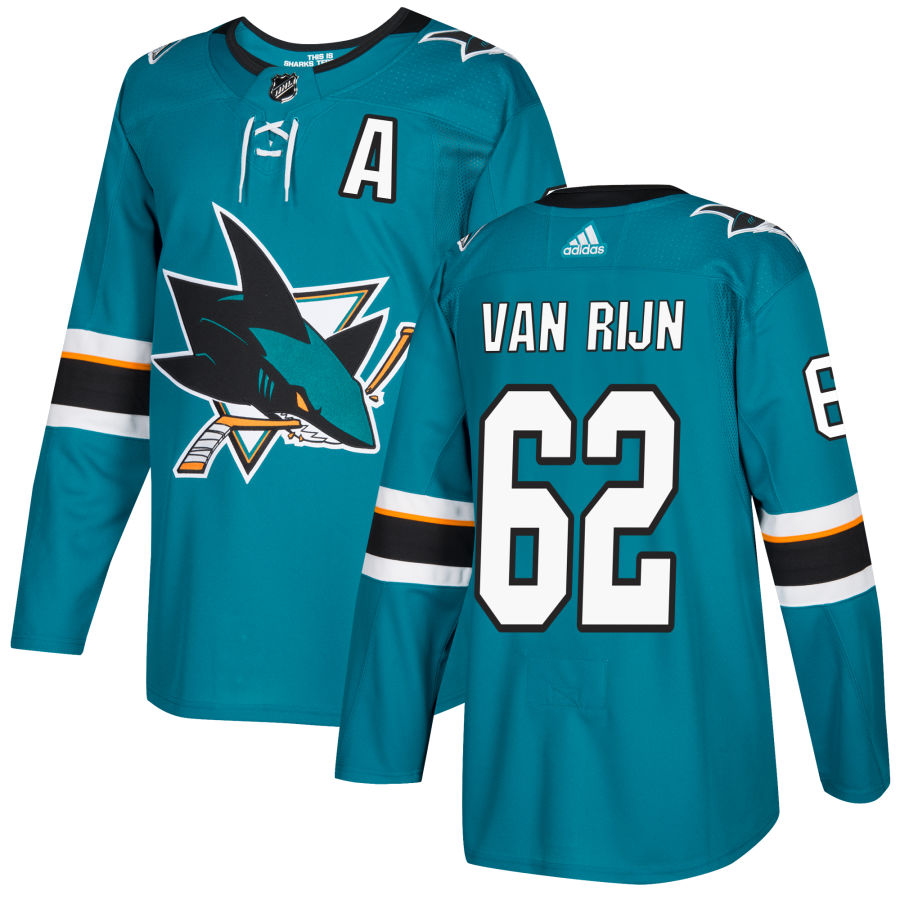
You see, if Colonel general Igor Valentinovich Korobov can drop the ball in Salisbury to the extent that the ball has been dropped, I definitely could be a successful NHL goalie, preferably the Western division so that I do not have to go up against my own favourite team, do you think that the San Jose Sharks could use another goalie?

Oh, and I had initially planned on writing about the media BS that we are getting from AstraZeneca and Brexit, which especially in light of certain patent pains are a hoot, but I am still gathering materials, so that will take a few days.


Leave a comment

Filed under Uncategorized

One economy crises a day

Yes, it is the Guardian that alerts us to: ‘World economy at risk of another financial crash, says IMF‘ (at https://www.theguardian.com/business/2018/oct/03/world-economy-at-risk-of-another-financial-crash-says-imf). So as we see: “Debt is above 2008 level and failure to reform banking system could trigger crisis“, we think that this is a small issue, but it is not, it is however not the real dangers, merely a larger factor. The quote “With global debt levels well above those at the time of the last crash in 2008, the risk remains that unregulated parts of the financial system could trigger a global panic, the Washington-based lender of last resort said” gets us a little closer to it all, yet it is the phrase ‘Washington-based lender of last resort’ that is a little more at the core of it all. This, or in a roundabout mention towards the US federal reserve is not the only part in this. It is the ECB with its quantative easing setting, now at 3.7 trillion, which in light of the Bloomberg article in 2017 (a year ago now) mentioning ‘Some ECB Members Identify 2.5 Trillion-Euro QE Limit‘ becomes a larger issue. With the US national debt at $21.5 trillion the ECB at an estimated €2.4 trillion bonds as per June ($2.7 trillion), we are going off the deep end soon enough. So as people were all in such a state that I was wrong, it would not happen again and that the economy is great. Consider that I warned about this danger several times between 2016 and the latest in May 2018 with ‘Milestones‘ (at https://lawlordtobe.com/2018/05/05/milestones/). Yet all the parties are stating that I was wrong, and several hours ago, the Guardian treats us to: “The growth of global banks such as JP Morgan and the Industrial and Commercial Bank of China to a scale beyond that seen in 2008, leading to fears that they remain “too big to fail”, also registers on the IMF’s radar“. Yes, ‘too big to fail’, or should that be ‘to big too fail‘?

So when we see Gordon Brown getting quoted with: “former UK Prime Minister Gordon Brown said last month that the world economy was “sleepwalking into a future crisis,” and risks were not being tackled now “we are in a leaderless world”“. I found his response slightly moronic as there is no leaderless world, there are merely elected officials who know that they are merely in temp positions and they are paving the way for really nice paid futures. There is a distinct difference there. And in that I am still modestly awaiting my honour degree from the London School of Economics, in a pinch one from the Wharton School of the University of Pennsylvania will do too.

So when we see both “Christine Lagarde was concerned that the total value of global debt, in both the public and private sectors, has rocketed by 60% in the decade since the financial crisis to reach an all-time high of $182tn“, as well as “the build-up made developing world governments and companies more vulnerable to higher US interest rates, which could trigger a flight of funds and destabilise their economies. “This should serve as a wake-up call,” she said“. My response will be: “No Christine, you are wrong! The entire setting of a wake-up call is already 3-4 years too late. You have been unable to nurture the ECB, keep governments awake to get spending under control and the fallout will be huge and the people get to pay for it all“. The one benefit is that too large a population will be going through two depressions wiping out all their savings soon enough and in that there is an actual chance of a new civil war that would spread all over Europe. At that point the life of any politician will be £0.02 at best, once that starts, there will be not merely a Brexit, it will herald the end of the EU and it will impact the US in a most disastrous path, not merely wiping economies out, there will be a lack of trust between the US and the EU that will surpass the distrust levels between the USA and CCCP at the height of the cold war. It will redraw global economic maps to the larger degree. That is also seen in the part when we recollect the June 23rd article called ‘They are still lying to us‘ (at https://lawlordtobe.com/2018/06/23/they-are-still-lying-to-us/). There we were treated to “Greece is once again becoming a normal country, regaining its political and financial independence“, remember that part? So how normal is that country as we are treated to ‘Greek Bank Stocks Tumble Amid Concerns Over Capital, Bad Loans’ by the Wall Street Journal a mere 8 hours ago? So when we see “Investors appear to have completely lost confidence in Greek banks,” economists at HSBC said in a research note. The four main banks— National Bank of Greece, Alpha Bank, Eurobank Ergasias and Piraeus Bank—recently submitted ambitious plans to rid themselves of more than half of their soured loans by 2021 to the banking-supervision unit of the European Central Bank, several bank officials said. Under the new plans, which the ECB is considering, the banks would commit themselves to reduce their nonperforming loans to 15%-21% of their total loans, compared with today’s levels of 40.7%-54.7%“. the article (at https://www.wsj.com/articles/greek-bank-stocks-tumble-amid-concerns-over-capital-bad-loans-1538584978) gives us a lot more, but it shows that the banks are trying to shed the bad loans in as creative ways as possible and in this the governments are as I personally see it part of the problem, they were never part of any solution and the people will get to pay for it all as they were treated last quarter to: “as elderly Greeks face losing up to €350 ($416) per month when new pension cuts are implemented as of Jan. 1, 2019“, I believe that as the Greek banks collapse to the larger degree, as the Greek banks are shedding over 50% of outstanding loans, their value would also collapse as will their prospects and the loss of confidence will only increase the pressures. All whilst payments will still be due and cannot be met as it is staged to be at present. So there is a chance that Greeks will lose 50% more than they are currently losing at present in the next quarter, so we will see that the Greeks will start the year in utter poverty and the rest of Europe is not far behind. The ECB with its badly conceived QE plan has achieved that, so when the people are given that danger and handed the loss of retirement funds, utter rage will not be far away after that.

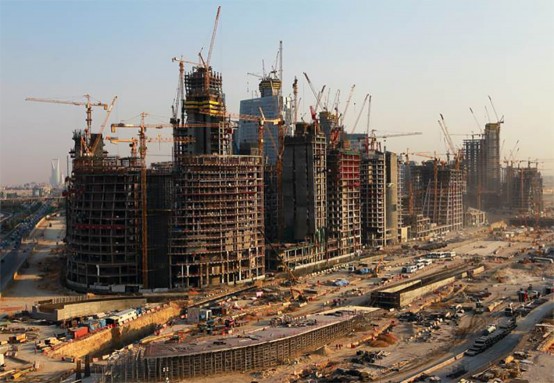
It was one of the reasons why I kept close eyes on Salini Impregilo. Even as Europe is going proverbially down the drain Salini Impregilo has been making headway on a global scale, foremost in Saudi Arabia and as their projects are kicking off, the infrastructure needs for Saudi Arabia grow. Their needs for dash boarding, reporting and data analytics will rise over the next two years and will require more and more knowledge and infrastructure with any additional building they are assigned. The entire project of the King Abdullah Financial District (KAFD) drew it even further to the foreground, merely because the required concrete levels that can be delivered seem to be at 30%-40% of what is required soon enough. It is an opportunity for Saudi Arabia and the UAE, but also optionally for Egypt. All these shortages ignored for now, yet when we see the image from 2012 and what was required then, and we consider that Neom will require close to 15 times that, where will the concrete come from? And it is not merely the availability; it will be about the proper planning of resources. Even as Salini Impregilo is merely a larger player of several projects, they in the end all need their concrete and where will that come from? So at this rate I expect to see the delays making the forefront news from 2020 onwards. Even as some places are increasing as much as they can afford. I expect it to fall short by a larger degree soon enough and when we are introduced to the heart of the matter. Smart cities will need smart infrastructure and the wiring will be well over 20 times what the entire Boeing 787 Dreamliner fleet required and that is a lot. the skills, the training to get the amount of people fuelling this is short on every level as I see it, so as Europe collapses with the debt, Saudi Arabia gets the option to buy staff cheaply soon enough. No merely getting the knowledge they need. Yet the brain drain to that extent has never been seen before anywhere in the world and that is where the ECB will suddenly realise that the fuel required to fix any acts of stupidity in the last 10 years will no longer be available and at that point Wall Street will wake up getting to live the perfect nightmare. It is not merely that there will suddenly be a boost of economy because there is no unemployment, getting the people trained up will take decades, stopping economic growth right quick and for much too long.

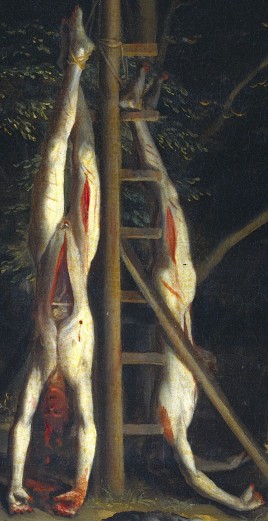
And as other players open up the doors for a guaranteed decent lifestyle, the setting is changing. We see that in the European Pensions last July, a mere 2 months ago when we were given: “European pension schemes are becoming increasingly attracted to the high returns and diversification benefits offered by frontier markets” This is the setting of: ‘more developed than the least developing countries, but too small to be generally considered an emerging market‘, yet as the high returns are estimated, the risks are also higher and there seems to be the risk ‘risk premiums are more greatly affected by political, economic, and financial factors‘ that is seemingly ignored to a larger extent. We see that part when we consider both “MSCI Frontier Market Index is the most widely used benchmark for equities. However, even this is highly concentrated in certain markets and sectors – financial stocks make up 46 per cent and the top three countries make up 53 per cent“, as well as “Argentina, which makes up around 22 per cent of the index, and Vietnam, 15 per cent“. So, now consider that the very same Christine Lagarde treats us to: “The International Monetary Fund (IMF) has agreed to increase a lending package with Argentina by 7.1 billion US dollars (£5.3 billion), seeking to calm markets over the country’s ability to meet its debt amid growing economic turmoil” a mere week ago. Do you still think that I was kidding or merely trying to kick the dead donkey? I am not stating that this is the fault of Argentina. I am speculating that too many parts of Wall Street are banking on the failure of others and it opposes the setting of returns on those seeking success, in this setting the pensions will lose, optionally they will lose every time without fail and the people are left with an empty bag not worth the price of that empty bag. Do you think that people will sit down and accept that? No, they will be beyond furious and the setting of Johan de Witt and Cornelis de Witt blamed and lynched in The Hague, the rioters were never prosecuted. So, there will be enough motivation on more than one level. It is something for the current European politicians to keep in mind, because this could happen again and the setting that the people face over the next 10 years is a lot worse than the ones that the population faced then. At that point, when this starts, I truly hope that those politicians will have the option of a quick getaway out of Europe, because they will not know safety ever again in that place.

So whilst we see the distancing of politicians on all fields whilst trying to drench themselves in non-accountability, whilst they will try the path of ‘It was a miscommunication and we were given the wrong advice‘, the people will no longer accept that as the evening news. They will want their pound of flesh and a bucket of blood and the regard of the value of politicians at that point will have been degraded to zero, and their ‘post life’ Facebook profile image might optionally look similar to the painting of the brothers De Witt as it was in 1672. You might think that it is mere speculation and it is, yet the trigger is not my speculation, it is the message of economic crises after economic crises as the governments are not acting against the banks and the exploiters that hide behind ‘too big to fail‘. The people all over Europe, if not on a global setting as they are mistreated to overly optimistic futures that cannot be met and have not been met for over a decade, you see, if that was actually true debts would have been receding, would they not? The only ones that did that harshly were the Germans and they are indeed in a much better place. It is the difference between being popular and doing what needs to be done and in that Angela Merkel was not about being popular, yet now those Germans are in a much better place than most other nations. It is something for you to consider as you notice your pension is gone and you want to take it out on someone.

so whilst we consider the final line in the Guardian, which was: “Without a rise in investment economies remain vulnerable to financial stress“, we need to consider that the setting is not merely about ‘investment economies‘, it is about the setting where large corporations come in and use that setting to ‘invest’ whilst draining away the gained momentum, so the economy that once was in that stage has been drained and those momentum profits are relocated to other places where ever those boards of directors are fuelling their personal wealth accounts, leaving those nations in a post investment era that is now merely regarded as a consumer fuelled economy whilst those people never gained the better economic standing to spend the money fuelling it further.

A setting where the equilibrium of economics fails as there was never a state of balance, merely a stage of relocating available wealth and the frontier markets are no help, they are merely an optional stage not unlike the CDO issues of 2008, in my view a way to avoid taxation and move whatever they could to a non-reporting nation. Or as one source stated: “the smarter operators no longer use filthy lucre but instead employ modern financial devices such as Interest Rate Swaps (IRS) and Total Return Swaps (TRS) to evade tax“, a setting where some take a 4% loss to avoid 26% taxation, it still wins them 22% and many had to live of a bonus a lot more shallow then that and from a base amount massively smaller than the one moved away.

One crises a day, I wonder what the bad news we will get treated to next week.

#HappyWorldAnimalDay


Leave a comment

Filed under Finance, IT, Media, Politics, Science

Witchcraft and/or Calculus

Well as Monday mornings go, this will be a day to try and make you giggle (actually not really). I have always been an advocate for science and common sense. I believe that there is great wisdom in applying science in most occassions, it is the easy path in defining truths. Yet, we cannot explain it all with science. We are all limited, it is a basic truth, it is what drives us forward. It also takes a while to get there scientifically, so from the Penydarren in 1804 to the Virgin Hyperloop in 2021 was not an easy trip. A little over two centuries and we have gone from 10 tonnes at 2.4 mph to 50 tonnes at 260 mph, we can see that there has been forward momentum. We all move forward, not all at the same speed, yet when we consider that I predicted on September 4th (at https://lawlordtobe.com/2018/09/04/democracy-is-dead/) after Reuters gave me the quote “Italian bond yields edged lower on Monday after Fitch left its credit rating unchanged at BBB, revising only its outlook to negative, though mixed news flow from senior ministers and manufacturing PMI data due later this morning could mean the rally is short-lived, analysts said“, to which I gave my personal view of “we need to focus on ‘manufacturing PMI data due later this morning‘ which gives me that the rating was done ‘just in time‘ to avoid having to lower it, which implies to me that it was not a reprieve, merely the application of time management to force an upped rating.

So as we move forward less than 3 weeks, we now see (Source: Forbes 2 days ago): “It is no surprise that Fitch has changed the outlook for Italy’s BBB credit rating to negative from stable“. It is not only ‘not a surprise’; it was clear three weeks ago that this was going to happen. The system was as I personally see it rigged, to give a false optimistic rating to a nation that did not deserve it. The question becomes: ‘Are we abandoning science for witchcraft? If that is true, then I would like to move the motion to make Rachel Riley the high priestess of all economic witches and warlocks on the planet!‘ You see if they abandon common sense, can that unruly mob get managed by someone intelligent and when we are on that setting, it better be a good looking one, so the number of optional choices dwindles down to …. one? And Rachel is her name!

What’s behind this?

You see, we have seen on how S&P played us in 2008 on a few sides and it took until 2015 until a ‘deal’ was struck and they got off with a $1.5 billion fine, so when I am stating that they got off whilst they were getting off, I might be more accurate than I am comfortable with. Moody’s got their load handed to them with a mere $864 million penalty. so whilst some sources (source: Huffington Post) give us that the The 2008 financial crisis cost the U.S. economy more than $22 trillion, we seem to forget the impact outside of it, the impact on Europe and how the overall quality of life returned to WW2 conditions (slight exaggeration),  and even as we see reported that the economy in in restoration, we all seem to forget that the quality of life compared to 20 years ago is still less then what is was in 1998 and in that setting we see Fitch play a managed setting of overly soft on some economies and delaying the downgrades by (what I personally see as) jumping the gun by hours, delaying the downgrade, so basically knowingly assisting in the selling of deflated bonds, that is how I personally see it.

So as we look back at the quote and we consider my view three weeks ago with: “This was done to stretch the game, not truly act on the reported value, if that was done the setting of ‘BBB’ could not have been maintained, it should have been dropped to ‘BBB-‘ (my speculated view). So whilst we think we are being told the truth, in my personal opinion, we are sold a bag of goods, because that is how the game is players and we are all being duped, just like in 2008” and we see again: “Fitch has changed the outlook for Italy’s BBB credit rating to negative from stable“, whilst I do not even have an economic degree, can we agree that if it was this obvious, we need to start doing something about Fitch and these like-minded credit rating parties?

In all this the bad news is nowhere near done. the Financial Times (at https://www.ft.com/content/f9fb99d0-bf23-11e8-95b1-d36dfef1b89a) gave us a mere 7 hours ago: “Italy’s technocratic finance minister Giovanni Tria is coming under renewed pressure to increase the country’s budget deficit to accommodate the expensive election promises of Rome’s populist coalition government“, we can understand that it happens. We get it that promises need to be kept and some spending can never be avoided. Yet at 132% of GDP, with a National debt of €2.3 trillion, one would consider that caution would not be the worst idea. In this, sources are treating us to: “a guaranteed universal income of €780 month for all unemployed Italians“, which in light of the cost of living is a decent idea, yet the fact that around 10.7% of the Italians are without a job, the pressure on government spending goes up and up and that means that the deficit increases and with the interests and budget issues in play, the setting of ‘BBB-‘ might have been a little overoptimistic in the end and the news is not getting better any day soon in Italy. Even as we see that the jobless rate is at a low point (lowest since 2012), poverty was up to 14%, so that number will go down, yet at the cost of the Italian governmental coffers. I get it, it is good if they can find any way to get poverty down, yet they need more, they need an actual economy and the EU is playing around in all the ponds, but they are not getting anything done here and the 3 trillion euro spending bill still needs to be paid for one way or another, so there is are long term pressures to deal with from that side as well.

In opposition

When we look in one way, we need to look in another direction as well. So as we accept the orchestration side, we need to disprove it as well (good luck with that). Yet I did look in other directions, I needed as much data as needed, and when we consider my part to downgrade on September 4th and Fitch to keep it stable (at that point) that whilst Bloomberg gave us on September 6thItalian Banks’ Outlook Cut by Fitch Amid Political Concerns‘ (at https://www.bloomberg.com/news/articles/2018-09-05/italy-banks-ratings-outlook-cut-by-fitch-amid-political-concerns) with the quote: “UniCredit SpA and Intesa Sanpaolo SpA were among five Italian banks that Fitch Ratings said could have their credit ratings cut along with that of the state, should the nation’s populist government relax its predecessor’s fiscal discipline“. This is merely one of the quotes and it was clearly stated as a warning which is fair, yet we also see there: “Last week, Fitch said there was an increased chance that Italy’s government will reverse some previous structural reforms, negatively impacting the country’s credit fundamentals. It also said the relatively high degree of political uncertainty compounds the risk“, so not only was there already the prospect of negativity before the government non-reforms. There was in addition the political uncertainty. So there were already two markers staging the negative twist before the setting to ‘stable’ and the non-change was (as I personally see it) falsely given. There is also the part (which was after the stable setting) the quote “While the banks’ shares were little changed, Wednesday, they have underperformed the national stock benchmark this year, with UniCredit and Intesa both down about 15 percent. While UniCredit is more geographically diversified than the other four banks, its risk profile remains highly correlated with that of Italy“. It is another negative impact, yet the downgrade would not impact Italy for another three weeks, is that not a little too strange for comfort?

I would in addition mention the quote: “Fitch said it believes that a disorderly Brexit (UK exiting from European Union) could significantly disrupt Jaguar Land Rover’s supply chain and affect the company’s earnings and cash generation. It affirmed the long-term issuer default rating of Tata Motors’ at ‘BB+’“, so it had no issues changing the forecast ahead of schedule here, whilst Italy was given an additional 3 weeks of easy does it options. And there are no questions here?

We can accept that there are timelines and that things are done at specific moments. No one will deny that, yet knowingly (according to all the sources) to set the stage whilst the stage was unrealistic is an issue and it seems that there is a need to consider that the Three rating agencies are American companies. In all this, when we consider the past US behaviour, and the fact that there is no call to get at least one rating company added that is either UK or European based is a matter for discussion as well.

From ratings to fashion

Yet it is not all about the rating company. To see the stage I need to take one leap to the far left (or far right depending on what side you are facing). The view was encouraged when we look at the Times 2 days ago. Especially with my lack of insight, is good to take that setting to the forefront. The times started with ‘Brokers can’t wait for Burberry’s success‘ (which could be read in more than one way), yet the text gives us clearly “Burberry left visitors to London Fashion Week in no doubt of the scale of its self-confidence: “Kingdom” was the grandiose title granted to the highly anticipated debut collection of Riccardo Tisci, its new creative director“, with the added “Analysts renewed their attack on the £8.2 billion company yesterday after executives indicated that it could take three seasons for changes to provide sales with a significant boost. Credit Suisse downgraded Burberry from “outperform” to “neutral,” citing a lack of potentially stock-boosting factors on the horizon.

Now, I am not debating the reality of the setting. Yet when we look at a place like Statista (at https://www.statista.com/statistics/263885/burberrys-worldwide-revenue/), we see that even as they are not reaching new heights, we see that they are still doing decently well (if one calls £2.73 billion revenue decent) and the year is not over yet. So yes, we do accept that revenue and profit are two very different types of cake and one must eat ones cake, doesn’t one? That was given to us by the independent last year in November, when they gave us: “adjusted operating profit soared 28 per cent to £185m from £144m a year earlier“, we do not know the profits for this year as the year is not done yet. Even if the profits are optionally lessened, it comes from a 28% high, as we see that, what exactly drives the attack on Burberry and how does it relate to the earlier non fashionable one (even though they have Ferrari, Maserati and of course the Ducati), they also have some fashionable brands and they might not be of the Burberry level, the ladies will still love the Italian stuff. When we consider ‘Analysts renewed their attack‘, it is my personal belief that there is a group of insiders in these places who seem to be pushing the planchette of the Ouija board on where they need it to be (optionally not in line where it realistically could be), which is clearly a foundation of orchestration. The problem is not merely on how it is done, the entire financial setting is one of close to zero transparency as analysts ‘hide’ behind their formula’s (read: magic spells) and refuse to give out the incantation that they are using. Now, that is partially fair enough, most magicians do not reveal their tricks, they did do that in ‘Deception‘, which is optionally why it got cancelled after one season. I touched on the subject before and it remains active because a lot of ratings do not seem to make sense, especially when you see the actions and the fact that in May Burberry did beat their forecast with 2%, and still they are under attack? The interesting part is that the media who should ask a lot more questions are not doing that, not even reporting on it and whilst we accept the Guardian giving us two months ago that sales were waning ever so slightly, we were also given “Instead, they have been shopping in Hong Kong, South Korea, Japan and mainland China, boosting Burberry’s sales in Asia Pacific by a mid-single-digit percentage“, as well as “Sales in the Americas grew by a high single-digit percentage as the improving US economy encouraged more consumers to buy Burberry products“. In this we could accept that analysts might decide to warn caution, the message of ‘attack’ seems too unwarranted at present, especially when it is preceding Christmas and optionally the impact of thanksgiving sales in the US. Yet is all this, we see to pussy foot around the clear dangers that the Italian markets are giving us?

In this, we need to consider that if it is all around science we need to see a lot more clarity and if they want to sell the magic like we saw last week, we might (or not) accept to some degree the dangers that Mark Carney points out. the Business Insider gave us: “Bank of England Governor Mark Carney has privately warned the UK government that a “no deal” Brexit could bring about a housing market crash and a surge in the UK’s unemployment rate, according to several reports“, this makes perfect sense. Even as I have not seen the data, there are companies overreacting and threatening that they would vacate the UK. Some will do that, it is unavoidable. There was always the premise that this would also stop new hires and there would be fewer jobs for a little while. That too makes sense. Now consider that commercial building in London is through the roof and even now we see that things are not great. They have not been great since January 2018 when the Guardian gave us: “Developers have 420 towers in pipeline despite up to 15,000 high-end flats still on the market“, so in all this there is a larger danger and we were given this in April this year with “number of empty homes in London now above 20,000”, all houses well above £1 million that for the most no one can afford. So as houses remain empty, what do you think happens to the commercial places being build? We focus on the Battersea Powerhouse and Apple new stomping grounds, whilst we need to realise that 99% of all businesses are SME’s totalling at 5.7 million of them. Where do you think they will go when houses remain empty? I am not sure that Mark Carney is wrong, he might be a little too negative, but it depends on that data he has (and the question that he was required to answer), which is going to be loads better than the data I have seen. So when we get back to the setting of politics, if given the choice by the optional ‘troll like’ person Jacob Rees-Mogg stating “Bank of England governor Mark Carney is a “wailing banshee” whose warnings about Brexit cannot be taken seriously” versus the ‘goddess’ Rachel Riley who might be known for her ‘Would you like a vowel or a consonant?‘, is no less of a math goddess, implying that the math will add up correctly is she ever replaces Mark Carney, whilst the math quality is already in doubt ahead of schedule in the peculiar case of Jacob Rees-Mogg.

It is important that we take a much deeper look at the math and even as I have great confidence in Mark Carney’s ability to do the math, we also need to consider that he has a job, a job to properly inform the government, especially when the worst case scenarios can be as dire as they would optionally be for the short term. So whilst we see the mention of “Mark Carney is a “wailing banshee” whose warnings about Brexit cannot be taken seriously“, we also see that at present 20,000 houses are not sold and some have been on the market for well over 6 months. I would suggest that JRM gives us his math and back those numbers up on a public place for everyone to scrutinise (hopefully by Rachel Riley).

The issues matter and they connect to each other, the scrutinisers seem to preload the stage in ‘their’ favour, which is understandable, yet the cold calculation formula has kept from us, so we cannot see which factors have been set on a sandwich that had been buttered too heavily; we all have a right to know those facts, do we not? In the end we accept that it is not merely about apples versus oranges and it is not about the amount of fruit we have, it is about the different scales and the setting of a stage where transparency seems to be always missing and that approach is never scrutinised giving us a growing lack of confidence as well as a level of growing mistrust in those ‘reporting’ the result; an issue that has been clearly noticed by many, and was addressed for the most by no one at all.

If you want to try magic with a money charm using green yarn and pine oil whilst chanting:

Knot of one, the spell’s begun
Knot of two, I make it true
Knot of three, prosperity
Knot of four, bring me more
Knot of five, the spell’s alive

If that does not work, try calculus and focus on spending less then you earn. Try 6 weeks of one and half a dozen weeks of the other and see which of the two gave you better results.

Have a great Monday!


Leave a comment

Filed under Finance, Media, Politics, Science

The European conglomerate of corruption

It was always going to happen, it was always going to get pushed. Yet the setting and the size of the levels of corruption is just beyond anything I could have imagined. How large corporations and politicians set hand in hand to enable corruption is just staggering and the media is assisting in this process. This is more than just Brexit. The article (at https://www.theguardian.com/politics/2018/sep/17/uk-needs-darkest-hour-in-brexit-talks-before-giving-ground), gives more than just the title ‘UK will shift Brexit stance in its ‘darkest hour’ claim EU officials‘.

Now some will throw ‘corruption’ left, right and centre, so let’s take a look at this. The dictionary gives us “dishonest or fraudulent conduct by those in power, typically involving bribery“, the problem is that most people just think it is about the money and most of the time they are correct. Yet the legal dictionary gives us: “The use of public office for private gain, Dunhaime gives us in addition the Canadian setting with: ““Corruption is understood to be the exploitation of a position of trust, typically in the public sector, in order to receive a private gain, which may or may not be financial. “Corruption is not a simple issue of right and wrong, and conditions that encourage public officials to seek out or accept corruption include (a) the expected gains from undertaking a corrupt act exceed the expected costs and (b) little weight is placed on the costs that corruption imposes on others.” We got this part from Karen Katz in the Canadian Law Journal.

In this we must also include the American version, which was discussed in In Nixon v Shrink Missouri Gove, where Justice Souter of the United States Supreme Court used these words: “Corruption is a subversion of the political process. Elected officials are influenced to act contrary to their obligations of office by the prospect of financial gain to themselves or infusions of money into their campaigns“, it is the elected officials part that matters.

When we are confronted with: ““A lot of movement is needed by the UK side before we can actually reach agreement”, said one senior diplomat. “We need a substantial change in the UK red lines still.” A second EU diplomat added: “It seems that the UK needs to have a ‘darkest hour’ moment before they will shift position. But they will have to shift their position.”” In addition, we see the fear mongering by Christine Lagarde, managing the IMF, who so far has been wrong thrice over in the last four years alone. We are given “a no-deal Brexit would deliver “reduced growth, an increase in the [budget] deficit and a depreciation of the currency“. In this we see another claim that has to be proven wrong again, all in the need of fear. You see this fear is growing. It is in part growing because the Italians are also moving on an ItaLeave (or is that iExit) path.

A path that even I did not see happening. I gave voice to the danger two years ago, but I also recognised that it was unlikely to happen, not as much as France and they pulled a rabbit named Emanuel Macron, not the Emmanuelle the European man were hoping for (see image). Yet in Italy it did go a lot further And now that Metteo Salvini is the elected group, the powers of Wall Street are getting scared, they are contemplating the end of their long reign of exploitation, so this wave is perhaps the last one, which makes the subversion of British Freedom even more essential. And in this British politicians are helping out, because London has been scared by all the fearmongering and Sadiq Khan is now worried for his town. He is shouting on the need for a second referendum. Yet, I want to set a few parts as well. The first is that the ECB gets disbanded, it is not transparent, it has taken liberties that are beyond acceptable and whenever the G30 bank elite comes to mention it had been avoided again and again. That is the setting towards what I regard to be of levels of corruption that are beyond acceptable. I personally want to add the right of targeted killing that means that any given links on politicians and the banks and large investors that is regarded to be unacceptable comes with an automated death sentence. I wonder how many politicians will get worried, they claim they will not be, but one knock on their door with the mention of the Battersea Power Station with the quote: “In an interview with the Guardian, Anwar, who was released from prison after the opposition won power for the first time in Malaysia, said the previous government had used the savings of ordinary people to cover up the multibillion-dollar embezzlement scandal at 1MDB, a state investment fund.“, and when we consider the news merely 5 days ago (source: the Guardian) with: “Peter Bingle used his longstanding relationship with Ravi Govindia, the leader of the London borough of Wandsworth, in attempts to circumvent council officials he believed were being obstructive to his clients, including over the size of payments due to public projects“, I think that my case has been decently made. In this we will hunt down and give the fear mongers the option to either show clear evidence or get executed. Is that not an easy way to get to the truth of the matter?

This reflects on Europe and the ECB, because their laughter dies down quite quickly at the point when the first ‘accidental’ fatalities hit the newsreels, after that them bitches be crying. As for the hard times. Yes, the UK would always get a few years of hardship after Brexit. Anyone stating that this is not true is lying to you. The issue becomes that after Brexit, the careless spending will no longer get pushed onto UK budgets, which also means that debts can be better dealt with quicker and also to a larger extent. That also means that as debts go down, as infrastructure issues are dealt with, it will have much better chance when the UK is not dragged down through 3 trillion stupid mistakes by Mario Draghi. OK, that was not quite true, the first Trillion we get, but when it failed he decided to add two trillion to that debt. That is the issue that the UK is confronted with and there is also the bigger crux. You see, the BBC reported last month (at https://www.bbc.co.uk/news/business-45247631) that a charity has called for tougher regulation of bailiffs, as it calculated that households have fallen behind on essential bills by £18.9bn. Staying in the EU does not fix that, the bills are still due, yet when the economy betters something can be done and that is what Europe does not want, they want that the lifestyle remains equal for all, looking at Sweden alone we see that this future is fictive and the EU is draining all funds with their gravy trains as well, making matters worse. If there was only someone who had been able to hold the ECB accountable on some of their actions, but alas, there was no option for that and there we see the one truth that Nigel Farage was correct in. If the Brits all unite for a better Britain it will work. And that is not merely those born there, anyone living in the UK, being a resident or citizen has the best interest that growing the UK is the only path that works.

The entire charity matter is also a path that matters, because it impacts life in the UK. We can agree that bills have to be paid for, but that is no longer an option as the pockets of big business are filled through exploitation and that cash is moved out of the UK through perfectly legal and creative bookkeeping.  So when we see: “Citizens Advice said it was getting a call from someone needing help owing to bailiffs every three minutes. It is calling for a bailiffs regulator in England and Wales. It points to a case of an elderly couple who owed £700 in council tax who are now afraid to open their front door after bailiffs used aggressive tactics and threatened to call in the police.” We need a much better system that allows for the return to better values and pushing out exploitative business is a requirement, yet their exploitative options are protected by the EU and Strasbourg, who want the status quo and will remain in denial for another decade, whilst the required actions are already 5 years too late. Here to we see the need to go it alone for the UK and let’s not forget that Italy is already moving on that path, no matter what happens now, when Italy gets out before the UK, the options of the UK will diminish even more, and that is still on the table, even as we see the news with “‘We Want to Change Things from Within.’ Italy’s Matteo Salvini on His Goal to Reshape Europe“, we see carefully scripted answers in regards to the Italian exit, yet the EU budget fights are implying that this path remains open to Matteo Salvini. The Financial Times (at https://www.ft.com/content/cad84ef6-b10d-11e8-99ca-68cf89602132) gave us: “But others fear a spat with Rome that could spur support for Mr Salvini in European Parliament elections in May next year and re-energise his party’s calls for a eurozone exit.” That is the dilemma that all these Europeans now face, because when the UK is officially out, the Italian exit will collapse the Euro as well as the EU. A setting that was always going to happen (at some point), yet the order in how it happens will also set the stage on how it impacts the UK and my personal view is the quicker that they are out, the better their position will be and there we see the stage of all these fearmongering players, every month less is another year of pension gone and a more medial lifestyle for those people who want their golden parachute and their golden swimming pool. That whilst 99.99934%of the people in the UK (roughly) will never ever have either.

So even as he Financial Times gives us the Top Marginal personal income tax for employees , we see that Sweden heads it and the UK is a lot below that, whilst Italy is two places below that part and Italy ‘flat tax’ is dead last. Now if we could have seen another chart that includes the levels of tax avoidance (which is perfectly legal) we could clearly see that the UK will never get the amount professed in that chart. There are too many loopholes and many nations use them, the EU gave even more options there. This gets us to 2016, when we were introduced to: “On 28 January 2016 the Commission presented its proposal for an Anti-Tax Avoidance Directive as part of the Anti-Tax Avoidance Package. On 20 June 2016 the Council adopted the Directive (EU) 2016/1164 laying down rules against tax avoidance practices that directly affect the functioning of the internal market“, which sounds awesome, was it not that 8 months later, we were treated to: “Huge sums are being lost due to tax evasion and avoidance. Estimates go up to € 1 trillion“. The mere setting of dates that were not clearly added to the page and other matters missed, gives us the uselessness setting of the EU, moreover those 8 months, the people involved, what did they achieve and how much did they get paid? It is my personal opinion, yet ec.europe.eu is filled with blunders and misgivings of a nature that should have gotten a truckload of these people fired and now they all band together, because when the UK leaves their party ends and that scares them. It is not that they merely try, it is that they for the most fail again and again.

That whilst IBM gave us the opposite setting for Brexit only a month ago with: The problem, though, is that there are some signs that Brexit isn’t going to be as bad as once feared – and may, in fact, turn into a net positive for the UK, and tech giant IBM might play an outsized role in some of the developing factors. Here’s why:

  • Foreign Investment is Growing
  • Emerging Technology Solving Trade Issues
  • Exports Climbing and
  • US Uncertainty Taking a Toll

These are all matters that work for the UK over time and that is why these levels off fearmongering anger me so and I personally would want retaliation against those trying to prolong their futures through fearmongering.

All issues ignored by the media to a much larger degree and whilst they emphasize on people like Lord Adonis, we need to make certain that those doing so are given the spotlight to the larger degree after the proof is shown, we will not allow for a simple ‘sorry’ we will set the stage for draconian change to their non-journalistic path. In the first in setting these publications as no longer to be regarded as newspapers, especially publications like the Daily Mail. They can publish of course, we would never hold their right of expression, but no longer in a 0% setting, they will become vat accountable for the 20% that any magazine and glossy gossip mag is set to, the playing field should be equal, should it not? I wonder how long it takes for them to feel that 20% pinch (good for the UK coffers) and when they start passing that onto the consumers, do you think that they will continue choosing that medium, or will they consider reading an actual newspaper?

All elements of corruption. The setting of ‘exploitation of a position of trust‘ is seen with newspapers, title of status, positions of wealth and managing policies as well as the facilitation and nepotism on smoothing paths for buildings. There is too much going on and it is hurting the UK immensely. We can argue that the EU has allowed corruption levels that we had not seen since ancient Rome and when we consider who is heading the ECB, we see and optional coincidence of correlation.

The largest danger is not when the UK gets out, but when the fear mongers win and Matteo Salvini succeeds, because at that point the UK will face close to a decade of additional hardship. Are you ready for that? Are you in the UK willing to forgo heating in the winters of 2020, 2021, 2022, 2023? Consider that, because the debt of the people adding to £18.9bn implies that they have to forgo electricity or heating; what would you chose?


Leave a comment

Filed under Finance, Law, Media, Politics

Democracy is dead

If there is one thing that the UK situation showed is the mere fact that not only is democracy dead, the question becomes has it even existed in the last 10 years? The fact that bullying and harassment are now the core uses of the media in facilitation towards power players (not even the political players) is at the heart of it all.

What started as an actual discussion became a trodden lane of smear campaigns and misstated innuendo. In the end a golden cage is still a prison, no matter how you slice it and even as the UK is all over the place, I do hope that they realise that they are about to become part of an additional 3 trillion in debt. The part that the media has refused to look into for the longest of times, the mindless spending by Mario Draghi and now a mere two hours ago we are confronted with “some economists argue that rapid technological development keeps a lid on prices, forcing central banks to exhaust their firepower fighting an economic paradigm shift, and leaving them with few tools for the next downturn“.

How does that relate?

Part of an issue I mentioned yesterday was (source: CNN) “Europe’s third biggest economy has suffered years of anaemic growth, high unemployment and budget deficits, while neighbours such as Germany and the U.K. have enjoyed a stronger recovery from the global financial crisis” at present the forecast is that the economy will rise by 0.2% less, giving a setting that is close to stagnant. In addition, even with the news from yesterday, we also now see: “Italian Economy Minister Giovanni Tria is pushing the parties in the governing coalition to keep next year’s budget deficit below 2 percent of output, sources close to the dossier said on Monday, lower than the party leaders have indicated so far“, as well as the part I mentioned last week as the article (at https://uk.reuters.com/article/uk-europe-view-friday/daily-briefing-italian-debt-yields-get-stretched-idUKKCN1LG0T2) was giving me “Fitch is due to provide the latest evaluation of Italy’s creditworthiness with national debt standing at 130 percent of GDP. The Italian-German bond yield spread is already at its highest since 2013 – a downgrade will widen it further and make Italy’s borrowing even more expensive“, there was an overall loss of faith, yet we are now treated to ““The actual rating wasn’t lowered, and anyone who follows Italy closely will know that a lowered outlook for the future should be taken with a grain of salt because so much of the political situation can change so quickly,” Alessandro Polli, an economic statistics researcher with Rome’s La Sapienza University” and when we add Bloomberg (at https://www.bloomberg.com/news/articles/2018-09-03/italian-bonds-get-a-respite-as-fitch-affirms-credit-rating) with: “Basically the politician with the greatest clout is saying Italy will remain within the 3 percent deficit band“, which is not only 1% deficit more, it is also an initial indication (indication mind you) that the 2% deficit marker is now more and more likely not the be a feasible one. But in all this, it would all rely on Germany and now we see the play, the EU and ECB are desperate to thwart UK democracy, because without it there is no euro, no Eurozone and no options remain and big business is willing to betray 65 million people to keep their cushy 7-8 figure income jobs, they are willing to do that at the drop of a hat, any hat.

The political players let the media be the facilitator for big business, first the banks, then tech companies and now the car industry. One by one fear mongering until the people got too scared and according to the Independent, 2.6 million people jumped ship and decided the swim to remain. So the new UK lyrics become ‘Ruled Brittannia, Brittania is the bitch! We shall never never ever trust in Fitch‘.

We get that to the setting of ‘Fitch ratings review gives reprieve to Italian govt bond yields‘ (source: Reuters). It is seen with: “Italian bond yields edged lower on Monday after Fitch left its credit rating unchanged at BBB, revising only its outlook to negative, though mixed news flow from senior ministers and manufacturing PMI data due later this morning could mean the rally is short-lived, analysts said” where we need to focus on ‘manufacturing PMI data due later this morning‘ which gives me that the rating was done ‘just in time‘ to avoid having to lower it, which implies to me that it was not a reprieve, merely the application of time management to force an upped rating. In that regards, when we see that and the UK realise that the EU barge cannot be stable, not with only one solid anchor, we get to see the equation where the UK becomes the force anchor to keep the EU dinghy from sinking on the spot. So as the industry will see ‘assurances’ of their value protection from the ECB. You see when we look at Section 9.4.5 of Part II of the AnaCredit Reporting Manual (this is about to become a massive leap of speculation on my side), we get to see:

If the appraisal aims to estimate the spot value taking into consideration market conditions, then “market value” is reported; on the other hand if the appraisal aims to estimate the market value ignoring cyclical factors, then “long-term sustainable value” is reported

Now consider that the UK is in Brexit and the Italian economy is rated down, when we now consider “APP holdings, Purchases of marketable debt instruments increase the Euro system holdings of such instruments and inject liquidity into the banking system“, we would see that under those conditions the entire ‘expanded asset purchase programme‘ would have to stop as per immediately and that is what the members of the ECB do not want to do, no matter how useless their exercise is and still seems to be regarded as (by critical outside minds). As I personally see it, the reported net acquisition of €24 billion a month, will need to stop before the current held holdings of €2.51 trillion might end up being regarded as dumped value, the setting of a ‘bad mortgage’ write-off. And do you think that this bad ‘mortgage’ is suddenly whisked away? Nope the outstanding amount becomes a taxpayer’s debt to deal with and without the UK the other players get a nightmare amount to deal with and that is what none of the 27 members want.

Now in all this I will be accused of comparing apples to oranges and that would be correct, yet what those people are (intentionally) forget to mention of illuminate that the ECB is a fruit vendor in all this. They are not the apple sales person or the banana (republic) sales vendor. In all this the ECB does not get to compartmentalise any of it. They bought 3,000,000,000 barrels of fruit at €1,000 each, so when some of these barrels contains rotten fruit, it becomes their loss, not the salesperson who they bought it from and as the barrels were unattended for the longest of times, more barrels and larger portions of every barrel become infected increasing loss over time to amounts too large to even contemplate. So, when the Italian shipper and the French shipper state: You bought it, it’s yours now; they will have no defence. In this it is the British supermarket that they need to buy some of these worthless goods or they go belly up and that is what they deserved in all this.

They should have sold the stock a year ago and stop purchasing those barrels of fruit and they are still buying junk fruit. And when we were treated to the earlier mentioned ‘manufacturing PMI data‘, when we see that it was reported down from 51.50 to 50.10, in the setting where highest was 59.00 and lowest was 48.00. So when we see the Trading Economics report and when we focus on that part and see the statement: “The reading pointed to the weakest pace of expansion in the manufacturing sector since a contraction in August 2016, as new orders fell for the first time in two years and output posted the first decline in over three years. In addition, employment growth was the weakest recorded in nearly two years and expectations slumped to the lowest since May 2013 amid concerns over future global trading conditions, particularly in relation to the US” is there any doubt on orchestration? This was done to stretch the game, not truly act on the reported value, if that was done the setting of ‘BBB’ could not have been maintained, it should have been dropped to ‘BBB-‘ (my speculated view). So whilst we think we are being told the truth, in my personal opinion, we are sold a bag of goods, because that is how the game is players and we are all being duped, just like in 2008, I would have thought that those players had learned their lesson, but apparently they did not and I truly believe that the UK needs to get out before that tidal wave hits them. When it does and they were still in that boat, they get to lose it, to drown just like the other players. So if all else fails, I hope that those players grow a set of gills, because they will need them and right quick at that point.

All this wheeling and dealing gives me the impression that the people are merely offer the choice between poor and destitute, I wonder if any of them can tell the difference from this point onwards. Oh, and if you think that I am kidding there, consider Greece that is under all that oversight. And only 12 hours ago, the Greeks decided to strand all the tourists on a strike. so as we see “Members of the union are reportedly seeking a 5 per cent increase for ferry crews, a request which they claim is long overdue as pay has remained static for eight years“, which now has two impacts. The first is that “affect around 180,000 people who have booked travel to and from some of Greece’s most popular tourist destinations“, who will optionally infect another 600,000 tourists not to consider Greece in 2019. In addition the fact that those people are demanding an additional 5%, because ‘pay has remained static for eight years‘, then those Greeks better wake up, because static incomes will be the cornerstone of their life for perhaps another 15 years. that is the long term effect of austerity, that is the impact of that massive a debt, so tax breaks are basically a thing of the past for them and the UK is still steering to a similar setting, that €3 trillion will make of that very clearly and it will over time affect all 27 member states to some degree, likely to Germany the most. In this, the Politician and environmentalist Nikos Chrysogelos has even more to deal with. the man is correct on all counts, yet until the Greeks are willing to strangle these dangers by installing Singaporean like methods (like a €500 fine for any environmental transgression) the tourists (and to some degree the people) will not change and the Greek islands will transform into an open sewer soon enough.

These are all issues that will impact the citizens of other member nations in some form or another; the impact of long term austerity and short term thinking. It will be about “some sustainable model of tourism” soon enough, but that also implies one thing. It implies that people will still be able to afford a vacation, because that group is actually shrinking and the economic upset that Europeans are currently facing makes that issue a non-option to at least some degree. That evidence was seen earlier with ‘forcing central banks to exhaust their firepower‘, so when that stagnation shifts to downturn the economic hurt will be on all over Western Europe and the ECB will have 1-2 options reserved for themselves and their ‘friends’; and the people in Europe? Well, who cared about them anyway?

So in all it is not merely the economy for the now in all this. The setting is also the backwash from the consequences we see in Saudi Arabia. Canada, Sweden and Germany are all losing business in Saudi Arabia. Let’s be honest, we see that Iran is their enemy; we see that there is more and more evidence that Iran is facilitating missiles for Yemen, who are then fired on Riyadh. All this whilst the EC nations are bending over backwards to keep a nuclear deal alive that is quite honestly not worth the paper it was printed on and they expect to rake in billions in Saudi Arabia as well, whilst criticising Saudi Arabia at almost every turn. So as I am contemplated (read fantasising) on “an $11 billion arms deal between Saudi Arabia and Canada may be scrapped“; and how I could optionally sell that deal to a few alternative players (for a 1% commission). Whilst at the same time we see the quote “To German news outlet Der Spiegel, an unidentified businessman said, “For Germans, the doors in Riyadh have suddenly been closed” here I see a few non-European options as well (the 1% commission still applies) and when I see “Saudi Arabia is Sweden’s fourth largest recipient of arms outside the EU with sale totals in 2014 reaching approximately $39 million“, I see an opportunity to consider talks to get that shifted to perhaps a ‘Northrop Grumman X-47A Pegasus‘ consideration and perhaps even more, once the abilities are confirmed. Of course for all the extra work I will be taking an additional 1% on top of the 1%, so in all this, the European Hypocrisy works well for me, providing that Wesley G. Bush is still taking my calls, or I will have to postpone that deal and start wining and dining Kathy Warden (at her expense, it is an emancipated world after all) and she might be hungry for the setting of an additional 200 million, especially as the doors to Sweden and Germany are closed. All economic settings that are clear to all and clearly visible to all, so in all that, how are we not seeing that there is an increasing realisation that economic stagnation is closer to mere millimetres away from an actual economic downturn.

All elements that will hit the UK one way or another, because if it took this little to get the economy down with the smallest of efforts on two EU nations by up to 1%, how unstable do you think that the EU economy was in the first place? You see, the ECB ‘forcing central banks to exhaust their firepower‘ is one without firepower and options, making it merely a logistic system administrating €3 trillion of debt. So how desperate do they need the UK and how dim sum is the view that being a ‘remain’ member will make their lives easier? When everyone around you says: ‘Stay with us, or else‘, how much does who need who in the end?

Consider the truth there, if it was such a bad deal for the UK and a good one for Europe, do you think that the bullying and harassment would have been this severe? Until the EU and the ECB stops facilitating for the large corporations, you need to realise that those ‘facilitating’ are merely ‘tools’ trying to get a ticket on the next gravy train and those rides always cost the taxpayer and most often way more than acceptable.


1 Comment

Filed under Finance, Media, Politics

As the car industry dies

Yes, today is the nicest day of the week. After the weekend, after all done, it is again Monday morning. So, happy, happy, joy, joy!

I am waking up with the news ‘Shaken-up Aston Martin hopes to stir investors with a public offering‘. When it comes to cars, the Aston Martin is about the coolest car in existence. I would favour it over the Jaguar XF, the Infiniti Q60, the Tesla Roadster (2020) and the Lexus LC500, yet to be honest, I cannot afford any of them.

Now, I have nothing against cars, by themselves they killed each other. It was too much about ego, all about status and too few about what mattered, to get safely from A to B. So even as I have nothing against cars, the setting of those behind them? Yes, that matters a great deal, and most of them fuelling each other, most of them pushing for more models, more options and all financed in a try before the debt phase. Just like the PC industry. Makers having a dozen models every year, the market just could not sustain it and it collapsed. The same is happening here now in a few ways. We will always have a few exotic members (like Aston Martin), or a brand that is unique because of the niche they choose (like Morris Mini Cooper). For some of them, there will always be a market, they are established. The Japanese market made a mess of close to everything and now we see an entirely different kind of fallout. So even as we are treated to the ‘threat’: “Japan’s ambassador has warned Japanese companies will quit the country if a botched Brexit hits profits“, it is not a vague threat, but overall that does not matter and it has absolutely nothing to do with Brexit. You see, I discussed this in February 2014 when the Australians got confronted with ‘The last Australian car‘. Here we see: “The world’s largest car maker announced it would stop building cars in Australia by the end of 2017 and would operate in this country only as a sales and distribution company. One additional factor needs to be told, which will have bearing down the road. Namely “Toyota is Australia’s biggest vehicle exporter with around 70,000 of the 100,000-plus cars it builds here being sold in foreign markets”“. What is even more upsetting is the part that Business Insider gave with it and my response to it in the article (at https://lawlordtobe.com/2014/02/12/the-last-australian-car/) “The car industry is estimated to have received a total of $12 billion in direct subsidies and protections over the past 20 years, including $1.8 billion to Holden in the 11 years to 2012.” is at the heart of this. So basically, 4 car makers have enjoyed an annual $600 million in subsidies a year. This is so off the wall it is not even funny!” In addition, the Australian, via Judith Sloan gave us the overall view: “Australia has subsidised almost $1900 per vehicle produced. If we take that and we add the initial quote I mentioned “Toyota is Australia’s biggest vehicle exporter with around 70,000 of the 100,000-plus cars it builds here being sold in foreign markets” leaves me with the question whether we have been sponsoring that part too“. So here is the crux. This is not about mere profits; this is about subsidies and what I personally see as legalised slave labour. This is about maximised potential without accountability or taxation. In all this, let them move away, let other nations subsidise it all and when their coffers are empty, we will see another ‘Cars from Japan’ setting soon enough. From my point of view, let them move out and lose 65 million potential consumers. When those wells dry up, when they see that the free ride is over, they will suddenly offer some price package, or is that prize package?

The nice part is when those brands fall away; we will see a revitalisation of other brands, those who will grow inside the UK. It might be a harsh reality, but it is a reality none the less. Will consumers miss out? I do not know, their ego’s might, but in the end, if a decent affordable car gets you from A to B, does it matter? This goes beyond the British car brands and who owns then nowadays, Morgan is seemingly the only one still in British hands, but again a niche market. So if the Japanese walk away and Daewoo and Kia walk in, would that be such a hard thing? Then there is China and India. They might actually like having a much better spot in the UK car industry. Many brands left life over time, all killed by the subsidised markets and drowned by subsidised cheap options. Who even remembers the Dutch brand DAF, or the German brand NSU? We have options, there are opportunities and the bottom dollar that japan wants needs to be barred. In all that, the only acceptable conflicts were the ones that Honda and BMW offered, which are about customs delays. I believe that to be the valid part and for the most, it is not merely about custom deals. It is about the EU trying to pressure into a another vote, trying to get Brexit killed, because Europe has no actual solution for the debt now moving towards 3 trillion Euro that Mario Draghi created. Now with the Italian economy is an approaching freefall, unsurmountable debts, Greece still in a bad spot, Europe cannot survive without the UK, now that France is also lowering expectations via: “The French government has revised its growth forecast for 2019 downwards to 1.7 percent from 1.9 percent, Prime Minister Edouard Philippe told the Journal du Dimanche” also implies that the Economy is not really moving forward, creating a setting that the debts of Europe are becoming a much larger issue. All those interests, when they come due there will be no infrastructure. That is the setting and the 1500 voices in charge of all that money are seemingly now scaring 15,000 politicians into pressuring others, because their life of well-being is about to end and someone must pay for their way of life.

That is the setting that is behind the cars, not merely the cars, but when you realise that your taxes were funding cheaper build cars, please show me where you signed up for that part of the equation. You cannot, can you?

I do agree with Dr Paul Nieuwenhuis of Cardiff University. He is correct Aston Martin is making a move at the right time, and when the economy truly picks up, their fortune is set for close to two generations. They are in a niche, but one with a good margin and with the growing of millionaires all over the place, they are also creating demand, because getting seen in the 007 choice of wheels does count (as your ego is able to foot that bill) even as the car looks supercool regardless. And when you consider the quote: “Issues such as Brexit are quite different for Aston compared with mainstream manufacturers because it is not as reliant on the EU for sales as the volume producers“, when you consider transport and other elements, why were they in the UK anyway? With these brands margins were always the case, for well over a decade, so in all that, why were they here? Is the reason merely because there were 65 million optional consumers in the UK or because the EU was all about big business, and a lot less about the people living there? Well, that was a rhetorical question, because Reuters in 2016 gave us:  “Compensating carmakers in Britain for any post-Brexit tariffs on exports to Europe could see the government hand the companies more money than they need to pay the salaries of all their British workers, a Reuters analysis of corporate filings shows“, that was exactly the image that we saw in Australia and there is the crux, what is the use of having a company in the UK, when we see that the UK government is paying for the wages? Where was that ever a solution? A flawed presented image on the presentation of great industrial UK revenue whilst hiding some of the costs?

So many questions and in the end, merely a drain on the coffers, so let them leave, let them move to Germany (Mercedes & BMW will love that), or France (at the loving side of Citroen, Peugeot and Renault). So when the subsidies are demanded, will those local brands even accept that? I wonder how long until they move back east and let the reality of the cost of manufacturing hit these players full on. I wonder how many brands will still be around in 5-10 years. A lot less that seems almost certain, but that is pure speculation on my side.


Leave a comment

Filed under Finance, Media, Politics, Science

Merely a starting point

There is an interesting article at the Guardian, which we were treated to mere 6 hours ago. The article ‘Virgin awarded almost £2bn of NHS contracts in the past five years‘ seems to be rubbing people the wrong way. We see (at https://www.theguardian.com/society/2018/aug/05/virgin-awarded-almost-2bn-of-nhs-contracts-in-the-past-five-years), the setting where in “one year alone, the company’s health arm, Virgin Care, won deals potentially worth £1bn to provide services around England, making it the biggest winner among private companies bidding for NHS work over the period“. In the end, the NHS either privatises to a much larger extent, or the service stops. It is basically that simple and it is only the beginning. Even when we give the right amount of empathy to Sara Gorton, the head of health at the trade union Unison, as she states: “The company has been so keen to get a foothold in healthcare, it’s even been prepared to go to court to win contracts, moves that have cost the NHS dearly. While the NHS remains dangerously short of funds, taxpayers’ money shouldn’t be wasted on these dangerous experiments in privatisation“, is that really the case? The fact that Virgin got the contract was mainly because it could be done cheaper. I warned for certain settings as early as 2014, that certain steps cannot continue that way, changes are essential. In addition, as late as January 2017, I mentioned (at https://lawlordtobe.com/2017/01/15/the-views-we-question/), in the article ‘The views we question‘, issues like: “the document, released in December, aims to address the need to bridge the local NHS funding gap of £267 million which will exist by 2020 if services stay the same in the region” gives rise to even more worry. Not only is the NHS a quarter of a billion short in roughly 1080 days in Coventry and Warwickshire, to survive they have to move? How will that aid the people in Coventry and Warwickshire? Will they end up with any health care at all, or will the local Romani Gypsies with oils and herbals need to be relied on? You think that I am exaggerating? If so, please feel free to inform me on how those two places Coventry and Warwickshire, with 340,000 and 550,000 people end up coming up short by £267,000,000 in three years? Well if advice comes at £343,000 on private consultants, that shortage might be reached rather quickly, but that is not the story is it? The story is how funding has failed and how much more it will fail over the next three years. So, as such, is my view as I personally see it of an essential judicial public inquiry that far-fetched?“, it refers to an article in the Coventry Telegraph, so with the question on how we can save money, which was billed at £343,000 , starting with common sense might have been a first solution. In addition (at https://lawlordtobe.com/2016/02/17/behind-the-smiling-numbers/), in ‘Behind the scenes‘, we get a few truths that really hurt and that was February 2016. The Guardian then gave us: ‘Income tax must rise 3p to stop NHS ‘staggering from year to year’‘, so, how much more taxation was captured for the NHS? Remember that was 2 years ago. In addition, I had issues (to some extent) on the path that Lord Kerslake took with his papers. And all these papers and consultancies (none of them free), the proper setting for mental health care was not properly set in the dimensions of cost and forecast, now add to that the setting of taxation delays and we see that the NHS is collapsing on itself, a collapse that is increasing in speed and that is merely the last two years. So in all this, someone at Virgin woke up and called Uncle Richard and asked if he was interested in making a few billion more. The setting was always falling in this direction, and most of it was not due to the tenacity of Richard Branson, but due to the political inaction and to an even larger extent the political follies seen (NHS-IT being the main one). Consider that it took me 8 hours to figure out a technological solution that could change the entire infrastructure of data, merely because I was willing to look at the larger picture and rearrange a few settings, the solution was printed in the History of Scotland, it was THAT simple. Yet none of those IT experts had a clue, or they did but the political engine would not consider adherence to change making it a bigger folly.

Now we see: “Precise details of all the contracts are difficult to establish because neither the Department of Health and Social Care or NHS England keep a centralised record. Virgin’s when it announced plans for six branded clinics offering a range of services. However, it was only in 2010 when it bought a stake in an existing provider, Assura, that it began to show greater ambition in the market“, which shows both the data folly as well of a massive lack of transparency on the health care part (optionally parts of the NHS as well), that shortcoming is the first setting into cost cutting and it is also a direct link to where services could be bettered. The second part was seen in January 2017 with ‘Dr Sarah Wollaston, chair of the Commons health select committee, criticised the government for blaming GPs for the crisis” as well as “She said in a tweet: “Pretty dismal stuff for govt to scapegoat GPs for very serious NHS pressures. Failure to understand the complexity or own responsibility.‘, the central setting was ‘Failure to understand the complexity‘, a part that was shown to a larger extent going back to 2016, even in 2015 and 2014, there were clear signs of non-comprehension in all this and the IT folly, which the Labour government was able to grow to £11.2 billion merely added to the pressures, whilst in addition to all that is also minimised options left for the NHS. all that squandering came at a price and it seems to me that both Sara Gorton and Paul Evans seem to steer in their lanes, but are equally ignoring the setting that the opportunity for Virgin grew due to a lack of flexibility in the organisations (slightly speculative) and the political branch merely added fuel to the squandering fires. Then finally the Lord Kerslake paper, which I opposed to some extent with the equations that they had in regards to the 20 OECD countries. Here I mentioned ‘Perhaps his Lordship could give a slightly more detailed explanation for the remark “Health spending needs to rise at least in line with GDP. Arguably, we may need to go faster if we want to match European funding“. Considering that the Netherlands and Belgium are next to one another and their budgets per person are apart by a mere 49.404%‘, I believe that it is not merely the stretch of the ‘holier than thou‘ GDP, I believe that there are additional elements making the comparison for the UK not merely dangerous, I believe them partially to be unusable (well a bit more than just partially). In all these settings there has been delay on delay and in the end Virgin had to step in. The funny part is that this also opens up data and reporting centres where Virgin has a much larger trove to work with. It would end up that a new VirginAnalytics could be what Dunnhummby was for Tesco, although with a data growth close to 500% of what Tesco allowed for, there is a decent setting where Virgin creates new levels of data cohesion giving the NHS an actual first time where there is a better level of reporting transparency as well as a better quality of Dashboard presentations, which will grow Virgin even more and also allows Virgin to skim the cream of the NHS sections that will be more profitable in the mid-term range of investments, opportunities grown from political complacency as well as political indecision.

So whilst people are going emotional with slogans like: ‘Not His to Seize‘, they all forget that the NHS and its political branch did this to themselves, Uncle Richard merely picked up the pieces and made it all work. This is getting even more traction when we consider the Lancashire Post where we saw almost a month ago “Opposition politicians have demanded an urgent inquiry into the way the authority awarded a £105m child health contract to Virgin Care, only for the decision to be blocked in the High Court. County Hall is continuing to consider its options after the ruling two weeks ago, one of which could be to re-run a part of the procurement process which the judge ruled fell short of the standards required

The article (at https://www.lep.co.uk/news/inquiry-call-over-lancashire-county-council-105m-virgin-care-health-contract-1-9241205) gives rise to questions not only on the awarding of contracts, but on the entire setting on investigating the amount and not to mention the fact that the contract was awarded whilst there were two NHS trusts on it, it shows that it not merely transparency. With ““We are in a real mess and the Government needs to intervene,” said Labour leader Coun Azhar Ali“, it implies that the NHS (as well as the local government) is to some degree riddled with incompetence. I cannot come to any other conclusion. The setting we see with “Coun Fillis added: “The Conservatives in Lancashire have been stopped once again from privatising public services, in this case our children’s health services“, is on Labour, not the Conservatives. The governing party decided to push for public health privatisation, and opposing it might be valid, but that legal invoice is still due, so crying over it with ‘tide of mounting legal costs, which the people of Lancashire will have to pay for‘, especially when you consider that “in view of the ridiculous comments from LCC’s Labour group, it should be borne in mind that the decision to seek tender for the provision of health services for Lancashire’s children and young people was actually taken by cabinet in February 2017, and both Couns Ali and Fillis were members of that cabinet“, so basically it was a decision that has suddenly hijacked by a minority and they are crying for the setting of cost? Go cry me a river, please!

It is in that setting, where politicians (especially labour) was lax with spending, squandered billions upon billions and they thought the Virgin train would pass them by. Now as this is not the case, not only do we see larger changes, there is the valid concern that mere niches are saved and a much larger setting still goes into the drink. If there is one setting that might change it is by taxing every person an additional £1 per payslip to save the NHS. It seems like a little, but with currently 32.2 million people working, that could add up to £65 million per fortnight. It might not be a lot, but it is a start and with that start you can begin to create momentum for the NHS that is by the way separate from all other funding due to the NHS. The question will people accept it? I reckon that when the NHS actually starts getting healthier, they will live with the loss of £1 each person, each payslip. It might have been pennies, initially, but that was 2 years ago, now we either act or lose a lot more and this is with VirginCare in place. Without it, and with the lack of restructuring the losses will be close to monumental, the simple impact of inaction, we can argue that the Conservative government is taking the easy way out, but is there any alternative? You merely need to look at what we can call a hijack by both Couns Ali and Fillis to realise that there are two in a setting that is much larger and those loses and those legal ramifications as well as the actions that followed is more than a sign of the times, it is a sign of high cost and zero impact desperation, that whilst actual working actions to get the NHS in a better place was ignored to one side and mismanaged on the other side by Labour in the 1997–2007 frame.

At present for Virgin, VirginCare is merely a starting point that can go a much larger route within the next 4 years, in the end, without an NHS, what will people do? I wonder how many remain in denial of that setting, yet it has been a more and more realistic setting. The simple setting is that almost two trillion in debt means that annually at present £68 billion is required for interest alone. Even as Net borrowing is down to almost 28% of what is was in 2010, the setting is that there is a massive debt and it is impacting everything (and the NHS not in the smallest setting). Only be diminishing that part can the UK move forward, which is a lot better than the EU is seeing at present, their debt will make them slaves to the banks for decades. You see, linked to all this is not merely what the government has, but the fact that “The 28 member states of the European Union (EU) have a total debt burden of €12.5 trillion, which could be even bigger, according to the latest figures from the EU statistics office, Eurostat“, in light of the UK being one of the big four, it implies that the rest of the EU will have to deal with the €10.7 trillion debt. How quick do you think they will be able to deal with that? That is why Brexit mattered, in light of the NHS being cut to a bare minimum, it is more and more a setting that Europe could more likely than not end up with not having any healthcare at all, so where would you prefer to be? In light of all that, Virgin might end up with a large gain, but at least there will be some healthcare, a part that too many are ignoring. Would it have been better to keep it all in the NHS? No doubt, but if you want to eat at the Ritz, you better have a fat wallet and the governments from 1997 onwards have all been part of blunders that ended the UK at minus 2 trillion, did you think that was going to go away because the news did not make mention of it? Consider Forbes who gave us not only that French and Italian health care is really good under normal conditions, in Italy (regarding the article), “I have never heard of a child waiting for surgery on his arm.  He would have been placed on the operating room list and he would have been fixed as soon as feasible. There are plenty of more serious surgeries, like cancer cases or even cardiac care, that are put on hold for months in these types of healthcare systems“, the article (at https://www.forbes.com/sites/benjamindavies/2018/08/05/a-broken-arm-in-italy-waiting-for-surgery/#20de8a1f29b6) shows the setting in Italy, in addition, in France we have a similar setting and all over Europe there are similar pressures.

Getting back to the corporation in question, is VirginCare a force for good, or the opposite? I believe that it can be a force for good, but we need to realise that the people can only be treated when we consider that flexibility is required. The lack of resources that is already in play is one part, the political games that we see, whilst relying on the emotion of others is the second part and when the people realise that they have been had by the likes of ‘both Couns Ali and Fillis‘, and many others like them, when it comes out on the waste of resources that they enabled for, will these angry people picket at the front doors of these politicians, or is that not sexy enough?

So when we see the Virgin setting with: “We welcomed inspectors back on 4 July and they were very positive at the further progress we’d made since January in implementing our improvement plan, and gave us positive feedback about the improvements to the practice. We are awaiting the publication of an updated report in the coming months which will reflect this most recent visit“, we see that there is positive change, that there is progress. It will take time, because those expecting this change to be overnight, they are truly looney tunes. If you wanted immediate change, you should have gone after certain politicians as early as 2013, so don’t cry now, not when the choice is now limited between a crewcut and decapitation. The NHS setting is close to that extreme, and has been for some time.


Leave a comment

Filed under Finance, IT, Law, Media, Politics

Cheese Pizza with Oregano

I love Pizza, I hardly ever get it, merely because the people here tend to rely on Domino’s and Pizza Hut and neither tends to be a true pizza (as I personally see it). As I walked through Sydney over the last week, it dawned on me just the massive lack of actual decent Pizza places in Sydney. It is almost like they are no longer in a sustainable environment. People got used to the cheap solutions two chains bring and they call it Pizza. All the people in the neighbourhood accepted it as the real deal and now, we forgot what true awesome Pizza is like. Now, I am a little off the wall here. I love my Cheese Pizza, with the 5 cheeses and loads of Oregano on top. So when I think Pizza, I always think of the Bravo Trattoria Pizza’s at Crow’s Nest, they are my favourite! Yet, is it about pizza, or the place, or what Pizza actually is? You see, it does matter when we consider the Financial Review (at https://www.afr.com/personal-finance/italys-debt-barely-sustainable-ubs-chief-economist-20180601-h10uun), we see here what I said weeks ago and last week to some degree. When we see “Italy’s debt-to-GDP ratio of 130 per cent is “borderline sustainable”, the UBS top economist says. There is a level of the primary budget surplus which keeps debt stable, and above which you can begin to pay down your obligations, Kapteyn explains. For Italy this figure is a surplus of 1.3 per cent of GDP, versus the actual surplus of 2 per cent. It’s a skinny buffer of around 0.8 percentage points which at current debt levels “doesn’t inspire confidence”, Kapteyn says“. That is merely the tip of the iceberg. The issue is not that it is Italy, it matters more that it is one of the big four. UK, France, Germany and Italy are the large economic suppliers of a 27 nation bloc where they basically represent well over 50% of the EU economy, the fact that they all are in deep debt does not help and the fact that the UK is getting out, or is that ‘was trying to get out‘? So when we see add the issues of the UK and now we see how the Italian issues are growing and France is not far behind. A 27 nation failure due to the inability to set proper budgets, deal with debt levels and add to that a failed economy jump start that is now close to 3 trillion Euro printed with no real prospects to pay for any of it. That revelation is why Italy seems to be vacating the union. The action by President Sergio Mattarella by rejecting the Eurosceptic finance minister and put in his place Giovanni Tria a pro-EU professor. This is perhaps the first setting where we see that voting is no longer an issue for any government, the holier than thou setting of protecting the Euro and the EU against all odds, whilst those in the EU commissions are massively overpaid is setting the foundation of a dangerous mindset. The issue that the AFR is bringing to light is “markets are not pricing in the risk of an Italian exit, they are repricing the risk of a Italian default“. I always rated the Iexit (aka iLeave) setting very low, the two populist parties in charge was not that realistic in 2016 and when Marine Le Pen was ‘surpassed’ by a former investment funds manager we were all wondering what would come next and I thought it would lower the chances of the populists in Italy. And the news is not getting any better. We see that with “The European economy hit a wall over the final months of last year, with growth dropping from a quarterly growth rate of 0.7 per cent to more like 0.4 per cent. Economists are unclear of the reasons for the slowdown, but broadly believed the European economy would quickly rebound“, the issue I personally see is ‘broadly believed the European economy would quickly rebound‘, not the slowdown. You see there is no evidence that there is an actual quick rebound. There is every chance that there will be a rebound, but it will not be quick. The fact that these so called experts are all thumbs when it comes to their forecasting and with 0.3% unaccounted for, we can see that they are in the dark or playing the bad news cycle. I personally believe it to be the second one. And the Italian issues are increasing. Not merely the debt settings, it is a changed political landscape. Even as Paolo Savona was replaced by Giovanni Tria, there is still “Mr Di Maio will be vice-premier and minister for labour and economic development, including trade policy. Matteo Salvini, head of the League, will also be vice-premier and interior minister in charge of immigration“. This we got from the Financial Times (at https://www.ft.com/content/79cf905c-64a8-11e8-90c2-9563a0613e56). This duo is going to be a lot more important than even I initially thought. They now have a handle on labour economic development and immigration will see larger changes. There is no way to predict whether that is good or bad. If we listen to people like George Soros we are instantly rejecting liberalism, because it is easy to be a liberalist when you are a multi billionaire, yet he had no issues to short sell US$10 billion worth of Pound sterling, earning a billion in the process during the 1992 Black Wednesday UK currency crisis. He did nothing wrong, he played the system when he could and make a billion. Things like that never go away and he must regard the EU zone as a very profitable short sell opportunity, which makes whatever he is trying to do dangerous, so in that light all his settings for “Best for Britain pushes for second referendum on Theresa May’s deal with EU“, a cause he is backing is very dangerous. In this by pushing the UK away from Brexit, the pressure on Italy decreases. The dangers become that irresponsible spending in the big four can go on for several more years and there is no way to control the ECB and their puppet masters. Unelected people deciding on the descent of financial futures in 27 nations that is how I personally see it. You can agree or disagree, yet ask yourself when was the last time that any European got a decent explanation on who of how the 3 trillion euro spend was going to be dealt with? You see over a decade in an economic setting that is close to the late 90’s, whilst keeping strict austerity in play all over Europe. There is quite literally no way that this will happen, because politicians will adjust their policy towards any speculative proclaimer of ‘the European economy would quickly rebound‘ economists, whilst not prosecuting them when they get it wrong (merely because making any claim of expectation is not a crime, is it?). A setting that the people have no chance of winning, hell, they won’t ever be able to break even on this. This shows that Brexit will be a hard, but the better way to go. When billionaires start proclaiming how bad it is and how ‘we all’ can get a better deal that is when you become afraid for your life and that is what is at stake. And we see this in the Australian Financial Review with ““creeping into the market”, Kapteyn says – “a potentially dangerous one”. After the glory days of 2017 in which investors basked in a globally synchronised upswing, markets are now faced with the potential return of the two-speed world economy: the US vs the rest“, so when we get “America’s economy is growing around 3.5 per cent; some independent analysts estimate growth as fast as 4 per cent. Europe is “at best” growing by 2 per cent“, that shows the dangers, because as George Soros is getting the winnings, the other players do not, from my point of view it is a form of leeching, leeching Europe dry for the term of a generation or better. You see again it is a personal view, it is why Best for Britain is getting the support, it is about delaying Brexit at the very least for as long as possible, merely because it stops the game people like George Soros are likely to be playing and when that stops Europe can start bringing things about, hopefully for the better, especially as the ECB will be forced to print money for all kinds of dubious reasons, dubious because kick-starting the economy after you printed 3 trillion to try it twice is just ridiculous, that money has to be paid back at some point and everyone is in denial about the latter part.

Yet this is still about Italy, not the UK. You see, Italians want what is best for Italy and I am fine with that, I believe in a healthy sense of national pride. Yet with “Italy’s debt-to-GDP ratio of 130 per cent is ‘borderline sustainable’” they are facing an ugly truth, Italy needs to face 5-15 years of Austerity, yet with the ECB trying to economically equalise Europe, at the cost of the big four, so it amounts to Italy trying on top of an economy for 60 million Italians, whilst they are weighted with invoices for close to 250 million Europeans who can’t be bothered to get their house in order. it amounts to giving an addicted gambler $500 whilst they are only allowed to use $10 for gambling, you tell me how long it takes for things to go really wrong, and that is pretty much a given on this situation. It was seen in the Netherlands 2012 and 2013, and now we see, when we look at the Dutch government statements with in September 2017 we see “The economy will grow by 3.3% in 2017 and a projected 2.5% in 2018“, we see the EU commission giving the Netherlands a ‘mere’ 3.2% last month for that same timespan. Now the 0.1% is actually pretty good, but it is still dangerous when it is a 0.1% in Italy, the issue is seen when we see that the Netherlands has a 65% debt level against Italy at 130% of GDP, and the Dutch are actually in a much better position, so the 0.1% is no actual pain level. Portugal, Spain, Greece, Belgium and Italy all have debt levels well over 100% of GDP, several other nations are somewhere between 60% and 80% of GDP, whilst France is at 99.8%. It is the debt levels that are excellent for banks and not so good for the people. You see, when the big four are required to pay €254 billion in interest each year and that is just the large 4, how do you think that this gets paid for? A decade of inability to set a proper budget and all this is before we consider the €3,000 billion that the ECB printed for what they call Quantative Easing. That is what Italy needs to get away from and at 135% they have the hardest job of all. So when you see that all that money goes all to the banks, short sold loans that they never had the money for to pay for can you see just how dangerous the George Soros setting is in all this? It all impacts Italy to some degree. These are not merely the facts; there is also presentation, representation and misrepresentation. The issue is in the Australian Review, it is the view of Arend Kapteyn. Yet where is he at when he gives us “We are only now at the beginning to find out how responsible or irresponsible [the new coalition government] are going to be on the fiscal side“, you see, the setting then becomes what is irresponsible? Being not pro Eurozone, being forced to default whilst the alternatives are just too unacceptable for the Italian people? So is he the pro greed setting, or the pro solution setting, because with such debt levels we can almost unanimously accept that these two choices are mutually exclusive. The most interesting political part is that Enzo Moavero Milanesi is now Minister of Foreign Affairs. I would have thought that the populists wanted that part for themselves, the fact that this post is now with an Italian independent is an interesting choice, if the populists can work with this setting and use it to maximise their economy by setting new option and opportunities, Italy gets an optional path where minimised immigration and maximised economy could have a setting where the Italian unemployment rates could fall to a number below 10% over the next 24 months (highly speculative on my side). If they pull that off, the entire euro sceptic setting could grow a lot faster than would have been possible with Paolo Savona in the mix.

No matter how you slice the Pizza, the factual and actual quality Italian dish is under massive amounts of pressure on several sides and any Italian thinking that their life will get better in the short run is just gobbling down a [Unnamed Franchise] Pizza, bland food that look like a UFO and tastes not as great. The fact is that like Germany did earlier this decade, Italy will know 5-10 years of hardship, yet when persevered Italy could have an actual growing economy for a much longer time, something to look forward to (if you are Italian). Can this government pull it off? That is hard to say because it has been shown that the actions of the ECB are close to non-stoppable and that will still impacts the bottom line. It is good for America and George Soros in the short term, yet after that they will not care and Europe will not be going anywhere ever soon. That danger is just ignored all over the place. Just 2 days ago the Financial Times also gave us “There are still two weeks to go before Riga, but naming an end date for QE right now would be like the ECB shooting itself in the Italian boot,” said Carsten Brzeski, economist at ING-DiBa. “The Italian situation has tilted the balance towards the doves [and] clearly calls for the ECB to keep its options open and even to make clear that they will extend QE at least until December” (at https://www.ft.com/content/dd6b5d70-6413-11e8-90c2-9563a0613e56), which is already an extension of well over a year. so when we see “The ECB has pledged to reinvest an average of €15bn a month over the first four months of next year, using the proceeds of government bonds bought under QE that have now matured” in that same article, we need to consider ‘bonds that have now matured‘, so that danger is seen in the Spanish setting where we see from some sources: “Spain will have refinancing requirements that exceed €300 billion per annum before 2022. In 2018, 41.2 billion euro, in 2019, 82.4, in 2020 83.9 and in 2021 58.5 billion euro, with 60.4 billion maturing in 2022“, so this fiscal year Spain will be required to find €41 billion, or increase taxes or cut services, and it will be twice that amount next year around, so how exactly is Spain in a setting to get the economy back whilst the debts are rising beyond normal control? Italy faces “84 billion euro maturities in 2018, 161 billion in 2019, 164 billion in 2020 and 172.5 billion euro in 2021” do the Italian people know that they are in such deep and hot waters? I wonder, and when they get confronted with that part of the bad news cycle, what will the previous and opposition then proclaim? I wonder if we will see true honest coverage on that blame game. I will order a decent Pizza to watch that unfold, because there are merely the two larger players in the EU-debt zone bloc confronted with the hardships that will hit them hard. Pushing these debts forward is just not a workable solution, not when the debt exceeded 130% of GDP, if you doubt my words, just talk to the average Greek in Athens and ask him how his quality of life is nowadays.

So as you wanted that your slice of life included a slice of pizza, consider the 99% in Italy who soon face the reality that they are no longer able to afford that for a long time to come.


1 Comment

Filed under Finance, Media, Politics