Tag Archives: the Guardian

Losing values towards insanity

Even as we see more and more anti NRA actions and other actions that are indeed positive geared towards making schools ‘safer’, there are now also people who are trying to cash in quick, school safety is an exploding business and some should be ashamed of that. Yet it is not about that, it is not about the schools. It is about the children. So tell me, how come that these 17 American children, are seen as more important as the 101,500 civilians killed in Syria. The total amount of civilians killed is close to 1/3rd of all casualties. In one week, we see 13 children and 10 women all killed. Not much noise there, is it? So when we see that the UN Security Council failed to agree after a second day of intensive talks on a proposed 30-day ceasefire across Syria to allow for emergency humanitarian deliveries and medical evacuations. How much as a failure should we regard ourselves? How we pat our backs by stopping Hertz discount to NRA members, not the people at the NRA, merely the members of the NRA. The utter ridicule that people are setting themselves up to be for hating people who like guns, for going after targets for the mere pleasure of ones ego, that whilst the UN is failing hundreds of thousands of people. So as we see “The talks at the UN headquarters in New York followed an appeal by French and German leaders to Vladimir Putin, asking for Russia to stop blocking the measure’s passage, pointing to the dire situation of the trapped civilian population in the rebel enclave of eastern Ghouta, a suburb of Damascus” (at https://www.theguardian.com/world/2018/feb/23/macron-merkel-urge-putin-back-ceasefire-syria-eastern-ghouta), the infuriating part is that I gave rise to this on October 17th 2016, so 16 months later after I wrote: “I reckon all the players know that, yet, having long conversations with Russian Foreign Minister Sergei Lavrov, whose only concern is to stall so that the population can be made extinct before the resolution passes, reads a lot more like the Friends edition of Pinocchio, than the original by Carlo Collodi” (at https://lawlordtobe.com/2016/10/17/a-new-disney/), so here I present the first piece of evidence that the United Nations is no longer a functional apparatus. Because the evidence as given by the UN themselves (at http://www.un.org/en/sections/un-charter/chapter-i/index.html), in its first article stating the purposes of the United Nations. Here we see in the first paragraph: “To maintain international peace and security, and to that end: to take effective collective measures for the prevention and removal of threats to the peace, and for the suppression of acts of aggression or other breaches of the peace, and to bring about by peaceful means, and in conformity with the principles of justice and international law, adjustment or settlement of international disputes or situations which might lead to a breach of the peace“, I think that we can state for the record that the United Nations has failed the Syrian people in the most amazing way. that failure and the repeated stalling by one of its members (in both cases Russia) most people seem to merely turn a blind eye, look at the populist activities that will lead nowhere, merely harass and abuse people. Go after 5 million members who never fired their guns in any school or at any child. Think yourself clever and pat yourself on the backs because your non-actions will get another 50 children killed before the end of the month.

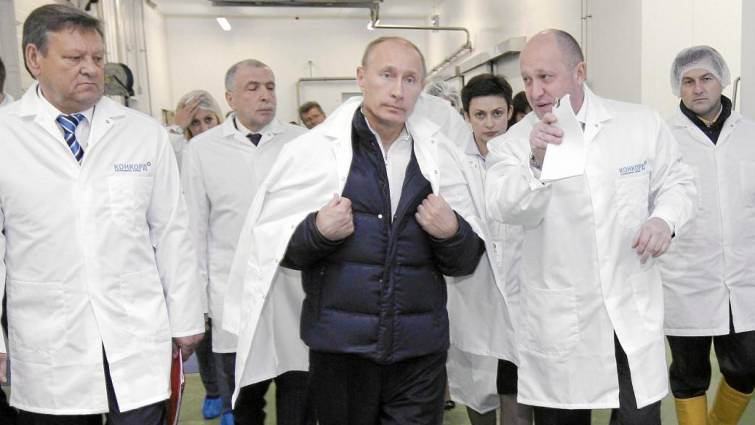
So as Al-Jazeera gave us ‘the meeting, however, has already been delayed multiple times as negotiations continue over the wording of the draft resolution‘ , we see that whilst people are trying to be clever about events more people will get killed. So yesterday (according to the AP) “Syrian government warplanes carried out a sixth day of airstrikes Friday in the rebel-held suburbs east of Damascus, killing 32 people, activists said, as the death toll from a week of bombardment soared over 400“, how many will it be today? The fact that according to several sources (Washington Post amongst them) we get: “the situation was complicated further by reports that Russian mercenaries had taken part in the attack and were among the dead“. You see, no one might cry about these mercenaries, but as they are basically not part of any army, they will kill first and consider asking questions later. More important, the mercenary firm Wagner, allegedly owned by Yevgeniy Prigozhin is reaching out in other directions too. He is linked to the Internet Research Agency (IRA) in St. Petersburg. He has been indicted (at https://www.justice.gov/file/1035477/download) for his part towards violating criminal laws with the intent to interfere “with U.S. elections and political processes“, according to the Justice Department. Some state (not too reliable sources) that they are now growing in making botnets, not to spread issues, but to collect data. So, even as he is connected, he is growing data, knowledge and opportunity on almost a daily basis.

How does that connect to Syria?

Apart from the money he makes on the mercenaries and their actions, he is now in a position where he can set the foundation to get access to all the Syrian national data on almost all levels, whilst having a comfortable place to start collecting data on everything on all the nations bordering Syria too. This is not some cake walk or just fun. When we consider the WP on this, we see: “Wagner first gained attention for its operations in 2014 in Ukraine, where mercenaries with the group — mostly military veterans and ultranationalists — were reported to be fighting alongside Russian-backed separatists in the eastern part of the country. The group was believed to have been led by Dmitry Utkin, who until 2013 had served in Russia’s foreign military intelligence agency, the GRU“, do you think that billionaires, especially Russian ones are in it for the ego? No, he wants to grow, grow fast and in every direction. At least two other sources give us “A former lieutenant colonel and brigade commander of the Spetsnaz GRU detachment. The 700th Independent Spetsnaz Detachment of the 2nd Independent Brigade of Russia’s Main Intelligence Directorate (Части и подразделения специального назначения (спецназ) Главного управления Генерального штаба Вооружённых сил Российской Федерации). These are not kids playing on the side of the road, these people tend to have very serious plans and when they are not connected to an official army they tend to get selfishly lucrative really fast.

That does matter, because professionals like that are not in it to kill civilians, yet they will kill whatever gets in their way or in the way of them completing their mission, so in this it matters what their mission is in all this.

There is a second part in all this and be aware that this is all pure speculation from my side. When we consider the Washington Post quote “Russian mercenaries had taken part in the attack and were among the dead — making it the deadliest U.S.-Russia clash since the Cold War“, so what if that is exactly what they want? What is a new cold war is their intent? As people are shouting and arranging all kinds of partially useless actions regarding 17 kids, in a nation that is basically beyond bankrupt, how much will it take to flame a new cold war, one where the US and NATO are on the roes due to lack of brainpower and resources. The technical advantage that the US and NATO had during the previous one is no longer there. You might remember stories of Russian men in ridiculous rain coats, having almost no knowledge of electronics. That time has passed and the US no longer has the options it used to have, whilst in addition they tied their own hands in several ways. At this point a cold war could end up being devastating to the west. In addition, when we are treated to both “The USS Michael Monsoor, the second and latest Zumwalt-class stealth destroyer, suffered an equipment failure that prevented the ship from conducting sea trials” as well as “It’s been more than a year since the Navy decided to cancel procurement of an expensive new ammunition for its Zumwalt-class destroyers, but the service is still pondering how to best replace the munition, a Navy official said Wednesday. In 2016, the Navy decided to stop buying the Long Range Land-Attack Projectile, or LRLAP, after discovering that its price had spiked to $800,000 per round. LRLAP was the only ammo developed specifically for the ship’s Advanced Gun System“. So not only are these ships dodgy (for now), they can’t afford the ammunition, it seems to me that (even though we know that the US navy is a lot larger) that we should see the developing issues as a worry. You see this all links back to Syria. Do you think that Russia is going to play ball when there is no need? A paper tiger is only scary for the time you do not know that it is merely a paper one. After that all bets are off and it is entirely possible that this is the gamble that resident Putin is currently making. If proven correct we will see all kinds of developments, not merely in Syria, but the Kurds will get more tank slamming by Turkey and the dangers of Iran v Saudi Arabia would become a likelihood too.

So back to Syria, as the WP gave us on Yevgeniy Prigozhin: ‘He now has a reputation as a man willing to do Russian President Vladimir Putin’s dirty work‘. I think that this is the cost of doing business. I think that there had been a clear plan in place, even as I do not agree with Alexey Khlebnikov, a political risk consultant and a Middle East expert at the Russian International Affairs Council. He calls this a “double-edged sword”. The risk is almost negligible for Russia, even as we see the quote “details have trickled out in embarrassing ways“, getting captured is not an embarrassment it is merely an inconvenience. It seems that Yevgeniy Prigozhin is the creative side, when you take a High value target like Dmitry Utkin you get something else, on his level a person does not get to walk away, there is a tactic in play and whilst we stare at certain parts we all forget that a man like that over 25 years has created its own network of people and skills. It could be that Wagner will grow faster because of opportunities, but in which direction? That is a part we can see when we realise that smiley face Dmitry is also CEO of Concord Management and Consulting. With these two gentleman owning 50% (actually more than that) into LLC Megaline, with Megaline receiving a large chunk of the capital construction contracts for the Russian military we see that link. When the dust settles, Assad will need to rebuild, and they will be the front player and possibly only consideration on a nation needing to be reconstructed. So now how weird are their actions? Both Yevgeniy Prigozhin and Dmitry Utkin are now perfectly placed to rake in billions and in that regard we get back to the options for the dying in Syria; they don’t get to have any. Whilst everyone is settling around clever text on how to word the phrase ‘cease-fire‘ in that timespan Damascus could be adequately be made devoid of life bringing the optional closure of the Syrian war with President Bashar Hafez al-Assad remaining in power. If only the US and NATO had actually acted in 2012, the picture might have been a lot different. Yet for now, up to yesterday 150 children, were killed in Ghouta, yes the loud actions on behalf of 17 school dead children from the Marjory Stoneman Douglas high school in Parkland, Florida makes a lot of sense in a global perspective, especially as we see the shouting and actions that are partially senseless and baseless, all emotional outrage whilst none of them are on the failings of the ATF (not due to their own accord) and its legislation.

Just like Federica Mogherini, the EU foreign policy chief as well as the letter Emmanuel Macron and Angela Merkel sent to Putin on Friday said the continuing attacks on civilian populations represented “clear violations of international humanitarian law”, all actions that look nice when covered by the media, yet in the light of the U.N. Security Council delayed a vote on a resolution demanding a 30-day humanitarian cease-fire across Syria until Saturday in hopes of closing a gap over the timing for a halt to fighting, that whilst we hear that “after six hours of negotiations, Kuwait’s U.N. Ambassador Mansour Al-Otaiba, the current council president, told reporters Friday evening that members ‘are so close’ to agreement, and negotiations are continuing“, so there will be more killing and more bombing and more actions for at least 12 more hours. So how many children will die in the next 12 hours and how ridiculous does the man with the yellow card look with the text “NRA stop killing our kids”, an act they never did, an act they would never approve of or support, are you starting to comprehend the insanity of it all?

internet_research_agency_indictment

4 Comments

Filed under Finance, Law, Media, Military, Politics

In continuation of views

Today is the third and possibly the last part in the Florida shooting articles. This part got here because of an article in the Washington Post. I reckon that those who did not read it should (at https://www.washingtonpost.com/world/why-school-shootings-are-so-rare-in-israel-where-guns-are-such-a-common-sight/2018/02/22/1fce546a-17e3-11e8-930c-45838ad0d77a_story.html). It gave me info that did not surprise me, but it was still nice to read. Did you know that shootings in schools in Israel are unheard of? In a place where you see guns and armed uniformed men on the streets, that this is the place where things go wrong. Yet, you would be incorrect. So when I reviewed some of the views I illustrated yesterday. It was a nice relief that some of my thoughts and speculations were proven correct. With: ““The guards are there for other reasons, mainly terrorism,” said Amos Shavit, spokesman for the Ministry of Education. He said the guards stationed at schools are under the authority of the police. In large cities, he said, the police and the local authority carry out security patrols around the educational institutions throughout the school day. There are no metal detectors or special door locks on classrooms. And, by policy, teachers are not armed“, it is all dealt with by professionals, as it should.

So as we see: “According to data from Israel’s Ministry of Internal Security, which registers all gun owners, about 260,000 Israelis, or about 3.5 percent of the population, have permits to carry firearms. Half of the permit holders are private citizens, and the others work for security firms” we see an optional clear case for better gun control, Israel is only slightly larger than New Jersey, the US being 450 times the size of Israel needs to be taken into account. Israel is close to the size of the Netherlands, another place not smitten with large space. Israel has 8.5 million people versus 325 million in the US. You think that this does not matter, but it does, especially when we consider people per square mile which is 320 people, a density 10 times higher than the US, you see people density has often been identified with crowd stresses and quick rising agitation levels. In all this, there are more factors, but these were the main ones and in that environment, school shootings are an event the Israeli children do not have to deal with. Then we see something that should wake us up. The Israeli population pretty much all get some form of military training and with “They are taught how to handle a weapon and how to respect a weapon,” Perry said. And, he said, “it is very, very hard to obtain a weapon in Israel.”” we see the part that matters. As I stated it in different ways here we see ‘how to respect a weapon‘. A weapon is for the most a tool, it serves a purpose, now some use it for shooting pieces of carton (targets), yet it is in its foundation a tool to end lives. It does not matter whether it is an animal or a person, when we use it; we are enabled to end the life of a target. A sword, a bayonet and a canon, all tools designed to kill; we need to respect that part. Now, we might use if for sport or for competition, but the foundation of the skill was to be able to end lives, in that it does not matter whether it was to stay alive, to protect your family or to protect others. We tend to walk around that part too often. We trivialise police officers at times as they carry their guns. But they were trained to kill dangers, to the lives of themselves and the lives of the civilians around them. Now, this does not mean that they shoot to kill, it merely means that they have the tool to do that, so the skill of aiming, the skill to properly use a firearm is increasingly important. They were trained with the purpose to protect lives, not to take them away. The article adds its views with “Residents of Tel Aviv, for example, are unlikely to receive gun licenses, whereas Israelis living in border areas or in the Jewish settlements in the West Bank, places where they could be targets for Palestinian militants, are more likely to be approved for gun licenses“. The final part is the bacon on the sandwich, but not part of the causes we see, or so I believe. With “her research showed that Israel ranks 81st in the world for per capita firearm ownership, with less than 1 in 10 Israelis owning firearms. The United States, with one firearm for every person, ranks first“, in this Janet Rosenbaum, an assistant professor of epidemiology at the School of Public Health at the State University of New York Downstate in Brooklyn was looking at the difference in homicide, but here we see the strain where I start to disagree. You see in social science views the USA has a flaw, a massive one and that is as I personally see the larger cause of it all. I have seen and witnessed Americans in action (and in non-action) in several walks of life. The entire problem starts in school, almost in primary school. The USA has had a forever growing stigma towards being first, being the best. Now, I am all for a competitive view and those winners are at times heralded, admired and idolised. I have no issue with that part, so as we see the movies and the news on how those ‘great’ football players get to have sex with whomever they want, whether the woman likes it of concedes to it, or not. This is seen in the Arizona Central and several other sources with: “Hamilton High School administrators knew of multiple allegations of sexual assault involving the Chandler school’s football players and repeatedly failed to notify authorities, according to information found in hundreds of pages of police documents released Thursday“. Not only does it happen, we see police reports that the authorities in school are condoning that behaviour. With the quote “Some students aware of the alleged sexual assaults did not appear to grasp the seriousness of the incidents, often using a joking tone about what they saw as a team initiation“, we see the unbelievable truth in how far the USA s failing its children. On the other side, we see those who fail to some extent those requirements of excellence, like any population will, but in the US those in the lowest 30%, especially if they are not athletes become legitimate targets, pariahs and outcasts. It does not matter how clever they are, they fail the social threshold and the athletic threshold and they become targets. This is the setting where the issue comes and it becomes even worse when these children are already receive some form of counselling or are on medication. The Columbine High School massacre, the Virginia Tech massacre, the Sandy Hook Elementary School shooting, and the Stoneman Douglas High School shooting all fit the bill to some extent. The last one is important, because it is the one odd duck out. We are shown degrees of isolation from and/or towards the perpetrators in the other ones, within the Stoneman Douglas High School, there is evidence that people had gone out of their way to include Nikolas Jacob Cruz within their community. The second adoptive parents after he lost his adoptive parents, shows that this community was pretty strong on inclusion. That is why the setting is weird.

I am not blaming mental health or medication on issues. Even if that was the case to the larger extent, I believe that the environmental pressures of being the best, being number one are causing way more damage than we are aware of. Actually, that is not correctly phrased. I believe that the stigma against those who cannot make the top levels is a lot more damaging. Now, in the end the perpetrators are the ones to blame, they decided to take the lives of others, yet there is a part in me that wonders whether social changes in the US would enable a much lower stressful and less combustible setting. I know that other nations have much stronger gun laws, yet Norway had to deal with the acts of Anders Behring Breivik in 2011. This does not compare to the school shootings, but the setting is that if Norway can get the unfathomable acts of a lone wolf to this degree, how much danger is the US in? You see, that is a long term issue and to resolve those dangers, we cannot merely point at the police department, the FBI and other players. It is becoming more and more important to change the board of the game and allow for larger changes that can be implemented. Both the shootings and the sex romps that are occurring in US High Schools and universities show evidence of this highly need change. And if that is not enough there are football coaches who dip their feet in the sexual waters and if they do not, in at least two cases their wives did.

We see more and more events like that make it to the courtrooms, there is still from various sources the alleged and likely issue that at least three times the known amount of victims, issues and events remain unreported. I believe these issues are directly linked to this all and even as the people want stricter gun control, there is no way of telling how long that takes, or how successful it will be in the US over the longer term. There is currently enough aftermath evidence that an environment where the pressure bar is lowered, a lot more people will not be in the stressful stage where their personality literally explodes in the faces of others not unlike a shotgun, in that I am personally close to absolutely certain. You see, during my law studies, I got to see loads of footage of the Columbine shooting, the Zero Hour Massacre at Columbine High (2004) gives a lot of facts and information that supports my view, in addition, further materials on YouTube (not the most reliable source) gives additional information that pushes the idea that social changes in US schools become more and more important. In this there are two additional views (read: movies) that count towards Columbine.  The two movies are Bowling for Columbine, the anti-gun movie by Michael Moore, and weirdly enough I’m not ashamed. In both we see the expected views on gun control and in I’m not ashamed we see the confirmation of bullying (not the central point of the movie though). Yet they both show something different in support. We see how Michael Moore gets the limelight in every way imaginable, whilst even Google allowed itself to be used in blocking the trailer for no less than 11 months, which gives added view that only some views in regards to these events are ‘tolerated‘. The papers gave the movie for various reasons mixed reviews. It is of course in the eyes of the beholder how a movie is seen and in that I am fine with that. There the LA Times gives us “a refreshing lack of moralizing here, and a welcome emphasis on accepting people for who they are“, it is an interesting view, especially in the view of social changes that the US desperately needs. Forbes also had good things to say and that is nice, some negativity was seen from the Guardian with “To use the senseless death of a school shooting victim to promote one’s warped political agenda is, to use a trendy term, deplorable“, I do not disagree that it is a valid view, yet as we can see, that is the actionable life of politicians as we have seen them in pretty much EVERY school shooting, so the Guardian was catering to the obvious here. The BBC gives us (at http://www.bbc.com/future/story/20180219-toxic-perfectionism-is-on-the-rise) that the age of Perfectionism has very dangerous downsides. They rightfully state “the thing about perfectionism. It takes no prisoners“, it merely enforces 1% success and 99% failure, which is a very dangerous setting and the US schooling system (actually most schooling systems in that regard) show how dangerous it is. In this it is the footballer Cristiano Ronaldo who gives us something much better. He strives for excellence, not perfection: ‘I am not a perfectionist, but I like to feel that things are done well‘, as stated in the BBC article. They also give us: “research shows that maladaptive attributes like beating yourself up for mistakes or feeling like you can’t live up to parental expectations make you more vulnerable to depression, some other studies have shown that ‘adaptive’ aspects like striving for achievement have no effect at all or may even protect you.” that part is actually the key in this. In my view, I refer to the Lord Baden Powell setting. Apart from him being the creator of the boy scouts. He gave us a setting to work with. He gave us “Leave this world a little better than when you found it”. It is a line that has been in my inner core for all of my life. I live by it because it does not require you to fix everything; it does not require you to reach for the unreachable. It merely tells you to do something realistic and in that it opposes perfectionism as perfectionism is utterly unrealistic. In that the US Army has always had a great line. With ‘Be all you can be!’ it opens the door for you to move forward in ways you can and it challenges you to never stop moving forward. That is a great setting for anyone to be in. Learn your entire life, learn more and more skills, and create your own abilities moving forward. It pushes a person, but pushes that person in a realistic achievable way.

It is education tempered through realism, some will go further than others, yet that is the reality of life. The dangers of perfectionism go way beyond normal standards and they are seen even more clearly in Japan where going back to school makes suicide statistics spike, there we see the dangers of perfectionism. Not doing your exam well and bullying when they perform poorly gives another view, not those lashing out decapitating students and teachers. No, they see it as a failure of self and a shame to their family and end their own lives. Some studies show that the suicide of those between 10-19 years is on the rise and the suicide rate in Japan is 60% higher than the global average, with one source stating 70 suicides a day. That gives additional rise to the dire need of changes, both the US and Japan shows the need for a different approach to education. Pressures and social needs are in the wrong segment of importance, whilst the need to score better and better is set unrealistically high in both nations and they are not alone. In the UK it seems that unrealistically high pass grades are needed to get into the better universities and the better faculties like Law and Medicine. The question becomes more pressing as getting to these places is almost too unrealistic on a young age, how can the youth ever be better prepared for a realistic contributing life if they are written off as not good enough long before the brain is at peak performance? To some extent we can see that athletic abilities can be seen earlier, yet the focus to train is gained often much later in life. Now, that does not mean that you can start to get into shape to become a quarterback at 25, whilst entering the NFL at 34. Yet oddly enough the brain has the ability to do just that for more than merely academic fields. In addition, this only happens in a positive environment, both elements are increasingly rarely seen in both Japanese and US schools, making the issue a growing one.

It is in those setting that it is equally important to dim the stresses that we see in schools and universities, especially as it is seen in the US. I am absolutely convinced that at least two of the four mentioned school massacres could have been prevented in a different social setting. I absolutely refuse to give any of the perpetrators a ‘free pass’ on what they did, they are accountable for their choices, but I do believe that an optional other path open to them could have resulted in a non-fatalities path. In equal measure the information as I have been able to read it gives little to no faith that more could have been done in the Stoneman Douglas High School shooting, too much ‘evidence’ had been shown from several sources that this would have happened no matter what, making the dropping of the ball squarely in the FBI corner (to some extent).

In the end there is one additional need to look at the NY Times. you see (at https://www.nytimes.com/2018/02/22/us/politics/trump-atf-nra.html) we see ‘In describing its own shortages, the A.T.F. says it remains unable to fulfil even basic regulatory responsibilities, including inspections of firearms dealers’, so apart from the loophole that I discussed yesterday, none of the administrations (the last four at the very least) have done ANYTHING AT ALL to give the ATF the teeth they needed to do something. So as all the media is crying like little bitches on how we need gun control, the German source yesterday and today the NY Times are the only ones giving us the spotlight that the ATF needs a budget twice the size it has now to start getting things done. So as an official at the Justice Department said “the administration was interviewing potential A.T.F. directors but did not know when that might result in a nomination”, which is nice to hear next to the additional fact that the ATF has been without permanent leadership 8 of the last 12 years. So when you see that, how hollow were the promises by former President Barack Obama? You do realise that ATF stands for Alcohol, Tobacco and Firearms. At present we might just call it the AT (Apsens Temperatio), formerly ATF. So even as they are, as stated by themselves under the jurisdiction of the Gun Control Act, National Firearms Act, Arms Export Control Act, Organized Crime Control Act of 1970 and other Federal firearms and explosives laws and regulations, they don’t have the resources to actually do that. Perhaps I should apply for a job there, you never know, with the shortages they have, I might just replace Byron Todd Jones as Director of the ATF by the time he retires in 2022.

Weirder things have happened!


1 Comment

Filed under Finance, Law, Media, Politics

SW2, not WW2

Is there a Syrian War 2 brewing? That was the initial thought I had when I got exposed to the ridiculous claims from Turkey this morning. There are two parts. the first comes from the Guardian (at https://www.theguardian.com/world/2018/feb/19/turkey-warns-assad-not-intervene-kurdish-enclave-afrin), the quote is “Turkey warned the Syrian government of Bashar al-Assad that it risked a military confrontation with Ankara if it intervened in an ongoing war in the Kurdish enclave of Afrin, in a further escalation of tensions that hint at the possible widening of an already complex conflict“, now, just to make sure you get this. Turkey invaded Syria for the alleged reason of coming to aid towards Assad, or perhaps merely to ‘fight ISIS‘ in a presentation attempt to silently start the second genocide, the genocide of the Kurdish people. So Turkey goes invades Syria and now states: “Turkey warned the Syrian government of Bashar al-Assad that it risked a military confrontation with Ankara if it intervened“, so how is optionally opposing an invader ‘intervening‘?

The second part comes from the BBC (at http://www.bbc.com/news/world-middle-east-43107013), where we see basically the same with ‘Afrin offensive: Turkey warns Syria against helping Kurds‘. So when we read “Deputy Prime Minister Bekir Bozdag said Turkey’s operations were going ahead as planned and it would be a “disaster” if Syrian troops were to intervene“, should we deduce that a failed introduction to genocide is a ‘disaster‘?

Even as we see the similarities, we see that the issue is larger than merely a scuffle between the Turks and the Kurds, the way we see the quotes and the way that they are reported give rise to the fact that there are other issues below the waterline. It is not merely semantics, it is the interaction that Turkey has been having with several nations gives that rise and the optional viewing of that should make plenty of people worried at the very least and decently nervous in the nominal setting of international relationships.

The BBC article ends with “President Recep Tayyip Erdogan told Russia’s Vladimir Putin that Damascus would face “consequences” if it struck a deal with the Kurds, CNN Turk reported on Monday“. So, Erdogan, President of Turkey, a person with not much diplomatic skills or powers outside of Turkey for that matter, is telling Putin….? Oh, sorry, I nearly lost my breakfast laughing myself into several layers of bellyaches. It is almost as impactful and powerful as me calling Alexander Bortnikov, telling him to give me access to all his data, or he is going to hear ‘stuff he will not like‘ (most likely me calling him a pussy). Yes, people like the President of the Russian Federation, or the director of the Federal Security Service of the Russian Federation (Федеральная служба безопасности Российской Федерации (ФСБ)) getting told by the likes of President Erdogan (or me for that matter) is something they should take extremely serious (sorry, second laughing attack, I will be back shortly). So, after I had my second laughing attack that lasted close to 611 seconds, I got back into my seat and decided to take another gander at a few parts. You see, the nice part of such short sighted actions is that it alienates the players Turkey actually desperately needs. Which in turn is making Iran more and more nervous, which is good news for several countries in the Middle East. The interesting part in all this that he BBC reported “During the course of the Syrian war, pro-government forces have largely avoided direct conflict with the YPG, but they have had sporadic clashes“, which now gives the optional food for thought that Syria might actually set some resources that way with the optional thought that they will not be targeting the YPG, because if we agree that direct conflict was never a real necessity, the Turkish forces changing that by sticking their short stick in a hornets nest, that part would be the greater threat to Syria, which now gets them into hot water is a few places and on several ways. In addition, it will also change the conversation that is going to happen in Kazakhstan in two weeks, giving more questions if there is still going to be a summit in Istanbul on Syria. The changing pressures are by no means a way to get things talked about and smoothed over. Even as Reuters gives us: “The three countries are working together to try to push the troubled Syrian peace process forward“, we need to also consider the mandate that Tehran gave to Foreign Minister Mohammad Javad Zarif as the outbursts from President Recep Tayyip Erdoğan is pushing its own agenda whilst at the same time causing chaos towards the plans that Iran seemed to be having in all this, his self-serving hatred of Kurdistan is making the creation of coalitions next to impossible. With the Netherlands adding fuel to the fire of Turkish non-diplomacy, as they have now voted to recognise the Armenian genocide of 1915, pressures are growing there too, at a time when Turkey needed every European nation to be on his side regarding the non-realistic approach to becoming an EU nation, we see that the gap is increasing beyond the chance of that ever becoming a reality. The Turkish parties kicking every hornets nest in the Middle East is not very useful. On the other hand, Turkey could decide after Kicking both the US and Russia, to see if this level of craziness is useful in Beijing, which it is unlikely to be unless they open up all kinds of open trade paths which might actually be a lot less interesting to Turkey, especially at a time when Turkey is trying to get increased Cherry exports to China in time for the next harvest, the need to grow their export which according to some is in excess of 80,000 tons, they are now in a stage where they can no longer afford to get on anyone else’s wrong side, which must be a novel experience for the Turkish Diplomatic Corps.

All this whilst the issues in Greece and Cyprus are at present still unresolved, with the Ekathimerini making a connection between the report published on March 28, 1897 in Empros newspaper where we get: “referred to a foreign diplomat who described Greeks’ behaviour in relation to Turkey as that of a dog that barks, but does not bite. We all know what followed, but we still tend to forget how bad it is in international affairs when you bark, but no one really feels any threat“, and the escalations on gas resources at present, that whilst there is a certain logic to make the statement, especially when we consider Europe, NATO and the UN is seen in relation to: “where tensions broke out between Greece and Turkey, these organizations never really offered anything more than carefully worded statements“, that is the situation when we rely on the paper tiger to get things done. So when we read: “Athens must be very careful in weighing its next moves. It’s a balance of terror. If it shows compliancy, one can’t be certain where the other side will stop“, whilst we all know perfectly well that Ankara will not stop until forcefully halted. As the article ends with the absence of emotion in the Turkish-Greek debates, the issue is that the theatre is getting prepared to get very emotional from more than one side. Turkey almost has no options left after kicking all the wrong shins. In my view, when Syria escalates and escalates in one wrong direction we will get a flood of orchestrated news (whilst journalists have been sentenced to life in prison) and from there onwards it becomes a long winded marketing campaign, because Turkey seems to be realising that the US, the UN and Europe are all about statements and statements alone. Which is a dangerous game as it could press towards a second Syrian war where the Syrian Kurdish area could get annexed into Turkey and its population would optionally somehow mysteriously vanish.

So, how should we see the optional threat of a second Syrian war? that is hard to see, with too many high level meetings, with the latest addition being one with the Russian President Vladimir Putin, Turkish President Recep Tayyip Erdoğan and Iranian President Hassan Rouhani to meet in April in Turkey, there is no telling what it will actually be about. Even as we have seen from enough sources that it will be about Syria, there is in my personal view absolutely no way that it will just be about Syria, especially as the meetings are going to be behind closed doors. That view is made stronger when we consider the news merely a few days ago when Kirill Dmitriev, the chief executive of the Russian Direct Investment Fund (RDIF), told CNBC “We’re at the breaking point in positive territory of this relationship … We really embarked on an amazing positive journey“, that in light of Iranian issues and the fact that President Putin’s face is on the homepage of the RFID gives enough indication that nothing happens there without the explicit approval from more than one key member of the Kremlin and there lies the complication, The meeting around Syria is set in a stage where all three have separate agenda’s. Turkey has the Kurdistan region, Russia has a truckload of billions it can win with Saudi Arabia and Iran is extremely opposing anything pro-Saudi Arabia, as well as having a few additional issues regarding Yemen, who would really like Russia to become a mediator here, so the Syrian talks will come with close to half a dozen unscheduled stress points. So, when we see these issues in the lights that can be confirmed, will Syria see more or less stability?

Less stability is not a given, but the premise of it happening is actually more realistic than I would have foreseen less than a year ago.


Leave a comment

Filed under Media, Military, Politics

They had been warned

Only hours ago, the NY Times gives us a part that wants to makes me want to go ‘I told you so!‘, but I will not. With ‘The U.N.’s Uncomfortable Truths About Iran‘, Nikki Haley gives us the goods from a report published a week ago (at https://www.nytimes.com/2018/02/17/opinion/nikki-haley-united-nations-iran.html). The quote: “A panel of experts found that Iran is violating a United Nations weapons embargo — specifically, that missiles fired by Yemen’s Houthi rebels into Saudi Arabia last year were made in Iran“, part of these issues I raised in ‘Disney’s Yemeni Cricket‘ (at https://lawlordtobe.com/2018/02/04/disneys-yemeni-cricket/) two weeks ago. The part I had not looked at is seen in Nikki’s article. She captures it perfectly in: “The mullahs in Iran don’t want to hear this news, because it proves Iran is violating its international agreement. Die-hard defenders of the Iran nuclear deal don’t want to hear it because it proves, once again, that the Iranian regime can’t be trusted. And some members of the United Nations don’t want to hear it because it is further proof that Iran is defying Security Council resolutions, and the pressure will be on the U.N. to do something about it“. Yet, the UN is not acting, is it? The Guardian on Jan 11th gives rise to the ‘need’ that the US is not tearing up the Iranian nuclear deal. With “the three EU signatories to the deal insisted that Iran was respecting the agreement signed in 2015” they are making a reference to the UK, France and Germany. The fact that we see: “Federica Mogherini, said the deal, denounced by Trump as the worst ever made, had in reality “made the world safer and prevented a potential nuclear arms race in the region”“, which might hold some truth in regards to the fact that it was the worst deal, but that is pretty much it. In addition she gives us “any doubts the EU harboured over Iran’s development of ballistic missiles, or its overall policy of interference across the Middle East, were separate from the nuclear deal – also known as the JCPOA“. Now the part in the Guardian happened a week after the actual attack. I think that the entire event is a sham. I think that the three nations had been clearly briefed on the entire Houthi matter, as well as the fact that the three parts that Nikki Haley gives us is on par, the EU is merely in denial, because after all the wasteful blunders and failures they had signed up for, another failure is a lot more than any of the three could handle. The intelligence services did what they needed to do, but here it is again short-sighted side in all this, whilst they remain nationally protective, for now that is.

So is that true?

Well that is the issue. Apart from e not having the original texts, there are a few issues that Nikki is completely correct in, yet in the end she is not (not completely at least). When we look at United Nations Security Council Resolution 1929, we see “The resolution updates and adds to the list of technical items related to nuclear and missile proliferation that are banned for transfer to and from Iran“, which makes the view of Nikki Haley correct, then there is “Iran is subject to a new regime for inspection of suspicious cargo to detect and stop Iran’s smuggling. States should inspect any vessel on their territory suspected of carrying prohibited cargo, including banned conventional arms or sensitive nuclear or missile items. States are also expected to cooperate in such inspections on the high seas“, so is this enough, can we state that the arming of Houthi’s in Yemen is a ‘smuggling operation’, or ‘a classified shipment’ in support of Houthi’s? You see, the classification is everything in this limelight.

The resolution holds a lot more, yet most of that is directed at shipments to Iran and/or nuclear materials. Yet now we get to United Nations Security Council Resolution 2231, which makes the view of Nikki Haley wrong. Here we see: “Resolution 2231 calls for Iran to refrain from activity related to nuclear-capable missiles (“Iran is called upon not to undertake any activity related to ballistic missiles designed to be capable of delivering nuclear weapons, including launches using such ballistic missile technology“, however, the Deutsche Welle give us: “according to diplomats the language is not legally binding and cannot be enforced with punitive measures“, so basically, Nikki is in spirit very correct, yet in black letter law, there is no clarity and more important, no punitive option. In all this, we see that top EU diplomat, Federica Mogherini was correct.

In the spirit of it all, Iran seems to become a bigger player and a much larger danger to any level of Middle Eastern stability. Nikki ends the article with “Today, armed with this evidence, we have the chance to rein in Iran’s behavior and demand that it live up to its international agreements that discourage conflict. But if action is not taken, then someday soon, when innocent Saudi civilians are killed by Iranian weapons, the chance for peace will be lost.

I am not sure of that, you see, just like Turkey, Iran will do whatever it pleases and the US knows that, as did the three players (UK, France and Germany), who are desperately trying to hold on the JCPOA (Joint Comprehensive Plan of Action) like it is the golden fleece.

However, only 4 hours ago Reuters treats us to: “Britain, the United States and France want the United Nations Security Council to condemn Iran for failing to stop its ballistic missiles from falling into the hands of Yemen’s Houthi group and commit to take action over the sanctions violations, according to a draft resolution seen by Reuters“, with “The U.N. Security Council has banned the supply of weapons to Houthi leaders and “those acting on their behalf or at their direction.” It can also blacklist individuals and entities for threatening the peace and stability of Yemen or hindering aid access” we see the other part the Nikki mentioned and here she is proven right. Even as Iran claims that it is fabricated, there is enough evidence, that the parts are indeed from Iranian missiles, which invalidates their side in all this. The most striking part is the part that both Nikki Haley and Reuters are giving us and that part seems to be ignored by too many. The mention of: “Some members of the United Nations don’t want to hear it because it is further proof that Iran is defying Security Council resolutions, and the pressure will be on the U.N. to do something about it” is a much larger issue. Is it because they are unwilling to act, or has the coin toppled in the many outstanding issues in play and the UN is now unable to do anything?

That part is more important, because that means that the UN has no longer options to set issues against rogue nations like Iran, it could be a renewed signal for North Korea to do whatever it pleases as well and that could give more worries regarding stability in Far East Asia as well.

The question becomes can the situation be diffused? Should Iran comply and seize all missile shipments, it will change the Houthi field. They will not win (they never could) but a larger consideration to remove Houthi forces and start larger humanitarian aid would become increasingly more realistic. The bad side is that the Houthi’s would go underground so the humanitarian aid groups would have to deal with sabotage and armed strikes on a daily basis if no green zone can be established. That part is also no longer a real issue as we got only a few days ago that civilian life in Aden is safe, stable and calm, with all signs of life returning to normal, almost three years after diplomats and UN staff fled Aden. Saudi Ambassador to Yemen Mohammad Al Jabir also mentioned that recent demands made by a single social strait, which later led to clashes, have been calmed and resolved. We get this from the Asharq Al-Awsat Newspaper (at https://aawsat.com/english/home/article/1170916/saudi-ambassador-yemen-says-arab-coalition-proved-efficiency-resolving-aden), the issue now becomes, will Iran back off, or continue in its actions to remove stability from the Middle East, that alone gives support to Nikki Haley and her view regarding Iran, If she is proving correct and Iran remains on the path they are now, we should consider that soon enough, the JCPOA will not be worth the paper it was printed on, because if Iran can play games to this extent, there will be absolutely no guarantee that Iran will not break word and move on their path to enrich Uranium, I have no doubt in that regard, the issue has been diminished to a mere when they will start, there is no longer an ‘if’ in the matter.

In my view, these matters are only increasing stresses and pressures between Israel and Iran, they were never cordial, but now they are at an all-time high on the volatility aggressive response scale and that is mainly due to the Syrian issues in play. This now gives more and more rise to the dangers of escalations and the moment this happens all bets are off. The Guardian gives us: “Emboldened by a belief that Assad is winning, Iran is turning its eyes, and guns, on Israel – or so Israeli leaders believe. Their “red lines” – forbidding a permanent Iranian military presence in Syria and the transfer of advanced weapons to Hezbollah – are being ignored”, Another source gave us much earlier (November 2016) that “the Chief of Staff of the Iranian armed forces announced to commanders of the Iranian fleet that Iran may establish naval bases in the future far from its shores”, which was Major general Mohammad Bagheri at that point, in that address both Syria and Yemen were raised as options. Now, if this is happens in Syria the IDF would reacts and Iran will plunge the Middle East in another war, if it is in Yemen, there is every indication that this will set off the legitimate Yemeni government as well as Saudi Arabia optionally starting a war with those players, giving again full support to the views Nikki Haley gave earlier, more important, at that point any UN representative avoiding that discussion better give up their seat quick and proper as the fallout of that discussion will impact the confidence levels of the UN on an almost global scale and it again would open the door for North Korea to do whatever it pleases. A scenario that roughly 98.4% of the UN nations who are currently part of the UN will not be too happy about either.

As I personally see it, too many issues have become interconnected, it has become a mess that several nations want to steer clear off, they want to ignore it and/or they remain in denial. It would make for an excellent front page though, when the moment comes and we get to read ‘UN in denial of Iranian actions’, how will you react?


Leave a comment

Filed under Law, Media, Military, Politics

That pathetic sign

The guardian gives us the news with ‘Grieving Florida community pleads for end to gun carnage after mass shooting‘ (at https://www.theguardian.com/us-news/2018/feb/15/florida-shooting-suspect-charged-questions-nikolas-cruz), actually the news is not new. They have been on top of it since it happened just like any decent news agency would. It was the image this morning, the image of a man holding a sign ‘NRA please stop killing our kids‘ that set me off. A sign so pathetic that I had to speak out! You see, the National Rifle Association does not kill children, people kill children! It is a simple and basic concept. If anything, I would optionally be a member of the NRA if I was in America. You see, I love rifles. The army trained me (and trained me well), I have been a member of the shooters association for a decade and if it had been a possibility, I would have been a hunter too.

Why was I not?

You see, I grew up in the Netherlands. I got some of the highest scores when I was an active shooter and the club I was a member of, were equally driven to excellence. On several events we could have forgone showing up and still end up with the annual cup. Now, I was by no means the best shooter, but our scores put all others merely in the shadow of our scores. We were all finely coached and aware of the fire arms law (which is a lot more constricting than the US, UK or Australian laws will ever be). A rifle is a tool, merely a tool and that is how it is to be used, whether we use a fire arm for target shooting, hunting or other needs, and as for the hunting part. I never really hunted like others; you see the Netherlands is not really a hunting country. It is the size of New Jersey with over 17 million people, so even if I went to the most remote part of the Netherlands and shoot a bullet in a random direction, there is still a chance that I would accidently hit a person. So those who are into hunting will go to France, Sweden or Germany. In this, I myself have a code, if you hunt, only hunt what you will eat! If that is not your goal then you become no more than a basic wannabe killer, and who needs those to be around? So if there would be hunting for me, I would do it in Sweden, because I do love my Bambi burgers, venison is the good life for me! So this is about me, which in light of all this is important.

So back to that pathetic sign!

I understand that parents and direct friends will be angry, they are driven by emotion. I get that, the man with the sign is merely seen by me as a man pointing a finger in the wrong direction, optionally intentionally doing so.

When you see some of the articles, you can see that this is a person with anger issues, with other issues and if he did not have a rifle, he would have acted out with pipe bombs or something similar. The ABC gives us: “Chad Williams, 18, a senior student at the school, said Mr Cruz would set off the fire alarm, day after day, and got expelled in the grade 8. More recently, Mr Williams saw Mr Cruz carrying several publications about guns when they ran into each other at the high school“. My issue here is that I had at times the Guns and Ammo a few times when I was a lot younger, does that make me a danger issue? OK, I don’t remember ever setting of the fire alarm, yet that shows us a person with perhaps some kind of an attention disorder, we can equally opt that he was some kind of pranker with a lack of imagination, or merely a person trying to skip classes regularly. None of this breathes school massacre initiator. So as we see the part from Senator Bill Nelson as briefed by the FBI: “He said the shooter wore a gas mask as he stalked into the school carrying a rifle, ammunition cartridges and smoke grenades, then pulled a fire alarm, prompting students and staff to pour from their classrooms into hallways“, now from the previous part to the part now (that is not being questioned by me), is still a part in the middle and that is the part that counts. Nobody and I state again nobody suddenly starts doing that, something set him off and it was not an in the moment thing. He was prepared, had smoke grenades, additional cartridges, additional ammunition and a gas mask. So he had made preparations, so there are two parts missing, and we can accept that they might be missing for now. So let’s keep on checking the sources.

CNN gives us a little more, especially the part from attorney Jim Lewis. He gives us: “The family took Cruz in last year after his adoptive mother died. Cruz was depressed, Lewis said. The family’s son knew Cruz, so they opened their home, got him into a GED class and helped him get a job at a Dollar Tree“, this is a reference to the family too him in after he lost his adaptive mother died. So he was receiving signals that people around him cared. It also leaves me with additional question on how he got the weapons and where from. It was not merely the depression, we also get: “Cruz had shown him guns, and other students say they worried he was violent“, where were these shown to them? It seems to me that this is a clear red flag, now the kids who it was shown too is not to blame, but that signal should have been passed on to others. The article (at https://edition.cnn.com/2018/02/14/us/nikolas-cruz-florida-shooting-suspect) ends with: ““They care about this kid. They took him into the home,” the attorney said, “but, as the mother told me, if they had any inkling … that this kid was capable of something like this, they never would’ve brought him into their home.”“, a response that makes sense and as we realise that he was not the only kid in that family, there is even more cause for concern, because there are several clear indications that he was hiding it all from everyone, which gives (from my non-medical insights) cause for concern as he seemed to have deeper levels of paranoia.

Insider news (at http://www.thisisinsider.com/florida-shooter-nikolas-cruz-bought-ar-15-legally-2018-2), gives us a little more. When we read “Cruz bought the semi-automatic rifle about a year ago, and law enforcement agents said it was done legally“, yet the timeline is now an issue. The events happened around the time his adoptive mother died, even as we accept that every person is innocent until proven guilty, the data should have raised additional flags, the question is whether the police have these kinds of data or authority to get them. If we accept the red flags as were admitted to be the case earlier. CNN had given us “Cruz had a gun. The family knew that, but they had established rules. He had to keep it in a lockbox in his room. Cruz had the key to the lockbox“, which is fair enough. However, in the beginning it gives: “Before he allegedly committed one of the worst mass shootings in US history at a Parkland, Florida, high school on Wednesday, police officials say Cruz wrote social media posts so threatening he was twice reported to the FBI” the two show the picture, no matter how innocent, the second quote should have had someone look into the data, showing he had a rifle and it was purchased around the time his mother died. This data should have been readily available. The death of his mum as public record, the purchase of the rifle as they should be recorded together with the background check and the red flag could have given the FBI the signal to give that data to local police forces to investigate. It is actually that simple!

The fact that these end up being non actions is for others to look into, yet the one thing that was stupid is to merely blame the NRA. It would be like me slamming a basketball into someone’s face until they die and blaming the NBA for showing games on TV, as I see it pointless, ludicrous and utterly stupid.

Yet we are still left with the notion on the trigger. Even as he (allegedly) went on social media to become a “professional school shooter“, the act of seeking attention in violence and chaos was set off somehow, a rage, mistreated, some suggest jilted love, whilst the last one would make me sad, and some might get angry. I am not sure what set him off, but from that moment there would be the FBI notion that he started his preparations and the outburst in the school might be him seeking attention, the fact that he allowed himself to be captured alive could be indicative of that (but I is no shrink, so I is not knowing for certain).

It is actually Fox News (at http://www.foxnews.com/us/2018/02/15/nikolas-cruz-school-shooter-comment-reported-to-fbi-months-ago-vlogger-says.html), that gives us some parts that were reflected in the previous articles, yet they fly with the parts focused on it. The title ‘Nikolas Cruz ‘school shooter’ comment reported to FBI months ago, vlogger says‘, gives weight to the view I had regarding the available data, yet they also give us: “After conducting database reviews, however, the FBI said it could not identify the user who made the comment a part that is new. If that is truly the case than it means that Nikolas Cruz had done above basic things to remain ‘less traceable‘, with “Ben Bennight said he reported a comment made by user Nikolas Cruz that stated “I’m going to be a professional school shooter.”” and the fact that it was on YouTube and given to the FBI, the fact that this profile was made with his actual name does not make it easier, but it gives rise that a few more facts should have been available to the FBI as well as to Google, so there is a system flaw here. So, Bennight, a Mississippi bail bondsman did the right thing, reported it and the FBI was there the next day. In this my question becomes, why give that quote to a bail bondsman? It seems to be a cry for attention, but was it asked or shouted in the right direction?

The Fox News article shows that the FBI reacted and acted as far as they could, the question becomes why parts were missed. I am not claiming it was intentionally so, I am questioning how Nikolas Cruz, who seems to have been seeking attention, was not higher on the list to be found. If I had skip traced the Google account, how far would I have gotten? Was there a Google+ account? What else had he watched; and who else was connected to him? Could the FBI have asked Google the data on what interactions the ‘Nikolas Cruz‘ account could have made? So, when we get to ‘the right to privacy‘, we need to look back at the man holding the ridiculous sign blaming the NRA. He wanted his right to privacy and he got it, along with all the other Americans and that also got 17 people killed. Is it not interesting that this part is not shown anywhere on the media? It seems so much fun to point and blame, to go after the NRA, in this case making a case for ‘white supremacist referencing‘, but there too there was cooperation. Even as I am not approving of white supremacists, as they all tend to be racists in the first degree, yet I want to know more and a local news station gives us more on the Republic of Florida group (at https://www.local10.com/news/parkland-school-shooting/what-is-the-republic-of-florida-militia), they a start with the 10 codes that they need to obey. The part that got to me was seen in the second code. With ‘The group’s site states that members can consider people of other races allies, but they must not “sexually mix with them or pretend that we have no differences.”‘, I see something I had not expected, they seem to not be focussing on hate, but on finding themselves better than others, which is a foundation of white supremacy, but most non-Americans have only seen what some call white-power in league of hatred towards others. It ends with “ROF has members in north and south Florida and “borrows paramilitary concepts from the anti-government extremist militia movement.”“, so there is no interview, no captions or talks to other members. It seems to me that the foundation of the ROF is to grow as a political party. This would require more members, yet their setup is not openly hatred based, so over time we will see the name ROF pop up more often. The article also links to Florida Governor Rick Scott stating that ‘everything is on the table’, you see he cannot alienate the NRA, but something has to happen, and there is too much emotion on it all. In my view he needs to look at the data captures, the data available and the missing data in all this, more important as signs were given that the FBI knew long in advancement, there will be questions on how this was not stopped in time. Even as the Republican is getting ready to go up against Democrat Senator Bill Nelson, we need to be cautious of any politician at this stage, with upcoming midterms we need to be aware that events will be misrepresented to a much larger degree and any issue will be deflected under the guise of ‘miscommunication‘, yet that is just my personal view in all this.

And in all this there is still the given that there was nothing wrong with the people of Florida in all this, the fact that two teachers, Football coach Aaron Feis and Geography teacher Scott Beigel as they decided to act as human shields trying to protect the students. I find that important as there is more and more evidence that the school, the adoptive parents all show a level of care that is more outspoken than we usually see. So in my eyes the people surrounding Nikolas Cruz never failed Nikolas Cruz, Nikolas Cruz failed them all, no matter how his mindset was or how he got there. there is an abundance of shown care that gives voice to the fact that to some extent the system alone is left with a degree of blame, not the NRA, not the ROF, not the school or their teachers, in the end Nikolas Cruz could have been able to prevent it all by telling someone ‘I have a problem!‘, he alone as an ‘adult’ decided not to do that.


Leave a comment

Filed under IT, Law, Media, Politics

Racing to last place

Even though it is less than 24 hours since my last story that involved the CPS, it is equally less than 6 hours since the Guardian gave us ‘Police outsource digital forensic work to unaccredited labs‘ (at https://www.theguardian.com/uk-news/2018/feb/12/police-outsource-digital-forensic-work-to-unaccredited-labs). It is here that Hannah Devlin informs us of the issues that might plague the courts over the next 2 years. She decides to start strong with the subtitle ‘Market for data analysis called a ‘race to the bottom’, with trials failing because of evidence issues‘ and that is not all. Her article gets stronger paragraph by paragraph. I raised some of these issues yesterday, but that was in general before I even touched on the outsourcing issues. She removes all brakes with the quote: “Gillian Tully, the government’s forensic science regulator, said there is “no excuse” for police forces to continue to use unaccredited providers. “It’s clearly of concern when contracts are being placed with providers that are not compliant,” she said“. Hannah is right, there is a lot wrong at this particular moment in time. And with “The Met outsources digital forensics provision to a defence technology company, called Mass, which subcontracts casework to other private companies, some of which are unaccredited. City of London Police uses six external providers, three of which are not accredited” we see two additional issues. The first is that when a contractor decides to subcontract, they will only do that whilst there is still a profit, so the costing of this endeavour will, once highlighted make matters worse for the CPS. As it is crying on resources, we see outsourcing of outsourced materials. The second issue is that the chain of evidence is now all over the place, which could endanger the privacy of the accused, the victim and possible give additional cause for concern that the course of justice could be in theory end up being perverted in more than one way. This must be the ultimate wet dream for Rupert Murdoch, all that optional information without having to hack mobile phones. The call for an immediate public inquiry in this matter seems almost unavoidable. I think that even without a ‘digital forensic degree‘ the fact that I saw a failing within 5 minutes of reading certain matters in R v Allan is only juicing the frenzy for hard draconian actions in all this. Hannah is completely correct when she states: “In the past decade, digital forensics has evolved from a niche capability to a central element in the investigation of almost every serious crime. The electronic footprint left by suspects can help rapidly establish alibis, identify accomplices and expose spurious claims“, setting is fuelled further that it was not only on disclosure, the joint review gave me clear thought on the lack of actual investigation into the basic connections. That part took me LESS than 300 seconds; or alternatively less than 5 minutes for those less interested in precision. So when we see the BBC article (at http://www.bbc.com/news/uk-42417553) which gives us: “A computer disk containing 40,000 messages revealed the alleged victim had pestered him for ‘casual sex’“, we need to realise that checking text messages is done by using the most simple of computer find actions through <CTRL>-F and enter the place of transmission (phone number or identity) would have given the investigation the clue that something was amiss and that is something any IT technician or entry level helpdesk support representative could have done in under a minute, so when Hannah Devlin is implying that something is wrong she is not kidding, she is basically being slightly too diplomatic (a flaw I am fortunately not gifted with). This situation is almost like 30 people walking in on a man sledgehammering another person to death in full view of an audience of 30, and one of them states: “You might require legal representation“. Yup! That would be regarded as the quote of the year!

The article also shows an issue with the view of criminal barrister Andrew Keogh, who gives us: ““You’d be led to believe that there’s some magic in this accreditation and that if you’re not accredited you’re not good,” said Andrew Keogh, a criminal barrister based in Wigan and a visiting fellow at the University of Northumbria. “That’s not true at all.”“, actually, my learnered friend would be wrong in more than one way. You see that unaccredited office is simply ‘not good enough‘, because being ‘good enough’ is ascertained by the accreditation. Feel free to check with the Rt Hon the Baroness Tessa Blackstone on accreditation by the Bar Standards Board and ask whether there is any validity of hiring any legal counsel to represent you in a criminal matter who is not accredited by the Bar Standards Board.

So his view of ‘if you’re not accredited you’re not good’ might sound true, but it is not about being ‘good’, it is about being ‘good enough‘. The commercial sector has all kinds of accreditation, some are as one might think, a ‘load of bollocks‘, and some are essential for keeping afloat. It might merely be my personal view, but being accredited before being allowed anywhere near a life changing situation seems really important to me. Would you trust the first passer-by to use a non-automated defibrillator on you? I reckon that the situation that puts you in prison for life (or merely 8-15 years) requires to be handled by a person who has been checked for having the right qualifications and knowledge of how to deal with evidence. Call me old-fashioned that way, that just how I roll.

So basically I am in line with Norman Lamb who gives us: “The whole fragility of the market and what happens to samples that are suddenly in insolvency, we can’t mess around with this, it goes to the heart of people’s rights as citizens“, so the chair of the science and technology select committee (the person sitting on it) states that there is a flaw in the current tendering and it is leaving the sector vulnerable. I think that it in equal measure endangers the people accused and also the optional victims in all this. So when we consider that there is now evidence that Liam Allan (now 22) has been on bail for almost 2 years will have suing nature with the Metropolitan Police. Can we blame him? In addition, as we might feel for the woman connected to this, the stigma will haunt both. The messages shows him to be allegedly innocent (I am stating alleged, because I never saw the actual messages) and on the other hand we have a case on non-repudiation, because is there evidence that she actually send those messages? That part I can understand as I have had a few messages (from an unmentioned non linked source) where I was offered to ‘fuck her‘ whilst I know she had never had any interest in me in that way (or any other way for that matter). It took less than 5 seconds to realise that someone used her mobile trying to be ‘funny’. The entire forensic screw up gives, again, a wrong light to parties and it could have been prevented, a 2 year mess that could have been largely diffused in less than 2 hours. It now gives both the stigma that could have been avoided as well, and as we read that this work is done by unaccredited companies and people makes it an infuriating one because there are hundreds of people who are hoping to get justice through their day in court and they will be waiting for an additional longer time to get there.

And that is not all, the CPS mad it even worse with the statement: “it was decided that there was no longer a realistic prospect of conviction“, which in some measure implies that he was the man ‘who got away with it‘ and that is optionally a separate level of failure. That too came from the BBC in December 2017. So, even as we were given the ‘casual sex requests’ part on one side that does not prove that the woman in question was giving consent when they met. Because digital forensics failed, the stigma will remain and in addition they are empowering events where victims grow less and less certain that they will receive justice or get the protection that these victims are entitled to. That is a failing beyond merely the forensic side and that makes the entire mess even a lot larger than merely the academic view of accreditation.

Yet beyond Andrew Keogh, there is another view. With “Others dispute whether the accreditation system, widely used to assess DNA and toxicology labs, is readily applicable to digital work” we need to realise that this is a bigger basket of worms. One field of science is not the other one and the digital science part has been and will remain in motion for years to come, which also gives more considerations to the digital forensics field. Even as we can agree that there are basic needs, the fact that mobile technologies alone are in transit and in an in-usage evolution spiral, which means that the technology is evolving whilst the technology is used, so there are more issues even below the surface. You have to merely look at the Android and IOS updates a user goes through on a weekly basis to see that there are constant changes. The dangers are that these changes have two sides, the parts we see and the parts we do not see. The second one includes data streams and as these streams optionally change (or have additional digital parameters), there are moments when data is wrong, or better stated wrongly set. To view this I will give you two quotes. The first was: “Google is adding a real-time location sharing function to Google Maps that can be very useful. It can also be restrictive and annoying or, in a worst-case scenario, potentially abusive and controlling“, the second one is: “When we bought our house in 2011, Google maps placed it 1.5 miles south of the actual location“. So important that these are two different quotes, not related to one another. But the essence is that the mobile could have optionally given information that a mail was send from ‘another’ location given the perpetrator a ‘false’ alibi. That error could be the vital part in a defence setting a perpetrator wrongfully free. So in that one instance we see that accreditation is essential and in the second part that there is a supporting side that the DNA and toxicology accreditation might not be (completely) correct for digital accreditation. Without knowing more it is hard to completely agree with the given dispute, but it is clear that here is a possible agreement on that side.

So you would rightfully be left with the question, how anyone in this entire chain of organisations decided to make the call to just outsource it all and how those not passing any quality testing would have been allowed near the evidence in the first place. The implied issues as we see the articles from the BBC, the Guardian and the Independent give a rise to concerns all over the field, not in the least with the victims related to this. You see in light of the transgressor and the victims, the person being the victim in the end is not a given and raises the issue even further. If I can add a reasonable doubt to these cases, how far could I get, without the accreditation to add reasonable doubt to any murder case that relies on digital evidence? In the R v Allan case, I merely needed two minutes and knowledge on how to use an ASCII editor, what happens when a murder case gives me the digital data and optional setting of time and location? The ‘opportunity’ to add reasonable doubt because a lot of this data has no non-repudiation will add to the mountain of reasonable doubt that would add to a long list of acquittals, that is before any barrister can raise the lack of accreditation of the people processing the digital evidence in the first case. And these are all matters that happen before someone wants a proper list of decisions regarding the rules of outsourcing whilst looking at the documentations from the Metropolitan Police, the CPS and the DPP. It is pure speculation on my side, but I reckon that the list of issues would grow even beyond the scope I can see at present. You see, part of this is seen in the BBC article (at http://www.bbc.com/news/uk-england-derbyshire-42453405). Here we read: “Judges heard police asked the woman to retrieve Facebook messages that they had exchanged. Three pages of messages had been printed and the woman, who cannot be identified, told jurors she had deleted some to free up storage space“. I have an issue with that part, because of the setting. In the first how many messages were deleted? What space was freed? I find the entire matter very debatable, especially as something that I noticed almost immediately, that part took the CPS and parties 4.5 year to figure out? OK, it happened 4.5 year earlier which is not the same thing, but the issue stands. How many cases have been bungled like that and what happens when the courts start to overturn murder cases because there is an issue with the digital evidence? Even if the digital evidence was not key; the chance of additional cause and effects could potentially be seen when there are retrials and they could give issues to a lot more damage. Consider the partial quote “jurors at the trial had been given an “edited and misleading” picture“, in a murder case that will have far reaching consequences.

I feel certain that the end of these events have not been reached and I reckon it will take the CPS several months to realise the full impact of all of this, which would be another worry altogether, because all this could potentially lead to a case load that is a lot higher than ever before and the claimed damages that the government faces could add up to a lot more than most could ever imagine. The latter part is speculation, but in light of claims already underway, I am unlikely to be incorrect on that matter.

It is not without concern that I wonder what other matters Hannah Devlin can raise in subsequent articles on this matter, because I am certain that in the near future we will see more, not less of these ‘evidence failure’ events.


Leave a comment

Filed under IT, Law, Media, Politics, Science

A sickly gamer?

The Guardian had an interesting article on Monday. It took me a while to get there, because I am intricately familiar with the subject and the issues. The name of the game is gaming, and in the article titled “‘Dangerous gaming’: is the WHO right to class excessive video game play as a health disorder?” has the interesting question.

So as we read (at https://www.theguardian.com/games/2018/feb/05/video-gaming-health-disorder-world-health-organisation-addiction), which holds: “included “gaming disorder” in its draft for the next edition of its diagnostic manual, the International Classification of Diseases (ICD-11), which is due for final release this year“, we need to wonder. In the first what constitutes a disease, when is something actually a disorder and more important, is it the first step in getting this label added to The Diagnostic and Statistical Manual of Mental Disorders, version 5, with an update which is supposed to come out at the end of the year. Even in the academic field there is doubt, which Netta Weinstein, a senior lecturer in psychology at Cardiff University voiced with: “I just feel like we don’t know enough yet and we feel we know a lot“. This is merely one voice. This part is important, as we see the following that matters: “the WHO was initially exploring excessive use of the internet, computers, smartphones and similar electronic devices, but determined that the biggest concern was gaming“, in addition we see: “The authors write: “These features clearly have their parallels with substance disorders and recognised behavioural addictions, such as gambling disorder“. They decided to make a dangerous step. As I personally see it, they are comparing apples with oranges, dumping the load into a basket named fruit and walk away. That view is not just supported, by others; Nena Weinstein gives us (paraphrased): “we found very small correlations, if at all, of symptomology with broader life wellbeing. So we actually didn’t find, for example, that symptoms correlated with health directly. It might be that something that we think of as addiction is actually just engagement and enthusiasm“.

That is the part that matters, gaming is about engagement and enthusiasm, now we can agree that some people go overboard. I for one have spent 5000 hours (not all at in one sitting mind you) in the Fallout universe and close to 3000 hours in the Elder Scrolls universe, I just love my RPG’s. The fact that this comprised a total of 5 games makes this the best value for money ever. I have played plenty of other games, and they were fun too. The fact is that the world is changing in several ways, a fact that the researchers are also ignoring. I also like the opposing view given by Prof Mark Griffiths of Nottingham Trent University. With: “The bottom line is problematic gaming. Whether you call it ‘gaming disorder’, whether you call it ‘gaming addiction’, there is a small minority of people out there where gaming has completely taken over their lives“, he has a point there. I have more than once gone so deep and enthusiastic into Minecraft, so when I suddenly realised that I was really hungry and getting tired, I looked up to notice that it was 03:50 in the morning and I remember the sun being up when I started to play. This happens, and it rarely happens, but still it happens. The fact is that the body reminded me and I did not ignore it. I was less positive about his remark: “in extreme cases some people have played themselves to death, though such incidents are extremely rare“, this is a case I remember, some league of Legend player, high on energy drinks playing 23 hours in one stretch. When it happens once, or perhaps less than half a dozen times on a population of 8 billion, it is not a case, it is an extreme outlier. We could in the worst case state that the proprietor had a duty to set a maximum usage of lets state 12 hours per 24 hours. Was that point ever raised?

Weinstein goes on in the debate on why few get addicted. Well, because there are many types of players and there are in equal measure many types of games. We can argue that in my case one style could lead to addiction, but I have a life with other elements too and even as I might spend a large chunk of my weekend on my console, I have lived for the longest time requiring no more than 5 hours of sleep per day, these days are now alas over (hence less gaming), but choosing the fun of a game over wasting money on alcohol in a bar, wasting it on fake smiles in a casino seems that I have taken a healthier life style. The entirely other side is that I even had more time in the kitchen, making my life even better by making myself a nice steak with a salad, a pasta salad or even a nice Bambi-burger or sourdough. I would not go hungry. My only little squandering would be to ignore my Nespresso and go to the Coffee place up the hill (roughly 723.4 metres) and get myself a yummy cappuccino, extra-large of course, sometimes even splash out and have a big breakfast there on Sunday. A walk in the fresh air, sunshine optional and preferred, good food, caffeine for the veins and after that groceries on the way back and the rectangular entertainment from console or Blu-ray, a life of relaxed bliss!

The package could be seen as addictive, gaming is merely one element in all of that. So as people then go with the mention of ‘all that gaming‘, tell me to just watch some TV. So how does that work? Constant badgering from advertising whilst you get hammered by two screwed up reality settings from places like ‘My Kitchen Rules’, or even worse some ‘married at first sight’, so it’s not that the divorce ratings weren’t high enough, we now get some reality TV show where ‘experts’ know what we need, want or desire? How fucked up is the TV nowadays? It is the second part where I oppose her view. With; “at least some elements of modern video games are closer to gambling. The newly popular and increasingly controversial implementation of “loot boxes”, where players pay real money for unpredictable rewards, is increasingly drawing the attention of regulators“, she only has a partial point. As far as I can tell, this was introduced in gaming by the Mass Effect series (I apologise if I am incorrect). You see, that is an option, but the game gives clear warning that you can earn these boxes by playing. Yet some people cannot go that distance. So like Ubisoft who allowed you to unlock all elements of Assassins Creed multiplayer for less than $10, people had no interest to unlock the abilities, they want it all from the start, a level 1 steroid character. So yes, you can buy chests for real money, but the ones I saw have always allowed you to get those chests by playing the game, it merely takes a little longer to get them. The second element that she is not lingering on is what is in such a loot chest. The loot chest is very much like a CCG (Customisable Card Game), each package will cost you around $5 and the 10 cards will give you 1 rage (or legendary), 2-3 uncommon and the rest are common items. So basically after the first 10 packages you only buy them to get the remaining uncommon, rare or even the legendary cards. Loot boxes work in the same way. That origin actually comes from a CCG game called Magic and was introduced by mathematics professor Richard Garfield and introduced to consumers in 1993 by Wizards of the Coast. So, now as it is in video games 25 years later, now they want to regulate it? Oh please, go cry me a river, will you?

Yet Weinstein raises a gem of a point with: “concern about comorbidity (when a person has more than one condition): “We need to know that it is about the gaming itself, or we’re treating something that’s not the actual problem.”“, she poses an excellent issue. You see if we accept that gaming is escapism, knowing what it is escapism from, that becomes the golden question and that is not easily explained.

Prof Mark Griffiths brings another side to the table. With: “I can’t think of a single [case of] addiction where there aren’t any other comorbidities. The addiction is usually symptomatic of other underlying problems. If you’re depressed and therefore you drink heavily, then you treat that with antidepressants“, you see, in that view, if these people escape into gaming, they still might not have a gaming addiction, they merely escape to it and we see the dangers of a wrongful diagnoses. So in the time where the depression is not seen and as these people ‘are cured‘ by gaming less the depression could take over leading to additional harm and even fatality. The problem (as I personally see it) is where is the trigger, the threshold where ‘addiction’ is set at. It is a grey area that cannot be correctly quantified as there are other elements in play. As I see it, it too often relies on what others think is ‘too much’ and that is equally dangerous. The parent who grew up playing outside and as such, junior should be outside, not playing on his console. Do they realise he was playing with school friends in an online 4v4 battle? They are talking to one another on the headsets, so they are still communicating were they not? Our comprehension of several elements is shifting, as a gamer I see the shift, but the people around me do not (want to) comprehend that. It is icky, it is geeky, they do not care.

That part is equally ignored and that is a worry too.

You see social media made the bucket of issues larger, but the level of comprehension beyond using the tool has not increased. That is the danger, usage without knowing what it implies, means or ratifies. Consider the articles like: ‘5 Ways to Generate More Exposure for Your Content Through Social Media‘, to improve your personal PR, or ‘How to Scale Your Social Media Exposure‘, that whilst the people trying to grow followers and to be ‘cool’ have no concept of ‘engagement’ and the use of common sense for that matter whilst exposing themselves to all kinds of risks. Those people will happily sit in any ‘gathering place‘ and remain in negative judgement of a gamer. I remember a nice issue in 1996 in the UK. I was in a bar taking a rest from the ECTS (7 morning presentations on newly released games will do that), so as I was sipping coffee and nodding to someone I knew in the business. He was talking to some girl who was way too good looking for her own good. So when he mentioned he was into gaming, she walked away as he was nerdy. So as she walked away, she had no idea that this was the guy who just made 1.5 million pounds ending with 4 times that much at least over the 3-5 years that followed. You see, even as more and more people are no longer stigmatising ‘gaming’ and ‘gamers’, the issue is that most do it because it is now a $120 billion market and money is money, no matter how you slice it. The actual issue of ‘addiction’ cannot be set for various reasons because it relies on other elements on how you still function when you are not gaming. How you see the world when you are merely shopping for groceries, enjoying a movie, setting in a corner chumping down on ice-cream or engage in conversation with friends. Those are elements that matter and if you can still relate to non-gaming issues with enthusiasm (like how ambulances in Kabul are an excellent way to move C4 from one place to another), we might wonder about the scepticism in all of it, but for the most that person is still OK and unlikely to be a true game addict.

Wasn’t that what mattered?

You see, it is actually the end of the article that had the truffle that mattered; no pig was going to get that one! With “The significance of the WHO’s decision will depend on your point of view. Griffiths admits it’s “a vindication for three decades of research”. Trade bodies such as Ukie naturally resist suggestions that anything their industry produces could be harmful“, this part could actually become the invalidator to his work. Prof Mark Griffiths of Nottingham Trent University seems to forget a few parts. In all this, I have been connected to games and gaming from before that. Gaming had several triggers over the last 30 years. First there is the arcade machines versus the home consoles (and home computers), there is an issue with any emerging technology and the PlayStation and Nintendo 64 are just over 20 years, before that it was all about home computers and the lasting time of a game was no more than one day of game time with only Loderunner to be a larger exception. Even in PC’s larger computers with larger games would be able to get finished in no more than 50-70 hours, and again there is an exception now, it was Diablo. Longer lasting games did not really get to the surface until multiplayer came out and it was not until the Unreal engine took off that people hid for a lot longer behind their computers (overly generalised). Now we can argue that those collecting games were indeed addicted, but were they? What data was there on them? I reckon that it was not until the sixth generation of consoles came out that we have the foundation for some level of actual addiction. Yet when we got back, we forgot the arcade machines. How much money did you pour into those machines? Was it to complete Donkey Kong? Was it to be in the top mention of Space invaders or Pac-Man? Does that make you addicted to gaming, or merely a person trying to pass time or dealing with OCD? I am not sure if I can give the right answer, but between generations 4 and 8 (1989-2012) the market has been in technological turmoil and that is disregarding the massive technological leaps PC’s had made over those years. I feel uncertain that with so many changes in a market that has not stopped running, how can anyone be correctly seen as addicted? For example, who would not spend their entire weekend finding the secrets that Tombraider brought in the first instalment? Who did not run to the shop (and claimed a sickie) the day that Tombraider 2 was released? Who did not drop their jaw the day Metal Gear Solid 4: Guns of the Patriots started on their PS3? That game can still hold up to the most that the PS4 brings to the table today. One view was: “The game has been considered one of the best games of the seventh generation of console gaming and among the greatest of all time“, a view I very much agree with. When perfection, art, challenge and achievement come to the table, the view we have changes, because exceptional quality keeps us at the screen. Just look at all those 4K nature movies Bing Lee sets on the TV’s they really want to sell, that’s not addiction, that is admiration/amazement. So in that all, I think that there is a case that Prof Mark Griffiths might not make the mark on this ‘addiction’ addition, there are just too many variables. And even if we recognise that an unhealthy devotion to games might be worth investigating, it would be to find the underlying cause to it all as Dr Netta Weinstein justifies. In that she is completely correct, so as we realise that Jo Twist, the UK Interactive Entertainment (Ukie) states the correct part with “We are very concerned about the inconclusive nature of the research and the evidence that WHO is using to base this potential classification on“, she could have (as not seen here) stated the matter a little better than what we got to read.

That is merely $0.04 on the matter (due to the FTSE Crash my $0.02 devaluated whilst writing this).


Leave a comment

Filed under Gaming, IT, Media, Science

Mining the Ocean

We might look at how Dow dropped 1175 points; we might in equal measure react to the act that Yemeni Houthi’s have decided to perform another attempt to send missiles into the Saudi civilian populations, all factual events of the last day alone. Yet that is not the initial issue that I am looking at. These are short term events and the media loves them because they get to report on the event, the proclaimed solution and the actual solutions. All follow up stories and the media loves them for the coin they tend to bring to their personal pockets. So it was nice to get a look at Saturday’s article by Jonathan Watts who gave us a look at an upcoming disaster (at https://www.theguardian.com/cities/2018/feb/03/day-zero-cape-town-turns-off-taps), not in Saudi Arabia, but in Cape Town no less. Yet it must be said that what is good for the one, could potentially hit the other as well.

So when you initially read the caption, you might think that the quote “In 10 weeks engineers will turn off water for a million homes as this South African city reacts to a one-in-384-year drought” is no big deal. Let’s face it, an event that hits once every 7 to 8 generations is not really a big deal is it. Yet that is not really the part that matters. You see, when you see the pictures, not on merely the empty swimming pool, but the image on the Theewaterskloof dam and how we see on what was and what now is. When we realise that ‘Day Zero, the apocalyptically named point when water in the six-dam reservoir system falls to 13.5% of capacity‘, is upon them just as autumn is ending, is in my view a much larger issue. When we see the people in queues with as many jerry cans as they can carry, that same point of befuddlement is reached when you consider why alarms have not been ringing a lot earlier, or were they ignored? They were not! The official Cape Town page (at http://www.capetown.gov.za/Family%20and%20home/residential-utility-services/residential-water-and-sanitation-services/Residential-water-restrictions-explained) gives us a lot. So as we see “A daily limit of 50 litres or less per person whether at home, work, school or elsewhere” we need to realise that 433 thousand people will still potentially drill down on 21.6 million litres of water every day. I am not putting any doubt on the 10 weeks until day zero, I merely wonder what else could be done to bring that number down and not to forget, that the WWF reported merely 4 days ago that only 39% of the Cape Town residents are adhering to these restrictions. The question becomes, when these restrictions began. For how long was there some plan of no-water, because the article gives us: “Greg Pillay: “We had to go back to the drawing board. We were prepared for disruption of supply, but not a no-water scenario. In my 40 years in emergency services, this is the biggest crisis.”“, it is fair that there was no plan and the fact that this happens once every 384 years makes the non-plan acceptable part, but the fact is that the empty dam pics should have been an alert stage when it had gone down to 50%, the restrictions to the degree as now might have been less severe pushing the reserves forward to a longer time. Now we see that the oddest thing will happen in 10 weeks, the taps will be turned off, no water from the taps. As seen the current 10%, who own up to 95% of all assets can likely afford, that each person buys a 20 ft. container filled with mineral water and ship it to their home, yet the other 90% will not have such an option setting a very dangerous situation, a very flammable and oddly fluid one to say the least.

the one good part is that Cape Town will start getting more rain by the time Day Zero approaches, so with April getting on average 300% more rain than the quarter before, and the steady incline in the months thereafter implies that the worst might be over, the dangers are that mother nature is a bitch on the best of days, so if they end up with a soft and warm winter the Cape Town goose ends up being most literally dry-cooked. There is just one other element. It is the one that they got to live with in Australia, these water catchments have no real purpose if the rain falls in the wrong place, so there is still that risk to look forward to.

So, why mention Saudi Arabia?

Well, Saudi Arabia has a similar drought pressures, yet they have additional issues as well. In Saudi Arabia, according to some sources groundwater extraction far exceed the level of natural recharge. The Al-Asha aquifer in the Eastern Province experienced a drop of 150 meters over the past 25 years. the National Geographic reported in 2015 that by 2012 80% of the aquifers had been depleted. That is one large setting whilst on taps the vein to find out in the first just how reliable those numbers are, but in the second degree as to how the impact on larger cities will become when the news brings them the story that ‘the fore mentioned source of water has been drained‘, because at that point the breakdown will be a lot larger when you consider 433 thousand in Cape Town versus 5.1 million in Riyadh. When that happens in one place, who long until Jeddah, Mecca and Medina follow? The problem is that there is no way to tell because there is no transparent oversight (an issue in many countries), there is no way to reliably forecast the issue and in all this the long terms impact of places that want to upgrade and maximise their economic potential sounds nice, but when the water level hits zero, everything stops, and right quick.

This might be the one long term danger that some are not looking hard enough at. so with: “Under the slogan “Bounties of our land,” Saudi Energy Minister Khalid Al-Falih inaugurated the 12th International Geological Conference on Sunday and an accompanying exhibition at a local hotel in Jeddah“, is nice to propagate the Vision 2030, but it is still 12 years away and at present, the water mining issues as well as the water disruptions that are currently still happening (as stated by more than one source) would impact it all. The growth of infrastructures, the middle eastern heat that is about to hit Saudi Arabia for the next 6 months, whilst the rain will again decide to remain absent until December (speculated forecast), that alone would require a much higher priority to resolve water issues in Saudi Arabia, or at least give it additional priority. The fact that there are 27 plants in Saudi Arabia, creating millions of litres of water every day implies that perhaps it is time to see if this process can be improved upon and more important 9 more plants will be added to the need of Saudi Arabia. Now we can agree that Saudi Arabia has made massive strides here and the fact that they have upped it to 5 million cubic metres a day should not be underestimated. I am merely speculating that if someone finds a way to improve this process by 1%-5%, the impact for the water quality of life for Saudi’s would go straight through the roof, the impact is that large at present. In addition, the fact that for now the 36 plants would suffice in the short term, the long term is still not a given, that is because the need cannot be predicted. Here too it is about the data captured and to learn where the losses to the water cycles are found and how they can be prevented. More important, if mining is an initial issue now, how much of an issue will it be in 10 years, because depleted places could have other implications too, implication mind you! There is a lot that is not known, but it seems to me that both Saudi Arabia and South Africa will have issue to deal with over the coming year. Not just the water as needed for consumption, whatever else relies on water will also impact structural changes and even more drastic show an optional impact on infrastructure. Part of this was also seen last month (at http://meconstructionnews.com/27099/emerson-opens-new-tech-lab-in-saudi-arabia), where Emerson is set to a “new $25 million new technology and innovation centre at Dhahran Techno Valley, in Dhahran, Saudi Arabia enables the company to host Saudi students, entrepreneurs, researchers and industry stakeholders to collaborate with its technical experts to develop process automation technologies and design products and solutions that, “meet the country’s goals.”“. Yet how much priority is given to design new ways to give rise to measuring and monitoring production, distribution and delivery of water solutions towards data collection, designed to contribute to longer term forecasting of water needs. You see, most of these systems tend to be short term, or when they are longer term they lose reliability because of a number of factors, so what happens when we can map and monitor the factors themselves? It is one of the powers that 5G could bring to an automation system, automated drone technologies that monitor and feed. This reminds me of a 2006 paper called ‘Modular learning models in forecasting natural phenomena‘ by Solomontine and Siek. Now in the paper we see in the abstract: “Comparison of the algorithms based on modular local modelling to the more traditional ‘global’ learning models on a number of benchmark tests and river flow forecasting problems shows their higher accuracy and transparency of the resulting models“, now what if the plant is the source of the river and the pipes are the river themselves. What if losses and therefor risks of these pipe systems could be mapped and correctly categorised? Only last year the Saudi Gazette reported (at http://saudigazette.com.sa/article/500157/SAUDI-ARABIA/Water-supply-disrupted-in-five-Jeddah-districts), “Residents of five districts in southeast Jeddah have complained about disruption of water supply to their homes after the National Water Company (NWC) changed its supply schedule. The residents of Al-Musaed, Quwaiza, Al-Nakheel, Al-Raghama and Al-Obaid districts in southeast Jeddah were mainly affected by the supply disruption“, now there can be all kinds of valid reasons why this happens, yet the official response was: “it was beyond their control as the quantity of water they receive from Shuaiba plants was less than what they received before“, the question is not whether, why or the issues of delivery, it is whether quantity of water changes can be measured and set into data models that give better forecasting, this is seen as that nations will soon face provision from 36 plants and any plan to rely on full production and let things run will have longer term problems. Knowing where water is going and what losses are measured will also give rise to initial better information and longer term better water measurement. In my view it is the same with almost every port in the world. It is not how much you ship and how many vessels you service, it is the one place where idle time is not monitored, that is the place where the cost of it all spins out of control really fast.

As I see it, both South Africa and optionally Saudi Arabia have a flaw in the long term view of water, from the articles South Africa is already past the initial point of worry from what I have read and I am speculating that Saudi Arabia has an optional issue growing as it is working towards Vision 2030, because when those tech firms start rolling in in 2031, Riyadh with all its growth could potentially grow by at least 10% in the short term, the question becomes whether Riyadh would be ready to service a jump that is twice the size of Cape Town? I have no way of knowing and it is not yet the point where it is out there, but Vision 2030 is only 12 years away and desalinisation plants do not grow overnight, which would be awesome if someone could design one that did so.

Leave a comment

Filed under IT, Media, Politics, Science

Patsy Ross and the curse of greed

Yes, we can do all kinds of things in Davos, Switzerland. We can enjoy cheese; we can enjoy the white slopes of Davos and not to mention learn about greed in the World Economic Forum. One article to start with Fortune, who gives us ‘Wilbur Ross Tells Davos: U.S. Is Done ‘Being a Patsy’ on Trade‘ (at http://fortune.com/2018/01/24/davos-2018-trump-wilbur-ross-trade-war-tariff/). The article brings up a few things and has a great ending (from a comedy point of view). With: “Ross also issued a warning against misinterpreting the Trump administration’s hardline approach to trade, in what could foretell what Trump himself will communicate to the Davos crowd on Friday. “We don’t intend to abrogate leadership,” Ross said. “Leadership is different from being a sucker and being a patsy.”“, you see if that was actually true than you would have had fairness in mind with the Trans Pacific Partnership. That document is a joke giving all the power to business and leave governments running for the hills as they get sued for diminished profits, in addition the TPP would not have given additional powers to patents leaving the option of generic medication in the basement. That cursed piece of parchment should never have been allowed to be completed to the degree it was, in secret and without proper open consultation. Now, we agree and accept that this was basically before the Trump administration and they rightfully opposed it, yet the dangers that the people of 12 nations are exposed to and exploited by is just too large. Consider the quote “Critics on the left also said the TPP would pave the way for companies to sue governments that change policy on, say, health and education to favour state-provided services“, since when is any corporation allowed to endanger the health of people by suing for damages? How greedy and stupid does a government need to get by endangering their citizens to such a setting? The full text (at https://www.mfat.govt.nz/en/about-us/who-we-are/treaties/trans-pacific-partnership-agreement-tpp/text-of-the-trans-pacific-partnership), also gives other dangers. Part of the deal was that, large pharmaceutical corporations (most of them American) want to extend the life of their patents, arguing that having spent billions to bring their research to fruition they should be entitled to a just reward so they can invest the profits into developing new medicines, the issue is that that timeframe had been given and they merely want to double that profit as much as possible. Yet in light of an aging population the effect is that generic medication becomes a long term inability driving cost up for the retired population by a lot, in some cases well over 100% more. So as we read that “Time Inc. chief content officer Alan Murray, agreed that pacts brokered decades ago “need a facelift,”“, the people are not given a fair shake in all this, it is all about the large corporations, whilst their tax accountability is off the table, making the forum a very imbalanced exercise. So as we saw the Patsy mention of Wilbur Ross, we are treated to no approach to keep the ‘jokers’ of Wall Street in check, there the political wings all fall silent and that is where the kneejerk dangers are. The law has failed the people, the Wall Street gains are beyond normal whilst those getting the cash seem to remains non-taxable, or taxable to merely the smallest possible degree. In this The Financial Times has an additional setting (at https://www.ft.com/content/cb18f700-011b-11e8-9650-9c0ad2d7c5b5). The emphasis on TTIP over TTP, as well as In this we see that he “repeated a willingness to revive negotiations on trade with the European Union“, yet left the United Kingdom unmentioned, which I see is merely a shot across the bow. In this Davos has been making jabs in that direction for 2 days now. In a place where every word and specific mentions are essential, it comes with clear setting on poses, stances and hand gestures, we see the total disregard and consideration regarding Brexit, or Brexit mentions in the same way that toilet paper advertises ‘softness’.

Finally, there is a continuation from yesterday’s blog as we see (at https://www.theguardian.com/business/live/2018/jan/24/davos-2018-merkel-macron-mnuchin-inequality-slavery-wef-day-2-live), the mention “Macron hails French recovery“, which sounds nice, but there is no evidence on that, only overly optimistic views for 2018. So as France still had 9.8% unemployment in July 2017, that against 4.2% in the UK and 3.6% in Germany, France is a long way away from hailing ‘recovery’. In addition, it was the view of Natixis Research that was used by Reuters to give us: “With growing optimism on the health of the Euro zone economy and its equity markets, it’s easy to forget that GDP growth in some countries such as France is somewhat below what one would expect at this stage in the cycle, with forecasts of under 2 percent for 2017 and 2018. According to Natixis’ research, structural unemployment and the rise in numbers of young people with no qualifications are a drag on the Gallic economy and will keep holding it back. “When the structural unemployment rate is as high as in France currently (more than 9%), recruitment difficulties will very prematurely stop growth,” Patrick Artus, who heads research at the French bank“, as such he uses a more academic stance, but our views partially align, France is not out of the woods yet and the Draghi Stimulus will still hit France as well because that money needs to come from somewhere in the end and France stands well over minus 2 trillion Euro. That is the part all the players are ignoring whilst the paths are made for large corporations, whilst the need to dam the flow through proper corporate taxation. None of that is properly in place in Europe (and the UK needs to fix a few things too). And as the people get to hear from Former UK Prime Minister Tony Blair on how Brexit is a mistake, the first part of my prediction comes out. I only need to see one of the five as mentioned last week to make a similar remark to make the prediction I made over a week ago come true. Yet in all this there is also a benefit to get soon enough. You see as the US is now hitting others with steep tariff increases, he is directly giving the danger that all the others (probably with the exception of Japan), will hit back by doing the same to video games, when that happens America will get a massive hit to that $130 billion market which is predominantly American, in this the tariffs would equally hit the digital sold titles. In light of the numbers, The US is making a dangerous move that could hit them harder than they bargained for.

The fact that Digital game revenue surpassed $10 billion in December 2017 alone gives rise to the awkwardly bad decision that the US set itself up for. We will see if the last day of Davos gives us a few more pointers on how large corporations will see more opportunities come your way that is if we can believe Breitbart. That is how we got the news from the Washington Post with ‘Breitbart called Davos a collective of ‘leftist elites’ and ‘corporate cronies.’ Then Trump said he was going’, the article is not really giving us anything besides the views that Breitbart has and therefore not really informative, but they seem to touch on the part that I found interesting, is Davos about upbeat presentations, or is it the one informal place where certain power players can align their presentations because there will be large shifts in 2018, France seems to be starting the events that will hit the people in Europe, in this Reuters also reported on Italy’s view with: “Italian Prime Minister Paolo Gentiloni sent a message to US President Donald Trump on Wednesday (Jan 24) that leaders can defend their countries’ interests but must respect existing international agreements”, which is a truth, yet as several sides are hitting the European Community, it is a view that raises other questions on current international agreements .

In the end, Fortune dot come gives us two additional parts. The love of blockchain and the need for smart data will be driving elements over the next few years. None of that was a real surprise, but the amount of push towards blockchain was a larger surprise that I thought it would be. Forbes (at https://www.forbes.com/sites/dantedisparte/2018/01/28/one-thing-is-clear-from-davos-blockchain-is-out-of-beta), the power is seen in “While Blockchain and digital assets were widely featured on the main stage at Davos, perhaps the most insightful conversations were taking place in standing room only events hosted by groups like the Global Blockchain Business Council, whose CEO, Jamie Smith, and chairman, Tomicah Tillemann, have emerged as global emissaries helping Blockchain go mainstream. Indeed, Jamie Smith has made it her personal mission to be the explainer-in-chief of this powerful technology so that more of the world can grasp its potential”. I am still not convinced! You see, the Blockchain is clever and it is one that has great potential, yet the push of a solution that is unregulated and in addition to that it is an option for others to skate around the laws, because the use of blockchain will raise legislation to another level. This was partially discussed in the Business Insider on October 20th (at http://www.businessinsider.com/blockchain-cryptocurrency-regulations-us-global-2017-10). With: “Blockchain is the technology of choice for many start-ups. As per research by Outlier Ventures Research Team in May to June of 2016, 200 new start-ups were added in six weeks. Businesses and start-ups popped up around the virtual technology and sprouted with lightning speed. While many countries are supporting the development of the digital currencies, thus encouraging new ways of transacting and new businesses to bud, there are some that have boycotted the new technology, deeming it as an illegal negative disruption that brings financial instability and global economic unrest”. There is no denying the view that Davos is spreading, yet the push (partially implied in the Business Insider) to get Blockchain approved and mainstream by 2025 is a larger issue than some realise. The banking industry that took close to two decades to accept ATM’s to the degree it did in the end is now setting a new digital path in less than 10. That worries me, not because of the digital leap forward, but because of WHY they are doing it and I feel certain that we will see more and more revelations in the next 2 years.

It is my personal feeling that it is a greed driven path and that never spells any good for the people at large around, because they end up paying for it all, one way or another.


Leave a comment

Filed under Finance, IT, Law, Media, Politics, Science

A linguistic joke

The British Metro came with a hilarious article a mere 12 hours ago. The quote is not enough; it already starts with the title. With: ‘British children aren’t learning foreign languages after the Brexit vote‘ is just too funny. We can clearly state that they were not learning foreign languages before Brexit either. To be more precise, not for decades! And, why should they? Now, let’s be fair, there is a benefit to learning languages. For the Dutch it is essential, because only the Dutch (and perhaps the Flemish) can understand the Dutch. So they (me in my youth) got to learn German, French and English in our first year of secondary school. I dropped French in favour of Physics and continued. In the years that followed I learned a few more languages, and as such I can get by across the planet. It was only in Asia where I learned that English is not a language that was used much, yet until that moment, I had learned that nearly everyone spoke English (except the Americans, they have a weird variation on it). So from that point of view, and when you see “The council claims the lack of language skills is holding back international trade performance by nearly £50 billion each year and worries there could be a gulf once the UK leaves the EU“, I merely reply that I want to see evidence here! I want that the British council to show actual data proving this, because at present, the British council is showing to be a joke. This joke is personified in Schools advisor Vicky Gough who stated “At a time when the UK is preparing to leave the European Union, I think it’s worrying that we’re facing a language deficit“, well Vicky, for your information the Brits have always been language deficit since before World War 1, so we can agree that your logic is faulty at best. This is followed by “And I think without tackling that, we stand to lose out both economically, but also culturally. So I think it’s really important that we have a push for the value of languages“, I will agree that she has a case on the cultural side. There has always been a cultural benefit to knowing languages that much we can all agree on. But in this day and age, should we focus on the local languages (German, French and Spanish), or should we concentrate on the global economic area languages (Hindu, Chinese, Arabic and Japanese)? That is a much harder consideration to make. You see do you cater to your local setting or are you catering to a workforce to become global. This is not an easy question to answer, because the planet is in flux and what is now wisdom might be folly in 5 years, so after 6 years to truly have linguistic skills in some areas; those areas are no longer viable as international players, so how does that pan out? So when we see “A report by the British Council claims Spanish, Mandarin, French, Arabic and German are the top five languages the UK will need post-Brexit“, my view seems to be correct, yet in what setting? The Spanish only speak Spanish (for the most), so why adhere to that side? So why would the UK need German and French? Most of them speak English and hiring a foreign national in your company is likely cheaper and more productive, that is if you have quality business with that nation, if not, why bother? At that point, the article comes with an interesting view “One pupil studying Mandarin at London’s Alexandra Park School said: ‘We can’t just presume that countries are going to learn our language, because if we don’t do the work why should they?’” It is a good point, but those people also realise that Mandarin is one of the most complex languages in the world and if you are not born in that environment you start with a large disadvantage. Now, there are plenty of reasons to study Mandarin and learn the language, but on the premise that it might lead to a job is long term folly, taking the language up when you are to be in China, perhaps even after you arrive makes a lot of sense, perhaps more sense. Now, we can see that the only way to do business in Saudi Arabia is to learn Arabic and plenty of brits trying to make quick bucks are up to the challenge, but that nation has its own set of rules, customs and culture and those all need to be taken in, merely learning the language will not get you there, so in my view, not only is the article to some part a joke, it is merely another jab at giving stress in relation to Brexit. So, until Metro publishes clear evidence from the British council that the UK is missing out on 50 billion, the entire matter is hilarious and folly at best.

And it is merely one of several articles. the Guardian with ‘Britain’s tired old economy isn’t strong enough for Brexit‘, Computer Weekly with ‘We must avoid the Brexit risks to London’s tech community‘, and Clean Technica with ‘Current State Of Brexit Likely To Leave UK Environment Worse Off‘, all fearmongering, and Social Europe is giving the people: ‘Reversing Brexit: Legal Route Via Vienna Convention‘. Social Europe is actually setting the premise to protect bankers and the IMF. I have not seen such levels of what I regard to be deceptive and naive conduct since the British Prime Minister, Neville Chamberlain, who stated on September 30th 1938 that the British people would have “Peace in our Time“. Do you remember what happened after that? In the end, on the Allied side alone, up to 3.7% of a population of 2.3 billion ended up dead, both military and civilian, excluding 7 million Germans and 26 million Russians. I think that fearmongering and the naive approach to all this needs to stop.

It was never said that there was not going to be a hard time, but it seems to me that the financial sector has now become so afraid of losing the ability to fulfil their greed driven needs that they are using every media outlet to spread the fear and see if they can get a recount whilst getting at least 4% into the Bremain group.

In all this, the Guardian article makes a decent point, but does so by keeping certain parts unmentioned. With: “Manufacturers were unable to make things cheaply, reliably or efficiently enough against the headwind of a high-value currency, forcing many to give up. An economy that boasted 20% of its income coming from manufacturing in the 1980s found it was the source of barely 10% at the beginning of this decade” they are telling you the truth, but they do not tell you that opposing this were China, India and Japan, with almost no labour laws, whilst both India and China had no protection for child labour, so these nations made goods with 90% less costs, giving them a large advantage. Even now, in 2000 some sources gave us that there were approximately 11,500,000 children at work between the ages of 10 to 14 in China. This violates article 32 of the Convention of Rights of The Child. So if the Guardian article was being fair, why not mention these parts that clearly impact it all in a negative way?

So as we see the linguistical joke that Metro brought and the additional articles that raises questions as they go overboard not mentioning things, we need to consider why such presentations are not clearly shown by the media. Even the IMF is involved in all this, whilst their prediction have been wrong regarding the UK three times, so should they be given any level of reliability as they try to downgrade the UK, whilst upgrading the other European Nations for 2018? I know that this might be a hard year for the UK, yet as the stimulus train called ‘the Draghi Disaster‘ is running its final stage, the moment that ends, will spell even harsher environments for Europe and particularly France who could see a downturn of their economy for 0.5%-0.75%, this implies that they will barely be above 0% for the three years that follow. In this I might be equally wrong. Even as France24 (at http://www.france24.com/en/20180122-macron-hosts-140-business-leaders-versailles-investment-france-economy), predicts “Economic growth has been forecast to rise to 1.9 percent in 2018 by the central bank”, which is already slightly too positive. Even as it books the Toyota move into the positive, France will soon realise that at this point Toyota is likely to push for additional rebates beyond the 25% corporation tax (as is Microsoft for 4 new data centres), which will closer to the end of this tax year will show up in the news as ‘unfortunate bad news on the economy due to a miscalculation’, it is not the first time and the French are not the first to do this. Yet in that, we can see that the IMF boast is overly positive towards Europe, implying that the view from that point shows the UK economy as stated to be overly negative. I personally see it as another ploy to undermine Brexit that could bite them in much harsher ways down the track, if the media is actually able to show some balls standing up to large corporations.

So even if I see the linguistic joke as a large one, there is no denying that France is clearly opening its doors to certain people and in only that moment there is a sense of truth in the words Vicky Gough, yet what is equally not given is that this is the first time since I started my first job in 1979 that such a view is given by France. With the graying population they are not the only ones doing that and as such the working population will make a drastic change, I cannot predict how it will filter out for France, but at least Emmanuel Macron is making active changes to an ancient unyielding protocol and that might be the best news of all for France, that alone could spell my realistic numbers to be slightly less positive than the actual numbers will turn out to be.


Leave a comment

Filed under Finance, Law, Media, Politics