Tag Archives: BBC

Fine, Finer, Fined

My mother always told me (when I was young) that I was allowed to swear, as long as I did it grammatically correct. Little did I know that mommy made me paint myself into a corner! Ah well, the innocence of youth!

So when the board of directors of the Royal Bank of Scotland learned their usage of adjectives, comparatives and superlative was only correct in theory. First the bank was doing fine, then its position was much finer, only to get fined in the end. Did they realise that the year 10 student in the corner, the one who did not get it, was the one person making an accurate prediction? I’ll bet you tuppence that they never realised that Mr Dunsel was an actual fortune teller.

So, why am I going in this direction?

Well, consider the article ‘RBS share sale explainer: why has Osborne started selling taxpayer’s stake at a loss?‘ (at http://www.independent.co.uk/news/business/news/rbs-share-sale-explainer-why-has-osborne-started-selling-the-taxpayers-stake-at-a-loss-10437095.html), whilst we heard that the taxpayer lost another billion, due to, I reckon you know what comes after this uncomfortable break: “RBS shares are still trading 33 per cent lower than the Labour government paid for them, which means selling them has incurred a loss for the government of around £1 billion on the first sale of 600m shares“.

As the Guardian reported last week that ‘RBS expects further fines with no let-up from regulators‘ (at http://www.theguardian.com/business/2015/jul/30/royal-bank-of-scotland-expects-further-fines-dividend-delay), we see that not only is the selling of shares costing the taxpayers a billion, the £1.3bn of charges to cover fines and compensation payouts seem to sting a little more than we bargained for. A few of the reasons why the buyback of shares will not happen until 2017, with a decent chance that more hardship will be burdened upon them payers of taxation. So when I see a quote from Sir Philip Hampton stating “The industry as a whole has got a poor track record in predicting these [provisions]. We’ve consistently under-called them”. Can anyone explain to me why the people at RBS are allowed to nag? Consider the quote “the long list of mistakes from the past continued to catch up with the bank” and compare it to the BBC article (at http://news.bbc.co.uk/2/hi/business/8392147.stm), which was from 2009 which gave us ‘RBS board could quit if government limits staff bonuses‘ with the quote “they say they have to remain competitive in the market in recruiting senior executives“, which is nice when it deals with the bonuses that go into the millions, but when we see that it is linked to years of inadequacy, mistakes, fines and prosecutions, we need to tailor a solution where some of these bankers need to be barred for life from entering the financial sector. So when we learned in February 2014 that ‘RBS pays out £588m in bonuses despite suffering £8.24bn loss‘, we need to ask a few really serious questions, now that the shares are sold at a massive loss and the total sale could result in total loss of  £15bn. I feel certain that I could do a better job, whilst not having any economic degree.

So as a large portion of the UK is in a state of hardship, the failing RBS constituency still makes over half a billion in bonuses. The aftertaste is far beyond bitter, so why get back to all these matters, which in some case is a repetition of events that had passed?

In the first, as I see it, these board members failed, the value of the company is down and as such, in sight of “We’ve consistently under-called them“, they are not due any bonuses until December 2016 and only if the value of the bank is back on par with the share value at which the government bought them. In addition, the news ‘Hedge funds make quick buck after getting wind of RBS stake sale’ from the Financial Times only adds to the bitterness of the taste of shares with pepper and salt. In my view another reason why the bonus of board members and RBS bankers should be set to £0. In addition, as Sir Philip has been around since 2009, whilst getting a not too uncomfortable £750,000. The need for not letting up on allowing the bankers any extras should be considered. So if they would like to retry their bluff of December 2009, where they stated “threatening to resign“, let them. Why does the RBS have any need for employees “consistently under-called them“, whilst at the same time fines for ‘rigging’ are banging the corporate coffers of the RBS, leading to damages that total into billions.

So when did you have a job where the company needs 45 billion from the taxpayer, they have not returned into a state of grace and they still get a 7 figure Christmas present? I never had a job like that. To change my luck, could Sir Philip kindly give me one? I need £8m over the next 3 years (for reasons of retirement). I am willing to do anything legal, including working my bud off to return the RBS to profit. From my point of view, I offer something more than the RBS board ever delivered (well, since 2009), so we can agree that my value is better than their value, ain’t it?

But this is not about me, this is also to a lesser extent not about the board members. This is about the engine behind it and the changes they are about to face. You see the sounds have been there, the rumours have almost forever been there and on the sidelines the links have been there, but what is this linking?

I am referring to the following events ‘Auditors go high-tech to win new business‘ (at http://www.ft.com/intl/cms/s/0/183cb13c-2557-11e5-bd83-71cb60e8f08c.html), where we see “Auditors have a newfound zest. Rapid developments in digital technology and new rules requiring large companies to invite bids for auditing work at least once a decade have forced accounting firms to refocus on winning new business” and ‘Accountants warn on audit market reforms‘ from last November where we see “Within the “big four” accountancy firms, market share has been shifting. EY has overtaken Deloitte as the third biggest auditor to FTSE 100 clients, behind PwC and KPMG in first and second place, respectively. This month Royal Bank of Scotland announced it had appointed EY as its auditor from 2016, ending a 14-year contract with Deloitte” (at http://www.ft.com/intl/cms/s/0/f22383ca-6410-11e4-bac8-00144feabdc0.html). This is actually more than just the shaking of the trees and the stirring of the gravy bowl. You see this is a shifting picture where the big four are now pushing for data analytics, the Wall Street Journal have been slowly filling the spaces in that regard. The headline ‘Accountants Increasingly Use Data Analysis to Catch Fraud‘ states it, but what do they state? At http://www.wsj.com/articles/accountants-increasingly-use-data-analysis-to-catch-fraud-1417804886, we see “When a team of forensic accountants began sifting through refunds issued by a national call center, something didn’t add up: There were too many fours in the data. And it was up to the accountants to figure out why“. Yes on the night of St. Nicholas the presents are handed out to all and especially the bankers, because analytics are here, the secret sauce of the needy to quench those who want to solve and hide those in the shadows. You see Benford’s Law is here and everything will be OK now! Is that so? Let’s take a look at ‘The Irrelevance of Benford’s Law for Detecting Fraud in Elections‘ (at http://www.vote.caltech.edu/sites/default/files/benford_pdf_4b97cc5b5b.pdf), where we see: “Detecting and measuring fraud is much like any criminal investigation and requires a careful gathering of all available data and evidence in conjunction with a “theory of the crime” that takes into account substantive knowledge of the election being considered, including the socio-economic and geographic correlates of voting“. This is about voting, so how does this apply? Consider the quote on page 23 “The operant clause here, though, is “in otherwise homogeneous data” since this indicator is intended to detect the heterogeneity introduced by a specific form of fraud“, now we get to those two parts, when we see “In statistics, homogeneity and its opposite, heterogeneity, arise in describing the properties of a dataset, or several datasets. They relate to the validity of the often convenient assumption that the statistical properties of any one part of an overall dataset are the same as any other part” (quick Wiki reference). So as we contemplate “the statistical properties of any one part of an overall dataset are the same as any other part“, ehhh, when has that ever been the case in keeping financial books? It is a balancing act, which means half on one side, means half on the other side (does that not prove the point?) No, because they are two sides of the same coin, double elements so to speak, so what to include, what not, the formula becomes unbalanced even further. Consider that banking is all about specifics, I will stay away from that element for a while, because the element of specifics is the issue, consider the graphs below.
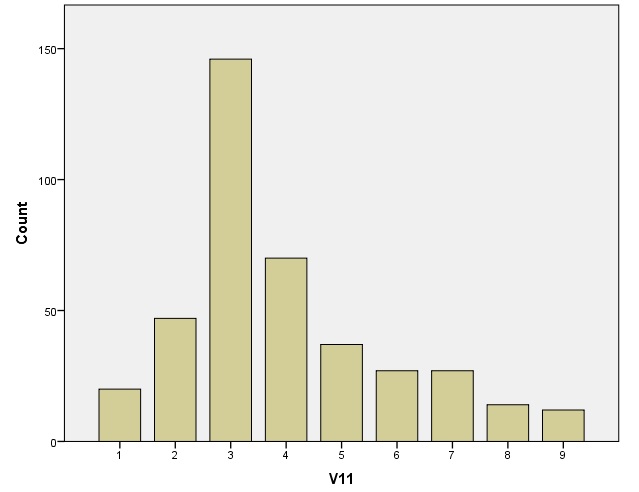
Benford


I can tell you now that I violated loads of rules. It comes from a list of 400 movies, their revenue. So, it spans several year, 400 numbers and those are the most visible reasons why Benford does not apply. The books of Tesco have similar issues. Dozens of accounts, interactions, loads of numbers spanning a time zone, but at times those numbers are also of a small count. Could this work with a ‘grocery’ store? Consider the amount of articles at 99c and £1.99. The amount of special offers going on, day to day (Tesco example), from that, if we use EVERY transaction, we will see skewing, giving us the problem, banks have similar issues, but now more often with seriously large numbers. If we ‘Benford’ the hell out of all the commissions, will they stand the ‘fraud’ test? If not, will the bank see that cash returned, or will we suddenly see a ‘rationalisation’ of non-valid application?


This is at the heart “in otherwise homogeneous data“, which gave the Call-centre a ‘ding-dong’, yet I feel that overall numbers could have shown the issue as well. Too many issues do not hold water here, yet the end of the article gives us what matters “Benford’s Law isn’t a magic bullet. It’s only one approach. It isn’t appropriate for all data sets. And when it is a good tool for the job, it simply identifies anomalies in data, which must be explained with further investigation“, ah the common sense. That did not take long did it?

So as there are serious options for investigating Fraud, the watchers of Tesco are still not in the limelight of the press, they have been given the ‘shade’ by the press at large. In one moment we see Tesco getting replaced by DeLoitte and recently we see Santander bank replacing DeLoitte for PwC and the SFO is nowhere to be seen. So are the Elves of Statistics and the Serious ‘eff’ Ogres in a state of non-war? Perhaps the SFO is too busy and whilst those auditors give new presentations on those yummy statistics, but as I personally see it, it is basically another presentation to lull groups of people to sleep. There is a mess in front of the people and those who should look and act, seem to be too busy and many can slightly fall asleep again.

Just 6 weeks ago, the UK got the message ‘RBS, once the world’s largest bank, is using analytics technology to go back to the era of personal customer service‘, with a promise to invest £100m in data analytics technology. I personally believe in analytics, it is a great tool, but in light of many factors, unless you get the people who have been consistently under-called them a job with a competitor bank, the institution will be paying a lot by those currently not doing their job right.

That final statement can be easily proven.

In the first, if data analytics was key, those involved should have known this for well over 3 years, some in charge have been there long enough, which means that no action was taken and they should not be in a position where they remain idle.

In the second, if data analytics is not key in solving some of the matters, why are they buying it? It could be for very valid other reasons, but that does not solve the ‘under-calling’ issue, it does not solve several other issues, even though it solves some, so at best, data analytics will diminish losses, which is good, but should we not get rid of the dead weight (read significant reasons for large losses).

All this comes to blows soon enough, because if the RBS does not get its results, new articles will appear all over the place regarding ‘miscommunication’, times of deployment and infrastructure issues, in the meantime ‘managed bad news’ prevails and more waves of issues will be swept under the covers of a dark carpet. As accounts are handed over between the 4 big auditors, the sum in the end gives us that overall none of them will make any serious losses. Slightly beyond the short term it evens out for the big four, which might be the largest miscarriage of justice of all.


Leave a comment

Filed under Finance, IT, Law, Media, Politics, Uncategorized

The wrong presentation

The BBC treated its readers half an hour ago to a segment where the title tells all and says nothing (at http://www.bbc.com/news/world-us-canada-33646704), the title ‘Obama urges UK to stay in the European Union‘, we then get a few quotes that matter, even if they give clear voice to another direction. First there is “UK’s EU membership “gives us much greater confidence about the strength of the transatlantic union”“, then we get “the EU “made the world safer and more prosperous”” and it is followed by “the failure to pass “common sense gun safety laws” in the US was his biggest frustration“, which is nice to hear but to some extent pointless.

I wonder how he gets all these thoughts. Perhaps as I speculated in ‘Diary for a wimpy President‘ which I wrote in January 2014 (at https://lawlordtobe.com/2014/01/18/diary-for-a-wimpy-president/), there I wrote “Did anyone consider how nervous certain people in Wall Street were; if their mobile information was known? What if certain links were proven? The accountability of certain people would mean that they could actually end up in jail. Yes, the Wimpy kid in the Oval Office is making certain that certain connections will never end up there (always blame the man at the very top)“, which is a reference not just to the president, but to his advisors, those who are behind the curtain giving voice to what keeps the high and mighty, high and mighty.

So let’s take a look at the quote “UK’s EU membership gives us much greater confidence about the strength of the transatlantic union“. I would oppose that thought, you see, the US requires the EU to remain in disarray, on the edge, because a better EU means a worse US and it should have tipped over the edge two years ago, this continuation can only remain as Germany and the UK are dragged down, if it was truly just about confidence, the US would have stepped forward regarding Greece 6 months ago, but they waited it out, only as Greece was about to get expelled did the President speak up, because a collapsing Euro means a collapsed dollar. I am not contradicting myself here, there is a difference between a collapsing Euro and a weak EU, it is a tightrope game which is partially enabled by the power players of what we would regard the ‘Wall Street gang’, because if the Euro goes, so does their combined 7 trillion dollar life. Now as we consider Greece again when we see the Quote in the Guardian Live “IOBE now fears that the economy will shrink by between 2% and 2.5% in 2015, due to the damage caused to exports, tourism, business investment and consumer spending“, now compare that to the issue I raised in ‘If at first you don’t succeed!‘ (at https://lawlordtobe.com/2015/06/13/if-at-first-you-dont-succeed/), so just in one month, we went from the revelation “the forecast of Greece is 0.5% in 2015 and 2.9% in 2016, I wonder how they got to it all and if such misrepresentation should not be a cause for liability?” to what we have now. Can anyone explain how a forecast has been off by 3%, the danger to tourism was already known, so as we have to go through iteration of managed bad news, we see that there is too much ‘miscommunication’. So reader, realise this part, even with the bulk of the fact known, the forecast was wrong not by 0.3% (which could happen in really bad predicted turmoil), the forecast is off by 3%, which is a massive failing. So, as we get pushed around and as Greece goes from minus 400 billion to minus 550 billion, how could any of the so far surviving members of the EU consider remaining in something that is dragging them all down?

The UK has a few massive problems and the EU is stopping the UK from dealing with them, all this is fine for the US as it needs to stop themselves from drowning, the issues in Japan are just accelerators to all of this. And the words chosen are they not interesting too? Instead of the European Economic Union, he refers to ‘the strength of the transatlantic union‘, is that perhaps an underlying NATO reference?

Now we get to the second part “the EU “made the world safer and more prosperous”“, which is a non-truth, the fact that the EU is now well over 7 trillion in debt counters the statement of safe and prosperous, the fact that only a few got out with loads of cash implies to me that the President is catering to those few, not the 25% unemployed in Spain or in Greece, neither does he take notice trough that statement to the massively rise of people below the poverty line, but perhaps for economic tainted America they do not count, hence they are ignored.

So now we get to the last statement where the president seems to get into emotional mode and refers to “common sense gun safety laws“, yes, that sounds nice, but again, guns do not kill people, people kill people. To illustrate, the latest event gives us three quotes “Dylann Roof, the man accused of a shooting spree that left nine people dead at a historic black church in Charleston on Wednesday night, should not have been able to get a gun“, “Roof was arrested and later charged with felony possession of Suboxone” and “According to his uncle, Roof received a .45-caliber pistol from his father in April for his birthday“, so common sense went out the window, because ‘moronic daddy’ bought his junkie son a gun!

In all this there is one possible upside, with the US president making blundering whoppers like that (decently possibly due to the advisors he has), there is every chance that the coming election will give the next presidency to the Republicans, in all this, they might win by default, because what will shine is that the President waisted so much time on common gun laws that he ignored (read: did not correctly change the power of) the number one killer, which is a 18 trillion dollar debt, a budget that is non-existent and absolutely no control on the government spending.

A mere travesty of the situation when we look at the given reasons to keep the UK in the EU. In the end the people will choose what is best for them and as such merry old England will raise its voice giving direction to parliament, as it should be, that is why the power players are so afraid of monarchies, because the monarchy considers all citizens, not just those with an economic value. In all that, I wonder how he will consider France, because the UK is not the only one who has had enough of all this.

So as I see it, a pleading President came with the wrong presentation, he should take a look at his advisors and the agenda’s that they have, because as I see it, at present his last 18 months seem to be about what cannot be done and who comes next, his current track could invite the event that he gets a beautiful bouquet of flowers as he exits the White House with a thank you note from the GOP, which could be a first in US politics.


Leave a comment

Filed under Finance, Media, Politics

A political minefield

If there is one place where politics have bungled the ball on near titanic proportions, than it would be healthcare. The UK with the NHS issues, Australia with Medicare, the Netherlands with Gezondsheidszorg and the less we say about Obamacare, the better it is for all of us. They all made massive errors which changed the game for any nation that needs to take care of healthcare.

The UK has had its own issues for some time, yet now we see a new event coming up. Let’s take a look at ‘Cancer diagnosis ‘within four weeks’ under new care plan‘ (at http://www.bbc.com/news/health-33574233). First off, it is a good article by Nick Triggle, he looks at it from a decent viewpoint, but is there an issue?

The first part is “The five-year plan will cost £400m a year but experts say earlier treatment will result in similar savings. They say the plan could help an extra 30,000 patients survive for 10 years“, so basically there is no additional cost, which sounds good, let’s face it, in the increasing pull of funds, breaking even over the next 5 years does sound awesome, the people get to live up to another decade, which is just a bonus.

My initial issue is with the quote “Harpal Kumar, chief executive of Cancer Research UK and chairman of NHS England’s task force, said the changes could help create a “world class” service over the coming years“, the term ‘world class‘ seems a little out of bounds and that also sets the tone, let me go on so that it will all make sense.

The second quote is “We have an opportunity to save many thousands of lives from cancer“, which in light of all this does not make sense, especially when we see “But Mr Kumar believes another 30,000 people a year could end up surviving that long once the changes have been put in place – a third of them simply through diagnosing the disease earlier

I admit that I am splitting hairs, because giving them an additional 10 years is not saving a life, it is prolonging it. Apart from that, is there an objection? You see, healthcare is about keeping people healthy (and saving lives whenever possible) so there is no real objection is there? Giving a person up to 10 years more is a noble goal, especially when 130,000 people die each year, letting them enjoy life a little longer is not wrong at all. So why am I looking at this article?

For that we need to look at the steps. These 7 steps is what brought the light in

  • The creation of a four-week target for diagnosis from GP referral. Currently patients are meant to see a specialist within two weeks of a GP referral but can then face weeks of waiting for tests, meaning a growing number of patients do not get their treatment started within 62 days as they should
  • An 80% increase in the number of tests being carried out, including increasing the ability of GPs to order tests directly – for many they have to go through a hospital specialist
  • Replacing more than 100 radiotherapy machines – half of England’s stock – with new, better models
  • Recruiting extra staff in areas such as specialist nurses and radiologists, with the latter needing to nearly double in number
  • Cancer patients to get online access to all their test results and a specialist nurse or other key worker to co-ordinate their care
  • A call for action on smoking and obesity – four in 10 cancers could be prevented through lifestyle improvements
  • All cancer survivors to be given a recovery package so they get the support they need to recover from their treatment and stay cancer-free

The first premise is shown in dots 3 and 4. Replacing 100 radio therapy machines with newer ones and recruiting extra staff (especially radiologists). The fact that the article implies that there are 200 radiotherapy machines is equally disturbing. You see, 280,000 diagnosed people implies 4 people a day and that is if every machine is properly managed, monitored and staffed. The issue is not complete and facts are missing.

For this we take a look at breast cancer. The site Jezebel had an interesting article linking to all this. ‘Can You Be Diagnosed With Breast Cancer In Just One Day?‘ (at http://jezebel.com/5865123/can-you-be-diagnosed-with-breast-cancer-in-just-one-day), where we read “I wrote to Dr. Karla Kerlikowske, professor of medicine and epidemiology/biostatistics at USCF’s Helen Diller Family Comprehensive Cancer Center. She explained: Mammograms can identify a site likely to be cancer, but it requires taking a sample of breast tissue and looking at it under a microscope to know a person has breast cancer. Rarely, less than 1% of the time a radiologist can look at a mammogram and based on the mammogram know a woman has breast cancer, even then it requires a tissue diagnosis for confirmation“. This seems to be a universal truth. In (as I see it) nearly all forms of cancer, confirmation is needed), which is part of the entire issue.

This does not change one essential truth “simply through diagnosing the disease earlier“, that is again a universal truth, so even for that mere fact this project should go on. The issue is not with the idea, or the plan or what we read, but by what we are not reading here.

Part 5 is the first real kicker, giving online to test results is a dangerous step, often cancer will hit the elderly, who do not comprehend the need for proper approach to common cyber sense and as such too many medical details will ends up in the open air, a place where medical details should not be allowed. Now, issue number 2 is one that can be handled, there is no reason why not to do this, yet we must acknowledge that specialists are there for a reason, as such, we can accept that GP’s could call for the test yet, here is also the danger that a GP will act under the ‘better be safe than sorry premise‘ which will now give the situation that 80% more tests are being made, yet it will also include the stronger increase of false alarm results, even under an issue of the best intentions. A mere consequence of people doing the best possible for the patient, an anticipated side effect of ‘world class cancer care‘. I do not object to these parts (or fight the approach here), but it calls into question the given budget already from this point on. So what is expected to be £400m a year, could end up being £520m a year. In addition to issue 4 where we see the need for specialist nurses and radiologists, there will also be the need for additional technicians and re-schooling of technicians and upgrading other peripheral devices. It is possible that these parts had been added to the cart of costs, yet the fact that they are not mentioned, the fact that some parts might not have been looked at yet makes the anticipated £400m a year incorrect and dangerous. The Labour party made a 12 billion IT fiasco, let’s not add to that, shall we?

You see, the cancer confirmation part is not always possible on the spot. So when we accept that ‘Most incisional and excisional biopsies are performed by surgeons‘, we see that additional costs and additional resources will be required. This means that there will be additional pressure on surgeons, was that factored in? You see, there is already a massive backlog. The Guardian reported on July 4th 2014 in the article ‘NHS patients waiting longer for routine operations under coalition‘ (at http://www.theguardian.com/society/2014/jul/04/nhs-patients-waiting-longer-for-routine-operations-under-coalition), that delays had been reported of up to 215 days.

So the entire ‘speed need’ in cancer diagnoses is going to take another matter of growth entirely.

So as I give you these facts and the thoughts around this, you might get a first idea what was wrong with the article by Nick Triggle. I am an ample Medici, but I never studied medicine and it took me roughly 17 seconds to get my question marks up, so why did Nick Triggle not voice these concerns?

The quote by Dr Maureen Baker, of the Royal College of GPs, who welcomed the plans was “The system is already overloaded and we must ensure that there is sufficient imaging and specialist capacity to cope with the increased number of referrals before promises are made to patients that cannot be delivered“. Yet her quote is equally incomplete. I would have expected the quote to be “The system is already overloaded and radiology is only one step in determining the path for a cancer patient. We must ensure that there is growth in several ways in several divisions of hospitals to cope with the increased number of referrals before promises are made to patients that cannot be delivered“, which would have been more correct and as lacking as the quote seems to be from my point of view, I personally would acknowledge that the BBC article could have been used to emphasize on how much work the NHS needs and how much more needs to be done.

None of that can be seen in the article.

It seems to be that the response from Lynda Thomas, chief executive at Macmillan Cancer Support is more on point. Even though it is ambitious, she states “This report has to be more than a set of recommendations on paper. It has to inspire action and lead to meaningful improvements for the lives of people with cancer“. I think that she is playing the game carefully as she wants to get whatever she can for people with cancer, yet the though in my mind is (based on the BBC article) that I would have phrased “This report has to be more than just a set of incomplete recommendations on paper“. That will lead to questions and that will lead to proper dimensioning of a massive problem. I agree that this needs to be done, but without the fact that the pressure for surgeons is already beyond believe (not just in the UK), not addressing this part will lead to another fiasco for NHS, which is what we need to avoid at all costs.

So we are facing a political minefield, one that Labour did not survive, I hope that the conservatives and especially the Rt Hon Jeremy Hunt MP takes more than just a few additional looks at it. And even though he might dread sitting down with a collection of ‘funny and entertaining people’ (like hospital administrators), he will do so and get a proper scope of what will be impacted, because spending another 2 billion only to learn that the term ‘similar savings‘ will never be an option is one he must be willing to accept having to deal with.

There is nothing against spending it on treatment and diagnoses of cancer patients, I just want to make certain that they do not end up becoming the group who ends up with the short straw, a draw they never got a choice in voted for.


Leave a comment

Filed under Finance, Media, Politics

In the lull of news

As people brace themselves for the outcome of another Greek deadline, the US army will find itself cut by 40,000 troops and there seems to be ongoing talks between Iran and interested parties. The last one is the one that feels like it is largely ignored. There is nothing sexy on nuclear talks and unless you are Israel, most people do not care. Yet, is that the clear truth?

This is what the BBC gives us (at http://www.bbc.com/news/world-middle-east-33424502), “The so-called P5+1 – the US, UK, France, China and Russia plus Germany – want Iran to scale back its sensitive nuclear activities to ensure that it cannot build a nuclear weapon“, which sounds of course really nice on paper (and in theory). Yet, when we look at the quote “The sticking points are said to include the duration of limits on Iranian nuclear research and development, guidelines for international inspections and how sanctions will be lifted. Tehran is also demanding that the UN ban on the import and export of conventional arms and ballistic missiles be lifted as part of any deal

We have to wonder for how long this ‘agreement’ will last and why we see ‘export of conventional arms and ballistic missiles‘, why is that? Perhaps certain Middle Eastern parties have been waiting on a Misagh-2 delivery? It might just be another model, so as we might understand that Iran would want to open options for import, the reasons for export are a little fuzzier as well as who would buy them? Russia? They have excellent missiles themselves and they supply them to nations all over the world too. So the question becomes, why allow for export? Especially when a captured stockpile of IS showed “26 of the recovered shells were made in Iran, an ally of Assad’s, and 18 were made in Syria itself, the report states” (at http://foreignpolicy.com/2014/10/06/where-does-the-islamic-state-get-its-weapons/). So certain parties are already getting arms somehow under an embargo, when the floodgate opens, the balance of power will shift in the Middle East, especially as certain parties are getting funded somehow (reference to Hamas). So even as we might not like, but could not openly object to Iran improving its defences (from Russian Stockpiles) there should remain a strong vigilant approach to not letting them export weapons of any kind.

In the Jerusalem Post we see the headline ‘Iranian official: US will remain our enemy despite emerging nuclear deal’, which is fair enough, and the quote “”Our enmity with them is over the principles and is rooted because we are after the truth and nations’ freedom, but they seek exploiting nations and putting them in chains” he explained further” is fair enough, we can’t all be friends, yet the problem is that its military commander stated ““This is the duty of the Muslim world to obey the order of the Supreme Leader of the Islamic Revolution (Khamenei) and arm the Palestinian people so that a powerful response will be given to the Zionist regime,” said Brig. Gen. Ahmad Reza Pourdastan, commander of the Army Ground Force” not too long ago (august 2014), which beckons the dangers of letting Iran export weapons. Consider that a mere lieutenant or a master sergeant can lose certain items in his depot at times, so how much can get ‘lost’ in a depot when a General is calling the shots?

Is that so far-fetched?

This is at the core if the issue, the heart of the matter is quite a different thing here.

You see, the core is about the enrichment. LiveScience had an interesting quote “Separating that type of uranium from the more common variety requires a great deal of engineering skill, despite the fact that the technology needed to do it is decades old. The challenge lies not in figuring out how to separate uranium, but in constructing and running the equipment needed for the task“, so if we accept “The key to their separation is that atoms of uranium-235 weigh slightly less than atoms of uranium-238” so if the approach of a centrifuge gives us “Each centrifuge pulls out a little bit of uranium-238, and then passes the slightly refined gas mixture onto the next tube, and so on, until many hundreds of thousands of spins later, the gas remaining in the tube is almost entirely composed of uranium-235” a clear explanation by Jeff Binder, the isotope production program manager at Oak Ridge National Laboratory.

Yet is that the only way? Stanford University has a course called Physics 241, where we see Uranium Enrichment by Misam Jaffer, who also gives us “Laser separation: The use of laser separation for uranium enrichment is based on the principle of differential photoexicitation of isotopes of uranium by the use of monochromatic radiation. One such process is the Atomic Vapor Laser Isotope Separation (AVLIS) in which the laser light used photo ionizes a particular isotope while not affecting the others and changes its physical or chemical properties which are then utilized to separate the desired isotope, which in uranium enrichment is U-235. In doing so, the U-235 ions are positively charged and hence are attracted to a negatively charged plate and collected“, we will get all kinds of ‘experts’ telling us how this is not as efficient, or other words added into telling us on how this is not good enough. Yet, with Brig. Gen. Ahmad Reza Pourdastan in charge in Iran, ‘good enough’ is not the issue, the issue becomes, is it good enough to make a dirty bomb?

That is the fear Israel has been dealing with, because when missiles start flying from around Rafah, they will not need a hit, it just needs to get close enough to Beer Shiva, Ashkelon and Tel Aviv to make the issue evolve into something truly terrifying for the middle east, because at that point the US has absolutely no chance of getting a hold of the situation. the fact that some of the negotiating players have no clue (or do not care) regarding that danger is seen in the quote “Foreign ministers of the other powers started to return to Vienna on Sunday to help push for a swift deal“, please give me one example where a nuclear ‘swift deal‘ was ever a good idea, and in light of the glow in the dark consequences, should the word ‘swift’ be allowed to be used?

You see, the end quote “US Secretary of State John Kerry said on Sunday that reaching an agreement is possible this week if Iran makes the ‘hard choices’ necessary, but if not, the United States stands ready to walk away from the negotiations” sounds nice, yet the reality is, is that the US has not had any clear defining diplomatic victories for a long time, in that light, the word ‘swift’ is not that reassuring and I feel 99.53324% certain (roughly) that it leaves Israel with not such a good feeling either, especially that any lifting of the embargo means that their Iron Domes might have to work overtime soon thereafter.

The last part is not just an assumption, with many newsreels on missile attacks on Israel in 2015 alone.

So how did we get from Iran to Israel? Simple, Iran is an open supporter of Hamas. In addition, the top leaders of the Iranian military are eager to carve their names in history in anti-Israel acts and Hamas is eager to oblige. The fact that ISIS is all over Gaza and the Sinai only makes matters worse. So as some might strip away parts of any embargo on Iran, they should also keep a keen eye on what they give away, because it seems that the issue is not just ‘what could aid Iran’, but these people are also contemplating (on a daily basis) ‘what could hurt the US and its ally Israel’, there is not too much on that side of the equation, which makes any ‘swift deal’ a worry for several players (read victims) involved.


1 Comment

Filed under Uncategorized

Let’s dance (part 2)

I promised to get back to the game of Finance, to some it is called 50 shades of Greece, to some it is called the work of Atë, yet I see it as the result of a cloud of Stupidity, Inactions and Desolation. Without massive changes Greece will end up without any future left.

This is not some prediction, because the nation is bankrupt, or in default or even in a bad place. You see, whatever ‘promise’ that comes from any of the banks, power players or politicians, throwing money at something that is inert and unproductive is just waisted money. The Juncker speech of three days ago (at http://europa.eu/rapid/press-release_SPEECH-15-5274_en.htm), gives us all those politically correct words, with the quote “And a deal could also have ensured that we, the Commission, could go ahead with a package for a ‘new start for jobs and growth’ package of 35 billion euro to help the Greek economy get back on track“, so that sounds nice, but that is not even close to the factual issue as I see it. If we include the overdue payments (yes, plural), we see that before the end of the year, Greece faces 2 payments of the ECB at 6.7 billion Euro. The IMF has coming 4 times 300 million Euro, plus 2 sets of 600 million Euro and 2 sets of 500 million Euro, in addition, there is the 1.5 billion Euro overdue and the 750 million Euro shifted payment, which Greece paid for using the IMF emergency funds. You all forgot about that last one did you not? Which makes for 5.65 billion, so these two players are due 12.35 billion Euro before the end of the year alone. In addition there are 10 treasury bills maturing with a total of 15.1 billion, the last one is an issue, you see if Greece is very very very lucky, those owners would be ‘willing’ to roll them over, if not, the max damage will be 27.5 billion in before the end of 2015. That is just expenses with NOTHING paid for and the interest due on the loans has not been taken into account either. The important part is, is the fact that over 50% of that debt is an unknown, because who exactly owns these Greek bonds? To whom is payment due? These are the events that Greece already has and I have mentioned them before, so why mention them again. Well, these facts are important to consider, because what Juncker calls ‘new start for jobs and growth’ is nice, but what will the politicians use is for? This fund covers 80% of the outstanding payments and ZERO towards reducing debt.

So how will the Greek economy get back on track? That is the killer question, because there is no given path. Greece has very little to export, it has relied on services for too long and there is no real resolution there. I personally will not trust rock star Varoufakis (a valid feeling as he has not propelled Greece forward in 6 months). A man of all smiles and no substance. His blog (at http://yanisvaroufakis.eu/2015/07/01/why-we-recommend-a-no-in-the-referendum-in-6-short-bullet-points/) gives us 6 short bullet points, yet as a professor of economy from the University of Athens, he gives us plenty of disturbing afterthoughts.

1a. refused to reduce our un-payable public debt
1b. insisted that it should be repaid ‘parametrically’ by the weakest members of our society, their children and their grandchildren.

My view?

1a. Why? Even though previous elected officials spend it, you still get to pay for it. You accepted the responsibility of office, which include a maximised credit card.
1b. Nope! It just needed to be paid in some way, again, as a result from previous elected officials.

So point one, being 2 points can be seen as a failure because Syriza did not do the following:

  1. Immediately start the investigation on prosecution of previous officials (which might be a farce trial, but it would have given the proper presentation that Greece is truly making a change, his smiley smiley rock star presentation missed the mark by a lot, with the added danger that Jean-Claude Juncker might not have any sense of rhythm or blues, making the act a double miss.
  2. Instigate a serious overhaul of the Greek tax system, mainly taxability and tax collection. Even if it was still underway today, if started in February it would have given a clear signal to those holding onto 7 billion plus, that this elected Greek government was a Greek government that wanted to create a true future for the Greek people. The stress of the last week would never have happened.
  3. Instigate prosecution of tax evaders, not just a sham trial of a man named Leonidas Bobolas (which is actually a cool name to have), that 1.9 million euro bill did not last long did it? How about placing Kostas Vaxevanis in the limelight and giving the clear message that tax evasion is now a thing of the past. Greece could have started to annex these back taxes, many nations would be on the side of Greece here (France and Italy most enthusiastically), in addition, giving the tax evaders an option to pay back tax +20% within a week, or back tax +150% when accounts needed to get frozen, misreporting would come at an additional 200% of misreported outstanding taxation. At this point Syriza would become the most popular band ever. In a group of 11 million, these 2045 people do not add statistically to number of Greeks and after the culling of outstanding taxation the debt might be a smidge lower, showing again that Syriza wanted a better Greece.

NONE of these actions had been taken by Greece in any visible way. So, Ο καθηγητής Βαρουφάκης missed the boat in point one already.

I am skipping point two!

  1. The Euro group had previously (November 2012) conceded that the debt ought to be restructured but is refusing to commit to a debt restructure.

My view? It could have been a fair point if Greece would have shown any economic evolution as mentioned in the three points (by me earlier), restructuring is pointless if the machine is not getting the overhaul it requires. I have stated before and now that in all this previous administrations have been key in the failure of the Greek economy. Not just because the Greek economy collapsed, but what was done to repair it all? What concrete actions were made between 2010 and 2015 to restart the economy? This is a much harder question to pose, because it intersects on what could have done and what should have done. Which is directly coupled to Junckers 35 billion Euro carrot, you see, dumping money somewhere, but how and where will the economy be revived? You see, no money and no plan is destitution, a plan and no money is a future, money without a plan is a spending spree and a plan with money is a solution. It is actually THAT simple. Greece has had enough spending sprees, it is in a state of destitution, so it needs to get a future and move towards a solution. This is a simple path, but 3 Greek administrations have not pulled that one off, so they are in the state they are in.

I am not proclaiming to have the solution, yet no one else have any either. With the Greying European community retirement villages are an option. How many does Greece have? Consider that the nations with a retired population over 16% is Sweden, Denmark, Germany and Austria. All nations where the life style has been good. Now add to this the people who will start their retirement in the next 5 years. Thousands of people in relatively expensive cold places, they can in some cases sub-rent their property and retire in warm, sunny Greece. The food is good, the people nice and they move from a life with 4 months of summer to a life of 7 months of summer and the removal of cold winters (compared to their home turf that is). It is not a solution, but it is a start. Greece needs to become innovative and change the game all together. It is extremely likely that these solutions have been looked at, yet, how deep. Too many people look at solutions to fill their pockets, how many looked at it with the intent to fill the treasury coffers? Greece has a second option, is to use the church. Instead of making a short sale of places that came for sale, how about ‘nationalising’ them as tourist accommodation, managed through the church? Move hotels from foreign investors to local hands! Just an idea to start growing the foundation of taxable income.

In all this, the ideas by me should be regarded as laughable. Yet, how many options have been inspected? You see the problem does not go away by throwing a few billion at it, buying all the fish leaves you with a double debt, learning how to fish and get the pond to yourself will leave you with a future. Greece has limited products to work with, so it either adds products or it adds services, services is a first, products is often longer term, unless it is the service that becomes the product.

In all this I still have to address one part I talked about earlier. I stated “they have left, what should be regarded as criminal activities open to reactivation“, there is some of it (at http://www.globalresearch.ca/goldman-sachs-doesnt-have-clean-hands-in-greece-crisis/5459498), more in the annals of history. the article gives us: “According to investigative reports that appeared in Der Spiegel, the New York Times, BBC, and Bloomberg News from 2010 through 2012, Blankfein, now Goldman Sachs CEO, Cohn, now President and COO, and Loudiadis, a Managing Director, all played a role in structuring complex derivative deals with Greece which accomplished two things: they allowed Greece to hide the true extent of its debt and they ended up almost doubling the amount of debt Greece owed under the dubious derivative deals“, no matter where all this is going, consider the Greek bonds. I massively objected in the past against Greece being allowed anywhere near the bond market in April 2014. Consider the total value of Greek bonds out there, are they covered? Consider that Greece is completely bust, the fact that from multiple sources that Greek cannot repay its debt (amongst them the Finance Minister of Greece). Consider that Yanis Varoufakis stated on March 10th 2015 “Varoufakis Says Greece Was Never Going To Repay Its Debts” (source Forbes). So how come that at THAT point certain steps were not made to use the reserve funds Greece had at that time to settle the bonds. When you consider my opposition to bonds in April 2014 comes into view with the consideration ‘The terms on which a government can sell bonds depend on how creditworthy the market considers it to be‘, so as some power players had (as I see it) inflated the Greek credit rating, the question becomes, is the Greek bond market a continuation of the ‘Greekman Sachs’ protocols as played to hide debt, as such, should there be a more serious level of criminal investigation? Moreover, who are the involved parties and why are other parties not truly digging here?

In the end, let’s be clear, there is absolutely no indication that any laws have been broken regarding the bonds, is that not the interesting part? The one part that could have limited the issues now playing (like adjusting laws) is the one action 10 years of government had not adjusted. That seems to have worked out very well for Addy Loudiadis, Chief Executive and Director, Rothesay Life Limited and Managing Director of Goldman Sachs and a few others (Addy was just the most visible one), in all this we see that Greece needs changes, the law most likely first.

So can the Greeks dance? Unless their parliament wakes up, it is only one of many skills a Greek will need to add to his/her skill set to get by after the ATM’s stop working.


Leave a comment

Filed under Finance, Law, Politics

And the time is?

They say timing is everything, ‘EU ministers refuse bailout extension for Greece as referendum looms’, gives a clear indication that Greece overextended the timeline they thought they had. The makers of Arkham Knight are realising that they needed a little more time then they gave themselves, and all over Europe people realise that they seem to be running out of time. And as timing goes, the pressure from Greece gave David Cameron the additional time he needed. We now get the quote “David Cameron says he is delighted the process of ‘reform and renegotiation’ of the UK’s membership of the EU is ‘properly under way’” (at http://www.bbc.com/news/uk-politics-33281019), no matter how this bullet is pushed, the Eurozone will massively change over the next 18 months. With Greece pushing Italy and France over the edge, the UK is considering the safety of pulling out. In the meantime, the UK, to change this options, needs to change several parts of EU laws, so that there is no influence on British common law, if that is achieved, the UK could diminish the negative sides of the EU connection, whilst the pro-EU parts gain strength. This is one option and it is a good strategy, but in all this, Greece remains an issue. If Greece is given too much leeway, the system collapses, which leaves the UK the only option and that is to pull out, damage or no. This will also fuels France’s need to departure, which opposes President Hollande and gives massive visibility to Marine Le Pen, stating ‘we told you so!’ Now the Euro has no options left, whatever diminishing noise you hear, like the noise stated for many weeks, they will all suddenly inflate into stories on ‘how disastrous it all became’, ‘became’ is the operative word, which should be ‘was all along’. Even without Greece, the Euro had been set to become the maximum exploited currency around, which is less of a positive thing, when all over Europe its leaders are increasingly unable to keep a budget, the close to half a trillion that Greece could end up bestowing on them can be missed like a hole in the head.

The EU leaders have decided (as I see it) that there is no more time, no more extensions, either make the call or Greece enters the realm of defaulted nations. The next wave will be about another matter, you see, when Greece defaults, what happens to the outstanding debts? More important, what happens to the Greeks in general? The Greek people will get hurt in all this. Even though I am all about accountability, the Greek people, especially the retirees will get a massive hit in all this, whilst the politicians of previous administrations will have their long term golden years nice and comfy.

But we need to get back to the issue, you see, someone ends up with this bill and even though it might be ‘contained’ for now, the Greeks have squeeze every inch out of the debt they could and with payments due all over the field, this situation moved from worrying to hairy for the Greeks and is now a worrying state for any nation holding on to those debts, not to mention the 80 billion in liquidity overdraft.

So where are we all? What is the time?

The time is getting closer to midnight, as we see two escalations, the first one makes some sense. “The failure of the Greek government to reach agreement with the rest of the Eurozone’s finance ministers has raised fears of the European Central Bank (ECB) rejecting Greece’s request for continued emergency lending to keep its banks afloat“, in addition there is “bailout programme for Greece expires on Tuesday and the referendum has been called for Sunday 5 July“, these are the steps that follow, it does not sound worse than it is, but it really is a little worse than some people think. Even though there is clear frustration in the joke Alexis Tsipras has become, especially when we consider “The calling of a referendum will prolong the political uncertainty that a senior company executive said was “driving us nuts”“, this play was always on the Syriza agenda, but now, as there are no options left, the Greek people got run for 6 months by a rock star and a paper tiger, in the end, they chose poorly. The question becomes: how can this situation move forward? Which is also debate of the next part. This updated quote comes from Austria’s finance minister, Hans Jörg Schelling ““Greece would have to file a request to do so. The other EU countries would have to approve the request. Only then could Greece leave the Eurozone”“, this is regarding leaving the EEC. The question is, why Greece would want to leave the EEC. You see, out of the Euro is one thing, the UK, Sweden and Denmark are not in the Euro either. So Greece will have 3 impossible generations as Greece will try to re-float their way of life, yet those options might deteriorate into 5 or even 6 generations when they leave the EEC. Whatever that choice might be, it will be up to Greece to decide.

Back in the UK, part of the issues that play are:

‘Curb EU immigration by cutting benefits’ and ‘Make the EU more streamlined and competitive’, and to get what it wants the UK believes it will need to rewrite treaties agreed by all 28 EU members. This is part of the joy and the worry.

Consider that the EU setting was never set to be streamlined and competitive enough, why not? What was it about? Social refurbishment, or allowing financial structures and big corporations to get the best solution for THEM? That is a question, not an accusation!

Let’s face it, the UK needs to curb immigration (even though I am trying to get my ancestry visa) and for the most, the UK would not have an issue if these people are all contributing members, but that is part of the issue the UK has as everyone tries to make a new future in London, in its current congested way, London cannot continue. It needs changes, the EEC charter did not allow for that at present. Greece opened that door and it is about to change more. Both France and Germany need to think of both France and Germany and they too need changes, the situation called Greece made sure of that too.

Now we get to the last part in that article: “Downing Street has said the prime minister remains committed to ‘proper, full-on treaty change’ but it has acknowledged this is unlikely by the end of 2017 since it would trigger referendums in other EU countries as well“, this is the move the UK makes, which is a good move, it is fair and it is the proper approach. But that approach now hits another snag, which also has an impact on Greece. You see, both UKIP and National Front are all about nationalism and breaking away from the EEC. I am not condemning or condoning. I always believed that it is the rights of any sovereign nation to choose its path and its future. Greece choose poorly, will France and the UK choose better? I certainly hope so. Yet, this path, now gives UKIP the option to bring messages of ‘delay’ and ‘exploitation of Britain’. That is how Nigel Farage is likely to bring it, because that is how he sees it and that is how his constituents are voiced to see it. That wave is growing, many from the Conservative, some Liberal Democrats and a sizeable chunk of the UK Labour constituents feel more that way every day forward, which is the push UKIP hoped for earlier and it could start to happen over the next 3 months, it all depends on how the financial waves of Greece continue over the next 3 months, that is the impact the people are looking at. It goes beyond the UK, as stated, National Front is on that same ferry route. The push here is that because France is in a much worse state than the UK, the push away is also a lot stronger, depending on how the Greek situation escalates to Grexit and beyond. With France having a lot more on the line, we will see a stronger ‘appreciation’ for National Front and Marine Le Pen. Yet, how the escalation grows cannot yet be predicted, even though the growth of National Front has been stronger and their influence at present in France is a lot stronger than the UKIP has in the UK, so that fact must not be ignored. France add 11 National Front mayors to their nation, that part is influence, strong influence. So as they grow constituents stronger than UKIP can at present, with their presidential campaign happening in April 2017, the UK needs to make a change, because if France pulls out, and the UK is still in the mix, the game changes truly fast. So far, I remain in the view that David Cameron is making the right play for the UK, yet France could change the deadline for the UK. The imperative word is ‘could’, there are several variables in all this and the real game has not started yet, the pawns are placed on the board for the UK and France, the game is about to end for Greece, I hope the Greek people end up in a decent position, which is at present not a given. That part is also essential, the EEC better take a long hard look at that, because with every news of starving retirees as Greek retirement funds loses the value due to Greek bonds, will have a massive impact in driving the local population to their ‘saviour’, whether it is UKIP or National Front will not matter to the player.

We are about to enter a media war unlike any we have seen, because when the news comes of degraded pensions in a greying society, panic will come to the people. At present I have no clear solution, I cannot tell what would be the best way to go; how to go into that direction; too many unknowns at present. I always believe that united is stronger, Greece made me doubt that, because the power players were all about status quo. Now consider the fact that Greece was only 2% of it all, France and the UK are a massive part of the EEC economy, which means we will get carefully phrased words of misinformation soon enough, the question then is from whom and in what direction are they pushing the voters?

So what time is it and when midnight strikes, where will the pieces on the board be and which chess piece is which player, because that dynamic is not a given, not for many months to come.


Leave a comment

Filed under Finance, Media, Politics

Upping the ante!

It seems that the play, that I feared for is now becoming the play that the power players seem to relish. This is no longer about Greece or the Greeks, you see, as I have shown and stated on several occasions, this is about the status quo, and the fallout that will follow will be one that shows the end of many ways of life in Europe.

This is in part about the article ‘Creditors offer Greece six-month bailout reprieve as Tsipras weighs response‘ (at http://www.theguardian.com/world/2015/jun/21/greece-crisis-creditors-aim-deal-six-month-rescue-extension), we see the photo with the annotation ‘The Greek prime minister, Alexis Tsipras, arrives at this office in Athens on Saturday. His key demand is that the creditors offer debt relief to Greece‘. Here we see the use of media, as we see another theatrical pose by Alexis Tsipras, we see the caption that is now more an annotation. The illustrative explanation that now makes way for a presentational mark-up.

There is a huge difference and many people are in a place where they can no longer see the difference.

You see, it is no longer about the Greek people, the creditors never cared and the politicians involved for the most did not care either. You give me a clear example where adding debt was for the benefit of the people and I will introduce you to a liar, because the bills must be paid! Whatever forecast the Greeks are offered now, it will be almost certainly be downgraded after a respectable time of misrepresentation and managed bad news, you know after a sudden error or overoptimistic forecast could not be met. That is how I clearly see it!

The quote “extending its bailout by six months and supplying up to €18bn (£12.9bn) in rescue funds” is not about rescue, it is presented as rescue, but it is about paying bills that Greece can no longer pay. It takes care of the bills, the outstanding payments due and less than 6 months of interest payments. In 6 months this starts all over again, whilst the total debt goes up by almost 4%. Added to this is the quote “a breakthrough hinged on a positive response from the Greek prime minister, Alexis Tsipras“, so whilst no concession was made in 6 months, one confirmation, whilst no official plans have been agreed upon will allows the involved players to continue, as they reap the rewards, walk away and leave the next person with an even bigger mess to solve, that is, whilst we see that at present payments are no longer a reality.

You see, in the larger scheme of things, there is a massive upside, the American players involved are not too bright as I see it, they think ‘short term’, with their focus often on personal gain (read: bonus) and personal options (read: their next career step) as they leave the legacy to whomever comes next. It is not the same as the 2004 events, but the consequence will be a lot higher.

As I see it, this act is now enabling UKIP and National Front at the centre stage to illuminate how these short term vultures are totally irresponsible and the rest of the EEC will have to pay in six months’ time (if the reprieve goes through). The run to these two parties is likely to grow almost exponentially. If the UK will call the referendum sooner, the call for breaking with the EU might become overwhelming. The push in France will grow a lot stronger at this point too. That part I had illuminated before, now consider the BBC article ‘France polls: A step closer to power for the National Front?‘ from March 21st. “Polls suggest that the party’s leader Marine Le Pen is likely to reach the second round of presidential elections here in two years’ time. She’s not predicted to win, but even so, it is a striking result for a party that currently controls just 11 towns in France“, that danger, makes the involvement of President Hollande from the quote “Negotiations were continuing on Sunday night, hours ahead of crucial gatherings of Eurozone finance ministers and leaders in Brussels, which Angela Merkel, the German chancellor, François Hollande, the French president, and Tsipras are expected to attend“, his support, also means that if Tsipras breaks (or changes) any given word now, whatever ‘change’ is pushed for in 6 months will hit the French unbalanced powerbase even harder.

You see, the pushers for the status quo are outside of these discussion groups, it is clear that someone from the US (likely Jack Law) has voiced concerns in resolving this, the problem is that the US is (as I see it) bankrupt and those behind it will get paid no matter what, especially as these funds will be used to pay those involved, which means an even stronger movement away from regaining balance. In all this, the Greek population will get to live with the consequences, not the power players behind the screens and likely not the political groups involved. So, as we see “The crisis meeting was convened in an attempt to ease Greece’s debt crisis before a critical €1.6bn payment to the International Monetary Fund falls due next Tuesday“, they are now setting to add 10 times that amount, added to the debt, in addition to the added funds pushed, after we saw the bank run fuelling a quicker setting to the Greek nation’s insolvency.

As we look at the subtitle ‘include up to €18bn in rescue funds, and later debt relief‘, yes it is set against concessions, but how are they enforced or monitored? The later debt relief will no doubt be almost twice the initial payment, which gives Greece up to one more year, but that push for status quo whilst there is no true evidence whatsoever that the economy will go strongly positive makes this a rather risky investment and it is not unrealistic that the Greek population will end up paying for it in several ways.

You see, it does not matter what President Hollande thinks now, he will get what he can and retire somewhere else, the problem will be National Front and Marine Le Pen, who can now (if the Greeks go overboard) make a pointed finger to the EEC, to Greece and to Jean-Claude Juncker stating ‘they have spent your money!‘ What do you think will happen next? In addition, this could start a debate in the UK whether the UK referendum ends up getting pushed forward, still likely in 2016, but now a Q2 or even a Q1 date, which is not that unlikely. In this as the Conservatives are contemplating what to do, UKIP can push its visibility, which gives way to the concern that a minor party can now influence a majority leading party. It is not a given, but it is becoming more and more likely. So as we will soon see economic threats from banks and other players stating ‘beware if you leave the EEC‘, they seem to forget that the voters have had enough, many are living on or below the poverty line and they are extremely unhappy to see Greece walk away yet again, not being held accountable for their irresponsible acts, whilst these voters cannot make ends meet. It drives Marine Le Pen forward and it will have an effect in the UK too.

The short term players do not seem to care, as they are focussed on their little needs, but what comes after is not easily stopped, and this 11th hour half-baked Greek solution will come with a terrible second invoice. How likely is all this?

There is a part that remains an unknown to all involved (including me), the fact on how powerful the status quo players are and on how these issues are brought to light. They will influence the game that is going on, but in all this, one part is in clarity, as I see it, none of the players have the welfare of the Greek people in mind, which I consider the most disturbing part of all.

Now we see the new headline ‘Greek debt crisis: Tsipras concessions welcomed as ‘good basis for progress’‘ (at http://www.theguardian.com/world/2015/jun/22/greek-debt-crisis-tsipras-offer-is-welcomed-as-good-basis-for-progress). The question becomes, what exactly are the concessions. The first indicator is “Negotiators are promising debt relief for Greece, which has seen its economy shrink by one quarter since the crisis began, but officials have stressed that a breakthrough will depend on a positive response from the Greek prime minister“, now, I have no issue with debt relief perse, but who gets this write off? In the end, who gets to pay for the loss of debt? You see if Greece does not have to pay it back (which is fine by me), who has to front the money? As long as this is not reflected on the taxation of the people (read the banks pay for these out of their own profits), than it is all fine by me.

The second issue is the one I discussed earlier. “Greece’s international creditors are looking at a deal that would extend the country’s bailout by six months and supply up to €18bn (£12.9bn) in rescue funds“, again, fine by me, but this additional debt is for a large portion about paying debts and interest, whilst the foundation of the debt rises again, how is this ever a solution?

So as we see the quotes: “In Athens itself, more than 7,000 people took to the streets for the second time this week to protest austerity with banners reading “A different Europe with Tsipras” and “You can’t blackmail the people, the country is not for sale”“, the question becomes, why do the Greeks not realise that their own politicians sold Greece from under their feet? The debts had been spend by Greece and arranged by Greek politicians.

And the final quote proves that I was right all along: “Louka Katseli, the chief of the National Bank of Greece, told BBC radio: “To enter into such uncharted waters and take up all the risk both for the Eurozone and for Greece for two or three billion [euros] difference, I think it’s insane.”

You see, they were not playing ball because they knew that the predicament for France and Italy would be almost unbearable, and here we also see, what I would call a clear lie by the National Bank of Greece, Louka Katseli. He states ‘the risk both for the Eurozone and for Greece for two or three billion [euros] difference‘, no Louka! It is not for two or three billion, it will be for the additional thirty billion that Greece needs, the raising of the debt ceiling (again), the €7.2 billion, the €10.9bn, which got classified (and booked) as recapitalisation, and this will not last past December, it could even be harder. You see, Ekathimerini reports (at http://ekathimerini.com/4dcgi/_w_articles_wsite2_1_28/12/2014_545761) states a holiday bookings drop of 50%, which is massive! Now, even I have some debate on how correct those numbers are, so do not just rely on this, yet eturbonews (Global Travel Industry News) reported that Russian tourists could drop by 40%. Now, make sure you notice the word ‘could’, because that makes it a prediction and even though this last article is only a week old, the overall tourism for Greece is a lot larger than just the Russians. A more reliable Dutch source gives us (at http://www.nrcq.nl/2015/06/02/toch-maar-welniet-met-vakantie-naar-kos) gives us that the numbers to Greece are down, but not by a large extend, and so far, the pull to Greek vacations is better than 2013, which would be a good thing for the population. One agent has seen rebooking of Greek vacations, yet these changes were from Kos to Corfu, not to a non-Greek destination, so the Dutch drop is not that large, yet it is there, so this also implies less money into the state coffers than already voiced loudly last week.

I must pause and take notice of facts. Is it just me? I must doubt my own view, when I am the only one having it, that is logical, yet the view of this system of pretending a fake status quo whilst the Greek government is not fixing its flaws and demanding more money is extremely unhealthy. Those enabling all of this seem to remain behind the curtains of the press, which is even more discerning.

So as Louka Katseli states “sanity will prevail”, we should wonder, for who it will prevail, because adding €18bn (£12.9bn) onto a nation that cannot pay its bills is not sanity, especially as the governors of that nation refused to take any action, any move of good faith towards the people who had lend them the previous amounts in the first place. If I would go to the bank tomorrow asking for a loan of 25 million, there would be no way that I would get it, so why did Greece successfully end with close to half a trillion is equally puzzling, especially as the same measurements for me would not hold water, how does it for Greece?

In the end, Greece not acting is the plain reason for Greece possibly facing the ‘Grexit’. I use the word possibly, because as we see in the news today, all the players are all about adding water to the wine, whilst Greece is not drinking at all. So there is no real answer what will happen next. And in the end it is twofold. The first is the deal that needs to be made, the second will be how to tell Europe all this because President Hollande knows very well that Marine Le Pen is waiting to voice his words and let them spike into the heads of frustrated and angered French citizens all over France. over 10% is unemployed and almost 13% lives in poverty, which overall is not that bad compared to other places, in the UK it is now stated to be a third, which is massive (at http://www.theguardian.com/society/2015/may/20/income-poverty-third-uk-population).

This is at the heart of several issues as I have been stating for a long time. Am I correct? Well, most facts came to pass, the fact the Greece has not been exited makes my prediction flawed, yet we must not underestimate the extent of time shifts that have been done just to facilitate these events. That view is only reinforced 10 minutes ago, as new talks start. A theatre routing partially in Greek, partially not, with a mock slap this talk starts. All to feed the press, but the issues are of a deadly serious nature for the Greek population, so as they lighten the mood, we must wonder, where the puppeteers are. So is this a plain Punch and Judy show, or is this a Jeff Dunham spectacle, because the voices behind the screen are those that have been twisted to sound like, this conclusion comes as Christine Lagarde stated 2 days ago that there would be no grace period for Greece, now suddenly there are concessions, yet we are not yet informed on the concessions and certain parties are now willing to open the purse for 6 months of leeway. So if that does happen, no leeway was given (theoretically), it would be classified as a partial agreement, hence the ‘concessions’, which ones? We will know soon enough!


Leave a comment

Filed under Finance, Media, Politics

Divisiveness or Subterfuge?

If has not been that long in the face of danger, challenge or just plain confusion, yet what are we left with to believe? So let’s take a look at Suzanne Evans. She was born in Shrewsbury. Oh Sarcasm! ‘Shrew’s bury’, a woman of violent temper to be put in a grave. I just could not make this up, I am not that creative, oh wonders of fate! The fact that a shrew is also a mole like mammal hits the noisy triangle again in loud succession.

You see, this all started with the comment that we can read in many papers “Suzanne Evans sacked as Ukip spokesperson after labelling Nigel Farage a ‘very divisive character’”’ (at http://www.independent.co.uk/news/uk/politics/suzanne-evans-sacked-as-ukip-spokesperson-after-labelling-nigel-farage-a-very-divisive-character-10330417.html). in addition, the Guardian had this subtitle ‘Party’s most prominent female member incurred boss’s displeasure after giving interview saying he would not front EU exit campaign‘, now here is the issue.

How could she be this ‘naive’ as a spokesperson (the word ‘stupid’ seems slightly harsh)? Consider her career: Working at BBC from 1987 to 1999, which includes ‘Today’, BBC World service, BBC Radio 5 and local radio programmes. After that 10 years as a marketing consultant and later as a communications director. She joined the Conservative party in 2010 and switched to UKIP in 2013. So with 25 years of work as a journalist, PR executive and a politician, she goes on with the words as stated in the Independent “In an interview on BBC2’s Daily Politics show, Ms Evans, the party’s deputy chairwoman, said Mr Farage was a “very divisive character” in terms of the way he was perceived, although she added he was “not divisive as a person”“.

And that went over well? Oh Suzanne, you having a quarter of a century of presentation experience, you did not see this coming? So on a BBC2 show you get the limelight with this expression, what was going on?

So this is where we should wonder, in the first, who was divisive? And was Suzanne Evans trying to create hostility between people, or was she employing deceit to achieve change? Let’s face it, Nigel Farage should NOT have handed in his resignation. It might have seemed like a noble thing to do after losing his constituency, but he was the appeal to millions of voters (3 million voted for HIM), well over 95% were all about Nigel. Was it not XTC that was making plans for Nigel (at https://www.youtube.com/watch?v=gXNhL4J_S00)?

So this 70’s song has the following lines:

We’re only making plans for Nigel
We only want what’s best for him
We’re only making plans for Nigel
Nigel just needs that helping hand

Yet the reality is quite different.

His initial wrongful resignation gave way for the acts by MP Douglas Carswell, who is the only UKIP MP with a constituency, now we see the ‘presenting’ words from Suzanne Evans. It is not uncommon for a party to see the seconds in command to ruffle the feathers to get the limelight. In Australia we had Julia Gillard, who must have heard about that Julius Caesar play and thought, she could do that too. Yet, the opposite view of this can be seen at https://www.youtube.com/watch?v=TqXq5n4-ta4. There is no clear point on what exactly happened. Yet, is an internal hostile takeover so unimaginable? Now consider the Gillard clip at 6:33 “Over dinner Bill Shorten organised the revolt”, isn’t he in charge of the Australian Labour party now? So as we have seen these acts before and we will see them again in the future, we must wonder what exactly was the endgame, Suzanne Evans had in mind, because someone with 25 years of experience does not go on the air on BBC 2 so unprepared, especially when you are the spokesperson. This was about something else entirely. Was it to clear the decks, to stir change? You see, if she had planned this and if the responses were monitored, could an aggressive outspoken Nigel Farage in the media have been the endgame of round one?

You see, no matter how fired she is getting now, if Douglas Carswell is trying to refocus the minds of the UKIP voters, than this was not a bad play to get momentum on change. That view is getting stronger when we see the BBC article ‘Douglas Carswell does not fit in with UKIP – ex-Nigel Farage aide‘ of June 11th (at http://www.bbc.com/news/uk-politics-33089917), where we see the quote “He said: “I think he sees UKIP as a way of being an independent, whereas actually the way of being an independent is to sit as an independent MP“. Now the funny part is, is that I saw that same thing coming on May 16th, so more than a month earlier in my blog ‘You be Kipping?’ (at https://lawlordtobe.com/2015/05/16/you-be-kipping/). Interesting that I had this view 5 weeks earlier than the insiders who reported on this. Equally interesting is the quote by Raheem Kassam as he states “he was so embarrassed of some people working for the party during the election he had to lock them behind closed doors when showing journalists around UKIP headquarters“, which was a BBC quote from the Guardian. I think that those ‘embarrassments’ might be regarded as political newbies, utterly devoid of political correctness. In that atmosphere trained conservatives like Douglas Carswell and Suzanne Evans could steer themselves reasonably fast into positions of power and shortly thereafter takeover. They would have sit quietly a little longer if UKIP has secured more constituencies, but they came second in many places, which means that their power play would get delayed for 5 years. Now, if the EU gets truly exited, UKIP will get a lot stronger as they advocated change long before the Conservatives did. The Conservative party wanted to hang on in the European group because until recent, it should have been the best course of action. It is the irresponsible acts by Greece and those ‘partially dancing to their own needs’ is why the step to secede is now stronger than ever. If the IMF and creditors had been massively firm from the beginning, this play might never have happened. Yet the inactions and allowing Greece to add close to 100 billion more in debt and even today as there could be another possible increase in the Emergency Liquidity Assistance facility, yet the amount is unknown (10 minutes ago, Reuters reported that there will be an infusion, but the amount is unknown). So at present, with the dangers of what Greece could do to the other nations in Europe, the UK has a first responsibility, which is the UK plain and simple. The fact that Nigel Farage had been saying that all along is not a factor. Yes, in this I did agree with Nigel Farage, but I had in on speculative foresight, a government must make decisions on actual facts and given certainties. There lies the difference; so even as Nigel Farage is now in the camp others are joining, the initial reasoning to enter ‘camp exit-EU’ was not the same.

This is at the heart of the change Carswell and Evans might have been gunning for. If UKIP had made it, they would have waited as their power core would have grown, but now, the valid tactic that a change is best done immediately, not later on. The Gillard move shows this, other moves have shown this and future changes will do the same thing.

I will be the first to state that the tactic was a good one, but to do it so eager on BBC radio 2 was not the wisest of actions (unless Carswell takes over and she gets ‘rehired’), as such Suzanne Evans is now no longer part of UKIP, which beckons the question, what will Nigel Farage do next? His first act is to get a good consultant trainer, to start educating the troops that Raheem Kassam kept behind locked doors. The plain truth is that Suzanne Evans will need to redeem herself somewhere and she knows behind which doors ‘the skeletons’ (read: less politically correct speakers) are. In that regard UKIP needs to bolster defences so that the gain made where they are in second place in several constituencies is not list, moreover, they can grow in almost half a dozen to leading position, which means that those places are all a threat for the labour (and some conservative ones), as this is all about the next wave. It is my view that some wanted to take over, likely both Evans and Carswell dreaming of the New Conservative Independent Strategy (NCIS), would make for great TV on cable would it not? That danger will remain for a little time longer, Carswell has the benefit of being an MP. Nigel Farage needs to work 100% harder (read: twice as hard) to keep the voters of this last election riled, to keep them interested and on point as they could sway even more of their friends. UKIP could become the threat they were meant to be in May 2015. Greece was always a maker or breaker of events, yet to what extent also depends on France and Italy.

That is still underplayed by many speakers all over Europe, also to some extent ignored by analysts all over the field, because the events for UKIP failed to be stronger in parliament, those analysts are promoting (as I personally see it) a managed bad news approach, yet the bigger danger remains Marine Le Pen from National Front. that danger can be seen in ‘France’s Le Pen announces far-right bloc of anti-EU MEPs‘ (at http://www.bbc.com/news/world-europe-33147247), the smaller Dutch player Geert Wilders now a lot more prominent will have the option to sway many Dutch voters in another direction too. That danger is not that big in the Netherlands, but it is not 0, so there is a danger and the Financial power players have cut themselves deeply by not acting against Greece a lot harder and a lot sooner, now we see, the consequences when the Status Quo is no longer tolerable: “Forming the group will give the MEPs more influence in the parliament. It will also mean that the new bloc’s members have access to millions of euros in extra funding as well as more staff and speaking time. To be valid, a group needs 25 MEPs from at least seven different nationalities“, so inaction will now have a massive reaction. If Nigel Farage gets to be a stronger speaker and collaborator for pro UK change, that shift will have massive consequences. So even as we read in that same article “UKIP has previously said it was “not interested in any deal” with Ms Le Pen or her party because of ‘prejudice and anti-Semitism in particular’ in the FN. UKIP leader Nigel Farage already heads another anti-immigration alliance in the European Parliament called the Europe of Freedom and Direct Democracy Group (EFDD)”, this does not mean that a minor coalition could not exist as it would propagate both views, visions and goals. As this evolves, the acts of Carswell and Evans now get a different light. They could have grown so much stronger if they had only waited it out. Now they will find out that they are in one case cut off completely (Suzanne Evans) and in the other case under non-stop scrutiny for now (Douglas Carswell).

So France will have a massive impact!

That last part is also at the core of the French financial consequences. You will have read on how it would not be an issue, how Michel Sapin had downplayed this on more than one occasion. In Bloomberg we see ‘French Bonds Infected as Greek Crisis Swells Euro-Region Spreads‘ (at http://www.bloomberg.com/news/articles/2015-06-16/french-bonds-infected-as-greek-crisis-swells-euro-region-spreads), which was given three days ago, long after I had made predictions of this nature (but not by how much). You see, the French debt is at 2.3 trillion Euro (interest around 64 billion per year), Italy is at 2.6 trillion (interest around 110 billion per year). You see as those presenters ‘hide’ behind debt in percentage per GDP, in an age of faltering revenues and no consumers, the entire GDP is a little virtual, even figmentive one could say, in the end, the debt per citizen is €36K for every French, and €43K for every Italian citizen. Again, this is not the right numbers to look at, what does matter is that these budgets need to come up with the annual interest and it needs to be within their budgets, which is not done correctly, so that debt number is only getting bigger, with now an additional push from the  Greek debt and Greek bonds. The UK might not have any part in the Greek bonds, when Greece falls, the Euro debts will need to be covered by the other players. It is the consequence of ONE currency! Which means that with the liquidity infusion, closer to half a trillion could be pushed over the field. Now France and Italy will not be the only one getting a jab to their coffers, but the large four (Germany, UK, France and Italy) will feel that pain, and it will hurt. That part had been downplayed for too long and soon it will be very likely that the callers come calling!

This is the power push both Nigel Farage and Marine Le Pen get to enjoy as they get to say ‘I told you so!’, that will be felt over the next 7 years, which means that the coming elections all over the board will see changes. The consequences and fallout for Greece will directly affect the power that Podemos in Spain (their anti-Austerity party). If Syriza pushes Greece over the edge (which is now more and more likely), Podemos could lose a lot of their voters as they run for the hills towards any political party eager to prevent this from happening to Spain, that too will fuel both UK and France in the next elections. It is too soon to state whether the Euro will stop, but at the centre stage is the need for governments keeping their commitments, which is only a temporary promise, as the next government is always just one election away. Syriza made that abundantly clear above all other issues.

That is the power Nigel Farage can tap into, that is the power Marine Le Pen will very successfully tap into and Geert Wilders will keep afloat in that boat collecting that bonus, but he will unlikely gain the power he would like from the Dutch voters, in that regard he had made too many wild statements, a flaw UKIP must now guard itself from as soon as they possibly can. Because public opinion will remain the killer of UKIP power for some time to come.


Leave a comment

Filed under Finance, Media, Politics

More FIFA shit?

That was the very first thought I had when I found the article in the Guardian (at http://www.theguardian.com/football/2015/jun/07/russia-qatar-lose-world-cups-if-bribery-found-fifa). The article ‘Russia and Qatar may lose World Cups if evidence of bribery is found‘. Domenico Scala, the independent chairman of FIFA’s audit and compliance committee decided to open his mouth. Which sounds rude, but that is what it adds up to. You see, in all this, as I see it, nearly EVERY MEMBER of FIFA seems to ignore, or sidestep the report by Michael J. Garcia. Is it not interesting that the report called for far trivialised by FIFA and now it has been silenced? Is it remotely possible that Michael J Garcia was the only uncorrupted voice?

It seems like a hard verdict and it seems crass to say so, but I have an issue with an interim manage with massive big business ties. Many of them none too pleased with either Russia or Qatar winning the ballot. With the quote “The new evidence, obtained by the BBC, appears to show how the 2008 payments from Fifa – ostensibly for a Diaspora Legacy Programme promised by South African World Cup organisers” we do take notice, especially as BBC had been on the case of Jack Warner for a long time, but how does this connect to Russia or Qatar?

The article then shows more with the quote “‘after talking with everybody … Whose votes went where? We’re all colleagues, you know. And then we found out that actually Morocco won by two votes,’ the Sunday Times reported Bhamjee as saying“, which seems to be another worry, as I see it, one of the next world cups should then be allotted to Morocco by default, which one is hard to say, 2026 perhaps?

But the article seems to go off to the side, you see the one small quote “had also alleged bribery during the 2018-22 race” is not enough. In a river of papers, documents and evidence the issue of Russia and Qatar are now set in 9 words.

So why is the Michael J. Garcia report held back, why is Michael J. Garcia not talking? It seems with Fat Cat Sepp and loads of others gone, Garcia might become untouchable, depending on that report, so why is that kept behind closed doors? That is part of the reason why I am not willing to give Domenico Scala any leeway or trust, especially with his biopharmaceutical links and his past in Nestle and Roche. These are global players with their claws all over the place. As I stated in my earlier blog regarding FIFA, ‘is it more likely than not’ that large corporations want Qatar to go because of the hundreds of millions in advertisement that are lost because of the Qatarian situation? Having the investigator who basically sleeps in the bed of these large corporations is not a mindset put at ease. The fact that Michael Garcia has vanished in a cloud of non-publications for almost 6 months does not help matter either. The fact that the press is not all over this is even more unsettling.

Then the last sentence, which is actually quite the firecracker. You see the sentence “The Sunday Times says that it supplied the evidence to Fifa five years ago but that it had not acted on it“. Of course, the fact that it is directly linked to Rupert Murdoch does not help the case. But the issue that does play is whether this interaction is in Michael Garcia’s report does matter. You see, if Garcia has it, what were his findings? If he did not have it, the question becomes, who has been regulating the mailboxes of the FIFA members. At this point it is likely to be more than just a reference to people like Jack Warden, because whoever did that (if it was done) must have been a person who is very high up the ladder of FIFA.

The one thing that puts the people (especially the Soccer lovers) at ease is the one step that FIFA is not making, now we get a new one in ‘charge’ and we see more headlines with the mention ‘if evidence of bribery is found‘. So, is my lack of trust that hard to grasp? Overall is there any faith in FIFA at present? Not by me, I do not matter, but those who are truly passionate about soccer, those who felt the reality, which they have expected so long, it still hit them like a kick in the nuts!

They are the people Domenico Scala needs to connect to, especially if FIFA is to have any future, because the news now is just news, but son we will see day after day the issues of extradition that is being fought by those allegedly corrupt, who are in fear of future for their sphincter as they enter the US courts. Then the actual courts that will take more months and more news again and again on FIFA and corruption. If Domenico Scala wants the trust of the people, the true soccer fans, than as I see it, he has no choice but to publish the report, preferably with Michael J Garcia standing next to him vocal about every part of his report. It is not the view Hans-Joachim Eckert would like, but there are questions, questions that also include the ethics committee. So as we see the quote that BBC had on December 17th 2014 “Fifa president Sepp Blatter said: “I am surprised by Mr Garcia’s decision. The work of the ethics committee will nonetheless continue”“, in light of all the arrested and one person who resigned, how did the ethics committee continue, and did it actually continue at all?

Having someone on the ethics committee does not mean that there is an ethics committee, for that reality, one need not look any further than the UK and its view on ‘justice’ via Justice Secretary Chris Grayling. The amount of my peers that have loudly voiced their view on what the Lord Chancellor regards as legal aid, which by the way is what you usually hear when a truck drives starts shouting after a traffic jam of 18 hours, it is not healthy on the ears!

In all this, many articles and several decision only seem to fuel uncertainty, especially regarding trust of FIFA that is now getting louder. Uncertainty will lead to a more grim view on what will happen to FIFA. You see in the end, the power of soccer is Europe, which means that if enough uncertainty is voiced, someone in power will voice to secede FIFA and make UEFA the one power in Europe. FIFA might laugh now, but the large soccer nations include UK, The Netherlands, Belgium, Germany, France, Italy and Spain. If three of these, agree on that action, they can pull a host of other european nations across. Let’s not forget that 70% of the power of soccer is Europe, it is not America, Asia or Africa. So whatever is left for the world cup will diminish the ‘world cup’ into a trophy of a few nations that will soon thereafter see that all the funds of soccer remains in Europe, at that point large corporations will pull out and the 6 billion Euro dream that was will be a devaluated nightmare. That nightmare will continue with every court iteration the US goes through on corruption.

That view only polarises further when we consider the quote “He has threatened to release an “avalanche” of secrets about FIFA and its embattled president Sepp Blatter, who last week announced his intended resignation“, which was in the New York Times (at http://www.nytimes.com/2015/06/08/sports/soccer/at-center-of-fifa-scandal-a-divisive-politician-in-jack-warner.html. This ‘threat’ is not entirely impossible as Jack Warner was previously a minister of national security and transportation. So we will soon see the ‘spook’ stories in the Telegraph I reckon.

In all this, the media will become the hyena that needs feeding, if Domenico Scala is to get any handle on this, releasing the full report of Michael Garcia would be a first step. It will not matter what that report states, you see, if it is useless, it will only reflect on Michael Garcia, if it was dynamite, it will hit resigned president Sepp Blatter, but it could also have repercussions for Justice Hans-Joachim Eckert, but that would depend on the report itself. If it does show that there were issues with both Russia 2018 and Qatar 2022, well, as I stated before, let the chips fall where they may!

So as we will get more FIFA shot for a long time to come, which has a hidden treasure (if Swiss Law helps me out here).  You see, life in Switzerland is not cheap, even though he has millions, now all that money going to him will be mapped, anyone ‘helping’ him out will soon fall under the investigative scope of the US as well, due to possibility of being an accomplice. I am not stating that those people are that, but a criminal investigation is taking place. Now he is in a land where bank secrets will not help him as he is under scrutiny of extradition, in addition, Scotland Yard (who must feel humiliated as this all happened under their noses) are now looking at him 24/7 as well (a presumption on my side). Jack Warner is under a microscope whilst his sons are talking to the FBI, naming their father as a joined co-conspirator. The fun never ends, with every claim he does not pursue (the avalanche of secrets) his position becomes weaker, whatever he reveals implies his connection and it weakens him further as his former ‘friends’ will want to stay away from that toxic environment. He still gets hit, no matter what. I would think that as a former National Security minister, he would have planned his tactics a little better, but that could just be my wrongly skewed vision. Now this comes to blows with the press, I wonder what Brigadier General Alfonso will do. Now that his former colleague is accused, will the General start an investigation into the bank accounts of the agency? I am not stating that Jack Warner stole anything, but what if he used the accounts to syphon money in more than one direction, not just to receive, but to make payment. Now we have a ballgame that is more entertaining than soccer, because if that is so, than Trinidad could be touched by the FIFA scourge. If so, Jack Warner might stop fighting extradition, just to escape the wrath of Brigadier General Alfonso.

In all this, never forget the parts that matter here, there is no evidence that Jack Warner had nothing but the highest love for his Trinidad, his need for … ‘susceptibility to gifts’ does not diminish his national love or in his view his national pride, but how is it viewed by his peers and other around him? That question touches on the quote “The prime minister of this Caribbean republic walked out of a session of Parliament on Friday, angrily chastising a fellow politician and former ally, Jack Warner, who finds himself and his two sons at the center of soccer’s widespread corruption scandal” which the NY Times article started with. You see, overall corruption is not a new thing, it happens in many places, it is just a clear fact that when it gets out in the open, those persons are usually not liked anymore. The same danger he faces all over the field, which is why some of the aspects seem so funny to me. He might throw a few parties now in Switzerland, but soon he will face the reality of legal fees and cost of living, because whatever he wants to pay with will be under none stop scrutiny.

So, we will see plenty more FIFA ‘shit’, the question I have is how UEFA will act and react, because faith in FIFA could soon be at an all-time low, more important, what is Electronic Arts (EA Sports) not willing to pay for?

Leave a comment

Filed under Gaming, Law, Media, Politics

A dangerous escalation

This is a worrying moment, not just for me, but for everyone around, it should be a moment to worry. I am not talking about the Greeks (they have been extinct before), or FIFA (others are on the ball now). No it is a little more serious at present. You see last night rebels shot a scud at Saudi Arabia, which now ups the ante for all players and all allies involved. So as we see the BBC News (at http://m.bbc.com/news/world-middle-east-33033842), we also see “In a separate development, the Houthi’s have agreed to attend peace talks in Geneva“, which might be redundant now as a Scud has been fired. We can look at all the fact on how inaccurate these missiles are, but the straight complication is not just that a missile was fired, the question becomes what else do these Houthi’s have access to and at some point, We tend to get confused on what matters, I am not stating that certain elements do not matter (like humanitarian aid), but in the light of escalations, humanitarian aid seems to take a backdrop to it all. The issue of escalation will take another turn when Saudi would be forced to act in protection of its citizens. There are a few options and one of them could be the temporary annexation of Yemen as the House of Saud, in allegiance of deposed president Abdrabbuh Mansour Hadi takes a ground offensive. At that point, whatever cries for help the Houthi’s then voice, they might not receive too much support. As we look at the humanitarian part, have the involved support groups taken a census of how many of these civilian are Houthis? In addition, when this escalated further, what will be the consequences for Oman? You see, it is not just the players that are an issue, with the growing allegiance of Al Qaeda in Yemen, with the growth of Islamic State, we will see additional escalation both within Yemen, towards Saudi Arabia as well as towards the direction of Oman. What path will be taken is hard for me to tell without better intelligence on the events (there is a limit to the information that the BBC has in its possession). Beyond that is another danger that is now brewing for Saudi Arabia. No matter how they feel regarding the actions against Yemen, it has an effect in the refugee camps in Jordan, Islamic State is more and more active in recruiting the youthful adults there, with over 630,000 refugees, there is every chance that Islamic State has growing numbers not in the hundreds, but in excess of a few thousand. The additional actions of ISIS in Egypt, gives worry on the dangers for Saudi Arabia. Whether scuds are the least accurate missiles or not, it will take one missile from Eritrea to hit close enough to Mecca to make this tinderbox explode. ISIS has never made a secret regarding the capture of Mecca, the question is would they be willing to destroy it? It is an actual question, I do not know the answer. But in the time that several ‘anti-ISIS’ parties were sitting on their hands, escalations are now likely to be all over the filed, which could give Saudi Arabia the premise that they could soon be under attack from more than one side. What do you think will happen then? So, as Yemen has upped the ante with a failed missile attack, we will soon see a different theatre of War. You might think that this is the same as every other attack, but it is not. Reasoning is the following quote from Reuters “Yemen’s dominant Houthi group and its army allies fired a Scud missile at Saudi Arabia“, it is the ‘army allies’, whether valid or not, this now implies that the combatant forces of Yemen are now part of this. I used the work imply for a reason. You see, there is no guarantee that this is truly the case, it could be a collection of sympathising defectors, but Saudi Arabia does not need to take this into consideration, do they? Will it get worse? Most likely yes, but in all honesty, I expected these troops to make more active hostilities against Israel instead of escalating towards Saudi Arabia now. This thought was partially shaped by the incursions and the maintaining of presence of Islamic State in Sinai, with options towards Saudi Arabia, the Islamic State corridor becomes an economic worry for several players, least of all Israel. One source gave me “Muslim Brotherhood also offered to facilitate the entry of ISIS elements to the Egyptian territory, through the western and southern borders of Egypt, in return of ISIS helping Muslim Brotherhood to reach power again in Egypt till they control all country’s joints” I think it goes further than that, I think that there is a growing group of more radicalised members of the Muslim Brotherhood, joining the Islamic State in Sinai and from there move towards Israel and likely (based on the latest information) act against Saudi Arabia too. There is not enough evidence on how likely and how strong these actions would be, but this implies that Saudi Arabia is at least in indirect danger here, this means that Saudi Arabia has to connect with three sides. This also means that the escalations against the Islamic State members in Yemen would require a much harsher turn soon enough. The question will soon become one that America and its NATO allies must answer in more than one way. How much support will their ally Saudi Arabia receive, how much non-interference will be gained from the alliance as humanitarian aid in Yemen could be regarded as politically inconvenient. The only bright spot is that most Islamic State fighters tend to be extremely ad-hoc, so if one of them decides to make a name for himself in Israel, the Israeli air force might be forced to cut down the lifespan of Islamic State in Sinai, a chance that is not that high, whatever attacks Israel is more likely to come from Jordan, especially any attack on Eilat, which will cause other reasons of escalations all over the board. From here we must look at a BBC quote from last March. The quote is “Beyond Yemen, the Sanaa bombings underscore how the American strategy against Islamic State is lacking. The US is not degrading IS fast enough to stop its expansion, and it does not appear to have a plan for confronting IS branches in Sinai, Libya, West Africa, and now Yemen”, there are two problems with the quote. The first one is setting the quote like it should all be the US, or even about the US. This is not the case (only the premise), you see, Sinai is Egyptian turf and Egypt is not making headway here, for Sinai there is an additional complication that it cannot push its army into Sinai, because of the peace accord, which means that Islamic State can move all over buffer zone C, as long as they stay mostly out of sight. In Libya there are additional factors and Jordan is a sovereign state who is working together with the US, yet Islamic State remains a factor here. The biggest worry is that it will grow too large within the refugee community, which would escalate in many way that could cause a slaughter of many thousands of people at the drop of the wrong hat. At that point, the US will not have anywhere near the presence to act, and most likely neither will the Jordan forces. This gives us a map that becomes complicated. With Sheikh Omar Hadeed Brigade making new rocket attacks on Israel from Gaza, we must also question who is in control there, because if these attacks continue, Israel would be forced to escalate even further, especially since Ashdod was hit in a missile attack. This is where we get the issue with the quote “scuds are the least accurate missiles“, it only takes one hit for this tinderbox to be in flames and as such, we should be careful on relying on ANY peace talks at present. In my view Islamic state sees it as a weakness and whatever they do there is only to give time to prepare the next assault. So as there is a chance that both Israel and Saudi Arabia will find the risks too unacceptable and we will see how both Yemen and Gaza will fall under increased air attack. Whatever happens next will also determine how the playing parties will deal with the threats they face. In all this the greatest threat is towards the innocent refugees in Jordan as they are very likely to be in the middle of two factions, who do not care about these ‘refugees’, in all this we must face the dangers to both an Israeli and a Saudi Arabia escalation. In all this, I will not point at the US, here I point at the other NATO players who should have become active long ago, but political pressures stopped several actions. If NATO had acted stronger in the very beginning, Islamic State might not have had the support it ended up having. In May 2014, Daveed Gartenstein-Ross stated the following: “Though NATO did its job extraordinarily well, an intervention whose main purpose was saving lives may have ended up claiming more lives than it preserved; and the war certainly helped jihadist groups who are hostile to the United States and its allies while setting back U.S. regional interests“, I think that this is at the heart of a few events. The political elements who remained on the side of caution have inadvertently given strength to the situation that is now escalating. They are not the only factor, but they are a factor. That same reluctance in Syria is now cause for major problems and escalations. It is hard to see whether it would have worked out in Syria, especially with Russia in the opposing way, but we see now that there are a few more escalation on the map, escalations that would not have been there if the Syrian situation had been resolved a long time ago (no matter in which direction it was resolved). The last one is a personal view and personal assessment, which could of course be wrong. Now we get to the quote by Daveed Gartenstein-Ross. The quote was given a year ago, but the connection to now is clear when we consider the quote “He said the meeting would involve ‘consultations on implementing resolution 2216,’ which the Security Council passed in April, imposing an arms embargo on the Houthi rebels and demanded they relinquish seized territory”, which we get from the Guardian (at http://www.theguardian.com/world/2015/jun/06/dozens-killed-in-yemen-saudi-border-raids-as-peace-talks-momentum-gathers) this sounds nice in theory, but since when has Islamic State taken any notice of an arms embargo? Or taken any notice of the Security Council in any way shape or form? These ‘talks’ which basically delays definitive action will have a similar effect, no matter what the Council states, if even one missile hits a target with casualties, the Saudi air force will respond harshly and talks will break down almost immediately. So will Yemen escalate out of proportions? I reckon that answer is less than a week away, but no matter in which direction it goes, if even one of the neighbouring parties takes any action, escalations might not be impossible to stop and what happens after that will cause a Middle Eastern escalation unlike one we have seen before, as it is entirely possible that Iran will get involved undoing loads of talks in mere hours. The question becomes, who makes the first mistake here? A mistake with dire consequences for all players involved.

Leave a comment

Filed under Military, Politics