Tag Archives: GDPR

Want a cake? Buy a bakery!

There was a man (not me) who loved cakes so much (definitely me) that he decided to buy a bakery (not on my income), so he spend £1,475,000 and now he has a cake every day until he dies, and that was the happy ending, or was it?

Consider that at the Cake Store, an outlandishly super cake (birthdays) from £45 onwards (up to £850) which will give you colour choice for inscription, 4 levels of cake (the 4th being a Rubik cube cake), choice of filling and selections of candles and sparklers. So it does not get any better than that. Yet we all agree that the most expensive cake is not a daily choice, anything below that tends to be around £100, so a fair cake and there plenty of cakes are 16″ and a mere £69. So at that stage we see that the man paid upfront for 19,666 cakes, implying that he will have a daily cake for 53 years; and that is when we ignore the interest he could have gotten on the £1,475,000 which in an optimum stage is interest that pays for 983 daily cakes a year, we call that a bad choice when the goal is to have cake every day. Now when it is about government policy it is not that simple.

And this gets us to the actual story, the fact that the Guardian gives us: ‘Government spends almost £100m on Brexit consultants‘ (at https://www.theguardian.com/politics/2019/may/29/government-spends-almost-100m-brexit-consultants), I get that consultant might be needed to some degree, but Brexit is something new, so how would they know? Yes, I very much understand that one of Deloitte, PricewaterhouseCoopers (PwC), or Ernst & Young was needed, but all three? Even if that was the case, for example manpower, the issue is not merely the £100 million; it is the stage of what knowledge did these civil servants not have?

Before we go bashing civil servants left, right and centre, we need to acknowledge that you want consultancy to some degree on international tax issues, on international legislation, yet is that knowledge not available within the government? We apparently have Law lords, we apparently have treasury and tax experts and the fact that they came up short by £100 million in knowledge is a much larger issue than I am happy about.

The fact that the end of this is not near, a premise we see with: “Marked “official sensitive”, the investigation warns Whitehall spending on Brexit consultancy work could hit £240m by 2020, as officials scramble to plan for departure from the EU” should be a larger concern. Then I notice a name which I have stumbled upon. With the mention of the Boston Consulting Group (BCG), I go back to ‘The Repetitive Misrepresentation‘, A May 2016 story (at https://lawlordtobe.com/2016/05/28/the-repetitive-misrepresentation/) where I stated: “The quote in the Business Insider gives you “I got the analyst who wrote one of the reports on the phone and asked how he got his projections. He must have been about 24. He said, literally, I sh*t you not, “well, my report was due and I didn’t have much time. My boss told me to look at the growth rate average over the past 3 years an increase it by 2% because mobile penetration is increasing.” There you go. As scientific as that“, this was at the core of the issue I had with PwC earlier. The final Gem the Business Insider offered was “They took the data from the analysts. So did the super bright consultants at McKinsey, Bain and BCG. We all took that data as the basis for our reports. Then the data got amplified. The bankers and consultants weren’t paid to do too much primary research. So they took 3 reports, read them, put them into their own spreadsheet, made fancier graphs, had professional PowerPoint departments make killer pages and then at the bottom of the graph they typed, “Research Company Data and Consulting Company Analysis” (fill in brand names) or some derivative. But you couldn’t just publish exactly what Gartner Group had said so these reports ended up slightly amplified in message; even more so with journalists. I’m not picking on them. They were as hoodwinked as everybody was. They got the data feed either from the research company or from the investment bank“. This all from an article in The Business Insider from February 18th 2010! (Yes, more than 6 years ago).” I am not stating that BCG did anything wrong, illegal or immoral, I merely wonder how they got their numbers, Brexit is an unseen event and there are no scenarios that fit the bill, so how were their results gotten (or is that begotten?); these are questions that reside with Bain & Company, as well as the BCG. PwC is not out of that firing line, it is for the most only Deloitte who gets a pass (based on previous work), as well as some of the people I know (from) there.

If there is one part I get then it is the entire Defra mess (mess still an optional word). The Department for Environment, Food and Rural Affairs has to deal with all kinds of legal and policy issues that have never been transparent, I would be surprised if there is not a whole range of other issues floating up from there in regards to food matters from all over Europe (France being an obvious first). An example that was seen last year when those reading Wine magazines were introduced to: “It’s made from outlawed jacquez and herbemont grapes, he explains, and is produced by a coop of rebellious vignerons in the Ardéche region of southern France.” Wine that is banned by the EU, so that is one part that Defra might not have been prepared for at present and that is merely a top line result I looked at, when we start looking at the Romanian Equine Beef Burgers the matter becomes truly adventurous. None of it is the fault of Defra mind you, merely the stage in which they find themselves at.

That also raises the issue seen with: “Whitehall report criticises departments for lack of transparency“, at that point, what are the chances that the Border Delivery Group with £10.2m and Defra with £8m have been doubling up on data and reports? More important, if they are from different sources, the data will not match and cannot be compared, or better stated, until the questions and data are not rigorously inspected, there will never be a way to tall on a few levels how valid and optionally how replicated the issues are. There is clear overlap between the two, yet the lack of transparency implies that they are not aware of each other’s work until the final report was handed to all the players.

In addition when I see: the DHSC employed Deloitte for “management support … in ensuring the supply of medical devices in case the UK leaves the EU without a deal”“, questions are shaped in my mind. I get it; there are questions, very valid questions. Yet in all this, Philips Healthcare has 6 locations in the UK, the same for Siemens Healthineers UK. So suddenly they would not be able to provide? They had their tax breaks for decades; as such they are responsible for delivery. It is time to look at these places and see just what tax breaks they got and hold them accountable (to some degree). I am merely mentioning two elements, there are many more where they had the deductibles and now they would walk away? Did the Department of Health and Social Care ever look at that part of the equation? Because if these people ‘walk away’ we can undo these tax breaks immediately, for the next decade or two.

It could be my version of ‘the sun also rises’.

It all comes to blows when we see: “But the report says it has taken an average of 161 days for basic details of Brexit consultancy contracts to be published, compared with 83 days for all consultancy contracts“, the fact that details are withheld for almost 6 months, beckons the question, was that before or after the contract was signed? In addition to this, when we look at “In February, analysis found government and public sector bodies had awarded contracts worth £107m for “professional services” in relation to Brexit planning. Tussell, a private firm that analyses public contracts, said the figure included 28 consultancy contracts worth nearly £92m.” gives me the questions on how much Tussel costs to check all this and are these contracts checked for doubling up, or are the merely checked for validity, hours versus billed, as well as how the contract was set up and what was required to be delivered? Merely the basic stuff and as such, as these contracts are compared, will I find a doubling of data as similar questions are to be answered?

Even as I partially agree with the government spokesperson giving us: “It is often more cost-efficient to draw upon the advice of external specialists for short-term projects requiring specialist skills. These include EU exit priorities such as ensuring the uninterrupted supply of medical products and food to the UK.” I do end up with questions on the arrangement of short term contracts and the fact that the treasury coffer is now out of £100 million. The fact that we see ‘such as’ is also a problem, the people were so over the moon on being a member of the EU, the fact that the government never looked at contingency issues within any government since the UK became a member of the EU is also a failure on several levels, especially when we consider the fact that this looks like an impairment of national security (or is that on levels of national security) whilst we see unproven Huawei accusation left, right and centre, an issue that does matter as you are about to find out.

The Washington Post gave us two days ago (at https://www.washingtonpost.com/technology/2019/05/28/its-middle-night-do-you-know-who-your-iphone-is-talking) ‘It’s the middle of the night. Do you know who your iPhone is talking to?‘ with the added: “Our privacy experiment showed 5,400 hidden app trackers guzzled our data — in a single week“. It relates in a simple way, we accuse Huawei whilst apps are according to the Washington Post: “On a recent Monday night, a dozen marketing companies, research firms and other personal data guzzlers got reports from my iPhone. At 11:43 p.m., a company called Amplitude learned my phone number, email and exact location. At 3:58 a.m., another called Appboy got a digital fingerprint of my phone. At 6:25 a.m., a tracker called Demdex received a way to identify my phone and sent back a list of other trackers to pair up with. And all night long, there was some startling behavior by a household name: Yelp. It was receiving a message that included my IP address -— once every five minutes.

It seems that there is a flaw, not merely in transparency and regarding the consultancy groups, there is a flaw in the way we think, the government is set to a stage, what would we have to do, whilst the tax breaks have been ignored to the stage where companies have a responsibility to deliver, which of these reports takes a look at that part and when we see that Apple did not do enough, when we are told that the user should not have installed a certain app, the fact that the app should not have been allowed in the apple store (or android store) is equally a setting to look at, the lack of transparency implies that this was not done, not once.

So when we divert (for a moment) to: “According to privacy firm Disconnect, which helped test my iPhone, those unwanted trackers would have spewed out 1.5 gigabytes of data over the span of a month. That’s half of an entire basic wireless service plan from AT&T.” I made a similar mention in January 2017 (at https://lawlordtobe.com/2017/01/30/taking-xbox-to-court/) where in ‘Taking Xbox to Court?‘ where Microsoft uploaded almost 6 GB in a fortnight whilst playing single players games. The fact that Microsoft hid behind: “we have no influence on uploads, that is the responsibility of your ISP!“, as response the Xbox helpdesk (read: party line) that their support gave me when I called still makes me angry. But now it is not merely consoles, it is happening all over the place and the government either does not care, or has no clue, so when we see ‘privacy’ driven issues, I wonder who they are trying to fool. Especially when I was confronted with ‘possible civil contingency need‘, there are optionally so many contingency needs transgressed upon (as I personally see it), how about recognising that in all the elements clear transparency was an essential first, the fact that the large players are not willing to be transparent, we see a much larger issue all over the place.

Even as part of one of the DHSC reports gives us: “It is difficult to prepare detailed predictions or plans for such unpredictable concerns“, so if we see the impact of ‘unpredictable concerns‘, at what point do we ask more serious question on where the foundation of £100 million came from? And it is not merely the spending, those who asked the questions and the exact questions themselves would also need to be scrutinised, because the private firms merely facilitated and they did nothing wrong, the other side needs to be looked at, to a much higher degree than ever before.

Now consider a paper by DLA Piper (at https://www.dlapiper.com/en/uk/insights/publications/2019/04/no-deal-brexit/data-protection/) only a month ago where we see: “UK data protection law is governed by the General Data Protection Regulation (GDPR), which came into effect across all EU member states (including the UK) on 25 May 2018, and creates a harmonised legal framework regulating the way in which personal data is collected, used and shared throughout the EU. Should the UK leave the EU, the GDPR will cease to have direct effect in the UK. However, as the UK is committed to maintaining an equivalent data protection regime, a UK version of the GDPR will effectively apply following the departure date (exit-day)“. This is fair enough, yet as the Washington Post two days ago and I was able to show (850 days ago) that the collection of personal data is already off the wall, so at what point will we see recognition that the point of no return was passed a few hundred days ago?

So at what point are there questions on DLA Piper (who did nothing wrong) regarding; “The GDPR imposes restrictions on the transfer of personal data to a ‘third country’” and as the Washington Post gives us an iPhone example, we see that Huawei is clearly 0% guilty in that part, so how is the entire: ‘President Trump is clueless on true national security in the first place‘ not directly on the mind of all, especially when the transgressions are seemingly global. Perhaps when we realise that these are American Apps there is optional no national security infringement and privacy is merely a concept for all the players of that issue in town. At what point will the UK realise that they have much larger issues?

Even as there is complete acceptance of: “It is important to be aware that SCCs cannot be used to safeguard all transfers – for example SCCs do not exist for transfers between an EU-based processor and a UK-based controller (ie where a UK controller hosts personal data with an EU processor). This is a known area of risk to regulators, which impacted organisations may decide to ‘risk manage’ where data repatriation is not a realistic options“, I am willing to state that not only is ‘data repatriation is not realistic‘, it was not an option well over two years ago and the loss of data  (read: data copy transfer) under 5G will merely increase by a speculated 500%.

It is the realisation of these elements where we need to revisit: ‘those who asked the questions and the exact questions themselves would also need to be scrutinised‘.

I wonder if that was done and more important to what degree. We can agree that investigation on what might happen might have a steep price, I get that, yet overall there are larger issues regarding the exact question what was asked, the model, the data, the collection and the integrity of data regarding the question that needed to get answered. I wonder (because I actually do not know), how far did Tussel go regarding that part of the equation?

So how did this get from a bakery cake to 4G and 5G privacy?

It is about the cost of doing business, not merely the stage of prepared for what comes next and I feel that in light of what we are shown by the Guardian, the ‘cost of doing business’ and the ‘next stage of enterprising’ is not aligned, when we realise that there is a large non-alignment of issues, how large is the gap in these reports, not merely on legislation and policy, but on operational levels that will get hit first. The DLA Piper part makes perfect sense, yet when you realise that the mobile application status is already nowhere near it needs to be, how useful is the DLA Piper part, which is technically speaking flawless? When we see that part of non-alignment, how many reports costing £100 million have an operational discrepancy when tested to the actuality of the events?

In equal measure we get the additional question, would transparency have solved that, which is likely to give the answer that require us to take a hard look at those phrasing the questions. One led to the other, and I merely looked at the digital part, when we look at actual shipping (and ships), we see the realisation that the UK is still an island, one tunnel does not solve that, how do we see the filling of the prospect of the danger that a lot more contingency plans are missing, not because of Brexit, but because they already should have been there, the IOS data tracking part is evidence of that.


Leave a comment

Filed under Finance, IT, Media, Politics, Science

Grand Determination to Public Relation

It was given yesterday, but it started earlier, it has been going on for a little while now and some people are just not happy about it all. We see this (at https://www.theguardian.com/technology/2018/may/25/facebook-google-gdpr-complaints-eu-consumer-rights), with the setting ‘Facebook and Google targeted as first GDPR complaints filed‘, they would be the one of the initial companies. It is a surprise that Microsoft didn’t make the first two in all this, so they will likely get a legal awakening coming Monday. When we see “Users have been forced into agreeing new terms of service, says EU consumer rights body”, under such a setting it is even more surprising that Microsoft did not make the cut (for now). So when we see: “the companies have forced users into agreeing to new terms of service; in breach of the requirement in the law that such consent should be freely given. Max Schrems, the chair of Noyb, said: “Facebook has even blocked accounts of users who have not given consent. In the end users only had the choice to delete the account or hit the agree button – that’s not a free choice, it more reminds of a North Korean election process.”“, which is one way of putting it. The GDPR isd a monster comprised of well over 55,000 words, roughly 90 pages. The New York Times (at https://www.nytimes.com/2018/05/15/opinion/gdpr-europe-data-protection.html) stated it best almost two weeks ago when they gave us “The G.D.P.R. will give Europeans the right to data portability (allowing people, for example, to take their data from one social network to another) and the right not to be subject to decisions based on automated data processing (prohibiting, for example, the use of an algorithm to reject applicants for jobs or loans). Advocates seem to believe that the new law could replace a corporate-controlled internet with a digital democracy. There’s just one problem: No one understands the G.D.P.R.

That is not a good setting, it tends to allow for ambiguity on a much higher level and in light of privacy that has never been a good thing. So when we see “I learned that many scientists and data managers who will be subject to the law find it incomprehensible. They doubted that absolute compliance was even possible” we are introduced to the notion that our goose is truly cooked. The info is at https://www.eugdpr.org/key-changes.html, and when we dig deeper we get small issues like “GDPR makes its applicability very clear – it will apply to the processing of personal data by controllers and processors in the EU, regardless of whether the processing takes place in the EU or not“, and when we see “Consent must be clear and distinguishable from other matters and provided in an intelligible and easily accessible form, using clear and plain language. It must be as easy to withdraw consent as it is to give it” we tend to expect progress and a positive wave, so when we consider Article 21 paragraph 6, where we see: “Where personal data are processed for scientific or historical research purposes or statistical purposes pursuant to Article 89(1), the data subject, on grounds relating to his or her particular situation, shall have the right to object to processing of personal data concerning him or her, unless the processing is necessary for the performance of a task carried out for reasons of public interest“, it reflects on Article 89 paragraph 1, now we have ourselves a ballgame. You see, there is plenty of media that fall in that category, there is plenty of ‘Public Interest‘, yet when we take a look at that article 89, we see: “Processing for archiving purposes in the public interest, scientific or historical research purposes or statistical purposes, shall be subject to appropriate safeguards, in accordance with this Regulation, for the rights and freedoms of the data subject.“, so what exactly are ‘appropriate safeguards‘ and who monitors them, or who decided on what is an appropriate safeguard? We also see “those safeguards shall ensure that technical and organisational measures are in place in particular in order to ensure respect for the principle of data minimisation“, you merely have to look at market research and data manipulation to see that not happening any day soon. Merely setting out demographics and their statistics makes minimisation an issue often enough. We get a partial answer in the final setting “Those measures may include pseudonymisation provided that those purposes can be fulfilled in that manner. Where those purposes can be fulfilled by further processing which does not permit or no longer permits the identification of data subjects, those purposes shall be fulfilled in that manner.” Yet pseudonymisation is not all it is cracked up to be, When we consider the image (at http://theconversation.com/gdpr-ground-zero-for-a-more-trusted-secure-internet-95951), Consider the simple example of the NHS, as a patient is admitted to more than one hospital over a time period, that research is no longer reliable as the same person would end up with multiple Pseudonym numbers, making the process a lot less accurate, OK, I admit ‘a lot less‘ is overstated in this case, yet is that still the case when it is on another subject, like office home travel analyses? What happens when we see royalty cards, membership cards and student card issues? At that point, their anonymity is a lot less guaranteed, more important, we can accept that those firms will bend over backward to do the right thing, yet at what state is anonymisation expected and what is the minimum degree here? Certainly not before the final reports are done, at that point, what happens when the computer gets hacked? What was exactly an adequate safeguard at that point?

Article 22 is even more fun to consider in light of banks. So when we see: “The data subject shall have the right not to be subject to a decision based solely on automated processing, including profiling, which produces legal effects concerning him or her or similarly significantly affects him or her“, when a person applies for a bank loan, a person interacts and enters the data, when that banker gets the results and we no longer see a approved/denied, but a scale and the banker states ‘Under these conditions I do not see a loan to be a viable option for you, I am so sorry to give you this bad news‘, so at what point was it a solely automated decision? Telling the story, or given the story based on a credit score, where is it automated and can that be proven?

But fear not, paragraph 2 gives us “is necessary for entering into, or performance of, a contract between the data subject and a data controller;” like applying for a bank loan for example. So when is it an issue, when you are being profiled for a job? When exactly can that be proven that this is done to yourself? And at what point will we see all companies reverting to the Apple approach? You no longer get a rejection, no! You merely are not the best fit at present time.

Paragraph 2c of that article is even funnier. So when I see the exception “is based on the data subject’s explicit consent“, We cannot offer you the job until you passed certain requirements that forces us to make a few checks, to proceed in the job application, you will have to give your explicit consent. Are you willing to do that at this time? When it is about a job, how many people will say no? I reckon the one extreme case is dopey the dwarf not explicitly consenting to drug testing for all the imaginable reasons.

And in all this, the NY Times is on my side, as we see “the regulation is intentionally ambiguous, representing a series of compromises. It promises to ease restrictions on data flows while allowing citizens to control their personal data, and to spur European economic growth while protecting the right to privacy. It skirts over possible differences between current and future technologies by using broad principles“, I do see a positive point, when this collapses (read: falls over might be a better term), when we see the EU having more and more issues trying to get a global growth the data restrictions could potentially set a level of discrimination for those inside and outside the EU, making it no longer an issue. What do you think happens when EU people get a massive boost of options under LinkedIn and this setting is not allowed on a global scale, how long until we see another channel that remains open and non-ambiguous? I do not know the answer; I am merely posing the question. I don’t think that the GDPR is a bad thing; I merely think that clarity should have been at the core of it all and that is the part that is missing. In the end the NY Times gives us a golden setting, with “we need more research that looks carefully at how personal data is collected and by whom, and how those people make decisions about data protection. Policymakers should use such studies as a basis for developing empirically grounded, practical rules“, that makes perfect sense and in that, we could see the start, there is every chance that we will see a GDPRv2 no later than early 2019, before 5G hits the ground, at that point the GDPR could end up being a charter that is globally accepted, which makes up for all the flaws we see, or the flaws we think we see, at present.

The final part we see in Fortune (at http://fortune.com/2018/05/25/ai-machine-learning-privacy-gdpr/), you see, even as we think we have cornered it with ‘AI Has a Big Privacy Problem and Europe’s New Data Protection Law Is About to Expose It‘, we need to take one step back, it is not about the AI, it is about machine learning, which is not the same thing. With Machine learning it is about big data, see when we realise that “Big data challenges purpose limitation, data minimization and data retention–most people never get rid of it with big data,” said Edwards. “It challenges transparency and the notion of consent, since you can’t consent lawfully without knowing to what purposes you’re consenting… Algorithmic transparency means you can see how the decision is reached, but you can’t with [machine-learning] systems because it’s not rule-based software“, we get the first whiff of “When they collect personal data, companies have to say what it will be used for, and not use it for anything else“, so the criminal will not allow us to keep their personal data, to the system cannot act to create a profile to trap the fraud driven individual as there is no data to learn when fraud is being committed, a real win for organised crime, even if I say so myself. In addition, the statement “If personal data is used to make automated decisions about people, companies must be able to explain the logic behind the decision-making process“, which comes close to a near impossibility. In the age where development of AI and using machine learning to get there, the EU just pushed themselves out of the race as they will not have any data to progress with, how is that for a Monday morning wakeup call?


Leave a comment

Filed under IT, Law, Media, Politics, Science

Physical vs Virtual (part2)

In part 2 we look at the virtual aspect in all this and for that we need to take a look at the other part of the equation, and see where the interaction ended up, because that is also a matter that truly counts.

Virtually

It started way before now, but the now gives us ‘Facebook moves 1.5bn users out of reach of new European privacy law‘ (at https://www.theguardian.com/technology/2018/apr/19/facebook-moves-15bn-users-out-of-reach-of-new-european-privacy-law). You see the law is one thing, yet in all this, when we see “Facebook has moved more than 1.5 billion users out of reach of European privacy law, despite a promise from Mark Zuckerberg to apply the “spirit” of the legislation globally“, was anything illegal done? When we see: “when asked whether his company would promise GDPR protections to its users worldwide, Zuckerberg demurred. “We’re still nailing down details on this, but it should directionally be, in spirit, the whole thing,” he said“, did he lie?

Those are the immediate questions. The General Data Protection Regulation (GDPR), the EU in this gives us “replaces the Data Protection Directive 95/46/EC and was designed to harmonize data privacy laws across Europe, to protect and empower all EU citizens data privacy and to reshape the way organizations across the region approach data privacy“, so the people created their account long before these privacy issues were there. They never cared for the longest time, as long as the US government didn’t get any data and when we respond to pornographic images and videos on social media, oh no, that was not us, that was merely Gavin Barwell (see part 1), in a time when his mind should have been all other kinds of matters. Ah well, we all have an itch now and then. Yes, it is that itch, because we are all on social media for some reason, to share, to look, to listen and to judge. Some of them actually communicate, and that has also been proven so communication on social media is not a fab. So when we see the EU site on the GDPR: “the biggest change to the regulatory landscape of data privacy comes with the extended jurisdiction of the GDPR, as it applies to all companies processing the personal data of data subjects residing in the Union, regardless of the company’s location. Previously, territorial applicability of the directive was ambiguous and referred to data process ‘in context of an establishment’. This topic has arisen in a number of high profile court cases. GPDR makes its applicability very clear – it will apply to the processing of personal data by controllers and processors in the EU, regardless of whether the processing takes place in the EU or not“, the first thing we see is that social media has no business having offices or processing data in the EU, that basically is the signal for Facebook to vacate using the ASAP protocol and they did just that. And Mark Zuckerberg did it all in the spirit of it all, it is just not what was expected and the Senate hearing just gave themselves (allegedly) access to de data to nearly all the European users. the second part gives us “The GDPR will also apply to the processing of personal data of data subjects in the EU by a controller or processor not established in the EU, where the activities relate to: offering goods or services to EU citizens (irrespective of whether payment is required) and the monitoring of behaviour that takes place within the EU. Non-Eu businesses processing the data of EU citizens will also have to appoint a representative in the EU“, so with ‘monitoring of behaviour that takes place within the EU‘, is a much larger issue and Alex Hern makes no mention of this anywhere in the article (that is not an accusation), merely that Facebook has moved the data and that the people in the EU have less rights under US law. Was that not always the case? Was that not the initial setting when Facebook started? So when we read “This is a major and unprecedented change in the data privacy landscape. The change will amount to the reduction of privacy guarantees and the rights of users, with a number of ramifications, notably for consent requirements“, which we get from Privacy researcher Lukasz Olejnik, we actually do not get anything new, because the GDPR would not have been enforced until next month, so there! (OK, not an entirely justified outcry, but I am feeling batty)

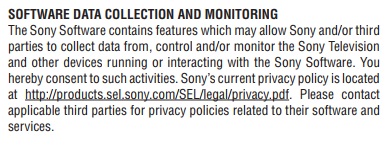
In all this the missed issue of monitoring is actually a lot larger for some and those boasting on what they bought on the dark net (some people remain simple on every level) will have a few repercussions, yet in all this when it regards Cambridge Analytica, we see all kinds of media exploitations, rumours, alleged actions, yet no arrests, no one in the dock and still the entire mess is merely focussed on Facebook. We have seen news on a massive amount of apps collecting data, smart toys, and with the upcoming 5G, the RFID and mobile tag as well as device tags will be an exponentially growing data market with the entire Fortune 500 chomping at the bits to get their fingers on that data, yet at present the legislation has been faulty at best and nominally missing completely. All that because the people give it all away willingly, that is what the next fridge with a £250 discount will warrant, as did the 2016 Sony Smart TV as just about all following models. that is not a joke, you agreed to this when you bought the TV,

it is in the end users license agreement and they are not alone, it is a massive list of corporation that are doing this and the media was, yet they were largely silent about it and the Sony issue in 2012, where the media is what I would personally label as: ‘whoring for advertisement options‘ instead of informing 30 million consumers on the change and its impact, is what still has my nostrils flaring 6 years later and I am an actual Sony fan.

So as we see how we are singularly focussed on where our personal data is and not what we allowed it to be used for, especially as it came with the free use of Facebook, we all need to accept that nothing is for free and the corporation requires its return of investment, well in the case of Facebook merely 60 billion. Where did you think that value came from? Watching advertisement? In that Facebook and google are largely alike. So in these issues in the physical and virtual side, we are short on memory, too large on emotions and unclear on how to make the houses of Lords and Commons more accountable for the matters at hand. Even as they cannot prevent you from staying with Facebook, we all have been failed by legislation that was too slow and MP’s that are showing to be lacking the necessary skills to do something successfully. It would be so lovely if Sir Martin Moore-Bick would be kind enough to show both matters, because it would have a much larger impact. Even as we see, (what I would personally call) the failed false promises of Jeremy Corbyn regarding housing, with: “One million new “genuinely affordable homes” over a decade, mostly for social rent. That’s not quite 1m new council houses – a chunk of these would be delivered by housing associations – but it gets very close” is also a Porky Pie of the largest order. You merely have to look at google Maps to see that there is no place for even 30% of that in London, so will they mostly be in Wales, Penzance, Brighton and Scarborough? In addition, none of the sides of the houses
(Lords or Commons) have successfully done anything to make a change, regarding leasehold which will drive the entire social housing matter further and 1,000,000 houses will not nearly be enough. So, back to the Virtual part, because that is still central in this. In that part I have to thank the realtor Harcourts for bringing the juice.

You see, with: “NPP1 – Collection of Information; Agencies are prohibited from collecting personal information unless it is necessary for one or more of its functions. Personal data should only be collected in a lawful, fair, and not unreasonably obtrusive way. The agency must disclose certain information at the point of collection“, yet in all this the terms: ‘unless it is necessary for one or more of its functions‘ gives a much wider scope, does it not? In addition, with ‘only be collected in a lawful, fair, and not unreasonably obtrusive way‘. So when they (the real estate in general) offer a £199 rebate for registering you as the leasehold owner, how many people do you think that will consider it necessary and not unreasonable? It merely needs to satisfy one function and the deed is covered with the mantle of opportunity. In addition we see “Personal and sometimes sensitive information may be collected and stored on standard real estate industry forms, such as tenancy applications, listing forms, etc. These need to be secured and available for inspection by customers“, so when did you look at what some call the RP Database? In Australia there is a firm CoreLogic and it has a product called RP Data Professional. In all this we see: “RP Data Professional is the leading property data solution used by property professionals in Australia. Prepare reports for prospects and clients, generate value estimates, verify information and conduct valuable research and highly targeted marketing. Packages starting from $150 / month“. It is widely used by debt collecting agencies as well as realtors. You would be surprised to see all that data and what every address offers. Do you think that they are the only ones? Data is gold, it is the printer that allows you to print your own money and for the most it is massively unchecked. Now, I know that RP Data is merely a facilitator in all this, all perfectly valid, and nothing illegal. Yet when we consider ABC in 2016 with “The Reserve Bank has taken the highly unusual step of switching its preferred home value data, arguing that CoreLogic’s figures overstated price growth in April and May due to a methodology change“, so as you see the data goes a lot further and for the most the people, the tenants and Real Estate seekers are totally unaware of such parts and in all this do you think that the UK does not have its own options. In all this, with the explosive cladding issues, did you not think that the clad dealers were not tailoring to ‘property value increase at minimum costs’? This goes a lot wider in several lanes and the sudden much larger issue of cladding is almost not looked at (I did say almost).

So when we see “CoreLogic’s head of research Tim Lawless acknowledged that the changes to the index may have temporarily bumped up the figures for a couple of months. However, he said other data indicate that those two months were still relatively strong for Sydney and Melbourne housing sales” we forget to look at the aligned indications and what else is setting the pass in all this. Even as the last parts were the Australian side of this, CoreLogic is also active in the UK. In this no one seems to have talked to CoreLogic to see if the cladding industry has been given (through subscription) access to the UK RP Database. Is that not interesting too? You see, when we accept the January setting of “Just three tower blocks out of almost 300 with the same “dangerous” and “flammable” cladding as Grenfell Tower have had panels taken down and replaced“, how come the number of buildings is so high? Are all cladding providers so very bad, or was there a very intelligent salesperson selling cladding to the right people, when the timing was just right? I am fairly certain that this part of the conversations has not been showing up anywhere.

The virtual side to the Grenfell disaster was not seen, perhaps that part was immaterial at that time, yet when we see 297 tower blocks in a serious setting of harm, with the initial setting of finding the proper candidates, have we considered that corporate social media (like LinkedIn) could be used to get the goods (in alleged Cambridge Analytica style) to create fear in other ways? A lack of value versus a larger valuation set against a minimal investment. You show me a person who turns that down and I will introduce you to a person who is very aware of the concept of dishonesty.

You see, we have seen for the better part of 5 years the notion of taking fear from the workplace, usually in the style of ‘Corporate Leaders Must Remove Fear Factor from the Workplace‘, which we get from the Huffington Post (at https://www.huffingtonpost.com/mary-prefontaine/corporate-leaders-must-re_1_b_1437445.html) as early as 2012, so when we see “As reported in the Harvard Business Review, employees faced with incivility are likely to narrow their focus to avoid risks, and lose opportunities to learn in the process. Obviously this impacts their level of personal success and the success of the organization“, yet in equal measure, those actors never considered to take the fear factor out of the boardrooms, which are forever ruled by the bottom line and in that respect there is very little difference between a corporate boardroom, or places like the Kensington and Chelsea TMO, which has one bottom line, which is the value of housing and the rise of values of upcoming new housing. So now, the entire Metro section we saw in part one with ‘Cladding added to Grenfell Tower to ‘improve view for nearby luxury flats‘ it makes a whole lot more sense does it not? It is my personal view and opinion, yet in all that data was at the very Core and Logic of it all (pun intended). So when you think the Facebook data is an issue, guess again. The issue is a lot bigger, wider and more exploitable at the expense of yourself of course) than you would have thought.

All within the considerate view of those not looking at any of this, and you think I went deep here? I merely touched the surface and I will be very surprised if the public inquiry touches on any of those matters, not because they do not want to, but because the legal scope is unlikely to be there, as it would have been in the emotional seeking justice side. I guess that it is one of the questions that certain councils do not want to answer, so making sure that the question is not asked will be a first priority for all of them, because if it does get to the table, those who want to stiff Leaseholders with a £40,000 bill might optionally end up being not so successful and there is every indication that a fair chunk of those 297 tower blocks are currently facing a similar dilemma.

That is just my thought on the matter, and in all this, when you start realising the issues at hand and the time that this has taken, in addition that I saw some in minutes a few more in hours and one or two through my decades of data experience, are you not surprised that the elected officials remained in the dark? I know I am one of the better ones on the planet, but I know close to a dozen equal or better than me, many living in London. Do you actually think that some were in the dark or are they allegedly keeping themselves ignorant? In that case, if more happens, how many lives was the price of that ignorance? Can we afford to find out?

I’ll leave you with those questions, have a great Friday and do try to enjoy the weekend!


Leave a comment

Filed under Finance, IT, Law, Media, Politics