Tag Archives: google

Non iudicium tuum

This telling is a little overdue. You see, when you are looking at one aspect, when the aspect is blended into the frame, it tends to be a larger puzzle to decipher where the colours have ended up. You see, when you start the painting, you work with blue, yellow and perhaps a little red. So before you know it, you have in addition purple, Green, Orange and at times brown appears. Yet, how much of yellow is in each of the blends? Do not think it is a black and white path, it is tainted in contrast and the one trying to decipher it all is in the largest of dangers by letting his or her ego speak in the extent that the amount of yellow that made green is used. It isn’t always science, it is at times art. This is the path of intelligence analyses and whomever is pointing its finger at a mere correlation table of SIGINT (or Business Intelligence) will for the most never have a clue what got themselves into that number and they end up painting themselves into a corner, the deadliest of actions in any given analytical equation.

So when I initially got to the fact that the foundation of the Huawei revenue was down 4.25%, I was looking at the base of it. You see, like the blending of colours, Huawei is also getting blended. Samsung would be the strongest indicator why their profits are up by a fair share. In addition as Apple disappointed to the smallest equation is an equal measure of the impact, yet Google is about to hit the revenue ball out of the park with the Pixel and Pixel XL, where it now seems that filling the initial US and UK orders is no longer feasible, the demand for this communication jewel is crushing all expectations raising the bar by a sizeable amount, something we have not seen since the early days of the Apple iPhone.

You see, in July the Financial Times reported on operating margins shrinking, even though revenue surged 40% (for Huawei), the quotes aren’t too ‘informative’, you see the answer isn’t always easy when a brand is global. Yet this quote will help “But while revenue surged, picking up from 30 per cent growth in the same period last year, Huawei’s operating margin shrank from 18 per cent to 12 per cent, the privately owned company said on Monday“, yes the revenue went up by a lot, mainly because over the previous year Huawei was very aggressive offering the P7 at such discounts that in its league it was almost the only choice to make. Other models were sold at very sharp prices, giving shoppers clear reasons to select something that seemed too good to be true. The rest at the Financial Times is pretty spot on, but incomplete. (at https://www.ft.com/content/12a427e2-5232-11e6-befd-2fc0c26b3c60).

It is the next quote I have an issue with “Sabrina Meng, Huawei’s chief financial officer, predicted the strong sales would continue through the year: “We are confident that Huawei will maintain its current momentum, and round out the full year in a positive financial position backed by sound ongoing operations”“, as stated before, people are getting more and more clued in on what is required in a smartphone, as they went the way of Samsung and others in limiting what was available the market is slowing down for them, it will slow down faster and faster as they ignored to comprehend their mobile customers. The lesson Apple knew and Google comprehends at presale is the reason that the Huawei and other markets will slow down even further. Don’t get me wrong, they will still make a profit, but their mobile share will take a hit (when we exclude the Samsung shift). By listening to the wrong analysts and not realising that their production path could have been optimised by not giving in to fragments, the margin was kept low. This is a choice you can make, and it comes with consequences.

Huawei is following Microsoft, Motorola, Sony and a few others in this. And as we see the news in the corner on how others are following the P9 dual lens, they are all ignoring the main element in all this, it is storage plain and simple! That is, for the consumer users, in addition, when we see Ericsson dive deep down into a 94% drop, we need to consider the quote that IT News gave (at http://www.itnews.com.au/news/ericsson-profits-plunge-94-percent-439317) “Acting CEO Jan Frykhammar was confident Ericsson could fight back, noting it had faced a similar situation in 2007-2009 when it was waiting for demand for 4G technology to kick in“, you see, ‘waiting’ is the issue, you either take the lead and jump or let the revenue slide by, that was the consequence. They gave up the mobile smartphone a long time ago, as there was no way to compete with the market. In addition, Ericsson has been dropping the ball on a few telecom fronts.

I think it is relatively safe to state that there is a lull in the Telecommunication market (in general). The final quote “Our result is significantly lower than (what) we expected, with a particularly weak end of the quarter, and deviates from what we previously have communicated regarding market development,” said acting Ericsson CEO Jan Frykhammar” this sounds like an answer, yet it is not.

Is he showing that he had no way to forecast what the market was doing?
Is there no correct focus on ‘market development’?

The Ericsson case is showing us that there is more than one issue. In the same state we have to see that Huawei is a lot more than just mobile phones, as it is with Ericsson, yet as I personally believe it to be, some places aren’t thinking through, at l;east not to the extent that they should be thinking it through. They are trying to get back to the ’98 time when they were getting rich by selling concepts. I see it as backward thinking. Ericsson states on their website “Opportunities in 5G! We asked 650 executives from 8 industries how they use communications technology today, which use cases are likely to dominate their industry, and what business reasons are driving them to move to 5G“, which is not untrue, but as we see the PR machine waking up 4 years early on the biggest opportunities that are eligibly coming, whilst there are still 4 general meetings and as I see it no less than 8 shareholders meetings, so focussing on the now is extremely essential (don’t you agree?), this is why Ericsson got to drop 94%, the ‘now’ is not covered and we only have yesterday’s technology to compare it to. If you wonder about 5G, look here:

https://5g.co.uk/guides/what-is-5g/
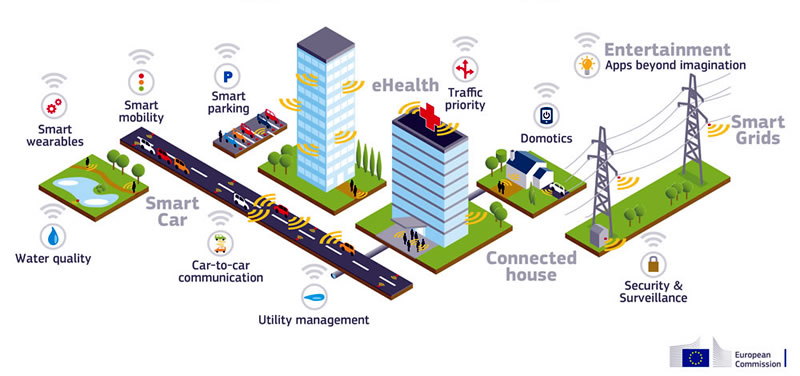
what-is-5g-euroWhat is important is “Huawei is planning to launch the first 5G pilot network with its partners in 2018. Interoperability testing is to be completed in 2019 ahead of a commercial launch in 2020. Ericsson is planning to demonstrate 5G at the Winter Olympics in South Korea (as is Samsung) and at the World Cup in Russia, both in 2018“, this sounds nice, and it actually is, but consider that the devices that need to be there are not created yet, so they are dealing with old tech that is soon no longer interesting, whilst todays needs that shows clear forward momentum thinking is not shown by either and relying on 32GB mobile devices is definitely not it. So the consumer at present is looking at buying at least 2 more mobiles in the next 5 years, so having one now that last 3 years is a massive requirement as I see it. In addition, lowering the upcoming threshold is an initial requirement. The image on that page, shown here, is the first step. The image shows two elements. In the first we see ‘smart mobility‘ and ‘smart wearables‘ in the second we see ‘domotics‘ and ‘Entertainment, apps beyond imagination‘. This gets us now back to ‘Viewpoint to a point of view‘ (at https://lawlordtobe.wordpress.com/2016/10/05/viewpoint-to-a-point-of-view). Google wasn’t just ‘on the ball‘ they are now leading the game and are the new game deciders in the field where everyone wants to play. In that presentation on Google Home they showed to be active in all four elements, and they are now leading in at least two of them. That is the part Huawei ignored. And as so called 2018 G5 partners they had the option to lead the field, they just decided not to do so. By using the initial Apple approach, the Pixel and Pixel XL offer the 128 GB solution for $150 more. Meaning that your phone could last you until 2020 and only when the 5G requirement is actually needed, the current Google solution will give you some of what 5G is supposed to offer, so you will only be upgrading the centre of the hub of your domotics, namely your mobile phone. The rest will most likely already be there, so that is why we see the shift.

So is my view tainted?
It is!

I look at a lot more elements than the consumer will, yet in all this, the consumer is already getting exposure to these elements and as such we see a level of contrasting within the consumers choice that we haven’t seen before, that elements needs to be taken into account as well. Whasun Jho who has published works regarding building Telecom markets. As he sees it and I agree we see a contrasting in the Telecom markets where we see the growth of facility based competition versus service based competition, I believe that the second is only a field of combat if your hardware isn’t up to specs to deal with the wave that will follow over the next 5 years, so in that Huawei, as I stated in the past had the option to grow the market to rule as they went with sharp competition in 2015, they now gave it away by seeking margins instead of overpowered ruling through superior options. In my view as we see where limitations were the only options, it was about competition between providers of the same or similar services (in Australia Telstra versus Optus) and by giving in, they are now losing market share that I stated is a base drop of 4.25% and could rise to 11% before Christmas, almost literally depending on the power of Google’s devices as accepted by the global consumers. In this situation, it is not a given that Google would switch to a Software As A Service path, but by offering the path on corporate whilst leaving the consumers with open and negligible costs, the image as shown implies that ‘smart’ elements and ‘domotics’ will give us Google at number one, with a massive advantage for the longest of times, that is, unless the players change their ways and right fast. Because when proven to work, customer loyalty will soon be the most important metric in this telecom shift. Samsung gambled and got hit hard, yet they are not out. One burning battery does not stop a company the size of Samsung and a lot of burning batteries makes for a fun roasting of Marshmellows (pun intended).

So here we see the use of colours. Which colour is what is not a given and does not matter, what matters is what the consumers and what the corporations need, in the next 3-4 years it will all be about what will last longer, not some hardware as a service that requires annual replacement. Ericsson shows us what happens when you are not proactive on the ball and there will be the licking of wounds for some time there, in addition, as we see the mobile iteration (Experia Z to Z5), actions that I call to be an iterative market that has no chance to survive. sweetening deals like a couple of movies has no place here as I see it, it seems like a quick fix and it is, yet in that Sony has made that mistake a few times too often and Huawei should have learned from those failures. They were all options that could have been avoided and it will hurt Huawei, yet in all this they too are not down or out. Just a little bruised as I see it. So we will see a market that will shift over the next 4-6 weeks. Yet in the end there is no certainty on how matters are impacted. What is clear is that the Telecom market will shift in a massive way, those who do not shift with that market are most likely the players that will not make it to 2019, an extreme prediction, yet will I be wrong?

Consider what the market is trying to imbue to us between 2017 and 2021/2022. As per 2018 you should only consider a device that will last that initial transition (software without the 5G speed), and the one after that will have the speed if you want to play on that level. So buying with clear common sense could save you $1000-$1800, that is for most people serious money, for those relying on a new plan with a new phone, you better remember that soon such a solution might not be that easy to get, or that cheap. The Telecom providers will remain facility based competition, yet the market we swim in is more and more becoming service based, so we need the right device that can deal with this and for telecom companies to keep on playing a ‘this will do for a year‘ isn’t thinking forward, or at least just limited short term. A game we cannot go along with and there are enough people to realise this danger, which is what is pressuring the Huawei market as I personally saw it.

There is more to all this, but a market that revolves on ‘We decide your choice‘ is not a choice, it is a limitation, something that Google is building awareness on by showing us what is possible and then offering the overkill device for a mere $150 extra, like Apple did, but Apple didn’t come with the shown benefits of actually showing us that part. As you realise that you already knew most of these elements as you YouTubed your way through the internet universe, consider the options your phone don’t allow for at present. There is no reason to suddenly update the phone at present, but you should realise that these limitations will hinder you in the future and realising what you need in three years is more and more important in today’s mobile market. It is something you only need to be aware of at present, when the shift comes you will be ready with the right phone and with the options to do it all (without getting pushed into spending $1000+ overnight), as well as the option to keep your movies, your photos, your Pokémon’s, as well as whatever the domotics apps universe brings to your mobile.


1 Comment

Filed under Finance, IT, Media, Science

Challenging fruit

There is an old saying: ‘An Apple a day, keeps the doctor away‘, which could be regarded as correct, or at least as something that is not wrong. These are essentially two statements that depending on your way of life is either more or less correct. Yet, in technology it is a lot less correct, mainly because our health does not have a chance to survive if it comes with the daily cost of $679 a day.

You see, the fruity side of mobile phones is not really an issue when we look at the IOS side of things (aka: the iPhone world), it is quite another when we look at the Android side of things. Even though this was last Wednesday’s news. There have been a few things that required digging and it has been a little bit of a chase. The article was not the first one I saw as I was watching the Google event at 04:00 (as stated in a previous blog). The article ‘Pixel is a direct challenge to Apple – and a referendum on Google‘ (at https://www.theguardian.com/technology/2016/oct/05/google-pixel-phone-market-apple-iphone), was on my mind, but so were a few other items.

The article raises a few issues, some of them are not entirely agreeable from my point of view, so let’s deal with them.

Some do get monthly security updates, but others get Android version updates sometimes years after Google releases new versions, creating so-called fragmentation that makes it harder to develop apps and services” is the first quote I have an issue with. For this I need to step back to one of my earlier smartphones. The Motorola Razr-V. Now, when I bought it I though it was an amazing phone. I still have it, it still works and it is in a drawer somewhere. When I bought it 4 years ago 1GB was ‘da bomb’. I had 4GB storage, so I was happy as can be. I had one update, which was from Ice Cream Sandwich (4.0) to Jelly Bean (4.1) at some point and still, all was fine, just a little nagging need for RAM. What happened was what always happens, we need more storage and we need more RAM. Yet it was not the only thing that was an issue. You see, this model would not support Kit Kat (4.4) and now we had ourselves a horse race because we saw more and more news regarding security flaws and the essential need to have android as updated as possible. Now we get to the issue with the quote: “sometimes years after Google releases new versions“, which is not that correct. You see, the makers of phones did not consider upgrades to the OS, for the mere reason that they prefer to sell a new phone instead of upgrading your old phone, when the phone is deep within warranty it is one thing, however after that passes, the seller tends to not care and getting the new system vetted and fitted requires resources and a serious amount of them. So Motorola came with a notice that it would not be possible to update this model beyond KitKat. Now, because it was a cheap deal and I had actually not considered that updating the Android OS would be a biggie, I ignored it, and it was just one of those few lessons you tend to learn the hard way the first time around. You see, I am an Android user for a reason. As Apple advocated a device that can do a million things, and it can call people, the Android was the opposite. It was a phone that could do a lot of additional things. With Android the phone remained the centre, not the apps (as I personally saw it). The issue is more than semantics, I felt it was a state of mind, which is why I prefer Android (whilst not hating the iPhone).

Now with my feelings regarding safety and security, I believe that it is very important never to be more than 2 versions old, so as I am on Lollipop, it is essential for me to get a new phone capable of Nougat. Those on Marshmallow should decide for themselves if they want to wait another version before getting a new phone. In light that the average functional phone is over $600, that rule becomes a lot more important, also knowing that you are buying something that will need essential replacement after 2 years makes it even more important to find the right device and especially at the right price. This is why I have been hammering on systems with 64GB storage and at least 2GB RAM (3GB preferred). The fact that the makers are withholding these devices, whilst they are available, angers me. This is because the Telecom companies love a consumer forced to upgrade on an annual basis. What they fail to realise that our budgets are not as wide as their need for coke and hookers (if we believe the NY marketing needs, so the entire greed philosophy falls away. So when I go to the shops now, I expect a Nougat device, or a Marshmallow version at high discount. When a shop offers a Sony with a 2 year old operating system at $900 (Lollipop, aka Android v5), they have obviously lost their minds! Now this is the part that matters in the case of Sony. They call it ‘The pioneering 4K smartphone‘, as well as ‘Sony’s next-generation camera technologies in collaboration with Sony’s Alpha engineers‘ and then they promote it, whilst not updating the phone with an operating system that is less than a year old? And only this month, will they come with a previous version of Android (Marshmallow, aka Android v6). Now, this falls in line with the quote from the Guardian, the issue I have is that if they had their ducks in a row, the phone would have been in the shops with Marshmallow (v6), with the option to update to Nougat (v7).

It is my suspicion that the service oriented devices have not caught onto the need to have a more generic framework oriented approach. I touched on it in my article ‘Chicks for free‘ (at https://lawlordtobe.com/2015/03/31/chicks-for-free/), where I touches on SaaS in March 2015, as well as the advantage Huawei gave to its customers by being competitive in price and hardware. They had cornered a nice chunk of market in just one year. Parts of all this were also discussed in January 2015 (https://lawlordtobe.com/2015/01/15/exploiting-mobile-users/). So the issue has been around long enough for the market to adjust, they just decided not to do that. So for Google to come with the Google Pixel (XL) makes perfect sense. Although, from my point of view, $1400 for a device that might initially not last beyond 2 years is still a hard pill to swallow. Apart from the retired groups who are out of cash and comprehension of the technology, we are now facing a growing group of people where the risk of malware exposure goes up tenfold. So the precedence to slam the mobile market is very appealing.

I do not believe that Google is the bad guy here, I believe that our comprehension of accepted support is changing. Let’s take the new Pixel. For one, the marketing was perfectly done and so far from cheap Telco page to Forbes, they are all wildly enthusiastic. A fair point of view, especially as I (from my needy point of view) found just one flaw. Now, there is a side that is not yet known, however, if Google delivers on the statement ‘Two years of OS upgrade from launch‘ as stated, meaning that your Google Pixel will support the installation of Android v9 (whatever that candy name will be, I vote for ‘Liquorice’), then the Pixel will be a steal at twice the price. Meaning that your $1400 should last you 3-4 years, twice the current expected lifespan, easily making it the only choice as an Android phone.

I have an even bigger issue with the quote “Francisco Jeronimo, market research firm IDC’s research director for European mobile devices, says: “Many people care about updates. They recognise that getting the latest update is about getting something better, unless they’ve got an old phone. But it’s about how easy it is to do. Going online and finding an update is something most will not do. If you present it as a notification, as Apple does, then most will jump on board.”“, in this I state that it is my personal believe that Francisco Jeronimo didn’t give the right ambiance to this spin. I have presented evidence that this issue has been known and was visible for the better part of 3 years. Old phone or not, the issue has been limitation of hardware and now that the players realise that the gig is up, they are likely to go into some form of blame mode, whilst their own approach should have changed years ago. The fact that brands like Oppo and Sony are selling what they call state of the art today with a 2 year old OS is just as big a joke, especially if it doesn’t come with the clear notice that an upgrade is available. If I need to give it a name, I would call it the annual update Telco requirement is pushing back and most people are willing to switch providers on a moment’s notice if needed. So Google went Fruity, looked at Apple (it has its own model of OS) and from that point of view, the power of a dedicated mobile became apparent. So now we see that for a mere $150 extra, we get a phone that is not 32GB, but 128GB. So only the dedicated silly would not get that, mainly because logic suggests that Android v8 and Android v9 will all be larger than the previous versions, as could logically be deduced. So not getting storage constraints over the next 3 years makes perfect sense, even if you have a minimal amount of apps. In this case it is not the 10 apps I have now, it is the notion that over the next 3 years I might get another 10-20 apps, as well as a few thousand pictures and knowing that storage will not be an issue, that peace of mind is very important, the moment you get hit by the limitation, it will make sense.

So as Google is challenging that fruity named competitor Apple, it needs to adjust its own model a little bit too. You see, there is a reason why corporate clients still rely on Blackberry. It is the one market Apple has not been able to penetrate, once Android does that, if will be able to shift its interests to another field of data gathering (I mean client instigated data gathering) and data encryption interactions, fields that Apple was not able to surpass Blackberry in, Google has a fair chance at changing that field, with Google now entering layer 1, they have a complete layer coverage allowing to take on the industrial strength enterprise security that Blackberry is famous for, which would give Android the push into the areas where critical security issues are the number one need.

The reality is that this would take at least one additional android upgrade before they enter that field, which have giving Apple the time, but not the engineering skills or the architecture to compete with Blackberry on that level. With this I imply that Apple by keeping to its consumer market views, it ignored a corporate side, or so has create the potential to rule the market, whether it will depends on what they do next, but they have been off to a great start.

The final quote is one that the article has dealt with already “Jeronimo says: “With the Nexus, Google attempted to bring the best device running the latest version of Android, but couldn’t give priority to one of the tier two manufacturers that were interested in making it when you have companies like Samsung and Huawei leading the market. It meant Google struggled to differentiate with its own device when its partners were already making very good devices that were good value.”“, it still requires a little extra and the element that is kept silent is the one I dealt with in ‘The smokescreen of a Smartphone War‘ (at https://lawlordtobe.com/2016/09/30/the-smokescreen-of-a-smartphone-war/), you see, making a version and then making it not an option in Australia reeks. It reeks of Telco managed collaboration, the article stipulates why I feel that way. Now that Google blows storage apart with 128GB for $150 should show those two brands and a few others too, the stupidity of their actions. Huawei had an advantage by offering the 64GB, now that is a no no, it seems that Google can make a massive change, what was once a 0.2% market has the potential to become a 10% market in the next 12 months, which would be a growth that is unheard of. A market Huawei decided not to engage and now Google has voiced it will offer options that I would have considered overkill and not essential. Google seems realise that it does not matter whether the person prefers 64GB or 128GB, by offering them 128GB at a 64GB price is a winner in everyone’s books and it shows the consumer that 32GB might be good for nana and grandpa, the rest should just go big at the additional requested fraction more. In that regard the entire model race with two price additions, one for size of screen and one for size of storage is in my view brilliant (I will give credit that Apple had this approach already).

Which leaves us with the last speculation, no matter how we see 2016, with the changes of 2017 we see that Google is entering a new innovative phase of connectivity. Android devices like Google Home, might seem like a party trick, but the reality of Android devices and the option to connect them is more than a fab, the world presentation blew me away and where it matters, your Pixel could become the hub in all this, music on that little boom box, whilst streaming the pics to your TV. For the mere giggles in me, the device (an entertainment unit), which Microsoft promised the Xbox One to be and not delivered. Google now presents and delivers an actual entertainment system whilst not promising it. It is just too funny for words.

So whatever path you take, whether IOS or Android, just make sure it delivers long term what you need, if you do that, you will remain happy with whatever choice you make and that is what truly matters in my humble opinion.


Leave a comment

Filed under IT, Media

Room for Requirement

I looked at a few issues 3 days ago. I voiced them in my blog ‘The Right Tone‘ (at https://lawlordtobe.com/2016/09/21/the-right-tone/), one day later we see ‘MI6 to recruit hundreds more staff in response to digital technology‘ (at https://www.theguardian.com/uk-news/2016/sep/21/mi6-recruit-digital-internet-social-media), what is interesting here is the quote “The information revolution fundamentally changes our operating environment. In five years’ time there will be two sorts of intelligence services: those that understand this fact and have prospered, and those that don’t and haven’t. And I’m determined that MI6 will be in the former category“, now compare it to the statement I had made one day earlier “The intelligence community needs a new kind of technological solution that is set on a different premise. Not just who is possibly guilty, but the ability of aggregation of data flags, where not to waste resources“, which is just one of many sides needed. Alex Younger also said: “Our opponents, who are unconstrained by conditions of lawfulness or proportionality, can use these capabilities to gain increasing visibility of our activities which means that we have to completely change the way that we do stuff”, I reckon the American expression: ‘He ain’t whistling Dixie‘ applies.

You see, the issue goes deeper than mere approach, the issue at hand is technology. The technology needs to change and the way data is handled requires evolution. I have been in the data field since the late 80’s and this field hasn’t changed too much. Let’s face it, parsing data is not a field that has seen too much evolving, for the mere reason that parsing is parsing and that is all about speed. So to put it on a different vehicle. We are entering an age where the intelligence community is about the haulage of data, yet in all this, it is the container itself that grows whilst the haulage is on route. So we need to find alternative matters to deal with the container content whilst on route.

Consider the data premise: ‘If data that needs processing grows by 500 man years of work on a daily basis‘, we have to either process smarter, create a more solutions to process, be smarter on what and how to process, or change the premise of time. Now let’s take another look. For this let’s take a look at a game, the game ‘No Man’s Sky’. This is not about gaming, but about the design. For decades games were drawn and loaded. A map, with its data map (quite literally so). Usually the largest part of the entire game. 11 people decided to use a formula to procedurally generate 18 quintillion planets. They created a formula to map the universe with planets, planet sized. This has never been done before! This is an important part. He turned it all around and moreover, he is sitting on a solution that is worth millions, it could even be worth billions. The reason to use this example is because games are usually the first field where the edge of hardware options are surpassed, broken and redesigned (and there is more at the end of this article). Issues that require addressing in the data field too.

Yet what approach would work?

That is pretty much the ‎£1 billion question. Consider the following situation: Data is being collected non-stop, minute by minute. Set into all kinds of data repositories. Now let’s have a fictive case. The chatter gives that in 72 hours an attack will take place, somewhere in the UK. It gives us the premise:

  1. Who
  2. Where
  3. How

Now consider the data. If we have all the phone records, who has been contacting who, through what methods and when? You see, it isn’t about the data, it is about linking collections from different sources and finding the right needle, that whilst the location, shape and size of the haystack are an unknown. Now, let’s say that the terrorist was really stupid and that number is known. So now we have to get a list of all the numbers that this phone had dialled. Then we get the task of linking the information on these people (when they are not pre-paid or burner phones). Next is the task of getting a profile, contacts, places, and other information. The list goes on and the complexity isn’t just the data, the fact that actual terrorists are not dumb and usually massively paranoid, so there is a limit to the data available.

Now what if this was not reactive, but proactive?

What if the data from all the sources could be linked? Social media, e-mail, connections, forums and that is just the directly stored data. When we add mobile devices, Smartphones, tablets and laptops, there is a massive amount of additional data that becomes available and the amount of data from those sources are growing at an alarming rate. The challenge is to correctly link the data from sources, with added data sources that contain aggregated data. So, how do you connect these different sources? I am not talking about the usage, it is about the impaired data on different foundations with no way to tell whether pairing leads to anything. For this I need to head towards a 2012 article by Hsinchun Chen (attached at end), Apart from the clarity that we see in the BI&A overview (Evolution, Application and Emerging Research), the interesting part that even when we just look at it from a BI point of view, we see two paths missing. That is, they seem to be missing now, if we look back to 2010-2011, the fact that Google and Apple grew a market in excess of 100% quarter on quarter was not to be anticipated to that degree. The image on page 1167 has Big Data Analytics and Mobile Analytics, yet Predictive Interactivity and Mobile Predictive Analytics were not part of the map, even though the growth of Predictive Analytics have been part of BI from 2005 onwards. Just in case you were wondering, I did not change subject, the software need that part of the Intelligence world uses comes from the business part. A company usually sees a lot more business from 23 million global companies than it gets from 23 intelligence agencies. The BI part is often much easier to see and track whilst both needs are served. We see a shift of it all when we look at the table on page 1169. BI&A 3.0 now gets us the Gartner Hype Cycle with the Key Characteristics:

  1. Location-aware analysis
  2. Person-centred analysis
  3. Context-relevant analysis
  4. Mobile visualization & HCI

This is where we see the jump when we relate to places like Palantir that is now in the weeds prepping for war. Tech Crunch (at https://techcrunch.com/2016/06/24/why-a-palantir-ipo-might-not-be-far-off/) mentioned in June that it had taken certain steps and had been preparing for an IPO. I cannot say how deep that part was, yet when we line up a few parts we see an incomplete story. The headline in July was: ‘Palantir sues investor Marc Abramowitz for allegedly stealing company secrets‘, I think the story goes a little further than that. It is my personal belief that Palantir has figured something out. That part was seen 3 days ago (at http://www.defensenews.com/articles/dcgs-commentary), the two quotes that matter are “The Army’s Distributed Common Ground System (DCGS) is proof of this fact. For the better part of the last decade, the Army has struggled to build DCGS from the ground up as the primary intelligence tool for soldiers on the battlefield. As an overarching enterprise, DCGS is a legitimate and worthwhile endeavour, intended to compute and store massive amounts of data and deliver information in real time“, which gives us (actually just you the reader) the background, whilst “What the Army has created, although well-intentioned, is a sluggish system that is difficult to use, layered with complications and unable to sustain the constant demands of intelligence analysts and soldiers in combat. The cost to taxpayers has been approximated at $4 billion“, gives us the realistic scope and that all links back to the Intelligence Community. I think that someone at Palantir has worked out a few complications making their product the one winning solution. When I started to look into the matter, some parts did not make sense, even if we take the third statement (which I was already aware of long before this year “In legal testimony, an Army official acknowledged giving a reporter a “negative” and “not scientific” document about Palantir’s capabilities that was written by a staff member but formatted to appear like a report from the International Security Assistance Force. That same official stated that the document was not based on scientific data“, it would not have added up. What does add up (remember, the next part is speculative), the data links required in the beginning of the article, have to a larger extent been resolved by the Palantir engineers. In its foundation, what the journal refers to as BI&A 3.0 has been resolved by Palantir (top some extent). If true, we will get a massive market shift. To make a comparison, Google Analytics might be regarded as MSDOS and this new solution makes Palantir the new SE-Linux edition, the difference on this element could be that big. The difference would be that great. And I can tell you that Google Analytics is big. Palantir got the puzzle piece making its value go up with billions. They could raise their value from 20 billion to 60-80 billion, because IBM has never worked out that part of analytics (whatever they claim to have is utterly inferior) and Google does have a mobile analytics part, but limited merely as it is for a very different market. There have always been issues with the DCGS-A system (apart from it being as cumbersome as a 1990 SAS mainframe edition), so it seems to me that Palantir could not make the deeper jump into government contracts until it got the proper references and showing it was intentionally kept out of the loop is also evidence that could help. That part was recently confirmed by US Defense News.

In addition there is the acceptance of Palantir Gotham, which offered 30% more work with the same staff levels and Palantir apparantly delivered, which is a massive point that the Intelligence groups are dealing with, the lack of resources. The job has allowed NY City to crack down on illegal AirBnB rentals. A task that requires to connect multiple systems and data that was never designed to link together. This now gets us to the part that matters, the implication is that the Gotham Core would allow for dealing with the Digital data groups like Tablet, mobile and streaming data from internet sites.

When we combine the information (still making it highly speculative) the fact that one Congressman crossed the bridge (Duncan Hunter R-CA), many could follow. That part matters as Palantir can only grow the solution if it is seen as the serious solution within the US government. The alleged false statements the army made (as seen in Defence News at http://www.defensenews.com/articles/dcgs-commentary) with I personally believe was done to keep in the shadows that DCGS-A was not the big success some claimed it to be, will impact it all.

And this now links to the mentions I made with the Academic paper when we look at page 1174, regarding the Emerging Research for Mobile Analytics. The options:

  1. Mobile Pervasive Apps
  2. Mobile Sensing Apps
  3. Mobile Social Networking
  4. Mobile Visualization/HCI
  5. Personalization and Behavioural Modelling

Parts that are a given, and the big players have some sort of top line reporting, but if I am correct and it is indeed the case that Palantir has figured a few things out, they are now sitting on the mother lode, because there is currently nothing that can do any of it anywhere close to real-time. Should this be true, Palantir would end being the only player in town in that field, an advantage corporations haven’t had to this extent since the late 80’s. The approach SPSS used to have before they decided to cater to the smallest iteration of ‘acceptable’ and now as IBM Statistics, they really haven’t moved forward that much.

Now let’s face it, these are all consumer solutions, yet Palantir has a finance option which is now interesting as Intelligence Online reported a little over a week ago: “The joint venture between Palantir and Credit Suisse has hired a number of former interception and financial intelligence officials“, meaning that the financial intelligence industry is getting its own hunters to deal with, if any of those greedy jackals have been getting there deals via their iPhone, they will be lighting up like a Christmas tree on those data sets. So in 2017, the finance/business section of newspapers should be fun to watch!

The fact that those other players are now getting a new threat with actual working solutions should hurt plenty too, especially in the lost revenue section of their spreadsheet.

In final part, why did I make the No Man’s Sky reference? You see, that is part of it all. As stated earlier, it used a formula to create a planet sized planet. Which is one side of the equation. Yet, the algorithm could be reversed. There is nothing stopping the makers to scan a map and get us a formula that creates that map. For the gaming industry it would be forth a fortune. However, that application could go a lot further. What if the Geospatial Data is not a fictive map, but an actual one? What if one of the trees are not trees but mobile users and the other type of trees are networking nodes? It would be the first move of setting Geospatial Data in a framework of personalised behavioural modelling against a predictive framework. Now, there is no way that we know where the person would go, yet this would be a massive first step in answering ‘who not to look for‘ and ‘where not to look‘, diminishing a resource drain to say the least.

It would be a game changer for non-gamers!

special_issue_business_intelligence_rese


Leave a comment

Filed under Finance, IT, Military, Politics, Science

The Taxing Delicious

Taxing delicious is a new sweet tasting Apple, even sweeter than the golden Delicious, and it is to be regarded as healthy for body, mind and government. Yes, in this case it is not a new Irish Cider (which would be a nice idea too), this is about a company getting a bill. You see, the funny part of it was that if there had been no EU, Apple would have been 13 billion wealthier. How doesn’t that beat the odds?

These are some of the thoughts rising within me again as I read ‘Apple tax ruling must be overturned, says US business group‘ (at https://www.theguardian.com/business/2016/sep/16/apple-tax-ruling-must-be-overturned-says-us-business-group).

As I see it, if it is such an issue, why not do an appeal? You see, this entire issue is as convoluted as it is ever likely to get. When I see ‘Ireland Doesn’t Want Apple’s Back Taxes, but the Irish Aren’t So Sure‘ in the New York Times (at http://www.nytimes.com/2016/09/12/business/international/ireland-doesnt-want-apples-back-taxes-but-the-irish-arent-so-sure.html), my initial response to Enda Kenny would be “Are you out of your bloody mind?” Now, let’s be partially fair. There is a method to the governments madness, yet even as giving in to big business might seem appealing, but the US is changing its taxation parameters (as well as tax accountability) and after the elections there is no way to tell how the US governments hats will be pointing, so getting what you can now is not the worst idea. In addition, when Apple et al will make the jump away and to other places, they will leave you with buildings that remain empty and will not have been paid off, so you will have a billion in real estate, whilst not having any return on investment, just empty buildings wasting away. That situation is not as unimaginative or as surreal as you might think. The idea that a government is appealing against a tax bill on behalf of a Forbes 500 company is entertaining, upsetting and obscene all at the same time, but that is sometimes how the cookie crumbles.

What is interesting in all this is how the EU courts will act, you see, if they give in now, it should be regarded as the utter uselessness of that court to begin with. It gives weight that not being part of that very expensive club is indeed the way to go, which will now give weight that Brexit was not a bad move and it will in addition fuel Frexit too. All that over a mere 13 billion invoice. Less than 5% of the costs of Greece, which fuelled Brexit to begin with. This is at the heart of the matter of what the Americans just cannot comprehend. They just received the massive blowback on the lesson that you cannot win every fight and that Economic Status Quo is an illusion that will collapse upon those believing in it.

So as we see the idiotic roundtable threaten those European leaders “In an open letter to the leaders of the 28 European Union countries, the Business Roundtable group defended Apple over its tax dispute with the European commission” and “US businesses have warned European leaders they risk a “grievous self-inflicted wound” unless they overturn Brussels’ demand that Apple pay the Irish government €13bn (£11.4bn)“, I just wonder if they even considered the stupidity of their actions. On the other hand, should those leaders cave, how stupid are the European elected officials to begin with? So as we wonder whether Randall L. Stephenson has looked into the long term issues of his act, when we see that these actions drive Frexit and possibly even Italy’s act on a referendum (although the major influences would be Brexit and Frexit), will Randall respond with a ‘this is much more complex and should not have been pushed by our, what we regard to be a righteous act‘, or will we see a spokesperson state ‘Our Chairman is currently unavailable and is taking his personal time teaching the Youth how to do a proper sheepshank‘? I will let you decide, but consider that tax accountability has been an issue for over a decade and now we finally see an actual result against a large corporation we see people backing down? Perhaps they thought it would never get that far? Just like Brexit was never going to be a reality!

Yet the Irish Times did not remain quiet and less than 24 hours ago reported (at http://www.irishtimes.com/business/technology/apple-fined-in-japan-for-under-reporting-earnings-sent-to-ireland-1.2793469), ‘Apple fined in Japan for under-reporting earnings sent to Ireland‘. So when we read “The Tokyo Regional Taxation Bureau determined that the unit, which sends part of its profits earned from fees paid by subscribers in Japan to another Apple unit in Ireland to pay for software licensing, had not been paying a withholding tax on those earnings in Japan, according to broadcaster NHK“, I just wonder who the Tax Auditor was here.

Now I am not out to make Apple the bad guy, even though they screwed me over twice! What is important is that through all the presentations and all the boasting and ego based actions, there are now 4 groups in play all trying to get Brussels to back down on a legal verdict. We need to wait the appeal on this, yet should this remain and if the US makes noise we will have clear evidence that the EU is no longer something with validity, even stronger, these events are clear signals that the TTIP is an even worse idea than initially thought of in opposition. The one sidedness aside, the fact that American business has basically become the corporate ‘bully’, we need to reassess the situation and remain clear on where our priorities are. I personally remain with the belief as I always have that the Commonwealth nations need to stick together. In these times we now see the Democratic Party under leadership of President Obama do the following “The Obama administration on Thursday took action to limit the use of foreign tax credits by American multinational companies to reduce their U.S. tax bills, a move that followed an EU order that Apple pay back taxes to Ireland“, which I think is not a bad idea. You see, Apple et al might claim how they are so investing everywhere, but that is only done (as I personally see it) to avoid paying tax in America. It is one of the massive reasons why America is so deep in debt (apart from their impossibility to manage a budget) and something has to give. If those tax dollars are used to lower that debt then I would state: “Barack, you legend you, well done!“, because an America with low debt (read: no debt), would be again the superpower it once was and currently pretends to be.

In the end, nations that have a minimal debt, these nations get to decide for themselves, not having their actions overruled by financial institutions or Large Corporation, or by Randall L. Stephenson for that matter. Yes, we can see that those moves will have impact all over Europe and not in a nice way, but that is part of the game. You cannot have it both ways that was never a reality to begin with. Now they only need to fix the holes that Mario Draghi has in his hands and we are possibly perhaps on route to get something sorted.

Yet there is one part we need to get back to and that is the verdict. You see, what is in play here is the statement “an agreement allowing Apple to pay a maximum tax rate of just 1%. In 2014, the tech firm paid tax at 0.005%. The usual rate of corporation tax in Ireland is 12.5%“, this implies that Apple didn’t just get preferential treatment, all the other players were discriminated against. When we see the parts we had already known for a long time, the fact that “Ireland’s tax arrangements with Apple between 1991 and 2015 had allowed the US company to attribute sales to a “head office” that only existed on paper and could not have generated such profits“, which was a given and the result we saw on a global scale “Apple avoided tax on almost all the profit generated from its multibillion-euro sales of iPhones and other products across the EU’s single market. It booked the profits in Ireland rather than the country in which the product was sold“, gives way that a single market is perhaps not the best solution for all but one nation and in addition to this we must realise that the solution I mentioned 5 years ago to set the tax laws that taxation should be set into the nation of the buying consumers physical location could have avoided this and many other issues. A simple taxation change that made all the difference, yet it seems that no one in legislation in those nations as well as those political players ever considered changing that simple law that could have made all the difference.

You see, as the Guardian by-line offers, this case could have another escalation soon enough “Charlie Harrington, 53, a paramedic in Cork, expressed frustration that the Irish government penalized small taxpayers but seemed ready to protect Apple“, which is exactly how millions feel in both France and Italy. If this tax case caves and Apple ends up not being due this invoice, the jump to anti-EU sentiments will go up massively and very fast so. At that point President Obama will only have himself to thank for the mess he started to create when he went 180 degrees on the corporate tax issues discussed in the ‘The Hague Summit of 2013’. That was the first step that could have avoided a few things, this case being one of them.

Cause and Effect

The question becomes ‘What will happen now?’ This is something not easily answered. At present Apple has a few other issues knocking at its door and the iPhone 7 is one of them. The population at large is less money blessed, so paying $1295 for a new phone that according to Forbes is “Purchasing the iPhone 7 this morning from my local Apple Store I found a device that is remarkably similar to last year’s iPhone 6S and the iPhone 6 from 2014. The external design cues remain, the chips inside are faster, and iOS 10 is more polished but is fundamentally the same operating system. Nothing ‘feels’ news even though the package is professional and projects a revolution that is hard to find“, this is at the heart of the matter. Trying to create waves by limiting the system, whilst overall the system is still the same is an issue and at nearly $1300 a very expensive one. That whilst Android competitors are coming into the field with comparable devices, including a headphone jack at 50%-60% of the price of the iPhone 7 and the world is starting to consider the non-IOS alternative. What Apple should fear is not just the market they are losing, the dangers that people could, in regard to the tax pressures they have and the pressure that Apple seems to be able to avoid, is one that could make them feel frustrated and vindictive. The idea that a person could think ‘If the need not pay taxation, they do not need my business either is not that far a stretch‘. People are starting to see the ethical imbalance that large corporations have impressed upon nations and in Europe where the quality of life is not that great at present, seeking the much cheaper alternative that Huawei and LG are offering is one worth considering. That could bring considerable consequences for Apple soon enough. Now I am not stating that the iPhone 7 will be a flop, but for Apple in this stage, should they lose even as little as a 2% market share, the consequence for apple will be intense to state the least. In addition, the fact that the iPad has remained a success for so long could equally be the next problem child for Apple. In that regard releasing the iPad Pro was a really good idea, yet the tablet contenders are starting to realise what it takes to be a contender and if that knowledge is applied properly, there too non-IOS devices (read: android) could start to make a killing and as such undermine that market Apple has at present. The origin is not the device makers, but Google. As Google has been pushing ‘the year of mobile’ for two years, the shift of usage is also growing. There is a growing visibility that at times the mobile screen does not cut it and it gives more and more opportunity to both Phablet and Tablet. These are all examples showing quite clearly that there is no status quo to rely on and the temporary nature of devices shows that Apple needs to really push forward in an innovative way, preferably before the makers of tablets realise that an affordable 128 GB version of an Android tablet is every bit as appealing as the iPad Pro, especially when the Android version could be a lot less than the IOS edition. With Android having its own set of quality games, Apple has more to lose than they are willing to admit to and time is slowly running out for their streak of ignorance to continue. However, it is important to note that Apple has been pretty super innovative with the iPad pro, so there is still a gap to overcome for the competitors. In that regard it is equally interesting that the Android device market have ignored that side of the consumer’s need (read: desire). In all this, it was about taxation and not on markets. Yet one is linked to the other, mainly because if there is no market there is in equal measure no taxable revenue, which gets us to the final part. You see, I have written about these issues before in one form or another and now we see that the Wall Street Journal is finally waking up to this (at http://www.wsj.com/articles/lew-is-right-on-eu-tax-grab-but-lacks-credibility-1473962171), when we read “The Obama administration has had 92 months to tackle corporate tax reform. Now that Europe is making a grab for taxes on profits held by U.S. companies overseas, President Obama is ready to use his last few months in office to address tax issues that were ignored or made worse under his watch“, my response is that neither was done, as stated in earlier blogs in April 2016, when I wrote ‘Ignoranus Totalicus‘ (at https://lawlordtobe.com/2016/04/24/ignoranus-totalicus), he refused to act (as voiced by “Senior officials in Washington have made it known“), so the non-actions are now back firing as event are now escalated. Another iteration of status quo.

What now?

This now all related to the issue at hand. IT corporations decided to maximise their profit by a consumer iterative annual approach of products. The IT market in the US nearly collapsed as it allowed for what was once regarded as a Taiwan Clone (a cheap alternative) to a quality A-brand to catch up. This is the problem with iterative thinking, when you are not in a niche market like Northrop Grumman (who at one stage actually there software patches ‘Iteration version’ I believe), you allow the market to catch up with you. ASUS caught up so and soon thereafter surpassed the original market owners. This lesson was not learned and the Telecom market decided that the profit was good in this way. So, please feel free to correct me. What happened to Ericsson and Nokia? Apple came and overwhelmed everyone and instead of truly remaining innovative, they started to largely iterate their device and called it innovation, now that LG, Samsung and Huawei have caught on and pretty much caught up, they are now offering equal, if not better options at lower prices. So how long will it take Apple to learn that status quo is merely an illusion? I reckon will see that revelation close after Christmas, after the annual sales are gone (and they will be improbable but not impossible a bit disappointing this year).

I reckon we will know in about 15-19 weeks!

Leave a comment

Filed under Finance, IT, Media, Politics, Science

The Zuckergate Censorberg Act

Yesterday an interesting issue got to the FrontPage of the Norwegian Aftenposten (at http://www.aftenposten.no/kultur/Aftenposten-redaktor-om-snuoperasjonen–En-fornuftig-avgjorelse-av-Facebook-604237b.html) and for those who are slightly Norwegian linguistically challenged, there is an English version at https://www.theguardian.com/technology/2016/sep/08/facebook-mark-zuckerberg-napalm-girl-photo-vietnam-war.

aftenposten
It is something we have seen before. Although from a technical point of view, the editing (read: initial flag) is likely to have been done electronically, the added blame we see when we get to the quote “Egeland was subsequently suspended from Facebook. When Aftenposten reported on the suspension – using the same photograph in its article, which was then shared on the publication’s Facebook page – the newspaper received a message from Facebook asking it to “either remove or pixelize” the photograph” shows that this is an entirely different matter. This is now a censoring engine that is out of control. The specification ‘either remove or pixelize’ does not cut it, especially when it concerns a historical photo that was given a Pulitzer.

I am actually considering that there is more in play, you see, the Atlantic (at http://www.theatlantic.com/technology/archive/2016/05/facebook-isnt-fair/482610/) said it in May when it published “Facebook Doesn’t Have to Be Fair. The company has no legal obligation to be balanced—and lawmakers know it“, which is the title and subtitle and as such, the story is told and politicians like John Thune experienced how a social network can drown out whatever it wants (within reason). So when you see something is trending on Facebook, you must comprehend that it is not an algorithm, but contracted people guide its creation and as quotes in the Atlantic “routinely suppressed conservative news“. Yet this goes further than just censorship and news. As the Editor of Aftenposten raises (and others with him), Mark Zuckerberg has now become the most powerful editor in the world. He now has nothing less than a sworn duty to uphold the freedom of speech to a certain degree, especially when relying on algorithms that are unlikely to cut the mustard on its current track. It now also opposes the part the Atlantic gave us with the subtitle “The company has no legal obligation to be balanced—and lawmakers know it” showing Sheryl Sandberg in a ‘who gives a fuck‘ pose. You see, at present Facebook has over 1.7 billion active users. What is interesting is that the acts that he has been found guilty of acts that negatively impacts well over 50% of his active user base. Norway might be small, but he is learning that it packs a punch, and when we add India to the mix, the percentage of alienated people by the censoring act of Facebook goes up by a lot. So even as there is the use of blanket rules, the application is now showing to be more and more offensive to too many users and as such this level of censorship could hurt the bottom dollar that every social media site has, which are the number of users. So as Mark Zuckerberg is trying to get appeal in Asia, he needs to realise that catering to one more nation could have drastic consequences to those he think he has. Now we understand that there needs to be some level of censorship, yet the correct application of it seems to go the wrong way. Of course this could still all go south and we would have get used to log in to 顔のブック, or 脸书. Even चेहरे की किताब is not out of the question. So is that what Zuckerberg needs? I know the US is scared shitless in many ways when that happens, so perhaps overseeing a massive change into the world of censoring is now an important issue. Espen Egil Hansen said it nearly all when he stated “a troubling inability to “distinguish between child pornography and famous war photographs”, as well as an unwillingness to “allow space for good judgement”” is at the heart of the matter. In that regard, the issue of “routinely suppressing conservative news” remains the issue. When you censor 50% of your second largest user base, it is no longer just a case of free speech or freedom of expression. It becomes an optional case of discrimination, which could have even further extending consequences. Even as we sit now, there are lawsuits in play, the one from Pamela Geller, a person that only seems to be taken serious by Breitbart News is perhaps the most striking of all. Pamela (At http://www.breitbart.com/tech/2016/07/13/pamela-geller-suing-facebook/) with the quote “My page “Islamic Jew-Hatred: It’s In the Quran” was taken down from Facebook because it was “hate speech.” Hate speech? Really? The page ran the actual Quranic texts and teachings that called for hatred and incitement of violence against the Jews.” is a dangerous one. It is dangerous because it is in the same place as the Vietnam photo. The fact that this is a published religious book makes it important and the fact that the book is quoted makes it accurate. The blaze (at http://www.theblaze.com/stories/2016/01/05/an-israeli-group-created-fake-anti-israel-and-anti-palestinian-facebook-pages-guess-which-one-got-taken-down/) goes one step further and conducted an experiment. The resulting quote is “The day the complaint was filed, the page inciting against Arabs was shut down. The group received a Hebrew language message from Facebook that read, according to a translation via Shurat HaDin, “We reviewed the page you reported for containing credible threat of violence and found it violates our community standards”, the page inciting against Jews was left active.” This indicates that Facebook has a series of issues. One cannot help but wonder whether this issue is merely bias or the economic print the Muslim world has when measured against a group of 8 million Israeli’s or perhaps just the population of 16 million Jews globally. With the Aftenposten event, Facebook seems to have painted itself into a corner, and if correct several lawsuits that could soon force Facebook to have a rigorous evaluation and reorganisation of several of its internal and external departments.

Because if Content is the cornerstone of Social media, the need to keep a clear view of freedom of expression and freedom of speech becomes even more important. In a product that seeks the need for growth that should have been obviously clear.

There is however a side that is not addressed by any. You might get the idea when you see the Guardian quote “News organizations are uncomfortably reliant on Facebook to reach an online audience. According to a 2016 study by Pew Research Center, 44% of US adults get their news on Facebook. Facebook’s popularity means that its algorithms can exert enormous power over public opinion“, the fact that Facebook might soon be hiding behind the ‘algorithms‘ as we see Facebook go forward on a defence relying on their version of the DEFAMATION ACT. In this example I will use the DEFAMATION ACT 2005 (Australian Law), where we see in Article 32

32 Defence of innocent dissemination
(1) It is a defence to the publication of defamatory matter if the defendant proves that:
(a) the defendant published the matter merely in the capacity, or as an employee or agent, of a subordinate distributor, and
(b) the defendant neither knew, nor ought reasonably to have known, that the matter was defamatory, and
(c) the defendant’s lack of knowledge was not due to any negligence on the part of the defendant.

(2) For the purposes of subsection (1), a person is a “subordinate distributor” of defamatory matter if the person:

(a) was not the first or primary distributor of the matter, and
(b) was not the author or originator of the matter, and
(c) did not have any capacity to exercise editorial control over the content of the matter (or over the publication of the matter) before it was first published.

By relying on Algorithms, Facebook could now possible skate the issue, yet this can only happen if certain elements fall away, in addition, the algorithm will now become part of the case and debate muddying the waters further still.

Hanson does hit the nail on the head when it comes to the issues he raises like “geographically differentiated guidelines and rules for publication”, “distinguish[ing] between editors and other Facebook users,” and a “comprehensive review of the way you operate”. He is not wrong, yet I have to raise the following

In the first, when you decide to rely on “geographically differentiated guidelines and rules for publication”, you also include the rules of who you publish to. This is the first danger for Facebook, their granularity could fall away to some extent and Facebook advertising is all about global granularity. It is a path he would be very unwilling to skate. Open and global are his ticket to some of the largest companies. When this comes into play, smaller players like Coca Cola and Mars could soon find the beauty of moving some of their advertisements funds away from Facebook and towards Google AdWords. I am decently certain that Google will not be opposing that view any day soon.

In the second “distinguish[ing] between editors and other Facebook users” is only part of the path, you see when we start classifying the user, Facebook could start having to classify a little too much, making any distinguishing of such kind additional worries in regards to discrimination. Twitter faced that mess recently when a certain picture from one Newspaper was allowed and another one was not. That and the fact that a woman named Molly Wood (her actual name) was not allowed to use her name as her Facebook name, which is a matter for another day.

In the third the issue “comprehensive review of the way you operate” which is very much in play. The cases that Facebook has faced regarding content and privacy are merely the tip of the iceberg. We can all agree that when it is about sex crimes people tend to notice it, I am speculating for the most because of the word ‘sex’. So when I saw that there is a June reference (at http://www.mrctv.org/blog/facebook-censuring-international-stories-about-rapes-muslim-refugees), when Facebook removed a video from Ingrid Carlqvist for the Gatestone Institute, where she reports that there has been a 1,500% increase in rapes in Sweden, I was wondering why this had not found the front page of EVERY newspaper in every nations where there is free speech. The Gatestone Institute is a not-for-profit international policy think tank run by former UN Ambassador John Bolton, so not some kind of radicalised front.

In that regard is any kind of censoring even acceptable?

This case is more apt than you think when you consider the quote we see, even as I cannot give weight to the publishing site. We see “Facebook may have been incited to censor this story by a new European Union push in cooperation with Facebook, Twitter, and Google to report incidents of racism or xenophobia to the authorities for criminal prosecution” with the by-line “In order to prevent the spread of illegal hate speech, it is essential to ensure that relevant national laws transposing the Council Framework Decision on combating racism and xenophobia are fully enforced by Member States in the online as well as the in the offline environment. While the effective application of provisions criminalising hate speech is dependent on a robust system of enforcement of criminal law sanctions against the individual perpetrators of hate speech, this work must be complemented with actions geared at ensuring that illegal hate speech online is expeditiously reviewed by online intermediaries and social media platforms, upon receipt of a valid notification, in an appropriate time-frame. To be considered valid in this respect, a notification should not be insufficiently precise or inadequately substantiated“, which was followed by “No matter why Facebook decided to remove Ingrid Carlqvist’s personal page, it doesn’t lessen the fact that this is another example of their political censorship, and their desire to place political correctness over freedom of the press and freedom of expression

Now this part has value and weight for the following reason: When we consider the earlier move by Facebook to relay on algorithms, the European Commission (at http://europa.eu/rapid/press-release_IP-16-1937_en.htm) gives us: ‘is expeditiously reviewed by online intermediaries and social media platforms, upon receipt of a valid notification, in an appropriate time-frame‘, which could imply that an algorithm will not be regarded as one of the online intermediaries, which means that the human element remains and that Facebook cannot rely on the innocent dissemination part of the Defamation Act, meaning that they could end up being in hot water in several countries soon enough.

As parting words, let Facebook take heed of the words of Steven Spielberg: “There is a fine line between censorship and good taste and moral responsibility“.

Leave a comment

Filed under IT, Law, Media, Politics, Religion

Slaves of a different nature

The sci-fi fan sees in his/her mind a woman, all green, preferably close to naked growing lust in their mind. It is the Orion Slave girl fantasy. This comes from a TV-series that is half a century old. In that universe created by Gene Roddenberry these green ladies were introduced in the original pilot of the Star Trek series in the episode ‘the Cage’, there they were depicted in a sexual context. This is not that kind of slave. Neither is it the kind that is forced to create products through prisons or work camps where they make license plates, or set up governmental mailings. Neither are they children under 18, forced into some kind of servitude. No, these are not one of the 5 forms that the National Underground Railroad Freedom Center is illuminating, this is a sixth kind.

It is the kind of servitude that was once a calling, once a choice of life, which governments and insurers alike have been putting under pressure beyond any normal acceptance of labour. That part has been ignored for too long. People all believing in the wealth that a doctors and lawyers income brings. Later in a career that might have some level of truth when you ignore the elements on the other side of the scale. The fact that someone in IT will surpass the income of those graduates from the very beginning is often ignored. When I see some of my friends in health care, I see friends who are exhausted 70% of the time, some working in excess of 14 hours a day. So when I read ‘Nearly 60% of Scottish GPs plan to leave or cut their hours‘ (at http://www.theguardian.com/society/2016/apr/28/nearly-60-of-scottish-gps-plan-to-leave-or-cut-their-hours), I am not overly surprised.

We all claim that we are against slavery and injustice, yet the governments on a global scale are seeing their health systems collapse and as such, hiding behind the false image of all doctors are wealthy, they have been cutting into the incomes of doctors and stretching the hours they have to make. Underfunding practices and making them work ungodly hours. What we see in Scotland is only the beginning. In the Netherlands we saw in 2014 that GP’s would work around 60 hours per FTA (Full Time Equivalent), making that 13 hours per day, whilst IT staff would get more for a mere 40-45 hours a week, 9 hours a day at the most.

So in all this, whilst health care workers availability are at an all-time low, we see the quote: “26% planned to leave general practice in the next five years“, so one out of four is stopping whilst one in 6 patients will at current pressure not receive the minimum level of care which will now get close to another 1.5 out of 6. This gives us 33% to 50% of the patients in a tough spot. One foot in the grave will get a whole new meaning soon enough when that comes to pass. Certain elements of these changes are already visible in France and the Netherlands, the United Kingdom is in a harsher place than the Netherlands, but I cannot confirm how France is set. Outside of the large cities the information tends to be sketchy and cannot completely be relied upon (read: my knowledge of French sucks big time). Sweden is heading towards a new economic crises on more than one side. Healthcare is one (but less visible), the issue that is visible is the economic drain that the refugees are causing, well over 100,000 have no place and no matter how obliging Sweden is. The refugees are confronted with language issues and a skill set problem. The latter one can partially be adjusted, the first one can be overcome by the refugees who truly want this, but it takes time, which is one side Sweden is having less of. Sweden is trying to recruit doctors in many ways and their approach might work, but it will work slowly and it will cost the Swedish government a fortune. The reason for focussing on Sweden is because for the most, Sweden is a social success. Sweden has made social changes that the nation accepted (including paying a lot more tax than there neighbouring nations). The refugees are changing this, a social system can only survive in balance, the refugees arrived in such massive amounts that the system cannot cope. The total refugees that recently arrived have surpassed the size of the Swedish city of Västerås, which by the way is not the smallest of places. With the banking in disarray and Sweden missing sales marks gives additional problems for Sweden and healthcare will feel the brunt as doctors are now moving to other non-Swedish shores. Sweden illuminates the required need for the UK, a need that the UK is unable to adopt at present. In addition, the approach that Jeremy Hunt is taking will not help any.

When we see the British Telecom News page, we see “But in a letter to the BMA’s junior doctor committee chairman, Dr Johann Malawana, Mr Hunt said: “It is not now possible to change or delay the introduction of this contract without creating unacceptable disruption for the NHS.”

As I see it, my response would be ‘Yes, Mr Hunt!‘ you had alternatives but you chose to ignore them. Focussed on a system that had collapsed, focussing on the approach of slavery, you saw in your school years the Slavery Abolition Act 1833, yet as we see the words from the English poet William Cowper (1785) as he wrote:

We have no slaves at home – Then why abroad?
Slaves cannot breathe in England; if their lungs
Receive our air, that moment they are free.
They touch our country, and their shackles fall.
That’s noble, and bespeaks a nation proud.
And jealous of the blessing. Spread it then,
And let it circulate through every vein.


Bankers are overprotected whilst being vultures, for not being held accountable for the mess they created (as it was not illegal), whilst at the same speed, junior doctors are reset with contracts that amounts to becoming an involuntary slave labour force. This to the degree that doctors are packing their cases and moving to Australia and other Commonwealth nations that will take them and with the shortage the world at large has, for them moving to Nassau and live by the beach with a small practice would be preferred to a city job with a mortgage they cannot pay off and working 60 hours a week. Jeremy Hunt dropped the ball. He did not do this intentionally. He was given a bad hand from the start, yet in all this instead of going on the same way, the NHS needed another direction entirely, that part was never really investigated.

For me, with whatever I have left?

If I had to go into healthcare, I would try for Radiologist position in Essex or something like that. I still have 15 years in me. For now, I have a nice idea for Google to grow their revenue by 3.5 billion dollars over the next 5 years, and gradually more after that and for £25M post taxation it is all theirs! For now, I am considering to do some teaching in Italy in the future. Teaching English in Catholic Public Schools near the Vatican. You see, this crazy merry go round we have in Europe now will collapse, there is no viable way to stop that at present as I personally see it. We must focus on what comes after. That part is now gaining visibility as we see the US President (read: Mr Lame Duck Obama) is quoted in Forbes “President Obama’s Implicit Message To Taxpayers: ‘I Own You’“. My response?

No, Mr President, you do not. You never did. Like a weakling you stopped taking taxation to a realistic level, you refused to do anything to stop greed. That part was clearly shown at the G-20 in 2013, three years ago. You might actually end up becoming the most useless president in the history of the United States of America

That would be my response!

When we look at Forbes (at http://www.forbes.com/sites/johntamny/2016/04/10/president-obamas-implicit-message-to-taxpayers-i-own-you), we see that the Obama treasury stopped one deal, one deal only. This is about a lot more than just that 212 billion dollar deal. You see, this is not about the Panama Papers, this is what they enabled. When we consider the Guardian (at http://www.theguardian.com/news/2016/may/06/panama-papers-us-launches-crackdown-on-international-tax-evasion), we see that same duckling state “the president will take executive action to close loopholes used by foreigners in the US and call on Congress to pass legislation“, how interesting that it is just about the foreigners, so how much is in Rothschild wealth management directly from foreigners and how much is arranged through American agents?

In addition we have “The Panama Papers underscore the importance of the efforts the United States has taken domestically, and the efforts we have undertaken with our international partners, to address these shared challenges”, which is an empty statement as I see it, because over the next 6 months too little will be done and it will be left to the next person in office. The final quote is “The problem is that a lot of this stuff is legal, not illegal”, which is something we already knew. Yet when we consider the change that could have been brought in 2013, he (read: the Democratic Administration in power) backed off, forcing a watered down version that was close to useless. This is the evidence I see as to the level of uselessness that the USA currently represents. Poverty levels are still at a high and in Europe that number is growing, this is the foundation that allows for the growth of what can be regarded as legal slavery. It is legal because it is governmentally arranged, it is slavery as the medical industry is pushed into a level of servitude of no-choice. In Europe, some are now claiming that the amount of people under the poverty line is now one out of four. That push is a great hammer for Jeremy Hunt to use to push for cheap contracts and ungodly working hours, but in the end, when doctors stop working, there is no NHS to continue to cure people (source: http://www.euractiv.com/section/social-europe-jobs/news/eurostat-one-out-of-four-eu-citizens-at-risk-of-poverty/).

There is no clear solution, but another path needs to be taken. The push from NHS and the deal that people get through what I call ‘deceptive insurances‘ and ‘skewed medicinal solutions‘ is changing the game. It now reflects back towards the change I was willing to make. What if we make hospitals self-sufficient? What if we take the insurance out of the equation and push for a self-sustaining level of hospitals on local foundations? You might think that the given logic forces us to look at Behemoths like the NHS and large medical corporations. I am stating that it is my belief that the medical gravy train is losing too much cargo on route. So it is our need to have a neutral solution. When medical suppliers start pushing on ‘how it will be too expensive that way‘, the people will have to push back. So that means that the UK hospitals start getting supplies from other sources, independent and possibly even non-UK sources. How long until greed driven corporations cave? They only need to fail 2 quarters of forecasting and THEIR nightmare begins! Trust me when I state that a merger making the board of directors over 200 billion means that their margins were really really good and via Ireland they were only getting better.

That is the issue and solving that is a first step in solving the slavery riddle, which is not a riddle, it is a mere puzzle that can and should be solved.


Leave a comment

Filed under Finance, IT, Law, Politics

Within the realm of privacy

We all have an inherent need for privacy, we want things to be at our leisure of contemplated sharing. Yet, what is privacy? On one side we want privacy, but the next moment ladies will share whether their carpet is a landing strip or a martini glass, I for one do not care. If they want to share certain parts that’s fine with me. I am not too much about sharing. On the other side, apart from a few MP3 files, there is nothing interesting on my mobile. I reckon that my mobile is one of the dullest ones around.

So when I initially heard about the FBI wanting to access the iPhone of Syed Farook, I shrugged my shoulders and went ‘whatever!’ meaning that I was not opposed and I did not care. It was the techdirt site that has an interesting fact from the court case.

Footnote 7, on page 18 details four possible ways that Apple and the FBI had previously discussed accessing the content on the device without having to undermine the basic security system of the iPhone, and one of them only failed because Farook’s employers reset the password after the attacks, in an attempt to get into the device“, so the boss went into ‘auto-moronic’ mode and did not check? He acted without knowing? So when we see “The ‘owner’ of course, being the San Bernardino Health Department, who employed Farook and gave him the phone. Basically, what this is saying is that if the password hadn’t been reset, it would have been possible to try to connect the phone to a ‘trusted’ network, and force an automatic backup to iCloud — which (as has been previously noted) was available to the FBI. But by ‘changing’ the password, apparently that option went away“, should we consider that his boss was stupid, or that his boss was scared he had done something wrong and this was his/her way of covering the mess up? (at https://www.techdirt.com/articles/20160219/17463033656/footnote-reveals-that-san-bernardino-health-dept-reset-syed-farooks-password-which-is-why-were-now-this-mess.shtml).

For the record, that was clear speculation on my side!

What happened was that Apple, the firm that initially ‘screwed over’ its customer base with error 53. A few days ago, the Guardian reported ‘Apple ordered to decrypt iPhone of San Bernardino shooter for FBI‘ (at http://www.theguardian.com/us-news/2016/feb/17/apple-ordered-to-hack-iphone-of-san-bernardino-shooter-for-fbi). In there we see the important quote: “In 2014, Apple began making iPhones with additional encryption software that they said they could not unlock, even if faced with a court order. Apple said this was done in the name of consumer privacy and cybersecurity, but the company has been locked in a public feud with the FBI since“. I understand that there is a need for privacy. My issue is why THIS level of privacy is needed. One could speculate that this is to keep the financial adviser’s customer base happy. I reckon that those people look for other means the moment their actions could be monitored, or investigated afterwards. Again, speculation from my side.

You see, I do not comprehend why law abiding citizens are so in fear, of what the government finds out. Most people can’t stop selfie themselves, their fashion and body parts to social media on a global scale. They tend to Facebook all details, especially when they are far away from home to ‘all’ their friends, so that the department of discreet entry and removal operations can empty their homestead in the meantime. With so much sharing, what privacy do you think you still have?

So back to the Granny Smith of automation, the next article (again the Guardian) gives us ‘FBI escalates war with Apple: ‘marketing’ bigger concern than terror‘ (at http://www.theguardian.com/technology/2016/feb/19/fbi-apple-san-bernardino-shooter-court-order-iphone), here we see the subtitle ‘Court filing from Department of Justice says Apple is more concerned with ‘its marketing strategy’ than helping FBI unlock San Bernardino shooter’s iPhone‘, which is fair enough when we consider that a failed marketing equals an alleged death in those houses. The quote “Cook called for public debate and has been backed in his fight by some of tech’s biggest names, including Google’s chief executive Sundar Pichai, WhatsApp and whistle-blower Edward Snowden“. I think that this is less about Americans and more about the 7 billion non-Americans that have this false fear of the CIA and the NSA. Yet in all this, the only true group to fear this is the 0.0001% of the population, I do not even register and in that regard most do not even register. Like the previous mass surveillance marketing ploy, simple fear mongering.

Now, let it be said that I have nothing against a person’s privacy and there is nothing wrong with wanting privacy, yet when we consider the 1.5 billion on Facebook, the 100 million on Instagram, the 307 million on Twitter and over 100 million users on Pinterest, we have well over 80% of the iPhone users on social media all sharing from mere events attended up to the grooming of the most private of parts, Which makes the shout for privacy a little too hilarious.

So how does this fit legally?

Well first there is the part that the DoJ is now relying on. It is the All Writs Act of 1789, which states “The Supreme Court and all courts established by Act of Congress may issue all writs necessary or appropriate in aid of their respective jurisdictions and agreeable to the usages and principles of law“, which sounds rather nice,

Yet the fact that the DoJ needs to rely on an act that has, according to several press sources, only been used thrice is a little too novel.

When we consider that the ‘self-destruct’ was enable by Farook’s boss (making the device useless to thieves), only leaves the DoJ without options. What is interesting is when the last cloud backup has happened, had it happened at all? Too many question that are all in the realm of speculation and none of it gives way to legislation. The question becomes should it be? I am not opposing the FBI, CIA or NSA. Yet these alphabet groups do know that they are fishing in murky waters. You cannot expect a corporation to set a product meant for 1,000 million to have options for the internally build exemption of 5,000-7,000 users. The math just does not add up!

I was talking about the legality, so let’s continue there.

In McCabe v British American Tobacco Australia Services Ltd,’ and the appeal, British American Tobacco Australia Services Ltd v Cowell (Representing the Estate of McCabe (deceased)), exposed some of the difficulties that plaintiffs who sue large corporations may face in litigation involving access to documentation. The Victorian Court of Appeal reversed the first instance decision which had struck out the defence of a tobacco company (‘BAT’). The basis for the first instance decision was that BAT had systematically destroyed documents that might have been relevant to the plaintiff’s case. It important to state WHO destroyed documents. You see, in case of Farook it was the boss who ‘destroyed’ the options for information retrieval. The important issue is that INTENT becomes near impossible to prove. In addition that case gives us: “The High Court declined the opportunity to clarify the law in this important area by refusing leave to appeal. The effect of this case, absent statutory reform, is that corporations may destroy potential evidence provided that their actions do not constitute an attempt to pervert the course of justice or a contempt of court. These are notoriously difficult to establish” (source: Playing for keeps? Tobacco litigation, document retention, corporate culture and legal ethics by Matthew Harvey and Suzanne Lemire. The reason for going towards this case is that the entire approach to mobile architecture and auto-backup could instigate updates where the mirror is encrypted extern from Apple. Which means that any phone would have an XML set-up and data object, but the object would be irretrievable. The ‘responsibility’ for proper password maintenance would be kept with the ‘client’ or end user. Taking Apple out of the equation leaving the DoJ with the apple pie made from the famous Granny Smith (AKA Janet Abigail Doe).

This takes the entire cyber conversation towards Spoliated Evidence, where we see “a party is faced with the fact that certain key evidence has been destroyed, altered, or simply lost“, destroyed implies intent, but proving that is next to impossible (which got us the tobacco case. Altered is basically what the DoJ faces as the boss decided to reset the password, again malicious intent becomes next to impossible to prove, whilst lost is not in play in this case but could clearly complicate the issue if that was the case, as the DoJ would have no implied evidence at all.

This entire endeavour goes even further south when we consider Federal Insurance Co. v. Allister, 622 So. 2d 1348, 1351 (Fla. 4th DCA 1993), where the Fourth District decided to set forth five factors to consider before imposing sanctions for spoliation of evidence. They were:

  • whether there is prejudice;
  • whether the prejudice can be cured;
  • the practical importance of the evidence;
  • the good faith or bad faith surrounding the loss of evidence;
  • Possible abuse if the evidence is not excluded.

As bad faith is now linked to the degree of wilfulness, we get back to intent. If mere ‘negligent loss’ does not cut the cake and the cake cannot be devoured without the essential evidence, the entire issue goes nowhere really fast. Basically, it boils down to the boss of Farook having one set of glasses on with the limiting mindset of cost if his mobile was ‘abused in usage’, leaving Apple in the clear shrugging their shoulders going ‘not my problem now’, whilst in all this we are left with no evidence linking to intent or malice. That small scope that was available will in all expectations to be diminished further. It basically solves all of Apple’s problems.

In the need for privacy we have gone from exceptionally rare to just hilariously ridiculous. The Guardian article (at http://www.theguardian.com/technology/2016/feb/20/apple-fbi-iphone-explainer-san-bernardino) shows in equal measure another side. Which comes from Senator Ron Wyden, Democrat from Oregon. Here we read “Some are calling for the United States to weaken Americans’ cybersecurity by undermining strong encryption with backdoors for the government,” he wrote on Medium on Friday afternoon. “But security experts have shown again and again that weakening encryption will make it easier for foreign hackers, criminals and spies to break into Americans’ bank accounts, health records and phones, without preventing terrorists from ‘going dark’“, as such correctly implying that the medication will end up being a lot worse than the disease they face. In addition to that, should Farook have relied on another path, for example receive orders and message a ‘guild’ within a Facebook RPG game, the wasted time on the iPhone becomes nothing more than an iconic episode of the Comedy Capers. With these games receiving billions of messages a day, parsing though 1 of a dozen games would take years. The fact that none of this required any encrypted android or IOS system, just a mere desktop like millions of students use makes for the case against the Alphabet teams. When looking at Extremetech, we see a quote that is important in all this, the quote: “how terrorist organization uses social media to spread its message and radicalize curious readers. GWU’s research found that while ISIS uses a wide range of services, including Facebook, Google Plus, Kik, WhatsApp, and Tumblr, Twitter is the social media site of choice. Twitter already patrols and bans the accounts of ISIS supporters“, it casually forgets the 3-4 dozen accounts that do not raise any flags, the accounts that ACTUALLY bring details of the attacks to the transgressors.


Leave a comment

Filed under IT, Law, Media, Politics

Dangers of Android?

Today I got confronted with a danger that Android poses. Yet, is this truly an Android issue? An Apple user will of course nod yes in a very rapid way. My Huawei is not the only one hindered by this. At Android central the following was found: “Are the apps definitely being removed from the App Drawer, or is it just that the shortcut is disappearing from your home screen?

This is of course a fair question, it still is not OK, but the difference between an app and a shortcut is quite the difference.

It turns out that the apps are on my phone, but they no longer run, they are now called ‘com.spyfox.tripletown‘. The apps seem to have gotten themselves damaged. The question no becomes why. At this point I also notice a program called ‘Li emotion’. The kanji next to it gives it away. My question now becomes ‘what is this and what does it do? This is because it is a separate app, I never installed it (as far as I can tell) and the rights it does have are massive. Yet there is no indication what it is, why it is on my phone and why it is allowed to do many things without my permission. It does not take too long that this is part of the Huawei Emui, so there is no real issue as the operating system needs to be able to do all this. Comprehension was the mere element that resolved everything.

This does not solve my app issue (which actually fixed itself) and gets us to the Guardian video (at http://www.theguardian.com/silent-circle-partner-zone/video/2015/aug/17/smartphone-users-read-their-app-permissions-out-loud-video). So yes, when we see the rights and speak them out loud, they sound very disconcerting. But why is it such an issue? ‘Modify calendar events and send e-mails without my knowledge‘ sounds extremely offensive, but now realise that you set up a meeting, you change the meeting and all parties are automatically updated through messages. Did you know that they got another mail stating that the meeting had changed? There you go, mystery solved. Apps ‘reading your text message‘ sounds like a worry, but is that program actually comprehending the information, or does ‘reading’ mean ‘parsing’, processing the text in all this? Computer lingo for the layman is not the easiest task.

In all this the one that stood out for me was ‘I give this app permission to automatically turn of airplane mode‘ if airplane mode was there for safety reasons (the airplane message no one ever believed that mobile phones interfered with airplane instruments), than the option to turn that off should not be allowed, but in all that, this could be as simple as the dialogue box ‘Would you like to deactivate airplane mode?‘ The video ends with ‘the biggest risk to you and your privacy is your smartphone‘, this is a decent claim to make. In all this, it is actually about users and consumers who do not understand (read comprehend) what they are agreeing to. They do not understand what they have consented to. That is always dangerous, because the things you do not realise are the issues that turn you into the greater fool. Here we can paraphrase the greater fool theory which states that “the price of an object is determined not by its intrinsic value, but rather by irrational beliefs and expectations of market participants” into “the security of your environment is determined not by the borders you mentally erect, but rather by naive believe that the applications on your smartphone will respect them“.

You see, I believe that people should be worried about privacy, and #Privacynow is a valid need, but what is your actual privacy? The way that they are getting there is a little bit of a worry, yet the path is not without valid reason. Consider the quote “It’s common for users to employ the same username and password across systems, so if someone compromises that particular password, the potential also exists for them to compromise additional user accounts“, this is a worry in one way, because is this about the safety of the phone and its apps or is this about Common Cyber Sense? Something I have been advocating for about 2 decades. So how is this a danger for Android? That is part of the issue. In my view the danger to IOS is not smaller and the danger is nor subsiding any day soon. One of the earliest sources is around 2008, in 2010 Computer world, CNet and other sources stated “About 20 percent of the 48,000 apps in the Android marketplace allow a third-party application access to sensitive or private information, according to a report released on Tuesday“, there are two sides here. In the first, is this like the earlier issues in the video and stated, ‘a form of feigned transgression?’ Or is this in the second ‘leaky security that leads to open access of information?’ There is however a third option, apps that were created that are intent on creating a backdoor that allows access to all data. It is the third that is a true danger, yet how realistic is this danger?

Computerworld stated this from a Google representative: “This report falsely suggests that Android users don’t have control over which apps access their data.  Not only must each Android app gets users’ Permission to access sensitive information, but developers must also go through billing background checks to confirm their real identities, and we will disable any apps that are found to be malicious“, this is not just clearly the case, there is supporting evidence on several levels that this is true. In addition, these parts are quotes from 2010 and since then both Apple and Google have upped the security game by a lot. Still, it is the news from last week (at http://www.wired.com/2015/10/iphone-malware-hitting-china-lets-not-next/) ‘iPhone Malware Is Hitting China. Let’s Not Be Next‘ is the issue today. The quote “Unlike previous spates of iOS-targeted malware, many of those victims hadn’t jailbroken their phones to install unauthorized apps. The two back-to-back attacks—one far more sophisticated than the other but both unprecedented in iOS’s history—suggest that complacent iPhone users around the world could be in for the same nasty shock“, the issue has now become the fact regarding ‘non jailbroken systems’, which implies that either a flaw has popped up in the Apple device, or overall a new level of access has become a worry. It is the quote that follows which now is centre in all this “Apple has said that only iOS 8.3 and earlier were left open to the attack. Later versions limited access to the APIs it exploited to plant its ads“, so we can accept that we all install the latest versions, yet what happens to those who have an older device (like the iPhone 4)? There are plenty of things people can do that prevent these issues, and in all this ‘Common Cyber Sense’ remains the big issue. So is China hindered by a massive lack of Common Cyber Sense?

Here we now see the evolution that is the danger. It is the assumption of the user. The laziness of their usage and the ignorance of the effects that they easily embrace. The quote “Don’t install strange apps that appear in pop-ups online and aren’t found in Apple’s App Store” is the big part we must adhere too (well Apple users anyway), for most people like you and me, we use the Google Play Store sources only! Both Google and Apple have their methods in place. Would a three pronged app remain the issue as implied in the article? That is hard to state, but what is clear is that 99% of the dangers can be averted by using the reliable source and that reliable source only. The application of ‘Common Cyber Sense’ can aid you in averting another 0.9999%, which means that if you install 10,000 apps, there is a one in 10,000 chance of you ending up having a chance of being in danger.

Yet in all this, we should never relax about the technology we use and the danger it could bring. It is that fear that is driving people in all kinds of corners they never need to be in. When you have sex, not the committed relationship one, but the quickie with that girl next door for some slap and tickle. In that case do you practice safe sex? When you live in the city, do you go to work leaving the front door to your apartment wide open? In that same sense, when you use any technology that has your personal information, you use more than the minimum safety. That last part requires Common Cyber Sense. To the previous generation it is a harder thing to do, but it can still be done, to my generation it is an additional side to my workflow. It is the next generation that is now the part that matters. Many are taking the casual approach their parents (or bigger siblings) have, whilst not realising that Common Cyber Sense will be at the foundation of their lives. So, any OS will come with its own perils. Be it Windows, LINUX, Android, IOS or any other OS. They will face a new area that is on the move with such high speed that there is no way to predict where they will be in 7 years’ time. The dangers of a complete rewrite in an iterative world. You see until 2000, both hardware and software remained highly innovative, it was after 2003 that the iterative world was set in high gear. First Hardware and now to a larger extent Software has been in iterative mode. Yet the world behind all this, the security part has made leaps and bounds and to some extent not in a good way. Here we can make a connection to an article by Tarleton Gillespie from 2014 called ‘Facebook’s algorithm — why our assumptions are wrong, and our concerns are right‘. The quote “I will say that social science has moved into uncharted waters in the last decade, from the embrace of computational social scientific techniques, to the use of social media as experimental data stations, to new kinds of collaborations between university researchers and the information technology industry“. In addition there is “Those who are upset about this research are, according to its defenders, just ignorant of the realities of Facebook and its algorithm. More and more of our culture is curated algorithmically“. This is not upsetting or ground breaking, but it is the next part that links to all this. It is a blog article called ‘Analytic Suspicions‘ (at https://analyticsuspicions.wordpress.com/2013/02/25/metric-failures-and-data-assumptions-4-myths-of-social-analytics/), he is looking at a few myths in social media, in all this (it is a nice read and well written), I personally see one point that is not a myth, it is a worry and it seems to me that many remain ignorant on that danger. You see, the myths whether all Social Media is analysed, that Social Media data is clean enough to Analyse, Influencers should be targeted and sentiments analyses works. In all this we forget the 5th issue (this being the non-myth). The interaction of apps and data. The dangers that we interact our apps and the data that is linked to all this that is now becoming the true issue. You see, even with all the common cyber sense no matter how safe our mobile is, the data is still somewhere and that data becomes available, more data than we agreed on. Yet in all this is the mobile OS Android/IOS the weak link?

That is the part that is not addressed by many speakers in this realm. Some get scared by places like ‘life hacker’ and some are ignoring the woeful text that passes us by, yet when places like Forbes report that ‘Report: 97% Of Mobile Malware Is On Android‘ (at http://www.forbes.com/sites/gordonkelly/2014/03/24/report-97-of-mobile-malware-is-on-android-this-is-the-easy-way-you-stay-safe/) people get worried (even though the article is more than a year old). Yet the article enlightens us in many ways. The most important quote here is “here’s the part Google’s rivals don’t want you to know: the figures are misleading“, which is one side of the foundation. The second on is the part I already discussed “stick to buying apps on the Play Store and every one in 1000 apps you buy may have had malware for a brief period“, the word ‘may’ is essential and ‘brief period’ is also essential, in the end, the chance of you getting the winning lottery ticket could be slightly higher, odds I’ll take any day.

Yet in all this, with all the protection these providers offer, the number one danger is you!

Common Cyber Sense is the essential step of reducing that danger to almost zero (like 0.0001% chance).

In the end the danger of Android is almost the same as the danger to IOS, both large players presenting into the margins, which is where the mobile phone user (you know that pesky consumer) does not tend to be. Which takes us to the final part in all this. It was my blog article from the 4th of October (at https://lawlordtobe.com/2015/10/04/cisa-and-privacy-are-not-opposites/) ‘CISA and Privacy are not opposites‘, we get confronted with Silent Circle and their Blackphone 2. I have no doubt that Phil Zimmermann and Mike Janke are men of knowledge, determination and possibly even innovation. Yet, these skills do in my humble opinion not match up to the killer skills of the Google engineers with their keyboards. So when we see the quote in the Guardian (see previous blog link) “Google didn’t support the initial software build, something that probably helped make the phone more popular, rather than less“, do you think that this was done in envy by Google, or because their build did not hold up to scrutiny? That last part is speculation because I have no data or any evidence going one way or another. The Blackphone is marketed by intelligent people with skills, no one will doubt that, and it is also clear that Silent Circle is now tapping into a direction that is gaining traction, which means the market will most definitely grow in this direction. Yet in all this, considering all the facts, in how much danger is your data?

Sit in a quiet corner and let that questions sink in for a minute. I have been in the data field since 1989, in all that time the biggest threat was ‘data at rest’ (data saved on a device), meaning that this implies that you have strong passwords on your hotspot and Bluetooth capabilities, or just switch these options to ‘off’, not data that is moving from point A to Point B. Today both areas are a ‘threat’ and the second one only since very recent.

Since November 2012 I have had 2 phones, the second one I got this year because only now, my Android needs had grown beyond a 1 GB RAM phone. As far as I can tell I have only faced one issue and that was due to an ignorant third party developer and their dim witted approach to synchronisation. The simple use of Common Cyber Sense is all I needed. Basic steps that nearly anyone can adhere to. The threat of criminals and organised crime will not go away. Common Cyber Sense will keep them at bay and common sense should do the rest.

Which now takes us back to the title, you see, the dangers of Android are largely between your ears. The only dangers you face are the ones you open yourself up to! You should never stop asking questions on where things are and what you sign up to, that is common sense, but also feel free to question what certain things mean, it is in the comprehension that you find the answer. If there is one conundrum to leave you with then it is not android or IOS, consider the idea that a Facebook game wants you to give them access to your religious views, whatever for?

To pray for ammunition?

Well, so be it: ‘halleluiah’, now die you zombie master and give me my 10 points towards a high score!


Leave a comment

Filed under IT, Media, Science

Spelling fraud with a ‘T’

So, after we see the events in Tesco, which has taken its billions in toll from September 2014 onwards, we now learn that Japan has its own version of Tesco, which we read in ‘Toshiba boss quits over £780m accounting scandal‘ (at http://www.theguardian.com/world/2015/jul/21/toshiba-boss-quits-hisao-tanaka-accounting-scandal).

Here it is not the meagre 263 million that Deloitte discovered would only be the tip of the Titanic sinker, in the case of Japan, it is three times the amount, which initially might beckon the question whether the fall out for Toshiba could be 9 times worse. Is it that simple?

The Guardian gives us the following “Tanaka and Sasaki knew about the profit overstatement and created a pressurised corporate culture that prompted business heads to manipulate figures to meet targets, the investigators found“, the other one is “Improper accounting at Toshiba included overstatements and booking profits early or pushing back the recording of losses or charges. Those actions often resulted in still higher targets being set for business divisions in the following period“.

These two are aimed at one side of a picture, but what some sales people will know is that this is already a disjointed part. Before I go into this, there is one more quote that needs to be mentioned. It is “Despite its shares losing almost a quarter of their value since the irregularities surfaced in April, it is still Japan’s 10th biggest company by market value. It was created by a merger in 1938 but its roots date back to 1875 and it was one of the companies that turned Japan into an industrial power“, so these irregularities have been part of something already for months, in addition, from an article one day earlier we get “The report said much of the improper accounting, stretching back to fiscal year 2008, was intentional and would have been difficult for auditors to detect“.

The last paragraph alone implies that like with Tesco, this system could not be done without massive ‘support’ from accountancy firms, moreover in all this, we have to wonder if anything will be achieved, especially as PwC (Pricewaterhouse Coopers) seems to have fallen off the view of journalists, and as we have seen no news from the SFO (Serious Fraud Office) since December 2014, we can ask in equal measure, whether the now sparkly news on Toshiba will go anywhere at all. Is it not interesting that PwC added 64 new partners three weeks ago, they get all the limelight as we read “Luke Sayers, chief executive of PwC Australia, congratulated the new partners on their appointment, praising their outstanding professional expertise“, whilst at the same time we get “IOOF has hired accounting giant PwC to review its regulatory breach reporting policy and procedures within the firm’s research division“, whilst in all this, PwC should still be regarded as the number one problem, as for a long time Tesco’s ‘issues of monetary matters‘ ended up getting overstated by well over a quarter of a billion, and so far it seems that either the SFO is nowhere, it is hushed or it seems to pussyfoot around PwC as the PwC marketing engine goes on like there was never a glitch in their seamless sky to begin with.

Now it is important that the entire PwC issue hits the UK, so a global company like PwC should not get hindered by one rotten basket, especially as they have dozens of baskets. Yet as one basket was regarded to have gone ‘rotten through’, the fact that there remains a system of silence, gives way to ask the question why PwC should be trusted at all and in that light, in the case of Toshiba, how intensely damaged the accounting business has become, you see Tesco and if we go by the words of Sheldon Ray of the Financial times we see “non-GAAP earnings per share that were more than 100 per cent higher than its GAAP numbers in the last quarter. Another reported 2 cents a share non-GAAP profit vs $1.41 per share loss under GAAP in one quarter” (at http://www.ft.com/intl/cms/s/0/f07720d4-c9b1-11e4-b2ef-00144feab7de.html#axzz3gWXJGSSF), so how deep goes all this? This grows in light when we consider ‘Richard Bove on Fannie Mae’s Accounting Irregularities‘ (at http://www.valuewalk.com/2015/07/fannie-mae-accounting/). Not a number one source, yet consider the quote “The result of their work is a conspiracy theory concerning the government takeover of Fannie Mae in which the public has been lied to concerning Fannie Mae’s financial condition in 2008 and in subsequent years“, this is linked to the work by Adam Spittler CPA, MS, and Mike Ciklin JD, MBA, MRE. Spittler is a Senior Associate at KPMG and Ciklin is an investor in a number of start-up digitally based companies, so we see that there is at least some Gravitas with these people, now add to that the information from the Washington Times (at http://www.washingtontimes.com/news/2015/mar/11/fannie-mae-recklessness-risks-future-financial-cri/), where we see ‘Mortgage giant hired unqualified auditor with conflict of interest for critical position‘ and “Nearly seven years after it was bailed out from the housing market crash, mortgage giant Fannie Mae is still engaging in behaviour that could precipitate future financial crises and taxpayer losses, a government watchdog warns in a report to be released Wednesday“, which was an article from last March. Now, the fact that this is not ‘new’ news is not the issue, what is the issue is that there is an almost Global act of blatant disregard, leaving the people the feeling that accounting seems to be set to levels of intentional misrepresenting companies for the need of bonuses and the ‘Holy Dow’. The fact that the activity against such transgressions is seemingly kept of the table in these economic times will only grow stronger unrest.

Yet, is my view correct, is it not me that is in error? Let’s face it, One in the US, one in Japan and one in UK does not a conspiracy make, it does not reflect on some non-existing criminal empire based on the quill, ink and parchment (as accounting used to go in the old days). What is an issue is how on a global scale governments seem to act or not act is matter for discussion, yet in all this external forces have been at work too, let’s face it that the US in 2008 was a place of desperation, even as it is now still on the ‘to-be-regarded-as-bankrupt’ even governments will make weird leaps when they are pushed into a corner. In my view, the fact that the bulk of global accounting is pretty much in the hands of half a dozen accounting firms remains cause for alarm and PwC is in the thick of many events. Including the 40 million property scandal surrounding Xu Jiayin last march.

Yet back we go to Japan, the land of yummy Sushi and as it seems shady bookkeeping. You see, there is no way to tell how deep Toshiba will get gutted, if Tesco is any form of indication, there will be a massive backlash, If 256 million leads to a well over 3 billion drop in value, what will it do to Toshiba? More important, with Japan so deep in debt, would it push Japan over the edge of bankruptcy? Let’s not forget that Japan hung over that Abyss a few times and the US seemed to have ‘intervened’ in favour of Japan in the past, in this case, that might not ever be an option again. For those who think that I overreact, think again. Tesco lost value factor 12. Now, we all agree that this is extremely unlikely to hit Toshiba to that degree, but what happens when stockholders walk out? Now consider that Toshiba is amongst the 10 largest Japanese companies with a global reach that equals IBM, that whilst Japan has a debt of $10 trillion, the fallout will hit Japan (again). To give view to the next part, I need to revisit a part I mentioned in the past. Let us take a look at the following example:

In week 10 a salesperson makes a sale, knowing it will not be a solution, during the next week that customer gets managed all over support and after a week, they escalate and communicate with the customer on solving it, a week after that the customer gets the apology that there is no solution, but that the customer will get a full refund, case closed.

Week 10 Sale made
Week 11  Support starts
Week 12 Escalation
Week 13 No resolution
Week 15 Refund

Now the part, the sale was made, in Week 13 no resolution, now we leave one quarter and go into the new quarter, the refund will not affect the sales person’s bonus, nor will the sales target be affected due to negative sale.

This is based on actual events, now think of the impact when this is not mere sales, but 1.2 billion in sales. Did this happen? I cannot state that all of the funds were done in that way, but consider the impact of increased sales and the people who enjoyed their bonuses from that (if that happens in Japan).

Consider the quote “blamed on management’s overzealous pursuit of profit“, which we get from the ABC article (at http://www.abc.net.au/news/2015-07-21/toshiba-top-executives-quit-over-us12-billion-scandal/6637976). Now add to that the quote “underlings could not challenge powerful bosses who were intent on boosting profits at almost any cost“, so how was the profit boosted? You see, this is not just an auditing issue, when we look at these large companies and the way that sales are arranged and forecasted, consider the events involved. To name but a few

  1. Leads
  2. Contacts (the consequence of a lead)
  3. Forecasting (the consequence of contact and the push for sale)
  4. Sales registration (Scopus, Salesforce, SAP)
  5. Accounting
  6. Reporting

Six iterations of paper and electronic trails that had to handle 1.2 billion in virtual revenue to some extent. Even if the leads cycle was avoided (by going through existing customers), there are other divisions that needed to be aware of a large non existing sale. You see, twelve hundred million dollars makes for a massive amount of monitors, laptops and other items Toshiba makes. Even over time, flags should have been raised on several levels, so when I read “The report said much of the improper accounting, which stretched back to 2008, was intentional and would have been difficult for auditors to detect“, which implies that the intentional misdirection was done over 6 iterations, which means that the group involved was a bit larger than we read in the articles at present. More important, how well did the Auditors seek in this regard? Which now takes me back to the reference I made earlier regarding “PwC added 64 new partners“, so how good are these ‘senior’ players? Making someone a partner, so that they can be misdirected by a senior partner would be equally disturbing. The fact that Toshiba falls through just like Olympus did, in a place where these events are regarded as ‘shocking’ according to investigating lawyer Koichi Ueda does not make me any less nervous. How institutionalised is overstating revenues on a global scale? You see, this is happening a lot more than many realise and even though many are not found, it does not mean it is not happening next to your own place of business. Now we get back to the issue I raised regarding Fannie Mae. The fact that it is not unrealistic that the government looked the other way here is still a fact we must consider. More important, are the two parts not mentioned in any of this. The first is linked to the issue I reported on January 30th 2013 (yes over 2 years ago at https://lawlordtobe.com/2013/01/30/time-for-another-collapse/) in my article ‘Time for another collapse‘, I questioned the way the Dow did not just recover, it did so whilst places all around us were remaining below par for a very long time after that. Now consider the following speculative theory:

What if places like Fannie Mae used the ‘leave one in’ approach. So there were mortgage packages and derivatives. So, we have four properties that are doing fine and we add one worthless one to the mix. The package deal as the salesperson states. So the buyer ends up with a ‘value’ and whilst one part is ‘given’ without value, that person has a good deal, now consider that this one place is no longer a lost place, it is no longer a write off. Over time the market would recover with less losses, so is this truly an action that is virtually impossible? Moreover, if such a thing truly happens, would it be fraud? How could an auditor ever find the event in the first place?

This now links back to Toshiba, not just in how you push up 1.2 billion, but how to get it passing the view of a ton of auditors. In the case of Tesco, I personally considered the involvement of PwC from the first moment the news came out, there it was a less murky place because as supermarket chain their product goes to Joe and Jolene Public. That is not the case with Toshiba. Not only are they global, but with a power plant division (including the one that makes you grow in the dark) as well as medical equipment (likely needed for previous mentioned division), Toshiba deals with consumers, corporations and governments, which on one side requires a lot more administration, but that administration would have the ability to go murky on an exponential level, which gives added value to the claim “difficult for auditors to detect” yet that gives option to two parts, is there a questionable level of administration, or are we confronted that the auditing partner in this case was a 28 year old recently promoted individual who now gets his/her first real large account?

Why these statements?

You see in all this, on a global scale, the law has failed. It fails because the rewards are just too good to pass up for those playing that game, the chance to get away with it and the option to keep at least a decent part of these earnings safe makes the option to do this again and again almost a certainty. The law has no bite and the corporations involved are too powerful to get smitten down, so this avenue will continue for a long time to come. In addition to this we ask what else is affected and why is there a tendency from the press to not keep these matters a lot more visible? Consider how much the Guardian and others reported in 2014, if you now Google ‘PwC Fraud SFO Tesco‘ we get nothing after December 22nd, what a Christmas present that is! What is funny that one other part showed up, which is Keith McCarthy, now director at PwC London, who was Chief Investigator with the UK Serious Fraud Office before that, so would it be mere speculation that the best way to avoid prison is to hire the police officer so you know where they will be looking? #JustAsking

I am only asking!

Anyway, with a wish for a better lifestyle, I will consider helping Toshiba to retrench their IP and Patents for a mere 0.4% of the value, now if I could only persuade my Law Professor to help me out, 0.3% for her and 0.1% for me, I should end up with enough to buy http://www.cooperbrouard.com/St-Peter-Port/Ridge-House-property/3835453 and retire in a relaxing way!

I agree that I could do better, but then I was never a greedy person, which is a failing the Toshiba executive clearly lacked.


Leave a comment

Filed under Finance, IT, Law, Media, Politics

Was it choice?

The guardian had an interesting article today, it is one point of view, but it is a driven point, a point from the view of some. Now, the article makes us ask good questions, it makes us ask the right questions too, but at the heart of the matter is the issue not phrased, what about the value of others? The article ‘When it comes to nudity, Facebook is little different than Victorian England‘ (at http://www.theguardian.com/technology/2015/jul/09/facebook-nudity-policy-censorship-freedom-of-expression) looks into the censorship. You see, censorship is always a tough question, when we consider ‘freedom of expression‘ censorship can creep in. This view might seem odd, but it is a direct confrontation between freedom of speech and accountability of what is being said. When I state ‘Bill Shorten is an idiot!’ The honourable BS might take offense, he might take no offense at all and most likely he will not give a toss what I think regarding him! The man just found out the hard way that Justice Heydon has the ability to make a man feel raw, grilled and roasted all at the same time! You see, we all (including me) all go overboard at times, we say a little more than we thought we needed to say and sometimes we show a little more than is acceptable, at this point censorship comes into play. You see, most men (nearly all) and many women do not care whether the young pretty 1st year university lady does the topless selfie and posts it to show that she is fearless, proud and whatever other emotion she had whilst doing it (like being slightly too intoxicated). Yet, people forget that social media is global, Facebook, Google+ and several other players reach hundreds of nations. Many have democracy and freedom, yet they all have laws and many of them have restrictions on nudity. India with its 1.2 billion people makes up for 16%-18% of the global population and they are just one nation, many other nations have even more strict rules, so places like Facebook, if they want to remain in the game, need to be a lot more strict in their application of ‘allowing nudity’.

Yet, this issue, would not have been an issue if there is a clear and equal cover. When we see “Jay-Marie Hill found that photos she had posted – of San Francisco demonstrations against police killings of unarmed black women that shut down rush hour traffic in the city, no doubt a newsworthy event – had been removed from Facebook because some of the female protesters were topless. Hill sees Facebook’s policies as racist, and “exceptionally forgiving to white bodies over other bodies and life experiences”“, we get another issue all together. However, is that the complete truth or a subjective truth?

The quote “Ultimately, these images were not taken down because we were ‘nude’ but because we challenged a system and made people uncomfortable” is a strong one. So was this about discomfort? That is a problematic question in the world of censorship, because even Facebook realises that in EVERY social media there is a point where someone, or a group can become ‘uncomfortable’. You see, censorship is negatively strengthened by two elements, the first being the people confronted with the question, the second one is the censor with his/her own feelings in all this. The second one will ALWAYS taint the first one, it is a mere fact. If you doubt that than look at the Australian censorship of videogames.

Could I walk up to a woman and state ‘I love you!’ or ‘I want to have sex with you!’? The directness is overwhelming in case one and extremely likely to be regarded as offensive in the second case. Yet, when I change that into ‘Are you interested in having sex with me?’ could be regarded as equally offensive, but why (academically speaking)? Analytically stated, it is a question, this one is likely to get either the answer ‘no’ or ‘NO!’ You see, this is not just about censorship, this is about our inner self, the bulk (99%) of the people are all in an ‘I must not cause a fuss’, which is basically an insincerity filter, which opposes honesty and directness. Even though directness when it is laced with what one might regard as ‘diplomacy’ might be seen as honesty shaded in grey (less than 50 of them).

In my view, when we turn to a life comprised of ‘shades of grey’, we will soon forget the true impact of either black or white, which I regard as a direct detrimental impact on our values. In addition, when we live in ‘grey’ mode, people are forever looking in a paranoid way, if there was something behind the meaning. If you want to test that theory, go to any person that is a mere acquaintance of you or slightly less than that and ask that person to join you for a tea or coffee, you will be amazed on the percentage of people that will assume something behind that request. It is the effect of living through ‘greys’ as I personally see it.

Let’s get back to the article, where we see “Although it’s true that Facebook’s user base is diverse, Facebook is not a “community”. It’s a corporation, and its users are its products – but have no say in how the space is regulated“, which is a very true statement, but seems incomplete. In my view it is “It’s a corporation, and its users are its products – but have no say as the space is mostly managed according to international laws“, you see, we all know that sex sells, so for the most, the more the ‘exposure’ the bigger the flock, yet Facebook must remain mindful of the national laws where the pages arrive (for example India and Muslim nations), because the one thing that social media fears most is the dangers of national bans or even possible prosecutions.

Now we get to the part that is debatable, or even as I see it incorrect: “Here, Facebook is making a distinct choice: rather than enable freedom of expression as the company often claims to do, it is imposing cultural conservatism by claiming that nudity is somehow dangerous. In this, it is little different than Victorian England“. No, I disagree! Facebook (and all social media) need to traverse a restless ocean of laws, where the most stringent one seems to be the one calling the shots. This gives us the issue at hand. The issue in the second degree is not social media, but the poster.

Let’s take a look at the case of ‘Frédéric Durand-Baïssas, who is suing Facebook for €20,000 ($22,000) in damages‘, why? Because his account got cancelled? Is this about the art, or about his ego? Consider that the painting in question can be seen unreservedly (at https://en.wikipedia.org/wiki/L’Origine_du_monde). So instead of Freddy posting the message with a link to the painting on a private website or in another way, we see that he decided to share the picture to a very wide audience. Very wide, because his friends got it, but the friends of those friends would have seen the link too (as it was on the timeline of this friend), which means we now have two degrees of projection. So, why did Freddy not think this through? I have seen loads of photographers sending me a link as Facebook might object to materials. So is all of this a mere storm in a teacup?

It might not be!

Consider the quote: “Men’s nipples are acceptable, but women’s are not. And despite Facebook’s seeming progressiveness toward gender (the platform allows users to self-define their gender), its treatment of transgender bodies is troubling: in one case, a user’s semi-nude photo was taken down and reinstated when they decided the user was a man – despite the user’s physical presentation and personal gender identity“, from a common law view, this could constitute discrimination, making Facebook look even less innocent than they thought they were, yet the overall situation of international laws remains a hot potato, one that seems to work in degrees, which is no help to anyone it seems. Japan is a clear example of the previous (see below)

Yet, is this truly about freedom of speech? So far we have seen a biased presentation of what people want to see, regardless of law. Is that the correct atmosphere to conduct events in? That is partially answered in the last quote “Despite being the main driver of profit for these companies, the user lacks all control over their own content. Even inside a closed network, we are still denied the opportunity to opt out of morality policing. If we want more control over what we can post and see, then we must fight for more control over the platforms we use every day“, it seems to be the simplest part “we must fight for more control over the platforms we use every day”, which is at the core of the issue, but the solution is as I see it quite simple, “we must own the platform we use for the freedom of our speech”, so as you install your own personal webserver, you can be the art evangelist all you want, but that is not what people wanted to do, they just wanted to post the selfie/painting and be done with it, in that path they forgot about the law of the land of the reader.

Yet if you do become a publisher at this point, you must also take heed of what comes next, as the enthusiast that becomes a publisher and cannot hide through an ‘innocent dissemination’ defence. When we take a quick look at the law, we see for example the Anti-Cyber Crime Law (2007) of Saudi Arabia, where Article 6 of this royal decree makes it a crime to produce, possess, distribute, transmit or store Internet content or a computer program that involves gambling, human trafficking, pornography or anything deemed to be against Islam, public morals or public order, which would have put Frédéric Durand-Baïssas in a real amount of trouble if he had uploaded it there. This is the only angle missing and the issue that I have with the article, which is nicely written. You see, Jillian C York is all about freedom of speech, which is fair enough, but global freedom of speech comes at a price, because not all places embrace it and social media needs to be careful where it posts, or soon be blocked from too many places, which would downgrade the social media company in less time than it takes to boil an egg.

So let’s be clear, I personally do not care, and when you see local/international actions like #FreeTheNipple where plenty are on board and most don’t care, but in all this the law is an issue and yes, in many places the law should be massively adjusted, if only to make sure that the baby can get fed. Those protesters should also realise that even though it is all good and fair to fight for the rights and freedom in their nation, not all countries are on board and even nations where there is a democracy and clear freedom of speech (like Japan) some of them still have Draconian laws on frontal nudity, which is an issue many US photographers had to deal with in the past, hence the use of social media becomes a bit of a loaded canon.

So was it about choice or was it on the pure indifference of law towards ‘freedom’ of speech?

It might be a little bit of both, but what is on par at present is that ‘enthusiasts’ who wish to make a name for themselves in social media need to learn that ignorance of the law will hit them square in the face more and more often, after which the clean-up operation (like getting your social media account back) will be another time consuming matter entirely.


Leave a comment

Filed under Law, Media, Politics