Tag Archives: Humans

A second visit

Well, it might have been a third time that I take a view towards an altered IP. This isn’t mine, it’s actually the property of Microsoft. The first game (Mass Effect) was released in 2007 and Mass Effect 2 was released in 2010. Mass Effect 2 is still regarded by many (and me) as one of the greatest tactical shooters. Mass Effect 3 is good, but it also gave us the greatest multi player shooters ever made. These two elements are the grounds of the massive fanbase of the series. 
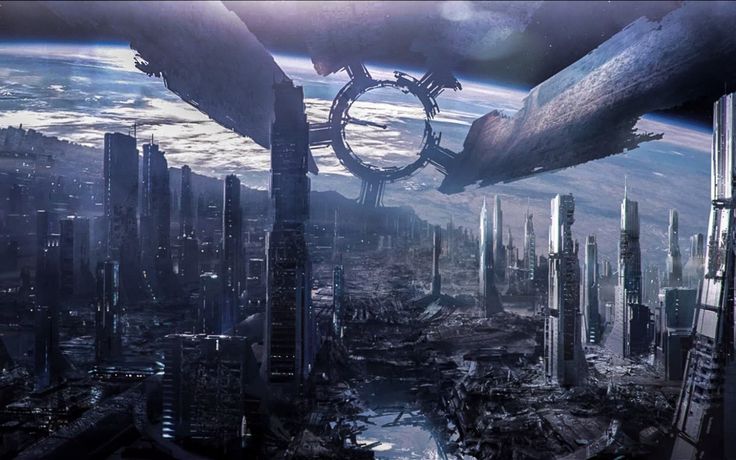
The present we got at the launch party is still regarded by me as the coolest ever (see above), all the guests got one with themselves as the SPECTRE agent. 

At the end of game 3 there were a lot of complaints. I think that one was shoddy to some effect and it should have been set better, but the story was awesome. There were 4 endings (I never found the 4th, but I saw it on YouTube). And whilst going into this I accidentally found out another part which I will illuminate soon enough. It seems that Facebook is catering to Microsoft with accusations of spam. But I have my response for Facebook ready. Anyway back to the story. 

The new setting I created was set on the citadel. It happens after the slaughter starts and before Shepard makes its entry. In these weeks (optionally months) we are on the citadel. It has the familiar places (Embassy module and the stages from Mass Effect 2, yet there are a few hundred more places. This is a stealth game.

The story is that an engineer had smuggled his family on board, as such it he/she had a hiding place. As the slaughter (read: ascendancy) continues, this engineer needs to sneak its way around. The first thing that needs to be done is to secure water and sustenance. Also oxygen is needed (for the long haul).

Every place has three versions. The dirty stage (with bodies), the cleaning stage (with keepers) and the clean stage. They all have their own issues. 

One of the stages is to secure personnel manifests (with local celebrity locations), locations of interest and local artefacts. 

The races are Asari, Drell, Elcor, Hanar, Humans, Keepers, Salarians, Turians, Volus, Batarians, Geth, Krogan, Quarians, Vorcha, Yahg. The races in bold are the selectable races. In the citadel the Batarians, Quarians, Vorcha and Yahg have no embassy. As such they are the harder species to play. The Quarians (when found) will have information on the Geth. The Turians have data on Vorcha and Yahg and so on. As the game progresses once you have the data, you will face a setting where you have to install monitors all over the station to record what is happening as well as to set alarms so you can sneak your way around the station. You need to get a electronic shroud (a sort of digital cloak), enhance your hiding place as well as creating a few others where you can heal and rest in safety. In normal play the game will ignore several issues, but in hard more it will ‘see’ recording devices and start a hunt for you. Once this starts, you will have to set up a decoy to reset the alarm, the hiding place will be lost forever. 

To set this up it is more then a simple matter. The keepers are thorough in cleaning, as such it will be important to remain invisible. The largest issue I see isn’t merely locations, This place is huge. 
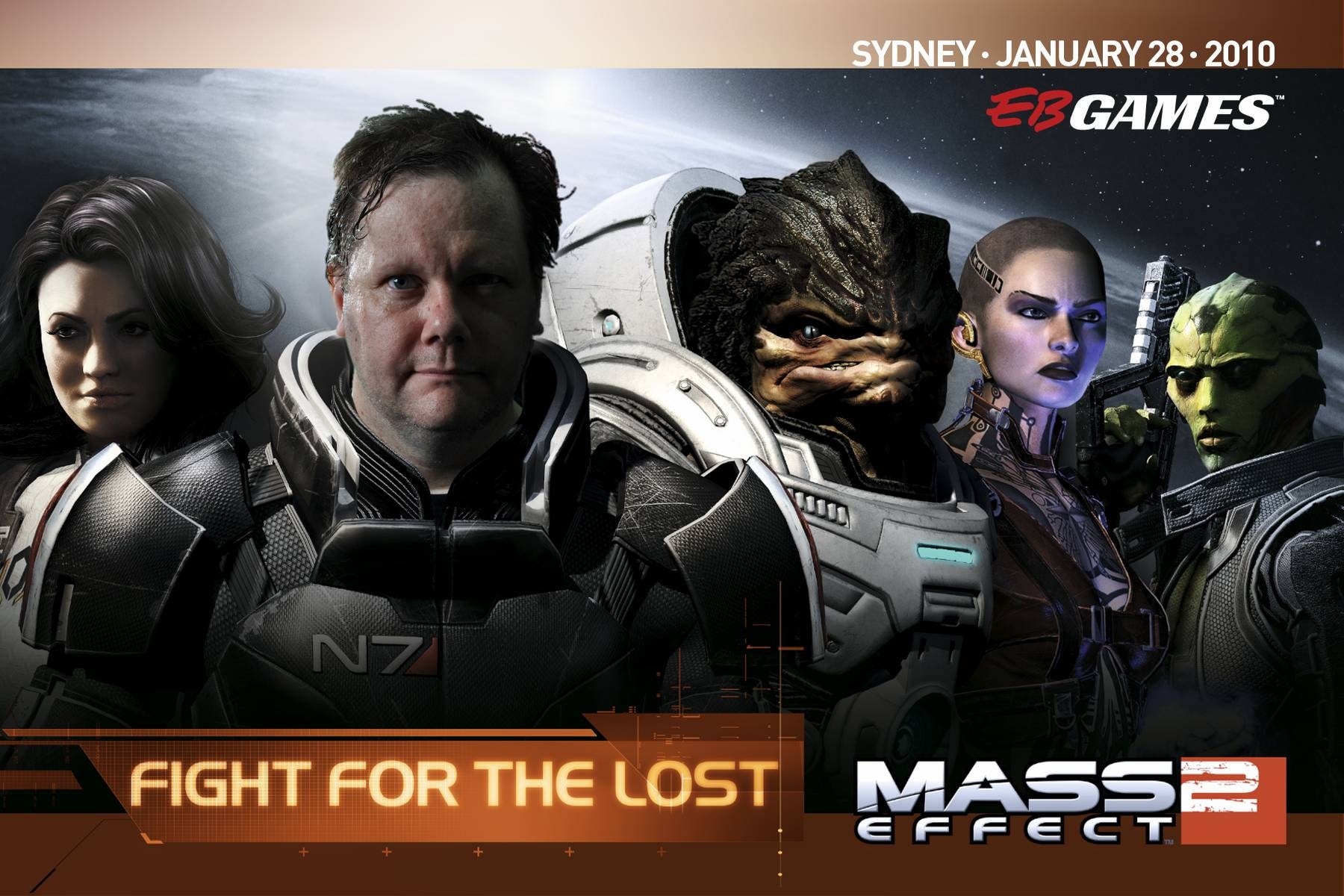
As you can see it is quite big. One idea is to set the stage by race (and most of the game on one of the platforms. It requires one huge LLM with deeper machine learning to create the levels. As I see it, per race you will need up to a dozen buildings (skyscrapers) to cover essential needs for the game. You will have to get the hardware you require for the tasks. The shopping district (ME2) should give you a camera and digital storage. No weapons in this game, however an idea comes to mind to get something like a mining laser (to cut through matter) and tools to open other areas.

Although the game seems straight forward. The idea came to me that the maker optionally have loads of other lore and concept art that they never used in the game. There would be use for them here. Also, other races would have data on humans like the illusive man, Shepard and so on. 

The larger setting I see is how to create a sphere of thrill and suspense that makes a stealth game, a stealth game. You see in ‘cheaper’ stealth games you carry everything making you a bulkier version of you with a backpack 15 times the size of you. So it is important to set the ‘sneak factor’ to find upgrades and better hardware to do the job. The shopping district will have a version one or two of an essential tool, but better versions need to be found. In addition to that, to set the tools to a random location requires a more spiffy setting. Or as they say, to be placed in ulterior locations where we have 1000 places it could be, but with references on items in logs (embassy and security). Then there is the idea of replayability. So as the citadel has hundreds of buildings per pillar, the stage comes that in a second game (with the same race) you will get confronted with different buildings. Similar but not identical, which gives new vibes to the game.

So, whilst we all see what Microsoft is up to with more rehashing the same idea. I took one look at a great game and created (optional) new IP in a day. This is why I see Microsoft as an agent of mediocrity. Now I will accept that this is not enough. More is needed to make this a great game, but I got them this in under a day (it is basically Microsoft IP). So feel free to to wonder what Microsoft is blundering around. If I can get this done in under a day, what are they seeking to rehash the old days? Don’t get me wrong I played Age of Mythology when it released in 2002 and it is a great game, optionally to play again. But considering all the IP they have (or should have) this is not enough. Lets face it they have GREAT IP. The Flight Simulator (2020) has truly become a great game (it was always great). It is a niche market, but for those into flight simulators it is the bees knees. Bioware had many great games. My personal favourite in D&D (Neverwinter nights, 2002) is still one of the greatest fantasy games ever. Both Dragon Age and Jade empires (not my favourites) are good games, where are they now? The problem is that some games need their scope readjusted. To coin an idea, the Multiplayer version of Mass Effect 3 could have been launched on the Xbox series X as a free to play game on that console. And free to play is important is important. They can still offer the loot boxes in the same way they did. For points fought over, or for a few dollars. And there is a market. This game is still played after 12 years. The is one hell of an achievement for a game released in 2012. So why didn’t Microsoft act? I got to the top 1% of players in 2013, there were over 1.2 million players at that point. Considering that the PS5 outsells the Xbox-X by 5:1 I would think that they squandered their markets. And this is a game that can flock hundreds of thousands to the Xbox (in addition to any other system), and no one thought this was a good idea?

As I personally see it Phil Spencer was all about capturing the player base (read: legally stealing), yet the the idea of bolstering its player base by offering playability was seemingly lost to him. And his hard times are yet to come. As I see it I might not have another option but to hand my IP to Tencent technologies. Partially this idea comes as Facebook removed my previous post under the fake guise of spam, which was not the case. The idea has merit as within two years Facebook would lose millions of advertisers. Troll farms create a lot of traffic, but not a lot of commerce, merely fake locations to advertise to, when retailers figure that part out, they will find another place to go to and there is my solution. I saw this three years ago, Whilst everyone was diving for digital dollars any way they could. I saw that the power of it all relies on engagement. And a troll farm only ‘seemingly’ engages. True engagement is seen elsewhere. That is the achilles heel of Facebook and the strength of Amazon (Tencent optionally too). So as I see it Microsoft lost out two times. Didn’t you wonder why Chrome has a market share of 65% and Edge a mere 5%? They aren’t looking in the wrong direction, they aren’t looking in the proper place to begin with. And I added my gaming idea as optional evidence part N. 

A setting overlooked due to the principle of spin. So whilst Microsoft relies on ‘The most powerful console in the world’, Sony and Nintendo are relying on the factor of fun and play and they are winning This year Nintendo had 123,000,000 players. Sony has 118,000,000 players. Now compare that with Microsoft and their 27.7 million consoles. And Tencent technologies is knocking at the door taking optionally more market share away from Microsoft. That is how bad it will get and I saw this 3 years ago. This is why I tried to get the solution to Kingdom Holding (so far no luck). In this environment Al Waleed bin Talal Al Saud could score big, optionally the largest gain they ever had (speculative thinking by me). 

My weekend has stated, in Vancouver the day is only starting. Enjoy!

Leave a comment

Filed under Gaming, IT, Media, Science

Circling the wagons

I had not expected a follow through on yesterday’s thoughts, but here we are. It seems that there is a business dispute between UKTV and Virgin Media. The Guardian (at https://www.theguardian.com/media/2018/jul/22/four-million-virgin-media-customers-lose-uktv-channels-dave) gives us: “after Virgin sought what UKTV called a multimillion pound cut in fees, leaves fans of shows including Judge Romesh, Harrow and Red Dwarf unable to watch some of their favourite programmes“. Let’s be clear, this is a business decision, so when Virgin wants a 7 figure fee cut, there must be something behind it, should there not? In addition, we need to offer in opposition, that reporting on (as quoted) “According to UKTV, “around 4 million households” were no longer able to access the channels after the midnight deadline passed” should also have an impact on advertising, as you are broadcasting to 4 million less viewers, so there is that in the mix too. Is it merely pricing?

The quotes: “Virgin Media has accused the broadcaster of seeking “inflated sums” to provide its paid channels and linking those to provision of free channels such as Dave and Home“, as well as “Steve North, the head of comedy and entertainment for UKTV, said the company provided thousands of hours of on-demand content to Virgin, with viewings of its programmes, such as Taskmaster, via the service up by a third over the year“, finally we need to add the part mentioned much earlier in the story. With: “The BBC holds back the video-on-demand rights to its programming, instead selling them to players such as Netflix. Virgin Media said this strategy was no longer acceptable as viewers expect to be able to watch shows on demand” we see a linked part in all this, and perhaps also the part where Virgin Media dropped the ball. You see when we see ‘viewers expect to be able to watch shows on demand‘, which I thought was a silly thing to mention, because of the mere fact that Virgin Media was unable to manage the expectations of their customers is a much larger fail. It is a first duty in support and customer care to manage expectations, some use SLA’s, some use other methods (like pricing), but managing expectations was never on the plate of UKTV. We can argue in addition that as viewing was up by 34%, fees would go up, but in addition, so would advertisement revenue. When you report that programmes are watched be an additional 34%, you have an advertising selling point. The question becomes was this merely about fees?

The BBC mentions the Netflix challenge, as well as a picture of a relaxed Greg Davies sitting in a chair (who is apparently no longer trying to destroy the city of Tokyo). Yet the article gives us two points, the first is: “On Twitter, Darren Woodward said he was “gutted” not to be able to see Taskmaster, while Tom Langdon was one of a number of subscribers to wonder whether his monthly bill would be reduced because they could no longer watch the show“, and the second is: “Richard Blunt from Birmingham told the BBC: “Practically all the stations we watch on Virgin have now been withdrawn. I think we will give it a couple of weeks, hoping that the decision is reversed, before deciding whether to stay or to go.”” The entire setting could now escalate in very different manners, not all good for Virgin, actually none of them good for virgin. Even as the Guardian article ends with: “The 10 channels are still available on other TV platforms including Sky, BT, Talk Talk, as well as Freeview and Freesat. Viewers can also watch them online via UKTV Play“, we need to see that this is merely a first step. I personally believe that UKTV has figured out a few things and in this, it has options that go further than merely a fee. The fact that 4 million users are in a setting where there is 34% growth, that is a section that Netflix (and others need), so this is not merely about money, I believe that there is a shift happening. I knew that this would happen, that part is clearly seen in the Netflix pressures. That we would see it shown the very next day was not on my calendar.

So when I decided to dig a little deeper, I found an article (at http://www.gizmodo.co.uk/2018/07/uk-tv-networks-are-looking-at-creating-a-british-netflix-to-combat-falling-viewing-figures/), which gave us 5 days ago: ‘UK TV Networks Are Looking at Creating a ‘British Netflix’ to Combat Falling Viewing Figures‘, so was that a self-fulfilling prophecy or not? So as the article ends with “BBC News reports that the BBC, ITV and Channel 4 have already had early conversations about the possibility of working together to create a combined streaming service with the potential to compete with the likes of Netflix and Amazon Prime TV. Whether such a thing will come to fruition currently remains a mystery, but considering the shifting trend to online media, it seems a likely step that broadcasters will eventually have to take to remain relevant“, we see exactly the play that seems to be unfolding now, and from the pressures shown, there is every chance that through pressures applied, this new venture starts with a rather delicious slice of 4 million viewers leaving Virgin. Even as some stated that they will see in a couple of weeks, the sooner this shift happens, the more power Virgin loses, implying that Netflix will not merely grow business, it has the option to grow an advertisement branch much larger overnight as well giving them more options.

Even as we agree that some changes are about to happen, we need to realise that the UK will have a new venture in ‘package deals‘. The quicker that Sky TV and other shops include the UKFlix side of things, the quicker momentum can be gained. It is in this setting that it can grow in the UK as well as gain momentum in Western Europe, where UKTV has always found happy recipients of the series that UKTV fathered and promoted.

It does set a new tone on where places like Virgin Media are going. The UK always had a little saturated niche in all this, the fact that the Netflix equation unsettled the walls in place making it a dog-eat-dog battle field, is both good and bad, the good is that overall the pricing will become interesting to households, the bad is that those with the larger budgets can overturn whatever independence remains. It will be a fight where those with the biggest wallets will be able to out buy whatever is in play and that is not always the positive outcome for households on a budget. The issues that follow soon after that is as one is diminished, how far can it go abroad? The direct setting for the Netherlands, Belgium, France and Scandinavia is also added to the board, because a shift like that tends to move outside of the borders. for example in Sweden where 50% is set by SVT1, SVT2 and TV4 gives options for growth, especially when you consider that Disney and Fox each have less than 1%. The same we see in Norway where 50% is with NRK1 and TV2. They are all markets with options for growth; from an advertising view Norway is more of a nightmare. The two large cities merely represent 14%, whilst the villages 11th in size and smaller are less than 50,000. This is different in Sweden where the four largest cities are 25% of the population and a chunk of the smaller places are still a lot larger than most places in Norway, Sweden has twice the population, but they also have that population in larger communities. These are all elements that have an impact on growth, so that is one side and merely one side. You see Netflix and their methods are rubbing off on the other players and that is where Scandinavia becomes a much more interesting market. The land that gave us Maj Sjöwall and Per Wahlöö and their fiction in the 60’s and 70’s; the land that had Pippi Longstocking and the White Stone for the kids, whilst giving the adults Beck and Swedish Dicks is a treasure trove of IP and that is very much on the mind of the decision makers behind the screens. You see, getting the right IP is half the distance towards profitable series, and there is plenty to find in places like Scandinavia and Australia. They have built quite the score list. That setting needs to be on the forefront of all the board member minds. Getting decent writers for new series is one thing, resettling an existing gem comes at 40% less cost, whilst upgrading a series to today can score places like Netflix millions of viewers with minimum expenditure, when we consider the 8 billion that they are setting in now, delaying one series and replacing that with 10 retrenches that are unknown in the bulk of their places is a way to quickly fill needs, to up the amount of IP and the value it represents as well as open up new doors to other ventures. You merely have to see the impact of the TV series Humans, which got the makers the British Academy Television Craft Award for Best Digital Creativity, as well as a 94% rating is what matters to those in the boardrooms and even as they missed out on Humans, there is plenty to find in some of these places. The relaunch in Sweden of Beck is one part, getting that to the Netflix audience is potentially an additional market to tap in to. In the end, merely buying IP is an option and I personally see is again as short sighted, it is the interaction and engagement of these markets where new innovative IP becomes an option. You merely have to look at the past on the history of the 70’s series Kung Fu to see that the creation of IP that shines for decades is seen. And they are not alone, especially when it comes to TV series for the younger viewers. Sweden had several series like the ones mentioned earlier, the Dutch had the still immortal ‘Kunt U mij de weg naar Hamelen vertellen meneer?’ loosely based upon the ‘Pied Piper of Hamelin’, even as the materials were lost over time, that TV Series is still remembered 48 years later, that’s IP that sets a provider apart from all the other players! As such growing interactive markets, not merely acquiring IP, whilst at the same time investigating what IP is close to readily available is what pushes the Netflix investment invoice of $8 billion a year down, whilst creating content that will be around for a long time. As I mentioned in yesterday’s blog ‘Chivalry vs Rivalry‘ (at https://lawlordtobe.com/2018/07/22/chivalry-vs-rivalry/), we need to consider “The value of those rights has now spiralled, which has pushed up Netflix’s content budgets and fuelled its drive to produce its own content“, that is still going on, so the one moving fast into areas and setting the stage to acquire the IP, that is where it will be at in 3-4 years, so whomever moves now ends up having the home field advantage, giving additional rise to production settings that are currently a steal at twice the price, yet as the impact of digital content and growth becomes more and more visible, the other players will circle their wagons faster and more determined to get either much better prices, or become players in this field themselves. the moment that all this IP hits 5G and goes global, at that point the entire game changes for all the players involved, so getting there sooner is what it will be about and from what I personally expect that visible push will be all over the news with some frequency no later than 2019.


Leave a comment

Filed under Finance, IT, Media, movies, Politics, Science