It has been eight days since ‘A haircut before the guillotine‘, which can be found at https://lawlordtobe.com/2018/08/21/a-haircut-before-the-guillotine/. The article dealt like the one ABC gave us all about Greece and I think that it is nice that they finally came to the same conclusions, it only took them a week. Yet, the part that I never looked at (before now) s the part that ABC is giving. It is the setting that Italy is the most likely next country to add the fuel of life after the Euro. When we are treated to: “The warning signs are gathering: Government borrowing stands at 130 per cent of GDP, and bond yields have been rising, a sign of low confidence by financial markets which will make it more difficult for Rome to raise money by selling long-term sovereign debt“, yet unlike Greece and other players, they really do not have that much of faith in that muzzle called the EU and the ECB. The less popular and growing situation is offered with “it is also filled with ministers who are deeply distrustful of European institutions and regularly raise the possibility of pulling Italy out of the EU“, something Greece should have considered. In the setting where the Italians can float their currency during the seasons and get a much better return, lowering debt slightly faster is an option, one that is currently being discussed in Rome. What is also a setting is that Italy now has an example on when things go pear shaped, an advantage that Greece did not have. After that, ABC, of better stated Anne Bagamery gives us “many European analysts draw a straight line from the rise of Euroscepticism and nationalism generally — trends that led directly to Britain’s vote to leave the European Union next year — to the Greek bailout and other, similar rescue plans that followed the 2008 world financial crisis“. That is likely to be true, but the element that she ignores is that Mario Draghi was also a factor. What is more and more seen as a reckless, wrecking action by a second jumpstart to the economy, one that is still failing, but now the European members are well over 2.5 trillion Euro deeper in debt, so how is that playing out?
I am still of the mind that Mario Draghi and his membership into the elite 30 bank clubs enabled them to deals and advantages that are ethically an issue, perhaps even legally so. Yet there is no intervention, no investigation and in the end, the interest on 2.5 trillion dollars will have to go somewhere, does it not?
Then we get two sides, the first one is one I agree with. With: “Ms Merkel, at the time the most powerful head of government on the continent, pushed the notion that forcing the kind of budgetary discipline that had worked in Germany was the best way to bring spendthrift countries into line. A fervent European, Ms Merkel also felt austerity was the best way to preserve both the EU and the euro” we see a harsh reality, but when you look at Germany, their debt is way down (compared to what it was) and as such a few billion euros each year gets to be spend on infrastructure and not on interest payments, so that is a clear sign. In opposition we see: “Pierre Moscovici, the European commissioner for economic affairs, acknowledged in an interview last year with the Italian daily Corriere della Sera that the handling of Greece’s bailout program was “a scandal in terms of democratic processes”“.
That might optionally be the case, but how far was the democratic path used to misrepresent the numbers, cooking the books and fraudulently give rise to economic levels that never existed? How many of those Greek cooks actually were prosecuted and ended in prison? Show me that list please Pierre Moscovici, can you?
Now we get to the BS of the part and it is seen in “Economists have now had plenty of time to evaluate whether the decision to impose austerity measures was the wisest course — and, for the most part, the verdict is negative”. Is that so? You see, I stated that in 2013 and several economists stated that I did not have an economy degree (which is true) and as such, I could never comprehend the ‘complexities’ of such macroeconomics. they optionally had a point, was it not that my version and my calculations using my fingers and an abacus gave a result that was merely a year away from their results and I published mine 5 years ago, so in all that, it seems that these economical ‘experts’ are seemingly more about the preservation of the gravy train that they are on and a lot less on finding the setting of resolution that they were supposed to have and now that Italy is on the iExit path (or was that ILeave?), we see that ‘the verdict is negative‘ part, I reckon merely 5 years late in light of the degrees they have.
Finally we need to stop at the setting we see regarding Portugal. With the quote “Joao Borges de Assuncao, a professor at the Catolica Lisbon School of Business and Economics and a former economic adviser to the Portuguese government, said recently that Portugal’s recovery only really started when it ended austerity measures and invested in job creation to keep growth alive“. I cannot completely agree, even if that was a partial correct setting for Portugal. A setting when we consider that Portugal has a population of 11.2 million, about the size of Sweden, a mere 25% of Spain. In addition, Portugal got lucky with their cork. It supplies 50% of the global needs and that gives them a huge niche market and until China starts growing their cork forests in a serious way, Portugal will have an advantage there. In addition Portugal has a similar advantage with tungsten and lithium, with lithium battery needs at an all-time high, and unlikely to slow down for now, we see that 75% is in South America, meaning that Portugal cannot rely on their amounts, but it still makes for a nice additional sandwich with what they offer. All elements that they have and plenty of other European players do not, so Portugal has a small advantage, which is why I oppose the view of Joao Borges de Assuncao, not because the view is wrong, but in the current available options, with a much smaller population there is a benefit for Portugal and that is why the investments required would have been significantly lower, whilst the ROI would have been much easier to achieve. What works for Portugal is not likely to work in Spain and Italy to the degree it needs to, not whilst the Italian population is 600% of Portugal. The sales amount of Maserati’s and Ducati’s needed to offset that difference is slightly more than realistically possible.
I expected for the longest time that there was a much larger issue within Europe, no matter how ideological the setting was, the setting of a push for big business to get the exploitative advantage over small companies was too visible and now we see those same companies giving the UK such hassle. I wonder when the UK economy picks up and those players are learning that they are missing out on 68 million consumers, I wonder what marketing scheme they will try to get back into favour with those they tried to strongarm initially. We merely have to look at the Galileo satellite navigation system, and the setting that we see now to learn that the easiest option is to merely block the Galileo from accessing that part, which the UK would be allowed to do. When we see the setting of people using their car abroad (UK in EU vs EU in UK) we see that this stage will hurt the EU a lot more, and even as we see the need for a UK satnav system, the UK one will come, 68 million people implies 30 million cars in the very least and plenty of people are relying on the satnav, so the ones who have that in good order will have access to those consumers, in addition, as we might overlook the entire ‘due to be launched in 2020 with civilian and military variants, and requires 24 satellites in orbit to be operational‘, for the UK 2-3 is all that is required, so a national market whilst those satellites would also be able to provide media and other options, will benefit the UK greatly, that whilst most people are ‘kept’ in the dark regarding both “The Galileo system went live in December last year, providing initial services with a weak signal, having taken 17 years at more than triple the original budget“, as well as “The main causes of the malfunctions have been identified and measures have been put in place to reduce the possibility of further malfunctions of the satellites already in space” commission spokeswoman Lucia Caudet said.
ESA found after an investigation that its rubidium clocks had a faulty component that could cause a short circuit, according to European sources”, so even at 300% of the original costs, they still weren’t able to properly test the systems and the faulty components are an excellent piece of evidence. The fact that the EU has the larger setting of budget overrides on several grounds and when we consider the fact that when infrastructures and facilities take well over 300% of initially projected costs, we see a failing on too large a scale and no proper penalty setting is in place and is unlikely to ever get there. The UK has had its massive bungles too, but even in the national setting it would never have been to the degree that we see here. In addition, when we are treated to the setting of a project that some state costed 30 billion, for 30 satellites, the most simple of all calculations (admitting that they might be way off) is telling me that the pricing is incorrect from the very beginning. We can agree to a quote that is up in the air in several sources. When we see “It is estimated that a single satellite launch can range in cost from a low of about $50 million to a high of about $400 million“, I am willing to believe that, yet, when we see the application of 30 satellites, we see the need of a much larger scope of electronics, verification and channels, all this implies that such a setting should require multiple safeguards, and let’s not forget that all this was merely about the launch, so the hundreds of engineers, designers, programmers and testers are also part of those costs, the electronics that were designed, developed and build will take even more resources, so here I am in a setting where the lowest estimate is close to 1.3 billion each, and I am willing to accept that I lack plenty of knowledge, so even as I expected the cost to be closer to 15 billion, the fact that my estimate was 50% higher and still 100% short of the actual costs gives us the setting that the entire Galileo project was wrongly priced, wrongly designed and in the end still flawed.
Galileo satellite navigation system has a few more issues, flaws and weaknesses. That part was shown 12 years ago (at http://news.cornell.edu/stories/2006/07/cornell-sleuths-crack-secret-codes-europes-galileo-satellite) where we are treated to ““We were told that cracking the encryption of creative content, like music or a movie, is illegal, but the encryption used by a navigation signal is fair game,” said Psiaki. The upshot: The Europeans cannot copyright basic data about the physical world, even if the data are coming from a satellite that they built“, so 12 years ago basic ‘protection’ was negated by students, so in the end, this extremely expensive project, just how secure is it, and once we learn that even as it is really really hard to hack it, what happens, when we see the system being readjusted through a hack causing time clock issues? When that happens and inter satellite group messaging is no longer reliable or valid, how long until that system crashes itself from within? It might not seem to be hackable, but the satellites rely on an uplink and a downlink, once the element is there to cause clear miscommunication from the source towards the satellite, forcing a sequence of reboots might be enough to take alignment of these satellites away from one another, and in the end, the mess that this will cost? I wonder just how much the makers did not perceive from a system that had a negated security system for the better part of 12 years. I wonder what happens when they get the option to ask each satellite for a verification protocol from each of the other satellites. Do that for an hour and how many users will be confronted with the setting when they drive home and the SAT navigator tells them: “This location does not exist“.
When we get to that part, I wonder who in the EU will be suddenly on sick leave and cut all ties from a project that has already been projected as more than 300% more expensive. When we dig into that part what else will we find?
That is merely one of many settings that was shown in a whole host of EU applicable operations and in all that Italy has their options too, whether the decide to leave the EU cannot be predicted to any near decency, but in that, when we see that the Italians are equally barred from Galileo, we will see another part where the EU will have to pay back at least two nations for their part, how will that end?
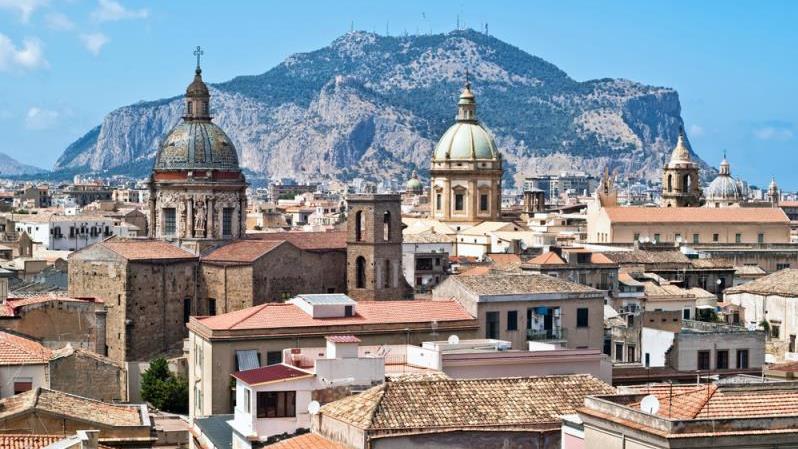
I will let you decide that, just make sure you know how to drive home and do not rely on your satnav to the degree you expected it to be useful, on how far the Italian High Speed rail from Berlin to Palermo is when the ties are announced to be cut, because that too will impact the EU in a much larger part then expected. In that regard, how many people would have ever needed the train to get to Palermo anyway, is that not an interesting question? When we are confronted with “The cost of EU infrastructure development needs in order to match the demand for transport has been estimated at over €1.5 trillion for the period 2010-2030” and we realise that Palermo has 1.2 million people, so it is a sizeable city, but let’s be honest, spending 1.5 trillion to get there, what was Europe thinking?
When we take the accounts and the pulse of such investments, whilst the ROI will never ever be achieved (not even close), how much more wasteful spending is this EU throwing on people and their additional taxation?
Remember, you must repay what they have been spending and they have been spending a lot with the additional costs of all these gravy trains, so how much out of pocket will you and those around you be for the rest of your life?

 Lawrence van Rijn - Law Lord to be