Category Archives: Military

A Turkey problem

We’ve all had them around thanksgiving, the turkey was still too deep frozen, the filling was incomplete and the oven was not firing up to the right temperature. In the US these are at times regarded as mum’s worst nightmare. Thanksgiving is a day when mum shines and her dinner is heralded and dreamed of for many nights before and a few nights after as well. No, this is not about the plumage; this is about that nation that is trying to basically piss off anyone they deal with. The first is seen (at http://www.france24.com/en/20180207-turkey-says-it-has-met-eu-criteria-visa-free-travel), where Ibrahim Kalin stated that “that Turkey had submitted all related documents to EU officials ahead of an EU-Turkey summit in March“, a Turkish official gives us: “the country has fulfilled all 72 requirements set by the European Union to secure visa-free travel for Turkish citizens to the 28-nation bloc“, this whilst we know that ‘Turkey had failed to meet the 72 criteria, including amending anti-terror laws‘, we might go so far as that of those criteria the bulk had not been met and with the additional issues now in play, there was never a more prompt moment to deny the visa-free travel options. More important, stating that ascension to the EU would not be possible within the next 50 years would equally not be out of the question. The Turkish approach to ‘securing’ Europe as discussed (at http://theconversation.com/turkey-is-using-syrian-refugees-as-bargaining-chips-as-it-moves-against-the-kurds-90904) is beyond tasteless. As I stated before, the acts by Turkey going back as far as 2002 are shown to be unacceptable. The larger issue is why Europe seems to continue to ‘find’ ways to reopen talks whilst the bulk of 72 requirements have not ever been met, even worse, their actions in Syria, their involvement with Qatar and semi union with Iran makes the matter worse. It makes a case that Turkey is the larger security threat for Europe.

The fact that Turkey is so corrupt that immigrant threats get to walk through Turkey, or via Turkish smugglers makes matters worse. Yet, there is no such mention at this time. Even more unnerving is the fact that there is still a meeting. The Commission confirmed Wednesday that Erdogan will meet in Varna, Bulgaria, on March 26 with Commission President Jean-Claude Juncker, European Council President Donald Tusk and Bulgarian Prime Minister Boyko Borissov, whose country holds the bloc’s rotating presidency. What takes the cake was the quote Commission spokesman Alexander Winterstein said the talks will focus on “subjects of mutual interest and recent developments in Turkey. That includes obviously the rule of law and fundamental rights“. Knowing that Turkey has only two elements on the brain, I wonder how this can end well. The EU is getting truly desperate. It is still facing Brexit and the news and the bitterness of Europe is showing them to be spiteful in every way. is that not nice to know that some place that ‘pretends to value’ freedoms, will not honour those who are no longer interesting in its membership? As I personally see it, the levels of corruption that flow through the ECB gravy train is making people nervous, because that part is becoming clear that this train has to stop functioning. the Financial Times (at https://www.ft.com/content/ade8e020-0b50-11e8-8eb7-42f857ea9f09) voices it in light of ‘non-compliance’, the quote “The five-page text (UKCompliance), circulated to EU member states by the European Commission and seen by the Financial Times, sets out how the EU plans to make Britain abide by union law until December 2020 while excluding it from decision-making“, does that sound like amicable? As the article states, it basically reduces the UK to a slave state having to enforce laws designed in the foundation of utter stupidity, whilst not getting a say in the matter. So, as that is pushed upon the UK, with the optional worse decision to continue talks with Turkey, The EU is basically setting a warm fire where the UK can decide to go postal, take the cold Brexit and cut all ties. The tidal wave of chaos that Turkey is likely to bring soon thereafter will make UK the best trade solution for Western Europe and Scandinavia. The document also emphasises that London must refrain from any “action or initiative which is likely to be prejudicial to the Union’s interests”, which sounds nice on one side, but the act that judicially for the UK is the national notice that counts, and that is the setting of any judicial setting in its national origin, it is not for the European Union to set that as anti-Union. Even more pronounced that in itself would constitute another reason for Turkey not to be allowed within the European Union as such. Should that be set aside for consideration, it could invalidate the terms for the UK to abide by, which is a small blessing in disguise.

It is the Financial Times, who in light of Brexit shows that Europe is filled with duality. The economic pressures it faces and the facilitation it requires as it has been playing the monopoly money printer at large for all causes worthless and overvalued. This is seen in several ways. In the first the ECB remained quiet on Mario Draghi and the G30 club, the media has silenced any actions since January 17th. In addition, Bloomberg reported “Mario Draghi said the European Central Bank has no choice but to brace for the possibility that the U.K. will exit the European Union without a transitional agreement“, form my point of view, the 5 pages that the Financial Times initially gave us, and that likelihood is only increasing. Perhaps having a few spiteful children on the Brussels side was not the cleverest of options as I personally see it, but then again. It is merely my view that some of these players want to continue their gravy train, a debatable view to say the least. Even as France has been outspoken and opposing any Turkish ascension to the European Union, there has been a silence from several other players. The fact that the Bulgarian meeting is still on for now, that in light of the Turkey violating international Law in Syria is also light for concern. The Jerusalem Post gives us “Speaking on BFM television, Jean-Yves Le Drian also said there were indications Syrian government forces were using toxic gas against civilians although the UN would need to confirm that“, that might be true, but at this point is Turkey also involved in those actions? Because that is the evidence that matters! You see the quote “Le Drian said international law “is being violated by Turkey, by the Damascus regime, by Iran and those who are attacking eastern Ghouta and Idlib”. His remarks amount to France’s toughest line yet on Turkey’s involvement in the Syrian conflict” might hold water, but only if clear evidence is given that Turkey actually broke international law. You see, from one point of view Turkey was not barred, stopped or told to leave by what should still be regarded as the legitimate government of Syria, as such Turkey ends up having an actual defence against the French claim and that could remain to be an issue. The fact that other papers are voicing the identical quotes does not make this issue more so true, the presentation of evidence does.

So even as Ankara is not meeting some thanksgiving any day soon, it basically soured the waters with the US, France, optionally Germany, Saudi Arabia and a few other members of the European Union. And there was I thinking that only Napoleon was stupid enough to wage a war on two fronts, oh no that Adolf dude made the same stupid error. Anyway, as things go we will see more news soon, because the entire march meeting even as the Netherlands has withdrawn its ambassador to Turkey, we see the Dutch former NATO secretary Jaap de Hoop-Scheffer mention that ‘Turkey is too important for the Netherlands and the Netherlands are too important to Turkey‘, the economic fires are pushed to a higher level, there is nothing like a former official to voice the needs that politicians are not able (read: allowed) to make. The ECB and its gravy train must continue. That is the imperative that the 28 bloc nations are trying to rephrase so that certain questions are not asked. I personally believe that it is all in extremely poor taste. In another source (Dutch Newspaper: Trouw) we see the Dutch Lily Sprangers, former director of the Turkey Institute in The Hague state: “Die problemen zijn geen reden om geen betrekkingen te onderhouden” (These problems are no reason not to maintain relationships), sounds nice in theory, yet when the Dutch fascist JanMaat was about to get elected you (read: the politicians at large) did not follow on that idea to improve options, you tried to silence it to death, when he ended with 3 seats you all united to get that undone. It all seems a little two-fold in the light of the events that are happening.

The Dutch have been trying to improve relationships, which remains valid and they are not the only one, but in light of the 72 non-achievements to get some report going so that they could be included in light of the hostilities shown towards Brexit, gives me the shivers. A club of inclusion tends to be the most dangerous kind, because (as I personally see it) it allows for the utter corruption of ideals that should have excluded parties from the very start.

So then the media reports on the March 26th event. Will I still sound wrong to you, or is that and the lack of response by the ECB on the G30 club a clear signal that a lot of things are wrong in Europe and Brexit might have been the one sane move to begin with?

Did I oversimplify issues again?
 

Leave a comment

Filed under Finance, Law, Media, Military, Politics

Disney’s Yemeni Cricket

Roughly 2 years, 10 months, 15 days and 3.4 hours ago, the Houthi’s decided to take over Yemen from the elected government. It is at this point that the then elected government seeks assistance from Saudi Arabia and whatever other allies it can get, this coalition has been at it since it all started. We see all the condemnation on how civilian bombings are happening, yet the part on all this that “Civilians say the Houthis are dispersing weapons in residential areas leaving people fearing for their lives” is not given the light it needs to be getting. You see, that is exactly the same tactic that Hezbollah has been using, yet the media gives little to no light to that element.

Now the game is taking another turn. This is initially seen though the Washington Post (at https://www.washingtonpost.com/world/yemens-war-is-so-out-of-control-that-allies-are-turning-on-one-another/2018/02/03/50d26426-05fe-11e8-aa61-f3391373867e_story.html) with: ‘Yemen’s war is so out of control, allies are turning on one another’, it is not an incorrect view. Certain alliances tend to not remain focussed unless heir is a true common goal and as for the most the Houthi’s have only had any technology to merely fire on Saudi Arabia, there is a loss of focus for the other allies in that coalition.

In addition, with: “But fighting in the southern Yemeni city of Aden over the past week revealed the extent to which Yemen’s war also is driven by other historical grievances that could pose serious obstacles to negotiating an end to the conflict, according to Yemeni and Western analysts”, which is an absolute given and one that many tend to overlook. The complication is seen with: “The uprising by UAE-backed southern Yemeni separatists against forces loyal to the Saudi-based and internationally recognized government of President Abd-Rabbu Mansour Hadi could further complicate efforts to dislodge the Houthis from Sanaa”, you see, as the issues in Yemen grow ever more murky for the people in Yemen, the entire issue becomes a less stable and more dangerous place. With the Yemeni having no way to strike against the UAE, Saudi Arabia gets the brunt of all the anger whilst the UAE gets to focus on what is the most tactical way to move forward and can ignore what is the best path for all players around. In this Saudi Arabia could end up having to deal with the entire matter alone. This leaves them, unless the UAE changes its approach with the tactical question, should the Yemeni situation be resolved, or is it safer for the Yemeni people to annex Yemen into Saudi Arabia into a partially self-governing region? It is a dangerous question, not only because of the implication, but when the humanitarian dangers (Cholera, Polio, Measles and famine) are not just on the horizon, but now on the front door of Yemeni citizens, the iron hand required to save whatever citizens are left alive, it is one of the few historical times when annexing is starting to make sense, moreover, it might be one of the few option that soon enough remain.

Not only does it take care of the separatists, it shows a new side which will in equal measure strikes fear in Saudi’s other adversary Iran. When Iran sees the support and the consequence of its so called actions. Especially if in addition Saudi Arabia opens the doors to all UN humanitarian actions to give care and medical support to the Yemeni people, Iran will not merely have to fear Saudi Arabia, it will be hosted with the prospect of giving aid to escalation in UN humanitarian zones, one fact that would require Turkey to cut its ties with Iran or face massive sanctions from all NATO allies as well as all 28 European community nations, those who would side with Turkey would soon find themselves isolated and in a dangerous economic downturn, one that none of the 28 nations can currently afford!

There is an optional second issue that would evolve from that. As any positive humanitarian action within Yemen shows the good side of Saudi Arabia, the long term condemnations will need to write about other matters and even finally show light on the optional benefits of seeing Saudi Arabia as a place of growth and investment. Even as the Google Alphabet group is already looking at growing its presence, Saudi Arabia is set to grow in other ways too and as both the consumer goods and pharmaceutical groups are seeking growth, the need for manufactured goods for 32 million Saudi Arabians, as well as the options to facilitate to 35 million Iraqi’s and 4 million Kuwaiti’s from the relative safety of Saudi Arabia is an even better prospect for those catering to consumers. That is one way of obtaining growth and even as the falling out with the UAE is an issue for Saud Arabia, there is an optional path where Saudi Arabia could come out on top.

It is not a new concept. The solution had been voiced on a few times last year, yet in many cases there was the outlook of larger opposition from the UAE and Oman, now that the falling out with the UAE is an actual fact, the Saudi government could go into talks with Oman to facilitate some solution that make Yemeni Araba a mere temporary solution as a humanitarian implementation is found to protect the civilian population from further harm. By giving Oman a much larger voice in all this could prove beneficial to both Oman and Saudi Arabia, but only for the non-long-term future.

In all this it will not become a long term solution and all parties will be painfully aware of it all, whilst it does give rise to dealing with the insurrections in Yemen and at the same time show Iran that it stands a lot more alone in its inciting tactics than it previously bargained for. In equal measure it gives Turkey the clear message that it either changes its current course of finds itself in a falling out with both the US and the EEC, a situation that could stop whatever economy they thought they had for the next decade. Turkey could end up buying humble pie at $15 (or €10) per slice. In addition, t won’t just be “French President Emmanuel Macron has told his Turkish counterpart that there is currently no chance of Turkey becoming a member of the European Union”, it will be messages from at least 15 of European elected rulers and there is a chance that the number opposing Turkey as a full European member will grow to 25, with that in mind Turkey will also be out of any marketing race in the middle east making them no longer an interesting party to Russia, other than for the need of consumer exploitation for whatever they have for sale.

Now many parts of this is speculation, even as it is based on visible facts, the idea that Yemen becomes the corner stone of several linked issues is a lot wilder than Walt Disney could have ever imagined in any movie he ever made, including that movie of a boy with a growing nose and a conscience called Yemeni Cricket.

In this growth is already an optional given for Saudi Arabia as Google (with a plus one) is already in advanced talks to set up a tech hub in Saudi Arabia. His also partially confirms my initial view (a few months ago) that Saudi Arabia is ready to set the nation into a mobile 5G growth, making it soon a more technical advanced nation than the US will be in 12 months. Outside the states of NY, DC, Pennsylvania and California there is a growing concern that at least 10 states are nowhere near ready to become 5G players, giving rise not to mere net neutrality issues, but a larger technological downturn of the US as a larger nation, a view that has not been seen since America in the great depression (1929-1939). Do you think that this is wrong or me bluffing in some way? Consider how the budget is currently set and see which states can come up with 5-25 billion in the next 18 months to give rise to 5G, then also look what has to be cut to make such a level of investment a reality and then ask yourself how the US had not planned for this technological need. So when you see the next article on how 5G is overhyped and not essential, consider your next internet session and see what you could have done at 800% of the current speed, hat is beside all the other options hat 5G allows for. Should the US make it a national need, than the national debt will be clearly pushed past the 20 trillion mark! So the only way for the USA to be seen as technologically on par with Saudi Arabia is to dive into much deeper debt.

There are of course other considerations for Saudi Arabia to take a certain path, yet it must be one of the rare occasions where annexing might be one of the few humanitarian options left. A cease fire will not get the result and of course the question is equally important, whether Saudi Arabia sees annexing as an option at all, because that part is not a given at all.

There is of course the second part. If the UAE is able to get control of the separatists and get them on target in the direction the coalition wanted it to be and if the Yemeni separatists see what is their best solution than the entire matter diffuses and as such there is no further issue, yet that is still not a given, but as this situation merely escalated over the last week, there is still time to find a non-annexing solution, which is what suits all parties of that coalition best (personal assumption).

Still, with the other news that Al Jazeera gave a mere 20 hours ago (at http://www.aljazeera.com/news/2018/02/defence-minister-saudi-uae-intended-invade-qatar-180203091422735.html), makes the option of opposing issues between the UAE and Saudi Arabia less likely to simmer down. Yet in equal light the interview that Khalid bin Mohammad Al Attiyah had with the Washington Post, where he is quoted with: “about Doha’s relations with Saudi’s rival, Iran, Attiyah noted that Qatar maintains “friendly relations with everyone”” gives rise that the ‘friend’ of my enemy, is not my enemy, which also means that softening relationships and new ties could change the dynamics of the Middle East as I personally see it. So as Saudi Arabia is trying to get along with everyone except Iran, it could push Iran into more isolation. Even as Qatar is trying to remain friends with all, it also means that Qatar is less likely unwilling to be some kind of facilitator for Iran, a path Iran really had not hoped for and that means that the onus of Turkey’s ‘friendship’ with Iran is now clearly with Turkey, which will push them in even deeper waters, as I personally see it.

So as we end this part of the speculation and forecasting, we will need to see on how talks pan out in the next 2 weeks, the only dangerous part is that the Yemeni civilian population is running out of time faster and faster and inaction equals in their case a diminishing amount of living civilians, a side pretty much all parties are against.


1 Comment

Filed under Finance, IT, Media, Military, Politics, Science

Through an urban legend

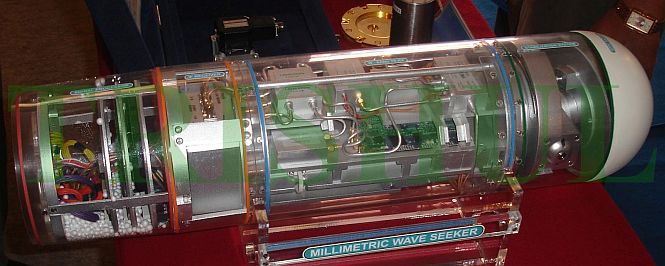
It all started with me not getting any sleep. So as I was pondering in all directions, I remembered a really old issue. It was something I heard as a kid. The story was: ‘the laws of aerodynamics prove that the bumblebee can’t fly‘, as I have seen them and as I knew they would fly, I knew that the story was false, but the urban legend remained alive. It was much later when I learned of the full story and in my view, the consideration of non-flight, whilst the person had a limited knowledge of ornithology made it a bit of a comedy. So there I was pondering that event and suddenly I connected it to the principle of Archimedes. As I pondered ‘upon immersion an object receives a buoyant force equal to the weight of the water displaced‘, it is the first part you learn in ships engineering. It always fascinated me whenever I saw a large warship, all that steel and armour, and weight. So in that I realised the issue with these large boats. You see, the part that is keeping them afloat is almost set to a decimal point. So what happens when that changes? So there I was and CNN was giving me (at https://edition.cnn.com/2018/01/26/politics/iranian-boats-stop-harassing-us-navy-ships/index.html), on how the Iranians have their boat escalation and I was mindfully becoming creative. So as I went through the five stages of such a project

Design, Devise, Delivery, Deployment, Detonation, My mind became more and more creative. As I changed one element for the other, I suddenly realised that I had a new concept, something that is not stealth, but would not electronically register. It had the potential to take down a warship with them having almost no defence against it and the consequence was that this could be universally applied. It has limitations on where it would work, but wherever it does, it could be devastating. So basically I optionally solved the Iranian navy problem before there even is one.  Even in my own light I will use the word ‘optionally’, because I, like nearly all others am a flawed person, I never tested the solution for real (not enough Iranian frigates to test the solution on in Sydney) and in the end it was merely a puzzle for my mind to solve. Data, Engineering, Science, the puzzle does not matter, merely the need to solve it when I am confronted with one. The entire puzzle took an hour to solve; it was not as challenging as the NHS issue, but a nice distraction as I remained awake.

I went over every stage a few times. With every pass I improved the solution, I improved its effectiveness. It remains close to undetectable. The deployment system is slow but to some degree maneuverable and the solution could take out a frigate or destroyer. In theory it could also take care of a battleship. I do wonder if it remains ‘invisible’ with the upgraded electronics that a carrier tends to have.

So what do you do when you are sitting on a solution that could have such wide repercussions?

The idea, sell it or forget it?

I wonder how this is seen, in light of the revelation from Wesley G. Bush, as Defense News reveals today: “Northrop Grumman will form a new business sector focused on new, innovative technology once it closes on its acquisition of Orbital ATK this year, a top Northrop executive said during a Thursday earnings call“,  In this we get also “We believe that after the transaction has completed, our collective set of market-leading technologies and products, along with very compatible, innovation-focused cultures, will enable us to better serve our customers’ current and emerging needs“, according to Kathy Warden, President and CEO of Northrop Grumman. So, in light of the stated innovation culture that is meant to their customers and not the consumers at large, we wonder where their innovation will take them and as such the Defence spending bill of the United States.

In all this, I considered the length that the US went with the USS Zumwalt, versatile, 610 foot and $440 million for this dinghy. Here I am, coming up with a $5 million solution to sink it. It feels almost too comical to consider that it cannot afford the $1 million smart shell and this vessel cannot afford the cost of filling the 600 shell armoury. Here I am coming up with a nickel and dime solution to a high tech problem. A feat that was possible because these ships need to go into harbours, which is their weak link. They need to resupply and I considered the disadvantage the Iranians have at Bandar Abbas and how that plays into the hands of its enemies.

We seem to seek security, safety. We get lulled into some state of false safety, because the falsehood of all this is not about the high tech, it is what happens when the opposition goes low tech and all the technology leaves you without options, because the armistice race has all been about pushing forward, not look backward and solution nature had for a thousand years and no one sought to see an application for that knowledge. The danger of someone stating: ‘be clever about it‘ whilst the reality of a solution was to get back to basics.

That is shown with “For decades the Navy faced no major rival on the open ocean. As a consequence, it allowed its missile arsenal to shrink and grow obsolete, even as Russia and China developed better and better ship-destroying missiles“, so as they all sought more versatile and more intelligent missiles to do the work for them, I looked at the ceiling and came up with a low tech solution that was a solution almost 250 years earlier. I merely upgraded the concept to be partly biological in nature and upgraded it with the smallest amount of electronics, the mere 10% of a ZX Spectrum and not that much additional computation power. A solution that can down something 200 times its value. An idea that we got to see in the book and movie Charlie Wilson’s War. It is as I personally see it a simple and economic solution to end the impasse between superpowers. The Russian Hind helicopter, each at $12 million, versus the FIM-92 Stinger at $38,000 each. It really did not take that long to find a naval alternative. The solution, tested on several fields against whatever Northrop Grumman or Raytheon throws at the Defence spending committee and according to some sources with the upcoming cost of $1 million, per smart shell. So how smart is the envisioned solution?

I do not know and I actually do not care, but I wonder if defence committees all over the world need to reconsider the way they spend their money and that is all before that new behemoth will spend even more. It is called the EU Army and so far the people are lucky that the UK, Ireland, Denmark, Portugal and Malta have so far not signed up. Some idea driven by France and Germany, whilst the operational folly it could end up being is going to be devastating to economies in several nations, in that they should realise that even as Charlie Wilson’s War was an American victory, that same tactic could be pointed against any of them. And it would happen in a day and age that none of the nations can afford to become the victim of a tactic like that. Because that is how the law of Murphy tends to unfold.

Now realise that this was set in motion by remembering the fake fact on non-flying bumblebees, the mere application of creativity in action.


Leave a comment

Filed under Finance, Military, Politics, Science

Insights or Assumptions?

Yesterday’s article in the Washington Post (at https://www.washingtonpost.com/news/global-opinions/wp/2018/01/22/the-rise-of-saudi-arabias-crown-prince-reveals-a-harsh-truth) is an interesting one. In this article Professor Bernard Haykel gives a view on the issues we are optionally likely to see in Saudi Arabia. I am not sure I can agree. You see, he might be the professor of the ‘Near Eastern Studies and the director of the Institute for Transregional Study of the Contemporary Middle East, North Africa and Central Asia’ at a prestigious place like Princeton, but my pupils tend to shape like question marks when someone’s title requires 13 words to be merely one part. We see in the article “depict him as power-hungry and corrupt, and cite these two impulses for his behavior and policies. When King Salman designated MBS as his heir in June 2017, MBS effectively became the most powerful man in the kingdom. And despite ill-advised purchases (including a yacht and a French chateau, which have cemented the impression of the crown prince’s greed)“, so how does that work? You see Prince Mohammed bin Salman is wealthy, his family is very wealthy, and as such is a yacht a splurge? It would depend on the price. Second there is the mention on a French Chateau. Well, I have taken a look and I fell in love with a house in France too, in Cognac (my favourite drink). The house (at http://www.rightmove.co.uk/overseas-property/property-58209296.html), has 7 bedrooms, is amazing in looks and in a nice village. The amount comes down to a little over a million dollars (money I obviously do not have), but consider that the same amount will only get you a decent 2 bedroom apartment in the outskirts of Sydney, within some suburbs and in the city, those prices will go up from 250%-1500%, depending on how outlandish your view needs to be, in a measly 2-3 bedroom apartment. So how does that make the Crown Prince greedy? Now his choice is a chateau 50 times that price and a family that owns billions can splurge a little. His place is west of Paris. And let’s face it, as some economies are going, having your money in something substantial is not the worst idea. His second splurge, linking him to greed and power hunger is a yacht. So how does that leap rhyme? I have no idea and I find the professors view slightly too speculative. Yet, the man is not done. He then gives us: “MBS is trying to deal with a harsh truth about Saudi Arabia: The kingdom is economically and politically unsustainable, and is headed toward a disaster“. There is a truth in that. As Saudi Arabia is dependent on oil, there will be a lull in their lives, as the need for oil exists, with prices going down, there is no real prospect of fixing it, but wait that is exactly what the crown prince is doing. He is setting forth his 2030 view, a growing move away from oil dependency, which is actually a really good thing to do. It does not make him greedy, merely a visionary that technological evolution is essential to the continuing future of Saudi Arabia. We then get two quotes that matter. The first I already gave light on with “a sclerotic state with limited administrative capacity and an economy that is largely reliant on declining oil revenues“, yet sclerotic? That means “losing the ability to adapt“, which is exactly what the crown prince is trying to achieve, adapt the nation to other options and new ways. The second is a lot harsher, but requires additional focus. With: “a venal elite comprised of thousands of royals and hangers-on who operate with impunity and are a huge drain on the economy. It is saddled with a bloated public sector which employs 70 percent of working Saudis, and its military is incapable of defending the homeland despite billions spent on armaments“, so we can argue on the wisdom of ‘employs 70 percent of working Saudis‘, I am not stating that it is true, but when we see Walmart in the US, who employs 1% of Americans pumping billions of profit into that one Walton family, we should wonder how wrong the Saudi actions are. So we might not see corporate greed like in the US, but is one method better than the other? I am not sure that this is the case. The other part I need to comment on is: “its military is incapable of defending the homeland“, what evidence is there (it is not in the article at all)? Let’s not forget that Iran has been a warmongering nation for DECADES! How many wars did Saudi Arabia get into? There was the Saudi -Yemeni war of 1934, The Gulf War, where Saudi Arabia was a member of the allied forces, the Saudi intervention in Yemen and the current upcoming conflict with Iran. So, regarding the inability to defend the homeland? Is that perhaps merely gesture towards the incoming missiles from Yemen? Well, we can bomb the bejezus out of Yemen, but it would imply thousands of civilian casualties as these people are hiding in the civilian masses. Something they learned from groups like Hamas and Hezbollah I would reckon, but that this is merely an assumption from my side. I found the restraint that Saudi Arabia has shown so far quite refreshing.

I am not stating that Saudi Arabia is holier than thou. Like any nation, it makes mistakes; it has views and a set infrastructure. It is moving at a pace that they want, not the pace Wall Street wants, which is equally refreshing.

The article gives us truths, but from a polarised setting as I see it. Yes, there is acknowledgement on the achievements too, in both the directions of the USA and Russia, and we can agree that just like 86% of all other nations (including the USA) that the economy is a weak point. So how is America dealing with a 20 trillion in debt? From my point of view, the USA has not done anything in that direction for over a decade. Instead of lowering the corporate tax to the degree it did, it could have left it 5% higher and let that part be reserved of paying of the debt and interest, oh right, the 5% will not even take care of the interest at present, so as such the USA is in a much worse place at present, which is not what the article is about, but we should take that into consideration, and the end of the article? With “Ultimately, MBS wants to base his family’s legitimacy on the economic transformation of the country and its prosperity. He is not a political liberal. Rather, he is an authoritarian, and one who sees his consolidation of power as a necessary condition for the changes he wants to make in Saudi Arabia“, is that true? The facts are likely true and when you employ 70% of a nation, economic transformations are the legitimacy of that nation. There is the one side Americans never understood. In the end, Saudi Arabia is a monarchy; their duty is the welfare of that nation. So it does not make him authoritarian (even as he might be seen as much), he is the upcoming new monarch of Saudi Arabia, a simple truth. Within any monarchy there is one voice, the King/Queen of that nation. So it is in theory consolidation of power, in actuality it is a monarch who wants all voices and looks to be towards an area of focus, what that is, the future will tell, but in the end, until the Iran-Saudi Arabia issue is solved, there will be plenty of space for chaos.

In this his path is clear and that is the part the professor did illuminate too. With: “MBS is trying to appeal to young Saudis, who form the majority of the population. His message is one of authoritarian nationalism, mixed with populism that seeks to displace a traditional Islamic hyper-conservatism — which the crown prince believes has choked the country and sapped its people of all dynamism and creativity“, it is his need to create a population that is nationalistic, that sees Saudi Arabia as a place of pride, which is not a bad thing. In a setting where the end of hyper-conservatism, as it can no longer reflect any nation in a global economy, is an essential path. He is merely conservative in not handing out all those large benefits and multi-billion dollar revenue in the hands of opportunists who are eager to take those billions over the border, out of Saudi Arabia at the drop of a hat, any hat. That will drag down the Arabian economy with absolute certainty. A dynamic and creative nation, especially fuelled by youth and enthusiasm could spell several wells of innovation and profit that could benefit Saudi Arabia. I think that the path from hyper-conservatism towards where it needs to be in 2023 is so far well played. He is not there yet, but the path is starting and that is in the end a good thing. The only thing that the US needs to fear now is that the creative and innovation path that Saudi Arabia is on, could spell long term problems for a nation that has been fixated on a iterative technology path where the US is no longer the front runner, they were surpassed by Asia some time ago, the US merely has Apple and Google. Oh no, they do not, because those are proclaimed global corporations. So where does that leave the US?

So as we see Bloomberg (at https://www.bloomberg.com/news/articles/2018-01-22/imf-sees-global-growth-picking-up-as-u-s-tax-cuts-gain-traction) gives us ‘IMF Says Global Growth Picking Up as U.S. Tax Cuts Take Hold‘, which is a number I find overly optimistic, Global growth is set to 3.9%, yet the bad news cycle has not started yet, so I reckon that if the global economy ends at 2.45% it would not be a bad achievement. In that light I find the mention “The IMF also predicted that the tax plan will reduce U.S. growth after 2022, offsetting earlier gains, as some of the individual cuts expire and the U.S. tries to curb its budget deficit“. I believe that the US economy takes a hard hit no later than 2020 and the idea of ‘curb its budget deficit‘ is equally amusing, they have not been able to do that for 15 years and as there is at present every chance that President Trump is a one term president only, the Democrats are now likely to win by large margin and the entire budget curbing would be immediately off the table, because spending is the one thing the democrats have proven to be utter experts in, they merely leave the invoices for others to deal with, which is equally unhealthy for any economy.

And in that article we see exactly the fears that are mounting towards Saudi Arabia too. With “the IMF flagged protectionism, geopolitical tensions and extreme weather as risks to the global economy” we see a new frontal attack starting on protectionism. Mentions like “A reduction of Germany’s surplus would help reduce global imbalances” and it is not one source, hundreds of articles over the last 16 hours alone, all hammering the protectionism word in a bad light. It is now becoming all about trade protectionism, even under the terms of Brexit, we saw on how people were stating that it was a disadvantage, the single market falls away and as such the UK cannot benefit. Now that Brexit is still pushing forward, the IMF is changing their tune and it is now on protectionism and trade protectionism. Another way to state that tariffs and import fees are now a problem, it is the final straw in giving large corporation the push for benefit they need and many are in the States (IBM, Microsoft, 3M and so on), they would benefit and even as I mention Brexit, it also affects Saudi Arabia. As we saw last July: “Being a WTO member, Saudi Arabia is expected to bind its tariffs on over three-fourths of U.S. exports of industrial goods at an average rate of 3.2 percent, while tariffs on over 90 percent of agricultural products will be set at 15 percent or lower“, so the IMF is not merely voicing the fear of the US, it is equally scared that the stimulus backlash is about to his impeding presented global growth, the protectionism and trade protectionism are set to plead for open doors, I wonder if that also means that patent protectionism would have to end. I doubt that because pharmacy is what keeps the US afloat in more than one way, and is not a subject that is allowed to be tinkered in.

So were these insights or speculations?

I believe both the professor and myself were doing both, I admit to that upfront, whilst the professor set it in a text that is acceptable yet should have been raising a few more questions that the Washington Post is bargaining for. We can argue that this is a good thing, but it is my personal belief that even as it was a good and insightful article, in the end all the mention of power hungry and corrupt, in the end he showed no real evidence that this was a move of a power hungry person, especially as the person in question (Prince Mohammed bin Salman) is set to be the future king of Saudi Arabia, the crown prince is at the tip of the pyramid, so he needs not be power hungry. That can only be shown if he starts expansion wars with his neighbours. In addition no evidence is shown of corruption, I do not state that this is not the case, but if you accuse a person of being corrupt it would be nice to add actual evidence of that, which is merely my point of view.

In the end, through insight and speculation, I hope that you got some insights of that and feel free to google ‘IMF protectionism‘ and see how many articles were added in the last week alone. It is clear that Davos is about removing limitations, not actually growing a true economy. Which implies from my point of view is that Davos is about big business and what they need, not what the people desperately require. Consider that when you read about the ‘World Economic Forum Annual Meeting’ and when you see who is present. My mind wonders on how many informal meetings there will be and how Theresa May is likely to get hammered on Brexit issues as Emmanuel Macron, Jean-Claude Juncker, Angela Merkel and perhaps even Donald Trump unite against Brexit. It is an assumption from my side, but at the end of the week, will I be proven wrong?


Leave a comment

Filed under Finance, Law, Media, Military, Politics, Science

NAZI Europe is coming

There is a danger in the field. This danger has been there for some time and most of us have been ignorant and evasive on this. I think that I myself am to some part guilty as well. It is easy to blame the media in all this; we can Google stuff we can seek to find information, even if we do not always care. We can learn, the question becomes, do we?

So when we considered last Thursdays news (at https://www.express.co.uk/news/world/906727/Bulgaria-Turkey-EU-Brussels), we might have overlooked it, because for the most, even in Europe, who cares about Bulgaria? In addition, when we see: “Mr Sirakov added “we need Turkey for this process”” we might think, that the Bulgarian Ambassador has no real value to add, but we would be wrong in this. That is given when Reuters reports 3 days later (at https://www.reuters.com/article/us-eu-germany-bulgaria-turkey/merkel-welcomes-eu-turkey-meeting-to-improve-ties-idUSKBN1F90XU), that the idea for a “possible summit” is actually very welcome. So here we see the beginning for a NAZI Europe. Not because of Germany, but because of the optional inclusion of Turkey. When we consider that Turkey is not fighting the enemy in Syria, but “a ground incursion into the Kurdish enclave in Syria known as Afrin a day after intense aerial bombardment that signalled the opening of hostilities in a new phase of Ankara’s involvement in the war across the border“, which is nothing less than the continuing genocide of the Kurds, yet now in Syria, we need to ask ourselves why Europe decided not to convict Recep Tayyip Erdoğan to the gas chambers. You remember the NAZI way to get rid of issues they did not like? So after we were lulled to sleep that Turkey would never be admitted to the Eurozone, mainly because it failed 17 parts in the admission process, we now see Germany try to set the stage for another summit, optionally to include Turkey in a speculated near future. This dangerous step is essential for Europe, because the ECB has stretched itself beyond what was possible, so allowing Turkey in opens doors for them, whilst knowing that they are adding a nation that is not only closer friends with Iran, a nation that is skating on the fringe of what is tolerated (read: rockets to Yemen), it is equally ignoring a Kurdish genocide. So when we look at the article and we are treated to: “European Commission President Juncker said the EU and Turkey would see no progress in their relations as long as Turkey held journalists in prison“, we need to wonder how delusional President Juncker is to set the need of journalists over the act of genocide? That alone is disgraceful beyond all reason.

The even more distasteful part is that in opposition to Hitler’s European tour of 1939-1945, we now see that the Europeans are allegedly not really in opposition, because it is not really hitting their borders, so as Turkey is allowed to do whatever it wants, it is allowed to complete its ‘need’ for genocide, Europe ends up allowing a mass murdering nation into the fold, because the ECB needs are outstripping the decency of the European population. How can anyone feel good allowing themselves to become part of that?

So as we saw last Friday’s news (at https://www.reuters.com/article/us-eu-turkey-minister/turkeys-eu-minister-rejects-any-option-other-than-full-membership-idUSKBN1F80QZ), I wonder what is acceptable. Now let’s be fair. When we see the words of Turkey’s European Union Affairs Minister Omer Celik, he is not doing anything wrong, he is merely representing his nation as he is required to do and the words “rejects any option other than full membership” is fair enough. Who wants to be a part member, or an aspiring member for the time that Turkey has been eagerly awaiting to board the European Gravy train. Yet is that same setting, the EU should have categorically rejected it, as one bloc. Not to play the Bulgarian game, the Brussels game and now with “Chancellor Merkel told a joint news conference with Borissov in Sofia, adding “we need orderly relations” with Turkey to solve the problems“, we see the voice of some sort of reason, some sort because the entire issue on what happened in Turkey and the genocide question is basically set to the side, to the side to be ignored. This is a dangerous setting, because the EU was supposed to be about a better place, not about a place that finds genocide less inconvenient than its economic opportunity. So when we see “EU accession talks with Turkey were frozen in December 2016” we need to realise that there was a reason. So when we see “Authorities in Turkey have jailed more than 50,000 people and shut down some 130 media outlets in a major crackdown after a failed military coup in 2016”, which there is no mention of the atrocities against the Kurds, we need to wonder how far along the concept of NAZI Europe has come. Because the actions of Turkey has been questioned too little, whilst their turncoat approach that goes back to 2001 has been clearly documented and it seems that the media at large is eager to not report on any of it overly clearly, so as the media leaves it unmentioned, why would we care about those journalists in jail? Compared to the murdered Kurds that part should not measure up to any degree.

In addition, when we see (at https://www.theguardian.com/world/2018/jan/21/turkey-starts-ground-incursion-into-kurdish-controlled-afrin-in-syria) the part with “a military offensive called “Operation Olive Branch” by the Turkish government, with dozens of airstrikes hitting more than 150 targets in the Kurdish-dominated district from late on Saturday afternoon“, it is my personal opinion that we are being lied to, a visible marketing that is in direct correlation to what the Americans called “Operation Enduring Freedom“, which ended up with the conclusions by retired Army Colonel Hy Rothstein, commissioned by The Pentagon to examine the war in Afghanistan that the conflict created conditions that have given ‘warlordism, banditry and opium production a new lease on life‘, so how exactly was that an enduring freedom? In that same light, with some Olive Branch operation, where Turkey’s military border operations is shelling and bombing the maximum hell out of a Kurdish group that has been the US’s key Syria ally in the war on Islamic State an Olive Branch? In addition, as Turkey claims (not stating whether that fact is right or wrong) the “YPG, a group it considers a terrorist organisation, is an extension of an outlawed Kurdish rebel group that it is fighting inside its own borders, and it has found common cause with Syrian opposition groups who view the YPG as a counter-revolutionary force in Syria’s multi-sided civil war“, it seems to me that Turkey is playing both sides against the middle in an effort to complete its genocide against the Kurds. The YPG is mostly ethnically Kurdish, but it also includes Arabs, foreign volunteers, and is closely allied to the Syriac Military Council, a militia of Assyrians. In addition, we get from several sources: “the YPG is the “most effective” force in fighting ISIL in Syria“, so as Turkey is fighting them, does that not make them an ally of Islamic state? There has been issues and there are issues that need longer debate, yet for Turkey it seems to have been easier to merely imprison and kill whatever is Kurd and it seems that Europe is willing to go along with Turkey after the fact, after they are done wiping the Kurds out, at that point Turkey can report that the Kurdish issue has been dealt with and financially greed driven Europe can agree on the next setting, whilst allowing a genocide driven nation into their midst. And in the pressures of Brexit and anti-brexit news cycles, the Turkish consideration is merely under reported on, so that certain parties can get what they desperately need.

How is this acceptable, in any way, shape or form?

So even as the Guardian reports (at https://www.theguardian.com/world/2018/jan/21/recep-tayyip-erdogan-kurds-syria-risky-gamble-could-quickly-turn-sour) that this gamble could turn sour. The truth is that whilst the other parties are not reacting, Turkey can continue to shell the Kurds to his hearts delight. In reaction, there is one part that clearly matters. With “All three – Iran, Assad and Russia – would rather have the Kurds controlling swaths of northern Syria than Isis, similar Salafist groups or US-backed, anti-regime rebels such as the FSA“, so the one group that can take care of ISIS will be annihilated, which makes Turkey an optional protector of ISIS. So as we see “they are meanwhile promoting their own self-serving plans for a post-war settlement“, we can see that this has always been the case and Turkey needs to realise that soon enough; Iran, Syria, and Russia, neither seems to have any need or tolerance for Turkey, or Recep Tayyip Erdoğan. When that happens, what will they do? Come crying like little girls towards the US and Europe? So why should Europe chance the issues, that whilst the wisdom of Hugo Chakrabongse Levy, gave us his artsy wisdom view with “I got 99 problems but Recep ain’t one“, it seems clear enough to me! Did I oversimplify the problem for Juncker? Well, sorry about that!

So even as Reuters reported (at https://www.reuters.com/article/us-mideast-crisis-syria-usa/u-s-urges-turkey-to-exercise-restraint-in-syria-operation-idUSKBN1FA0WO) that restraint is needed. we see in equal measure “supporting Ankara’s legitimate security concerns, “we urge Turkey to exercise restraint and ensure that its military operations remain limited in scope and duration and scrupulous to avoid civilian casualties,”“, yet we know and we have seen that any Kurd is regarded as unwanted and obsolete, so will this warning be heeded? So where we see: “U.S. Secretary of State Rex Tillerson spoke by phone with his Turkish and Russian counterparts on Saturday”, we need to acknowledge that so far merely 8 hours ago, that Bloomberg reported (at https://www.bloomberg.com/news/articles/2018-01-21/turkey-attacks-kurds-in-syria-as-u-s-warnings-ignored) “Turkey says it is invoking self-defense under international law, assuring Syria that the offensive was solely targeting “terrorists” and that its forces would pull out after meeting its goals. French Foreign Minister Foreign Minister Jean-Yves Le Drian called for an emergency United Nations Security Council meeting, drawing a rebuke from his Turkish counterpart Mevlut Cavusoglu on the grounds that such a move would amount to supporting for terrorism“, so not only is Turkey ignoring the news from others, it is doing what it damn well pleases, and this is a nation you want to consider into the EU via a shortened summit? I’ll let you ponder that when that EU invitation is handed out how much of a NAZI nation the European nations have become a part of, because in the eyes of the ECB and their financial growth, being a NAZI nation is a label, the economy is a reality that they cannot solve in other ways than through expansion. In that light when we revisit the Treaty of Locarno of 1925 and the German Wehrmacht entered the demilitarised Rhineland, we see that there was condemnation from Britain and France, yet neither nation intervened. It was a mere 5 years later when the fallout of that inaction hit the Brits and the French squarely on the jaw and it would diminish Europe to a larger extent to rubble. Perhaps there are photos from that era, from perhaps London, Rotterdam, and the number of civilian casualties. In that light can anyone afford to allow Turkey to continue, or to give them any level of EU consideration?

I reckon that we will learn the answer to that soon enough; the danger remains that Europe gets to learn this lesson the hard way.


Leave a comment

Filed under Finance, Law, Media, Military, Politics

Into the fire we walk ourselves

Are we in a state where we cannot tell what actually matters? That is the question that I wonder upon. Now, we all have different states of focus, that has always been a given. Some are linked to what we desire, some to what we fear. The issue goes beyond that as the media fuels one or the other, yet they seem to do so for the direct intent of making us look where they want us to look. In Australia there are the morning shows with Channel 7 and 9. In the UK there is the breakfast show and other nations have similar views. It is when we see BBC News, the Dutch NOS, Swedish RTL as well as ABC in Australia. They tend to focus on actual news, yet often very national as one could accept. On a larger scale there is BBC World News, Al Jazeera (to some extent), whilst Fox News and CNN are no longer quality players. So where are we getting the news from, the news that matters? It seems that either we start looking for it or we lose out.

Should I care?

It is the question many might ask themselves, which is fair enough. For many we all have national needs, we have national questions and as those are satisfied we do not look further than that. Many have this setting. Some don’t even have the national curiosity and that is fine, it is whatever you choose. Yet, I have travelled for too long, to too many places. So I tend to look further. I still miss the life I had in Sweden, which like Australia is an amazing place to be in (the weather is less warm though). So when I got confronted with some news, I wondered how others saw it. What is interesting is that none of them gave any clear levels of attention to it.

The news, (at http://english.alarabiya.net/en/News/gulf/2018/01/11/Saudi-Arabia-intercepts-a-ballistic-missile-launched-by-Houthis-at-Najran.html) gives part of what does require attention. Al Jazeera covered it, so did Reuters and BBC as well as Australia’s ABC looked at it, yet the rest? You see, the issue is larger than you think. In Yemen, in the Najran area a ballistic missile was intercepted. Now this is not that big a story, but the missile might have been ready to be fired on Riyadh, like the missile fired a month ago. Is this coming into focus? Missiles that are fired on the civilian population of the capital of Saudi Arabia! This is a threshold that should have been regarded as unacceptable; it is globally ignored by others. In that same setting we see the mention from Al Arabia that Houthi leader Saleh al-Samad is also threatening to threaten international navigation in the Red Sea, which will impact the Suez Canal, which in turn changes the profit margins for all cargo bound to Europe for the most from Asia. So is it now more important? That is the dangerous question but not the most important one. You see, as the Houthi militias have gained access to the Qaher M2 missile, the game is no longer the same. These cuddly little toys pack a punch and have the ability to reap plenty of souls in Riyadh if it hits the right structure. A tactic that has been old and condemned for the longest of times, yet for the most, the west tends to focus on Yemen and cholera (which is really bad too). Over the last year 50,000 children died of disease and starvation, which is of course its own atrocity, no one denies that, yet what was the foundation? President Abdrabbuh Mansour Hadi was trying to get some level of union in Yemen between factions (which is an achievement) in a landscape that was under threat by Houthi militias and AQAP (Al-Qaeda in the Arabian Peninsula). Things went from bad to worse and soon thereafter the deposed Yemen leader started to undo what happened from Saudi Arabia.

Now, I have skipped a few iterations, mainly because it is not part of the issue. The issue is the missiles. Now I am not stating that the Saudi’s are beyond some blame. Civilians have been hit in Yemen; yet is that from intentional events? Are they (as stated by the Saudi government) ‘technical mistakes‘? The fact is that there is a civil war going on and EVERY civil war in history came with civilian casualties, more often than not from human or technical error. The Houthi events are different as they are intentionally targeting a civilian population in Riyadh and are also intentionally targeting all commercial options that use the Red Sea as a route to get to where they have always been travelling. The Houthi’s are in a desperate setting, one that they themselves created and in this regard, we see very little coverage, too little in fact, mainly because this is a powder keg waiting to go wrong. If even one missile hits Saudi Arabia, the lives of every Yemeni could be regarded as forfeit. The Saudi population would demand reprisals unlike any we have seen for decades and in this the Saudi pride will not be content with mere diplomatic discussions, at that point serious skin is in the game and if the world is lucky only 100,000 will die of starvation and disease in 2018. The Syrian war has led to 400,000 casualties in 2012-2016, this Houthi insurrection could spell a lot more and the dangers are that the extremists tend to get profit out of such situations. In fact here is no evidence that they are not already dipping their toes in the Yemeni armouries and as such there would be a dangerous escalation if some of these weapons get transported to other extremist zones. Now, I am trying to steer clear of the Iranian-Houthi rebel links. The issue is that I did not read or inspect the evidence. Also, we should consider that the US has had tainted glasses for the longest of times regarding Iran and they have lost massive credibility ever since the Saddam Hussein WMD presentation. In this U.S. Secretary of State Colin Powell with his silver briefcase destroyed credibility for decades to come. In this Colonel Turki al-Maliki has a much easier job. The evidence that the Houthi rebels are firing missiles on the Saudi civilian population has been clearly established on an international level.

So into the fire we might go!

You see, this keg needs one missile to hit target and the flames start. If any other nation can verify that Iran was involved, Iran will have no options left because at that point it is not impossible that Israel will get the keys to the German and French Squadrons to use those planes for bombing Iran as well, at that point WW3 will be a factual situation. The Saudi air force will not only get the blessing of the Arabian league nations to stop Iran, it will get its ammunition at cost price from several sides. At that point, Hamas and Hezbollah will go into hiding so deep that we will forget that they exist, but Israel will not. Perhaps it might be a good thing, as the extremist groups are dealt with, those who think that extremism is a good thing will decide to hide and wait for the fires to stop. Only at that point will they realise that as Hamas, Hezbollah, ISIS and AQAP are gone that all eyes will move on them. You see these people feel good as extremists because no one is taking notice, when they become the limelight, they will ‘suddenly’ prefer a diplomatic path, one where they have no valid claims and no standing whatsoever.

It is an optional resolution to a bad situation for all other players.

And there is a second side to all this that I have not seen any publications on. The Burkan-2 which was fired at Riyadh airport is also an issue in another direction. It is related to the Scud, it comes from Yemen. So when we consider that the first recorded launch was on 22nd July 2017, how did the Houthi’s get this knowledge? This is not something you put in a clip. You need a mobile launch platform, aiming skills, ballistic knowledge that does not come with a bottle of mineral water. These skills are taught and trained. Someone gave them access and I feel strongly that these skills were not all in Yemen. There is a taskmaster, a coach in that equation and it seems to me that this is also the Houthi militants Achilles heel, because if these skilled are dealt with (the people who have them), that this weapon gets to be diminished to an ugly truck with a couple of steel cigars on top.


So when we see militia rebels, we do not think ‘academics’, we tend to think that they are more likely to be members of the ‘dyslexic-R-us‘ foundation (عسر القراءة، هي، لنا), not the qualified electronic user experts that they need to be, so someone is getting them trained. The fact that these missiles were completed after the insurrection began is equally a worry. With the economy in the basement as the one in Yemen is supposed to be, someone is fuelling funds and knowledge to these militants and when did you see any reliable news on that level?

So we are thrust into the fire in some method where we are left unaware on how large some issues have become and for anyone thinking it is not on their turf.


Think again!

Because those elements with those level of skills will go where ever the money is taking them. In WW2 Russia and the US saw that and took the scientists as quickly as possible. Now we seem to skip that part and as we see extremist move from theatre to theatre there will be a shift of activity as the skill levels are placed in other places where the going was slow, they become catalysts of additional escalations. We can argue whether Iran is playing that card or not, but there is a longer term danger and the people are left unaware of those events. I think that this is the second danger that both Saudi Arabia and Israel face. Not on who is attacking them, but on the realisation that it is happening whilst these extremists have been given additional skill levels, some they would never have had. That evidence can be seen when we consider the Hamas rockets, or as it goes the ISIS players who replaced Hamas in Gaza. When the missile hit rate goes from 0.2% to 2%, there will be a much larger escalation, as well as the additional danger that the people in the state of Israel will face. As the knowledge gets deeper into Syria, what will happen after that? Will Iran be shown to be the player behind the screen or will Saudi Arabia merely face 3-4 additional factions, who when much better trained become a much larger issue for Saudi Arabia. There is a much larger game in play and the fact that the people are left in the dark to a much larger degree is a much bigger issue than you (and I) think it is. It is still the beginning of 2018 and already we see: “Thirteen attack drones were launched against the Khmeimim air base and a naval facility in the city of Tartus on Syria’s western coast, the Russian defence ministry said“, so who was behind that? “the ballistic missile attack by Houthi militia on the city of Najran” is one we looked at as well as “The Syrian Arab Army has discovered another massive Islamic State weapons stockpile that was abandoned by the terrorist group“, the last mention was merely shoulder based rocket launchers (M72 LAW, RPG). Now the learning curve of that one is low. The instructions are on the launcher and as it is used by the US infantry, it should be regarded as close to idiot proof, yet we also see the alleged M72 Dragon in Syria as well as the FGM-148 Javelin, which was in ISIS hands in late 2017. Now we do not know how those were acquired, but the M47 Dragon and the Javelin are a lot more sophisticated and not for anyone to easily wield. The Javelin requires a launch unit and training. This is not something you get included in a ten step leaflet with a package of butter.

So we step into the fire unknowing that someone is fuelling the fire by keeping too many of us uninformed. Now from an intelligence point of view I have no issues with that part. It happens, but the fact that the media is not asking certain questions is a much bigger issue. The fact that most nations are loudly condemning the missile attack on Riyadh makes sense, yet the fact on how the skill levels were handed to the Houthi’s remains unanswered.

I wonder if the most interested party in this (Al Arabiya) will soon be asking this question out loud, more important. If the Saudi Defence Forces are successful in taking out the coaching element, would that suddenly largely cripple Houthi elements and if they were supported by Iran, would that push them into the limelight?

All questions, all speculation!

The question that becomes evident is how within these extremist elements their balance of power is maintained? You see, extremists have logistical needs that part is clearly seen in Yemen. Yet, who provides their needs and what is in it for them? The usual culprit is money, lots and lots of money. Yet it also gives power to the one providing the victor. That part is not seen too often. Most often we think of those are mere weapon merchants, dealers of the tools of death, but the fact that the cost of billions in 2 years, that is without the UN relief needs close to a billion is not taken into consideration. If we have learned anything than it is that plenty will forsake loads for a few million, so what are they willing to do for a few billion? Can you even imagine that, or the fact that the pool of those who gets access to that pool of funds is actually quite small and the media remains in the mindset of not informing any of us!

Should they?

That is a good question, because if the media is about the news, should we limit to the amount of news that we should be exposed to? For the most people in Sweden, the Netherlands and Australia might not be too eager to learn about it, but the impact that we are currently facing hits these places too, was not informing us the right thing to do?

Consider that we are impacted by the red sea and that the cost of living would increase by 20% if the Suez Canal becomes unavailable, does it matter then? Suddenly the preface changes and suddenly the Houthi actions are more important than we considered. At this point the media might change its position on the air time and what to focus on, perhaps not.

Time will tell!

Yet I feel that there are other sides and we are all kept in the dark, so where are these journalists? Well, if we can believe the Sun, they were all mesmerised by the tits of Kim Kardashian, the same day Houthi Missiles were fired. Which of the two ‘news’ articles do you remember of that day?


Leave a comment

Filed under Media, Military, Politics, Science

View from a balcony

On one side I feel like I am missing out on certain matters. On the other side there is the view that is not comprehended by me in light of certain revelations. Now, this is not a new feeling, I have always had certain issues with certain dilemma’s. Mostly they do not make common sense, so I write about them and let you decide. In a western world we get to see the illuminated part and as such we give light to the BS matters that politicians and media cling to. Yet, it is not always that simple. I would like to state that this is always the case in every matter, but that is stretching several levels of truth.

Now, I get shown a Reuters story on CNBC that gives equal doubt. Not on CNBC or Reuters mind you. The setting that is given to us is somewhat of an issue and it needs to be exposed.

With ‘Saudi Arabia, Arab allies in Cairo talks on Iran, Hezbollah’ (at https://www.cnbc.com/2017/11/19/saudi-arabia-arab-allies-in-cairo-talks-on-iran-hezbollah.html), we might consider certain matters, but it is the quote “Discussions will focus on confronting Iran and its Lebanese Shi’ite ally Hezbollah, who the Arab allies say are interfering in their internal affairs” that sets the matter. The second quote makes sense and is equally important the quote “Saudi Arabia’s Foreign Minister Adel Jubeir told Reuters last week the kingdom’s actions in the Middle East were only a response to what he called the “aggression” of Iran“. We can agree that Iran might be an issue, yet when looking at the first part. How does Hezbollah have the pull to get any decent level of interference up and running in places like Saudi Arabia, the UAE and Kuwait? Iran yes, there is no denying that part. But in all this Hezbollah seems to be a facilitating annoyance at best, with their power-base remaining North of Israel. Now, some might wonder why it matters, why we need to look into this. You see, it does matter, if we cannot properly categorise and analyse the actions of Iran and the more extreme parts of the Iranian military, clergy and VAJA, we cannot paint the opponents in the right colour and classes they need to be in. Do you think for one moment that the youthful Gadi Eisenkot is unaware of not merely who the actual players are, and to what degree they are active? Now, we can argue that we do not need to know (and that might be very valid), but as others are painting the image differently, we are being misled. Not misled in the way that we are sold the wrong package, but misled that we are not told just how dangerous the situation is. As I forgot where I saw the original image, lets take the example. There is a 40×60 portrait that shows an estate by the fields, the actual image is 60×60 and shows that the ocean on the right side was cut off for ‘aesthetic’ reasons, but the tragedy is that this shows that the person living there has no escape, if the fields catch fire, he is literally with his back to the water, he might live but the water will not safe his house, there will be no aid coming from there.

Iran is painted in the same way now. Iran is shown to be moderate and that view cannot be dis-proven by the views the media gives on President Rouhani. You see, there is a slowly growing hill of evidence implying that Rouhani has less power than we think he has and behind the curtains the less moderate generals in Iran are beefing Hezbollah and other elements up to be more and more aggressive against the state of Israel as well as the Arabian Nations that are not willing to sing the song of extremism that they want to hear. This is becoming more and more an issue. And as Iran is willing to use the PKK as cannon Fodder they are getting more and more support from Turkey, which now makes Iranian extremism a European issue as well. We might now ‘suddenly’ decide to hide behind the UK Telegraph ‘truths’ (at http://www.telegraph.co.uk/news/2017/11/19/irans-growing-military-threat-blind-spot-british-politicians/), yet that is equally simplifying an image that has been pushed and tweaked for the longest of times by all kinds of parties (and the UK intelligence branch is not innocent in that part either, most notably GCHQ and MI6). You see they might come out with guns blazing stating: “British MPs have a “blind spot” when analysing Iran’s growing military powers and destabilising influence through it support for terrorism in the Middle East, a senior Conservative politician has warned“, but that is short sighted as some layers of filtering will always be there, some for essential security reasons, some for other reasons and only the second one should bear scrutiny and the media themselves have been part of the second layering for the longest of times, so there!

Yet the issue remains, the painting we see and the one that is a viewing of framed reality are exceedingly different. As we tend to expect something like a ‘Edouard Cortès Pont Au Change Au Crepscule‘ to give a certain view of reality of what we see, it becomes more of a worry when the image shown is something resembling the works of Albert Gleizes and that is what we are starting to face more and more. As Hezbollah is shown as a lot more than a facilitator because Iran played it that way and we are not shown the evidence as such, we tend to get pushed into a mindset that is starting to question a few more items than we should and that is how I saw myself trying to see the light in the Reuters article. Now, the article is not wrong and not inaccurate. Yet the view pushed by the parties in these Cairo talks are making a similar mistake by not colouring the opposing parties in the right light, at the right size representing them as the annoyance they actually are. It is almost like there is a play where Iran is the bogeyman and as soon as the facilitators have been taken care of, we can focus on the real evil, yet there is the issue! As the players have been shown as less evil, too many other players who want to try and sit at the grown up table will suddenly come with political options that will only make things worse. Even as we are wiling to see Iran as not evil, we need to acknowledge that the moderates have a vacuum where others dictate strategies and tactics, and there is the danger. The danger for Saudi Arabia, the danger to a much larger extent to the state of Israel and as the European players are unwilling to face up to the dangers we see, they end up facilitating for Iran through Turkey sooner rather than later which will be disastrous for a few more reasons than most are willing to face the reality of and that is a much larger danger. It is a much larger danger not just to the PKK (regardless of their validity and political play wherever they are). The danger is seen in the Sunday Times with ‘President Erdogan: Let Turkey join to save EU’s reputation‘, so when we see: “President Erdogan has told the EU that allowing Turkey to become a member could save its reputation in the Muslim world“, so is that the story, or should they have stated “Europe ready to embrace the Iranian tool into the EEC for Europe“. The Times of all places might report one side, but the dangers that we are not seeing printed at present are still up for debate, because as I see it, at present, if we need to see a decent approach towards Turkey, we might best call the Butterball hotline, you know, as Thanksgiving is an upcoming event after all.

In all this we still see the same old polarisation. As newspapers report on the Arab nations uniting calling Hezbollah a threat and a terrorist organisation, we see the same response we expected. With “Kuwaiti daily Al Rai reports that terror group Hezbollah has raised its alert level in all of Lebanon for fear that Israel will start a war” we see the sad reality of what is happening in the Middle East, players like Hezbollah can always blame the state of Israel, that whilst we have it on good authority that this youthful young chief of the Israeli Defense Forces (read: Gadi Eizenkot) has not even flexed his muscles at present. How easily and ill prepared can Hezbollah get? in that I will avoid going deep in on the the Dahiya Doctrine that shows how to deal with terrorist organisations in an asymmetrical war. What is important is that there is a conflict between Gadi Eizenkot and Richard A. Falk, the American professor emeritus of international law at Princeton University. I take Gadi’s side when we see Professor Falk’s side of “the civilian infrastructure of adversaries such as Hamas or Hezbollah are treated as permissible military targets“, which he opposes, yet the truth is that a terrorist organisation has no ‘civilian infrastructure‘, it is a plain occupied target that can be destroyed if need be, collaborators and all. In this by colouring ‘parts’ of any terrorist organisation as out of bounds is just not on. If an organisation can indiscriminately fire hundreds of missiles on civilian targets, all bets are off and as such whatever infrastructure they have becomes part of the terrorist organisation and a valid option for targeted killing and/or demolition.

So as we are looking at the view from whatever balcony we think we are on, we need to consider what we think we see, what we are told to see and what the actual size of the frame is supposed to be, three elements, all of them in flux through media, our own perception of what we think we see and the mirror image of what we comprehend we are shown. It is a biased view and we are all (me inclusive) part of what we perceive to see. That is often more troubling than we realise, but as long as we are aware that we cannot see the whole picture, we would be able to set our minds to consider what an actual represented danger is, which is a good first step.

Leave a comment

Filed under Media, Military, Politics

A second view, what can we see?

Some might have wondered how last Friday’s blog was weird (at https://lawlordtobe.com/2017/11/10/two-streams-one-view/). That is not a bad thing; it is not with the reader. The writer (read: that would be me) watched too many data sources and too much information on several sides from several fronts, I merely illuminated one path, one journey ever streams of data. More important, even as the Story was published (read finalised) on Friday morning, we see that Reuters reported (at http://www.businessinsider.com/frances-macron-flies-to-saudi-arabia-to-discuss-lebanon-crisis/?r=AU&IR=T) the mention “French President Emmanuel Macron booked a last-minute flight to Riyadh as tensions between Saudi Arabia, Iran and Lebanon heat up“. I am not so sure how ‘last minute’ it was. You see, I already reported on “Credit Agricole SA is selling half its stake in Banque Saudi Fransi to billionaire Prince Alwaleed bin Talal at a discount“, you see, I reported on part of this and I mentioned the Forbes part which had given me “International banks are grappling with how to approach the Middle East’s biggest economy, which blocks foreign control of local lenders. Some are positioning themselves for what’s expected to be a free bonanza as the kingdom overhauls its economy and plans to list Saudi Arabian Oil Co. in what could be the largest-ever initial public offering” already. This free bonanza is part why some of the most eager people trying to become a wave of new billionaires are there. If they have the Gaul, the vastly above average intelligence and the backers, those three will allow for the next few years to make another 300-500 new billionaires. In that light the move of Credit Agricole to leave did not make sense to me. You see, they are greed driven like pretty much any other bank, walking away from a profit bonanza makes no sense at all. The fact that these parties are trying to unload what they have to Prince Alwaleed bin Talal makes little sense. That is until you realise that these people might have been in business with the 200 arrested individual. Yet in this we see that the entire issue goes further when we see that ‘Prince Alwaleed Bin Talal Arrested in Saudi Crackdown‘, so was the event set up for tactical reasons? Do you think that if he had seen his arrest he would have bothered with the sale as it is? The fact that his links with JP Morgan and their facilitation of the sale means that there is a lot more going on behind the screen. You see that share is well over £372 billion; do you think that the media is showing us all? There might be a crackdown, but is it a crackdown? Is it royal annexing of squandered goods or is its trial and a showdown where the other members of the Saudi Royal family are shown that disruption within the ranks are no longer tolerated. In all this what is next? You see, from the view we are given, the existence of these international banks are essential to creating a non-oil depending economy. A new economy set towards services, technology and pharmaceuticals. There is plenty of value in all this for Saudi Arabia to move forward, yet the track will be a lot longer if there is disruption in the ranks. France might have been hard on Hezbollah and as such they are a pleasing presence towards the Royal family of Saudi Arabia, but more important, Banque Saudi Fransi is merely one of several players with trillions in value available. In military terms France is a better beachhead for Saudi Arabia to enter the new fields of economic growth in several ways. The moment the growth in France is seen the other nations will jump like hungry rabbits to the fields of vegetables in a mere instant. France is leading the way because it is figuring out that the present course is not working.

Yet, is any solution so polarised?

No, it never is. Yet again the situation changed. Iran has not been seen in a good light and their nuclear options have been met with large waves of distrust. Not in light of Hassan Rouhani and the path he is on, but the realisation that there was a Mahmoud Ahmadinejad before him and that level of extremism is a danger to most of the world, and the clear danger and additional risk we see that when another Mahmoud Ahmadinejad comes after President Rouhani. It is not merely a risk, it is closer to an actual likelihood and whilst their nuclear knowledge grows, the danger becomes a lot larger. France and Saudi Arabia see that danger too and they are beyond concerned. They are not alone. At https://www.businessinsider.com.au/saudi-arabia-iran-tensions-2017-11 we see the tweet from Israel’s defence minister, Avigdor Lieberman:

  Lebanon=Hezbollah.
Hezbollah=Iran.
Iran=Lebanon.
Iran endangers the world.
Saad Hariri has proved that today. Period.
 

It is the view we have always seen and as such that truth is pretty much undeniable, so now the moment is primed to get this sorted and to get the changes made earlier, there is seemingly no downside to any of this, political Europe merely preferred to sit on their hands when it came to this terrorist organisation (Hezbollah that is). I believe that Saudi forces are considering that Iran will be more and more limited to create turmoil when there is no Hezbollah. As they can no longer facilitate through others, Iran must openly act and turn the world against them or fall in line with the Arabian Leagues and behave according to those voices. At that point Qatar must also adjust many of their policies, and the impact might not be predictable, there would be enough evidence out there to show that they need to adjust in many ways. I believe that this would end up with Saudi Arabia wielding the only voice of power, dissent in the Middle East would end to a much larger degree. As I personally see it, there would be clear benefits for the state of Israel as well. As the threat to Israel ends, it can focus on growth in a way they have not been able to do for decades. There will be clear impacts for the UK, Russia and the USA too. Their diplomatic games will likely fall on ears much less eager to please them. It will be about growth for the Middle East. I believe that this shift will continue into Europe and several Commonwealth nations as well. India might be a frontrunner to grow the generalised pharmaceutical markets. The US will have to water down their wine to a much larger extent and there are options for the US, but no longer at the vulture driven profit margins they used to have. A shift that will take several years and that is where those ‘free bonanza runners‘ currently in Riyadh could make their billion(s) over the next decade. It will be risky to some extent, but art present you run large risks and end up making nothing in Europe at present. So why stay there?

How right am I?

I could be wrong but there is enough evidence out that that I am more likely than not correct. Business Insider, Forbes and the Financial Times have shown these paths over the last 6 months more than once. There is one premise that needs to be pointed out. The direction that this path opens is based on two elements. The first being how the drill-down on corruption in Saudi Arabia is playing out and their true intent on shifting their economy away from their petrochemical side. The more correct those paths are, the more reliable the outcome is that I predict. The corruption crackdown remains a factor as this has never happened before to this degree. I applaud it but I also realise that as this becomes a success a new Saudi Arabia will rise up in the global markets, one that is not in internal strife and one that is breaking out all borders to grow their economic footprint. It is not the status quo the current powers in charge have ever considered and it will make a lot of ‘old’ billionaires very nervous.

This might not be a bad thing either!


Leave a comment

Filed under Finance, Law, Media, Military, Politics

Two streams, one view

As I see the news pass by, events shown on separate media, I notice myself wondering if my life had any meaning at all. I was young and I went to the Middle East in 1982, I would return in 83 and 84 only to learn that there was change. Terrorists like Hezbollah and Hamas were only small and Hamas rose as I would see in 1984, yet I thought that change would be inevitable. I saw Hezbollah as nothing more than pesky small minded terrorists, a tool to be used by Iran and Syria. Yet even as Lebanon was trying to move forward, there were signs in media and some places that the US needed Syria too much, in their case dealing with Saddam Hussein and as such many of us thinking we would fight for peace, we only fought for the borderlines that the US decided needed to be in place. It must have been the late 80’s, I was not longer in the Middle East and not all clued in towards the events of the day there. You see DARPA had not rolled out the internet at that point; ARPANET was not available for the audience at large. So today I see that the more things change, the more they stay the same. Now we see another push against Hezbollah. You see Saudi Arabia has had enough of those terrorists and is pushing back hard, it is also willing to push against Iran. I see two issues. One is that this issue will be bloody and even as we hope for the victory of Saudi Arabia there, there are more than just a few markers showing us that the three largest players (US, Russia and UK) are not completely in agreement whether the Middle East should have one clear dominant party. The issues in Iran, Egypt, Saudi Arabia, Libya and Kuwait that have been going on for half a century should show that. If that had not been the case Hezbollah and Hamas would have been little more than an inconvenience and they would have been dealt with a long time ago. So even as I see certain steps being taken I need to wonder if Saudi Arabia is pushing for a resolution, what will the larger picture show as it shifts. As that unfolds where will the US and Russia stand? What actions, or inactions will they use to leave the Status Quo in the middle east in a place called ‘as is’? The evidence for the longest time has shown that they pronounce whatever allies they have, but in the end, they only care for their needs and options. Now, this is not wrong or immoral, it is merely the way any nation plays its game. It is not a new game, it goes back even before Nicola Machiavelli thought it was a god idea to write down certain options for politicians to be.

As per Friday morning, we see: ““Due to the circumstances in the Lebanese Republic, the kingdom asks its citizens who are visiting or residing there to leave immediately,” a Foreign Ministry source quoted by the news agency said, adding that Saudis were advised not to travel to Lebanon from any country“, so even as we can merely speculate on what comes next, the onus is now pushed on Iran and what it is going to do with its terrorist ally Hezbollah. There is one opposing side which was shown by Reuters (at http://www.reuters.com/article/us-yemen-security-saudi-insight/deep-in-yemen-war-saudi-fight-against-iran-falters-idUSKBN1D91UR). With: “The dysfunction is a reminder to Saudi Crown Prince Mohammed bin Salman that his campaign to counter arch-enemy Iran in the Middle East, including threats against Tehran’s ally Hezbollah, may be hard to implement” we acknowledge that Iran has resources and skills and they are driven, both sides clearly are. In my mind, is the additional theatre (read: change of scenery) a workable factor? It does put larger pressures on Iran to get the logistics and goods underway, which will be their weakness to some extent. It is equally an issue how Russia will react. They might not openly act in this placement, yet the clear support to Hezbollah and as the times of Israel states: “the truth is that since Russia began its open military activities in Syria, Hezbollah fighters are also learning Russian methods of war, becoming familiar with advanced Russian weaponry, coming to understand the latest Russian technologies, and in some cases, actually fighting alongside Russian special forces“, we might comprehend the skills and training of the Spetsnaz Malcheks, or the ‘Войска специального назначения’ as they call themselves. In one part Avi Issacharoff omitted or decided not to implement one view in his story. In the end when the Spads are not holding their hands, Hezbollah remains what they were trained enthusiastic terrorists, they are only an army in the smallest sense of the total concept, this also means that as logistics falters, as support dwindles the armed Saudi forces will be more than a match and should gain the upper hand. Now, this can only play out if there is a stalemate between Russia and USA, because if the USA backs down and Hezbollah gets open on the ground Russian support, it becomes an entirely different slice of cake and all bets are off at that point. Only the Russians could push Hezbollah in way that the Iranians could never do. You see, if Iran enters the theatre the game changes as they become a clear and present danger to the state of Israel, their vocal insinuations made that so, so as Iran is trying to get a foothold whilst Israel has a few ways to counter them, we will see a more underground event of escalations where Iran is unable to counter a war they never have faced. You see their words (Iran that is) might look good on the news and on PowerPoint presentations, yet in the true data parks there is no setting, because in the end, this generation of Iranians have never faced anyone like Israel before and their faith in their own internal governmental presentations will make them even less prepared. So at that point it is merely a scuffle between Hezbollah and Saudi armed forces and in that equation there is no option of even a remote stalemate for Hezbollah. Is that the goal? I believe that Russia saw Hezbollah as a tool for what they needed, the US has always been hostile and Europe requires high earnings, so the ECB is very much not in favour of any outspoken hostilities against anything that can downgrade their earnings, so they are seemingly steering away from these events as much as they can, yet I will admit that is just me speculating on European events in this case. Even as London is more and more outspoken anti-Hezbollah. Amsterdam and Stockholm are not taking that path. In my mind it is the liberal multicultural flag that they embrace, in that atmosphere a group like Hezbollah can easily hide under this ‘veil’ whilst hating multicultural events as much as possible.

This again has speculative sides, but it is based on solid data and events. You might think that it does not matter, but it does. As more and more nations in their liberal mindset hold off on an actual war on terror, being it for economic or philosophical reasons. Not being part of it is equally a problem down the track. So as we move back towards Lebanon and Hezbollah, we need to realise that not only will this become ugly to a larger degree, there is every chance that unless certain actions are taken the issues seen in Aleppo will be seen in Aleppo too, there is just no way to tell to what extent. In this we can look at Survival Analyses (or listen to the song ‘as time goes by’), where the point in time and the prolongation of all this is the setting on just how much Beirut will look like Aleppo in the end, time is the only factor required here and the people in Europe know this. So as we see the news prepare on how there should be talks and there should be armistices, they all better remember that it was their need for status quo that is pushing the consideration for a terrorist organisation.

Who in Europe would have ever thought that support of a terrorist organisation would be the cool thing to do on September 12th 2001? So consider that and now wonder why Europe is, for now, again sitting on their hands or even contemplating siding to the larger extent with Hexbollah? Yet there is also good news because with the actions by JP Morgan to push into large chunks of the Middle East and more notably the push towards the Kingdom Holding Company. You might think it is not related, but it is. It gives the view that JP Morgan is a facilitator for setting maximised profits and these profits are not to go towards France. There has been a thought that the US is not commitment, but as there is profit in war, the clear fallout of any war is opportunity. It seems to me that the US wants to get as much profit out of that as possible, so as the dominoes are pushed into place, we see a situation where the media proclaims JP Morgan to be a mere financial advisor. I believe that to be incorrect. Even as Reuters reported “JPMorgan is in early talks with Saudi Arabian companies about overseas listings“, that might be true, but JP Morgan has been pushing itself and its ‘friends’ into powerful places where lucrative revenues are not set in millions, but in billions. I cannot answer whether Credit Agricole did the right or wrong thing, they are pretty clever all by themselves. I think that the Saudi issues in play now are pushing for polarising fields of options and opportunity on a global scale. In this case my view will be proven over the next 2 years as we follow the money. They question is where the source will be set and who gets to fill their bucket list from that well. when the options are returned in billions there will be plenty of players, although in this instance I believe that the outside opportunities (non-Saudi based companies) are offered to the friends of JP Morgan and them only, which is again a speculation. Whether I am right or wrong will be initially shown in the next 20 weeks.

There are however facts available to see that there is a direction in place. Reuters show on part (at http://www.reuters.com/article/us-jpmorgan-saudi/jpmorgan-sees-more-saudi-firms-looking-at-overseas-listings-after-aramco-idUSKBN1D7107), some might think that “He said listings in New York, London, Hong Kong or Singapore might help increase the liquidity of these companies and make them attractive for international investors, he said” is the part that gives the goods, yet it is the part not seen and more interestingly not implied that gives power to it all. The implied part is seen with “Commenting on the anti-corruption drive, Pinto said: “If it is done in the right way and for the right reasons it is good to do for the future of the kingdom.”” It is however only the first part. The news given with ‘Saudi Arabia detains 201 princes, businessmen in $100 billion corruption probe’ (at http://www.abc.net.au/news/2017-11-10/saudi-anti-corruption-probe-finds-$100-billion-embezzled/9136608). This was not a sudden part, this had been in play for some time. It was not merely the fact that at present 201 people are now in custody. Even as we see mention of Iran and the Lebanon pressures, we see that there is a larger play. His Royal Highness King Salman bin Abdulaziz Al Saud and Crown Prince Mohammad Bin Salman Al Saud have been on a path to get the nation reformed and moved away from oil dependency. In this the pool of plenty does not last too long when 100 billion get lost one handshake at a time as more and more people are connected to unlimited resources and wealth. As the press seems to be focussing on the crown prince and the ‘wild ride’ he created, there is a larger issue that is not too much in focus. No matter what the sceptics state, There is a clarity that Saudi Arabia is seriously considering that the age of oil is dwindling, as this happens they need to be able to push into other directions and they do have the wealth to create vested interests in pharmaceuticals, consumer goods, consultancy services and educational advantages. Forbes has had its share of articles on the matter, and whilst some look at ‘Saudi Arabia Looks To The Private Sector To Meet Growing Healthcare Demands’ it seems to me that 5G facilitation has much larger and more profitable sides as other providers are considering what to do, Saudi Arabia has the option to facilitate to the largest 4 cities and exceed in opportunity what Sweden has for its entire nation. When there is such a population (9.5 million) in 4 cities, there is an option to grow and grow fast. Now we know that there is a lively market already, but the idea that other services could be added grows the Saudi options to add markets and manufacturing opportunities through investment. I all this JP Morgan is potentially the spider in the centre of the web, growing in value and wealth from all sides at the same time. There is no way to state why Crédit Agricole walked away from those opportunities, but I feel certain that they did not walk away, the merely moved to a place around the corner. Even as the Financial Times (at https://www.ft.com/content/0e629bab-494c-34d0-8fe0-f71c8b089118) show mixed results, yet I believe that this French bank is moving into different fields, acquiring other banks and setting new goals. I have no way to tell on the why of it but I feel that moving away was only one as the clever people in this bank have agreed on a strategy that allows to grow faster and on larger fields. How?

We will learn this over the next 20 weeks. Yet no matter what is done and how the banks react is not a given, the direct dangers on how things escalate in Lebanon and with Iran seems to be crucial in all of this and I reckon that we will see the shifts quite soon. These shifts will not be through armed conflict, but will rely on the pressures and stresses that exist at present. In this Europe seems to take a ‘diplomatic’ stance (at http://www.ecfr.eu/article/commentary_destabilising_lebanon_will_only_strengthen_hezbollah_7235), yet with “Europeans should veer the other way, taking measures that aim to preserve Lebanon’s stability and governance structures, and to prevent wider conflagration. Iran is clearly a key source of regional instability, and Hezbollah has become increasingly assertive in Lebanon” it seems to advocate a path of inaction, 3 decades of inaction have shown that there is no solution on that path, a stream of casualties, of non-actions and broken promises. Saudi Arabia (and the USA) both had enough, and as Iran seems to be an annoying thorn in the side of Saudi Arabia, they have seemingly decided to take Hezbollah out of the equation. This will be interesting, because the moment Hamas and Iran realise that the gig is finally up, I wonder how must tearful pleads of ‘negotiations’ will be shown on nearly every soft hearted news channel on the planet. Perhaps a recollection of March 2016 is needed. With: “Hamas on Sunday sent a delegation to Egypt in an effort to beseech Egyptian security officials to stop destroying its tunnels out of Gaza. These terror tunnels, employed by the terrorist group for nearly a decade, are used to store weapons, smuggle supplies, and infiltrate enemy territory – Israel – as well as carry out surprise attacks in which people are killed and soldiers abducted.” (source: Breaking Israel News). It reads like “please let us be terrorists a little longer, we need the tunnels to do naughty things”. There is every chance that this falls on deaf ears, because as Israel is optionally no longer pressured in possible two front wars, they can fully focus on Hamas whilst Saudi Arabia will only have to deal with Iran after that. It will truly change the Balance of Power in the Middle East with Saudi Arabia as the only true power in that region, all because to a larger extent, Europe decided to remain in a self-imposed state of inaction. After three decades they still haven’t learned that inaction against terrorists will never ever lead to any solution.

Yes, there are a few elements of speculation from my side, but it is based on gathered facts and it I do not believe it is less likely on the balance of probabilities, it is merely one optional setting in a larger game that has been played for much too long.


1 Comment

Filed under Finance, Media, Military, Politics

Lawyers on a weakly basis

It is the Lawyers Weekly that gets the attention at present. The article (at https://www.lawyersweekly.com.au/biglaw/22159-lawyers-don-t-need-to-become-accomplices-to-white-collar-crime) gives us the nice title with ‘Lawyers ‘don’t need to become accomplices’ to white-collar crime‘, yet is that statement anywhere near the truth or the applicable situation that many face in today’s industry? Monty Raphael QC talks the talk and does so very nicely as the experienced QC he is, yet there were a few points in all this that are an issue to me and it should be an issue to a much larger community. For me it starts with the quote ““Cyber space has not created any new crimes, as such, really, of any significance,” Mr Raphael said.” This is of course a correct statement, because until the laws are adjusted, plenty of issues are not covered as crimes. We merely need to look at the defence cloak that ‘facilitation’ gives to see that plenty is not covered. The case D Tamiz v Google Inc is merely one example and as technology renews and evolves, more and newer issues will rise, not merely in cases of defamation breaking on the defence of mere facilitation.

Yet for this matter, what is more a visible situation is the case of Tesco a how PwC seems to not be under the scrutiny it should be, it should have been so from day 1. So when we read: “Mr Raphael insisted that lawyers have an ethical obligation to ensure they do not support or enable white-collar crime” we are introduced to a statement that is for the most seemingly empty. I state it in this way, because the options of scaling the legal walls while not breaking any of the laws that were bended to the will of the needy is an increasingly more challenging task. If the legal walls were better than PwC would clearly be in the dock 2 years ago, or would they? In addition, they are not alone, merely slightly (read: loads) more visible as the profit before tax for Tesco ended up being minus 6.3 billion in 2015.

Monty makes a good case, yet the underlying issue is not the lawyer, it for the most never was. It is the law itself. This is why I object to the title, it is nice but is it true? PwC shows that even as we oppose their actions, the fact that they are not in the dock is because when we see Reuters (at https://uk.reuters.com/article/uk-britain-tesco-fraud/former-tesco-executives-pressured-staff-to-cook-books-court-told-idUKKCN1C41TK) we see “Tesco’s auditors PwC were “misled and lied to,” Wass added“. Is this true? Let’s consider the evidence, can it be shown and proven that they were lied to?

It might never be proven because the people in the dock have had years to get their story right (read: synchronised). What I stated at the very beginning of the events of Tesco remains true and it remains the issue. The fact is that PwC made that year £13 million from this one customer. Much of it in a project and auditors for the rest and they did not spot the fact that the books were ‘cooked’, will remain an issue with me for some time to come. It is the Tesco case that also underlies the issue here. It is about the weak lawyer, not because he is weak, but the lack of proper laws protecting all victims of white collar entrepreneurs is stopping them from aiding potential victims. In addition as the law is struggling to merely remain four passes behind it all, it becomes less and less useful, not to mention a lot less effective. As the next generation of economic tools are being rolled out (block chain being a first), we will see new iteration of issues for the law, for both the CPS and DPP as it cannot progress forward in light of the legal parties not comprehending the technology in front of them, so showing wrongdoing will become an increasingly hard task for lawyer to work with. The biggest issue is that as it is all virtual, the issue of non-repudiation goes out of the window. Not only will it become close to impossible to work with the premise of ‘beyond all reasonable doubt‘, there is the fact that ‘proof on a balance of probabilities‘ is becoming equally a stretch. The fact of non-repudiation is only one of several factors. So as we have seen that successful criminals tend to hide on the edge of technology, the chance to stop them is becoming increasingly less likely.

This now gets us to the statement “In the wake of the Panama Papers revelation from law firm Mossack Fonseca, Mr Raphael cautioned that clients’ criminal activities can come back to haunt their law firms“, the fact that both former prime ministers involved in the Panama paper scandals, Bjarni Benediktsson and Sigmundur Davíð Gunnlaugsson, have been re-elected to the Icelandic parliament (Source: IceNews), so it seems that the Panama papers are a little less of a haunt. In addition there will be a long debate of what constitutes the difference between Tax Avoidance and Tax Evasion, because only one of those two is illegal. In addition certain questions on how 2.6TB was leaked and no alarms went off is also an issue, because the time required to get a hold of such a large amount of documents would take a monumental amount of time and with every option to shorten the path, alarms should have been ringing. When we consider the basic IT issues, we get partial answers but not the answers that clearly address the issues, as they did not. The time it had required to do all this should have placed it on the IT radar and that never happened. So as we see on how patches and security risks are now being pushed for as a reason, we need to wonder if Mossack Fonseca could have been the wealthy party it claimed to have been. When we consider the expression ‘a fool and his money are soon parted‘ the lowest level of IT transgressions that have been seemingly overlooked gives rise to a total lack of Common Cyber Sense, staff that should have been regarded as incompetent and an infrastructure that was lacking to a much larger degree. You see, even before we get to the topic of  ‘illegally obtained data‘ which was used for investigations that have convicted people of crimes, the larger issue that could be in play  on the foundation of that data alone, a few prison sentences could be regarded as invalid, or might get overturned soon enough. There were cases where the story gives clear indications of what was done and here we see the consideration of what is admissible evidence. In this, the one step back is the IT part. The hardware would have regarded as little as $100K to upgrade to better security standards and hiring a better level of University Student in his or her final year might have given a much safer IT environment, perhaps even at half the current cost.

All issues worthy of debate, yet none of it hitting the lawyers; it more hits the infrastructure of it all. Yet these two issues that might now be seen as real hindrances for lawyers, in a place of laws that are now seemingly too weak, the law, not the lawyer. So as we recollect the Toronto Star in January 2017 where we see “Canada is a good place to create tax planning structures to minimize taxes like interest, dividends, capital gains, retirement income and rental income,” when we see the added “the Canadian government has made it easier than ever for criminals and tax cheats to move money in and out by signing tax agreements with 115 countries” we see growing evidence that the law is getting hindered by eager politicians making their mark for large corporations through the signing of tax agreements, and what they think would be long term benefits for their economy, whilst in actuality the opposite becomes the case. So every clever Tom, Dick and Mossack Fonseca can set up valid and legal shapes of international corporations all paying slightly less than a farthing for all their taxations. Legal paths, enabled by politicians and as the laws are not adjusted we can all idly stand by how nothing illegal is going on. So as we admire the weakly lawyers, we get to realise that the law and the politicians adjusting it weakened their impact.

In all this at no point would the Lawyer have been an accomplice. The data lies with IT, the setting of these off shore accounts were largely valid and legally sound and in that, there could always be a bad apple, yet that does not make the Lawyer an accomplice. That brings us to the final part which we see with “Money laundering has been in the spotlight recently, with the Commonwealth Bank facing punishment for failing to report suspicious deposits in its ATMs“. It needs to be seen against “Mr Raphael insisted that lawyers have an ethical obligation to ensure they do not support or enable white-collar crime” in this the banks are already faltering. We seek the dark light events of PwC and Mossack Fonseca, yet the basics are already getting ignored. I believe that the article is missing a part, I feel certain that it has at least been on the mind of my jurisprudential peer. You see, the legal councils will need to evolve. Not only will they need to do what they are already doing, the path where they (or more likely their interns) start to teach IT and other divisions a legal introduction on what is white collar crimes. The fact on how ‘suspicious deposits‘ could be a white collar crime is becoming more and more visible. I see that the education of IP legality in IT is now growing and growing. The intertwining can no longer be avoided. Now, we can agree that an IT person does not need a law degree, but the essential need to comprehend certain parts, in the growing mountains of data is more and more a given.

In all this there is one clear part that I oppose with Mr Raphael, it is the statement ‘There’s nothing cultural about greed‘, you see, as I personally see it that is no longer true, the corporate culture that is globally embraced made it so!


Leave a comment

Filed under Finance, IT, Law, Military, Politics, Science