Tag Archives: BBC

This is not Sparta!

You might not realise it, but many of us have a Greek side in us. The gamers are all about ‘This is Sparta!’ as they slay their opponents Gerard Butler style (a Scotsman no less) in Diablo 3, more than a few of them would also consider becoming the consort of Lena Headey (Queen Gorgo), a woman who might be twice their age, but still looks better than the average 25 year old photo model. Some with a more academic approach will be confronted with the Socratic Method as they get through another Uni class. Some will love it, some will hate it. It seems there are no people in the middle ground here. Doctors still recite the Hippocratic Oath and we could argue that Prudence which comes from Phronesis, a Greek word, which got introduced by some old Greek with a beard. I remember the speech, this old guy suddenly making a speech, roughly 334BC, I was watching the Panathenaic Games and suddenly he starts deliberating (at himself) in a most bombastic voice. The man starts ‘ranting’ about something called Nicomachean Ethics, nice, but not while ‘I am watching a game!’ Someone told me his name was Aristotle. I reckon the fab never caught on. Let’s face it, public speakers and the virtue of practical thought, it will never catch on, I reckon. Guess what! It has been 2345 years and I was right! Take this Tsipras fellow, as I see it, he continues a long line of public speakers void of practical wisdom.

That we see in ‘Greece financial crisis: EU offers funds in return for urgent reforms‘ (at http://www.theguardian.com/business/2015/mar/20/greece-financial-crisis-eu-offers-funds-in-return-for-urgent-reforms). You see, this Alexis Tsipras has been in office almost 2 months now and as we can read in the article, he has nothing to show for it. He was supposed to show reform, he now has 10 days and the photo as printed shows away hiding his mouth behind his first. Is it agony, frustration, defiance? Is it all just theatre? The BBC with ‘Greece to draft new reform plan within days – EU leaders‘ (at http://www.bbc.com/news/world-europe-31963952), which shows a ‘smiling’ Tsipras with the quote “Greece has agreed to come up with a new reform plan within days to secure the additional bailout funds required to prevent bankruptcy“, read those words carefully. It does not state, ‘will finalise’, or ‘will complete the current draft’, it states ‘to come up with a new reform plan’. So when we see the quote “I think that all the sides confirmed their intention to try to do their best to overcome the difficulties of the Greek economy as soon as possible“, I feel slightly miffed. You see Tsipras is all about the blame game. In one part, he has every right to be so, because the mess was not initially of his making. He did get into the elections as he saw he could ‘play’ the voters and now it is crunch time, he cannot deliver, because whatever defiant act he will attempt will cost the people of Greece dearly. As I see it, he’ll end up doing exactly what Antonis Samaras was doing, I wonder if that constitutes election fraud? Promising something, not doing it and doing what the opposition was doing all along. As I saw it (yes, a personal view), Antonis Samaras was a fine politician trying to decently play a really crappy hand that he got dealt. You see, in this regard, none of them have done anything  about holding to response the previous administrations that tailored the deal, that spend money an entire next generation did not have, not to mention the artful tax dodgers, none of that was as I see it done! I reckon that Tsipras would only have to arrest Kostas Vaxevanis to show that he is no better than any of the other previously elected politicians.

You see my emotion here is because I love Greece (Specifically Crete), I feel pain as I see that it is driven into the ground by elected officials, it is largely done so through inactions, which makes it even worse. It is sloth in its most profound form, not just spiritual and emotional apathy, it is done through additional decisive inaction. A form of treason of the worst kind. Almost like the captain of a ship who now INTENTIONALLY goes towards an iceberg expecting the iceberg to get out of the way. It reminds me of an advertisement where the captain of a cruiser (USS Montana) who decided to play chicken with a lighthouse (at https://www.youtube.com/watch?v=sYsdUgEgJrY), yet in this case it is not a person being handed ‘incomplete’ or ‘incorrect’ information. In this case we all know the object in front of the good ship Hellenic Republic and its captain(s) have not taken the measures they should have. This is how the news is reading to me. What should have been done is a list of continuing meetings non-stop with all parties. The Greeks were given a play, theatre of a mediocre level and soon they will not be left with any options. As I personally see it, politics of its very worst kind.

All this now reflects in a bad way, especially if we take the word of the NOS (Dutch News). Here we see “‘De verwachting was dat het goed zou komen’, zegt de Rabobank-econoom. ‘Maar het probleem is dat de Grieken steeds hun beloftes breken. Ze proberen steeds opnieuw over de voorwaarden te onderhandelen’” “‘The expectations were that everything would be fine’ said the Rabobank economist, ‘but the problem is that the Greeks break their promises and then try to renegotiate their deal again and again’{translated}” as well as “We zijn wel gewend van de Europese politiek dat oplossingen pas gevonden worden als we bijna in de afgrond stappen” “We are used that European politics will find a solution as we are about to step into the abyss {translated}”.

This all directly reflects back to the days of the SNS-bank debacle ‘too big to fail‘. It seems that Tsipras is taking the ‘let’s take this over the abyss, so I can blame someone else‘ approach. Not the most subtle path of the blame game, but a blame game tactic none the less. When did we see any serious step to address reform from Greece? It seems to me that the ‘let’s be nice one more time to Greece‘ is counted upon, yet no clear and decisive act from the Greek elected officials is coming. So as the possible mark of bankrupt is looming no more than 2 weeks away, did the Greek population consider that if the government is out of money, how much money is actually available at a bank? When the run on the bank starts, how quickly are those coffers empty and where will the people get cash to pay for the average need like food, water and electricity?

That part seems not addressed in any way!

Actually it is (at http://www.afr.com/news/world/greek-coffers-running-on-empty-bring-accident-threat-closer-20150320-1m3nym), the Australian Financial Review is not the only Financial Review paper, so there will be more, but for the most, we see little about this little part: “While Mr Tsipras isn’t saying what’s left in the bank, he acknowledges Greece is facing ‘liquidity pressure’. The country’s cash shortfall is projected to hit 3.5 billion euros in March“. So even if that part might be ‘virtual’ to some extent, how much money is actually available to banks? That part might be seen when we consider “The Bank of Greece has plugged cash shortfalls by tapping the reserves of other public sector entities, including pension funds, hospitals, and universities“, as well as “The Bank of Greece and the European Central Bank won’t report official cash outflows for January until the end of the month. But sources in the Greek banking sector have told Greek newspapers that as much as 25 billion euros (US $28.4 billion) have left Greek banks since the end of December“, which comes from http://www.cnbc.com/id/102439432. So in two weeks, how will things get paid for?

That is a question Greeks (the population at large) should be asking, because when the money is gone, how will they address the bills with the cash of their savings whilst the banks had pushed them in possible other none profit making endeavours? At least, if things really collapse, we can always opt ‘at least it was due to a radical left vision’, in the past (read 70’s), the radical left visions gave way in Italy to Brigate Rosse and in Germany to the Rote Armee Fraktion. Their economy was never this desperate, so I wonder what the Greeks will come up with, I am however sure that it will be blamed on the Germans (again).

In my view, I wonder, was I correct two years ago? Could an independent Crete have created at least a partial economic growth? Would Crete have been better off in a state of independence? I do not proclaim to have the evidence, but I feel that my feeling back then was spot on. Now the rest of Greece could drag down this island against their will.

It seems very unfair, but then in the politics of Tsipras (and that of politicians at large), fairness never had anything to do with it.
Leave a comment

Filed under Finance, Politics

The not so neutral net

This time, it was the Epic Times (at http://www.epictimes.com/2015/02/how-do-you-feel-about-net-neutrality/), who gave me the goods). To be honest, I have stayed away from Net Neutrality for several reasons. The first one is, because for now I remain on the fence. Reasoning here is that we are not really ready for Net Neutrality.

On one side, the US starting this works out nice for the Commonwealth (mainly Canada), there is a decent chance that some companies will move to speedier shores. But, let me get ahead of it all, because that might help the entire issue. So here is the initial response I gave:

There is an overwhelming need to be against it. Judgement was not correctly passed here. I do not essentially oppose net neutrality, however, that can only occur if the internet is correctly addressed, which it is not.

You see, people think that they are now better off, but they will be contending for the same bandwidth with a few thousand spammers, who use an equal bandwidth to a few million users. By forcing all in equal opportunity, spammers, and marketeers. We see that in this ‘ruling’ “Broadband providers cannot block or speed up connections for a fee”, so your fee to block is now no longer an option, which might mean that you get to drown in spam. In equal measure, you cannot pay extra to speed up, which is not unfair, but when corporations are no longer given the speed, they will move to other shores, so if places like Equinix (to name but one of many) will move to Canadian shores, feel free to thank those for net neutrality for giving a few thousand jobs to your northern neighbours. A data centre is about revenue, and net neutrality is not evil, but it has setbacks, revenue being one of them.

the next part is in “Internet providers cannot strike deals with content firms, known as paid prioritisation, for smoother delivery of traffic to consumers”, so this will inflict massive damage, which means that high pressure connections like Oracle forms will not get a whole new issue, working from home could be impacted in new not so nice ways.

Yet the one part “The FCC won’t apply some sections of the new rules, including price controls”, which than implies that all people will end up paying for bandwidth, there we see the connection to rule one and rule two, if fees cannot be used for speeding up, and prioritization, we could speculate that there is one price, a business price for all, I feel certain that the Facebook family and Google Plus family will just love the new pricing for staying in the loop on a social media level, for if there is no priority control and no speed control, the only price control is one price, and it will be a charged one.

And this is only one side of it, net neutrality will never work when the people cannot be correctly protected from cyberbullies, cybercriminals and cyber hackers, for the mere reason that under these conditions, monitoring will become a lot harder, you see those special accounts also meant that they needed less monitoring, because the origin is known, which is why I personally opposed the view of the White house. They stated “Our pursuit of cybersecurity will not — I repeat, will not include — monitoring private sector networks or Internet traffic”, how? Consider yourself in the street, walking, the police is looking for a wanted criminal, now consider where you walk and EVERYONE is wearing exactly the same outfit, do you really think the police will have an easier time finding the culprit? Of course not, now they need to scan every person they pass, not just the person they were looking for in a Green Armani suit wearing purple loafers’ size 12. Good luck finding the right person.

There is a positive issue to net neutrality, there is no denying that, but until they have a way to find the extreme abusers of the net, the neutrality step will make it a lot harder, not easier.

So, you might disagree with me, which is always fair enough, so let’s get the ball rolling on a few parts, because, I have support, I am not the only one here.

They are the first example to use. The BBC (which does not stand for ‘British But Conservative’, at http://www.bbc.com/news/technology-31638528), had the following part: “”The internet is built on infrastructure. Even to keep at a steady state providers are going to have to invest in infrastructure but they need certainty that they can get a return on their investments,” said Mr Belcher” which is fair enough, however, if business is no longer investing as they do not get a premium speed, what do you think they will do, stay in the US, or move to Mejico where they revere speed, Ariba Ariba Andale Andale! And when business moves off-shore, where will your cheap provider remain? It will not, it will be pushed out of business fast, or people will have to pay an actual amount.

The next one we get from the Wall Street Journal (at http://www.wsj.com/articles/broadband-investors-should-wake-up-to-net-neutrality-heard-on-the-street-1424975993), here we see “The long-term bull case for cable relies on two main factors: The ability to grow market share of residential broadband and the ability to raise prices. The latter rests on the idea that broadband providers’ pricing power will increase over time, an assumption that could be called into question if the reclassification stands“, my issue, which I do no applaud is the premise on ‘the ability to raise prices’, it seems like a small thing, but do you think that 50.000.000 Americans will like the increase due to the loss of business as they find safer shores? Business relies on visibility, which means speed and priority, when those fall away, that loss must be paid for. There is no way to tell how much more, but it seems to me that an additional $5-$10 per week is not outside the realm of reality, did these net neutrality people figure on that part? I have called big business exploitative on more than one occasion, the other side is that their power was the speed at which they could move, take that away and you get the same need for exploitation, but from a place where they feel safe, they do not feel that in any neutral version of the net.

It is tech liberation that gives us another view on the dangers, issues that I did not completely consider. Not because I disagree, or because it is incorrect, but there is a hint of conspiracy theory here and I am not sure if that ride is one you should focus on, but I will not withhold it (at http://techliberation.com/2014/09/26/net-neutrality-and-the-dangers-of-title-ii/). It is not a new piece, it was written in September 2014, which gives us “As I’ve noted before, prioritized data can provide consumer benefits and stringent net neutrality rules would harm the development of new services on the horizon. Title II–in making the Internet more “neutral”–is anti-progress and is akin to putting the toothpaste back in the tube. The Internet has never been neutral, as computer scientist David Clark and others point out, and it’s getting less neutral all the time. VoIP phone service is already prioritized for millions of households. VoLTE will do the same for wireless phone customers“, you see, streaming services, bandwidth requiring services like Oracle Forms (one of many) are all about the proper priority. When that falls away, we get black-outs in data, which makes a system fall over, yet here we see another side, which seems to agree with the FCC. Most companies have VOIP, not an issue there. But VoLTE is another matter, Voice over LTE must be a monitoring nightmare to some. I am not talking about the intelligence branch (it worries them too), but about the Telco’s. Once we get free Wi-Fi AND free VoLTE, what will telecom companies be left with? When all your calls go across a simple Wi-Fi the game changes, I would think that roaming over free Wi-Fi using VoLTE is the best thing and traveling sales executive will ever face, now consider the Telecom companies with no more Roaming revenue, can you see the pain they would feel? So even if it is a valid view, is it a correct one? You see, I do not know, but I have seen Telco’s sweat blood because of the fear of denied ‘easy peasy revenue’, so there is my view in those matters.

The one missing part is where I wrote in regard to the cyber-illegality actions. In my view, Cyber-crime is hard to solve, most often it does not get solved, because the seekers were too late. Now consider that group and consider the additional delay because the hunters did not have to look in certain places, now that this part is gone, they will have to look everywhere, how will that help solve crimes? I now get back to a quote Fox News had: “No one disagrees that the Internet should be free and open. The president’s plan just does not accomplish that goal“. I agree with this, I will take it one step further, we all had free internet because business drive reachability and innovation (for reasons of greed mind you), when that drive is removed, it becomes a service for all (which is fine), but one that ALL have to pay for, so how did that oblige towards the goal of ‘free internet’? This will drive the need for stronger regulations in regards to ‘fairness’, which will than remove the term ‘open internet’ as well.

I am not against Net Neutrality, but until it is a global thing, which is actually globally ‘enforced’ (read accepted), Net Neutrality will only achieve in driving business to a place called elsewhere.

Leave a comment

Filed under IT, Law, Media, Politics

The price of soccer

This is how I see the issues as we see the mountain of ‘complaints’ in regards to Qatar 2022. The first part is seen on the BBC site (a http://www.bbc.com/news/world-31605149). Richard Scudamore is very disappointed, which is fair enough. My issue is with his statement: ‘if the integrity of a football league has to stop for 6-7 weeks‘. Is that truly the case? The integrity of a league does not diminish when they are out playing their best for their nation in a world cup. It shows that these people, with multi million pound incomes can set it all aside to play their best for their nation. That is the simple truth of it all. So is this about FIFA, UEFA? Or is it because of advertisers? You see, those 6-7 weeks advertisers will move to the world cup, they go to where THEIR visibility lies. I think that this is a side that the football managers forgot about. When they spread the visibility of Soccer, getting more and more nations, they forgot that new members are every bit as eager to promote their national side and we can safely say that the middle east has plenty of money to invest in new stadiums.

Part of me is just a little amazed that both FIFA and its members did not see this coming. It is a sports event! In a places where for all kinds of environmental reasons, the Olympics cannot be held there, is it such a surprise that they want to show off their nation by hosting the soccer World Cup event? That what followed is still to be regarded as an episode of comedy capers, for those too young to remember, see the intro here (at http://www.youtube.com/watch?v=OjZMfRwsuOM), see the man at the back, that could be Martin Ivens, you remember the Sunday Times claiming to have seen all those ‘millions of documents‘ reported by Reuters on July 28th 2014? I mention parts of what was claimed in ‘Sacking the Editor?’ on November 14th 2014 (at https://lawlordtobe.com/2014/11/14/sacking-the-editor/), it could be regarded as evidence on just how much a paper tiger Independent Press Standards Organisation (IPSO) is. As mentioned before, if we go by the words of IPSO “We uphold the highest standards of journalism by monitoring and maintaining the standards set out in the Editors’ Code of Practice” than they should also be pre-emptive. Especially when allegations of corruption are being made.

Was there corruption? That question remains a valid one, but when we see “FIFA report into alleged corruption clears Qatar to host 2022 World Cup” (at http://www.theguardian.com/football/2014/nov/13/fifa-report-alleged-corruption-qatar-2022-world-cup), the mention by the Sunday Times give way to bring a forced publication of that evidence, or be hit for damages. None of that seems to have happened. In addition, we see this in The Star (at http://www.thestar.com/sports/soccer/2015/02/24/fifa-deserves-red-card-for-the-debacle-that-is-qatar-world-cup-arthur.html) “FIFA judge Hans-Joachim Eckert, who sits on FIFA’s ethics committee, reviewed the report and released a 42-page summary to the public that stated the report cleared FIFA in the awarding of the 2018 and 2022 World Cups to Russia and Qatar, respectively“.

I am not denying the facts that are, but no one seems to show evidence, which is crucial. You see, as stated before, I think this is for the larger part about something else. If we go back to the statement ‘if the integrity of a football league has to stop for 6 – 7 weeks’, is that so? How about taking a 7 week break and prolonging the season that one time? I think that these soccer players, who are making tens of thousands a week, can work an extra 8 weeks that one time. If it is about the advertisers, than it is just bad luck. You see, many people have had enough of ‘enabling’ advertisers to the max, and if this costs them a little extra this once, than live with it. It is NOT about the advertisers, it is about the sport and everyone is very adamant not to mention that ‘A’ word, or ‘sponsors’ for that matter. Is it all an inconvenience? Yes, I reckon that is the case and this is also the consequence of broadening the membership list of soccer playing nations, there is a consequence at some point. So, yes, I do agree that Qatar was never the best place, but guess what, they did the dance, they went through the motions and they got the gig! Now all others will have to program around this for once, I think that the fact, that this had been running since 1888, implies that the sport could use a little exception and a little flexibility.

This does not take away the issues that play at FIFA, there are a few issues with the Russian part, especially the ‘the Russians claimed that all e-mails relating to their bid had been wiped from the computers they used, which were rented’, I mentioned that in a previous blog too, because such levels of incompetence should not be allowed anywhere. Yet, the full report of Garcia was never given to the public at large, which gives us a few extra issues, but then, the Sunday Times under Martin Ivens blowed a lot of hot air, but then did not release any evidence of in any shape, size or form. It seems to me that this is not a good thing either.

If we accept the star with their quote “But FIFA is so powerful, so unaccountable, that the inartfulness of the lies doesn’t matter” as well as “FIFA pushes slush piles of money to federations all over the world in the form of development grants, and that secures the necessary votes to keep Blatter in power“, that we have a massive problem. You see, I have been (to some extent) on the side of Qatar, because there were allegations from many, but NO ONE presented actual evidence and all these events played like this was all about big business not getting their way. I have an issue with that! In my view, if you love soccer and it is your life, that that is fine, but when we see these pushes whilst an average soccer player gets per week what most people get per quarter, that we can agree that those people get to suck it up a little and not whinge or whine like little bitches when they suddenly get an ‘adjusted’ calendar once per 4 years, the fact that this now happens for the first time ever, they can just shut up and take it, so this once they get to experience what most workers endure on a yearly basis.

On the other side, if there is a level of unaccountability from FIFA, that it makes equal sense for ALL members of FIFA to break with FIFA and create something new, to which ALL members of FIFA are to be excluded for a few decades. See how that solves issues. The reality is that Qatar 2022 might be the only deviant event (compared to all other world cups) as a lesson for future FIFA events, in that case FIFA will have learned a lesson, but perhaps we learn another lesson too. Perhaps that environment will only fuel a global desire for soccer and in that light, premiere leagues of all nations will have to consider that once every four years there could be a different light in how that year the league is played. It might be refreshing in so many ways that it will, for some, rekindle the true love for soccer. Let’s not forget in those 6-7 weeks those players do not represent their team, they represent their nation, is that not a great thing? It should be!

In that light we should also see the response BBC sport had “The former Manchester United and Everton defender added that he would be “licking my lips” if he was England boss Roy Hodgson because “we’ll have the freshest ever national team going to a World Cup”” (at http://www.bbc.com/sport/0/football/31610300), you see, it is not all bad, I reckon that soon we will see similar responses from coaches and players in The Netherlands, Germany and Sweden.

Now consider the following quotes from the links used earlier: “The 2026 World Cup television rights in North America were awarded without a bid to Fox and Telemundo, who had complained about the Qatar schedule change, for which they hold the broadcast rights“, “Six European federations demanded Fifa clean up its act. Three top commercial backers, Coca-Cola, Adidas and McDonald’s, did so too” and “Of the 11 men who voted on 2018 and 2022 World Cups who are no longer on Fifa’s executive committee, only five provided answers to Garcia’s inquiry. Two could not be located at all“, it is clear that there are issues, especially when considering the part, ‘two could not be located at all’, is this for real? What, did that person go on a $600K cruise and there is no phone where these people are at (just one of a few options)? There is no question that there are issues on several sides, but there is still the matter of evidence, evidence that is either concealed or never found. The fact that the report was never released is also cause for concern, I do admit to that, but in law when we apply ‘is it more likely than not‘ can be just as easily applied to the large sponsors who see their return on invested revenue lessen to a small extent, taking into consideration that 2022 will be the first time (possibly the last time) that this happens brings for the question ‘why enable big business to this extent?‘ is a matter that is not and likely will not ever be answered, which is why, I currently remain on the side of Qatar. Sport is about the sport, whether it is local or nations playing, it is about the sport, not about the visibility of the sponsors. They get visibility because of sport, not the other way around. It is time big business learns that no matter what game they play, the sport itself remains untouchable, which also means that sometimes the game needs to be slightly more flexible. That part is also shown in regards to Fox and Telemundo, who complained about schedule change. Really? Complain now about an event 6 years away? If it is such an inconvenience, than give the 2022 rights to one of the free TV channels. I wonder how that channel will suddenly benefit from sponsors. If anything, this event shows me how corporate greed has been maximised within sports, an upsetting issue.

Leave a comment

Filed under Media, Politics

Spooky Spooky Mobile

Spooky Spooky Mobile
Hacking thyne own file
Upload and Download
And as you have your chatter
I met a Telco
That would not give its data
So I took their servers
And gave it a little patch
(Goosy, Goosy, Gander)

Yes, when we look at the article ‘US and UK accused of hacking Sim card firm to steal codes‘ (at http://www.bbc.com/news/technology-31545050) I seem to resort to nursery rhymes. There is method to my madness, just as my madness could be regarded as methodical (to the smallest degree). I read the article with other eyes, perhaps you did too? The first part is seen here “The Intercept alleges that the hack organised by Britain’s GCHQ and the US National Security Agency (NSA) began in 2010, and was organised by operatives in the “Mobile Handset Exploitation Team”. Neither agency has commented directly on the allegations“, now, I will continue on the premise that this fact is true (not whether it is correct). In 2010 there was still a massive hunt for this bearded dude underway named Osama something or other. For this part I need to take you on a side trip ‘Banking Giant HSBC Sheltered Murky Cash Linked to Dictators and Arms Dealers‘ (at http://www.icij.org/project/swiss-leaks/banking-giant-hsbc-sheltered-murky-cash-linked-dictators-and-arms-dealers). The issue might be ‘news’ now, but it had been known in the intelligence industry for some time. After 2008 several individuals with additional limitations on moral and ethics were willing to assist the grey area of free trading in setting up funds. This group had ALWAYS existed, greed is such an easy tool to grow under, yet, the fact that some would be willing to be the money orchard for terrorist organisations is decently novel. 2008 had made many hungry so some would be willing to get at what they wanted, more money. A problem that has existed for a long time, so the premise to get access to mobiles so that possible lines of communications would be uncovered make perfect sense.

The trail goes further, you see, most people have a contract, or stay with the same provider for years, this not an issue for the hunters. You (roughly 99.99993243% of the mobile users) are not an issue, but how to find the rest? Hope on some random lucky draw? Governments rely on income from lotteries, not rely on getting a price in that same way. So getting a hold of ALL Sims is a much better solution. It made perfect sense. Do I like it? I actually do not care, I lead one of the dullest mobile lives and I believe that some people must be hunted down. So to go all out on ‘Yes’, hunt them down and ‘No’, you cannot monitor me, seems to be both hypocrite and sanctimonious all in one package. In addition, I tend to not break the law, which makes it even easier. So let’s get back to the article!

The next part is seen here “A Gemalto spokeswoman said the company was unable to verify whether there had indeed been a breach, and highlighted that other Sim manufacturers could also have been targeted. She added: “We take this publication very seriously and will devote all resources necessary to fully investigate and understand the scope of such highly sophisticated techniques to try to obtain Sim card data””, so we see two parts, one that the known provider is not the only provider, were they all targeted?

Linked to this is: “Eric King, deputy director of the campaign group Privacy International, said the NSA and GCHQ had “lost sight of what the rule of law means and how to weigh what is necessary and proportionate”“. This sounds nice in theory, but after taking a look at the Privacy International site, I see him as (only) slightly sanctimonious. all this on surveillance and SIGINT (the Five Eyes group), yet, they have ZERO visibility on the issue that I have on the exchange of data on a global scale by large corporations and how people are almost lulled into a sleepy state of just agreeing with it all, not to mention the other versions of the Lenovo ‘Superfish’ instances that we have not seen brought to daylight yet. It seems that governments are not allowed any options, whilst the propulsion of greed from large corporations and their data remains uninhibited by using the ‘US-EU Safe Harbor Framework‘ (at http://genomebiology.com/2014/15/8/430), when we consider the quote “A multinational seeking approval must submit its global policies and practices to a ‘lead’ EU data protection authority (DPA) – typically in the country of its European headquarters. Once the lead DPA gives its ‘stamp of approval’, a mutual recognition scheme among most EU member states facilitates approval by other relevant DPAs. To date, over 50 corporations have received BCR approval” When we see the list (at http://ec.europa.eu/justice/data-protection/document/international-transfers/binding-corporate-rules/bcr_cooperation/index_en.htm), we see NOVARTIS, which gives us a direct link to Natixis (and the massive amounts of links that they have). Ernst & Young and Motorola among others, so how can one satellite locations allow indirectly to move data across other borders, or make them accessible for query? Is it not interesting that Privacy International has not been looking at that (as far as I could tell), so do you see the issue I have with their ‘statement’?

Linked to the ‘alleged’ sim code heist is another article. This one is a lot older. It was from July 2013 and called “Millions of Sim cards are ‘vulnerable to hack attack’” (at http://www.bbc.com/news/technology-23402988), so, yes, when we see the quote “Karsten Nohl has said he has found a way to discover some Sims’ digital keys by sending them a special text message. He warned criminals could potentially use the technique to listen in on calls or steal cash“. So, yes getting the data from the sim makers directly would make a lot of sense (an ergonomically terrific solution), but this method might be less visible. So why was another method used. Now we get back to the beginning: “US and British intelligence agencies hacked into a major manufacturer of Sim cards in order to steal codes that facilitate eavesdropping on mobiles, a US news website says“, which News website? The fact that this news is followed by “The Intercept says the revelations came from US intelligence contractor turned whistle-blower Edward Snowden” gives another pause. What is actually happening? It seems to me that the Snowden stamp is making us chase ghosts (pun intended), but overall I see less and less reliability in these ‘spectacular revelations‘ and the press does not seem to be asking the questions they should be asking. The investigations that they should do, do not seem to be done. The ‘revelation‘ is made and then we see one party line response from GCHQ “However GCHQ reiterated that all its activities were “carried out in accordance with a strict legal and policy framework which ensures that our activities are authorised, necessary and proportionate”“, which is now linked to this, but there is no evidence that this has actually happened. The subtitle ‘Full investigation‘ seems to be a header without a factual link. That subtitle ends with some group shot and the by-line “Experts say that the alleged hack is a major compromise of worldwide mobile phone security“, is that actually the fact? Would phone security be compromised? It seems to me that the 2013 is a much larger threat to phone security and Google stopping its continued development to anything before Android KitKat is just an additional cause for alarm, how did the alleged government activities create more danger? It seems to me that the BBC has not illuminated parts that should have been illuminated. When we see “The UN’s telecoms agency – the International Telecommunications Union – said that it would now contact regulators and other government agencies worldwide to ensure they were aware of the threat“, is also an issue. When we consider the UK issue of telecom caps and the fact that nothing has been done for years, can we dimensionally see that awareness of the ITU could be regarded as a similar demure step is a valid question, yet the current article does not reflect on the earlier issue. The end of the latest article gives the one part that is important as I see it “But perhaps this latest leak has done more to highlight how a single company is in control of millions of people’s private data“. So was this an actual leak, or did someone figure out a possible issue with current technology and they added the ‘Snowden’ link to give it a little more fear. The last part could have been done by any decent technologist, no MIT degree required. So what about the one time mention of ‘a US news website says‘? Who was it and how come that this media courtier, depending on visibility is reduced to 5 words, which seemed a little odd to me from the very first time I read the message.

Leave a comment

Filed under IT, Media, Military, Science

A coin with more than two sides

Let us take a look at two of many more sides. The first side is given in this article: Google’s Vint Cerf warns of ‘digital Dark Age’ (at http://www.bbc.com/news/science-environment-31450389). The initial quote is “Vint Cerf, a ‘father of the internet’, says he is worried that all the images and documents we have been saving on computers will eventually be lost“. This sounds nice, but is that not the same as we have had forever? If we did not take care of our old photographs and our old negatives, than those pictures would be lost forever, so how is that different?

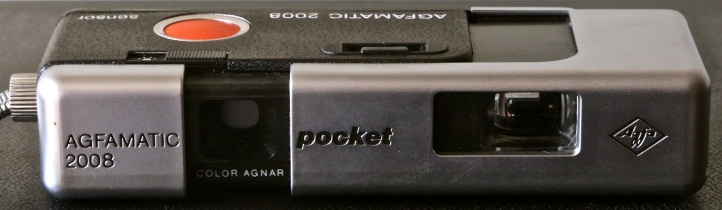
110mm_Agfa

See here, the picture of an Agfa Instamatic. It is almost identical to the camera I had in the late 70’s. So, how will you get those negatives developed? Where to buy film? Most will not care about it, many have bought new camera’s, but where to print the negatives you have? Nowadays with digital images, almost any printer will print it, almost every system will show them. How is that different? So are the words of Vint Cerf anything else but a sales pitch for some new ‘forever’ saved option, likely one that Google will offer and not unlikely in a way that gives Google shared ownership. Is that under the current feelings of ‘data collection’ such a sceptical view to have?

Now, I will state, that not unlike those old prints, the owner has the responsibility to keep the images safe, just like in the old days. Even if the originals (the digital negatives) are lost, as long as a print still exists, the image remains, just like the old photographs. Yet, his quote “But as technology moves on, they risk being lost in the wake of an accelerating digital revolution” holds truth, because that is not unlike the 110mm film issue. So as long as you have a data option that survives, like the 110mm negative holder, you can always get another print. So, CDROM’s in a writable version came in the late 90’s, so we only started to have a backup option for 20 years, yet affordable digital images would still need several more years. Yes, that market has grown exponential and now, we see the application of Common Cyber Sense in another way. Now, people will get confronted with the need to back things up. As the Digital disc evolved, so has the quality of these solutions. Now the discs last a lot longer, so backing up the old discs on new discs does make a whole lot of sense, so there is a side that makes perfect sense, but is that enough?

That part is shown in the following quote: “’I worry a great deal about that,’ Mr Cerf told me. ’You and I are experiencing things like this. Old formats of documents that we’ve created or presentations may not be readable by the latest version of the software because backwards compatibility is not always guaranteed’“. This is at the heart of what Vincent Serf is getting to, so he is definitely onto something. How many of you can still access all the WordPerfect files you created in 1992? Who can still access their FRED applications and their Ashton Tate’s Framework solutions? That list is slowly and surely getting close to zero. This is what Vincent is getting to and there list the crux, because this would have gone beyond mere images and what we currently still access. Consider the Digital VAX/VMS systems, the collected data that spans decades from 1982 onwards. The IBM series one (those 64Mb mainframes with 10 9” floppies), so Vincent is perfectly correct (as a man with his experience would be), but what solution to use? Yes, his idea is perfectly sound, but the issues that follows is the one that I have to some degree an issue with, you see, sometimes things get lost, which has happened throughout history, would our lives have been better if the Library of Alexandria survived? Would it be better, or would there be more and more incriminations? There is no way to know, but the issue can be explained in another way. This is a myth I heard in school a long time ago. The story is that a person could ask whatever he wanted for a created chess game. He asked for a grain in the first square, two in the second square and so on. By the time the board was half way through, the person paying for it would owe the person 2,147,483,648 grain seeds and that is just half way through. Now think of today’s world, where we collect everything. Like the chess board we collect every part and this just increased the junk we collect and that at a premium price. So what to keep? That is the hard part, it is interesting to keep on the side that sometimes we need to allow to lose things, but Vincent has a case. Now we look at one of the last quotes: “’Plainly not,’ Vint Cerf laughed. ‘But I think it is amusing to imagine that it is the year 3000 and you’ve done a Google search. The X-ray snapshot we are trying to capture should be transportable from one place to another. So, I should be able to move it from the Google cloud to some other cloud, or move it into a machine I have’“. Yes, there is the sales pitch. “Google search” and “move it from the Google cloud“, so there we have it, the Google cloud! Still, even though there is a sales pitch in here, does that make it a bad approach? Are we better because we save EVERYTHING? That is at the heart of this little conundrum. Now, those having their data on the old Cray might consider their data worthy, so do many who had their data on UNIX mini’s, but now consider every Novell edition, every desktop, now, it will be arbitrary if people decide to take these steps, yet what happens when all data can be baked up like this, what happens when some start ‘offering’ this for ‘free’? Who then co-owns that data, those solutions? Is that such a crazy thought to have?

Here is the last part: “And that’s the key issue here – how do I ensure in the distant future that the standards are still known, and I can still interpret this carefully constructed X-ray snapshot?” This is the part that is interesting; his concept of Digital Vellum is an interesting one. Yet, how should we move forward on that? What happens when these snapshots link up, when they connect, perhaps even interact? There is no way of knowing; perhaps this would be the beginning of a new evolution of data. Is that such a weird concept? Perhaps that is where we need to look at other sides too. Consider our insight, into our memories, our ‘wisdom’ and our ability to filter and extrapolate. Is this solution a primal step from near ‘artificial-intelligence’ to possible cyber/digital intelligence? The question becomes, if intelligence is grown from memories, what do we create when we give it everything we ever collected? I have seen the stories, the way some people think that the dangers of an artificial intelligence is so dangerous. We might consider the thoughts from the ‘Cyberdyne’ stories (Terminator series), but in the end, what if the digital intelligence is the beginning of our legacy? What if we learn to preserve ourselves, without leaving a carbon footprint, without being the deadly blight on nature? At some point we will stop to exist, we die; it is a simple consequence of nature, but what happened, if our wisdom is preserved? Many come with stories and nightmares of the loss of identity, but what happens if we can store intelligence? What happens if the next century Albert Einstein would be there to help us create progress, inspire innovation for all time? Is that such a bad thing? Some of these questions are beyond my ability to answer but there is a dangerous dark side too, what happens when this becomes commercial Intellectual Property? I am all for IP, yet, should cloned intelligence become the property of anyone? I feel that I might be alive long enough to actually see that question go to court. I hope that those making that decision are a lot wiser than I currently feel.

This now gets me to story two, which also came from the BBC (at http://www.bbc.com/news/technology-31440978), the story here is ‘Cybersecurity: Tech firms urged to share data with US‘, which gave me the initial scepticism regarding the Vint Cerf story. So, I am not linking them perse, they are separate stories. The initial quote is “Private tech firms should share more information with government and with each other to tackle cybercrime, according to US President Barack Obama“, I do not disagree with this thought, however, there is a side to this that is not addressed. The given quote is “Senior Google, Yahoo and Facebook executives turned down invitations to the summit, held at Stanford University“, so is this about not sharing, or about keeping the data non-sharable. There is part that we see when we look at the quote “Mr Obama is backing the creation of information sharing and analysis organisations (ISAOs) to help firms and government share material on potential threats“, yes, if we consider that Snowden fellow there could be issue, but is that a valid path? You see, consider how some do NOT want the cyber threat to reduce for the largest extent, consider how many software ‘solutions’ are out there, for viruses, phishing attacks, identity theft and several other parts. There are two dangers, at one part we have a possible solution to theoretically start solving and decently diminish the danger, the other side is on how all that data gets linked, that part in the wrong hands is a lot more dangerous than many could imagine.

The following quote adds to the worry: “Government cannot do this alone. But the fact is that the private sector can’t do it alone either because its government that often has the latest information on new threats” My issue is that this should not in the hands of any private part, it could be seen as the execution of the premise ‘absolute power corrupts absolutely’, those who face that lesson will not have an option. I would see a solution if there was collaboration between NSA, GCHQ, DGSE and a select few more. Reasoning? Cybercrimes have a distinct impact on national income and also national tax donations. They have all the drive to get it resolved. I have less faith in private companies, their allegiance is to profit, their board of directors and more profit. This is the issue as they will do what they need, someone falls on a sword and many get extremely wealthy, the data goes everywhere and many become exploitable, classifiable and re-sellable. I have been in data for decades, I think that governments can do what needs to be done, and it is time to change the cycle of re-iterated profit. Governments have made themselves the bitch of the private industries, the three mentioned initially is not enough, consider the quote down the line “Facebook, Yahoo, Google and Microsoft have all sent less senior executives to the conference“, so why was Microsoft not mentioned earlier? What is going on? The interesting part is that Bloomberg mentions Microsoft several times, the BBC article just twice. It is clear that something needs to be done on several levels, but it takes a different scope and a different approach, I feel decently certain that keeping the private touch out of this will be essential, for the reason that private companies have a mere commercial scope. I feel uncertain that this approach will work, it has not worked for a long time; I have seen ego and political play and personal reasoning interfere with results, in more than one nation. Whatever is done, it needs to be done, it needs to be done a lot faster than many consider and even though taking the politician out of a government seems to be impossible, we need to make sure that an approach is considered that does not allow for political exploitation, but how to get that done is another matter entirely.


1 Comment

Filed under IT, Law, Military, Politics

Implosions

An interesting article hit the Guardian this morning; it is another decent piece by Zoe Wood. The article does leave me a little wondering on what is either wrong with me, or with everyone else. You see, I feel like a Ghost Rider, driving on the right lane on the M11 from Cambridge to Stansted Airport. The radio is warning me to look out for a Ghost rider, I am wondering how crazy the BBC dude is as I am seeing dozens of them all in the wrong lane.

That is the feeling you need to keep into mind when we look at the article ‘Bank Fashion collapses, putting 1,500 high street jobs at risk‘ (at http://www.theguardian.com/business/2015/jan/05/bank-fashion-collapses-1500-high-street-jobs-at-risk). You see, when we consider ‘young’ fashion retailer, 84 stores, whilst we see at Parliament UK “The unemployment rate (the proportion of the economically active population who are unemployed) for 16-24 year olds was 16.6%“, then we should ask ourselves whether this is such a stretch at all. Yes, we can see that the curve of young employed is lowering, but almost 1 in 5 is a huge group to miss out on. And let’s face it, not all will buy at Bank either, so the question remains, is this such a worrying step? Should we ask why the group did not trim down its size long before this? The quote ““Bank has struggled in a highly competitive segment of the retail industry and has been loss-making for a number of years,”” only adds to this amazement of not trimming. In my (possibly incorrect) view, I wonder whether this group wagered with the existence of 50 shops by not getting rid of 34 of them. The number is arbitrary and highly randomly generated, but you get the idea. Did some people bet on better time for their possible commission and were they as such willing to pay a dangerous game with the 50 shops that might have been saved? In addition, what formula change might have given them a broader perspective? I am not telling, merely asking.

So we see that the previous owner (JD Sports) did coral the wagons when they sold the Bank Fashion part with the part “JD Sports’ executive chairman, Peter Cowgill, said at the time that the sale of Bank was in the “best interests of the group” and that he expected the deal to result in a “substantial recovery” of an intercompany loan“. It makes perfect tactical sense. Yet when we see the earlier statement “In a statement to the stock exchange announcing the sale to Hilco in November, JD Sports said Bank had made a loss of £8.1m in the year to 1 February 2014 and had gross assets of £51.7m at that date“, we must wonder what made Hilco decide to buy it in the first place. So less than a year ago it had made a loss of £8.1m, which is fine, but who expects to turn this around within 18 months in a time of low economy should be willing to answer a few questions to a panel of economic boffins. In my personal view I would set up a second meeting with this person and a mental health review board 30 mins after the economic meeting, as it might be an interesting second interview to say the least.

Fashion Bank might be the visible one today, but it has not been the biggest one or the only one. A less clear view is the reasoning behind Blockbusters, how was it to be turned around by Gordon Brothers? I am not judging them, perhaps they had a changing formula that might have worked, there will always be a different look on how firms versus equity firms look at their new baby and shape it to be a return on investment to some extent, in addition that blockbusters catered to a much wider audience, giving additional possible solutions that might have been backfiring, it is just speculation.

No, going back to the Bank group, or those behind it. Why was the ‘transfer’ made? I mention transfer, because is that not what it is, someone takes hold of a loss making firm. Who answers the questions on the strategy of buying something that is losing you money, whilst you remain using it in the same field. When you buy a car with a broken engine, you fix either the engine, or you replace it. No matter what you decide, fixing it will take time. That part is an absolute given; I just wonder how the rationale went for something that is supposed to get turned around in 10months, whilst it has lost an equal of 15% of its total value. It requires deep changes; such changes take time, more than the projected 10 months here. So again I wonder, am I that Ghost Rider, or is the bulk not watching in what lane they are driving? It is not that far fetched a question!

These are not the only players, at http://www.retailresearch.org/whosegonebust.php we can see a range of players not making it, but business has always been like this, some make it, some do not and they are replaced by newer or better players. This is a phase going on way before the recessions. So why is this issue such a deal now? You see, now, we see a two pronged survival streak. In the first pass a company under threat seems to buy more businesses to seem larger, hoping that they will survive a little longer (which tends to work short term), then as this fails it all goes on the block and we see the shattering of chains, leaving with every shattered attempt 1000-2000 retail workers in need of a new job. As I see it, the problem just grows, when a worker is competing with one to two hundred working peers, they have a decent chance, you see, from the ashes others rise, but when competing with one to two thousand peers, the issue becomes almost unsurmountable, bosses love this as they can get people at 10-15% less, but the workforce becomes uneven, unfair and those bosses as they blow their own business, they tend to walk away with a pretty penny to survive the 5 years that follows. It is this level of implosion that the law should start to protect against. It is for that reason that there should be a new panel, one that does not just question what happens, but also sets a punitive change, because the man behind the purchase, addition and sell of Bank has another part. He gets to be audited and he should be revoked any right to in another company in any level of authority for at least 10 years.

The fair question becomes, is this at all fair? That is actually the question that bothers me too, because innovation and success are fine lines, it is a fine line drawn on a thick black bar called ‘failure’, which is on an even wider bar called ‘getting by’. This must be regarded too, yet is a 10 month turnaround realistic in any way, shape or form? I do not know the answer, because I am not a retail innovator and here I cannot see what some would see, but in the opposite side of the same fairness, Tesco might be regarded as an extreme, but is the case of Bank Fashion not set on an equal face of misrepresentation? You see, before Tesco went (as I see it) criminally overboard in misstating their ‘achievements’, there must have been a phase of misrepresentation (which is not a crime). Where do we see the steps where an economy becomes a better place when these acts of quick fixes and quick manipulations become the centre of business? If we look at the names in the retail research link we see stated words, words we might regard as facts, but are they? When we look at the numbers we see another case.

In that view, in 2008 on average 1380 people per company lost their job, 54 companies and 74,500 people is a big group out to find new jobs, of course it was hard on all then. On average it comes down to 9-12 people per store, which makes perfect sense, yet when we see that almost 4000 stores were shut down, we do get a skewed view on how not so good the economy is, but is that entirely true? The economy is stated to be improving and I am willing to believe that, it is just that under these skewed projections we also see a difference where the employees are getting a lessened deal with each iteration of failing companies, because as more merge and still fail, we see a stronger competitive need, which is translated into getting the same work done for less money, the standard of living falters, which gives views that getting by is almost no longer an option, which then sees us how Bank Fashion is losing money because people are not buying anything, that was the (not so) nice consequence of a lesser income, the snake that eats its own tail ends up with a hunger that does not satisfy and with an increasingly diminished size, did the players of that game consider this or were they only interested in how much they got out of it?

So as we look at possible future implosions of retail chains in 2015, consider the story of the Ghost Rider. Was I the Ghost rider, are you all Ghost Riders, or are we now considering option three, where someone removed the no entry sign and optionally replaced it with a one way sign?


Leave a comment

Filed under Finance, Media

Slander versus Speculation

There is a lot wrong in this world, we cannot disagree with that. Soon we might see rental prices go down in London, because of Superman (the New Ecstasy), yay to those needing an apartment, being free of drugs was never so nicely rewarded! So is this speculation, or slander?

We could debate my sense in taste (many have for decades), yet in the firm juridical ground, when can speculation be regarded as slander?

That part is more and more a question when we consider the US sanctions against North Korea. Oh, and perhaps we forgot to mention that Sony Is a Japanese firm (even though the crime was on US soil), giving additional spotlights to the reasoning of certain actions. Consider the following sources. First let’s take the BBC (at http://www.bbc.com/news/world-us-canada-30661973). Here we see sanctions against organisations and individuals. First there is “Jang Song Chol: Named by the US Treasury as a Komid representative in Russia and a government official“, then there is “Kim Yong Chol: An official of the North Korean government, according to the US, and a Komid representative in Iran” and last there is “Ryu Jin and Kang Ryong: Komid officials and members of the North Korean government who are operating in Syria, according to the US“. Now the article ends with the most hilarious of all quotes “White House officials told reporters the move was in response to the Sony hack, but the targets of the sanctions were not directly involved“.

So the White House is within this part confessing to the breach where they are targeting innocent civilians (of that crime at least)? Can anyone explain to me how this is anything less than legalised slander? Consider that if (not when, but if) they ever figure out who exactly was responsible for the Sony hack (the actual individuals involved), how the US government could be held responsible in any court of law for this. Consider this part (source was the APA of all places, at http://www.apa.org/about/gr/issues/violence/hate-crimes-faq.pdf). “Current federal law defines hate crimes as any felony or crime of violence that manifests prejudice based on “race, colour, religion, or national origin” (18 U.S.C. §245). Hate crimes can be understood as criminal conduct motivated in whole or in part by a negative opinion or attitude toward a group of persons. Hate crimes involve a specific aspect of the victim’s identity (e.g., race)“. If we clinically look at the facts, then these acts are a hate crime against North Korea.

Now, let’s be fair as well. Most will not care, I reckon that the North Koreans might not even care, but this act does remain a legal transgression!

Let me show you why (because without reason, there is nothing), part one is found in yesterday’s news in the Guardian (at http://www.theguardian.com/technology/2015/jan/02/sony-hackers-may-still-access-computer-systems-the-interview).

Here we see the following parts:

  1. Sony Entertainment is unable to confirm that hackers have been eradicated from its computer systems more than a month after the film studio was hit by a debilitating cyber-attack, a report says

So not only has the hack occurred, it is very possible that the transgression and the damage is currently still ongoing, in addition, one of the most watched and scrutinised nations is still accessing Sony? Not one press agency is asking the questions that matter. For example, there was some visible Press Tour into North Korea (must have been around when Kim Jong-Un was elected big boss in 2011), when we saw some of the filmed events there, we saw North Korean officials in total disbelieve that a smartphone could take photographs and these people walked over Sony’s cyber security?

Now we get to the Chief Executive of Sony himself, his quote gets us the following:

  1. “It took me 24 or 36 hours to fully understand that this was not something we were going to be able to recover from in the next week or two,” Lynton told the Wall Street Journal

So this was not a mere grab for data, this is a system paralyses of sizeable renown, the hack was so complete, high paid executives could not get their minds around the events. So, are we still looking at North Korea? Basically this requires an evolved form of ‘stuxnet’, the hack was seemingly more complete then the stuxnet virus could achieve. We now have only three players left. Russia, China and whatever hacking organisation walks around within the US and its allied nations. How is North Korea anything else but a mere puppet for slander? Whilst some people are possibly hiding their lack of skills, and likely other people linked to all this are trying to cover up issues that have been ignored ever since the first hack of 2011 (the Sony PSN hack). By the way, I am using stuxnet as a comparison, I have zero knowledge how the transgressions was done, but we can all agree it was way beyond a normal level of sophistication.

Yes there is another scenario and I will get to that soon, North Korea is not off the hook yet!

You see we have been looking at the event, but not at the capital involvement that is two tiered at present.

  1. Sony’s network is expected to be fully operational within the next two months but hackers have so far released only a tiny fraction of the 100 terabytes of data they claim to have stolen“, so not only will it take months to repair security measures, the fact that the new fences are there are still no guarantee that the data remains safe.

When gets us to the first tier. Data! Someone streamed 100 Tb, which is more than just a number; it would require every PlayStation 3 on the planet to download up to 2Mb. The fact that this is not monitored, or that is got through to this extent, is a first view that this was no mere trifle event. And even though 100,000 Gigabytes seems small when compared to the PSN issues, it becomes interesting when we consider that the PSN had been hit more than once, but as those members did not all download, where did all this data get syphoned to?

Now we get to the one part that might be regarded as tier two. You see, it is not just the amount taken, which takes a good server park to store, it goes back to issues I discussed in regards to piracy and the parts I mentioned in my blog ‘For our spies only!‘ on September 26th 2014. There I stated “in the end this is NOT about copyright, this is about bandwidth“, the big players all knew it and they were all very concerned if such events would start to get measured and logged. Now someone casually walked away with 100,000 gigabytes of data?

Before I restate, it was not North Korea, let us take a look at another article by the Guardian in that regard. The title is ‘North Korea may have hired outside hackers for Sony attack, says US‘ (at http://www.theguardian.com/world/2014/dec/30/north-korea-hackers-sony-pictures-cyber-attack) and it was written on December 30th. Now we must consider the following: “US investigators believe that North Korea most likely hired hackers from outside the country to help with last month’s cyber-attack against Sony Pictures, an official close to the investigation has said“. The operative word is ‘believe‘, they just do not know. As a speculation that would be my guess as North Korea does not have the skill needed for this, not even close. By the way, those hackers might want to get paid, how will North Korea do that, or perhaps that is beyond US oversight too, because it would be a sizeable amount for something this complete.

The next part is the part that opens the discussion ““The FBI has concluded the government of North Korea is responsible for the theft and destruction of data on the network of Sony Pictures Entertainment,” it said in a statement“. The first question: What evidence?  As stated before, North Korea is lacking in many ways, the fact that they hacked past Sony to this extent, whilst at present no guarantee can be given that the systems are secure at all, whilst North Korea has been watched 24:7 for a long time now gives rise to the demand of evidence showing the guilt of North Korea. So, they are seemingly better than the cyber divisions of both Russia and China? I am not buying it, in addition, the fact that the article implies that outside help was engaged for a hack this thorough leaves us with two thoughts.

  1. If true, where is the real balance of power in cyberspace, because this now implies that North Korea is a real player, even though no one (including people a lot more intelligent than me) have concurred that North Korea does not count when it comes to the internet and cyberspace.
  2. If false, what incompetence is the US hiding from us all and is that not the true crime?

Consider this quote (from the Guardian article too): “Some private security experts have begun to question whether Pyongyang was behind the Sony cyber-attack at all. The consulting firm Taia Global said the results of a linguistic analysis of communications from the suspected hackers suggested they were more likely to come from Russia than North Korea. The cyber security firm Norse said it suspected a Sony insider might have helped launch the attack

I cannot disagree with Taia Global, as this could be Russia hitting back at US sanctions, but that would be speculation on my side, I also very much agree with Norse. Consider that if someone walks into a bank vault and it is empty. There was no sign of break in, the doors were not forced. At this point the police and the FBI will initially look at ‘the insider’ plot. It makes perfect sense. To get past the Sony server parks to this degree someone was giving aid in some way. Initial passwords, the network structure, because if that was not the case there would be a lot more logging evidence to giver clear view whether North Korea was guilty (or not involved).

Mark Rasch hits the nail on the head with this quote ““I think the government acted prematurely in announcing unequivocally that it was North Korea before the investigation was complete,” said Mark Rasch, a former federal cybercrime prosecutor. “There are many theories about who did it and how they did it. The government has to be pursuing all of them.”” there is the crux, the mention of theries on who did it. Even if it is outside help, Russia would still make more sense, the Russian Mafia could be the front for cashing in on selling the data, they pay commission to the people ‘hurt’ through US sanctions, they are looking at the least likely suspect because of a comedy, one that I (and many others) had not even heard of before these events.

It is the last quote that is food for thought from Kevin Mandia of Mandiant “Mandia, who has supervised investigations into some of the world’s biggest cyber-attacks, said the Sony case was unprecedented. “Nobody expected when somebody breaks in to absolutely destroy all your data, or try to anyway, and that’s just something that no one else has seen,” he said

That part is not entirely true, I remember the DBase virus of 1988, I remember some people who had fallen victim to them, a garble parser that does not show until the virus is removed, it leaves your data garbled from that point forward. There was also a data virus in the 80’s. I forgot the specifics, but whilst most viruses would attack ‘.com’ and ‘.exe’ files, this one would attack data files, until that day a truly scary moment. So, it is not entirely unprecedented. Consider, if you copy someone’s data, the best sale is to sell it to the competitors, yet, what happens if the owner no longer has that data, does that not drive up the price? Yet, it is bad tactics, to copy in secret and resell it all makes perfect sense, the fact that these events happened, whilst Sony IT, the Cyber divisions of the FBI and others are not able to track the events is something very novel. It is a first to this degree, do you now understand why it makes no sense to accuse the one nation where we see this as their highlight: “Aug 6, 2013 – North Koreans hungry for tech skills are buying up used desktops on the black market, these desktops smuggled in from China have become a much sought-after item in North Korea“, this is the nation that thwarted one of the biggest cyber power players?

People please wake up. The question becomes what was real? I call my version insightful speculation. I have been involved in IT since the 80’s, this level of hacking requires serious system skills with in depth knowledge of all layer one components (hardware layer), if we ignore the inside job part, this takes North Korea out of the loop, it also removes a massive amount of hackers of the table too. It requires the skills we would require to see from people at the NSA and other high tiered cyber firms. From these facts I come to three options:

  1. The hackers are a new level of hacker with the ability to get past the security of nearly any large firm and government data system.
  2. Sony has been criminally negligent and the US is willing to ‘aid’ this Japanese firm for a price.
  3. A simple inside job (possibly even a disgruntled employee) with links to organised crime.

Please feel free to give me a valid fourth alternative.


1 Comment

Filed under Finance, IT, Law, Media, Military, Politics

The shrinking EEC

It has been in the papers and the paperwork for some time now. It is getting close to a certainty that the EEC is now in jeopardy of losing the UK as an EEC member.

And my reasoning is?

Well there is more than one reason, but the number one spot at present would be Ukip. As the EEC courts are adding legalisations into the mix of the UK stemming the influx of illegal wannabe residents, they are only fuelling the Ukip engine that will denounce membership to the EEC, it should be clear that this is getting to be an increasing view of consequence. I wonder how large the panic will be when the EEC GDP gets downgraded by 15%, which must be the stuff of legendary nightmares for Wall Street and several other zip codes that are managed by an abundance of financial institutions. Where their ‘survival’ depends on posting a +0.015%, -14.5% is ample reasoning for speculators of all shapes and sizes to leave the building via the exit in their windows (opposed to taking the stairs or elevator). Well, that at least might open up affordable housing for some, so there will be winners there too. That downgrade would potentially buckle two currencies and around half a dozen nations in one step.

So as we see these ‘humanitarians’ fight for the rights of those misusing their rights at the earliest convenience, be aware that once your savings are gone, feel free to thank those human rights courts as well. Now, let me be frank, I am all for human rights, I think that Human rights are essential, but what we now consider to be a Human Rights ‘issue’ should be regarded as debatable too. It is almost like faced with a group that will settle for any small ‘victory’ whilst ignoring the massive issues that should be on their actual radar. One could even speculate that these people and those judges will do ANYTHING to avoid making the changes that actually matter in a Human Rights environment.

The first issue linked in all this is the article we see titled ‘Migrant overstayer figures swell to more than 300,000, watchdog reveals‘ (at http://www.theguardian.com/uk-news/2014/dec/17/migrant-overstayer-figures-swell-watchdog-reveals). We see the quotes “John Vine, the chief inspector of borders and immigration, revealed the existence of a further 223,600 records of foreign nationals who have overstayed their visas, all dated before December 2008, in a report published on Wednesday”, as well as “fewer than 1% had left the country as a result of their intervention“, so we have a quarter of a million people, using a system where possible, where the system is not equipped to deal with such additional numbers. We can go all huffy and puffy on the quote “even killers had been given British passports because of lax Home Office character checks“, where were these crimes committed? And if the home office checks are lax, should we blame immigration, the system or the pressure of papers? I am asking as I am not certain where and if there is blame to dish out at that point. What is clear is that this system is broken and people have had enough. We do however need to take into mind the last quote there which is ““New powers in the Immigration Act are restricting access to work, housing, benefits, healthcare, bank accounts and driving licences of illegal migrants, making it far tougher for those with no right to be in the country to stay here.”“, which of course will further drive up crime and disease issues. I know I am just stating the obvious, but at large I have seen people ignore the obvious for a decent long time, so there!

The second article ‘Non-EU family members do not need visa to enter UK, says European court‘ (at http://www.theguardian.com/uk-news/2014/dec/18/non-eu-family-members-visa-uk-european-court) is what is driving issues on several parts. If they do not require a visa, that means that they can enter whenever, which also means that they get limited access to services already stretched to the point of collapse as it is now. Ukip gets a lot of support when they translate the Dutch writings of R.H.J.M. Staring called ‘Reizen onder regie: het migratieproces van illegale Turken in Nederland‘, the migration of illegal Turks into the Netherlands. If we believe Geert Wilders from the Dutch party PVV, we see a cost in the Netherlands close to 13 billion for 2010 (when the article was written) against a total 200 billion for the 4 decades as mentioned. there is no real defining number, giving us no real inside whether these numbers are true or not, yet the fact that the Dutch government has abstained to truly investigate this, gives rise to the fact that the costs are a lot higher, and the consequence of those numbers becoming a factual dimension is what scares the current government, the numbers might be high enough for people to seriously regard the PVV as a party, as such that same fear would hit the UK as those shown costs would give further rise to the increasing growth of Ukip, one thing all three parties are truly scared of. So as we see the national population spread to a solution that lowers their costs, gives better care and reduce the abuse of a social system, the illegal immigrant is soon to become the new pariah in nearly any nation. As such, this European court finding is not just a nuisance, it is the tinderbox to a powder keg too many ignored for too long.

So as we see judgement on one case that might have been ignored, as an issue, where we see the quote “Colombian wife of Sean McCarthy, a dual British and Irish national living in Spain, did not need a UK visa or family permit to visit Britain“, we are confronted with the realistic fear of non-manageable influx. So the fear of what legal and valid immigrants like: 730,000 from India, 465,000 from Pakistan, 640,000 Polish, 180,000 Nigerians and 100,000 Romanians will bring the UK, if one in ten brings over a relative, the UK will be confronted with an additional quarter of a million, whilst this is only 5 from the top 20, that number could end up being a lot higher, well past the Home Offices ability to clean up a system, which might have been regarded as out-dated less than a decade ago, and the UK is not the only nation where this issue plays.

So overall this verdict could be the coffin nail, financial institutions has tried to avoid, hoping that they could leverage a ‘survivable’ solution for themselves, when this goes pear shaped, the courts will have an entirely different scope of horrors to contemplate. If we consider the consequences of the events in Martin Place in Sydney, where we see the unacceptable abuse of Muslims whilst in prayer (at http://www.bbc.com/news/world-asia-29781967), we see a change to actual Human Rights that are not looked at to the extent they should be. It is a worry. When one crazy individual with a gun can get this started in Australia, what happens when the social system in the UK gets pushed beyond breaking? We have seen plenty of shouted claims against these 5 groups in the past, when the illegal immigration goes beyond a certain point, how safe will the legal and valid immigrants be? That is the worry some part that is overlooked at present. It is a part that Ukip cannot (and might not) ignore, but the fallout and the timeline of that fallout will push a lot of people and families in danger. As the European courts considered and possible did the legally right thing, they might end up not having done the correct thing.

In the end the EEC is an economic thing, the European Union is at its foundation a set of economic rules, the imposing of changed laws for nations, whilst it core is adhering to an economy is faulty at best (even more faulty when that economy collapses to the extent it has). By removing areas of self-governing the EEC is setting a different precedence, one must then wonder whether the identity of any nationality will allowed for the EEC to continue, once that is answered in the negative, those members might not want an EEC future, a danger that is not just contained within the United Kingdom, there is a growing wave of concern that France is getting to that consideration point a lot faster than most economies can correct for, France might not wait until 2017, the main reason is not just Marine Le Penn, it is French pride, which is not in light with the foundation of the EEC and we can add the lack of catering to French Pride by President Hollande, it only gives additional worry to all involved. We can admit that the economic slump was not due to Hollande, but not resolving it will be blamed on him. This beckons additional fears for the economy, once that critical point is surpassed all bets will be off and those with invested life savings might not have any savings left soon thereafter. So buy that house, that vineyard and that business, because owning what you have without debts will soon be a better position than having the status quo with your investments junked, the one fear Wall Street pushed forward too often with less and less options of keeping that value intact.

When people are in fear of losing the simple parts of life, parts that were always there, when that continuation is endangered, they will act in unexpected directions; Nigel Farage and Marine Le Penn are pretty much counting on that and so far they have yet to be proven wrong.

Leave a comment

Filed under Uncategorized

Should I run for office?

That was the question I was wondering about yesterday. I am not much of a politician, but I feel that the current batch is not getting anything done in the UK, so why should I, an Australian consider running for office in the UK? Well, first reason is that my heritage is there, but more important, whatever hits the UK, will impact on Australia in more than one way later down the track, so getting the punches in for the commonwealth all over is not the worst idea to have.

So who to join? Labour, well, they are not getting anything done at present, and in two nations, Labour had spent enough to cover the budget of more than two nations. Liberal Democrats?

I do not think they are anywhere near fit enough to govern and Nick Clegg is not making it any easier with promises that get set back. I see them as the party that grows a little by having the backs of the conservative party, which makes it a follower, they are not leading. I have seen man great and small, I have met leaders, I do not regard Nick Clegg to be one.

So now we have two remaining, the Conservatives and Ukip. Now we get a new issue. If we regard today’s news: ‘Ukip recruits BBC’s ‘Gobby’ as communications director‘ (at http://www.theguardian.com/politics/2014/dec/07/ukip-bbc-gobby-communications-director-paul-lambert-nigel-farage), we see a game changer. Ukip is beefing up their political engine with a heavy weight. We see the quote that draws us in first “Over the past few years I have been following the work of Ukip and Nigel Farage, and I feel that he is changing British politics for the better. I am delighted to be able to add my experience to his team“, now we get to the issue! Yes, Nigel Farage is changing politics, the question is, is it for the better?

It is a dangerous issue to debate, I can only debate it from my -point of view and for the most we seem to depend on past political achievements, what are they? Here, we see the Telegraph and the Daily Mail handing us a part that actually matters (who would have thunk it). The headline already gives us the beef of the issue ‘British politics is broken – and only Nigel Farage is profiting‘, which is how we seem to regard UK politics, within the UK and outside of it. The article gives us this bit “There has been no Axelrod figure lurking behind Mr Farage, trying to make him say the right things or wear the right clothes. He has advanced to his position of unprecedented public influence on his own terms. Voters sense this and respect it“, it is in actuality a much stronger recognition than most realise. The people want a person who does HIS (or HER) things, not chewed down, analysed and reshaped for maximum potential. We all want to meet the ‘real’ politician. Nigel has been playing that part and played that card brilliantly. He has a decent amount of charisma which does not hurt either. The Daily Mail is less subtle about it. ‘But this is what you get when a smug metropolitan elite treat the people with contempt, writes Dominic Sandbrook‘ here we see “What Mr Farage has tapped into is a widespread national discontent that cannot merely be dismissed — as some metropolitan commentators have tried to do — as racism or xenophobia“, there is a little more than that, but the elements are shown, by the way, the picture of Nigel Farage holding a pint helped Nigel enormously. The people are seeing a person THEY can relate too, both Ed Miliband and David Cameron forgot about that. I saw Ukip as a serious concern in May 2013 at ‘UKIP or U.K.I.P? (Ur Kiddin’ I Presume?)‘ (at https://lawlordtobe.com/2013/05/04/ukip-or-u-k-i-p-ur-kiddin-i-presume/)

I still see myself as a conservative, yet here things are not going so good either. Part of this is David Cameron’s own fault. Ukip should have been treated more seriously long ago, now they are gaining momentum, whilst the conservative train is losing speed. I think that the conservatives did play the game right for most, but it is the game that the voters have had enough off and they are looking somewhere else at present, which gives us this predicament. So where should I run for office in the UK? (Beside a few minor glitches regarding not being a British citizen). When I look at my family’s history, then there are a few options. I would look at my family’s history to behold my options. The first place is Saffron Walden, which has a link to my grandmother’s heritage. There we see the conservatives with Sir Alan Haselhurst clearly in seat, no threat of Ukip coming there any day soon. The next part is my great grandfather, which gives me Exeter. Here we see Labour as a temporary majority. Now we have ourselves a ball game. I have to work the brain magic, because on looks, Ben Bradshaw, will easily win. Dominic Morris is in the prospective seat for the conservatives and he is not strong, he needs support. Perhaps Dominic would consider the photograph on his LinkedIn profile? Which if the 5 persons is he? Not the best setting for a former RAF trained pilot, only two jobs of 2 years of more, the rest were all mere months. Not the greatest profile here, but it does read slightly distinguished.

You see, here Ukip has an advantage; Keith Crawford is a business man, on YouTube you can see that he knows how to address an audience, showing how EU costs are costing the British people a fortune. He is a former soldier who shaped himself and went into business, her shows that he has options, he worked hard and he made it, an Englishman in England. Dominic Morris will have one hell of a fight on his hands and not just a real fight; he is less likely to win on the data I am seeing. Especially as Keith Crawford is discussing both cheap labour and freedom of movement, we see that Keith has the ability to win this election. I am ready for this fight if need be!

The weirdest part is that I worry about in this fight is that Keith Crawford could have been a formidable Conservative, not with the looks of Ben Bradshaw, but with the voice, the insight and knowledge to be better than Ben Bradshaw. Not that Bradshaw is all looks, as a graduate from the University of Sussex, he has his degrees and he has been a member of parliament since 1997. Still, at present it is about economy and jobs, which is why (as I see it) Labour is to be regarded out of its depth and with a less then strong representation from the conservatives, Ukip could sweep the votes with no less than 45-54%, which leaves the other 2 (we will disregard the chances of the Liberal democrats here) by a lot.

So, where do I stand, how can I make a difference? That is not a given at all, I remain conservative, but to some extent Ukip is voicing the issues many conservatives have, which is why there is such problem. To some extent, there is more at play then the visible items and those attacked by Ukip do not bare them out, moreover, if Nigel Farage gets the majority and he makes an exit from the EEC, we will see those hidden issues out in force, moreover, the act will drive both Germany and France into a coalition of desperation, they will drive every opposition to anything the UK brings and they will try to remove the economic wind from the sails of economy as much as possible, with less than a 1% positive economy, that could play out to be a very expensive lesson. Yet something must be done ant the status quo is no longer acceptable as is, which conservatives to some degree acknowledge in relative silence, Ukip is shouting out the slogans, but there is more in play then a slogan, which is the issue the British audience will learn the hard way after that.

So as we see that Ukip is now bringing out the big guns, we see an electorate that is leaning towards a massive win for Ukip. Consider that only 19 months ago, Ukip was not regarded as a serious threat. I think it is time to see that Ukip will change the landscape, now you the British readers think back to how your Labour/conservative MP regarded Ukip and see the now, wonder how trivialising their presence has resulted in Ukip becoming the next party as it stands. Now ask that MP what else he trivialised and get to work on those items, because as I see it, avoidance of Ukip is no longer an option, but make sure that all MP’s are awake now and that the Tories (and Labour to a lesser extent) have a fighting chance. Because, like Front Nationale (France), Ukip was disregarded as serious opposition, now we see this “The far-right Front National (FN) scored a historic victory in elections to the French senate on Sunday, winning its first ever seats in the upper chamber as the ruling Socialists and their leftwing allies lost their majority to rightwing parties” (at http://www.theguardian.com/world/2014/sep/28/front-national-wins-seats-french-senate-first-time), we are about to see a lot more changes, many we will not like in the long run.


Leave a comment

Filed under Media, Politics

Classifying defection

This is at the centre of my dilemma today. Part of me knows that some of my exam results have been posted. I have two more exams, which makes me too scared to check them. If I fail, my life will feel it is over and I feel like admiring the great view a person has when he leaps down the Empire State Building, some say that this view is the best and it is apparently a one-time option. Anyway, if I fail, I will get more depressed then I already am, If I pass I might relax a little too much whilst I have two exams between now and coming Tuesday morning, hence the fear to check.

On my 2 hour point of rest, I got my hands on this article ‘Rochester by-election: “two more Tories ready to defect”‘ (at http://www.theguardian.com/politics/2014/nov/20/rochester-strood-byelection-voters-polls-ukip), for most of my life I  have seen defection for the most as an act of treason, we take a team and we stick by that team (or company), I have watched scores of ‘managers’ ‘defect’ to the status or situation that benefited them the most, which I considered betraying the company that hired THEM to do a job. The then hid behind words like ‘miscommunication’ and ‘what was the best option’ the added part ‘for themselves’ was a bit of an issue to me. Corporations take this as the cost of doing business, but is that the acceptable truth of the matter? I actually do not know.

So these thoughts were in my mind as I read the article. You see, the question becomes who does an MP owes allegiance to? The party he is in or the people who elected him? That part is now unclear. Are these two MP’s Tories who serve Rochester and Strood, or are they Rochester and Strood MP’s who serve the conservatives? That is the question that phrases my mind. Yet when we look into the article another option is started to form. When we see the following parts: “My view is that Ukip membership should come back and join the Conservatives and be part of a centre-right majority in this country” and “Tolhurst said she was still hopeful of winning, but was reduced to begging for votes from supporters of other parties in an attempt to keep Ukip out of the constituency“, so what are we dealing with? Is this a situation where two MP’s are actually trying to sway both sides to stay in a seat, no matter whom they serve, are they playing both sides against the middle or are we looking at another play, one of voter management into getting the waters slowly managed by surfing the questions of the voters and through surfing these waves, to guide themselves into the opportunity to make the waves alter slightly, little by little into a new direction.

It is consistently illogical to expect the waves to react to the surfer, but is that entirely true? As the surfer becomes part of a wave, does that surfer not influence that what he is part of, or does the surfer just glide the wave, enjoying the motion but never to interact the wave so that the surfer will not get crushed by the wave as it engulfs him? What is true, by which definition and to what extent?

So why is this small part of Kent so distinct? I do not think it is distinct, I think that there is a play in motion, but to what extent is not clear. Consider the entire change as UKIP is growing beyond what most parties considered possible. Tories are scattered, Prime Minister David Cameron is all over the place to get a hold of the change, but the issue is not conservative based or Cameron based, it is in my mind constituency based. What is planned for the 75,000 voters and how should they be regarded as? In that area Mark Reckless does have a massive advantage, so why is there an issue with UKIP? The question becomes, what will happen, will the 23,000 people support conservatives and all move towards Kelly Tolhurst, or are we witnessing the sentiment within a constituency as they align and identify with the values that UKIP is advocating? If that is happening, are the conservatives on the right path, or are they ignoring the drastic need to educate the people towards why UKIP is the bad choice. Let us not forget that the conservatives got the economy started to the smallest extent whilst the EU is bleeding recession all over. The cautious approach by George Osborne is what is moving England towards better economic waters, which is also why the influx of immigrants is taking massive shapes, all towards better times. It seems to me that UKIP talks nice, but they have at present no way to continue the positive waves, in addition, the needs of change they will force upon the system could undo the forward strides the conservatives achieved within the first 6 months Nigel Farage starts implementing change, which he will believe to be ‘for the better’. The greatest danger here is that the results are only known after the fact, then it will be too late, so there is the link to my own fear, knowing will have repercussions. Ignorance is bliss to some extent; it lets me focus on what needs to be done. I can do it to my issues, Mark Reckless can do it towards the change he believes will make the difference and Kelly Tolhurst will just focus on becoming the new conservative for Kent. Yet Parliament will not get to ignore anything, it needs to dynamically alter its strategies on changes as they happen. David Cameron needs to remain dynamically active, but what of Nigel Farage? Is he dynamically active as we see ‘Farage rejects deportation claims amid UKIP migrant row‘ (at http://www.bbc.com/news/uk-politics-30111694), is he tactically changing points of view in regards to the battles he can win versus those that halt him (a dynamical act), or is he stating dynamical changes whilst not actually being dynamically active? As we see the quote in the BBC article “But Conservative MP Damian Green said Mr Reckless had come ‘dangerously close’ to advocating a repatriation policy while Labour’s Yvette Cooper said Mr Reckless had ‘let the mask slip’“. Is he truly slipping the mask, is he opportunistically inclined as the bulk of middle managers all over the place, or are we watching a different tactic, one that requires the voters top change course, just like the waves for a surfer, yet if waves cannot change direction, was the direction of the voters an actual direction which was never seen correctly?

This is part of my thinking, part that all parties seemed to have ignored, or at least it is a change that many did not consider. These matters are centre in the upcoming by-elections. The people have made mental changes to the parties and what they stand for. Instead of waiting election, Nigel Farage seems to be changing the landscape by these tactical changes, as areas move towards by-elections, we see a shift for the worst (if you are a conservative), so as the deck is stacked in favour of Farage Ukiporated, we see the approach where the 2015 elections are already being drawn vastly against the conservatives. Yes, 75,000 people in one part of Kent is not a big thing, but as this is only one constituency, which others are under attack? Let’s not forget that it is not just the conservatives that are under attack, the Liberal Democrats and Labour both have areas where the voters have been making changes, waves that are all taking other turns and directions, what will happen there? The UK, 650 surfers (read constituencies), and its politicians all trying to ride the waves, will they change boards or get crushed in the waves as they are not respecting the power of the wave. In my mind we will see plenty of surfers adapting to the waves, so will they therefor be the betrayers of the party that gave them the surfboard, are they respecting those who voted for them as they change the waves in a mindset of the price of doing business or are they doing nothing more than serve themselves as they surf for as long as they can. Who do they surf?


Leave a comment

Filed under Politics