Tag Archives: Blockheads

It’s been that long

I got alerted to a milestone yesterday on YouTube, you see, last week was the 25th anniversary of System Shock, one of my most beloved games from the past. I still remember the two moments that set the milestones for this game. The first was the PC Format by Future plc. About a month before the release, PC format included the entire first level of the game (medical level). So you got about an hour of gameplay into that game, a month later the game arrived and of course, I had to have that game on day one! I did and that started a tour of around a week getting through the game. Someone was nice enough to stream the game (at https://www.youtube.com/watch?v=4IzNzVAxk8E) the stream starts at 10:00. Even now, hearing the intro music still gives me the good shivers. For a game to do that is so rare, it is to some degree scary. I am still awaiting the remastered edition by NightDive Studios. It will be launched a little later than planned (2020) but on all the consoles, so I might get that happy feeling again on all my consoles.

This is the foundation of better than great gaming, the story, the emersion and the control. The game offered all three to a great degree. That part is also important as System Shock 2, a game that came 5 years later had almost all the same controls, the first game was the founding father of RPG games, and control was close to that perfect. Graphics did upgrade by a lot, yet the shock (for me) in this game that the game only sold 170,000 copies, not much for a game this perfect, as such I do hope that the remaster will hand out the multimillion copy achievement sold. When we look at PC Gamer we see: “System Shock smokes. It is the most fully immersive game world I have ever experienced“, as well as “no matter what kind of game you’re looking for, you’ll find something in System Shock to delight you“. Finishing with “unquestionably raises computer gaming to a new level” (at https://web.archive.org/web/20000309153138/http://www.pcgamer.com/reviews/1024.html), I gave the game a similar review and gave it a 95% score when I reviewed it.

From that moment on, I reviewed RPG games using System Shock as the minimum bar, as you might imagine not many games got to that level. It was also the first game where ‘leaning around corners‘ became an option in shooting games. As far as you see the stream and listening to the makers of the game, you get the part how this game became a trendsetter of excellence, even if they do not mention it, it was a labour of love and passion gets to be the deciding driver in any game towards excellence.

Depending on your age, consider the game that you would play again after 10, 20 and 25 years. What titles come to mind? In my view Elite Dangerous (after 35 years), Ultima 4 (after 35 years), System Shock (after 25 years), Ultima 7 (after 25 years), System Shock 2 (after 20 years), and the list goes on, but it is not a long list, games that are dipped in excellence are rare to say the least. Yet I am a gamer, a game junkie and like all other gamers I remain hopeful that another developer gets it right to the largest degree, Ubisoft did that with Assassins Creed 2 (and Brotherhood) then stuffed up to a much larger degree until Assassins Creed Origins was released. That is why the scrutiny of 93%+ games is so essential. Most gamers will take a turn in other direction if it gives them excellence, yet when they leave their comfort zone in gaming, excellence is the only marker that they will accept to make them do so. Games like Mass Effect 2, The Witcher 3, Grand Theft Auto V, Horizon Zero Dawn, all games that relied on near perfection; it is a stage that is seldom reached. And in all this the FX Slogan was key (for me it is) ‘The story is everything‘. Horizon Zero Dawn is perhaps the strongest example. In the beginning I enjoyed the game, yet it was the storyline after the proving that set the stage for me to continue and learn more and more. The origin story of Elisabeth Sobeck and Aloy is absolutely marvellous. Yes, I have seen the rants against the game, rants like ‘Giving up Horizon Zero Dawn‘ (at https://www.youtube.com/watch?v=Qv_1DzGf_1s). His response ‘I just don’t find it interesting anymore‘. Yes, I do not agree, but it is his view, and his view is valid to him, just when we see this he is still not completing: ‘The War – Chief’s trail‘. Yet the best story parts were still coming up and the game takes it time getting into the story, it is important to show this, because you might have a different love for games, I love stealth games, games with an essential need for stealth, not everyone loves this, I get that. You have to realise that, I might not be the voice for you; I might have other loves in gaming. I was never a lover of GTA5, I admire it for its excellence, but it is not my game, it is however for millions of other gamers.

In this view it is important to find more voices until you find the reviewer that aligns with your fulfilment in gaming. It is easy to find good reviews and for many games a lot will have the same view, but in the 90%+ range you need to find the one voice that is on your level of gaming. It is easy to merely see that The Last of Us was a great game, pretty much everyone will agree, yet Dark Souls 3 and Bloodborne? I loved both games; I never got to complete them. With Bloodborne I actually stopped (after a dozen attempts), I still have the game as it shows excellence on many levels and the engine is sublime, but it is also an excellent example for ratings. I would give it 91%, yet others will give it 93%-95% and now we have the review issue. Are their reviews better? They might be, they might be better at playing this game, more important, they might highlight things I missed, because I was not great at this game. Graphics and engines are easy, the subtle parts defining Bloodborne (as well as Dark Souls 3) is another matter. And now you come into the mix thinking it was merely an 85% game as you did not like the game (which is fair enough), finding the right reviewer is important, more important, the one that aligns with your game play and this is where a game like System Shock differs. The game remained playable for a much larger audience. Now we accept that the gaming bar was not as high in 1994 as it is in 2014, yet playability had remained similar over 25 years, it is my view that Bloodborne is a great game, yet, to me, it is not as playable. That small distinction is important when you seek out buying a full priced game that totally rocks your world.

To me the story is a deciding factor, whilst play style is the most important second. That part is visible to many who remember Metroid Prime on GameCube; I still love that game as well. I never got beyond 98% completion, and I would love to play it again getting to 100%, that is because the game is extremely playable with a play style that is set to comfort. We might sneer at the graphic level (compared to the Xbox and Playstation2 in those days), yet Metroid Prime still delivered as an equal and better to anything the other two could offer. That part validates the 97% rating it received. Yet, if it is not your game, would you still regard it as high?

The question is important as System Shock did make that cut, even by those not loving the game style, they were all impressed with the game, it set a new bar of quality, Metroid Prime and Horizon Zero Dawn both did that as well.

And it is there where we see the stage for streaming games, for Apple Arcade, Google Stadia and thee we see the links. Apple Arcade shows smooth gaming, but not hi-res gaming. That is not an issue if you consider Metroid Prime, the lowest resolution of the three consoles delivered the best gaming experience of all. You can see this (at https://www.youtube.com/watch?v=q73cHEAwKVw), I found the top 10 interesting, but not overwhelming, of course the number one is like some Zelda clone, with decent graphics, but not great graphics. There are 100 games announced yet there too I wonder if people are willing to pay $5 a month, $60 a year to do this, You can argue if you can find even 3 games you really like, then the money is well spent. So it is a decent idea, the issue I have with the stage is that the solution will be years two and later. However, in a family setting the game changes massively, the cost is per family (up to 5 players) as such $1 per person per month is just too good to pass up.
More important is the fact that the games look amazing on the iPad, so there is that to consider. My larger personal issue is long term. For me it is $8 month (Australia), as such in Australia it gets down to $100 a year. It has good games and the important dig is: no ads, unlimited access to 100+ new games rolling out later this year, as well as download for off-line playing are the catchers that will make people try this. Consider the initial $100 for the entire year, seems a lot, but playing 100 games for the price of one is still a game changer. I am assuming that you can only play for as long as you are a member, but we get the same on consoles, so that should not be the issue.

The arrival of Apple Arcade and Google Stadia is still important, but not for the reason you think. System Shock was important as the game was a true innovator in gaming. These new streaming services are set on a stage where the amounts of gamers imply the revenue for the makers. Even as marketing get you in the beginning, the bulk of gamers will push for games that are TRULY innovative and I have learned and seen that true innovation pushes the envelope of games in general. System Shock, Command and Conquer, Metal Gear Solid, Wolfenstein 3D, Gran Turismo, Warcraft 3, Minecraft, Tombraider, Diablo, Zelda – Ocarina of Time, Goldeneye, Super Mario 64, Half-Life, Doom. These are on a short list of the most innovative games in history and the most important part is that most of them started on systems lacking resources. Systems like the first PlayStation, the Nintendo 64 and the PC-Pentium One. Most mobiles and tablets now surpass what was possible even in those maxed out years. As such, innovation was always about imagination and I love the idea of streaming services as it pushes the need for innovation. I go back to System Shock one and two, yet some might remember Molyneux’s titanic achievement Black and White, a god video game. A game where you influence actions and not control all actions, when you realise that innovation is creation linked to imagination, we start considering the lack of resources required, not the max of resources. In this games and gamers are about finding the right note, the right chord that makes your heart sing. System Shock still does that to me 25 years later (OK, Elite Dangerous does it as well after 35 years).

I still play Blockheads by Dave Frampton after 6 years on my very first iPad, it is basically the only reason I still use my very first iPad for anything else but reading (until I get a new one). I got the game to deal with my Minecraft addiction when I was not at home and I never regretted getting it (oh, and I found the tablet edition of Minecraft not that playable), even today (last night actually) I still play Blockheads.

We might think that innovation fades, as it would over time, but I personally learned that innovation creates a captive audience regardless of time, it is a personal observation and you might not agree, but I also believe that this is the stepping stone for both Apple Arcade and Google Stadia. Consider the re-released consoles. CBM64 mini that gives us: Boulder Dash, Paradroid, Jumpman, Temple of Apshai Trilogy, Uridium, Impossible Mission (1+2), Winter Games and Summer Games II all games that could be upgraded and give a new audience the games they love to play. The CBM 64 brought so much innovation in games with only 64KB available; these games became the foundation for better games as systems upgraded (Atari ST and CBM Amiga). In this Nintendo with their 64 was pushing the envelope even further, Super Mario 64 is just one title, Goldeneye (named after the bond movie) set the bar so high that it was still the most desired game a decade later, even as the Wii relaunched the game, it ended up being inferior to the original, that is the level of excellence we lost out on and in this resources are not the issue, these are games that could easily be streamed and offer gaming perfection.

The list goes on and it would take too long, yet when we consider sources like My Abandonware and other sources (like Amiga Emulators) we see optional chests containing hundreds of titles that are ready to be remade and a lot of it has no IP protection, as such the best programmers can take the great vision and turn it into a cash maker through streaming. I reckon that is what both Google Stadia and Apple Arcade are hoping for, I am uncertain to see a winner at present, but the games that make it will be the deciding factor and even as the games on Apple are not great, they are still off to a good start, I myself hope that the historic database will inspire game makers, and this is a field where both genders can excel, you merely need to remember the name Danielle Bunten Berry (M.U.L.E. and Seven Cities of Gold) to realise that creativity was key, not gender. As such I do hope that we see both genders remain active, even as Danielle Bunten Berry left us in 1998, her games could stay around for much longer, that is the other part of innovation, it has no expiration date; it is almost timeless. If you doubt that, consider her games as well as those by Roberta Williams (King’s quest series). That is actually another part of gaming, there the playing field for genders is almost level as creativity not ego decides on the quality of the game.

As such it might have been that long, but in the end, the timeline was not long enough, I am willing to get into streaming to some degree (Assassins Creed Odyssey might get lag issues) but there are hundreds of games that will never have that issue and the list of games that will hit the spot is a lot larger than anyone ever considered, especially when a good idea (or a great idea) gets upgraded with innovations that were not available when a certain game came out.
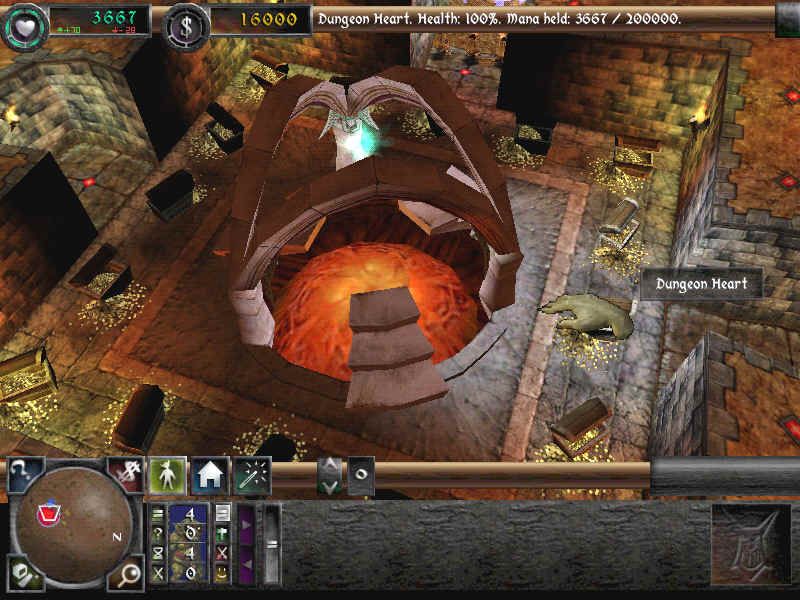
Consider the game Command and conquer, optionally a game like Battle for Middle Earth, or even Dungeon Keeper 2. We have gone through those games and finished all the maps; now consider the issues you face when the maps are created procedural, would your strategy still hold up? That question impacts all three games. Often the strategy was in the map design, take that away and the challenge changes by a lot. I believe that ‘It has been that long‘ is a premise that does not really exist in gaming, I truly believe that System Shock will capture the hearts of new gamers, I believe that upgrading innovation that was will give life to other games, even games that were in the 80%-90% and upgrade them by an optional 15%, and be honest, what game maker would not love to be linked to making a 90%+ game? At present Ubisoft is seemingly proud of their 70% games (so are a few other makers mind you), so we can see the essential need of excellence in gaming, the question is who will bring it and with two new players (gaming providers) entering that field, answering those question becomes a lot more important as we (gamers in general) have had our fill of mediocre games.

Even now we see that as we still yearn for Elder Scrolls: Oblivion as well as Skyrim; I stated to Richard Garriott (the man behind the Ultima series) a while go, if we could get the Oblivion/Skyrim engine and create Sosaria to life, we would have a winner that could entice millions of gamers. Skyrim with over 30 million sold is clear evidence of that and the tales of Sosaria were founded on great story-lines and compelling interaction of personal choices and philosophical concepts. The entire Ultima line (story 4 and later) are all about eh seven virtues (Honesty, Justice, Honour, Sacrifice, Compassion, Spirituality and Humility), it would be the foundation of 6 games, each one surpassing the previous one and to see the evolution from isometric to first person would be the game changer for anyone who loved that story-line, in addition, the Elder Scrolls never did concepts to that degree, which is not their flaw, but it could be the strength of any new Ultima IP.

It is in that part where I see System Shock one and two, it was near perfect and it is still ready for a whole new generation of players. Especially when you consider that the original System Shock on floppy (yes there was a floppy version) was a mere 15Mb, and Metroid Prime on GameCube was less than 1.5Gb, whilst Goldeneye was a mere 64Mb, so as you can see size was never the deciding factor.

I believe that 2020 will be an interesting year for games and gamers. I believe that those relying on ridiculous large games and high resource requiring games (like a Core i9-9980XE) will find that their size issue gets thumbed by true playability and innovation setting the stage for much better games after that. Innovation remains a game changer for games and I wonder how much change we get to see in 2021-2022.


1 Comment

Filed under Gaming, IT, Science

Bazynga!

There are many thoughts and phrases we can use, most of us will use the term ‘told you so’ in regards to a certain former Microsoft person. I am not like that, reasoning in this case is that I do not really know Don Mattrick. Many gamers saw the acts and choices voiced by Don Mattrick before the Xbox One was released and these acts almost drowned the console long before it was released. Now, I asked myself more than once, why he went this way, and I am not convinced that a few members of the Microsoft board pushed him into that direction. The problem was that these members have absolutely ZERO concept on what a gamer is, moreover, I feel certain that the mere concept of the dimension of a gamer is a pure alien concept to these BI Based Excel readers, so it all seemed like Don got fed to the sharks and after that got thrown into the Piranha pool and ended up in a bad situation, when the board members realised the error of their thoughtlessness, he got ‘promoted’ to CEO of Zynga. Now, all this is pure conjecture on my side, but I feel decently certain that I am not that far of the mark.

It must be said that I remained loyal to my Sony consoles (although I will never stop loving my Xbox 360). The Xbox One has a few flaws, mainly short-sighted ones. I will not bore you with resolution, although that could be regarded as a factor. My issue was twofold. One, the mandatory push to online acts (Sony has a similar flaw as your achievements can ONLY be seen when you are online). The system has a few additional glitches Sony does not have, but my biggest issue was the short-sightedness of the drive. You see, Sony offers the same drive size, but they let you upgrade if need be, so the ‘real’ gamers upgraded their systems on zero hour, so they start the system with a 1-2Tb system, which means as long there is no crash, the system will always have space for whatever you need. Many are willing to pay the additional $125 to get that maximisation. Microsoft failed because for $15 (yes, fifteen dollars) the system could have been a 1Tb system from day one. The difference between a 500 Gb and a 1Tb drive is a mere 15 dollars. What a silly level of short-sightedness, it would have satisfied 90% of the gamers. This is part of the message Don Mattrick ended up delivering and the fact that drives cannot be upgraded was not a good thing.

The games were another matter. The initial game release was as shallow as it gets, Ryse showed promise, but if you watch the YouTube movie (at https://www.youtube.com/watch?v=k-e1MQnh3V0) you will get three clear impressions.

  1. The movies look really good, the storyline is an excellent one
  2. Too much of the game is repetitive, slamming your shield and diving out of the way
  3. ‘Second wind’ rejuvenation in boss fights

This does NOT make for a good game.

So what had all the possibilities of legendary status, became a below average game. Delays form games like Watchdogs did not help either. The big issues that makes a console were all substandard, so Don Mattrick got the short end of the stick.

In this setting he got placed as CEO of Zynga. Now Mark Pincus is back. It is the subtitle of the article that makes for the issue in play. “Farmville and Words with Friends publisher still trying to recapture past glories, with new (old) boss saying ‘we need to get back to being the leader in mobile data and analytics’“. I do not disagree, but Zynga already had issues as Pincus went on a nice sabbatical. That part is given in the quote: “Zynga reported revenues of $690.4m (£467m) in 2014, compared to Candy Crush maker King’s $2.26bn (£1.5bn) and Clash of Clans publisher Supercell’s $1.67bn (£1.13bn)“.


The part not shown is that Farmville was a really fun game to play, but Zynga became all about harassment, harassment of friends and mails to get your friends to send you stuff. That is not the best way to remain on friendly terms with your friends, especially as they might not be into gaming. So those who play a lost hour on games like Farmville, Fishville, Mafia Wars, Cityville, Cafe World and Hidden Chronicles (to name but a few) resulted in people ‘losing’ friends and the aggravation of waiting forever for the parts, or spending way too much to skip of to ‘purchase’ those parts was for many reason to call it a day and to move to other grounds (perhaps the loss of 60% of the gamers that Zynga had, was exactly for this reason). Candy Crush and likeminded titles work on other principles and they have been very successful. I saw through that ploy too and I am not willing to spend on it (in the way King wanted us to). I would have been willing to purchase the game for $20 on my mobile. Providing that the special candy would reset with a decent counter, so that the challenge could remain. I reckon that most of those games would be excellent games on a Nintendo, so instead of ‘harassing’ others, the Nintendo street pass solution could be used. In that case the game could be an instant hit and Zynga ends up catching 30-50 per player (but only once). I still believe that this could be a path Zynga could walk with those games. 40 million users could amount to well over 100 million dollars in revenue for one game, which is not that bad.

The quote “Pincus added that he intends to make Zynga’s famous focus on data and analytics a key part of its continued comeback strategy” might be a possibility, but in which direction? Truly new games, added challenges for all games or another ploy in marketing growth? Because growth in players would imply growth of revenue, but that only happens when people fell relaxed spending a few extra dollars. It is often not the dollars spend, it is the value for money that pulls players across. I personally feel that spending a few dollars, not when I have to, but when the tactical advantage, or the long term benefit is shown. That part was clearly shown in games like Castle age, where I spend like $10 in 2009, which gave me some powerful items which changed the curve completely (in my favour), meaning that the strength going from level 4 to level 15 in one moment had long term benefits. The same can be said for Elemental Kingdoms. The fact that both games are completely different has no bearing. Elemental Kingdoms is a truly innovative Customisable card game, which can be played on a tablet. However, unlike Magic, these cards, as they are virtual can actually ‘evolve’ in more powerful cards. By spending ‘coins’ you get from winning games. The artwork is excellent and the game is a decent challenge. A last example is Book of Heroes (Android/IOS) where a mere $5 doubles the power of the game. Those approaches makes many dash out the dollars for the pleasure. Consider again those 40 million players, that $5 could constitute 200 million, an amount that is almost guaranteed to work. It is when the power and the fun of the game hits us that many players would be eager to add a few more dollars to the counter. That part had been absent in Zynga games.

So, will Zynga be able to turn the tables around? There is no real way to say. What looks nice, still needs to be playable. If there is one lesson that has been pounded on these developers is shown by games like Minecraft and Blockheads (IOS). These sandbox games are the type of games that players find more entertaining and they are enjoyed a lot longer. The question becomes where could Zynga go then?

I reckon that the past (CBM Amiga) shows several games (and possible directions for Zynga), 20 years old but every bit as playable and could be a new iteration of gaming. RPG and Sandbox games have a future and no one seems to be tapping into that source. Consider some of the games from Amiga (and in one case CBM-64) where we get value for gaming and where Zynga could still make money too. Those are options for the future. Now you wonder why I mentioned those two platforms. Well, simple. Many of these games were excellent in addiction, challenge and fun. The tablet and Mobile phone is more powerful than those systems ever were, so they are likely to be easily implemented in new technology that beside the fact that most of these games can be found on what is called ‘abandonware’. I am on one side in favour of this happening, on the other side do not want to trespass on someone’s copyrights. But when we consider that today’s generation could be equally excited to play Dungeon Master, 7 cities of gold, System Shock, Populous, Lemmings and a league of other games is just a good thing. Some of these games should never be forgotten.

So how does this hit back on Zynga? I think that they can look at these achievements and look at new ways to appease the coin of the mobile player. I do not think that the vision of Mark Pincus is wrong, I just think that Zynga needs to cast a wider net, because it is partially about: ‘he intends to make Zynga’s famous focus on data and analytics a key part of its continued comeback strategy’, but for a much larger part it is to make the game about gaming and gamers, not just about the maximised profit of a business plan, because when the player catches that scent, they’ll permanently move away quite quickly (but that might be just my view on the matter).


Leave a comment

Filed under Gaming, IT

In-app purchase Armageddon

We all have these moments where we are confronted with certain choices that others make. The problem with these choices is that they always seem to spin around the greed of the developer.

It all started mid last year. Some games show gave the heads up for a mobile Dungeon Keeper. I loved that game! I actually still have Dungeon Keeper II. The game had the originality to keep me entertained again and again. Now a mobile was coming. The TV showed how everything went smooth, decently fast and graphically in the upper end. When I tried to install it, I got the issue that my iPad 1 did not support it, which is fair enough.

Now, I am spotting all over the internet an abundance of rants and anger reports on this new version of the game. What had EA done now? ‘Nerd 101’ had a decent overview (at http://www.youtube.com/watch?v=GpdoBwezFVA&feature=player_embedded). This is worse than a joke. Basically to clear one piece of rock either takes 24 hour, or $1.50 per square, or $105 for 60 squares of rock. Clearing dirt takes 4 hours according to the screenshots (not the ones you see in the Apple store). Interesting is that this was never mentioned before in the media. They are not alone, but for the adult player they are one of the most visible ones.

Let me be clear, I am not against in-app purchases, yet on this scale, through the greed approach, it is killing the market and it will kill the future of gaming. The other part of this is that this game got 3200 times a 5 star rating. This is not even close to realistic considering the game play the game is not offering. They are however not alone!

Another game that has this nightmare scenario is Dragon Story by TeamLava. Here you get to play for free, yet some dragons can only be bought. I mentioned it before in blogs, whilst a block of land would cost you up to $10 per square, dragons can go up as much as $100 per dragon. Some of them can only be bought. Still, for the patient ones, the game can be played for free. They just play the frustrating slow card hoping that the kids, if given half a chance, will spend more and more. There is something enormously unacceptable about this approach to in-app approaches.

This is only one side of in-app purchased gaming. Another side is shown by the company Time-2-play who made ‘Elemental Kingdoms’. Now in this case, the group is different. First of all, if you have ever played any customisable card game (like Magic) and if you enjoyed it, you will likely love this one. You can play for free, the gems are decently priced and the return that $4 offers is really nice, especially when you buy gems for the 1st time (you get 50% more gems). So, this is really decent. Here we have another issue. The game remains unstable. It kept on crashing. I thought at first it was just me and my iPad 1. Alas, I see that the internet is filled with android complaints. As the developers focused on more graphics and cool looking effects, which do look nice, the game seems to become less and less stable. This is a shame, because the graphics even on older tablets is really good.

Still, Time 2 play does have a decent approach and if they fix up their app, it will be a coveted app for hundreds of thousands of players and I hope and wish for them many in-app purchases for a long time to come. When it comes to almost perfect approaches it does not get any better than a game called Blockheads, it is a 2-dimemsional approach to Minecraft. The game initially works at half speed. For a one-time $5 you get the double speed and you are playing really nicely. Basically, the game gives a great value for that price. This game also allows for buying gems, yet a few days of playing will get you more gems by mining then $10 will get you, so it is an option for the eager and less patient players amongst us. When a game works like this, I feel that games with micro transactions have a decent chance of making it in the mobile world.

It is a shame to see the market getting destroyed in such a way. Old games get corrupted, their names smudged. The ‘greed’ elements as they start rearing their ugly head in some games make it important for parents to learn really fast how dangerous these games can be. Especially in the case of Dragon story where a child could set you back $200-$500 within an hour (providing that in game purchases had not been switched off).

In case of Dragon Story I do not get it. This game, when added a few parts to could be the first game to grasp a massive chunk of the Pokémon playing population. Pokémon, a game, which after a dozen released versions, remains more of the same. The fans of this style of gaming want additional games. Dragon Story, when converted with additions to the Nintendo could make TeamLava very wealthy, the fact that they rely on absurd micro transactions is just weird and in my opinion really stupid.

It does not stop here though. The larger consoles are now getting into the same field, which is a serious worry for many. Games like Warframe, War thunder, Blacklight and DC Universe online are but a few of the games, now relying on micro transactions. Here the story is not the same, these games are massive, they rely on online multi player connections and for the most, you can just pay for free. Yet, at a certain point, you will need money to get better weapons. If not, the road will be tedious and at some point even unbearable. This is not a bad way to go. Personally I think that they should have a small option for new players, but the prices they charge for whatever currency they use is not outrageous. Because of the additional parts, I would call them a reasonable approach to try before you buy. However, it must be said that $20 will usually get you just one ‘stronger’ weapon, or one better plane. Warframe had an over the top option for $140, but that does give you heaps in money and a few extra items, so you do get bang for the buck (quite literally). They all have the same flaw, like the tablets when added up they are way too expensive and they could make it up by adding a $10-$15 package deal which includes several weapons , planes and armour (depending on the game, so that the ‘keep playing’ factor stays there. In the end, the cheap skates will never buy anything, and they will rely on weak equipment. There is in my mind however, a decent group who would like to get more, but $15 for one medium piece of equipment is just not hacking it. Consider that a full game at $100 gets you all the hardware the game has to offer (even though you have to play to get it).

So back to these tablets where the funding abuse seems to be happening. It seems that Apple remains too quiet around it all considering the article (at http://news.cnet.com/8301-13579_3-57617270-37/apple-to-refund-at-least-$32.5m-for-kids-in-app-purchases/), it also seems ‘off’ that this event remains relatively quiet. I do not completely agree with the assessment of Chairwoman Edith Ramirez who stated “You cannot charge consumers for purchases they did not authorize.” The issue is slightly more loaded then that. She is correct in the statement, yet the issue of micro transactions and the parents had no idea what was going on is only barely covering it. Yes, Apple could have added blocks sooner, yet the streamlining of in-app purchases streamlining this in a much better way would have been preferable.

I think it is important for Microsoft and Sony to realise sooner rather than later that we are about to venture into a new age of gaming. There is still a massive part of this world who remain for now a minor and it becomes important that these two start guiding certain sentiments of greed into sentiments of packaged values. If not, parents might steer clear from an upcoming wave of ‘free’ downloadable games and decide on another platform for gaming altogether.


Leave a comment

Filed under Gaming, IT, Media

In Media, we distrust!

Is it not a lovely day when you wake up, you go downstairs and if it is warm enough, likely in nothing more than a simple bathrobe you sit down. At this point, whether it is inside, or outside, you get the first start of the day with coffee and the newspaper. For most people, that part had been for a long time a slice of heaven.

We would go through the news whilst sipping tea or coffee (in my case the latter). What if I told you that these times are now forever a thing of the past?

My reasoning? For this I will go over each case in three parts. First the point I make, then the reasoning for that point and lastly the motive I personally think is behind that. I would like to add sources, but at times there are little to none and it is all based on common sense.

First there is no need to rehash the entire Leveson history. That reports was made and filed and suddenly the press was all uppity uppity on ‘the freedom of speech’ and how their rights are now no more.

Let us take a look at this part.

1. How often does the press report on privacy violations by large companies like Microsoft?

Answer: almost never. I found one article by the guardian, and a few by what we would normally all less reliable sources. (at http://www.theguardian.com/world/2013/sep/30/microsoft-privacy-chief-nsa)

Motive: The publications rely on big business (advertisements). It relies less on governments as their form of income and in addition, government is always seeking visibility, big business brings in money. In this situation I personally think that the press seems to be willing to ‘ignore‘ or whisper very softly certain events.

How about Microsoft HealthVault?

They state: “Privacy, It’s your HealthVault account. You decide who can see, use, add, and share info, and which health apps have access to it. HealthVault won’t provide your health information to any other app or service without your permission.

Venturebeat had the following interesting quotes “For instance, Microsoft reserves the right to store your medical data offshore, in countries that may not have the same privacy protections as the U.S.

HealthVault appears to open the door to a potentially unlimited line of people, entities or programs that can obtain permission to read and alter your health information, since it’s possible to delegate the ability to grant those permissions to others.” If did find a few mentions by CBS and ZDNET, yet the papers (the big ones) did not show up in any search. Even though this issue is not that recent, it is still interesting that the big ones aren’t anywhere near this place.

If we consider that this means that if an insurer gets access to this, then the smallest visit to the hospital could result in an increase to your premium. This is all linked to the Health Insurance Portability and Accountability Act 1996. There we find that the HIPAA Privacy Rule regulates the disclosure of Protected Health Information held by what we would call “covered entities” (employer sponsored health plans, health insurers, and medical service providers that engage in certain health transactions.) By regulation, the Department of Health and Human Services extended the HIPAA privacy rule to independent contractors of covered entities who fit within the definition of “business partners”.

So, if these contractors are outside of the national borders, your health data goes into several other directions too.

Consider that we volunteer this and other personal data to Microsoft (your Skype, your software, your Microsoft devices and your browser). How long until you represent a Z-Value? Not before too long, you are diminished to several Z-Values, and as your value depletes to below the norm, what options will remain for you?

Yet, the press seems to banter again and again on NSA and GCHQ. The question becomes, whether the press is nothing more than a simple tool to make us look the wrong way, whilst big business has a free go at us and our personal details.

I do not claim to know what the actual truth is here, but I do know that the press has not been focusing on the wider truth and reality too much lately. That is something that becomes slightly more visible when we read Claire Fox in her smug article (at http://www.independent.co.uk/voices/comment/leveson-has-done-his-damnedest-to-encourage-press-regulation-despite-his-protestations-8874676.html)

When you hear the actual response by his Lordship in regards to WHY he felt it was inappropriate to answer, Claire just trivialises it in the air of “that he would not play ball“. Let us not forget that it is her right to see things in the way she did, I will not attack that, but this situation left me with question marks on how far ‘misrepresentation‘ goes at present.

So if big business is protected through non-visibility, then why don’t we just get rid of all journalists and rely on bloggers? The digital world is ready for it all, journalists no longer seem to be truly ‘story‘ driven, when the bulk hang on the usual GCHQ drab anyone can get from Reuters and the bulk of the big business transgressions remain on blogs, I wonder where the journalistic pride and ethics remained as they claim their part in their need for ‘freedom‘.

2. How will many protect their children and finances if visibility remains low on issues that have an impact? Many PC’s and tablets get linked to games that are ‘proclaimed’ to be free. Yet, when you want to move forward, you can pay for additional options.

The BBC covered this on September 25th (at http://www.bbc.co.uk/news/technology-24272010). The Guardian seemed to have covered the same story and that is pretty much it. So why is there not a lot more visibility?

I had a look at a program called ‘Dragon Story‘. It looks nice, it is a little non-adult, but it has a few original sides. You can breed two dragons together and they leave an egg. You can hatch that egg and get a new different dragon. You can buy many of them, or if you take the time breed your collection. This is all pretty original. The dragons in their habitats collect money and that money can be used to grow your area. Yet, the part not shown is that some dragons are rare, some habitats (larger ones) are expensive. Smaller habitats can be bought with coins, but the larger ones must be bought with gold. That costs actual money. A child can without realising it spend $20 per habitat, some dragons; the really rare ones cost $50. So in 30 seconds a child can spend more money than a full version of Grand Theft Auto costs. It is clear that actions can be taken to prevent some damage, but the visibility is not there. Why?

In reflection upon ‘Dragon Story’, an addictive game named ‘Blockheads’ (a 2-d version of Minecraft) can also be downloaded for free, and you can buy an upgrade so that all actions go twice as fast. The price, $5! Now an additional option can be bought for $3, so that the player can play in higher resolution, a total of $8 for something that need not be bought, the choice is up to the player. THAT is what I call an excellent approach!

So where is the press here?

It cannot be for the lack of ‘public’ interest, as the tablet market in the UK alone is soaring towards 190 million owners this year. That is more than the total global owner base of the PlayStation 2 used to be (which was 150 million). So, one could say that tablet issues should be at the top of every newspaper. The Google search seemed to contradict this (I had to start somewhere).

So when we look at these heated arguments on the freedom of the press, we should be asking ourselves what they are complaining about. Freedom is nice, but when they relate it to the limits of their cubicle we get to miss a lot of information, the press and especially their editors should realise that.

In my view, to the extent I had read the Leveson report, I saw it not as an attack on the freedom of the press, but on the ‘enforcement’ of ethics and accountability. Those two are elements in any form of Journalism. For I am never against the freedom of the press, I do think that some acts require accountability. The hollow phrase ‘the people have a right to know’ lost its value when some used it to tabloid away all levels of privacy. Crashing a funeral less than two weeks ago by the Daily Mail is an excellent example of that. I do wonder whether all this is just about the journalists, or was the Leveson escalation due to a failing by the editors to keep a proper pulse of the journo’s they are supposed to mentor. To that I have no honest answer; there are too many murky facts in the open.

The PRESS fallout has been a long one and we are not there yet!


Leave a comment

Filed under Finance, Gaming, IT, Media