Tag Archives: SAMA

Tapping an economy

This happens, some other (or new) player sets the stage where they can become a major player. This is a rare case but it can happen and now I seem to be witness to one that could end up being a much larger stage than I ever expected. The BBC (at https://www.bbc.co.uk/news/business-66310714) gives us ‘Why it matters where your data is stored’. The article is all about the cloud, yet this article gave me parts that brought out questions that allowed the consideration that the new player could in a short time frame become a major player. Yet to see this, we need to look at the parts.

Part 1
The first question is coming from ““The American authorities have the right to go in and see any data that is stored in an American cloud, even if the data centre is in Europe,” Mr Åström says.” That was a selling point for American firms and with the IP in data centres the Europeans will become concerned. The American credit score is dwindling down as such they will become more and more concerned with THEIR value, a view Europeans will not share, or will be willing to chance sacrificing asI see it.

Part 2
Then we get to “it’s big enough to rival the major US cloud providers: Amazon Web Services (AWS), Microsoft and Google. They have a 65% share of the world cloud market between them, according to Synergy Research Group”, here I miss the IBM and Apple clouds. Apple is a different issue, they have a niche market and they are optionally decently safe from what is coming. IBM is different, they have been on the corporate data shoe forever, so why is IBM avoided? The numbers give me “IBM Hybrid Cloud has market share of 1.88% in infrastructure-as-a-service market. IBM Hybrid Cloud competes with 71 competitor tools in infrastructure-as-a-service category.” Perhaps they are ‘too small’, time will tell but that doesn’t matter. With this setting Evroc has the momentum to become a major player, perhaps slightly below AWS, but to go from a wannabe to a player next to AWS, possibly surpassing Microsoft is not done lightly and as far as I could tell has never been done before. But that is not the worst of it (for Amazon and Microsoft). You see the EU is larger in population, as such more services are needed there, but this could flow over into Canada (as it is a Commonwealth nation) then the larger concern (for Amazon et al) will be the Middle East. I reckon that both Saudi Arabia and the UAE might want to be separated more strongly from American firms. If I were China, I would be pushing that button too. As such Evroc as localisation bubbles could grow even further. 

Part 3
Evroc has secured €15m in seed funding and plans to build eight data centres in Europe in the next five years. The first will be a large pilot data centre in Sweden next year.” As I see it, should they decide to add two more clouds (KSA and UAE) they could tap into a few massive organisations and that should make the US a lot more bothered than they ever considered. I had issues with ‘data sharing’ in the late 90’s but I was laughed at, I was overly BS howled at. Well, it seems that I was right all along and now that the US needs its corporations to do well, Evroc comes in and takes away even more. I never saw this coming, yet as I see it Mattias Åström played his cards well and at the right moment. There is no telling how far this goes, yet the idea that (based on the numbers) “Microsoft increased its share from 23%, up from 21% the prior quarter, while Amazon fell from 34% to 33% and Google remained steady at 11%.” Evroc could grow by taking 20% of the others, we get 18% Microsoft, 26% Amazon and 8% Google, Evroc could grow by 12% (optionally towards 20%+) almost overnight (if a night lasts 7 years) That puts them ahead of Google and Microsoft making them a new major player. That is beside the damage they could do in the Middle East. With Aramco, SAMA, Al Rajhi banking, SABIC, STC, MA’ADEN, International Holding Company (IHC), ADNOC, Emaar Properties and a few more more. You might think this is all fun and games, but it is about to get worse.

Part 4
This part was not in the article and that is not on the BBC. You see I have looked in this direction before. In 2020 I wrote ‘Institutionalised Positioning’ (at https://lawlordtobe.com/2020/11/02/institutionalised-positioning/) where we see ‘Microsoft Security Shocker As 250 Million Customer Records Exposed Online’ (source: Forbes), and add to that the recent forged key issue, an issue that the NSA warned them for 3 years ago, we see a much larger stage. A stage where Microsoft is bleeding faith, the faith the customers had in them is dwindling down, as such Evroc could take away a much larger part of that blue joke. As such Microsoft could face a much larger loss. It would be nice to state that Amazon loses less, but certain other parts might not make that realistic. The only player optionally not losing any is Apple. Their largest base are iPhone users with subscriptions. 

These 4 parts show that Evroc is the new player to watch. If that is the case they will need staff all over the world. Even I would like to work for a new player and that is the second danger that they (mostly Microsoft) faces. If Amazon and Microsoft only lose 5% of their cloud workforce they both face shortages all over, and this is in a place where you need all hands on deck. This last part is hugely speculative, but with 8 new centres coming and optionally 2-5 more in the middle east Evroc is set to grow beyond the assessments of analysts. As such Mattias Åström and its new Evroc could be a force to be reckoned with and as such bring massive cash coffers into the EU and towards the Middle East as well and all that revenue goes out of the US and that is a loss the US was not ready for.

Enjoy the weekend 

1 Comment

Filed under Finance, IT, Law

Eric Winter is a god

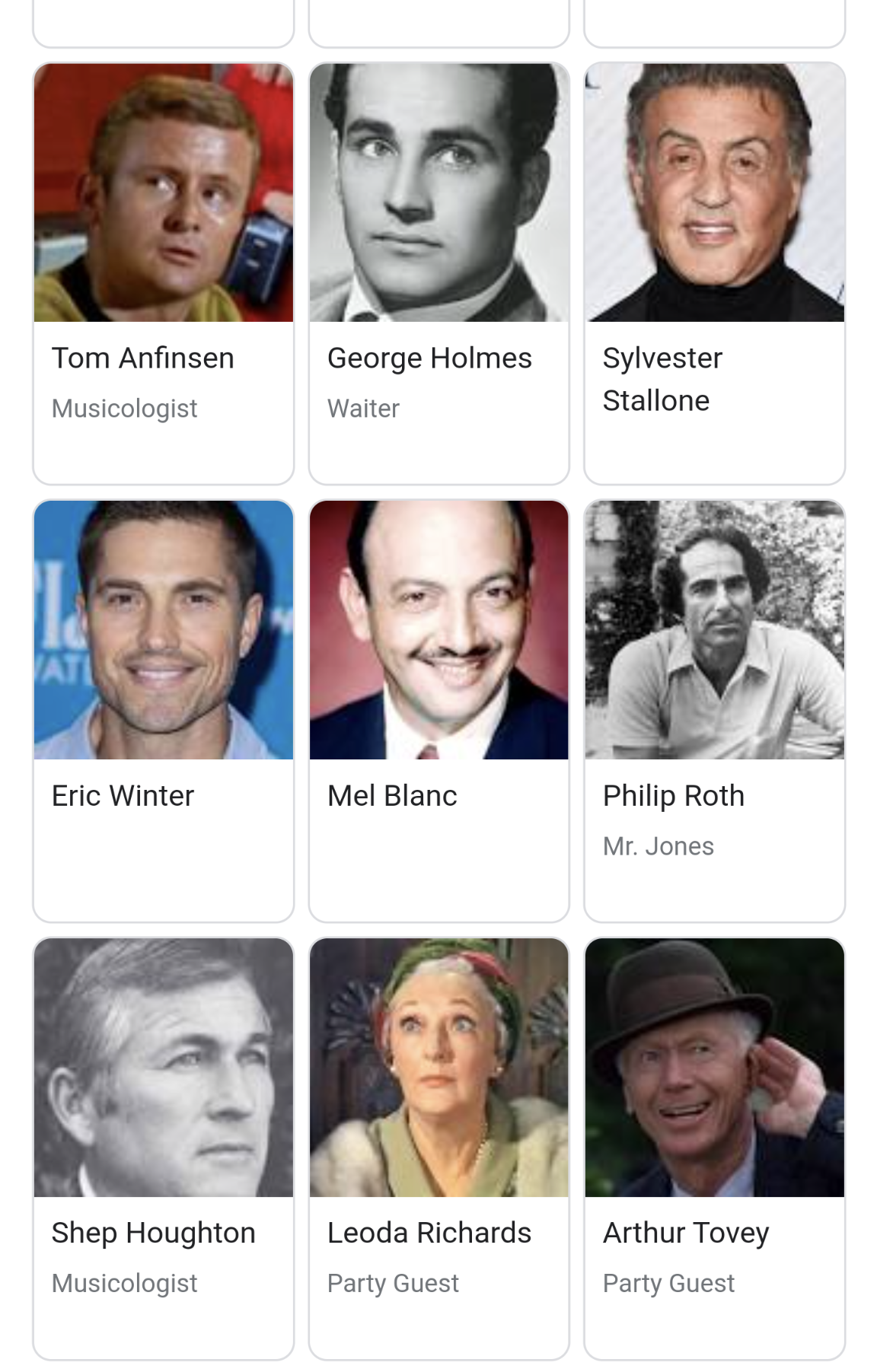
Yup, we are going there. It might not be correct, but that is where the evidence is leading us. You see I got hooked on the Rookie and watched seasons one through four in a week. Yet the name Eric Winter was bugging me and I did not know why. The reason was simple. He also starred in the PS4 game ‘Beyond two souls’ which I played in 2013. I liked that game and his name stuck somehow. Yet when I looked for his name I got

This got me curious, two of the movies I saw and Eric would have been too young to be in them and there is the evidence, presented by Google. Eric Winter born on July 17th 1976 played alongside Barbara Streisand 4 years before he was born, evidence of godhood. 

And when we look at the character list, there he is. 

Yet when we look at a real movie reference like IMDB.com we will get 

Yes, that is the real person who was in the movie. We can write this up as a simple error, but that is not the path we are trodding on. You see, people are all about AI and ChatGPT but the real part is that AI does not exist (not yet anyway). This is machine learning and deeper machine learning and this is prone to HUMAN error. If there is only 1% error and we are looking at about 500,000 movies made, that implies that the movie reference alone will contain 5,000 errors. Now consider this on data of al kinds and you might start to see the picture shape. When it comes to financial data and your advisor is not Sam Bankman-Fried, but Samual Brokeman-Fries (a fast-food employee), how secure are your funds then? To be honest, whenever I see some AI reference I got a little pissed off. AI does not exist and it was called into existence by salespeople too cheap and too lazy to do their job and explain Deeper Machine Learning to people (my view on the matter) and things do not end here. One source gives us “The primary problem is that while the answers that ChatGPT produces have a high rate of being incorrect, they typically look like they might be good and the answers are very easy to produce,” another source gives us issues with capacity, plagiarism and cheating, racism, sexism, and bias, as well as accuracy problems and the shady way it was trained. That is the kicker. An AI does not need to be trained and it would compare the actors date of birth with the release of the movie making The Changeling and What’s up Doc? falling into the net of inaccuracy. This is not happening and the people behind ChatGPT are happy to point at you for handing them inaccurate data, but that is the point of an AI and its shallow circuits to find the inaccuracies and determine the proper result (like a movie list without these two mentions). 

And now we get the source Digital Trends (at https://www.digitaltrends.com/computing/the-6-biggest-problems-with-chatgpt-right-now/) who gave us “ChatGPT is based on a constantly learning algorithm that not only scrapes information from the internet but also gathers corrections based on user interaction. However, a Time investigative report uncovered that OpenAI utilised a team in Kenya in order to train the chatbot against disturbing content, including child sexual abuse, bestiality, murder, suicide, torture, self-harm, and incest. According to the report, OpenAI worked with the San Francisco firm, Sama, which outsourced the task to its four-person team in Kenya to label various content as offensive. For their efforts, the employees were paid $2 per hour.” I have done data cleaning for years and I can tell you that I cost a lot more then $2 per hour. Accuracy and cutting costs, give me one real stage where that actually worked? Now the error at Google was a funny one and you know in the stage of Melissa O’Neil a real Canadian telling Eric Winter that she had feelings for him (punking him in an awesome way). We can see that this is a simple error, but these are the errors that places like ChatGPT is facing too and as such the people employing systems like ChatGPT, which over time as Microsoft is staging this in Azure (it already seems to be), this stage will get you all in a massive amount of trouble. It might be speculative, but consider the evidence out there. Consider the errors that you face on a regular base and consider how high paid accountants mad marketeers lose their job for rounding errors. You really want to rely on a $2 per hour person to keep your data clean? For this merely look at the ABC article on June 9th 2023 where we were given ‘Lawyers in the United States blame ChatGPT for tricking them into citing fake court cases’. Accuracy anyone? Consider that against a court case that was fake, but in reality they were court cases that were actually invented by the artificial intelligence-powered chatbot. 

In the end I liked my version better, Eric Winter is a god. Equally not as accurate as reality, but more easily swallowed by all who read it, it was the funny event that gets you through the week. 

Have a fun day.

1 Comment

Filed under Finance, IT, Science

Freebee for Majid

Yes, that happens. I get an idea that is not really on my plate and I hand it over. And as the Saudi Broadcasting Authority (SBA) is part of the Ministry of Media, it seems only fair that I hand it over to the man with the plan, the man in charge Majid bin Abdullah Al Qasabi. It is up to him to decide if this has any option of succeeding. If someone else takes this on, that is not up to me. I have other issues to deal with. I got this idea whilst watching the remake of Candyman. I like it, it is superior than the previous edition and even as there are a few issues with it, there was no real objections. And whilst I was thinking that through this idea came to mind. 

Riyadh
It was a warm day, the sun was warming everything it touched and in the shadows was a man, his name was Henri Cernuschi, he was a banker, but not related to the Cernuschi family from the late 18th century. He was from Javrezac France and had an economy degree from the Sorbonne in Economie du Development. When he had his degree he had issues getting a job, he had no connections, he was eager to make a mark but in the end he gave his resume to an online place for resume’s and two weeks later the SAMA (Saudi Central Bank) offered him a position in Riyadh. Off course he eagerly accepted and he got to do the things asked of him. French bank papers were scanned and he looked if they were all up to scratch and correct. In the end he was to some extent an overpaid office clerk. He was not complaining, the money was good and he had amassed a nice sum over the last three years. But as all bankers, he got greedy and it was a paper he saw in some evening where he read “they are highly associated with financial risk-taking and gambling behaviours” it took a hold of him and held him in his grasp. If he could instil a level of superstition, he might profit, profit even more. And as such he set out a plan to instil superstition. 

There was no real action in the next few months, but he started to learn as much as he could on Arab superstitions, there was quite the number, yet nothing stood out to him. It was two day later when when he stumbled upon a book regarding the Afreet.

It was not until a bank trip to Jeddah that he started to have an idea. What happened if he could summon an afreet? What happens when that superstition took hold? 

This is the start, I would like to add a lot more, but the general idea come now and not in a story. You see, he starts learning the elements of such a summoning and he does it all nearly flawless, but as he prepared the 4 anchors he accidentally steps on one of the anchors that should keep the afreet to the small space in a basement. He becomes the anchor of the summon and the second part he overlooked that only a sorcerer can hold an Afreet as such the Afreet could break the shackles at any point, yet as anchor the man cannot be harmed and thus starts a larger stage. He does not know what he invited to be attached to his soul and an ancient afreet gets free rein in Riyadh. 

It is one of the clerks that recognises some of the symptoms and soon thereafter she understands the dangers the bank is in and she warns her boss, who does not dismiss the stage. The woman is very afraid and tells him of the stories her grandmother told her. The manager sets in motion a quiet investigation and sees the danger they face and as such he grows an idea to deal with it. He spices up the man’s achievements and sends him on official business to London and sends the spiced resume to people he knows. During the event in London the man is approached by a few companies and in the end one firm takes on his business and as such they invite the afreet.

London
It is one year later, London is in a setting of failed events, failed economics and even more disastrous elements in Fintech. No one can find any relationship. And as the Afreet grows in power, it learns of the crusades, and it becomes a lot more malevolent. Diseases, old diseases start forming in the UK and the weird parts are that the medics find links to St Olave-towards-the-Tower, as well as St Giles-without-Cripplegate. Both places of worship were investigated inch by inch and no findings were found, but they were on the lookout. As the months unfolded the Afreet started to get a lay of the financial land and he wrecks upon it. Banking systems stall and money goes missing. It was an Arabic cybersecurity officer that finds links in the display and links them to the stories of old. As he digs into the data he finds 5 people who have been to the middle east, Henri Cernuschi being one of them.

That’s all I got in a few hours and if you can make more of it, good luck to the Saudi Broadcasting Authority (SBA) for making it into a new kind of horror.

A small note. What happens when the anchor dies? Perhaps it gives the Afreet freedom to go wherever he wants. Just a thought.

Leave a comment

Filed under Stories

When we say ‘Ney’ to an event

We have all kinds of events going on, some we attend, some we show interest in, some are nice to be at. We have all kinds of events that require our attention. For example if there are 7 events to watch and you can only attend 4, how will you go about it? I for one distinguish it into a whole range of requirements, the first being ‘Have to attend‘, that is number one and in that cadaster 2 of the 7 will be found, then we get the ‘Nice to be at‘ and ‘Show interests in‘, they are of equal footing (in my case), now we have three more and we can settle our differences in to any of the three, it is more of a jumble, for those two out of three we get to watch the travel arrangements, the visitor spectacle and there we are off to the races.

That is how it goes into the normal realm of opportunity, so as I look at ‘Davos in the Desert‘ it would be one in the ‘Have to attend’ group. The heads of states are there, my Trademarks office could optionally score one large fish, the tranquility of having one corporate trademarks revenue is just too lard to pass up on. And that is before we consider the opportunity that trademarks in the Middle East and predominantly Saudi Arabia with companies like SAMA, SAMI, Aramco could have over a much larger setting, apart from the IP that I am holding on to. For Bloomberg this is what I call a ‘must attend’ kind of a show, so as we are given: “Axios reported earlier on Wednesday that Bloomberg reporters were scheduled to moderate nine of the panels in a draft of the program. Ty Trippet, a Bloomberg spokesman, told Axios that “Bloomberg is not sponsoring the event or participating in the program. We will be covering news from the conference, as we did last year.”” gives a stemming sound, a ‘we are there but we are not‘ kind of hustling in the woodwork. For a show like “Davos in the Desert“, seeing Bloomberg to remain absent is almost like a denial of the importance of “Davos in the Desert“. I see it in a larger frame, Bloomberg is doing the bidding of its corner office, Bloomberg called back like the little dog it is, the wonder of this chihuahua would be the Wall Street pound, they want the world to know that they are upset that Aramco went to the Japanese. A given 3.54% of every ticket sold that would be the income of most hedge funds managers who saw Aramco as a nice on the side grown food, now going towards the Nikkei, there is a larger game afoot and Bloomberg gets to be the messenger. I wonder how many US newspapers will hold some kind of a Khashoggi reverent during the October 28–31 window, I wonder how many newspapers will call upon the dead reporter, all whilst the events in Turkey will not call for any events, will they. Yes, the death of one journalist against the bombing of an entire group of people is so much more justified. Yet there is a large group of US people in attendance, we see Treasury Secretary Steven Mnuchin, Energy Secretary Rick Perry, and White House senior adviser Jared Kushner. Former Treasury undersecretary David Malpass, now the president of the World Bank, is also on the list, as is former White House communications chief Anthony Scaramucci. Then there are the top financiers  Michael Corbat, CEO of Citigroup, Tidjane Thiam, CEO of Credit Suisse, and Noel Quinn, CEO of HSBC. Fund managers include Ray Dalio of Bridgewater, Robert Smith of Vista, Stephen Schwarzman of Blackstone, Larry Fink of BlackRock, Daniel Loeb of Third Point, and Barry Sternlicht of Starwood. Even Masayoshi Son of Softbank is there and so is Will.i.am. The British entertainer and part of the Black Eyed Peas, beyond that he is a rapper, DJ, songwriter, record producer as well as a philantropist. He gets to be there, yet Bloomberg is calling ‘no show’?

I have no goal or esparations perse, but I would go there because one customer from that isle means that I would not have to go scrapping for customers for at least 8-12 years for 50% of the time. The rewards are that impressive, also the foundation of IP laws would be sought after in such a place, and being one of less than 20 attendance given IP lawyers, it would be interesting, even if a dozen of them end up with my business card, it will gradually mean that business comes my way, now for me it is not a given but for someone like Bloomberg it very much means that the larger corporations will be setting meetings with someone like Bloomberg, but now, we see “the State Department recently booked 45 rooms at Riyadh’s Burj Rafal Hotel in support of the two “VVIP visitors” taking part in the kingdom’s third annual Future Investment Initiative, as the event is officially known“, as well as “including representatives from Goldman Sachs, JPMorgan Chase, Citigroup, and BlackRock, according to a guest list” and some of these parties will get to grow to a rather large setting especially now that Bloomberg is not appearing.

And when you look at the event: PDF DavosintheDeseert2019

You’ll see that anyone with commercial aspirations would want to attend, which beckons the question why would Bloomberg not attend? More worrying is the setting of making this blaze about a week ahead of schedule. From the very beginning when H.E. Yasir O. Al-Rumayyan, Advisor to the General Secretariat of the Cabinet of Ministers, Governor of the Public Investment Fund, KSA opens the event, until the final event where H.E. Bassem Awadallah, CEO, Tomoh Advisory, UAE moderates the final event, namely the G20, a setting I would presume that Bloomberg has vested interest in, but they give way to absentee. 70 events over 3 days, with all kinds of interim discussion options, yet the absentee of Bloomberg make perfect sense, does it not?


1 Comment

Filed under Finance, Politics

The G30 court

There is an issue, an issue that we are all missing, more for the reason that after January 17th the media is steering clear of this with all the might and options they had. I reckon that they will spin this in a setting that it is ‘uninteresting‘, but when was it ever uninteresting to look at a group of 30 that has the alleged advantage of getting their fingers into a pool that has 0% risk worth billions?

The more important part is that there was one mention, or at least only one that was found, on July 7th 2017 and November 3rd 2017, both come from Reuters, the media has become that much of a bean flicking, pole pulling grape flocked bunch of pussies as I personally see it. Yet, the fact is that even as the impact is speculated, the setting given is that a group of 30 had an optional exclusive insight in the 3 trillion dollar ECB spending. Consider that each of these 30 got a 1% portfolio, where 75% of it was set at 0% whilst the remaining 25% might have op to 3% risk, in this setting the underwritten $31 billion for each member would set a speculated sanctified security of a multiple factors of $31 billion each. An elite group of 30 all having the top of the financial services cream at zero risk with the optional massive returns none of us ever had insight to. Now I can see that a mere 0.01% of that 1% would set me up for life, and that is merely the one source, the ‘in-crowd’, now would that be the incestuous insider towards untapped ‘considerations of investment‘ and they would all be bringing their own portfolios and economic insight on how to maximise that? Adding the man (read: Mario Draghi) spending Europe’s $3.1 trillion would happily be allowed into their midst, it is merely the setting that this rigs the game towards 30 participants whilst giving a weighted disadvantage to all other bankers is still an issue not covered by anyone.

So as we saw last November ‘ECB says not its call to publish content of Draghi’s meetings with financiers‘ (at https://www.reuters.com/article/us-ecb-banks-ethics/ecb-says-not-its-call-to-publish-content-of-draghis-meetings-with-financiers-idUSKBN1D327U) whilst we also see “At issue is Draghi’s membership of the so-called Group of 30, where policymakers meet bankers, fund managers and academics behind closed doors to discuss economic issues. He sits alongside former and current central bankers, such as Bank of England Governor Mark Carney and the Bank of Japan’s Haruhiko Kuroda, as well as Nobel laureate Paul Krugman

Yet even as we see “Ombudsman Emily O’Reilly had asked whether the ECB would “consider proactively informing the public of the content of these meetings” in response to “a complaint by activist group Corporate Europe Observatory, which said in January it was concerned about proximity at the G30 of ECB officials and bankers they are meant to supervise“, I cannot help but wonder what both Emily O’Reilly and Corporate Europe Observatory left unmentioned. It was also mentioned by the Dutch Volkskrant where the Corporate Europe Observatory (CEO) member Olivier Hoedeman added comment.

I tried to find more, so even as we have found Mario Draghi, Mark Carney, Haruhiko Kuroda and Paul Krugman as confirmed names (from the media), I initially believed that Groupe Credit Agricole (most likely Dominique Lefebvre) would be a member, I am also speculating that Peter Smith (as director of N M Rothschild & Sons) might have been a member of that group. There are a few other players, but it becomes increasingly less certain even from a speculated point of view. What does matter is that this is not merely some ‘secretive’ babble group. Even as we see last July “In a letter to Draghi that was published on Friday, European Ombudsman Emily O’Reilly said the meetings of the Group of Thirty, where central bankers, economists and financiers talk behind closed doors, are “not transparent” and questioned the ECB president’s membership of the club” as well as “Draghi has until September to reply to the letter in writing“, in that, the media and so called journalism stayed clear of this for the largest extent and the ECB did respond in October 2017 in the attached part. In my view, it all sounds nice but a select group of 30 with a pool of a number in excess of 6 trillion, where 30 people get first dibs on a risk bonus that goes beyond the comprehension of many and the media buries it on page 62 is a much larger issue, especially when the response on page 9 gives us “Moreover, Article 130 of the Treaty on the Functioning of the European Union safeguards the independence of the ECB and of the members of its decision-making bodies” whilst we all know that a mere fraction of $6 trillion has been a case for shifted morals and readjusted (read: weighted morals) in many regards, there are countless hours on C-SPAN that saw those liquid morals and settings in regards to the 2008 events, so the idea of ’30’ members ending up with golden parachute the size of Australia is not that much of a leap, speculated or not. So when we look back to the 2008 events and we see in January 2017, nine years later “The credit rating agency Moody’s has agreed to pay nearly $864m to settle with US federal and state authorities over its ratings of risky mortgage securities in the run-up to the 2008 financial crisis, the department of justice said on Friday“, whilst the damage from the 2008 crash was set to top $22 trillion, we should ask the US Justice department on where the remaining 21.991 trillion is and who was supposed to pay for that. So in all this the fact that the media is steering clear from the G30 and asking, or actually not asking anything past the Reuters articles seen should give alarm bells on many sides, not merely the media.

The EU Parliament magazine (at https://www.theparliamentmagazine.eu/articles/news/mario-draghi-under-fire-g30-membership), also gives us “CEO’s monetary and financial policy researcher Kenneth Haar said, “The Ombudsman’s decision is timely and very positive. Draghi’s involvement with the G30 was ill-advised from the start. Since 2016, when the ECB’s mandate for banking supervision was extended, the close ties between the president and the bankers’ group has become absolutely unacceptable“, or is that gave, because it is past tense and so far the media has remained silent since January 17. It seems to me (extremely speculative) that these 30 members are either connected or involved with the shareholders, stakeholders or advertisers in the media, because the media seems to be at all times protective of these three groups, whilst merely informing on those three groups in a filtered way, or to the smallest degree unless it was already out there in the field. The fact that this group has such a global hold is an issue and I might have been a lot less speculated on this, but the lack of transparency as well as the fact that we see “Tyga Gives Kim Kardashian A Hilarious Spelling Lesson On Social Media” and other Kim Kardashian on a daily basis, whilst the media remains silent on the speculated distributors of no risk trillions is a weird setting, especially when those sources have their fingers in thousands of billions. So when we see the BBC with: ‘Is it time we all unfollowed Kim Kardashian?‘, we might wonder whether it is yea or nea, yet there is a speculated 99.9999% likelihood that the G30 members will not make the cut towards monitored inclusion on following, I am certain that the first one that acts on that is has a boss who is likely (again speculated) to get a quick phone call from a shareholder, stakeholder or large advertiser to wonder if they have any grasp on their staff members and whether they want to manage or become managed.

Do you think that this is a stretch?

From my personal point of view I would give to you Sony (2012) issues, in regards to the change to the Terms of Service. The media ignored it, even as it would impact a group of 30 million consumers. Most of those players merely just trivialised it via ‘there is a memo‘ on it. The rest did even less; some even ignored it all together. With Microsoft (2017/2018) we see even more (at https://www.computerworld.com/article/3257225/microsoft-windows/intel-releases-more-meltdownspectre-firmware-fixes-microsoft-feints-an-sp3-patch.html)

You’d have to be incredibly trusting — of both Microsoft and Intel — to manually install any Surface firmware patch at this point. Particularly when you realize that not one single Meltdown or Spectre-related exploit is in the wild. Not one“, the amount of visibility (apart from marketed Microsoft Central views) is close to null, a system with no more than 17 million users is marketed and advertised to the gills, so the media seems to steer clear, merely two examples in a field that is loaded with examples.

Back to the group

So as I gave the speculated view earlier on the ‘whom’, we can see the full list (at http://group30.org/members), these members are according to the website:

  • Jacob A. Frenkel, Chairman, JPMorgan Chase International
  • Tharman Shanmugaratnam, Deputy Prime Minister, Singapore
  • Guillermo Ortiz, Chairman, BTG Pactual Latin America ex-Brazil
  • Paul A. Volcker, Former Chairman, Federal Reserve System
  • Jean-Claude Trichet, Former President, European Central Bank
  • Leszek Balcerowicz, Former Governor, National Bank of Poland
  • Ben Bernanke, Former Chairman, Federal Reserve System
  • Mark Carney, Governor, Bank of England
  • Agustín Carstens, Former Governor, Banco de México
  • Jaime Caruana, Former Governor, Banco de Espana
  • Domingo Cavallo, Former Minister of Economy, Argentina
  • Mario Draghi, President, European Central Bank
  • William C. Dudley, President, Federal Reserve Bank of New York
  • Roger W. Ferguson, Jr., President and CEO, TIAA
  • Arminio Fraga, Founding Partner, Gavea Investimentos
  • Timothy Geithner, President, Warburg Pincus
  • Gerd Häusler, Chairman of the Supervisory Board, Bayerische Landesbank
  • Philipp Hildebrand, Vice Chairman, BlackRock
  • Gail Kelly, Global Board of Advisors, US Council on Foreign Relations
  • Mervyn King, Member, House of Lords
  • Paul Krugman, Distinguished Professor, Graduate Center, CUNY
  • Christian Noyer, Honorary Governor, Banque de France
  • Raghuram G. Rajan, Distinguished Service Professor of Finance
  • Maria Ramos, Chief Executive Officer, Barclays Africa Group
  • Kenneth Rogoff, Professor of Economics, Harvard University
  • Masaaki Shirakawa, Former Governor, Bank of Japan
  • Lawrence Summers, Charles W. Eliot University Professor at Harvard University
  • Tidjane Thiam, CEO, Credit Suisse
  • Adair Turner, Former Chairman, Financial Services Authority
  • Kevin Warsh, Lecturer, Stanford University Graduate School of Business
  • Axel A. Weber, Former President, Deutsche Bundesbank
  • Ernesto Zedillo, Former President of Mexico
  • Zhou Xiaochuan, Governor, People’s Bank of China

They also have senior members, which is interesting as they are younger than at least one of the current members, as well as the fact that most of the members in the current, senior and emeritus group have multiple titles.

  • Stanley Fischer, Former Governor of the Bank of Israel
  • Haruhiko Kuroda, Governor, Bank of Japan
  • Janet Yellen, Former Chair, Federal Reserve System

And the Emeritus members:

  • Abdlatif Al-Hamad, Former Minister of Finance and Planning, Kuwait
  • Geoffrey L. Bell, President, Geoffrey Bell and Associates
  • Gerald Corrigan, Managing Director, Goldman Sachs Group, Inc.
  • Guillermo de la Dehesa, Chairman, Aviva Grupo Corporativo
  • Jacques de Larosière, Former Director, IMF
  • Richard A. Debs, Former President, Morgan Stanley International
  • Martin Feldstein, Professor of Economics, Harvard University
  • Gerhard Fels, Former Member, UN Committee for Development Planning
  • Toyoo Gyohten, Former Chairman, Bank of Tokyo
  • John Heimann, Senior Advisor, Financial Stability Institute
  • Sylvia Ostry, Former Ambassador for Trade Negotiations, Canada
  • William R. Rhodes, President and CEO, William R. Rhodes Global Advisors
  • Ernest Stern, Former Managing Director; The World Bank
  • David Walker, Former Chairman, Barclays
  • Marina v N. Whitman, Professor; University of Michigan
  • Yutaka Yamaguchi, Former Deputy Governor, Bank of Japan

So this group of 30 is slightly larger and in the group each of these members would have the power and economic impact to tell any member of the Fortune500 what to do, or better stated and more important ‘what not to do!‘ It is in that instance that we see the first impact. A game that now looks as I personally see it rigged in several ways; so even as I was allegedly wrong about Dominique Lefebvre or a direct peer, we see Christian Noyer. So in my view, in a 2015 French article on the issue of “Who will succeed Christian Noyer as head of the Banque de France?“, we see “Mario Draghi, the president of the ECB, seems to have had the idea to see his right arm go. Benoît Coeuré would be an important ally for the Italian in the Council of the Governor“, yet in the light of the G30, it seems to me that such a discussion would have been set into a pre-emptive conclusion of who would needed to have been made king in that castle. When we see that in light of a previous article, namely ‘The Global Economic Switch‘ (at https://lawlordtobe.com/2018/03/06/the-global-economic-switch/), were well over 500 billion is to be invested and grown, in addition to the fact that the SAMA has oversight to well over 2 trillion dollars, how come that they do not have a seat at the table? In the same way that the Rothschild’s are not there, but they might be ‘represented‘ through Bernanke or Frenkel, whilst it is not impossible that Mario Draghi might be giving them the low-down to some degree, yet the Kingdom of Saudi Arabia with that much money on the ladle of expansion, that they are not part of it. In a world where that group is about (according to their own website) “The Group of Thirty, established in 1978, is a private, non-profit, international body composed of very senior representatives of the private and public sectors and academia. It aims to deepen understanding of international economic and financial issues, and to explore the international repercussions of decisions taken in the public and private sectors“, where the foundation of Saudi Arabia has been the power of OPEC and the power to instil the push to be a global player in many fields, in that sight in represented value that the repercussions of decisions are set at, to see the Bank of Israel yet not some link to SAMA (Saudi Arabian Monetary Authority) makes equally less sense in the line of thinking that the ‘about‘ section gives us, which makes me wonder what these members are about. they might be all about that, yet what else they are about, or what else they have a useful value in gives rise to my train of thought on where this train with less than 55 occupants is heading off to, and more so, in light of the power that these ‘30’ members have, the fact that the G30 is not the cover talk of many newspapers, especially the Financial Times is beyond me, because anyone coming to you with ‘No News’ or outdated news, or even worse that there is no real issue in play is clearly told what not to write.

It seems to me that not only is there more in play, the personal speculated view that I have in light of learning more and more about the G30 merely confirms my suspicions, as well as the insight that I am getting (a speculated one) where the media is steering clear from all this is a much larger issue. To what and in which direction is one I am not willing to go into, because I know that the ice is wafer thin at this point and skating on water is a realistic ‘no no’, yet the feeling that these members are getting a first view and optionally the option to dip their cups on plenty into a grape juice barrel of risk-less profit is one that I feel is very much in play. This G30 group is networking on an entirely new level, one that I have never seen before. This is not some kingmaker into presidency; this is a long term group where the optional billions will keep on flowing for decades to come. And this all in a setting of non-transparency, because this goes way beyond the 3 publications in 2016 and of course all those papers published before that. In the 2016 publication ‘Shadow Banking and Capital Markets: risks and opportunities‘, (at http://group30.org/images/uploads/publications/ShadowBankingCapitalMarkets_G30.pdf), we see in the conclusion on page 49: “Moreover, growing leverage across the global Economy can create important risks to macroeconomic stability even if the financial system itself is more resilient. And two developments are particularly concerning: the growth of emerging market foreign currency debt and the rapid growth of Chinese leverage accompanied by a proliferation of shadow banking activities are ominously reminiscent of precrisis developments in the advanced economies“, which is in view of the experts would be nothing new, yet resources available and the 36 exhibits and the recommendations would have been available to the G30 group much earlier than anyone else. In that light, we need to wonder not merely on the setting, in Exhibit 36 we see mortgage losses and the fact that there is the US, Canada and Europe, so in that light the fact that the fourth one is the Netherlands, is that not odd? In light of several settings, France, Germany, Italy and the UK, any of these four would have made perfect sense, so why the Netherlands? Exhibit 33 might have been a reason for this, yet in equal measure the absence of Scandinavia and Italy in this setting now adds to the questions. I think it is not merely choice and presentation, the absence of those players give rise to questions, perhaps even speculated questions and as there are none to be given, it makes me wonder what else is missing, what other data was filtered because in the light of data and presentation there is one golden rule I have always kept in the back of my mind.

The Analyst shows you which investment needs to be made, the presentation makes you look forward to the invoice.

So what invoice is the G30 group making you look forward to and where did it need to go? Two questions with optionally very different results, and in that setting, whilst you know the impact the European economy has had over the last 15 years, whilst we also know that Mario Draghi has been spending $3 trillion, in that setting the G30 does not make the news?

Who is getting fooled by all this and who is getting fooled by making sure that you do not get to notice this?

It is a much larger playing field that is from whatever point of view you have a field of inclusion, or a field of exclusion, yet in all this there are questions that are not asked at all, questions that even I am not asking because I decided to go into technology, engineering and law whilst giving a pass on the Economic subjects. Yet the Financial Media is not asking them either and that is an issue, especially in light of that ‘secretive‘ group set to a stage of networking inclusion, or is it networking through filtered exclusion?

I’ll let you decide on that.


Leave a comment

Filed under Finance, Media, Politics, Science