Tag Archives: Cannes

As limits are reached

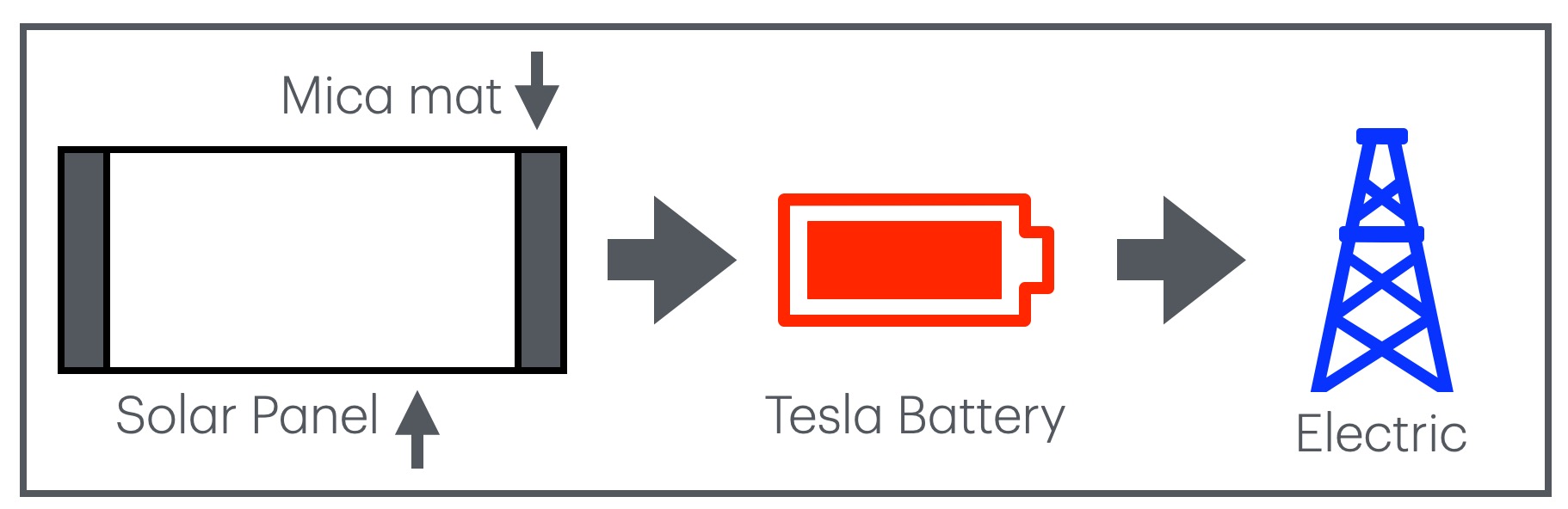
The Khaleej Times give us (at https://www.khaleejtimes.com/uae/uae-summer-switch-off-non-essential-appliances-for-one-hour-every-day-urges-sharjah-authority) ‘UAE summer: Switch off non-essential appliances during peak hour daily, urges Sharjah authority’ where it starts with “Sharjah Electricity and Water Authority said the Conservation Hour or Peak Hour initiative will start in July and last until September” with the additional “Along that line, the authority has called on those living in Sharjah to participate in an initiative called Conservation Hour or Peak Hour from July to September”, for those unaware Sharjah is directly North of Dubai. The addition given is “The initiative will require residents to switch off non-essential electrical appliances during peak hours, which is from 2:30pm to 3:30pm, every day”, this situation was going to happen and it will be a global problem. I raised the issue in January 2023. The first part was in ‘Inactivity by the overpaid‘(at https://lawlordtobe.com/2023/01/13/inactivity-by-the-overpaid/). There I raised “There will be a power shortage by 2030. Personally I think that he is overly optimistic. I would reckon that clear shortages will be visible no later than 2027 in the Netherlands” In this Article I raised the issue that I made in May 2022 and again in June 2022. There I looked at solutions. There were a few sides and Dubai would benefit from that solution. Part of that solution was given in ‘Will you feel frisky?’ (at https://lawlordtobe.com/2022/06/28/will-you-feel-frisky/). There you see that the concrete that sets the floors/ceilings have space in every building to leave a mica underground, with on top of that solar panels. Now ads I see it Dubai, Abu Dhabi and Sharjah all have hundreds of buildings that benefit from these panels (the sunny side of the building) In my case I illuminated London as well as Austin Texas the day before. However this is now a race. There is a limit on solar panels. First one in, the less limitations that place has. As we now see, Sharjah is at present the first to step on the breaks. 6 years before the NOS (Dutch news media), as such I believe that the limitations will be seen all over Europe in the next two years, depending on the summers. London, Paris, Orleans, Cannes, Nice, Munich, Berlin, Hamburg, and several other places. In my view I see the following solution:

The mat with the solar panel. That panel is set to be connectable to other mats, I envision a sort of Scalextric (that old racing game) connection on one side the can be connected to a wire, that connect the panels on the separate levels to a battery on top of the building. I just used the Tesla solution, but other solutions could be used. Depending on the size of the building it would be an expected 2 x 2 or 4 x 2. So that one side can be fully charged and the other set of batteries is used to fuel the net. 

Now this solution does not fully solve it (initially), but it will reduce the stress on the electricity net. As more buildings are fitted out with this solution, more stress on the electricity net is reduced. I reckon that two dozen buildings all over Sharjah might reduce the pressure enough for the peak pressure to go away. And it will push a zero carbon setting too. 

All this is not a given, but I reckon that Chinese developers will see this as a way to come in as this path could see billion in revenue. Tesla has the battery advantage, I have no idea what China has in this area. You know what is the most striking one? I had in part the solution here in this blog two years before the rest had admitted that there is a power problem coming our way. The issue becomes that as time passes, not enough time will remain to implement the solution as well as the given that too many places at the point need this solution all at the same time and no one will be able to deliver this solution. To give a rough estimate Manhattan, Texas and Los Angeles will need a rough 12000 batteries. London is another 3500 batteries and I have no idea what the EU will need. Consider that one source gave the 2030 option, it would imply that at least 20,000-35,000 batteries are needed. I am certain that these numbers are hard to reach. So that leaves the UAE, Saudi Arabia, Australia and several other countries. Soon enough it will become a rat-race for the components. 

Enjoy Saturday, preferably with all appliances still getting power.

1 Comment

Filed under IT, Science

The opportunity for 2022

I was just watching a video (Monte Carlo Walking Tour), I was watching it because there is at present no plans or chances to visit the place, so I might as well watch a walking tour so that I get to see what the place looks like and to be honest, walking tours give a better impression of a place than most TV or movie alternatives. So as I was watching I suddenly realised that Monaco has a huge opportunity and no one is taking notice of it. High buildings with a naked wall, a bare piece of stone that looks nice, but could do so much more. What happens when Monaco installs QR codes in several places to invite augmented reality to the thousands of people filming and photographing Monaco? A QR code on a crane or a wall that shows on the phone an augmented F1 car in the street, a special yacht in mid air or simple an area name on your screen. Monaco has so many options and even more tourists. Thy have annually over 365,000 tourists, that is well over 1,000 a day in a place no larger than Hyde Park. In this walking tour I saw 5 cranes, all empty metal husks, a QR code, even two QR codes would not hinder, and it can go so much further. The same could be said for Nice, St. Tropez, Cannes, and that is before you look at the big places. I see an abundant of construction fences, all bland, all non engaging, all whilst technology can offer so much more for the people there. So why is it not implemented? Just saw Crane number 6. That is close to 2 dozen places people try to avoid with their eyes all whilst it could be an eye catcher is very different ways. In a place where pleasing the eye is on the mind of thousands, I see no augmented reality. Why not?

And let’s not forget augmented reality can be used for information, tourist attraction, local advertisements of events and several other options, from air to water, Monaco has it all, well all except augmented reality.

And Monaco might be on the mind at present, but there are close to a dozen large cities who are not using that opportunity either. London had 19,000,000 tourists in 2019 and the list goes on for some time. A decent innovative impression creator ignored. Why? By people who do not understand it, or by people thinking it is a waste of time? As Monaco showed me 6 unused cranes and a dozen other locations, how many locations were overlooked in London? What could Cannes offer? Why is Amsterdam not leading that march and why do I see an utter lack of augmented reality in Los Angeles/Hollywood? All places that thrive on tourism and NEARLY EVERY tourist relies on their phone. So, what gives?

It is only January, some of these places could deliver an augmented summer, and 2022 needs a good start after all that….. achoo!

3 Comments

Filed under IT, Media, Science

Taking and making what it gives

Yes, we seem to think that this is the stage we need to be in, and at times you are correct, that is what there is. It dawned on me that at times innovation, or innovation alike can drive creativity. In the past there was an option to get into movies required a fortune, so you either tinkered by the side of the road, or you were some rich kid, that was the reality. Now consider that this is no longer the case, the stage is set to two elements (three actually).

1. GoPro Hero 10 ($600)
2. Mac Airbook (up to $4500)
3. Software (up to $500)

So for $6000 (max) you could have all you need to become a cinematographer. The laptop idea is expensive, there are cheaper solutions, to under $6000 there is a stage where you can make all kinds of movies and there is no cost for film or development. As we were in lockdown, the mind wanted to travel, so I started to watch the walking tours, a lot of them in 4K and most of them made with older GoPro devices. You might laugh, but some of these walking tours equal decent TV and in some cases cinema trips. I saw Portofino, Cannes, Monaco, Vancouver, Montreal, Buenos Aires, London (several), Riyadh, Jeddah and a few things stood out. The movies were well above average, the streets in Canada are amazingly clean, Portofino was worth the watch for a few personal reasons and so on. I believe that we are one step away from a ‘small’ company like GoPro to put a massive dent in Hollywood and that is before you realise that we will be drowning in amazing movies, the stage is already there that amateur film makers can make ‘their’ version of the Blair Witch Project. Another version of Cloverfield and we can go on in all kinds of directions. I myself was entertaining an idea in another direction (no matter what), but I am an idea man, not a movie maker (not yet anyway). 

And even as GoPro is making headway into setting the dynamic movies to a new height. I predict that they will corner the market in several ways within the next 2-3 years. I believe that the information given here is incorrect “The number of GoPro devices shipped worldwide has been decreasing since its peak of 6.58 million units in 2015, to around 2.8 million units in 2020”, there is not a decline, mainly because some people STILL use the GoPro 4, a lot are still using the GoPro 8, so there is a market of well over 15,000,000 film makers and I believe that with the additions on the GoPro Hero 10 that group will increase (a lot). And when you consider that this can directly be spread via YouTube channels, for GoPro the sky is the limit. Whether the film maker will decide to rely on GoPro tools, on Adobe Premiere Pro, Final Cut Pro or iMovie, there are several solutions and as people tart to become more and more active there is a new market evolving. A market of services, critical evaluation and creation, all working in some form of symbiosis. And as the makers set out there options of short movies, I wonder when it will be a GoPro Hero user who in the near future will be the first to win a Academy Award for Best Short Film (Live Action) using a GoPro because the hardware is now definitely up for it, we now only need to wait for the creative soul to make that step (it will not be me), and I would not be surprised that thee will be more evolutions in this direction before the end of 2023, a stage that (as I personally see it) evolved and came to a much larger live during lockdowns and curfews. 

Leave a comment

Filed under IT, movies

Defining progress, a deadly process

Something really dangerous was announced today. The Guardian (at http://www.theguardian.com/society/2015/dec/09/council-tenants-lose-lifetime-right-to-live-in-property) gives us: ‘Council tenants lose lifetime right to live in property‘, which in itself might not have been a bad thing, yet the text “new secure tenancies with local authorities forced to review contract at end of term” might be a lot more dangerous than people are realising at present. In this I am taking a rare position, which is in support of labour. Now, it might very well be that we are both doing it for different reasons. I agree with David Cameron who stated at the time: “There is a question mark about whether, in future, we should be asking when you are given a council home, is it for a fixed period? Because maybe in five or 10 years you will be doing a different job and be better paid and you won’t need that home, you will be able to go into the private sector”, which is fine. I will not oppose that, yet instead of making the council tenancies linked to an income with a grace period, setting them to 5 years for all will give huge problems (not just logistics) down the line. In equal measure (which was my issue) is that these temporary tenancies could open up the door to hungry developers to sneakily move in and grow their influence and take over block by block. There have been too many stories (many of them not confirmed) where property developers have had too much influence in areas, not just in the UK. With the greater London area in so much turmoil, adding the dangers of diminished tenancy, those dangers will grow and grow. The problem here is that by the time people act and stop certain acts from being done, too much danger has been imposed to the people who used to live there. So I have an issue with this approach. It is clear that changes are needed, even from the governmental standpoint to grow its own portfolio of affordable housing, but this is not one of those moments as I personally see it. To emphasize on this danger I am taking a look back at the past, the year that Windows 95 became a hot topic of discussion, some regard windows as what was on a PC, but when you look through an actual window, those people in Birmingham got a little more than they bargained for. The article (at http://www.independent.co.uk/voices/behind-the-birmingham-scandal-1609640.html) gives us the dangers that could become a reality again. The quote “This year, the Birmingham urban renewal budget was £38m – for both public and private housing. The problem of matching supply and demand is complicated by the latest variation in housing legislation. Anyone who applies for a grant – on a statutory form – must receive a response from the council within six months. The Government’s object was to take the initiative for urban regeneration out of the hands of councils and their professional planners. The result was a free-for- all in which the self-confident, the articulate (and invariably the prosperous) went to the head of the queue and monopolised the scarce resources” has a front seat here. So Birmingham ended up having two problems. An abundant amount of Ashton Villa fans being the first, the second one was that the brass and the articulate got to have a free go at the Birmingham Piggy Bank. The biggest fear is not the issues that have happened, but the schemes that cannot be stopped because they are still legally valid, so to say, the options that the government did not prepare for. Is that a valid fear? That is the question that matters and my answer is ‘Yes!’. You see, until 2009 we never knew that almost Draconian law would be required to keep bankers in their place, soon we will learn in equally drastic way that tenants are placed in immediate danger, yet with people and housing the problem becomes a lot more pressing and this new 5 year tenancy limit will soon become the danger because of something a member of parliament ‘overlooked’, which is why I side with Labour this one time.

In my view, that danger could have been thwarted by offering the following

  1. A 5 year extension if no equal alternative would be available.
  2. The clear side rule that the 5 year tenancy becomes active when the income has risen more than 30% in the last 3 years (which would still give that person access to rule 1).
  3. An option to become the home owner, which must go to the home owner first and must be public in the second (no under the table deals for developers).

Yet when we see the quote “The new legislation forces councils to offer all new tenants contracts of between two and five years. At the end of the fixed term, local authorities will have to carry out a review of the tenant’s circumstance, and decide whether to grant a new tenancy, move the tenant into another more appropriate social rented property, or terminate the tenancy” is that not what is on the table at present?

You see linked to all this is one part that gives a little credit to Labour, specifically to Shadow Housing minister John Healey. The Financial Times reported “The national auditor is considering whether to investigate the government’s programme of subsidies for home ownership, after Labour raised concerns that it is a waste of public money” (at http://www.ft.com/cms/s/0/05703522-9dc7-11e5-b45d-4812f209f861.html#axzz3tuDm7ySX). You see, there is my issue to some extent, in light of the tenancy ruling point’s one and two always made sense, there is no argument here. My issue is that ‘buy to own’ is noble in thought, but as I see it, it is a shadowy entrance point for developers to quietly sneak in and start acquiring the area. Yes it take a fair bit of money, but the returns once the plot is complete is too massive to ignore. In my view this was the option that opened doors we tend to ignore.

There are good guys in this field, we will not deny that, but for every 5 good guys there is one that is a lot shadier than we bargained for. What happens when the overly positive calculations get some of these people to consider a BTL (Buy To Let) option, only to see in year 6 (or a little earlier) that the yields are worse than imagined, when these are ‘sold’ through, who picks up the bonus parts and who got the misrepresented losses invoiced?

They might seem like a different thing, but they are not. This is why I mentioned the issues in the same way I mentioned the Birmingham 1995 event. I believe that unless the legislation is a lot stronger here, the dangers become that these social places become reaping fields for ‘entrepreneurial’ (read exploitative) commerce and the people who always relied on a safe place to sleep will end up having no place at all.

This is where the road between me and Labour differs. You see shadow housing minister John Healey wrote to Sir Amyas Morse, The National Audit Office auditor general “a short-term windfall for builders and buyers at a long-term cost to the taxpayer”, a part I do not completely agree with. I think that the underlying text is “a short-term windfall for builders and buyers at a long-term cost to the taxpayer, which will transfer to developers at a massive loss to both the Treasury and the tax system as a whole”, which is not the same. I agree if someone states that it is my speculation and that John Healey does not go into speculation. To that person I state ‘You are correct, yet in equal measure that legislation should have been intensely tested for optional shortcomings towards developers and exploiters, has that been done?‘ It is my firm believe that it is not. We might all agree that this is not what legislation is about, yet legislation is about setting safety moments and a clear denial of transfer of ownership or a limit to the options any developers has in councils. A side we saw exposed by Oliver Wainwright (at http://www.theguardian.com/cities/2014/sep/17/truth-property-developers-builders-exploit-planning-cities) in: ‘The truth about property developers: how they are exploiting planning authorities and ruining our cities‘, you see, personally I am not convinced that this has been addressed. It is even possible that certain councils are even more toothless than they were a year ago and that is a bad thing. When you look at the article, take another look at the image with the caption ‘A scale model of London on show at this year’s Mipim international real estate fair in Cannes‘, you think that they gave a second glance at the tens of thousands of pounds that this scale model costs? The returns on that invoice are so massive it is a mere drop on a hot plate. In that environment the Conservatives changed lifetime tenancy. I agree that something had to be done, but the timing is off on both logistics and legislation surrounding this, that is what makes the event a lot more dangerous than parliament bargained for, which is at the heart of my issue here. Some will see “the Royal Mail Group has proposed a fortress-like scheme of 700 flats, only 12% of which will be affordable” as an issue. I think that the quote “The mayoral planning process is based entirely on achieving the maximum number of housing units on any given site, aimed at selling to an international market. The London-wide target of building 42,000 new units per year is predicated on a lot of very high density developments that don’t even comply with the mayor’s own policies on density” shows that the entire issue is greed driven and is not likely to yield anything affordable, which the 5 year tenancy that is likely to change even further. It is very possible that these moves allow the affordable housing to be placed on an income scale, which I would partially favour, but at present as the math does not take realistic economic values in mind, that scale will be based on 10 year old values, which means that the cost of living could be off by 35%, making food not the issue it already is. So in that view affordable housing is there for those who never need to eat, making the tenant deceased in more ways than one.

 

Leave a comment

Filed under Finance, Law, Media, Politics