Tag Archives: Drones

That’s the way the money flows

The Independent had an interesting article 2 hours ago. The article (at https://www.independent.co.uk/news/world/americas/china-drones-spy-us-dhs-security-data-alert-a8922706.html). The title leaves little to the imagination with: ‘Chinese drones may be stealing sensitive information, DHS warns‘, after the Trump google play, after his refusal to submit to subpoena’s, after the anti Huawei activities that so far has never yielded any active evidence (the 8 year old case was settled within months are done with). Now we see: “Chinese-made drones in America may be sending sensitive data to their manufacturers back home where it can be accessed by the government, the United States Department of Homeland Security (DHS) has warned“, which might be a nightmare if it was not so hilarious. You see the next quote: “CNN, which obtained the internal alert, reported that the DHS fears drones will offer Chinese intelligence unfettered access to American data“, it comes across like we have a case where a CNN reporter has been hit by a silly stick and never recovered. Consider the drones we see, there is no space to have a dedicated hack system on board. Yes some can be done with a mobile, and there is plenty of space in that device, now consider the ‘sensitive’ data that needs to be found, the data needs to be connected to (and with all these faulty Cisco routers that is relatively easy at present), then a selection needs to be downloaded and that is merely for one place, one device. All this stops when any person uses common cyber sense. It is the revelation that we see next, that is the one that matters. With: “Though the alert didn’t name specific companies, the vast majority of drones used in the US and Canada are made by the Shenzen based Company, DJI, CNN reported” we see the part that matters. As drone services are up on an almost exponential growth as we see the push that got there. The news from November 2016 gave us: “Domino’s Pizza Enterprises Limited (Domino’s) and drone delivery partner Flirtey delivered the first order, a Peri-Peri Chicken Pizza, and a Chicken and Cranberry Pizza“. Consider the option to avoid traffic in New York, Los Angeles, San Francisco, Boston, Chicago, Seattle, Pittsburgh, all places with massive congestion. Drones are the optionally the newest quick way to deliver food, Amazon needs, Walmart needs, all in growing need due to the events where retailers and shippers combine forces to avoid a few items, and with congestion set to zero, people will flock to that consideration. Now the operational part, it seems that DJI is ahead of the curve, another Chinese company decided to truly innovate and now that the push is there and America is bankrupt (as I personally see it) anything possible to avoid money going to China, America is taking a pot shot at that. So when we are also treated to: “A spokesman for DJI denied that any information was being transmitted to it from its drones, adding that the security of its technology has been independently verified by the US government.” I start wondering if DHS was able to do its job properly. Now let’s be clear, there is no doubt that ANY drone can be used for espionage, especially if it is quiet enough. Yet is that the issue for DJI, or is that an issue with the spy that utilises drone technology? Yet that is actually not the only side, on the other side we see mentioned: “Those concerns apply with equal force to certain Chinese-made (unmanned aircraft systems)-connected devices capable of collecting and transferring potentially revealing data about their operations and the individuals and entities operating them, as China imposes unusually stringent obligations on its citizens to support national intelligence activities,” Now, this part does make sense. It is the same as the Apple Fitbit, that due to its global nature started to hand out the jogging patterns of Special forces in the Middle East, so within 3 days several members of the two dozen operatives had a check on their calorie burning and health, whilst the mapping data showed the world where the CIA black site was (oh apologies, I meant to say a military specialist endeavouring location of an undetermined nature). The question becomes how was the ‘the security of its technology has been independently verified by the US government‘ achieved? Was that verification process competent, or perhaps slightly less so?

I am not stating my verdict in either direction; yet the entire Huawei mess, as well as the DJI setting implies that the growth industries are shunned from America, mainly because it is not an American industry. Yet in all this, the forget that places like the EU and India are large enough to go forward with both players and truly grow further, whilst the downturn and the economic lag that the US is creating will merely grow the loss of momentum and the recession it will fuel in other ways. I would consider that the setback that Google is trying to create will have larger repercussions down the road. As larger Data vendors will now optionally choose the Chinese side, they will grow market share. You see no matter how it is sliced, all this is data based and data can only grow if there is usage. So when people remain with Huawei as their phone keeps on working, we see that there is a larger concern soon enough. At some point people will stop trusting Samsung, Google and Apple phones, which works out nicely for several players (Microsoft actually more than most), what do you think happens when the larger share of 14.7% of a global market changes to player three and not use Google apps to some degree? Google momentum relies on non-stop data and usage, when a third of the 60% that these three cover stops, do you think that this has no impact for Google?

The same applies to drones. You see intelligence makes the drone and as it grows its market share and the collected data of drone usage is set, the innovation of DJI grows faster. It is the difference between generation now and generation 2022, DJI will grow and can grow in several directions, yet the entire the setting of ‘data theft’ we see that there is a lack of ‘what’ data. What data is collected, the flight path? Well, I think we all need to know in 2023 what flight path was taken for the delivery of 342,450 pizza’s delivered per hour, is it not? It is not that Google Map has that data, and within a building in New York, is there truly a clear sign in the drone itself who exactly the merchandise was for, or was that on the box (instead of the drone). Now, there is no denying that some of that data would optionally be accessible to the Chinese government? Yet what data, what level of data? Do you think that they have time for the hundreds of drones and the data whilst they can monitor 20,000 times that data with a spy satellite (and an additional truckload of data that the drone never had in the first place?

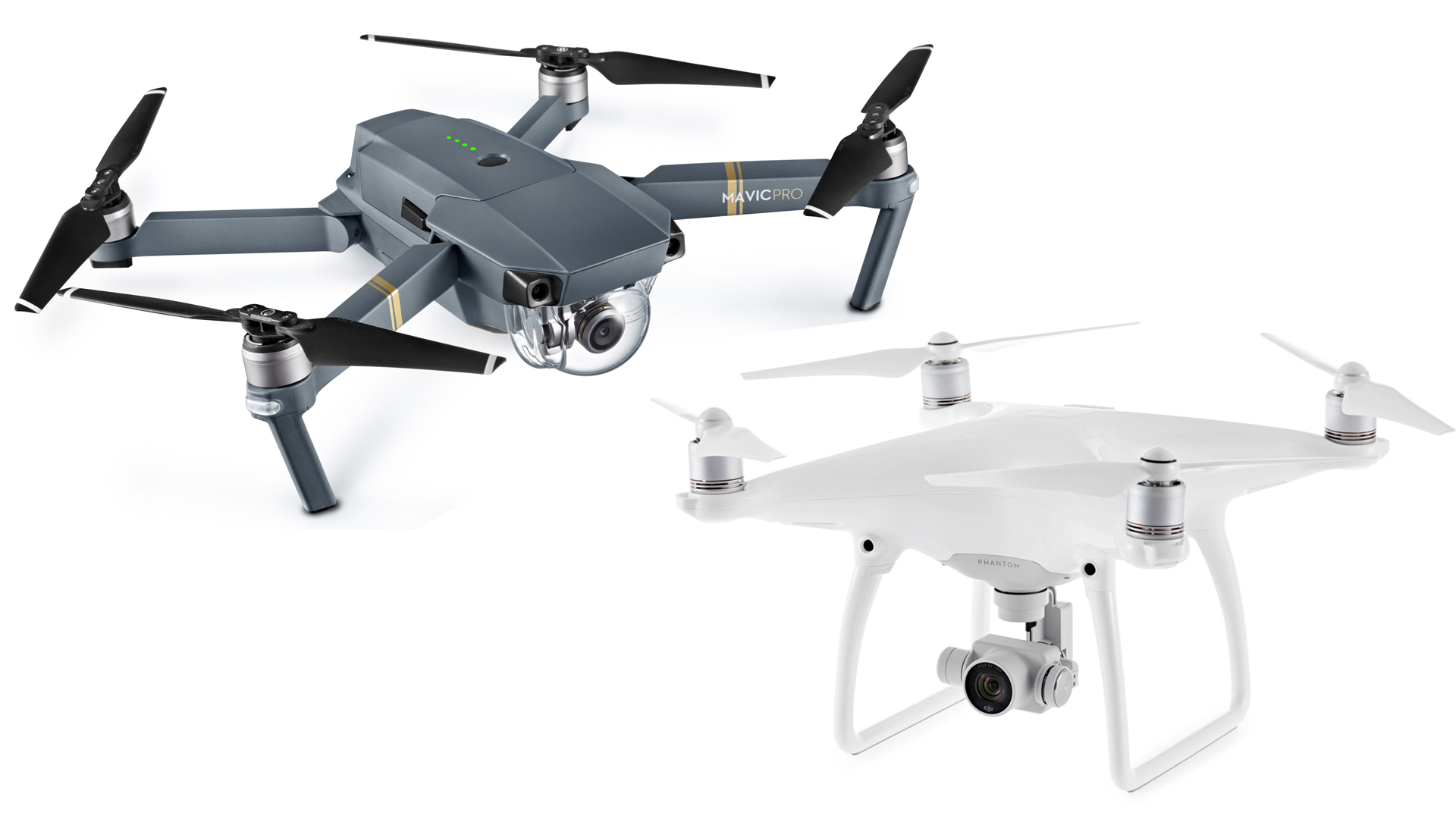
It is when I see ‘unfettered access to American data‘ where the questions become pressing. It is like watching Colin Powell coming into a non-disclosed location with his silver briefcase and in the end the lack of WMD’s, are we going in that direction again? when I see ‘unfettered access to American data‘, it is at that moment I see the optional comparison (an extreme lose comparison mind you) with the innocent preachers daughter who did the naughty thing to 30% of the boys coming to Sunday sermon, having attempted things I cannot even rent on adult video. It is the CNN article (at https://edition.cnn.com/2019/05/20/politics/dhs-chinese-drone-warning/index.html) that gives additional rise to concerns. When you see: “Users are warned to “be cautious when purchasing” drones from China, and to take precautionary steps like turning off the device’s internet connection and removing secure digital cards. The alert also warns users to “understand how to properly operate and limit your device’s access to networks” to avoid “theft of information.”” It seems to me that there are dozens of ways to get this data, a drone seems like an expensive long way round-trip to get to that data, whilst more can be accessed in several other ways and it is the speculation through ‘device’s internet connection‘, so when we see one of these devices (at https://www.dji.com/au/phantom-4-pro-v2/info#specs), we are treated to: “The new Phantom 4 Pro V2.0 features an OcuSync HD transmission system, which supports automatic dual-frequency band switching and connects to DJI Goggles wirelessly“, where did the internet come in? Yes there is an app, to get a live view from the drone, so what ‘unfettered access to American data‘ could there be that Google Maps at present does not have in more detail?

It is the next part that is the actual ace. When we see: “DJI, which reported $2.7 billion in revenue in 2017, is best known for its popular Phantom drone. Introduced in 2013, the drone is the top-selling commercial drone on the market“, information the Independent did not give us, that is the actual stage as I personally see it. It was $2.7 billion in 2017, there is no doubt that when drone delivery truly takes off, at that point revenue that sits between $15 and $27 billion is not unrealistic, the dire need to avoid congestion on a global scale will drive it and that is before you realise the non-US benefits in London, Amsterdam, Paris, Berlin, Munich, Madrid, Barcelona, Rome, Athens, Moscow. At that point you will see stronger growth and I haven’t even looked at the opportunities in a place like Mumbai, Tokyo, Delhi, Bangkok, Rio, Buenos Aires and Sydney yet. Everything leaves me with the impression that this is not about security, it is about money. That fact can be proven when you realise that everyone remains silent on the 29 new vulnerabilities that Cisco reported merely a month ago. How many Cisco router stories have come from that non-technologically refined White House, where they are currently optionally limited by “Cisco routers, including ones that can be found in malls, large companies or government institutions, are flawed in a way that allows hackers to steal all of the data flowing through them“, the cybersecurity company Red Baron handed out that issue to the media last week, so who picked up on that danger to ‘unfettered access to American data‘? And when you consider ‘it allows potential malicious actors to bypass the router’s security feature, Trust Anchor. This feature has been standard in Cisco’s routers since 2013‘, when we realise that Cisco is a household name on a global scale (especially when connected to the internet), the entire Cisco matter seems to be at least 15,000 times worse than any DJI drone ever could be, and the fact that DHS remains silent on that gives (again, as I personally see it) is added proof that this is merely about the money and the fact that US companies are losing markets on a global scale.

I could set the stage by singing ‘All ‘Bout the money‘ by Meja and ‘That’s the way the money goes‘ by M, but then, I realise that people would most likely pay me serious money not to sing (my voice is actually that bad).

That’s the way the money flows, specifically at present in a direction that the US is for the foreseeable future most displeased about.


1 Comment

Filed under Finance, IT, Media, Military, Science

Early morning puzzle

I am waking up to coffee and the Guardian giving us ‘Tens of thousands of passengers stranded by Gatwick airport drones‘. The article (at https://www.theguardian.com/uk-news/2018/dec/20/tens-of-thousands-of-passengers-stranded-by-gatwick-airport-drones) gives us how some silly wanker is stranding tens of thousands of passengers. Now I get that this is done for the good of the safety of the people. My initial reaction was (like many others), shoot down that bloody drone and be done with it. Now, I get that things are alas not that simple and I started to get educated on what is currently being used.

As I learned more, we are given: “Michigan Technological University, for instance, has demonstrated an “octocopter” armed with a gun that fires a net to trap and carry off rogue drones. Not only does that approach work at altitude, it also protects the captured drone from plummeting to the ground, potentially causing injury or destroying evidence.

Hence I reengineered the net, the initial solution that the Skywall has (at https://openworksengineering.com), when we combine it with the Octocopter, gives us the first part. Now we merely add a small cylinder and an ejectable cartridge that activates 3-5 seconds after firing. The ejectable cartridge is filled with high pressure helium that inflates a balloon, one that is similar to the airbag in a car, most likely larger. The cylinder also has a small beacon, which will be active. We have now achieved two parts. The first is that whatever is captured is now being slowed by the balloon on helium, also preventing full speed crashing, and limiting damage. The beacon will guide the people to where an industrial grade drone will go. This now gives us two parts, the operator takes his/her losses, or finds out that the drone is giving away their location, making an arrest a lot more likely and easy. The second part is that no matter how the drone works, it works on physical principles and drag is a bitch; ask any sailor or para-glide enthusiastic. Not only will the drone be less likely to make it back, it will hinder whatever comes next, an alternative solution that merely took 34 seconds to figure out, whether it is an actual solution requires a little bit of scrutiny; if we add a paint or glue device to the cylinder that once the cable is out sets it off? The impact on the rotors as its rotational ability is lowered by a lot might also down it, whilst the impact is diminished by the deployed helium balloon.

The second solution is brought by Defense News (at https://www.defensenews.com/digital-show-dailies/navy-league/2018/04/10/this-gun-shoots-drones-out-of-the-sky/). Here we see: “The IXI Dronekiller is the first and only hand-held counter-drone technology employing the use of software defined radio, according to IXI Technology representatives at the Sea-Air-Space Exposition in Washington, D.C., this week“, we are also treated to: “The IXI Dronekiller will be able to target all Type I and Type II commercial drones, which are exactly the type you’d see non-state, and even some state, actors employ on battlefields like Syria, Iraq and Afghanistan“, an interesting solution. Yet the Guardian gives us: “more sophisticated drones know to automatically return to their operator if they lose signal“, so what if there is a binary signal? What if the first one does what it is already doing, yet the second part ends up being more like the precursor to the laser. What if we take MASER (Microwave Amplification by Stimulated Emission of Radiation) to a new level and fry the circuitry at the same time (if that is possible over the range)? We would not have solved the damage by crashing, yet over airfields, the damage will be at the most a landing strip and if it can survive the wheels of a Boeing, it can take the impact of a drone, no question. Another option is tagging, if the perpetrator cannot be stopped, perhaps the drone can be tagged, making it a much larger issue for anyone to get it back. In addition to all this, industrial drones are not cheap, so after this person losses their second drone, the impact will be financially felt, these babies go for $8,000 each and the first serial number will aid towards getting the claim for 800 delayed flights started.

All this took merely minutes to contemplate, implying that there is plenty of progress to be found in the anti-drone field. Still when this happens right before Christmas weekend, the victims will remain the airport passengers and that sucks. I have been in a heavily delayed flight before (twice actually) and even as the airport was not at fault either way, the lack of options at airports for those stranded still sucks.

Let’s hope that these people at Gatwick Airport will make it to their destination without any further issues


Leave a comment

Filed under IT, Military, Science

Freedoms removed by Amazon

One of the most outrageous articles of the year hit me this morning, via the Guardian off course! The piece in question is ‘Amazon proposes drones-only airspace to facilitate high-speed delivery’ (at http://www.theguardian.com/technology/2015/jul/28/amazon-autonomous-drones-only-airspace-package-delivery). In the first, since when does a company decide on traffic rules? Can anyone explain that to me? In the second, since when is a company allowed to set FAA rules (or in general rules of flight regarding safety of airspace)? In the third, how in the name of all blazing hell does a company decides on how amateurs, hobbyists and innovators do their work?

Well, it seems that Amazon has stepped up to the plate to ‘suggest’ a few changes. Let’s face it, Amazon is a place of nothing, a mere grocery store for parchment products. In the UK they paid £11.9 million in taxation and the year before that £4.2 million, so why should we give them even the slightest consideration? The Australian Amazon site is limited to kindle stuff, so they pay even less there. You know, they are big in Luxembourg, so there is every possibility that they can pursue their drone packaging strikes in that country. But to give any consideration outside of Luxembourg and the US is a little too strong, so the quote “Amazon is proposing that a pristine slice of airspace above the world’s cities and suburbs should be set aside for the deployment of high-speed aerial drones capable of flying robotically with virtually no human interference” should not be taken too seriously.

We cannot fault Amazon for having vision, but it comes at a cost. You see “It envisages that within the next 10 years hundreds of thousands of small drones – not all of them Amazon’s or devoted to delivery – will be tearing across the skies every day largely under their own automated control” shows us that there would be a massive drop in the need for delivery people, which is not good for job security. Now, in opposition, these things happen, when people started to correspond through their computers, the people did not think it would grow beyond the realm if Geeks and Nerds, now, the bulk of the population has not touched parchments, quills and ink for a long time. Less postman were needed and on a global scale dogs were in mourning for nearly a decade.

Now we get the part that Amazon thinks is visionary “The company’s aeronautics experts propose that a 200ft slab of air – located between 200ft and 400ft from the ground – should be segregated and reserved for state-of-the-art drones equipped with sophisticated communications and sensing equipment and flying at high speeds of 60 knots or more. A further 100ft of airspace – between 400ft and 500ft – would be declared a no-fly zone to act as a buffer between the drones and current conventional aircraft such as passenger and cargo planes, thus mitigating fears about the impact on manned flight or dangers posed to people on the ground“.

I wonder how these aeronautics experts got their degree, perhaps it was added to the side of the pot of vegemite in an effort to market the product to Americans? Perhaps their degree was the wrapper for Troyer Roll Butter (if you know the product, the joke makes sense, Google it!). You see, the sky is filled with these weird things, that need to be all over the place, they are called helicopters, the police uses them, the press uses them and oh, yes, the emergency rescue services uses them all over the world, also in city areas. So this ideas hold a few operational holes even before it is seriously considered.

There is an additional concern. We do not deny that drones will be the big thing in the next decade, which also means that indie developers and visionaries will emerge, so is the quote “segregated and reserved for state-of-the-art drones equipped with sophisticated communications and sensing equipment” anything else than an attempt to crush market growth and keep it in hand for a few established brands? How will that ever be any good for innovation? Furthermore, the image gives way that hobbyists, rural hobbyists will be pushed from their rural live to little spots, just like the Native American Indians were. In my view, if you want to be top dog, you’ll just have to create a superior product that can anticipate these events. By the way, helicopters come in all these areas, including in the no fly zone, so this idea is saturated with bad insights from even before day zero. Not a good start me thinks!

So in reference to the position papers where the call states “It calls for a “paradigm shift” that will allow hundreds of thousands of small unmanned aircraft to fly under their own technological steam without the current involvement of humans through air traffic control“, that part could only work if there is one player, once there are more, if becomes a technological jungle of miscommunications and lost handshakes due to iterative updates, flaws and glitches. So how about letting drones work above the freeways and major lanes? It would not hinder anyone, hobbyists and innovators continue and unless a helicopter absolutely must land on a highway (likely medical emergency) they can continue without any hiccups.

Wow, I just solved the ‘lack’ of free airspace in 7.2 minutes. How clever am I?

Then we see “Amazon sets out five capabilities that drones must meet if they are to be allowed to fly inside the new 200ft high-speed corridor“. well let’s just agree that this is not up to Amazon to begin with, the fact that they precede this with “to realise that futuristic vision safely“, implying that they are working on a solution only they will offer, laws must abide with… In my view it is not up to them, many nations know that drones will be the new slave labour force (read: unpaid population that will drive others away from a job), which is a little out there (the way I framed it), but the reality is that this market will massively evolve over the next 2 decades and we have to give space to innovators and visionaries, not limit their scope to the need of “sophisticated GPS tracking that allows them to pinpoint their location in real-time and in relation to all other drones around them“, which is basically stating that drones must be a product made by DJI, Raytheon or Northrop Grumman to be allowed in this airspace. Amazon does NOT get to make THAT call!

the additional quotes “Online flight planning that allows them to predict and communicate their flight path” and “Communications equipment that allow them to “talk” and collaborate with other drones in the zone to ensure they avoid each other” give additional notice to forcing us into a one player path. That is not what innovation is about. First the TPP is pushing innovation to the mercy of big business, now Amazon add more limitations here? That is not a playing field that the world signed up for.

So as we see that hobbyists and indie developers (and visionaries) are slowly pushed into reservations like the Native American Indians by the quote “Under Amazon’s proposals, by contrast, hobbyists would only be allowed to fly within the new 200ft-400ft corridor if their vehicles were equipped with the latest hyper-sophisticated gadgetry for autonomous flight. Otherwise, they would have their activities confined to geographically demarcated airfields in relatively unpopulated areas that would be set aside specifically for the purpose” we have to wonder what Amazon has up his sleeve. Because either the US government is so bankrupt that it will agree to anything to not collapse before the results of the next elections, or is Amazon just waving in the air to be noticed?

The quote by Brendan Schulman, drone lawyer and senior executive and DJI gives us additional issues regarding the Amazon statement “by far the greatest use of unmanned aerial vehicles today was by amateurs. That’s currently by far the most common use of the technology, so before you disrupt their experience you want to think carefully about what slice of airspace would really be needed by these new technologies“. I would say ‘Amen!’ to that, because the issue that the article danced around (perhaps intentionally) is that Amazon needs to adhere to established safety protocols, we do not change protocols because of Amazon. I can agree that down the track changes will have to be made, but that time is not now and especially as the paper ignored several basic avionics issues.

Which now gets me to the paper where in a mere flash something stood out to me. Consider the quote “Amazon believes the current model of airspace management will not meet future sUAS demands, particularly highly-automated, low-altitude commercial operations. A paradigm shift in airspace management and operations is necessary to safely accommodate the one-operator-to-many-vehicle model required by large-scale commercial fleets“, in that apart from a massive dose of arrogance, we see “the one-operator-to-many-vehicle model required by large-scale commercial fleets“. So it is already on the premise for big business where one controller manages 100-200 drones. The shift of a workforce that only requires payment in cc’s of fuel.

In my view, the air is for now still empty, it will change, that much is certain, but it will be the people that decide on how far this goes, it is not Amazon to make that move. I am not entirely certain that Amazon should be the lead at all, but that is perhaps a discussion for another day.

What is in the last part an issue is the small part privacy activists were given. They are all up in arms regarding police and spook drones. Which is massively farfetched as these people have already given away their liberty through Facebook and other social means, so these two parties receive via e-mail all you did, including the amounts of times you ogled the ass of the neighbours wife (and teenage daughter). We seem to forget the massive danger that follows, it is not Amazon with its non-human package delivery system. It is the fact that in any innovation, organised crime follows pretty quickly, because they know that it takes the government up to 5 years to catch up, so in the first 5 years they can strike it rich. Drug deliveries, via cheap drones to penthouses. The paying clientele gets balcony to balcony delivery via a $499 drone and there is no link between the parties. Crime is already making a nice killing here, so the proper focus is not here and when it gets to be in the right place it is already too late.

So Amazon should not be setting the pass for removed freedom, it should set pace to create the right atmosphere, an attempt that they failed miserably from my point of view.

My opinion in this matter is strengthened through a previous article regarding Amazon which was published on March 30th (at http://www.theguardian.com/technology/2015/mar/30/amazon-tests-drones-secret-site-canada-us-faa). The title ‘Amazon tests delivery drones at secret Canada site after US frustration‘ already implies the ludicrous part in all this. A ‘secret Canada site‘. Why? Because a spotter could take a pic? Because of industrial espionage? Actually, that last one is not THAT far-fetched. So let’s leave it for now.

In the article we get two parts that show my view the first is “Into that aerial slice the company plans to pour highly autonomous drones of less than 55lbs, flying through corridors 10 miles or longer at 50mph and carrying payloads of up to 5lbs“, which represents as stated in the article for 86% of all the packages, now that is fair enough, if you want to address 80% of what is done now, yu see a choice that is just common sense. Now part two “The Company wants to offer its customers the ability to have packages dropped on their doorstep by flying robots within 30 minutes of ordering goods online“. Initially that pat makes sense too. Yet combined, we get ordered articles are delivered within a range of 18 miles. Here we account for loss of time for picking up, after which the drone gets 30 minutes, so 18 miles is pretty much the limit, so this is a metropolitan solution, this is less about ‘global change’, but more the need to address the high impact profit places like New York, Vancouver, San Francisco, Honolulu, Seattle, New Orleans, San Jose, Chicago and Los Angeles and a few other congested places. The ‘global’ part was just nice to give it marketing. They need to address congestion and dromes will make sense. Yet the visionary part is that they are trying to address it on a global scale, because if this is accepted, Amazon would be sole player in places like London, Paris, Amsterdam, The Hague, Munich, Berlin, Rome and Sydney for that matter too. That seems to be the reality and it is not a bad idea to have, but in that adjusted view, Amazon does not get to set policy, especially as Europe might develop its own drone solutions. Binding options for developers through ‘sophisticated GPS tracking‘ is what I would call ‘the big No No’.

Brendan Schulman, aka the drone lawyer shows us the merits of my thoughts “Amazon’s Canadian airstrip-in-exile should be a “serious wake-up call to politicians and regulators”. “America has led the world in aviation development,” he said, “but for the first time in history we are at risk of losing out”“.

There is the part, where I made the reference to the TPP. These presentations are all about big business carving their patch making sure no one else can inhabit it. The plane industry is polarised, but drones are another matter, drones can invigorate visionary workers and dreamers, because a drone is not an expensive tool, you can buy them in a game shop and the next kid getting one could be the one who revolutionises that field because he/she thought ‘what if I want to do this, could I alter my app….?’ that is all it takes to create a billion dollar corporation.

The FAA has (according to Amazon) taken much too long to make up its mind, it also stated “it does not believe that drones can be flown safely under their own autonomous control, and is insisting that humans must keep them within eyesight at all times“, which makes it non-profitable for Amazon. For now the FAA is right, but there is no given certainty that this is still a truth in 5 years. The mobile industry, Wi-Fi and sensor market is evolving at an alarming rate, my $699 mobile phone now has the same technological options a $15K digital film camera had 10 years ago, only the lens is the physical difference in quality, so that market will evolve, possibly beyond my comprehension before I die.

I feel certain that the FAA realises this, but they report to others and those people see that drones will be the new orgasmic high for organised crime. Common Law in the US and in the Commonwealth is flawed enough for all players to realise that this opens up massive undeclarable profits for these players. With the one to many option, whatever small chance of successful prosecution of a drug dealer any Districts Attorney had in the past, flies straight out of the window via drone. Here we see how the law has not caught up again.

Should it stop drone development? No! But there are a few sides that need addressing, which cannot be done today, but soon it will be the only blockade remaining. What happens when that day comes?


Leave a comment

Filed under IT, Law, Media, Politics, Science

Opportunities to lower spending

The Dutch have a new observation drone. It is called the Scan Eagle (by Boeing). Unlike the Raven, this little pretty pretty can fly at 1000 meters for 17 hours and is able to observe and find those who they need to find. Even though some are now overly screaming privacy, it is not about those people. This Super Drone as Gerard Schouw from D66 (Dutch Democratic Party) called it. It needs legislation. Who will it observe? For which purposes will it be used? Where is the data stored? There are no answers at this point. To some extent this part surprised me. The Belgium police had been working with camera mounted helicopters for a while (DSAS). They have been doing this for almost 10 years. The Dutch were not? These questions have never been raised before? Nope, Mr Schouw seems to be correct (not that his statement was ever in doubt). Even though as was observed by others that section 3 of the Dutch Police act gives them leeway to use this solution, with these current levels of assumed invasion of privacy, legal questions would and should be asked. (Thanks to blog by Rejo Zenger at www.rejo.zenger.nl)

Yet, is this just about this observation drone, or just about privacy laws? We see a massive growth in the deployment of drones, some with weapon capacity. What are the real issues? The Dutch like many other nations have CCTV, they have helicopters that could observe and with the eye on admissible evidence in case of prosecutions, the idea that the issues of digital image capturing has not been a legal issue before is slightly puzzling to me at present.

No matter how we see these drones. They are not toys and these devices have a clear need. It does not initially matter whether we are dealing with an armed version, or a mere observation version of the drone. The idea that nations have an effective air force without the need to endanger troops is more than just appealing. In addition, in an age where we MUST lower costs, where a predator costs under 5 million and the average fighter jet is almost 1000% the cost of a predator, can we even consider NOT implementing such options? An option that will keep pilots safe, and in addition offer a solution where extensive costs of training fall largely away. How can this solution be a bad thing to consider? Questions will remain, no doubt and we will always need pilots and actual planes, even if it is to get goods and support systems into place. This little pretty pretty can easily be launched from a small launcher and does not need the infrastructure the Global Hawk needs, making it very versatile and could be a great additional asset to non-military support needs.

My first thought was to take these Scan Eagles, add Israeli FLIR technology and the result could be a first actual effective line of defence that South Africa needs to hunt down Ivory poachers. Especially considering the current dangers to the elephant population and their almost assured future of extinction.

The issue of privacy laws remain as Dutch politician Gerard Schouw observed. That need should actually be considered on a European scale. If these drones are making headway, then exploring the laws and rules of observer drones and the current privacy laws then we see the need to address it from both Civil and Common law views. If we can believe last month’s news, then these issues are very much in play in Germany too. Even though they are now dealing with the issue of US drone strikes as these drones seem to have been operated from Germany, issues on privacy laws as observation drones are operated in other countries will be food for legislation in more than just equal measure, especially as several European defence forces are now in talks/finalising stages for acquiring drone technologies.

Leave a comment

Filed under Law, Military, Politics