Tag Archives: Margrethe Vestager

Voice of the Peoples Republic

It is not a voice we hear often, most times we try to ignore that voice on a multitudes of given premises that are by some account unverified. We merely accepted it and for the most we see the Tiananmen square image. We were all lulled into a state of denial and sleepiness. Now I am not stating that the pavements of President Xi are innocent, that is not the case I am going for. Consider that well over a dozen communities in the America’s are now extinct, all due to the greed of the Vatican. How do YOU see the Vatican? That is a serious question and you should ponder it. You see, some of this surfaces when we consider the BBC article (at https://www.bbc.co.uk/news/business-67305453) giving us ‘China and Australia: Frenemies who need each other’, I get the premise, yet this premise is incorrect for us. You see, as far as I know China has never engaged in hostilities with either Australia or New Zealand. We are also not at war with them. We merely boastingly push them away because of America. The article gives us “In recent years Australia and China have accused each other over human rights violations and perceived threats to national security. Public perceptions of the other side are more negative than they have ever been. But when it comes to trade, they cannot afford to let go of each other. At the peak of their trading relationship in 2020, almost half of Australia’s exports went to China.” It is true, we (Australia) do need China. America has less an less options to fund whatever they overspend. For China Australia (optionally New Zealand too) is a path setting a trade and commerce setting with the entire Commonwealth, with Canada optionally abstaining due to the borders of America. But that gives them Australia, New Zealand, India, Bangladesh, Bahamas, Jamaica, and in the end the United Kingdom and optionally Tuvalu. Tuvalu sounds like a joke, but the moment China gets to place a base there, Hawaii becomes an interesting setting. A place where the USA is no longer safe and it impacts most of the Pacific Oceans strategic area. 

The article is also giving us “Sure enough, a string of Chinese tariffs and restrictions followed on an estimated $20bn (£16.4bn) worth of Australian goods. Among the many products affected were barley, beef, wine, coal, timber and lobster. “Basically the Chinese government was sending a message. They were unhappy with the Australian government and decided to use economic coercion to make that point,” Professor Golley added.” Getting back to that, did we ever see a complete document on the origin of Covid-19? We saw that the media whore itself to all the digital dollars we can get, we saw some of the accusations, but were we ever presented a clear version of what actually happened? Preferably from an independent source? We have acted or presumed acting against China for the longest of times, but it is time to disregard certain media, disregard certain politicians (US politicians) and start listening to what we (in a national sense) need to get ahead. The fintech people made that abundantly clear and most of them are on Wall Street. Then we get something that gives me a question mark. We are given “He reminded Australians that trade with China was worth more than with Japan, the US and South Korea combined. Clearly, normalising relations between what he called “two highly complementary economies” would be a priority for his government. Whether China’s so-called economic coercion was successful is doubtful. Australia is still openly critical of Beijing on several fronts – but there is no question that Australian businesses and workers took a hit because of China’s trade restrictions.” The first is that America is becoming a liability. As its economic value decreases, so does the voice it holds and lets be clear America has used its own version of coercion for the longest of times. Its defence apparatus, the hardware we were ‘allowed’ to obtain and that list goes on. There is a question on economic-coercion from China, I am not saying it isn’t (or wasn’t) happening. I am stating that as the media has remained silent on too many sides, it is also the least reliable one. It is the cross that players like the Sydney Morning Herald (and other Australian papers) will have to carry. There is truth that China needs Australia, I reckon it needs New Zealand too. In all this BRICS will win and America will lose more and more ‘allies’, the economy has pushed for that part. I reckon that once the they acquire a clear business setting with the United Kingdom, the settings for Margrethe Vestager (EU commissioner) will change a lot. Her digital age will change from a field of dreams into a harsh pitfall as EU members will side with the UK hoping to salvage whatever they can, the EU will soon thereafter collapse, it is on the brink of failure right now. The EU had in March a total debt exceeding $14,689,200,000,000. So how long until more banks will have to pull the plug? I gave you all part of this in ‘The finality of French freedom’ which I wrote (at https://lawlordtobe.com/2017/03/17/the-finality-of-french-freedom/) on March 17th 2017. I saw the dangers SIX YEARS AGO. I compared the EU economy kept in place by 4 anchors, with the UK gone it would be three anchors. So the moment China gets the setting to woe the Commonwealth to the BRICS organisation, the EU anchors will collapse. I even mentioned that that economy cannot be maintained with two anchors and I believe that France will buckle before Germany will. The greed and gravy train embellished economy will not support itself when the gravy train collapses, these politicians will side with whatever pays their food stamps and America has none left at present. So yes, we might call China a frenemy, which sounds clever. Yet where is the evidence? We see a mention of coercion, but is it not the customer who is allowed to decide WHERE to buy? Were trade agreements broken? It might be, I merely do not know and the media is not properly informing us. This BBC article is good, it gave us more questions then answers and that is not a bad thing. The issues for a place like America is that the straws are now escaping their grasp and with each iteration we see BRICS gaining strength. It alas means that Russia will be in a stronger position and I reckon that for Chine, for them to win the long term gain they will need to remove Russia out of the equation. Russia is seeing that and is trying to set up more partnerships. But the overall picture with the players is somewhat clear. America and Russia fought so long that the sum of them is now less than the total power of
China and it is now fuelled with Middle East trillions, the one player that had all the cash was shunned and rejected on ego driven factors by America, how stupid was that and I have warned about that stupidity for well over a year. 

How is your weekend going?

Leave a comment

Filed under Finance, Media, Politics

The murky river

The mind can get murky and this case it is me. I do not believe it is the case, but I must be willing to consider that THIS time around, I could be wrong. It all started when CNBC (at https://www.cnbc.com/2022/12/19/meta-could-face-11point8-billion-fine-as-eu-charges-it-with-antitrust-breach.html) gave me ‘Meta could face $11.8 billion fine as EU charges tech giant with breaching antitrust rules’, now to be clear, even for the legally trained mind (mine) anti-trust cases are a nightmare from start to finish. So here goes! 

The European Commission, the EU’s executive arm, said that it found Meta breached EU antitrust rules by distorting competition in the markets for online classified ads. The Commission took issue with Meta’s pairing of the Facebook Marketplace service, which lets users list items for sale, with its personal social network, Facebook.” My issues is ‘Are you f’ing nuts?’ Facebook is a free service, it makes income by selling ads, what is wrong with that? With the added “Furthermore, we are concerned that Meta imposed unfair trading conditions, allowing it to use of data on competing online classified ad services”, now lets be clear, I do not have the highest regard for Danes to begin with, but two things will happen if this fine becomes a reality. In the first I will demand that Coca Cola will it its premises be forced to sell Pepsi Cola on that same term, Pepsi Cola will have to sell Coca Cola on their turf, as such Coca Cola might win, but this is about the form. In the second she would need to get her chest into gear and make sure that EVERY Danish supermarket has Danish AND Swedish mineral water. The EU would not act when Microsoft destroyed Netscape, now that it has no place to go, it starts to cry to the EU, but this is not merely Microsoft. This is the EU trying to find ways to spice their pockets. I will make it my mission in life to evangelise the need to anti trust cases all over Denmark and the EU. All with a slightly personal nature. 

It might not have acted in the case of Google and Meta, but that leaves them with an additional avenue which knocks on the door of Amazon (yet again). Anti-trust is a complex setting, it is also a setting that is based on stages that are decades old. So when we consider “EU Antitrust policy is developed from Articles 101 and 102 of the Treaty on the Functioning of the European Union (TFEU). Article 101 prohibits anti-competitive agreements between two or more independent market operators.” And I wonder how far this goes. Yet it was Yahoo! Finance that gave me a handle. It is “Our preliminary concern is that Meta ties its dominant social network Facebook to its online classified ad services called Facebook Marketplace. This means that users of Facebook automatically have access to Facebook Marketplace, whether they want it or not.

In the first, Facebook gives a free service because they sell advertisement, that is still a factor. The second part is that if you seek Google, you can find several other advertisers. Yes they have a disadvantage because THEY HAVE NO CASH and Meta has billions. Still there are issues, but the largest one is that I want to see who gave the complaint. It is time to see what kind of wanker the EU works for. Facebook (now Meta) created a system, they offer it for free as they sell ads, this was in play for over a decade. In the same thing that Google Ads was the place for those who wanted to specify where they were. They were the visionaries, the leeching rest (like Microsoft and their Bing) missed the train because they thought they were clever. They were not. Now, I am not the greatest ally of Facebook, but fair is fair, they brought a system no one saw coming. And now they are screaming ‘foul play’ because the viagra managers forgot that whilst they were having their fun, others create new borders (like TikTok), or as a comedian would say ‘Content Homo Erectus got eaten before injecting its DNA’, for me it is a split case. This system is open to interpretation, it is open to outdated laws and inadequate CEO’s, COO’s and more of that trash. My Evidence? I placed in Public Domain IP worth over 20 billion a year. And when my first 5G device is released (encrypted) on 4chan the game changes even more.

It shows the wannabe’s how far they were off target, and my happy moment? Google and Amazon were both in the dark for part one, how much more they are missing? I have no idea and I do not care, at the end of my life I will end with the last laugh, because they cannot overcome public domain. 

Leave a comment

Filed under IT, Media, Politics

Fear is the key

Yes, it is a setting, but also the title of a Alistair McLean novel. And fear came to mind when I saw ‘New EU law could open up messaging and app buying’ (at https://www.bbc.com/news/technology-63458377), for the most I am all for open markets, the problem however is that these small players aren’t too concerned about safety. The fear becomes that these small players will be a platform for hackers and criminals to propagate THEIR agenda and I do very much have a problem with that. So as the article gives us “Under the DMA, smaller messaging apps will be able to ask the tech gatekeepers to allow their users to send and receive messages via the bigger firm’s platform. However, large firms will not be required to make more advanced features interoperable immediately. Under the plans, audio and video calls between two individual users or groups of end users on different platforms will not happen for four years.” This statement gives us two dangers. Danger number one is that the small player is propagating party X (aka hacking party), we cannot state that there was intent, or that there was malicious intent. There is every chance that these maker are unaware. The second danger is that the absence of ‘advanced features’ which would include certain security measures. Yes, that is a speculation, but these security measures tent to be more advanced, hence the danger of missing out. I wonder what excuse these ‘enablers’ have when things go wrong, because there is EVERY chance that this will happen. In certain cases, could the BEUC be held accountable for damages to mobiles and persons? It is a fair question, because the rules of torts tell is to go after the money and the EU has plenty, not?

So as we are given “Margrethe Vestager, the commissioner for competition, who originally proposed the legislation said: “We invite all potential gatekeepers, their competitors or consumer organisations, to come and talk to us about how to best implement the DMA.”” I personally wonder who will ask the EU to be held accountable for any hacks that get propagated this way and more important can these smaller players be held liable? That last part is dicey on a few levels. It sets the stage that the consumer has to agree to an ‘as is’ policy, which means that the consumer gets to be held accountable for any damages. This is not a good setting to be in. 

I am all for open markets, but until the EU (US too) has actual victories against hackers, I fear the worst will happen and it tends to happen too soon when no one is prepared or has a clue, a mindset the EU is well familiar with.

I have every intention to ban messages that are not from my provider, which is dangerous as Optus has been hacked into to the largest degree, so I am not holding my breath regarding any mobile safety at present.

Leave a comment

Filed under IT, Law, Media, Politics, Science

You forgot something!

As was looking at a few matters, Reuters gives us an article (at https://www.reuters.com/technology/google-says-shared-network-costs-is-10-year-old-idea-bad-consumers-2022-09-26/). The article named ‘Google says shared network costs is 10-year-old idea, bad for consumers’, it seems fair from a distance, but it is not. You see the smaller detail is seen in “a push by European telecoms operators to get Big Tech to help fund network cost”, so first we get misinformation, mistreatment and mismanagement form players like Orange, Vodafone, KPN, BEN, Deutsche Telekom and several others. And not THEY want big tech to pay for their stupidity? You have got to be effing kidding me. And as stated, it is a 10 year old idea, as such we see another stage where the European Commission shows itself to be useless, lacking creativity and a mere populous that enjoys the gravy train and gives and produces nothing of value. It seems harsh, but this setting was clear from 2009 onwards when we saw the gaps all over Europe and now that 5G is becoming more and more important, the mobile players in Europe are onestep short of becoming useless and pointless and when Elon Musk’s Star-thingamajig becomes active, these players are done for. So when we see “Deutsche Telekom, Orange, Telefonica and other big operators have long complained about tech rivals free-riding on their networks, saying that they use a huge part of internet traffic and should contribute financially.” And my issue here, is it really free-riding? I have a certain bandwidth, it is used for Google, LinkedIn, Twitter and a few other parts. I PAY FOR THIS AS DO OTHERS! So how is Google Free-riding? How are other big-tech free-riding? Will we get a clear explanation for that? The article also gives us “Google, owner of YouTube, has done its part to make it more efficient for telecoms providers by carrying traffic 99% of the way and investing millions of euros to do so” and there is also the part that I am willing to accept that they did these investments for selfish reasons, but that is not against the law, is it? I reckon the moment Google makes a deal with Elon Musk and we can all ‘freely’ use that network these telecom companies will cry like little chihuahua’s, the los of data they were capturing will end a few matters and that is not what we see here, are we?

Matt Brittin, president of EMEA business & operations at Google also gives us “In 2021, we invested over 23 billion euros in capital expenditure – much of which is infrastructure,” OK, fair, but I still believe that this was slightly selfish for Google business anchoring. I am not complaining and neither are many others, but that is part of the setting, the Telecom companies are realising that they are about to go the way of the Dodo (like newspapers last year) and now they cry and they require the European gravy train to fix their shortfall, their shortcomings and their lack of innovation. And they are losing more, if Saudi Arabia buys my IP, the evidence will put them in prime position to get my 5G as well and then the market changes even further. It makes sense, as Neom was the inspiration for it, should they not enjoy the benefit? 

It is at that point the clown comes to play. We see that with “EU digital chief Margrethe Vestager urging them to ensure that companies generating the largest traffic on network infrastructure should contribute in a fair and proportionate manner to the costs.” And exactly why to I make the clown reference? You see, most of the traffic is generated by USERS, by PEOPLE who want to know things and most of them seek it on Google, these PEOPLE PAY for that bandwidth, so let hope the clowns in Strasbourg wake up and smell the waterlilies. The generation is made by PEOPLE and they paid for that right, the rest is not on Google, but I reckon that Margrethe Vestager is part of the gravy train that needs to satisfy the needs of the exploitative telecom companies. And is it not strange that the people who paid for this service now see that Google must pay for this? I am certainly surprised, aren’t you?

But that is the shortsightedness of politicians for you.

Leave a comment

Filed under Finance, IT, Media, Politics, Science

What did they not see?

You think it is simple, but if you have been in photography like me (1975), that question becomes easier to comprehend, but explaining that becomes harder, I get that. Distractions, obstructions, light and focus are 4 basic elements of missing a detail, optionally several details. Yet the professional photographer learned not to be hindered by obstructions and to adjust for focus and light, which leaves the focussed photographer and the photographer. So the focussed photographer can make the ‘snatch’ shot and the photographer merely looks for a tissue. Seems bland and crude but this example matters.

To see one application, we need to turn to ‘Telstra, NATO and the USA’ (at https://lawlordtobe.com/2018/06/20/telstra-nato-and-the-usa/), an article I wrote in 2018 “unless you work for the right part of Palantir inc, at which point your income could double between now and 2021”, the shares were at $9.69 and ended last night at $23.18, basically I saw that coming a mile away. And that is not all, there are several avenues where their value should at the very least double within the next 19 months. It is the flaws we set ourselves up for and when the stupid people (loud mouthed politicians) realise that their loud mouths will require data, Palantir is close to the only option they have.

That article has a few more connections to what is to come, the most important part if 5G and there is a lot going on (at https://www.gadgetguy.com.au/australian-5g-speeds-truth-revealed/) in Australia. Gadget Guy gave us last week one take (not the highest quality source), but they do give us  “There are two issues for Australian 5G speeds. The primary is that despite Telstra insistence that it covers 50% of Australians and 75% of the population by the end of June, it does not! nPerf (based on real 5G user’s) shows minimal reception. The second is real download and upload speed. While the average is 240.9/15.5Mbps Mbps, it is well short of Telstra’s hype – so fanciful we won’t embarrass it by mentioning it’s up to 20Gbps claim debacle when first introduced”, oh hold on, did I not give you “The problem is that even as some say that Telstra is beginning to roll out 5G now, we am afraid that those people are about to be less happy soon thereafter. You see, Telstra did this before with 4G, which was basically 3.5G” with a reference to ABC in 2011 on how Telstra was BS’ing the population on the 28th of September 2011. So thats two elements where we see that their ‘photographers’ ignored obstacles, blamed the lens makers for focal points, the sun for shining to brightly and they all went running for their tissues. They audience got distracted (as I personally see it) by all the baubles that they were offering. It worked in 1700, so why not in 2021? Yet CMO gives us 2 days ago (at https://www.cmo.com.au/article/688024/tourism-australia-7-eleven-telstra-balancing-data-driven-engagement-consumer-consent/) “Panel of digital executives share the role of first-party data and personalisation in their customer experience approaches against consumer consent and control of their privacy”, a setting where we might see that a panel of 5 are slicing the new currency (data) cake in a way that THEY are happy with, all whilst we are told “the key is to balance data sophistication as a business with consumer controls and transparency. He also noted the varying levels of control and regulation around using data across geographies such as Europe versus the US, which the tourism bureau is operating in”, yet the answer which was not really an answer is about ‘balance data sophistication’, all whilst ‘consumer controls’ (for the consumer) will be as nonexistent as possible. We might not get that when we see “invest in first-party identifiers as well as a unified ID for the tourism industry that can be leveraged”, yes but to what extend it is leveraged is never stated, merely implied, the additional ‘unified ID’ would have a much larger impact, but that too is never stated, they all want as large a slice of that data pie and Cambridge Analytica has made them very very cautious. 

These two elements are merely that, elements. Yet the underlying data there will require analyses and whilst some will claim that they can, Palantir is close to the only source that actually can analyse the whole lot and that is what I saw coming a mile away. 

A linked small digression
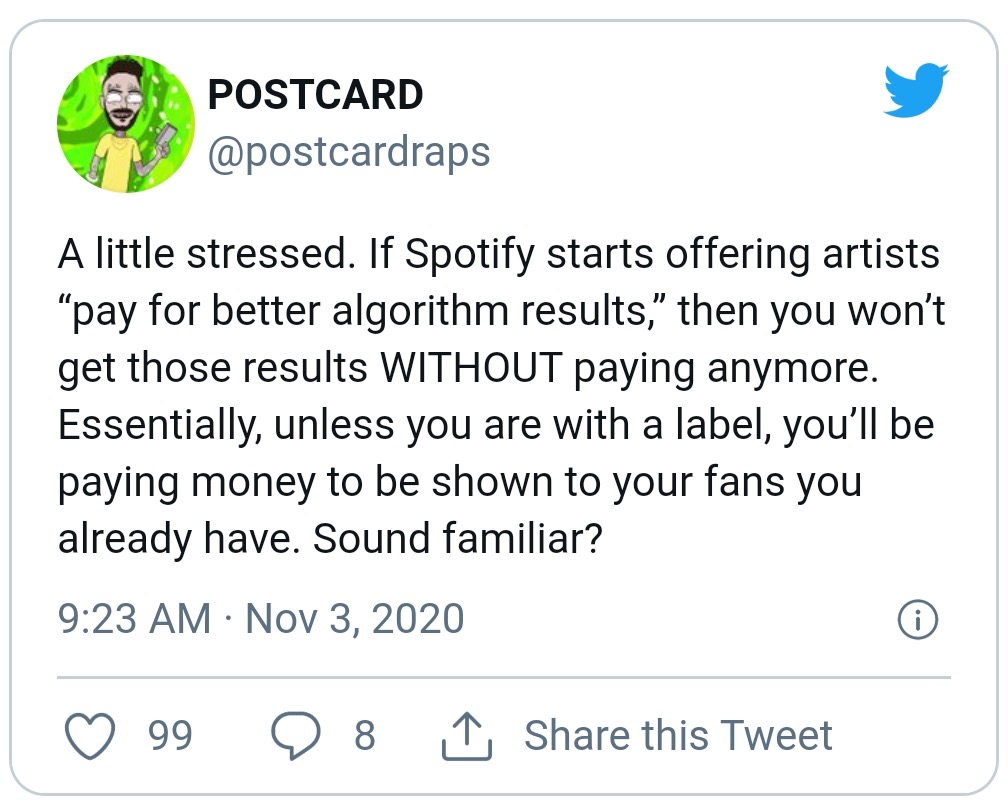
You see it takes a massively large level of stupid (and greed) to cater to this, but I believe that the EU (Margrethe Vestager) is trying and optionally succeeding in pulling this off. She is all about “European Commission anti-trust regulator Margrethe Vestager tweeted that “consumers are losing out”. It relates to charges brought two years ago by music streaming app Spotify which claimed that Apple was stifling innovation in that industry”, you might think that, but I do not. You see the article (at https://www.bbc.com/news/technology-56941173) gives us “It relates to charges brought two years ago by music streaming app Spotify which claimed that Apple was stifling innovation in that industry”, no it had set a premise to all (which it does not), all 23,000,000 Apple developers. It set a premise where they could develop whatever they want whilst having zero deployment cost and they would be charged as they gained incomes, so not the $75,000 upfront to get started, but after the fact and with no time limit. As such wannabe innovators flourished. It never stifled innovation, it limited greed. So whilst we see the painting of bad bad evil Apple, no one is looking at the fact that Spotify is paying artists HALF of what Apple and Google pays them, it amounts to $0.0032 per stream, so to make 1 cent, the song needs to be requested 3 times. This is why I still buy music, at least the artists I care about will get a much better slice. 

And when we see the image where they are now CHARGING for algorithms, all whilst they made a brute gross profit of $575,000,000 in Q4 2020, I think that the EU commissioner is massively loopy. You see, this is about consolidating greed plain and simple and in the process it will endanger consumers (the ones she claimed to protect). 

The image is merely one element of greed, it goes further. That part is not directly seen, but the BBC does give the goods with ‘The ransomware surge ruining lives’ (at https://www.bbc.com/news/technology-56933733), there we see “Ransomware gangs are now routinely targeting schools and hospitals. Hackers use malicious software to scramble and steal an organisation’s computer data”, in this the larger stage is not merely the theft, it is how they use larger systems to spread across all the internet and with 5G that danger becomes 5,000%. You see people like Spotify, Epic Games et all want to be outside the Google and Apple store, but they will limit protection (they will call it something else) and when the consumer ends up paying for that, we will get to see all kinds of apologies, but it was not entirely THEIR fault. As such I say, when you get hit (and you will) make sure that as you sue Spotify for damages, you add Daniel Ek and Margrethe Vestager to the culprits of your damages. Organised crime is getting better and better in walking away and as such their greed must be addressed in courts and their approach towards a ‘too big to fail’ setting must be answered, the data will be out there and s such players like Palantir will make even more money, it will be all about the data from 2022 onwards, in this the OCCRP their 2021 serious organised crime threat assessment where we see “The threat from cyber-dependent crimes is set to further increase in volume and sophistication over the coming years”, and in this stage Margrethe Vestager is willing to open the floodgates towards greed driven idiots setting the stage for organised crime getting more? You think that will ever be a great idea? I think not. 

And it does not stop there. The fact that the exchange hack was hard to detect for a long time, some hacks were out in the field for years and now we see greed driven idiots scale away the two decent bastions of protection that consumers have (Apple and Google) and let others skate around them? How long until we see some corrupted Amazon like app via a phishing spree be offered to millions. By the time some will have a clue billions will have been shifted and who pays for that? Insurers?  I very much doubt that. As such these two will be required to sit in the dock explaining their catering to greed. You see if Margrethe Vestager was really about the consumers, she would also be about protecting the artists and where is it acceptable that they get one third of a cent for a song? Is there more? Yes, but I will admit that this is part speculation. The BBC article gives us “The UK’s National Cyber Security Centre, also a member of the Ransomware Task Force says it handled more than three times as many ransomware incidents in 2020 than in the previous year”, you see paying a bitcoin is only one part, the data can still be shared with others and as data become currency the damage setting goes up by a lot. The dangerous part is that commissioner Vestager knows that the law and policing are not up to the task and she is catering to someone with dubious greed needs? One that underpays artists by what I consider to be as close as criminal levels of renumeration? And in my mind, some excuse ‘If we get this they get more’ does not float, in that setting their business model was wrong from day one, in addition, the entire algorithm setting shows a larger exploitation to kindle greed and leave an artist with less. So how accomodating to EU consumers do you think Margrethe Vestager actually is, that in opposition to catering to greed driven players? Apple and Google might not be god, not great but they agreed on a format to keep their consumers safe all whilst giving an option for starting developers to score big, the fact that these players were not as good as they hoped they would be and as they relied on advertisement to push the players is a mere side effect, but without these store protection, the mess will be close to unimaginable and players like Palantir will have the data  and the greed driven players (as well as some not too bright politicians) get to defend themselves in the dock against lawyers with massive class actions. When that happens, be sure that you have  stocked up on popcorn, because it will be worth watching. It will be reality TV with lots of fake tears and CEO’s claiming that they did not know certain things and watch their fortunes dwindle. It will be a much better class of reality TV for some time to watch.

Leave a comment

Filed under IT, Media, Politics, Science

A political stage of nowhere

Less than an hour ago the BBC gave us ‘EU reveals plan to regulate Big Tech’, apart from the discriminatory nature of the stage, are they doing anything else than merely fuelling their own gravy train? Consider the news from last July, there we were given ‘Apple has €13bn Irish tax bill overturned’, a case that started in 2016, had Apple and the government of Ireland in a twist, when you consider “The Irish government – which had also appealed against the ruling – said it had “always been clear” Apple received no special treatment”, I am on the fence, and in this the European Commission wasted 4 years in going nowhere, in the light of that revelation, can we even trust the approach the EU has? When we look at the first option, we see ‘Online harms law to let regulator block apps in UK’, this means an almost immediate blocking of Twitter, Facebook, WhatsApp and a few more. Local laws have been ‘accomodating’ to large corporations for such a long time, that social media is caught in the middle (and yes they benefitted too), so they re now pushing for changes that end privacy, because that is a conclusion. If we hunt down the perpetrators, we need to coat the materials in identity revealing codes, in addition, the EU government will have to adjust laws to make the poster responsible for what they post and that will lead to all kinds of privacy adjustments (that does not worry me), yet when insurance companies will use that setting to see transgressions on social media and they demand adjustment by handing over the posted evidence, how long until people like Margrethe Vestager start realising that they were clueless from the start? The BBC article gives us “The law would give local officials a way to ask Airbnb and other apps to hand over information or remove listings”, which now puts some players on the dark-web and the chaos (and organised crime involvement) merely increases. For example, when we see “not use data gathered via their main service to launch a product that will compete with other established businesses”, how will that be proven and tested? By handing all data over to the government? How many frivolous cases will that grave train launch? How is it impossible to stop advantage seekers a stage where they use Margrethe Vestager and her gang of idiots to do the bidding of (optionally) organised crime?

Even though I spoke of the Accountability Act, a legal direction that could thwart a few issues from the start in June 2012, 8 years later and this group is hardly even on the track of resolving anything, only to get their grubby greedy fingers on data, the new currency. And in this, the tech companies have their own games to play as Facebook shows with “Apple controls an entire ecosystem from device to app store and apps, and uses this power to harm developers and consumers, as well as large platforms like Facebook”, what Apple does, IBM did for decades, what Apple does Microsoft did for decades, so where is that train station? So even as we see “And they may influence other regulators – in the US and elsewhere – which are also planning to introduce new restrictions of their own” we also need to realise that after a decade, the local and EU laws have done little to nothing to hold the poster of information to criminal account, it seems to me a massive oversight. And in all this there is no view that the EU will wisen up any day soon. 

So as I see it, this will soon become a political stage that goes nowhere and in all this these layers merely want their fingers on the data, the currency that they do not have. How is that in any way acceptable?

Oh and when we see the blocking of apps and localisation, how long until people find an alternative? An alternative that the EU, the UK and the US have no insight over? Will they block apps that interact with data centres in China, Saudi Arabia and optionally other locations too? I raised it in other ways in ‘There is more beneath the sand’ in 2019 as well as some issues in 2018, a setting that was almost two years ago, as such is it not amazing that we see a shortsighted approach to this issue, whilst I gave the option EIGHT YEARS AGO and the laws are still not ready? They are ready to get the data from Google, Facebook, Apple, Amazon and Microsoft, as such when the trial goes wrong, hw will these people be compensated for the loss of uniquely owned data, data that they collected over the decades? Will the stupid people (Margrethe Vestager et al) compensate per kilobyte? How about $25,000,000 per kilobyte? Perhaps we should double that? What will be the price and in this, we should demand that Margrethe Vestager and her teams will be criminally liable for those losses, or will the gravy train decide that it is a little too complex to hold one station to order, and let face it, that gravy train has 27 stops to make, all with their own local needs, their local incomes and their local digital wannabe’s.

When a setting like that goes nowhere, you better believe that there is someone behind the curtain pulling strings for their own enriching needs, that is how it always has been, as such, let me give you the smallest example from January 2020, there we see “‘DIGITAL CROSS-BORDER COOPERATION IN CRIMINAL JUSTICE’ CONFERENCE”, with the nice quote “The e-Evidence Project led by the European Commission, DG Justice and Consumers, provides for the e-Evidence Digital Exchange System that manages the European Investigation Order/Mutual Legal Assistance procedures/instruments (e-Forms, business logic, statistics, log, etc.) on European level. The Reference Implementation Portal is the front-end portal of the e-Evidence Digital Exchange System and is also provided by the EC”, yet this is only step one. In all this we can also include the EC (at https://ec.europa.eu/home-affairs/what-we-do/policies/cybercrime/e-evidence_en), where we see: “However, present-day solutions too often prove unsatisfactory, bringing investigations to a halt”, I get it, you will say, will this not resolve it? Well, consider “provide legal certainty for businesses and service providers: whereas today law enforcement authorities often depend on the good will of service providers to hand them the evidence they need, in the future, applying the same rules for access to all service providers will improve legal certainty and clarity”, in this we need to look in detail at ‘provide legal certainty’, which at present under privacy laws is a no-no, and the poster cannot be identified and cannot (and will not) be held to account. As well as ‘applying the same rules for access to all service providers’, still the poster remains out of reach and the local and EU laws have done NOTHING for over a decade to change that, as such, when we consider this, why should Google, Facebook, Apple, Amazon and Microsoft suffer the consequences, in addition we see the absence of IBM, why is that? Does it not have data collection software, it has data centres, it has cloud solutions, so why are they absent?

And in light of earlier this year, as we were told ‘Google starts appeal against £2bn shopping fine’, how will that end? The law remains untested in too many aspects, in this the entire data stage is way too soon and in that the blowback will be enormous, all whilst the EU (UK too) is unable to do anything about data driven organised crime, other than blame state operators Russia and China, consider the Sony Hack of 2011, I was with the point of view by Kurt Stammberger (before I even knew about Kurt Stammberger), North Korea lacks infrastructure and a whole deed of other parts. I also questioned the data, like “former hacker Hector Monsegur, who once hacked into Sony, explained to CBS News that exfiltrating one or one hundred terabytes of data “without anyone noticing” would have taken months or years, not weeks”, I even considered an applied use of the Cisco routers at Sony to do just that, all issues that North Korea just could not do and in that environment, when we see these levels of doubt and when we get “After a private briefing lasting three hours, the FBI formally rejected Norse’s alternative assessment”, which might be valid, but when we see a setting where it takes three hours to get the FBI up to speed, can we even trust the EU to have a clue? Even their own former director of German Intelligence, gave us recently that they did not fully comprehend Huawei 5G equipment, and they will investigate the data owners, al before the posters of the messages are properly dealt with? I think not!

Leave a comment

Filed under IT, Politics, Science

EU fart bit, Google Fit Bit

Yes, we leap left, we leap right and as we see options for choice, we also see options for neglect. In Reuters we see “Google’s parent company Alphabet agreed a $2.1bn (£1.6bn) takeover of the wearable tech firm last year. However, the deal has yet to be completed”, we see that at https://www.bbc.com/news/technology-53647570, and as we see the BBC article, we wonder about a lot more. Yes we acknowledge “While the European Commission has said its main concern is the “data advantage” Google will gain to serve increasingly personalised ads via its search page”, and in the matter of investigations we see:

  • The effects of the merger on Europe’s nascent digital healthcare sector
  • Whether Google would have the means and ability to make it more difficult for rival wearables to work with its Android operating system.

From there there are two paths, for me personally the first one is Competition Commissioner Margrethe Vestager, to be honest, I do not trust her. I will admit right off the bat that this is personal, but her deal relying on what was requires her to get a win, any win. The setting is founded on “officials acknowledge that the EU’s competition enforcer faces hard choices after judges moved to quash her order for the US tech company to pay back €14.3bn in taxes to Ireland”, which was a juridical choice, but in all this she needs a win and I reckon she will do whatever er she can to get any of the FAANG group. For the most I would be on her side in the tax case, but on the other side the entire sweep of the Google Fitbit leaves me with questions.

The first point is on ‘effects of the merger’, so how is this in regards to the Apple Smart Watch, the Huawei smart watch (android), and a few other versions, how much investigation did Apple get? How much concern is there for Huawei? Then we see the second part ‘Whether Google would have the means and ability’, it is not a wrong position for Margrethe Vestager to take, but as he does it upfront, in light of the EU inactions regarding IBM and Microsoft, it seems weird that this happens upfront now (well to me it does). And as we see ‘difficult for rival wearables to work with its Android operating system’ I see Huawei and the solutions they have, Android solutions no less, so why is Google the problem? 

Then there are two other parts. The first one is “Analysts suggested part of the attraction for Google was the fact that Fitbit had formed partnerships with several insurers in addition to a government health programme in Singapore”, the second one is “Google has explicitly denied its motivation is to control more data”, in all this there is less investigation in regards to what data goes to Singapore, or better stated the article makes no mention towards it, and as I see it, there is no mention on it from the office of Margrethe Vestager either. The second part is how Google explicitly denies its part, yet that denial does not give us anything towards the speculated “its motivation is to have access to more data”, and when you decide on a smart watch, data will end up somewhere and the statements are precise (something that worries me), I have no issue with Google having access, but the larger issue is not Google, it is ‘partnerships with several insurers’, the idea of privacy is not seen remarked upon by Margrethe Vestager and her posse of goose feather and ink-jar wielders, the focus is Google and is seemingly absent from investigations into Fitbit pre-Google in an age where the GDPR is set to be gospel, so who are the insurers and where are they based? Issues we are unlikely to get answers on. Yet when we consider “John Hancock, the U.S. division of Canadian insurance giant Manulife, requires customers to use activity trackers for life insurance policies in their Vitality program if they want to get discounts on their premiums and other perks”, so what happens when that data can be accessed? Is the larger stage not merely ‘What we consent to’, but a stage where the insurer has a lessened risk, but we see that our insurance is not becoming cheaper, there is the second stage that those not taking that path get insurance surcharge. So what has the EU done about that? We can accept that this is not on the plate of Margrethe Vestager, but it is on someones plate and only now, when Google steps in do we see action? 

So whilst the old farts at the EU are taking a gander at what they can get, I wonder what happens to all the other parts they are not looking at. Should Google acquire my IP, with access to 440,000,000 retailers and well over 1,500,000,000 consumers, will they cry murder? Will they shout unfair? Perhaps thinking out of the box was an essential first requirement and Fitbit is merely a stage to a much larger pool that 5G gives, but as they listened to the US, they can’t tell, not until 2022, at that point it is too late for the EU, I reckon that they get to catch on in 2021 when they realise that they are losing ground to all the others, all whilst they could have been ahead of the game, lets say a Hail Mary to those too smitten by ego. 


Leave a comment

Filed under Finance, IT, Law, Media, Politics

Changing the mindset?

I had an interesting stage, there is the potential that I was changing my mind in a case. The stage is given via the BBC (at https://www.bbc.com/news/business-53416206) ‘Apple has €13bn Irish tax bill overturned’, my first thought was (and I have written about it in the past) the clear stage where Apple (Google also) has had its fingers in the tax-is for too much and for far too long, but the article gives two parts that requires thought. The first is “The European Commission brought the action after claiming Ireland had allowed Apple to attribute nearly all its EU earnings to an Irish head office that existed only on paper, thereby avoiding paying tax on EU revenues” in that instant there is all the drive and motivation to bring that supervillain Taxman to bear on the tech giant, let them suck the blood from the body of Apple until it cries for mercy. Yet the other part is “However, he said Brussels was likely to appeal and EU efforts to tackle tax avoidance would continue” ad here we see two parts, the first is ‘tax avoidance’, you see, tax avoidance is legally allowed, it means to pay the least applicable amount of taxation. Tax evasion is illegal, it is the setting where no taxation is paid at all, as such Apple did not break the rules and the stage is actually larger, the quote ‘tackle tax avoidance would continue’ is an issue that optionally Margrethe Vestager should (or could) be regarded as a joke, the issue is not whether Apple is being dodgy, it is the fact that the tax laws after all these years (10 at least) have not been adjusted to the degree that they should be adjusted to. Instead of large windbags of claimed activity that go nowhere, we see the need that the EU had to properly set the tax laws and in this Apple (as well as other FAANG members) did not commit any crimes. They merely used the tax laws to set the proper stage and apparently you can have an empty office, just like the Apple Stores have almost no stock, it is all shipped from the US (sometimes after 9 weeks) so nearly every Apple store is basically a gigantic display case (oversimplification, I know). Yet no matter how joyful and enjoying kicking Apple is, in this case they seemingly did no wrong, the fact that a judge is willing to hand back 13 billion Euro, as such, what is Margrethe Vestager crying about? It is seemingly clear that the tax laws are at fault, in this the organisations above the European Commission have faltered and Apple lived towards the letter of the law and applied what was legally allowed. So when we realise that these laws have been unadjusted for the better part of a decade, who is to blame, Apple or the European lawmakers? 

So when we see the end of the article giving us: “However, he said Brussels was likely to appeal and EU efforts to tackle tax avoidance would continue. “We expect the EU to continue applying pressure in this area,” he said.” And when we see this, how useless is the EU? Tackle appeals whilst the tax laws themselves are flawed, and Ireland is part of this, the stage where Apple was allowed to have “an Irish head office that existed only on paper”, so there wasn’t even a staff-member member? In which universe can we blame Apple for using the law to avoid taxation? If we are a nation of laws, the stage must be that the law states “Law is commonly understood as a system of rules that are created and enforced through social or governmental institutions to regulate behaviour”, this is not me, we get that from Robertson, a bit of an expert on the subject. So when we see that part and agree that we are are a nation of laws, the entire matter we observe becomes a farce, and a bad one. We agree that we use laws as a system of rules, and then let the rules be applied in the way it was, so why blame Apple? It is merely another example on just how useless the EU has become, a gravy train without rules of accountability. 

The EU get what it deserves, as far as I can tell, and as we cannot see any opposition to the black letter law that applies here, Apple is almost scot free. We will enter a new debate soon, the spirit of the Law versus the letter of the law, and in this Apple remains innocent, optionally Ireland ends up in the dock for setting a stage where the spirit of the law is avoided. 

I never changed my mind, I merely adjusted my personal verdict to the facts that were made public.

Leave a comment

Filed under Finance, Law, Politics

Murdering innovation

It started with the BBC about 30 minutes ago, 30 minutes after they released ‘Amazon v EU: Has the online giant met his match’, the title intrigued me and anyone who wants to go after Bezos and his haircut is allowed to do so, yet the EU tends to not care about anyone’s haircut, so I decided to have a calm read of it. 

Certain things made sense, yet a much larger part does not anto illustrate it, I start with a quote on the article: “The EU now looks set to charge Amazon for anti-competitive behaviour. This could cost Amazon a lot of money and could alter the shopping experience it offers customers.” To understand this I need to take you on a little time trip, my initial stage of Amazon was seen in 1994, I heard of it in its beginning and to me Amazon made no sense. You see, I grew up in the Netherlands, and for the most, any shop, in any retail area was never more than a hour away, optionally up to 2 hours if it was an exotic item (weapons, drugs) I had access to most items ever needed, as such Amazon made no sense at all. In 1997 I visited the US for the first time and Amazon started making sense. You see there are massive differences between the US and EU in certain ways and most people in the EU might not have gotten it. Amazon was an innovative player and came up and matured a retail direction. So when we get  EU’s competition enforcer Margrethe Vestager stating “We never accept in a football match that one team was also judging the game”, I merely wonder what her game is. And the setting of anti-competition law makes no sense. It makes no sense, because for close to 25 years others refused to go into the Amazon direction, as they remained in denial of what could happen. They remained in denial because they were iterative and small minded, they want the technology of others to come to them for free. And that is a thought that murders innovation. We see it in almost every area of technology. I worked for a company that stopped Facebook innovation 4 years before Facebook was created. Bullet point spreadsheet users who rely on the mission statement and the bottom dollar. They are left on the sidelines guarding iterative traffic. They feel that their option grants them more personal wealth. Now, anyone who has read my blog knows that I am no Jeff Bezos fan, but this he got right and the entire Covid-19 issue worked for him and now the champions of iteration (like EU’s competition enforcer Margrethe Vestager) are setting up shop to murder innovation a little more. You see the others now want the Amazon system for free, they want to enjoy the decades they were not working on innovation and merely (optionally) fucking their mistress whilst they claimed they were hard at work guiding their commision like it was a taxi meter. 

When I gave the stage of setting tax laws properly in 1998, people accused me that it was too complex and nothing was done, now that these firms are raking in the billions, those same people are staring at the sky stating that there was nothing they could do, but they merely ignore their own inactions.

Yet the larger concern is the stage that erupts when we see “It runs an online store and also sells its own products on that platform. The criticism is, that it’s both the player and the referee.” Yes, Google and Amazon innovated retail traffic, after the Netscape issues Microsoft hid in the IE cloud they created and IBM never showed interest, they merely did their own less profitable thing and now they want to push in on a market that had evolved for well over a decade and does fine without them. Microsoft came up with Bing a decade after Google and still has no proper way to set the algorithm for ranking, and misses out on a decade of data, which is how I see it. IBM has its own innovation (Quantum computing) and is still 2-5 years away from innovating that field, the rest of them are innovation candle holders at best. 

Yet I cannot completely ignore that the EU has optionally a case to bring, yet their own inadequacies regarding the mapping of the other players that never showed any interest in innovating the field Amazon is in is also food for thought. Those iterative players that will only step in on the second tier after the innovator has proven their case, how is there any level of fairness to give them the playing field? 

So when we see: “is the company using that data to give Amazon’s own products an unfair advantage?” I cannot completely disagree, yet the larger issue is that Amazon created a level of data collection that other data dogs refused to bark at. Now we all can agree that not every retail shop can wield such data and they should not get hit, yet this stage that Amazon has was in the UK going on for a long time via Dunnhumby did for Tesco and in The Netherlands it was Albert Heijn (et al) and their Air Miles. If you go after one, you need to go after all and that is not happening is it? Yet there is a size difference, but none of them came with an overlay of algorithm and made sense of it, they all wanted their own little corner, the innovation of Amazon was larger than that and everyone was in that selfish stage until they all learned (the hard way) that their way was the losing one. 

In all this Amazon is not completely innocent, yet that does not mean that they are guilty. The question we see: “But does Amazon unfairly promote its own products at the expense of third parties?” is woefully incomplete. The issue (just like with Google) is not on what is offered, but what EXACTLY did the searcher ask for? It is a huge part in all this and it is left on the sidelines, optionally intentionally and that hurts, because in all this the central side is not the sellers, or the implied sellers, what did the buyer exactly ask for and that matters, especially in the case of Amazon. The buyer did not ask for “A western where we see Talulah Riley naked with loads of added violence in the highest resolution”, they asked for “Westworld season 2 bluray”, and those two searches are not the same. We can come up with a lot more examples, but I hope that the point comes across. We forget that the largest issue is what the buyer seeks and the bulk want the latest products, they want the ones that ship immediately and can we honestly say that the founding setting of the product sought has all the elements in place (like shipping and overnight shipping options) are these elements properly set to those other sellers? You see, the backwash on what is optionally possible is one thing, the fact that these shops set up the parameters of what can be done in comparison of what is done are two different universes. 

For example, I cannot get to ‘there’ from ‘here’ in Google maps. These two locations are not defined, so when someone is looking at the Sombrero galaxy, it does not mean that there is a path getting there. 

It is the innuendo and the missing elements that make some strike out, optionally murdering innovation. Whilst we see: “The general defence is that there are plenty of companies that act as both a shop and supplier. Tesco and Sainsbury’s both sell their own labelled products in their stores, for example.” a setting duplicated in NEARLY EVERY OTHER country. Pretty much every supermarket chain has that setting, and it is ignored, because they are ‘too small’. I believe that the stage is different, as I stated, the others refused to adhere to the needs of the seeker, the consumer. As such they are out of the online game and that part is surprisingly overlooked. It is not the business of Amazon (or Google for that matter) to fill in the blanks, if Bing does that, perhaps it might have a future to some. 

It is our task to protect innovation, there is too little of it (not what a marketing manager claims is innovation, but actual innovation) if we do not, we merely end up fuelling the EU gravy train and those people need to focus on actual issues, not their gravy train. In this I am not stating that Amazon is completely innocent, I am merely stating that there are a few sides that some people left in the dark. To illustrate this I entered “buy arkham knight ps4”, the results in Bing and Google are very different, bing seems to be all about ebay, that same search in Google and Amazon give a much better result, they gave me what I was looking for. I personally was not looking for ebay options, yet was that part of the equation given? 

The buyer is the larger part in all this and most screamers forgot about that part.

Leave a comment

Filed under Finance, IT, Science

Middle of the seesaw

To be honest, I am not sure where to stand, even now, as we see ‘Google starts appeal against £2bn shopping fine‘ (at https://www.bbc.com/news/technology-51462397), I am personally still in the mindset that there is something wrong here. 

We can give the critique that my view is too much towards Google, and that is fine, I would accept that. Yet the part where we see 

  • In 2017, €2.4bn over shopping results.
  • In 2018, €4.3bn fine over claims it used Android software to unfairly promote its own apps.
  • In 2019, €1.5bn fine for blocking adverts from rival search engines.

Feels like it is part of a much bigger problem. I believe that some people are trying to stage the setting that some things are forced upon companies and I do not mean in the view of sharing. I personally do not believe that it is as simple as Anti-Trust. It feels like a more ‘social mindset’ that some things must be shared, but why?

The BBC also gives us: “Margrethe Vestager, who has taken a tough stance on the Silicon Valley tech firms and what she sees as their monopolistic grip on the digital landscape” this might feel like the truth, yet I personally feel that this was in the making for a long time, Adobe was on that page from the start. I believe that as the digital landscape was slowly pushed into a behemoth by Macromedia, who also acquired Coldfusion a change came to exist, for reference, at that time Microsoft remained a bungling starter holding onto Frontpage, an optional solution for amateurs, but there was already a strong view that this was a professional field. that stage was clearly shown by Adobe as it grew its company by 400% in revenue over a decade, its share value rose by almost 1,000% and its workforce tripled. There was a clear digital landscape, and one where Google was able to axe a niche into, the others were flaccid and remained of the existing state of mind that others must provide. Yet in all this Social media was ignored for far too long and the value of social media was often ignored until it was a decade too late. 

For example, I offered the idea that it would be great to be in the middle of serviced websites where we had the marketing in hands, my bosses basically called me crazy, that it had no functioning foundation, that it was not part of the mission statement and that I had to get back to work, I still have the email somewhere. This was 4 years before Facebook!

I admit that my idea was nothing as grandiose as Facebook, it was considered on other foundations an I saw the missing parts, but no one bit and now that I know better on the level of bullet point managers I am confronted with and their lack of marketing I now know better and my 5G solutions are closed to all but Huawei and Google, innovation is what drives my value and only those two deliver.

But I digress, the Digital Landscape was coming to be, and as we realise that this includes “websites, email, social networks, mobile devices (tablets, iphones, smartphones), videos (YouTube), etc. These tools help businesses sell their products or services” we can clearly see that Microsoft, Amazon and others stayed asleep at the wheel.
some might have thought that it was a joke when Larry Page and Sergey Brin offered the email service on April 1st 2004, yet i believe that they were ahead of many (including me) on how far the digital landscape would go, I reckon that not even Apple saw the massive growth, perhaps that Jobs fellow did, but he was only around until 2011 when it really kicked off. IBM, Microsoft and others stayed asleep thinking that they could barge in at a later stage, as I see it, IBM chose AI and quantum computing thinking that they can have the other niche no one was ready for. 

When we consider that we saw ‘Google faces antitrust investigation by 50 US states and territories‘ 6 months ago and not 5 years ago we see part of the bigger picture, of course they could have left it all to China, was that the idea? When we get “Regulators are growing more concerned about company’s impact on smaller companies striving to compete in Google’s markets” we will see the ignoring stage, when it mattered smaller places would not act, as Google acted it became much larger than anyone thought, even merely two years ago we were al confronted with ‘companies’ letting Google technology do all the work and they get all the credit and coin, why should Google comply? Striving to compete with Google is no longer a real option and anyone thinking that is nuts beyond belief. The only places that can hold a candle are the ones with innovative ideas and in an US economy founded on the principle of iteration no one keeps alive, but they are all of the mind that franchising and iteration is the path to wealth, it is not, only the innovative survive and that is being seen in larger ways by both Google and Huawei. Those who come into the field without innovation is out of options, it is basically the vagrant going to the cook demanding part of the pie the cook made as they are hungry, yet the vagrant has no rights to demand anything. 

And as we are given (read: fed) the excuse of “Alphabet, has a market value of more than $820bn and controls so many facets of the internet that it’s fairly impossible to surf the web for long without running into at least one of its services. Google’s dominance in online search and advertising enables it to target millions of consumers for their personal data” we can give others the state where Microsoft did its acts to take out Netscape, how did that end? It ended in United States v. Microsoft Corp.. In all,  we see that in the end (no matter how they got there) that the DOJ announced on September 6, 2001 that it was no longer seeking to break up Microsoft and would instead seek a lesser antitrust penalty.

As such, in the end Microsoft did not have to break up hardware and software, they merely had to adopt non-Microsoft solutions, yet how did that end? How many data failures and zero day breaches did its consumer base face? According to R. Cringely (a group of journalists and writers with a column in InfoWorld) we get “the settlement gave Microsoft “a special antitrust immunity to license Windows and other ‘platform software’ under contractual terms that destroy freedom of competition.”” (source: Webcitation.org). 

Yet all this is merely a stage setting, it seems that as governments realised the importance of data and the eagerness of people giving it away to corporations started to sting, you see corporations can be anywhere, even in US hostile lands and China too. That is the larger stage and Google as it deals in data is free of all attachments, as governments cannot oversee this they buckle and the larger stage is set. 

From my point of view, Google stepped in places where no one was willing to go, it was for some too much effort and as that landscape shaped only google remains, so why should they hand over what they have built? 

It is Reuters that give is the first part of it all (at ) here we see: “EU regulators said this penalty was for Google’s favoring its own price comparison shopping service to the disadvantage of smaller European rivals“, yet what it does not give us is that its ‘smaller rivals’ are all using Google services in the first place, and Google has the patent for 30 years, so why share? This is a party for innovators, non-innovators are not welcome!

Then we get “Google’s search service acts as a de-facto kingmaker. If you are not found, the rest cannot follow“, which is optionally strange, because anyone can join Google, anyone can set up camp and anyone can advertise themselves. I am not stupid, I know whatthey mean, but whe it mattered they could not be bothered, no they lack the data, exaytes of data and they cannot compete, they limited their own actions and they all want to be head honcho right now, no actual investment required.

In addition when it comes to Browsers, Wired gives us “I spent the summer and beyond using Bing instead of Google for search. It’s a whole new world, but not always for the better“, I personally cannot stand Bing, I found it to have issues (not going into that at present), so as we are ‘not found’ we consider the Page rank that Stanford created for Google (or google bought it), when we consider when that happened, when was it reengineered and by whom? And when we got to the second part “Google began selling advertisements associated with search keywords“, that was TWO DECADES AGO! As such, who was innovative enough to try and improve it with their own system? As I see it no one, so as no one was interested, why does there need to be an antitrust case? As such we see the Google strategy of buying companies and acquiring knowledge, places like Microsoft and IBM no longer mattered, they went their own way, even (optionally) better, Microsoft decided to Surf-Ace to the finish, I merely think, let them be them.

We are so eager to finalise the needs for competition law and antitrust law, but has anyone considered the stupidity of the iteration impact? If not, consider why 5G is in hands of Huawei, they became the innovators and whilst we are given the stage of court case after court case on the acts of Huawei, consider why they are so advanced in 5G, is it because they were smarter, or because the others became flaccid and lazy? I believe that both are at play here and in this, all the anti-Google sentiment is merely stopping innovators whilst iterators merely want to be rich whilst not doing their part, why should we accommodate for that?

so when we see (source: Vox) “United States antitrust officials have ordered the country’s top tech companies to hand over a decade’s worth of information on their acquisitions of competitor firms, in a move aimed at determining how giants like Amazon and Facebook have used acquisitions to become so dominant” who does it actually serve? is it really about ‘how giants like Amazon and Facebook have used acquisitions to become so dominant‘, or is it about the denial of innovation? Is it about adding to the surface of a larger entity that governments do not even comprehend, let alone understand? They have figured out that IP and data are the currency of the future, they merely need to be included, the old nightmare where corporations are in charge and politicians are not is optionally coming to fruition and they are actually becoming scared of that, the nerd the minimised at school as they were nerds is setting the tone of the future, the Dominant Arrogant player beng it sales person or politician is being outwitted by the nerd and service minded person, times are changing and these people claim that they want to comprehend, but in earnest, I believe that they are merely considering that the gig is up, iteration always leads there, their seeming ignorance is evidence of that.

Yet in all that, this is basically still emotional and not evidence driven, so let’s get on with that. The foundation of all Common Law Competition Law is set to “The Competition and Consumer Act prohibits two persons, acting in concert, from hindering or preventing a third person trading with a fourth person, where the purpose or likely effect of the conduct is to cause a substantial lessening of competition in any market in which the fourth person is involved“, yet in this, I personally am stating that it hinders innovation, the situation never took into proper account of the state of innovators versus iterators, the iterator needs the innovator to slow down and the foundation of Competition Law allows for this, when we see ‘preventing a third person trading with a fourth person‘, in this the iterator merely brings his or her arrogance and (optional) lack of comprehension to the table and claims that they are being stopped from competing, whilst their evidence of equality is seemingly lacking (as I personally see it). 

In this the Columbia Law School is (at least partially) on my side as I found “Scholars and policymakers have long thought that concentrated market power and monopolies produce more innovation than competition. Consider that patent law—which is the primary body of law aimed at creating incentives for innovation—was traditionally thought to conflict with antitrust law. Known as the “the patent-antitrust paradox,” it was often said that antitrust is designed to prevent monopolies and other exclusionary practices while the patent system does the opposite, granting exclusionary rights and market power in the form of patents. Given this framework, it makes sense that scholars, courts, and government agencies have only recently considered antitrust and patent laws to be complementary policies for encouraging innovation.” it gives the foundation and when you consider that iterators are the foundation of hindrance to innovators, you see how competition law aids them. In the old days (my earlier example) Microsoft and Netscape that was a stage where both parties were on the same technology and comprehension level. Microsoft merely had the edge of bundling its browser with the OS and got the advantage there, Netscape did not have that edge, but was an equal in every other way. 

Another name is Gregory Day, who gives us: “a greater number of antitrust lawsuits filed by private parties—which are the most common type of antitrust action—impedes innovation. Second, the different types of antitrust actions initiated by the government tend to affect innovation in profoundly different ways. Merger challenges (under the Clayton Act) promote innovation while restraint of trade and monopolization claims (under sections 1 and 2 of the Sherman Act) suppress innovative markets. Even more interesting, these effects become stronger after the antitrust agencies explicitly made promoting innovation a part of their joint policies” yet I believe that iterators have a lot more to gain by driving that part and I see that there is actually a lack of people looking into that matter, who are the people behind the antitrust cases? Most people in government tend to remain unaware until much later in the process, so someone ‘alerts’ them to what I personally see as a  ‘a fictive danger’. In this I wonder who the needed partner in prosecution was and what their needs were. I believe that iterators are a larger problem than anyone ever considered.

In the case of Google, Amazon and Facebook, we see innovators driving technology and the others have absolutely nothing to offer, they are bound to try and slow these three down as they are trying to catch up. 

Ian Murray wrote in 2018 (CEI.ORG), “Yet there is no such thing as a dominant market position unless it is guaranteed by government. AOL, Borders, Blockbuster, Sears, Kodak, and many other firms once considered dominant in their markets have fallen as the result of competition, without any antitrust action” and that is a truth, yet it does not give that the iterators merely want innovators to slow down, so that they can catch up and the law allows for this, more importantly, as the lack of innovations were not driven over the last decade, South Korea became a PC behemoth, and China now rules in 5G Telecom land. All are clear stages of iterators being the problem and not a solution, even worse they are hindring actual innovation to take shape, real innovation, not what is marketed as such.

As such, governments are trying to get some social setting in place by balancing the seesaw whilst standing at the axial point, it is a first signal that this is a place where innovators are lost and in that are you even surprised that a lot of engineers will only take calls from Google or Huawei (Elon Musk being an optional third in the carbon neutral drive)? 

It gets to be even worse (soon enough), now that Google is taking the cookie out of the equation, we get to see ‘Move marks a watershed moment for the digital ad industry to reinvent itself‘, this is basically the other side of the privacy coin, even as google complied, others will complain and as Google innovates the internet to find another way to seek cookie technology, we will suddenly see every advertisement goof with no knowledge of systems cry ‘foul!’ and as we are given “Criteo, which built a retargeting empire around cookies, saw its stock tumble following Google’s announcement. Others such as LiveRamp and Oracle-owned businesses BlueKai and Datalogix, as well as nearly all data management platforms, now face the challenge of rethinking their business” (source: AdAge) we will see more players hurdling themselves over Competition Law and optionallytowards antitrust cases because these players used someones technology to get a few coins (which is not a bad thing, but to all good things come an end).

And I am not against these changes, the issue is not how it will be reinvented, it is how some will seek the option to slow the actual innovators down because they had no original idea (as I personally see it). Yet we must also establish that Google did not make it any easier and they have their own case ORACLE AMERICA, INC. v. GOOGLE INC. to thank for.

That verdict was set to “With respect to Google’s cross-appeal, we affirm the district court’s decisions: (1) granting Oracle’s motion for JMOL as to the eight decompiled Java files that Google copied into Android; and (2) denying Google’s motion for JMOL with respect to the rangeCheck function. Accordingly, we affirm-in-part, reverse-in-part, and remand for further proceedings.” in this situation, for me “The jury found that Google infringed Oracle’s  copyrights in the 37 Java packages and a specific computer routine called “rangeCheck,” but returned a noninfringement verdict as to eight decompiled security files. The jury  deadlocked on Google’s fair use defense.“, as I see it in that situation Oracle had been the innovator and for its use Google was merely an iterator (if it ain’t baroque, don’t fix it).

Basically one man’s innovator is another man’s iterator, which tends to hold up in almost any technology field. Yet this time around, the price is a hell of a lot higher, close to half a dozen iterators ended up giving an almost complete technology surge to China (5G), which is as I personally see it. They were asleep at the wheel and now the US administration is trying to find a way around it, like they will just like ORACLE AMERICA, INC. v. GOOGLE INC.  more likely than not come up short.

And one of these days, governments will figure out that the middle of the seesaw is not the safe place to be, it might be the least safe place to be. As the population on each end changes, the slow reaction in the middle merely ends up having the opposite and accelerating effect, a few governments will learn that lesson the hard way. I believe that picking two players on one (or either side) side is the safest course of action, the question for me remains will they bite?

 

Leave a comment

Filed under IT, Law, Politics, Science